May 26, 2010
Happy birthday, John Wayne!

From Who the Hell's in It: Conversations with Hollywood's Legendary Actors
His performances in these pictures [Rio Grande, The Quiet Man, The Searchers, The Wings of Eagles, Man Who Shot Liberty Valance] rate with the finest examples of movie acting, and his value to each film is immeasurable; yet none of them was recognized at the time as anything much more than "and John Wayne does his usual solid job," if that -- more often he was panned. The Academy nominated him only twice; first for Allan Dwan's excellent Sands of Iwo Jima, an effective and archetypal John Wayne Marine picture of non-Ford/Hawks dimension. Yet I remember that Wayne's sudden death from a sniper at the end of Sands was the first real shock -- and one of the most lastingly potent -- I ever had at the movies. The reason why this worked so powerfully for me at age ten, as well as for millions of all ages, was because of Wayne's even then accepted indestrucability. In fact, Sands of Iwo Jima was the second of only five films in which Wayne dies. Still, it wasn't until twenty years later, when he put on an eye patch, played drunk, and essentially parodied himself in True Grit, that anyone thought he was acting, and so with this over-the-top performance Duke Wayne got his second nomination and finally won his Oscar.The particular quality in a star that makes audiences instantly suspend their disbelief -- something men like Wayne or Jimmy Stewart or Henry Fonda naturally bring with them when they enter a scene -- is an achievement which normally goes so unnoticed that most people don't even think of it as acting at all. To a lot of people, acting means fake accents and false noses, and a lot of emoting ... John Wayne was at his best precisely when he was simply being what came to be called "John Wayne".
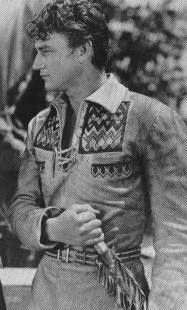
David Thomson, from his lengthy entry on Wayne in his The New Biographical Dictionary of Film: Expanded and Updated
As a child he moved West and, after a football scholarship at the University of Southern California, Tom Mix got him a job at Fox. There he met John Ford and worked as a set decorator on Mother Machree (28). Gradually he edged into acting, by the storybook means of being a bystander. His first big part was in The Big Trail (30, Raoul Walsh). Walsh had seen him carrying a big armchair above his head - carrying it witih flair and flourish.
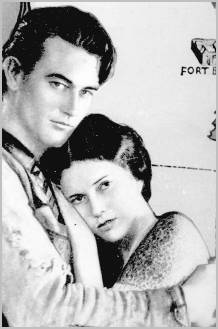
Stanley Crouch on The Searchers:
When Wayne, as Ethan, comes upon the black smoke and the orange flame of the burning house left by the Comanches, his face is one of absolute terror, panic, and rage. At the top of a hill, Wayne flings out his right arm to free his rifle from the long, colorful buckskin sleeve in which it has been sheathed. The force of that flung arm is one of the most explosive gestures in all of cinema, and also among the most impotent: No one down there is alive, and Ethan knows it. He is, at that moment, like the man in Bruegel's The Triumph of Death who so impressed Hemingway because his choice was to draw a sword when faced with the irreversible horror of encroaching doom.
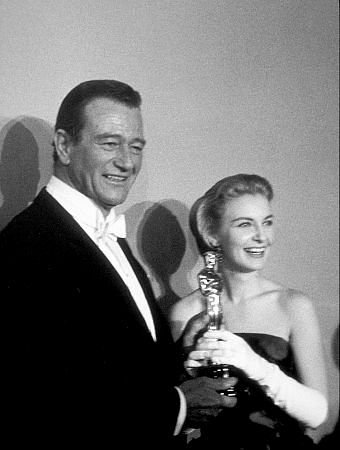
Natalie Wood on that moment in The Searchers when he picks her up - a moment that still, to me, this day, having seen it 20 or so times, takes my breath away.
John Wayne was a giant to me, and when he picked me up in that scene near the end of the picture, he was able to lift me as though I were a doll. It was pretty frightening because he had this look of hatred and I thought that he could easily crush me. But then there would be an almost indefinable gentleness that would come over him as he cradled me and said, 'Let's go home.' Everyone had always told me, 'John Wayne's no actor. He always plays the same part.' I can tell you, Mr. Wayne was a very fine actor. He said to me, 'When I pick you up, I may seem a little rough, but I'll be as gentle as I can be.' I said, 'You must pick me up without worrying about that or you might not give the performance you need to portray.' He smiled and said, 'Well, little lady, you're a real professional, that's for sure.'

David Thomson:
Throughout the 1930s Wayne was a star of matinee Westerns, sometimes a singing cowboy, working his way round most of the smaller studios and making something like a hundred films. By 1939 he was with Republic when John Ford asked him to be the Ringo Kid in Stagecoach. The success of that film lifted Wayne from regular work to stardom. Republic pulled themselves together for a major vehicle for him - Dark Command (40, Walsh) - and Ford called on him again to play a seaman in The Long Voyage Home (40).
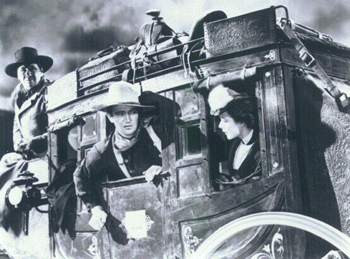
John Wayne started out as a prop guy. He was a college student, and he picked up extra cash doing props for movies and occasional extra work. This was how he met John Ford. He almost got fired from a couple of Ford's films for various snafus. It took Ford a while to start "using" Wayne. It wasn't immediately apparent that this gangly raw kid had movie-star potential.
From Who the Hell's In it, by Peter Bogdonavich:
There's a moment in Rio Bravo -- which features, I think, Wayne's most genuinely endearing performance -- when he walks down the street of the jail/sheriff's office toward some men riding up to meet him. Hawks frames the shot from behind -- Wayne striding slowly, casually away from camera in his slightly rocking, graceful way -- and the image lingers a while to let us enjoy this classic, familiar figure, unmistakable from any angle, Americ'as twentieth-century Hercules moving across a world of illusion he had more than conquered.
 Mark Rydell, director of "The Cowboys", and his star, John Wayne
Mark Rydell was about 30 years old when he directed (and produced) The Cowboys. It was 1972. John Wayne had been making pictures since the 20s. He had been a star for decades. Not just a star, but an icon. Rydell was a Jewish kid from the Bronx who had directed a couple of episodes of Gunsmoke and, I think, 2 feature films. What would the experience be like? Would John Wayne run all over him? How on earth would he direct John Wayne? There are a couple of great stories about the filming of this marvelous movie (and I also love Rydell's image of John Wayne sitting, on break, trying to eat his lunch, while all the kids who were in the movie climbed over him "as though he was a monkeybar ..." They loved and trusted him that much.)
Here's one of Mark Rydell's many moving memories of what it was like to direct John Wayne in The Cowboys. This is an anecdote about the filming of the beginning of the cattle drive - obviously a complicated shot, with horses and herds of cattle and camera equipment, and extras and cowboys and stunt doubles ... not to mention John Wayne.

Here's Mark Rydell on what happened on that day.
And we had 1500 head of cattle. And there's an interesting story of the first angry moment that I had with John Wayne. I was sitting up on the head of a crane. We had 9 cameras, and we were shooting this scene which had to do with starting the cattle drive. And in the background of this 1500 head of cattle, we had all the families of the kids, and all the kids are in position getting ready to start this cattle drive, and being said goodbye to by their parents. And John Wayne was seated on his horse about 50 feet in front of me and I was facing all these cattle on the top of the crane, and the scene begins with him riding over to Roscoe Lee Browne who was sitting on the top of this six-up that he had to drive, and the dialogue, if I remember correctly, is he says, "Are you ready, Mr. Nightlinger?" and he says, "Ready when you are", or something like that. And you know, you don't start 1500 head of cattle by saying, "Go". What happens is, you have to push the cattle in the rear and they move and they push the cattle in front and sometimes it takes 5 minutes for them to be going. So I didn't roll the cameras because I didn't want to waste film until the cattle were moving. There was an enormous amount of cattle. This was really a remarkable production achievement, with Wayne riding past hundreds and hundreds of heads of cattle, all which had to be handled. It was quite a complicated procedure that required a lot of attention. So Wayne decided it was time to go - so he rode up - I hadn't even started rolling the cameras yet - so he rode up to Roscoe and said, "Are you ready, Mr. Nightlinger?" Well, of course, I hadn't even rolled the cameras yet. So I lost my temper. I stood up on the crane and said, "Don't you ever do that. Go back to your spot. I'll tell you when we're going to roll our cameras, I'll tell you when 'Action' is!" and as I was talking to him, I was thinking: what a stupid thing for me to do, to yell at John Wayne, in front of all these kids and all these people, it was humiliating. And I was really sorry, but I had stuck my neck out - and I was right, by the way. And he knew I was right. He went back to his place, did the scene, got in his car - it was the end of the day - and drove into town. All of the crew came over to me one by one to shake my hand, as if to say goodbye, because they thought I would be fired for having contested John Wayne in any way whatsoever. And the Ravetch's were there, and they were horrified, and I got in the car with them to drive back to our production office in Santa Fe, and I was just mortified with guilt for having done this! And they kept saying, "Why did you do that?" And I kept saying, 'I just lost my temper!" And we got back to the production office and there were four calls from John Wayne. And I thought, this is it. I'm fired. I'll be on my way back to Los Angeles in a moment and one of John Wayne's former directors will be down here to take over the picture. So I finally got up my courage and I called him. And he said, "Mark, let's have dinner." And I thought, 'Okay, there's the kiss of death." So we met, and, by the way, there was nothing more remarkable than the experience of going to dinner in Santa Fe with John Wayne, who was 6'5" and an icon. He walked into the restaurant and the place gasped! We sat down for dinner and I am waiting for the axe to fall, for him to say, 'Son, you're a nice guy, but I think we're going to be better off with a better director." You know, I was waiting for that horrifying moment! Which never came, by the way. And he proceeded to tell me that I treated him the way John Ford treated him. I had yelled at him, and he was very impressed that I had the courage to tell him off. He knew that I was right, and he was wrong. Even though it was something I certainly never should have done, he was impressed that I had the courage to do it. And he called me "Sir" from that day forward, and for the rest of the 102 days we shot this picture. And that's the kind of guy he was.

Maureen O'Hara in her autobiography 'Tis Herself: A Memoir
There is only one fitting way to end our discussion of The Quiet Man, and that's with a whisper. No matter what part of the world I'm in, the question I am always asked is: "What did you whisper into John Wayne's ear at the end of The Quiet Man?" It was John Ford's idea: it was the ending he wanted. I was told by Mr. Ford exactly what I was to say. At first I refused. I said, "No. I can't. I can't say that to Duke." But Mr. Ford wanted a very shocked reaction from Duke, and he said, "I'm telling you, you are to say it." I had no choice, and so I agreed, but with a catch: "I'll say it on one condition - that it is never ever repeated or revealed to anyone." So we made a deal. After the scene was over, we told Duke about our agreement and three of us made a pact. There are those who claim that they were told and know what I said. They don't and are lying. John Ford took it to his grave - so did Duke - and the answer will die with me. Curiosity about the whisper has become a great part of the Quiet Man legend. I have no doubt that as long as the film endures, so will the speculation. The Quiet Man meant so much to John Ford, John Wayne, and myself. I know it was their favorite picture too. It bonded us as artists and friends in a way that happens but once in a career. That little piece of The Quiet Man belongs to just us, and so I hope you'll understand as I answer:I'll never tell.

One of my favorite reaction shots from him is Wayne's body language when O'Hara whispers whatever it is she whispers to him. You can feel him go from 0 to 1000 in one second, and it is all he can do to wait until they get back to their house and into their bed. It's subtle evocative and totally clear physical acting. Last moment of the movie, I'm sure fans will remember it.
David Thomson:
Even at that stage [the late 30s, early 40s], Wayne had this virtue denied to Ford's "stock company": he did not ham. Universal put him opposite Dietrich in Seven Sinners (40, Tay Garnett) and Republic lowered its sights to more Westerns. For the next few years he made fodder at his home studio and more adventurous work outside, much of which only exposed his monotonous fierceness: Reap the Wild Wind (42, Cecil B. De Mille); The Spoilers (42, Ray Enright); Flying Tigers (42, David Miller); with Joan Crawford in Jules Dassin's crazy Reunion in France (42); and The Fighting Seabees (44, Edward Ludwig). In 1945, he was in Back to Bataan (Edward Dmytryk), Flame of the Barbary Coast (Joseph Kane), and was overshadowed by Robert Montgomery in They Were Expendable (Ford). He was bizarrely paired with Claudette Colbert in a comedy, Without Reservations (46, Mervyn Le Roy), but Rebublic still pushed straight Westerns at him.
More from the transcript of the interview John Wayne gave with Peter Bogdonavich - I wish all action stars looked at their jobs in this way. We'd get some better movies.
Any time there was a chance for a reaction -- which is the most important thing in a motion picture -- he [John Ford] always took reactions of me, so I'd be a part of every scene. Because I had a great deal of time in the picture when other people were talking, and all my stuff was just reactions. They become very important throughout a picture, they build your part. They always say I'm in action movies, but it's in reaction pictures that they remember me -- pictures that are full of reactions, but have a background of action.
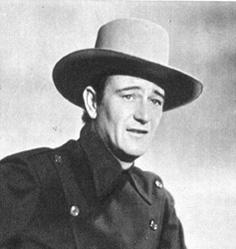
Katharine Hepburn on John Wayne in her autobiography Me : Stories of My Life
From head to toe he is all of a piece. Big head. Wide blue eyes. Sandy hair. Rugged skin - lined by living and fun and character. Not by just rotting away. A nose not too big, not too small. Good teeth. A face alive with humor. Good humor I should say, and a sharp wit. Dangerous when roused. His shoulders are broad - very. His chest massive - very. When I leaned against him (which I did as often as possible, I must confess - I am reduced to such innocent pleasures), thrilling. It was like leaning against a great tree. His hands are big. Mine, which are big too, seemed to disappear. Good legs. No seat. A real man's body.And the base of this incredible creation. A pair of small sensitive feet. Carrying his huge frame as though it were a feather. Light of tread. Springy. Dancing. Pretty feet.
Very observing. Very aware. Listens. Concentrates. Witty slant. Ready to laugh. To be laughed at. To answer. To stick his neck out. Funny. Outrageous. Spoiled. Self-indulgent. Tough. Full of charm. Knows it. Uses it. Disregards it. With an alarming accuracy. Not much gets past him.
He was always on time. Always knew the scene. Always full of notions about what should be done. Tough on a director who had not done his homework. Considerate to his fellow actors. Very impatient with anyone who was inefficient. And did not bother to cover it up.

David Thomson:
Then came two films that radically enlarged his image: Fort Apache (48, Ford), in which he played a cavalry captain, and Red River (48, Howard Hawks). Not least of his achievements as a guide to players is the way Hawks was the first to see the slit-eyed obdurate side to Wayne's character. Tom Dunson is a fine character study: a man made hard by an early mistake and by the emphasis on achievement with which he tried to conceal that mistake. With Ford again, Wayne was one of Three Godfathers (48), a truly awful movie. But in 1949, he was Captain Nathan Brittles at the point of retirement in She Wore a Yellow Ribbon (Ford), and in 1950 the trilogy was completed withthe leisurely Rio Grande (Ford). Asked to be older, a husband and a father, Wayne became human and touching.
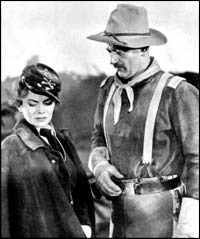
More from Katharine Hepburn:
Life has dealt Wayne some severe blows. He can take them. He has shown it. He doesn't lack self-discipline. He dares to walk by himself. Run. Dance. Skip. Walk. Crawl through life. He has done it all. Don't pity me, please.And with all this he has a most gentle and respectful gratitude toward people who he feels have contributed very firmly to his success. His admirers. He is meticulous in answering fan mail. Realistic in allowing the press to come to the set. Uncomplicated in his reaction to praise and admiration. Delighted to be the recipient of this or that award - reward. A simple man. None of that complicated Self-Self-Self which seems to torment myself and others who shall be nameless when they are confronted with the Prize for good performance. I often wonder whether we behave so ungraciously because we really think that we should have been given a prize for every performance. And are therefore sort of sore to begin with. Well, as I began - he is a simple and decent man. Considerate to the people who rush him in a sort of wild enthusiasm. Simple in his enjoyment of his own success. Like Bogie. He really appreciates the praise heaped upon him. A wonderful childlike, naive open spirit.

From Who The Hell's In It, by Peter Bogdonavich:
In a lifetime of almost thirty years as a top-ten box-office attraction (plus twenty before that as a not unpopular star actor), Wayne's accumulated persona had even before his death attained such mythic proportions that by then the most myopic of viewers and reviewers had finally noted it. He brought to each new movie (good or bad) a powerful resonance from the past -- his own and ours -- which filled the world with reverberations above and beyond its own perhaps undistinguished qualities. That was the true measure of a great movie star of the golden age.
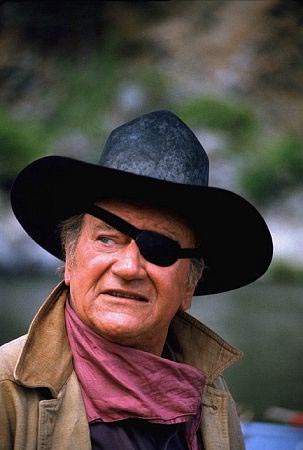
David Thomson:
Next, however, came The Searchers (56, Ford), one of his finest films - once more a study of an unapproachable stubborn man, finally excluded from the family reunion as a romantic but lonely figure facing the landscape. He coasted with The Wings of Eagles (57, Ford), Legend of the Lost (57, Hathaway), and The Barbarian and the Geisha (58, John Huston), before making Rio Bravo (59, Hawks). Once more, Hawks enlarged Wayne by concentrating on an alcoholic Dean Martin and having Wayne watch him "like a friend". It worked - as did the application of Angie Dickinson's talkative emotional crises to Wayne's solidity - so that Rio Bravo is not just Wayne's most humane picture but the one that makes him most comic.
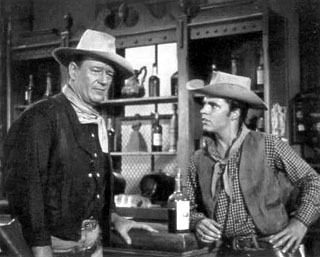
David Thomson:
His death moved nearly everyone, as had his brave walk down the Academy staircase, two months before death, to give the best picture Oscar to ... The Deer Hunter (that'll be the day, indeed.)He made too many pictures, of course; but only because for so long he was a guarantee of profit.

Wayne and Bogdanovich again:
One of the most memorable moments of any picture I've seen you in is a silent moment in The Searchers. After you see what's been done to the white women, there's a close-up of you, camera moves in --I turn back. Terrific shot. Helluva shot. And everybody can put their own thoughts to it. You're not forced to think one way or the other.
Your gestures in pictures are often daring -- large -- and show the kind of freedom and lack of inhibition you have. Did you get that from Ford, or did you always have that?
No, I think that's the first lesson you learn in a high school play -- that if you're going to make a gesture, make it.
To be honest: that has to be some of the best acting advice I've ever heard.
"If you're going to make a gesture, make it."
So much of bad phony acting is when people make gestures half-heartedly, or they PRETEND to make gestures .... hoping the audience won't pick up on the fact that they're not REALLY making the gesture ...
but audiences always know the difference between phony and real. They just do.

David Thomson:
But what a star, what a presence, and what a wealth of reserve he brought to that bold presence. (So you wonder if he couldn't have played comedy.)Nor has he dated. All one can say is that he filled the screen role of a necessarily difficult man as naturally as most actors wore clothes. There was an age when people could be stars without undue grandeur or self-mockery. Whether Wayne is looking at the land that may make a great ranch, or turning in a doorway to survey his true home, the desert, every gesture was authentic and a prized disclosure. He moved the way singers sing, with huge confidence and daring. You have to imagine how it all began in the way Raoul Walsh saw him carrying that armchair - as if it was a young girl in a red robe being lifted up in mercy and wonder.
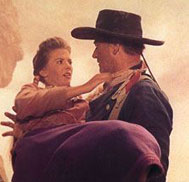
John Wayne told Peter Bogdanovich:
A funny thing happened with Ford after The Big Trail. He was a strange character, you know. After I did that picture, I came back, and he was making Up the River. I went over and said, "Hi, coach." Nothing. I thought he didn't hear me. So I figured, Oh, well, he didn't even see me. The next time I saw him I went, "Hi, coach, hi." And again I didn't get anything. So the next time I just went right up in front of him and went, "Hi, coach." And he turned and talked to somebody else. I thought, That's that -- he won't speak to me. I don't know how the hell I can communicate.About two years later, I was in Catalina with Ward, having a belt, and Barbara [Ford], his daughter -- she was a little girl then -- she ran in and said, 'Daddy wants to see you." I said, "Whoa, wait a minute, Barbara, you got the wrong boy -- must be Ward." She said, "No, it's you, Duke." So I said, "Yeah, honey, run along, you know this is a bar." So his wife, Mary Ford, came to the door and she said, "Duke, come here. Jack is expecting you out there." I said, "All right." So I went out to the Araner, his boat, and I go aboard -- I remember Jim Tully was there and four or five guys -- and Jack was in the middle of a goddamn story, and he looked up at me and said, "Hi, Duke, sit down." And to this goddamn day I don't know why he didn't speak to me for two years.

Excerpt from Michael Caine's awesome book Acting in Film: An Actor's Take on Movie Making
I noticed that American actors always try to cut down their dialogue. They say, "I'm not going to say all this. You say that line." At first I couldn't figure out why; I came from theatre, where you covetously count your lines. But it's a smart approach for an actor to give up lines in the movies because while you wind up talking about them, they wind up listening and reacting. It's no accident that Rambo hardly speaks. Sylvester Stallone is not a fool.I remember when I first went to America, right after I made Alfie. I met John Wayne in the lobby of the Beverly Hills Hotel. He'd just got out of a helicopter, he was dressed as Hondo and he came over and introduced himself to me.
I said: "I do know who you are, Mr. Wayne."
He said, "You just come over?"
"Yeah."
He said, "Let me give you a piece of advice: talk low, talk slow, and don't say much."

Katharine Hepburn again:
As an actor, he has an extraordinary gift. A unique naturalness. Developed by movie actors who just happen to become actors. Gary Cooper had it. An unselfconsciousness. An ability to think and feel. Seeming to woo the camera. A very subtle capacity to think and express and caress the camera - the audience. With no apparent effort. A secret between them ... Wayne has a wonderful gift of natural speed. Of arrested motion. Of going suddenly off on a new tack. Try something totally unrehearsed with him. He takes the ball and runs and throws with a freedom and wit and gaiety which is great fun. As powerful as is his personality, so too is his acting capacity powerful. He is a very very good actor in the most highbrow sense of the word. You don't catch him at it.

From Who The Hell's In it, by Peter Bogdonavich:
To me, Duke had always seemed slightly out of breath, as though he hadn't yet caught up on the last twenty years, not to mention the last twenty minutes. Both [John] Ford and [Howard] Hawks truly loved him, of course, and even knowing him a little, as I did, it was pretty difficult not to like him. All this, and a lot more, obviously communicated itself to the public -- still the top American star more than seventy years since his beginning. His visual legacy has defined him as the archetypal man of the American West -- bold, innocent, profane, idealistic, wrongheaded, good-hearted, single-minded, quick to action, not given to pretension, essentially alone, ready for any adventure -- no matter how grand or daring; larger, finally, than life or death.
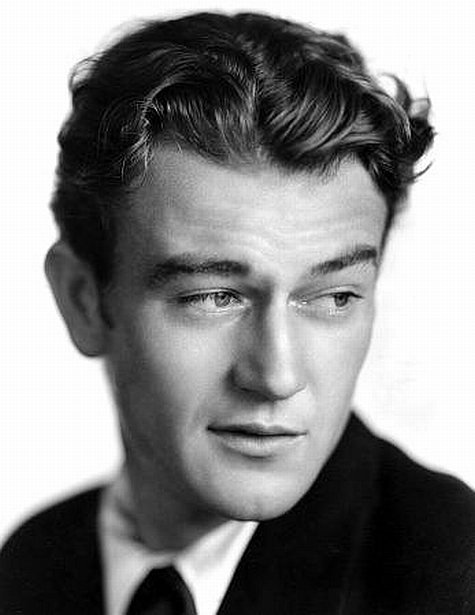
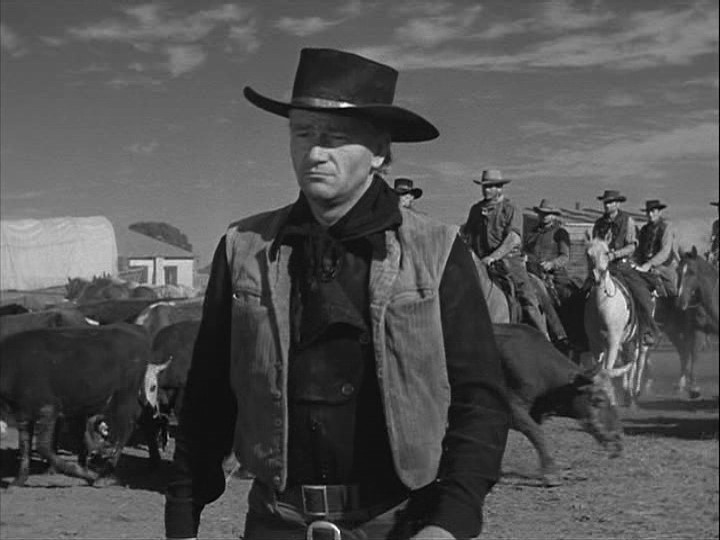
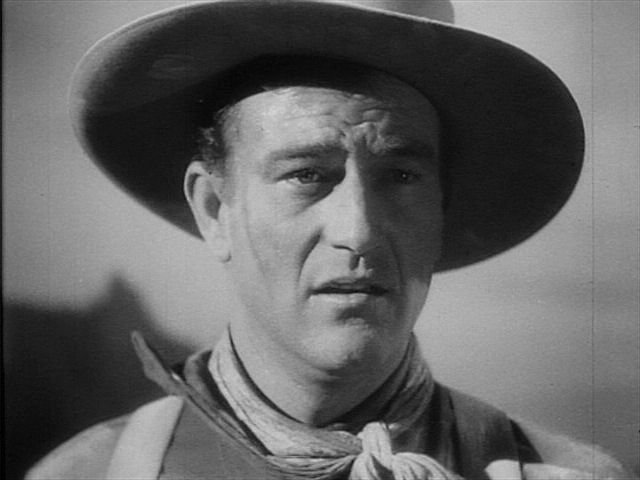
Such a handsome man.
I love how, in that first famous entrance in Stagecoach, Ford moves in quickly to his face, and there's a slight moment where Wayne is out of focus. I love how Ford kept that. It gives it an immediacy, a sense of reality ... that moment of blurriness.
A powerful actor, one I never get tired of studying: his walk, his line readings, his eyes, his reactions ... He's subtle, he's physical, he's funny, he's smart in his choices. And then, of course, there's the magic.
Movie magic.
You know it when you see it.
Wayne had it in spades.
May 12, 2010
Today in history: May 12, 1812

Edward Lear (the so-called "father of nonsense") was born today in 1812 in London.
I could recite from memory a lot of his stuff when I was pretty close to this age here. The Golden Book of Poetry was so read in our family that the cover faded to almost nothing, the binding fell apart ... and I can still, in my mind's eye, see all of the illustrations - and where they were placed on the page. And most of the poem's, when I read them now, I hear them in my father's gravelly voice. (The photo at the top of this post is me, "candidly" posing with the Golden Book of Poetry.) "The Owl and the Pussy-cat" is still a favorite. Look how the verse just rocks and sings. It's perfect.
The Owl and the Pussy-cat - by Edward Lear
I
The Owl and the Pussy-cat went to sea
In a beautiful pea green boat,
They took some honey, and plenty of money,
Wrapped up in a five pound note.
The Owl looked up to the stars above,
And sang to a small guitar,
'O lovely Pussy! O Pussy my love,
What a beautiful Pussy you are,
You are,
You are!
What a beautiful Pussy you are!'
II
Pussy said to the Owl, 'You elegant fowl!
How charmingly sweet you sing!
O let us be married! too long we have tarried:
But what shall we do for a ring?'
They sailed away, for a year and a day,
To the land where the Bong-tree grows
And there in a wood a Piggy-wig stood
With a ring at the end of his nose,
His nose,
His nose,
With a ring at the end of his nose.
III
'Dear pig, are you willing to sell for one shilling
Your ring?' Said the Piggy, 'I will.'
So they took it away, and were married next day
By the Turkey who lives on the hill.
They dined on mince, and slices of quince,
Which they ate with a runcible spoon;
And hand in hand, on the edge of the sand,
They danced by the light of the moon,
The moon,
The moon,
They danced by the light of the moon.

Michael Schmidt, in his book Lives of the Poets
"strays into the musical zones that Longfellow mapped with his self-propelling meters."

Was Edward Lear the inventor of the term "snail mail" in this whimsical letter to Evelyn Baring? The letter itself reads, along the twists of the snail shell:
Feb. 19. 1864 Dear Baring Please give the enclosed noat to Sir Henry - (which I had just written:-& say that I shall have great pleasure in coming on Sunday. I have sent your 2 vols of Hood to Wade Brown. Many thanks for lending them to me - which they have delighted me eggstreamly Yours sincerely
William Pitt:
"Don't tell me of a man's being able to talk sense; every one can talk sense. Can he talk nonsense?"
Carolyn Wells:
In regard to his verses, Lear asserted that "nonsense, pure and absolute," was his aim throughout; and remarked, further, that to have been the means of administering innocent mirth to thousands was surely a just excuse for satisfaction. He pursued his aim with scrupulous consistency, and his absurd conceits are fantastic and ridiculous, but never cheaply or vulgarly funny.
George Orwell, "Funny But Not Vulgar":
However, there are subtler methods of debunking than throwing custard pies. There is also the humour of pure fantasy, which assaults man's notion of himself as not only a dignified but a rational being. Lewis Carroll's humour consists essentially in making fun of logic, and Edward Lear's in a sort of poltergeist interference with common sense. When the Red Queen remarks, "I've seen hills compared with which you'd call that one a valley", she is in her way attacking the bases of society as violently as Swift or Voltaire. Comic verse, as in Lear's poem "The Courtship of the Yonghy-Bonghy-Bò", often depends on building up a fantastic universe which is just similar enough to the real universe to rob it of its dignity. But more often it depends on anticlimax -- that is, on starting out with a high-flown language and then suddenly coming down with a bump.
From Michael Sala, Lear's Nonsense:
Edward Lear, a skillful illustrator of science books (botany, zoology), started his literary career by chance. As a matter of fact, "most of Lear's limericks were not written with publication in mind, but rather as gifts for specific children" (Rieder 1998: 50). He was persuaded toward their publication by the enthusiastic reaction of his young audience.There was an old person of Rimini Who said, "Gracious! Goodness! O Gimini! When they said, "Please be still!" she ran down a hill And was never once heard of at Rimini.There was an old person of Sestri
Who sat himself down in the vestry,
When they said "You are wrong!" - he merely said "Bong!"
That repulsive old person of Sestri.This is a typical example of Lear's limericks, and a perfect example of what is intended by nonsense, that is to say, "language lifted out of context, language turning on itself [a] language made hermetic, opaque" (Stewars 1979: 3), language that "resists contextualization, so that it refers to 'nothing' instead of to the word's commonsense designation [and] refusing to work as conventional communication " (Rieder 1998: 49). In other words, what happened to the old person of Rimini? What is wrong with the person of Sestri? It is impossible to answer, because, despite the perfectly grammatical use of the words, they don't tell much. They are just bizarrely arranged so as to sound appealing. If there is a shadow of a story, usually it is nothing more than that: only a shadow of a story (without causes or consequences). In Lear's limericks, words introduce "a number of possibilities, including dangerous and violent ones, and at the same time disconnect those possibilities from the real world, that is, from what goes on after the game is over" (Rieder 1996: 49).
Edward Lear, in a letter to a little girl he knew:
My dear child, I'm sure we shall be allowed to laugh in Heaven!
Vivien Noakes:
In the limericks [. . .] to an extent difficult for us now to imagine, Lear offered children the liberation of unaffected high spirits [. . .]. Here are grown-ups doing silly things, the kind of things grown-ups never do [. . .]. for all their incongruity, there is in the limericks a truth which is lacking in the improving literature of the time. In an age when children were loaded with shame, Lear attempted to free them from it.
Susan Chitty on Lear's ballads:
Like the limericks, they celebrate the outsider. Their principal characters are socially unacceptable.
Sir Edward Strachey:
Mr. Lear was delighted when I showed to him that this couple [the Owl and the Pussy-cat] were reviving the old law of Solon, that the Athenian bride and bridegroom eat a quince together at their wedding.
More information on Edward Lear here.
May 6, 2010
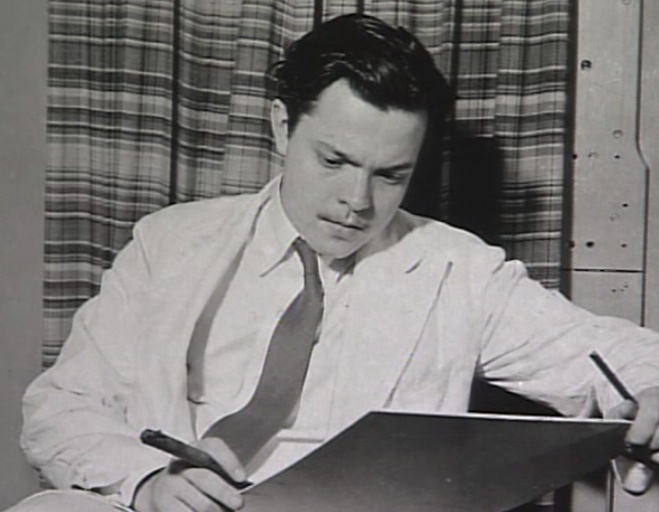
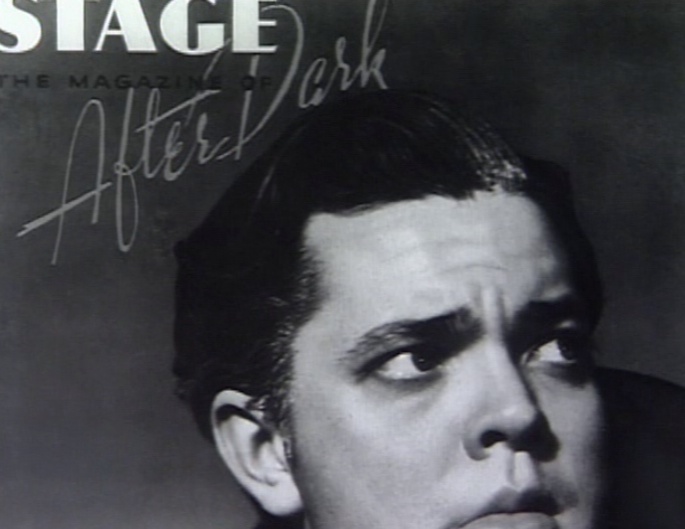
Happy birthday, Orson Welles

Much of the Welles story is difficult to put together because he himself was such a teller of tall tales. You know, he went to Morocco when he was 16 years old and the stories he told of his time there, hanging out with a sheik in a freakin' tent and chillin' with the Arabs smoking a hookah pipe in the mountains, stuff like that, have just grown in the telling. Then there are times, like Welles's sojourn in Ireland as a teenager (which really is an amazing story) when he basically strolled into an audition at the up-and-coming Gate Theatre (which had set itself as a rival to the dominant Abbey) and got a part. Welles made it seem, in his letters home, and then later in his life, that he was given a lead INSTANTLY. That's not quite how it went, but he did, indeed, take the Ireland theatre world by storm as a teenager. He was the toast of Dublin at age 17. This cannot be disputed. The truth is crazy enough without embellishment.
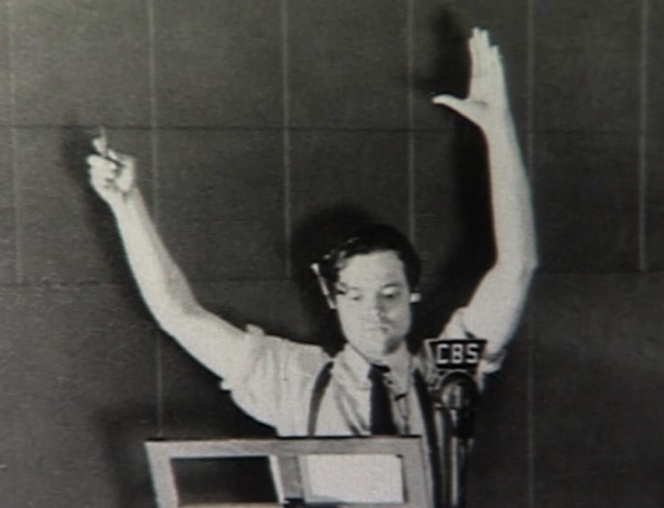
But for Welles, truth was never as interesting as fantasy, and he is at his best when he can project himself into his own fantasies. Isn't that what Citizen Kane was all about, and War of the Worlds? If you build it, he will come. "Here is my fantasy/nightmare/dream. I request that you participate in it, willingly or no." Welles was an old-fashioned showman, a purveyor of tricks, and then (in the case of War of the Worlds) acting baffled and "aw, shucks, sorry I freaked you all out" when he was found out. It was brilliant.
Then there is the famous Cradle Will Rock experience (which John Houseman describes so wonderfully in his own memoirs), the voodoo Macbeth done in Harlem with all black actors in the 1930s (which Welles directed at age 22), the Mercury Theatre, the War of the Worlds broadcast, the precedent-breaking deal with RKO which led to Citizen Kane ... and then, of course, the craziness of the newspaper war Hearst launched against Welles and RKO because of Citizen Kane, virtually killing the film. Not to mention the following events, the tragedy of the botched Magnificent Ambersons, Welles's insane time in Rio during World War II, and etc. etc.
Simon Callow's two-volume biography (and there will, apparently, be a third volume, and I'm waiting for it like a lunatic) is fantastic (if, perhaps, a bit TOO detailed, and I can't believe I'm saying that, but Callow is so obsessed with his subject that he devotes 10 pages to analyzing a paper Welles wrote as a schoolboy. I appreciate obsession, don't get me wrong, and God forbid if I ever wrote a book about Dean Stockwell or Mickey Rourke or Gena Rowlands - because I find literally everything about these people interesting. Give me a grocery list scribbled by them, and I'd include it in the book. So I sympathize with Callow). Regardless, one of the spectacular things about Callow's biography is this level of detail, yes, but also the theatrical background from which Callow comes. He doesn't just list events. He talks about them in their artistic context. People who don't know about Welles may just think of "War of the Worlds" or "Citizen Kane" when they hear his name. But there is so much more. Callow analyzes Welles's production values, his script adaptations, Callow is unafraid to criticize Welles, and he does it as a fellow actor/director. I love that aspect of the books. Why was Welles' voodoo Macbeth so groundbreaking? And Callow doesn't just stay on the surface of that incredible event (black actors, mostly non-professional, the Great Depression, Harlem location), but Callow looks at Welles's adaptation, what he chose to cut, how he rearranged things, and whether or not, in Callow's estimation, it was successful. Welles saw Shakespeare not as a great man to be revered and feared - but as a guy who wrote awesome plays that could certainly stand to be mucked up with a bit. Callow then uses said adaptation to make theories about where Welles was at that time. What interested him? Let us look at what he chose to cut, and speculate on why he felt that had to go?

David Thomson, in his gigantic Biographical Dictionary of Film, has an enormous entry on Welles, and he closes it with:
In his last years, Welles did more commercials, he narrated documentaries, he attempted to launch fresh projects and to complete old ones. He appeared in It Happened One Christmas (77, Doald Wyre), The Muppet Movie (79, James Frawley), and Butterfly (81, Matt Cimber). But none of those matched his provocative role as the wise man in the back row of the theatre in his friend Henry Jaglom's Someone To Love (87). In short, he presided over the special chaos of his life as it closed, apparently seeking help and friends, yet secretly sealed against trespass. His unfinished films are now seeing the light of day - even pieces of It's All True. But so little about the life and work of Welles is all or anywhere near true. He inhaled legend - and changed our air. It is the greatest career in films, the most tragic, and the one with most warnings for the rest of us.
Welles was clearly a prodigy of some kind, albeit a messy one. As a young boy, he was already on his way, and he was lucky enough (or persistent enough) to find mentors who could push him further and further along. He was doing summer stock as a teenager, appearing in Shakespeare, and he was also a student at an elite boy's school which had a stellar drama department. Welles remained connected with that school all his life. He did not forget his influences, and he did not forget where he came from (although he also would speak of things in retrospect and always put HIMSELF at the center of everything. It reminds me a bit of how Howard Hawks talked. Every great idea in Hollywood, every unpredictable yet ultimately successful casting decision was originally Hawks' idea, according to Hawks. It's kind of endearing. It makes it hell on a biographer, but still: these men were storytellers and artists. If you're looking for literal truth, I don't know why you would look for it in show business and the people who practice it!)
Welles went to Ireland as a teenager, as I mentioned - and became highly involved in the Gate Theatre, which still exists, run by a fascinating guy named Micheál MacLíammóir. Look him up. Guy has as much interest as Orson Welles, and just as intense a reinvention of self. Welles was one of the most self-regarding of all artists, it was about the power of his personality - it always was - and how his voice (no surprise that Welles made his real mark in radio) could bring his personality (and others) to life. MacLíammóir's stories of Welles' first audition for them ("There's an American teenager in the lobby ... he says he wants to audition ... what should I tell him?") are laugh-out-loud funny. MacLíammóir in one of his autobiographies (he wrote several, and rightly so - what a life!!) describes being told about the American teenager in the lobby who was saying he was a lead actor at the Guild Theatre in America (none of it true) and that he wanted an audition. MacLíammóir says sure, send the kid in. In walks Orson Welles. MacLíammóir describes what happened next:
'Is this all the light you can give me?' he said in a voice like a regretful oboe. We hadn't given him any at all yet, so that was settled, and he began. It was an astonishing performance, wrong from beginning to end but with all the qualities of fine acting tearing their way through a chaos of inexperience. His diction was practically perfect, his personality, in spite of his fantastic circus antics, was real and varied; his sense of passion, of evil, of drunkenness, of tyranny, of a sort of demoniac authority was arresting; a preposterous energy pulsated through everything he did. One wanted to bellow with laughter, yet the laughter died on one's lips. One wanted to say, 'Now, now, really, you know,' but something stopped the words from coming. And that was because he was real to himself, because it was something more to him than a show, more than the mere inflated exhibitionism one might have suspected from his previous talk, something much more.
Isn't that absolutely gorgeous? "He was real to himself ..."
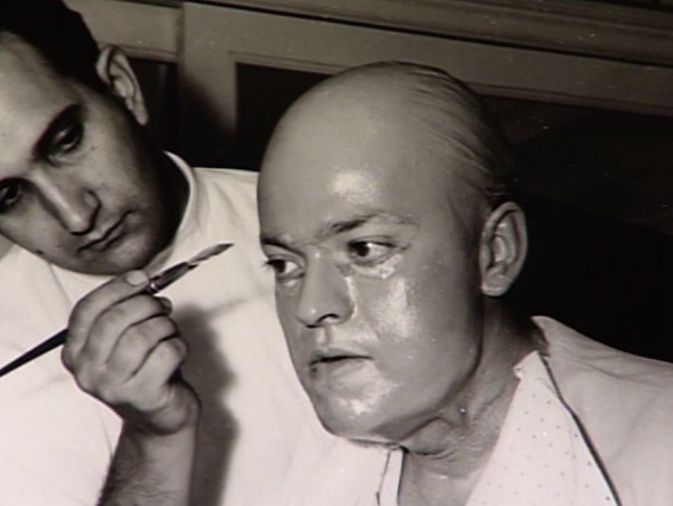
Here is a photo I found that I love from 1950 - of Eartha Kitt, MacLíammóir, and Welles. The two stayed friends their whole lives. And it wasn't an easy friendship - I suppose it never was with Welles - but they remained colleagues and collaborators til the end.
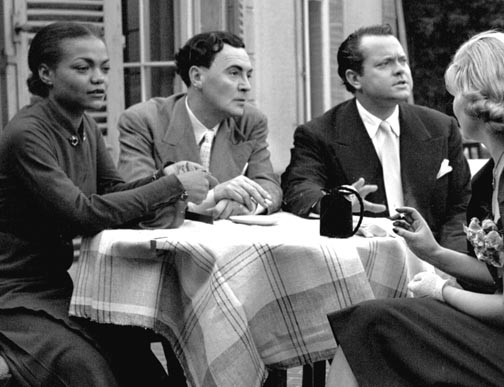
Welles' journey in the 30s, with the Federal Theatre Project, is well known. He hooked up with another young ambitious guy, John Houseman, and they began to put together projects, the first of which was what is now known as "the voodoo Macbeth" - a Macbeth put on entirely with black actors, mostly non-professional, at a big theatre in Harlem. Welles set the Macbeth in Haiti, with a stage full of crazy voodoo goddesses in headdresses, massive crowd scenes, drum beats - Welles was always about creating an impression, rightly or no. You can see clips of the voodoo Macbeth on Youtube, I think - and I've seen clips of it in the documentary I have about Welles at home. It may be a lot of sound and fury, signifying nothing - all style, no substance - hard to say - but it was a giant hit and it put Welles on the map. White people were flocking to Harlem to see the production. Black people came out in droves. It electrified the New York theatre world. If I could have a time machine to go back and see certain productions, Welles's "voodoo Macbeth" is in my top 5. (If you must know, Laurette Taylor as Amanda Wingfield in Chicago in 1945 is # 1).
Welles' notoriety grew with the shutting down of The Cradle Will Rock (go read Houseman's memoir for an account - that was the excerpt I posted of his book) - and eventually he and Houseman decided to strike out on their own and form the Mercury Theatre. The Mercury put on stage productions - Doctor Faustus and others - they got a deal for a weekly radio show where they would read classic literature, all adapted by Welles (did the man ever sleep?) - and of course, eventually, the "War of the Worlds" craziness came out of that - which then led to Welles being famous not just in New York but around the world. Hollywood took notice and pretty much air-lifted the entire Mercury Theatre company (Joseph Cotten, Agnes Moorehead, Everett Sloane, and all the rest) to do basically whatever the hell Orson Welles wanted. And what he wanted to do was a fictionalized life of William Randolph Hearst. The envy in Hollywood was intense. Who is this Orson Welles character and why was he given such a deal, while I slog along in my ridiculous contract having to do whatever the studio says?? There was never a lot of good will towards Welles.
Citizen Kane which, naturally, got its props eventually - was barely seen at the time, because William Randolph Hearst sparked a war against the studios, saying that he would instruct every one of his papers to BURY the movie, or ignore it completely ... if it were to go forward. Nobody wanted to alienate William Randolph Hearst. Citizen Kane was given a premiere, but that was pretty much it. It would be decades before anyone could see it again.
And so Welles made enemies from the get-go, and in a funny way, his career never really recovered its luster - although he would make some pretty damn fine movies (The Magnificent Ambersons comes to mind - although that film was so butchered by the studio that Welles, 40 years later, still couldn't talk about it without welling up with tears. I love that movie, but it is truly a tragedy what was done to it - and, seen in the light of retrospect, you can see the viciousness of the studio heads, sticking it to their young prodigy who had already caused so much trouble ... There is something personal in their attack on Welles. Well, you know how mediocrity hates genius! They set out to destroy him. Welles never really recovered emotionally from what was done to him with Magnificent Ambersons.)

That's a sketch Welles did, around age 13, of a young William Shakespeare.
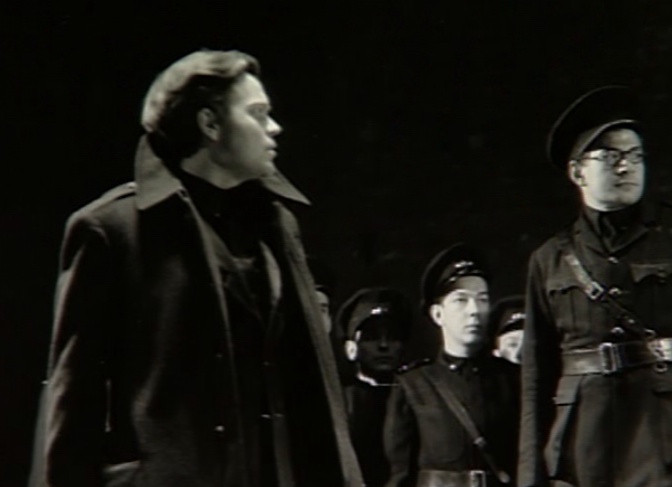
In 1937, the Mercury Theatre put up a now-famous (and famous almost instantly) modern-dress production of Julius Caesar. Again, where the hell is my time machine? It was a terribly uneasy time in the world at large. The cataclysm was already happening elsewhere in Europe, and the mood was very very tense. Welles decided to set Julius Caesar in fascist Italy. This was not necessarily a new or an original idea, many companies had been doing putting classic works in a fascist European setting - however, many of these were out of New York, and so word would not have reached Welles about them. It appears to have been original to Welles, or perhaps just an expression of the universal mood at the time. Welles' gift was never, by the way, in being original. It was in being able to take the dream that was in his own head and create it out in the world in whatever production he was involved in. He was never strictly an innovator, although much of cinematography as we now know it imitates what was done in Citizen Kane, with the deep-focus, and the shot angles. But much of that was Gregg Toland's contribution, not Welles's. Welles's contribution was in believing in the sheer size of the project, and making it happen. He was a showman of the old school, a PT Barnum, a now-you-see-it-now-you-don't genius. He played tricks. There's a reason why this guy was obsessed with magic for his entire life, and even put together a magic show in Hollywood with an all-star cast, including his future wife Rita Hayworth. Welles had no reverence for Shakespeare. No, he had something better: he had love and passion. Shakespeare was just a fellow showman, as far as Welles was concerned, another practical man of the theatre. Welles chopped scenes up, deleted characters, he rearranged the order if it suited him - pulling things forward when normally they happened at the end, whatever ... You can tell that he would be a movie director, which is more of a non-linear medium (or can be, with its potential for flashback, or dreams, etc.) With Julius Caesar, Welles kept the stage huge and black with billowing black curtains. Most of the characters wore the black military uniforms of Mussolini's jackbooted thugs, and there was an intense air of uneasiness and violence around the production. People were blown away by it. It seemed to speak directly to their time, directly to what was going on in Europe. It took New York by storm. Voodoo Macbeth had been earlier that year - so to then come out so quickly with this Caesar so soon after, so different from the Macbeth, and Welles was only 23 ' years old. Unbelievable. Unprecedented. The voodoo Macbeth was all about the spectacle. It was all about crowd scenes, and traffic control, and creating an impression of madness, noise and chaos. The Caesar was about giant empty cold spaces, and human beings dwarfed by the surrounding atmosphere, the black of their costumes blending into the black of the drapes so that their white faces shone out, in a tiny frightening way, as though they had pin-spots on them at all times. Such a different conception, look, feel ... from what he had done only 8 or 9 months previous.
Here is a series of images from Welles' Caesar, including some of his sketches for the costumes, setting, and lights (he did everything ... the whole production was in his head). I also included a Hirschfeld cartoon of the time.


Callow devotes an entire chapter to Caesar, going into detail Welles' own thought process, his adaptation, the casting of the roles, the rehearsals. It's a 40 page chapter. This is not a book for those who just want the author to get on with it already. To Callow, there is nothing to "get on with". It is the journey. Let us now look at the fascinating composition Welles wrote when he was 10, and see what it might reveal about his concerns. Let us devote an entire chapter to his burgeoning interest in magic and what that signifies. Let us try to piece together his trip to Ireland through letters and diaries and interviews and let us do it over the course of 30 pages. He skips over nothing. Actually, if he skips over anything, it is Welles's personal life - which is actually a lovely change! Welles's personal life was always on the backseat to his career, so it takes a backseat in the book. Good.
Callow leaves no stone unturned. He is able to speak about the craft of acting openly, without shame or embarrassment (lots of biographers do not know how to talk about acting - even when their subject was an actor, the writer gets baffled when they try to describe what the subject was doing you can tell they are out of their league). Simon Callow takes acting seriously, sure, but he also knows the buffoonery and fun of a rehearsal process and how ridiculous it can be. He knows how to talk about all of it. He takes his obsession to the most logical conclusion (three volumes), and there isn't one page that isn't interesting or illuminating.
Get cracking on volume III, Callow. I demand it.
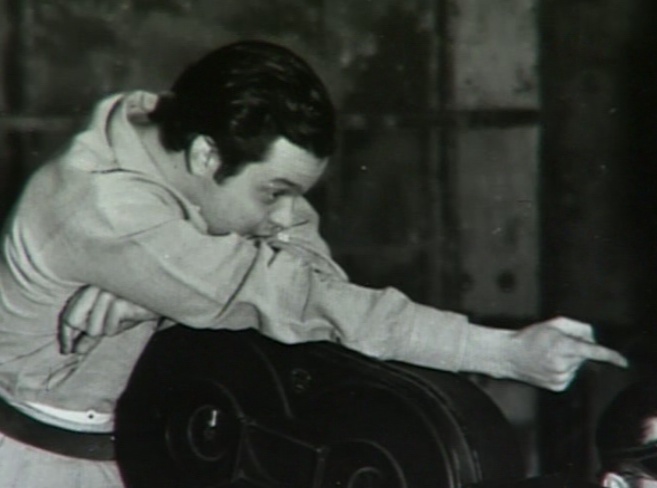
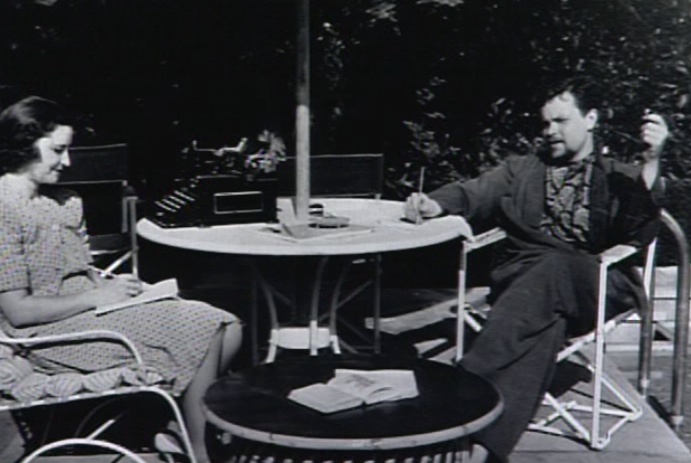
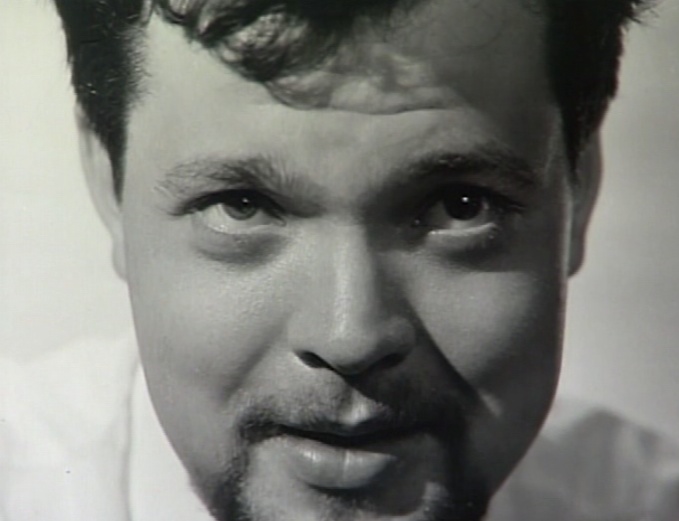
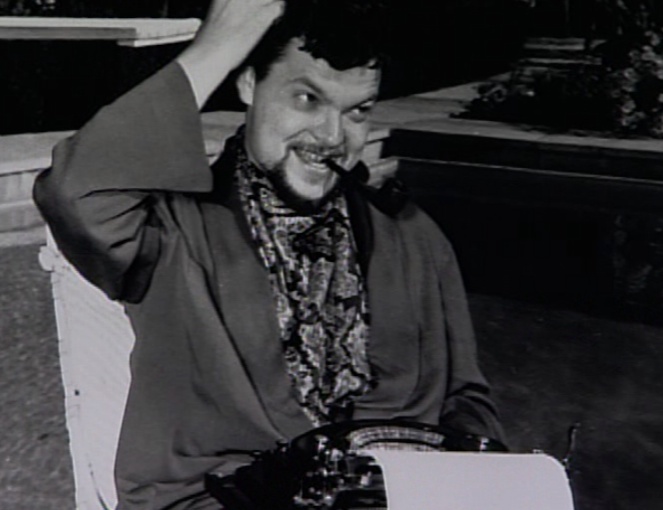
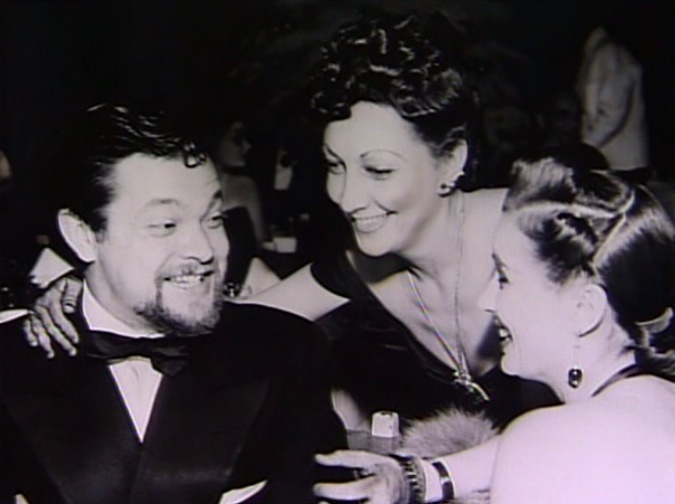
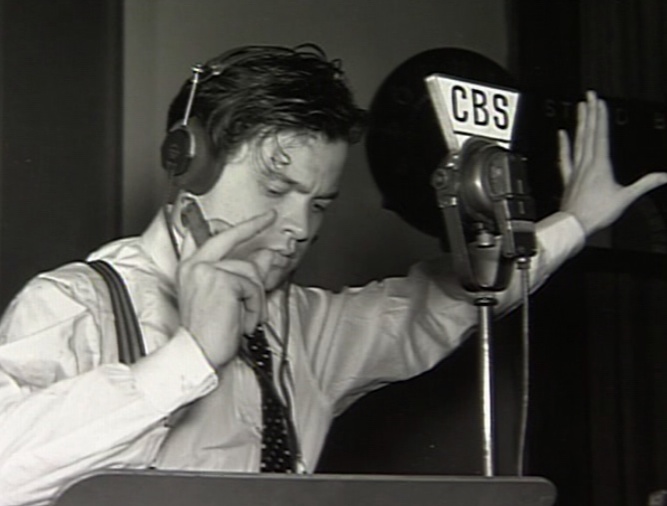
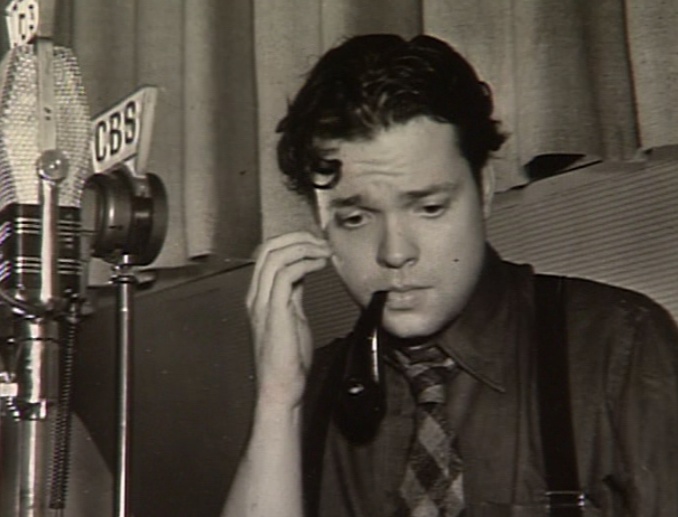
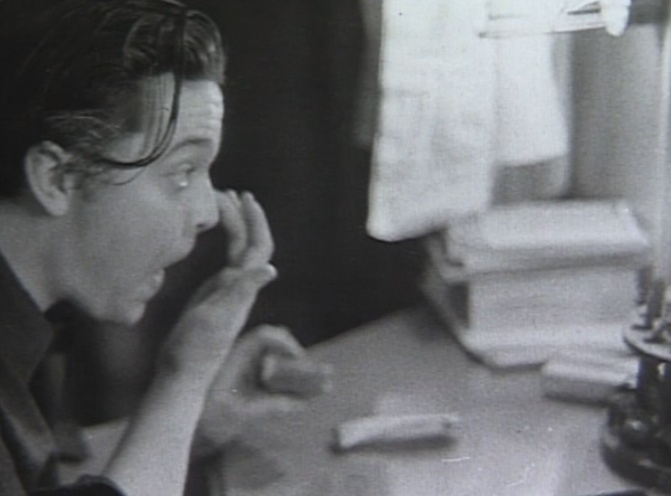
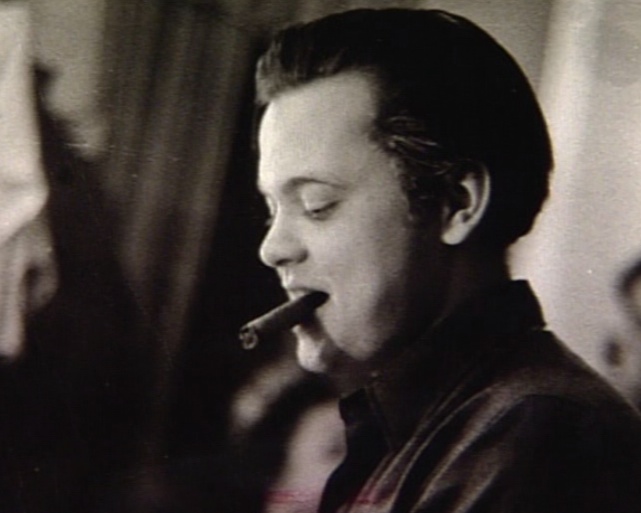
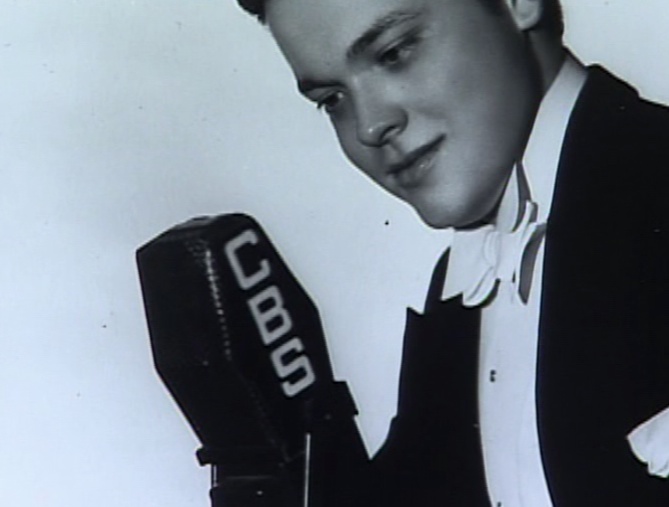
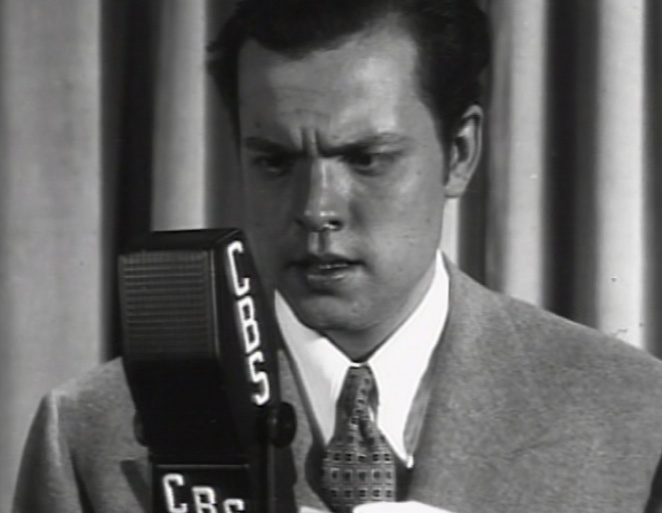
In honor of Orson Welles, one of our most complex and tragic cinematic figures, here is Callow's writing on Julius Caesar, from 1937. And a big montage of young Orson from his New York days, into the Citizen Kane days below the jump.
Happy birthday, Orson!
EXCERPT FROM Orson Welles: Volume 1: The Road to Xanadu
By 1937, though he didn't go so far as to propose changing the title, he had come to the conclusion that Brutus was very much the central figure of the play. The Mercury, the weekly bulletin that was in effect Welles's mouthpiece, stated: 'As those familiar with the play are aware, Julius Caesar is really about Brutus.' Welles himself added: 'Brutus is the classical picture of the eternal, ineffectual, fumbling liberal; the reformer who wants to do something about things but doesn't know how and gets it in the neck at the end. He's dead right all the time, and dead at the final curtain. He's Shakespeare's favourite hero - the fellow who thinks the times are out of joint but who is really out of joint with his time. He's the bourgeois intellectual who, under a modern dictatorship, would be the first to be put up against and wall and shot.'
He had concluded that the play was 'about' the anguish of the liberal in an age of dictators. This emphasis meant that a great deal of the political complexity of the play was sacrificed in order to focus on one man's dilemma. The version Welles fashioned by no means fulfilled Houseman's claim for the production that 'the stress will be on the social implications inherent in the history of Caesar and on the atmosphere of personal greed, fear and hysteria that surrounds a dictatorial regime' or indeed Welles's own claim at the same time that 'it's a timeless tragedy about Caesarism and the collapse of democracy under Caesarism.' Lepidus was axed entirely; Octavius and Antony downgraded, and the mob, so graphically individualised by Shakespeare, relegated to a largely choric function - in the text, that is.
Its function in the staging was heightened, streamlined; but it became a many-headed hydra, losing the dynamics of individuals in a crowd. 'Here we have true fan psychology,' he told The New York Times. 'This is the same mob that tears the buttons off the coat of Robert Taylor. It's the same mob, too, that hangs and burns negroes in the South, the same mob that maltreats the Jews in Germany. It's the Nazi mob anywhere.' Significantly Welles's version starts, not with the scene analysed by a million schoolchildren ('Hence! Home, you idle creatures, get you home!') but with Caesar silencing the crowd. 'Bid every noise be still!' We are in the presence of the Great from the start; there is no context. Rome is its leaders; a distinctly bourgeois reading of history.
Whatever the interpretation, the result was nothing if not effective; a great deal of the Mercury version, in fact, was devised for no other reason than to generate theatrical excitement. The text gives every appearance of having been shaped to accommodate the production, rather than the other way round. His adaptation is exactly comparable to those reviled eighteenth-century adaptors, Garrick and Cibber, his purposes exactly the same as theirs: to exploit the possibilities of their stage-craft and to fit the play to the temper of the times. 'In drastically cutting the last twenty minutes of the play,' wrote Hank Senber in The Mercury, 'Welles was working to clarify the personal aspects of the tragedy and to liberate the play from such concessions to Elizabethan tastes as drums, alarums and mock battles on stage.' And of course, those things did look and sound ridiculous when the warriors in question were wearing long black leather overcoats and jackboots. Welles certainly wasn't going to lose the stunning effectiveness of the uniforms because some of the play didn't fit. Cut it! The lurid theatricality of the regimes of Mussolini and Hitler was an essential element in choosing the context for the play, and the physical look of the production was absolutely clear in Welles's mind from the beginning. There seems, however, to have been some conceptual confusion. If the play - or at any rate the production - is a critique of Caesarism, what does Antony represent? He, surely, is the demagogue, not Caesar; he's Hitler, he's Mussolini. Is Caesar then Hindenburg? Somewhat defensively, Welles told The Mercury: 'I produced the play in modern dress to sharpen contemporary interest rather than to point up or stunt up present-day detail. I'm trying to let Shakespeare's lines do the job of making the play applicable to the tensions of our time.' It was a general feeling of contemporaneity that he was after; not a blow-by-blow parallel.
His absolute certainty about the physical realisation of the concept made his collaborators' work quite cut and dried. Jeanne Rosenthal wrote: 'Welles dictated very clearly and exactly the kind of look he wanted the production to have, a very simple look, based on the Nazi rallies at Nuremberg. The patterns implied in the Nuremberg "festivals" were in terms of platforms, which were the basis of the scenery, and light which went up or down. The uplight was really taken from the effect the Nazis achieved.' (And which Houseman had used before in Panic.) Welles described his concept of the physical production in The Director in the Theatre Today the following year: 'I wanted to present Julius Caesar against a texture of brick, not of stone, and I wanted a color of red that had certain vibrations of blue. In front of this red brick wall I wanted levels and places to act: that was my conception of the production.' Welles's visual confidence is rare among directors. His own skills as a graphic artist, coupled with his experience in designing and building for the Todd Troupers and the Gate Theatre, made him a daunting prospect for a designer. Young Sam Leve, fresh from triumphs with the Federal Theatre Project and the Yiddish Art Theatre, in his own words 'oozing imagination', found that Welles was uninterested in his suggestions. In order to get them even considered, he had to convey them to Houseman, who might, if he liked them, pass them on, a 'humiliating process' for the young designer, in his own words. However, when Welles asked him for sketches, from the hundreds Leve would produce, on Leve's admission he would unerringly choose the best, dismissing the less good ones: 'Sam, you can do better than that.' The two men were exactly the same age, but as usual Welles immediately and automatically assumed command.
'At the Mercury,' wrote Jean Rosenthal, 'nobody else had any identity for him at all. You were production material. If he liked you, the association could be pleasant. If not, it was injurious. As a director, he approached other talents as he did his gargantuan meals - with a voracious appetite. Your contributions to his feast he either spat out or set aside untouched, or he ate them up, assimilated them, with a gusto which was extraordinarily flattering.' And fun: 'the initial stages of anything with Orson were immensely entertaining, which carried everything along ... he never counted the cost of anything to himself or to anyone else.' Rosenthal, who became one of the crucial figures in the development of American theatre lighting before her early death in the sixties, was keenly aware of the growth of the power of directors, and identified Welles as one of the first to dominate every single aspect of a production. Rosenthal avoided confrontation with Welles, but he never doubted her strength, demanding much of her within a framework of respect. Her final judgment, though, on her work with him is a chilling one: 'I do not think Orson made the utmost use of his collaborators' talent, although he often inspired their achievements. He did make the utmost use of his talents at the beginning, but perhaps his lack of respect for others accounts in some measure for the ultimate dissipation of his multiple talents.'
For the time being, the actors were not complaining. Few of them would have been aware of his psychological baggage. What they saw was a man with very determined ideas putting them into practice with a disarming combination of ruthless drilling and amiable anecdotalising, plus a good deal of horseplay. Exuberant, in some ways still a very young man, almost a boy, he dictated the pace and regularity of work according to his personal mood. 'When he felt like rehearsing, we rehearsed. When he felt like sleeping, we didn't rehearse. If he felt like rehearsing from 11.00 at night to 6.00 in the morning, damn stage hands' overtime, full speed ahead,' according to his then stage manager Howard Teichmann. 'He was a brilliant, inventive, imaginative director ... in a class all by himself. He would sit generally at a table in the centre aisle behind the table, and he would have a microphone on the table. And he would whisper his directions into the microphone. This table also served as his dining table. When he was hungry, he would send people out and they would bring in the steaks and the french fries and the ice cream and pots of coffee a foot and a half high, which he would consume with great relish. And when he was tired, he would say, "All right, children." Now mind you, he was younger than most of the people but we were his children.'
'There was no doubt in anyone's mind that Orson was the big star,' said Teichmann. 'He was a year or two older than I am, and he was slim, with a big head and round cheeks and very boyish. And "boy genius" was a term if he didn't create, he didn't fight it off ... You had to be a certain kind of personality to work with Orson. You either had to worship him or you had to meet him on an equal level, or you had to crumble. And a great many people, you know, would end up with ulcers and he was a great one for giving them. He loved everybody, but, boy, he was tough. "Who me, tough? I'm a pussycat." You know, that was his thing ... he played people off against each other.' His manner was calculated to be humorously high-handed, shouting out admonitions - 'shame on you!' a favourite - if the actor's work wasn't to his liking. He was not averse to having a whipping boy: young William Alland, later famous as the producer of The Creature of the Black Lagoon, and known to movie buffs as the shadowy reporter in Citizen Kane, had, when the Mercury was being set up, more or less thrown himself at Welles's feet, and that's more or less where he stayed, as actor, stage manager, gofer and pimp. Welles would roar his name o ut, abusing and cajoling him. It was good-humoured, but only just: a throw away from bullying. If you weren't on the receiving end, it could be fun; to Peg Lloyd it was cheap: 'he seemed a prep school boy with the cheap humour that preppies have. A genius preppy, that's what he was: the ringleader of the bullies on the corner.'
Rehearsals for Julius Caesar took place, initially, not in the theatre (the stage was still being reconstructed) but in an abandoned movie studio in Fort Lee, New Jersey, 'the place where the movie industry began' in the words of Elliot Reid. Under a couple of worklights, while the incessant rain dripped into strategically placed buckets and the plaster tumbled from the roof, Welles arranged his cast on the platforms which Sam Leve had found in an old Shubert warehouse, and which were the essential element of the set that he and Welles had devised. There were four platforms: the first fourteen foot deep (the downstage playing area), the second a narrow high step, the third an eight foot deep plateau, the last a narrower platform rising to a total height of six and a half foot above stage level; there were two flagpoles on either side of the stage. Within this framework, Welles laboured to create the images that he had in his mind. Despite the great informality with which he worked, the stories and the atmosphere of wild, almost boyish fun that he engendered, he was always straining towards a specific and precise visual notion, what Norman Lloyd (playing Cinna the poet) described as 'the shot'. 'Every scene had to have a production idea. Is it a shot? Is there something interesting in it?' He improvised the physical action, constantly altering the moves to achieve the desired shape; the scene wasn't worked out in advance, in the Reinhardt manner, every eyebrow, every sniffle planned. But the effect was much the same: there was no discussion of character or motivation, simply a dedication to discovering what Brecht had called the 'gestus', or gesture, of the scene.
Debate over his methods constantly raged amongst the company, though rarely to his face. Moody, sardonic Coulouris (who during breaks from rehearsal would throw tennis balls against the wall, muttering 'Be a singer, be a singer! Don't be an actor! Acting's horrible') openly challenged Welles, but he became, Jaques-like, a sort of licensed melancholic within the group. For the most part the actors worked happily at the service of Welles's invention. Nor was he intent simply on imposing his ideas on them. Norman Lloyd reports Welles as saying, 'I may not be able to direct actors very well, but once an actor gives me something, I know how to stage it.' Lloyd himself fretted over the absence of any sort of methodology, feeling that the essence or the truth of the scene was sometimes sacrificed to effect; he was none the less delighted by the opportunities Welles's staging afforded him. Welles's instinctive sense of how to release an actor and a scene in physical movement was the equal of his English contemporary, Tryone Guthrie, with whom he shared a revulsion for dealing with the inner life of the character, or indeed, the actor. 'Your problem!' Guthrie would briskly tell his actors as they wrestled with difficulties of this kind; the phrase could just as easily have come from Welles.
The concomitant of this external, linear approach was that if the scene was effective, it succeeded; if it wasn't, it was nothing. Welles struggled for weeks with scenes which resisted his best efforts; this process continued up to the very opening. One such was the scene in which Cinna the poet is killed by the mob. There was from the start a disagreement between actor an director over interpretation, Welles seeing the poet as a version of Marchbanks, all long hair and floppy ties, Lloyd, playing the part, seeing him rather as the sort of man who wrote letters to The New York Times, a prototypical liberal, brilliantly able to see both sides of the situation, congenitally incapable of deciding between them; Archibald MacLeish, in fact. Lloyd hoped to achieve, as he says, an 'essence'. 'I thought you could say "this is what it is to not take a position." ' Welles quickly gave in over the characterisation, because he was obsessed - 'consumed' is the word Lloyd uses - by an idea of how to stage the scene, a musical, choreographic conception of how to show a mob destroying an innocent man. First of all he needed more lines than Shakespeare had provided, so, after experimenting with improvisation, he drafted in a few from Coriolanus; then he enlisted Marc Blitzstein to orchestrate the voices using a beating drum to indicate the rhythm. Welles rehearsed 'this goddam chanting and boom boom boom' for over three weeks. Sometimes Blitzstein took over; neither of them spent any time on the characters or the acting as such.
As for Welles's own performance, it was a low priority. A stage manager stood in for him throughout rehearsals. The result was that by the time of the dress rehearsal, he had barely acted with his fellow players (which can scarcely have helped them in creating their own performances); nor, never having run the scenes himself, was he very clear about where he should actually be standing. No one knew where he would be coming from or where he would be going to and he was frequently shrouded in darkness. To add to the uncertainty, he was very shaky on his lines, having scarcely uttered them during rehearsals. Throughout his career, on film and on stage, he was never entirely in command of his texts. He was not a quick study and rarely had the time or the inclination to ensure that the words were so securely lodged in his memory that they would spring spontaneously to his lips at the appropriate moment. Fortunately, he had considerable powers of iambic improvisation, and could sonorously if meaninglessly coast along for minutes at a time until a familiar line would, to the relief of the actor who was waiting for his cue, emerge. Since he had not rehearsed the part of Brutus, he had of course no opportunity to explore the character, to experiment with his approach, or to open himself to anyone else's view of his work. He had decided at some earlier time who Brutus was - who his Brutus was - and simply slotted it in to the production. Brutus, he said on several occasions, was above all intelligent (the character description for Marcus Brutus in Everybody's Shakespeare reads: 'he is a fine patrician type, his face sensitive and intellectual'). It was Welles's belief that he had a special gift for playing 'thinking people': not, as he expressed it in an interview with Peter Bogdanovich, 'that they're thinking about what they're saying, but that they think outside of the scene ... there are very few actors who can make you believe they think ... that's the kind of part I can play.'
Happy the actor who knows his own gift. He has at least a chance, given a moderate amount of luck and a shrewd choice of work, of playing straight down the centre of the character to create a vivid and clear image of a particular human being. If he is struggling against type, to express things not in his personal experience or make-up, then he will almost certainly miss the core of the character, however interestingly he may embellish its surface. Though Welles was unquestionably intelligent, the most striking feature of his acting persona is not intelligence but power; he described himself, quite accurately, as 'he who plays the king'. Curiously enough, his portrayals of 'thinking people' often lack intellectual conviction: what he demonstrates is thoughtfulness. Partly this stems from a lack of structure in his own thinking; mostly it derives from the simple technical fact of not having completely mastered the text, and thus the thought. Welles, instead of actually thinking, acts it. It would seem that what really drew Welles to the role of Brutus was not so much his cerebral nature, but rather his nobility: this dark, wild, immature, titanically possessed young man wanted to present himself as the very soul of dignity and responsibility. His method of doing so was - according to his own formula - simply to suppress the ignoble parts of himself. Easy.
This cavalier attitude to his own performance is partly explicable by absorption in other responsibilities; but there is a strong suggestion that he became involved in his other responsibilities in order not to have to immerse himself in his own performance. He didn't want to evolve his performance; he didn't want to talk about it, or think about it. In Lehman Engel's acute words: 'His own performances happened suddenly for good or ill. They were or were not at the very outset.' In none of his utterances on the subject of acting does Welles ever speak of the work that goes into a performance. The assumption is that you can either play the part or you can't; if you can, then that's it: you play it. It is a complex matter: he seemed to want to be acclaimed for his acting, but not to have to work on it. He expected to be acknowledged as a major actor, while insisting that acting wasn't a terribly important thing anyway.
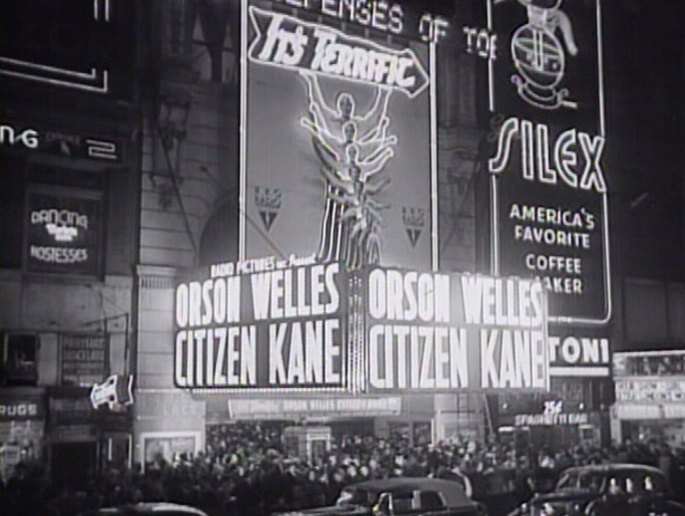
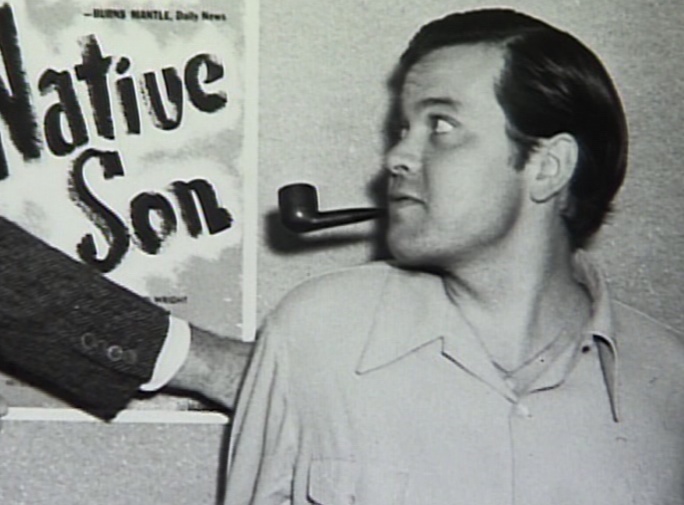

May 3, 2010
Today in history: May 3, 1469

Niccolò Machiavelli was born in Florence, Italy.
We first had to read The Prince
Every time I read the book, it seems like there's something new there. Or it even seems like there are new sections altogether. I think: "Wait a sec ... did I ever actually read this section??" My relationship with the book is ongoing, it's one of those books that changes along with you.
It was difficult to choose an excerpt, because there was so much to choose from. I really like the section on armies. I love all the political and military history stuff ... but I'm gonna post, now, an excerpt from the famous chapter: "On Cruelty and Clemency, and Whether It Is Better to be Loved or Feared".
The edition that I have starts with an awesome introduction about the history of people's responses to this book. How "Macchiavellian" became a certain type of descriptive term pretty much in his lifetime. How the work is misunderstood, essentially. (He's similar to Orwell, in that way. Christopher Hitchens, in Why Orwell Matters
He was a political insider with a cushy government job, until the Medicis took power. Machiavelli was imprisoned, tortured, and then exiled. During his exile, he wrote The Prince, hopefully as a way to get in the good graces of the Medicis. A gift, a presentation: "Here is all that I know about politics. You shouldn't exile me. I can help you. I can be of service to you." Here is a bit from a letter he wrote to a friend:
I am living in the country since my disgrace. I get up at dawn and go to the little wood where I see what work has been done ... [Then comes a long section where he discusses sitting outside, on a hill, reading Dante, Petrarch, Tibullus, Ovid. Then he goes to spend the afternoon at the inn, with the miller, the butcher, a cook, some bricklayers ...] [Spent the afternoon] with these boors playing cards or dice; we quarrel over farthings. When evening comes I return to the house and go into my study. Before I enter I take off my rough mud-stained country dress. I put on my royal and curial robes and thus fittingly attired I enter into the assembly of men of old times. Welcomed by them I feed upon that food which is my true nourishment, and which has made me what I am. I dare to talk with them, and ask them the reason for their actions. Of their kindness they answer me. I no longer fear poverty or death. From these notes I have composed a little work, The Prince.
I find that totally extraordinary. What a description. My favorite part is how he needed to change into his old court robes, even though he was now exiled from the court, in order to get to work in his study. A sense of humility, awe, and respect ... when sitting down to contemplate Dante or Ovid. Sitting there in your mud-stained trousers would be the ultimate insult, and in order to "dare to talk with them", he had to be appropriately dressed. I love that.
Tycho Brahe, apparently, used to put on his court robes every time he looked through a telescope.
One must approach one's work with awe and respect.
I think that's really cool.
The Prince didn't win over the Medicis, and Machiavelli remained an outsider for the rest of his life. But the document stands, as one of the greatest books of political philosophy ever written. If all you remember of it is having to read it in high school, I suggest picking it up again. It's a quick read, a slim volume, but it still packs a punch today!
Here's an excerpt from The Prince
From this arises the question whether it is better to be loved more than feared, or feared more than loved. The reply is, that one ought to be both feared and loved, but as it is difficult for the two to go together, it is much safer to be feared than loved, if one of the two has to be wanting. For it may be said of men in general that they are ungrateful, voluble, dissemblers, anxious to avoid danger, and covetous of gain; as long as you benefit them, they are entirely yours; they offer you their blood, their goods, their life, and their children, as I have before said, when the necessity is remote; but when it approaches, they revolt. And the prince who has relied solely on their words, without making other preparations, is ruined; for the friendship which is gained by purchase and not through grandeur and nobility of spirit is bought but not secured, and at a pinch is not to be expended in your service. And men have less scruple in offending one who makes himself loved than one who makes himself feared; for love is held by a chain of obligation, which, men being selfish, is broken whenever it serves their purpose; but fear is maintained by a dread of punishment which never fails.Still, a prince should make himself feared in such a way that if he does not gain love, he at any rate avoids hatred; for fear and the absence of hatred may go well together, and will be always attained by one who abstains from interfering with the property of his citizens and his subjects or with their women. And when he is obliged to take the life of any one, let him do so when there is a proper justification and manifest reason for it; but above all he must abstain from taking the property of others, for men forget more easily the death of their father than the loss of their patrimony. [I guess Marx and Lenin didn't read their Machiavelli, huh?] Then also pretexts for seizing property are never wanting, and one who begins to live by rapine will always find some reason for taking the goods of others, whereas causes for taking life are rarer and more fleeting.
But when the prince is with his army and has a large number of soldiers under his control, then it is extremely necessary that he should not mind being thought cruel; for without this reputation he could not keep his army united or disposed to any duty. Among the noteworthy actions of Hannibal is numbered this, that although he had an enormous army, composed of men of all nations and fighting in foreign countries, there never arose any dissension either among them or against the prince, either in good fortune or in bad. This could not be due to anything but his inhuman cruelty, which together with his infinite other virtues, made him always venerated and terrible in the sight of his soldiers, and without it his other virtues would not have sufficed to produce that effect. Thoughtless writers admire on the one hand his actions, and on the other blame the principal cause of them.
And that it is true that his other virtues would not have sufficed may be seen from the case of Scipio (famous not only in regard to his own times, but all times of which memory remains), whose armies rebelled against him in Spain, which arose from nothing but his excessive kindness, which allowed more licence to the soldiers than was consonant with military discipline. He was reproached with this in the senate by Fabius Maximus, who called him a corrupter of the Roman militia. Locri having been destroyed by one of Scipio's officers was not revenged by him, nor was the insolence of that officer punished, simply by reason of his easy nature; so much so, that some one wishing to excuse him in the senate, said that there were many men who knew rather how not to err, than how to correct the errors of others. This disposition would in time have tarnished the fame and glory of Scipio had he persevered in it under the empire, but living under the rule of the senate this harmful quality was not only concealed but became a glory to him.
I conclude, therefore, with regard to being feared and loved, that men love at their own free will, but fear at the will of the prince, and that a wise prince must rely on what is in ihis power and not on what is in the power of others, and he must only contrive to avoid incurring hatred, as has been explained.
Happy birthday, Machiavelli!
April 18, 2010
Today in history: April 18-19, 1775: "I set off upon a very good Horse"
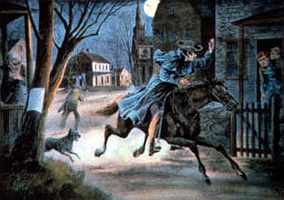
On the night of April 18, into April 19, in 1775, Paul Revere made his famous ride.
The spring of 1775 was a tense time. Prominent Bostonians were under constant threat of arrest from the British, and many of them - to avoid this - moved their families to outlying communities. However, two of the main patriotic leaders (Benjamin Church and Joseph Warren) stayed in Boston. Paul Revere did as well, and kept a close eye on British movements through that spring. Revere was trusted as a messenger, he knew everybody.
In mid-April, Revere started to notice some ominous signs: mainly that the British ships were taken out of the water, to be worked on, repaired. He could sense that something was coming. He felt the British were preparing for some kind of attack.
Revere went to Concord on April 16 (most of the weaponry was stored there) and warned the leaders of that community that the British were preparing something, they were up to something, and if they were going to strike, they would most definitely try to seize the weapons stash in Concord. So the people of Concord went to work, hiding their store of weapons in barns, cellars, swamps, etc. (Like I mentioned: Paul Revere was trusted. He knew everybody. If you're interested, read the excerpt I posted of Malcolm Gladwell's fascinating analysis of Paul Revere - and Gladwell's comparison with the far less successful messenger on that very same night - William Dawes.)
So. April 16. Revere returned to Boston from Concord, and met with other revolutionary leaders, and that is when they came up with the "one if by land, two if by sea" warning system. Revere knew they needed a way to have some advance warning about which route the British were going to take when they finally did attack.
By land? Or by sea?
So, Revere set up the system: Signal lanterns would be placed in the belfry of Old North Church (the steeple can be seen across the Charles River). If two lanterns were hung, then the British would be crossing the Charles by boat. If one lantern was hung, then the British would choose to attack using a land route.
"One if by land, two if by sea."
The plan was put in place just in time. On April 18, in the early evening, a stable boy came to Paul Revere, telling him that he had overheard some British soldiers discussing the upcoming attack, and that it was planned for early the next morning. The stable boy knew who to bring this information to, and that was Paul Revere. (Again, check out Gladwell's analysis of Paul Revere's personality. Really interesting.)
Revere, on receiving this urgent piece of information, knew he had to get the warning out (and that he especially had to warn John Hancock and Samuel Adams who, at that time, were hiding out in Lexington).
So off he went on his now legendary ride (here's a cool map of the route he took). Revere took the water route out of Boston, rowed across the Charles, and galloped through the communities north of Boston sounding the alarm. (Medford, Charlestown, Lexington, Concord.) Because of Paul Revere, the British had completely lost the element of surprise. When they came to attack, they found the rebellious colonists waiting for them everywhere, ambushing them left and right, from behind stone walls, hiding behind trees ...
An interesting tidbit (this is why I love this time in American history - yeah, the events themselves are really cool ... but it's details like the following one that really have me hooked, like a crack addict):
In his hurry to depart, Revere forgot to bring along pieces of cloth to wrap the oars of his boat. The purpose of the cloth would be to muffle the sound of the oars cutting through the water. The Somerset (the British man-of-war) was at anchor, right there in the harbor. Paul Revere had to row right by them, and so any sound at all would have alerted the crew, and if Revere was busted, the whole jig would be up. Revere was in a bit of a pickle ... standing by his boat, trying to figure out how he could improvise ... could he take off his stockings? Tie them around the end of the oars?
One of the boatmen involved in helping Revere make this crossing came to the rescue. He ran to his girlfriend's house and asked her for her petticoat. One can only imagine her startled response to the nighttime demand at her door from her beau: "Please, dear. It's 10 pm, and I need you to take off your petticoat, give it to me, and don't ask me ANY questions about it!!" But apparently, this girl, whoever she was, complied - took off her petticoat, handed it over, and Revere used it to wrap up the ends of his oars.
I love that woman, whoever she is. You're part of this story, dear, even though your name has not been passed down through the ages.
So. In honor of this great moment in American history -here is Henry Wadsworth Longfellow's celebrated poem "Paul Revere's Ride". And below that, I am posting an old essay I wrote about babysitting Cashel - which is relevant to this date in history. A couple years ago, I read the Cashel piece on a radio program, which was a pretty cool experience - and reading over the piece today makes me nostalgic for when Cashel was so little!!
But back to the poem: I know large swaths of it by heart ... I grew up hearing it. I'm an East Coast girl, most of my family is from Boston. So all of these places in the poem are places I had been to many times as a child, and not just a tourist ... but just because we lived near them. That piece of history felt very real to me. The poem is thrilling to me - because of the story it tells, of course, but also because of its rollicking perfect rhythm, you can feel the suspense, you can feel the urgency, the whole thing ends up sounding like the clatter of horses hooves galloping through the night. It's meant to be read out loud. Try it for yourself!! The last stanza is beyond compare. "For borne on the night-wind of the Past ..." I mean, come ON!! I love, too, how Longfellow includes the bit about the "muffled oar". These things pass on into folk tales at some point, a local mythology, and that's part of the reason why I love it.
April 18, 1775. A great day in American history. "The fate of a nation was riding that night." One of my personal favorite stories of the American revolution.
Paul Revere's Ride
- by Henry Wadsworth LongfellowListen my children and you shall hear
Of the midnight ride of Paul Revere,
On the eighteenth of April, in Seventy-five;
Hardly a man is now alive
Who remembers that famous day and year.
He said to his friend, "If the British march
By land or sea from the town to-night,
Hang a lantern aloft in the belfry arch
Of the North Church tower as a signal light,--
One if by land, and two if by sea;
And I on the opposite shore will be,
Ready to ride and spread the alarm
Through every Middlesex village and farm,
For the country folk to be up and to arm."
Then he said "Good-night!" and with muffled oar
Silently rowed to the Charlestown shore,
Just as the moon rose over the bay,
Where swinging wide at her moorings lay
The Somerset, British man-of-war;
A phantom ship, with each mast and spar
Across the moon like a prison bar,
And a huge black hulk, that was magnified
By its own reflection in the tide.
Meanwhile, his friend through alley and street
Wanders and watches, with eager ears,
Till in the silence around him he hears
The muster of men at the barrack door,
The sound of arms, and the tramp of feet,
And the measured tread of the grenadiers,
Marching down to their boats on the shore.
Then he climbed the tower of the Old North Church,
By the wooden stairs, with stealthy tread,
To the belfry chamber overhead,
And startled the pigeons from their perch
On the sombre rafters, that round him made
Masses and moving shapes of shade,--
By the trembling ladder, steep and tall,
To the highest window in the wall,
Where he paused to listen and look down
A moment on the roofs of the town
And the moonlight flowing over all.
Beneath, in the churchyard, lay the dead,
In their night encampment on the hill,
Wrapped in silence so deep and still
That he could hear, like a sentinel's tread,
The watchful night-wind, as it went
Creeping along from tent to tent,
And seeming to whisper, "All is well!"
A moment only he feels the spell
Of the place and the hour, and the secret dread
Of the lonely belfry and the dead;
For suddenly all his thoughts are bent
On a shadowy something far away,
Where the river widens to meet the bay,--
A line of black that bends and floats
On the rising tide like a bridge of boats.
Meanwhile, impatient to mount and ride,
Booted and spurred, with a heavy stride
On the opposite shore walked Paul Revere.
Now he patted his horse's side,
Now he gazed at the landscape far and near,
Then, impetuous, stamped the earth,
And turned and tightened his saddle girth;
But mostly he watched with eager search
The belfry tower of the Old North Church,
As it rose above the graves on the hill,
Lonely and spectral and sombre and still.
And lo! as he looks, on the belfry's height
A glimmer, and then a gleam of light!
He springs to the saddle, the bridle he turns,
But lingers and gazes, till full on his sight
A second lamp in the belfry burns.
A hurry of hoofs in a village street,
A shape in the moonlight, a bulk in the dark,
And beneath, from the pebbles, in passing, a spark
Struck out by a steed flying fearless and fleet;
That was all! And yet, through the gloom and the light,
The fate of a nation was riding that night;
And the spark struck out by that steed, in his flight,
Kindled the land into flame with its heat.
He has left the village and mounted the steep,
And beneath him, tranquil and broad and deep,
Is the Mystic, meeting the ocean tides;
And under the alders that skirt its edge,
Now soft on the sand, now loud on the ledge,
Is heard the tramp of his steed as he rides.
It was twelve by the village clock
When he crossed the bridge into Medford town.
He heard the crowing of the cock,
And the barking of the farmer's dog,
And felt the damp of the river fog,
That rises after the sun goes down.
It was one by the village clock,
When he galloped into Lexington.
He saw the gilded weathercock
Swim in the moonlight as he passed,
And the meeting-house windows, black and bare,
Gaze at him with a spectral glare,
As if they already stood aghast
At the bloody work they would look upon.
It was two by the village clock,
When he came to the bridge in Concord town.
He heard the bleating of the flock,
And the twitter of birds among the trees,
And felt the breath of the morning breeze
Blowing over the meadow brown.
And one was safe and asleep in his bed
Who at the bridge would be first to fall,
Who that day would be lying dead,
Pierced by a British musket ball.
You know the rest. In the books you have read
How the British Regulars fired and fled,---
How the farmers gave them ball for ball,
From behind each fence and farmyard wall,
Chasing the redcoats down the lane,
Then crossing the fields to emerge again
Under the trees at the turn of the road,
And only pausing to fire and load.
So through the night rode Paul Revere;
And so through the night went his cry of alarm
To every Middlesex village and farm,---
A cry of defiance, and not of fear,
A voice in the darkness, a knock at the door,
And a word that shall echo for evermore!
For, borne on the night-wind of the Past,
Through all our history, to the last,
In the hour of darkness and peril and need,
The people will waken and listen to hear
The hurrying hoof-beats of that steed,
And the midnight message of Paul Revere.

Paul Revere himself wrote of that time (it's such a cliffhanger, with people threatening to "blow his brains out" every other second):
In the Fall of 1774 and Winter of 1775 I was one of upwards of thirty, cheifly mechanics, who formed our selves in to a Committee for the purpose of watching the Movements of the British Soldiers, and gaining every intelegence of the movements of the Tories.We held our meetings at the Green-Dragon Tavern. We were so carefull that our meetings should be kept Secret; that every time we met, every person swore upon the Bible, that they would not discover any of our transactions, But to Messrs. HANCOCK, ADAMS, Doctors WARREN, CHURCH, and one or two more.
About November, when things began to grow Serious, a Gentleman who had Conections with the Tory party, but was a Whig at heart, acquainted me, that our meetings were discovered, and mentioned the identical words that were spoken among us the Night before. . . . We removed to another place, which we thought was more secure: but here we found that all our transactions were communicated to Governor Gage. (This came to me through the then Secretary Flucker; He told it to the Gentleman mentioned above). It was then a common opinion, that there was a Traytor in the provincial Congress, and that Gage was posessed of all their Secrets. (Church was a member of that Congress for Boston.) In the Winter, towards the Spring, we frequently took Turns, two and two, to Watch the Soldiers, By patroling the Streets all night. The Saturday Night preceding the 19th of April, about 12 oClock at Night, the Boats belonging to the Transports were all launched, and carried under the Sterns of the Men of War. (They had been previously hauld up and repaired). We likewise found that the Grenadiers and light Infantry were all taken off duty.
From these movements, we expected something serious was [to] be transacted. On Tuesday evening, the 18th, it was observed, that a number of Soldiers were marching towards the bottom of the Common. About 10 o'Clock, Dr. Warren Sent in great haste for me, and beged that I would imediately Set off for Lexington, where Messrs. Hancock and Adams were, and acquaint them of the Movement, and that it was thought they were the objets. When I got to Dr. Warren's house, I found he had sent an express by land to Lexington—a Mr. Wm. Daws. The Sunday before, by desire of Dr. Warren, I had been to Lexington, to Mess. Hancock and Adams, who were at the Rev. Mr. Clark's. I returned at Night thro Charlestown; there I agreed with a Col. Conant, and some other Gentlemen, that if the British went out by Water, we would shew two Lanthorns in the North Church Steeple; and if by Land, one, as a Signal; for we were aprehensive it would be dificult to Cross the Charles River, or git over Boston neck. I left Dr. Warrens, called upon a friend, and desired him to make the Signals. I then went Home, took my Boots and Surtout, and went to the North part of the Town, Where I had kept a Boat; two friends rowed me across Charles River, a little to the eastward where the Somerset Man of War lay. It was then young flood, the Ship was winding, and the moon was Rising. They landed me on Charlestown side. When I got into Town, I met Col. Conant, and several others; they said they had seen our signals. I told them what was Acting, and went to git me a Horse; I got a Horse of Deacon Larkin. While the Horse was preparing, Richard Devens, Esq. who was one of the Committee of Safty, came to me, and told me, that he came down the Road from Lexington, after Sundown, that evening; that He met ten British Officers, all well mounted, and armed, going up the Road.
I set off upon a very good Horse; it was then about 11 o'Clock, and very pleasant. After I had passed Charlestown Neck, and got nearly opposite where Mark was hung in chains, I saw two men on Horse back, under a Tree. When I got near them, I discovered they were British officer. One tryed to git a head of Me, and the other to take me. I turned my Horse very quick, and Galloped towards Charlestown neck, and then pushed for the Medford Road. The one who chased me, endeavoring to Cut me off, got into a Clay pond, near where the new Tavern is now built. I got clear of him, and went thro Medford, over the Bridge, and up to Menotomy. In Medford, I awaked the Captain of the Minute men; and after that, I alarmed almost every House, till I got to Lexington. I found Messrs. Hancock and Adams at the Rev. Mr. Clark's; I told them my errand, and inquired for Mr. Daws; they said he had not been there; I related the story of the two officers, and supposed that He must have been stopped, as he ought to have been there before me. After I had been there about half an Hour, Mr. Daws came; we refreshid our selves, and set off for Concord, to secure the Stores, &c. there. We were overtaken by a young Docter Prescot, whom we found to be a high Son of Liberty. I told them of the ten officers that Mr. Devens mett, and that it was probable we might be stoped before we got to Concord; for I supposed that after Night, they divided them selves, and that two of them had fixed themselves in such passages as were most likely to stop any intelegence going to Concord. I likewise mentioned, that we had better allarm all the Inhabitents till we got to Concord; the young Doctor much approved of it, and said, he would stop with either of us, for the people between that and Concord knew him, and would give the more credit to what we said. We had got nearly half way. Mr Daws and the Doctor stoped to allarm the people of a House: I was about one hundred Rod a head, when I saw two men, in nearly the same situation as those officer were, near Charlestown. I called for the Doctor and Daws to come up;—in an Instant I was surrounded by four;—they had placed themselves in a Straight Road, that inclined each way; they had taken down a pair of Barrs on the North side of the Road, and two of them were under a tree in the pasture. The Docter being foremost, he came up; and we tryed to git past them; but they being armed with pistols and swords, they forced us in to the pasture;—the Docter jumped his Horse over a low Stone wall, and got to Concord. I observed a Wood at a Small distance, and made for that. When I got there, out Started Six officers, on Horse back, and orderd me to dismount;—one of them, who appeared to have the command, examined me, where I came from, and what my Name Was? I told him. He asked me if I was an express? I answered in the afirmative. He demanded what time I left Boston? I told him; and aded, that their troops had catched aground in passing the River, and that There would be five hundred Americans there in a short time, for I had alarmed the Country all the way up. He imediately rode towards those who stoppd us, when all five of them came down upon a full gallop; one of them, whom I afterwards found to be Major Mitchel, of the 5th Regiment, Clapped his pistol to my head, called me by name, and told me he was going to ask me some questions, and if I did not give him true answers, he would blow my brains out. He then asked me similar questions to those above. He then orderd me to mount my Horse, after searching me for arms. He then orderd them to advance, and to lead me in front. When we got to the Road, they turned down towards Lexington. When we had got about one Mile, the Major Rode up to the officer that was leading me, and told him to give me to the Sergeant. As soon as he took me, the Major orderd him, if I attempted to run, or any body insulted them, to blow my brains out. We rode till we got near Lexington Meeting-house, when the Militia fired a Voley of Guns, which appeared to alarm them very much. The Major inquired of me how far it was to Cambridge, and if there were any other Road? After some consultation, the Major Rode up to the Sargent, and asked if his Horse was tired? He answered him, he was--(He was a Sargent of Grenadiers, and had a small Horse)—then, said He, take that man's Horse. I dismounted, and the Sargent mounted my Horse, when they all rode towards Lexington Meeting-House. I went across the Burying-ground, and some pastures, and came to the Revd. Mr. Clark's House, where I found Messrs. Hancok and Adams. I told them of my treatment, and they concluded to go from that House to wards Woburn. I went with them, and a Mr. Lowell, who was a Clerk to Mr. Hancock. When we got to the House where they intended to stop, Mr. Lowell and my self returned to Mr. Clark's, to find what was going on. When we got there, an elderly man came in; he said he had just come from the Tavern, that a Man had come from Boston, who said there were no British troops coming. Mr. Lowell and my self went towards the Tavern, when we met a Man on a full gallop, who told us the Troops were coming up the Rocks. We afterwards met another, who said they were close by. Mr. Lowell asked me to go to the Tavern with him, to git a Trunk of papers belonging to Mr. Hancock. We went up Chamber; and while we were giting the Trunk, we saw the British very near, upon a full March. We hurried to wards Mr. Clark's House. In our way, we passed through the Militia. There were about 50. When we had got about 100 Yards from the meeting-House the British Troops appeard on both Sides of the Meeting-House. In their Front was an Officer on Horse back. They made a Short Halt; when I saw, and heard, a Gun fired, which appeared to be a Pistol. Then I could distinguish two Guns, and then a Continual roar of Musquetry; When we made off with the Trunk.
As I have mentioned Dr. Church, perhaps it might not be disagreeable to mention some Matters of my own knowledge, respecting Him. He appeared to be a high son of Liberty. He frequented all the places where they met, Was incouraged by all the leaders of the Sons of Liberty, and it appeared he was respected by them, though I knew that Dr. Warren had not the greatest affection for him. He was esteemed a very capable writer, especially in verese; and as the Whig party needed every Strenght, they feared, as well as courted Him. Though it was known, that some of the Liberty Songs, which We composed, were parodized by him, in favor of the British, yet none dare charge him with it. I was a constant and critical observer of him, and I must say, that I never thought Him a man of Principle; and I doubted much in my own mind, wether He was a real Whig. I knew that He kept company with a Capt. Price, a half-pay British officer, and that He frequently dined with him, and Robinson, one of the Commissioners. I know that one of his intimate aquaintances asked him why he was so often with Robinson and Price? His answer was, that He kept Company with them on purpose to find out their plans. The day after the Battle of Lexington, I met him in Cambridge, when He shew me some blood on his stocking, which he said spirted on him from a Man who was killed near him, as he was urging the Militia on. I well remember, that I argued with my self, if a Man will risque his life in a Cause, he must be a Friend to that cause; and I never suspected him after, till He was charged with being a Traytor.
The full letter can be read here.
ONE IF BY LAND: An afternoon with Cashel
We colored for a while. As we waited for the pizza to arrive. Cashel commanded me to draw a house. So I did. Cashel was basically the architect and the interior designer. Telling me what he wanted to see.
"Put a playroom in the attic."
"But Auntie Sheila -- where are the stairs??"
I drew the bathroom, and the mere sight of the toilet caused Cashel to dissolve into mirth. Yes. Toilets are hilarious.
I drew a spiral staircase which blew Cashel away. "That's so COOL." Then I drew the living room. I said, "I think there needs to be a picture on the wall. Or a portrait. Whose picture should be on the wall, you think?"
Cashel said bluntly, "Einstein."
Okay, then. Einstein. So I drew this little cartoon of Einstein, with the crazy hair coming up, and Cashel said seriously, with all of his knowledge, "That really looks like Einstein."
We ate our pizza together, talking about stuff. Star Wars, Ben Franklin. Cashel informed me, "Ben Franklin discovered lightning."
Cashel is a wealth of information. Randomly, he told my parents that Vincent Van Gogh never sold a painting while he was alive, but that after he died, he became famous.
I read him a story. It was from the book of "Disney stories" which I had given him for his birthday. He loves it. He pulled it out of the bookshelf, and I said, "Oh! I gave that to you!" Cashel said, a little bit annoyed, "I know that."
He had me read the story of the little mouse who hung out with Ben Franklin, and basically (in the world of Disney) was the inspiration for all of Ben Franklin's famous moments. Cashel would shoot questions at me. "Why is Ben Franklin's hair white?" "Well ... he's old now. But also, in those days, men wore powdered wigs." Cashel's little serious face, listening, sponging this all up. Probably the next day he informed his friends that men in the olden days wore powdered wigs. He's that kind of listener, that kind of learner.
Then he put on his Obi Wan Kenobi costume which Grandma Peggy made him for Christmas. A long hooded brown cloak ... and he hooked his light saber into his waist, and galloped off down the hall. A mini Jedi knight.
I had him pick out three stories to read before bedtime. He sat beside me, curled up into me, looking at the pictures as I read to him. The last one we read was Longfellow's poem "Paul Revere's Ride". This poem was a favorite of ours, when we were kids. My dad would read it to us, and even now, when I read the words, I hear them in my father's voice. A magical poem. The way my dad read it to us (along with Longfellow's help) made us SEE it. The clock tower, the moon, the darkness ... the sense of anticipation, of secrecy, of urgency. It was thrilling. So I love that this is being passed on to Cashel! I've never read the poem outloud before, so I had one of those strange moments of the space-time continuum bending, me stepping into my father's shoes, Cashel 5 years old beside me, feeling the ghost of my own 5 year old self listening.
I also remember how Brendan and I used to chime in gleefully: "ONE IF BY LAND, TWO IF BY SEA!" And Cashel did the same thing. I paused before that moment in the poem, glanced down at him, and he screamed out, "ONE IF BY LAND, TWO IF BY SEA!"
There was also a subtlety of understanding in Cashel. For example, I read this part:
And lo! as he looks, on the belfry's height
A glimmer, and then a gleam of light!
He springs to the saddle, the bridle he turns,
But lingers and gazes, till full on his sight
A second lamp in the belfry burns.
And Cashel exclaimed, in a sort of "Uh-oh" tone, "They're comin' by sea!!" Now the words don't actually SAY that, but he remembered the "one if by land two if by sea" signal, and puts it all together. That's my boy!
I remembered the first lines from memory:
Listen my children and you shall hear
Of the midnight ride of Paul Revere,
On the eighteenth of April, in Seventy-five;
Hardly a man is now alive
Who remembers that famous day and year.
Again, those are just words on the page. But to me, they are filled with the echoes of my father's voice.
Cashel and I, as we went through the poem, had to stop many times for discussions.
There was one illustration of all the minute-men, hiding behind the stone walls, with a troop of Redcoats marching along, walking straight into the ambush. Cashel pointed at it, and stated firmly, "That's the civil war."
"Nope. Nope. That is actually a picture from the American Revolutionary War."
Cashel pondered this. Taking it in. Then: "The minute-men were in the civil war." But less certain. Glancing up at me for explanation.
"Nope. The minute-men were soldiers in the American Revolution. Do you know why they called them that?"
"Why?"
"Cause they were farmers, and regular people ... but they could be ready to go into battle in a minute."
Again, a long silence. Cashel filed this away for safekeeping. He forgets nothing.
"So ... Auntie Sheila ... what is the difference between the Revolutionary War and the Civil War?"
Woah. Okay. This will be a test. How to describe all of that in 5-year-old language. I mean, frankly, Cashel is not like a five-year-old at all. But still. Everything must be boiled down into its simplest components.
"Well. America used to be a part of England, and the American Revolutionary War was when America decided that it wanted to be free ... and Americans basically told the Brits to go home." Uh-oh. Brits? This is an inflammatory term. I corrected myself. "America told Great Britain that it wanted to be its own country. And the Civil War ... " Hmmm. How to begin ... what to say ... I know it was about more than slavery, but I decided to only focus on that one aspect. Economic theory and regional cultural differences would be too abstract. "In those days, Cashel, black people were slaves. And it was very very wrong. Can you understand that?"
He nodded. His little serious face.
"And the people in the South wanted to keep their slaves, and the people in the North said to the people in the South that they had to give up their slaves. And they ended up going to war. And eventually all the slaves were free."
Cashel accepted this explanation silently. Then he pointed back to the Paul Revere poem. "Read." he commanded.

April 17, 2010
Today in history: April 17, 1897
American playwright Thornton Wilder was born.

A snarky funny anecdote about Wilder from Tennessee Williams's Memoirs
Streetcar opened in New Haven in early November of 1947, and nobody seemed to know what the notices were or to be greatly concerned. After the New Haven opening night we were invited to the quarters of Mr. Thornton Wilder, who was in residence there. It was like having a papal audience. We all sat about this academic gentleman while he put the play down as if delivering a papal bull. He said that it was based upon a fatally mistaken premise. No female who had ever been a lady (he was referring to Stella) could possibly marry a vulgarian such as Stanley.We sat there and listened to him politely. I thought, privately, This character has never had a good lay.
This one below is one of my favorite anecdotes of all time. It comes from the book The Actor's Chekhov
Interview with PETER HUNT:
When you hit your head on a wall, back up and go another direction. Don't be afraid to say you're wrong.My favorite example of that is the Our Town story. Nikos [Psacharapolus] was directing, and Thornton Wilder himself was playing the Stage Manager. For some reason he and I struck up a friendship, and one day we were standing and talking, and Nikos burst out of the rehearsal room and came up to Thornton and said, "The scene isn't working." And Thornton Wilder said, "What? The scene isn't working?" Nikos said, "Yeah, George and Emily, they're on the ladder, doing the homework scene." And Thornton said, "What's wrong with it?" And Nikos said, "It doesn't work." And Thornton said, "What are you talking about, it's a Pulitzer-Prize winning play, it works!" And Nikos said, "It's not working. They're up there, I'm playing all the values, they're in love, he's in love with her, they want to get married – but it's not working." Thornton's jaw drops to the floor and he says, "My lord, what are you doing? It's very simple! He's stupid and she's smart, and if he doesn't get the algebra questions for tomorrow's homework, he's going to flunk. THAT'S IT." And Nikos said, "But Thornton, it's a love scene!" And Thornton said, "That's for the audience to decide." And Nikos said, "Got it!" And he rips open the door to the rehearsal room and yells, "Everything we worked on is off! You're dumb, you're smart! Play it!"
If you have ever seen Our Town
My tribute piece to Paul Newman includes an analysis of one of his moments as The Stage Manager in Our Town, and how he said a certain line in a way I had never heard it before. A way that made beautiful horrible sense, and made me see that moment in a new light. A true tribute to the power of that American classic.
And finally. This:

What is that, you may ask? A page from Thornton Wilder's copy of Finnegans Wake
Thornton Wilder said:
"I am not interested in ... such subjects as the adulteries of dentists. I am interested in those things that repeat and repeat and repeat in the lives of the millions."
Happy birthday, sir.
April 13, 2010
Today in history: April 13, 1743
Thomas Jefferson was born.

James Parton:
A gentleman of 32 who could calculate an eclipse, survey an estate, tie an artery, plan an edifice, try a cause, break a horse, dance a minuet, and play the violin.
From David McCullough's John Adams
[Thomas] Jefferson was devoted to the ideal of improving mankind but had comparatively little interest in people in particular. [John] Adams was not inclined to believe mankind improvable, but was certain it was important that human nature be understood.
Thomas Jefferson, 1787:
The whole commerce between master and slave is a perpetual exercise of the most boisterous passions, the most unremitting despotism on the one part, and degrading submissions on the other. Our children see this, and learn to imitate it - The parent storms, the child looks on, catches the lineaments of wrath, puts on the same airs in the circle of smaller slaves, gives a loose to his worst passions, and thus nursed, educated, and daily exercised in tyranny, cannot but be stamped by it with odious peculiarities. The man must be a prodigy who can retain his manners and morals undepraved by such circumstances - if a slave can have a country in this world, it must be any other in preference to that in which he is to be born to live and labor for another - or entail his own miserable condition on the endless generations proceeding from him - Indeed, I tremble for my country when I reflect that God is just: that his justice cannot sleep forever.
Excerpt from Paul Johnson's magnificent History of the American People:
In terms of all-round learning, gifts, sensibilities, and accomplishments, there has never been an American like him, and generations of educated Americans have rated him higher even than Washington and Lincoln…We know a great deal about this remarkable man, or think we do. His Writings, on a bewildering variety of subjects, have been published in twenty volumes. In addition, twenty-five volumes of his papers have appeared so far, plus various collections of his correspondence, including three thick volumes of his letters to his follower and successor James Madison alone. In some ways he was a mass of contradictions. He thought slavery an evil institution, which corrupted the master even more than it oppressed the chattel. But he owned, bought, sold, and bred slaves all his adult life. He was a deist, possibly even a skeptic; yet he was also a 'closet theologian,' who read daily from a multilingual edition of the New Testament. He was an elitist in education – 'By this means twenty of the best geniuses will be raked from the rubbish annually' – but he also complained bitterly of elites, 'those who, rising above the swinish multitude, always contrive to nestle themselves into places of power and profit'. He was a democrat, who said he would 'always have a jealous care of the right of election by the people.' Yet he opposed direct election of the Senate on the ground that 'a choice by the people themselves is not generally distinguished for its wisdom'. He could be an extremist, glorying in the violence of revolution: 'What country before ever existed a century and a half without rebellion?…The tree of liberty must be refreshed from time to time with the blood of patriots and tyrants. It is its natural manure.' Yet he said of Washington: 'The moderation and virtue of a single character has probably prevented this revolution from being closed, as most others have been, by a subversion of that liberty it was intended to establish.'
No one did more than he did to create the United States of America. Yet he referred to Virginia as 'my country' and to the Congress as 'a foreign legislature'. His favorite books were Don Quixote and Tristam Shandy. Yet he lacked a sense of humor. After the early death of his wife, he kept – it was alleged – a black mistress. Yet he was priggish, censorious of bawdy jokes and bad language, and cultivated a we-are-not-amused expression. He could use the most inflammatory language. Yet he always spoke with a quiet, low voice and despised oratory as such. His lifelong passion was books. He collected them in enormous quantity, beyond his means, and then had to sell them all to the Congress to raise money. He kept as detailed daily accounts as it is possible to conceive but failed to realize that he was running deeply and irreversibly into debt. He was a man of hyperbole. But he loved exactitude – he noted all figures, weights, distances, and quantities in minute detail; his carriage had a device to record the revolutions of its wheels; his house was crowded with barometers, rain-gauges, thermometers and anemometers. The motto of his seal-ring, chosen by himself, was 'Rebellion to tyrants is obedience to God.' Yet he shrank from violence and did not believe God existed.
Jefferson inherited 5,000 acres at fourteen from his father. He married a wealthy widow, Martha Wayles Skelton, and when her father died he acquired a further 11,000 acres. It was natural for this young patrician to enter Virginia's House of Burgesses, which he did in 1769, meeting Washington there. He had an extraordinarily godlike impact on the assembly from the start, by virtue of his presence, not his speeches. Abigail Adams later remarked that his appearance was 'not unworthy of a God'. A British officer said that 'if he was put besides any king in Europe, that king would appear to be his laquey.' His first hero was his fellow-Virginian Patrick Henry (1736-99), who seemed to be everything Jefferson was not: a firebrand, a man of extremes, a rabble-rouser, and an unreflective man of action. He had been a miserable failure as a planter and storekeeper, then found his metier in the law courts and politics. Jefferson was seventeen when he met him and he was presenting 1765 when Henry acquired instant fame for his flamboyant denunciation of the Stamp Act. Jefferson admired him no doubt for possessing the one gift he himself lacked – the power to rouse men's emotions by the spoken word.
Jefferson had a more important quality, however: the power to analyze a historic situation in depth, to propose a course of conduct, and present it in such a way as to shape the minds of a deliberative assembly. In the decade between the Stamp Act agitation and the Boston Tea Party, many able pens had set out constitutional solutions for America's dilemma. But it was Jefferson, in 1774, who encapsulated the entire debate in one brilliant treatise – Summary View of the Rights of British America. Like the works of his predecessors in the march to independence – James Otis' Rights of the British Colonists Asserted (1764), Richard Bland's An Inquiry into the Rights of the British Colonists (1766), and Samuel Adams' A statement on the rights of the colonies (1772) – Jefferson relied heavily on Chapter Five of John Locke's Second Treatise on Government, which set out the virtues of a meritocracy, in which men rise by virtue, talent, and industry. Locke argued that the acquisition of wealth, even on a large scale, was neither unjust nor morally wrong, provided it was fairly acquired. So, he said, society is necessarily stratified, but by merit, not by birth. This doctrine of industry as opposed to idleness as the determining factoring a just society militated strongly against kings, against governments of nobles and their placement, and in favor of representative republicanism.
Jefferson's achievement, in his tract, as to graft onto Locke's meritocratic structure two themes which became the dominant leitmotifs of the Revolutionary struggle. The first was the primacy of individual rights: 'The God who gave us life, gave us liberty at the same time: the hand of force may destroy, but cannot disjoin them.' Equally important was the placing of these rights within the context of Jefferson's deep and in a sense more fundamental commitment to popular sovereignty: 'From the nature of things, every society must at all times possess within itself the sovereign powers of legislation.' It was Jefferson's linking of popular sovereignty with liberty, both rooted in a divine plan, and further legitimized by ancient practice and the English tradition, which gave the American colonists such a strong, clear, and plausible conceptual basis for their action. Neither the British government nor the American loyalists produced arguments which had a fraction of this power. They could appeal to the law as it stood, and duty as they saw it, but that was all. Just as the rebels won the media battle (in America) from the start, so they rapidly won the ideological battle too.

From David McCullough's John Adams
[Jefferson] worked rapidly [on writing the Declaration of Independence] and, to judge by surviving drafts, with a sure command of his material. He had none of his books with him, nor needed any, he later claimed. It was not his objective to be original, he would explain, only "to place before mankind the common sense of the subject.""Neither aiming at originality of principle or sentiment, nor yet copied from any particular and previous writing, it was intended to be an expression of the American mind, and to give to that expression the proper tone and spirit called for by the occasion."
He borrowed readily from his own previous writing, particularly from a recent draft for a new Virginia constitution, but also from a declaration of rights for Virginia, which appeared in the Pennsylvania Evening Post on June 12. it had been drawn up by George Mason, who wrote that "all men are born equally free and independent, and have certain inherent natural rights - among which are enjoyment of life and liberty." And there was a pamphlet written by the Pennsylvania delegate James Wilson, published in Philadelphia in 1774, that declared, "All men are, by nature equal and free: no one has a right to any authority over another without his consent: all lawful government is founded on the consent of those who are subject to it."
But then Mason, Wilson, and John Adams, no less than Jefferson, were, as they all appreciated, drawing on long familiarity with the seminal works of the English and Scottish writers John Locke, David Hume, Francis Hutcheson, and Henry St. John Bolinbroke, or such English poets as Defoe ("When kings the sword of justice first lay down,/They are no kings, though they possess the crown. / Titles are shadows, crowns are empty things, / The good of subjects is the end of kings"). Or, for that matter, Cicero ("The people's good is the highest law.")Adams, in his earlier notes for an oration at Braintree, had written, "Nature throws us all into the world equal and alike - The only maxim of a free government ought to be to trust no man to endanger public liberty."
What made Jefferson's work surpassing was the grace and eloquence of expression. Jefferson had done superbly and in minimum time.
"I was delighted with its high tone and flights of oratory with which it abounded [Adams would recall], especially that concerning Negro slavery, which, though I knew his southern brethren would never suffer to pass in Congress, I certainly would never oppose. There were other expressions which I would not have inserted, if I had drawn it up, particularly that which called the King tyrant - I thought the expression too passionate; and too much like scolding, for so grave and solemn a document; but as Franklin and Sherman were to inspect it afterwards, I thought it would not become me to strike it out. I consented to report it, and do not now remember that I made or suggested a single alteration."
A number of alterations were made, however, when Jefferson reviewed it with the committee, and several were by Adams. Possibly it was Franklin, or Jefferson himself, who made the small but inspired change in the second paragraph. Where, in the initial draft, certain "truths" were described as "sacred and undeniable", a simpler stronger "self-evident" was substituted.
We hold these truths to be self-evident, that all men are created equal.
It was to be the eloquent lines of the second paragraph of the Declaration that would stand down the years, affecting the human spirit as neither Jefferson nor anyone could have foreseen. And however much was owed to the writing of others, as Jefferson acknowledged, or to such editorial refinements as those contributed by Franklin or Adams, they were, when all was said and done, his lines. It was Jefferson who had written them for all time:
We hold these truths to be self-evident, that all men are created equal, that they are endowed by their Creator with certain unalienable rights, that among these are life, liberty, and the pursuit of happiness. That to secure these rights, governments are instituted among men, deriving their just powers from the consent of the governed.
John Page to Thomas Jefferson, July 20, 1776, on the signing of the Declaration of Independence:
God preserve the United States. We know the Race is not to the Swift nor the Battle to the Strong. Do you not think an Angel rides in the Whirlwind and directs this Storm?

Abraham Lincoln, on the Declaration of Independence:
All honor to Jefferson, to the man who had the coolness, forecast, and capacity to introduce into a merely revolutionary document an abstract truth, and so to embalm it there, that today, and in all coming days, it shall be a rebuke and a stumbling-block to the very harbingers of reappearing tyranny and oppression.
From Christopher Hitchens's Thomas Jefferson: Author of America (Eminent Lives)
It was partly as a result of a compromise that Jefferson was appointed to the committee charged with drawing up the Declaration. The author of the resolutions calling upon the thirteen colonies to announce independence, to form "a confederation and perpetual union," and to seek overseas recognition and military alliances was Richard Henry Lee, himself a Virginian. But he was needed at home, and Congress needed a Virginian just as it needed some New Englanders and some delegates from the middle colonies. John Adams, Benjamin Franklin, Roger Sherman of Connecticut, and Robert Livingston of New York comprised the rest of the drafting group.There is no other example in history, apart from the composition of the King James version of the Bible, in which great words and concepts have been fused into poetic prose by the banal processes of a committee. And, as with the extraordinary convocation of religious scholars that met at Hampton Court under the direction of Lancelot Andrewes in 1604, and with the later gathering of polymaths and revolutionaries at Philadelphia in 1776, the explanation lies partly in the simultaneous emergence, under the pressure of a commonly understood moment of crisis and transition, of like-minded philosophers and men of action. Modesty deserves its tribute here, too: a determination to do the best that could be commonly wrought was a great corrective to vanity. Thomas Jefferson's modesty was sometimes of the false kind. We have too many instances of him protesting, throughout his political ascent, that the honor is too great, the burden too heavy, the eminence too high. (Rather as the Speaker of the House of Commons is still ceremonially dragged to his chair on his inauguration, as if being compelled to assume his commanding role.) However, someone had to pull together a first draft, and we have it on the word of his longtime rival John Adams that Jefferson's reticence in the matter was on this occasion fairly swiftly overcome. He was generally thought to be the better writer and the finer advocate: one might wish to have seen a Franklin version -- which might at least have contained one joke -- but it was not to be.
Several years were to elapse before Jefferson was acknowledged as the author of the Declaration, or until the words themselves had so to speak "sunk in" and begun to resonate as they still do. So it is further evidence of his amour propre, as well as of his sense of history and rhetoric, that he always resented the changes that the Congress made to his original. These are reproduced, as parallel text, in his own Autobiography, and have been as exhaustively scrutinized as the intellectual sources on which Jefferson called when he repaired to a modest boarding house for seventeen days, with only a slave valet named Jupiter, brought from Monticello, at his disposal.
The most potent works, observes the oppressed and haunted Winston Smith in George Orwell's Nineteen Eighty-Four, where he's read the supposedly "secret" book of the forbidden opposition, are the ones that tell you what you already know. (And, in the "Dictionary of Newspeak" that closes that novel, a certain paragraph of prose is given as an example of something that could not be translated into "Newspeak" terms. The paragraph begins, "We hold these truths to be self-evident ...") Jefferson and Paine had this in common in that year of revolution; they had the gift of pithily summarizing what was already understood, and then of moving an already mobilized audience to follow an inexorable logic. But they also had to overcome an insecurity and indecision that is difficult for us, employing retrospect, to comprehend. Let not, in such circumstances, the trumpet give off an uncertain sound. So, after a deceptively modest and courteous paragraph that assumes the duty of making a full explanation and of manifesting "decent respect," the very first sentence of the actual declaration roundly states that certain truths are -- crucial words -- self-evident.
This style -- terse and pungent, yet fringed with elegance -- allied the plain language of Thomas Paine to the loftier expositions of John Locke, from whose 1690 Second Treatise on Civil Government some of the argument derived. (It is of interest that Locke, who wrote of slavery that it was "so vile and miserable an Estate of Man ... that 'tis hardly to be conceived that an Englishman, much less a Gentleman, should plead for it," was also the draftsman for an absolutist slaveholding "Fundamental Constitution" of the Carolinas in 1669.) Jefferson radicalized Locke by grounding human equality on the observable facts of nature and the common human condition. Having originally written that rights are derived 'from that equal creation," he amended the thought to say that men were "endowed by their Creator with certain unalienable rights," thus perhaps attempting to forestall any conflict between Deists and Christians. And, where Locke had spoken of "life, liberty, and property" as being natural rights, Jefferson famously wrote "life, liberty, and the pursuit of happiness." We differ still on whether this means seeking happiness of rather happiness itself as a pursuit, but given the advantageous social position occupied by most of the delegates at Philadelphia, it is very striking indeed that either notion should have taken precedence over property. The clear need of the hour was for inspiration (and property rights were to be restored to their customary throne when the Constitution came to be written), but "the pursuit of happiness" belongs to that limited group of lapidary phrases that has changed history, and it seems that the delegates realized this as soon as they heard it.
Thomas Jefferson, indeed, is one of the small handful of people to have his very name associated with a form of democracy. The word was not in common use at the time, and was not always employed positively in any case. (John Adams tended to say "democratical" when he meant unsound or subversive.) But the idea that government arose from the people and was not a gift to them or an imposition upon them, was perhaps the most radical element in the Declaration. Jefferson was later to compare government with clothing as "the badge of lost innocence," drawing from the myth of original nakedness and guilt in the Garden of Eden. Paine in his Common Sense had said, "Society is produced by our wants and government by our wickedness." As a compromise between government as a necessary evil - or an inevitable one - and in the course of a bill of complaint against a hereditary monarch, the Declaration proposed the idea of "the consent of the governed" and thus launched the experiment we call American, or sometimes Jeffersonian, democracy.
Thomas Jefferson on George Washington:
The moderation and virtue of a single character probably prevented this Revolution from being closed, as most others have been, by a subversion of that liberty it was intended to establish.
Thomas Jefferson, letter to Abigail Adams, 1787:
The spirit of resistance to government is so valuable on certain occasions, that I wish it to be always kept alive. I like a little rebellion now and then. It is like a storm in the atmosphere.
From David McCullough's John Adams
On Inauguration Day, Wednesday, March 4, 1801, John Adams made his exit from the President's House and the capital at four in the morning, traveling by public stage under clear skies lit by a quarter moon. He departed eight hours before Thomas Jefferson took the oath of office at the Capitol, and even more inconspicuously than he had arrived, rolling through empty streets past darkened houses.To his political rivals and enemies Adams' predawn departure was another ill-advised act of a petulant old man. But admirers, too, expressed disappointment. A correspondent for the Massachusetts Spy observed in a letter from Washington that numbers of Adams' friends wished he had not departed so abruptly. "Sensible, moderate men of both parties would have been pleased had he tarried until after the installation of his successor. It certainly would have had good effect."
By his presence at the ceremony Adams could have set an example of grace in defeat, while at the same time paying homage to a system whereby power, according to a written constitution, is transferred peacefully. After so vicious a contest for the highest office, with party hatreds so near to igniting in violence, a peaceful transfer of power seemed little short of a miracle. If ever a system was proven to work under extremely adverse circumstances, it was at this inauguration of 1801, and it is regrettable that Adams was not present.
"We are all Republicans, we are all Federalists," Jefferson said famously in his inaugural address before a full Senate Chamber, his voice so soft many had difficulty hearing him. A passing tribute to Washington was made before he finished, but of Adams he said nothing.
THOMAS JEFFERSON, in a letter to the mayor of Washington, June 24, 1826, declining an invitation to the 4th of July celebration in Washington - (Jefferson died 10 days later):
May it be to the world, what I believe it will be (to some parts sooner, to others later, but finally to all) the signal of arousing men to burst the chains under which monkish ignorance and superstition had persuaded them to bind themselves, and to assume the blessings and security of self-government - All eyes are opened or opening to the rights of man. The general spread of the light of science has already laid open to every view the palpable truth, that the mass of mankind has not been born with saddles on their backs, nor a favored few, booted and spurred, ready to ride them legitimately by the grace of God. These are the grounds of hope for others; for ourselves, let the annual return to this day forever refresh our recollections of these rights, and an undiminished devotion to them.
From Joseph Ellis's American Sphinx: The Character of Thomas Jefferson
Before editorial changes were made by the Continental Congress, Jefferson's early draft made it even clearer that his intention was to express a spiritual vision: ' We hold these truths to be sacred & undeniable; that all men are created equal & independent, that from that equal creation they derive rights inherent & unalienable, among which are the preservation of life, & liberty, & the pursuit of happiness." These are the core articles of faith in the American Creed. Jefferson's authorship of these words is the core of his seductive appeal across the ages, his central claim, on posterity's affection. What, then, do they mean? How do they make magic? Merely to ask the question is to risk being accused of some combination of treason and sacrilege, since self-evident truths are not meant to be analyzed; that is what being self-evident is all about. But when these words are stripped of the patriotic haze, read straightaway and literally, two monumental claims are being made here. The explicit claim is that the individual is the sovereign unit in society; his natural state is freedom from and equality with all other individuals; this is the natural order of things. The implicit claim is that all restrictions on this natural order are immoral transgressions, violations of what God intended; individuals liberated from such restrictions will interact with their fellows in a harmonious scheme requiring no external discipline and producing maximum human happiness.This is a wildly idealistic message, the kind of good news simply too good to be true. It is, truth be told, a recipe for anarchy. Any national government that seriously attempted to operate in accord with these principles would be committing suicide. But, of course, the words were not intended to serve as an operational political blueprint. Jefferson was not a profound political thinker. He was, however, an utterly brilliant political rhetorician and visionary. The genius of his vision is to propose that our deepest yearnings for personal freedom are in fact attainable. The genius of his rhetoric is to articulate irreconcilable human urges at a sufficiently abstract level to mask their mutual exclusiveness. Jefferson guards the American Creed at this inspirational level, which is inherently immune to scholarly skepticism and a place where ordinary Americans can congregate to speak the magic words together. The Jeffersonian magic works because we permit it to function at a rarefied region where real-life choices do not have to be made.
Thomas Jefferson to his grandson:
When I hear another express an opinion which is not mine, I say to myself, he has a right to his opinion, as I to mine. Why should I question it. His error does me no injury, and shall I become a Don Quixote, to bring all men by force of argument to one opinion? Be a listener only, keep within yourself, and endeavor to establish with yourself the habit of silence, especially in politics.
Thomas Jefferson to John Adams, July 17, 1791:
That you and I differ in our ideas of the best form of government is well known to us both: but we have differed as friends should do, respecting the purity of each other's motives, and confining our difference of opinion to private conversation. And I can declare with truth in the presence of the almighty that nothing was further from my intention or expectation than to have had either my own or your name brought before the public on this occasion. The friendship and confidence which has so long existed between us required this explanation from me, and I know you too well to fear any misconstruction of the motives of it. Some people here who would wish me to be, or to be thought, fuilty of impropieties have suggested that I was Agricola, that I was Brutus etc etc. [Anonymous op-ed columns, attacking John Adams, signed under these names] I never did in my life, either by myself or by any other, have a sentence of mine inserted in a newspaper without putting my name to it; and I believe I never shall.
Excerpt from Paul Johnson's History of the American People:
Jefferson produced a superb draft, for which his 1774 pamphlet was a useful preparation. All kinds of philosophical and political influences went into it. They were all well-read men and Jefferson, despite his comparative youth, was the best read of all, and he made full use of the countless hours he had spent pouring over books of history, political theory, and government.The Declaration is a powerful and wonderfully concise summary of the best Whig thought over several generations. Most of all, it has an electrifying beginning. It is hard to think of any way in which the first two paragraphs can be improved:
WHEN in the Course of human Events, it becomes necessary for one People to dissolve the Political Bands which have connected them with another, and to assume among the Powers of the Earth, the separate and equal Station to which the Laws of Nature and of Nature's God entitle them, a decent Respect to the Opinions of Mankind requires that they should declare the causes which impel them to the Separation.WE hold these Truths to be self-evident, that all Men are created equal, that they are endowed by their Creator with certain unalienable Rights, that among these are Life, Liberty and the Pursuit of Happiness -- That to secure these Rights, Governments are instituted among Men, deriving their just Powers from the Consent of the Governed, that whenever any Form of Government becomes destructive of these Ends, it is the Right of the People to alter or to abolish it, and to institute new Government, laying its Foundation on such Principles, and organizing its Powers in such Form, as to them shall seem most likely to effect their Safety and Happiness.
The first [paragraph], with its elegiac note of sadness at dissolving the union with Britain and its wish to show "a decent respect to the opinions of mankind" by giving its reasons; the second, with its riveting first sentence, the kernel of the whole: "We hold these truths to be self-evident, that all men are created equal, that they are endowed by their Creator with certain inalienable rights, that among these are life, liberty and the pursuit of happiness." After that sentence, the reader, any reader - even George III - is compelled to read on.
The Committee found it necessary to make few changes in Jefferson's draft. Franklin, the practical man, toned down Jefferson's grandiloquence - thus truths, from being "sacred and undeniable" became "self-evident", a masterly improvement. But in general the four others were delighted with Jefferson's work, as well they might be.
Congress was a different matter because at the heart of America's claim to liberty there was a black hole. What of the slaves? How could Congress say that "all men are created equal" when there were 600,000 blacks scattered through the colonies, and concentrated in some of them in huge numbers, who were by law treated as chattels and enjoyed no rights at all? Jefferson and the other members of the Committee tried to up-end this argument - rather dishonestly, one is bound to say - by blaming American slavery on the British and King George.
The original draft charged that the King had "waged a cruel war against human nature" by attacking a "distant people" and "captivating and carrying them into slavery in another hemisphere". But when the draft went before the full Congress, on June 28, the Southern delegates were not having this. Those from South Carolina, in particular, were not prepared to accept any admission that slavery was wrong and especially the acknowledgment that it violated the "most sacred rights of life and liberty". If the Declaration said that, then the logical consequence was to free all the slaves forthwith. So the slavery passage was removed, the first of many compromises over the issue during the next eighty years, until it was finally resolved inn an ocean of tears and blood. However, the word "equality" remained in the text, and the fact that it did so was, as it were, a constitutional guarantee that, eventually, the glaring anomaly behind the Declaration would be rectified.
The Congress debated the draft for three days. Paradoxically, delegates spent little time going over the fundamental principles it enshrined, because the bulk of the Declaration presented the specific and detailed case against Britain, and more particularly against the King. The Revolutionaries were determined to scrap the pretense that they distinguished between evil ministers and a king who "could do no wrong", and renounce their allegiance to the crown once and for all. So they fussed over the indictment of the King, to them the core of the document, and left its constitutional and ideological framework, apart from the slavery point, largely intact.
This was just as well. If Congress had chosen to argue over Jefferson's sweeping assumptions and propositions, and resolve their differences with verbal compromises, the magic wrought by his pen would surely have been exorcized, and the world would have been poorer in consequence.
As it was the text was approved on July 2, and on July 4 all the colonies formally adopted what was called, to give it its correct title, "The Unanimous Declaration of the Thirteen United States of America". At the time, and often since, Tom Paine was credited with its authorship, which did not help to endear it to the British, where he was (and still is) regarded with abhorrence. In fact he had nothing to do with it directly, but the term "United States" is certainly his.
On July 8 it was read publicly in the State House Yard and the Liberty Bell rung. The royal coat of arms was torn down and burned. On August 2 it was engrossed on parchment and signed by all the delegates. Whereupon (according to John Hancock) Franklin remarked: "Well, Gentlemen, we must now hang together, or we shall most assuredly hang separately."

Thomas Jefferson to Robert Skipwith, who had asked for a List of Books that would make up a "gentleman's library", Aug. 3, 1771
I sat down with a design of executing your request to form a catalogue of books to the amount of about 50 lib. sterl. But could by no means satisfy myself with any partial choice I could make. Thinking therefore it might be as agreeable to you I have framed such a general collection as I think you would wish and might in time find convenient to procure. Out of this you will chuse for yourself to the amount you mentioned for the present year and may hereafter as shall be convenient proceed in completing the whole. A view of the second column in this catalogue would I suppose extort a smile from the face of gravity. Peace to its wisdom! Let me not awaken it. A little attention however to the nature of the human mind evinces that the entertainments of fiction are useful as well as pleasant. That they are pleasant when well written every person feels who reads. But wherein is its utility asks the reverend sage, big with the notion that nothing can be useful but the learned lumber of Greek and Roman reading with which his head is stored?I answer, everything is useful which contributes to fix in the principles and practices of virtue. When any original act of charity or of gratitude, for instance, is presented either to our sight or imagination, we are deeply impressed with its beauty and feel a strong desire in ourselves of doing charitable and grateful acts also. On the contrary when we see or read of any atrocious deed, we are disgusted with it's deformity, and conceive an abhorence of vice. Now every emotion of this kind is an exercise of our virtuous dispositions, and dispositions of the mind, like limbs of the body acquire strength by exercise. But exercise produces habit, and in the instance of which we speak the exercise being of the moral feelings produces a habit of thinking and acting virtuously. We never reflect whether the story we read be truth or fiction. If the painting be lively, and a tolerable picture of nature, we are thrown into a reverie, from which if we awaken it is the fault of the writer. I appeal to every reader of feeling and sentiment whether the fictitious murther of Duncan by Macbeth in Shakespeare does not excite in him as great a horror of villany, as the real one of Henry IV. by Ravaillac as related by Davila? And whether the fidelity of Nelson and generosity of Blandford in Marmontel do not dilate his breast and elevate his sentiments as much as any similar incident which real history can furnish? Does he not in fact feel himself a better man while reading them, and privately covenant to copy the fair example? We neither know nor care whether Lawrence Sterne really went to France, whether he was there accosted by the Franciscan, at first rebuked him unkindly, and then gave him a peace offering: or whether the whole be not fiction. In either case we equally are sorrowful at the rebuke, and secretly resolve we will never do so: we are pleased with the subsequent atonement, and view with emulation a soul candidly acknowleging it's fault and making a just reparation. Considering history as a moral exercise, her lessons would be too infrequent if confined to real life. Of those recorded by historians few incidents have been attended with such circumstances as to excite in any high degree this sympathetic emotion of virtue. We are therefore wisely framed to be as warmly interested for a fictitious as for a real personage. The field of imagination is thus laid open to our use and lessons may be formed to illustrate and carry home to the heart every moral rule of life. Thus a lively and lasting sense of filial duty is more effectually impressed on the mind of a son or daughter by reading King Lear, than by all the dry volumes of ethics, and divinity that ever were written. This is my idea of well written Romance, of Tragedy, Comedy and Epic poetry. -- If you are fond of speculation the books under the head of Criticism will afford you much pleasure. Of Politics and Trade I have given you a few only of the best books, as you would probably chuse to be not unacquainted with those commercial principles which bring wealth into our country, and the constitutional security we have for the enjoiment ofthat wealth. In Law I mention a few systematical books, as a knowledge of the minutiae of that science is not neces-sary for a private gentleman. In Religion, History, Natural philosophy, I have followed the same plan in general, -- But whence the necessity of this collection? Come to the new Rowanty, from which you may reach your hand to a library formed on a more extensive plan. Separated from each other but a few paces the possessions of each would be open to the other. A spring centrically situated might be the scene of every evening's joy. There we should talk over the lessons of the day, or lose them in music, chess or the merriments of our family companions. The heart thus lightened our pillows would be soft, and health and long life would attend the happy scene. Come then and bring our dear Tibby with you, the first in your affections, and second in mine. Offer prayers for me too at that shrine to which tho' absent I pray continual devotions. In every scheme of happiness she is placed in the foreground of the picture, as the princi-pal figure. Take that away, and it is no picture for me. Bear my affections to Wintipock clothed in the warmest expressions of sincerity; and to yourself be every human felicity.
Adieu.
FINE ARTS.
Observations on gardening. Payne. 5/
Webb's essay on painting. 12mo 3/
Pope's Iliad. 18/
------- Odyssey. 15/
Dryden's Virgil. 12mo. 12/
Milton's works. 2 v. 8vo. Donaldson. Edinburgh 1762. 10/
Hoole's Tasso. 12mo. 5/
Ossian with Blair's criticisms. 2 v. 8vo. 10/
Telemachus by Dodsley. 6/
Capell's Shakespear. 12mo. 30/
Dryden's plays. 6v. 12mo. 18/
Addison's plays. 12mo. 3/
Otway's plays. 3 v. 12mo. 9/
Rowe's works. 2 v. 12mo. 6/
Thompson's works. 4 v. 12mo. 12/
Young's works. 4 v. 12mo. 12/
Home's plays. 12mo. 3/
Mallet's works. 3 v. 12mo. 9/
Mason's poetical works. 5/
Terence. Eng. 3/
Moliere. Eng. 15/
Farquhar's plays. 2 v. 12mo. 6/
Vanbrugh's plays. 2 v. 12mo. 6/
Steele's plays. 3/
Congreve's works. 3 v. 12mo. 9/
Garric's dramatic works. 2 v. 8vo. 10/
Foote's dramatic works. 2 v. 8vo. 10/
Rousseau's Eloisa. Eng. 4 v. 12mo. 12/
----- Emilius and Sophia. Eng. 4 v. 12mo. 12/
Marmontel's moral tales. Eng. 2 v. 12mo. 12/
Gil Blas. by Smollett. 6/
Don Quixot. by Smollett 4 v. 12mo. 12/
David Simple. 2 v. 12mo. 6/
Roderic Random. 2 v. 12mo. 6/ these are written by Smollett
Peregrine Pickle. 4 v. 12mo. 12/
Launcelot Graves. 6/
Adventures of a guinea. 2 v. 12mo. 6/
Pamela. 4 v. 12mo. 12/ these are by Richardson.
Clarissa. 8 v. 12mo. 24/
Grandison. 7 v. 12mo. 9/
Fool of quality. 3 v. 12mo. 9/
Feilding's works. 12 v. 12mo. pound 1.16
Constantia. 2 v. 12mo. 6/ by Langhorne.
Solyman and Almena. 12mo. 3/
Belle assemblee. 4 v. 12mo. 12/
Vicar of Wakefeild. 2 v. 12mo. 6/. by Dr. Goldsmith
Sidney Bidulph. 5 v. 12mo. 15/
Lady Julia Mandeville. 2 v. 12mo. 6/
Almoran and Hamet. 2 v. 12mo. 6/
Tristam Shandy. 9 v. 12mo. pound 1.7
Sentimental journey. 2 v. 12mo. 6/
Fragments of antient poetry. Edinburgh. 2/
Percy's Runic poems. 3/
Percy's reliques of antient English poetry. 3 v. 12mo. 9/
Percy's Han Kiou Chouan. 4 v. 12mo. 12/
Percy's Miscellaneous Chinese peices. 2 v. 12mo. 6/
Chaucer. 10/
Spencer. 6 v. 12mo. 15/
Waller's poems. 12mo. 3/
Dodsley's collection of poems. 6 v. 12mo. 18/
Pearch's collection of poems. 4 v. 12mo. 12/
Gray's works. 5/
Ogilvie's poems. 5/
Prior's poems. 2 v. 12mo. Foulis. 6/
Gay's works. 12mo. Foulis. 3/
Shenstone's works. 2 v. 12mo. 6/
Dryden's works. 4 v. 12mo. Foulis. 12/
Pope's works. by Warburton. 12mo. pound 1.4
Churchill's poems. 4 v. 12mo. 12/
Hudibrass. 3/
Swift's works. 21 v. small 8vo. pound 3.3
Swift's literary correspondence. 3 v. 9/
Spectator. 9 v. 12mo. pound 1.7
Tatler. 5 v. 12mo. 15/
Guardian. 2 v. 12mo. 6/
Freeholder. 12mo. 3/
Ld. Lyttleton's Persian letters. 12mo. 3/CRITICISM ON THE FINE ARTS.
Ld. Kaim's elements of criticism. 2 v. 8vo. 10/
Burke on the sublime and beautiful. 8vo. 5/
Hogarth's analysis of beauty. 4to. pound 1.1
Reid on the human mind. 8vo. 5/
Smith's theory of moral sentiments. 8vo. 5/
Johnson's dictionary. 2 v. fol. pound 3
Capell's prolusions. 12mo. 3/POLITICKS, TRADE.
Montesquieu's spirit of the laws. 2 v. 12mo. 6/
Locke on government. 8vo. 5/
Sidney on government. 4to. 15/
Marmontel's Belisarius. 12mo. Eng. 3/
Ld. Bolingbroke's political works. 5 v. 8vo. pound 1.5
Montesquieu's rise & fall of the Roman governmt. 12mo. 3/
Steuart's Political oeconomy. 2 v. 4to. pound 1.10
Petty's Political arithmetic. 8vo. 5/RELIGION.
Locke's conduct of the mind in search of truth. 12mo. 3/
Xenophon's memoirs of Socrates. by Feilding. 8vo. 5/
Epictetus. by Mrs. Carter. 2 v. 12mo. 6/
Antoninus by Collins. 3/
Seneca. by L'Estrange. 8vo. 5/
Cicero's Offices. by Guthrie. 8vo. 5/
Cicero's Tusculan questions. Eng. 3/
Ld. Bolingbroke's Philosophical works. 5 v. 8vo. pound 1.5
Hume's essays. 4 v. 12mo. 12/
Ld. Kaim's Natural religion. 8vo. 6/
Philosophical survey of Nature. 3/
Oeconomy of human life. 2/
Sterne's sermons. 7 v. 12mo. pound 1.1
Sherlock on death. 8vo. 5/
Sherlock on a future state. 5/LAW.
Ld. Kaim's Principles of equity. fol. pound 1.1
Blackstone's Commentaries. 4 v. 4to. pound 4.4
Cuningham's Law dictionary. 2 v. fol. pound 3HISTORY. ANTIENT.
Bible. 6/
Rollin's Antient history. Eng. 13 v. 12mo. pound 1.19
Stanyan's Graecian history. 2 v. 8vo. 10/
Livy. (the late translation). 12/
Sallust by Gordon. 12mo. 12/
Tacitus by Gordon. 12mo. 15/
Caesar by Bladen. 8vo. 5/
Josephus. Eng. 1.0
Vertot's Revolutions of Rome. Eng. 9/
Plutarch's lives. by Langhorne. 6 v. 8vo. pound 1.10
Bayle's Dictionary. 5 v. fol. pound 7.10.
Jeffery's Historical & Chronological chart. 15/HISTORY. MODERN.
Robertson's History of Charles the Vth. 3 v. 4to. pound 3.3
Bossuet's history of France. 4 v. 12mo. 12/
Davila. by Farneworth. 2 v. 4to. pound 1.10.
Hume's history of England. 8 v. 8vo. pound 2.8.
Clarendon's history of the rebellion. 6 v. 8vo. pound 1.10.
Robertson's history of Scotland. 2 v. 8vo. 12/
Keith's history of Virginia. 4to. 12/
Stith's history of Virginia. 6/NATURAL PHILOSOPHY. NATURAL HISTORY &c.
Nature displayed. Eng. 7 v. 12mo.
Franklin on Electricity. 4to. 10/
Macqueer's elements of Chemistry. 2 v. 8vo. 10/
Home's principles of agriculture. 8vo. 5/
Tull's horse-hoeing husbandry. 8vo. 5/
Duhamel's husbandry. 4to. 15/
Millar's Gardener's diet. fol. pound 2.10.
Buffon's natural history. Eng. pound 2.10.
A compendium of Physic & Surgery. Nourse. 12mo. 1765. 3/
Addison's travels. 12mo. 3/
Anson's voiage. 8vo. 6/
Thompson's travels. 2 v. 12mo. 6/
Lady M. W. Montague's letters. 3 v. 12mo. 9/MISCELLANEOUS.
Ld. Lyttleton's dialogues of the dead. 8vo. 5/
Fenelon's dialogues of the dead. Eng. 12mo. 3/
Voltaire's works. Eng. pound 4.
Locke on Education. 12mo. 3/
Owen's Dict. of arts & sciences 4 v. 8vo. pound 2.
I am not sure if mere words can express how much I love that list.

Thomas Jefferson to John Adams:
"I have given up newspapers in exchange for Tacitus and Thucydides, for Newton and Euclid; and I find myself much the happier."
One of the funniest things about this man, funny meaning fascinating, is that his epitaph (written by him) reads:
"Here was buried Thomas Jefferson, Author of the Declaration of American Independence, of the Statute of Virginia for Religious Freedom, and Father of the University of Virginia."
Not a word about being President.
He died on July 4, 1826. On the same day that John Adams died. These old colleagues and rivals died within hours of one another. On July 4th no less. Separated by distance, John Adams's last words were something about Jefferson - either "Jefferson still lives" or " Jefferson survives" - he was unaware, of course, that Jefferson had died a couple hours earlier. Incredible. That that would be what Adams went out with. A mystery wrapped in an enigma.
According to Robley Dunglison, the attending physician, Jefferson dozed through the day on July 3rd, and woke up in the early evening, saying as he awoke, "Is it the Fourth?" This gives me a lump in my throat.) Dunglison said to him that it soon would be. Nicholas Trist, married to Jefferson's granddaughter, remembers it this way: Jefferson woke and said, "This is the Fourth?" Trist remembers pretending not to hear the question, because he didn't want to tell Jefferson that it was still only the 3rd of July. But Jefferson asked again, "This is the Fourth?" Trist caved, and nodded - and he felt very bad about his lie. Virginia Randolph, his granddaughter, remembers it differently. She remembers him waking and saying, clearly, "This is the Fourth." No question. A statement. Jefferson faded out after that, and the next day, the Fourth, he called out for help at one point - and someone remembers him saying, at one point, "No, doctor. Nothing more." But it is his question/statement about what the date was that has passed down through the years as Jefferson's final words. In the end, it doesn't really matter, of course, although the story itself is one I treasure, in all its different details.
Did he wait? When he found out it was still just the Third, did he wait? To die on the Fourth? I wouldn't put it past him, he always loved symmetry.

March 30, 2010
Happy birthday, Seán O'Casey

Irish playwright Seán O'Casey was born on this day, in 1880. He was the first major Irish playwright to deal with slum life, the reality of the Dublin poor.
I have a wonderful anecdote right here about O'Casey - this from his colleague Gabriel Fallon - who wrote (among other things) a book about Seán O'Casey. Here is his goose-bump-inducing description of the rehearsal process (at first rather confusing for all involved, since the play was most definitely "something new") for Juno and the Paycock
We could make nothing of the reading of Juno and the Paycock as it was called. It seemed to be a strange baffling mixture of comedy and tragedy; and none of us could say, with any certainty, whether or not it would stand up on the stage.The dress rehearsal would be held at 5 p.m. on March 2, Sunday. I arrived at the theatre at 4:30 p.m., and found the author there before me looking rather glum and wondering if a rehearsal would take place ... Gradually the players filed in and went to their dressing-rooms. Lennox Robinson arrived shortly before 5 o'clock and was followed by Yeats and Lady Gregory. The curtain rose about 5:36 p.m. so far as I could see and hear while waiting for my cue in the wings the rehearsal seemed to be proceeding smoothly. As soon as I had finished my part of Bentham at the end of the second act I went down into the stalls and sat two seats behind the author. Here for the first time I had an opportunity of seeing something of the play from an objective point of view. I was stunned by the tragic quality of the third act which the magnificent playing of Sara Allgood made almost unbearable. But it was the blistering irony of the final scene which convinced me that this man sitting two seats in front of me was a dramatist of genius, one destined to be spoken of far beyond the confines of the Abbey Theatre ...
We watched the act move on, the furniture removers come and go, the ominous entry of the IRA men, the dragging of Johnny to summary execution, the stilted scene between Jerry Devine and Mary Boyle, and then as with the ensnaring slow impetus of a ninth great wave Allgood's tragic genius rose to an unforgettable climax and drowned the stage in sorrow. How surely was the very butt and sea-mark of tragedy! But suddenly the curtain rises again: are Fitzgerald and McCormick fooling, letting off steam after the strain of rehearsal? Nothing of the kind; for we in the stalls are suddenly made to freeze in our seats as a note beyond tragedy, a blistering flannel-mouthed irony sears its maudlin way across the stage and slowly drops an exhausted curtain on a world disintegrating in 'chassis'.
I sat there stunned. So, indeed, as far as I could see, did Robinson, Yeats, and Lady Gregory. Then Yeats ventured an opinion. He said that the play, particularly in the final scene, reminded him of a Dostoevsky novel. Lady Gregory turned to him and said, "You know, Willie, you never read a novel by Dostoevsky." And she promised to amend this deficiency by sending him a copy of The Idiot. I turned to O'Casey and found I could only say to him, "Magnificent, Seán, magnificent."
The image of Lady Gregory basically cutting "Willie" down to size is so funny to me, but I love the whole anecdote.
Excerpted from Gabriel Fallon's memoir: SEAN O'CASEY: The Man I Knew

March 28, 2010
Today in history: March 28, 1941
TO: LEONARD WOOLF
Rodmell,
Sussex
Tuesday (18? March 1941)
Dearest, I feel certain I am going mad again. I feel we can't go through another of those terrible times. And I shan't recover this time. I begin to hear voices, and I can't concentrate. So I am doing what seems the best thing to do. You have given me the greatest possible happiness. You have been in every way all that anyone could be. I don't think two people could have been happier till this terrible disease came. I can't fight any longer. I know that I am spoiling your life, that without me you could work. And you will I know. You see I can't even write this properly. I can't read. What I want to say is I owe all the happiness of my life to you. You have been entirely patient with me and incredibly good. I want to say that - everybody knows it. If anybody could have saved me it would have been you. Everything has gone from me but the certainty of your goodness. I can't go on spoiling your life any longer.
I don't think two people could have been happier than we have been.
V.

March 28, 1941. After writing that note to her husband, Virginia Woolf put rocks in her pockets and drowned herself in the River Ouse.
March 26, 2010
Today in history: March 26, 1914
Tennessee Williams (Thomas Lanier Williams) was born in Columbus, Mississippi.
Will you do a total stranger the kindness of reading his verse?Thank you!
Thomas Lanier Williams
-- Tennessee Williams, letter to editor Harriet Monroe, March 11, 1933

"You're always having to compete with yourself. They always say, 'It's not as good as Streetcar or Cat'. Of course it's not. At 69, you don't write the kind of play you write at 30. You haven't got the kind of energy you used to have."-- Tennessee Williams
In 1928, Tennessee Williams wrote in a letter to his beloved grandfather:
I have been reading a good number of biographies this year which I am sure you will commend. Probably you remember how I picked up that volume of Ludwig's Napoleon on the boat and liked it so well that the owner had to ask me for it. I tried to get it at the library but it was out. Instead i got a life of the Kaiser Wilhelm by the same author. Since then I hve read several others of celebrated literary personages. I have one at home now about Shelley, whose poetry I am studying at school. His life is very interesting. He seems to have been the wild, passionate and dissolute type of genius: which makes him very entertaining to read about.
Tennessee Williams said the following about Streetcar (excerpt here), and his main point of that entire play:
There are no 'good' or 'bad' people. Some are a little better or a little worse but all are activated more by misunderstanding than malice. A blindness to what is going on in each other's hearts. Stanley sees Blanche not as a desperate, driven creature backed into a last corner to make a last desperate stand - but as a calculating bitch with 'round heels'.... Nobody sees anybody truly but all through the flaws of their own egos. That is the way we all see each other in life.
Here is a post about the birth of Streetcar Named Desire.
Tennessee Williams wrote the following elegiac essay about Laurette Taylor (who created the role of Amanda so memorably in Glass Menagerie (excerpt here) and made him star) for The New York Times after news of her death in 1949:
I do not altogether trust the emotionalism that is commonly indulged in over the death of an artist, not because it is necessarily lacking in sincerity but because it may come too easily. In what I say now about Laurette Taylor I restrict myself to those things which I have felt continually about her as apart from any which this unhappy occasion produces.Of course the first is that I consider her the greatest artist of her profession that I have known. The second is that I loved her as a person. In a way the second is more remarkable. I have seldom encountered any argument about her preeminent stature as an actress. But for me to love her was remarkable because I have always been so awkward and diffident around actors that it has made a barrier between us almost all but insuperable.
In the case of Laurette Taylor, I cannot say that I ever got over the awkwardness and the awe which originally were present, but she would not allow it to stand between us. The great warmth of her heart burned through and we became close friends.
I am afraid it is the only close friendship I have ever had with a player...
It is our immeasurable loss that Laurette Taylor's performances were not preserved on the modern screen. The same is true of Duse and Bernhardt, with whom her name belongs. Their glory survives in the testimony and inspiration of those who saw them. Too many people have been too deeply moved by the gift of Laurette Taylor for that to disappear from us.
In this unfathomable experience of ours there are sometimes hints of something that lies outside the flesh and its mortality. I suppose these intuitions come to many people in their religious vocations, but I have sensed them more clearly in the work of artists and most clearly of all in the art of Laurette Taylor. There was a radiance about her art which I can compare only to the greatest lines of poetry, and which gave me the same shock of revelation as if the air about us had been momentarily broken through by light from some clear space beyond us.
The last word that I received from her was a telegram which reached me early this fall. It was immediately after the road company of our play had opened in Pittsburgh. The notices spoke warmly of Pauline Lord's performance in the part of Amanda. "I have just read the Pittsburgh notices," Laurette wired me. "What did I tell you, my boy? You don't need me."
I feel now - as I have always felt - that a whole career of writing for the theatre is rewarded enough by having created one good part for a great actress.
Having created a part for Laurette Taylor is a reward I find sufficient for all the effort that went before and any that may come after.
Her performance launched him into stardom. And his creation of Amanda revitalized her career just before she died. She had had a great career early in her life, and went on a 10 year binge following the death of her husband. Laurette Taylor was "washed up". Until ...
And now, she's a legend, her performance in Glass Menagerie is legendary. "What did I tell you, my boy, you don't need me..." In a way, she was completely right. The play is better than any one performance. The play didn't depend on Laurette Taylor's genius, although thank God she found the vehicle. The star of the play is actually the play itself, and Laurette Taylor knew that. The star of the play was the new voice of Tennessee Williams. And so no, Tennessee didn't "need" her. And about Tennessee saying: "I consider her the greatest artist of her profession that I have known." Anyone who knows anything about theatre would be hard-pressed to disagree. I haven't even SEEN the woman act, obviously, but I don't need to. I will take the hundreds and hundreds of eyewitness' word for it. In the same way that I know, in my heart, that Eleanora Duse was one of the "greatest artists of her profession" as well. I don't need to have seen her live. (My post about Laurette Taylor here.)
Here is one of the original reviews of Glass Menagerie, after its premiere on an icy winter night in Chicago. This review focuses on the miracle that was Laurette Taylor's performance.
January 14, 1945MEMO FROM CHICAGO By Lloyd Lewis
CHICAGO - As this is written there exists doubt as to whether Eddie Dowling has anything more satisfying than an artistic success in his new production, "The Glass Menagerie", at the Civic Theatre, but there is no doubt whatsoever that he has brought back Laurette Taylor as a great character actress.
Not since she did "Peg o'My Heart," exactly thirty years ago, has she been so talked and written about.
In "The Glass Menagerie," which is a tenuous and moody tragedy from the pen of Tennessee Williams, she plays a decaying Delta belle overfond of haranguing her two children, one a warehouse worker (Mr. Dowling) and the other a morbidly bashful maiden (Julie Haydon), upon their duty to rise above the drabness of life in a St. Louis alley flat. Fumbling around the dolorous precincts of her home in a slipshod Mother Hubbard, she is forever reciting the plantation glories of her youth, how seventeen young gentlemen callers were forever complimenting her among the magnolias, and how she could have had this or that grandson instead of the captivating plebeian drunk who took her only to desert her and leave her to current St. Louis blues.
When Miss Taylor mumbles in magnificent realism she is still enough of a vocal wizard to be intelligible to her audiences, and when she pouts, nags or struts in pathetic bursts of romantic memory she is superb as a pantomime. Her descents into hysteria are masterpieces of understatement, dramatic in that they force her audience to do the acting for her.
She accomplishes her tour de force of acting without a single gesture which could be charged with showmanship. Some of her most telling lines are fumbling mutterings delivered over her shoulder. And in a scene wherein she prods her son into bringing home somebody, anybody, who might possibly marry his psychopathic sister before he himself wanders off, as his mother knows he will, into the big, blue and tipsy yonder, she gives a performance that could fit into the best of the Abbey Theatre's Irish plays.
One moment she is a ridiculous pretender and the next only a poor old woman dreading so soon to be dead because her helpless daughter will then be alone. When a 'caller' is eventually dragooned and brought to the house for dinner, Miss Taylor's appearance in an ancient taffety and high-toned manners is a delicate feat in the creation of that narrow line between the absurd and the sad.
Oh. For a time machine.
Williams wrote in his memoirs about Taylor:
In Chicago the first night, no one knew how to take [Glass] Menagerie, it was something of an innovation in the theatre and even though Laurette [Taylor] gave an incredibly luminous, electrifying performance [as Amanda Wingfield], and people observed it. But people are people, and most of them went home afterward to take at least equal pleasure in their usual entertainments. It took that lovely lady, Claudia Cassidy, the drama critic of the Chicago Tribune, a lot of time to sell it to them to tell them it was special. She said Laurette ranked with [Eleonora] Duse.Eventually, though, Menagerie was a startling success, which success I attribute in large part to Laurette. She was, as I have said many times, a gallant performer; I still consider her the greatest artist of her profession that I have known. I wrote a tribute to her, on her death, in which I said that it is our immeasurable loss that Laurette's performances were not preserved on the modern screen. The same is true of Duse and [Sarah] Bernhardt, with whom Laurette's name belongs.
I also wrote that there are sometimes hints, during our lives, of something that lies outside the flesh and its mortality. I suppose these intuitions come to many people in their religious vocations, but I have sensed them equally clearly in the work of artists and most clearly of all in the art of Laurette. There was a radiance about her art which I can compare only to the greatest lines of poetry, and which gave me the same shock of revelation as if the air about us had been momentarily broken through by light from some clear space beyond us.
Here's a picture of Tennessee Williams out on his beloved Key West in 1980:

Make voyages. Attempt them. That's all there is.-- Tennessee Williams, "Camino Real"
(Excerpt from Camino Real here. "I've outlived the tenderness of my heart.")
I realized things about myself - and my life - through working on Miss Alma in Summer and Smoke (excerpt here). My journal entries from that time are fascinating for me to look back on. I actually grew as a human being, while working on that play. It's one of the only times that's ever happened. Nobody can tell me that Alma is "just" a character in a play. She LIVES, she breathes. I certainly felt possessed by her.
A cord breaking.
1000 miles away.
Rose.
Her head cut open. A knife thrust in her brain.
Me. Here. Smoking.
-- Tennessee Williams, journal entry, Marcy 24, 1943 - after hearing about his sister's lobotomy
He balked when reviewers would characterize all of his female characters as "desperate". He said that he had never written a victim. He saw each and every one of them as survivors, even triumphant.
Here's part of an essay he wrote for The New York Times in 1948 where he addresses the misunderstanding of his female characters:
All at once, I found myself hammed in by three women in basic black who had been to the Saturday matinee and had apparently thought of nothing since except the problems of Alma Winemiller, the heroine of "Summer and Smoke". When you are eating, a great deal can be accomplished by having a mouth full of food and by making gutteral noises instead of speech when confronted with questions such as, What is the theme of your play? What happens to the characters after the play is over? What is your next play about and how do you happen to know so much about women? On that last one you can spit the food out if it really begins to choke you.For a writer who is not intentionally obscure, and never, in his opinion, obscure at all, I do get asked a hell of a lot of questions which I can't answer. I have never been able to say what was the theme of my play and I don't think I have ever been conscious of writing with a theme in mind. I am always surprised when, after a play has opened, I read in the papers what the play is about, that it was about a decayed Southern belle trying to get a man for her crippled daughter, or that it was about a boozie floozie on the skids, or that a backwoods sheik in a losing battle with three village vamps.
Don't misunderstand me. I am thankful for these highly condensed and stimulating analyses, but it would never have occurred to me that that was the story I was trying to tell. Usually when asked about a theme I look vague and say, "It is a play about life." What could be simpler, and yet more pretentious? You can easily extend that a little and say it is a tragedy of incomprehension. That also means life. Or you can say it is a tragedy of Puritanism. That is life in America. Or you can say that it is a play that considers the "problem of evil". But why not just say "life"?
To return to the women in the alcove. On this particular occasion the question that floored me was, "Why do you always write about frustrated women?"
To say that floored me is to put it mildly, because I would say that frustrated is almost exactly what the women I write about are not. What was frustrated about Amanda Wingfield? Circumstances, yes! But spirit? See Helen Hayes in London's "Glass Menagerie" if you still think Amanda was a frustrated spirit! No, there is nothing interesting about frustration, per se. I could not write a line about it for the simple reason that I can't write a line about anything that bores me.
Was Blanche of "A Streetcar Named Desire" frustrated? About as frustrated as a beast of the jungle! And Alma Winemiller? What is frustrated about loving with such white hot intensity that it alters the whole direction of your life, and removes you from the parlor of the Episcopal rectory to a secret room above Moon Lake Casino?
I came across this essay when I was working on Alma Winemiller - and I can't tell you how much of an "A-ha!" moment it gave me. If I felt drawn towards portraying her as sexually FRUSTRATED, or emotionally FRUSTRATED ... (and that is certainly a trap with Miss Alma) I remembered Tennessee's words. Do not play the frustration. How boring. Play the OBJECTIVE, play the DESIRE, play what you WANT ... Let the CIRCUMSTANCES of the play frustrate you ... but never ever take your eye off your objective. And THAT is where the tragedy lies.
"Nothing's more determined than a cat on a tin roof - is there? Is there, baby?"-- from Cat on a Hot Tin Roof
(Excerpt from Cat On a Hot Tin Roof here. That bit about Brick waiting for "the click" always gives me a chill. Such good writing, so insightful. Here's a post about the the creation of Cat on a Hot Tin Roof.)
A guy I know was the lead in Tennessee Williams' last play - Something Cloudy Something Clear (excerpt here)- done here in NYC at Cocteau Rep in the early 80s. Williams died soon after the play went up. The play is a highly personal kind of dream-space, and reading it it is as though you can feel Williams getting ready to go into the dying of the light. It is the play of an old old man. A man getting ready. Craig shared with me his memories of working with Tennessee.
Everyone talks about his "laugh". Actors and actresses who were in his plays talk about hearing his laugh from out in the audience. It was a generous laugh, a laugh full of joy, but it could also be an expression of shyness, discomfort - it wasn't always appropriate, sometimes there was panic behind it.
Here, to me, is a quintessential Tennessee Williams statement.
An interviewer asked him: "What is your definition of happiness?"
He replied, "Insensitivity, I guess."
His sister Rose was institutionalized and lobotomized. This was something Tennessee never really recovered from. He was gay. He was a perpetual outsider. He was on the run from his past. He was able to "get out" of the past ... his sister Rose was not. The guilt of that never left him. The guilt of being "the one" who was able to live in the real world dogged him at every turn. If one was "happy", if one was able to manuever thru a world that lobotomized some of its most sensitive members, then "happiness" required some kind of a hard outer shell - a shell that Tennessee himself lacked, that other "sensitives" (his word) lacked. He did not begrudge people their happiness ... he just didn't understand it. He couldn't get "in there", ever.
I have found it easier to identify with the characters who verge upon hysteria, who were frightened of life, who were desperate to reach out to another person. But these seemingly fragile people are the strong people really.-- Tennessee Williams
He WAS Blanche. He WAS Alma. He WAS Maggie. All of these people, these "sensitives", trying to make their way through, trying to bear up under disappointments and cruelty ... trying to SURVIVE.
Oh, you weak, beautiful people who give up with such grace. What you need is someone to take hold of you - gently, with love, and hand your life back to you.-- Tennessee Williams
The Blanche DuBois', the Laura Wingfields, the Miss Almas ... these are sensitive people, deeply wounded people, on the edge of shattering - just like his sister Rose did. Of course blatant casual "happiness" would be seen as insensitive through their eyes.
All cruel people describe themselves as paragons of frankness.-- Tennessee Williams
Tennessee Williams is one of my own personal heroes, for more reasons than one, and I am aware (on a pretty much daily basis) of how grateful I am to him for his plays. In the same way that I am pretty much always conscious of being grateful that there was a Shakespeare, and that we have his works with us today.
Some mystery should be left in the revelation of character in a play, just as a great deal of mystery is always left in the revelation of character in life, even in one's own character to himself.-- Tennessee Williams
Jessica Tandy, who originated Blanche on Broadway, was already a celebrated actress. Marlon Brando was practically unknown. Kazan noticed which way the wind was blowing during rehearsals, and it concerned him on many levels.
Basically what was happening was that Marlon Brando was acting Jessica Tandy off the stage. Without breaking a sweat, Brando stole the show right out from under her. Jessica Tandy fought to keep her ground (which, actually, is perfect for the theme of the show and for the character of Blanche Dubois), but Kazan's main concern was that Blanche would turn into a laughable character and lose the sympathy of the audience. Kazan was worried that the audience, because of Brando's undeniable stage presence, and the electricity of his acting, would completely side with Stanley, and not have any sympathy for Blanche at all. This, Kazan felt, would be a disaster. Stanley rapes Blanche. This event must be seen as horrifyingly wrong, not as Blanche getting what she deserves. But Brando's power took over the play, it was a runaway train, it wasn't a matter of him playing Stanley as sympathetic - he wasn't. It was just that he was a force to be reckoned with, a powerhouse - you couldn't take your eyes off him. Jessica Tandy barely registered, when she was beside him.
Here's a photo from that production: Brando, Kim Hunter, and Tandy:

And so Kazan feared, as rehearsals went on, that the balance of the play was off.
Here's what Kazan wrote about all of this in his marvelous autobiography.
It is Tennessee Williams' "advice" to Kazan at the end that really packs a punch:
But what had been intimated in our final rehearsals in New York was happening. The audiences adored Brando. When he derided Blanche, they responded with approving laughter. Was the play becoming the Marlon Brando Show? I didn't bring up the problem, because I didn't know the solution. I especially didn't want the actors to know that I was concerned. What could I say to Brando? Be less good? Or to Jessie? Get better? ...Louis B. Mayer sought me out to congratulate me and assure me that we'd all make a fortune ... He urged me to make the author do one critically important bit of rewriting to make sure that once that "awful woman" who'd come to break up that "fine young couple's happy home" was packed off to an institution, the audience would believe that the young couple would live happily ever after. It never occurred to him that Tennessee's primary sympathy was with Blanche, nor did I enlighten him ... His misguided reaction added to my concern. I had to ask myself: Was I satisfied to have the performance belong to Marlon Brando? Was that what I'd intended? What did I intend? I looked to the author. He seemed satisfied. Only I -- and perhaps Hume [Cronyn, Tandy's husband] -- knew that something was going wrong ...
What astonished me was that the author wasn't concerned about the audience's favoring Marlon. That puzzled me because Tennessee was my final authority, the person I had to please. I still hadn't brought up the problem, I was waiting for him to do it. I got my answer ... because of something that happened in the Ritz-Carlton Hotel, across the hall from my suite, where Tennessee and Pancho were staying. [Pancho was Tennessee's boyfriend - or maybe it was more of a f*** buddy situation. Pancho was a huge presence in Tennessee's life. They had a really volatile relationship.] One night I heard a fearsome commotion from across the hall, curses in Spanish, threats to kill, the sound of breaking china ... and a crash ... As I rushed out into the corridor, Tennessee burst through his door, looking terrified, and dashed into my room. Pancho followed, but when I blocked my door, he turned to the elevator still cursing, and was gone. Tennessee slept on the twin bed in my room that night. The next morning, Pancho had not returned.
I noticed that Wiilliams wasn't angry at Pancho, not even disapproving -- in fact, when he spoke about the incident, he admired Pancho for his outburst. At breakfast, I brought up my worry about Jessie and Marlon. "She'll get better," Tennessee said, and then we had our only discussion about the direction of his play. "Blanche is not an angel without a flaw," he said, "and Stanley's not evil. I know you're used to clearly stated themes, but this play should not be loaded one way or the other. Don't try to simplify things." Then he added, "I was making fun of Pancho, and he blew up." He laughed. I remembered the letter he'd written me before we started rehearsals, remembered how, in that letter, he'd cautioned me against tipping the moral scales against Stanley, that in the interests of fidelity I must not present Stanley as a "black-dyed villain". "What should I do?" I asked. "Nothing," he said. "Don't take sides or try to present a moral. When you begin to arrange the action to make a thematic point, the fidelity to life will suffer. Go on working as you are. Marlon is a genius, but she's a worker and she will get better. And better."
Here is the review of the premiere of Streetcar Named Desire, in New York City, December 3, 1947.
December 4, 1947FIRST NIGHT AT THE THEATRE by Brooks Atkinson
Tennessee Williams has brought us a superb drama, "A Streetcar Named Desire," which was acted at the Ethel Barrymore last evening. And Jessica Tandy gives a superb performance as a rueful heroine whose misery Mr. Williams is tenderly recording. This must be one of the most perfect marriages of acting and playwriting. For the acting and playwriting are perfectly blended in a limpid performance, and it is impossible to tell where Miss Tandy begins to give form and warmth to the mood Mr. Williams has created.
Like "The Glass Menagerie," the new play is a quietly woven study of intangibles. But to this observer it shows deeper insight and represents a great step forward toward clarity. And it reveals Mr. Williams as a genuinely poetic playwright whose knowledge of people is honest and thorough and whose sympathy is profoundly human.
"A Streetcar Named Desire" is history of a gently reared Mississippi young woman who invents an artificial world to mask the hideousness of the world she has to inhabit. She comes to live with her sister, who is married to a rough-and-ready mechanic and inhabits two dreary rooms in a squalid neighborhood. Blanche - for that is her name - has delusions of grandeur, talks like an intellectual snob, buoys herself up with gaudy dreams, spends most of her time primping, covers things that are dingy with things that are bright and flees reality.
To her brother-in-law she is an unforgiveable liar. But it is soon apparent to the theatregoer that in Mr. Williams' eyes she is one of the dispossessed whose experience has unfitted her for reality; and although his attitude toward her is merciful, he does not spare her or the playgoer. For the events of "Streetcar" lead to a painful conclusion which he does not try to avoid. Although Blanche cannot face the truth, Mr. Williams does in the most imaginative and perceptive play he has written.
Since he is no literal dramatist and writes in none of the conventional forms, he presents theatre with many problems. Under Elia Kazan's sensitive but concrete direction, the theatre solved them admirably. Jo Mielziner has provided a beautifully lighted single setting that lightly sketches the house and the neighborhood. In this shadowy environment the performance is a work of great beauty.
Miss Tandy has a remarkably long part to play. She is hardly ever off the stage, and when she is on stage she is almost constantly talking -- chattering, dreaming aloud, wondering, building enchantments out of words. Miss Tandy is a trim, agile actress with a lovely voice and quick intelligence. Her performance is almost incredibly true. For it does seem almost incredible that she can convey it with so many shades and impulses that are accurate, revealing and true.
The rest of the acting is also of very high quality indeed. Marlon Brando as the quick-tempered, scornful, violent mechanic; Karl Malden as a stupid but wondering suitor; Kim Hunter as the patient though troubled sister -- all act not only with color and style but with insight.
By the usual Broadway standards, "Streetcar Named Desire" is too long; not all those words are essential. But Mr. Williams is entitled to his own independence. For he has not forgotten that human beings are the basic subject of art. Out of poetic imagination and ordinary compassion he has spun a poignant and luminous story.
We are lucky in this country that we have produced such a playwright. We are lucky to have all of his plays in the canon. I can't imagine my life without them.
Happy birthday, Tom.

Tennessee Williams said the following, in a 1981 interview - only a couple of years before he passed away:
"I'm very conscious of my decline in popularity, but I don't permit it to stop me because I have the example of so many playwrights before me. I know the dreadful notices Ibsen got. And O'Neill -- he had to die to make 'Moon' successful. And to me it has been providential to be an artist, a great act of providence that I was able to turn my borderline psychosis into creativity -- my sister Rose did not manage this. So I keep writing. I am sometimes pleased with what I do -- for me, that's enough."
March 24, 2010
Today in history: March 24, 1955

Tennessee Williams's Cat on a Hot Tin Roof opened on Broadway. It was directed by Elia Kazan and starred Ben Gazzara and Barbara bel Geddes. Williams was tormented by the writing of this play. He found it "messy", and wrote in his journal that "the intrusion of the homosexual theme may be fucking it up again". But he kept at it. He always kept at it.
On April 3, 1954, Williams wrote to his agent Audrey Wood:
Here's a sort of rough draft of the play that threw me into such a terrible state of depression last summer in Europe, I couldn't seem to get a grip on it. I haven't done much with it since then, but I would like to have this draft typed up, so that I will at least be able to read it with less confusion. Although it is very wordy it is still too short and would need a curtain-raiser to make a full evening. But I do think it has a terrible sort of truthfulness about it, and the tightest structure of anything I have done. And a terrifyingly strong final curtain.
In June of that year, he wrote to Cheryl Crawford (director, producer):
I let Audrey read "Cat on a Hot Tin Roof" while she was here and to my surprise she seemed to take a great liking to it, said the material excited her more than anything I've done since "Streetcar". But she doesn't find it complete in its present form and wants me to add another act to it. So far I don't agree with her. I think it tells a full story, though it is under conventional length, and that as soon, or if I get back my creative breath, i can fill out these two acts (or 3 long scenes as they actually are) to a full evening without extending the story as I see it.
Williams's back-and-forth with his agent are always really good reading, dealing as they do with the creative process. Here is part of a letter Williams wrote to Wood in September, 1954:
I agree in principle with what you say in your letter ... but I feel there are circumstances to consider carefully in this instance. For one thing, I gathered that your enthusiasm for the "Cat" play is more or less contingent on my adding another act to it. To me the story is complete in its present form, it says all that I had to say about these characters and their situation, it was conceived as a short full-length play: there are three acts in it. First, Brick and his wife. Second, Brick and Big Daddy. Third, The family conference. They are short acts but complete, and I thought at least structurally the play was just right, I liked there being no time lapse between the acts, one flowing directly into the others, and it all taking place in the exact time that it occupies in the theatre. I would hate to lose that tightness, that simplicity, by somehow forcing it into a more extended form simply to satisfy a convention of theatre, would much rather risk the prejudice that might be incurred by bringing down a curtain at 10:30 or 10:45 and possibly raising it a little later to compensate. Or even using a good one-act play as a curtain-raiser.
This was a disagreement that would go on and on (even carrying over into Kazan's feelings about the play, which culminated in there being TWO versions published - Williams's preferred version, and then Kazan's staged version. It's fascinating to read those two back to back).
Williams only wanted Kazan to direct, naturally. Kazan was "his" director. Williams sent the play to Kazan, and then began a back and forth between them. They were very close intimate friends and colleagues - they were able to speak truthfully to one another (sometimes forcefully), expressing emotions of dismay or conviction - without sugar-coating things. This is the collaborative process. I would so love to have Kazan's side of these letters published - or to have a volume of the Williams-Kazan correspondence - showing BOTH sides, because while Williams gave birth to these plays (and Kazan has said that all of Williams's plays came to him complete - there were no major revisions that needed to be done - Cat is the exception) - Kazan was the "midwife". It was his input and sensibility that helped ground Williams's lyrical and sometimes sentimental art. Kazan has obviously written to Williams giving him some strongly-worded reactions to Cat on a Hot Tin Roof. It had to do with its structure - the highpoint of the play comes in the second act. It should come in the third, according to Kazan (and to Wood). Williams disagreed. In October, 1954, Williams responds:
There is certainly no use in my trying to disguise or dissimulate the fact that I passionately long for you to do this play. But I can understand why you are afraid of its failure although I am not. I don't mean I think it couldn't fail. I think it not only could fail but has a fifty-fifty chance of failure, and know how much I have to lose from such a failure, but still I do passionately long for its production and for you to stage it because I think it does that thing which is the pure aim of art, which is to catch and illuminate truly and passionately the true, true quality of human existence. It so happens that the second act has the highest degree of dramatic tension. That has happened before in very fine plays and they have survived it. It has to be compensated, not by a trick or distortion but by charging the final scene with something plus, underlining and dramatizing as powerfully as possible the sheer truth of the material, it's very lack of shrewd showmanship, because I think critics and theatre lovers will respect it all the more for not making some facile, easy, obvious concession to the things which a lot of people have complained about in us, both, a too professional, showy, sock-finish to theatre. Am I rationalizing again? Maybe, but on the other hand, I may be simply trying to articulate to you my side of the case ... Even if "Cat" is not a good play, it's a goddam fiercely true play, and what other play this season is going to be that? I resumed work this morning, at 8 a.m. after not much sleep, on Act Three, determined to get what you want without losing what I want. (Assuming they are essentially the same thing, just conceived of in different fashions) I dare to believe that I can work this out, but it would help me immeasurably if you and some producer would give me a vote of confidence by committing yourselves to a date of production with the work still on the bench. I don't think that I would fail you. Of course I will be disappointed if you refuse, perhaps even angry at you - I was angry with you last night, too angry to sleep! - but I will not hate you for it, and we would still do something together again. I know that you are my friend.
Kazan wrote about this Third-Act disagreement (among other things) in his autobiography. So let's get his side of things:
I believed Big Daddy could not be left out of the third act. I felt that his final disposition in the story had to be conveyed to an audience. I also thought that the third act was by far the weakest of the three - one and two were brilliant and as good as anything Tennessee ever wrote. I suggested that Big Daddy be brought back into Act Three, a suggestion that had nothing to do with making the play more commercial. Tennessee said he'd think about my suggestion, and a few days later he brought me a short scene where Big Daddy did appear and told a dirty joke. It wasn't this author's best work, but perhaps it was better than nothing.
This is a big disagreement. What Kazan describes (the Big Daddy short scene) happened once rehearsals got underway, but the issue was there from the start.
Kazan agreed to direct. A date was set. Work continued on the script. Williams wrote to Kazan on Nov. 3, 1954:
I am glad that in "Cat" we are getting off the chest some of the terrible things that we have to say about human fate. I want to keep the core of the play very hard, because I detest plays that are built around something mushy such as I feel under the surface of many sentimental successes in the theatre. I want the core of the play to be as hard and fierce as Big Daddy. I think he strikes the keynote of the play. A terrible black anger and ferocity, a rock-bottom honest. Only against this background can his moments of tenderness, of longing, move us deeply. This is a play about good bastards and good bitches. I mean it exposes the startling co-existence of good and evil, the shocking duality of the single heart. I am as happy as you are that our discussions have led to a way of high-lighting the good in Maggie, the indestructible spirit of Big Daddy, so that the final effect of the play is not negative, this is a forward step, a step toward a larger truth which will add immeasurably to the play's power of communication or scope of communication.
Work on the script continued. Kazan sent a 5 page letter to Williams (why can't I read that letter??), telling Williams his problems with the script - it mainly had to do with the conception of the character Brick.
Which reminds me of a funny story. Allow me a digression:
Tommy Lee Jones came and spoke at my school. He hung out with us students, and answered questions. He could be frightening at times, and wasn't afraid to let people know that some of the questions were a little bit stupid. One of my classmates, a playwright - really nice guy - asked (and it was the WAY he asked it that was so funny - I could see Tommy Lee Jones break down his veneer a bit, he enjoyed the manner of the question, it seemed to come from an intelligent place): So my classmate asked, "I know that you played Brick in Cat on a Hot Tin Roof. Having suffered through many a terrible Brick in almost every acting class I have ever taken, I just had to ask you: what's up with Brick? What's the roadblock?" Tommy Lee Jones' whole body language changed. He responded to the question physically, perking up, sort of changing his position. He loved it. Anyway, his feeling was that Brick came from Williams's long fascination with Nietzsche - that Williams was working out something in that character that had to do with Nietzsche's views - and that was Jones's approach to it. This is interesting because I haven't heard many people make that connection, but that was Jones's "way in" (which just goes to show you what a brainiac that guy is. I will be playing Brick. I will learn my lines, I will walk with a limp, I will be a convincing drunk and closeted gay man .... and I will also immerse myself in the works of Nietzsche, looking for clues). Because Brick IS a problem, a conundrum. Not a problem to be solved, mind you, but one of those characters who stay in the mind long long after you leave them. Jones also felt that Cat on a Hot Tin Roof was certainly Williams's most well-made play, and, ultimately, Williams's "only truly great play". A very interesting perspective. No wonder everyone who worked on the original production felt like they were wrestling with a giant anaconda. Williams was working on something different than he had ever worked on before: the themes in Cat are not the themes of Streetcar or Menagerie - and that play really does stand out (in my opinion) in his body of work as quite singular.
The "homosexual" level of the story was difficult to handle (although crucial), and Williams stuck to his guns about all of it, with an increasing sense that he was not being understood at all. He was more than willing to collaborate, to take in suggestions - but when the suggestions seemed to threaten the core of the play, he pushed back.
Williams wrote in his journal, about Kazan's Brick comments:
I do get his point but I am afraid he doesn't quite get mine. Things are not always explained. Situations are not always resolved. Characters don't always 'progress'. But I shall, of course, try to arrive at another compromise with him.
In one of his notes on the play, Williams wrote:
The poetic mystery of BRICK is the poem of the play, not its story but the poem of the story, and must not be dispelled by any dishonestly oracular conclusions about him: I don't know him any better than I know my closest relative or dearest friend which isn't well at all: the only people we think we know well are those who mean little to us.
In another letter to Kazan, Williams talks specifically about the character of Brick, one of the many bones of contention (and seriously: every actor attempting to get by the "roadblock" of this character should not only heed Tommy Lee Jones's advice, but also read this letter:
Why does a man drink: in quotes "drink". There are two reasons, separte or together. 1. He's scared shitless of something. 2. He can't face the truth about something. - Then of course there's the natural degenerates that just fall into any weak, indulgent habit that comes along but we are not dealing with that sad but unimportant category in Brick. - Here's the conclusion I've come to. Brick did love Skipper, "the one great good thing in his life which was true". He identified Skipper with sports, the romantic world of adolescence which he couldn't go past. Further: to reverse my original (somewhat tentative) premise, I now believe that, in the deeper sense, not th eliteral sense, Brick is homosexual with a heterosexual adjustment: a thing I've suspected of several others, such as Brando, for instance. (He hasn't cracked up but I think he bears watching. He strikes me as being a compulsive eccentric.) I think these people are often undersexed, prefer pet raccoons or sports or something to sex with either gender. They have deep attachments, idealistic, romantic: sublimated loves! They are terrible Puritans. (Marlon dislikes me. Why? I'm "corrupt") These people may have a glandular set-up which will keep them "banked", at low-pressure, enough to get by without the eventual crack-up. Take Brando again: he's smoldering with something and I don't think it's Josanne! Sorry to make him my guinea pig in this analysis (Please give this letter back to me!) but he's the nearest thing to Brick that we both know. Their innocense, their blindness, makes them very, very touching, very beautiful and sad. Often they make fine artists, having to sublimate so much of their love, and believe me, homosexual love is something that also requires more than a physical expression. But if a mask is ripped off, suddenly, roughly, that's quite enough to blast the whole Mechanism, the whole adjustment, knock the world out from under their feet, and leave them no alternative but - owning up to the truth or retreat into something like liquor ....
Wow. I mean, just: WOW.
Williams is making the case that Brick does, in a way, "progress" (one of Kazan's criticisms) - that he eventually faces the truth about who he is. Williams goes on in the same letter:
He's faced the truth, I think, under Big Daddy's pressure, and maybe the block is broken. I just said maybe. I don't really think so. I think that Brick is doomed by the falsities and cruel prejudices of the world he comes out of, belongs to, the world of Big Daddy and Big Mama. Sucking a dick or two or fucking a reasonable facsimile of Skipper some day won't solve it for him, if he ever does such "dirty things"! He's the living sacrifice, the victim of the play, and I don't want to part with that "Tragic elegance" about him. You know, paralysis in a character can be just as significant and just as dramatic as progress, and is also less shop-worn. How about Chekhov?
It was time to find the cast. Again, there were disagreements between Kazan and Williams. Kazan writes in his autobiography (and this, to me, is a brilliant analysis of a certain TYPE of woman that perhaps I recognize because, duh, he's talking about me):
[Barbara Bel Geddes] was not the kind of actress [Williams] liked; she was the kind of actress I liked. I'd known her when she was a plump young girl, and I had a theory - which you are free to ignore - that when a girl is fat in her early and middle teens and slims down later, she is left with an uncertainty about her appeal to boys, and what often results is a strong sexual appetite, intensified by the continuing anxiety of believing herself undesirable. Laugh at that if you will, but it is my impression and it did apply to Miss Bel Geddes. I knew how much a working sexual relationship meant to this young woman and that in every basic way she resembled Maggie the Cat. I trusted my knowledge of her own nature and life and therefore cast her.
I believe it is a mistake to ONLY cast a sexpot in that part. It is a misunderstanding of what Williams is going for. Elizabeth Taylor was fine in the part, but put her side by side with Barbara Bel Geddes, and you not only get a different interpretation of the role, due to the different sensibilities of the two actresses, but you get an entirely new interpretation of the play. Maggie the Cat is not some nympho. I've seen her play that way and I find it misogynistic (on the part of the director, and also the actress, frankly) and incorrect. Misogynistic because it compartmentalizes women into two different groups: the sexy and the unsexy. And the "unsexy" can't possibly have sexual feelings, right? At least it's not anything that an audience (male audience, it is assumed) would want to SEE. Everyone on the planet has sexual feelings. I find it far more interesting to see Maggie cast as a normal woman, who expected a normal (ie: sexual) relationship with her husband, and is driven to the brink by his refusal to participate. How much more agonizing would that situation be for a woman who already has some anxiety about her attractiveness to men (as pointed out by Kazan)? Anyway, you could take many different tactics with this - and it's not that a beautiful woman can't also have insecurities and anxieties - but often the actress playing the role doesn't include those elements at all (which are in the script). All she does is beg her husband to fuck her, writhing around in a negligee. Well, that's one (unimaginative) way to go with it. Kazan sensed something in Barbara Bel Geddes that he thought would be powerful and potent in the part.
Young actor Ben Gazzara was cast as Brick. He was well-known at the Actors Studio, but this would be the role that would make him a star. He writes in his autobiography:
When I was cast to play Brick in Cat on a Hot Tin Roof it was a dream come true. Every actor wished to be in a Tennessee Williams play directed by Elia Kazan. Kazan had not been abandoned. He lost friends but he worked in film and in the theater whenever he wanted to. And despite the controversy surrounding him, most actors would have killed to work with him, too. He was the "actor's director" and he had chosen me to work with. I couldn't believe my good fortune.. I'd seen how Williams's plays gave actors the material they could delve deeply into - the glorious Laurette Taylor in The Glass Menagerie and the electrifying Marlon Brando in A Streetcar Named Desire. How would I pull it off?
Gazzara describes the first rehearsal:
When I arrived at the New Amsterdam Roof, near Times Square, where we were to rehearse, everybody was already seated around a huge wooden table. Elia Kazan, Tennessee Williams, Barbara Bel Geddes, Burl Ives, Mildred Dunnock, Pat Hingle, and Madeleine Sherwood. Seated nearby facing them were Audrey Wood and the producer Roger Stevens of the Playwrights' Company.Nobody got up or even said hello. They looked at me in silence. I was embarrassed because I'd arrived late ...
But once the reading began, all else was forgotten. To hear Tennessee's vivid dialogue being spoken by these fine actors was a revelation. The play became much more than I imagined when I'd read it on my own.
Gazzara talks about the part of Brick:
He's married to a beautiful woman, and I had to make it clear to viewers that rejecting Maggie doesn't come from his dislike or disgust, but instead from the death of Skipper, the friend he'd loved with a love he never admitted, even to himself. The loss of Skipper leads Brick to more and more booze and even greater disgust with people's mendacity, especially his own... I worked on reaching into myself to find the broken part of Brick.
What a beautiful way to put it.
Gazzara describes some tense moments at reherasals, when it became clear that Williams was not happy with the casting of Barbara Bel Geddes.
She was much too wholesome for [Williams's] taste. He was looking for something more neurotic, but I'm sure that Kazan had cast Barbara precisely for that wholesome quality. Theatergoers loved Barbara and therefore she would be able to make audiences embrace this complicated and not always likable character. Gadg [Kazan] was absolutely right about that.But Tennessee felt there were problems during the scene where Barbara is on her knees embracing my legs and making a plea for me to take her to bed. Tennessee said something like, "Gadge, she's fuckin' with my cadence." He may have thought he was whispering but Tennessee had a deep, mellifluous voice which at that moment was too loud. And he'd been drinking. Well, I looked over and Barbara was gone. She'd run off the stage in tears, so I went after her to console her. When I came back, Gadge looked at me for a long time and said, "You're a nice guy." I didn't understand. Wasn't it normal to help a lady in distress?
Kazan finally spoke to Williams and told him to lay off Bel Geddes, which he did. Eventually, Williams went up to Bel Geddes and told her she had much improved and he was happy with what she was doing.
The opening approached. After a run-through in early March, Tennessee Williams sent his notes to Kazan, some of which I will excerpt here - just a fascinating glimpse of the artistic process:
The bare stage background in New York may have been partly responsible but it seemed to me that the last act of the play, the first part of Act III, suffers from an undue portentousness as if we were trying to cover up some lack of significant content by giving it a "tricky" or inflated style of performance.In manuscript, in style of writing, this is almost the most realistic scene that I have ever written. I gave
enormouscare to restricting all the speeches to just precisely what I thought the person would say in precisely such a situation, I tried to give it the quality of an exact transcription of such a scene except for the removal of any worthless irrelevancies. I assumed, and still believe, that the emotional essence of the situation was strong enough to hold interest, and that the exact quality of experience, if captured truly, would give it theatrical distinction...There is a "poetry of the macabre" which I was creating in all the silly, trivial speeches that precede and surround the announcement to Big Mama, the fuss over what he ate at dinner, the observations about Keeley cure, anti-buse, vitamin B12, the southern gush and playfulness, these all contribute to a shocking comment upon the false, heartless, grotesquely undignified way that such events are treated in our society with its resolute concentration on the trivia of life. Practically all these values disappeared, for me at least, in a distractingly formalistic treatment of the situation...
I'm not happy over the interpretation of Doc Baugh whom I had conceived as a sort of gently ironical figure who had seen so much life and death and participated actively in so much of it that he had a sort of sad, sometimes slightly saturnine, detachment from the scene, a calm and kindly detachment, but he plays like a member of the family, in the same over-charged manner, like a fellow conspirator, especially at the moment when he starts abruptly forward as if about to deliver a speech and says the Keely cure bit at stage-center with such startling emphases. It is off-beat off-key little details like this which give the beginning of Act Three its curiously unreal look-for-the-rabbit-out-of-the-silk-hat air ...
I love the noise of the storm fading into the lovely negro lullabye: that's a true and beautiful bit of non-realistic staging which comes at the right moment and isn't the least bit exaggerated, in fact I would like to hear the singing better ...
After all of this, he closes the letter with:
I am being utterly sincere when I say that, on the whole, you have done one of your greatest jobs. I just want all of it to measure up to the truest and best of it, and to make it plain to everybody that this play is maybe not a great play, maybe not even a very good play, but a terribly, terribly, terribly true play about truth, human truth.
Cat on a Hot Tin Roof opened on this day, in 1955, in New York. It got incredible reviews. Brooks Atkinson, one of Williams's staunchest critic supporters, wrote: "[The play seemed] not to have been written. It is the quintessence of life." The performances were praised to the rooftops, Ben Gazzara became THE new guy in town, and Cat ended up running for almost 700 performances. It was a smash hit, playing to standing-room only houses. The play went on to win the Pulitzer Prize and the Drama Critics' Award.
When Williams heard that he had won both of the plum prizes for a playwright, he sent a telegram to the cast of Cat on a Hot Tin Roof, on May 2, 1955:
DEAR PLAYERS: I WANT YOU TO KNOW THAT I KNOW THAT YOU ALL GAVE ME THE PRIZES. ALL MY LOVE=
TENNESSEE

March 23, 2010
Today in history: March 23, 1775
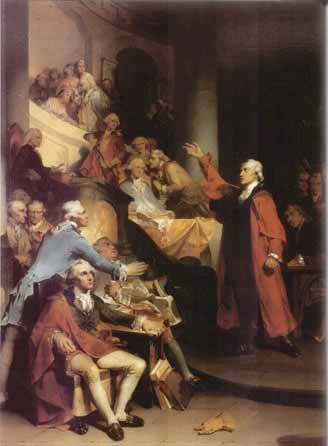
Patrick Henry made his famous "give me liberty or give me death" speech at St. John's Church in Richmond, Virginia.
Benson Bobrick writes in his book Angel in the Whirlwind: The Triumph of the American Revolution
On May 29, 1765, Patrick Henry rose in the Virginia House of Burgesses to introduce a series of momentous resolutions which he had hastily drafted on a blank leaf of an old law book ... Henry accompanied these resolutions with a fiery speech given the next day in which he concluded, "Caesar had his Brutus, Charles the First his Cromwell and George the Third" - amid cries of "Treason" that arose from all sides of the room - "and George the Third," he continued artfully, "may profit by their example. If this be treason, make the most of it!"Thomas Jefferson, then a student at the College of William and Mary, was standing in the doorway and heard Henry speak. "I well remember the cry of treason," Jefferson wrote afterward, "the pause of Mr. Henry at the name of George III, and the presence of mind with which he closed his sentence, and baffled the charge vociferated." To Jefferson it seemed as if Henry "spoke as Homer wrote".
Paul Johnson, in his wonderful book, A History of the American People
A common American political consciousness was taking shape, and delegates began to speak with a distinctive national voice. At the end of it, Patrick Henry marked this change in his customary dramatic manner: 'The distinctions between Virginians and New Englanders are no more. I am not a Virginian but an American.' Not everyone agreed with him, as yet, and the Continental Congress, as it called itself, voted by colonies rather than as individual Americans. But this body, essentially based on Franklin's earlier proposals, perpetuated its existence by agreeing to meet again in May 1775. Before that could happen, on February 5, 1775, parliament in London declared Massachusetts, identified as the most unruly and contumacious of the colonies, to be in a state of rebellion, thus authorizing the lawful authorities to use what force they thought fit. The fighting had begun. Hence when the Virginia burgesses met in convention to instruct their delegates to the Second Continental Congress, Henry saw his chance to bring home to all the revolutionary drama of the moment.Henry was a born ham actor, in a great age of acting - the Age of Garrick. The British parliament was full of actors, notably [William] Pitt himself ('He acted even when he was dying') and the young [Edmund] Burke, who was not above drawing a dagger, and hurling it on the ground to make a point. But Henry excelled them all. He proposed to the burgesses that Virginia should raise a militia and be ready to do battle. What was Virginia waiting for? Massachusetts was fighting. 'Our brethren are already in the field. Why stand we her idle? What is it that gentlemen wish? What would they have?'
Then Henry got to his knees, in the posture of a manacled slave, intoning in a low but rising voice: 'Is life so dear, our peace so sweet, as to be purchased at the price of chains and slavery? Forbid it, Almighty God!' He then bent to the earth with his hands still crossed, for a few seconds, and suddenly sprang to his feet, shouting, 'Give me liberty!' and flung wide his arms, paused, lowered his arms, clenched his right hand as if holding a dagger at his breast, and said in sepulchral tones: 'Or give me death!' He then beat his breast, with his hand holding the imaginary dagger.
There was silence, broken by a man listening at the open window, who shouted: "Let me be buried on this spot!'
Henry had made his point.
It's interesting - there's a great description of acting: "Acting is like a sculpture carved in snow." Obviously, that phrase came from the time of stage acting. Movies now can capture the "sculpture" before it melts. Or at least one version of it. But that quote always makes me think of Patrick Henry. Nobody alive today can ever experience his oratorical skills. There are no video tapes, tape recordings. We just have to take the word of those who were THERE. So while no "record" exists, and his speeches were, indeed, "carved in snow" ... a whiff of the power of them comes down to us regardless.
The impact of the "Give my liberty or give me death" speech was not quite the tinder-box effect of Thomas Paine's Common Sense
Here, in full, is Patrick Henry's speech that he made on this day in 1775:
Patrick Henry's Speech, St. John's Church, Richmond, Virginia, March 23, 1775
No man, Mr. President, thinks more highly than I do of the patriotism, as well as abilities, of the very worthy gentlemen who have just addressed the House. But different men often see the same subject in different lights; and, therefore, I hope it will not be thought disrespectful to those gentlemen if, entertaining as I do opinions of a character very opposite to theirs, I shall speak forth my sentiments freely and without reserve. This is no time for ceremony. The question before the House is one of awful moment to this country. For my own part, I consider it as nothing less than a question of freedom or slavery; and in proportion to the magnitude of the subject ought to be the freedom of the debate. It is only in this way that we can hope to arrive at truth, and fulfill the great responsibility which we hold to God and our country. Should I keep back my opinions at such a time, through fear of giving offense, I should consider myself as guilty of treason towards my country, and of an act of disloyalty toward the Majesty of Heaven, which I revere above all earthly kings.
Mr. President, it is natural to man to indulge in the illusions of hope. We are apt to shut our eyes against a painful truth, and listen to the song of that siren till she transforms us into beasts. Is this the part of wise men, engaged in a great and arduous struggle for liberty? Are we disposed to be of the number of those who, having eyes, see not, and, having ears, hear not, the things which so nearly concern their temporal salvation? For my part, whatever anguish of spirit it may cost, I am willing to know the whole truth; to know the worst, and to provide for it.
I have but one lamp by which my feet are guided, and that is the lamp of experience. I know of no way of judging of the future but by the past. And judging by the past, I wish to know what there has been in the conduct of the British ministry for the last ten years to justify those hopes with which gentlemen have been pleased to solace themselves and the House. Is it that insidious smile with which our petition has been lately received? Trust it not, sir; it will prove a snare to your feet. Suffer not yourselves to be betrayed with a kiss. Ask yourselves how this gracious reception of our petition comports with those warlike preparations which cover our waters and darken our land. Are fleets and armies necessary to a work of love and reconciliation? Have we shown ourselves so unwilling to be reconciled that force must be called in to win back our love? Let us not deceive ourselves, sir. These are the implements of war and subjugation; the last arguments to which kings resort. I ask gentlemen, sir, what means this martial array, if its purpose be not to force us to submission? Can gentlemen assign any other possible motive for it? Has Great Britain any enemy, in this quarter of the world, to call for all this accumulation of navies and armies? No, sir, she has none. They are meant for us: they can be meant for no other. They are sent over to bind and rivet upon us those chains which the British ministry have been so long forging. And what have we to oppose to them? Shall we try argument? Sir, we have been trying that for the last ten years. Have we anything new to offer upon the subject? Nothing. We have held the subject up in every light of which it is capable; but it has been all in vain. Shall we resort to entreaty and humble supplication? What terms shall we find which have not been already exhausted? Let us not, I beseech you, sir, deceive ourselves. Sir, we have done everything that could be done to avert the storm which is now coming on. We have petitioned; we have remonstrated; we have supplicated; we have prostrated ourselves before the throne, and have implored its interposition to arrest the tyrannical hands of the ministry and Parliament. Our petitions have been slighted; our remonstrances have produced additional violence and insult; our supplications have been disregarded; and we have been spurned, with contempt, from the foot of the throne! In vain, after these things, may we indulge the fond hope of peace and reconciliation. There is no longer any room for hope. If we wish to be free-- if we mean to preserve inviolate those inestimable privileges for which we have been so long contending--if we mean not basely to abandon the noble struggle in which we have been so long engaged, and which we have pledged ourselves never to abandon until the glorious object of our contest shall be obtained--we must fight! I repeat it, sir, we must fight! An appeal to arms and to the God of hosts is all that is left us!
They tell us, sir, that we are weak; unable to cope with so formidable an adversary. But when shall we be stronger? Will it be the next week, or the next year? Will it be when we are totally disarmed, and when a British guard shall be stationed in every house? Shall we gather strength by irresolution and inaction? Shall we acquire the means of effectual resistance by lying supinely on our backs and hugging the delusive phantom of hope, until our enemies shall have bound us hand and foot? Sir, we are not weak if we make a proper use of those means which the God of nature hath placed in our power. The millions of people, armed in the holy cause of liberty, and in such a country as that which we possess, are invincible by any force which our enemy can send against us. Besides, sir, we shall not fight our battles alone. There is a just God who presides over the destinies of nations, and who will raise up friends to fight our battles for us. The battle, sir, is not to the strong alone; it is to the vigilant, the active, the brave. Besides, sir, we have no election. If we were base enough to desire it, it is now too late to retire from the contest. There is no retreat but in submission and slavery! Our chains are forged! Their clanking may be heard on the plains of Boston! The war is inevitable--and let it come! I repeat it, sir, let it come.
It is in vain, sir, to extenuate the matter. Gentlemen may cry, Peace, Peace-- but there is no peace. The war is actually begun! The next gale that sweeps from the north will bring to our ears the clash of resounding arms! Our brethren are already in the field! Why stand we here idle? What is it that gentlemen wish? What would they have? Is life so dear, or peace so sweet, as to be purchased at the price of chains and slavery? Forbid it, Almighty God! I know not what course others may take; but as for me, give me liberty or give me death!
March 18, 2010
Today in history: March 18, 1893
"My subject is War, and the pity of War. The Poetry is in the pity."
Wilfred Owen (now known as one of the best "war poets" of World War I) was born on this day in 1893. He was killed in battle in 1918 just seven days before the Armistice. He was 25 years old.

Owen was unpublished during his lifetime. He is now recognized, along with Rupert Brooke, and Siegfried Sassoon, as one of those rare poets who can put the horror of warfare into verse. Trench warfare, in particular. (Yeats disagreed. He disliked Owens' poems, and did not include him - or any of the "war poets" in his The Oxford Book of Modern Verse, 1892-1935. Yeats wrote that Owen's poems were "unworthy of the poet's corner of a country newspaper".) Owen was, of course, aware of Yeats, and used a quote from one of Yeats's poems as an epigraph to one of his poems. He had an inner argument with Yeats, I suppose, and Yeats's view of soldiers, war and death.
One of the most amazing things about these poems is the dates on them - September-October, 1917 / January 1918, etc. He is writing these poems in the thick of war. He is crouching in his tent scribbling these out. There is an immediacy to the verses, yes, and he is one of those sensitive souls who seems to have a larger-picture in his head, even in the midst of the day-to-day reality he is in. He sees the slaughter. He feels the tragedy of it. His main burst of creativity was from August 1917 to September 1918.
He was not patriotic, or at least, his poems are not. One of his poems was addressed to Jessie Pope, a poet who wrote motivational patriotic poems urging young men to enlist. Owen criticized that attitude. His poems are Romantic, certainly, full of loss and grief at the waste. He references Shakespeare, Shelley, the Bible, Keats - maybe not explicitly but in the sounds and rhythms he chooses. He self-consciously writes in these older forms, which is one of the reasons why his poems are so startling. World War I was, in a way, even more shattering, psychologically, than World War II, due to the newness of that kind of technologically advanced warfare. How would mankind go on, knowing what we can do? How on earth will anything ever be rebuilt? This was one of the driving forces of Modernism, as we know it, with poets like Ezra Pound and TS Eliot and Wallace Stevens and Yeats struggling to find language that would be able to HANDLE this new universe. It was a deeply destabilizing time. But Owen is not a modernist, although his poems are always included in those anthologies. His forms are even archaic, which gives them almost a feeling of elegy, all in all. By that I mean: by choosing to write about World War I using OLD forms, rather than trying to "make it new" (a la Ezra Pound's advice to poets) - Owen is mourning a world that is passing away forever, right before his eyes. It's one of the reasons why the poems are so strong.
Owen was probably gay, some of his earlier poems deal with having sensual urges towards other men, and it's hard to say what would have happened to him should he have survived World War I. His journey towards poetry is really interesting. Here is my impression of it (and I say that, knowing only the bare bones of the story):
He grew up in a small town in England (near the border with Wales). He kind of drifted a bit, in terms of his schooling, due to financial constraints. He considered becoming a priest. But he had disturbing feelings about God's inability to deal with human problems. He was a tutor for a while. When World War I broke out, he enlisted. In January, 1917, he was sent to the front. He found war glorious and exciting, similar to George Washington's famous remark to his brother after his first experience with a battle in the French and Indian War: "I heard the bullets whistle, and, believe me, there is something charming in the sound."
Wilfred Owen wrote home to his parents early on:
This morning I was hit! We were bombing and a fragment from somewhere hit my thumb knuckle. I coaxed out 1 drop of blood. Alas! No more!
The bloom soon was off the rose, and that following June, he was moved to a hospital because he suffered from shell-shock. (His heartwrenching poem "Mental Cases" is about what shell-shock is like). He was transported back to England and then Edinburgh. He was a mess. It was in the hospital in Edinburgh that he met Siegfried Sassoon - and this would be the event that would change his short life. Sassoon was a captain in the army and a poet, well-known. They aren't really similar in style, but Sassoon obviously encouraged Owen - I so wonder about their conversations.
Owen wrote to Sassoon in November 1917:
I was always a mad comet; but you have fixed me.
Thus began his crazy output of poetry. Owen returned to the war in France in August 1918. He would be dead by November.
Sassoon published all of Owen's poems posthumously, in 1920.
Wilfred Owen wrote to his mother on December 31, 1917:
I go out of this year a poet, my dear mother, as which I did not enter it. I am held peer by the Georgians; I am a poet's poet. I am started. The tugs have left me; I feel the great swelling of the open sea taking my galleon.
Owen said, in regards to his war poems:
"These elegies are to this generation in no sense consolatory. They may be to the next. All a poet can do today is warn. That is why the true Poets must be truthful."
It seems to me that his lack of interest in consoling his own generation is one of the reasons why his poems have lasted, and are anthologized - because they do rise up out of their own time. They cease to be local.
Here are some of Wilfred Owen's poems.
Anthem for Doomed Youth
What passing-bells for these who die as cattle?
Only the monstrous anger of the guns.
Only the stuttering rifles' rapid rattle
Can patter out their hasty orisons.
No mockeries now for them; no prayers nor bells,
Nor any voice of mourning save the choirs,--
The shrill, demented choirs of wailing shells;
And bugles calling for them from sad shires.
What candles may be held to speed them all?
Not in the hands of boys, but in their eyes
Shall shine the holy glimmers of good-byes.
The pallor of girls' brows shall be their pall;
Their flowers the tenderness of patient minds,
And each slow dusk a drawing-down of blinds.
The End
After the blast of lightning from the east,
The flourish of loud clouds, the Chariot Throne;
After the drums of time have rolled and ceased,
And by the bronze west long retreat is blown,
Shall Life renew these bodies? Of a truth
All death will he annul, all tears assuage?-
Or fill these void veins full again with youth,
And wash, with an immortal water, Age?
When I do ask white Age he saith not so:
'My head hangs weighed with snow.'
And when I hearken to the Earth, she saith:
'My fiery heart shrinks, aching. It is death.
Mine ancient scars shall not be glorified,
Nor my titanic tears, the seas, be dried.'
On Seeing a Piece of Our Artillery Brought into Action
Be slowly lifted up, thou long black arm,
Great gun towering towards Heaven, about to curse;
Sway steep against them, and for years rehearse
Huge imprecations like a blasting charm!
Reach at that Arrogance which needs thy harm,
And beat it down before its sins grow worse;
Spend our resentment, cannon,--yea, disburse
Our gold in shapes of flame, our breaths in storm.
Yet, for men's sakes whom thy vast malison
Must wither innocent of enmity,
Be not withdrawn, dark arm, thy spoilure done,
Safe to the bosom of our prosperity.
But when thy spell be cast complete and whole,
May God curse thee, and cut thee from our soul!
Futility
Move him into the sun--
Gently its touch awoke him once,
At home, whispering of fields unsown.
Always it woke him, even in France,
Until this morning and this snow.
If anything might rouse him now
The kind old sun will know.
Think how it wakes the seeds,--
Woke, once, the clays of a cold star.
Are limbs, so dear-achieved, are sides,
Full-nerved-- still warm,-- too hard to stir?
Was it for this the clay grew tall?
-- O what made fatuous sunbeams toil
To break earth's sleep at all?
Mental Cases
Who are these? Why sit they here in twilight?
Wherefore rock they, purgatorial shadows,
Drooping tongues from jaws that slob their relish,
Baring teeth that leer like skulls' tongues wicked?
Stroke on stroke of pain, -- but what slow panic,
Gouged these chasms round their fretted sockets?
Ever from their hair and through their hand palms
Misery swelters. Surely we have perished
Sleeping, and walk hell; but who these hellish?
- These are men whose minds the Dead have ravished.
Memory fingers in their hair of murders,
Multitudinous murders they once witnessed.
Wading sloughs of flesh these helpless wander,
Treading blood from lungs that had loved laughter.
Always they must see these things and hear them,
Batter of guns and shatter of flying muscles,
Carnage incomparable and human squander
Rucked too thick for these men's extrication.
Therefore still their eyeballs shrink tormented
Back into their brains, because on their sense
Sunlight seems a bloodsmear; night comes blood-black;
Dawn breaks open like a wound that bleeds afresh
- Thus their heads wear this hilarious, hideous,
Awful falseness of set-smiling corpses.
- Thus their hands are plucking at each other;
Picking at the rope-knouts of their scourging;
Snatching after us who smote them, brother,
Pawing us who dealt them war and madness.
March 16, 2010
Today in history: March 16, 1751

James Madison, fourth President of the United States, was born on this day in Virginia.
"The principles and modes of government are too important to be disregarded by an inquisitive mind, and I think are well worthy of a critical examination by all students that have health and leisure." -- James Madison, age 22, to his friend who was just beginning to study the law
Elected to the presidency in 1808 - and then again for a second term in 1812 - he didn't really have a good time of it in office, what with, you know, the war of 1812 and all, and the Brits burning down our damn capital. Not a very successful President - but the story of his administration is a fascinating one - its failures, its successes, war again.
Henry Clay said about Madison, as President:
"Nature has cast him in too benevolent a mould. Admirably adapted to the tranquil scenes of peace, blending all the mild and amiable virtues, he is not fit for the rough and rude blasts which the conflicts of nations generate."
Madison's greatest accomplishment was his crafting of the US Constitution and also his commitment (second only to Alexander Hamilton's) to getting it ratified. Madison wrote Federalist #10 - probably the most famous of all of the Federalist Papers (I babble about it here) - although, if you haven't read them all in their entirety, all I can say is: do yourself a favor! (Excerpt here from # 15) It's the best civics class you'll ever get. Madison's mind was sharp, probing, deep - and all of the great political figures (especially the Virginians at the time) looked to him for guidance. Federalist #10 warns about the dangers of factions. But Madison, in his cunning behind-the-scenes manner, was hardly a neutral party himself in the battles of the day - and he had famous fights and breaks with his compatriots over matters of policy.

In May of 1787, the delegates arrived in Philadelphia for the Constitutional Convention.
The articles of Confederation, which loosely held the states together, were proving far too inefficient as time went on, and people like Madison, Hamilton, John Jay, and certainly Washington - who had been raging about the slowness of Congress since the war began - thought that the articles needed to be revised. As Washington wrote,
"Thirteen sovereignties pulling against each other, and all tugging at the foederal head, will soon bring ruin on the whole."
However, these were conservative men, despite their revolutionary fervor. They were land-owners, farmers, lawyers, not interested in tearing things down - but building upon foundations already there, so the delegates, for the most part, were not looking for a whole new form of government to be raised at their Convention. They were looking for a revision to the Articles, that was it. However, James Madison - and Alexander Hamilton - went in there with preconceived notions, definitely. They knew what they were going to try to push through.
The Articles could not stand. Earlier that year, the Shays Rebellion had taken place - which had freaked everyone out. What had happened to solidarity? Should military force be used to put down the rebellion? There couldn't have been a better time for the Constitutional Convention.
Catherine Drinker-Bowen, in her WONDERFUL book Miracle At Philadelphia: The Story of the Constitutional Convention May - September 1787
On the twenty-fifth of May, when a quorum was obtained, Washington was unanimously elected president of the Convention and escorted to the chair. From his desk on the raised dais he made a little speech of acceptance, depreciating his ability to give satisfaction in a scene so novel. "When seated," wrote a member, "he declared that as he never had been in such a situation he felt himself embarrassed, that he hoped his errors, as they would be unintended, would be excused. He lamented his want of qualifications."...In the front row near the desk, James Madison sat bowed over his tablet, writing steadily. His eyes were blue, his face ruddy; he did not have the scholar's pallor. His figure was well-knit and muscular and he carried his clothes with style. Though he usually wore black, he has also been described as handsomely dressed in blue and buff, with ruffles at breast and wrist. Already he was growing bald and brushed his hair down to hide it; he wore a queue and powder. He walked with the quick bouncing step that sometimes characterizes men of remarkable energy.
As a reporter Madison was indefatigable, his notes comprehensive, set down without comment or aside. One marvels that he was able at the same time to take so large a part in the debates. It is true that in old age Madison made some emendations in the record to accord with various disparate notes which later came to light; he has been severely criticized for it. Other members took notes at the Convention: Hamilton, Yates and Lansing of New York, McHenry of Maryland, Paterson of New Jersey, Rufus King of Massachusetts, William Pierce of Georgia, George Mason of Virginia. But most of these memoranda were brief, incomplete; had it not been for Madison we should possess very scanty records of the Convention. His labors, he said later, nearly killed him. "I chose a seat," he afterward wrote, "in front of the presiding member, with the other members on my right and left hand. In this favorable position for hearing all that passed, I noted in terms legible and in abbreviations and marks intelligble to myself what was read from the Chair or spoken by the members; and losing not a moment unnecessarily between the adjournment and reassembling of the Convention I was enabled to write out my daily notes during the session or within a few finishing days after its close in the extent and form preserved in my own hand on my files ... I was not absent a single day, nor more than a casual fraction of an hour in any day, so that I could not have lost a single speech, unless a very short one."
It was, actually, a tour de force, not to be published -- and scarcely seen -- until thirty years after the Convention. "Do you know," wrote Jefferson to John Adams from Monticello in 1815, "that there exists in manuscript the ablest work of this kind ever yet executed, of the debates of the constitutional convention of Philadelphia ...? The whole of everything said and done there was taken down by Mr. Madison, with a labor and exactness beyond comprehension." ...
As I mentioned before, these were all practical men - and many of them had gathered with practical concerns, about raising money, and internal improvements - and how the Articles would be able to handle such large projects. Madison and Hamilton kept their cards close to their chests, at first (this, of course, was long before their famous break. Hamilton broke with pretty much everyone). Hamilton was a practical man as well. He had a lot of problems with the Constitution as it was laid out in embryonic form by Madison. But he recognized the genius within, recognized the need for such a thing - and nobody - but NOBODY - worked harder for ratification than my dead boyfriend. It is amazing the amount of print he was able to devote to the Federalist Papers - it STILL boggles the mind.
But back to Madison. Poor man ... his more glittery compatriots always have a way of stealing the spotlight, don't they??
Catherine Drinker-Bowen goes on:
Time would pass before members realized how far the plans of such men as Madison and Hamilton reached, and what the Constitution promised to be. It would be misleading to name thus early the Constitution's "enemies", or to set down this name or that as "against" the Constitution. Five delegates in the end would refuse to sign -- Elbridge Gerry of Massachusetts, Yates and Lansing of New York, George Mason and Edmund Randolph of Virginia -- all men of decided views and each with a different reason for his action. More vociferous than any of these would be Luther Martin of Maryland, who, though out of town on private business at the moment of signing, later declared that had he been present he would have given the document his "solemn negative," even had he "stood single and alone".
It would be four months before the Constitution was finally ratified and signed.
Garry Wills has some very interesting thoughts on the famous Federalist 10 in his book on James Madison
Madison's debut contribution [to "The Federalist Papers"], would in time (a long time) become the most famous of them all. It crammed into a narrow space all the arguments Madison had been sifting and refining in his opposition to the Continental Congress's weakness, in his preparation for the convention, in his crafting of the Virginia Plan, and in his debates at the convention. Madison goes behind specific weaknesses in the Articles to expose the fundamental error on which the Articles were based, the idea that the only worthy democracy is direct democracy.Madison's attack on that concept is so radical for its time that it is often downplayed, or even altogether missed. The most important passage in the Number is its claim that no man can be a judge in his own case. Not much is made of that in some treatments of the Number. We hear about the tyranny of majorities (though Madison treats that as just a symptom of direct democracy). We hear about the difference between a small republic and an extended republic (whereas Madison is talking about the difference between a direct democracy and a republic). We hear that Madison wanted to multiply factions (though he thought all factions bad things). We hear that Madison wanted to create a national elite, above the states, because he distrusted the people (though his system calls precisely for trust - direct democracy is built on distrust). We hear that he was trying to set up a mechanical system for producing correct decisions (though he said that no governmental machinery can produce good results without virtue in its operators).
It has puzzled people that Number 10 did not get much attention until the twentieth century. It was not a matter of great dispute in the ratification debates, though it would have clarified and focused those debates - they spent endless hours on the number of representatives, rather than on the nature of representation. The reason for this is that a dismissal of direct democracy was almost literally unthinkable to the men who debated the Constitution. Every constitution in America was based on that ideal, as a thing to be approximated even when it could not be literally enacted. If people could not directly make the government's decisions, as in a New England town meeting or the Athenian Assembly, then they should tie down those making the decisions, making them (so far as possible) passive tools in their own hands. That is why short terms, rotation, instruction open proceedings (to see that instruction is followed), recall (to punish departures from instruction), and weak executives were adopted. These were the necessary melioratives for the necessary evil of any departure from direct democracy.
The rightness of all these measures was so self-evident to those who accepted them that the could not even imagine someone making the attack on them that Madison did. He did not say, as many did, that direct democracy would be wonderful if it were possible but, since it is not possible in large communities, some approximation to it must be cobbled up. He did not think direct democracy wonderful. He thought it fundamentally unjust.
No man is allowed to be a judge in his own cause, because his interests would certainly bias his judgment, and, not improbably, corrupt his integrity. With equal, nay with greater reason, a body of men are unfit to be both judges and parties at the same time; yet what are many of the most important acts of legislation but so many judicial determinations, not indeed concerning the right of single persons but concerning the right of large bodies of citizens; and what are the different classes of legislators but advocates and parties to the causes which they determine?By calling legislation quasi-judicial, he instantly disqualifies all those who come to the task of legislating with nothing but their own interest in mind. They have come to be judges in their own case - and that is what proponents of direct democracy would justify. In doing so, they defend a system of majority tyranny. If naked interest is all that can be expressed, then only one thing will determine the outcome. The only question to be decided is: which interest has the greater number backing it.
I find Madison a very interesting fellow, although not as easy to get to know as John Adams, who was a passionate warm-blooded flawed and sensitive man ... Madison is a bit more "close", perhaps. (You won't see an HBO miniseries about Madison any day soon!!) A wife of one of Madison's friends referred to Madison as a "gloomy stiff creature" - and that is obviously not one of the qualities that leads to an endearing and well-liked president (although the office was still, obviously, in its infancy when Madison held it). He did marry Dolley Madison - who remains, to this day, at the top of the list of "favorite first ladies" - not that anyone remembers her personally now, of course - but by all accounts she was a vivacious social happy woman, and everyone liked her.

The two did not have children, but it appears the marriage was a happy one (she referred to him as her "great little Madison"). Unlike many other first ladies since, Dolley Madison didn't have a problem with the social rigors of her position - she loved it. Men and women alike found her charming, easy-going.
Wills describes the burning of the capital and its aftermath:
During the night of the fires in Washington, Madison and Dolley were unable to find each other - she stayed at one friend's home in Virginia, he in another. He met her the next day; then, assured of her safety, he went to consult with Winder, whose troops were on the road toward Baltimore ... Madison wrote to Dolley suggesting she not return to Washington until he was sure the city was safe. But she was already on her way back to him.It was suggested that Madison would summon Congress to a different, safer spot - Congress had, after all, been shifted about during the Revolution. But Madison knew the government must be seen to function, and he called Congress back for an early session. He had chambers prepared for the House and Senate in the Post Office and Patent Building, which had escaped the fires. He and Dolley moved into the house they had lived in when he was secretary of state - though the French minister, Louis Serurier, soon vacated his own residence, the current Octagon House, for their use. Dolley found these quarters too cramped, and she would end up in the former offices of the Treasury, where she could entertain on the scale she was used to. She, too, realized that it was important to return the city to its normal patterns. But the Madisons never returned to the blackened White House.
I think someone's choice of a wife can be pretty illuminating. Madison was often seen as a dour brainiac, humorless and obsessive - but he chose as a counterpart Dolley, who was pretty, friendly, funny and resourceful: Perhaps her most famous moment is this: during the burning of the capital, Dolly was forced to flee by carriage - but she had the presence of mind to roll up Gilbert Stuart's portrait of George Washington - (she had to break the frame in order to get the painting out) - and give it to some soldiers to keep safe. And of course, it was preserved, for all time, thanks to her foresight.

I mean, you gotta love a person like that. Imagine: you are under siege. Your house is burning down around your ears. And you have the presence of mind to take a moment and think: "You know what? Gotta save this portrait." The image of her breaking the frame to get at the painting in the middle of that chaos ... It's one of my favorite White House anecdotes in Presidential history.
And so happy birthday, "great little Madison". We are forever in your debt!

March 15, 2010
You say Ides, I say eyes
Sure, but as the soothsayer whispered in Caesar's ear on a crowded street, "Beware the Ides of March." But did Caesar listen? No, he did not. Can't say I blame him. If some gleaming-eyed homeless person came up to me and told me to "beware" something, be it the fires of hell or the dangers of food poisoning, I'd take it with a grain of salt. Helluva price to pay, however.

Jason has a cool variation on Ye Olde Ides with his Eyes of March.
March 14, 2010
Today in history: March 14, 1887
Sylvia Beach, who is responsible for publishing James Joyce's Ulysses
Here is a photo of Sylvia and Jimmy:
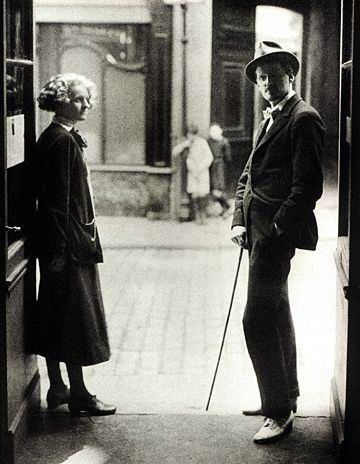
Sylvia said of Joyce: "As for Joyce, he treated people invariably as his equals, whether they were writers, children, waiters, princesses, or charladies. What anybody had to say interested him; he told me that he had never met a bore."
(Anyone who can say that he has "never met a bore" is a genius of the human spirit.)
A fascinating woman: born in Maryland, and as an adult a major force in the literary ex-pat community in Paris. She served in World War I with the Red Cross in Serbia, and after the war settled in Paris, where she opened up a bookshop - the enormously influential Shakespeare & Co.. Let's see - here are a couple of the names in Paris at that time: Hemingway, Fitzgerald, Stein, Joyce ... (GOD for a time machine!) And so Shakespeare & Co. became the hub-bub, the vortex of them all.
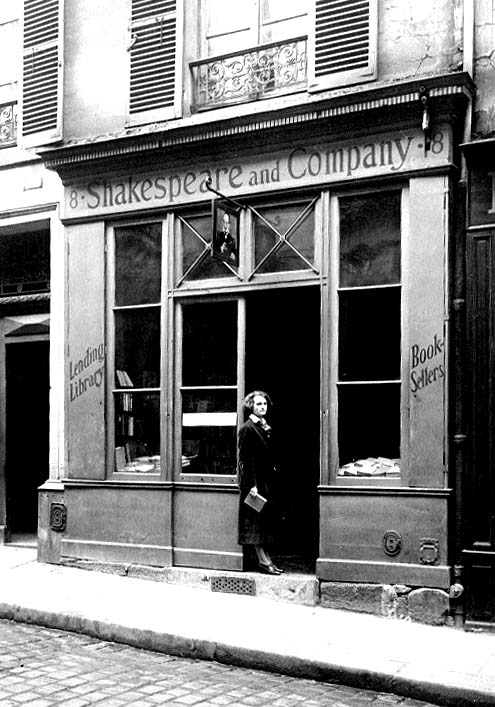
When she met James Joyce, he had already written Ulysses, and it was a finished manuscript by that point (or as finished as any Joycean manuscript ever would be) - but essentially unpublishable, due to its being deemed "obscene". The funny thing about all of this is that Joyce said later, "The pity is that the public will demand and find a moral in my book, or worse they may take it in some serious way, and on the honour of a gentleman, there is not one single serious word in it."
But Sylvia Beach - who had never published a book before - took a risk and said that Shakespeare & Co. would put out the book, which was already highly controversial. It was an act of courage. Perhaps she went into it recklessly, thinking that giving a space for genius would be its own reward - perhaps she went into it knowing the eventual fallout that would crash down upon her head - But whatever her interior process, she published it.

And the shit hit the fan.
Once it was published, the obscenity controversies heated up, the book was banned (Joyce said later, "I have come to the conclusion that I cannot write without offending people.") everybody was talking about it, who had actually read it? - you could be arrested for trying to smuggle it into certain countries - and there were a couple of years where the only place on the planet you could get a copy of Ulysses was through Beach's bookshop in Paris. And so the orders flew in from folks around the world. People who were book readers, people who were collectors, people who sensed the historic moment and just wanted a copy.
The comments of other great writers on this book are, of course, great interest to me. They run the gamut of disgust, elation, despair, awe, humility ... and I love it, too, that Yeats (an early supporter of Joyce) changed his mind. His first response on reading it? "A mad book!"
Then later, as it percolated, Yeats said: "I have made a terrible mistake. It is a work perhaps of genius. I now perceive its coherence ... It is an entirely new thing -- neither what the eye sees nor the ear hears, but what the rambling mind thinks and imagines from moment to moment. He has certainly surpassed in intensity any novelist of our time."
Hart Crane had this to say (or shout): "I feel like shouting EUREKA! Easily the epic of the age."
George Bernard Shaw was disturbed by Ulysses, and its view of Ireland - so much so that it tormented him a bit. He saw it as an indictment (and, in a way, it was). He said, however: "If a man holds up a mirror to your nature and shows you that it needs washing -- not whitewashing -- it is no use breaking the mirror. Go for soap and water."
T.S. Eliot was especially devastated by the book, and his comments on it are numerous. Examples: "How could anyone write again after achieving the immense prodigy of the last chapter?" And also - this quote really touches me, because as a writer, Eliot wasn't half-bad himself: "I wish, for my own sake, that I had not read it." And lastly (and I think this pretty much gets at the root of what was so disturbing to Eliot): "I hold Ulysses to be the most important expression which the present age has found; it is a book to which we are all indebted, and from which none of us can escape."
Goose bumps.
Edmund Wilson wrote of it:
The more we read Ulysses, the more we are convinced of its psychological truth, and the more we are amazed at Joyce's genius in mastering and in presenting, not through analysis or generalization, but by the complete recreation of life in the process of being lived, the relations of human beings to their environment and to each other; the nature of their perception of what goes on about them and of what goes on within themselves; and the interdependence of their intellectual, their physical, their professional and their emotional lives. To have traced all these interdependences, to have given each of these elements its value, yet never to have lost sight of the moral through preoccuptation with the physical, nor to have forgotten the general in the particular; to have exhibited ordinary humanity without either satirizing it or sentimentalizing it - this would already have been sufficiently remarkable; but to have subdued all this material to the uses of a supremely finished and disciplined work of art is a feat which has hardly been equalled in the literature of our time.
Wilson also wrote:
"Yet for all its appalling longeurs, "Ulysses" is a work of high genius. Its importance seems to me to lie, not so much in its opening new doors to knowledge -- unless in setting an example to Anglo-Saxon writers of putting down everything without compunction -- or in inventing new literary forms -- Joyce's formula is really, as I have indicated, nearly seventy-five years old -- as in its once more setting the standard of the novel so high that it need not be ashamed to take its place beside poetry and drama. "Ulysses" has the effect at once of making everything else look brassy."
And here is the lady who first made this "epic of the age" available to the world, at great financial and personal risk:

Joyce eventually moved to another publisher - for later editions - which left Beach financially stranded (along with the Great Depression which really hit Shakespeare & Co. hard.) But Beach had rich influential literary friends - many of whom came to her rescue during this difficult time. Famous writers did readings at Shakespeare & Co., admission was charged, people paid subscription fees - and in this way the bookstore made it through. Beach died in 1962. She wrote a memoir called Shakespeare and Company
She said:
I was on the platform, my heart going like the locomotive, as the train from Dijon came slowly to a standstill and I saw the conductor getting off, holding a parcel and looking around for someone -- me. In a few minutes, I was ringing the doorbell at the Joyces' and handing them Copy No. 1 of Ulysses. It was February 2, 1922.

March 11, 2010
Today in history: March 11, 1916

Ezra Jack Keats was born.
A favorite author of mine - who is always, somehow, looped in my head to Sesame Street, the world being depicted in his classic tales (Peter's Chair


Barry, my father's best friend, was friends with Ezra Jack Keats, so we grew up feeling a strange personal connection to the man who wrote the books we all loved. He was a person. A man. Who had an apartment. Who knew Barry. He was strangely real to us. For years, I thought he was black. Not sure why. I was an adult when I found out he wasn't black. There were no author photos in his books, and I imagined him like Gordon, from Sesame Street, one of my favorite characters. But no, Sheila. The man is not black. I just had it in my head that he was - that was how I pictured him, based on zero information, and my fantasy that he lived on a street like Sesame Street.

Letter to Amy was my favorite. It tells the story of a little boy who is planning his birthday party, and everyone he has invited is a boy as well ... but ... but ... what about his friend Amy? She's a girl. But they are friends. How will that go over if a girl comes to his party? He writes a letter to her. It is a thundery rainy day. The illustrations are phenomenal. I love rainy days anyway, and I loved them as a little girl too - but the whole journey of that book, of grade school angst, and friendship - just really touched me.

Ezra Jack Keats is probably best known for The Snowy Day (and again - those illustrations!). The city shuts down in a snowstorm like that. I remember a couple years ago - maybe 5 or 6 years ago - when we had a massive snowstorm, I was struggling through Times Square, through literally mountainous drifts, trying to get to Port Authority so I could get home - and the roads were completely shut down, no cars anywhere, and people were cross-country-skiing down Broadway. Snowball fights broke out in the middle of 7th Avenue. Things get muffled by the snow, strangely quiet, and the stoplights keep going - red, green, yellow, red, green, yellow ... even no cars can approach. The illustrations in The Snowy Day completely invoke that world: the strange quiet that descends over a bustling metropolis when there are mounds of snow.
Happy birthday to an American classic.
Some choice illustrations below:


February 27, 2010
Today in history: February 27, 1807

"Believe me, every man has his secret sorrows,
which the world knows not; and oftimes
we call a man cold, when he is only sad."
-- Henry Wadsworth Longfellow
Beautiful.
Henry Wadsworth Longfellow was born on this day, in 1807, in Portland, Maine.
He was the first poet to take on American themes and dialects and making it the focal point of his work. He really is our first "local" poet. He was also the first American poet to be laid to rest in Poet's Corner at Westminster Abbey alongside chaps like, you know, Chaucer (an idol of Longfellow's). Longfellow was huge in his day. And his poems still carry a lot of sentimental feeling for Americans - he is still read. His reputation during his life, however, cannot be overstated. He was a celebrity. His poems were EVENTS. His first major work was "Evangeline", published in 1847, a long epic poem about the deportation of the French-speaking inhabitants (the Acadians) of Nova Scotia. It was a smash hit, and actually, for some time, created its own tourist trade. What poet today could ever generate such a response?

"Evangeline" came about because of a small dinner party held in Longfellow's rented rooms in Cambridge, Massachusetts. Friend Nathaniel Hawthorne was there. A minister, also at the gathering, told a story of a young couple separated on their wedding day by the deportation of the people from Nova Scotia, and how the bride spent the rest of her life, wandering, looking for her lost husband. The minister thought that Hawthorne might be interested in turning it into a story. He wasn't. But Longfellow was. With a sense of propriety (after all, Hawthorne was asked first), he asked for Hawthorne's blessing to turn it into a poem. It took him years to complete it. He researched exhaustively what had happened to the Acadians. Most of them, actually, ended up in New Orleans, and they are very much responsible for the particular brand of culture still found there today. There was much that had already been forgotten about the Acadians, and Longfellow was totally immersed in the subject. "Evangeline" is not a history lesson, however. It is a story, a fictionalized version of events, which struck a huge chord in the populace. There is still a Memorial Site in New Orleans today (the Longfellow-Evangeline Historic Site), but after the publication of the poem, all kinds of sites sprung up - trails, trees, anything at all that was mentioned in the poem ... Readers were captivated by this mournful tale of wandering and exile, and went on pilgrimages to the places mentioned.
So came the autumn, and passed, and the winter, -- yet Gabriel came not;
Blossomed the opening spring and the notes of the robin and bluebird
Sounded sweet upon the wold and in wood, yet Gabriel came not.
I personally find Evangeline as a heroine to be a bit of a drip. It is the cliched stereotype of a long-suffering patient goodly woman - which is just not inherently dramatic. Not to mention a sentimentalized version of womanhood that I cannot get behind, since its purpose is expressly to limit. Longfellow may not have been aware of that, it was the ideal of Womanhood at the time, and it was obviously a slamdunk among readers, male and female. But to me, it really dates itself. Dickens had similar cliches of women in his books - his young heroines are particuarly awful and boring - but he more than makes up for it with all of the other characters surrounding these goody-two-shoes drips. Only Dickens' female leads are not complex. This was, again, the style of the day - encapsulated in "Evangeline", but when you realize that just across the way from Longfellow, Emily Dickinson was dashing off her frightening sharp poems - a woman in all the colors of humanity possible - not at all the simpering long-suffering heroine so beloved at that time - you can see that these men were missing the boat, to some degree. It is a failure of imagination. Again, we all are people of our own time, as much as we may try to rise above. We don't have that cultural problem with "Paul Revere's Ride", a Longfellow poem that doesn't deal with love, or inter-relationships - and so can be a bit more free and easy with itself and its topic.
Longfellow was a star. His poems are still well-known: Hiawatha, The Courtship of Miles Standish, Paul Revere's Ride. He was a poet, yes, but he was also a myth-maker. A person who was actually creating a community through his work. Memory is very important. Memory is key to a nation's survival. A nation that lives in forgetfulness (thank you, Milan Kundera), either willfully or carelessly, is going to have problems. America was such a new nation, it didn't have, say, the relationship that the Persians did to their country, one of the oldest civilizations on earth (and a place where poetry is very important, as containers for cultural memory) - but Longfellow (and then Whitman) was very important in creating these works, that told the story of America to itself, in rollicking exciting verse ... something that all could participate in. A myth-maker, a storyteller, I mean the opening line of Paul Revere's Ride basically calls the people to come in close to listen: "Listen my children and you will hear ..." It's almost like a game of telephone. Listen to my story. Pass it on. Tell them to pass it on. These are not history lessons. These are myths, legends, pass it on. Most of his stuff comes off much better when read out loud. The rhythm is not separate from the content. The rhythm is essential. His reputation as a poet has not quite lived past his own day, but he was huge - HUGE - in his own time.
He traveled far, for a man of his time, and there's a great story of him basically bunking with Charles Dickens on a visit to England in 1842. There is a similarity between the two writers (I mean, besides what I mentioned earlier - their tendency to have drippy cliches as their female romantic leads), something almost theatrical. Understanding their audience better than most writers. Longfellow was so American, Dickens so British - and Dickens was pretty befuddled by the "New World" - he had recently visited it. Longfellow was a celebrity, yes, and, like Ben Franklin back in the day, was representative of the entire nation.
A happy man, with a happy home life, many children, he suffered a horrible tragedy later in life which makes me shiver just to think of it. His second wife was sealing a letter with hot wax, and her dress caught fire from the candle. She went up in flames. Longfellow tried to save her, and received severe burns himself. She died. Longfellow never quite recovered. He never stopped writing, but he was forever changed.

Longfellow's writing room
Due to my family's connection with the Boston area, and the fact that my father used to read "Paul Revere's Ride" out loud to us as kids, it's my favorite of his (his other stuff can seem quaint and sentimental to me now - it just doesn't have the same cultural resonance). It should be read out loud. If you read it to yourself, the hoof-beat rhythm of the verse will be lost to you.

The poem has the blood-beat in it, the pulse racing, the adrenaline surges - appropriate to the story being told. It's one of my favorites and I know long stretches of it by heart.
Paul Revere's Ride
Listen my children and you shall hear
Of the midnight ride of Paul Revere,
On the eighteenth of April, in Seventy-five;
Hardly a man is now alive
Who remembers that famous day and year.
He said to his friend, "If the British march
By land or sea from the town to-night,
Hang a lantern aloft in the belfry arch
Of the North Church tower as a signal light,--
One if by land, and two if by sea;
And I on the opposite shore will be,
Ready to ride and spread the alarm
Through every Middlesex village and farm,
For the country folk to be up and to arm."
Then he said "Good-night!" and with muffled oar
Silently rowed to the Charlestown shore,
Just as the moon rose over the bay,
Where swinging wide at her moorings lay
The Somerset, British man-of-war;
A phantom ship, with each mast and spar
Across the moon like a prison bar,
And a huge black hulk, that was magnified
By its own reflection in the tide.
Meanwhile, his friend through alley and street
Wanders and watches, with eager ears,
Till in the silence around him he hears
The muster of men at the barrack door,
The sound of arms, and the tramp of feet,
And the measured tread of the grenadiers,
Marching down to their boats on the shore.
Then he climbed the tower of the Old North Church,
By the wooden stairs, with stealthy tread,
To the belfry chamber overhead,
And startled the pigeons from their perch
On the sombre rafters, that round him made
Masses and moving shapes of shade,--
By the trembling ladder, steep and tall,
To the highest window in the wall,
Where he paused to listen and look down
A moment on the roofs of the town
And the moonlight flowing over all.
Beneath, in the churchyard, lay the dead,
In their night encampment on the hill,
Wrapped in silence so deep and still
That he could hear, like a sentinel's tread,
The watchful night-wind, as it went
Creeping along from tent to tent,
And seeming to whisper, "All is well!"
A moment only he feels the spell
Of the place and the hour, and the secret dread
Of the lonely belfry and the dead;
For suddenly all his thoughts are bent
On a shadowy something far away,
Where the river widens to meet the bay,--
A line of black that bends and floats
On the rising tide like a bridge of boats.
Meanwhile, impatient to mount and ride,
Booted and spurred, with a heavy stride
On the opposite shore walked Paul Revere.
Now he patted his horse's side,
Now he gazed at the landscape far and near,
Then, impetuous, stamped the earth,
And turned and tightened his saddle girth;
But mostly he watched with eager search
The belfry tower of the Old North Church,
As it rose above the graves on the hill,
Lonely and spectral and sombre and still.
And lo! as he looks, on the belfry's height
A glimmer, and then a gleam of light!
He springs to the saddle, the bridle he turns,
But lingers and gazes, till full on his sight
A second lamp in the belfry burns.
A hurry of hoofs in a village street,
A shape in the moonlight, a bulk in the dark,
And beneath, from the pebbles, in passing, a spark
Struck out by a steed flying fearless and fleet;
That was all! And yet, through the gloom and the light,
The fate of a nation was riding that night;
And the spark struck out by that steed, in his flight,
Kindled the land into flame with its heat.
He has left the village and mounted the steep,
And beneath him, tranquil and broad and deep,
Is the Mystic, meeting the ocean tides;
And under the alders that skirt its edge,
Now soft on the sand, now loud on the ledge,
Is heard the tramp of his steed as he rides.
It was twelve by the village clock
When he crossed the bridge into Medford town.
He heard the crowing of the cock,
And the barking of the farmer's dog,
And felt the damp of the river fog,
That rises after the sun goes down.
It was one by the village clock,
When he galloped into Lexington.
He saw the gilded weathercock
Swim in the moonlight as he passed,
And the meeting-house windows, black and bare,
Gaze at him with a spectral glare,
As if they already stood aghast
At the bloody work they would look upon.
It was two by the village clock,
When he came to the bridge in Concord town.
He heard the bleating of the flock,
And the twitter of birds among the trees,
And felt the breath of the morning breeze
Blowing over the meadow brown.
And one was safe and asleep in his bed
Who at the bridge would be first to fall,
Who that day would be lying dead,
Pierced by a British musket ball.
You know the rest. In the books you have read
How the British Regulars fired and fled,---
How the farmers gave them ball for ball,
From behind each fence and farmyard wall,
Chasing the redcoats down the lane,
Then crossing the fields to emerge again
Under the trees at the turn of the road,
And only pausing to fire and load.
So through the night rode Paul Revere;
And so through the night went his cry of alarm
To every Middlesex village and farm,---
A cry of defiance, and not of fear,
A voice in the darkness, a knock at the door,
And a word that shall echo for evermore!
For, borne on the night-wind of the Past,
Through all our history, to the last,
In the hour of darkness and peril and need,
The people will waken and listen to hear
The hurrying hoof-beats of that steed,
And the midnight message of Paul Revere.
"borne on the night-winds of the Past" - Goosebumps. It flat out gives me goosebumps. And I also wonder if F. Scott Fitzgerald was consciously referencing it in his heartbreaker of a last line in The Great Gatsby: "So we beat on, boats against the current, borne back ceaselessly into the past." Fitzgerald, knowing that he was the voice of a certain time, voice of his generation, it would not surprise me if he did consciously reference Longfellow there, at the very end of that quintessentially American story. Of course, in his context, the past takes on very different connotations, even with the nostalgia. There's an emptiness at the heart of it, an emptiness that did Gatsby in, with his constant looking-back, looking-back. Longfellow looked to the past for inspiration, for the wellspring of storytelling magic - he was almost like a reporter in that respect, digging through the past for a story that could hit, could speak to his time. Paul Revere's Ride, for example, was first published in 1860, and Longfellow, seeing the Civil War approach, wanted to prepare the populace, call them to arms (even though he was a pacifist), and remind them where they all had come from. This is propaganda at a very high level.
The surrounding context of the political atmosphere is now forgotten, for the most part, at least in conjunction with "Paul Revere's Ride", which is now basically seen as a history lesson of what happened on that 18th of April, '75. More than a history lesson, though, it's a story. A story that must be passed on in order to survive. As Joan Didion so famously wrote, "We tell ourselves stories in order to live".
Longfellow knew that better than anyone.
Here are some quotes about and also by Henry Wadsworth Longfellow.
"He seems to combine the assured rhetoric of the Tennyson of the Idylls, with the exuberance of Browning on one hand and of the Borders balladeers on the other. It's a heady mix: popular and folk poetry tailored for the wide-eyed bourgeoisie." -- Michael Schmidt, Lives of the Poets
"Her writings are a capital picture of real life, with all the little wheels and machinery laid bare like a patent clock. But she explains and fills out too much." -- Henry Wadsworth Longfellow on Jane Austen
"Henry Wadsworth Longfellow, on the other hand, could sing. He could tell stories about America. Maybe his forms were imported, but they were tempered and transformed by his fantastic world. He provides an alternative to the gothic even as he shares in some of its preposterous attitudes and posturings." -- Michael Schmidt, Lives of the Poets
"His poems never lose their witchery for me. There are undoubtedly many greater poets than Longfellow -- many stronger, grander, deeper; but he is full of sweetness and tenderness and grace." -- L.M. Montgomery, journal entry
"For Europeans, American poetry was Longfellow." -- Michael Schmidt, Lives of the Poets
"As was his poetic practice, once Longfellow had briefed himself on the factual background, he used his material with a very free hand. He was a bard, not a historian; what mattered was the basic human truth of his story, not its particulars." -- Charles Calhoun, author of Longfellow: A Rediscovered Life
"Only [Wallace] Stevens in later American poetry is musical in the ways that Longfellow at his best can be." -- Michael Schmidt
"And now I long to try a loftier strain, the sublimer Song whose broken melodies have for so many years breathed through my soul in the better hours of life, and which I trust and believe will ere long unite themselves into a symphony not all unworthy the sublime theme, but furnishing 'some equivalent expression for the trouble and wrath of life, for its sorrow and its mystery.'" -- Henry Wadsworth Longfellow
"He suffered excessive popularity; he has now suffered three quarters of a century of critical neglect." -- Michael Schmidt
"A gentle man, with sentiments stronger than his passions, and ambition continuing his genius, highly cultivated, not strongly intellectual but truly aesthetic, with a fondness for melancholy and a nostalgia for the past - that is one view of Longfellow. Yet - and this is what makes him interesting and made him successful - also a writer of incredible literary energy, pursuing the best in craftsmanship, a mind intensely sensitive, not so much to life as to the feelings about life which we call literature. Also, again, the best representative of young America seeking Old World culture, one of the most articulate romancers of our past and of all pasts which seemed to him romantic. No Shakespeare, no Dante, no Emerson in height, no Walt Whitman in prophetic intuition, nevertheless, he did enough in being Longfellow definitely to enrich his times and our literature." -- Henry Seidel Canby, editor of the 1947 "Favorite Poems of Henry Wadsworth Longfellow"

February 22, 2010
Today in history, February 22, 1892

Edna St. Vincent Millay was born in Rockland, Maine.
Edna St. Vincent Millay was one of those rarest of creatures: a poet who was a celebrity in her day. The first woman to win the Pulitzer Prize for poetry, there was obviously something about her that packed audiences into halls to hear her read. People describe how she read her own poems - and it sounds like theatre. She understood that she had a persona, and she used it, creating it consciously. She was not in tune with the tenor of the times, the modernist onslaught of other poets at that time, who were ripping themselves away from the influences of the 19th century. You read Millay's stuff and you can't believe she was writing at the same time as Eliot, Yeats, et al. You would believe she was a contemporary of Charlotte Bronte. Her "form" was the sonnet, deceptively simple (until you try to write one), and she was one of the most popular writers of the day. I love her stuff.
I read a biography of Edna St. Vincent Millay (Savage Beauty: The Life of Edna St. Vincent Millay
This is my favorite of her sonnets.
Time does not bring relief; you all have lied
Who told me time would ease me of my pain!
I miss him in the weeping of the rain;
I want him at the shrinking of the tide;
The old snows melt from every mountain-side,
And last year's leaves are smoke in every lane;
But last year's bitter loving must remain
Heaped on my heart, and my old thoughts abide.
There are a hundred places where I fear
To go, -- so with his memory they brim.
And entering with relief some quiet place
Where never fell his foot or shone his face
I say, "There is no memory of him here!"
And so stand stricken, so remembering him.
The sonnet nails that particular sensation. I touched on the lie that is "Time heals all" in this post, as well, linked to in my Auden tribute below.
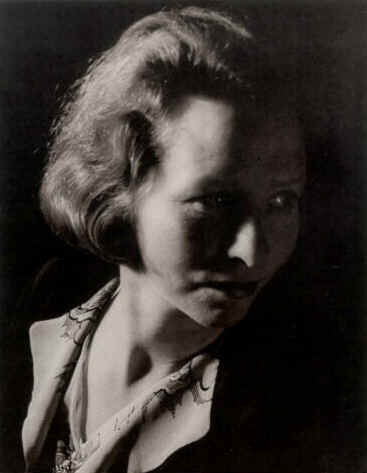
I love her sonnet, too, to Elinor Wylie, a person who also fascinates me (see my post on her here).
To Elinor Wylie
(In answer to a question about her)
Oh, she was beautiful in every part! --
The auburn hair that bound the subtle brain;
The lovely mouth cut clear by wit and pain,
Uttering oaths and nonsense, uttering art
In casual speech and curving at the smart
On startled ears of excellence too plain
For early morning! -- Obit. Death from strain;
The soaring mind outstripped the tethered heart.
Yet here was one who had no need to die
To be remembered. Every word she said,
The lively malice of the hazel eye
Scanning the thumb-nail close -- oh, dazzling dead,
How like a comet through the darkening sky
You raced! ... would your return were heralded.
When you read the details of her life, her aching lovelorn poems seem even more poignant. Not because she was a particularly poignant personality - as a matter of fact, it is the opposite. That's what, to me, is amazing. If you only read her poetry (and she's perfect for when you are lovelorn or nostalgic - the sonnets read like letters to the beloved) you would think she was the most sentimental person on the planet, with one great love she yearned for all her days. The fact that she was a bit of a ruthless harlot makes her romantic "persona" even more interesting, more deliberate, more an act of CONJURING than reflection of personal truth. Kudos. Her talent obviously expressed herself in the old forms, at that time in disfavor - rhyming couplets and rigid sonnets - but the amount of feeling she was able to get into each line, each verse, is incredible to me.
Millay's reputation is a solid one, although she no longer stands as a giant of 20th century poetry, as she did at the time when she was alive. Yet her lyrical romantic sonnets are still poems that people adore, even love ... and many of the greater more important poets don't have that. It's not good or bad, just a fact. She still can express the vagaries of love to our generation, in a more jaded time, with a high-flung cry of pain or ecstasy, that just works. It still sounds true.
Sonnet xxviii
I pray if you love me, bear my joy
A little while, or let me weep your tears;
I, too, have seen the quavering Fate destroy
Your destiny's bright spinning -- the dull shears
Meeting not neatly, chewing at the thread, --
Nor can you well be less aware how fine
How staunch as wire, and how unwarranted
Endures the golden fortune that is mine.
I pray you for this day at least, my dear,
Fare by my side, that journey in the sun;
Else must I turn me from the blossoming year
And walk in grief the way that you have gone.
Let us go forth together to the spring:
Love must be this, if it be anything.
Here are some quotes/anecdotes about Millay:
"In October 1934, Edna Millay read at Yale. A young graduate student, Richard Sewell, who forty years later would become the biographer of Emily Dickinson, never forgot the impression she made that night. Walking to the center of Woolsey Hall, wrapped in a long black velvet cloak, her bright hair shining, she "stood before us," he remembered, "like a daffodil." Looking at her wrist, she told the audience that the poems she was about to read were from her new book, Wine From These Grapes, "which is coming off the press just about now." That night she read with the zeal of a young Jeremiah, her words burning the air as she closed her reading with a sonnet from 'The Epitaph for the Race of Man'. Tickets for her readings were wildly sought whether she was in Oklahoma City or Chicago, where the hall seating 1,600 was sold out and even with standees an extra hall had to be taken for the overflow of another 800 who listened to her over amplifiers." -- Nancy Milford, "Savage Beauty"
"For instance, they had shades at their window and nothing else. I don't think they cared much. Well, once they stenciled apple blossoms, painted that pattern down the sides of the window. Or, for instance, they had a couple of plum trees in their backyard, and they never waited for the plums to ripen, but would pick them green, put them in vinegar, and call them 'mock olives.' Well, no one else did that sort of thing in Camden, don't you see?" -- Lena Dunbar, neighbor of the Millay family
"The poem seems to us to be phenomenal." -- Edward J. Wheeler, editor of "Current Literature", on Edna's poem 'The Land of Romance' - written when she was 14
"We have named the little one Edna Vincent Millay. Don't you think that is pretty? ... the Vincent is for the 'St. Vincent' Hospital, the one that cared so well for our darling brother. Nell woudl have called it 'Vincent' if it had been a boy." -- Cora Millay on the birth of her first daughter, on George Washington's birthday
"-- oh, this was life! It was more than life, -- it was art. I might pretend to myself [at home] as much and as long as I liked, -- until the deep-vibrant note I had discovered in my voice ... out-Hedda-ed Nazimova -- yet was my native village unthrilled and unconvinced; I was asked to serve ice-cream at church socials, and the grocer-boy called me by name ..." -- Edna St. Vincent Millay on her first job as an actress in a traveling stock company
"Boys don't like me anyway because I won't let them kiss me. It's just like this: let boys kiss you and they'll like you but you won't ... But I'd be almost willing to be engaged if I thought it would keep me from being lonesome ... if I was engaged I would be going to the play tonight instead of sitting humped up on the steps in a drizzle that keeps my pencil point sticky. I'd be going out paddling tomorrow instead of practicing the Beethoven Funeral March Sonata. And I'd like to have something to do besides write in an old book. I'd like to have something happen to give me a jolt, something that would rattle my teeth and shake my hairpins out." -- Edna St. Vincent Millay, in her journal, 1911
"The most astonishingly beautiful and original poem in The Lyric Year, the poem most arresting in its vision, the poem most like a wonderful Pre-Raphael painting, is surely Renascence by Miss Edna St. Vincent Millay. To me it almost unthinkable that a girl of twenty could conceive such a work and execute it with such vigor and tenderness ... And it is with no small pride that I give it my first vote for the prizes." -- Ferdinand Earle, 1912

Sonnet xv
Only until this cigarette is ended,
A little moment at the end of all,
While on the floor the quiet ashes fall,
And in the firelight to a lance extended,
Bizarrely with the jazzing music blended,
The broken shadow dances on the wall,
I will permit my memory to recall
The vision of you, by all my dreams attended.
And then adieu, -- farewell! -- the dream is done.
Yours is a face of which I can forget
The colour and the features, every one,
The words not ever, and the smiles not yet;
But in your day this moment is the sun
Upon a hill, after the sun has set.
Today in history, February 22, 1732
George Washington, first President of the United States, was born.

(All quotes from George Washington's letters below I got from my copy of the Library of America's compilation of his writings
Thomas Jefferson on George Washington:
The moderation and virtue of a single character probably prevented this Revolution from being closed, as most others have been, by a subversion of that liberty it was intended to establish.
In May, 1754, Washington wrote a letter home to his brother, after his first experience of battle in the French and Indian War:
I heard Bullets whistle and believe me there was something charming in the Sound.
In November, 1754, George Washington wrote:
My inclinations are strongly bent to arms.
GEORGE WASHINGTON, in a letter written to a friend in 1774
Does it not appear as clear as the sun in its meridian brightness that there is a regular, systematic plan to fix the right and practice of taxation upon us? Ought we not, then, to put our virtue and fortitude to the severest tests?
One of the things I love about Washington is that his progression to Revolutionary was gradual, and began with practical matters, like being taxed, and having his autonomy as a farmer taken away from him (the British regulated where he could buy parts, taxing him to death, etc.) His was not a high-flung "all men are created equal" mindset, like Thomas Jefferson's ... He began with the unfairness and humiliation of his status as someone who is being occupied and bossed around. It took all kinds to make that revolution. If we had just had Thomas Jefferson, we would have been in trouble. But we needed Thomas Jefferson to put the ideals into words, for the ages. But it was the mixture of personalities and mindsets that made it a success. Very important. John Adams countered Jefferson. Hamilton countered Washington and Jefferson. Ben Franklin gave it a glitter and notoriety. Madison was the brainiac lawyer. John Jay, Samuel Adams ... all with their area of expertise, their interests and passions. Thank God we had a good mix.
But Washington was the giant. A man who walked away from power even when it was offered to him? Had such a man ever lived before? George III didn't think so.
In 1755, Washington wrote a complaining letter to his friend Robert Dinwiddie:
We cannot conceive that because we are Americans, we shou'd therefore be deprived of the Benefits Common to British Subjects.
In 1758, Washington wrote a couple of letters to Sally Fairfax, a woman he was in love with - his first love - someone he never really recovered from (letters to her at the end of his life suggest that):
'Tis true, I profess myself a Votary to Love - I acknowledge that a Lady is in the Case - and further I confess that this Lady is known to you. - Yes Madam, as well as she is to one, who is too sensible of her Charms to deny the Power, whose Influence he feels and must ever Submit to. I feel the force of her amiable beauties in the recollection of a thousand tender passages that I coud wish to obliterate, till I am bid to revive them. - but experience alas! Sadly reminds me how Impossible this is. - and evinces an opinion which I have long entertained, that there is a Destiny, which has the Sovereign Controul of our Actions - not to be resisted by the Strongest efforts of Human Nature.The World has no business to know the object of my Love, declard in this manner to you - you when I want to conceal it - One thing, above all things in this World I wish to know, and only one person of your Acquaintance can solve me that, or guess my meaning. - but adieu to this, till happier times, if I shall ever see them ...
Excerpt from Joseph Ellis's His Excellency: George Washington
All of which is to suggest that Washington did not need to read books by radical Whig writers or receive an education in political theory from George Mason in order to regard the British military occupation of Massachusetts in 1774 as the latest installment in a long-standing pattern. His own ideological origins did not derive primarily from books but from his own experience with what he had come to regard as the imperiousness of the British Empire. Mason probably helped him to develop a more expansive vocabulary to express his thoughts and feelings, but the thoughts, and even more so the feelings, had been brewing inside him for more than twenty years. At the psychological nub of it all lay an utter loathing for any form of dependency, a sense of his own significance, and a deep distrust of any authority beyond his direct control.
Martha Washington wrote a letter to a relative on the eve of her husband's departure to the Convention in 1774:
I foresee consequences; dark days and darker nights; domestic happiness suspended; social enjoyments abandoned; property of every kind put in jeopardy by war, perhaps; neighbors and friends at variance, and eternal separations on earth possible. But what are all these evils when compared with the fate of which the Port Bill may be only a threat? My mind is made up; my heart is in the cause. George is right; he is always right. God has promised to protect the righteous, and I will trust him.

PATRICK HENRY, on his return home from the first Continental Congress in 1774 was asked whom he thought was the foremost man in the group:
"Colonel Washington is unquestionably the greatest man on that floor."
Abigail Adams first met Washington in 1774, and wrote to her husband:
You had prepared me to entertain a favorable opinion of him, but I thought the half was not told me. Dignity with ease and complacency, the gentleman and the soldier look agreeably blended in him. Modesty marks every line and feature of his face.
When George Washington was elected (unanimously) by the First Continental Congress to be Commander in Chief (this was in June, 1775) - here was the brief acceptance he made:
"Lest some unlucky event should happen unfavorable to my reputation, I beg it may be remembered by every gentleman in the room, that I this day declare, with the utmost sincerity, I do not think myself equal to the command."
In a 1775 letter to his brother-in-law, Burwell Bassett:
I am now Imbarked on a tempestuous Ocean from whence, perhaps, no friendly harbour is to be found ... It is an honour I wished to avoid ... I can answer but for three things, a firm belief of the justice of our Cause - close attention to the prosecution of it - and the strictest Integrity - If these cannot supply the places of Ability & Experience, the cause will suffer & more than probably my character along with it, as reputation derives its principal support from success.
GEORGE WASHINGTON, writing to Martha on June 18, 1775, following his nomination as commander in chief
My Dearest: I now sit down to write to you on a subject which fills me with inexpressible concern, and this concern is greatly aggravated and increased when I reflect upon the uneasiness I know it will give you. It has been determined in Congress that the whole army raised for the defence of the American cause shall be put under my care, and that it is necessary for me to proceed immediately to Boston to take upon me the command of it.You may believe me, my dear Patsy, when I assure you, in the most solemn manner, that, so far from seeking this appointment, I have used every endeavour in my power to avoid it, not only from my unwillingness to part with you and the family, but from a consciousness of its being a trust too great for my capacity, and that I should enjoy more real happiness in one month with you at home than I have the most distant prospect of finding abroad, if my stay were to be seven times seven years.
But as it has been a kind of destiny that has thrown me upon this service, I shall hope that my undertaking is designed to answer some good purpose.
George Washington describes here what a general expects in his aides:
The variegated and important duties of the aids of a commander in chief or the commander of a separate army require experienced officers, men of judgment and men of business, ready pens to execute them properly and with dispatch. A great deal more is required of them than attending him at a parade or delivering verbal orders here and there, or copying a written one. They ought, if I may be allowed to use the expression, to possess the Soul of the General, and from a single idea given to them, to convey his meaning in the clearest and fullest manner.
GEORGE WASHINGTON, letter to Joseph Reed, early December, 1775, after a disappointing recruiting drive
I have oftentimes thought how much happier I should have been if, instead of accepting the command under such circumstances, I had taken my musket on my shoulder and entered the ranks; or, if I could have justified the measure to posterity and my own conscience, had retired to the back country and lived in a wigwam. If I shall be able to rise superior to these and many other difficulties which might be enumerated, I shall most religiously believe that the finger of Providence is in it to blind the eyes of our enemies, for surely if we get well through this month it must be for want of their knowing the disadvantages which we labor under.
On August 1, 1777, Washington invited the newly arrived Marquis de Lafayette to witness a review of the troops. The American troops marched by, ragged, disheveled, shabby. Here is what the two men were reported to say to one another:
Washington: We are rather embarrassed to show ourselves to an officer who has just left the army of France.
Lafayette: I am here, sir, to learn and not to teach.

GEORGE WASHINGTON, on the self-sacrifice of his soldiers during the hard winter of 1777:
To see men without clothes to cover their nakedness, without blankets to lay on, without shoes, by which their marches might be traced by the blood from their feet, and almost as often without provisions as with; marching through frost and snow, and at Christmas taking up their winter quarters within a day's march of the enemy, without a house or hut to cover them till they could be built, and submitting to it without a murmur, is a mark of patience and obedience which in my opinion can scarce be paralleled.
In 1779, George Washington wrote:
Men are very apt to run into extremes; hatred to England may carry some into excessive Confidence in France ...; I am heartily disposed to entertain the most favourable sentiments of our new ally and to cherish them in others to a reasonable degree; but it is a maxim founded on the universal experience of mankind, that no nation is to be trusted farther than it is bound by its interest; and no prudent statesman or politician will venture to depart from it.
GEORGE WASHINGTON, letter of May 31, 1780, describing one of the things he was learning through the war - his frustration with Congress was constant, sometimes titanic rage (when he gets mad, boy, look out), other times just a nagging persistent annoyance.
Certain I am unless Congress speak in a more decisive tone, unless they are invested with powers by the several States competent to the great purposes of the war, or assume them as a matter of right, and they and the States respectively act with more energy than they hitherto have done, that our cause is lost. One State will comply with a requisition of Congress, another neglects to do it; a third executes it by halves; and all differ either in the manner, the matter, or so much in point of time, that we are always working up hill; and, while such a system as the present one or rather want of one prevails, we shall ever be unable to apply our strength or resources to any advantage.
Excerpt from Joseph Ellis's His Excellency: George Washington
One incident near the end of the war provides a clue to the transformation in his character wrought by the intense experience of serving so long as the singular embodiment of commitment to the cause. In 1781, Lund Washington reported that a British warship had anchored in the Potomac near Mount Vernon, presumably with orders to ravage Washington's estate. When the British captain offered assurances that he harbored no hostile intentions, Lund sent out a boatload of provisions to express his gratitude for the captain's admirable restraint. When Washington learned of this incident he berated Lund: "It would have been a less painful circumstance to me, to have heard, that in consequence of your non-compliance with their request, they had burnt my House, and laid the Plantation to ruins."
And here is a story - (perhaps it's a rumor - but I love it nonetheless) of Benjamin Franklin's response to the news of the surrender at Yorktown on October 19, 1781. He was, of course, in Paris at the time, setting the world on fire with his homespun wisdom, bacchanalian propensities, chess-playing abilities - and the vision he presented to the world of what liberty, American-style, looked like. An international celebrity.
Word came to France of the decisive American victory, and the complete surrender to George Washington in Yorktown. Franklin attended a diplomatic dinner shortly thereafter - and, of course, everyone was discussing the British defeat.
The French foreign minister stood, and toasted Louis XVI: "To his Majesty, Louis the Sixteenth, who, like the moon, fills the earth with a soft, benevolent glow."
The British ambassador rose and said, "To George the Third, who, like the sun at noonday, spreads his light and illumines the world."
Franklin rose and countered, "I cannot give you the sun or the moon, but I give you George Washington, General of the armies of the United States, who, like Joshua of old, commanded both the sun and the moon to stand still, and both obeyed."
Excerpt from Joseph Ellis's His Excellency: George Washington
After Yorktown, moreover, new life was breathed into these old fears, since Washington's insistence on maintaining the Continental army at full strength during a time when the majority of the citizenry believed, correctly it turned out, that the war was over only intensified fears that he intended to become the American Cromwell ... Such loose talk triggered the fear that the infant American republic was about to be murdered in its infancy by the same kind of military dictatorship that had destroyed the Roman and English republics in their formative phases. And since these were the only two significant efforts to establish republican governments in recorded history, the pattern did not bode well.Washington was fully aware of this pattern, and therefore recognized the need to make explicit statements of his intention to defy it. In May 1782 a young officer at the Newburgh encampment, Lewis Nicola, put in writing what many officers were whispering behind the scenes: that the Continental Congress's erratic conduct of the war had exposed the weakness of all republics and the certain disaster that would befall postwar America unless Washington declared himself king ... Washington responded with a stern lecture to "banish these thoughts from your Mind," and denounced the scheme as "big with the greatest mischiefs that can befall my Country." When word of Washington's response leaked out to the world, no less an expert on the subject than George III was heard to say that, if Washington resisted the monarchical mantle and retired, as he always said he would, he would be "the greatest man in the world".
While George III's judgment as a student of history has never met the highest standards, his opinion on this matter merits our attention, for it underlines the truly exceptional character of Washington's refusal to regard himself as the indispensable steward of the American Revolution. Oliver Cromwell had not surrendered power after the English Revolution. Napoleon, Lenin, Mao, and Castro did not step aside to leave their respective revolutionary settlements to others in subsequent centuries. We need to linger over this moment to ask what was different about Washington, or what was different about the political conditions created by the American Revolution, that allowed him to resist temptations that other revolutionary leaders before and since found irresistible.

GEORGE WASHINGTON, letter of (unwelcome) advice sent to governors of the 13 states, 1783, as the army began to disband.
Americans are now sole lords and proprietors of a vast tract of continent comprehending all the various soils and climates of the world and abounding with all the necessaries and conveniences of life - Heaven has crowned all other blessings, by giving a fairer opportunity for political happiness, than any other nation has been favored with - This is the time of their political probation; this is the moment when the eyes of the whole world are turned upon them; this is the moment to establish or ruin their national character forever; this is the favorable moment to give such a tone to our federal government as will enable it to answer the ends of its institution; or this may be the ill-fated moment for relaxing the powers of the Union, annihilating the cement of the Confederation and exposing us to become the sport of European politics, which may play one state against another, to prevent their growing importance and to serve their own interested purposes. For, according to the system of policy the states shall adopt at this moment, they will stand or fall; and by their confirmation or lapse it is yet to be decided whether the Revolution must ultimately be considered a blessing or a curse - a blessing or a curse, not to the present age alone, for with our fate will the destiny of unborn millions be involved.[He states that there are 4 requirements for the new America]
First. An indissoluble union of the states under one federal head. Secondly. A sacred regard to public justice (that is, the payment of debts). Thirdly. The adoption of a proper peace establishment (that is, an army and a navy). Fourthly. The prevalence of that pacific and friendly disposition among the people of the Union, which will influence them to forget their local prejudices and policies; to make those mutual concessions, which are requisite to the general prosperity; and, in some instances, to sacrifice their individual advantages to the interest of the community. These are the pillars on which the glorious future of our independency and national character must be supported.
Then there was the Newburgh Conspiracy, in March 1783, when a group of congressmen aligned with officers in the army threatened a military coup for various reasons. The new federal government was barely formed, there was no constitution yet - and the states were vying for powerful positions. It's important to remember just how tenuous all of this was at the time. It wasn't a smooth clear path full of Revolutionary-Era virtue and certainty, although there are bozos who claim that it was like that. They need to read their history books. Washington heard of the plot, and decided to address it headon. Now. One of the things I love about this story is that Washington - while he obviously said time and time again that he was uncomfortable with being a "symbol" (and I believe him) - he also realized that it was pointless to fight against it, and when he needed to USE that symbolic stature to get something done that he wanted, he had no problem with playing that card. This is a highly theatrical moment, described vividly by every person who was there, who left an account, and they all say the same thing. There wasn't a dry eye in the house. Perhaps it's my theatrical background, but I cannot believe that Washington was unaware of the effect he wanted to have, and that he did not USE that gesture described so vividly in a conscious manner. There is a way, you know, to be FALSE and TRUE at the same time. Any actor can tell you that. You are playing make-believe, you are pretending to be someone else - so that's the FALSE part - but your reactions and gestures all come from a very TRUE place, and many an actor will tell you that they feel MORE true when they are acting than when they are just out and about as a regular civilian. So that's my interpretation of Washington's big gesture here. It was certainly planned, and so that is FALSE ... but it was also organic and came from a true place. It was chosen for the EFFECT it would have. Washington was a celebrity. He knew that. He hated it. But he used it when convenient. Anyway, I'm going on and on but this is just one of my favorite moments of his life - I love its theatricality - and I also just wish I had been there. But so many people described the moment that I do feel like I can live it vicariously. Like Patrick Henry's "give me liberty or give me death" speech, where people record his gestures, his pantomime, the tenor of his voice. I have imagined myself there.
So Washington gets wind of this dangerous conspiracy, to basically take over, and undermine Washington's authority - not to mention the authority of the baby federal government.
Excerpt from Joseph Ellis's His Excellency: George Washington
For obvious reasons, the secret conversations within the officers' corps never found their way into the historical record, making all efforts to recover the shifting factions in the plot educated guesses at best. We can be sure that the crisis came to a head on March 11, when the dissident officers scheduled a meeting to coordinate their strategy. Washington countermanded the order for a meeting, saying only he could issue such an order, then scheduled a session for all officers on March 16.He spent the preceding day drafting, in his own hand, the most impressive speech he ever wrote. Beyond the verbal felicities and classic cadences, the speech established a direct link between his own honor and reputation and the abiding goals of the American Revolution. His central message was that any attempted coup by the army was simultaneously a repudiation of the principles for which they had all been fighting and an assault on his own integrity. Whereas Cromwell and later Napoleon made themselves synonymous with the revolution in order to justify the assumption of dictatorial power, Washington made himself synonymous with the American Revolution in order to declare that it was incompatible with dictatorial power.
On March 16, 1783, George Washington made the following speech to his group of officers:
Gentlemen: By an anonymous summons, an attempt has been made to convene you together; how inconsistent with the rules of propriety, how unmilitary, and how subversive of all order and discipline, let the good sense of the army decide...Thus much, gentlemen, I have thought it incumbent on me to observe to you, to show upon what principles I opposed the irregular and hasty meeting which was proposed to have been held on Tuesday last - and not because I wanted a disposition to give you every opportunity consistent with your own honor, and the dignity of the army, to make known your grievances. If my conduct heretofore has not evinced to you that I have been a faithful friend to the army, my declaration of it at this time would be equally unavailing and improper. But as I was among the first who embarked in the cause of our common country. As I have never left your side one moment, but when called from you on public duty. As I have been the constant companion and witness of your distresses, and not among the last to feel and acknowledge your merits. As I have ever considered my own military reputation as inseparably connected with that of the army. As my heart has ever expanded with joy, when I have heard its praises, and my indignation has arisen, when the mouth of detraction has been opened against it, it can scarcely be supposed, at this late stage of the war, that I am indifferent to its interests.
But how are they to be promoted? The way is plain, says the anonymous addresser. If war continues, remove into the unsettled country, there establish yourselves, and leave an ungrateful country to defend itself. But who are they to defend? Our wives, our children, our farms, and other property which we leave behind us. Or, in this state of hostile separation, are we to take the two first (the latter cannot be removed) to perish in a wilderness, with hunger, cold, and nakedness? If peace takes place, never sheathe your swords, says he, until you have obtained full and ample justice; this dreadful alternative, of either deserting our country in the extremest hour of her distress or turning our arms against it (which is the apparent object, unless Congress can be compelled into instant compliance), has something so shocking in it that humanity revolts at the idea. My God! What can this writer have in view, by recommending such measures? Can he be a friend to the army? Can he be a friend to this country? Rather, is he not an insidious foe? Some emissary, perhaps, from New York, plotting the ruin of both, by sowing the seeds of discord and separation between the civil and military powers of the continent? And what a compliment does he pay to our understandings when he recommends measures in either alternative, impracticable in their nature?
I cannot, in justice to my own belief, and what I have great reason to conceive is the intention of Congress, conclude this address, without giving it as my decided opinion, that that honorable body entertain exalted sentiments of the services of the army; and, from a full conviction of its merits and sufferings, will do it complete justice. That their endeavors to discover and establish funds for this purpose have been unwearied, and will not cease till they have succeeded, I have not a doubt. But, like all other large bodies, where there is a variety of different interests to reconcile, their deliberations are slow. Why, then, should we distrust them? And, in consequence of that distrust, adopt measures which may cast a shade over that glory which has been so justly acquired; and tarnish the reputation of an army which is celebrated through all Europe, for its fortitude and patriotism? And for what is this done? To bring the object we seek nearer? No! most certainly, in my opinion, it will cast it at a greater distance.
For myself (and I take no merit in giving the assurance, being induced to it from principles of gratitude, veracity, and justice), a grateful sense of the confidence you have ever placed in me, a recollection of the cheerful assistance and prompt obedience I have experienced from you, under every vicissitude of fortune, and the sincere affection I feel for an army I have so long had the honor to command will oblige me to declare, in this public and solemn manner, that, in the attainment of complete justice for all your toils and dangers, and in the gratification of every wish, so far as may be done consistently with the great duty I owe my country and those powers we are bound to respect, you may freely command my services to the utmost of my abilities.
While I give you these assurances, and pledge myself in the most unequivocal manner to exert whatever ability I am possessed of in your favor, let me entreat you, gentlemen, on your part, not to take any measures which, viewed in the calm light of reason, will lessen the dignity and sully the glory you have hitherto maintained; let me request you to rely on the plighted faith of your country, and place a full confidence in the purity of the intentions of Congress; that, previous to your dissolution as an army, they will cause all your accounts to be fairly liquidated, as directed in their resolutions, which were published to you two days ago, and that they will adopt the most effectual measures in their power to render ample justice to you, for your faithful and meritorious services. And let me conjure you, in the name of our common country, as you value your own sacred honor, as you respect the rights of humanity, and as you regard the military and national character of America, to express your utmost horror and detestation of the man who wishes, under any specious pretenses, to overturn the liberties of our country, and who wickedly attempts to open the floodgates of civil discord and deluge our rising empire in blood.
By thus determining and thus acting, you will pursue the plain and direct road to the attainment of your wishes. You will defeat the insidious designs of our enemies, who are compelled to resort from open force to secret artifice. You will give one more distinguished proof of unexampled patriotism and patient virtue, rising superior to the pressure of the most complicated sufferings. And you will, by the dignity of your conduct, afford occasion for posterity to say, when speaking of the glorious example you have exhibited to mankind, "Had this day been wanting, the world had never seen the last stage of perfection to which human nature is capable of attaining."
I hope you made it through that whole thing. It is rather extraordinary. BUT the most extraordinary thing is the "improvised" moment that came directly BEFORE he made that speech. It was the GESTURE that ended the coup, not his words. Or perhaps a mixture of both. But never ever underestimate the power of gesture.
Here is Joseph Ellis again on the moment in question:
Washington has just entered the New Building at Newburgh, a large auditorium recently built by the troops and also called The Temple. About 500 officers are present in the audience. Horatio Gates is chairing the meeting, a rich irony since Gates is most probably complicitous in the plot to stage a military coup that Washington has come to quash. Everything has been scripted and orchestrated beforehand. Washington's aides fan out into the audience to prompt applause for the general's most crucial lines. Washington walks slowly to the podium and reaches inside his jacket to pull out his prepared remarks. Then he pauses - the gesture is almost certainly planned - and pulls from his waistcoat a pair of spectacles recently sent to him by David Rittenhouse, the Philadelphia scientist. No one has ever seen Washington wear spectacles before on public occasions. He looks out to his assembled officers while adjusting the new glasses and says: "Gentlemen, you will permit me to put on my spectacles, for I have not only grown gray, but almost blind in the service of my country." Several officers began to sob. The speech itself is anti-climactic. All thoughts of a military coup die at that moment.
On November 25, 1783: George Washington "took back" New York.
The peace treaty had been signed a year before, France had pledged support and recognition of the new United States, but the redcoats remained in New York, waiting for their written orders from London. George Washington vowed that he would not go home, he would not break up his army, until every last redcoat had left.
Nov. 25 was that momentous day - the day the American troops marched back into town, after the departure of the British.
The exhausted army marched the long way downtown, through what was now a war-ravaged New York City. People lined the streets, throwing laurels in front of Washington's horse, screaming, crying ... a huge display of emotion and reverence that made the typically humble Washington feel uncomfortable.
A woman in the crowd that day wrote the following in her diary:
We had been accustomed for a long time to military display in all the finish and finery of [British] garrison life. The troops just leaving us were as if equipped for a show and with their scarlet uniforms and burnished arms made a brilliant display. The troops that marched in, on the contrary, were ill-clad and weather-beaten and made a forlorn appearance. But then, they were our troops and as I looked at them and thought upon all they had done and suffered for us, my heart and my eyes were full.
GEORGE WASHINGTON'S MOTHER to Lafayette, 1784:
"I am not surprised at what George has done, for he was always a good boy."
George Washington wrote the following on the eve of his inauguration in 1789:
It is said that every man has his portion of ambition. I may have mine, I suppose, as well as the rest, but if I know my own heart, my ambition would not lead me into public life; my only ambition is to do my duty in this world as well as I am capable of performing it, and to merit the good opinion of all good men.
 Washington's first inaugural address
David McCullough describes, in his book on John Adams
On the day of his inauguration, Thursday, April 30 1789, Washington rode to Federal Hall in a canary-yellow carriage pulled by six white horses and followed by a long column of New York militia in full dress. The air was sharp, the sun shone brightly, and with all work stopped in the city, the crowds along his route were the largest ever seen. It was as if all New York had turned out and more besides. "Many persons in the crowd," reported the Gazette of the United States "were heard to say they should now die contented - nothing being wanted to complete their happiness - but the sight of the savior of his country."In the Senate Chamber were gathered the members of both houses of Congress, the Vice President, and sundry officials and diplomatic agents, all of whom rose when Washington made his entrance, looking solemn and stately. His hair powdered, he wore a dress sword, white silk stockings, shoes with silver buckles, and a suit of the same brown Hartford broadcloth that Adams, too, was wearing for the occasion. They might have been dressed as twins, except that Washington's metal buttons had eagles on them.
It was Adams who formally welcomed the General and escorted him to the dais. For an awkward moment Adams appeared to be in some difficulty, as though he had forgotten what he was supposed to say. then, addressing Washington, he declared that the Senate and House of Representatives were ready to attend him for the oath of office as required by the Constitution. Washington said he was ready. Adams bowed and led the way to the outer balcony, in full view of the throng in the streets. People were cheering and waving from below, and from windows and rooftops as far as the eye could see. Washington bowed once, then a second time.
Fourteen years earlier, it had been Adams who called on the Continental Congress to make the tall Virginian commander-in-chief of the army. Now he stood at Washington's side as Washington, his right hand on the Bible, repeated the oath of office as read by Chancellor Robert R. Livingston of New York, who had also been a member of the Continental Congress.
In a low voice Washington solemnly swore to execute the office of the President of the United States and, to the best of his ability, to "preserve, protect, and defend the Constitution of the United States." Then, as not specified in the Constitution, he added, "So help me God", and kissed the Bible, thereby establishing his own first presidential tradition.
"It is done," Livingston said, and, turning to the crowd, cried out, "Long live George Washington, President of the United States."
George Washington said:
Men may speculate as they will, they may talk of patriotism; they may draw a few examples from current story - but whoever builds upon it as a sufficient basis for conducting a long and bloody war will find themselves deceived in the end - For a long time it may of itself push men to action, to bear much, to encounter difficulties, but it will not endure unassisted by Interest.
On August 17, 1790, George Washington visited Newport Rhode Island - and visited the Jewish congregation of the Touro Synagogue (which still stands - gorgeous building. We went on a field trip there in grade school). The congregation presented an address to George Washington, welcoming him to Newport, and to their synagogue. A couple of days later George Washington wrote an eloquent response. Both the address as well as Washington's response were printed in all of the "national" newspapers at the time.
August 21st, 1790
To the Hebrew Congregation in Newport Rhode Island.Gentleman.
While I receive, with much satisfaction, your Address replete with expressions of affection and esteem; I rejoice in the opportunity of assuring you, that I shall always retain a grateful remembrance of the cordial welcome I experienced in my visit to Newport, from all classes of Citizens.
The reflection on the days of difficulty and danger which are past is rendered the more sweet, from a consciousness that they are succeeded by days of uncommon prosperity and security. If we have wisdom to make the best use of the advantages with which we are now favored, we cannot fail, under the just administration of a good Government, to become a great and happy people.
The Citizens of the United States of America have a right to applaud themselves for having given to mankind examples of an enlarged and liberal policy: a policy worthy of imitation.
All possess alike liberty of conscience and immunities of citizenship. It is now no more that toleration is spoken of, as if it was by the indulgence of one class of people, that another enjoyed the exercise of their inherent natural rights. For happily the Government of the United States, which gives to bigotry no sanction, to persecution no assistance, requires only that they who live under its protection should demean themselves as good citizens, in giving it on all occasions their effectual support.
It would be inconsistent with the frankness of my character not to avow that I am pleased with your favorable opinion of my Administration, and fervent wishes for my felicity. May the children of the Stock of Abraham, who dwell in this land, continue to merit and enjoy the good will of the other Inhabitants; while every one shall sit in safety under his own vine and figtree, and there shall be none to make him afraid. May the father of all mercies scatter light and not darkness in our paths, and make us all in our several vocations useful here, and in his own due time and way everlastingly happy.
G. Washington
He expresses there my own issues with the concept of "tolerance", with his "It is now no more that toleration is spoken of, as if it was by the indulgence of one class of people, that another enjoyed the exercise of their inherent natural rights." Mitchell and I have bitched about that very thing before, only in not so beautiful language. Don't condescend to TOLERATE me. Don't "indulge" me, from your height of belonging, because that means that it is only by YOUR grace that I am tolerated. I don't care if you TOLERATE me or not, it makes no difference to me your opinion of my character and my lifestyle. I am protected by the laws of the land, and as long as I abide by those laws, then it doesn't matter in the slightest what you think of me. Good for you, George, for putting that into words. The Jewish people, as long as they were good citizens, had nothing to fear. It was not up to one group of people to decide to 'tolerate' them or not. They were citizens of the land, and therefore protected.
This is why John Adams said he wanted the new nation to be a nation "of laws, not men." Because men are fickle and subject to emotion and temptation. They may "tolerate" you one day and hate you the next. As long as we are a nation "of laws, not men" ... then that will not matter. Yes, there will be growth pains, as we saw in the suffragette movement, the civil rights movement, and as we continue to see in the gay / lesbian / transgender movement. Nothing is perfect. Thank God. Perfection means stasis, a perfect way to describe a totalitarian top-down state. We are not that. We are ruled by "laws, not men", so the Jewish synagogue in Newport was protected by the law, regardless of the anti-Semitism they may have faced around them.
Now I will wait for someone to pipe up "but Washington had slaves!"
Yes. He had slaves. You know why? Because he was a man of HIS time, not our own. It was a grave sin on the society at the time, and many - including Washington - were tormented by the contradiction. It was so interwoven with their own prosperity that many could not see a way out of it. But to discount everything he said because he happened to live THEN not NOW, and was therefore subject to the prejudices of his time, is ridiculous. It's also a shame. Because if you take that view - then you cut yourself off from the wisdom of the ages.

From Joseph Ellis' book Founding Brothers: The Revolutionary Generation
First, it is crucial to recognize that Washington's extraordinary reputation rested less on his prudent exercise of power than on his dramatic flair at surrendering it. He was, in fact, a veritable virtuoso of exits. Almost everyone regarded his retirement of 1796 as a repeat performance of his resignation as commander of the Continental Army in 1783. Back then, faced with a restive and unpaid remnant of the victorious army quartered in Newburgh, New York, he had suddenly appeared at a meeting of officers who were contemplating insurrection; the murky plot involved marching on the Congress and then seizing a tract of land for themselves in the West, all presumably with Washington as their leader.He summarily rejected their offer to become the American Caesar and denounced the entire scheme as treason to the cause for which they had fought. Then, in a melodramatic gesture that immediately became famous, he pulled a pair of glasses out of his pocket: "Gentlemen, you will permit me to put on my spectacles," he declared rhetorically, "for I have not only grown gray but almost blind in service to my country." Upon learning that Washington intended to reject the mantle of emperor, no less an authority than George III allegedly observed, "If he does that, he will be the greatest man in the world." True to his word, on December 22, 1783, Washington surrendered his commission to the Congress, then meeting in Annapolis: "Having now finished the work assigned me," he announced, "I now retire from the great theatre of action." In so doing, he became the supreme example of the leader who could be trusted with power because he was so ready to give it up.
Excerpt from Joseph Ellis's His Excellency: George Washington
The last days were spent hosting dinners and dances in his honor. The ceremonials culminated with the [John] Adams inauguration, where, somewhat to Adams's irritation, more attention was paid to the outgoing than incoming president. Adams reported to Abigail that he thought he heard Washington murmuring under his breath at the end of the ceremony: "Ay! I am fairly out and you are fairly in! See which of us will be the happiest." But the story is probably apocryphal. Washington's diary entry for the day was typically flat and unrevealing: "Much such a day as yesterday in all respects. Mercury at 41." The public man was already receding into the proverbial mists. The private man could not wait to get those new dentures and place himself beneath those vines and fig trees.
Washington said, at one point, to the doctor, during his final illness in 1799:
"Doctor, I die hard, but I am not afraid to go."
 Washington on his death bed
George Washington's last words:
"I feel myself going. I thank you for your attentions; but I pray you to take no more trouble about me. Let me go off quietly. I cannot last long."
Henry Lee said, in eulogy:
First in war, first in peace, and first in the hearts of his countrymen.
Mark Twain wrote in 1871:
I have a higher and greater standard of principle [than George Washington]. Washington could not lie. I can lie but I won't.
Gouverneur Morris said, upon the death of George Washington:
It is a question, previous to the first meeting, what course shall be pursued. Men of decided temper, who, devoted to the public, overlooked prudential considerations, thought a form of government should be framed entirely new. But cautious men, with whom popularity was an object, deemed it fit to consult and comply with the wishes of the people. AMERICANS! -- let the opinion then delivered by the greatest and best of men, be ever present to your remembrance. He was collected within himself. His countenance had more than usual solemnity -- His eye was fixed, and seemed to look into futurity. 'It is (said he)too probable that no plan we propose will be adopted. Perhaps another dreadful conflict is to be sustained. If to please the people, we offer what we ourselves disapprove, how can we afterwards defend our work? Let us raise a standard to which the wise and the honest can repair. The event is in the hand of God.'--this was the patriot voice of WASHINGTON; and this the constant tenor of his conduct.
My father said, in regards to Washington being our first President:
"We were so lucky."
And below, a video in praise of "George Washington's awesome-ness": Did you know he weighed "a fucking ton"? Well, he did.
On that note, happy birthday, Mr. Washington!
February 21, 2010
Today in history, February 21, 1907
W.H. Auden was born in York, England.
Two pieces of advice for writers from Mr. Auden:
To keep his errors down to a minimum, the internal Censor to whom a poet submits his work in progress should be a Censorate. It should include, for instance, a sensitive only child, a practical housewife, a logician, a monk, an irreverent buffoon and even, perhaps, hated by all the others and returning their dislike, a brutal foul-mouthed drill sergeant who considers all poetry rubbish.
Then there is:
Never write from your head; write from your cock.
While that second piece may not, in an anatomical way, apply to me, I still take it as very good advice.

There are only two other poets I can think of who take up as much brain-space for me as Auden, in terms of reference-points, who help me figure out how to say things, and those are Yeats and Shakespeare. I'll be in some situation and suddenly I'll remember Auden's words "let the healing fountains start ..." (which is from his poem, coincidentally, on Yeats) Or I'll be troubled and remind myself that I need to try to love my crooked neighbor with my crooked heart. I know I'm crooked. We all are. But we must love anyway. Or try to. I find Auden himself to be a "healing fountain". There is something transcendent about his work for me. It lifts me up into my better self, a place where it is possible to be good, and loving, and forgiving.
Auden wasn't an idiotic optimist, however, and he did a lot of revising of his work over the years - he was a compulsive reviser - so a lot of his stuff has multiple dates on it. It wasn't just language he revised, it was thought and philosophy. If he outgrew a certain view, he would go back and tinker with the poems that expressed said view. One of the most fascinating examples of his revisions shows that he was willing to go back and revise something, a philosophical statement, that he no longer felt was true. He couldn't let it stand. In his chilling poem "September 1, 1939", written about Germany's invasion of Poland, there is a line "We must love one another or die". An extraordinary sentiment, especially at that brutal terrifying time.
September 1, 2939
I sit in one of the dives
On Fifty-second Street
Uncertain and afraid
As the clever hopes expire
Of a low dishonest decade:
Waves of anger and fear
Circulate over the bright
And darkened lands of the earth,
Obsessing our private lives;
The unmentionable odour of death
Offends the September night.
Accurate scholarship can
Unearth the whole offence
From Luther until now
That has driven a culture mad,
Find what occurred at Linz,
What huge imago made
A psychopathic god:
I and the public know
What all schoolchildren learn,
Those to whom evil is done
Do evil in return.
Exiled Thucydides knew
All that a speech can say
About Democracy,
And what dictators do,
The elderly rubbish they talk
To an apathetic grave;
Analysed all in his book,
The enlightenment driven away,
The habit-forming pain,
Mismanagement and grief:
We must suffer them all again.
Into this neutral air
Where blind skyscrapers use
Their full height to proclaim
The strength of Collective Man,
Each language pours its vain
Competitive excuse:
But who can live for long
In an euphoric dream;
Out of the mirror they stare,
Imperialism's face
And the international wrong.
Faces along the bar
Cling to their average day:
The lights must never go out,
The music must always play,
All the conventions conspire
To make this fort assume
The furniture of home;
Lest we should see where we are,
Lost in a haunted wood,
Children afraid of the night
Who have never been happy or good.
The windiest militant trash
Important Persons shout
Is not so crude as our wish:
What mad Nijinsky wrote
About Diaghilev
Is true of the normal heart;
For the error bred in the bone
Of each woman and each man
Craves what it cannot have,
Not universal love
But to be loved alone.
From the conservative dark
Into the ethical life
The dense commuters come,
Repeating their morning vow;
'I will be true to the wife,
I'll concentrate more on my work,'
And helpless governors wake
To resume their compulsory game:
Who can release them now,
Who can reach the dead,
Who can speak for the dumb?
All I have is a voice
To undo the folded lie,
The romantic lie in the brain
Of the sensual man-in-the-street
And the lie of Authority
Whose buildings grope the sky:
There is no such thing as the State
And no one exists alone;
Hunger allows no choice
To the citizen or the police;
We must love one another or die.
Defenseless under the night
Our world in stupor lies;
Yet, dotted everywhere,
Ironic points of light
Flash out wherever the Just
Exchange their messages:
May I, composed like them
Of Eros and of dust,
Beleaguered by the same
Negation and despair,
Show an affirming flame.
The poem was published, and Auden immediately saw all sorts of problems with it, having to do with its rhetoric and tone, but it all encapsulated for him in that line. He said he read its published version and:
...said to myself: 'That's a damned lie! We must die anyway.' So, in the next edition, I altered it to 'We must love one another and die.' This didn't seem to do either, so I cut the stanza. Still no good. The whole poem, I realized, was infected with an incurable dishonesty—and must be scrapped.
He didn't include it in his own canon (more on that line below), he was that ruthless in his own work. The work felt dishonest to him. He didn't like how it was being used. And that one chilling substitution - of "or" to "and" - didn't help. You can see the entire tenor of the times in his revision, can't you? You could write an entire book on the difference between the two statements, and how "and" changes everything. Regardless, the poem survived - and it is included in his Collected Work, and over the space of time it has regained currency, especially in times of war and fear and hatred. It speaks to those universal experiences.
Then, of course, he has written two lines which - as difficult as they are - are words I actually try to live by. "If equal affection cannot be / Let the more loving one be me." This is a phrase that comes up in my head, what, once, twice a day? It is complicated now, by my insistence on reciprocity, and I wonder if I have lived by his words too much? But that's the thing with such words: you kind of can't do them half way. You can't say, "Oh, wow, what a nice sentiment" and then not try to live by them. At least I haven't been able to. They sound a gong in the depths of me ... that this is the way it SHOULD be. That this is how I SHOULD try to live. I stand by that. I rarely throw out the baby with the bathwater. I try to integrate, and much of Auden's work - with its complex messaging (his religion, his sexuality, his politics - and how those things grew and morphed) - is all about integration. It is why it is so precious to me, why he comes up for me again and again. I feel like he is MINE. In terms of that poem "The More Loving One" (which I would recite to myself, in bed, in the weeks following September 11th, along with the Hail Mary - my two talismans against fear, and the choking smoke billowing up from lower Manhattan) I have a hard time picking a favorite anything - but if I had to choose to re-read only one poem for the rest of my life, it would be "The More Loving One".
The More Loving One
Looking up at the stars, I know quite well
That, for all they care, I can go to hell,
But on earth indifference is the least
We have to dread from man or beast.
How should we like it were stars to burn
With a passion for us we could not return?
If equal affection cannot be,
Let the more loving one be me.
Admirer as I think I am
Of stars that do not give a damn,
I cannot, now I see them, say
I missed one terribly all day.
Were all stars to disappear or die,
I should learn to look at an empty sky
And feel its total dark sublime,
Though this might take me a little time.
I can honestly say that that poem has helped me in living my life. Even when (or especially when) I take issue with this or that line. It is the "taking issue with" that makes it a great poem. Find the "total dark sublime", Auden? Are you out of your mind? NO. I REFUSE. But then comes the great and painful last line of admission: "Though this might take me a little time." If it weren't for that last line, Auden would be just another sentimental optimist. Make lemonade out of lemons! some do-gooder nonentity shouts at someone who has just experienced a catastrophe. My response to that is usually, "Sure - I'll do my best - but can you GIVE ME A MINUTE? Can you just admit that this won't happen IMMEDIATELY?" Auden knows this. That last line admits the pain and beauty of human experience, even in tragedy. It is a miracle. That we can keep going on, even though there are no more stars left in the sky. It is awful. It is what we do. We have no choice. But don't ask me to call it "sublime" immediately. Give me "a little time", thanks.
I need to leave Shakespeare out of this discussion (although probably Auden would want him included
What can I say. Auden is in my brain. When I find myself in times of trouble Mother Mary comes to me, and so does Auden.
If I look back, I believe that I first encountered Auden (at least, my first MEMORY of it) was in my "Humanities" class, senior year in high school. Or it might have been my junior year? It was a great class, I got a lot out of it, and I remember we analyzed an Auden poem ("Musée des Beaux Arts"), alongside the Breughel painting it was based on - The Fall of Icarus.

Musée des Beaux Arts
About suffering they were never wrong,
The Old Masters; how well, they understood
Its human position; how it takes place
While someone else is eating or opening a window or just walking dully along;
How, when the aged are reverently, passionately waiting
For the miraculous birth, there always must be
Children who did not specially want it to happen, skating
On a pond at the edge of the wood:
They never forgot
That even the dreadful martyrdom must run its course
Anyhow in a corner, some untidy spot
Where the dogs go on with their doggy life and the torturer's horse
Scratches its innocent behind on a tree.
In Breughel's Icarus, for instance: how everything turns away
Quite leisurely from the disaster; the ploughman may
Have heard the splash, the forsaken cry,
But for him it was not an important failure; the sun shone
As it had to on the white legs disappearing into the green
Water; and the expensive delicate ship that must have seen
Something amazing, a boy falling out of the sky,
had somewhere to get to and sailed calmly on.
See the little up-ended legs in the water over to the right? I remember, in my vaguely OCD way at the time, loving making that connection - reading the poem, looking at the painting, going back to the poem - trying to see every single thing that this Auden chap saw in the poem. Of course there's way more to the poem than that (the first line that spills over into the second line? Perfection) - and its observations about the meaningless of human suffering, and our indifference to one another (something that Auden comes back to again and again in his poems.)
It was later, when I was an adult, that I went back to Auden's work to re-discover it, on my own terms.
The wonderful Clive James said about Auden (and this is really interesting):
The need to find an expression for his homosexuality was the first technical obstacle to check the torrential course of Auden's unprecedented facility. A born master of directness was obliged straightaway to find a language for indirection, thus becoming immediately involved with the drama that was to continue for the rest of his life - a drama in which the living presence of technique is the antagonist.
There is sometimes an almost unbearable tension in Auden's best poems. It seems to be that he is expressing everything, but you ache to hear more, you wonder what else this amazing voice has to say. Like most great artists, what he withholds is almost just as interesting as what he reveals.
Michael Schmidt wrote, "He overshadows the poets of his generation." In the same way that Shakespeare overshadows the other playwrights and poets of his current day. You have to kind of get Auden out of the way to see what else was going on in the literary world And there was a lot going on!!
Auden straddles the 20th century as a sort of bridge. He read The Waste Land and suddenly realized what he wanted to do, what poetry COULD do. It helped him enormously, it gave him courage to let go of old-fashioned forms. Yet at the same time, his great and well-known love for Thomas Hardy suggests that he was also a traditionalist. He went back, back to the 19th century, for his inspiration as well (although I am probably generalizing).
He understands terror and despair. He lived in "interesting times", and was responsive to them in his work. Many poets were undone by WWI and WWII. The horror took away their voices. Auden was just the opposite.
Edward Mendelson, who edited the selected works of Auden
"Then, in June 1933, Auden experienced what he later called a 'Vision of Agape'. He was sitting on a lawn with three colleagues from the school where he was teaching, when, he wrote, 'quite suddenly and unexpectedly, something happened. I felt myself invaded by a power which, though I consented to it, was irresistible and certainly not mine. For the first time in my life I knew exactly - because, thanks to the power, I was doing it - what it meant to love one's neighbor as oneself.' Before this, his poems had only been able to celebrate moments of impersonal erotic intensity, which he called 'love'. Now, in the poem 'Out on the lawn I lie in bed,' prompted by his vision, he had praise for everything around him."
A Summer Night
A Summer Night
Out on the lawn I lie in bed,
Vega conspicuous overhead
In the windless nights of June,
As congregated leaves complete
Their day's activity; my feet
Point to the rising moon.
Lucky, this point in time and space
Is chosen as my working-place,
Where the sexy airs of summer,
The bathing hours and the bare arms,
The leisured drives through a land of farms
Are good to a newcomer.
Equal with colleagues in a ring
I sit on each calm evening
Enchanted as the flowers
The opening light draws out of hiding
With all its gradual dove-like pleading,
Its logic and its powers:
That later we, though parted then,
May still recall these evenings when
Fear gave his watch no look;
The lion griefs loped from the shade
And on our knees their muzzles laid,
And Death put down his book.
Now north and south and east and west
Those I love lie down to rest;
The moon looks on them all,
The healers and the brilliant talkers,
The eccentrics and the silent walkers,
The dumpy and the tall.
She climbs the European sky,
Churches and power stations lie
Alike among earth's fixtures:
Into the galleries she peers
And blankly as a butcher stares
Upon the marvelous pictures.
To gravity attentive, she
Can notice nothing here, though we
Whom hunger does not move,
From gardens where we feel secure
Look up and with a sigh endure
The tyrannies of love:
And, gentle, do not care to know,
Where Poland draws her eastern bow,
What violence is done,
Nor ask what doubtful act allows
Our freedom in this English house,
Our picnics in the sun.
Soon, soon, through the dykes of our content
The crumpling flood will force a rent
And, taller than a tree,
Hold sudden death before our eyes
Whose river dreams long hid the size
And vigours of the sea.
But when the waters make retreat
And through the black mud first the wheat
In shy green stalks appears,
When stranded monsters gasping lie,
And sounds of riveting terrify
Their whorled unsubtle ears,
May these delights we dread to lose,
This privacy, need no excuse
But to that strength belong,
As through a child's rash happy cries
The drowned parental voices rise
In unlamenting song.
After discharges of alarm
All unpredicted let them calm
The pulse of nervous nations,
Forgive the murderer in the glass,
Tough in their patience to surpass
The tigress her swift motions.
I think of this poem as the "vision of agape" poem, even though that is not its title. There are too many good lines to even count. "Lion griefs"? I don't even know what that MEANS, but I certainly like to think about it, and picture it, and I wish I could write like that. "When stranded monsters gasping lie ..." Marvelous, scary. Whatever he might think of Yeats, Yeats' "slouching beast" is in that line. This poem was the first moment Auden felt he really "broke through" in his work, and you can feel the difference in his poems forever afterwards. Before "vision of agape" he was one type of poet, after "vision of agape" he was another. He had been able to see the universal.
My mother saw Auden read at her college, (or maybe it was at the nearby Yale?) when she was a student. His readings were always packed, the most prized ticket in town. 20 years before that, he gave a famous series of lectures on Shakespeare at the New School for Social Research (where I went to grad school), and created a frenzy. These were not tape recorded (if memory serves), but a guy who was there took copious notes, basically writing down, in shorthand, everything Auden said. Those notes were compiled into a book, which I will forever be grateful for. Anyone interested in Shakespeare really MUST read Auden's lectures - they dig deep into the language of the plays, and the dramaturgy, not to mention plot-points and analysis - and is indispensable reading.
Here is a fascinating excerpt from W.H. Auden's lecture on Hamlet, February 12, 1947, at the New School for Social Research in NYC - I read this, and it just sends reverberations ricocheting through my head. He gets at something essential here, I believe, that indefinable "IT" which lies at the heart of Hamlet. You can see why people spend their entire lives and careers studying only that one play. If you read it aloud, start to finish, no cuts, it is almost four hours long. It is Shakespeare's longest play. But what, ultimately, is it saying? It cannot be pinned down, it shifts - depending on how YOU look at it (similar to the particle/wave thing in quantum physics). If you want to see it one way, then it IS that way. If you want to see it another way, then lo and behold, the play cooperates. A shape-shifter. Anyway, here's Auden:
If a work is quite perfect, it arouses less controversy and there is less to say about it. Curiously, everyone tries to identify with Hamlet, even actresses - and in fact Sarah Bernhardt did play Hamlet, and I am glad to say she broke her leg doing it. One says that one is like a character, but one does not say, "This is me." One says, "I am more like Claudius, perhaps, than I am like Laertes," o "I would rather be Benedick than Orsino." But when a reader or spectator is inclined to say, "This is me," it becomes slightly suspicious. It is suspicious when all sorts of actors say, "This is a part I would like to do," not "This is a part I have a talent to do." I would question whether anyone has succeeded in playing Hamlet without appearing ridiculous. Hamlet is a tragedy where there is a part left open, as a part is left open for an improvisational actor in farce. But here the part is left open for a tragedian.Shakespeare took a great deal of time over this play. With a writer of Shakespeare's certainty of execution, a delay of this kind is a sign of some dissatisfaction. He has not got the thing he wants. T.S. Eliot has called the play "an artistic failure". Hamlet, the one inactive character, is not well integrated into the play and not adequately motivated, though the active characters are excellent. Polonious is a pseudo-practical dispenser of advice, who is a kind of voyeur where the sex life of his children is concerned. Laertes likes to be a dashing man-of-the-world who visits all houses - but don't you touch my sister! And he is jealous of Hamlet's intellect. Rosencrantz and Guildenstern are yes men. Gertrude is portrayed as a woman who likes to be loved, who likes to have romance in her life. And Horatio is not too bright, though he has read a lot and can repeat it.
The plays of the period in which Shakespeare wrote Hamlet have great richness, but one is not sure that at this point he even wants to be a dramatist. Hamlet offers strong evidence of this indecision, becaue it indicates what Shakespeare might have done if he had had an absolutely free hand: he might well have confined himself to dramatic monologues. The soliloquies in Hamlet as well as other plays of this period are detachable both from the character and the plays. In earlier as well as later works they are more integrated. The "To be or not to be" soliloquy in Hamlet (III.i.56-90) is a clear example of a speech that can be separated from both the character and the play, as are the speeches of Ulysses on time in Troilus and Cressida (III.iii.145-80), the King on honor in All's Well That Ends Well (II.iii.124-48), and the Duke on death in Measure for Measure (III.i.5-41).
Shakespeare, at this time, is interested in various technical problems. The first is the relation between prose and verse in the plays. In the early plays, the low or comic characters - Shylock as well as Launcelot Gobbo in The Merchant of Venice, for example - speak prose. An intellectual character like Falstaff speaks prose, in contrast to a passionate character like Hotspur, who speaks verse. In As You Like It, contrary to tradition, both the hero and heroine speak prose. In Twelfth Night, Viola speaks verse at court and prose to herself, and the characters in the play who are false or have no sense of humor speak verse. Those who are wiser and have some self-knowledge speak prose. In the tragedies Shakespeare develops an extremely fertile prose style for the tragic characters. Hamlet speaks both verse and prose. He speaks verse to himself, in his soliloquies, and in speeches of violent passion to others, as in the scene with his mother. He otherwise usually speaks prose to other people. There is a highly developed relation to prose and poetry in all the plays of this period. In the last plays Shakespeare exploits verse more exclusively, and tends to use prose when he is bored, or when he needs to fill in the gaps. In Antony and Cleopatra, the boring characters use prose, the rounded characters, verse.
Shakespeare is also developing a more flexible verse. He started off with the end-stopped Marlovian and lyric lines that were suitable to high passion. In Hamlet he experiments with the caesura, the stop in the middle of the line, to develop a middle voice, a voice neither passionate nor prosaic. Hamlet also shows a development in Shakespeare's use of the double adjective. From such a phrase as "sweet and honey'd sentences" in Henry V (I.i.50), which is tautological, he moves to pairs of adjectives in Hamlet that combine the abstract and the concrete: Laertes' "And keep you in the rear of your affection / Out of the shot and danger of desire" (I.iii.34-35), for example, Horatio's "These are but wild and whirling words, my lord" (I.v.133), and Hamlet's "Led by a delicate and tender prince" (IV.iv.48). George Ryland's book, Words and Poetry, is very good on Shakespeare's language and style.
In this period, also, Shakespeare appears to be tired of writing comedy, which he could do almost too well - he was probably bored because of his facility in the genre. Comedy is limited in the violence of language and emotion it can present, although Shakespeare can include a remarkable amount of both in his comedies. But though he wants to get away from comedy, he doesn't want to go back to the crude rhetoric of King John and Richard III or to the lyric and romantic rhetoric of Romeo and Juliet and Richard II. He doesn't want a childish character, who doesn't know what is going on, like Romeo and Richard II, nor a crude character like Brutus, who is a puppet in a plot of historical significance, where the incidents are more important than the characters. Finally, he doesn't want a character of fat humour that the situation must be constructed to reveal. And having done Falstaff, he doesn't want to go back to the crude character.
Shakespeare's very success as a dramatic poet may have led him to a kind of dissatisfaction with his life that is reflected in Hamlet. A dramatic poet is the kind of person who can imagine what anyone can feel, and he begins to wonder, "What am I?" "What do I feel?" "Can I feel?" Artists are inclined to suffer not from too much emotion but rather from too little. This business of being a mirror - you begin to question the reality of the mirror itself.
Shakespeare develops Hamlet from a number of earlier characters who are in differing ways proto-Hamlets. Richard II is a child, full of self-pity, who acts theatrically but who is not, like Hamlet, conscious of acting. Falstaff is like Hamlet, an intellectual character and the work of an artist who is becoming aware of his full powers, but he is not conscious of himself in the way Hamlet is. When Falstaff does become conscious of himself, he dies, almost suicidally. Brutus anticipates Hamlet by being, in a sense, his opposite. Hamlet is destroyed by his imagination. Brutus is destroyed by repressing his imagination, like the Stoic he is. He tries to exclude possibility. The nearest to Hamlet is Jaques, who remains unexplained and can take no part in the action.
I don't know about you, but I want to keep reading such thoughts forever. The whole book is like that. Because they are lectures, transcripts, basically - there's an off-the-cuff conversational tone to the language, which brings Auden to life in a new way for me.
Here are some quotes by and about W.H. Auden. There are many poets that I admire. There are also many poets I don't so much like, but one or two of their poems strike a chord. But there are very few poets I actually love. Auden is one of them.
"The subject of his poetry is the struggle, but the struggle seen, as it were, by someone who whilst living in one camp, sympathises with the other; a struggle in fact which while existing externally is also taking place within the mind of the poet himself, who remains a bourgeois." - Edgell Rickword, "Auden and Politics"
"I think of Mr. Auden's poetry as a hygiene, a knowledge and practice, based on a brilliantly prejudiced analysis of contemporary disorders, relating to the preservation and promotion of health, a sanitary science and a flusher of melancholia. I sometimes think of his poetry as a great war, admire intensely the mature, religious, and logical fighter, and deprecate the boy bushranger." -- Dylan Thomas
"One Sunday afternoon in March 1922, a friend suggested that I should [write poetry]: the thought had never occurred to me." -- WH Auden
"For more than a year I read no one else." -- WH Auden - on Thomas Hardy
"Another celebrated Auden line -- 'We must love one another or die' -- was annexed without his permission and used in Lyndon Johnson's notorious attack ad on Barry Goldwater in 1964, showing a little girl counting petals as she mutates into a thermonuclear countdown. The hideous scene closes with Auden's words. He was so furious at this that he removed the poem from his canon. He was prone to excise things that had been exploited or distorted, which is why '1 September 1939' -- the poem from which the line is taken -- can still be hard to get hold of. The same is alas true of 'Spain 1937' and of his verse obituary for W.B. Yeats in 1939 -- three utterly magnificent works in the space of three years." -- Christopher Hitchens, "The Essential Auden", Los Angeles Times
"[Thomas Hardy had a] hawk's vision, [a] way of looking at life from a very great height..." -- WH Auden
Spain
Yesterday all the past. The language of size
Spreading to China along the trade-routes; the diffusion
Of the counting-frame and the cromlech;
Yesterday the shadow-reckoning in the sunny climates.
Yesterday the assessment of insurance by cards,
The divination of water; yesterday the invention
Of cartwheels and clocks, the taming of
Horses. Yesterday the bustling world of the navigators.
Yesterday the abolition of fairies and giants,
the fortress like a motionless eagle eyeing the valley,
the chapel built in the forest;
Yesterday the carving of angels and alarming gargoyles;
The trial of heretics among the columns of stone;
Yesterday the theological feuds in the taverns
And the miraculous cure at the fountain;
Yesterday the Sabbath of witches; but to-day the struggle
Yesterday the installation of dynamos and turbines,
The construction of railways in the colonial desert;
Yesterday the classic lecture
On the origin of Mankind. But to-day the struggle.
Yesterday the belief in the absolute value of Greek,
The fall of the curtain upon the death of a hero;
Yesterday the prayer to the sunset
And the adoration of madmen. but to-day the struggle.
As the poet whispers, startled among the pines,
Or where the loose waterfall sings compact, or upright
On the crag by the leaning tower:
"O my vision. O send me the luck of the sailor."
And the investigator peers through his instruments
At the inhuman provinces, the virile bacillus
Or enormous Jupiter finished:
"But the lives of my friends. I inquire. I inquire."
And the poor in their fireless lodgings, dropping the sheets
Of the evening paper: "Our day is our loss. O show us
History the operator, the
Organiser. Time the refreshing river."
And the nations combine each cry, invoking the life
That shapes the individual belly and orders
The private nocturnal terror:
"Did you not found the city state of the sponge,
"Raise the vast military empires of the shark
And the tiger, establish the robin's plucky canton?
Intervene. O descend as a dove or
A furious papa or a mild engineer, but descend."
And the life, if it answers at all, replied from the heart
And the eyes and the lungs, from the shops and squares of the city
"O no, I am not the mover;
Not to-day; not to you. To you, I'm the
"Yes-man, the bar-companion, the easily-duped;
I am whatever you do. I am your vow to be
Good, your humorous story.
I am your business voice. I am your marriage.
"What's your proposal? To build the just city? I will.
I agree. Or is it the suicide pact, the romantic
Death? Very well, I accept, for
I am your choice, your decision. Yes, I am Spain."
Many have heard it on remote peninsulas,
On sleepy plains, in the aberrant fishermen's islands
Or the corrupt heart of the city.
Have heard and migrated like gulls or the seeds of a flower.
They clung like burrs to the long expresses that lurch
Through the unjust lands, through the night, through the alpine tunnel;
They floated over the oceans;
They walked the passes. All presented their lives.
On that arid square, that fragment nipped off from hot
Africa, soldered so crudely to inventive Europe;
On that tableland scored by rivers,
Our thoughts have bodies; the menacing shapes of our fever
Are precise and alive. For the fears which made us respond
To the medicine ad, and the brochure of winter cruises
Have become invading battalions;
And our faces, the institute-face, the chain-store, the ruin
Are projecting their greed as the firing squad and the bomb.
Madrid is the heart. Our moments of tenderness blossom
As the ambulance and the sandbag;
Our hours of friendship into a people's army.
To-morrow, perhaps the future. The research on fatigue
And the movements of packers; the gradual exploring of all the
Octaves of radiation;
To-morrow the enlarging of consciousness by diet and breathing.
To-morrow the rediscovery of romantic love,
the photographing of ravens; all the fun under
Liberty's masterful shadow;
To-morrow the hour of the pageant-master and the musician,
The beautiful roar of the chorus under the dome;
To-morrow the exchanging of tips on the breeding of terriers,
The eager election of chairmen
By the sudden forest of hands. But to-day the struggle.
To-morrow for the young the poets exploding like bombs,
The walks by the lake, the weeks of perfect communion;
To-morrow the bicycle races
Through the suburbs on summer evenings. But to-day the struggle.
To-day the deliberate increase in the chances of death,
The consious acceptance of guilt in the necessary murder;
To-day the expending of powers
On the flat ephemeral pamphlet and the boring meeting.
To-day the makeshift consolations: the shared cigarette,
The cards in the candlelit barn, and the scraping concert,
The masculine jokes; to-day the
Fumbled and unsatisfactory embrace before hurting.
The stars are dead. The animals will not look.
We are left alone with our day, and the time is short, and
History to the defeated
May say Alas but cannot help nor pardon.
Fascinating excerpt from Christopher Hitchens's book Why Orwell Matters
I first struck across [Orwell's] writing at about the same period that I encountered the poetry of W.H. Auden, and it has subsequenty grieved me that the quarrel between the two men makes it impossible to esteem them as allies, or as co-authors of equivalent moral clarity. This is Orwell's fault: his attack on Auden is one of the few thuggish episodes in his prose, and is also related to his unexamined and philistine prejudice against homosexuality. But this depressing episode has its redeeming sequel, as I shall try to show. In May 1937 - the very worst month in the battle between the Spanish Republic and the deadly metastasis of Stalin's regime within Spanish institutions - Auden published a long and beautiful poem entitled, simplly, 'Spain'. The publication was not without its propaganda dimension; the poem first appeared as a shilling pamphlet with proceeds going to a Popular Front-organization 'medical aid' charity. However, in form and content the verses summon the idea of Spain itself ('that arid square, that fragment nipped off from hot / Africa, soldered so crudely to inventive Europe')' the place it then held in the hearts and minds of thinking people ('Our thoughts have bodies; the menacing shapes of our fever / Are precise and alive'); and finally the agony experienced by those non-violent intellectuals who had decided to abandon neutrality and suppressing misgiving, endorse the use of force in self-defence:To-day the deliberate increase in the chances of death,It is hard to imagine it being put better: the fascist poets had exulted in violence and cruelty and domineering rhetoric, celebrating death and denigrating the intellect, while their opponents gathered resolve reluctantly yet with mounting determination. This was not at all Orwell's reading of the poem. In two articles, one of them written for The Adelphi in 1938 and another more celebrated under the title 'Inside the Whale', he took venomous aim at the above stanza in particular. It was, he sneered:
The conscious acceptance of guilt in the necessary murder;
To-day the expending of powers
On the flat ephemeral pamphlet and the boring meeting.a sort of tabloid picture of a day in the life of a 'good party man'. In the morning a couple of political murders, a ten-minutes' interlude to stifle 'bourgeois' remorse, and then a hurried luncheon and a busy afternoon and evening chalking walls and distributing leaflets. All very edifying. But notice the phrase 'necessary murder'. It could only be written by a person to whom murder is at most a word. Personally I would not speak so lightly of murder ... The Hitlers and Stalins find murder necessary, but ... they don't speak of it as murder; it is 'liquidation', 'elimination' or some other soothing phrase. Mr. Auden's brand of amoralism is only possible if you are the kind of person who is always somewhere else when the trigger is pulled.The laden sarcasm here is as gross as the cheapness of the argument. Who can possibly have thought that terms (not phrases) like 'liquidation' or 'elimination' were 'soothing'? By giving the word 'murder' its rightful name, Auden was precisely declining to use the sort of euphemism that Orwell elsewhere found so despicable. His 'brand of amoralism' consisted in a sincere attempt to overcome essentially pacifist scruples, and to be candid about the consequences.We do not know for certain how much Orwell's excoriation weighed with Auden, but in 1939 he revised 'Spain' to delete all allusions to such moral dilemmas, and by the 1950s he had made sure that the poem, together with some others of the period, could not be anthologized under his name. This is in several ways a great pity: it suggests the mentality of an auto-da-fe and it also tears from its proper context a haunting phrase which still resounds in literary memory. The phrase is 'History to the defeated', and it occurs at the close of the poem, where Auden says: 'We are left alone with our day, and the time is short, and / History to the defeated / May say alas but cannot help or pardon.' He developed a special horror for this formulation, writing later that: 'To say this is to equate goodness with success. It would have been bad enough if I had ever held this wicked doctrine, but that I should have stated it simply because it sounded to me rhetorically effective is quite inexcusable.' Perhaps he was being too harsh on himself; few if any readers have interpreted the lines as a ruthless Hegelian equation of history (or 'History') with victory. Rather, the lines acquire their power from a somewhat remorseful recognition of necessity.
Or so Orwell may have come to believe. In concluding a review of a book by General Wavell in the critical month of December 1940, he wrote, of the preceding First World War:
The thick-necked cavalry generals remained at the top, but the lower-middle classes and the colonies came to the rescue. The thing is happening again, and probably on a much larger scale, but it is happening with desperate slowness and
History to the defeated
May say Alas! But cannot alter or pardon.
He quoted from memory as he often did, but seemed to approve the sentiment as rousing people to see that here was a way which could not be lost... Even when writing 'Inside the Whale' several years earlier, he had apologized to Auden for having described him previously as ' "a sort of gutless Kipling". As criticism this was quite unworthy, indeed it was merely a spiteful remark ... ' And, in preparing to take aim at 'Spain', he had taken care to observe that 'this poem is one of the few decent things that have been written about the Spanish war.' "
"He was very lazy. He hated polishing and making corrections. If I didn't like a poem, he threw it away and wrote another. If I liked one line, he would keep it and work it into a new poem. In this way whole poems were constructed which were simply anthologies of my favourite lines, entirely regardless of grammar or sense. This is the simple explanation of much of Auden's celebrated obscurity." -- friend Christopher Isherwood
"The poet who writes "free" verse is like Robinson Crusoe on his desert island: he must do all his cooking, laundry and darning for himself. In a few exceptional cases, this manly independence produces something original and impressive, but more often the result is squalor - dirty sheets on the unmade bed and empty bottles on the unswept floor." - W.H. Auden
"Auden: great poet or great representative poet? A poet or a 'classic of our prose'? He overhsadows the poets of his generation. He is Chaucer to the Gower of Betjeman and the Langland of MacNeice." -- Michael Schmidt
"In the [unpublished] poem, he [Auden] saw the blood trail which had dripped from Grendel after his arm and shoulder had been ripped off by Beowulf. The blood shone, was phosphorescen on the grass ... It was as if Auden ... had given imaginative place and 'reality' to something exploited for the Examination Schools, yet rooted in English origins." -- Geoffrey Grigson on what he called Auden's "Englishness"
"A pet has to woo, not only his own Muse but also Dame Philology, and, for the beginner, the latter is more important. As a rule, the sign that a beginner has a genuine original talent is that he is more interested in playing with words than in saying something original; his attitude is that of the old lady, quoted by E.M. Forster - 'How can I know what I think till I see what I say?' It is only later, when he has wooed and won Dame Philology, that he can give his entire devotion to his Muse." -- W.H. Auden
"Long before the parable poetry of postwar Europe, Auden arrived at a mode that was stricken with premonitions of an awful thing and was adequate to give expression to those premonitions by strictly poetic means. But this unified sensibility fissured when Auden was inevitably driven to extend himself beyond the transmission of intuited knowledge, beyond poetic indirection and implication, and began spelling out those intuitions in a more explicit, analytic and morally ratified rhetoric. In writing a poem like 'Spain', no matter how breathtaking its condensation of vistas or how decent its purpose, or a poem like 'A Summer Night,' no matter how Mozartian its verbal equivalent of agape, Auden broke with his solitude and his oddity. His responsibility towards the human family became intensely and commendably strong and the magnificently sane, meditative, judicial poems of the 1940s, 1950s and 1960s were the result. We might say that this bonus, which includes such an early masterpiece as 'Letter to Lord Byron' and such a later one as 'In Praise of Limestone,' represents an answer to the question posed in 'Orpheus'. That answer inclines to say that 'song' hopes most of all for 'the knowledge of life' and inclines away from the 'bewildered' quotient in the proferred alternative 'to be bewildered and happy'. To put it another way. Auden finally preferred life to be concentrated into something 'rich' rather than something 'strange', a preference which is understandable if we consider poetry's constant impulse to be all Prospero, harnessed to the rational project of settling mankind into a cosmic security. Yet the doom and omen which characterized the 'strange' poetry of the early 1950s, its bewildered and unsettling visions, brought native English poetry as near as it has ever been to the imaginative verge of the dreadful and offered an example of how insular experience and the universal shock suffered by mankind in the twentieth century could be sounded forth in the English language." -- Seamus Heaney, "Sounding Auden"
February 9, 2010
Today in history, February 9, 1923

Shakespeare said pretty well everything and what he left out, James Joyce, with a judge from meself, put in. -- Brendan Behan
Brendan Behan, Irish playwright and terrorist, was born on this day, in Dublin, in 1923. He led a life of poverty, violence, controversy, and seemingly aimless wandering. He spent time in jail as a teenager, for being part of a plot to blow up a bridge (he had the bombs in his bag). Then he was involved in the attempted murder of two detectives, and was sentenced to 14 years in prison. While in prison, he (like so many other convicts) spent that enforced solitude writing. He wrote memoirs, confessions, poetry. He was still only 23 years old. His IRA activities ceased after that time, although he remained connected and friendly with most of its members (naturally - his whole family was involved). While in prison, he learned the Irish language. He drank like a fish. He had trouble getting published in Ireland (so he was in a grand continuum of other Irish writers who faced similar censorship issues). Behan was raised in a staunchly Republican family. His father was involved in the Easter uprising. Behan was Catholic (of course) - but not by name only. He was a true believer.
In the 1950s, he left Ireland (again, in a grand continuum of Irish writers who feel they must leave in order to be an artist) and moved to Paris. He wanted to be free, to write, to publish, to live life the way he wanted to live it.
I have a total irreverence for anything connected with society except that which makes the roads safer, the beer stronger, the food cheaper, and the old men and old women warmer in the winter and happier in the summer.
When we were in Ireland as a family, my dad took us to the writer's museum in Dublin. It's like going to the Vatican of artists. Nobody is more dominant in the written word than Irish writers. Who knows why that is, it doesn't even matter why. The museum is great. Even as a kid I appreciated it, especially because I grew up being surrounded by these old Irish authors, on my dad's bookshelves. I hadn't READ any of the books, but people like Flann O'Brien and Brendan Behan and Francis Stewart and WB Yeats were a part of the warp and weft of our family. We had a big picture of Brendan Behan in our living room - actually, we still do: it was a drawing of Behan's big bloated meaty face - and it was all done in one line, with the pen never lifting from the page. You can see it on the wall over the television in this photo here. I still remember our visit to the museum and seeing Behan's battered typewriter under glass (you can see images of it on the museum's link). I didn't even know who he was, as a writer - I just knew his books were all over our house, and I just knew that he was on our living room wall. So he was omnipresent. And even as a young teenager, I was into "objects", the same way I am now. Like seeing Alexander Hamilton's DESK at the New York Historical Society and literally having to walk away from the display because I didn't trust myself to not reach out and touch the damn thing. Behan's typewriter is one of the few things I remember from that trip to the museum. I think perhaps it is because I had a battered typewriter of my own - given to me on my 10th birthday - and it lasted me pretty much until I went to college. Old-fashioned, where I had to buy ink ribbons on spools, and where certain letters came out quirky, no matter what you did. I loved my typewriter, and I wish I still had it. Even just as a curio. Behan's typewriter looked kind of like mine, which was strange to me ... I was a teenager living in the early 1980s ... Behan seemed like a man from ancient Rome to me, yet his typewriter was like mine!
"I am a drinker with writing problems."
His cynicism about the Irish and Ireland borders on the psychotic at times (but if you know the Irish, you know that cynicism about themselves appears to be built in to the national character - part of why they are so charming and so much fun. They ARE serious, but they don't take themSELVES seriously.)
If it was raining soup, the Irish would go out with forks.
But he also said:
It's not that the Irish are cynical. It's rather that they have a wonderful lack of respect for everything and everybody.
In my opinion it is his cynicsm that makes his work so exciting to read. It palpitates on the page. His feelings and judgments tremble before you. He lives in his words. He is unforgiving. Yet also so so funny. A typically Irish combination. If you just have the unforgiving attitude, you'll be a rather humorless writer, a propagandist. But Behan was a riot.
Never throw stones at your mother,
You'll be sorry for it when she's dead,
Never throw stones at your mother,
Throw bricks at your father instead.
-- Brendan Behan, "The Hostage", 1958
It doesn't surprise me at all that he and Jackie Gleason were best friends. Of course they were. They both had the same dead-eyed response to absurdity, the same intolerance for stupidity and silliness, the same potential for explosive rage and explosive tragedy, and also the same huge humor.

They had become friends because of a notorious drunken appearance by Behan on a television talk show, where Gleason was also a guest. Behan was wasted, it was shocking to many - but Gleason saw a kindred spirit.
So happy birthday, to a wonderful Irish writer, a man I grew up with, a character in my childhood lexicon. He was not outside our family at all, he was inner circle, like Flann OBrien (one of his friends) and Yeats and Joyce and Synge. Behan was on our wall. He was one of us. As an adult, I finally read all of his plays and realized what the fuss was all about.
1954's The Quare Fellow, about his time in prison, ran for a short time in Dublin, and was a modest hit. The prison language is meaty, funny, and shows Behan's gift for satire. There's a Pinter-esque quality in some of it (strange as that may sound if you are familiar with Pinter) - in that a lot of times the events that happen OFFstage take on far more importance than what is happening ON. So that adds to the audience's feeling of imbalance, or wanting to peek around corners to get the whole story. "The Quare Fellow" is never seen in the play, although he is referenced constantly. Now enters Joan Littlefield and her Theatre Workshop into the picture. We really can thank her for the fact that Brendan Behan is so famous today. I am not sure that fame was a done deal for someone like Behan - in the same way that it was for someone like Joyce, who seems destined to be a singular star. Behan was more on the fringe, more of a scrabbler. But Littlefield, a theatre director and producer, took The Quare Fellow over to England where it was a smashing success. Eventually the play moved to Broadway, bringing Behan worldwide fame.
My dad wrote me a note about The Hostage (another one of Behan's plays):
Dearest: I saw the play done once in the 70s: it seemed like John Cleese [or some other Python] had adapted Frank O'Connor's Guests of the Nation for the stage. I believe that it owes most of its success to the director [Joan Littlefield?]. love, dad
My father's comment reflects the general consensus that seems to be out there: that it was Joan Littlefield who took Behan's work, wrestled it into a theatrical form, produced it so that its strengths could shine through, hiding its weaknesses - and that any collaboration that Behan had afterwards suffers in comparison. Behan owed much to Littlefield. Perhaps that is why they had such a testy relationship, notoriously difficult.

The Hostage
Interestingly enough, my copy of the book, given to me by my father, was an early edition, 1959, and in the biographical sketch on the back it says: "Brendan Behan, the son of a house painter, left school at thirteen, and three years later served his first prison term for political reasons. As an IRA terrorist he has spent eight years of his life in various jails ..." The use of the word 'terrorist' really stood out for me. So often now, regardless of whether the person is actually a terrorist or not, the word is surrounded by little quotation marks. Or it's just not used at all. They're "insurgents", they're "rebels", they're "militants", "freedom fighters", etc. That little bio of Behan is quite a time-traveler, from an earlier decade when people weren't so hesitant to call a spade a spade.
Yeah, he was a terrorist. He blew shit up. He went to jail.
He also was a writer.
I appreciate the clarity and openness of that biographical sketch, and miss that kind of forthrightness (without the huge chip on its shoulder, too) today.
The Hostage was an enormous theatrical success in London, Paris, and New York. I love the play. It's laugh-out-loud funny at times, but also angry, pointedly political, sad ... with certain Keystone Cops slapstick elements. In my opinion, it should be played like a bat out of hell. You should only "pause" when Behan tells you to pause. Other than that, let it fly, keep the speed up, ba-dum-ching! Otherwise, the thing could be in danger of taking itself seriously. The points made are awesome and difficult and prickly - still relevant today ... but points such as those must not be underlined for the audience. God, I wish every director - for stage, TV, and film - would LEARN NOT TO UNDERLINE (with music, dialogue, closeups, repetitive language in the script to make sure we all "get it") what is already obvious.
Behan's work exists in a fiery world of high stakes, humor, and denial. If you pause, if you slow it down, its power unravels.
The Hostage takes place in a brothel in Dublin which is owned by a former IRA commander. The cast of characters is a motley array of whores and night-owls and other fringe-dwellers. It's a fast-moving theatrical work, very Irish - full of wise cracks, and jokes. It seems that NOTHING is taken seriously. But that's so very Irish. When the play opens, we eventually learn that the following day an 18 year old IRA member is to be hanged. He was accused of killing an Ulster policeman. This is on everybody's minds. Lots of talk and chatter about the IRA, and 1916, and martyrdom, and Ireland ... A young Cockney soldier, Leslie Williams, is held hostage in the brothel, in the hopes that somehow this might stave off the execution ... When the IRA member is hanged the following day, the British police eventually attack the brothel, and Leslie ends up getting killed by gunfire.
The Hostage was Behan's last major success.
Critic Kenneth Tynan said:
While other writers horde words like misers, Behan sends them out on a spree, ribald, flushed, and spoiling for a fight.
Here is an excerpt from The Hostage - a play that is well worth looking into if you are not familiar with it. Don't forget, despite the IRA themes and the title: this is a comedy.
Notice in the excerpt below that a "pause" is written into the script. And, hysterically, the Officer shouts "SILENCE!" after the pause. If you're in a production that is floppy, in terms of cue pickups, with pauses left and right, people stopping to think, or ponder - then that moment would be lost, the timing would not be right, you need to be able to "hear" the joke that Behan has written into the thing. It needs to be rat-a-tat dialogue all along, no pauses between lines, so then that sudden "Pause" will really have an effect ... and the fact that the Officer shouts "Silence" after the ONE pause in the script so far - is hysterical, and says worlds about that character. (This, too, is very Pinter-esque. In terms of "Pinter's pauses" - follow them like you would a musical score. Do not add more. Do not subtract any. Just DO WHAT HE SAYS ... and almost by default, the script will take on an ominous almost unbearably tense feeling. Example here of what a Pinter script looks like. Those "silences" are deliberate, written into the thing by Pinter. This is not always the case with such "directorial" additions to a script - sometimes they are added from production notes, and are not BY the playwright. But in Pinter's case, he wrote those "silences" in. They are much a part of the dialogue as the things actually spoken. It's not up to the actor to muck with that stuff, to decide when to pause - at least not with Pinter. With Pinter, you do what he says. Believe me, it will help.)
So happy birthday to Brendan Behan.
You make me think, basically, of my whole damn life. You were given to me, by my father, like so much else. It was through osmosis, rather than anything more deliberate.
Wherever I look, you are there.
EXCERPT FROM The Hostage
OFFICER: Now your rent books, please, or a list of the tenants.
PAT. I can give you that easy. There's Bobo, Ropeen, Colette, the Mouse, Pigseye, Mulleady, Princess Grace, Rio Rita, Meg, the new girl, and myself.
OFFICER. [PAT fetches his notebook] I'll tell you the truth, if it was my doings there'd be no such thing as us coming here. I'd have nothing to do with the place, and the bad reputation it has all over the city.
PAT. Isn't it good enough for your prisoner?
OFFICER. It's not good enough for the Irish Republican Army.
PAT. Isn't it now?
OFFICER. Patrick Pearse said "To serve a cause which is splendid and holy, men must themselves be splendid and holy."
PAT. Are you splendid, or just holy? Haven't I seen you somewhere before? It couldn't be you that was after coming here one Saturday night ...
OFFICER. It could not.
PAT. It could have been your brother, for he was the spitting image of you.
OFFICER. If any of us were caught here now or at any time, it's shamed before the world we'd be. Still, I see their reasons for choosing it too.
PAT. The place is so hot, it's cold.
OFFICERE. The police wouldn't believe we'd touch it.
PAT. If we're all caught here, it's not the opinion of the world or the police will be upsetting us, but the opinion of the Military Court. But then I suppose it's all the same to you; you'll be a hero, will you not?
OFFICER. I hope that I could never betray my trust.
PAT. Ah yes, of course, you've not yet been in Mountjoy or the Curragh glasshouse.
OFFICER. I have not.
PAT. That's easily seen in you.
OFFICER. I assure you, my friend, I'm not afraid of Redcaps.
PAT. Take it from me, they're not the worst [to audience] though they're bastards anywhere and everywhere. No, your real trouble when you go to prison as a patriot, do you know what it will be?
OFFICER. The loss of liberty.
PAT. No, the other Irish patriots, in along with you. Which branch of the IRA are you in?
OFFICER. There is only one branch of the Irish Republican Army.
PAT. I was in the IRA in 1916, and in 1925 H.Q. sent me from Dublin to the County Kerry because the agricultural labourers were after taking over five thousand acres of an estate from Lord Trales. They had it all divided very nice and fair among themselves, and were ploughing and planting in great style. G.H.Q. gave orders that they were to get off the land, that the social question would be settled when we got the thirty-county Republic. The Kerrymen said they weren't greedy like. They didn't want the whole thirty-two counties to begin with, and their five thousand acres would do them for a start.
OFFICER. Those men were wrong on the social question.
PAT. Faith and I don't think it was questions they were interested in, at all, but answers. Anyway I agreed with them, and stopped there for six months training the local unit to take on the IRA, the Free State Army, aye, or the British Navy if it had come to it.
OFFICER. That was mutiny.
PAT. I know. When I came back to Dublin, I was court-martialled in my absence and sentenced to death in my absence, so I said they could shoot me in my absence.
Pause.
OFFICER. Silence!
PAT. Sir!
OFFICER. i was sent here to do certain business. I would like to conclude that business.
PAT. Let us proceed, shall we, sir? When may we expect the prisoner?
OFFICER. Today.
PAT. What time?
OFFICER. Between nine and twelve.
PAT. Where is he now?
OFFICER. We haven't got him yet.
PAT. You haven't got a prisoner? Are you going down to Woolworths to buy one then?
OFFICER. I have no business telling you any more than has already been communicated to you.
PAT. Sure, I know that.
OFFICER. The arrangements are made for his reception. I will be here.
PAT. Well, the usual terms, rent in advance, please.
OFFICER. Is it looking for money you are?
PAT. What else? We're not a charity. Rent in advance.
OFFICER. I might have known what to expect. I know your reputation.
PAT. How did you hear of our little convent?
OFFICER. I do social work for the St. Vincent de Paul Society.
PAT. I always thought they were all ex-policement. In the old days we wouldn't go near them.
OFFICER. In the old days there were Communists in the IRA.
PAT. There were, faith, and plenty of them. What of it?
OFFICER. The man that is most loyal to his faith is the one that will prove most loyal to the cause.
PAT. Have you your initials mixed up? Is it the FBI or the IRA that you are in?
OFFICER. If I didn't know that you were out in 1916 I'd think you were highly suspect.
PAT. Sir?
OFFICER. Well, at least you can't be an informer.
PAT. Ah, you're a shocking decent person. Could you give me a testimonial I could use in my election address if I wanted to get into the coroporation? The rent, please!
February 7, 2010
Today in history: February 7, 1867
It's the birthday of a beloved American author - Laura Ingalls Wilder. She was born on February 7, 1867.

Her books are so much a part of my childhood that they don't even feel like books to me. I was 7, 8, 9 when I read them, and I can barely say I read them. I LIVED them. And the fact that at the same time that I was LIVING these books - a wonderful television series based on these books came on helped me immerse myself in that bygone age even further. Despite its bizarre and explosive ending, the series captured some of the simplicity and beauty in those books. Laura, Mary, Nellie Olson - all of these people were just woven into my childhood. We used them as reference points as kids. Whispering to each other about a classmate: "She's such a Nellie Olson". Even now, that particular description would work for me, in terms of telling me everything I needed to know about a person.
Here's a wonderful image of the kind of pioneer cabin that the Ingalls family probably lived in:
Not only do her books work as great stories in and of themselves, but they portray the pioneer experience in such an immediate and first-hand way that it came to life for future generations. There I was, frolicking in the dirt of my backyard in Rhode Island, but because I had read those books I knew about the great plains, and covered wagons, and how medicine was ... er ... different back then ... and what it was like to have NO money so that one Christmas they each got a cookie, and a shiny penny and a peppermint candy for presents. And the girls were THRILLED about these presents, which seemed insane to me, but the way the book was written I went into THEIR world, rather than expecting them to reflect mine. Laura Ingalls Wilder described that one blizzardy Christmas so well, and the beauty of those simple hand-made gifts - that I, as a child, really learned something about the world. I remember thinking, (I must have been 8 years old): "They only got a candy-cane and a cookie? And a PENNY??? But ... how could they have been happy with that????" But the WAY she wrote it made it clear that the entire thing was magical and exciting ... as the snow pounded against the log cabin windows. And so then I realized: "Wait. This is Christmas. This is their Christmas. They were happy. They were happy." And I learned a wee lesson about ... oh ... materialism, and gratitude, and stuff like that. I learned that my world was not the only world. That my time was not the only time. Worlds of imagination opened up in my head.
Their lives were SO different from mine - and yet human beings themselves don't change, and I found so much to relate to in those books. Getting into trouble, learning tough lessons about life, dealing with snotty school girls, the excitement of setting out on a journey with your family ... these were all things I fully recognized from my own life.
Laura Ingalls Wilder was encouraged by her daughter (who was also a writer) to write down stories of her childhood. To get a glimpse of just how intense that relationship was, check out this fascinating New Yorker article about Rose Wilder. Quite a family psychodrama there, and it seems far far removed from the fresh windy air and wide open spaces that make up the landscape and world of the Little House books. By the time, Laura Ingalls Wilder started publishing, the entire world she described had pretty much disappeared. In one person's lifetime. Her first book Little House in the Big Woods was published in 1930. Lindbergh had flown across the ocean. There were railroads criss-crossing the country. Autmobiles. Telephones. Laura Ingalls Wilder straddled an enormous generational divide. Her books are the bridge.
My favorite of the books were By the Shores of Silver Lake and also The Long Winter. I believe The Long Winter is her best book.
I'll close with an excerpt from Little House in the Big Woods that brings a lump to my throat, and kind of captures the simple home-spun magic in these books:
When the fiddle had stopped singing Laura called out softly, "What are days of auld lang syne, Pa?""They are the days of a long time ago, Laura," Pa said. "Go to sleep, now."
But Laura lay awake a little while, listening to Pa's fiddle softly playing and to the lonely sound of the wind in the Big Woods.
She was glad that the cosy house, and Pa and Ma and the firelight and the music, were now. They could not be forgotten, she thought, because now is now. It can never be a long time ago.
Happy birthday to an American treasure. And thank you for making me see, as a young child, that things like log cabins and Pa and Ma and firelight "could not be forgotten" ... thank you for making that "long time ago" come to life for me, a young East Coast girl at the tail-end of the 20th century.
February 6, 2010
Today in history: February 6, 1564
Playwright, poet, prodigy, agent in Her Majesty's secret service: the incomparable Christopher Marlowe was born on this day.
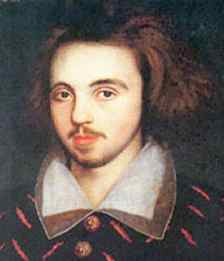
(this 1585 portrait is widely thought to be of Marlowe)
I love Christopher Marlowe. He died so young. It was a turbulent time, for England certainly, but for the theatrical world, in particular. Marlowe was accused of putting atheistic ideas into his plays, and was on the verge of being arrested, when he was killed. There was also the little matter of Shakespeare to deal with. Those two were contemporaries. How did they inform and perhaps copy one another? Evidence shows that it was Shakespeare who did most of the copying, which is no surprise, since his plots and stories were always taken from other sources, with one or two notable exceptions. Scholars have studied this literary symbiosis for years, and it's all juicy awesome stuff. The answer seems less interesting than the inquiry itself. Shakespeare is rather dim, in terms of what we know about his life. There's very little evidence left behind. (Besides the plays, I mean.) But Marlowe emerges with more clarity - there's just more that is known about his actual life. The revelation that he was, indeed, a spy, adds definite luster to an already fascinating young man. And then that he would die, in a sword-scuffle over who was going to pick up the check ... there's a lot here to keep conspiracy theorists happy for centuries. It certainly drives the scholarship forward.
But his plays! His language! His influence is so vast as to be nearly invisible now. There are times when people quote Marlowe without realizing that it is he whom they are quoting. For example:
This is from Doctor Faustus - a famous excerpt:.
The Face that Launched a Thousand Ships
Was this the face that launched a thousand ships?
And burnt the topless towers of Ilium?
Sweet Helen, make me immortal with a kiss:
Her lips suck forth my soul, see where it flies:
And all is dross that is not Helena:
I will be Paris, and for love of thee,
Instead of Troy shall Wertenberg be sack'd,
And I will combat with weak Menelaus,
And wear thy colours on my plumed crest:
Yea I will wound Achillis in the heel,
And then return to Helen for a kiss.
O thou art fairer than the evening air,
Clad in the beauty of a thousand stars,
Brighter art thou than flaming Jupiter,
When he appear'd to hapless Semele,
More lovely than the monarch of the sky
In wanton Arethusa's azur'd arms,
And none but thou shalt be my paramour.
SOME QUOTES ON MARLOWE:
"No leaf he wrote on but was like a burning glass to set on fire all his readers." -- Thomas Nashe, a friend of Marlowe's
"His father lacked cash, always a grave trouble for the family. The chief cause of this lay not in John's imprudence, but in the fact that payments to shoemakers were often made by either bond or book, which meant that a cobbler often waited for cash while his tanning needs made matters worse. Still, if cash and credit's mysteries intrigued Christopher, his father's shop did not. In a juvenile play - which may be his apprentice work if it dates from about 1580 - the script refers, somewhat condescendingly, to Kent and cobblers. Certainly, throughout his writing career, Marlowe avoided his father's trade, and in this he was unlike the poet of Stratford. Whereas Shakespeare, as the son of a Midlands glover and processor of leather, readily alludes to a glover's implements or to animal skins, Marlowe, in his known work, never uses words such as shoe, shoemaker, sew, or sole (as for a shoe), but distances himself from his father's concerns. At various times, when he refers to leather, or boots, or even when he uses the word sell, the allusions are oddly repulsive:
Covetousness: begotten of an old Churl in a leather bag (Doctor Faustus (1616)
wormeaten leathern targets (His version of Lucan's Pharsalia)
As if he had meant to clean my Boots with his lips (The Jew of Malta)
our boots which lie foul upon our hands (Doctor Faustus, (1604)
You will not sell it [a sacred crown], would you? (Tamburlaine, Part One)
"Such lines may suggest hatred not of the cobbler but of his work, and we can be sure that he never envied John Marlowe's slavery." -- Park Honan, Christopher Marlowe: Poet & Spy

"The place and the value of Christopher Marlowe as a leader among English poets it would be almost impossible for historical criticism to over-estimate. To none of them all, perhaps, have so many of the greatest among them been so deeply and so directly indebted. Nor was ever any great writer's influence upon his fellows more utterly and unmixedly an influence for good. He first, and he alone, guided Shakespeare into the right way of work; his music, in which there is no echo of any man's before him, found its own echo in the more prolonged but hardly more exalted harmony of Milton's. He is the greatest discoverer, the most daring and inspired pioneer, in all our poetic literature. Before him there was neither genuine blank verse nor a genuine tragedy in our language. After his arrival the way was prepared, the paths were made straight, for Shakespeare. " -- Algernon Charles Swinburne
"Christopher Marlowe's life was short, sharp and irresistible. His fame rests not only on six violently glittering plays written in his 20s but also on the tantalizing story that may be considered his masterpiece, for Marlowe inhabited his time like a player strutting upon an invisible stage. His life was his most remarkable piece of theater. Everyone imitated Marlowe. His first play, Tamburlaine, was staged when he was 23, and its success can most readily be gauged by its imitators. As David Riggs notes in his new biography, The World of Christopher Marlowe, within the next couple of years three new plays were staged that were more or less direct copies of Marlowe's original, while Shakespeare wrote his early Henry VI plays under the influence of Marlowe's style. A decade later, as the church authorities burned copies of Marlowe's semipornographic love poems in the streets, Shakespeare again returned to imitating his predecessor in As You Like It. Marlowe's contemporaries regarded him with a mixture of awe and fear." -- Daniel Swift in "The Nation"
"In common with the greatest - Marlowe, Webster, Tourner, and Shakespeare - they had a quality of sensuous thought, or of thinking through the senses, or of the senses thinking, of which the exact formular remains to be defined." -- T.S. Eliot on the Elizabethan-Jacobean poets
"What an example for our distracted poetry, which so often now strikes at the absolute and achieves the commonplace! These poets [George Chapman and Christopher Marlowe] lived life from the ground upwards." -- Edgell Rickword, 1924
"The unity of tone and purpose in Doctor Faustus is not unrelieved by change of manner and variety of incident. The comic scenes, written evidently with as little of labour as of relish, are for the most part scarcely more than transcripts, thrown into the form of dialogue, from a popular prose History of Dr Faustus, and therefore should be set down as little to the discredit as to the credit of the poet. Few masterpieces of any age in any language can stand beside this tragic poem - it has hardly the structure of a play - for the qualities of terror and splendour, for intensity of purpose and sublimity of note. In the vision of Helen, for example, the intense perception of loveliness gives actual sublimity to the sweetness and radiance of mere beauty in the passionate and spontaneous selection of words the most choice and perfect; and in like manner the sublimity of simplicity in Marlowe's conception and expression of the agonies endured by Faustus under the immediate imminence of his doom gives the highest note of beauty, the quality of absolute fitness and propriety, to the sheer straightforwardness of speech in which his agonizing horror finds vent ever more and more terrible from the first to the last equally beautiful and fearful verse of that tremendous monologue which has no parallel in all the range of tragedy." -- Algernon Charles Swinburne
"His narrator [in Hero and Leander] is abrupt, devil-may-care, often unreliable, but brilliant enough to be worth listening to, even though he might be asking us to buy him another drink. One thinks of Chaucer's Canterbury-bound raconteurs, but a much closer parallel exists in works such as T.S. Eliot's 'The Love Song of J. Alfred Prufrock', or again in monologues by Frost, Lowell, or Tony Harrison. In other words, Marlowe foreshadows the method of the dramatic and psychological monologue. What the narrator says is slanted, but one is encouraged to see through the aberrant report to the real state of psyches, and beyond that to symbols of the human condition. The poem takes a giant step ahead in form, and the form itself partly arises from Marlowe's need to conceal his feelings; he never permits himself, here or elsewhere, a direct viewpoint of his own. He uses hyperbolic images to distance sexual love, but then explores what might be his, or anyone's initial experience of it. If the action is cruel, its shame and pain are offset by fumbling tenderness. Nor can we blame the tale-teller for being perverse of inconsistent. Typically, the narrator digresses in an anecdote about Mercury, loses the story's thread or its relation to the love-story, and so becomes irrelevant, only to enthral in all that he says. His voice has so strong a movement that nothing impedes it, and the poem's beauty begins to look inevitable, though no more consciously planned than nature's forms may be. Nothing is overtly patterned in Hero except for the stepping stones of its couplet rhymes. One result is that it becomes a laboratory of the imagination, even a discourse about writing, and a work so free of correctness that it exhibits at every turn the primacy of creativity itself. Marlowe's major poem has been admired for centuries, though never more avidly than by the Victorians. It's 'riot of passion and of delight in the beauty of colour and form,' wrote George Saintsbury, 'has never been approached by any writer'. For Havelock Ellis, the poem was 'the brightest flower of the English Renaissance,' and Swinburne, with Hero and Leander doubtless in mind, called its poet 'alone the true Apollo of our dawn.' Such praise had been foreshadowed in lines which Sir Francis Verney sent to Robert Cecil, then earl of Salisbury, only a few years after Hero was published. Verney hails Marlowe as 'the splendour of our worthless time', as if no other Renaissance poet could touch him." -- Park Honan - on Marlowe's poem "Hero and Leander" in Christopher Marlowe: Poet & Spy
"He took his BA in 1584, his MA three years later, by which time he had probably completed Tamburlaine. He was the first of the university wits to employ blank verse. It's generally thought that most if not all of his small surviving body of nondramatic verse - Hero and Leander, 'The Passionate Shepherd', and the Ovid and Lucan translations - were written in his university years, the fruit of youth and relative leisure. The six years that elapsed between his taking his MA and his shadowy death - possibly as a result of drink, or low political intrigue, or a romantic entanglement with a rough character 'fitter to be a pimp, than an ingenious amoretto', or perhaps a tussle over the bill ('le recknynge') - at the hand of Ingram Frisar in a Deptford tavern on 30 May 1593 were busy ones. He wrote plays, was attacked for atheism, was associated (if it existed) with Raleigh's 'School of Night,' and lodged with Thomas Kyd (author of The Spanish Tragedy), who later brought charges of blasphemy against him. These he had to answer before the Privy Council in 1593, the very council that secretly employed him to spy on English Catholics on the Continent. He achieved much in a short life." -- Michael Schmidt, Lives of the Poets

"If one takes The Jew of Malta not as a tragedy, or as a 'tragedy of blood,' but as a farce, the concluding act becomes intelligible; and if we attend with a careful ear to the versification, we find that Marlowe develops a tone to suit this farce, and even perhaps that this tone is his most powerful and mature tone." -- T.S. Eliot
"He was no timorous servile flatterer of the commonwealth wherein he lived. His tongue and his invention were foreborn; what they thought, they would confidently utter. Princes he spared not, that in the least point transgressed." -- Thomas Nashe
"In Marlowe's superb verse there is very little to indicate that the writer had ever encountered any human beings." -- James Branch Cabell
"Marlowe painted gigantic ambitions, desires for impossible things, longings for a beauty beyond earthly conception, and sovereigns destroyed by the very powers which had raised them to their thrones. Tamburlaine, Faust, Barabbas are the personifications of arrogance, ambition and greed. There is sometimes a touch of the extravagant or bombastic, or even of the puerile in his plays, for he had no sense of humor; nor had he the ability to portray a woman. He wrote no drama on the subject of love. Furthermore, his world is not altogether our world, but a remote field of the imagination." -- Martha Fletcher Bellinger, 1927
"Marlowe's Doctor Faustus, like Goethe's Faust, finds himself before the specter of Helen (the idea that Helen of Troy was a ghost or apparition is already present in the ancients) and says to her, 'Sweet Helen, make me immortal with a kiss.' And then, 'O thou art fairer than the evening air clad in the beauty of a thousand stars.' He does not say 'evening sky,' but 'evening air.' All of Copernican space is present in that word air, the infinite space that was one of the revelations of the Renaissance, the space in which we still believe, despite Einstein, that space that came to supplant the Ptolomaic system which presides over Dante's triple comedy." -- Jorge Luis Borges
"And so it befell, in that affray, that the said Ingram, in the defence of his life, with the dagger aforesaid of the value of twelve pence, gave the said Christopher a mortal wound above his right eye." -- Coroner's inquest, 1593
I'm armed with more than complete steel,
The justice of my quarrel.
Christopher Marlowe, Lust's Dominion. Act iii. Sc. 4.
"He came to London to seek his fortune . . . a boy in years, a man in genius, a god in ambition. Who knows to what heights he might have risen but for his untimely end?" -- Swinburne
One of Marlowe's plays was Tamburlaine, the brutal story of one of the many conquerors of Central Asia (known as Timur, Tamerland, Timurlane, etc.). One of those who galloped in, sacked everything, and then, strangely, built things back up again. Coliin Thubron, in his wonderful The Lost Heart of Asia describes the conundrum of Timur (conqueror, artisan, WTF?):
Tamerlane, the Earth-Shaker, was the last, and perhaps most awesome, of these world predators. Born in 1336 fifty miles south of Samarkand, he was the son of a petty chief in a settled Mongol clan. He acquired th ename "Timur-i-Leng" or "Timur the Lame" after arrows maimed his right leg and arm, and passed as Tamerlane into the fearful imagination of the Weset. By his early thirties, after years of fighting over the splintered heritage of Genghiz Khan, he had become lord of Mavarannah, the "land Beyond the River", with his capital at Samarkand, and had turned his cold eyes to the conquest of the world.From the accounts that are left of him, he emerges not only as the culmination of his pitiless forerunners, but as the distant ancestor of the art-loving Moghals of India. Over the terrified servants and awed ambassadors at his court, his eyes seemed to burn without brilliance, and never winced with either humour or sadness. But a passion for practical truth fed his unlettered intelligence. He planned his campaigns in scrupulous detail, and unlike Genghiz Khan he led them in person. He clothed his every move with the sanctions of the Islamic faith, but astrology and omens, shamanism and public prayers, were all invoked to serve his needs. An angel, it was rumoured, told him men's hidden thoughts. Yet he assaulted Moslems as violently as he did Christians and Hindus. Perhaps he confused himself with God.
No flicker of compassion marred his progress. His butchery surpassed that of any before him. The towers and pyramids of skulls he left behind -- ninety thousand in the ruins of Baghdad alone -- were calculated warnings. After overrunning Persia and despoiling the Caucasus, he hacked back the remnants of the Golden Horde to Moscow, then launched a precipitate attack on India, winching his horses over the snowbound ravines of the Hindu Kush, where 20,000 Mongols froze to death. On the Ganges plain before Delhi, the Indian sultan's squadrons of mailed elephants, their tusks lashed with poisoned blades, sent a momentary tremor through the Mongol ranks; but the great beasts were routed, and the city and all its inhabitants levelled with the earth. A year later the Mongols were wending back over the mountains, leading 10,000 pack-mules sagging with gold and jewels. They left behind a land which would not recover for a century, and five million Indian dead.
Now Tamerland turned his attention west again. Baghdad, Aleppo, Damascus fell. In 1402, on the field of Ankara, at the summit of his pwoer, he decimated the army of the Ottoman sultan Beyazid, and inadvertently delayed the fall of Constantinople by another half century.
Between these monotonous acts of devastation, the conqueror returned to the Samarkand he cherished. At his direction a procession of captured scholars, theologians, musicans and craftsmen arrived in the capital with their books and tools and families -- so many that they were forced to inhabit caves and orchards in the suburbs. Under their hands the mud city bloomed into faience life. Architects, painters and calligraphers from Persia; Syrian silk-weavers, armourers and glass-blowers; Indian jewellers and workers in stucco and metal; gunsmiths and artillery engineers from asia Minor: all labored to raise titanic mosques and academies, arsenals, libraries, vaulted and fountained bazaars, even an observatory and a menagerie. The captured elephants lugged into place the marble of Tabriz and the Caucausus, while rival emirs -- sometimes Tamerlane himself -- drove on the work with the parvenu impatience of shepherd-princes. The whole city, it seems, was to be an act of imperial power. Villages were built around it named Cairo, Baghdad, Shiraz or Damascus (a ghostly Paris survives) in token of their insignificance. It was the "Mirror of the World," and the premier city of Asia.
Tamerlane himself confounds simple assessment. He kept a private art collection, whose exquisitely illuminated manuscripts he loved but could not read. His speech, it seems, was puritan in its decorum. He was an ingenious and addicted chess-player, who elaborated the game by doubling its pieces -- with two giraffes, two war-engines, a vizier and others -- over a board of 110 squares. A craving for knowledge plunged him into hard, questing debates with scholars and scientists, whom he took with him even on campaign, and his quick grasp and powerful memory gave him a working knowledge of history, medicine, mathematics, and astronomy.
Yet at heart he was a nomad. He moved between summer and winter pastures with his whole court and horde. Even at Samarkand he usually pavilioned in the outskirts, or in one of the sixteen gardens he spread round the city: watered parks with ringing names. Each garden was different. In one stood a porcelain Chinese palace; another glowed with the saga of his reign in lifelike frescoes, all long vanished; yet another was so vast that when a workman lost his horse there it grazed unfound for six months.
Marlowe, age 22, how is that possible??, took on this historical figure as his launching-off point. Marlowe wouldn't know how to "start small" if he tried.
Excerpt from Tamburlaine
Enter Tamburlaine, Techelles, Theridamas, Usumcasane, Zenocrate, Anippe, two Moores drawing Bajazeth in a cage, and Zabina following him.
TAMBURLAINE
Bring out my footstool.
[They take BAJAZETH out of the cage.]
BAJAZETH
Ye holy priests of heavenly Mahomet,
That, sacrificing, slice and cut your flesh,
Staining his altars with your purple blood,
Make heaven to frown, and every fixed star
To suck up poison from the moorish fens,
And pour it in this glorious tyrant's throat!
TAMBURLAINE
The chiefest god, first mover of that sphere
Enchas'd with thousands ever-shining lamps,
Will sooner burn the glorious frame of heaven
Than it should so conspire my overthrow.
But, villain, thou that wishest this to me,
Fall prostrate on the low disdainful earth,
And be the footstool of great Tamburlaine,
That I may rise into my royal throne.
BAJAZETH
First shalt thou rip my bowels with thy sword,
And sacrifice my heart to death and hell,
Before I yield to such a slavery.
TAMBURLAINE
Base villain, vassal, slave to Tamburlaine,
Unworthy to embrace or touch the ground
That bears the honour of my royal weight;
Stoop, villain, stoop! stoop; for so he bids
That may command thee piecemeal to be torn,
Or scatter'd like the lofty cedar-trees
Struck with the voice of thundering Jupiter.
BAJAZETH
Then, as I look down to the damned fiends,
Fiends, look on me! and thou, dread god of hell,
With ebon sceptre strike this hateful earth,
And make it swallow both of us at once!
[TAMBURLAINE gets up on him into his chair.]
TAMBURLAINE
Now clear the triple region of the air,
And let the Majesty of Heaven behold
Their scourge and terror tread on emperors.
Smile, stars that reign'd at my nativity,
And dim the brightness of your neighbour lamps;
Disdain to borrow light of Cynthia!
For I, the chiefest lamp of all the earth,
First rising in the east with mild aspect,
But fixed now in the meridian line,
Will send up fire to your turning spheres,
And cause the sun to borrow light of you.
My sword struck fire from his coat of steel,
Even in Bithynia, when I took this Turk;
As when a fiery exhalation,
Wrapt in the bowels of a freezing cloud,
Fighting for passage, make[s] the welkin crack,
And casts a flash of lightning to the earth:
But, ere I march to wealthy Persia,
Or leave Damascus and th' Egyptian fields,
As was the fame of Clymene's brain-sick son
That almost brent the axle-tree of heaven,
So shall our swords, our lances, and our shot
Fill all the air with fiery meteors;
Then, when the sky shall wax as red as blood,
It shall be said I made it red myself,
To make me think of naught but blood and war.
February 3, 2010
Happy birthday, Norman Rockwell
"Some people have been kind enough to call me a fine artist. I've always called myself an illustrator. I'm not sure what the difference is. All I know is that whatever type of work I do, I try to give it my very best. Art has been my life."-- Norman Rockwell
Since I was a kid, I had a thing for Norman Rockwell. (Norman Rockwell and Maxfield Parrish were two artists who transported me, which gives you some idea of my split personality.) I had a HUGE book of all of Rockwell's paintings when I was little and sadly, I have no idea where it is now. But I used to just spend hours and hours flipping through it ... There was something about his paintings that ... not just called to me ... but opened up worlds in my head. Little newsreel movies started playing, I could hear the voices, the clatter of spoons on the counter, the jukebox playing, the radio playing ... These were not just paintings, they were worlds to step into. Three-dimensional worlds. As hypnotic as a really good movie, where you literally forget that time is passing, and you forget where you are.
I related to his people, I felt that the artist related to me personally - and not just that, not just a comfortable reflection of my own world - but he made me think. He opened my eyes. He made me SEE things in a certain way. He was not painting MY time, a childhood in the bedraggled 1970s. He was painting an earlier time. But I saw the same things. Crushes on boys at school. Parents annoyed with you. Having fun in snow drifts. Additionally, by showing me that earlier time, I learned. I learned about milk bottles being left at the door, and about jalopy cars, and about little kids going barefoot at the fishing hole. More serious, in that one painting of the little black girl going to school for the first day in an integrated school, a little girl I related to, with her neat school outfit, and her brand spanking new school supplies - he showed me a wider world, and he did it in such a way without being too didactic. He just showed moments. A sweet little girl in a white dress being escorted to school by giant suited men, with tomatoes smeared on the wall. I somehow understood, age 7, 8, that those tomatoes had been thrown at her. I felt very very solemn staring at that picture, of a little girl my own age, who had gone through something I couldn't even imagine. But he helped me to imagine it.
"The commonplaces of America are to me the richest subjects in art. Boys batting flies on vacant lots; little girls playing jacks on the front steps; old men plodding home at twilight-all thse things arouse feeling in me."-- Norman Rockwell

"No man with a conscience can just bat out illustrations. He's got to put all his talent and feeling into them!"-- Norman Rockwell

(That's called "The Marriage License". For some reason, even as a youngun, this painting just CALLED to me. I loved her yellow heels, and how she was up on tiptoe. I loved the husband-to-be's protective arm around her. I loved the dark mahogany background ... To me, it just told an entire story. Look at the clerk's face. He's seen it all. I loved it.)
"Dignity is not a good expression - not for my pictures anyway."-- Norman Rockwell
"Some folks think I painted Lincoln from life, but I haven't been around that long. Not quite."-- Norman Rockwell
I loved loved LOVED his two "Day in the Life" paintings. Day in the Life of a little boy and a little girl. I was totally INTO them, kept going back to them.

"Commonplaces never become tiresome. It is we who become tired when we cease to be curious and appreciative."-- Norman Rockwell
For some reason, the painting below always killed me - even as a young girl. There was just something about it. The details, the specifics, the father's hands, his posture, that TRUCK ...

Then there is this I mentioned before - with the chilly title: "The Problem We All Live With".
We see the tomatoes that have been thrown, the horrible word on the wall - but the violence has just passed. We don't see her in the moment of the splattering tomatoes - we see her walking through calmly, moments afterwards. The little girl in the white dress - floating like an angel through the ugliness of the world that hates her. Indeed, such bigotry is a "problem we all live with" still.
And lastly - this has to be my favorite Norman Rockwell of all time. Each person tells a story, the shy girl in the alley, waiting to be noticed, the little brother literally flying down the stairs, but it's the mother who kills me every time. Her fierce ferocious transcendent joy at the sight of her son again.
Here it is: "Homecoming G.I."

Arthur C. Danto said, of the 40 years of Saturday Evening Post covers painted by Norman Rockwell:
"The Rockwell [magazine] cover was more a part of the American reality than a record of it."
Happy birthday - to an American treasure!!
For a great post on Rockwell's career as an illustrator - please go here (one of my favorite blogs ever)!!
Rockwell had a way of portraying common people, in uncommon moments. Some of the moments were not earth-shattering (getting ready to go to the prom - although that is certainly earth-shattering to the teens in question), and others more so. His "four freedoms" series is a perfect example of how he chose to portray each of these freedoms - not by going abstract, or too big, but by capturing the essence of it, in a way that deeply resonates for those of us who love these things too.

The faces! Just look at all of those faces.
February 2, 2010
Today in history: February 2 (1882, and 1922)
Two things happened on today in history:
February 2, 1882: James Joyce was born in Rathgar.
February 2, 1922: Joyce's Ulysses
James Joyce had already written a collection of short stories (Dubliners


It took James Joyce seven years to write Ulysses. Later, he would joke, when faced with criticism that the book was just too damn big - "I spent seven years writing it. People could at least spend seven years reading it."
His next book was Finnegans Wake (excerpt here) and that took him seventeen years to write.
Boy marched to the beat of his own drummer.
The history of the publication of Ulysses is a book in and of itself.
James Joyce had fled Ireland, leaving a wake of debt and scandal behind him, back in 1904. Joyce got a job teaching English at a Berlitz school in first Zurich (that didn't work out), and then Trieste. He convinced his new-found love, Nora Barnacle, a wild girl from Galway, to run away with him. He had known her for only a couple of months. They had met on June 16, 1904 - the day that he would choose to set the entirety of Ulysses on, the ultimate tribute to the significance she had in his life. Without her, he would not have been a man. James and Nora lived in Trieste for 10 years, having children (two of them), not getting married just to spite tradition - although they referred to one another as "husband" and "wife" (the two would eventually marry in the 1930s) ... and living below the poverty line. Meanwhile, Joyce was working on Dubliners, which was quite a struggle. He could not find anyone willing to publish it. Dubliners was eventually published in 1914. He had already been working on it for years. Portrait of the Artist As a Young Man was published (in serial form) in 1914 and finally brought out as a book in 1916. It had been serialized in the highly influential The Egoist. Around this time, James Joyce was taken under the wing of Ezra Pound (what a shock. Pound was everywhere).
James Joyce had been interested in the plight of the Jews for a long time. Especially as a man living in perpetual exile, country-less, yet always looking "homeward". He felt that there was an affinity between the Jews and the Irish, and he thought it was something to explore. He had considered writing a story along these lines for Dubliners but it didn't end up happening. However, the idea percolated. It ended up being one of the main ideas in the book Ulysses, based, of course, on Homer's epic, but Joyce, with his obsessive tendencies, was the kind of man who saw connections everywhere. Exile, journey, what does "home" mean, where is it? These were questions of great relevance to the Jews, but also to himself, who felt he could never live in Ireland again (and he never did). Leopold Bloom, the protagonist of Ulysses is a Jew, living in Ireland. Stephen Dedalus (Joyce's alter ego, the "star" of Portrait of the Artist as well) is one of the aimless men Ireland is so fond of creating, a man looking for a father figure, a guide. Through their mutual wanderings through the city of Dublin, on June 16, 1904, they eventually cross paths. It is not that a kindred spirit is revealed, not really. They do not connect, or heal, or grow, or become empowered. None of those pat concepts are at work in Ulysses. It is more that it is a meeting of the minds. A realization of the connection between them, but also that such connection is transitory. At the end of the book they go their separate ways.
Joyce wrote:
Ulysses is the epic of two races (Israel - Ireland) and at the same time the cycle of the human body as well as a little story of a day (life). The character of Ulysses always fascinated me ever since boyhood. I started writing it as a short story for Dubliners fifteen years ago but gave it up. For seven years I have been working at this book-- blast it!
What was such a big deal about Ulysses? A book where nothing, let's be honest, really happens?
Much of the brou-haha (at least in the literary set) was about the writing itself, a deepening and broadening of the landscape he had explored in Portrait: what is existence really like? What is it like to live, moment to moment?
James Joyce wrote once:
Why all this fuss and bother about the mystery of the unconscious? What about the mystery of the conscious? What do they know about that?
Joyce did not delve into the psychologies of his characters so much, although we get to know Leopold Bloom and Stephen Dedalus better than we even know our best friends through reading Ulysses. Joyce goes behind closed doors. He goes inside the body. Circulation, digestion, sex drive, the splitting of cells ... all of that is going on in his writing, because the book - as well as being an homage to Homer's Odyssey - as well as being set up in a complicated structure, mirroring Homer's work - as well as having colors associated with each episode, and a different writing style for each episode ... it is also, chapter by chapter, a dissection of the human body. One chapter (the Cyclops chapter, naturally) is the "eye" chapter. But instead of going for obvious symbolism, working in things about vision and color and landscape - Joyce hides his meaning completely, and instead makes the entire chapter into a first-person diatribe, and the person telling the story says, over and over as he relates the tale he needs to tell, "says I." The overall effect is that when you look at the page, all you can see is the letter "I". Says I, says I, says I. So if you are looking for eyes there in the obvious places, you will not find it. But it's in the language and the LOOK of it, one of the pieces of writing that is immediately identifiable just by looking at it. My father taught me that. And how brilliant is it to have the "eye" chapter not involve eyes, or vision, openly - but to have the meaning of the symbolism in the language to such a degree that you can recognize it at a glance. From, of course, your eyes. Joyce involves the reader in his game like no other writer. One chapter is the stomach chapter. One chapter is the sex organs chapter. And etc. None of this is explicit. There is no guide. You have to know what you're looking for. You have to get into HIS mode when reading the book, and let your OWN mode go. This is why many people were (and are) annoyed by Joyce. But geniuses have always annoyed people. As William Blake famously wrote:
The eagle never lost so much time as when he submitted to learn of the crow.
Crows don't like it when you point that out. But eagles, in general, shouldn't worry about what crows think of them. They need to just keep being eagles.
James Joyce probably wouldn't have thought of it like that. His defenders (like myself) say stuff like that all the time, but Joyce (perhaps disingenuously) really didn't see what the big deal was. He wrote what he wrote because it amused and fascinated him. He wrote only what he could write. He wasn't going for an effect, he wasn't trying to be clever. Or actually, maybe he was. Ulysses is one of the most "clever" books ever written. It's a game, a romp, a puzzle, something to be decoded. That's the fun of it. He loved puns and language and hidden connections. He realized that he was ahead of his time, he really did, but he wasn't trying to be so, as many of his literary contemporaries were. There was a great shift going on, in general, in the world at that time, and it affected all genres of art. Painters. Architects. Dance was going through a revolution. The past being shuffled off, or at least an attempt being made to, to quote Ezra Pound, "make it new". How much of our language is really ours, and how much of it is inherited? Joyce, as an Irishman, found this to be a personal and volatile issue, something he shared with Yeats. But across the board, artists were looking to each other, to push one another on, to not look BACK, to not try to imitate Tennyson, which had been the style for a generation or so, but to find new forms to express the new world in which they lived.
This was the generation that grew up with horse-and-carriage, and when they died, airplanes were flying across the ocean. The change in psychology was astronomical. Everyone struggled with it in different ways. Yeats, T.S. Eliot, Ezra Pound, Mina Loy, William Carlos Williams ... World War I (or The Great War) was a shattering experience, leaving Europe in ruins. The struggle of the artist: how can anything I do ever comment on the actual experience around me? There is a great anxiety in the work of the modernists, a fracturing of the CERTAIN. There was no certainty anymore. Einstein's theory was published. The Russian Revolution exploded forth. The work of Freud and Jung made people look differently at themselves, at their motivations and dreams and personalities. Painters went more and more abstract, breaking apart that which is known and understood, into colors, shapes, incoherence. James Joyce was a part of all of this, mostly by osmosis. Ezra Pound said, when he first read the work of William Carlos Williams, that he had "become modern all on his own." Perhaps a shock to Pound, who was so at the center of things at that time, pushing writers forward, helping TS Eliot to piece together "The Waste Land", promoting people, bullying editors into publishing new work, etc. William Carlos Williams did not live in Paris and never did. He was a doctor. And yet, the change ... was in the atmosphere. He became modern "all on his own". There were those (like Amy Lowell) who felt they had to be at the center of things, so they moved to Paris, separating themselves from any hint of bourgeois existence. It worked well for many of these people. But it wasn't necessary. James Joyce did live in Paris, but he had been doing his thing from the isolated Trieste for decades. That decade - 1910 - 1920 - saw a massive shift on every level of life, the world surging into a new era, bloody, technological, Freudian, and writers struggled with forms to describe it, react to it. There is nothing comparable today, when technology is so much a part of our lives that we take it for granted. Not so then.
"The Waste Land" was published in 1922 as well. "The Waste Land" and Ulysses coming out the same year? Evidence enough of the upheaval, anxiety and change rupturing the modern world.
Joyce wrote Ulysses not to make a big splash, not to stick it to the censors, not to show lesser writers how it's REALLY done (although all of these things were results) ... he wrote it because he liked it. He found it funny. Engaging. He wrote that way because he couldn't write any other way.
He said (and this may be perhaps my favorite Joyce quote, and it is something to keep in mind should you pick up Ulysses for the first time - it's a clue in HOW to read it):
The pity is that the public will demand and find a moral in my book, or worse they may take it in some serious way, and on the honour of a gentleman, there is not one single serious word in it.
I believe him. Certainly there were serious ideas in the book, it's a revolution, really ... but looked at in another light, in Joyce's light, there is "not one single serious word in it". It's a joke, a maze, a puzzle, an examination of ridiculous coincidences and connections. What does it "mean"? That's the stupidest question of all with which to concern yourself. It means nothing.
Samuel Beckett's wonderful quote in regards to Finnegans Wake is also applicable to Ulysses:
You cannot complain that this stuff is not written in English. It is not written at all. It is not to be read. It is to be looked at and listened to. His writing is not about something. It is that something itself.
And THAT is why Joyce is such a big deal. THAT is why the book went off like a bomb throughout the literary world. THAT is why people like T.S. Eliot, no slouch himself, said, "I wish, for my own sake, that I had not read it." James Joyce lived in a world of giants. Hemingway, Proust, Virginia Woolf, Pound, Fitzgerald, Gertrude Stein, T.S. Eliot ... the modernists. He was part of his time, but he went so much further than any of his contemporaries that many of them never quite recovered from the Ulysses juggernaut. The comments of other writers about Ulysses are absolutely marvelous, because they all recognized what has come. They all realized what had happened. The 20th century had arrived. They had all been working towards it, trying to wrestle the 19th century out of existence, bringing new forms to light. And it's not that any of these people failed. But Ulysses was the "star". Ulysses was the death-knell.
T.S. Eliot put it perfectly when he said that Ulysses "killed the 19th century".
James Joyce hadn't set out to "kill the 19th century", but his sensibility - contrarian, sensitive, angry, loving - led him to a form that couldn't help but do so.
Quiet little Trieste ended up being a major crossroads in WWI, changing hands, and Joyce and his family moved to Paris.
Now let me talk about the actual publication of the book.
Into our story now steps Sylvia Beach. Born in Maryland, as an adult she became a major force in the literary ex-pat community in Paris. She served in World War I with the Red Cross in Serbia, and after the war settled in Paris, where she opened up a bookshop - the enormously influential Shakespeare & Co.. Shakespeare & Co. became the hub-bub, the vortex of them all. Oh, for a time machine, to go hang out at that place in the 1920s, where Hemingway would stop by, Fitzgerald would browse, Joyce would sneak in and out, Gertrude Stein would bitch and moan (haha) ... and Pound would negotiate with all of them, trying to help them all out and promote his favorites ... they ALL were there.
Here is a cartoon of Joyce sitting at a table with all of his friends in Paris (try to find Joyce - isn't that hysterical?? He doesn't even have a body! That was how he was seen - just a big floating brain with enormous glasses!).

Who was the cartoonist?
F. Scott Fitzgerald.
In this vibrant world of literary rivals and giants struggling for the stage, Sylvia Beach played an important role. She had good taste, first of all, she liked the "good" ones, and didn't waste her time with the crows. She also had courage (as we shall see).
When Beach met James Joyce, he had already written Ulysses, and it was a finished manuscript by that point (or as finished as any Joycean manuscript ever would be) - but essentially unpublishable, due to its being deemed "obscene". You have to get into the mindset of the censors, as unpleasant an experience as that is. What on earth is "obscene" about Ulysses? Ultimately, the book expresses love. You cannot deny it, you cannot escape from it. It is love. Leopold Bloom, throughout his long long day, is only thinking about his wife Molly, and how much he loves her, and how afraid he is that she is being unfaithful. There is only one woman for him. In the same way that there was only one woman for Joyce. Love, it is love that drags us home after our long journey. Only love. But Joyce did not shy away from the more unsavory aspects of life (and let's remember his comment about the "mystery of the conscious" - that's so so important: he did not, as Proust did, or Woolf did, or some of the other modern writers - delve into psychology and the workings of the subconscious. He did not look at motivations and childhood repression. As I mentioned, Freud changed everything, for good and ill. A revolution in the understanding of the workings of humanity. Whether or not you agree with Freud, and whether or not you think Freud is over-rated is irrelevant. I am talking about the time and place from which Joyce wrote.) But Joyce, unlike Proust, did not explore how memory works, and how the senses trigger thoughts and feelings and entire narratives from our lives ... He was much more prosaic. Blunt. He presented man in the most honest manner possible. Leopold Bloom takes a dump, for example. He sits on the toilet after breakfast, and thinks about things, worrying about things, as he goes to the bathroom. Now, this is one of the most human of experiences. Anyone who says they haven't sat on the toilet, pondering their day, and what they are worried about, is lying. But to put that in a book?? What are you, cracked?
There are those who feel that while such things may be 'real', they have no place in literature. Now we're getting into the realm of the censors, who wanted to control what could be shown. It's the same as people nowadays who seem to feel that saying "TMI" is the be-all and end-all of human interaction. You complain that you stubbed your toe that morning, and certain people will say, "TMI!" Never mind if you're struggling with grief, loss, having a personal struggle, some people just shun intimacy in any way, shape or form. (And then they wonder why they are miserable ...) I despise the "TMI" trend. I despise it in its surface form and I despise what it represents. There is a reason for it, as there is a reason for all trends. It is a reaction. A reaction, perhaps, to our world of reality television, and tell-all books, where everyone seems to feel that talking about themselves and their issues is a holy and sacred act. So I get it. But reactions tend to be too extreme and I resist extremes. Besides, "TMI" is nothing new. There have always been those who really DON'T want to know you, who really DON'T want the truth when they ask "How are you?" It's just that now that we have "TMI" to say. It's a constant refrain from certain corners.. Sure, there's such a thing as "over-sharing", but I'm not really talking about that. I am talking about something far more insidious. Something that is not in any way, shape or form new - it's been going on forever, as long as human beings have been in contact with one another. There is a shying away from real experience of one another. Of course. Because if you allow yourself to experience what it is like for another person, then that might mean you might have compassion for them, or empathy, or you might have a sense of recognition, an awareness of the universal: "Yes, I do that, too!" Many people do not want to be shaken out of their selves like that. I include myself, by the way, although you will never ever catch me saying "TMI"! I am all ABOUT "TMI"! But the first response for many, to some demand for connection, or understanding, is to batton down the hatches, draw the line in the sand, and say, "Nope. Nope. That's YOU, that's not ME."
People like that, powerful though they may be in certain sections of society, will always be on the wrong side of history. Progress, forward motion, always has, at its core, an examination of motivation, of meaning, of, to quote Mike Nichols, "what is this REALLY like?" (He says that when he sits down to film any scene, of any event, that is his first question: "what is this REALLY like?" Infidelity, drug addiction, love triangles - all of these things are nothing new. How can one presume to say anything new about them? You really can't. All you can do, if you are an artist, is try to understand "what it is REALLY like" and try to portray that.) If you are so busy crowing "TMI" at every revelation of character and story around you, you will never move forward. You will be stuck, like a fly drowned in amber.
Joyce cuts right to the core of that very human experience. He will not let the reader off the hook. If you insist on insisting, "That's YOU, not ME", then Ulysses will be a terribly confronting book. Joyce, above all else, was a humanist, although his cynicism and rage were titanic. That's what The Dead (excerpt here), with its final revelation of connection and love in the last four paragraphs, is all about. I have said it before: Without The Dead, The Dubliners would be merely a bitchy gossipy excavation of a modern-day city. Yes, with some good writing and memorable scenes, but it would be, essentially, a cynical book, and cynical books usually do not outlast their own time. With The Dead, in the last four paragraphs, Joyce rises up. If you only read the other stories, you might presume that Joyce despised his fellow man. His eye is excruciatingly honest. He is brutal. Who would ever have suspected that in the last story of the collection, Joyce would pull such a hat-trick, and say, essentially, "You think you know me. You do not. You think all I feel is anger. I do not. My anger comes from grief and loss. And right now, all I feel is love." If you read the book from beginning to end, The Dead, no matter that you know its coming, always comes as a surprise. Nothing in the book before that story prepares you for it. Gabriel realizes, as he watches his wife sleep, that he loves her, and yet that he has never really known her. And in that realization, his consciousness rises up and up, until he is looking down on the snowy landscape, on all of Ireland ... and he, for the first time, feels connected to life, because of his experience of heartbreak. He feels connected not just to all mankind, but also to all of the "shades", all of those people who have gone before.
The irony of all of this is that Joyce was one of the most isolated of beings, although not melancholy or a downer or any of that. He wasn't a tortured artist. He was not bohemian in the slightest. It's just that he was rather old-fashioned, believe it or not, a family man, who had dinner every night with Nora and his kids and that was that. There is no scandal about Joyce. He didn't sleep with every woman in Paris. He didn't experiment with free love. Yes, he lived in sin for 30 years before tying the knot, but he was faithful to Nora. He wasn't a big socializer. He was a big drinker, but everyone was then. He wasn't dancing in fountains like F. Scott Fitzgerald was, and cheering as his wife did a jig on the table. He was rather conventional, rather bourgeois.
Additionally, there is a tremendous self-consciousness in his books (which I mentioned earlier). He can ONLY write from his own life. He was not an "inventor". He did not make up characters, and devise complicated plots. He did not write one standard novel. It was all self self self self self. I truly believe that you MUST be a genius in order to only focus on self. (Oscar Wilde said something similar, after reading his friend Andre Gide's novel, which I haven't read, but which Wilde was not impressed with. He said, "In order to be an Egotist, one must first have an Ego." Ouch. This is similar to Blake's comment mentioned earlier. Crows trying to be eagles always give themselves away. Only a genius can only focus on Self, and get away with it.) The memoir-trend in publishing today proves that, in my mind. There are very few good ones out there, very few stories worth telling ... the thing that elevates one memoir over another is, of course, the writing style ... If you're not a good writer then nobody cares that your mama locked you in a closet and your papa couldn't put down the whiskey. Angela's Ashes was such a phenomenal success because of McCourt's writing. You write that same story without McCourt's voice and you'd want to vomit. I know that there are folks in Limerick, especially, who already want to vomit when reading McCourt's book - but that just goes to show you that you can never please everybody.
Ulysses picked up where Portrait left off. As Portrait comes to a close, the traditional narrative voice breaks down, leaving us only with Stephen Dedalus' journal entries. There is no more voice outside the "I". Joyce has abandoned the traditional narrator. Dedalus will now take over. We are inside experience, as opposed to looking on. In the third episode in Ulysses Stephen Dedalus takes a walk on the beach. We learned in the first chapter that he had broken his glasses. This fact is mentioned only once in the entire 800 page book, but we are meant to remember it. In the third chapter, during his walk on the beach, sans glasses ... the experiences come at him through a vague impression of colors and sounds. If you somehow missed that he has no glasses, and this episode is told from the perspective of someone who can't see, then you might not know what the hell is going on. At one point:
The dog's bark ran towards him, stopped, ran back again.
As someone who needs her glasses, I can say that that image is just just right. When I have been stranded without glasses, it is as though sounds "run towards" me ... It is not the DOG running at Dedalus, it is its BARK. Sound before vision.
Perhaps now it seems obvious, or perhaps now it seems like everyone tries to write in this subjective manner. But that's only because Joyce did it first.
All of this made Ulysses a tough sell to publishers, not even counting the bowel movements, and penises, and the evening in "Nighttown" (Dublin's red-light district) and Molly Bloom's long 40 page run-on sentence that closes the book, full of farts and menstruation and masturbation. But also, please, let us not forget, that it is some of the most beautiful writing in the English language ... and her image of embracing her husband as they lie among the rhododendrons is some of the most romantic language of all time:
the sun shines for you he said the day we were lying among the rhododendrons on Howth head in the grey tweed suit and his straw hat the day I got him to propose to me yes first I gave him the bit of seedcake out of my mouth and it was leapyear like now yes 16 years ago my God after that long kiss I near lost my breath yes he said I was a flower of the mountain yes so we are flowers all a womans body yes that was one true thing he said in his life and the sun shines for you today yes that was why I liked him because I saw he understood or felt what a woman is and I knew I could always get round him and I gave him all the pleasure I could leading him on till he asked me to say yes and I wouldnt answer first only looked out over the sea and the sky I was thinking of so many things he didnt know of Mulvey and Mr Stanhope and Hester and father and old captain Groves and the sailors playing all birds fly and I say stoop and washing up dishes they called it on the pier and the sentry in front of the governors house with the thing round his white helmet poor devil half roasted and the Spanish girls laughing in their shawls and their tall combs and the auctions in the morning the Greeks and the jews and the Arabs and the devil knows who else from all the ends of Europe and Duke street and the fowl market all clucking outside Larby Sharons and the poor donkeys slipping half asleep and the vague fellows in the cloaks asleep in the shade on the steps and the big wheels of the carts of the bulls and the old castle thousands of years old yes and those handsome Moors all in white and turbans like kings asking you to sit down in their little bit of a shop and Ronda with the old windows of the posadas glancing eyes a lattice hid for her lover to kiss the iron and the wineshops half open at night and the castanets and the night we missed the boat at Algeciras the watchman going about serene with his lamp and O that awful deepdown torrent O and the sea the sea crimson sometimes like fire and the glorious sunsets and the figtrees in the Alameda gardens yes and all the queer little streets and pink and blue and yellow houses and the rosegardens and the jessamine and geraniums and cactuses and Gibraltar as a girl where I was a Flower of the mountain yes when I put the rose in my hair like the Andalusian girls used or shall I wear a red yes and how he kissed me under the Moorish wall and I thought well as well him as another and then I asked him with my eyes to ask again yes and then he asked me would I yes to say yes my mountain flower and first I put my arms around him yes and drew him down to me so he could feel my breasts all perfume yes and his heart was going like mad and yes I said yes I will Yes.
Brings me to tears every time.
And ... it's everywhere in my life. Even ...

Ahem.
The book was a bomb waiting to go off. No one would touch it. Pound had arranged for some excerpts to be published and that was the start of it. Writers, in general, were itching to get their paws on the book ... what the hell is that crazy Joyce working on now?? ... people felt competitive, nervous ... he helped them up their own game ... but in terms of the business side of things, the controversy had started before the book had even been published.
But Sylvia Beach - who had never published a book before - took a risk and said that Shakespeare & Co. would put out the book. She would publish it herself. She knew what she was doing, and she knew what the repercussions could be. It was an act of courage. Perhaps she went into it recklessly, thinking that giving a space for genius would be its own reward - perhaps she went into it knowing the eventual fallout that would crash down upon her head - But whatever her interior process, she published it. On February 2, 1922.
I was on the platform, my heart going like the locomotive, as the train from Dijon came slowly to a standstill and I saw the conductor getting off, holding a parcel and looking around for someone -- me. In a few minutes, I was ringing the doorbell at the Joyces' and handing them Copy No. 1 of Ulysses. It was February 2, 1922. -- Sylvia Beach
And the shit hit the fan.
Nora Tully describes it thus:
The response to Ulysses was immediate and extreme. Writer and literary critic Malcolm Cowley described it using the metaphor of a stone dropped into water: there was a moment of silence, the stone was dropped, "then all the frogs who inhabited the pool began to talk at once".
Once it was published, the obscenity controversies heated up, the book was banned everywhere - Ireland, America - everybody was talking about it, but who had actually read it? The first edition was only 1000 copies! You couldn't get the book anywhere. Additionally, you could be arrested for trying to smuggle it into certain countries - so there were a couple of years where the only place on the planet that you could get a copy of Ulysses was at Beach's bookshop in Paris. And so the orders flew in from folks around the world. People who were book readers, other writers, people who were collectors, people who sensed the historic moment and just wanted a copy.
Here is a copy of Peggy Guggenheim's urgent order-form, sent to Sylvia Beach:

Imagine you are dying to read the book. Imagine you can't get it anywhere. Imagine that it is illegal to smuggle it back into the United States. Imagine the frenzy. You can see it in Guggeinheim's writing, can't you?
Harriet Shaw Weaver, who had supported Joyce financially for years (at Pound's insistence) also arranged for another edition to be published by The Egoist press. She also arranged for them to be shipped to the United States, but they were seized by the customs officials. In 1923, John Rodker, through The Egoist again, arranged for a small printing of the book, but these were burned by English customs officials. In 1924, Shakespeare & Co., a small outfit really, and not set up to handle the demand, brought out another small printing.
Extraordinary.
Eventually, as the controversy died down, Joyce ended up going with another publisher, which really left Beach bereft financially. She already had suffered as a consequence of taking the risk to publish Ulysses. She was hounded by the police, by the censors ... so although Joyce really did need to move on, to a publisher who could handle his stardom, Beach was the first. Beach was the pioneer. Amazing woman.
Meanwhile, the comments from people who had actually read it were pouring in. This went on for years. You could read it in Europe, but America had declared it obscene, and would not allow it to arrive on its shores.
Finally, on August 7, 1934, over 10 years after its first publication by little Sylvia Beach and her little Shakespeare & Co. - a far-seeing and open-minded US Court of Appeals judge, Judge John Woolsey, declared that Ulysses was NOT obscene and could be admitted into the United States.
Here's what the first American edition of that book looked like:
Morris L. Ernst, counsel for Random House - who successfully defended the book against obscenity charges in 1933-34 - wrote in his foreward to the 1934 edition:
It would be difficult to underestimate the importance of Judge Woolsey's decision. For decades the censors have fought to emasculate literature. They have tried to set up the sensibilities of the prudery-ridden as a criterion for society, have sought to reduce the reading matter of adults to the level of adolescents and subnormal persons, and have nurtured evasions and sanctimonies.
Here is Judge Woolsey's decision in its entirety - it's a masterpiece of its kind. Not only is it an important legal decision, but it ends up being an acutely sensitive analysis of the book itself.
United States Discrict Court, Southern District of New York, Opinion A. 110-59
December 6, 1933
On cross motions for a decree in a libel of confiscation, supplemented by a stipulation -- hereinafter described -- brought by the United States against the book "Ulysses" by James Joyce, under Section 305 of the Tariff Act of 1930, Title 19 United States Code, Section 1305, on the ground that the book is obscene within the meaning of that Section, and, hence, is not importable into the United States, but is subject to seizure, forfeiture and confiscation and destruction.
United States Attorney -- by Samuel C. Coleman, Esq., and Nicholas Atlas, Esq., of counsel -- for the United States, in support of motion for a decree of forfeiture, and in opposition to motion for a decree dismissing the libel.
Messrs. Greenbaum, Wolff and Ernst, -- by Morris L. Ernst, Esq., and Alexander Lindey, Esq., of counsel -- attorneys for claimant Random House, Inc., in support of motion for a decree dismissing the libel, and in opposition to a motion for a decree of forfeiture.
WOOLSEY, J:
The motion for a decree dismissing the libel herein is granted, and, consequently, of course, the Government's motion for a decree of forfeiture and destruction is denied.
Accordingly a decree dismissing the libel without costs may be entered herein.
1. The practice followed in this case is in accordance with the suggestion made by me in the case of United States v. One Book Entitled "Contraception", 51 F. (2d) 525, and is as follows:
After issue was joined by the filing of the claimant's answer to the libel for forfeiture against "Ulysses", a stipulation was made between the United States Attorney's office and the attorneys for the claimant providing:
1. That the book "Ulysses" should be deemed to have been annexed to and to have become part of the libel just as if it had been incorporated in its entirety therein.
2. That the parties waived their right to a trial by jury.
3. That each party agreed to move for decree in its favor.
4. That on such cross motions the Court might decide all the questions of law and fact involved and render a general finding thereon.
5. That on the decision of such motions the decree of the Court might be entered as if it were a decree after trial.
It seems to me that a procedure of this kind is highly appropriate in libels for the confiscation of books such as this. It is an especially advantageous procedure in the instant case because on account of the length of "Ulysses" and the difficulty of reading it, a jury trial would have been an extremely unsatisfactory, if not an almost impossible, method of dealing with it.
2. I have read "Ulysses" once in its entirety and I have read those passages of which the Government particularly complains several times. In fact, for many weeks, my spare time has been devoted to the consideration of the decision which my duty would require me to make in this matter.
"Ulysses" is not an easy book to read or to understand. But there has been much written about it, and in order properly to approach the consideration of it it is advisable to read a number of other books which have now become its satellites. The study of "Ulysses" is, therefore, a heavy task.
3. The reputation of "Ulysses" in the literary world, however, warranted my taking such time as was necessary to enable me to satisfy myself as to the intent with which the book was written, for, of course, in any case where a book is claimed to be obscene it must first be determined, whether the intent with which it was written was what is called, according to the usual phrase, pornographic, -- that is, written for the purpose of exploiting obscenity.
If the conclusion is that the book is pornographic that is the end of the inquiry and forfeiture must follow.
But in "Ulysses", in spite of its unusual frankness, I do not detect anywhere the leer of the sensualist. I hold, therefore, that it is not pornographic.
4. In writing "Ulysses", Joyce sought to make a serious experiment in a new, if not wholly novel, literary genre. He takes persons of the lower middle class living in Dublin in 1904 and seeks not only to describe what they did on a certain day early in June of that year as they went about the City bent on their usual occupations, but also to tell what many of them thought about the while.
Joyce has attempted -- it seems to me, with astonishing success -- to show how the screen of consciousness with its ever-shifting kaleidoscopic impressions carries, as it were on a plastic palimpsest, not only what is in the focus of each man's observation of the actual things about him, but also in a penumbral zone residua of past impressions, some recent and some drawn up by association from the domain of the subconscious. He shows how each of these impressions affects the life and behavior of the character which he is describing.
What he seeks to get is not unlike the result of a double or, if that is possible, a multiple exposure on a cinema film which would give a clear foreground with a background visible but somewhat blurred and out of focus in varying degrees.
To convey by words an effect which obviously lends itself more appropriately to a graphic technique, accounts, it seems to me, for much of the obscurity which meets a reader of "Ulysses". And it also explains another aspect of the book, which I have further to consider, namely, Joyce's sincerity and his honest effort to show exactly how the minds of his characters operate.
If Joyce did not attempt to be honest in developing the technique which he has adopted in "Ulysses" the result would be psychologically misleading and thus unfaithful to his chosen technique. Such an attitude would be artistically inexcusable.
It is because Joyce has been loyal to his technique and has not funked its necessary implications, but has honestly attempted to tell fully what his characters think about, that he has been the subject of so many attacks and that his purpose has been so often misunderstood and misrepresented. For his attempt sincerely and honestly to realize his objective has required him incidentally to use certain words which are generally considered dirty words and has led at times to what many think is a too poignant preoccupation with sex in the thoughts of his characters.
The words which are criticized as dirty are old Saxon words known to almost all men and, I venture, to many women, and are such words as would be naturally and habitually used, I believe by the types of folk whose life, physical and mental, Joyce is seeking to describe. In respect of the recurrent emergence of the theme of sex in the minds of his characters, it must always be remembered that his locale was Celtic and his season Spring.
Whether or not one enjoys such a technique as Joyce uses is a matter of taste on which disagreement or argument is futile, but to subject that technique to the standards of some other technique seems to me to be little short of absurd.
Accordingly, I hold that "Ulysses" is a sincere and honest book and I think that the criticisms of it are entirely disposed of by its rationale.
5. Furthermore, "Ulysses" is an amazing tour de force when one considers the success which has been in the main achieved with such a difficult objective as Joyce set for himself. As I have stated, "Ulysses" is not an easy book to read. It is brilliant and dull, intelligible and obscure by turns. In many places it seems to me to be disgusting, but although it contains, as I have mentioned above, many words usually considered dirty, I have not found anything that I consider to be dirt for dirt's sake. Each word of the book contributes like a bit of mosaic to the detail of the picture which Joyce is seeking to construct for his readers.
If one does not wish to associate with such folk as Joyce describes, that is one's own choice. In order to avoid indirect contact with them one may not wish to read "Ulysses"; that is quite understandable. But when such a real artist in words, as Joyce undoubtedly is, seeks to draw a true picture of the lower middle class in a European city, ought it to be impossible for the American public legally to see that picture?
To answer this question it is not sufficient merely to find, as I have found above, that Joyce did not write "Ulysses" with what is commonly called pornographic intent, I must endeavor to apply a more objective standard to his book in order to determine its effect in the result, irrespective of the intent with which it was written.
6. The statute under which the libel is filed only denounces, in so far as we are here concerned, the importation into the United States from any foreign country of "any obscene book". Section 305 of the Tariff Act of 1930, Title 19 United States Code, Section 1305. It does not marshal against books the spectrum of condemnatory adjectives found, commonly, in laws dealing with matters of this kind. I am, therefore, only required to determine whether "Ulysses" is obscene within the legal definition of that word.
The meaning of the word "obscene" as legally defined by the Courts is: tending to stir the sex impulses or to lead to sexually impure and lustful thoughts. Dunlop v. United States, 165 U.S. 486, 501; United States v. One Book Entitled "Contraception", 51 F. (2d) 525, 528; and compare Dysart v. United States, 272 U.S. 655, 657; Swearingen v. United States 151 U.S. 446, 450; United States v. Dennett, 39 F. (2d) 564, 568 (C.C.A. 2); People v. Wendling, 258 N.Y. 451, 453.
Whether a particular book would tend to excite such impulses and thoughts must be tested by the Court's opinion as to its effect on a person with average sex instincts -- what the French would call l'homme moyen sensuel -- who plays, in this branch of legal inquiry, the same role of hypothetical reagent as does the "reasonable man" in the law of torts and "the man learned in the art" on questions of invention in patent law.
The risk involved in the use of such a reagent arises from the inherent tendency of the trier of facts, however fair he may intend to be, to make his reagent too much subservient to his own idiosyncrasies. Here, I have attempted to avoid this, if possible, and to make my reagent herein more objective than he might otherwise be, by adopting the following course:
After I had made my decision in regard to the aspect of "Ulysses", now under consideration, I checked my impressions with two friends of mine who in my opinion answered to the above stated requirement for my reagent.
These literary assessors -- as I might properly describe them -- were called on separately, and neither knew that I was consulting the other. They are men whose opinion on literature and on life I value most highly. They had both read "Ulysses", and, of course, were wholly unconnected with this cause.
Without letting either of my assessors know what my decision was, I gave to each of them the legal definition of obscene and asked each whether in his opinion "Ulysses" was obscene within that definition.
I was interested to find that they both agreed with my opinion: that reading "Ulysses" in its entirety, as a book must be read on such a test as this, did not tend to excite sexual impulses or lustful thoughts but that its net effect on them was only that of a somewhat tragic and very powerful commentary on the inner lives of men and women.
It is only with the normal person that the law is concerned. Such a test as I have described, therefore, is the only proper test of obscenity in the case of a book like "Ulysses" which is a sincere and serious attempt to devise a new literary method for the observation and description of mankind.
I am quite aware that owing to some of its scenes "Ulysses" is a rather strong draught to ask some sensitive, though normal, persons to take. But my considered opinion, after long reflection, is that whilst in many places the effect of "Ulysses" on the reader undoubtedly is somewhat emetic, nowhere does it tend to be an aphrodisiac.
"Ulysses" may, therefore, be admitted into the United States.
JOHN M. WOOLSEY
United States District Judge
The comments of other great writers, Joyce's contemporaries, on this book are of great interest to me. The responses run the gamut from disgust, elation, despair, awe, humility ... He made other writers feel like putting down their pens. He enraged those who felt that THEY deserved HIS accolades (phone call for Gertrude Stein, Gertrude Stein, phone call) ... but whatever the response, the only emotion you will NOT find is indifference.
Joyce had made his mark.
Yeats (an early champion of Joyce) had this as his first response on reading Ulysses: "A mad book!"
Then later, as he let the book percolate, Yeats corrected himself: "I have made a terrible mistake. It is a work perhaps of genius. I now perceive its coherence ... It is an entirely new thing -- neither what the eye sees nor the ear hears, but what the rambling mind thinks and imagines from moment to moment. He has certainly surpassed in intensity any novelist of our time."
Hart Crane said: "I feel like shouting EUREKA! Easily the epic of the age."
George Bernard Shaw was disturbed by Ulysses, he took it personally, he did not like what it revealed - about man, about Irish men, about the life of Ireland, but he grappled with the implications in an honest way: "If a man holds up a mirror to your nature and shows you that it needs washing -- not whitewashing -- it is no use breaking the mirror. Go for soap and water."
T.S. Eliot was especially devastated by the book, and his comments on it are numerous. Examples: "How could anyone write again after achieving the immense prodigy of the last chapter?"
T.S. Eliot again: "I hold Ulysses to be the most important expression which the present age has found; it is a book to which we are all indebted, and from which none of us can escape."
Edmund Wilson wrote of it:
The more we read Ulysses, the more we are convinced of its psychological truth, and the more we are amazed at Joyce's genius in mastering and in presenting, not through analysis or generalization, but by the complete recreation of life in the process of being lived, the relations of human beings to their environment and to each other; the nature of their perception of what goes on about them and of what goes on within themselves; and the interdependence of their intellectual, their physical, their professional and their emotional lives. To have traced all these interdependences, to have given each of these elements its value, yet never to have lost sight of the moral through preoccuptation with the physical, nor to have forgotten the general in the particular; to have exhibited ordinary humanity without either satirizing it or sentimentalizing it - this would already have been sufficiently remarkable; but to have subdued all this material to the uses of a supremely finished and disciplined work of art is a feat which has hardly been equalled in the literature of our time.
Wilson also wrote:
Yet for all its appalling longeurs, Ulysses is a work of high genius. Its importance seems to me to lie, not so much in its opening new doors to knowledge -- unless in setting an example to Anglo-Saxon writers of putting down everything without compunction -- or in inventing new literary forms -- Joyce's formula is really, as I have indicated, nearly seventy-five years old -- as in its once more setting the standard of the novel so high that it need not be ashamed to take its place beside poetry and drama. Ulysses has the effect at once of making everything else look brassy."
Carl Jung read the book and wrote Joyce a rather extraordinary letter:
Dear Sir, Your Ulysses has presented the world such an upsetting psychological problem, that repeatedly I have been called in as a supposed authority on psychological matters.Ulysses proved to be an exceedingly hard nut and it has forced my mind not only to most unusual efforts, but also to rather extravagant peregrinations (speaking from the standpoint of a scientist). Your book as a whole has given me no end of trouble and I was brooding over it for about three years until I succeeded to put myself into it. But I must tell you that I'm profoundly grateful to yourself as well as to your gigantic opus, because I learned a great deal from it. I shall probably never be quite sure whether I did enjoy it, because it meant too much grinding of nerves and of grey matter. I also don't know whether you will enjoy what I have written about Ulysses because I couldn't help telling the world how much I was bored, how I grumbled, how I cursed and how I admired. The 40 pages of non stop run at the end is a string of veritable psychological peaches. I suppose the devil's grandmother knows so much about the real psychology of a woman, I didn't.
Well I just try to recommend my little essay to you, as an amusing attempt of a perfect stranger that went astray in the labyrinth of your Ulysses and happened to get out of it again by sheer good luck. At all events you may gather from my article what Ulysses has done to a supposedly balanced psychologist.
With the expression of my deepest appreciation, I remain, dear Sir,
Yours faithfully,
C.G. Jung
Joyce was very proud of this letter and would read it out loud to guests in his house. Nora would snort at the end, "Jimmy knows nothin' about women!"
Katherine Mansfield wrote in a letter about having Joyce over to meet her and her usband:
"Joyce was rather ... difficile. I had no idea until then of his view of Ulysses -- no idea how closely it was modelled on the Greek story, how absolutely necessary it was to know the one through and through to be able to discuss the other. I've read the Odyssey and am more or less familiar with it but Murry [Mansfield's husband] and Joyce simply sailed out of my depth. I felt almost stupefied. It's absolutely impossible that other people should understand Ulysses as Joyce understands it. It's almost revolting to hear him discuss its difficulties. It contains code words that must be picked up in each paragraph and so on. The Question and Answer part can be read astronomically or from the geologic standpoint or -- oh, I don't know!"
The most humorous part of this is that Joyce said, after meeting Katherine and her husband:
"Mrs. Murry understood the book better than her husband."
Hilarious.
George Moore, another Irish writer, wrote:
"Ulysses is hopeless; it is absurd to imagine that any good end can be served by trying to record every single thought and sensation of any human being. That's not art, it's like trying to copy the London Directory."
Hemingway wrote in a letter to Sherwood Anderson:
"Joyce has a most goddamn wonderful book. It'll probably reach you in time. Meantime the report is that he and all his family are starving but you can find the whole celtic crew of them every night in Michaud's where Binney and I can only afford to go about once a week...The damned Irish, they have to moan about something or other..."
Gertrude Stein wrote:
"Joyce is good. He is a good writer. People like him because he is incomprehensible and anybody can understand him. But who came first, Gertrude Stein or James Joyce? Do not forget that my first great book, Three Lives, was published in 1908. That was long before Ulysses. But Joyce has done something. His influence, however, is local. Like Synge, another Irish writer, he has had his day."
Joyce heard what Stein wrote, thought about it, and said, "I hate intellectual women."
George Bernard Shaw again:
"I have read several fragments of Ulysses ... It is a revolting record of a disgusting phase of civilization; but it is a truthful one; and I should like to put a cordon round Dublin; round up every male person in it between the ages of 15 and 30; force them to read it; and ask them whether on reflection they could see anything amusing in all that foul mouthed foul minded derision and obscenity...It is, however, some consolation to find that at last somebody has felt deeply enough about it to face the horror of writing it all down and using his literary genius to force people to face it. In Ireland they try to make a cat cleanly by rubbing its nose in its own filth. Mr. Joyce has tried the same treatment on the human subject."
Ezra Pound said:
"Joyce -- pleasing; after the first shell of cantankerous Irishman, I got the impression that the real man is the author of Chamber Music, the sensitive. The rest is the genius; the registration of realities on the temperament, the delicate temperament of the early poems. A concentration and absorption passing Yeats' -- Yeats has never taken on anything requiring the condensation of Ulysses."
Yeats wrote:
"It is an entirely new thing -- neither what they eye sees nor the ear hears, but what the rambling mind thinks and imagines from moment to moment. He has certainly surpassed in intensity any novelist of our time."
William Carlos Williams wrote (echoing what many of Joyce's contemporaries felt):
"Joyce is too near for me to want to do less than he did in Ulysses, in looseness of spirit, and honesty of heart -- at least."
E.M. Forster wrote:
"Perhaps the most interesting literary experiment of our day."
Dr. Joseph Collins reviewed "Ulysses" in The New York Times and wrote:
Ulysses will immortalize its author with the same certainty that Gargantua and Pantagruel immortalized Rabelais and The Brothers Karamazov Dostoevsky ... It comes nearer to being the perfect revelation of a personality than any book in existence.
Hart Crane, who had totally lost his head about the book, wrote:
"The sharp beauty and sensitivity of the thing! The matchless details! His book is steeped in the Elizabethans, his early love, and Latin Church, and some Greek ... It is my opinion that some fanatic will kill Joyce sometime soon for the wonderful things said in Ulysses."
Ford Madox Ford wrote:
"For myself then, the pleasure -- the very great pleasure -- that I get from going through the sentences of Mr. Joyce is that given me simply by the cadence of his prose, and I fancy that the greatest and highest enjoyment that can be got from any writing is simply that given by the cadence of the prose."
William Faulkner wrote:
You should approach Joyce's Ulysses as the illiterate Baptist preacher approaches the Old Testament: with faith.
Vladimir Nabokov wrote:
Ulysses, of course, is a divine work of art and will live on despite the academic nonentities who turn it into a collection of symbols or Greek myths. I once gave a student a C-minus, or perhaps a D-plus, just for applying to its chapters the titles borrowed from Homer while not even noticing the comings and goings of the man in the brown mackintosh. He didn't even know who the man in the brown mackintosh was. Oh, yes, let people compare me to Joyce by all means, but my English is pat ball to Joyce's champion game.

That's a drawing by Guy Davenport, entitled "Joyce Writing a Sentence".
My father gave me his treasured and rare copy of Ulysses - part of the 1924 printing of Shakespeare & Co. The book is falling apart. The pages are thin and rustly, and little bits of them drop off if you pick it up. It is enclosed in a box, to protect it - which has on the spine: ULYSSES - PARIS, 1924.
Every page has something of interest on it. There is a sticker on the first page - stamped with the personal imprint of the couple who had bought the book (my father, naturally, knew everything about them). The copyright page is amazing. First of all, it lists all of the controversial editions that had gone before ... 500 copies burned, etc. And to see the legendary "Shakespeare & Co.", in print, signing its name, so to speak, to the book, bravely putting it out again, knowing what will happen to their small operation ... It's just something that makes me feel humble, awed, and proud that I am aware that such people existed.
My copy of the book is not one that I will take out and read. It is too fragile.
But it is now my most prized possession, and I do take it out sometimes, to flip through the pages, looking for my favorite parts (the conversation about Shakespeare in the library is my favorite section), and reveling in the feel of the pages, their soft fragility, the print on the page showing its indent. Ulysses is so wrapped up in my father (I read it for the first time and basically called him every other day to get tips - "what the hell is going on HERE?") that it cannot be separated out. Each page resonates with some tidbit from my father, some explication, or biographical detail of all of the names that show up in Joyce's book.
I took some photos of this gift from my father. They are below.
The last photo has a framed picture of my dad in the background, standing by Yeats' grave. That was not deliberate. I did not consciously place the framed photo in the frame. It's just that everywhere in my apartment that you look you will see evidence of my heritage, my family, my inheritance. My father taught us well. Here is my brother's post on Ulysses, which gives me goosebumps. We are, apparently, a family of Joycean T-shirts, as evidenced by my T-shirt above. And here is Exhibit B from my brother:

Happy birthday to Jimmy Joyce and to his masterpiece. The 19th century was certainly ready to be killed, and there were legions of artists who hacked away at it, but it took a nearly-blind perpetually-broke Irishman-in-exile, with his wife and two kids in tow, to finish the job.


January 26, 2010
"Feels like a blaze of fire.", winter 1917-18
Excerpt from The Block Island Times, This Week in History: January 16, 1918
By Robert M. Downie
The winter of 1917-18 was the worst one in 200 years or more; the extended cold wave creating the most frigid winter of modern times.
Anyone who first experiences winter's northwest winds on Block Island is jolted doubly - not only by the velocity, but by the moisture packed into every gust. It is not like the mainland. Even the weather forecasters' modern-day "wind-chill charts" fail to make an accurate comparison - they allow for the wind, but not the added discomfort of the moisture.
It began on Christmas afternoon, and no thaws occurred until February 12. Both harbors froze over, which might happen every 25 or so years. But on the mainland, Narragansett Bay was frozen too, an exceedingly unusual occurrence. The most startling fact, though, is that the open ocean around Block Island turned to ice.
The country happened to be fully involved in World War I, and a full-scale naval base had been established on the island the previous summer, headquartered at the Narragansett Inn and the adjoining Payne's dock.
The Navy's chief medical officer, responsible for the health of some 300 sailors and nurses stationed here, wrote a heartfelt account of that severe cold of early 1918.
"No electric lights. No theaters. No trains or streetcars. On account of storms, at times we did not receive US Mail for 10 days. Third highest wind velocity in the United States. Storms of such severity, difficult to stay on the ground - rain coats of little value, had to wear oil clothing and rubber boots ... Ears frost bitten. With wind blowing 76 milse and thermometer 6.5 below, feels like a blaze of fire. Woolen socks and mufflers donated by Red Cross helped some. Saw one case of frozen hands. Ice 12 inches thick on the ocean for considerable distance, no boats could land. Sick bay isolated. Flashlight used when attending emergencies ..."
I have surfed a few hundred feet off the bluffs, gazing along the promontories and precipices coming successively into view the further out I go; swum in the tumbled waters at their base, snorkeled down to the rocks a few feet under the surface; sailed all along the coast, in warm weather and snowstorms, but still cannot imagine the ocean being ice. But that winter, where I have splashed summer waves skyward a thousand times, the sea was frozen, and drifted ice piled two- to eight-feet thick around the island.
The most succince visual image, though, was left by famed island ornithologist, Elizabeth Dickens, whose farm now forms the basis of the Lewis-Dickens conservation area in the island's southwest corner.
She viewed the sea near her house with binoculars on February 6, 1918 and recorded in her diary:
"I stand on the bluff at Dickens Point at noon and look east, west, south and north with glasses and can't see a drop of water, just one sheet of motionless ice."
December 30, 2009
Today in history: December 30, 1865
Rudyard Kipling was born in Bombay, India.

Michael Schmidt, in his wonderful book Lives of the Poets
In Kipling as in Hardy we find a poetry from the turn of the century without traces of poetic weariness, without the rhythmic overemphasis of Swinburne, the esoteric qualities of Arthur Symons, or the twilight of early Yeats. He was a plain-speaking poet, nowhere more pithily than in his "Epitaphs of the War". These brief, uncompromising last words illustrate his skill in poetry of summary declaration, tough yet humane. "The Coward" is the best of them: "I could not look on death, which being known, / Men took me to him, blindfold and alone." His most famous epitaph has the same epigrammatic conciseness; few talents of this century have been given to epigram, a form more difficult to master - for it demands pure content and direct expression - than discursive forms. "If any question why we died / Tell them, because our fathers lied."
That is awfully chilly good stuff.
T.S. Eliot said that there is little difference in Kipling's use of language between his prose and his verse. It is his greatest strength, and what sets him apart.
The great Lucy Maud Montgomery wrote in her journal about Barrack-Room Ballads:
"They are capital -- full of virile strength and life. They thrill and pulsate and burn, they carry you along in their rush and swing, till you forget your own petty interests and cares, and burst out into a broader soul-world ... We can never be quite so narrow again."
I love that. "They thrill and pulsate and burn, they carry you along in their rush and swing ..."
That is pretty much my experience of him as well.
I'm a Kipling fan from way back, from childhood. It was the cartoon version of Rikki Tikki Tavi, shown on television back then, that did me in completely. I saw it when I was, what, 8 years old? I remember it vividly and I LIVED it. Narrated by Orson Welles!

Kipling is good for kids. I took his stuff out of the library and read some of it. I liked the adventure of it, the exotic setting ... and I also loved books about animals. So with Rikki Tikki Tavi I was all set. The story opens:
This is the story of the great war that Rikki-tikki-tavi fought single-handed, through the bath-rooms of the big bungalow in Segowlee cantonment. Darzee, the tailor-bird, helped him, and Chuchundra, the musk-rat, who never comes out into the middle of the floor, but always creeps round by the wall, gave him advice; but Rikki-tikki did the real fighting.He was a mongoose, rather like a little cat in his fur and his tail, but quite like a weasel in his head and habits. His eyes and the end of his restless nose were pink; he could scratch himself anywhere he pleased, with any leg, front or back, that he chose to use; he could fluff up his tail till it looked like a bottle-brush, and his war-cry, as he scuttled through the long grass, was: '_Rikk-tikk-tikki-tikki-tchk!_'
How could you NOT keep reading after such an opening? Even now, re-reading that, it makes me want to pick it up again!
I was haunted by the image of the bird PRETENDING to be wounded in order to lure Nagaina the cobra-wife away from her eggs. I was so frightened by that! I wondered if I would have the courage to behave in such a way if I needed to.
Kipling's controversial nature went right over my head as a child and I just loved the stories and the beat of the poems, which reminded me of Longfellow ("hardly a man is now alive who remembers that day and year"). It is compulsively readable stuff. His verse has, what Michael Schmidt calls "metrical drubbing", a drumbeat that forces you to continue, a rat-a-tat-tat of sound. There is much that is distasteful in Kipling's views but to throw him out completely because of that is a shame. I feel sorry for those who feel that way because God what joy they miss! Now, on the flipside, if I walk into your room and find that you have a shrine to Oliver Cromwell on your dresser, then yeah, I will flag you as a nutbag and I will think badly of you. We all have our limits. Kipling's views on Irish independence suck, and obviously I have strong feelings about that issue. But Kipling is a WRITER. He was also a man of his time. As we all are "of our time". Shakespeare was of his time. Yeah, let's just write him off, too, because he doesn't line up with our precious 21st century way of thinking. Yes, Kipling shilled for Empire. So? Every Empire should have such a talented shill!
Orwell's essay on Kipling is not to be missed - and Christopher Hitchens (the heir of Orwell) has also written quite a bit on Kipling. All very interesting stuff for Kipling lovers. It's not about turning a blind eye to the more unsavory aspects of the world Kipling describes. It's about appreciating his talent as a story-teller, first of all, and putting him in the correct context. At least that's what it's about for me.
Besides, anyone who captivated my imagination from before the age of 8 has a "forever" place in my heart because ... well, you never forget those people who sweep you away before you really know who you are, before you worry about things like context and controversy ... when you just like what you like because you like it. It's that simple.
In the end, there are just the stories. The stories remain. You could say to me, "Yeah, but did you know that Kipling did THIS such-and-such awful thing?" Yeah, I know it. But have you read those poems? Have you read the stories?
Both can be true. Both ARE true. I am able to hold more than one idea in my brain at a time, thank Christ, and contradictory opinions do not need to be resolved. SOME do, but not ones like the one I describe. Not for me, anyway. Lots of my favorite writers held views I think abhorrent. So? What am I, the arbiter of morality? Besides, I'd rather not miss out on something WONDERFUL. And I think Kipling is wonderful.
Kipling's work clamors with voices. Shouts, catcalls, different dialects ... You can feel the dust and heat of India in them, the cacophony of accents, the world ... These are not poems in quiet isolation. They rustle, rumble, jostle for position ... Kipling has his ear to the ground.
I will also always love Kipling for the following line, which I would actually remember on occasion in high school, when I felt insecure about not being like other people, or not wanting to go along with the pack ... I had read the story when I was a kid, and it struck a nerve, and these words would come back to me. Actually, they still do. I really find them comforting. They are from Kipling's story "The Cat That Walked By Himself."
The Cat. He walked by himself. He went through the wet Wild Woods, waving his wild tail, and walking by his wild lone.
I think that is marvelous. So it helped explain me to myself. Not that I didn't have friends - I had the best friends! - but to see myself as the cat who "walked by himself" as opposed to some FREAK who didn't want to drink or have sex or the other things going on in high school ... it was really helpful. I am just "walking by my wild lone", and that's my nature. It's okay. It's okay.
Some quotes:
Michael Schmidt, from Lives of the Poets:
His father was a talented teacher of sculpture at the Bombay School of Art and later curator of the museum at Lahore, responsive to the rich multitude of cultures in which he and his family lived. His mother was sister of Lady Burne-Jones and of Stanley Baldwin's mother. Thus one of his backgrounds was intellectually lively and socially privileged. The other shared in different and older cultures. India in his early years was real to him, not as something inferior or dominated but as something mysterious and compelling. It helped constitute his imagination and memory. As a young child he was under the care of an Indian nurse, and he became proficient in Hindustani as well as English. When as a little sahib he returned to England with his sister, he stood at an awkward angle to the colonial world; the country he came to lacked the warmth, color and easy intimacy of the one he had left. When he returned to India as a young man, he had changed, but it was India that seemed different, no longer second nature to him. He invests much of his writing in reclaiming the first India for himself, and for others - children and adults.
Schmidt posits that the driving theme of Kipling's work is nostalgia. Nostalgia for a lost land, for childhood itself.
Schmidt writes:
The light verse he wrote for newspapers was collected in Departmental Ditties (1886), a book that reached an English audience. But it was Plain Tales from the Hills (1888) that made a real mark in England and paved the way for the writer's return. He arrived in London in 1889 with a reputation. He was feted by editors and fellow writers but generally stood apart, a plain man among the literati, preferring the company of men of action, of public deeds - Stanley Baldwin, Lord Milner, Max Aitken (who became Lord Beaverbrook). This was the period of his greatest popularity. Until 1902 he was the most eloquent literary spokesman for a Tory populism that was patriotic, imperial and - above all - responsible. The privileges of being English entailed real duties, duties that were imperatives.When we say he was popular, we can quantify what we mean. By 1918, Departmental Ditties, his least achieved book, had sold 81,000 copies; by 1931 it had sold 117,000 copies. Barrack-Room Ballads and Other Verses remained his most opular book, selling 182,000 copies by 1918 and 255,000 by 1931. The Definitive Edition of the poems, published in 1940, had gone through sixty impressions by 1982. Like Houseman, even when his shares were no longer quoted on the intellectual bourse, and critics turned their backs on him, he remained popular with readers.
More from Schmidt:
His reporting during the Boer War was brilliant, presenting "news events" that showed an understanding of the underlying causes. In retirement at Bateman's, observing from a distance rather than reporting from the fray, and, often alone with his disappointments, he was beset by serious melancholy. The relentless themes of duty, sacrifice and devotion were elicited particularly by the First World War, in which his only son John was killed in 1915 at the Battle of Loos (the body was never found). "The Children" is about his and other parents' loss ... It is as though the biblical cadences gradually lay hold of his verse: he speaks from a moral height in a voice that contains all the voices he has spoken in before.
The Children
These were our children who died for our lands; they were dear in our sight.
We have only the memory left of their home-treasured sayings and laughter.
The price of our loss shall be paid to our hands, not another's hereafter.
Neither the Alien nor Priest shall decide on it. That is our right.
But who shall return us the children?
At the hour the Barbarian chose to disclose his pretences,
And raged against Man, they engaged, on the breasts that they bared for us,
The first felon-stroke of the sword he had long-time prepared for us -
Their bodies were all our defence while we wrought our defences.
They bought us anew with their blood, forbearing to blame us,
Those hours which we had not made good when the Judgment o'ercame us.
They believed us and perished for it. Our statecraft, our learning
Delivered them bound to the Pit and alive to the burning
Whither they mirthfully hastened as jostling for honour -
Not since her birth has our Earth seen such worth loosed upon her.
Nor was their agony brief, or once only imposed on them.
The wounded, the war-spent, the sick received no exemption:
Being cured they returned and endured and achieved our redemption,
Hopeless themselves of relief, till Death, marvelling, closed on them.
That flesh we had nursed from the first in all cleanness was given
To corruption unveiled and assailed by the malice of Heaven -
By the heart-shaking jests of Decay where it lolled on the wires -
To be blanched or gay-painted by fumes - to be cindered by fires -
To be senselessly tossed and retossed in stale mutilation
From crater to crater. For this we shall take expiation.
But who shall return us the children?
My God, that is a sad poem. "Not since her birth has our Earth seen such worth loosed upon her." I would give MUCH to be able to write a line like that.
Here is one of Kipling's better-known poems.
Shillin' a Day
My name is O'Kelly, I've heard the Revelly
From Birr to Bareilly, from Leeds to Lahore,
Hong-Kong and Peshawur,
Lucknow and Etawah,
And fifty-five more all endin' in "pore".
Black Death and his quickness, the depth and the thickness,
Of sorrow and sickness I've known on my way,
But I'm old and I'm nervis,
I'm cast from the Service,
And all I deserve is a shillin' a day.
(Chorus) Shillin' a day,
Bloomin' good pay --
Lucky to touch it, a shillin' a day!
Oh, it drives me half crazy to think of the days I
Went slap for the Ghazi, my sword at my side,
When we rode Hell-for-leather
Both squadrons together,
That didn't care whether we lived or we died.
But it's no use despairin', my wife must go charin'
An' me commissairin' the pay-bills to better,
So if me you be'old
In the wet and the cold,
By the Grand Metropold, won't you give me a letter?
(Full chorus) Give 'im a letter --
'Can't do no better,
Late Troop-Sergeant-Major an' -- runs with a letter!
Think what 'e's been,
Think what 'e's seen,
Think of his pension an' ----
GAWD SAVE THE QUEEN!
Michael Schmidt, again, on Kipling's influences:
Kipling is indebted, among his contemporaries, to Browning for his dramatic monologues, to Swinburne for some of his rhythms, to the Pre-Raphaelites; towering behind his work is the King James Version of the Bible. But ballad, hymn and short story remain his chief poetic determinants. He is a public poet first and last, despite formal inventiveness. His work develops thematically, but the style remains spry, unrepetitive, essentially stable. Eliot sees his development as a shift from "the imperial imagination into the historical imagination" - from geography and the present to history and the sources of and analogies for the presence. There's a change, too, from a concern with the limbs of Empire - India and the army, principally - to a concern with the imperial heart, with England, with Sussex in particular as its emblem. He pursues imperial responsibilities home.
A complex man.
More from Michael Schmidt:
Everywhere in his poetry we are confronted by formidable skill. Though he wrote few fine lyrics, few lyric writers could achieve his balladic forms. In "The Ballad of East and West" his aptitude with long lines is unmatched: "There is rock to the left, and rock to the right, and low lean thorn between, / And ye may hear the breech-bolt snick where never a man is seen." This is the natural, expressive style Kipling evolved: it can deal with surface reality, it can name things - anything, the style is inclusive - and it can suggest depths without damaging the surface. Though it has the veracity of speech, it also has the authority of song.
"The Islanders", written in 1902, was one of his more controversial pieces. A sort of shuffling hat-trick, where he spoke directly to those who were his most feverish followers, and named names, pointing fingers.
The Islanders
NO DOUBT but ye are the People-your throne is above the King's.
Whoso speaks in your presence must say acceptable things:
Bowing the head in worship, bending the knee in fear-
Bringing the word well smoothen-such as a King should hear.
Fenced by your careful fathers, ringed by your leaden seas,
Long did ye wake in quiet and long lie down at ease;
Till Ye said of Strife, "What is it?" of the Sword, "It is far from our ken";
Till ye made a sport of your shrunken hosts and a toy of your armed men.
Ye stopped your ears to the warning-ye would neither look nor heed-
Ye set your leisure before their toil and your lusts above their need.
Because of your witless learning and your beasts of warren and chase,
Ye grudged your sons to their service and your fields for their camping-place.
Ye forced them glean in the highways the straw for the bricks they brought;
Ye forced them follow in byways the craft that ye never taught.
Ye hampered and hindered and crippled; ye thrust out of sight and away
Those that would serve you for honour and those that served you for pay.
Then were the judgments loosened; then was your shame revealed,
At the hands of a little people, few but apt in the field.
Yet ye were saved by a remnant (and your land's long-suffering star),
When your strong men cheered in their millions while your
striplings went to the war.
Sons of the sheltered city-unmade, unhandled, unmeet-
Ye pushed them raw to the battle as ye picked them raw from the street.
And what did ye look they should compass? Warcraft learned in a breath,
Knowledge unto occasion at the first far view of Death?
So? And ye train your horses and the dogs ye feed and prize?
How are the beasts more worthy than the souls, your sacrifice?
But ye said, "Their valour shall show them"; but ye said, "The end is close."
And ye sent them comfits and pictures to help them harry your foes:
And ye vaunted your fathomless power, and ye flaunted your iron pride,
Ere ye fawned on the Younger Nations for the men who could shoot and ride!
Then ye returned to your trinkets; then ye contented your souls
With the flannelled fools at the wicket or the muddied oafs at the goals.
Given to strong delusion, wholly believing a lie,
Ye saw that the land lay fenceless, and ye let the months go by
Waiting some easy wonder, hoping some saving sign-
Idle -openly idle-in the lee of the forespent Line.
Idle -except for your boasting-and what is your boasting worth
If ye grudge a year of service to the lordliest life on earth?
Ancient, effortless, ordered, cycle on cycle set,
Life so long untroubled, that ye who inherit forget
It was not made with the mountains, it is not one with the deep.
Men, not gods, devised it. Men, not gods, must keep.
Men, not children, servants, or kinsfolk called from afar,
But each man born in the Island broke to the matter of war.
Soberly and by custom taken and trained for the same,
Each man born in the Island entered at youth to the game-
As it were almost cricket, not to be mastered in haste,
But after trial and labour, by temperance, living chaste.
As it were almost cricket-as it were even your play,
Weighed and pondered and worshipped, and practised day and day.
So ye shall bide sure-guarded when the restless lightnings wake
In the womb of the blotting war-cloud, and the pallid nations quake.
So, at the haggard trumpets, instant your soul shall leap
Forthright, accoutred, accepting-alert from the wells of sleep.
So, at the threat ye shall summon-so at the need ye shall send
Men, not children or servants, tempered and taught to the end;
Cleansed of servile panic, slow to dread or despise,
Humble because of knowledge, mighty by sacrifice. . . .
But ye say, "It will mar our comfort." Ye say, "It will minish our trade."
Do ye wait for the spattered shrapnel ere ye learn how a gun is laid?
For the low, red glare to southward when the raided coast- towns burn?
(Light ye shall have on that lesson, but little time to learn.)
Will ye pitch some white pavilion, and lustily even the odds,
With nets and hoops and mallets, with rackets and bats and rods
Will the rabbit war with your foemen-the red deer horn them for hire?
Your kept cock-pheasant keep you?-he is master of many a shire,
Arid, aloof, incurious, unthinking, unthanking, gelt,
Will ye loose your schools to flout them till their brow-beat columns melt?
Will ye pray them or preach them, or print them, or ballot them back from your shore?
Will your workmen issue a mandate to bid them strike no more?
Will ye rise and dethrone your rulers? (Because ye were idle both?
Pride by Insolence chastened? Indolence purged by Sloth?)
No doubt but ye are the People; who shall make you afraid?
Also your gods are many; no doubt but your gods shall aid.
Idols of greasy altars built for the body's ease;
Proud little brazen Baals and talking fetishes;
Teraphs of sept and party and wise wood-pavement gods-
These shall come down to the battle and snatch you from under the rods?
From the gusty, flickering gun-roll with viewless salvoes rent,
And the pitted hail of the bullets that tell not whence they were sent.
When ye are ringed as with iron, when ye are scourged as with whips,
When the meat is yet in your belly, and the boast is yet on your lips;
When ye go forth at morning and the noon beholds you broke,
Ere ye lie down at even, your remnant, under the yoke?
No doubt but ye are the People-absolute, strong, and wise;
Whatever your heart has desired ye have not withheld from your eyes.
On your own heads, in your own hands, the sin and the caving lies!
Ouch. It's one of those brilliant moments where someone who may be perceived as being on a certain "side", then turns around and says, "Nope. You got me wrong." No wonder George Orwell and Christopher Hitchens love the guy. They are cut from the same cloth.
Angus Wilson wrote of "The Islanders" that it "takes each sacred cow of the clubs and senior common rooms and slaughters it messily before its worshipers' eyes."
Schmidt writes of "The Islanders":
Magesterial, with vehement sarcasm, he turns to the flag wavers, the lazy, the malingerers, and shows them where they are likely to fail. They serve false gods, like the chosen people who, in the Bible, suffer the scourge of the angry prophets. Despite his formal variety, he always sounds a hectoring note; he insists in the way that Marlowe's dramatic verse or the Old Testament insists, with severity.
One last summing-up quote from Schmidt (and if you're a Kipling fan, you do not want to miss Orwell's magnificent essay - link somewhere up there above):
Insider and outsider: Kipling was an innovator from within tradition, inventing forms, developing rhythms, pursuing a poetry that instructs as it entertains. The instruction is of its period; it repels readers with the experience of the Second World War behind them, and young readers who cannot abide incorrect notions. Insistence on racial superiority, on "The Blood" that binds the English, and the paternalistic note reserved for the people of the colonies, grate. But Kipling also wrote Kim. His critics deduce his politics selectively, finding in him a crude consistency of thought that the major works themselves belie. Hardy is a pessimist, but not a programmatic one, any more than Kipling is a thoroughgoing racist, sadist, protofascist or feudalist - all terms his critics have applied to him. Each poem aspires to consistency and truth to itself. But the poet is neither philosopher nor politician. He retains the essential freedom to change, to start a new book, a new poem, to find a new path or an old path through the woods. As an epitaph for journalists killed in the First World War Kipling inscriped, "We have served our day." This is what he did, in a day when journalism was not merely a job but a vocation, and when ideals of service were not held suspect.Was he an interpreter of popular will or the inadvertent advocate of a new barbarism, the barbarism inherent in the imperial ideal? Robert Buchanan, a Gladsontian Liberal, characterized him as "the voice of the hooligan", and - yes - we can agree, but beyond the hooligan there is the deep believer, who knows what he has seen and deduces from it what might be, against the current of what actually was happening: the Empire's overextension and eventual decline. "Recessional" is the great poem of Empire, discursive rather than dramatic, expressing anxiety at imperial hubris, the pride before the fall.
Recessional
God of our fathers, known of old--
Lord of our far-flung battle line
Beneath whose awful hand we hold
Dominion over palm and pine--
Lord God of Hosts, be with us yet,
Lest we forget - lest we forget!
The tumult and the shouting dies;
The captains and the kings depart:
Still stands Thine ancient sacrifice,
An humble and a contrite heart.
Lord God of Hosts, be with us yet,
Lest we forget - lest we forget!
Far-called, our navies melt away;
On dune and headland sinks the fire:
Lo, all our pomp of yesterday
Is one with Nineveh and Tyre!
Judge of the Nations, spare us yet,
Lest we forget - lest we forget!
If, drunk with sight of power, we loose
Wild tongues that have not Thee in awe--
Such boasting as the Gentiles use
Or lesser breeds without the law--
Lord God of Hosts, be with us yet,
Lest we forget - lest we forget!
For heathen heart that puts her trust
In reeking tube and iron shard--
All valiant dust that builds on dust,
And guarding, calls not Thee to guard--
For frantic boast and foolish word,
Thy mercy on Thy people, Lord!
You can see why Schmidt sees nostalgia in Kipling's work. In a way, he is writing about a world that is about to disappear forever, and perhaps he had some consciousness of that. Perhaps his reporter's instinct was always in gear, to put down "how it was for us", "what it was like", because he knew, somewhere, that none of it could last.
I'm glad he got it all down.
A walk down memory lane below the jump.


December 29, 2009
Today in history: December 29, 1989
Vaclav Havel was elected president of Czechoslovakia after 40 years of Soviet Communist rule.

Havel, a playwright, spent a ton of time in jail for his political writings, and his philosophy was that, yes, he lived in an un-free society - but he would behave as if he were free. The magic "as if", so much a theatrical term, used to describe the mystery of the creative process of actors (act "as if" you were such and such) - and so of course, he, a man of the theatre, would use the "as if" as a way to survive oppression. He did not buckle down. He did not compromise. He acted "as if" he were living in a free society, and drove the authorities slowly insane.
Therefore: the years of arrests, suppression, censorship - the years where he was far more famous outside of his own country - because we in the world got to see and read his plays while his own countrymen were not allowed to. But Vaclav Havel, a hero, continued to behave as if he were free. He did not internalize the censorship and oppression from without. It did not become him. He remained outside of it.
If you think that's an easy thing to accomplish, then you don't know your history.
Vaclav Havel wrote once:
Hope is definitely not the same thing as optimism. It is not the conviction that something will turn out well, but the certainty that something makes sense, regardless of how it turns out.
In this great and detailed piece on him in The New Yorker David Remnick describes the giddy days of the "velvet revolution", and I love the parts about Havel becoming President, and basically stage-managing the whole thing. What were the costumes? He wanted to eradicate the symbols of oppression. He loved going into "the castle" and discovering what was behind all the secret doors (much like the false front of stage sets, with a cavernous scene shop behind):
During the uprising, which quickly became known as the Velvet Revolution, and for a while afterward, there were graffiti around town proclaiming, "Havel je král"—"Havel Is King." The King tried to demystify his Castle. He ordered the costume designer for the movie "Amadeus" to create red-white-and-blue uniforms for the palace guards. (Communist-era guards wore khaki.) He himself at first refused the suits that his friend Prince Karel Schwarzenberg brought him. "I can't wear any of these!" Havel said. "I'd look like a gigolo." In jeans and sweater, he rode a scooter through the Castle halls. He threw a "festival of democracy" in the courtyards, with jugglers and mimes performing while he wandered around drinking Pilsner and greeting everyone. Later on, when he discovered that the chandeliers in the gilded Spanish Hall were outmoded, a couple of typical visitors, Mick Jagger and Keith Richards, paid for new fixtures. For weeks, he drove his staff crazy as he monkeyed around with the remote control, dimming the lights, then brightening them again."When I first came here, there were many things that I found absurd," Havel told me in his office. A sly, can-youbelieve-it smile creased his face. "For example, it seemed to us on the first day that there were three rooms, close to where we're sitting now, which you couldn't enter. When we finally got inside, we discovered a kind of communications facility for contacts within the Warsaw Pact. So we took advantage of that and sent a New Year's greeting to Mikhail Gorbachev. Later, I heard from confidential sources that the K.G.B. chief, Vladimir Kryuchkov, didn't really appreciate the fact that we'd found those facilities."
It's a fascinating examination of his years as President. What a journey.
Ivan Klima writes of Havel this is from an essay in his wonderful book about the revolution in Czechoslovakia - the book is called The Spirit of Prague
Totalitarianism correctly understood the threat this cultural resistance posed, but the nature of that power ruled out any accommodation or compromise. It continued to battle against literature. It raided private flats and detained people who had gathered there to listen to lectures or the reading of a play or something as innocent as lyric poetry. It confiscated manuscripts from poets, prose writers and philosophers, both local and translated works, just as it did documents from Charter 77. From time to time it held trials in which judgement was passed on those who copied texts or organized other kinds of cultural activitiy. Because these people were clearly innocent, even according to the laws in force, the outcome of these trials were the opposite of what the authorities intended. They were meant to intimidate, but they succeeded only in unmasking power, in revealing it for the unprincipled, prejudiced and philistine force it was. This merely stiffened people's resistance. Early samizdat publications came out in tiny editions of tens of copies; by the eighties, books were being reproduced in many workshops, the technology of reproduction was modernized, and the number of titles mushroomed. (The literary samizdat enterprise Padlock Editions published three hundred titles.) In the seventies, there were practically no samizdat cultural journals; by the eighties, there were more than a hundred unofficial magazines. (At the same time, there were only five official magazines dealing with culture.)Sasmizdat literature was only one of the ways in which the repressed culture expressed itself. There were seminars in philosophy, and lecture series were held on different areas of the humanities. Young people frequently tried to distance themselves entirely from the pseudo-culture offered to them by the authorities. They founded small theatres, and from the seventies on, the most authentic expression of their relationship to the ruling system was the protest song. Singers who were closest to them in age and attitude became their idols. The authorities reacted predictably, and one generation of protest singers was essentially driven into exile, but as usual, the results were the opposite of what was intended.
By the late eighties, the international situation was undoubtedly influential. Those who represented power and those who represented culture were clearly squared off against each other. Several events also sharpened the conflict between the authorities and those who were trying to extricate themselves from their toils. The authorities frequently used police brutality to break up memorial assemblies to commemorate the country's national holiday or the memory of Jan Palach, a student who had set fire to himself, and died, in protest against the Soviet invasion. Those who came to pay their respects to a person who symbolized the possibility of individual protest taken to its furthest extreme became the object of a violent attack by special units who used truncheons, water-cannons, and tear-gas. People, mostly the young, decided not to give way to violence. For five consecutive days the peaceful assemblies were repeated, and on four occasions the police used violence to break them up. Several people were arrested, Vaclav Havel among them. During these events, which aroused the emotions of the whole country, the cruel truth about power was publicly revealed for the first time. At this critical juncture, the government could not find a single person with sufficient authority to address the nation. No one was willing to give public support to the regime, but many could be found to protest against police brutality, against imprisoning the innocent. Among the protestors were actors, filmmakers, and writers who, until then, the regime had believed to be "on its side".
In this critical situation, the authorities -- and it is hard to say whether this was out of stupidity or desperation or arrogance, or the awareness that they were indeed indelibly tarnished -- refused all invitations by the cultural opposition to take part in a dialogue. The deep chasm between totalitarian power and all the "shaken", to use Patocka's term, became unbridgeable. It was clear that any further error, any further act of arrogance, might be fatal.
What happened in November 1989 is well known. As an eyewitness and a participant, I wish to emphasize that this revolution, which really was the outcome of a clash between culture and pwoer, was the most non-violent revolution imaginable. In the mass meetings attended by up to three-quarters of a million people, no one was hurt, not a window was broken, not a car damaged. Many of the tens of thousands of pamphlets that flooded Prague and other cities and towns urged people to peaceful, tolerant action; not one called for violence. For those who still believe in the power of culture, the power of words, of good and of love, and their dominance over violence, who believe that neither the poet nor Archimedes, in their struggle against the man in uniform, are beaten before they begin, the Prague revolution must have been an inspiration.
Vaclav Havel wrote:
People who live in the post-totalitarian system know only too well that the question of whether one or several political parties are in power, and how these parties define and label themselves, is of far less importance than the question of whether or not it is possible to live like a human being.
He was not universally loved. There were many elements of society that abhorred him. His views were too pure, in many respects, and he refused to play the game. He continued to live "as if", even as President. He is an idealist. He has a great sense of the absurd. Not just from living in a schizophrenic political culture for most of his life, where the dictates of the Politburo were official policy, and the energy on the ground was a very different thing - although that is definitely a huge part of his emotional makeup. Totalitarian governments are masters at creating schizophrenic populaces, where to live divided from oneself is not only expedient, but necessary for survival. But Havel's sense of the absurd comes from the theatre as well, and its long history of non-literal abstract ways of looking at truth. He is in line with Ionesco, not Ibsen. Much of what was unforgivable to some in the velvet revolution was its insistence on humor, levity, and mockery. Nobody likes to be laughed at. I would also say that perhaps governments would prefer to be shot at and fought - because that validates their power inherently - rather than laughed at and mocked. If you are so little, so meaningless, that a population LAUGHS at your blustering assumptions of power, then what does that mean? Where does power reside? Just because you SAY you are powerful? Havel, and his Civic Forum, and all of the protesters in the velvet revolution basically refused to recognize the power structure anymore. They didn't accept the version of truth being handed to them. They laughed at it.
Ivan Klima writes:
The Prague of past eras is gone. No one can bring the murdered back to life, and most of those who were driven out will probably never return to the city. Nevertheless Prague has survived and has, finally, tasted freedom again. Its spirit is intact as well. This manifested itself vividly during the revolution that opened the way to freedom in 1989. Revolutions are usually marked by high-sounding slogans and flags; blood flows, or at least glass is shattered and stones fly.The November revolution, which earned the epithet "velvet", differed from other revolutions not only in its peacefulness, but also in the main weapon used in the struggle. It was ridicule. Almost every available space in Prague -- the walls of the buildings, the subway stations, the windows of buses and streetcars, shop windows, lampposts, even statues and monuments -- were covered, in the space of a few days, with an unbelievable number of signs and posters. Although the slogans had a single object -- to overthrow the dictatorship -- their tone was light, ironic. The citizens of Prague delivered the coup de grace to their despised rulers not with a sword, but with a joke. Yet at the heart of this original, unemotional style of struggle there dwelt a stunning passion. It was the most recent and perhaps the most remarkable paradox to date in the life of this remarkable city.
Havel was the undisputed leader of all of this. He had been prepared, over a lifetime of persecution, for the position. His plays had made him famous. He lived in oppression in his own land (similar to the film directors in Iran today, whose works are lauded the world over, but who cannot get a screening of their own films in their own country). But again, these Iranian artists are on a similar path, and if you watch the movies of, say, Jafar Panahi, it becomes totally clear that he is living "as if" he were free. He is making movies "as if" the mullahs were not in charge. He has suffered a huge price for that. But that does not stop him. He has said that his films, hopefully, will be documents to future generations, generations who hopefully will not have to live under such oppression. He hopes that his films will be representations of "how we lived then". He is an heir of Havel, although his works have more of a gritty realistic docu-drama feel than Havel's plays. Regimes cannot stand to be ignored. Who are you to continue doing what you want without my stamp of approval? Human beings are extraordinary creatures. We can learn a lot from people like Havel, Panahi.
Ivan Klima, again, on Vaclav Havel:
Havel's candidacy for president and his later election were, in the first place, an expression of the precipitate, truly revolutionary course of events in this country. When I was returning from a meeting of one of the committees of Civic Forum [the organization Havel formed in November, 1989, to investigate police brutality] one day towards the end of November, my friends and I were saying to each other that the time was near when we should nominate our candidate for the office of president. We agreed then that the only candidate to consider, for he enjoyed the relatively wide support of the public, was Alexander Dubcek. But it became clear a few days later that the revolution had gone beyond the point where any candidate who was connected, if only by his past, with the Communist Party, was acceptable to the younger generation of Czechs.At that moment the only suitable candidate emerged -- Vaclav Havel.
To a certain sector of the Czech public, Havel was, indeed, more or less unknown, or known as the son of a rich capitalist, even as a convict, but the revolutionary ethos that seized the nation brought about a change of attitude. In a certain atmosphere, in the midst of a crowd, however civil and restrained, an individual suddenly identifies himself with the prevailing mood and state of mind, and captures the crowd's enthusiasm. It's true that the majority of the country shared in the doings of the former system, but it's also true that the majority hated it just because it had made them complicit in its awfulness, and hardly anyone still identified himself with that regime which had so often humiliated, deceived and cheated them.
Within a few days, Havel became the symbol of revolutionary change, the man who would lead society out of its crisis.
No pressure or anything.
In November, of 1989, as everywhere the Communist edifice began to crack, Czechoslovakia was given a warning. The government at the time was a hard-line Communist one, and the memories of the 1968 Prague Spring were still fresh. The upheaval in Eastern Europe was like a brush-fire, and those in power in Czechoslovakia wanted to make sure it didn't spread. Amazing how quickly these events took place. Breathtaking, really. In the second week of November, 1989, Czechoslovakia was warned by the USSR to keep its people under control. By December 29, 1989, this day in history, Vaclav Havel was the first freely elected democratic president of the nation. A month and a half. Wow.
On November 15, R.W. Apple, Jr. reported in The New York Times about the situation in Prague:
According to reports circulating in party circles, Moscow cautioned Prague not to make the same mistakes made by Communist traditionalists elsewhere in Eastern Europe. Excessive caution or half-heartedness in putting political changes into effec, the Soviets are reported to have said, could lead to an uprising like the one that forced sweeping changes in East Germany.The present Czechoslovak leadership descends from the one that was installed by the Soviets 21 years ago, at a time when the Brezhnev doctrine, since renounced by President Mikhail S. Gorbachev, sanctioned intervention by one Communist country in the internal affairs of another if necessary to prevent heresy.
A senior adviser to one Czech minister said that the message was similar to one sent to Bulgaria, which apparently helped to persuade Todor I. Zhivkov, that country's longtime party leader, that it was time to retire.
Later in the same article, Havel is mentioned:
Slowly, a party member familiar with the situation said the heretofor quiescent Parliament is moving - "not the way the Polish or the Hungarian Parliament has moved, toward real coalition government, not from black to white, not too far or fast, not everyone at once, but slowly and surely from black to dark gray."What that might mean in terms of political change is not clear. Mr. Jakes has already made concessions on travel, cultural issues and religion, but he has yielded nothing to the dissidents, such as the playwright Vaclav Havel, and indeed has cracked down even harder on demonstrators and others who make their dissatisfaction public.
Mr. Havel, one of the original signers of the Charter 77 manifesto, was arrested last January and released in May after serving half his sentence. His trial helped him to become, like Lech Walesa in Poland, a powerful symbol of the opposition. But he is still seen here as more a moral force than a man likely to form a governement.
"I think of him in terms of Jan Hus," said a Czechoslovak journalist, referring to the fifteenth-century church reformer who remains a national hero. "But maybe he has capacities we don't know about. Maybe he can someday become what he isn't yet - the leader of a mass movement, like Walesa, or like Tomas Masaryk, come to that."
In mid-November, as the events in East Germany were astonishing the world, Jiri Dienstbier, former Communist Party member, longtime protestor, and one of the founders of the human rights organization Charter 77, was interviewed in Czechoslovakia by The New York Times. At the time of the interview, Mr. Dienstbier was working in a hospital, stoking coal. His low-level job was punishment for his protests. A month later, he was foreign minister in Havel's government.
Dienstbier was asked about the events in East Germany:
"What surprised everybody was the quick unraveling of thingsin East Germany. The opposition there wasn't very muc bigger than in Czechoslovakia, which is pretty small. It was based almost completely on the evangelical church. In fact the East German movement started outside the country, with the opening of the border between Austria and Hungary, which gave the Germans an escape route. This shows that no matter where the rot sets in, the Communist system collapses very quickly."The next step? I hope it's Czechoslovakia. I think it could be. The leadership here is dead, only waiting to be carried away. Jakes is completely discredited. The party's only alternative to the status quo is to open up the system, but they know that once they open it up, they are doomed."
Ivan Klima on the 1989 velvet revolution:
The authorities frequently used police brutality to break up memorial assemblies to commemorate the country's national holiday or the memory of Jan Palach ... Those who came to pay their respects to a person who symbolized the possibility of individual protest taken to its furthest extreme became the object of a violent attack by special units who used truncheons, water-cannons and tear-gas. People, mostly the young, decided not to give way to violence.For 5 consecutive days the peaceful assemblies were repeated, and on four occasions the police used violence to break them up. Several people were arrested, Vaclav Havel among them.
During these events, which aroused the emotions of the whole country, the cruel truth about power was publicly revealed for the first time. At this critical juncture, the government could not find a single person with sufficient authority to address the nation. No one was willing to give public support to the regime, but many could be found to protest against police brutality, against imprisoning the innocent. Among the protestors were actors, filmmakers, and writers who, until then, the regime had believed to be on "its side".
In this critical situation, the authorities -- and it is hard to say whether this was out of stupidity or desperation or arrogance, or the awareness that they were indeed indelibly tarnished -- refused all invitations by the cultural opposition to take part in a dialogue. The deep chasm between totalitarian power and all the "shaken", to use Patocka's term, became unbridgeable. It was clear that any further error, any further act of arrogance, might be fatal.
What happened in November 1989 is well known. As an eyewitness and a participant, I wish to emphasize that this revoltuion, which really was the outcome of a clash between culture and power, was the most non-violent revolution imaginable. In the mass meetings attended by up to three-quarters of a million people, no one was hurt, not a window was broken, not a car damaged. Many of the tens of thousands of pamphlets that flooded Prague and other cities and towns urged people to peaceful, tolerant action; not one called for ciolence. For those who still believe in the power of culture, the power of words, of good and of love, and their dominance over violence, who believe that neither the poet nor Archimedes, in their struggle against the man in uniform, are beaten before they begin, the Prague revolution must have been an inspiration.
On November 20, 1989, the mass protests began. John Tagliabue reported from Prague in The New York Times:
More than 200,000 marchers called today for freedom and a change in government in the largest and most vociferous public demonstration since the euphoric Prague Spring that preceded the Soviet-led invasion of Czechslovakia.At the same time, party and Government officials pointedly reaffirmed their opposition to introducing political change in the face of the protests ...
The demonstrators, most of them young people, gathered initially at Wenceslas Square, the half-mile-long pedestrian plaza sloping down from the National Museum. The square has repeatedly been the forum for expressions of Czechoslovak nationalism. And today, the crowd waved flags and changed anti-Government slogans.
As the group, which included striking university and high school students, set out to cross the Vltava River on the way to Hradcany Castle, which houses the President's office, their shouts became bolder. Cries demanding "freedom" and "free elections" mingled with calls for a general strike and chants of "Jakes out!," a reference to the country's orthodox Communist Party General Secretary, Milos Jakes.
The gigantic crowd moved slowly through the narrow, curving streets of the baroque city. But as the marchers headed onto several bridges, they were confronted by large numbers of heavily armed police officers. The protesters reversed course and dispersed soon after they returned to the north shore, avoiding the kind of violence with which club-wielding policemen scattered a smaller group of demonstrators on Friday night ...
Dissident leaders repeated a call for a two-hour general strike on November 27. Vaclav Havel, the playwright and leading Czechoslovak dissident, reported that he had received a message from coal miners at a small pit in northern Bohemia, who expressed support for the requested stoppage. But the extent to which industrial workers might join the swelling protest remained both critical and, as yet, unanswered.
The next day, November 21, Tagliabue again reported from Prague. Events were beginning to happen more rapidly than could be understood:
Czechoslovakia's Communist leaders held their first talks with representatives of a newly formed opposition movement today, while more than 200,000 people joined in a fifth day of street demonstrations sustaining pressure for political change...In a televised address tonight, Milos Jakes, the hard-line Communist Party General Secretary, appealed to citizens to "depart from this present, exacerbated situation." He warned, "There are boundaries that should not be overstepped."
Says who?
Later in the same article, Tagliabue writes:
Earlier, the playwright Vaclav Havel, a frequently arrested dissident leader stood on a balcony and told a huge gathering in Wenceslas Square of the meeting between Prime Minister Adamec and a delegation of the Civic Forum, a recently formed opposition group.Mr. Adamec also promised that the Government would not impose martial law. His comments were reported by the official press agency.
The demonstrators had at times cried, "Punish, punish, punish!" - urging retribution for policemen who had used billy clubs to scatter protestors on Friday. As Mr. Havel spoke, some waved Czechoslovak flags and others applauded.
Next day, November 22, 1989, the sixth day of protests across Czechoslovakia, Tagliabue again reports from Prague. On this day, there were calls for the Communist leaders to step down. No compromise, no coalition - step down, step down.
Mr. [Alexander] Dubcek also spoke in public today for the first time since his efforts to introduce "Socialism with a human face" were crushed in 1968. In Bratislava, he addressed 2,000 people protesting the trial of a human-rights advocate, urging calm. Mr. Dubcek, who has been officially ignored while working in a state forestry office for much of the last two decades, was shown on state television tonight as he met protestors. Mr. Dubcek's message, read to the crowd in Prague, noted that he hoped to visit the capital soon and to appear in person in Wenceslas Square. When this was announced, the crowd began chanting, "Dubcek, Dubcek."...At today's rally, Vaclav Havel, the playwright and dissident, told cheering crowds that he sought to reach "especially all the workers in our country who are for reform."
As cheers of "Long live the workers" echoed through the floodlit square, Mr. Havel continued, "Those who have been taking bloody vengeance against all their rivals for so many years are now afraid of us."
"But we are not like them," he said, from a balcony high above the square. "We don't want to take vengeance on anyone. We only ask to take control of our country."
On November 25, 1989, the Communist Party leadership in Czechoslovakia resigned. Astonishing. As Dientsbier said, once the rot has set in, Communism collapses very quickly. Many hard-liners were replaced by other Politburo members, not as well-known, and yet some of the leadership stayed in place, so it was not a true surrender, not yet. But it was a major concession. Alexander Dubcek, the long-exiled hero of the 1960s for his failed attempts to soften socialism and let in outside influence, returned to Prague on this day and made his first public appearance since 1968. The response to his appearance was overwhelming.
Steven Greenhouse reports in The New York Times on Nov. 25, 1989:
After the news of the resignations of the older leaders spread, there was singing and dancing and scenes of jubliation throughout the center of Prague, where just a week before the police had clubbed demonstrators in a vain effort to put down the protests."An old wise man said, 'If there once was light, why should there be darkness gain?'" Mr. Dubcek had told the crowd. "Let us act in such a way to bring the light back again."
Havel was no fool. He recognized that the resignation of the old leaders was just "same ol' same ol", a condescending smokescreen to try to fool the protestors into thinking it was a concession. There would be no change as long as the Communist Party was still in control. On November 25, that same day, he led protests against the "new" leadership.
R.W. Apple, Jr., reports on the opposition protests in The New York Times:
Opposition leaders redoubled their pressure on the tottering Communist regime in Czechoslovakia today, staging an immense protest rally and insisting that the shuffling of the Politburo on Friday night and further resignations this morning had failed to move the nation far enough toward democracy."The new leadership is a trick that was meant to confuse," said Vaclav Havel, the often-jailed playwright who to many symbolizes political dissent here. "The power remains in or is passing into the hands of the neo-Stalinists."
"Shame! Shame! Shame!" shouted thousands of his listeners, part of a huge throng of protesters estimated by Czechoslovak officials at 500,000 to 800,000 ... Today's crowd was the largest in the nine straight days of demonstrations ...
More than 24 hours after the old regime came apart, it was still not clear whether the Communists were ready for significant changes, including the abandonment of their claim to permanent control of the Government, or whether they were trying to regroup behind a new facade ...
A light snow was falling on Mr. Havel and Alexander Dubcek, the 67-year-old Slovak who instituted liberalization crushed by Soviet-led tanks 21 years ago, as they spoke to the vast throng at the stadium.
People in the crowd were in an exuberant if wary mood, their confidence buoyed by the departure of Mr. Jakes. They wore ribbons in red, blue and white, the national colors, and waved Czechoslovak flags as Mr. Havel told them that he was "profoundly disturbed" by the composition of the new Politburo named at 3 a.m. today.
One of the key successes of the velvet revolution was that the workers took up the cause. Czechoslovakia is a country with a long and storied past of intellectual heavyweights. Its literature, art, music, plays is one of its defining characteristics, similar to Ireland's dominance with the written word. But the velvet revolution, while begun (like so many of the revolutions that heady year) with the students and intellectuals, did not stop there. The worker joined the protests. In many cases (as usual) the industrial workers had more to lose. Retribution would be swift. Their salaries were minimal. They were in a fight just to survive everyday living. But they took up the call to strike, and joined the country-wide protests. Esther Fein, one of the many New York Times reporters stationed in Prague at the time, reported extensively on the workers participation in the protests, and wrote a piece on November 26 that I love - about how this was, in many respects, a "war on walls". She explains:
If you want to know what is going on in Prague, you have to read the walls, and the windows, and the sidewalks, and the railings, and the bumpers of city buses, all of which are covered with print.Typed by students on home computers and typewriters, or in some cases hand painted, this "subway samizdat" has been the most effective means of spreading the word about the opposition movement and of informing the public about coming events like today's human chain, Saturday's mass at St. Vitus Cathedral and the weekend change of venue for a daily demonstration.
Even the subway workers have got involved. Today, announcers in the stations let people know the time and place of the rally where people were to hold hands and form chains of human solidarity. The announcers, who normally give the routings of trains, added the information that subway workers would be honoring the general strike from noon till 2 p.m. on Monday.
"It's a war on walls," said Jan Urban, one of the leaders of Civic Forum, the recently formed umbrella opposition group. "In a system where the state owns and controls the mass media, this is the only way to begin a campaign against the regime." ...
These new forms of expression, which just about two weeks ago would have been cause for arrest, have become so widespread and accepted that a worker who attended the Prague Communist Party meeting on Saturday said he overhead one member of the leadership asking another what time today's demonstration was scheduled for.
"I don't know," the official was heard to say. "Why don't you go outside and check the wall?"
Brill.
Fein brings up Vaclav Havel, as all the articles from Prague at that time did:
[Prague's] best known dissident, Vaclav H avel, is a playwright known for works of irony. Therefore it was not so strange that a longtime resident used the imagery of fiction to explain that for the last forty years, since Communists came to power here, people have become soured, feeling like a woman forced to marry the wrong man."It is like a young woman who is very much in love but she is made to marry another man," said the woman. "But she lives, she has children, and she carries on in a kind of muted way, as if it were a normal life, even though in her heart, she knows it isn't normal. Then one day she sees her youthful lover on a bridge and suddenly, she comes alive.
"We are like that woman, and our lover may still be on the other side of the bridge, but at least now he is visible."
On November 27, 1989, the two-hour general strike happened. Shops closed, cafes, factories, schools, everything closed. It had not been clear, until it went down, whether or not the workers would support the students. But everywhere in the nation, people walked off their jobs.
On November 28, Serge Schmemann reported in the New York Times that it was "Czechoslovakia's moment in time":
So dizzyingly swift was the downfall of Milos Jakes and his associates in the Communist leadership that when Prime Minister Ladislav Ademec met today with Vaclav Havel and the other opposition leaders of the Civic Forum, the participants seemed to be sweeping away some unpleasant remnants before plunging into the next and far more complex phase in the shaping of a post-Communist Czechoslovakia ...But the vast force of humanity so strikingly mobilized over a week and a half of demonstrations and yesterday's two-hour general strike - a power manifest in the red, white and blue ribbons worn by every second Czechoslovak, in the flags decorating every house, in the myriad notices plastered to the shop windows of Prague and in the jubilant air pervading the old capital - seemed to preclude any chance of a comeback by the old guard.
21 years earlier, it required Soviet tanks to stifle the Prague Spring reform period. Now the Kremlin seemed almost irrelevant, Russians totally absent from the demonstrations or the slogans except for the rare tribute to Mikhail S. Gorbachev. And without Moscow, the old guard had proven to be only a flimsy facade ...
The glow was almost tangible in the streets. People seemed unusually polite, even affectionate toward one another. At an impromptu public discussion in the small Ypsilon studio theater, an actor drew laughs when he said he saw a tram grind to a halt and come back in reverse to pick up a tardy passenger ...
Schmemann goes on to write:
How Czechoslovakia would fare in a post-Communist order was, at this stage, impossible to predict. But in comparison with Poland, Hungary and East Germany, at least, it seemed reasonably well positioned.Czechoslovakia could not boast of East Germany's special links to a prosperous Western patron. But that also safeguarded it from the rush for West German marks and goods that has seized the East Germans since the border between the two Germanys fell open.
A well-developed industrial base, even one allowed to grow decrepit under forty years of Communist mismanagement, still afforded the Czechoslovaks a disciplined labor force and a base to build on.
With the population at a manageable 15 million and a foreign debt nowhere near the level of Hungary's or Poland's, Czechoslovakia seemed free of imminent economic crisis.
And a rich cultural tradition, coupled with a lingering faith in socialism, seemed to preclude any major social problems - at least in the immediate future.
The very swiftness of its revolution seemed to be in Czechoslovakia's favor. Though the bloodshed during the police attacks on November 17 still hung heavy in the public memory, the subsequent pace of events gave these days an improvisational character that seemed to sustain idealism and a party-like atmosphere.
There was not the fatigue of Poland's long series of strikes, nor the demoralizing exodus of East Germany. Rather, there was an energy to burn and the glow on the horizon was still bright.
By one of those lovely quirks so prevalent in these heady days, Civic Forum was given the Magic Lantern experimental theater for its temporary headquarters. For their evening news conferences, leaders of the opposition sat before a newly built set representing the last tunnel of the Minotaur - a maze guarded by a mythical creature with the head of a bull and the body of a man - with the light at the end of it glowing behind.
They had not planned it that way, nor had the theater, nor had Czechoslovakia. But in the spirit of the moment, improvisation and destiny seemed to blend in wondrous ways.
On that same day November 28, Serge Schmemann wrote a piece in The NY Times about Vaclav Havel, the character of the man who was very quickly rising to the top of the opposition.
If proof is needed that the pen is mightier than the sword, then Vaclav Havel is a veritable smoking gun. In and out of prisons over the last twenty years, his plays banned in his native land, the playwright today accepted the figurative surrender of his tormentors at a meeting with Prime Minister Ladislav Ademec ...Active in 1968 as chairman of an unsanctioned Club of Independent Writers, he subsequently helped found the Charter 77 dissident movement and through his clashes with the authorities was repeatedly sent to prison.
Mr. Havel was on one of his stints in prison only last May, this time for trying to lay a wreath at the grave of Jan Palach, a student who burned himself to death when the Warsaw Pact forces invaded in 1968. As recently as a month ago, the police dragged Mr. Havel from his sickbed to put him in detention on the eve of anticipated demonstrations marking the October 28 National Day.
Now, at the huge demonstrations that have abruptly routed Czechoslovakia's neo-Stalinist regime, the crowds have chanted "Havel! Havel!" as the writer has proclaimed the demise of the system he fought with pen in hand and his willingness to join a government that would guide Czechoslovakia to democracy.
"If someone spends his life writing the truth without caring for the consequences, he inevitably becomes a political authority in a totalitarian regime" Mr. Havel said in the magazine interview [with Speigel]. "I am willing, and may be able, to assume a role for a short time. This transitional phase may need symbolic representatives, who are not politicians but who represent the hopes of society."
What was good for democracy, however, was not conducive to his art. "I confess I'd like to arrange with the Interior Ministry to be free three days a week and to go to prison for two days a week to take a break from freedom," he said in the interview.
Always the artist.
By December, things were really falling apart in fascinating ways. Realizing that they were losing power, and perhaps still trying to maintain some moral authority, Communist leaders all over Eastern Europe, were basically competing with one another to make public statements of how bad they had been. It was an orgy of self-deprecating behavior. "We were the worst." "No, WE were the worst." What is fascinating about this is, after 70 years of being in control without giving the population a say in events ... suddenly they all seemed to care, and desperately, about what their own populations thought of them. "Maybe they'll like us more if we condemn the Warsaw Pact??" Fascinating. Feeble. Desperate. On December 1, the new Politburo in Czechoslavakis made a public declaration, condemning the invasion of Czechoslovakia back in 1968. Who could have ever predicted such a turn of events? The Soviet-led invasion of the country was what re-instated the Communists' moral authority. To then backtrack and say, "That was really bad of us" is, of course, a nice gesture, but these were cynical times. You are trying to hold on to power, and you condemn the very thing that reinforced your power? What country friends is this? After Czecholavakia's statement of condemnation, the other Warsaw Pact members (Soviet Union, Poland, Bulgaria, East Germany and Hungary) raced to outdo it. They signed a statement, jointly, saying "What we did back then was so wrong and we are so sorry."
The response of the populace to this statement, which would have been earth-shattering only a couple weeks earlier, was one big yawn. If the Politburo hoped that such an admission would somehow pacify the protesters they were sorely mistaken. If anything, it just increased the intensity. "Thanks for the apology, guys, now you REALLY have to step down."
And on December 7, 1989, Ladislav Adamec, Prime Minster of Communist Czechoslavakia resigned. He was replaced by his deputy. The pressure from the Civic Forum increased for the whole kit-and-kaboodle to resign - letting them (Vaclav Havel, et al) decide what should be done from there. On that same day, Vaclav Havel made a public statement that he would accept the role of President, if it was offered to him.
Henry Kamm reports from Prague on that day in The NY Times:
In less than a month, the modest 53-year-old writer has gone from being a bookish and persecuted symbol of resistance to totalitarianism to become the acclaimed leader of the Civic Forum mass movement, which is shaking the foundations of a 41-year-old Communist regime...And tonight, after fencing wittily with several reporters and refusing to deny his availability, he finally owned up to it.
"I have repeatedly said my occupation is writer," he replied to an American correspondent. "I have no political ambitions. I don't feel myself to be a professional politician. But I have always placed the public interest above my own.
"And if, God help us, the situation develops in such a way that the only service that I could render my country would be to do this, then of course I would do it."
And so it came to be. The pressure to stand down got to be too much for the crumbling Communist regime, and so - on December 29, 1989, Vaclav Havel was chosen to be the president of the new democratic Czechoslovakia.
Craig R. Whitney, reporter for The New York Times, reports from Prague, on that day:
Vaclav Havel, the Czechoslovak writer whose insistence on speaking the truth about repression in his country repeatedly cost him his freedom over the last 21 years, was elected President by Parliament today in an event celebrated by the throng outside the chamber as the redemption of their freedom ...Completing the formality, all 323 deputies in the heavily Communist legislature voted for Mr. Havel, Czechoslovakia's first non-Communist President since 1948.
Mr. Dubcek and Mr. Calfa left the sixteenth-century hall to fetch the new President, somber in a dark blue suit, and swear him in with an oath revised by Parliament on Thursday to delete a promise of loyalty to the cause of socialism.
After a 20-gun salute and a military parade, he addressed the joyous crowd that thronged the castle courtyard.
"Dear friends," he said, "I promise you I will not betray your confidence. I will lead this country to free elections. This must be done in an honest and calm way, so that the clean face of our revolution is not soiled. That is the task for all of us. Thank you."
After his short speech, Mr. Havel went into St. Vitus Cathedral, within the castle walls, for a Te Deum mass presided over by 90-year-old Frantisek Cardinal Tomasek, the country's Roman Catholic Primate and Archbishop of Prague. The Gothic cathedral was jammed witih people of every age. The Czech Philharmonic Orchestra and chor performed Dvorak's Te Deum.
Whitney writes:
[Havel] is a man who wrote, in a 1984 acceptance speech for a French university award that the Czechoslovak authorities would not allow him to pick up, "The slogan 'better Red than dead' does not irritate me as an expression of surrender to the Soviet Union, but it terrifies me as an expression of the renunciation by Western people of any claim to a meaningful life and of their acceptance of impersonal power as such. For what the slogan really says is that nothing is worth giving one's life for."Through much of Mr. Havel's work runs the thread of what he calls "the absolute horizon" - the moral and philosophical judgments that give human life its meaning. He repeatedly warned his persecutors that by their repression of human freedom they were ultimately undercutting their own existence as well.
And that, my friends, is one of the reasons why Vaclav Havel is one of my personal heroes. He never abdicates personal responsibility, even when it requires a long hard look at oneself in the mirror. The prison guard is AS corrupted and trapped as the prisoner. And what is it in us that accepts the ties that bind, that embraces oppression? The corruption is not just in the leadership. Corruption like that seeps down into the populace as well, and that was what Havel fought against. Through his plays, certainly, but also through his human rights activism and political activity. I'll get to that in a minute.
In 1975, Vaclav Havel had written a letter to Gustav Husak, then the President of Czechoslavakia. He warned Husak of what could happen when a population is kept down for too long. It wasn't about politics for Havel - it was about "human dignity", and how such dignity (such natural God-given gifts - a la "life, liberty, pursuit of happiness") cannot be bestowed by anyone in power. We already HAVE them. We are born with them. If you deprive people of these things, you, according to Havel in his letter to Husak, create "permanent humiliation of their human dignity." In this daring letter (for which he was imprisoned), Havel wrote:
I fer the price we are all bound to pay for the drastic suppression of history, the cruel and needless banishment of life into the underground of society and the depths of the human soul, the new compulsory 'deferral' of every opportunity for society to live in anything like a natural way ... No wonder, then, that when the crust cracks and the lava of life rolls out, there appear not only well-considered attempts to rectify old wrongs, not only searchings for truth and for reforms matching life's needs, but also symptoms of bilious hatred, vengeful wrath and a kind of feverish desire for immediate compensation for all the endured degradation.
Havel's genius was his insistence on being "calm", and for not demanding "immediate compensation", even though he had been imprisoned repeatedly. What a temperament. How many revolutions go off the rails when they insist on lining up the old guard against the wall and blowing their brains out? It may be satisfactory in a momentary blood-lust kind of way, but that impulse in humanity (while understandable) should not be lauded or praised - unless you feel like Madame Defarge in Tale of Two Cities is a valid role model for your nation. Good luck to you if that is the case. Good luck with ignoring historical precedent. And also good luck to you when the tide inevitably turns, as it always does, and you find yourself facing the firing squad.
Havel's hat-trick was psychological, in many respects. He had years and years of practice. He lived under censorship and oppression. He retaliated by writing the plays he wanted to write, absurdist ironic masterpieces, which side-stepped literalism and yet left no doubt as to what he was criticizing. He's an artist. He's not a politician. He's a writer. His survival instinct was from a belief in inherent human dignity and also the great make-believe mindset of "as if". Live in truth. Nobody can tell you how to live. Nobody can say to you that you MUST ignore your basic human dignity, even if the entire political structure appears to be set up that way. Take a leap of faith. Like all actors and artists and writers do on a daily basis - it is their craft. Live AS IF you were free. Truth is not bestowed. It exists in you. Those who sneer at artists often miss the fact that they have a lot to teach regular civilians, about how to live life, and how to survive. Havel is certainly a great example of that.
On January 1, 1990, Havel officially assumed the role of President. He made an acceptance speech on that day that I consider to be one of the greatest speeches of the 20th century (and it is usually included in any such anthology).
Havel's speech, broadcast on the radio, set the tone for all that was to follow. It is referred to as "the contaminated moral environment" speech. After decades of double-speak, decades of being lied to by their own government, decades of muffling their true sentiments, Vaclav Havel stood up and told the truth. He had been preparing for this moment since the 1960s.
We, as human beings, can recognize truth when we hear it.
Czeslaw Milosz, another famous dissident, brilliant poet, said in his speech accepting the Nobel Prize: "In a room where people unanimously maintain a conspiracy of silence, one word of truth sounds like a pistol shot." This is the atmosphere into which Vaclav Havel spoke, on that momentous day in 1990.
We know when we're being lied to, deceived. Truth is unmistakable, and Havel knew that. However, and this is key, Havel did not let the Czech people off the hook which is another reason why the "velvet revolution" was so amazing. It was not about pointing fingers, screaming, "YOU DID THIS TO US". Havel encouraged the Czech people to take responsibility for their destinies, to take responsibility for having endured the tyranny for so long, for having internalized oppression, and through that internalization - participated in it. Willingly. The "contaminated moral environment" was, to Havel, not only about the Communist regime. He addressed that comment to every Czech person who had tolerated living under tyranny. No passing the buck, no blame. Take responsibility.
Vaclav Havel's Speech, Jan. 1, 1990:Our country is not flourishing. The enormous creative and spiritual potential of our nation is not being used sensibly ... We have polluted our soil, our rivers and forests, bequeathed to us by our ancestors, and we have today the most contaminated environment in Europe. Adult people in our country die earlier than in most other European countries.
But all this is still not the main problem. The worst thing is that we live in a contaminated moral environment. We fell morally ill because we became used to saying something different from what we thought. We learned not to believe in anything, to ignore each other, to care only about ourselves. Concepts such as love, friendship, compassion, humility, or forgiveness lost their depth and dimensions, and for many of us they represented only psychological peculiarities, or they resembled gone-astray greetings from ancient times, a little ridiculous ...
The previous regime -- armed with its arrogant and intolerant ideology -- reduced man to a force of production and nature to a tool of production ... It reduced gifted and autonomous people, skillfully working in their own country, to nuts and bolts of some monstrously huge, noisy, and stinking machine, whose real meaning is not clear to anyone ...
When I talk about contaminated moral atmosphere ... I am talking about all of us. We had all become used to the totalitarian system and accepted it as an unchangeable fact and thus helped to perpetuate it. In other words, we are all -- though naturally to differing extremes -- responsible for the operation of the totalitarian machinery; none of us is just its victim: we are all also its co-creators ...
We have to accept this legacy as a sin we committed against ourselves. If we accept it as such, we will understand that it is up to us all, and up to us only, to do something about it. We cannot blame the previous rulers for everything, not only because it would be untrue but also because it could blunt the duty that each of us faces today, namely, the obligation to act independently, freely, reasonably and quickly ... Freedom and democracy include participation and therefore responsibility from us all.
If we realize this, then all the horrors that the new Czechoslovak democracy inherited will cease to appear so terrible. If we realize this, hope will return to our hearts ...
In the effort to rectify matters ... we have something to lean on. The recent period -- and in particular, the last six weeks of our peaceful revolution -- has shown the enormous human, moral, and spiritual potential and civil culture that slumbered in our society under the enforced mask of apathy. Whenever someone categorically claimed that we were this or that, I always objected that society is a very mysterious creature and that it is not wise to trust only the face it presents to you. I am happy that I was not mistaken. Everywhere in the world people wonder where those meek, humiliated, skeptical, and seemingly cynical citizens of Czechoslovakia found the marvelous strength to shake from their shoulders in several weeks and in a decent and peaceful way the totalitarian yoke...
There are free elections and an election campaign ahead of us. Let us not allow this struggle to dirty the so far clean face of our gentle revoltuion ... It is not really important now which party, club, or group will prevail in the elections. The important thing is that the winners will be the best of us, in the moral, civil, political and professional sense, regardless of their political affiliations ...
In conclusion, I would like to say that I want to be a president who will speak less and work more. To be a president who will ... always be present among his fellow citizens and listen to them well.
You may ask what kind of republic I dream of. Let me reply: I dream of a republic independent, free, and democratic, of a republic economically prosperous and yet socially just, in short, of a humane republic which serves the individual and which therefore holds the hope that the individual will serve it in turn. Of a republic of well-rounded people, because without such it is impossible to solve any of our problems, human, economic, ecological, social, or political.
People, your government has returned to you!
December 20, 2009
Happy birthday, Maud Gonne

Maud Gonne, Irish revolutionary, feminist, radical, and lifelong poetic muse of William Butler Yeats, was born on this day in history in 1865. She married John MacBride (after a couple of notorious affairs and illegitimate children). John MacBride was an Irish nationalist who participated in the Easter Rising of 1916 and was executed by firing squad. Although Gonne and MacBride had apparently separated by the time of the Easter Rising, she wore mourning garb for the rest of her life. She was wedded to Irish nationalism. There was a bit of the death-cult about her.
Conor Cruise O'Brien writes in his memoir about Maud Gonne McBride:
When the husband, whom she loathed, was shot by a British firing squad after the Easter Rising, Madame MacBride - as she now came to be known - attired herself from head to toe in the most spectacular set of widow's weeds ever seen in Dublin, to which she returned from Paris in 1917. Her mourning for Major John MacBride was so intense that it lasted all the remaining years of her life (nearly forty of them), as far as outward appearances were concerned. I still remember her as I first saw her in that garb, about ten years later in Leinster Road, Rathmines. With her great height and noble carriage, her pale beaked gaunt face, and large lustrous eyes, and gliding along in that great flapping cloud of black, she seemed like the Angel of Death: or more precisely, like the crow-like bird, the Morrigu, that heralds death in the Gaelic sagas. That is how I think of that vision in retrospect; at the time I just thought: 'spooky'!
But of course, we know "of" Maud Gonne not because of these events (and she already would have earned her place in history as an extraordinary woman in her own right) - but because of W.B. Yeats' immortalizing of her in poem ... after poem .... after poem .... after poem .... after poem .... after poem .....
It's one of the greatest unrequited love affairs of all time. Great, merely because of the art it inspired.
Seamus Heaney writes about the mystical connection W.B. Yeats shared with Maud Gonne (a connection that he had all his life):
And all the while, of course, there was Maud Gonne, "high and solitary and most stern" according to one of the poems about her, "foremost among those I would hear praised" according to another, and "the troubling of my life" according to a famous sentence in his Autobiographies. The passion she inspired - and as readers we experience it more as creative power than erotic need - made her a figure of primary poetic radiance, a Dublin Beatrice, an archetype as much as a daily presence. Nevertheless, Yeats's poetry, his politics and his involvement with the occult received an extra charge of intensity from her day to day reality in his life, and when she appeared in the title role of his subversive play Cathleen Ni Houlihan (1902), another kind of maturity was achieved.
They never married, although Yeats asked her multiple times. Later on in life, he even considered asking Gonne's daughter to marry him.
Yeats and Gonne met in 1889 and he would say later that that was the year that "the troubling of my life began". Oh man.
Maud Gonne, of course, makes me think of Dad. On my father's shelf in his study is a big hardcover book with MAUD GONNE on the spine. It has been there always. I have memorized my dad's bookshelves, and know the spines of most of them, the ones that have been there since childhood. I own that MAUD GONNE book too (it is by Samuel Levenson).
Samuel Levenson writes:
No one who knew her in the days of her glory is now alive. But many Irish men and women recall her in her later years as one of Dublin's most extraordinary personalities - part eccentric, part heroine. They remember her as a tall, gaunt woman in black robes speaking on Dublin street corners about her current political or economic obsession. And they have not forgotten the stories they heard from their elders about her unconventional life in Paris, her constant cigarette smoking, the dogs and birds with which she surrounded herself, her affair with a French politician, her illegitimate children, her marriage to Irish patriot John MacBride, and the scandal of her separation from him.Some remember Maud Gonne's activities to house evicted tenant farmers, feed school children, aid political prisoners, find homes for Catholic refugees from Northern Ireland, establish a fully independent Irish Republic, and end partition between Northern and Southern Ireland. Few recall the names of the women's organizations and publications she founded, or the number of times she went to prison. And some confuse her with another tall Ascendancy woman who took up the Irish cause after a fling in Paris - the Gore-Booth girl, who came back with a Polish count named Markievicz. But they all know that the word "maudgonning" means agitating for a cause in a reckless flamboyant fashion.
Maud herself wished to be thought of as an Irish patriot. She was hailed in her lifetime as an Irish Joan of Arc, and would have been happy to be remembered as such for all time. A quarter of a century after her death, controversy surrounds the importance of her contributions to the Irish nation and its people. The scandal that still hovers around her name has grown dim. But it is neither her activities in Ireland's behalf, her unconventionality, nor her striking beauty that give her a place in history. It is, rather, the obsessive pursuit of her by the greatest poet of the era, William Butler Yeats. Her steadfast rejection of his proposals bit so deeply into his soul that he never ceased to fashion glorious poetry about her beauty, her talents, and the mystery of her personality. She was to Yeats what Beatrice was to Dante. And thus, Yeats made her a permanent figure of romance and myth throughout the English-speaking world.

Here is another of Yeats' "Gonne poems":
Aedh wishes for the Cloths of Heaven
by William Butler Yeats
Had I the heavens' embroidered cloths,
Enwrought with golden and silver light,
The blue and the dim and the dark cloths
Of night and light and the half light,
I would spread the cloths under your feet:
But I, being poor, have only my dreams;
I have spread my dreams under your feet;
Tread softly because you tread on my dreams.

On January 31, 1889, Yeats wrote to his friend John O'Leary, after having dinner with Maud:
"She is not only very handsome but very clever. Though her politics in European matters be a little sensational ... It was pleasant however to hear her attacking a young military man from India who was there, on English rule in India. She is very Irish, a kind of 'Diana of the Crossways.' Her pet monkey was making, much of the time, little melancholy cries at the hearthrug ... It was you, was it not, who converted Miss Gonne to her Irish opinions. She herself will make many converts."
On February 3, he wrote to Ellen O'Leary:
"Did I tell you how much I admire Maud Gonne? ... If she said the world was flat or the moon an old caubeen tossed up into the sky I would be proud to be of her party."
And so it began.
"The Arrow", one of the many poems Yeats wrote for Gonne, goes:
I THOUGHT of your beauty, and this arrow,
Made out of a wild thought, is in my marrow.
There's no man may look upon her, no man,
As when newly grown to be a woman,
Tall and noble but with face and bosom
Delicate in colour as apple blossom.
This beauty's kinder, yet for a reason
I could weep that the old is out of season.
Yeats mythologized her. Not just her beauty, but her essence, her soul. Gonne was right. It was a "spiritual union".
Gonne didn't have as clear a memory of their first meeting. At that point, she was far more formidable than he was. He was 23 years old, a young poet, a nobody. She had already lived in Paris, had become notorious, was at the forefront of the new movement that Yeats would eventually help champion.
Gonne's impressions of Yeats in that first meeting:
" ... a tall lanky boy with deep-set dark eyes behind glasses, over which a lock of dark hair was constantly falling, to be pushed back impatiently by long sensitive fingers, often stained with paint - dressed in shabby clothes ..."

They were never not in touch, through their long lives. They wrote long letters to one another, describing their dreams - wondering if the other had dreamt the same thing. Kindred spirits. In 1908, Gonne wrote to Yeats from Paris:
"I had such a wonderful experience last night that I must know at once if it affected you & how? At a quarter of 11 last night I put on this body & thought strongly of you & desired to go to you.”
Connection across the space-time continuum? They would experiment with it, wondering if the connection could be felt. I often think that unrequited love is far better for art than anything that works out in a normal or domesticated fashion. If Gonne had married Yeats, would he have written all of those poems? If he had ready access to her over the breakfast table, in the marriage bed ... would she have been elevated to such a poetic height in his consciousness? Perhaps Gonne sensed this herself. After one of his many proposals, she wrote to him:
"You would not be happy with me. ... You make beautiful poetry out of what you call your unhappiness and you are happy in that. Marriage would be such a dull affair. Poets should never marry."
She very well may have been wiser than he.
Her commitment to his work was paramount. Marriage or no, they would always have that. She seemed to understand where much of it came from (his love of her), and not only encouraged it, but pushed him even further. She wrote to him in 1911:
"Our children were your poems of which I was the father sowing the unrest & storm which made them possible & you the mother who brought them forth in suffering & in the highest beauty."
Love the gender flip-flop there. She as father, he as mother.
25 years after that first meeting, Yeats would write:
I was twenty-three years old when the troubling of my life began. I had heard from time to time in letters from Miss O'Leary, John O'Leary's old sister, of a beautiful girl who had left the society of the Viceregal Court for Dublin nationalism. In after years I persuaded myself that I felt premonnitory excitement at the first reading of her name. Presently she drove up to our house in Bedford Park ... I had never thought to see in a living woman so great beauty. It belonged to famous pictures, to poetry, to some legendary past. A complexion like the blossom of apples, and yet face and body had the beauty of lineaments which Blake calls the highest beauty because it changes least from youth to age, and a stature so great that she seemed of a divine race. Her movements were worthy of her form, and I understood at last why the poet of antiquity, where we would but speak of face and form, sings, loving some lady, that she paces like a goddess.
Samuel Levenson writes:
In his recollections, Yeats thought that there was, even at their first meetings, something in Maud's manner that was declamatory, "Latin in a bad sense," and possibly unscrupulous. She seemed to desire power for its own sake, to win elections for the sake of winning. Her goals were unselfish, he recalled, but, unlike the Indian sage who said, "Only the means can justify the end," Maud was ready to adopt any means that promised to be successful.He made two observations, which doubtless owe something to discoveries he made as their relationship progressed:
We were seeking different things: she, some memorable action for final consecration of her youth, and I, after all, but to discover and communicate a state of being ... Her two and twenty years had taken some color, I thought, from French Boulangist adventurers and journlist arrivistes of whom she had seen too much.Yeats remembered Maud Gonne as the herald of the movement to revive Celtic culture. "I have seen the enchanted day / And heard the morning bugles blow," he wrote in his manuscript book.
Jim Dwyer wrote in a recent New York Times article:
Until nearly the end of his days he and Gonne kept an eye on each other. In 1938 he wrote “A Bronze Head” about her frequent appearances at political funerals, a “dark tomb-haunter,” so transformed from the light, gentle woman of his memory.Almost from the beginning she had been a figure of memory. In the opening pages of the 1908 notebook he looked backward: “She said something that blotted away the recent past & brought all back to the spiritual marriage of 1898. She believed that this bond is to be recreated & to be the means of spiritual illumination between us. It is to be a bond of the spirit only.”
A Bronze Head
HERE at right of the entrance this bronze head,
Human, superhuman, a bird's round eye,
Everything else withered and mummy-dead.
What great tomb-haunter sweeps the distant sky
(Something may linger there though all else die;)
And finds there nothing to make its tetror less
i{Hysterica passio} of its own emptiness?
No dark tomb-haunter once; her form all full
As though with magnanimity of light,
Yet a most gentle woman; who can tell
Which of her forms has shown her substance right?
Or maybe substance can be composite,
profound McTaggart thought so, and in a breath
A mouthful held the extreme of life and death.
But even at the starting-post, all sleek and new,
I saw the wildness in her and I thought
A vision of terror that it must live through
Had shattered her soul. Propinquity had brought
Imagiation to that pitch where it casts out
All that is not itself: I had grown wild
And wandered murmuring everywhere, 'My child, my
child! '
Or else I thought her supernatural;
As though a sterner eye looked through her eye
On this foul world in its decline and fall;
On gangling stocks grown great, great stocks run dry,
Ancestral pearls all pitched into a sty,
Heroic reverie mocked by clown and knave,
And wondered what was left for massacre to save.
Here is, perhaps, the most famous poem Yeats wrote for her. It is impossible for me to read this without tears coming to my eyes.
When You are Old
When you are old and grey and full of sleep,
And nodding by the fire, take down this book,
And slowly read, and dream of the soft look
Your eyes had once, and of their shadows deep;
How many loved your moments of glad grace,
And loved your beauty with love false or true,
But one man loved the pilgrim soul in you,
And loved the sorrows of your changing face;
And bending down beside the glowing bars,
Murmur, a little sadly, how Love fled
And paced upon the mountains overhead
And hid his face amid a crowd of stars.

Happy birthday to this fierce complex "pilgrim soul", she who is so much a part of the warp and weft of my entire life.
December 10, 2009
Happy birthday to the Belle of Amherst

Emily Dickinson was born on this day in 1830. It is not known why she withdrew from society so completely. Theories abound. Books have been written. But the mystery remains. What we have are her poems. A wide interior life lived in one room. Extraordinary.
EMILY DICKINSON FREAKS ME OUT.
I can't settle into her poems and flip through the pages of her volumes with satisfaction and happiness and enjoyment of the verse. It's all too jagged for me. It's too raw. The long dashes in her lines, the lack of titles, the fact that she wrote all of this with the assumption that they would not be read - so there is a dashed-off immediate quality to almost all of it ... like she would be sweeping the parlor, an entire poem would pop into her brain full-blown about, oh, death, or love, or fear - and she would stop sweeping, jot it down on a scrap of paper she kept in a pocket of her dress, and then go back to sweeping. Like that's what all of her poems feel like to me, and it freaks me out. There is a great mystery surrounding Emily Dickinson (what happened to her? Why did she become a recluse?) and I, for one, hope the mystery is never solved. I enjoy reading the theories, I enjoy speculating ... but I think I like the mystery better.
She CAN'T have really existed, can she?
Here is Ted's post on Emily Dickinson. Ted and I collaborated, years ago, on a show about Joseph Cornell (my post about him here) who made some of his most famous "boxes" for Emily Dickinson (even though she was long dead). The entire cast immersed itself in Dickinson's work, looking at it in a whole new way - trying to see it through Cornell's eyes. It was a really vital and new and exciting process, and brought Emily Dickinson to life for me from the periphery. She became a Muse (Cornell was all about muses), a wise woman in a tower, throwing scraps of poems down on the populace (mainly Cornell) below. She was witty, fierce, she could be unforgiving, she withheld, nothing could convince her to unloose the bonds that tied her. She loved the bonds. Camille Paglia has always theorized that Emily Dickinson was an heir to the Marquis de Sade (gotta love Camille - or at least I do) - that her insistence on boundaries, limits, restraints - has more in common with the erotic underbelly of literature, the sado-masochism of some of history's criminals, like de Sade - than with any of Dickinson's contemporaries. In many ways, Dickinson stole from no one. She read widely, she loved poetry, but it appears that she had her own voice from the start. If you read early Sylvia Plath, you can FEEL her influences. Roethke, mainly, some of her poems steal his images wholesale, she imitates his line-length, his rhyme scheme ... This sort of "stealing" is not plagiarism, it's working out who you are as an artist and what you want to say. You read a writer and you think, "Ah. Now THAT is what I would like to do." And in the beginning stages, you may imitate too much. You have not owned it yet. Eventually, you must shake off all of your influences, and emerge on your own two feet. Dickinson sounds like no one else. But generations of writers following her imitate her. She is that distinct. She is one of the few poets where you can recognize a poem of hers just by the look of it.
Such a shy retiring lady. But with a personality as giant as a movie star's. What must she have been like in person? Underestimate her at your peril.
I went through a big Emily Dickinson phase in high school, even though she freaked me out even then. I remember being devastated once - I think I had asked a guy to the prom and he said no. I had cried for 24 hours. It was a tragedy. Friends called me up to comfort me. I wailed into the night. The next day I was exhausted from all the crying. And I wrote in my journal, "After great pain a formal feeling comes."
HAHAHAHAHAHA
Like, yeah, I think Emily Dickinson might have been talking about something a bit more wrenching than not going to the Prom - but still! I remember vividly the feeling of being washed out, and almost timid and quiet in the aftermath of all the tears - and I realized that I did feel rather "formal". She was right!
But still. It makes me laugh to think of today.
Back to Camille Paglia. Her giant book Sexual Personae: Art and Decadence from Nefertiti to Emily Dickinson
Again, she seems virtually impossible to me. I love her for it.
Michael Schmidt wrote, in his wonderful book Lives of the Poets
She sewed her poems into little books and put them away, one after another, in a box, where after her death her sister found them, nine hundred poems "tied together with twine" in "sixty volumes." And it's not an untenable theory that the beloved whom she mourns, departed, may be Christ, the soul's lover, rather than a particular man -- or a particular woman.
Her poems vibrate with pain, feeling, thought, humor. She scares the shit out of me. The emotional life is a vast universe. You don't have to travel widely to "have a life". You don't have to have tons of experiences. You are alive. What does it feel like to be alive? That's the place Emily Dickinson writes from.
Here's a poem.
214
I taste a liquor never brewed --
From Tankards scooped in Pearl --
Not all the Vats upon the Rhine
Yield such an Alcohol!
Inebriate of Air - am I --
And Debauchee of Dew --
Reeling -- thro endless summer days --
From inns of Molten Blue --
When "Landlords" turn the drunken Bee
Out of the Foxglove's door --
When Butterflies - renounce their "drams" --
I shall but drink the more!
Till Seraphs swing their snowy Hats --
And Saints - to windows run --
To see the little Tippler
Leaning against the -- Sun --
In the poem below, we could read whatever we want into it, it's not "clear" - who is "You" - it would depend on where you are at in your life, the answer. You could read it as being addressed to God. Or it could be to a great lost love, one of those experiences that mark a person forever. "Because you saturated Sight / And I had no more Eyes / For sordid excellence / As paradise". I have felt that way about a man.
640
I cannot live with You --
It would be Life --
And Life is over there --
Behind the Shelf
The Sexton keeps the Key to --
Putting up
Our Life -- His Porcelain --
Like a Cup --
Discarded of the Housewife --
Quaint -- or Broke --
A newer Sevres pleases --
Old Ones crack --
I could not die -- with You --
For One must wait
To shut the Other's Gaze down --
You -- could not --
And I -- Could I stand by
And see You -- freeze --
Without my Right of Frost --
Death's privilege?
Nor could I rise -- with You --
Because Your Face
Would put out Jesus' --
That New Grace
Glow plain -- and foreign
On my homesick Eye --
Except that You than He
Shone close by --
They'd judge Us -- How --
For You -- served Heaven -- You know,
Or sought to--
I could not --
Because You saturated Sight --
And I had no more Eyes
For sordid excellence
As Paradise
And were You lost, I would be --
Though My Name
Rang loudest
On the Heavenly fame --
And were You -- saved --
And I -- condemned to be
Where You were not --
That self -- were Hell to Me --
So We must meet apart --
You there -- I -- here --
With just the Door ajar
That Oceans are -- and Prayer --
And that White Sustenance --
Despair --
Quotes and excerpts below about Emily Dickinson, in honor of her birthday.
"She is the spider, not the fly." -- Alison Brackenbury
"Her relationship to books , to literary preedent and example, was similar. She was no ransacker and devourer of libraries. Like Lincoln, she knew relatively few volumes but knew them deeply. As a girl she attended Amherst Academy and also Mount Holyoke Female Seminary, a few miles distant, during her seventeenth year, but school gave her neither intellectual nor social satisfactions to compensate for the reassuring intimacy of home and family she keenly missed. The standard works she knew best and drew on most commonly for allusions and references in her poetry and vivid letters were the classic myths, the Bible, and Shakespeare. Among the English Romantics, she valued John Keats especially; among her Englishc ontemporaries she was particularly attracted by the Brontes, the Brownings, Alfred, Lord Tennyson, and George Eliot. None of these, however, can be said to have influenced her literary practice significantly. Indeed, not the least notable quality of her poetry is its dazzling originality. Thoreau and Emerson, especially the latter, as we know from her letters, were perhaps her most important contemporary American intellectual resources, though their liberal influence seems always to have been tempered by the legacy of a conservative Puritanism best expressed in the writings of Jonathan Edwards. Her chief prosodic and formal model was the commonly used hymnals of the times with their simple patterns of meter and rhyme." -- Norton Anthology of American Literature
"No great poet has written so much bad verse as Emily Dickinson ..." -- Richard Chase
"When I state myself, as the Representative of the Verse -- it does not mean -- me -- but a supposed person." -- Emily Dickinson to Thomas Wentworth Higginson
"Dear friend,
I congratulate you.
Disaster endears beyond Fortune --
E. Dickinson"
-- letter written to a friend after the friend's house had burned down
"Throughout her life ED was especially sensitive to such occasions." -- Emily Dickinson's editor, commenting on a poem Dickinson wrote on the 4th anniversary of Charlotte Bronte's death
"Whitman, Dickinson and Melville seem to me the best poets of the nineteenth century here in America." -- Randall Jarrell
"The language is not literary. It enacts heard experience. Kinsmen, unexpectedly met, chatting late into the night from their different places: it brings beauty and truth into intimate focus. Strange: These are the same great terms of Keats's 'cold pastoral'." -- Michael Schmidt
"Her coy and oddly childish poems of nature and female friendship are products of a time when one of the careers open to women was perpetual childhood." -- Richard Chase
"I never read his book - but was told that he was disgraceful." -- Emily Dickinson on Walt Whitman
"My Mother does not care for thought." -- Emily Dickinson to Thomas Wentworth Higginson
"I am growing very handsome indeed!" -- Emily Dickinson, age 14
"More than any other poet, Emily Dickinson seemed to tell me that the intense inner event, the personal and psychological, was inseparable from the universal; that there was a range for psychological poetry beyond mere self-expression." -- Adrienne Rich
"We have the legend, but the crucial facts in the recorded life are absent. Dickinson's reticence seems part of her poetical strategy: if we could assign the poems to specific emotional events, we would ground them. As it is, they are a miracle and a mystery of language." -- Michael Schmidt, "Lives of the Poets"
"Her wit is accuracy." -- Alison Brackenbury
"Immense in scale and oratorical in tone, this amazing short poem [Safe In Their Alabaster Chambers] departs from Dickinson's usual four-line stanza format, based on sturdy Protestant hymn measure. The first five-line stanza rolls out in a single, thrilling sentence, delivered in the magesterial public voice of a sermon or eulogy. Its as if the poem's disturbing theme - the dead and their defeated hopes - can barely be contained by traditional structure." -- Camille Paglia, "Break, Blow, Burn"
"Are you too deeply occupied to say if my verse is alive? The mind is so near itself it cannot see distinctly, and I have none to ask." -- Emily Dickinson to Thomas Higginson, 1862
"Emily, you wretch! No more of this nonsense! I've traveled all the way from Springfield to see you. Come down at once." -- Samuel Bowles, shouting up the stairs at Emily. Emily finally did come down.
"A step like a pattering child's in entry & in glided a little plain woman with two smooth bands of reddish hair & a face a little like Belle Dove's; not plainer - with no good feature - in a very plain & exquisitely clean white pique & blue net worsted shawl. She came to me with two day lilies which she put in a sort of childlike way into my hand & said 'These are my introduction' in a soft frightened breathless childlike voice -- & added under her breathe Forgive me if I am frightened; I never see strangers & hardly know what I say -- but she talked soon & thenceforward continuously -- & deferentially -- sometimes stopping to ask me to talk instead of her -- but readily recommencing...I never was with any one who drained my nerve power so much. Without touching her, she drew from me. I am glad not to live near her." -- Thomas Wentworth Higginson
Joseph Cornell, American artist, who specialized in making boxes - built boxes for Emily Dickinson. Her ghost haunts those boxes (of course even more so when you know which ones are the "Emily boxes"). But he didn't build them as gifts FOR Emily Dickinson (who, of course, was long dead). He built them as spaces that she might inhabit. He was "preparing a place" for her. That's why so many of the Emily boxes are empty. With open windows. Which is interesting, too. He always wanted to make sure that Emily had a way to escape.
Here is the most famous box he made for Emily Dickinson. It is called "Towards the Blue Peninsula":

Haunting, isn't it?
I can feel her presence in that box. It's like she just left, via the window, but an afterimage remains. The Belle of Amherst has already flown the coop.
December 9, 2009
Happy birthday, John Milton

John Milton turns 401 today. Last year, New York went all out in celebrating his birthday - with exhibits, art installations, even a costume ball. I love living here.
Milton has the kind of genius that is best not talked about too much. Just leave it be. Don't try to ask why, or HOW. Just accept that in this day and age of mortal man, giants still walk the earth on occasion. JUST ACCEPT IT. Every now and then, once every three or four centuries, a giant walks the earth. DEAL.
Milton was born on this day in 1608. He went to Oxford for a bit - but ended up leaving - and studied, basically, all of human nature and history and mankind on his own. The depth and breadth of his work, and his inquiry, is remarkable.
Jonathan Rosen, in his wonderful New Yorker article about the continuing relevance of Milton, writes:
Sometime in 1638, John Milton visited Galileo Galilei in Florence. The great astronomer was old and blind and under house arrest, confined by order of the Inquisition, which had forced him to recant his belief that the earth revolves around the sun, as formulated in his “Dialogue Concerning the Two Chief World Systems.” Milton was thirty years old—his own blindness, his own arrest, and his own cosmological epic, “Paradise Lost,” all lay before him. But the encounter left a deep imprint on him. It crept into “Paradise Lost,” where Satan’s shield looks like the moon seen through Galileo’s telescope, and in Milton’s great defense of free speech, “Areopagitica,” Milton recalls his visit to Galileo and warns that England will buckle under inquisitorial forces if it bows to censorship, “an undeserved thraldom upon learning.”Beyond the sheer pleasure of picturing the encounter—it’s like those comic-book specials in which Superman meets Batman—there’s something strange about imagining these two figures inhabiting the same age. Though Milton was the much younger man, in some ways his world system seems curiously older than the astronomer’s empirical universe. Milton depicted the earth hanging fixed from a golden chain, and when he contemplated the heavens he saw God enthroned and angels warring. The sense of the new and the old colliding forms part of Milton’s complex aura. The best-known portrait of his mature years makes Milton look like the dyspeptic brother of the man on the Quaker Oats box, but he is far more our contemporary than Shakespeare, who died when Milton was seven. Nobody would ever wonder whether Milton was really the author of his own work. Though “Paradise Lost” is a dilation on a moment in Genesis, it contains passages so personal that you cannot read far without knowing that the author was a blind man fallen on “evil days.” Even in his political prose, Milton will pause to tell us that he is really not all that short, despite what his enemies say. Though he coined the name “Pandemonium”—“all the demons”—for the palace that Satan and his fallen crew build in Hell, he also coined the word “self-esteem,” as contemporary a concept as there is and one that governed much of Milton’s life.
Read the whole thing: here.
I guess, on a personal note, my own terror of going blind makes me feel a strange fearful kinship with John Milton who went blind, and had to dictate his great works to others. He dictated Paradise Lost
What?
Honestly. I go blank when I think of this. I can't speak. To have that, that, in your head ...
There are some people who seem to be vessels of a higher being. Whatever you want to call it. You could tie them up, and throw them in a basement for 75 years, and they would STILL scratch out their epic on the basement wall. This is something that cannot be easily explained. It just is.
I'll just end with a poem that ranks among my favorites of all time. My fear of losing my sight is so deep and so profound that it is hard to even admit to, because I feel like it will come true if I speak it out loud. Milton stands before me, as a beacon - of someone this happened to - and yet he persevered. But oh. To live in darkness. To have the world of Paradise Lost in your head ... and to have to wait ... to WAIT ... as someone else takes it down in dictation ...
And so .... echoing this terrifying image of having to WAIT while your head is crammed full of Paradise Lost I'll end with Milton's sonnet to his own blindness.
Sonnet XIX: On His Blindness
When I consider how my light is spent,
Ere half my days, in this dark world and wide,
And that one talent which is death to hide
Lodged with me useless, though my soul more bent
To serve therewith my Maker, and present
My true account, lest He returning chide,
"Doth God exact day-labour, light denied?"
I fondly ask; But patience, to prevent
That murmur, soon replies "God doth not need
Either man's work or his own gifts. Who best
Bear His mild yoke, they serve Him best. His state
Is kingly: thousands at His bidding speed
And post o'er land and ocean without rest;
They also serve who only stand and wait."
Oh, that is bittersweet.
Here are some quotes I've compiled about (and from) Milton:
"Milton, with the possible exception of Spenser, is the first eccentric English poet, the first to make a myth out of his personal experience, and to invent a language of his own remote from the spoken word." -- W.H. Auden
Milton, even Milton, rankt with living men!
Over the highest Alps of mind he marches,
And far below him spring the baseless arches
Of Iris, colouring dimly lake and fen.
-- Walter Savage Landor
"His harmonicall and ingeniose Soul did lodge in a beautifull and well-proportioned body. He was a spare man ... He had abroun hayre. His complexion exceeding faire - he was so faire they called him the Lady of Christ's College. Ovall face. His eie a darke gray." -- John Aubrey
"Yet for two and a half centuries - even for a 'speaker' like Wordsworth - Milton's virtue was this language, which engaged and developed subjects difficult to combine, moral verities and the created world. The language of speech is not the only, or first, language of poetry. To criticize work in terms strictly irrelevant to it is of little value: a critical act of "brute assertive will", or a prejudice so ingrained as to be indistinguishable, for uncritical readers, from truth itself. With the decline of literacy, Milton, like Spenser, becomes a more difficult mountain to scale, more remote from the 'common reader'. Yet Chaucer and Shakespeare, the only poets in the tradition who are Milton's superiors, both grow and recede in the same way and are not dismissed. They seem more accessible. In the end Leavis's hostility, like Empson's and Richards's in other areas, is to the Christian content of the poems, and in Milton it is obtrusive and central. We read Herbert's and Donne's divine poems even if we are unbelievers: there is their doubt to engage, and the framed drama of specific situations. But Milton will not allow disbelief to go unchallenged: his structures and narratives are not rooted in individual faith but in universal belief. The question of revealed truth raises its head as in no other poet in the language." -- Michael Schmidt, "Lives of the Poets"
Milton! thou should'st be living at this hour:
England hath need of thee: she is a fen
Of stagnant waters: altar, sword and pen,
Fireside, the heroic wealth of hall and bower,
Have forfeited their ancieng English dower
Of inward happiness. We are selfish men;
Oh! raise us up, return to us again;
And give us manners, virtue, freedom, power.
Thy soul was like a Star and dwelt apart;
Thou hadst a voice whose sound was like the sea;
Pure as the naked heavens, majestic, free,
So didst thou travel on life's common way,
In cheerful godliness; and yet thy heart
The lowliest duties on itself lay.
-- Wordsworth
"In Milton the world of Spenser was reconfigured and almost unrecognisable ... What had been reasonable and courteous, a belief in the fact that men of culture and intellect will be able to engage in rational discussion and agree to disagree, had been displaced by faction and sometimes violent intolerance. The moderate had stood down and the fanatic had taken his place, in the pulpit, in Parliament, and on the very peaks of Parnassus." -- TS Eliot
"I take it to be my portion in this life, joined with a strong propensity of nature, to leave something so written to aftertimes, as they should not willingly let it die." -- John Milton
"I have bought a pocket Milton, which I carry perpetually about with me, in order to study the sentiments - the dauntless magnanimity, the intrepid, unyielding independence, the desperate daring, the noble defiance of hardship, in that great personage, SATAN." -- Robert Burns
"He was much more admired abrode than at home." -- John Aubrey
"My mind is not capable of forming a more august conception than arises from the contemplation of this greatest man in his latter days: poor, sick, old, blind, slandered, persecuted: 'Darkness before and danger's voice behind,' in an age in which he was as little understood by the party for whom, as by that against whom, he had contended, and among men before whom he strode so far as to dwarf himself by the distance; yet still listening to the music of his own thoughts, or, if additionally cheered, yet cheered only by the prophetic faith of two or three solitary individuals, he did nevertheless
... argue not
Against Heaven's hand or will, nor bate a jot
Of heart or hope; but still bore up and steer'd
Right onward."
-- Samuel Taylor Coleridge
"True musical delight consists only in apt numbers, fit quantity of syllables, and the sense variously drawn out from one verse to another." -- John Milton
"I cannot praise a fugitive and cloistered virtue, unexercised and unbreathed, that never sallies out and sees her adversary, but slinks out of the race where that immortal garland is to be run for, not without dust and heat. . . . That which purifies us is trial, and trial is by what is contrary. " - John Milton
December 7, 2009
Today in history: December 7, 1941


Here is a cool fact about my home state, little Rhode Island:
There is only one newspaper in the United States that comes out on Sunday afternoon, (as opposed to Sunday morning) and that is the local paper for Westerly, (a small town in Rhode Island), called The Westerly Sun.
Because The Westerly Sun comes out at the odd time of 3 pm on Sunday - it was the only newspaper in the entire country to report the bombing of Pearl Harbor, on Sunday, Dec. 7, 1941 - on the day it actually happened. If you look at that NY Times front page, the date, naturally, is December 8, since it didn't go to the presses until the afternoon of December 7.
The Westerly Sun is a teeny little local newspaper ... and it was the FIRST and ONLY one on that day of days.
I am picturing that tiny clapboard newspaper office in Westerly, off route 1 ... a place I have driven by many times ... a newspaper with a miniscule circulation. It is a Sunday morning and the staff of the newspaper, who normally report on school committee meetings and water board issues and the local police beat are all there, on the forefront, putting the front page together on that historic awful day. Incredible.
On December 8, 1941, President Franklin Delano Roosevelt made what is now known as one of his most famous speeches (in a lifetime of famous speeches). Interesting factoid: The speech originally read "a date which will live in world history", but Roosevelt crossed that out and put in "infamy" instead. Similar to the editing out of the word "property" in the Declaration of Independence, so that the statement then became not "life, liberty and property" but "life, liberty and the pursuit of happiness", the crossing-out of the words "world history" and changing it to "infamy" elevated the speech from the present catastrophic moment, and catapulted up into universality, something that could live forever. It is propaganda, sure, like most great speeches are. What has been done to us yesterday will always live on "in infamy". History, and posterity, is not in question, so it doesn't even need to be mentioned: history will always see this day as "infamous". Roosevelt's notes are preserved in the National Archives:

The speech, as it was read:
Yesterday, December 7, 1941 - a date which will live in infamy - the United States of America was suddenly and deliberately attacked by naval and air forces of the Empire of Japan.The United States was at peace with that nation and, at the solicitation of Japan, was still in conversation with its Government and its Emperor looking toward the maintenance of peace in the Pacific. Indeed, one hour after Japanese air squadrons had commenced bombing in Oahu, the Japanese Ambassador to the United States and his colleague delivered to the Secretary of State a formal reply to a recent American message. While this reply stated that it seemed useless to continue the existing diplomatic negotiations, it contained no threat or hint of war or armed attack.
It will be recorded that the distance of Hawaii from Japan makes it obvious that the attack was deliberately planned many days or even weeks ago. During the intervening time the Japanese Government has deliberately sought to deceive the United States by false statements and expressions of hope for continued peace.
The attack yesterday on the Hawaiian Islands has caused severe damage to American naval and military forces. Very many American lives have been lost. In addition American ships have been reported torpedoed on the high seas between San Francisco and Honolulu.
Yesterday the Japanese Government also launched an attack against Malaya. Last night Japanese forces attacked Hong Kong. Last night Japanese forces attacked Guam. Last night Japanese forces attacked the Philippine Islands. Last night the Japanese attacked Wake Island. This morning the Japanese attacked Midway Island.
Japan has, therefore, undertaken a surprise offensive extending throughout the Pacific area. The facts of yesterday speak for themselves. The people of the United States have already formed their opinions and well understand the implications to the very life and safety of our nation.
As Commander-in-Chief of the Army and Navy, I have directed that all measures be taken for our defense.
Always will we remember the character of the onslaught against us. No matter how long it may take us to overcome this premeditated invasion, the American people in their righteous might will win through to absolute victory.
I believe I interpret the will of the Congress and of the people when I assert that we will not only defend ourselves to the uttermost but will make very certain that this form of treachery shall never endanger us again.
Hostilities exist. There is no blinking at the fact that our people, our territory and our interests are in grave danger.
With confidence in our armed forces - with the unbounded determination of our people - we will gain the inevitable triumph - so help us God.
I ask that the Congress declare that since the unprovoked and dastardly attack by Japan on Sunday, December seventh, a state of war has existed between the United States and the Japanese Empire.
30 minutes after Roosevelt finished his speech, Congress declared war on Japan.
Below the jump, a chilling telegram:
December 5, 2009
Happy birthday, Joan Didion

From the essay "Slouching Towards Bethlehem" in the collection Slouching Towards Bethlehem
The center was not holding. It was a country of bankruptcy notices and public-auction announcements and commonplace reports of casual killings and misplaced children and abandoned homes and vandals who misspelled even the four-letter words they scrawled. It was a country in which families routinely disappeared, trailing bad checks and repossession papers. Adolescents drifted from city to torn city, sloughing off both the past and the future as snakes shed their skins, children who were never taught and would never now learn the games that held the society together. People were missing. Children were missing. Parents were missing. Those left behind filed desultory missing-persons reports, then moved on themselves.It was not a country in open revolution. It was not a country under enemy siege. It was the United States of America in the cold late spring of 1967, and the market was steady and the GNP high and a great many articulate people seemed to have a sense of high social purpose and it might have been a spring of brave hopes and national promise, but it was not, and more and more people had the uneasy apprehension that it was not. All that seemed clear was that at some point we had aborted ourselves and butchered the job, and because nothing else seemed so relevant I decided to go to San Francisco. San Francisco was where the social hemorrhaging was showing up. San Francisco was where the missing children were gathering and calling themselves "hippies". When I first went to San Francisco in that cold late spring of 1967 I did not even know what I wanted to find out, and so I just stayed around awhile, and made a few friends.
From essay "Notes from a Native Daughter" from Slouching Towards Bethlehem
You might protest that no family has been in the Sacramento Valley for anything approaching "always". But it is characteristic of Californians to speak grandly of the past as if it had simultaneously begun, tabula rasa, and reached a happy ending on the day the wagons started west. Eureka - "I Have Found It" - as the state motto has it. Such a view of history casts a certain melancholia over those who participate in it; my own childhood was suffused with the conviction that we had long outlived our finest hour. In fact that is what I want to tell you about: what it is like to come from a place like Sacramento. If I could make you understand that, I could make you understand California and perhaps something else besides, for Sacramento is California, and California is a place in which a boom mentality and a sense of Chekhovian loss meet in uneasy suspension; in which the mind is troubled by some buried but ineradicable suspicion that things had better work here, because here, beneath that immense bleached sky, is where we run out of continent.
From Play It As It Lays
She had watched them in supermarkets and she knew the signs. At seven o'clock on a Saturday evening they would be standing in the checkout line reading the horoscope in Harper's Bazaar and in their carts would be a single lamb chop and maybe two cans of cat food and the Sunday morning paper, the early edition with the comics wrapped outside. They would be very pretty some of the time, their skirts the right length and their sunglasses the right tint and maybe only a little vulnerable tightness around the mouth, but there they were, one lamb chop and some cat food and the morning paper. To avoid giving off the signs, Maria shopped always for a household, gallons of grapefruit juice, quarts of green chile salsa, dried lentils and alphabet noodles, rigatoni and canned yams, twenty-pound boxes of laundry detergent. She knew all the indices to the idle lonely, never bought a small tube of toothpaste, never dropped a magazine in her shopping cart. The house in Beverly Hills overflowed with sugar, corn-muffin mix, frozen roasts and Spanish onions. Maria ate cottage cheese.
From Salvador
At the time I was in El Salvador the hostilities at hand were referred to by those reporters still in the country as "the number-four war," after Beirut, Iran-Iraq, and the aftermath of the Falklands. So many reporters had in fact abandoned the Hotel Camino Real in San Salvador (gone home for a while, or gone to the Intercontinental in Managua, or gone to whatever hotels they frequented in Guatemala and Panama and Tegucigalpa) that the dining room had discontinued its breakfast buffet, a fact often remarked upon: no breakfast buffet meant no action, little bang-bang, a period of editorial indifference in which stories were filed and held, and film rarely made the network news. "Get an NBC crew up from the Falklands, we might get the buffet back," they would say, and "It hots up a little, we could have the midnight movies." It seemed that when the networks arrived in force they brought movies down, and showed them at midnight on their video recorders, Apocalypse Now, and Woody Allen's Bananas.

From The Year of Magical Thinking
I remember thinking that I needed to discuss this with John.There was nothing I did not discuss with John.
Because we were both writers and both worked at home our days were filled with the sound of each other's voices.
I did not always think he was right nor did he always think I was right but we were the person the other trusted. There was no separation between our investments or interests in any given situation. Many people assumed that we must be, since sometimes one and sometimes the other would get the better review, the bigger advance, in some way "competitive", that our private life must be a minefield of professional envies and resentments. This was so far from the case that the general insistence on it came to suggest certain lacunae in the popular understanding of marriage.
That had been one more thing we discussed.
What I remember about the apartment the night I came home alone from New York Hospital was its silence.
In the plastic bag I had been given at the hospital there were a pair of corduroy pants, a wool shirt, a belt, and I think nothing else. The legs of the corduroy pants had been slit open, I suppose by the paramedics. There was blood on the shirt. The belt was braided. I remember putting his cell phone in the charger on his desk. I remember putting his silver clip in the box in the bedroom in which we kept passports and birth certificates and proof of jury service. I look now at the clip and see that these were the cards he was carrying: A New York State driver's license, due for renewal on May 25, 2004; a Chase ATM card; an American Express card; a Wells Fargo MasterCard; a Metropolitan Museum card; a Writers Guild of America West card (it was the season before Academy voting, when you could use a WGAW card to see movies free, he must have gone to a movie, I did not remember); a Medicare card; a Metro card; and a card issued by Medtronic with the legend "I have a Kappa 900 SR pacemaker implanted," the serial number of the device, a number to call for the doctor who implanted it, and the notation "Implant Date: 03 Jun 2003". I remember combining the cash that had been in his pocket with the cash in my own bag, smoothing the bills, taking special care to interleaf twenties with twenties, tens with tens, fives and ones with fives and ones. I remember thinking as I did this that he would see that I was handling things.
From Where I Was From
Not much about California, on its own preferred terms, has encouraged its children to see themselves as connected to one another. The separation, of north from south - and even more acutely of west from east, of the urban coast from the agricultural valleys and of both the coast and the valleys from the mountain and desert regions to their east, was profound, fueled by the rancor of water wars and by less tangible but even more rancorous differences in attitude and culture. My mother made the trip from Sacramento to Los Angeles in 1932, to see the Olympics, and did not find reason to make it again for thirty years. In the north we had San Francisco, with its Beaux Arts buildings and eucalyptus, its yearning backward and westward, its resolutely anecdotal "color"; a place as remote and mannered as the melancholy colonial capitals of Latin America, and as isolated. When I was at Berkeley and had gone home to Sacramento for a weekend I would sometimes take the Southern Pacific's transcontinental City of San Francisco back down, not the most convenient train (for one thing it was always late) but one that suggested, carrying as it did the glamour of having come across the mountains from the rest of America, that our isolation might not be an indefinite sentence.
From Fixed Ideas: America Since 9.11
Seven days after September 11, 2001, I left New York to do two weeks of book promotion, under other circumstances a predictable kind of trip. You fly into one city or another, you do half an hour on local NPR, you do a few minutes on drive-time radio, you do an "event", a talk or a reading or an onstage discussion. You sign books, you take questions from the audience. You go back to the hotel, order a club sandwich from room service, and leave a 5 AM call with the desk, so that in the morning you can go back to the airport and fly to the next city. During the week between September 11 and the Wednesday morning when I went to Kennedy to get on the plane, none of these commonplace aspects of publishing a book seemed promising or even appropriate things to be doing. But - like most of us who were in New York that week - I was in a kind of protective coma, sleepwalking through a schedule made when planning had still seemed possible. In fact I was protecting myself so successfully that I had no idea how raw we all were until that first night, in San Francisco, when I was handed a book onstage and asked to read a few marked lines from an essay about New York I had written in 1967.Later I remembered thinking: 1967, no problem, no land mines there.
I put on my glasses. I began to read.
"New York was no mere city," the marked lines began. "It was instead an infinitely romantic notion, the mysterious nexus of all love and money and power, the shining and perishable dream itself."
I hit the word "perishable" and I could not say it.
I found myself onstage at the Herbst Theater in San Francisco unable to finish reading the passage, unable to speak at all for what must have been thirty seconds.
From Miami
In this mood Miami seemed not a city at all but a tale, a romance of the tropics, a kind of waking dream in which any possibility could and would be accommodated. The most ordinary morning, say at the courthouse, could open onto the distinctly lurid. "I don't think he came out with me, after all," i recall hearing someone say one day in an elevator at the Miami federal courthouse. His voice had kept rising. "What happened to all that stuff about how next time he gets twenty keys, he could run wherever-it-is-Idaho, now he says he wouldn't know what to do with five keys, what is this shit?" His companion had shrugged. Outside one courtroom that day a group of Colombians, the women in silk shirts and Chanel necklaces and Charles Jourdan suede pumps, the children in appliequed dresses from Baby Dior, had been waiting for the decision in a pretrial detention hearing, one in which the government was contending that the two defendants, who between them lived in houses in which eighty-three kilos of cocaine and a million-three in cash had been found, failed to qualify as good bail risks."That doesn't make him a longtime drug dealer," one of the two defense lawyers, both of whom were Anglo and one of whom drove a Mercedes 380 SEL with the license plate DEFENSE, had argued about the million-three in cash. "That could be one transaction." Across the hall that day closing arguments were being heard in a boat case, a "boat case" being one in which a merchant or fishing vessel has been boarded and drugs seized and eight or ten Colombian crew members arrested, the kind of case in which pleas were typically entered so that one of the Colombians would get eighteen months and the others deported. There were never any women in Chanel necklaces around a boat case, and the lawyers (who were usually hired and paid for not by the defendants but by the unnamed owner of the "load", or shipment) tended to be Cuban. "You had the great argument, you got to give me some good ideas," one of the eight Cuban defense lawyers on this case joked with the prosecutor during a recess. "But you haven't heard my argument yet," another of the defense lawyers said. "The stuff about communism. Fabulous closing argument."
From the essay "John Wayne: A Love Song", included in Slouching Towards Bethlehem
We went three and four afternoons a week, sat on folding chairs in the darkened Quonset hut which served as a theater, and it was there, that summer of 1943, while the hot wind blew outside, that I first saw John Wayne. Saw the walk, heard the voice. Heard him tell the girl in a picture called War of the Wildcats that he would build her a house, "at the bend in the river where the cottonwoods grow". As it happened I did not grow up to be the kind of woman who is the heroine in a Western, and although the men I have known have had many virtues and have taken me to live in many places I have come to love, they have never been John Wayne, and they have never taken me to that bend in the river where the cottonwoods grow. Deep in that part of my heart where the artificial rain forever falls, that is still the line I wait to hear.I tell you this neither in a spirit of self-revelation nor as an exercise in total recall, but simply to demonstrate that when John Wayne rode through my childhood, and perhaps through yours, he determined forever the shape of certain of our dreams. It did not seem possible that such a man could fall ill, could carry within him that most inexplicable and ungovernable of diseases. The rumor struck some obscure anxiety, threw our very childhoods into question. In John Wayne's world, John Wayne was supposed to give the orders. "Let's ride," he said, and "Saddle up." "Forward ho," and "A man's gotta do what he's got to do." "Hello there," he said when he first saw the girl, in a construction camp or on a train or just standing around the front porch waiting for somebody to ride up through the tall grass. When John Wayne spoke, there was no mistaking his intentions; he had a sexual authority so strong that even a child could perceive it. And in a world we understood early to be characterized by venality and doubt and paralyzing ambiguities, he suggested another world, one which may or may not have existed ever but in any case existed no more: a place where a man could move free, could make his own code and live by it; a world in which, if a man did what he had to do, he could one day take the girl and go riding through the draw and find himself home free, not in a hospital with something going wrong inside, not in a high bed with the flowers and the drugs and the forced smiles, but there at the bend in the bright river, the cottonwoods shimmering in the early morning sun.
From Political Fictions
The genuflection toward "fairness" is a familiar newsroom piety, in practice the excuse for a good deal of autopilot reporting and lazy thinking but in theory a benign ideal. In Washington, however, a community in which the management of news has become the single overriding preoccupation of the core industry, what "fairness" has often come to mean is a scrupulous passivity, an agreement to cover the story not as it is occurring but as it is presented, which is to say as it is manufactured.

From the essay "Girl of the Golden West" from After Henry
Yet if the Hearsts were no longer a particularly arresting California family, they remained embedded in the symbolic content of the place, and for a Hearst to be kidnapped from Berkeley, the very citadel of Phoebe Hearst's aspiration, was California as opera. "My thoughts at this time were focused on the single issue of survival," the heiress to Wyntoon and San Simeon told us about the fifty-seven days she spent in the closet. "Concerns over love and marriage, family life, friends, human relationships, my whole previous life, had really become, in SLA terms, bourgeois luxuries."This abrupt sloughing of the past has, to the California ear, a distant echo, and the echo is of emigrant diaries. "Don't let this letter dishearten anybody, never take no cutoffs and hurry along as fast as you can," one of the surviving children of the Donner Party concluded her account of that crossing. "Don't worry about it," the author of Every Secret Thing reported having told herself in the closet after her first sexual encounter with a member of the SLA. "Don't examine your feelings. Never examine your feelings - they're no help at all." At the time Patricia Campbell Hearst was on trial in San Francisco, a number of psychiatrists were brought in to try to plumb what seemed to some an unsoundable depth in the narrative, that moment at which the victim binds over her fate to her captors. "She experienced what I call the death anxiety and the breaking point," Robert Jay Lifton, who was one of those psychiatrists, said. "Her external points of reference for maintenance of her personality had disappeared," Louis Jolyon West, another of the psychiatrists, said. Those were two ways of looking at it, and another was that Patricia Campbell Hearst had cut her losses and headed west, as her great-grandfather had before her.
From the essay "LA Noir from After Henry
There was always in the Cotton Club case a certain dreamland aspect, a looniness that derived in part from the ardent if misplaced faith of everyone involved, from the belief in windfalls, in sudden changes of fortune (five movies and four books would change someone's fortune, a piece of The Cotton Club someone else's, a high-visibility case the district attorney's); in killings, both literal and figurative. In fact this kind of faith is not unusual in Los Angeles. In a city not only largely conceived as a series of real estate promotions but largely supported by a series of confidence games, a city even then afloat on motion pictures and junk bonds and the B-2 Stealth bomber, the conviction that something can be made of nothing may be one of the few narratives in which everyone participates. A belief in extreme possibilities colors daily life. Anyone might have woken up one morning and been discovered at Schwab's, or killed at Bob's Big Boy. "Luck is all around you," a silky voice says on the California State Lottery's Lotto commercials, against a background track of "Dream a Little Dream of Me". "Imagine winning millions ... what would you do?"
From the essay "The White Album" from The White Album
We tell ourselves stories in order to live. The princess is caged in the consulate. The man with the candy will lead the children into the sea. The naked woman on the ledge outside the window on the sixteenth floor is a victim of accidie, or the naked woman is an exhibitionist, and it would be "interesting" to know which. We tell ourselves that it makes some difference whether the naked woman is about to commit a mortal sin or is about to register a political protest or is about to be, the Aristophanic view, snatched back to the human condition by the fireman in priest's clothing just visible in the window behind her, the one smiling at the telephoto lens. We look for the sermon in the suicide, for the social or moral lesson in the murder of five. We interpret what we see, select the most workable of the multiple choices. We live entirely, especially if we are writers, by the imposition of a narrative line upon disparate images, by the "ideas" with which we have learned to freeze the shifting phantasmagoria which is our actual experience.Or at least we do for a while.
Happy birthday to one of my favorite writers of all time.

December 4, 2009
Today in history: December 4, 1783

George Washington met with his officers in Fraunces Tavern here in New York City to resign his commission as Commander in Chief. It was an emotional moment. The war had been long. What would happen now? Fraunces Tavern was downtown (still is - amazing, right?) and Washington met with his officers and then walked outside to the nearby waterfront, and got on a barge that took him across the Hudson River, back to civilian life.
So let's back into this.
On November 2, 1783, Washington made a farewell address to the armies of the United States. Washington, a very formal patrician man, had deep wells of emotion in him (that much of his meticulous manners had been devised to hide): titanic rage, deep feeling, and while often in his correspondence he comes across as robotic, and so formal that it's hard to figure out what the damn dude is even SAYING - when the emotion gets too strong for him to hide (and it is usually rage that is the emotion), it sparks off the page at you. You can almost hear his living voice. His years-long haranguing of Congress and how badly they were managing the war is so frustrating to read now. You can feel his helplessness as he looks around at his nearly-naked starving troops, and you realize that Washington was not a man to be trifled with. You know, basically that he was 6 foot 8, weighs a fucking ton... And when he filled up with emotion it is so startling, the contrast with his regular formality. Someone like John Adams was a big ball of emotion at all times (for good or ill), and so his correspondence reads very differently than Washington's. Adams is funny, sensitive, cranky, touchy, observant - they feel like letters you could receive today. But Washington's are from another era entirely. It is hard to get a sense of the man, at times. In order to get a sense of him, you have to look at his actions - because the written word was not his forte. His Farewell Address, worked over and edited, is beautifully done, high-flung, inspirational. One can only imagine the response of the army who had stuck with him through years of war. Some excerpts from that address:
It is universally acknowledged, that the enlarged prospects of happiness, opened by the confirmation of our independence and sovereignty, almost exceeds the power of description. And shall not the brave men, who have contributed so essentially to these inestimable acquisitions, retiring victorious from the field of War to the field of agriculture, participate in all the blessings which have been obtained; in such a republic, who will exclude them from the rights of Citizens and the fruits of their labour. In such a Country, so happily circumstanced, the pursuits of Commerce and the cultivation of the soil will unfold to industry, the certain road to competence. To those hardy Soldiers, who are actuated by the spirit of Adventure the Fisheries will afford ample and profitable employment, and the extensive and fertile regions of the West will yield a most happy asylum to those, who, fond of domestic enjoyments are seeking for personal independence. Nor is it possible to conceive, that any one of the U States will prefer a national bankruptcy and a dissolution of the union, to a compliance with the requisitions of Congress and the payment of its just debts; so that the Officers and Soldiers may expect considerable assistance in recommencing their civil occupations from the sums due to them from the public, which must and will most inevitably be paid.
Ha. Shades of his anger at Congress there. You WILL pay the debt, Congress, you WILL. I DECLARE IT.
But here, in the closing of his Farewell Address, he takes it upon himself, as a father would almost, to coach the soldiers in how to re-enter normal civilian life. He is basically saying, "you can do this. You must do this." He knows it will not be easy. He himself would find it a struggle, although he loved domestic life, and it was a great sacrifice to him to be away from home for years. Here he says:
The Commander in chief conceives little is now wanting to enable the Soldiers to change the military character into that of the Citizen, but that steady and decent tenor of behaviour which has generally distinguished, not only the Army under his immediate command, but the different detachments and separate Armies through the course of the war. From their good sense and prudence he anticipates the happiest consequences; and while he congratulates them on the glorious occasion, which renders their services in the field no longer necessary, he wishes to express the strong obligation he feels himself under for the assistance he has received from every Class, and in every instance. He presents his thanks in the most serious and affectionate manner to the General Officers, as well for their counsel on many interesting occasions, as for their Order in promoting the success of the plans he had adopted. To the Commandments of Regiments and Corps, and to the other Officers for their great zeal and attention, in carrying his orders promptly into execution. To the Staff, for their alacrity and exactness in performing the Duties of their several Departments. And to the Non Commissioned Officers and private Soldiers, for their extraordinary patience in suffering, as well as their invincible fortitude in Action. To the various branches of the Army the General takes this last and solemn opportunity of professing his inviolable attachment and friendship. He wishes more than bare professions were in his power, that he were really able to be useful to them all in future life. He flatters himself however, they will do him the justice to believe, that whatever could with propriety be attempted by him has been done, and being now to conclude these his last public Orders, to take his ultimate leave in a short time of the military character, and to bid a final adieu to the Armies he has so long had the honor to Command, he can only again offer in their behalf his recommendations to their grateful country, and his prayers to the God of Armies. May ample justice be done them here, and may the choicest of heaven's favours, both here and hereafter, attend those who, under the devine auspices, have secured innumerable blessings for others; with these wishes, and this benediction, the Commander in Chief is about to retire from Service. The Curtain of separation will soon be drawn, and the military scene to him will be closed for ever.
Not a dry eye in the house.
On November 25, 1783, George Washington and his troops "took back" New York City in an emotional parade. New York had been under British control for the entirety of the war. A couple of weeks, later, on this day in history, Washington stepped down.
The more formal resignation would come on December 23, 1783, with a big speech he made to Congress in Annapolis - but first, he gathered with almost 50 officers at Fraunces Tavern for a good-bye. It was written up in the paper:
Last Thursday noon, the principal Officers of the army in town, assembled at Fraunces Tavern, to take a final leave of their illustrious, gracious, and much loved Commander, General Washington. The passions of human nature were never more tenderly agitated, than in this interesting and distressful scene…[His] words produced extreme sensibility on both sides… -- Rivington's New-York Gazette, and Universal Advertiser, December 6, 1783.
"interesting and distressful scene". I can only imagine.
On December 4, 1783, he gathered at Fraunces Tavern with his officers and they caroused, and made toasts, and it sounds from all the accounts like it was almost an encounter-group session a la the 1970s. Grown men blubbering into their handkerchiefs, embracing one another, expressing lifelong friendship - and basically living in that intense state where everything being felt is beyond words.
Washington raised a glass and said to the men (texts of all of his speeches gotten from George Washington : Writings (Library of America)
With a heart full of love and gratitude, I now take leave of you. I most devoutly wish that your latter days may be as prosperous and happy as your former ones have been glorious and honorable…I…shall feel obliged if each of you will come and take me by the hand.
General Henry Knox was standing right next to Washington, and upon those words, the two men turned to one another. What do you say?? Colonel Benjamin Talmadge wrote in his memoir that the two men were "suffused in tears" and "embraced each other in silence." Washington then moved on to the next officer, and the next - repeating this emotional goodbye with each one. Everyone's hearts must have been exploding. Nobody spoke. Washington's brief words at the beginning were the only words spoken. When he had embraced the last officer, he left the Tavern, with the entire group following him in silence. He passed through the corps of light infantry and made his way to the Whitehall Ferry Landing where a barge was waiting. He got on, with the crowd gathered on the landing, and as the boat sailed away, he waved.
A couple of weeks later, there was a formal dinner and dance in Annapolis, where Washington formally handed back his commission as Commander in Chief (it had been granted in 1775). He made yet another emotional speech, and then walked out. His horse was waiting by the door.
The famous story goes that King George in England, humiliated and baffled by this strange turn of events, asked Benjamin West (an American painter, living in England) what Washington would do now that it all was over. West said, "They say he will go back to live on his farm." King George thought about this, and replied, "If he does that, he will be the greatest man in the world."
Joseph Ellis, touching on this important point, writes in his book Founding Brothers: The Revolutionary Generation
...it is crucial to recognize that Washington's extraordinary reputation rested less on his prudent exercise of power than on his dramatic flair at surrendering it. He was, in fact, a veritable virtuoso of exits. Almost everyone regarded his retirement of 1796 as a repeat performance of his resignation as commander of the Continental Army in 1783. Back then, faced with a restive and unpaid remnant of the victorious army quartered in Newburgh, New York, he had suddenly appeared at a meeting of officers who were contemplating insurrection; the murky plot involved marching on the Congress and then seizing a tract of land for themselves in the West, all presumably with Washington as their leader. He summarily rejected their offer to become the American Caesar and denounced the entire scheme as treason to the cause for which they had fought. Then, in a melodramatic gesture that immediately became famous, he pulled a pair of glasses out of his pocket: "Gentlemen, you will permit me to put on my spectacles," he declared rhetorically, "for I have not only grown gray but almost blind in service to my country."... On December 22, 1783, Washington surrendered his commission to the Congress, then meeting in Annapolis: "Having now finished the work assigned me," he announced, "I now retire from the great theater of action." In so doing, he became the supreme example of the leader who could be trusted with power because he was so ready to give it up.
Extraordinary. So rare as to be almost unheard of.
Jefferson, who was in Annapolis, with Congress, stage-managed the entire dinner/dance/speech. (What a shock. He of the "who me? I just want to hang out on my farm and watch my flowers grow, I'm no politician" was, in fact, the most wily politician of them all!) The relationship between Washington and Congress was not friendly, to say the least, and Jefferson, with his inimitable sense of "the moment", the zeitgeist, and what was NEEDED (he really has no equal in this, whatever his other faults may be), knew that this thing required planning, exquisite and detailed management, so that it could come off as it needed to come off. Washington had requested Jefferson to do this for him. As Joseph Ellis commented, Washington was a "virtuoso of exits".
Willard Sterne Randall writes in George Washington: A Life
At Annapolis, Jefferson, the most distinguished member of Congress was working secretly behind the scenes, stage-managing the important final tribute Washington was about to pay to a civilian government and, equally important, seeing to it that Congress responded with suitable dignity. Whether Congress won back any of the respect it had squandered during the Revolution depended on the perception, both in American and Europe, of Washington's grand public gesture of transforming his real power into the symbolism neceessary for a democratic government.
These men knew the eyes of the world were watching. These men knew that while there were a couple of nations out there who wanted this experiment to succeed, there were many more who hoped for failure. Symbolism, gesture, ritual, theatrics - all of this played a crucial part in the Revolution from start to finish. Awareness of posterity. Awareness of finding the RIGHT gesture. The RIGHT words. (Benjamin Franklin's precise editing of Thomas Jefferson's first draft of the Declaration of Independence is one of the greatest examples of that. Jefferson's draft was spectacular as it was, but Franklin's suggestions made it infinitely more powerful and universal. A gesture not just for their time and their circumstance, but one that could serve future generations in similar situations.)
Washington, after leaving New York on December 4, headed to Annapolis in a caravan with escorts. With each town he passed through, crowds of people gathered to greet him, cheer him, throw flowers at him. Martha was accompanying him. Leading citizens of the various towns, Philadelphia, Wilmington, Baltimore, gave him dinners and parties to celebrate him. To add to the impending drama, Congress was, as of yet, unaware that he was coming to resign his commission. They knew he approached, but that bit of information had been kept secret (although many suspected). Again, Washington (and his advisers) had a fine-tuned sense of the MOMENT. Jefferson met the Washingtons on the outskirts of town. The people of Annapolis had arranged a 13-gun salute in his honor, there were parties and celebrations, and in the midst of all of this, Jefferson and Washington were strategizing, meeting, huddling up. They had many worries about the ineptitude of the Continental Congress. Let's not forget that early in 1783, Congress had been forced to evacuate Philadelphia when threatened by troops who had marched on them demanding their pay. Congress was on the run, forced to take temporary seats in various cities, Princeton, etc. You know, this shite looks BAD. Washington's officers were enraged at the situation and had pressed Washington to seize power, become a dictator, essentially. Something needed to be done. Part of Washington's essential messages of farewell to his troops and the officers was about resisting the urge to KEEP power. Yes, there is chaos in any democracy, yes, it is a chaotic time, but retreat to your domestic life, and let it go. Let it go. He certainly wasn't about to "let go" the fact that Congress owed him money, but the alternative for him WASN'T storming Annapolis, with his army in tow, taking power by force. Nope. Not his thing. That is why King George felt that if Washington really meant what he said that he would be the greatest man who had ever lived.
Jefferson had arranged for Washington to head to the State House and hand in his resignation personally to the president of Congress. Interestingly enough, the President of Congress was Thomas Mifflin - who had fought beside Washington in the Bunker Hill days, and was now kind of in the enemy camp. Washington found this very disorienting. He had been in charge of Mifflin, once upon a time, and now Mifflin was President of the very body he held in such suspicion. He did not trust Mifflin, and certainly did not like being put in the position of having to ask Mifflin for instructions on what he should do next. Go to Congress personally? Write a letter to them? What?
His letter to Thomas Mifflin reads:
I take the earliest opportunity to inform Congress of my arrival in this city with the intention of asking leave to resign the commission I have the honor of holding in their service. It is essential for me to know their pleasure, and in what manner it will be most proper to offer my resignation, whether in writing or at an audience; I shall therefore request to be honored with the necessary information, that being apprized of the sentiments of Congress I may regulate my Conduct accordingly. I have the honor etc.
A real example of how everyone was just making this thing up as they went along. Also a real example of Washington's desire to have correct Conduct, which went back to his earliest days as a young boy, when he would copy out rules from various etiquette books into his diary.
Thomas Mifflin took the letter, read it out in Congress (without Washington present) and then, naturally, committees were formed to figure out the protocol. How does one resign the commission? What is appropriate? As always, these men knew that their choices would be watched by future generations (not to mention their present-day allies and enemies), and perhaps copied and imitated. The pressure!
Mifflin hosted a private dinner for Washington that week. Then came Congress' turn to pay homage. A delegate from Delaware, James Tilton, left his memories of that night.
Between the two and three hundred gentlemen dined together in the ballroom. The number of cheerful voices with the clangor of knives and forks made a din of a very extraordinary nature and most delightful influence. Every man seemed to be in heaven or so absorbed in the pleasures of imagination as to neglect the more sordid appetites, for not a soul got drunk.
On December 22, there was a ball at the State House.
Willard Sterne Randall describes the evening:
With Martha on his arm, Washington crossed the marble-floored portico, quickly bisecting the cheering citizenry, taking refuge in a wide arcaded hallway and seeing the shimmering Corinthian columns supporting the high central dome for the first time. The entire vaulted chamber was packed tonight with a jostling of invited guests. While Jefferson was too ill to be there, the fete was a tribute to his genius for behind-the-scenes organization, and Washington made the most of it. Tilton reported to Bedford, "To light the rooms every window was illuminated." The number of guests swelled to nearly six hundred, a "brilliant" assemblage, he added. George Washington, a famous dancer, astonished French officers with his skill and grace at the minute. "The General danced every set," Tilton recounted, "that all the ladies might have the pleasure of dancing with him or, as it has since been handsomely expressed, get a touch of him."
Ha! Celebrity culture lives in all eras.
December 23rd, the next day, was the big day, where Washington would appear before Congress and give a finely-crafted speech, the work of jefferson and Washington together. Nothing would be left to chance. Again, Martha accompanied her husband.
Willard Sterne Randall again:
On Tuesday, December 23, at the prescribed noon hour, Washington's carriage rolled up the long hill above Annapolis Harbor and swung around to the portico of the State House amid the roar of a throng of well-wishers. With Martha at his side and two aides close behind, he stepped up to the heavy doors and halted. At a tap from an aide, the doors to the bright green Senate Chamber swung open. Charles Thomas, secretary of every Continental Congress since the first, led Washington and his aides to the front of the chamber past the twenty congressmen, all sitting with their tricornered hats on. Washington, his own hat in hand, sat down facing up to the speaker's platform where President Mifflin stood to welcome him. At a nod from Mifflin, the chamber's doors opened again and a surge of two hundred women spectators, led by Martha Washington, climbed the narrow stairs and found seats in the balustraded visitors' gallery. On the main floor, behind a low screen and on every window seat two hundred men who had fought under Washington and a few who had fought against him jostled for a place. Mifflin pounded his gavel for quiet. There was a moment when the only sound in the crowded room was the crackling of logs burning in the ornately fluted fireplace.The hushed assemblage included Maryland's four signers of the Declaration of Independent, two future presidents, four Revolutionary generals, and several future cabinet members. Then President Mifflin gave the nod for Washington to speak. He rose and faced Congress, remaining in front of his assigned chair: he made no move toward the podium. Following Jefferson's lead, the delegates raised their hats, then lowered them, keeping them on. His hand visibly trembling, Washington drew a paper from his breast pocket and began to speak with great emotion.
Washington's address to Congress as that day is as follows:
Mr. President: The great events on which my resignation depended having at length taken place; I now have the honor of offering my sincere Congratulations to Congress and of presenting myself before them to surrender into their hands the trust committed to me, and to claim the indulgence of retiring from the Service of my Country.Happy in the confirmation of our Independence and Sovereignty, and pleased with the opportunity afforded the United States of becoming a respectable Nation, I resign with satisfaction the Appointment I accepted with diffidence. A diffidence in my abilities to accomplish so arduous a task, which however was superseded by a confidence in the rectitude of our Cause, the support of the Supreme Power of the Union, and the patronage of Heaven.
The Successful termination of the War has verified the most sanguine expectations, and my gratitude for the interposition of Providence, and the assistance I have received from my Countrymen, encreases with every review of the momentous Contest.
While I repeat my obligations to the Army in general, I should do injustice to my own feelings not to acknowledge in this place the peculiar Services and distinguished merits of the Gentlemen who have been attached to my person during the War. It was impossible the choice of confidential Officers to compose my family should have been more fortunate. Permit me Sir, to recommend in particular those, who have continued in Service to the present moment, as worthy of the favorable notice and patronage of Congress.
I consider it an indispensable duty to close this last solemn act of my Official life, by commending the Interests of our dearest Country to the protection of Almighty God, and those who have the superintendence of them, to his holy keeping.
Having now finished the work assigned me, I retire from the great theatre of Action; and bidding an Affectionate farewell to this August body under whose orders I have so long acted, I here offer my Commission, and take my leave of all the employments of public life.
Knowing what was in store for him, the words "That's what YOU think, George!" come to mind. You THINK you're going to retire from public life, but just you wait!
But we cannot know the future. This was a very very important exit. It had to be done. Not just for his own happiness (he missed his farm), but for the good of the brand new nation. War was over. Time to figure out how to get along in peace.
He got roped back in to public life (you know, with that minor event called "Becoming the First President of the United States"), but his genius was in relinquishing power at the exact moment when it seemed only natural that he should KEEP the power.
To quote Dad, "We were very very lucky."
December 3, 2009
Today in history: December 3, 1947
A Streetcar Named Desire opened in New York at the Ethel Barrymore Theatre.

Scene 5, Streetcar Named Desire
BLANCHE: Young man! Young, young, young man! Has anyone ever told you that you look like a young Prince out of the Arabian Nights?
Tennessee Williams lived in New Orleans while finishing Streetcar which, at that time, was called The Poker Night. Here is Kenneth Holditch, who gives literary tours in New Orleans:
[Williams] said from that apartment he could hear that rattletrap streetcar named Desire running along Royal and one named Cemeteries running along Canal. And it seemed to him the ideal metaphor for the human condition.
Tennessee Williams on Irene Selznick, who was chosen to produce Streetcar:
She is supposed to have 16 million dollars and good taste. I am dubious.

Irene Selznick, Tennessee Williams, Elia Kazan, consulting backstage at Streetcar
Elia Kazan on scripts:
"One must do one's best and at a certain point say, 'I've done all I can. I'm not going to make this better.'I've noticed that the best pieces of writing for the theatre I've known are complete at birth. The first draft had it -- or didn't. In both Streetcar Named Desire and Death of a Salesman, I asked the author for no rewriting, and rehearsals didn't reveal the need for any. Those plays were born sound. The work, the struggle, the self-flaggelation -- had all taken place within the author before he touched the typewriter. usually when there is a lot of tampering and fussing over a manuscript, there's something basically wrong to begin with."

Tennessee Williams, letter to Jay Laughlin, April 9, 1947:
I have done a lot of work, finished two long plays. One of them, laid in New Orleans, A STREETCAR CALLED DESIRE, turned out quite well. It is a strong play, closer to "Battle of Angels" than any of my other work, but is not what critics call "pleasant". In fact it is pretty unpleasant.
Some background. In 1947 (when Streetcar was still in the planning stages), Williams saw Arthur Miller's All My Sons on Broadway and was blown away. Kazan had directed. Williams immediately reached out to Kazan, striking up a correspondence (obviously having Kazan in mind to direct his new "unpleasant" play STREETCAR CALLED DESIRE). Kazan had reservations at first. Williams' stuff perhaps seemed too fragile, ephemeral, effeminate, I'm sure. He wasn't sure how he would handle it as a play. Kazan responded to Miller's social and political commentary (as a red-dyed Lefty from way back), and Williams' work is strictly apolitical. Kazan said, "Miller seemed more my kind." Kazan recognized Williams' talent but just wasn't sure if it was his cup of tea as a director. How little we know ourselves at times! Anyway, Williams' agent Audrey Wood opened up negotiations with Kazan, also looping in Irene Selznick. At some point, early on, the negotiations broke down and Kazan withdrew his interest, causing everyone to go into a tailspin. Eventually, they came to an agreement, and Kazan signed back on - but before that, Williams wrote Kazan (or "Gadge" as he was known to his friends, short for "Gadget") a letter. I love these early letters because their relationship has not solidified yet. Theirs ended up being a spectacular collaboration, one of the most important in American theatrical history, but they didn't know that in 1947.
Tennessee Williams to Elia Kazan, April 19, 1947.
I am bitterly disappointed that you and Mrs. Selznick did not come to an agreement. I am wondering what was the primary trouble - the script itself or your unwillingness to tie up with another producer. Frankly I did not know that you were now in the producing field. Working outside of New York has many advantages but a disadvantage is that you lack information about such things. I have known you only in the capacity of actor and director.I am sure that you must also have had reservations about the script. I will try to clarify my intentions in this play. I think its best quality is its authenticity or its fidelity to life. There are no "good" or "bad" people. Some are a little better or a little worse but all are activated more by misunderstanding than malice. A blindness to what is going on in each other's hearts. Stanley sees Blanche not as a desperate, driven creature backed into a last corner to make a last desperate stand - but as a calculating bitch with "round heels". Mitch accepts first her own false projection of herself as a refined young virgin, saving herself for the one eventual mate - then jumps way over to Stanley's conception of her. Nobody sees anybody truly, but all through the flaws of their own ego. That is the way we all see each other in life. Vanity, fear, desire, competition - all such distortions within our own egos - condition our vision of those in relation to us. Add to those distortions in our own egos, the corresponding distortions in the egos of the others - and you see how cloudy the glass must become through which we look at each other. That's how it is in all living relationships except when there is that rare case of two people who love intensely enough to burn through all those layers of opacity and see each others naked hearts. Such a case seems purely theoretical to me.
However in creative fiction and drama, if the aim is fidelity, people are shown as we never see them in life but as they are. Quite impartially, without any ego-flaws in the eye of the beholder. We see from outside what could not be seen within, an the truth of the tragic dilemma becomes apparent. It was not that one person was bad or good, one right or wrong, but that all judged falsely concerning each other, what seemed black to one and white to the other is actually grey - a perception that could occur only through the detached eye of art. (As if a ghost sat over the affairs of men and made a true record of them) Naturally a play of this kind does not exactly present a theme or score a point, unless it be the point or theme of human misunderstanding. When you begin to arrange the action of a play to score a certain point the fidelity to life may suffer. I don't say it always does. Things may be selected to score a point clearly without any contrivance toward that end, but I am afraid it happens rarely.
Finding a director aside from yourself who can bring this play to life exactly as if it were happening in life is going to be a problem. But that is the kind of direction it has to have. (I don't necessarily mean "realism": sometimes a living quality is caught better by expressionism than what is supposed to be realistic treatment.)
I remember you asked me what should an audience feel for Blanche. Certainly pity. It is a tragedy with the classic aim of producing a katharsis of pity and terror, and in order to do that Blanche must finally have the understanding and compassion of the audience. This without creating a black-dyed villain in Stanley. It is a thing (misunderstanding) not a person (Stanley) that destroys her in the end. In the end you should feel - "If only they all had known about each other!" - But there was always the paper lantern or the naked bulb!
(Incidentally, at the close of the play, I think Stanley should remove the paper lantern from the bulb - after Blanche is carried out and as he goes to resume the game.)
I have written all this out in case you were primarily troubled over my intention in the play. Please don't regard this as "pressure". A wire from Irene and a letter from Audrey indicate that both of them feel you have definitely withdrawn yourself from association with us and that we must find someone else. I don't want to accept this necessity without exploring the nature and degree of the difference between us.
Scene 3, Streetcar Named Desire:
STANLEY: Stella! My baby doll's left me! [He breaks into sobs. Then he goes to the phone and dials, still shuddering with sobs] Eunice? I want my baby! [He waits a moment; then he hangs up and dials again] Eunice! I'll keep on ringin' until I talk with my baby! [An indistinguishable shrill voice is heard. He hurls phone to floor. Dissonant brass and piano sounds as the rooms dim out to darkness and the outer walls appear in the night light. The "blue piano" plays for a brief interval. Finally, Stanley stumbles half-dressed out to the porch and down the wooden steps to the pavement below the building. There he throws back his head like a baying hound and bellows his wife's name: Stella! Stella, sweetheart! Stella!"] Stell-lahhhhh!EUNICE: [calling down from the door of her upper apartment] Quit that howling out there an' go back to bed!
STANLEY! I want my baby down here. Stella, Stella!
EUNICE: She ain't comin' down so you quit! Or you'll git th' law on you!
STANLEY: Stella!
EUNICE: You can't beat on a woman an' then call 'er back! She won't come! And her goin' t' have a baby!... You stinker! You whelp of a Polack, you! I hope they do haul you in and turn the fire hose on you, same as the last time!
STANLEY: [humbly] Eunice, I want my girl to come down with me!
EUNICE: Hah! [She slams her door]
STANLEY: [with heaven-splitting violence] STELL-LAHHHHH!
[The low-tone clarinet moans. The door upstairs opens again. Stella slips down the rickety stairs in her robe. Her eyes are glistening with tears and her hair loose about her throat and shoulders. They stare at each other. Then they come together with low, animal moans. He falls to his knees on the steps and presses his face to her belly, curving a little with maternity. Her eyes go blind with tenderness as she catches his head and raises him level with her. He snatches the screen door open and lifts her off her feet and bears her into the dark flat.]

After Kazan withdrew, Irene Selznick, Audrey Wood and Williams exchanged letters considering different directors - Josh Logan, John Huston, Tyrone Guthrie (Williams dismissed the idea immediately: "he is English. This is an American play.") - none of them felt as right as Kazan, although Logan was the closest. Anyway, it all ended up being a moot point, because negotiations reopened with Kazan. He was concerned about having Selznick mess up his process, not used to working with her as a producer - as a matter of fact, he originally said he would only direct Streetcar if Selznick were fired. Back, forth, back forth - Kazan negotiated for artistic control (he had mentioned some elements in the script he wanted to have re-worked), also billing - all the usual contract stuff. Kazan was on board. Williams was ecstatic. Wrote to Gadge again.
Tennessee Williams to Elia Kazan, May 1, 1947:
Irene says you think the play needs considerable re-writing. As you never said this, or intimated it, in our talk or your letter, I don't take this seriously, but I think it is only fair to tell you that I don't expect to do any more important work on the script. I spent a long time on it and the present script is a distillation of many earlier trials. It certainly isn't as good as it could be but it's as good as I am now able to make it. - I have never been at all difficult about cuts and incidental line-changes but I'm not going to do anything to alter the basic structure - with one exception. For the last scene, where Blanche is forcibly removed from the stage - I have an alternative ending, physically quieter, which could be substituted if the present ending proves too difficult to stage. That's about all the important change I could promise any director, and only that if the director finds the other unworkable.If you are content with this understanding about the script - then I can just say - "Irene, I want Gadge and won't take anyone else." AUDREY and Bill would back me up and I think I could run interference for you all the way down the field.
Scene 1, Streetcar Named Desire:
BLANCHE: How did he take it when you said I was coming?STELLA: Oh, Stanley doesn't know yet.
BLANCHE: You - haven't told him?
STELLA: He's on the road a good deal.
BLANCHE: OH. Travels?
STELLA: Yes.
BLANCHE. Good. I mean - isn't it?
STELLA: I can hardly stand it when he is away for a night...
BLANCHE: Why, Stella!
STELLA: When he's away for a week I nearly go wild!
BLANCHE: Gracious!
STELLA: And when he comes back I cry on his lap like a baby...
BLANCHE: I guess that is what is meant by being in love.

By May 1947, Kazan's contract was set. Williams, after a couple of months of crazy negotiations, went to Cape Cod for some "tranquility". He wrote to Kazan again from there.
Letter of Tennessee Williams to Elia Kazan, May 1947:
Needless to say, I am eager for your ideas. I think this play has some excellent playing scenes but there are also some weak passages and some corny touches. I am determined to weed these out as much as possible before we go into rehearsal. You and I may not agree about exactly which and where these are but I am sure a lot of good will come out of consultation between us. The cloudy dreamer type which I must admit to being needs the complementary eye of the more objective and dynamic worker. I believe you are also a dreamer. There are dreamy touches in your direction which are vastly provocative, but you have a dynamism that my work needs to be translated into exciting theater. I don't think "Pulling the punches" will benefit this show. It should be controlled but violent. I went to see "All My Sons" again. I was more impressed than ever, the way lightning was infused into all the relationships, everything charged with feeling, nothing, even the trivial exchanges, allowed to sag into passivity. Yes, I think you can try new things in my play. In that sense it might be good for you, and it will certainly be good for me. It is a working script. I think we can learn and grow with it and possibly we can make something beautiful and alive whether everyone understands it or not. People are willing to live and die without understanding exactly what life is about but they must sometimes know exactly what a play is about. I hope we can show them what it is about but since I cannot say exactly what it is about, this is just a hope. But maybe if we succeed in our first objective of making it alive on the stage, the meaning will be apparent.On second visit to "Sons", I decided that [Karl] Malden was right for Mitch. I hope you agree. The face is comical but the man has a dignified simplicity and he is a great actor. I also met Burt Lancaster. Was favorably impressed. He has more force and quickness than I expected from the rather plegmatic type he portrayed in The Killers. He also seemed like a man who would work well under good direction.
As that last paragraph indicates, both Williams and Kazan were turning their minds to casting. Williams discussed the casting of Blanche with Audrey Wood.
Tennessee Williams to Audrey Wood, mid-June 1947:
I would not recommend investment in this show to any friend until that part [Blanche] has been satisfactorily cast. By satisfactorily I mean with a really powerful dramatic actress in the part. [Margaret] Sullavan is strictly compromise on that score. She is the sort of actress that would get "excellent personal notices" but do the play no good: unless she has more on the ball than we derived from her readings. Right now [Jessica] Tandy is the only one who looks good to me and I am waiting till I see her and hear her. Could you leave a piece ($5000.) open until Blanche is cast? Then I'll know whether or not Mother ought to invest.Another question: will Tandy be in New York this summer? Could she come East for inspection here? If she was the Blanche we dream of, then I could dispense with the Coast trip which I dread making, as I would probably have to travel alone, and when I got there, would probably be subjected to intense pressure for script changes: the best I can do for this production is to stay in good shape for rehearsals. There isn't much in the script that should be altered until we know the exact limitations of the Blanche selected and hear the lines spoken. I will do a lot of cutting then. The rewrite on Scene V does not read as well as original but I think it will play better and is more sympathetic for Blanche. (Makes Mitch more important to her).

Jo Mielziner signed on to design Streetcar.
Tennessee Williams to Margo Jones, early-July 1947:
Jo's designs for Streetcar are almost the best I've ever seen. The back wall of the interior is translucent with a stylized panorama showing through it of the railroad yards and the city (when lighted behind). It will add immensely to the poetic quality.
Both Kazan and Williams had John Garfield in mind for the part of Stanley Kowalski. Kazan and Garfield went way back to the 30s, in the days of the Group Theatre, and Garfield was now out in Hollywood, becoming a movie star. He balked at the idea of coming back for an open-ended run which would keep him out of Los Angeles indefinitely. So although the trade papers announced that Garfield had signed on to play Stanley (this in early August), that was not actually the case. Garfield only wanted to do it for four months, a limited run, and he also wanted to be guaranteed the role in the film, should it be made into a film. Irene Selznick turned Garfield down, and so they had to, again, look for another Stanley.

Tennessee Williams to Audrey Wood, August 25, 1947 in the middle of the Garfield brou-haha:
A good many things have happened to upset and disturb me in connection with the management of "Streetcar" and I am sure you would want me to tell you frankly about them. In the first place, the new last scene of the play, the crucial scene upon which the success or failure of the play may very well depend, has either been lost or deliberately withheld for it is not in the new scripts ... I worked on various versions of this scene the whole time I was on the Coast and in Dallas and on the train coming to New York. I delivered it to a typist at the Selznick office together with the other (less important) revisions with the clearly stated and unmistakable direction that all of these revisions were to be incorporated in a new script. I did this so that Gadge would have the new script, and particularly the new last scene, to read and consider when he went into his Connecticut retreat. It now turns out that Gadge has never seen my revision of the last scene. He told me this on the phone. Weeks are passing at a period when every day counts, without any exchange of view on this all-important last scene. A mystery is made about it. Nobody even seems to know where my original copy of it is? Now this is the sort of high-handed, officious and arbitrary treatment that seems to characterize the Selznick company. My work is too important to me, in fact it has always been an is now even more so - for me to accept this sort of treatment from a company that has only produced one failure which closed out of town. I suppose this sounds as if I were gnashing my teeth with rage. I admit that is true. I am. I am willing to accept the bungling of the Garfield deal and the nerve-wracking battle that was waged to secure the right director, but when arbitrary action is taken interfering with my irreductible rights as an author, I'm not going to take it. This is not a sudden display of peevishness on my part. I entered the agreement with Selznick because we were led to believe that we would have what we wanted in every respect and that there were great advantages to be derived from her management in casting due to her Hollywood connections. These advantages have not materialized. In fact the casting alone has been just about the biggest headache I've had in my theatrical experience - outside of Boston. I am not alone in this opinion, as you must know if you have talked to Kazan. It was bad management that announced Garfield in the papers before he was signed and I strongly suspect that good management would have signed him. The play has already been damaged and compromised before it has even gone into rehearsals. .. I am not going to lose this play because of poor management and I am going to see that it is protected in every possible and reasonable way because that is what I have a right to expect as the one who has given most and who has the most at stake. A play is my life's blood...The actor George Beban was flown out here from the Coast and read for me this morning. This actor has had summer stock experience and has chased a stage coach in a Grade B Western. It was his first time on a horse. He is more adventuresome than I. I don't want to put my play under him. He gave a fair reading. He is of medium height with a rather tough and virile quality but he was monotonous, there was no gradation to his reading, no apparent humor or dexterity which comes from experience and from natural acting ability. He read one scene on his feet and his body movements were stiff and self-conscious with none of the animal grace and virility (When I say grace I mean a virile grace) which the part calls for and it made me more bitterly conscious than ever of how good Garfield would have been. I think it was a brutal experience for this actor, and I do regard actors as human beings some of them just as sensitive and capable of disappointment and suffering as I am. I don't understand why he was put through this ordeal with no more apparent attributes than he showed this morning. Of course it was a great strategic error, if the Selznick office hoped to interest me in this actor, to accompany him with the new scripts, for when I saw that my final scene had been left out I was somewhat distracted from anything else. I am sure, however, that I gave the actor a pretty fair appraisal, notwithstanding this factor. None of us, Gadge, Irene or I, were at all impressed by the screen-tests we saw of him on the Coast.
That leaves us with Marlon Brando, of the ones that have been mentioned to date. I am very anxious to see and hear him as soon as I can. He is going to read for Gadge and if Gadge likes him I would like to have a look at him.
A couple of days after Tennessee wrote this letter, Elia Kazan took Marlon Brando up to Provincetown to meet the playwright, and to read for the role of Stanley. Brando was only 23 years old, so Williams had originally rejected even the idea of seeing him for the role at all, since in his mind Stanley was around 30. He was too young. Brando had had a couple of New York hits, had gotten some notice already - but he wasn't a star yet. He also was a terrible "auditioner", as many great actors are. People who were pushing Brando for the part were naturally concerned that if all they did was have Brando read from the script, he wouldn't show up well at all. Kazan understood about the difference between audition and performance - that someone can be incredible onstage and be awful at auditions. He had seen Brando onstage and knew he had the "magnetism" that could work very well for Stanley. He sent Brando the script. Brando read it and was very impressed but also scared out of his mind.
Brando to reporter Bob Thomas:
I finally decided that it was a size too large for me, and called Gadg to tell him so. The line was busy. Had I spoken to him at that moment, I'm certain I wouldn't have played the role. I decided to let it rest for a while, and the next day Gadg called me and said, 'Well, what is it - yes or no?' I gulped and said, 'Yes.'
Kazan then took Brando up to Provincetown to meet Tennessee Williams. It's rather a notorious meeting, told by all the different parties who were there - Brando, Williams, etc. Williams was sitting in his beach house, with Pancho, the crazy hot-tempered lover, and a couple of his friends from Texas (Margo Jones, and others). Everyone was drunk. The electricity and the plumbing was not operational - it had gone out a couple days before - so they sat there in the gathering dark, whooping it up. This was when Brando arrived from New York. Brando strolled in, assessed the situation, walked into the bathroom, stuck his hand down the toilet to unclog it - and then fiddled with the blown fuses to get the electricity back on. Imagine a young Brando doing this. Brando was no idiot. I'm sure he himself was aware that "reading from the script" as an audition was not his strongest point, and perhaps doing a little plumbing and electrical work as the playwright looked on would help his case. Or who knows, maybe it was completely unconscious and he thought, "What the hell? No lights? No toilet? I can fix that!" Whatever his motivations, when he finished with the blown fuses, he stood in the middle of the living room and started his audition. He only got 30 seconds into it before Williams stopped him. Williams told him he had the part, and then promptly gave him bus fare to go right back to New York to sign the contract. 30 seconds in the beach house living room, reading Stanley - and Williams knew. He's my Stanley. Not a moment to lose. Here's money, go back to New York right now, sign the contract.

Irene Selznick remembers her first meeting with this new young actor, as he signed a two-year contract in her office:
He didn't behave like someone to whom something wonderful had just happened, nor did he try to make an impression; he was too busy assessing me. Whatever he expected, I wasn't it. He seemed wary and at a loss how to classify me. He was wayward one moment, playful the next, volunteering that he had been expelled from school, then grinning provocatively at me. I didn't take the bait. It was easy going after that. He sat up in his chair and turned forthright, earnest, even polite.
Scene 2, Streetcar Named Desire:
STANLEY: Have you ever heard of the Napoleonic code?STELLA: No, Stanley, I haven't heard of the Napoleonic code and if I have, I don't see what it -
STANLEY: Let me enlighten you on a point or two, baby.
STELLA: Yes?
STANLEY: In the state of Louisiana we have the Napoleonic code according to which what belongs to the wife belongs to the husband and vice versa. For instance if I had a piece of property, or you had a piece of property-
STELLA: My head is swimming!
STANLEY: All right. I'll wait till she gets through soaking in a hot tub and then I'll inquire if she is acquainted with the Napoleonic code. It looks to me like you've been swindled, baby, and when you're swindled under the Napoleonic code I'm swindled too. And I don't like to be swindled.
STELLA: There's plenty of time to ask her questions later but if you do now she'll go to pieces again. I don't understand what happened to Belle Reve but you don't know how ridiculous you are being when you suggest that my sister or I or anyone of our family could have perpetrated a swindle on anyone else.
STANLEY: Then where's the money if the place was sold?
STELLA: Not sold - lost, lost!
Tennessee Williams to Audrey Wood, August 29, 1947:
I can't tell you what a relief it is that we have found such a God-sent Stanley in the person of Brando. It had not occurred to me before what an excellent value would come through casting a very young actor in this part. It humanizes the character of Stanley in that it becomes the brutality or callousness of youth rather than a vicious older man. I don't want to focus guilt or blame particularly on any one character but to have it a tragedy of misunderstandings and insensitivity to others. A new value came out of Brando's reading which was by far the best reading I have ever heard. He seemed to have already created a dimensional character, of the sort that the war has produced among young veterans. This is a value beyond any that Garfield could have contributed, and in addition to his gifts as an actor he has great physical appeal and sensuality, at least as much as Burt Lancaster. When Brando is signed I think we will have a really remarkable 4-star cast, as exciting as any that could possibly be assembled and worth all the trouble that we have gone through. Having him instead of a Hollywood star will create a highly favorable impression as it will remove the Hollywood stigma that seemed to be attached to the production. Please use all your influence to oppose any move on the part of Irene's office to reconsider or delay signing the boy, in case she doesn't take to him.
Brando was signed. Kim Hunter was signed. Malden and Tandy were signed. Now the rest of the cast needed to be filled out.
Tennessee Williams to Irene Selznick, Sept. 8, 1947:
I would like to have a hand in the selection of Eunice. But I am sure that you all can weed out the field and let me look over the final contestants. As for the poker players: I am sure Gadge will do a good job on them. There is the Mexican and Steve Hubbs in addition to Mitch and Stanley. Steve should be a big beefy guy. The Mexican is called a "Greaseball". Might be cast accordingly. I would say all men around Stanley's age, or a bit older. Eunice is a coarse and healthy character. The nurse is a bit sinister: a large and masculine type. I don't know whether or not you want to use the Mexican woman selling the tin flowers. Check with Gadge on that. If not her speeches can be easily deleted from the script.As for the last scene, I will give it another work-out. I feel that my last revision on it is the best to date. It has not as much "plus-quality" in the writing as I would like. However I think it will play well. Where it lacks most is the dialogue between Stella and Eunice: there is still something too cut-and-dried in the necessary exposition between them. I will try (but can't promise) to improve on that. It may soften too much. We mustn't lose the effect of terror: everybody agrees about that.
Scene 11, Streetcar Named Desire:
STELLA: Everything packed?BLANCHE: My silver toilet articles are still out.
STELLA: Ah!
EUNICE: [returning] They're waiting in front of the house.
BLANCHE: They! Who's "they"?
EUNICE: There's a lady with him.
BLANCHE: I cannot imagine who this "lady" could be! How is she dressed?
EUNICE: Just - just a sort of a - plain-tailored outfit.
BLANCHE: Possibly she's- [Her voice dies out nervously]
STELLA: Shall we go, Blanche?
BLANCHE: Must we go through that room?
STELLA: I will go with you.
BLANCHE: How do I look?
STELLA: Lovely.
EUNICE: Lovely.
[Blanche moves fearfully to the portieres. Eunice draws them open for her. Blanche goes into the kitchen.]
BLANCHE: [to the men] Please don't get up. I'm only passing through.
[She crosses quickly to outside door. Stella and Eunice follow. The poker players stand awkwardly at the table - all except Mitch, who remains seated, looking down at the table. Blanche steps out on a small porch at the side of the door. She stops short and catches her breath.]
DOCTOR: How do you do?
BLANCHE: You are not the gentleman I was expecting.

In October, 1947. Tennessee Williams wrote a letter to "Pancho", his lover and companion.
We start rehearsals Monday. Gadge is full of vitality and optimism. Miss Tandy has arrived in town looking very pretty with her new blond hair and all the script changes have been approved and finally typed up.
Rehearsals for Streetcar began in October.
Here is Elia Kazan, a cunning canny man, who worked with every actor differently, pulling each one aside, whispering, cajoling, manipulating. But here he is in working with Brando:
With other actors, I'd always say what just what I want: 'You do this. No, I don't like that, I want you to do it like this.' With Marlon ... it was more like, 'Listen to this and let's see what you do with it.' ... I'd heard about his parents, but not from him, and I never asked. I treated him with great delicacy. One reason he got to trust me - as a director - was that I respected his privacy... I was always hoping for a miracle with him, and I often got it.
Blanche Dubois, scene 1, Streetcar Named Desire:
Now, then, let me look at you. But don't you look at me, Stella, no, no, no, not till later, not till I've bathed and rested! And turn that over-light off! Turn that off! I won't be looked at in this merciless glare! Come back here now! Oh, my baby! Stella! Stella for Star! I thought you would never come back to this horrible place! What am I saying? I didn't mean to say that. I meant to be nice about it and say - Oh, what a convenient location and such - Ha-a-ha! Precious lamb! You haven't said a word to me!
Tennessee Williams to friend Margo Jones, October, 1947, after rehearsals had begun:
I cannot find words to tell you how wonderful Jessica [Tandy] and Gadge are, and what a superb combination their talents appear to be. I have never seen two people, except maybe you, work as hard on anything. Or have as much respect for each other, which is so important. Gadge's method is to stage one new scene a day and to go over all the preceding scenes in sequence. Tomorrow, Monday, he will stage the final, eleventh scene, which I think is the crucial one. We have not come into conflict on any point. Occasionally I have to suggest a little less realistic treatment of things, to which he always accedes. His great gift is infusing everything with vitality. Sometimes in his desire to do this he neglects to dwell sufficiently upon a lyric moment. However this is not through failure to comprehend them, and he is always eager for my advice. Everybody is working out fine with the possible exception of Kim Hunter. She was very bad at first, is now improving but will, I am afraid, always be the lame duck in the line-up. She too is working like a fire-horse but is not a very gifted actress and shows up badly in contrast to one as emotionally and technically rich as Jessica.
Williams wrote in his memoirs:
Kazan was one of those rare directors who wanted the playwright around at all rehearsals... Once in a while he would call me up on stage to demonstrate how I felt a certain bit should be played. I suspect he did this only to flatter me for he never had the least uncertainty in his work.
Kazan describes how he would pull Marlon aside and start to give him direction, and in the middle of him speaking, Brando would turn and walk away. Not in a dismissive manner, but because Brando needed very little explanation. If you talked too much, it would leave him. Kazan would suggest - Brando would pick up on the subterranean message - walk off and think about it and then try it.
Kazan on Brando:
Look, Marlon was always at arm's length and he felt safe there, uninspected, unprobed. How much of the potential penetration was based on my insight, as opposed to stuff I picked up here and there, I don't know... It's my trade, though. I know where to look, where to put my hand in, what to try to pull out, what to get.
Brando's feeling that the play was a size too big for him was intensified by the knowledge that John Garfield had been the first choice. He couldn't get that out of his head, the anxiety that he was second-banana. He would mutter, "They should have gotten John Garfield" in the middle of rehearsals when he was struggling. His insights into the character of Stanley, however, are invaluable. He really SAW Stanley and in my opinion he shows the lie behind that whole "you have to like the character you are playing" malarkey that so many actors subscribe to. (However, Brando was a genius. So we have to factor that in. He is an unusual case). But he didn't like Stanley. Not one bit. Marlon was strong, athletic, but not an aggressive brute like Stanley. Here he is on Stanley Kowalski:
A man without any sensitivity, without any kind of morality except his own mewling, whimpering insistence on his own way ... one of those guys who work hard and have lots of flesh with nothing supple about them. They never open their fists, really. They grip a cup like an animal would wrap a paw around it. They're so muscle-bound they can hardly talk.
That is incredibly insightful analysis.

A well-known fact now, after one week of rehearsal, Brando moved into the theatre, sleeping on a cot backstage. He immersed himself entirely in the role. This was not out of bravado, but out of insecurity. He honestly didn't feel he could do it. The only way for him to at least attempt to succeed was to never ever leave the part. He stopped eating, sleeping. He was late to rehearsals. Kazan, rather than being impatient for results, was tender. Gentle with Marlon. The other actors were at another level, almost performance-level, as Marlon was still mumbling and wandering around. This was not affectation. This was true struggle. Marlon Brando is so imitated now that it is hard to remember just what a revolutionary moment this performance was. It didn't come out of nowhere. Brando had great talent, yes, but part of that talent was knowing how his own talent operated, and that meant mumbling, not committing - not yet - holding back, wandering around, and trying to feel his way in. It was very frustrating for the other actors, who were more straight-line Broadway professionals.
Karl Malden describes a moment in rehearsal:
We were rehearsing the bathroom scene, the one where I come out and meet Blanche for the first time and Stanley says, 'Hey, Mitch, come on!' Now, as we were working on it, every day would be different. Marlon would come in before you said your line, or way after you said your line, or even before you had anything to say. The best was all wrong.Anyway, it was just beginning to go well for me for the first time - when you think, Oh, my God, this is it - and boom, he hit me with one that just upset everything. I said, 'Oh, shit!' and threw something and walked offstage, up into the attic. Kazan said, 'What the hell happened?'
'I can't concentrate,' I told him. 'I was going along beautifully and all of a sudden in comes this jarring thing. It throws me. It's impossible.' I was furious and explained that it had been happening regularly. He said, 'Wait'.
Kazan made a little speech the next day for the cast, saying:
Let's talk this out right now. Karl, you have to get used to the way Marlon works. But Marlon, you must remember that there are other people in the cast also.

Scene 6, Streetcar:
MITCH: I told my mother how nice you were, and I liked you.BLANCHE: Were you sincere about that?
MITCH: You know I was.
BLANCHE: Why did your mother want to know my age?
MITCH: Mother is sick.
BLANCHE: I'm sorry to hear it. Badly?
MITCH: She won't live long. Maybe just a few months.
BLANCHE: Oh.
MITCH: She worries because I'm not settled.
BLANCHE: Oh.
MITCH: She wants me to be settled down before she- [His voice is hoarse and he clears his throat twice, shuffling nervously around with his hands in his pockets.]
BLANCHE: You love her very much, don't you?
MITCH: Yes.
BLANCHE: I think you have a great capacity for devotion. You will be lonely when she passes on, won't you? [Mitch clears his throat and nods] I understand what that is.
MITCH: To be lonely?
BLANCHE: I loved someone, too, and the person I loved lost.
MITCH: Dead? [She crosses to the window and sits on the sill, looking out. She pours herself another drink.] A man?
BLANCHE: He was a boy, just a boy, when I was a very young girl ...
Tandy was especially thrown off by Brando. Brando lived backstage, with a set of weights and his bongo drums, his clothes were filthy and ripped, she just did not understand this way of working. But they all soldiered on.
By mid-October, the cast was ready for a run-through. Stella Adler was in attendance, as well as Hume Cronyn, Jessica Tandy's husband. After a couple of weeks of trying to "find" the part, Marlon suddenly gave a full-blown white-hot opening-night performance - which startled and electrified everyone present. Nobody forgot that day when they realized they were looking at a young man who was going to be a giant giant star. It made Hume Cronyn nervous. Streetcar was about Blanche, not Stanley. If Stanley is so superb, so watchable, that Blanche seems incidental to HIS journey - then isn't that counter to what the play actually is. Cronyn actually spoke to Kazan about it. It wasn't that Brando was bad, or that Tandy was bad - it was that the CONTRAST in acting styles and intensity made Tandy look weaker as an actress, despite her already-long illustrious career.
Later, Kazan said:
Perhaps Hume meant that by contrast with Marlon, whose every word seemed not something memorized but the spontaneous expression of an intense inner experience - which is the level of work all actors try to reach - Jessie was what? Expert? Professional? Was that enough for this play? Not for Hume. Hers seemed to be a performance; Marlon was living on stage. Jessie had every moment worked out carefully, with sensitivity and intelligence, and it was all coming together, just as Williams and I had expected and wanted. Marlon, working 'from the inside', rode his emotion wherever it took him; his performance was full of surprises and exceeded what Williams and I had expected. A performance miracle was in the making.
Streetcar opened in Boston for a tryout run and played from November 3 to November 15, 1947. There was already bubbling issues with censorship - especially in regards to the rape scene, which was causing controversy already.
During rehearsals, Kazan (in particular) was concerned that Brando's performance would be so strong and vital that it would tip the balance of the play. More on this later, in a great quote from Kazan. Anyway, the reviews they got in Boston were fair - with Tandy getting most of the press, people raving about her performance. The earthquake that was Marlon Brando wasn't quite making itself felt yet. Tandy was the big star. Brando was 23 years old. Phenomenal. But so far, the play was in balance.
Streetcar then moved to Philadelphia for another tryout (November 17-29) before coming to New York for its premiere. The buzz was starting. People were starting to notice. The play was sold out, and the reviews were superb. Not just of the acting, but of the play itself. There seemed a consciousness that something big was about to happen.
And then finally, New York. Streetcar Named Desire opened on this day, in 1947.
Tennessee Williams, letter to Jay Laughlin, December 4, 1947:
Streetcar opened last night to tumultuous approval. Never witnessed such an exciting evening. So much better than New Haven you wdn't believe it; N.H. was just a reading of the play. Much more warmth, range, intelligence, interpretation, etc. - a lot of it because of better details in direction, timing. Packed house, of the usual first-night decorations, - Cecil B'ton, Valentina, D. Parker, the Selznicks, the others and so on, - and with a slow warm-up for first act, and comments like "Well, of course, it isn't a play," the second act (it's in 3 now) sent the audience zowing to mad heights, and the final one left them - and me - wilted, gasping, weak, befoozled, drained (see reviews for more words) and then an uproar of applause which went on and on. Almost no one rose from a seat till many curtains went up on whole cast, the 4 principles, then Tandy, who was greeted by a great howl of "BRavo!" from truly all over the house. Then repeat of the whole curtain schedule to Tandy again and finally ........... 10 Wms crept on stage, after calls of Author! and took bows with Tandy. All was great, great, GREAT!

Elia Kazan in his memoir on Stanley/Brando and how it tipped the balance of the play - a very revealing anecdote:
But what had been intimated in our final rehearsals in New York was happening. The audiences adored Brando. When he derided Blanche, they responded with approving laughter. Was the play becoming the Marlon Brando Show? I didn't bring up the problem, because I didn't know the solution. I especially didn't want the actors to know that I was concerned. What could I say to Brando? Be less good? Or to Jessie? Get better? ...Louis B. Mayer sought me out to congratulate me and assure me that we'd all make a fortune ... He urged me to make the author do one critically important bit of rewriting to make sure that once that "awful woman" who'd come to break up that "fine young couple's happy home" was packed off to an institution, the audience would believe that the young couple would live happily ever after. It never occurred to him that Tennessee's primary sympathy was with Blanche, nor did I enlighten him ... His misguided reaction added to my concern. I had to ask myself: Was I satisfied to have the performance belong to Marlon Brando? Was that what I'd intended? What did I intend? I looked to the author. He seemed satisfied. Only I -- and perhaps Hume [Cronyn, Tandy's husband] -- knew that something was going wrong ...
What astonished me was that the author wasn't concerned about the audience's favoring Marlon. That puzzled me because Tennessee was my final authority, the person I had to please. I still hadn't brought up the problem, I was waiting for him to do it. I got my answer ... because of something that happened in the Ritz-Carlton Hotel, across the hall from my suite, where Tennessee and Pancho [Tennessee's companion at the time] were staying. One night I heard a fearsome commotion from across the hall, curses in Spanish, threats to kill, the sound of breaking china ... and a crash ... As I rushed out into the corridor, Tennessee burst through his door, looking terrified, and dashed into my room. Pancho followed, but when I blocked my door, he turned to the elevator still cursing, and was gone. Tennessee slept on the twin bed in my room that night. The next morning, Pancho had not returned.
I noticed that Wiilliams wasn't angry at Pancho, not even disapproving -- in fact, when he spoke about the incident, he admired Pancho for his outburst. At breakfast, I brought up my worry about Jessie and Marlon. "She'll get better," Tennessee said, and then we had our only discussion about the direction of his play. "Blanche is not an angel without a flaw," he said, "and Stanley's not evil. I know you're used to clearly stated themes, but this play should not be loaded one way or the other. Don't try to simplify things." Then he added, "I was making fun of Pancho, and he blew up." He laughed. I remembered the letter he'd written me before we started rehearsals, remembered how, in that letter, he'd cautioned me against tipping the moral scales against Stanley, that in the interests of fidelity I must not present Stanley as a "black-dyed villain". "What should I do?" I asked. "Nothing," he said. "Don't take sides or try to present a moral. When you begin to arrange the action to make a thematic point, the fidelity to life will suffer. Go on working as you are. Marlon is a genius, but she's a worker and she will get better. And better."
Marlon Brando on doing Streetcar and becoming famous:
You can't always be a failure. Not and survive. Van Gogh! There's an example of what can happen when a person never receives any recognition. You stop relating: it puts you outside. But I guess success does that, too. You know, it took me a long time before I was aware that that's what I was - a big success. I was so absorbed in myself, my own problems, I never looked around, took account. I used to walk in New York, miles and miles, walk in the streets late at night, and never see anything. I was never sure about acting, whether that was what I really wanted to do; I'm still not. Then, when I was in "Streetcar", and it had been running a couple of months, one night -- dimly, dimly -- I began to hear this roar.
Scene 10, Streetcar:
STANLEY: Oh! So you want some roughhouse! All right, let's have some roughhouse! [He springs toward her, overturning the table. She cries out and strikes at him with the bottle top but he catches her wrist] Tiger - tiger! Drop the bottle-top! Drop it! We've had this date with each other from the beginning!

NY Times review:
December 4, 1947, NY TimesFIRST NIGHT AT THE THEATRE by Brooks Atkinson
Tennessee Williams has brought us a superb drama, "A Streetcar Named Desire," which was acted at the Ethel Barrymore last evening. And Jessica Tandy gives a superb performance as a rueful heroine whose misery Mr. Williams is tenderly recording. This must be one of the most perfect marriages of acting and playwriting. For the acting and playwriting are perfectly blended in a limpid performance, and it is impossible to tell where Miss Tandy begins to give form and warmth to the mood Mr. Williams has created.
Like "The Glass Menagerie," the new play is a quietly woven study of intangibles. But to this observer it shows deeper insight and represents a great step forward toward clarity. And it reveals Mr. Williams as a genuinely poetic playwright whose knowledge of people is honest and thorough and whose sympathy is profoundly human.
"A Streetcar Named Desire" is history of a gently reared Mississippi young woman who invents an artificial world to mask the hideousness of the world she has to inhabit. She comes to live with her sister, who is married to a rough-and-ready mechanic and inhabits two dreary rooms in a squalid neighborhood. Blanche - for that is her name - has delusions of grandeur, talks like an intellectual snob, buoys herself up with gaudy dreams, spends most of her time primping, covers things that are dingy with things that are bright and flees reality.
To her brother-in-law she is an unforgiveable liar. But it is soon apparent to the theatregoer that in Mr. Williams' eyes she is one of the dispossessed whose experience has unfitted her for reality; and although his attitude toward her is merciful, he does not spare her or the playgoer. For the events of "Streetcar" lead to a painful conclusion which he does not try to avoid. Although Blanche cannot face the truth, Mr. Williams does in the most imaginative and perceptive play he has written.
Since he is no literal dramatist and writes in none of the conventional forms, he presents theatre with many problems. Under Elia Kazan's sensitive but concrete direction, the theatre solved them admirably. Jo Mielziner has provided a beautifully lighted single setting that lightly sketches the house and the neighborhood. In this shadowy environment the performance is a work of great beauty.
Miss Tandy has a remarkably long part to play. She is hardly ever off the stage, and when she is on stage she is almost constantly talking -- chattering, dreaming aloud, wondering, building enchantments out of words. Miss Tandy is a trim, agile actress with a lovely voice and quick intelligence. Her performance is almost incredibly true. For it does seem almost incredible that she can convey it with so many shades and impulses that are accurate, revealing and true.
The rest of the acting is also of very high quality indeed. Marlon Brando as the quick-tempered, scornful, violent mechanic; Karl Malden as a stupid but wondering suitor; Kim Hunter as the patient though troubled sister -- all act not only with color and style but with insight.
By the usual Broadway standards, "Streetcar Named Desire" is too long; not all those words are essential. But Mr. Williams is entitled to his own independence. For he has not forgotten that human beings are the basic subject of art. Out of poetic imagination and ordinary compassion he has spun a poignant and luminous story.
Brooks Atkinson was a longtime "watcher" of Tennessee Williams, and his reviews really showed his thoughtful understanding of what Williams was attempting. Williams loved to hear what Atkinson had to say, and they enjoyed a long private correspondence as well. On December 14, 1947, as the Streetcar uproar was in crescendo, he wrote another piece in the Times, expressing some reservations about the play. Now this is interesting: Atkinson, a discerning perceptive man, felt that the play was weakened because it arrived at no moral conclusion. The playwright takes "no sides in the conflict". He felt that Williams was limiting himself by refusing to come down on one or the other side.
Williams jotted off a note to Atkinson in response, which gives a feeling of their open communication:
Tennessee Williams to Brooks Atkinson, Dec. 15, 1947:
At last a criticism which connects directly with the essence of what I thought was the play! I mean your Sunday article which I have just read with the deepest satisfaction of any the play's success has given me. So many of the others, saying 'alcoholic', 'nymphomaniac', 'prostitute', 'boozy' and so forth seemed - though stirred by the play - to be completely off the track, or nearly so. I wanted to show that people are not definable in such terms but are things of multiple facets and all but endless complexity that they do not fit "any convenient label" and are seldom more than partially visible even to those who live just on the other side of "the portieres". You have also touched on my main problem: expanding my material and my interests. I can't answer that question. I know it and fear it and can only make more effort to extend my "feelers" beyond what I've felt so far. Thank you, Brooks.
Irene Selznick describes the opening night:
In those days, people stood only for the national anthem. That night was the first time I ever saw an audience get to its feet, and the first time I saw the Shuberts stay for a final curtain ... round after round, curtain after curtain, until Tennessee took a bow on the stage to bravos.
In general, at least in terms of critical acclaim, Brando was not singled out. It is only retrospectively, that people seemed to understand what had happened. But actors knew. Directors knew. Insiders knew what it was they were seeing.
Here is Robert Whitehead on Brando in Streetcar:
There were no models for Brando. His relationship to the sounds and poetic reality of Williams was particularly embracing; what Tennessee wrote, both in relation to the age and Marlon's sensibility, it all worked ... That particular kind of reality existed in a way that it hadn't ever before.
Here is Maureen Stapleton:
It goes well beyond talent. It's male. It's talent plus.
Joan Copeland, actress, younger sister to Arthur Miller, said:
Watching [Brando in Streetcar] was like being in the eye of the hurricane.
Blanche Dubois, scene 1, in Streetcar Named Desire:
They told me to take a street-car named Desire, and then transfer to one called Cemeteries and ride six blocks and get off at - Elysian Fields!
Dakin Williams (Tennessee Williams' brother):
Blanche is Tennessee. If he would tell you something it wouldn't be necessarily true. And Blanche says in Streetcar, 'I don't tell what's true, I tell what ought to be true.' And so everything in Blanche was really like Tennessee.
 Tennessee Williams on the set of the Broadway production of Streetcar Named Desire
November 14, 2009
Today in history: November 14, 1851

"Give me Vesuvius' crater for an inkstand!" Melville apparently shouted as he sat at his desk writing Moby Dick, which was published on this day today.
It was not a success, to put it mildly. Here's an example from just one of the reviews at that time:
"We have little more to say in reprobation or in recommendation of this absurd book.... Mr. Melville has to thank himself only if his horrors and his heroics are flung aside by the general reader, as so much trash belonging to the worst school of Bedlam literature -- since he seems not so much unable to learn as disdainful of learning the craft of an artist. --Henry F. Chorley, in London Athenaeum, October 25 1851, review of "Moby Dick"
See what I mean? That's not just a bad review. It's an assassination of even the ATTEMPT of the book. (a la: "Don't even TRY, Melville.") Vicious.
Here's another example, again with that "Don't even TRY" attitude:
"Mr. Herman Melville has earned a deservedly high reputation for his performances in descriptive fiction. He has gathered his own materials, and travelled along fresh and untrodden literary paths, exhibiting powers of no common order, and great originality. The more careful, therefore, should he be to maintain the fame he so rapidly acquired, and not waste his strength on such purposeless and unequal doings as these rambling volumes about spermaceti whales." -- London Literary Gazette, December 6 1851
Melville's reputation would not recover for generations. He had had early success, but then died in obscurity. Moby Dick remains an unclassifiable novel for me - would I call it "my favorite"? I would not. But I will say this: It is, hands down, the most exciting read I have ever had. Not exciting because of all that exciting action, because as we all know, the majority of the book is one long marine biology lesson - and those were the sections that seemed to be the stumbling blocks for early reviewers and readers - like: why the hell do I care about blubber? Get back to Ahab! I certainly didn't get it the first time I had to read it at age 16, but when I re-read it, years and years later, I could not get enough of those sections. The brilliance of not only the writing - but the philosophy, and the insights - was so daunting and overwhelming that I felt like little Pip when he went mad after falling overboard: being faced with the vastness of the ocean, and God, and the blinding light of it all, he didn't know how to re-enter reality. I felt blasted open by Moby Dick. I actually found it hard to take in, there was so much ... it wasn't just a good read. It was EXCITING. Unlike any other book I've ever read.
"Moby Dick proved hard and exhausting to write. But he knew it was original and he understood that it was good. Published in 1851, it was not a success; until the first quarter of the twentieth century it was neglected. Ambitious later books were rejected. The failure of Moby Dick helped turn his primary attention to verse. Battle-Pieces (1866) was welcomed as peripheral work by a man who had once been famous for his prose. Seriously disturbed in his mind, he made a trip to the Holy Land (meeting with [Nathaniel] Hawthorne in Southport en route), and out of this visit emerged his most ambitious if not his most accomplished poem, the 18,000-line Clarel, twice as long as Paradise Lost, and in the octo-syllabic couplets of Gower's Confessio Amantis. Eventually, Melville - after working as a minor customs officer in New York - was reduced to dependence on his wife's money: she gave him an allowance to buy books and to print his later works in small editions for the tiny readership he retained. He died in 1891, quite forgotten, with the manuscript of the prose work Billy Budd completed but unpublished. His reputation was at such a low ebb that even this masterpiece went unpublished until 1924." -- Michael Schmidt, The Lives of the Poets

"The paucity of primary sources derives in large part from the downward trajectory of Melville's career. When Typee came out in 1846, he was only 27 years old. A best seller in its day, the book 'made him as famous as he would ever be when he was alive,' says Samuel Otter, an associate professor of English at the University of California at Berkeley and the author of Melville's Anatomies (University of California Press, 1999).
"The name died before the man," Mr. Olsen-Smith says. "Compare Melville to Mark Twain, for instance - a man who remained beloved throughout his life and after, up to the present. People saved every scrap. ... It's a different story with Melville.' " -- Jennifer Howard, "Chronicle"
"...a cosmos (a chaos) not only perceptibly malignant as the Gnostics had intuited, but also irrational, like the cosmos in the hexameters of Lucretius." -- Jorge Luis Borges on the "cosmos" of "Moby Dick"
"In general, it is the non-psychological novel that offers the richest opportunities for psychological elucidation. Here the author, having no intentions of this sort, does not show his characters in a psychological light and thus leaves room for analysis and interpretation, or even invites it by his unprejudiced mode of presentation... I would also include Melville's Moby Dick, which I consider the be the greatest American novel, in this broad class of writings." -- Carl Jung inThe Spirit in Man, Art, & Literature

"Moby Dick was the most difficult picture I ever made. I lost so many battles during it that I even began to suspect that my assistant director was plotting against me. Then I realized that it was only God. God had a perfectly good reason. Ahab saw the White Whale as a mask worn by the Deity, and he saw the Deity as a malignant force. It was God's pleasure to torment and torture man. Ahab didn't deny God, he simply looked on him as a murderer - a thought that is utterly blasphemous: "Is Ahab Ahab? Is it I, God, or who, that lifts this arm?...Where do murderers go?... Who's to doom, when the judge himself is dragged to the bar?"' -- John Huston, An Open Book
Letter of Herman Melville to Nathaniel Hawthorne:
June 29 1851
My dear Hawthorne ,
The clear air and open window invite me to write to you. For some time past I have been so busy with a thousand things that I have almost forgotten when I wrote you last, and whether I received an answer. This most persuasive season has now for weeks recalled me from certain crotchetty and over doleful chimearas, the like of which men like you and me and some others, forming a chain of God's posts round the world, must be content to encounter now and then, and fight them the best way we can. But come they will, -- for, in the boundless, trackless, but still glorious wild wilderness through which these outposts run, the Indians do sorely abound, as well as the insignificant but still stinging mosquitoes. Since you have been here, I have been building some shanties of houses (connected with the old one) and likewise some shanties of chapters and essays. I have been plowing and sowing and raising and painting and printing and praying, -- and now begin to come out upon a less bustling time, and to enjoy the calm prospect of things from a fair piazza at the north of the old farm house here.
Not entirely yet, though, am I without something to be urgent with. The "Whale" is only half through the press; for, wearied with the long delay of the printers, and disgusted with the heat and dust of the babylonish brick-kiln of New York, I came back to the country to feel the grass -- and end the book reclining on it, if I may. -- I am sure you will pardon this speaking all about myself, for if I say so much on that head, be sure all the rest of the world are thinking about themselves ten times as much. Let us speak, although we show all our faults and weaknesses, -- for it is a sign of strength to be weak, to know it, and out with it, -- not in [a] set way and ostentatiously, though, but incidentally and without premeditation. -- But I am falling into my old foible -- preaching. I am busy, but shall not be very long. Come and spend a day here, if you can and want to; if not, stay in Lenox, and God give you long life. When I am quite free of my present engagements, I am going to treat myself to a ride and a visit to you. Have ready a bottle of brandy, because I always feel like drinking that heroic drink when we talk ontological heroics together. This is rather a crazy letter in some respects, I apprehend. If so, ascribe it to the intoxicating effects of the latter end of June operating upon a very susceptible and peradventure feeble temperament.
Shall I send you a fin of the Whale by way of a specimen mouthful? The tail is not yet cooked -- though the hell-fire in which the whole book is broiled might not unreasonably have cooked it all ere this. This is the book's motto (the secret one), -- Ego non baptiso te in nomine -- but make out the rest yourself.
H.M
"Melville, as he always does, began to reason of Providence and futurity, and everything that lies beyond human ken, and informed me that he had 'pretty much made up his mind to be annihilated'; but still he does not seem to rest in that anticipation.... He can neither believe, nor be comfortable in his unbelief; and he is too honest and courageous not to try to do one or the other." -- Nathaniel Hawthorne, on a walk on the beach with Melville, 1857
"Readers will note that I have said nothing very much about Moby-Dick . But what can anyone say? Its quietly portentous first sentence is as famous as any in world literature ('Call me Ishmael'), and some of Ahab's monologues, like the one beginning 'Is Ahab Ahab?,' achieve an eloquence rivaling that of the Bible and Shakespeare. There are longueurs, but even in the midst of tedious cetological lore, one comes across such disturbing passages as that in which the Pequod's sailors squeeze and squeeze and squeeze handfuls of white spermacetti. Then there are the marvelous portraits of the crew -- the black cabin boy Pip, who goes mad and loses his sense of self, the well-meaning but weak Starbuck, the mysterious harpooners Queequeg, Tashtego, Daggoo. There are the haunting encounters with other ships, especially the Rachel 'searching for her lost children.' And throughout there is philosophizing that at times rises to a kind of prose poetry:'All men live enveloped in whale-lines. All are born with halters round their necks; but it is only when caught in the swift, sudden turn of death, that mortals realize the silent, subtle, ever-present perils of life. And if you be a philosopher, though seated in a whale-boat, you would not at heart feel one whit more terror, than though seated before your evening fire with a poker, and not a harpoon, by your side.'
In Melville's lifetime few recognized or even suspected the writer's exceptional genius -- but Nathaniel Hawthorne came close, and the two men established a long-lasting friendship. After their first encounters, the writer of Polynesian adventures went back to his romantic tale about 'Whale Fishery' and, in Delbanco's words, 'tore it up from within.' Melville deepened and amplified his novel, enlarged it in every sense, with the obvious hope of joining what he called, in an essay on Hawthorne, that fraternity where 'genius, all over the world, stands hand in hand, and one shock of recognition runs the whole circle round.' With wonderful appropriateness, then, the author of The Scarlet Letter -- which appeared in 1850 -- became the dedicatee of the following year's Moby-Dick .
-- Michael Dirda, 2005
"It will be a strange sort of book, tho,' I fear; blubber is blubber you know ... and to cook the thing up, one must needs throw in a little fancy, which from the nature of the things, must be ungainly as the gambols of the whales themselves." -- Melville on "Moby Dick" - in a letter to Richard Henry, Jr.
"A sense of unspeakable security is in me at this moment, on account of your having understood the book. I have written a wicked book, and feel spotless as the lamb." -- Melville to Nathaniel Hawthorne - after Hawthorne read Moby Dick
-- "[He is] a little paler, and perhaps a little sadder.... and no doubt has suffered from too constant literary occupation, pursued without much success, latterly; and his writings, for a long while past, have indicated a morbid state of mind." --Nathaniel Hawthorne, on seeing Melville in 1857
"It is--or seems to be--a wise sort of thing, to realise that all that happens to a man in this life is only by way of a joke.... And it is also worth bearing in mind, that the joke is passed around pretty liberally and impartially, so that not very many are entitled to fancy that they in particular are getting the worst of it." -- Melville to Henry Savage
E.M. Forster, from one of his lectures on the novel.
"Moby Dick is an easy book, as long as we read it as a yarn or an account of whaling interspersed with snatches of poetry. But as soon as we catch the song in it, it grows difficult and immensely important. Narrowed and hardened into words the spiritual theme of Moby Dick is as follows: a battle against evil conducted too long or in the wrong way. The White Whale is evil, and Captain Ahab is warped by constant pursuit until his knight-errantry turns into revenge. These are words -- a symbol for the book if we want one -- but they do not carry us much further than the acceptance of the book as a yarn -- perhaps they carry us backwards, for they may mislead us into harmonizing the incidents, and so losing their roughness and richness. The idea of a contest we may retain: all action is a battle, the only happiness is peace. But contest between what? We get false if we say that it is between good and evil or between two unreconciled evils. The essential in Moby Dick, its prophetic song, flows athwart the action and the surface morality like an undercurrent. It lies outside words...we cannot catch the words of the song. There has been stress, with intervals: but no explicable solution, certainly no reaching back into universal pity and love; no 'Gentlemen, I've had a good dream.'The extraordinary nature of the book appears in two of its early incidents -- the sermon about Jonah and the friendship with Queequeg.
The sermon has nothing to do with Christianity. It asks for endurance or loyalty without hope of reward. The preacher 'kneeling in the pulpit's bows, folded his large brown hands across his chest, uplifted his closed eyes, and offered a prayer so deeply devout that he seemed kneeling and praying at the bottom of the sea.' Then he works up and up and concludes on a note of joy that is far more terrifying than a menace...
Immediately after the sermon, Ishmael makes a passionate alliance with the cannibal Queequeg, and it looks for a moment that the book is to be a saga of blood-brotherhood. But human relationships mean little to Melville, and after a grotesque and violent entry, Queequeg is almost forgotten. Almost -- not quite...
Moby Dick is full of meanings: its meaning is a different problem. It is wrong to turn the Delight or the coffin into symbols, because even if the symbolism is correct, it silences the book. Nothing can be stated about Moby Dick except that it is a contest. The rest is song."
Forster said that "prophetic" literature was one of the "forms" of the novel, and that only 4 writers came close to being prophetic: Dostoevsky, DH Lawrence, Emily Bronte, and Herman Melville. I also have to say I cannot agree strongly enough with his comment: "The rest is song." YES.
As in this, one of my favorite bits of writing not only from Moby Dick, but ever:
A word or two more concerning this matter of the skin or blubber of the whale. It has already been said, that it is stript from him in long pieces, called blanket-pieces. Like most sea-terms, this one is very happy and significant. For the whale is indeed wrapt up in his blubber as in a real blanket or counterpane; or, still better, an Indian poncho slipt over his head, and skirting his extremity. It is by reason of this cosy blanketing of his body, that the whale is enabled to keep himself comfortable in all weathers, in all seas, times, and tides. What would become of a Greenland whale, say, in those shuddering, icy seas of the north, if unsupplied with his cosy surtout? True, other fish are found exceedingly brisk in those Hyperborean waters; but these, be it observed, are your cold-blooded, lungless fish, whose very bellies are refrigerators; creatures, that warm themselves under the lee of an iceberg, as a traveller in winter would bask before an inn fire; whereas, like man, the whale has lungs and warm blood. Freeze his blood, and he dies. How wonderful is it then - except after explanation - that this great monster, to whom corporeal warmth is as indispensable as it is to man; how wonderful that he should be found at home, immersed to his lips for life in those Arctic waters! where, when seamen fall overboard, they are sometimes found, months afterwards, perpendicularly frozen into the hearts of fields of ice, as a fly is found glued in amber. But more surprising is it to know, as has been proved by experiment, that the blood of a Polar whale is warmer than that of a Borneo negro in summer.It does seem to me, that herein we see the rare virtue of a strong individual vitality, and the rare virtue of thick walls, and the rare virtue of interior spaciousness. Oh, man! admire and model thyself after the whale! Do thou, too, remain warm among ice. Do thou, too, live in this world without being of it. Be cool at the equator; keep thy blood fluid at the Pole. Like the great dome of St. Peter's, and like the great whale, retain, O man! in all seasons a temperature of thine own.
Happy birthday, Moby Dick.


November 9, 2009
Happy birthday, Anne Sexton

Poems and quotes from and about her below - in honor of this amazing talent, who pretty much burst fully-formed onto the poetry scene. When you read the Complete Poems
I love you the way the oboe plays.
I love you the way skinny dipping makes my body feels.
I love you the way a ripe artichoke tastes.
Yet I fear you,
as one in the desert fears the sun.
True.
True.
This is terrible stuff, the voice of a sentimental undergraduate in a beginning poetry class, not a celebrated prize-winning American poet. It almost embarrasses me to type that out here. So I see there to be a regression in the gift - because her first poems are spectacular, and she wasn't like Sylvia Plath, who was a precocious academic poetess, getting published in Seventeen magazine when she was still a teenager, and winning prizes, and all that. Sexton was getting married, having kids, and struggling with her sickness.

She was a housewife, mother, and madwoman - who had spent time in mental institutions, and a psychiatrist suggested that maybe she "should write" as a way to get through the darker moments. Maxine Kumin tells the story:
Nevertheless, seven months after her second child, Joyce Ladd Sexton, was born in 1955, Anne suffered a second crisis and was hospitalized. The children were sent to live with her husband's parents; and while they were separated from her, she attempted suicide on her birthday, November 9, 1956. This was the first of several episodes, or at least the first that was openly acknowledged. Frequently, these attempts occurred around Anne's birthday, a time of year she came increasingly to dread. Dr. Martin Orne, Brunner-Orne's son, was the young psychiatrist at Glenside Hospital who attended Anne during this siege and treated her for the next seven years. After administering a series of diagnostic tests, he presented his patient with her scores, objective evidence that, despite the disapproving naysayers from her past, she was highly intelligent. Her associative gifts suggested that she ought to return to the writing of poetry, something she had shown a deft talent for during secondary school. It was at Orne's insistence that Anne enrolled in the Holmes workshop."You, Dr. Martin" came directly out of that experience, as did so many of the poems in her first collection, To Bedlam and Part Way Back.
The first poem Anne wrote, "You, Dr. Martin", reads:
You, Doctor Martin, walk
from breakfast to madness. Late August,
I speed through the antiseptic tunnel
where the moving dead still talk
of pushing their bones against the thrust
of cure. And I am queen of this summer hotel
or the laughing bee on a stalkof death. We stand in broken
lines and wait while they unlock
the doors and count us at the frozen gates
of dinner. The shibboleth is spoken
and we move to gravy in our smock
of smiles. We chew in rows, our plates
scratch and whine like chalkin school. There are no knives
for cutting your throat. I make
moccasins all morning. At first my hands
kept empty, unraveled for the lives
they used to work. Now I learn to take
them back, each angry finger that demands
I mend what another will breaktomorrow. Of course, I love you;
you lean above the plastic sky,
god of our block, prince of all the foxes.
The breaking crowns are new
that Jack wore.
Your third eye
moves among us and lights the separate boxes
where we sleep or cry.What large children we are
here. All over I grow most tall
in the best ward. Your business is people,
you call at the madhouse, an oracular
eye in our nest. Out in the hall
the intercom pages you. You twist in the pull
of the foxy children who falllike floods of life in frost.
And we are magic talking to itself,
noisy and alone. I am queen of all my sins
forgotten. Am I still lost?
Once I was beautiful. Now I am myself,
counting this row and that row of moccasins
waiting on the silent shelf.
Her first poem.

Whether or not you "like this sort of stuff" (and that is the main complaint you hear about Sexton and the other "confessional" poets) is not the point. The point is that the VOICE we meet in "You, Dr. Martin" is confident, strong, and unselfconscious. We know we are meeting the POET, not a smokescreen of words and devices. It's not clever. Straight out of the gate, there was nothing between Anne Sexton and her expression of herself. Sylvia Plath's early poems suffer from precocity, they can come off as coy - arch - She was still working to find herself. Wonderful stuff, with some startling lines - but it wouldn't be until 1962, years into her career, when Plath would burst out with her original voice - that you would never ever mistake for anyone else's. Sexton STARTED at that point. Her voice didn't need to be developed, or honed. It came out fully-formed. There was much jealousy between the two, although they were also good friends.
Her life was not easy, and she made life hell for her husband, her kids, and anyone who really loved her. A mixture of drink, drugs, and a lifetime battle with mental illness took its toll on her relationships, certainly, but it also took its toll on her writing gift, which you can see in those later poems. They don't just read as hallucinatory or unclear. They come off as amateur.
Regardless: A remarkable journey. With some WONDERFUL poems.
My father saw her read her poetry in Cambridge, Massachusetts when he was in college. Her poetry readings were more like underground rock shows, with handmade posters, and an electric buzz of excitement running through the mostly-young crowd. They weren't poetry readings, they were events. Anne Sexton was gorgeous, and she would dress the part. When my dad saw her, she wore a bright red dress, slinked her legs around each other (so many of the photos of her have her twining those legs about), and chain-smoked. My dad said she was great, he remembers it well.

My favorite of hers is this one:
LIVE
Live or die, but don't poison everything...
Well, death's been here
for a long time --
it has a hell of a lot
to do with hell
and suspicion of the eye
and the religious objects
and how I mourned them
when they were made obscene
by my dwarf-heart's doodle.
The chief ingredient
is mutilation.
And mud, day after day,
mud like a ritual,
and the baby on the platter,
cooked but still human,
cooked also with little maggots,
sewn onto it maybe by somebody's mother,
the damn bitch!
Even so,
I kept right on going on,
a sort of human statement,
lugging myself as if
I were a sawed-off body
in the trunk, the steamer trunk.
This became perjury of the soul.
It became an outright lie
and even though I dressed the body
it was still naked, still killed.
It was caught
in the first place at birth,
like a fish.
But I play it, dressed it up,
dressed it up like somebody's doll.
Is life something you play?
And all the time wanting to get rid of it?
And further, everyone yelling at you
to shut up. And no wonder!
People don't like to be told
that you're sick
and then be forced
to watch
you
come
down with the hammer.
Today life opened inside me like an egg
and there inside
after considerable digging
I found the answer.
What a bargain!
There was the sun,
her yolk moving feverishly,
tumbling her prize --
and you realize she does this daily!
I'd known she was a purifier
but I hadn't thought
she was solid,
hadn't known she was an answer.
God! It's a dream,
lovers sprouting in the yard
like celery stalks
and better,
a husband straight as a redwood,
two daughters, two sea urchings,
picking roses off my hackles.
If I'm on fire they dance around it
and cook marshmallows.
And if I'm ice
they simply skate on me
in little ballet costumes.
Here,
all along,
thinking I was a killer,
anointing myself daily
with my little poisons.
But no.
I'm an empress.
I wear an apron.
My typewriter writes.
It didn't break the way it warned.
Even crazy, I'm as nice
as a chocolate bar.
Even with the witches' gymnastics
they trust my incalculable city,
my corruptible bed.
O dearest three,
I make a soft reply.
The witch comes on
and you paint her pink.
I come with kisses in my hood
and the sun, the smart one,
rolling in my arms.
So I say Live
and turn my shadow three times round
to feed our puppies as they come,
the eight Dalmatians we didn't drown,
despite the warnings: The abort! The destroy!
Despite the pails of water that waited,
to drown them, to pull them down like stones,
they came, each one headfirst, blowing bubbles the color of cataract-blue
and fumbling for the tiny tits.
Just last week, eight Dalmatians,
3/4 of a lb., lined up like cord wood
each
like a
birch tree.
I promise to love more if they come,
because in spite of cruelty
and the stuffed railroad cars for the ovens,
I am not what I expected. Not an Eichmann.
The poison just didn't take.
So I won't hang around in my hospital shift,
repeating The Black Mass and all of it.
I say Live, Live because of the sun,
the dream, the excitable gift.

Here are some quotes about (and from) Anne Sexton:
"All I wanted was a little piece of life, to be married, to have children.... I was trying my damnedest to lead a conventional life, for that was how I was brought up, and it was what my husband wanted of me. But one can't build little white picket fences to keep the nightmares out." -- Anne Sexton
"Untrammeled by a traditional education in Donne, Milton, Yeats, Eliot, and Pound, Anne was able to strike out alone, like Conrad's secret sharer, for a new destiny. She was grim about her lost years, her lack of a college degree; she read omnivorously and quite innocently whatever came to hand and enticed her, forming her own independent, quirky, and incisive judgments. Searching for solutions to the depressive episodes that beset her with dismaying periodicty, Anne read widely in the popular psychiatric texts of the time: interpretations of Freud, Theodore Reik, Philip Reiff, Helena Deutsch, Erik Erikson, Bruno Bettelheim. During a summer-school course with Philip Rahv, she encountered the works of Dostoevsky, Kafka, and Thomas Mann. These were succeeded by the novels of Saul Bellow, Philip Roth, and Kurt Vonnegut. But above all else, she was attracted to the fairy tales of Andersen and Grimm, which her beloved Nana had read to her when she was a child. They were for her, perhaps, what Bible stories and Greek myths had been for other writers. At the same time that she was being entertained and drawn into closer contact with a kind of collective unconscious, she was searching the fairy tales for psychological parallels." -- Maxine Kumin
"What Sexton suggested to Plath was the force of simple rhyme and simple rhythm, the magic of nursery rhyme darkened by time, of fairy tale where the happy ending somehow doesn't happen. Sexton showed Plath the way, and then Plath died first, stealing a march on her friend, which Sexton resented and envied. Four years Plath's senior, Anne Sexton survived her by twelve years, committing suicide in 1974. But Plath keeps hold of the laurels. There are wonderful things in the Complete Poems of Sexton, published in 1981, but many of them are things we associate, whatever their original source, with Plath, and Sexton's work seems but a footnote to hers." -_ Michael Schmidt, "Lives of the Poets"
"Criticism of 4 of my poems in Lowell's class: criticism of rhetoric. He sets me up with Ann Sexton, an honor, I suppose. Well, about time. She has very good things, and they get better, though there is a lot of loose stuff." -- Sylvia Plath, journal, March 20, 1959
"This then is a phenomenon ... to remind us, when we have forgotten in the weariness of literature, that poetry can happen." -- Louis Simpson on the publication of Anne Sexton's first book of poetry
"For a book or two, she grew more powerful. Then writing was too easy or too hard for her. She became meager and exaggerated. Many of her most embarrassing poems would have been fascinating if someone had put them in quotes, as the presentation of some character, not the author. -- Robert Lowell
"Have rejected the Electra poem from my book. Too forced and rhetorical. A leaf from Anne Sexton's book would do here. She has none of my clenches and an ease of phrase, and an honesty. I have my 40 unattackable poems." -- Sylvia Plath, journal, April 23, 1959
"I hold back nothing." -- Anne Sexton, 1969

"Retyped pages, a messy job, on the volume of poems I should be turning in to Houghton Mifflin this week. But AS [Anne Sexton] is there ahead of me, with her lover GS [George Starbuck] writing New Yorker odes to her and both of them together: felt our triple martini afternoons at the Ritz breaking up. That memorable afternoon at G's monastic and miserly room on Pinckney "You shouldn't have left us": where is responsibility to lie? I left, yet felt like a brown winged moth around a rather meagre candle flame, drawn. That is over." -- Sylvia Plath, journal, May 3, 1959
"Does Sexton imagine any way out of this impasse, any way to escape the debilitating terrors of a consciousness plagued by a conviction of its own evil? One possibility is to replace self-loathing with an open acceptance of evil—even admitting the likelihood that she is 'not a woman'. What is remarkable, however, is not this admission itself but the lively, almost gleeful tone in which it is uttered:
"I have gone out, a possessed witch,
haunting the black air, braver at night;
dreaming of evil, I have done my hitch
over the plain houses, light by light:
lonely thing, twelve-fingered, out of mind.
A woman like that is not a woman, quite.
I have been her kind.
" 'A woman like that is misunderstood,' Sexton adds wryly, but the poem is a serious attempt to understand such a woman--her sense of estrangement, her impulse toward death--by internalizing evil and giving it a voice: a chortling, self-satisfied, altogether amiable voice which suggests that 'evil' is perhaps the wrong word after all. Sexton's witch, waving her 'nude arms at villages going by,' becomes something of value to the community, performing the function Kurt Vonnegut has called the 'domestication of terror.' Unlike Plath's madwoman in 'Lady Lazarus'--a woman at the service of a private, unyielding anger, a red-haired demon whose revenge is to 'eat men like air'--Sexton's witch is essentially harmless. Although she remains vulnerable--'A woman like that is not afraid to die'--she rejects anger in favor of humor, flamboyance, self-mockery. She is a kind of perverse entertainer, and if she seems cast in the role of a martyr, embracing madness in order to domesticate it for the rest of the community--making it seem less threatening, perhaps even enjoyable--it is nevertheless a martyrdom which this aspect of Sexton accepts with a peculiar zest." -- Greg Johnson on Anne Sexton's perhaps most-famous poem, "Her Kind"
Her Kind
by Anne Sexton
I have gone out, a possessed witch,
haunting the black air, braver at night;
dreaming evil, I have done my hitch
over the plain houses, light by light:
lonely thing, twelve-fingered, out of mind.
A woman like that is not a woman, quite.
I have been her kind.
I have found the warm caves in the woods,
filled them with skillets, carvings, shelves,
closets, silks, innumerable goods;
fixed the suppers for the worms and the elves:
whining, rearranging the disaligned.
A woman like that is misunderstood.
I have been her kind.
I have ridden in your cart, driver,
waved my nude arms at villages going by,
learning the last bright routes, survivor
where your flames still bite my thigh
and my ribs crack where your wheels wind.
A woman like that is not ashamed to die.
I have been her kind.
"Once, when I wrote to her about my terror of publishing a second book of poems, she answered: 'Don't dwell on the book's reception. The point is to get on with it--you have a life's work ahead of you--no point in dallying around waiting for approval. We all want it, I know, but the point is to reach out honestly--that's the whole point. I keep feeling that there isn't one poem being written by any of us--or a book or anything like that. The whole life of us writers, the whole product I guess I mean, is the one long poem--a community effort if you will. It's all the same poem. It doesn't belong to any one writer--it's God's poem perhaps. Or God's people's poem. You have the gift-- and with it comes responsibility--you mustn't neglect or be mean to that gift--you must let it do its work. It has more rights than the ego that wants approval.'" -- Erica Jong
"It would be hard to find a writer who dwells more insistently on the pathetic and disgusting aspects of bodily experience." -- James Dickey - the man who wrote "Deliverance", a book that had, if I recall, quite a few "disgusting aspects". I suppose when women write about their bodies it's just grosser to some people. Men's bodily functions are somehow noble and human, women's are better not talked about. Oh, boo-hoo. I love Dickey's poems, but I do not like this comment of his.
"[Sexton's poems] raise the never-solved problem of what literature really is, where you draw the line between art and documentary." -- Hayden Carruth
"My own struggle with Anne Sexton, for twenty years now, has not been about her subject matter (she is the one who taught me that you can write a poem about anything), but about the blatant deterioration of her talent. Sexton's Complete Poems appeared in 1981, edited by her daughter/literary executor Linda Gray Sexton. This volume includes the eight books Anne Sexton sent to press during her lifetime, as well as one hundred and thirty pages of posthumously published poems. Though fascinating as Sexton documents, the latter are shockingly sloppy and full of over-the-top, bad-trip imagery. This, coupled with the fact that the last three books she did publish (The Book of Folly, The Death Notebooks, and That Awful Rowing Toward God) saw an obvious decline in quality, has made it difficult to come to grips with her complete body of work. It also didn't help that, after her death, her former mentor Robert Lowell wrote that her writing had become "meager and exaggerated." I jokingly refer to Sexton's late period as "Bad Anne." How else to reconcile such slipshod lines as "I flee. I flee. / I block my ears and eat salami" with her amazing early metaphors ("leaves . . . born in their own green blood / like the hands of mermaids") and admissions ("Once I was beautiful. Now I am myself")? It's too painful to think of her simply as a brilliant poet who got bad. And too easy, somehow, to blame it on pills, alcohol, insanity, fame. Better, I recently decided, to think of her as a genius with demons, writing to beat the clock. " -- David Trinidad
"Her delineation of femaleness [is] so fanatical that it makes one wonder, even after many years of being one, what a woman is." -- Mona Van Duyn
"All I need now is to hear that GS [George Starbuck] or MK [Maxine Kumin] has won the Yale and get a rejection of my children's book. AS [Anne Sexton] has her book accepted at HM and this afternoon will be drinking champagne. Also an essay accepted by PJHH [Peter J. Henniker-Heaton], the copy-cat. But who's to criticize a more successful copy-cat. Not to mention a poetry reading at McLean. And GS at supper last night, smug as a cream-fed cat, very pleased indeed, for AS is, in a sense, his answer to me." -- Sylvia Plath, journal, May 20th, 1959
"Her vision of Him as the winner in a crooked poker game at the end of that book [The Awful Rowing Toward God] is a sporting admission of her defeat rather than a decisive renewal of the Christian myth." -- Estella Lauter

"One feels tempted to drop [Sexton's poems] furtively in the nearest ashcan, rather than to be caught with them in the presence of so much naked suffering." -- James Dickey
"NOW: the story about George, J-- and Ann, and the children. An insufferable woman (myself of course) gets involved in the separated family. She thinks G will be fondest of her, tells mad wife (she's sick, I mean, really sick) it is of course Ann, feels very clever. Then finds out, when A's book is accepted, it is really A, gets furious. Calls up society, or gets sociologist friend to call up society for prevention of cruelty for children, never really finds out if they get through. Day in park. Children can't speak, finds herself throwing peanuts to pigeons etc. Ducks, squirrels, children blank-staring and oblivious. Smell bad, girl urinates on bench. I wouldn't be surprised to read tomorrow in the paper how that little girl was killed falling from that roof. Of course she never does read any such thing. Her good will perverted, conditional on pity that would generate from self if G was her lover, when cheated of that, it becomes nasty busybodiness. THE OLYMPIANS. Poor, married poets in Ritz bar. -- Sylvia Plath, jotting down sketches for a story about Anne Sexton, journal, June 15, 1959
Sylvia's Death - by Anne Sexton
for Sylvia Plath
O Sylvia, Sylvia,
with a dead box of stones and spoons,
with two children, two meteors
wandering loose in a tiny playroom,
with your mouth into the sheet,
into the roofbeam, into the dumb prayer,
(Sylvia, Sylvia
where did you go
after you wrote me
from Devonshire
about rasing potatoes
and keeping bees?)
what did you stand by,
just how did you lie down into?
Thief --
how did you crawl into,
crawl down alone
into the death I wanted so badly and for so long,
the death we said we both outgrew,
the one we wore on our skinny breasts,
the one we talked of so often each time
we downed three extra dry martinis in Boston,
the death that talked of analysts and cures,
the death that talked like brides with plots,
the death we drank to,
the motives and the quiet deed?
(In Boston
the dying
ride in cabs,
yes death again,
that ride home
with our boy.)
O Sylvia, I remember the sleepy drummer
who beat on our eyes with an old story,
how we wanted to let him come
like a sadist or a New York fairy
to do his job,
a necessity, a window in a wall or a crib,
and since that time he waited
under our heart, our cupboard,
and I see now that we store him up
year after year, old suicides
and I know at the news of your death
a terrible taste for it, like salt,
(And me,
me too.
And now, Sylvia,
you again
with death again,
that ride home
with our boy.)
And I say only
with my arms stretched out into that stone place,
what is your death
but an old belonging,
a mole that fell out
of one of your poems?
(O friend,
while the moon's bad,
and the king's gone,
and the queen's at her wit's end
the bar fly ought to sing!)
O tiny mother,
you too!
O funny duchess!
O blonde thing!
"I'm hunting for the truth. It might be a kind of poetic truth, and not just a factual one, because behind everything that happens to you, there is another truth, a secret life." -- Anne Sexton

November 7, 2009
Today in history: November 7, 1917
One of the most seismic events of the 20th century: The Russian Revolution.

Look at that gathering of rogues.

I love the grainy old photographs of all of them - they always look so twinkly and jolly, don't they? It's such a dichotomy because honestly a more humorless and nasty bunch has never existed. Stalin's face always seems to be twinkling, as though he is Santa Claus on his day off. And the "social realism" paintings of the guy are so idealized it makes me want to puke. Standing surrounded by children, glimmering and twinkling benevolently. But they ALL look like that to me. Like they are chortling from on high. I say "I love the grainy old photographs" not because it does my heart good to see Trotsky smiling - but because I find them VERY interesting. Especially, as I mentioned, the collective twinkle in the eye. It's propaganda. Very very effective propaganda. Myth-making.

On this day in 1917, the Bolsheviks seized the government buildings and put out a proclamation declaring the new government. There had been a spontaneous uprising in February of the same year, and much upheaval led up to the October Revolution. The Czar had abdicated (unbelievable) - a Provisional Government had been set up (with a mix of the old guard and the new ... well, THAT didn't last long) ... the Bolsheviks, in their power-grab, put out a notice saying that the Provisional Government was no longer.

There was almost no resistance, although a civil war followed.
The Russian Revolution is, along with Cary Grant and the early career of Ralph Macchio, one of my enduring fascinations.
Many reasons why.
First of all: I love politics and history - and whatever the outcome, you would be hard pressed to find a more important moment of political upheaval in the entire 20th century than the Russian Revolution. It changed the world.

Second of all: because it was SUCH a bad idea.
This is the secret in the secret book in 1984
Thirdly: I am fascinated in the Russian Revolution because of the world-wide repercussions of it - and also because I vividly remember the entire edifice cracking apart in the late 80s. I couldn't believe it. I am in that generation that still grew up being afraid of Russia. Come on, I saw Red Dawn and it was real enough at the time for me to tremble at the thought of such a thing actually happening. We were the last generation to grow up with that fear. We have OTHER fears now - but not that one. I grew up during the dying gasps of the Cold War. So - to learn about the BEGINNINGS of such a political movement - something that would be entrenched for the better part of a century - has always been important to me.
And lastly,: cults fascinate me. How do you not only control what people DO but how they THINK? It all comes down to language.
In the early heady days of the Bolshevik takeover - there was something in their twinkly assurance that they could re-make the world through LANGUAGE itself. Imposing a mindset, a correct way of thinking, on a country of millions.

Victor Klemperer, a German Jew who lived in Dresden Germany and witnessed the rise of Nazi power, eventually wrote a book (after WWII and the fall of the Nazis) called The Language of the Third Reich


John Reed's 10 days that Shook the World
Now this is all rather interesting, in retrospect, because it shows the totalitarian mindset actually at work (albeit in a small benign way). The need to control how another person speaks is one of the cornerstones of a totalitarian gameplan. And so if people use different words, words that do not have the stamp of approval from some Bigwig on a Podium - or if they use the "right" words but put them in the "wrong" order it is seen as deeply disturbing. "Wait ... wait ... what is she SAYING?" It was truly interesting. So I would lead off not with a condemnation, but with words of praise for the writing, and people would read NO FARTHER, and jump all over me. "No no no, you have to LEAD OFF with your condemnation of the ideas - you can't just start a post with the words 'John Reed was a good writer' - because THEN what will people think??" Ah, but those are the words of an ideologue, and I am not an ideologue. I'd write a post about the control of language in Communist society, and these dudes would race in, trying to control my language. But these guys considered themselves to be defenders of democracy. It was rich!!

(twinkle, twinkle, glimmer, glimmer, look at our serious comradely rural conversation about serious ideas, we are in accord, we are dear brothers of the spirit. Yeah, right.)
Back to the topic at hand - John Reed: I love first-person accounts of any historical event. I like to feel like I am THERE. What did you smell, see, touch? One of his contemporaries has said, about Reed's writing and journalism, "He couldn't be touched", and he really can't, not in terms of reportage, as well as giving you a sweeping sense that you are there.
Reed prints all of the Bolshevik pamphlets, fliers, announcements - word for word, in facsimile sometimes, so that you can see what it actually looked like - and all of it is in that LANGUAGE of Communism, that deadening blunted-edge language - with no poetry, no humanity in it. It is FROM a collective and TO a collective. I start to drone out into some gray foggy area as I read that stuff, losing my critical mind.
To control a population: you MUST control their language. You MUST show them the "correct" way to speak. There is only ONE meaning of the word "state". There can only be ONE meaning of the word "freedom". So the leaders of the Revolution set out immediately to co-opt the language. Watch any developing revolution anywhere in the world and watch how they start by controlling the language. Look at the group of peole today who want to control the words "marriage", "family", "values". Their desire is to co-opt MEANING, make no mistake about it. Their desire is EXclusive - to shut others out, they want to "own" a word. They are not to be trusted.
George Orwell knew this, of course, and that's where the whole Newspeak thing comes from, in 1984
I find it interesting, and ironic in a horrifying way, that Lenin would say: "While the State exists there can be no freedom; when there is freedom there will be no State."
Look at that language. The language of diametrically opposed clarity. This is not the language of humanity. It is an abstraction. I am not entirely convinced that any of these people truly believed in the Utopia, although it's not always easy to know someone's motivations or beliefs - as people are notoriously unreliable witnesses about themselves. Some of them did - and the gradations were much subtler back then, of socialism, communism, capitalism. Orwell is eloquent on all of this, as are many of the other "converts" - Arthur Koestler is another one. The belief in socialism is also a difficult thing to talk about with those who have entrenched prejudices, but again: I'm talking about history here on the ground-level - NOT the filtered-down present day version where the sides are clearly drawn. In the early days, there was much belief, there was also not a lot of information coming out of Russia, and there was a smokescreen thrown up - for decades - about what was actually happening. Many were duped. I think many were WILLINGLY duped. They went and witnessed the "show trials" of the 1930s and bought the piece of theatre as the truth. "Yes, it's awful, but these people all actually CONFESSED ... so of course they were guilty - otherwise why would they confess?" This is the pampered Western mind at work, and we should be grateful, actually, that we do have a level of incomprehension about that kind of pressure and insanity. But before that - in the teens and twenties - things were not at all as clear as they soon became.
So Lenin makes that statement about the state - but then of course what happened in Russia? The State became everything.
I refuse to just blame this on Stalin's evil - although I do think he was evil - and missing whatever piece it is that makes most of us human. I don't think he was the way he was because his Mummah didn't love him enough, or because he was short. I think there was something in him - a deadly mixture of patience and violence (rare rare rare - most dictators have the violent thing down, but what most of them lack is PATIENCE - Stalin knew how to wait ... sometimes for decades ... to get what he wanted). But I don't think Stalin took an essentially good idea and made it bad. I think it was a terrible idea to begin with.
Check out the picture below - of junkers lounging around in the Winter Palace in the fall of 1917:

From John Reed's 10 days that Shook the World
By this time, in the light that streamed out of all the Winter Palace windows, I could see that the first two or three hundred men were Red Guards, with only a few scattered soldiers. Over the barricade of firewood we clambered, and leaping down inside gave a triumphant shout as we stumbled on a heap of rifles thrown down by the yunkers who had stood there. On both sides of the main gateway the doors stood wide open, light streamed out, and from the huge pile came not the slightest sound.Carried along by the eager wave of men we were swept into the right hand entrance, opening into a great bare vaulted room, the cellar of the East wing, from which issued a maze of corridors and stair-cases. A number of huge packing cases stood about, and upon these the Red Guards and soldiers fell furiously, battering them open with the butts of their rifles, and pulling out carpets, curtains, linen, porcelain plates, glassware ... One man went strutting around with a bronze clock perched on his shoulder; another found a plume of ostrich feathers which he stuck in his hat. The looting was just beginning when somebody cried, "Comrades! Don't touch anything! Don't take anything! This is the property of the People!" Immediately twenty voices were crying, "Stop! Put everything back! Don't take anything! Property of the People!" Many hands dragged the spoilers down. Damask and tapestry were snatched from the arms of those who had them; two men took away the bronze clock. Roughly and hastily the things were crammed back in their cases, and self-appointed sentinels stood guard. It was all utterly spontaneous. Through corridors and up stair-cases the cry could be heard growing fainter and fainter in the distance, "Revolutionary discipline! Property of the People ...."
Here's all the crap I have written about Stalin over the years, if you're interested.

(portraits of the Romanovs ripped off the walls of the Palace and other official buildings)
Robert K. Massie's highwater-mark book Nicholas and Alexandra
In September, the Bolsheviks gained a majority within the Petrograd Soviet. From Finland, Lenin urged an immediate lunge for supreme power: "History will not forgive us if we do not take power now ... to delay is a crime." On October 23, Lenin, in disguise, slipped back into Petrograd to attend a meeting of the Bolshevik Central Committee, which voted 10 to 1 that "insurrection is inevitable and the time fully ripe."On November 6, the Bolsheviks struck. That day, the cruiser Aurora, flying the red flag, anchored in the Neva opposite the Winter Palace. Armed Bolshevik squads occupied the railway stations, bridges, banks, telephone exchanges, post office and other public buildings. There was no bloodshed. The next morning, November 7, Kerensky left the Winter Palace in an open Pierce-Arrow touring car accompanied by another car flying the American flag. Passing unmolested through the streets filled with Bolshevik soldiers, he drove south to try to raise help from the army. The remaining ministers of the Provisional Government remained in the Malachite Hall of the Winter Palace, protected by a women's battalion and a troop of cadets. Sitting around a green baize table, filling the ashtrays with cigarette butts, the ministers covered their scratch pads with abstract doodles and drafts of pathetic last-minute proclamations: "The Provisional Government appeals to all classes to support the Provisional Government --" At nine p.m., the Aurora fired a blank shell, and at ten, the women's battalion surrendered. At eleven, another thirty or forty shells whistled across the river from the batteries in the Fortress of Peter and Paul. Only two shells hit the palace, slightly damaging the plaster. Nevertheless, at 2:10 a.m. on November 8, the ministers gave up.
This skirmish was the Bolshevik November Revolution, later magnified in Communist mythology into an epic of struggle and heroism. In fact, life in the capital was largely undisturbed. Restaurants, stores and cinemas on the Nevsky Prospect remained open. Streetcards moved as usual through most of the city, and the ballet performed at the Maryinsky Theatre. On the afternoon of the 7th, Sir George Buchanan walked in the vicinity of the Winter Palace and found "the aspect of the quay was more or less normal." Nevertheless, this flick of Lenin's finger was all that was necessary to finish Kerensky. Unsuccessful in raising help, Kerensky never returned to Petrograd. In May, after months in hiding, he appeared secretly in Moscow, where Bruce Lockhart issued him a false visa identifying him as a Siberian soldier being repatriated home. Three days later, Kerensky left Murmansk to begin fifty years of restless exile. Trotsky later, in exile himself, scornfully wrote Kerensky's political epitaph: "Kerensky was not a revolutionist; he merely hung around the revolution ... He had no theoretical preparation, no political schooling, no ability to think, no political will. The place of these qualities was occupied by a nimble susceptibility, an inflammable temperament, and that kind of eloquence which operates neither upon mind or will but upon the nerves." Nevertheless, when Kerensky left, he carried with him the vanishing dream of a humane, liberal, democratic Russia.
From distant Tobolsk, Nicholas followed these events with keen interest. He blamed Kerensky for the collapse of the army in the July offensive and for not accepting Kornilov's help in routing the Bolsheviks. At first, he could not believe that Lenin and Trotsky were as formidable as they seemed; to him, they appeared as outright German agents sent to Russia to corrupt the army and overthrow the government. When these two men whom he regarded as unsavory blackguards and traitors became the rulers of Russia, he was gravely shocked. "I then for the first time heard the Tsar regret his abdication," said Gilliard. "It now gave him pain to see that his renunciation had been in vain and that by his departure in the interests of his country, he had in reality done her an ill turn. This idea was to haunt him more and more."
At first, the Bolshevik Revolution had little practical effect on faroff Tobolsk. Officials appointed by the Provisional Government - including Pankratov, Nikolsky and Kobylinsky - remained in office; the banks and lawcourts remained open doing business as before. Inside the governor's house, the Imperial family had settled into a routine which, although restricted, was almost cozy.

Haunting. I know it's me projecting, but it's almost like I can see their terrible fate in their eyes, even in the expressions of the little ones.
From Edvard Radzinsky's book The Last Tsar: The Life and Death of Nicholas II


In his diary, Trotsky, back from the forest, described his conversation with Sverdlov:" 'The tsar is where?'
" 'Shot, of course.' [Imagine Sverdlov's cool triumph when he told Lev to his face that they had torn his favorite bone right out of his mouth; there would be no trial.]
" 'And the family is where?'
" 'The family as well.'
" 'All of them?'
" 'Yes. What about it?' [Again Sverdlov's invisible grin between the lines: "Does the fiery revolutionary Trotsky pity them?"]
" 'Who decided this?' [Fury: he wants to know who dared not consult with him, and so on.]
" 'We all did. Ilich [Lenin] felt we could not leave them a living banner, especially given our trying conditions.' "
Yet when his anger had passed, Trotsky, who during the terrible days of the revolution had said, "We will leave, but we will slam the door so hard the world will shudder," could not have helped but admire this superrevolutionary decision."In essence this decision was inevitable. The execution of the tsar and his family was necessary not simply to scare, horrify, and deprive the enemy of hope, but also to shake up our own ranks, show them that there was no going back. Ahead lay total victory or utter ruin ... The masses of workers and soldiers would not have understood or accepted any other decision. Lenin had a good sense of this," Trotsky wrote.
So, according to Trotsky, it was all decided in Moscow. That was what Goloshchekin negotiated in Moscow!
This is only Trotsky's testimony, however. History recognizes documents - and I foun done. First a clue, from a letter of O.N. Kolotov in Leningrad:
"I can tell you an interesting detail about the topic of interest to you: my grandfather often told me that Zinoviev took part in the decision to execute the tsar and that the tsar was executed on the basis of a telegram sent to Ekaterinburg from the center. My grandfather can be trusted; by virtue of his work he knew a great deal. He said that he himself took part in the shootings. He called the execution a 'kick in the ass', asserting that this was in the literal sense: they turned the condemned to the wall, then brought a pistol up to the back of their head, and when they pulled the trigger they simultaneously gave them a kick in the ass to keep the blood from spattering their uniforms."
There was a telegram! I found it! Even though they were supposed to destroy it. The blood cries out!
Here it is lying before me. One stifling July afternoon I was sitting in the Archives of the October Revolution and looking at this telegram, sent seventy-two years before. I had run across it in an archive file with the boring label "Telegrams About the Organization and Activities of the Judicial Organs and the Cheka," begun on January 21, 1918, and ended on October 31, of the same 1918. Behind this label and these dates lie the Red Terror. Among the terrifying telegrams - semiliterate texts on dirty paper - my attention was struck by a two-headed eagle. The tsarist seal!
This was it. On a blank left over from the tsarist telegraph service and decorated with the two-headed eagle was this telegram: a report on the impending execution of the tsar's family. The irony of history.
At the very top of this telegram, on a piece of telegraph ribbon, is the address "To Moscow Lenin."
Below, a note in pencil: "Received July 16, 1918, 21:22." From Petrograd. And the number of the telegram: 14228.
So, on July 16, at 21:22, that is, before the Romanov's execution, this telegram arrived in Moscow.
The telegram was a long time in getting there, having been sent from Ekaterinburg to "Sverdlov, copy to Lenin". But it was sent through Zinoviev, the master of the second capital, Petrograd - Lenin's closest comrade-in-arms at the time. Zinoviev had sent the telegram on from Petrograd to Lenin.
The individuals who sent this telegram from Ekaterinburg were Goloshechekin and Safrov, another leader of the Ural Soviet.
Here is its text:
"To Moscow, the Kremlin, Sverdlov, copy to Lenin. From Ekaterinburg transmit the following directly: inform Moscow that the trial agreed upon with Filipp due to military circumstances cannot bear delay, we cannot wait. If your opinion is contrary inform immediately. Goloshchekin, Safarov. On this subject contact Ekaterinburg yourself.
And the signature: Zinoviev.

Nov. 7, 1917 NY Times front page article:
Bolsheviki Seize State Buildings, Defying KerenskyPremier Posts Troops in Capital and Declares Workmen's Council Illegal
NORTHERN ARMY OFFERS AID
And Preliminary Parliament, Forced by Rebels to Leave Palace, Supports Him
WOMEN SOLDIERS ON GUARD
Petrograd Conditions Generally Normal Save for Outrages by So-Called Apaches
Bolsheviki Seize State BuildingsNov. 7, Petrograd - An armed naval detachment, under orders of the Maximalist Revolutionary Committee, has occupied the offices of the official Petrograd Telegraph Agency. The Maximalists also occupied the Central Telegraph office, the State Bank and Marin Palace, where the Preliminary Parliament had suspended its proceedings in view of the situation.
Numerous precautions have been taken by Premier Kerensky to thwart the threatened outbreak. The Workmen's and Soldiers' Committee has been decreed an illegal organization. The soldiers guarding the Government buildings have been replaced by men from the officers' training schools. Small guards have been placed at the Embassies. The women's battalion is drawn up in the square in front of the Winter Palace.
The commander of the northern front has informed the Premier that his troops are against any demonstration and are ready to come to Petrograd to quell a rebellion if necessary.
No disorders are yet reported, with the exception of some outrages by Apaches. The general life of the city remains normal and street traffic has not been interrupted.
Leon Trotzky, President of the Central Executive Committee of the Petrograd Council of Workmen's Soldiers' Delegates, has informed members of the Town Duma that he has given strict orders against outlawry and has threatened with death any persons attempting to carry out pogroms.
Trotzky added that it was not the intention of the Workmen's and Soldiers' Delegates to seize power, but to represent to a Congress of Workmen's and Soldiers' Delegates, to be called shortly, that the body take over control of the capital, for which all necessary arrangements had been perfected.
In the early hours of the morning a delegation of Cossacks appeared at the Winter Palace and told Premier Kerensky that they were disposed to carry out the Government's orders concerning the guarding of the capital, but they insisted that if hostilities began it would be necessary for their forces to be supplemented by infantry units. They further demanded that the Premier define the Government's attitude toward the Bolsheviki, citing the release from custody of some of those who had been arrested for participation in the July disturbances. The Cossacks virtually made a demand that the Government proclaim the Bolsheviki outlaws.
The Premier replied:
"I find it difficult to declare the Bolsheviki outlaws. The attitude of the Government toward the present Bolsheviki activities is known."
The Premier explained that those who had been released were on bail, and that any of them found participating in new offenses against peace would be severely dealt with.
The Revolutionary Military Committee of the Workmen's and Soldiers' Delegates demanded the right to control all orders of the General Staff in the Petrograd district, which was refused. Thereupon the committee announced that it had appointed special commissioners to undertake the direction of the military, and invited the troops to observe only orders signed by the committee. Machine gun detachments moved to the Workmen's and Soldiers' headquarters.
In addressing the Preliminary Parliament yesterday Premier Kerensky charged the Military Committee of the Workmen's and Soldiers' Delegates with having distributed arms and ammunition to workmen.
"That is why I consider part of the population of Petrograd in a state of revolt," he said, "and have ordered an immediate inquiry and such arrests as are necessary. The Government will perish rather than cease to defend the honor, security, and independence of the State."
The Preliminary Parliament, in response to the Premier's appeal for a vote of confidence, voted to "work in contact with the Government." The resolution, which originated with the Left, was carried by a vote of 123 to 102, with 26 members abstaining from voting. A resolution offered by the Centre calling for the suppression of the Bolshevikis and a full vote of confidence failed to reach a vote. The Cabinet, however, considers the resolution adopted as expressive of the Parliament's support.
The reported resignation of Admiral Verdervski, Minister of Marine, was denied after the Cabinet meeting. It was stated that all the ministers had agreed to retain their portfolios.
The Bolshevik Chairman of the Petrograd Council of Workmen's and Soldiers' Delegates, realizing that there are more ways than one of acquiring real authority, not only attempted its capture by armed force but also by a far more ingenuous plan, which was disclosed today. He formed a so-called Military Revolutionary Committee of the Petrograd Soviet, and informed the Headquarters Staff of the Petrograd military district that only orders sanctioned by the Military Revolutionary Committee would be executed.
On Sunday night the committee appeared at the staff offices and demanded the right of entry, control and veto. Receiving a natural and emphatic refusal, the military revolutionaries wired everywhere to the general effect that the Petrograd district headquarters were opposed to the wishes of the revolutionary garrison, and were becoming a counter revolutionary centre. This bid for the loyalty of the garrison has so far yielded no definite results, but obviously is extremely dangerous, especially in view of the fact that in the Petrograd garrison discipline is extremely lax.
It is said the Provisional Government intends to prosecute the Military Revolutionary Committee. It should be noted that the All-Russian Executive Committee of the Soviets is backing the Provisional Government. There is a general feeling of reaction against the Bolshevik-ridden Soviets, a feeling completely loyal to the revolution but impatient of disorders.

Speaking of Russia, I am sure by now most of you have heard the Siren's exciting news. TCM, in January, will have a month-long series of films under the banner "Shadows of Russia". Congrats to the Siren, what a wonderful project!
October 27, 2009
Happy birthday, Sylvia Plath
"Death opened, like a black tree, blackly."
Today is Sylvia Plath's birthday.

That's a sketch she did of her own hands. She found drawing very relaxing. She would lose herself in it, and spent most of her honeymoon in Spain (a place she found almost unbearably upsetting - Ted Hughes, her husband, wrote a poem many years later called "You Hated Spain") - anyway, she spent most of her honeymoon huddled over a sketch pad. She drew the streets, the fruit baskets, the fishing boats. Was there pleasure in it for her? I don't know. I think it was a way to unhinge her brain for a moment, lose herself in the moment - where all she could do, all she was able to do, was just copy what she saw. She didn't have to find the right word, or struggle with the poetry muse ... she just had to sit down and copy what she saw. Ted Hughes wrote a poem, too, about her drawing.
In honor of the birthday of this eventually astonishing poet (she didn't start out that way, although she was certainly precocious - but NONE of her early work could prepare you for what her work became in the last 2 years of her life - it's like another PERSON came out of her ....) - I have dug up some wonderful old photographs of her. She was a chameleon. She was an all-American girl. She was a bleached blonde beach-blanket-bingo girl. She was an intense prodigy. She was a depressive who had survived a suicide attempt her junior year in college. She was the woman who married the big brash English outdoorsman, and suddenly found herself fishing, and hunting, and tromping through the woods in galoshes. Who was she? I have no idea. But you can take a look at all the photographs and see how startling are the transformations.
This is not just about the passage of time, and someone looking different as they grew older ... this really seems to be about a shedding of selves (like she writes in Lady Lazarus, in one of my favorite lines: "my selves dissolving, old whores petticoats") -
I look at the picture of the bodacious blonde at the beach:

This was from her summer of recovery from her suicide attempt in college. She spent months in an institution - and then went back to Smith to finish out her education. When summer came - she bleached her hair. Her mother - the controlling prudish Aurelia Plath - and yes, there's enough information out there on this woman for me to feel completely comfortable labeling her as that - was shocked. She pretended to be supportive - but deep down, she wanted a conventional daughter. Well, sorry, Aurelia, ain't never gonna happen. I have had people take offense at my characterization of Aurelia, random drive-by types, and I am not surprised, basically because Sylvia Plath is a DIVIDER, I have found. There are different CAMPS - the "She was a terrible woman" camp, the "Ted Hughes was an evil man" camp, the "Oh, poor Sylvia" camp, and the "Oh, poor Aurelia" camp. I am sure there are more camps out there. It doesn't matter. I have never felt the need to come down, for good, in one of those camps, because, frankly, I'm in it for the poetry.
My experience of Plath has changed over the years, and I have found myself drifting in and out of different "camps", as my own experience of life has gone on. It's hard not to see Ted Hughes' agony, once you've lived a little bit, once you've been in relationships yourself. But that's neither here nor there. Sylvia the woman is, yes, interesting. I've read every word ever written about her, and I can say that with complete confidence. BUT, without the poetry, who cares? To toss out the POETRY because you think Sylvia Plath was a crazy beeyotch is stupid. Plenty of crazy disturbed unpleasant people have made art that will live through the ages. I don't need to "approve" of someone's character, in order to say "I like their art" - and this is an argument I have had many times on my site. But sometimes, with Plath, it's really hard to actually talk about the WORK, because of the background noise surrounding her. Her defenders are sometimes the worst! Because THEY don't want to talk about the poetry either! It's a cult of personality, plain and simple. I find that fascinating. Very few poets have such a hold on people, and much of it has to do with her suicide, and also the posthumous publication of the "Ariel" poems that she had been writing in the months previous. I don't think Plath's death makes the Ariel poems better than they are. Oh, no. These are incredible shattering poems, breathless in their artistry and scope, and would have made a mark regardless. But the suicide definitely added to their power ("the woman who wrote these is now dead!!"), and now it becomes hard to see them as poems at all (for some people, I mean). It's like an extended suicide note. But no. There is so much more there.
Sylvia tormented herself trying to be conventional (many of her problems arose from what she felt was expected from her - as a daughter, as a wife, as a woman, in general) - and bleaching her hair was part of a necessary rebellion. Also, she started having sex. Left and right. No more good 1950s girl. That "be a good girl" thing had nearly killed her. Her doctor at the time encouraged this rebellion, and taught her about birth control, so she could at least have sex safely. This was a revelation to Sylvia. Any type of artist will always be on the fringe of polite society. If an artist tries desperately to fit in to some mainstream - if an artist really worries about what an uptight person thinks of how he or she lives ... then that artist just won't survive. The strict rules on women at that time were fetters around Sylvia's wrists. NOT CARING what people thought of her - was one of the biggest breakthroughs in her life. NOT CARING if people whispered, "She's a slut."
And they did. Especially when she got to England on her Fulbright. Tapping into her REBEL, into her "I just don't care" persona ... was really important - but ultimately, it didn't matter at all. Because once she got married and once she had kids - these old conventional "roles" started constricting her again (she writes about it extensively in her poems) ... It seemed that there was an incompatability: between the poetess and the woman. Could she be a wife and ALSO a poet? What were the expectations of her? It did not help matters (although she might have thought it would) that she married not just another poet - but one of the most important up-and-coming poets in England - a man who eventually (years later) would be Poet Laureate. Like - Ted Hughes was a big deal. And he was on his way to becoming a big deal when Sylvia met him. How can two poets tryiing to make their names - live together? Was Sylvia expected to be a good 1950s wife? Ted Hughes insists (and he has also written extensively about it) that he did not expect that at all. When he first met Sylvia at a party - they both were drunk - and they basically found themselves in an empty room - making out ferociously. Sylvia bit his cheek so hard she drew blood. They were married 4 months later. THIS was their beginning. There was no nice good-girl 1950s courtship. They didn't go out for sodas and a drive-in. No. They were bohemians, for God's sake. They were poets. People like that don't live by society's rules, nor should they. (Especially if the rules are stupid.) But Ted, in some of his later poems, has described how baffled and hurt he was - after their marriage - when Sylvia suddenly got writer's block. She had writer's block for an agonizing year, year and a half - directly after their wedding. Hmmmm, coincidence? I think not. It seems apparent that Sylvia was so terrified of doing BETTER than her husband that ... everything shut down. She then tried to be the perfect housewife - and ... Ted, again, was hurt and confused by this. Where is that wild poetess? Where is my crazy American girl who shouts out lines of Chaucer to the cows? Why is she in the kitchen, tears running down her face, trying to bake pies? I mean ... what has happened??
Then I look at the picture of her with her two kids (taken a month or so before she committed suicide) -

Actually, I believe her mother took that photograph during her fateful visit to her daughter. Sylvia was living in England - and her husband Ted Hughes had just left her for another woman. Comparing that photograph to the blonde bikini one - it;s hard to believe it's the same person. Perhaps there's something similar in the smile - there's something phony in both smiles, to my eye. Anyway, I find it fascinating - perusing the photos of Sylvia Plath.
Not nearly as fascinating as her poems themselves which have never lost their power - no matter how times I have read them.
I have gone through a bunch of Plath phases - and I am sure I will go through more. I continue to re-visit her work, every couple of years ... and re-read all those 1960-1963 poems again - sometimes in order - sometimes muddling it up - and every single time, even though I always have different responses, and sometimes one poem suddenly seems THE BEST when a couple years before it was another poem that was obviously HER BEST - but anyway, every single time I read those poems from her last 3 years, they take my breath away. They're no picnic - they are bleak, unforgiving, relentless- especially if you read them chronologically. If you read them chronologically - you can feel herself get manic - in October of 62 - and she starts cranking out 2, 3, sometimes 4 poems a day. These were not pot-boilers, folks. These poems are now taught in colleges courses. These are the poems that would make her name. "Daddy", "Lady Lazarus", "Fever 103", the beekeeping poems - these are great American poems. She wasn't just scribbling out insane manic fantasies - these are highly intricate, passionate poems with detailed complicated structures. Obviously manic - when you see how many she was putting out a day ... and then there is a brief falling away for a month - December ... she was still writing, but obviously it was the calm before the storm.
Then January and February 1963 came along - and I believe it was the coldest winter London had ever had - and her pipes froze - and she had no help, and two young babies - and things started getting worse and worse in her mind. And her art kicked in yet again - with ferocity and power. She would write these poems at 4 in the morning - her only time to herself. So you can feel the wheels start cranking again - in January, February - she wrote some of her best poems then. They are more frightening, however, than the October poems. She is staring at death, she is beginning to embrace the idea of death ... Death is always a factor in Plath's poems, but it takes on a new form in those last couple of poems. It is no longer just a fantasy, death is no longer a dream-lover in the night ... she is now making plans. The rage of October (which gave us such poems as Daddy, and Poppies in October, and the entire bee-keeping sequence) is now gone. And you can feel a chilling resolve creep into her work. She is getting ready to go.
I have interspersed the photos of Plath I found with some of my favorite of her poems.
In honor of her birthday, here's one that she actually wrote about her upcoming birthday - in 1962. She wrote this poem, now one of her most well-known, on Sept. 30 1962 ... right before the blast of creativity and rage that would fuel her through that painful next month. Sylvia always had a fatalistic thing with birthdays:
A Birthday Present
What is this, behind this veil, is it ugly, is it beautiful?
It is shimmering, has it breasts, has it edges?
I am sure it is unique, I am sure it is what I want.
When I am quiet at my cooking I feel it looking, I feel it thinking
'Is this the one I am too appear for,
Is this the elect one, the one with black eye-pits and a scar?
Measuring the flour, cutting off the surplus,
Adhering to rules, to rules, to rules.
Is this the one for the annunciation?
My god, what a laugh!'
But it shimmers, it does not stop, and I think it wants me.
I would not mind if it were bones, or a pearl button.
I do not want much of a present, anyway, this year.
After all I am alive only by accident.
I would have killed myself gladly that time any possible way.
Now there are these veils, shimmering like curtains,
The diaphanous satins of a January window
White as babies' bedding and glittering with dead breath. O ivory!
It must be a tusk there, a ghost column.
Can you not see I do not mind what it is.
Can you not give it to me?
Do not be ashamed--I do not mind if it is small.
Do not be mean, I am ready for enormity.
Let us sit down to it, one on either side, admiring the gleam,
The glaze, the mirrory variety of it.
Let us eat our last supper at it, like a hospital plate.
I know why you will not give it to me,
You are terrified
The world will go up in a shriek, and your head with it,
Bossed, brazen, an antique shield,
A marvel to your great-grandchildren.
Do not be afraid, it is not so.
I will only take it and go aside quietly.
You will not even hear me opening it, no paper crackle,
No falling ribbons, no scream at the end.
I do not think you credit me with this discretion.
If you only knew how the veils were killing my days.
To you they are only transparencies, clear air.
But my god, the clouds are like cotton.
Armies of them. They are carbon monoxide.
Sweetly, sweetly I breathe in,
Filling my veins with invisibles, with the million
Probable motes that tick the years off my life.
You are silver-suited for the occasion. O adding machine-----
Is it impossible for you to let something go and have it go whole?
Must you stamp each piece purple,
Must you kill what you can?
There is one thing I want today, and only you can give it to me.
It stands at my window, big as the sky.
It breathes from my sheets, the cold dead center
Where split lives congeal and stiffen to history.
Let it not come by the mail, finger by finger.
Let it not come by word of mouth, I should be sixty
By the time the whole of it was delivered, and to numb to use it.
Only let down the veil, the veil, the veil.
If it were death
I would admire the deep gravity of it, its timeless eyes.
I would know you were serious.
There would be a nobility then, there would be a birthday.
And the knife not carve, but enter
Pure and clean as the cry of a baby,
And the universe slide from my side.

That's a picture of Sylvia from 1953 - right before her first suicide attempt. She was living with her mother - and her mother made her take shorthand classes and typing classes (again: there is something evil about that. That very same attitude is why Barbra Streisand has always had such long nails. People laugh at those nails, or make fun of Babs for them ... but I see them, and I love them. Because to her - those nails meant freedom. Her mother was pretty much totally negative about Barbra's actual goals - she wanted to have a normal daughter - so she signed her up for typing classes. In rebellion, Babs grew her nails to extraordinary length so that even if she wanted to learn how to type - she couldn't. The nails got in the way. So when I see those nails now - on a 60 something year old woman - I smile. It's a reminder.) There is a story here - of the mother who truly DOESN'T love her daughter. She doesn't. Otherwise - she would love her for who she actually IS, not who she wants her to be. Aurelia Plath never got that. Sylvia, at the end of her life, was starting to come to terms with that. She writes, quite blatantly, in her journal, "I can never live near my mother again." And her mother comes to visit in Oct. 1962 - right after Ted has moved out - to be with Assia Wevill - the woman he was having an affair with - and Sylvia was absolutely tormented by having her mother see her in such a weak moment. To her, it was unforgivable. She wrote her poem "Medusa" about that experience - which is, you know, shocking in its hatred, and anger. But again: poets who live by society's rules and play well with others are usually not poets to be reckoned with. Sylvia coming to terms with her rage was part of her finding her voice.
"The Moon and the Yew Tree" was written in 1961 - and is considered a breakthrough - by those who have studied Plath's work. In it - she finds some of that cold clear eerie imagery - that she will write about until the very end. She looks out her window and sees a moon, a church, and a black yew tree. It is a beautiful image - and yet ... in the poem ... it becomes a harbinger. Of death, doom.
And personally - I think the first line of this poem is one of her best lines ever.
The moon and the yew tree
This is the light of the mind, cold and planetary
The trees of the mind are black. The light is blue.
The grasses unload their griefs on my feet as if I were God
Prickling my ankles and murmuring of their humility
Fumy, spiritous mists inhabit this place.
Separated from my house by a row of headstones.
I simply cannot see where there is to get to.
The moon is no door. It is a face in its own right,
White as a knuckle and terribly upset.
It drags the sea after it like a dark crime; it is quiet
With the O-gape of complete despair. I live here.
Twice on Sunday, the bells startle the sky ----
Eight great tongues affirming the Resurrection
At the end, they soberly bong out their names.
The yew tree points up, it has a Gothic shape.
The eyes lift after it and find the moon.
The moon is my mother. She is not sweet like Mary.
Her blue garments unloose small bats and owls.
How I would like to believe in tenderness ----
The face of the effigy, gentled by candles,
Bending, on me in particular, its mild eyes.
I have fallen a long way. Clouds are flowering
Blue and mystical over the face of the stars
Inside the church, the saints will all be blue,
Floating on their delicate feet over the cold pews,
Their hands and faces stiff with holiness.
The moon sees nothing of this. She is bald and wild.
And the message of the yew tree is blackness -- blackness and silence
Little Fugue
The yew's black fingers wag:
Cold clouds go over.
So the deaf and dumb
Signal the blind, and are ignored.
I like black statements.
The featurelessness of that cloud, now!
White as an eye all over!
The eye of the blind pianist
At my table on the ship.
He felt for his food.
His fingers had the noses of weasels.
I couldn't stop looking.
He could hear Beethoven:
Black yew, white cloud,
The horrific complications.
Finger-traps--a tumult of keys.
Empty and silly as plates,
So the blind smile.
I envy big noises,
The yew hedge of the Grosse Fuge.
Deafness is something else.
Such a dark funnel, my father!
I see your voice
Black and leafy, as in my childhood.
A yew hedge of orders,
Gothic and barbarous, pure German.
Dead men cry from it.
I am guilty of nothing.
The yew my Christ, then.
Is it not as tortured?
And you, during the Great War
In the California delicatessen
Lopping off the sausages!
They colour my sleep,
Red, mottled, like cut necks.
There was a silence!
Great silence of another order.
I was seven, I knew nothing.
The world occurred.
You had one leg, and a Prussian mind.
Now similar clouds
Are spreading their vacuous sheets.
Do you say nothing?
I am lame in the memory.
I remember a blue eye,
A briefcase of tangerines.
This was a man, then!
Death opened, like a black tree, blackly.
I survive the while,
Arranging my morning.
These are my fingers, this my baby.
The clouds are a marriage of dress, of that pallor.
The Bee Meeting (this is one of the poems in her famous "bee sequence" - which she cranked out at 1 or 2 a day, during October of 1962.)
Who are these people at the bridge to meet me? They are the villagers ---
The rector, the midwife, the sexton, the agent for bees.
In my sleeveless summery dress I have no protection,
And they are all gloved and covered, why did nobody tell me?
They are smiling and taking out veils tacked to ancient hats.
I am nude as a chicken neck, does nobody love me?
Yes, here is the secretary of bees with her white shop smock,
Buttoning the cuffs at my wrists and the slit from my neck to my knees.
Now I am milkweed silk, the bees will not notice.
They will not smell my fear, my fear, my fear.
Which is the rector now, is it that man in black?
Which is the midwife, is that her blue coat?
Everybody is nodding a square black head, they are knights in visors,
Breastplates of cheesecloth knotted under the armpits.
Their smiles and their voces are changing. I am led through a beanfield.
Strips of tinfoil winking like people,
Feather dusters fanning their hands in a sea of bean flowers,
Creamy bean flowers with black eyes and leaves like bored hearts.
Is it blood clots the tendrils are dragging up that string?
No, no, it is scarlet flowers that will one day be edible.
Now they are giving me a fashionable white straw Italian hat
And a black veil that molds to my face, they are making me one of them.
They are leading me to the shorn grove, the circle of hives.
Is it the hawthorn that smells so sick?
The barren body of hawthon, etherizing its children.
Is it some operation that is taking place?
It is the surgeon my neighbors are waiting for,
This apparition in a green helmet,
Shining gloves and white suit.
Is it the butcher, the grocer, the postman, someone I know?
I cannot run, I am rooted, and the gorse hurts me
With its yellow purses, its spiky armory.
I could not run without having to run forever.
The white hive is snug as a virgin,
Sealing off her brood cells, her honey, and quietly humming.
Smoke rolls and scarves in the grove.
The mind of the hive thinks this is the end of everything.
Here they come, the outriders, on their hysterical elastics.
If I stand very still, they will think I am cow-parsley,
A gullible head untouched by their animosity,
Not even nodding, a personage in a hedgerow.
The villagers open the chambers, they are hunting the queen.
Is she hiding, is she eating honey? She is very clever.
She is old, old, old, she must live another year, and she knows it.
While in their fingerjoint cells the new virgins
Dream of a duel they will win inevitably,
A curtain of wax dividing them from the bride flight,
The upflight of the murderess into a heaven that loves her.
The villagers are moving the virgins, there will be no killing.
The old queen does not show herself, is she so ungrateful?
I am exhausted, I am exhausted ---
Pillar of white in a blackout of knives.
I am the magician's girl who does not flinch.
The villagers are untying their disguises, they are shaking hands.
Whose is that long white box in the grove, what have they accomplished, why am I cold.
Fever 103 (another Oct. 1962 poem)
Pure? What does it mean?
The tongues of hell
Are dull, dull as the triple
Tongues of dull, fat Cerebus
Who wheezes at the gate. Incapable
Of licking clean
The aguey tendon, the sin, the sin.
The tinder cries.
The indelible smell
Of a snuffed candle!
Love, love, the low smokes roll
From me like Isadora's scarves, I'm in a fright
One scarf will catch and anchor in the wheel.
Such yellow sullen smokes
Make their own element. They will not rise,
But trundle round the globe
Choking the aged and the meek,
The weak
Hothouse baby in its crib,
The ghastly orchid
Hanging its hanging garden in the air,
Devilish leopard!
Radiation turned it white
And killed it in an hour.
Greasing the bodies of adulterers
Like Hiroshima ash and eating in.
The sin. The sin.
Darling, all night
I have been flickering, off, on, off, on.
The sheets grow heavy as a lecher's kiss.
Three days. Three nights.
Lemon water, chicken
Water, water make me retch.
I am too pure for you or anyone.
Your body
Hurts me as the world hurts God. I am a lantern ---
My head a moon
Of Japanese paper, my gold beaten skin
Infinitely delicate and infinitely expensive.
Does not my heat astound you. And my light.
All by myself I am a huge camellia
Glowing and coming and going, flush on flush.
I think I am going up,
I think I may rise ---
The beads of hot metal fly, and I, love, I
Am a pure acetylene
Virgin
Attended by roses,
By kisses, by cherubim,
By whatever these pink things mean.
Not you, nor him.
Not him, nor him
(My selves dissolving, old whore petticoats) ---
To Paradise.

The Couriers (written in Nov. 1962)
The word of a snail on the plate of a leaf?
It is not mine. Do not accept it.
Acetic acid in a sealed tin?
Do not accept it. It is not genuine.
A ring of gold with the sun in it?
Lies. Lies and a grief.
Frost on a leaf, the immaculate
Cauldron, talking and crackling
All to itself on the top of each
Of nine black Alps.
A disturbance in mirrors,
The sea shattering its grey one -
Love, love, my season.

I think the following poem is the saddest she ever wrote. Now who can ever say what is in the mind of another - and it is always a dangerous thing to read too much into these poems (at least in a biographical way). They are, after all, art. But I believe that one of the reasons she killed herself is to spare her children a mother whose face was "a ceiling without a star". Not that that excuses her actions. But she wrote this poem in January of 1963, 2 weeks before she put her head in the oven. I find this poem nearly unreadable in its sadness. Yet - wonderful writing as well.
Child
Your clear eye is the one absolutely beautiful thing.
I want to fill it with color and ducks,
The zoo of the new
Whose names you meditate ---
April snowdrop, Indian pipe,
Little
Stalk without wrinkle,
Pool in which images
Should be grand and classical
Not this troublous
Wringing of hands, this dark
Ceiling without a star.
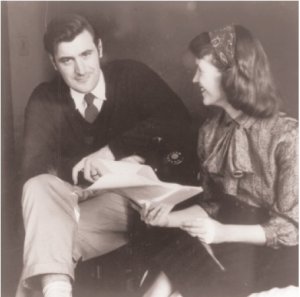
Sylvia Plath and Ted Hughes - newlyweds. Happier days. What a gorgeous couple they were.
And this is the last poem that Sylvia Plath completed. It's chilling, yes, but standing alone - as a poem - I think there's a lot to talk about here, a lot of stuff - not just biographical.
And I'm sorry - but the line "her blacks crackle and drag" is ... I mean, it's just fantastic genius-level imagery with major staying power, that's all. "Her blacks crackle and drag." (And yes ... let me just throw a shout-out to Paul Westerberg - who has also recognized the genius imagery in that line.) It's scary. "Crackle"? "Drag?" All kinds of very frightening images come to mind in those two simple words ... and the internal rhyme of "blacks" and "crackle" make it seem even more eerie. I'm not a literary critic but I will NEVER be done reading this last poem. She completed it on February 4, 1963. She killed herself on February 11.
Edge
The woman is perfected.
Her dead
Body wears the smile of accomplishment,
The illusion of a Greek necessity
Flows in the scrolls of her toga,
Her bare
Feet seem to be saying:
We have come so far, it is over.
Each dead child coiled, a white serpent,
One at each little
Pitcher of milk, now empty.
She has folded
Them back into her body as petals
Of a rose close when the garden
Stiffens and odors bleed
From the sweet, deep throats of the night flower.
The moon has nothing to be sad about,
Staring from her hood of bone.
She is used to this sort of thing.
Her blacks crackle and drag.
Let us not do a disservice to this great artist and see her only in terms of her self-inflicted end. Let us look at her art, please. Let us focus on that. If we can remove the context of her life from the poems; what is left? What do we see? What about those words, huh? What about her WORK?
Other posts I have written about Plath:
The so-called villainy of Ted Hughes
October 25, 2009
Today in history: October 25, 1415 - "we few, we happy few"
Today is the feast day of Saints Crispin and Crispinian, cobblers by trade, not to mention fierce warriors of their faith. Commemorated, unforgettably, by Shakespeare, in Henry V. Crispinian here becomes "Crispian", probably to honor the demands of iambic pentameter.
Without further ado, Henry V, Act IV, scene iii:
If we are mark'd to die, we are enow
To do our country loss; and if to live,
The fewer men, the greater share of honour.
God's will! I pray thee, wish not one man more.
By Jove, I am not covetous for gold,
Nor care I who doth feed upon my cost;
It yearns me not if men my garments wear;
Such outward things dwell not in my desires:
But if it be a sin to covet honour,
I am the most offending soul alive.
No, faith, my coz, wish not a man from England:
God's peace! I would not lose so great an honour
As one man more, methinks, would share from me
For the best hope I have. O, do not wish one more!
Rather proclaim it, Westmoreland, through my host,
That he which hath no stomach to this fight,
Let him depart; his passport shall be made
And crowns for convoy put into his purse:
We would not die in that man's company
That fears his fellowship to die with us.
This day is called the Feast of Crispian:
He that outlives this day, and comes safe home,
Will stand a-tiptoe when the day is named,
And rouse him at the name of Crispian.
He that shall see this day and live t'old age,
Will yearly on the vigil feast his neighbours,
And say "To-morrow is Saint Crispian":
Then will he strip his sleeve and show his scars
And say "These wounds I had on Crispin's day."
Old men forget: yet all shall be forgot,
But he'll remember with advantages
What feats he did that day. Then shall our names,
Familiar in his mouth as household words
Harry the King, Bedford and Exeter,
Warwick and Talbot, Salisbury and Gloucester,
Be in their flowing cups freshly remembered.
This story shall the good man teach his son;
And Crispin Crispian shall ne'er go by,
From this day to the ending of the world,
But we in it shall be remembered;
We few, we happy few, we band of brothers;
For he today that sheds his blood with me
Shall be my brother; be he ne'er so vile,
This day shall gentle his condition:
And gentlemen in England now abed
Shall think themselves accursed they were not here,
And hold their manhoods cheap whiles any speaks
That fought with us upon Saint Crispin's day.
-- Henry V (Act IV, scene iii)
Two film versions of this magnificent speech below. The music in the Kenneth Branagh version is brilliant, I think. The speech is so good you don't really need to add too much to it ... but in that case, the music works.
One thing: watch how he builds it. You keep thinking it can't get more intense ... and yet it does.
And another thing, in the Olivier version - I remember vividly my acting teacher in college talking about how Olivier did this speech, especially his last vocal moment, when he says 'day' and catapults his voice up and up and up the scale - it is odd, totally artificial, and yet also completely fearless and specific. It's actory-y, an actor utilizing his magnificent vocal instrument. But then when you think that here, in the play, the King is also a bit of an actor, and needs to make a speech in a manner that will inspire his followers. It takes a bit of speechifying to get the job done. Olivier knew this. In this moment, the King IS an actor.
Nobody could pull off a vocal stunt like that except Olivier.
October 19, 2009
Today in history: October 19, 1781

The surrender at Yorktown, which ended the American Revolutionary War.
Day before:
General Lord Charles Cornwallis to General George Washington, October 18, 1781
I agree to open a treaty of capitulation upon the basis of the garrisons of York and Gloucester, including seamen, being prisoners of war, without annexing the condition of their being sent to Europe; but I expect to receive a compensation in the articles of capitulation for the surrender of Gloucester in its present state of defence.I shall, in particular, desire, that the Bonetta sloop of war may be left entirely at my disposal, from the hour that the capitulation is signed, to receive an aid-de-camp to carry my dispatches to Sir Henry Clinton. Such soldiers as I may think proper to send as passengers in her, to be manned with fifty men of her own crew, and to be permitted to sail without examination, when my dispatches are ready: engaging, on my part, that the ship shall be brought back and delivered to you, if she escapes the dangers of the sea, that the crew and soldiers shall be accounted for in future exchanges, that she shall carry off no officer without your consent, nor public property of any kind; and I shall likewise desire, that the traders and inhabitants may preserve their property, and that no person may be punished or molested for having joined the British troops.
If you choose to proceed to negociation on these grounds, I shall appoint two field officers of my army to meet two officers from you, at any time and place that you think proper, to digest the articles of capitulation.
(Check out the full correspondence in the days leading up to the 19th)
Cornwallis had realized that aid would not come in time - and after two days of bombardment - he sent a drummer out into view, who apparently beat the rhythm of: "STOP! LET'S TALK!!!" A British officer high in rank came forward, was blindfolded and taken to George Washington (who was on his last legs himself).
The surrender document had already been drawn up, with Washington dictating the terms. Oh - here are the Articles of Capitulation.
Over 7,000 soldiers surrendered at Yorktown. The war was over.

The story is that as the defeated army marched away, the song "The World Turned Upside Down" was played. I did a quick Google search and there are lots of defensive people out there who feel the need to shout out into the wilds of the Internet, "There is NO evidence that 'The World Turned Upside Down' was played at that moment ..." Ha. I love freaks who take sides in meaningless historical debates like this. I adore them. We are all geeks cut from the same cloth. But still. It's a good story, I think. There are a couple of versions of said song (which has, by itself, a long interesting history). Here is one of the versions:
If buttercups buzz'd after the bee,
If boats were on land, churches on sea,
If ponies rode men and if grass ate the cows,
And cats should be chased into holes by the mouse,
If the mamas sold their babies
To the gypsies for half a crown;
If summer were spring and the other way round,
Then all the world would be upside down.
Dr. James Thacher, who served in the Continental Army, is one of our eyewitnesses of the capitulation, and he published his version of events a couple of years later, the relevant passage being:
"At about twelve o'clock, the combined army was arranged and drawn up in two lines extending more than a mile in length. The Americans were drawn up in a line on the right side of the road, and the French occupied the left. At the head of the former, the great American commander [George Washington], mounted on his noble courser, took his station, attended by his aides. At the head of the latter was posted the excellent Count Rochambeau and his suite. The French troops, in complete uniform, displayed a martial and noble appearance; their bands of music, of which the timbrel formed a part, is a delightful novelty, and produced while marching to the ground a most enchanting effect.The Americans, though not all in uniform, nor their dress so neat, yet exhibited an erect, soldierly air, and every countenance beamed with satisfaction and joy. The concourse of spectators from the country was prodigious, in point of numbers was probably equal to the military, but universal silence and order prevailed.
It was about two o'clock when the captive army advanced through the line formed for their reception. Every eye was prepared to gaze on Lord Cornwallis, the object of peculiar interest and solicitude; but he disappointed our anxious expectations; pretending indisposition, he made General O'Hara his substitute as the leader of his army. This officer was followed by the conquered troops in a slow and solemn step, with shouldered arms, colors cased and drums beating a British march. Having arrived at the head of the line, General O'Hara, elegantly mounted, advanced to his excellency the commander-in-chief, taking off his hat, and apologized for the non-appearance of Earl Cornwallis. With his usual dignity and politeness, his excellency pointed to Major-General Lincoln for directions, by whom the British army was conducted into a spacious field, where it was intended they should ground their arms.
The royal troops, while marching through the line formed by the allied army, exhibited a decent and neat appearance, as respects arms and clothing, for their commander opened his store and directed every soldier to be furnished with a new suit complete, prior to the capitulation. But in their line of march we remarked a disorderly and unsoldierly conduct, their step was irregular, and their ranks frequently broken.
But it was in the field, when they came to the last act of the drama, that the spirit and pride of the British soldier was put to the severest test: here their mortification could not be concealed. Some of the platoon officers appeared to be exceedingly chagrined when giving the word "ground arms," and I am a witness that they performed this duty in a very unofficer-like manner; and that many of the soldiers manifested a sullen temper, throwing their arms on the pile with violence, as if determined to render them useless. This irregularity, however, was checked by the authority of General Lincoln. After having grounded their arms and divested themselves of their accoutrements, the captive troops were conducted back to Yorktown and guarded by our troops till they could be removed to the place of their destination."
One of my favorite sites, Boston 1775, describes the blame-game that ensued, following the capitulation, between the British generals.
I have put a strategic military map from 1781 below the fold. On it you can see the positions of the British Army commanded by Cornwallis - you can see the American and French forces commanded by Washington - and check out the French fleet comin' down the pike - under Count de Grasse!! The last-minute cavalry charge!
And here is a story - (perhaps it's apocryphal, or an out-and-out fabrication - but I love it nonetheless and I will continue to do my part to spread word of this story far and wide) of Benjamin Franklin's response to the news of the surrender. He was, of course, in Paris at the time, setting the world on fire with his homespun wisdom, bacchanalian propensities, chess-playing abilities, fur-lined hats, and his dazzling ways with the ladies. The vision he presented to the world of what liberty, American-style, looked like. An international celebrity.
Word came to France of the decisive American victory, and the complete surrender to George Washington in Yorktown. Franklin attended a diplomatic dinner shortly thereafter - and, of course, everyone was discussing the British defeat.
The French foreign minister stood, and toasted Louis XVI: "To his Majesty, Louis the Sixteenth, who, like the moon, fills the earth with a soft, benevolent glow."
The British ambassador rose and said, "To George the Third, who, like the sun at noonday, spreads his light and illumines the world."
Franklin rose and countered, "I cannot give you the sun or the moon, but I give you George Washington, General of the armies of the United States, who, like Joshua of old, commanded both the sun and the moon to stand still, and both obeyed."
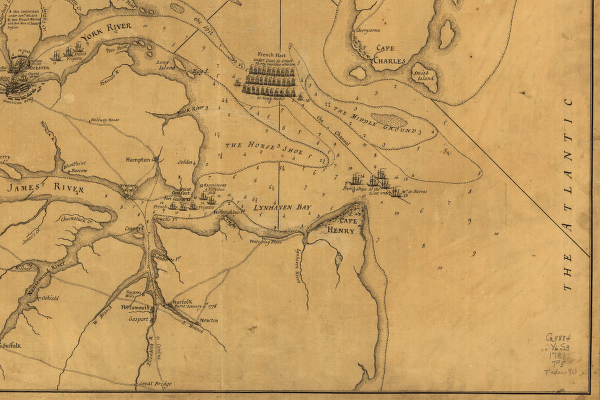
Map found here in this awesome collection - I could get lost in there forever.
October 16, 2009
"I find it harder and harder every day to live up to my blue china."
So said Oscar Wilde, whose birthday it is today.

His mother, Jane Speranza Francesca Wilde (aka Lady Wilde, aka "Speranza") was an incredible woman, in the canon of Irish literary history certainly, not to mention its politics and social upheaval. My father knew a lot about Speranza, of course. She was a poet, a radical, a political firebrand, in many ways. In 1864, a new edition of her poems came out, and she dedicated it to her two sons:
Dedicated to my sons Willie and Oscar Wilde'I made them indeed
Speak plain the word country. I taught them, no doubt,
That country's a thing one should die for at need'
That gives you a taste of the feeling of the household Wilde grew up in. He was certainly his mother's son. His father was a fascinating man, a physician who specialized in the eye and ear, to this day there are procedures referred to as "Wilde's incision", for example, or "Wilde's cone of light", dating back to the mid-1860s, when William Wilde was practicing in Ireland. He was an extraordinary man. He was also a writer, and published books on all kinds of things - one of his main interests was the archeology in Ireland, and he published a catalog of antiquities from one particular archeological site, and the book now sits in the National Museum of Ireland. He also published books on folklore, legends, wives' tales - all of the things that his patients told him, their own received history and "cures" for their ills.
Oscar Wilde's parents were, frankly, powerhouses.
Speranza was "inflammatory", the word comes up all the time, a true patriot, willing to say what needed to be said about the English situation in Ireland.
Wilde grew up in a household of artists and politicians and surgeons and revolutionaries. It had to have been heady stuff for the small sensitive brilliant boy.
He went to Oxford, starting in the year he was 20 years old. Oxford was his beginning. The beginning, certainly, of his notoreity (he said the "blue china" line while at Oxford, and it caused quite a stir). He consciously lost his Irish accent, and while, yes, much of what he did at Oxford was about the appearance of things (he wore formal wear, he was obsessed with decorating his room, he had an "outfit" for everything) - Wilde never did anything by a whim. He was testing the boundaries, he was interested in aesthetics - and what that might have to do not only with art but also character, how a man lived. Not to mention his studies. Wilde distinguished himself at Oxford. He encountered many of the writers and philosophers that would make the deepest imprint on him, and leave him forever changed. One of the things I love about Wilde is how suggestible he was. I suppose that doesn't sound like a compliment, but I mean "suggestible" as: openness, receptivity. He took everything on, tried it out for a bit, and then was willing to put it aside if it didn't work for him. Or, if he realized, "That worked for me when I was 20, but now that I am older, it doesn't have the same impact." He really wrestled with his influences. He argued with them in his papers at Oxford, he took them on, examined the implications, and tried to see what he could take from it for his own work (which was still in its infant stage at that point). Pater, Swinburne - these were major influences. Walt Whitman, of course, but he really wrestled with that one. Many of his influences were highly controversial at the time, the New Romantics, the aesthetes, not seen as particularly Christian, as a matter of fact, they were seen as pretty demonic, living only for pleasure. Wilde, while obviously a funny man who liked hanging out with friends, and was always the life of the party, was not really a decadent aesthete (as many of his 'buddies" were - a pox on their houses, they were so quick to drop him like a hot potato when he got into trouble - he actually LIVED it and was willing to take the fall - they were just posers - I'm still mad at all those guys, and I know it's ridiculous, it has nothing to do with me, but whatever; I read biographies of Wilde and tears fill my eyes when I imagine how he was abandoned at the end, by people who were life-long friends). Anyway, my point is: Wilde was not "decadent". He enjoyed art and beauty and the surface of things, but he was too hard a worker, too intelligent and rigorous with his work ethic, to be a true decadent. That is why HE had to take the fall. Who cares if some nobody poet-wannabe gets convicted of sodomy? Nobody cares about that. But Oscar Wilde? That'll stick it to 'em.
Wilde, granted, was extremely careless at the end, and he allowed into his life the Marquess of Queensberry (who, I'm sorry, I know this is a cliche - but I read about this gentleman, and what happened to all of his sons, not to mention his own awful personality - and I can't help but think: Dude? Look. You're totally gay, mkay? Just admit it. Nobody is THAT angry without having some tendencies. You're gay, Marquess. Totally gay. AND you have raised sons who are gay, and this you cannot stand, this was your greatest failure: NOT because you are disappointed for your sons that they are "different" - but because YOUR homosexuality will now be revealed - it will be seen as a reflection of YOU and this you could not abide, because you've got something to hide. Uhm, am I actually bitch-slapping the Marquess of Queensberry on my blog? 100 plus years after the fact? Well, yes, I am. It felt good.) Wilde, in love with the Marquess' son, could not perceive the danger, could not understand what exactly he was inviting in to his life. When we're in love, we obviously aren't always careful. But you read the slow clang of events in Wilde's life, and you can feel the increasing danger at that point, you can feel how much they are going to 'get' him - and does the punishment fit the crime? Awful. Just awful. Wilde bears some responsibility for that, of course, he was not just a victim - but my God, what a punishment for being careless. He lost his freedom, his heart was broken - and I believe he died of that broken heart. Lord Douglas (the Marquess' son, and Oscar Wilde's great love) was no great shakes himself, and basically saw a way to "stick it to dear old Dad", through his notorious famous lover Oscar.
Reading the timeline of events, I just want to take Oscar aside and tell him to get the hell out of dodge for a while, escape - it WON'T be worth it.
But alas, it happened.
Wilde wrote about his passage to prison:
On November 13th 1895 I was brought down here from London. From two o'clock till half-past two on that day I had to stand on the centre platform of Clapham Junction in convict dress and handcuffed, for the world to look at ... When people saw me they laughed. Each train as it came up swelled the audience. Nothing could exceed their amusement. That was of course before they knew who I was. As soon as they had been informed, they laughed still more. For half an hour I stood there in the grey November rain surrounded by a jeering mob. For a year after that was done to me I wept every day at the same hour and for the same space of time.
In the 1895 trial, Charles Gill, the prosecutor, asked Wilde about the "love that dare not speak its name", a quote which came from a poem by Lord Douglas. Wilde, a broken man already by this point, answered:
The 'Love that dare not speak its name' in this century is such a great affection of an elder for a young man as there was between David and Jonathan, such as Plato made the very basis of his philosophy, and such as you find in the sonnets of Michaelangelo and Shakespeare. It is that deep, spiritual affection that is as pure as it is perfect. It dictates and pervades great works of art like those of Shakespeare and Michaelangelo, and those two letters of mine, such as they are. It is in this century misunderstood, so much misunderstood that it may described as the 'Love that dare not speak its name,' and on account of it I am placed where I am now. It is beautiful, it is fine, it is the noblest form of affection. There is nothing unnatural about it. It is intellectual, and it repeatedly exists between an elder and a younger man, when the elder man has intellect, and the younger man has all the joy, hope and glamour of life before him. That it should be so the world does not understand. The world mocks at it and sometimes puts one in the pillory for it.
Max Beerbohm, an old friend of Wilde's (fascinating man himself, a writer, drama critic, and caricaturist) was there that day and wrote to a friend afterwards:
Oscar has been quite superb. His speech about the Love that dares not tell his name was simply wonderful and carried the whole court right away, quite a tremendous burst of applause. Here was this man, who had been for a month in prison, and loaded with insults and crushed and buffeted, perfectly self-possessed, dominating the Old Bailey with his fine presence and musical voice. He has never had so great a triumph, I am sure, as when the gallery burst into applause - I am sure it affected the jury.
It did not.

Caricature of Oscar Wilde, by Max Beerbohm
On today, Oscar Wilde's birthday, a man who has given me so much pleasure, has made me laugh until my stomach hurts, I didn't mean to write about all his pain and suffering, but I found I couldn't help it. His suffering was acute, it had an air of sacrificial lamb about it. It was excessive. He did not last long once he was released from prison. He had lost everything. Most of his friends, his entire library, his social standing, his health. He moved to a small village in France, had a couple of visitors now and then, reconnected with Lord Douglas, but by that point, Wilde was on his way out. Life had broken him. He converted to Catholicism on his death-bed, something he had been tormented by for years. His father had not let him convert, back then, Catholicism was way beyond the pale, but Wilde never got over yearning for it. His yearnings were often aesthetic (naturally), there was something in the ceremony itself that struck deep chords within him (I can relate), but whatever it was, and it's not for me to say, a local Catholic priest was found in the middle of the night, and baptized Oscar Wilde on his death bed.
There's so much more to say about this man - I haven't even touched on his plays!! Those epigrams! His genius - it is quite unsettling what he does, and it is easy to understand why the powers-that-be found him disturbing. His epigrams are NOT just clever. That is the greatest misunderstanding about Wilde. His epigrams have, as their goal, to up-end the status quo. You think you're going one way, it feels good and right that you are going THIS way, and then the second half of the epigram up-ends your expectations. Leaves you in a state of chaos. Wilde required his audience to be "suggestible" as well. To not just dismiss something out of hand, but to take it on, try it on for size, see what you think about it. Hopefully you're laughing, throughout, as well, that's the beauty of Wilde, he is not a scold - and many people did laugh - but, sadly, many people did not. Who was this Irish fairy, wearing velvet suits with flowers in his buttonhole, who was he and who was HE to tell us the status quo needed to not just be up-ended, but laughed at in the process? He's got a nerve.
Yes, he did.
Thank God.
Some quotes from (and about) Wilde below.
And happy birthday, to Oscar Fingal O'Flahertie Wills Wilde.
Mankind has been continually entering the prisons of Puritanism, Philistinism, Sensualism, Fanaticism, and turning the key on his own spirit: But after a time there is an enormous desire for higher freedom - for self-preservation.
_____________
The mind of a thoroughly well-informed man is a dreadful thing. It is like a bric-a-brac shop, all monsters and dust, with everything priced above its proper value.
_____________
To win back my youth ... there is nothing I wouldn't do - except take exercise, get up early, or be a useful member of the community.
_____________
Miss Morris is the greatest actress I ever saw, if it be fair to form an opinion of her from her rendition of this one role. We have no such powerfully intense actress in England. She is a great artist, in my sense of the word, because all she does, all she says, in the manner of the doing and the saying, constantly evoke the imagination to supplement it. That is what I mean by art.
_____________
To disagree with three-fourths of the British public on all points is one of the first elements of sanity.
_____________
from a letter Wilde wrote to Walt Whitman:
Tennyson's rank is too well fixed and we love him too much. But he has not allowed himself to be a part of the living world and of the great currents of interest and action. He is of priceless value and yet he lives apart from his time. He lives in a dream of the unreal. We, on the other hand, move in the very heart of today.
_____________
Wilde on Walt Whitman:
He is the grandest man I have ever seen, the simplest, most natural, and strongest character I have ever met in my life. I regard him as one of those wonderful, large, entire men who might have lived in any age and is not peculiar to any people. Strong, true, and perfectly sane: the closest approach to the Greek we have yet had in modern times.
_____________
To be either a Puritan, a prig or a preacher is a bad thing. To be all three at once reminds me of the worst excesses of the French Revolution.
_____________
The most graceful thing I ever beheld was a miner in a Colorado silver mine driving a new shaft with a hammer; at any moment he might have been transformed into marble or bronze and become noble in art forever.
_____________
Praise makes me humble. But when I am abused I know I have touched the stars.
_____________
1883, letter of Oscar Wilde to Marie Prescott:
All the great men of France were cuckolds. Haven't you observed this? All! In every period. By their wives or their mistresses. Villon, Moliere, Louis XIV, Napoleon, Victor Hugo, Musset, Balzac, kings, generals, poets! Those I mention, a thousand more that I could name, were all cuckolds. Do you know what that means? I will tell you. Great men, in France, have loved women too much. Women don't like that. They take advantage of this weakness. In England, great men love nothing, neither art, nor wealth, nor glory ... nor women. It's an advantage, you can be sure.
_____________
1883, letter of Oscar Wilde to Marie Prescott:
Now, one of the facts of physiology is the desire of any very intensified emotion to be relieved by some emotion that is its opposite. Nature's example of dramatic effect is the laughter of hysteria or the tears of joy. So I cannot cut my comedy lines. Besides, the essence of good dialogue is interruption.
_____________
1885, letter of Oscar Wilde to Marillier
There is an unknown land full of strange flowers and subtle perfumes, a land of which it is joy of all joys to dream, a land where all things are perfect and poisonous.
_____________
1885, letter of Oscar Wilde to James Whistler
Be warned in time, James; and remain, as I do, incomprehensible: to be great is to be misunderstood.
_____________
To be at one with the elements seems to be Mr. Swinburne's aim. He seeks to speak with the breath of wind and wave ... He is the first lyric poet who has tried to make an absolute surrender of his personality, and he has succeeded. We have the song, but we never know the singer ... Out of the thunder and splendour of words, he himself says nothing. We have often heard man's interpretation of Nature; now we know Nature's interpretation of man, and she has curiously little to say. Force and Freedom form her vague message. She deafens us with her clangours.
_____________
As for George Meredith, who could hope to reproduce him? His style is chaos illumined by brilliant flashes of lightning. As a writer he has mastered everything, except language; as a novelist he can do everything, except tell a story.
_____________
The amount of pleasure one gets out of dialect is a matter entirely of temperament. To say "mither" instead of "mother" seems to many the acme of romance. There are others who are not quite so ready to believe in the pathos of provincialism.
_____________
We Irish are too poetical to be poets; we are a nation of brilliant failures, but we are the greatest talkers since the Greeks.
_____________
letter of Oscar Wilde to W.B. Maxwell
You mustn't take a story that I told you of a man and a picture. No, absolutely, I want that for myself. I fully mean to write it, and I should be terribly upset if I were forestalled.
_____________
Anyone can sympathise with the sufferings of a friend, but it requires a very fine nature - it requires, in fact, the nature of a true Individualist to sympathise with a friend's success.
_____________
Man is least himself when he talks in his own person. Give him a mask and he will tell you the truth.
_____________
Mallarme is a poet, a true poet. But I prefer him when he writes in French, because in that language he is incomprehensible, while in English, unfortunately, he is not. Incomprehensibility is a gift, not everyone has it.
_____________
1891 letter from Stephen Mallarme to James Whistler
No O.W. ---! just like him! He pushes ingratitude to the point of indecency, then? -- And all the old chestnuts -- he dares offer them in Paris like new ones! -- the tales of the sunflower -- his walks with the lily -- his knee breeches -- his rose-colored stiff shirts -- and all that! -- And then 'Art' here -- 'Art' there -- It's really obscene -- and will come to a bad end -- As we shall see -- and you will tell me how it happens --
_____________
I detest nature where man has not intervened with his artifice.
_____________
1891 letter of Oscar Wilde to Edmond de Goncourt
One can adore a language without speaking it well, as one can love a woman without understanding her. French by sympathy, I am Irish by race, and the English have condemned me to speak the language of Shakespeare.
_____________
I have equally recognised that humility is for the hypocrite, modesty for the incompetent.
_____________
1891, letter of Andre Gide to Paul Valery
Forgive my being silent: after Wilde I only exist a little.
_____________
"Know thyself!" was written over the portal of the ancient world ... the message of Christ to man was simply, "Be thyself."
_____________
I can see they are servants by their perfect manners.
_____________
For do you know, all my life I have been looking for twelve men who didn't believe in me .... and so far I have only found eleven.
September 16, 2009
Happy birthday to Lauren Bacall

"He's the ugliest handsome man I've ever seen."-- Lauren Bacall on Humphrey Bogart
When Lauren Bacall was 17, she modeled for a season for the designers on 7th Avenue. By her own admission, she was not very good at it. Here is what she said, when she came to do a seminar at my school:
"I was flat-chested and very skinny. The clothes of that time just didn't look good on me."
If you think of how female body-types go in and out of fashion, you can see that she is quite right, as gorgeous as she is. Her body-type is actually "in" now. But the clothes didn't hang right on her shoulders, she had slim hips, etc. Not at all right for the time.
However - she happened to meet a man during this time who arranged an introduction with Diana Vreeland, legendary fashion editor of Harper's Bazaar at the time.
Diana Vreeland, who was a bit of a visionary, actually - saw something in the teenage "Betty". Now it is obvious that Vreeland saw what it was in her that would captivate an audience. She saw the "star" - the star that was already there.
So Vreeland put Betty Bacall on the cover of Harper's Bazaar.
Bacall stands in front of a huge Red Cross sign. She has a flat blank face, she stares straight at the camera - there is nothing coy about her. Her skin is pale, her lips are bright red. She doesn't look like what models looked like in that time period. She looks like what models look like now. There is a very clear identity on her face - you can see her personality - which models didn't quite have at that time. Think of the runway models now - how they stalk right at you - with this flat blank "Yeah, this is who I am" stare. That was what Bacall looked like on that cover.
The Harper's Bazaar cover was, as Bacall described it, "the twist of fate that changed my life forever".
Slim Hawks, Howard Hawks' wife, saw the cover and showed it to her husband, saying: "What about this girl?" Howard Hawks had been looking for a project. He was a Svengali, he wanted to create a certain type of woman for movies. He (according to Bacall) had a fantasy about women, and a fantasy about how they should be on screen. He had never seen it before (the quality he was looking for was "insolence" - not "toughness" but "insolence"), and he wanted to find his muse for this particular rare female dynamic. As a result of Lauren Bacall's Harper's Bazaar cover, Howard Hawks called this skinny teenager out to Hollywood to put her under his own personal contract, to develop projects for her - the first being To Have and Have Not - starring (of course) Humphrey Bogart. Her performance in that film has got to go down in history as one of the greatest and most startling film debuts of all time.

Also, you know, there was the little thing of that romance that began on that film.
But before all that came along - Hawks was very careful about her. He wanted her to maintain a sense of mystery and power. She was not just another starlet. He wanted to orchestrate her career- which he ended up doing - brilliantly.

Bacall came and talked at my school, and told a very funny story about those early days, when Hawks was "holding her back", trying to find the right project (and co-star) for her. Bacall said:
"Hawks said to me, 'I have a feeling that you would be great in a movie with either Cary Grant ... or Humphrey Bogart.' And I thought to myself, 'Ooooooh, Cary Grant! That sounds like a good idea!!"
She told us that she had spent the majority of her life "quaking in fear". Hard to imagine, but true. At every step along the way, she had huge obstacles to overcome - of fear, shyness, self-confidence problems ... She was terrified to meet Diana Vreeland. She was terrified of modeling. She was terrified to meet Howard Hawks. She was terrified of what would happen to her after Bogie died. She was terrified to star in "Applause" on Broadway - the musical version of All About Eve (she ended up winning the first of two Tonys by the way). She is ruled by fear.
Her stage fright is debilitating (always has been) and she trembles uncontrollably. Her head shakes (she mentions becoming aware of it on her first day of shooting To Have and Have Not) ... her hand trembles ... it is beyond her control. The "tricks" she performs on herself, to just allow herself to be up there in front of people (head down, chin down, arm down ... ) - are extraordinary, I admire the smart-ness of her coping skills very much ... but lots of people have coping skills and don't become PHENOMS at the age of 19. Her "coping skills" (head down, chin down, look up while head is down so head doesn't shake, arm down, cross one arm over the other) - all of that stuff became her "look", her persona, what she was famous for.


Amazing! What began as a way to stop her head from shaking - became her "trademark".
Bacall is smart. She's not just smart as an actress, but she has the other kind of smarts: smarts about herself. And the choices she made only made her seem stronger, more specific, more herself. None of those invented gestures come off as studied, or stiff. It looks like Lauren Bacall is just one cool dame, who doesn't NEED a lot of extraneous movement. When really it all began as a way to deal with nervousness. I love that!
"I am always associated with [Bogart] in people's minds - 'the greatest love story ever told.' You can't get away from that. He'd never believe it, of course... It's great that he's still appreciated by so many, because he's worth it. He was a very special human being, Bogart."
The famous cover, the "twist of fate" below the fold.
Happy birthday, Betty Bacall.

September 10, 2009
Happy birthday, H.D.

The poet Hilda Doolittle (known as H.D.) was born in Bethlehem, Pennsylvania on September 10, 1886.
It is difficult for me to really realize that she was born in Pennsylvania and not Liverpool, her name sounds so My Fair Lady-ish. She spent the majority of her life outside of America, but she was, indeed, American-born. Known as "H.D.", she is another one of those poets who benefited from her friendship (and also, sometimes love-affair with) Ezra Pound (more on Pound here). She had met him early on in America, and once she got to England, he arranged the introductions necessary to get her close to the heart of those with pull and power. Pound was at the center of the literary circles in Europe, and he was instrumental in introducing her into that world. She was also very good friends with Marianne Moore (more on her here) - I think their friendship dated back to college - they both went to Bryn Mawr.
H.D. was at the center of the Imagist movement in poetry, and is thought of as its finest representation. She lived long, however, and died in 1961, so her poetry moved on from its Imagist phase - and her most prolific and successful time as a poet was in the 50s and 60s. Pretty amazing. Her first poems were published in 1913.
When you read even a sketch of her biography, it is amazing the people with whom she intersected. She had one of those lives. She lived near the center of all of the literary and cultural upheaval of the time. She hung out with Amy Lowell, and Ford Madox Ford. Amy Lowell was responsible for bringing H.D.'s work to America.
H.D. was married, but it didn't work out. She had a long relationship with D.H. Lawrence, before finally settling down with Bryher, a woman - her companion for years, until she died. The two moved to Paris, where they hung out with the literary ex-pat community (I mean, what I would not give for a time machine, to go hang out at one of the cafes or bars with all those poetic ex-Americans whooping it up!), and also got involved in the burgeoning business of film-making, forming a production company. So not only did H.D. hang out with Hemingway and Gertrude Stein, but also Sergei Eisenstein.
As if all of that isn't enough, H.D. suffered a couple of nervous breakdowns and it was recommended to her that she start analysis (a revolutionary idea at the time). She was given the name of a psychiatrist. You know, maybe he could help her out with her problems. That dude's name was Sigmund Freud.
Okay, enough with her personal life which could fill several books.
H.D. had a lifelong love affair with all things classical, and made many pilgrimages to Greece. It was her main inspiration.
Here's a really nice post from Ted about H.D. Some great links to follow with more information about this fascinating talented woman.
Like the rest of the Imagists, H.D. was interested in direct expression (even more so than her contemporaries) - their way of rebelling against the Victorian curlycues and lengthy sentimental descriptions. H.D., at times, seems to be experimenting with how few words she can actually use. Pare it down, pare it down. Her early poems have real energy. They almost look like fragments - reminiscent of Emily Dickinson (at least what the poems look like on the page) - and H.D.'s intellectual and emotional obsession with all things Hellenic come into play here. It is almost as though those Imagist poems are fractured statues from ancient Greece - perfect, eloquent, simple, and evocative. They look like what they evoke. H.D.'s idol was Sappho (not hard to imagine why), and her overriding desire was to be overwhelmed (which explains her interest in mysticism later in her life). She wanted the poem to act as an agent, something that would not only transport her, but obliterate her. She seeked transcendence, a state of being that was exalted, high-flung. Not easy to sustain.
I love H.D.'s description of Pound from Glenn Hughes' Imagism and the Imagists. Here, Pound acts like an agent, an old-school theatrical agent or manager, wrestling her into position - pushing her towards the "new" - and even giving her her new and mysterious moniker:
Ezra Pound was very kind and used to bring me (literally) armfuls of books to read ... I did a few poems that I don't think Ezra liked ... but later he was beautiful about my first authentic verses .. .and sent my poems in for me to Miss Monroe [the editor of Poetry magazine]. He signed them for me, 'H.D., Imagiste.' The name seems to have stuck somehow.
H.D.'s poems, stark and simple as they are, reverberate with energy, anguish, and power. She's marvelous.
Here's her poem "Helen", written in 1924.
Helen
All Greece hates
the still eyes in the white face,
the lustre as of olives
where she stands,
and the white hands.
All Greece reviles
the wan face when she smiles,
hating it deeper still
when it grows wan and white,
remembering past enchantments
and past ills.
Greece sees, unmoved,
God's daughter, born of love,
the beauty of cool feet
and slenderest knees,
could love indeed the maid,
only if she were laid,
white ash amid funereal cypresses.
Heat
O WIND, rend open the heat,
cut apart the heat,
rend it to tatters.
Fruit cannot drop
through this thick air--
fruit cannot fall into heat
that presses up and blunts
the points of pears
and rounds the grapes.
Cut the heat--
plough through it,
turning it on either side
of your path.
And I love her poem "Lethe". I love its incantatory rhythm. It's almost frightening in its repetitive quality.
Lethe
NOR skin nor hide nor fleece
Shall cover you,
Nor curtain of crimson nor fine
Shelter of cedar-wood be over you,
Nor the fir-tree
Nor the pine.
Nor sight of whin nor gorse
Nor river-yew,
Nor fragrance of flowering bush,
Nor wailing of reed-bird to waken you,
Nor of linnet,
Nor of thrush.
Nor word nor touch nor sight
Of lover, you
Shall long through the night but for this:
The roll of the full tide to cover you
Without question,
Without kiss.

Happy birthday, H.D.!
September 5, 2009
Today in history: September 5, 1774
On September 5, 1774, the First Continental Congress convened at Carpenters Hall in Philadelphia.
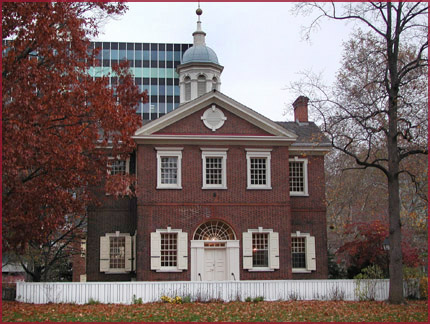
It was a very stressful and dangerous time, and there was very little agreement among the colonies about what should be done. The Port Bill (closing down Boston to ships) had been passed by the British, in retaliation for the Boston Tea Party - and Boston was suffering greatly. The colonies faced the question, so monumental at the time: "Is Boston's suffering our business?" That question, of course, had large implications - the main one being: Are we, all the separate colonies, united? Are we willing to take a stand for Boston's survival, even though we're from South Carolina or Connecticut? The beginning of a union. There was no unanimity. They were all still subjects of the British crown. Many remained loyal, and the thought of breaking away was unthinkable, unimaginable (also not what they wanted at all). Others were already looking ahead to the eventual cataclysm, it was seen as an inevitability.
These were revolutionaries, although very few of them saw themselves as such. They were also good citizens of their various communities - lawyers and farmers, educated men, the elite. The time had not yet come for war. But the Port Bill was a gross and unfair "punishment" of a recalcitrant colony, and it was just a warning bell of things to come. These were men who considered themselves citizens of Britain - and to be treated in such a manner was outrageous.
They came from all the colonies. Delegates, sent with instructions and also their own biases, convened on Philadelphia.
Martha Washington wrote a letter to a relative on the eve of her husband's departure to the Convention:
I foresee consequences; dark days and darker nights; domestic happiness suspended; social enjoyments abandoned; property of every kind put in jeopardy by war, perhaps; neighbors and friends at variance, and eternal separations on earth possible. But what are all these evils when compared with the fate of which the Port Bill may be only a threat? My mind is made up; my heart is in the cause. George is right; he is always right. God has promised to protect the righteous, and I will trust him.
We have a series of letters from John Adams to his wife, describing this first Congress - they're fabulous, because Adams was not reticent at all with his wife. He had next to no formality with Abigail, he shared everything with her: his gripes, his self-doubt, his vanity, his jokes ... The letters are a rich first-person resource, one of the most amazing archives of letters we have in our national history.
Adams wrote a letter (the last paragraph of which is now rightly famous) to Abigail on his way down to Philadelphia:
We Yesterday visited Nassau Hall Colledge, and were politely treated by the Schollars, Tutors, Professors and President, whom We are, this Day to hear preach. Tomorrow We reach the Theatre of Action. God Almighty grant us Wisdom and Virtue sufficient for the high Trust that is devolved upon Us. The Spirit of the People wherever we have been seems to be very favourable. They universally consider our Cause as their own, and express the firmest Resolution, to abide the Determination of the Congress.I am anxious for our perplexed, distressed Province [Boston] -- hope they will be directed into the right Path. Let me intreat you, my Dear, to make yourself as easy and quiet as possible. Resignation to the Will of Heaven is our only Resource in such Dangerous Times. Prudence and Caution should be our Guides. I have the strongest Hopes, that We shall yet see a clearer Sky, and better Times...
Your Account of the Rain refreshed me. [In his absence, Abigail took complete charge of the farm, the finances, the help, along with raising their growing brood of children. It is speculated as well that without this "help", John Adams might have run their finances into the ground. From his book allowance alone!] I hope our Husbandry is prudently and industriously managed. Frugality must be our Support...
The Education of our Children is never out of my Mind. Train them to Virtue, habituate them to industry, activity and Spirit. Make them consider every Vice, as shameful and unmanly: fire them Ambition to be usefull -- make them disdain to be destitute of any usefull, or ornamental Knowledge or Accomplishment. Fix their Ambition upon great and solid Objects, and their Contempt upon little, frivolous, and useless ones. It is Time, my dear, for you to begin to teach them French. Every Decency, Grace, and Honesty should be inculcated upon them.
And here - finally - in a letter dated September 16, John Adams describes the first meeting of the First Continental Congress. Gives me chills, every time. I love Samuel Adams' comment. If only other religious bigots could take his lead:
When the Congress first met, Mr. Cushing made a Motion, that it shouild be opened with Prayer. It was opposed by Mr. Jay of N. York and Mr. Rutledge of South Carolina, because we were so divided in religious Sentiments, some Episcopalians, some Quakers, some Aanabaptists, some Presbyterians and some Congregationalists, so that We could not join in the same Act of Worship. -- Mr. S. Adams arose and said he was no Bigot, and could hear a Prayer from a Gentleman of Piety and Virtue, who was at the same Time a Friend to his Country. He was a Stranger in Phyladelphia, but had heard that Mr. Duche (Dushay they pronounce it) deserved that Character, and therefore he moved that Mr. Duche, an episcopal Clergyman, might be desired, to read Prayers to the Congress, tomorrow Morning. The Motion was seconded and passed in the Affirmative. Mr. Randolph our President waited on Mr. Duche, and received for Answer that if his Health would permit, he certainly would. Accordingly next Morning he appeared with his Clerk and in his Pontificallibus, and read several Prayers, in the established Form; and then read the Collect for the seventh day of September, which was the Thirty Fifth Psalm. -- You must remember this was the next Morning after we heard the horrible Rumour, of the Cannonade of Boston. -- I never saw a greater Effect upon an Audience. It seemed as if Heaven had ordained that Psalm to be read on that Morning.After this Mr. Duche, unexpected to every Body struck out into an extemporary Prayer, which filled the Bosom of every Man present. I must confess I never heard a better Prayer, or one so well pronounced. Episcopalian as he is, Dr. Cooper himself never prayed with such fervour, such Ardor, such Earnestness and Pathos, and in Language so elegant and sublime -- for America, for the Congress, for the Province of Massachusetts Bay, and especially the Town of Boston. It has had an excellent Effect upon every Body here.
I must beg you to read that Psalm.
Okay, John, relax, no need to beg, I'll read that Psalm.
The 35th PsalmOppose, LORD, those who oppose me; war upon those who make war upon me.
Take up the shield and buckler; rise up in my defense.Brandish lance and battle-ax against my pursuers. Say to my heart, "I am your salvation."
Let those who seek my life be put to shame and disgrace. Let those who plot evil against me be turned back and confounded.
Make them like chaff before the wind, with the angel of the LORD driving them on.
Make their way slippery and dark, with the angel of the LORD pursuing them.
Without cause they set their snare for me; without cause they dug a pit for me.
Let ruin overtake them unawares; let the snare they have set catch them; let them fall into the pit they have dug.
Then I will rejoice in the LORD, exult in God's salvation.
My very bones shall say, "O LORD, who is like you, Who rescue the afflicted from the powerful, the afflicted and needy from the despoiler?"
Malicious witnesses come forward, accuse me of things I do not know.
They repay me evil for good and I am all alone.
Yet I, when they were ill, put on sackcloth, afflicted myself with fasting, sobbed my prayers upon my bosom.
I went about in grief as for my brother, bent in mourning as for my mother.
Yet when I stumbled they gathered with glee, gathered against me like strangers. They slandered me without ceasing;
without respect they mocked me, gnashed their teeth against me.
Lord, how long will you look on? Save me from roaring beasts, my precious life from lions!
Then I will thank you in the great assembly; I will praise you before the mighty throng.
Do not let lying foes smirk at me, my undeserved enemies wink knowingly.
They speak no words of peace, but against the quiet in the land they fashion deceitful speech.
They open wide their mouths against me. They say, "Aha! Good! Our eyes relish the sight!"
You see this, LORD; do not be silent; Lord, do not withdraw from me.
Awake, be vigilant in my defense, in my cause, my God and my Lord.
Defend me because you are just, LORD; my God, do not let them gloat over me.
Do not let them say in their hearts, "Aha! Just what we wanted!" Do not let them say, "We have devoured that one!"
Put to shame and confound all who relish my misfortune. Clothe with shame and disgrace those who lord it over me.
But let those who favor my just cause shout for joy and be glad. May they ever say, "Exalted be the LORD who delights in the peace of his loyal servant."
Then my tongue shall recount your justice, declare your praise, all the day long.
And finally - a funny excerpt from one of the many descriptive letters John Adams wrote to his wife during the Congress - just makes me chuckle:
This assembly is like no other that ever existed. Every man in it is a great man -- an orator, a critic, a statesman, and therefore every man upon every question must show his oratory, his criticism, his political abilities. The consequence of this is that business is drawn and spun out to immeasurable length. I believe if it was moved and seconded that we should come to a resolution that three and two make five, we should be entertained with logic and rhetoric, law, history, politics, and mathematics concerning the subject for two whole days, and then we should pass the resolution unanimously in the affirmative.
hahahahaha
September 1, 2009
Today in history: September 1, 1939
Germany invaded Poland, 70 years ago today.

From Newsweek: Scenes from the invasion of Poland
From MSN: Friends, foes, mark WWII's start in Poland
Hitler's speech on Sept. 1, 1939, from Berlin:
To the defense forces:The Polish nation refused my efforts for a peaceful regulation of neighborly relations; instead it has appealed to weapons.
Germans in Poland are persecuted with a bloody terror and are driven from their homes. The series of border violations, which are unbearable to a great power, prove that the Poles no longer are willing to respect the German frontier. In order to put an end to this frantic activity no other means is left to me now than to meet force with force.
German defense forces will carry on the battle for the honor of the living rights of the re- awakened German people with firm determination.
I expect every German soldier, in view of the great tradition of eternal German soldiery, to do his duty until the end.
Remember always in all situations you are the representatives of National Socialist Greater Germany!
Long live our people and our Reich!

Hitler reviews the troops in Warsaw, early October, 1939.
Excerpt from Viktor Klemperer's stunning diary I Will Bear Witness: A Diary of the Nazi Years, 1933-1941
September 3, Sunday afternoonThis torture of one's nerves ever more unbearable. On Friday morning blackout ordered until further notice. We sit in the tiny cellar, the terrible damp closeness, the constant sweating and shivering, the smell of mold, the food shortage, makes everything even more miserable. I try to save butter and meat for Eva and Muschel, to make do myself as far as possible with still unrationed bread and fish. This in itself would all be trivial, but it is all only by the way. What will happen? From hour to hour we tell ourselves, now is the moment when everything is decided, whether Hitler is all-powerful, whether his rule will last indefinitely, or whether it falls now, now.
On Friday morning, September 1, the young butcher's lad came and told us: There had been a radio announcement, we already held Danzig and the Corridor, the war with Poland was under way, England and France remained neutral. I said to Eva, then a morphine injection or something similar was the best thing for us, our life was over. But then we said to one another, that could not possibly be the way things were, the boy had often reported absurd things (he was a perfect example of the way in which people take in news reports). A little later we heard Hitler's agitated voice, then the usual roaring, but could not make anything out. We said to ourselves, if the report were even only half true they must already be putting out the flags. Then down in town the dispatch of the outbreak of war. I asked several people whether English neutrality had already been declared. Only an intelligent salesgirl in a cigar shop on Chemnitzer Platz said: No - that would really be a joke! At the baker's, at Vogel's, they all said, as good as declared, all over in a few days! A young man in front of the newspaper display: The English are cowards, they won't do anything. Ad thus with variations the general mood, vox populi (butter seller, newspaper man, bill collector of the gas company etc. etc.) In the afternoon read the Fuhrer's speech. It seemed to me pessimistic as far as the external and the interal position were considered. Also all the regulations pointed and still point to more than a mere punitive expedition against Poland. And now this is the third day like this, it feels as if it has been three years: the waiting, the despairing, hoping, weighing up, not knowing. The newspaper yesterday, Saturday, vague and in fact anticipating a general outbreak of war: England, the attacker - English mobilization, French mobilization, they will bleed to death! etc., etc. But still no declaration of war on their side. Is it coming or will they fail to resist and merely demonstrate weakness?
The military bulletin is also unclear. Talks of successes everywhere, reports no serious opposition anywhere and yet also shows that German troops have nowhere advanced far beyond the frontiers. How does it all fit together? All in all: Reports and measures taken are serious, popular opinion absolutely certain of victory, ten thousand times more arrogant than in '14. The consequence will either be an overwhelming, almost unchallenged victory, and England and France are castrated minor states, or a catastrophe ten thousand times worse than '18. And the two of us right in the middle, helpless and probably lost in either case ... And yet we force ourselves, and sometimes it even succeeds for a couple of hours, to go on with our everyday life: reading aloud, eating (as best we can), writing, garden. But as I lie down to sleep I think: Will they come for me tonight? Will I be shot, will I be put in a concentration camp?
Waiting in peaceful Dolzschen, cut off from the world, is particularly bad. One listens to every sound, watches every face, pays attention to everything. One learns nothing. One waits for the newspaper and can make nothing of it. At the moment I do tend to think that there will be war with the great powers.
At the butcher an old dear puts her hand on my shoulder and says in a voice full of tears: He has said that he will put on a soldier's coat again and be a soldier himself, and if he falls, then Goering ... A young lady brings me my ration card, looks at me with a friendly expression: Do you still remember me? I studied under you, I've married into the family here. -- An old gentleman, very friendly, brings the blackout order: Terrible, that it's war again - but yet one is so patriotic, when I saw a battery leaving yesterday, I wanted more than anything to go with them! No one is outraged by the Russian alliance, people think it is brilliant or an excellent joke - Vogel's optimism (yesterday: We've almost finished off the Poles, the others won't stir themselves!) is to our benefit in coffee, sausage, tea, soap etc. -- Is this the general mood in Germany? Is it founded on facts or on hubris?
The Jewish Community in Dresden inquires whether I want to join it, since it represents the National Association of Jews locally; the Confessing Christians inquire whether I shall remain with them. I replied to the Gruber people that I was and will remain Protestant, I would not reply to the Jewish Community at all.
Note how on September 1 the Fuhrer declared lasting friendship with Russia in two words. Is there really no one in Germany who does not feel a pang of conscience? Once more: Machiavelli was mistaken; there is a line beyond which the separation of morality and politics is unpolitical and has to be paid for. Sooner or later. But can we wait until later?

Excerpt from William Shirer's Berlin Diary: The Journal of a Foreign Correspondent, 1934-1941
BERLIN, AUGUST 31 three thirty a.m.Tonight the great armies, navies, and air forces are all mobilized. Each country is shut off from the other. We have not been able today to get through to Paris or London, or of course to Warsaw, though I did talk to Tess in Geneva. At that, no precipitate action is expected tonight. Berlin is quite normal in appearance this evening. There has been no evacuation of women and children, not even any sandbagging of the windows. We'll have to wait through still another night, it appears, before we know. And so to bed, almost at dawn.
BERLIN, September 1
At six a.m. Sigrid Schultz - bless her heart - phoned. She said: "it's happened." I was very sleepy - my body and mind numbed, paralysed. I mumbled: "Thanks, Sigrid," and tumbled out of bed. The war is on!
later
It's a "counter-attack"! At dawn this morning Hitler moved against Poland. It's a fragrant, inexcusable, unprovoked act of aggression. But Hitler and the High Command call it a "counter-attack". A grey morning with overhanging clouds. T he people in the street were apathetic when I drove to the Rundfunk for my first broadcast at eight fifteen a.m. Across from the Adlon the morning shift of workers was busy on the new I.G. Farben building just as if nothing had happened. None of the men brought the extras which the newsboys were shouting. Along the east-west axis the Luftwaffe were mounting five big anti-aircraft guns to protect Hitler when he addresses the Reichstag at ten a.m. Jordan and I had to remain at the radio to handle Hitler's speech for America. Throughout the speech, I thought as I listened, ran a curious strain, as though Hitler himself were dazed at the fix he had got himself into and felt a little desperate about it. Somehow he did not carry conviction and there was much less cheering in the Reichstag than on previous, less important occasions. Jordan must have reacted the same way. As we waited to translate the speech for America, he whispered: "Sounds like his swan song." It really did. He sounded discouraged when he told the Reichstag that Italy would not be coming into the war because "we are unwiling to call in outside help for this struggle. We will fulfil this task by ourselves." And yet Paragraph 3 of the Axis military alliance calls for immediate, automatic Italian support with "all its military resources on land, at sea, and in the air." What about that? He sounded desperate when, referring to Molotov's speech of yesterday at the Russian ratification of the Nazi-Soviet accord, he said: "I can only underline every word of Foreign Commisar Molotov's speech."Tomorrow Britain and France probably will come in and you have your second World War. The British and French tonight sent an ultimatum to Hitler to withdraw his troops from Poland or their ambassadors will ask for their passports. Presumably they will get their passports.
Later. Two thirty a.m. - Almost through our first blackout. The city is completely darkened. It takes a little getting used to. You grope around in the pitch-black streets and pretty soon your eyes get used to it. You can make out the whitewashed curbstones. We had our first air-raid alarm at seven p.m. I was at the radio just beginning my script for a broadcast at eight fifteen. The lights went out, and all the German employees grabbed their gas-masks and, not a little frightened, rushed for the shelter. No one offered me a mask, but the wardens insisted that I go to the cellar. In the darkness and confusion I escaped outside and went down to the studios, where I found a small room in which a candle was burning on a table. There I scribbled out my notes. No planes came over. But with the English and French in, it may be different tomorrow. I shall then be in the by no means pleasant predicament of hoping they bomb the hell out of this town without getting me. The ugly shrill of the sirens, the rushing to a cellar with your gas-mask (if you have one), the utter darkness of the night - how will human nerves stand for that long?
One curious thing about Berlin on this first night of the war: the cafes, restaurants, and beer-halls were packed. The people just a bit apprehensive after the air-raid, I felt. Finished broadcasting at one thirty a.m., stumbled a half-mile down the Kaiserdamm in the dark, and finally found a taxi. But another pedestrian appeared out of the dark and jumped in first. We finally shared it, he very drunk and the driver drunker, and both cursing the darkness and the war.
The isolation from the outside world that you feel on a night like this is increased by a new decree issued tonight prohibiting the listening to foreign broadcasts. Who's afraid of the truth? And no wonder. Curious that not a single Polish bomber got through tonight. But will it be the same with the British and French?

SEPTEMBER 1, 1939
by W.H. Auden
I sit in one of the dives
On Fifty-second Street
Uncertain and afraid
As the clever hopes expire
Of a low dishonest decade:
Waves of anger and fear
Circulate over the bright
And darkened lands of the earth,
Obsessing our private lives;
The unmentionable odour of death
Offends the September night.
Accurate scholarship can
Unearth the whole offence
From Luther until now
That has driven a culture mad,
Find what occurred at Linz,
What huge imago made
A psychopathic god:
I and the public know
What all schoolchildren learn,
Those to whom evil is done
Do evil in return.
Exiled Thucydides knew
All that a speech can say
About Democracy,
And what dictators do,
The elderly rubbish they talk
To an apathetic grave;
Analysed all in his book,
The enlightenment driven away,
The habit-forming pain,
Mismanagement and grief:
We must suffer them all again.
Into this neutral air
Where blind skyscrapers use
Their full height to proclaim
The strength of Collective Man,
Each language pours its vain
Competitive excuse:
But who can live for long
In an euphoric dream;
Out of the mirror they stare,
Imperialism's face
And the international wrong.
Faces along the bar
Cling to their average day:
The lights must never go out,
The music must always play,
All the conventions conspire
To make this fort assume
The furniture of home;
Lest we should see where we are,
Lost in a haunted wood,
Children afraid of the night
Who have never been happy or good.
The windiest militant trash
Important Persons shout
Is not so crude as our wish:
What mad Nijinsky wrote
About Diaghilev
Is true of the normal heart;
For the error bred in the bone
Of each woman and each man
Craves what it cannot have,
Not universal love
But to be loved alone.
From the conservative dark
Into the ethical life
The dense commuters come,
Repeating their morning vow;
'I will be true to the wife,
I'll concentrate more on my work,'
And helpless governors wake
To resume their compulsory game:
Who can release them now,
Who can reach the dead,
Who can speak for the dumb?
All I have is a voice
To undo the folded lie,
The romantic lie in the brain
Of the sensual man-in-the-street
And the lie of Authority
Whose buildings grope the sky:
There is no such thing as the State
And no one exists alone;
Hunger allows no choice
To the citizen or the police;
We must love one another or die.
Defenseless under the night
Our world in stupor lies;
Yet, dotted everywhere,
Ironic points of light
Flash out wherever the Just
Exchange their messages:
May I, composed like them
Of Eros and of dust,
Beleaguered by the same
Negation and despair,
Show an affirming flame.


August 7, 2009
Today in history: August 7, 1934
The US Court of Appeals judged Ulysses by James Joyce to be NOT obscene and declared that the book could be admitted into the United States. The book had originally been published by Shakespeare & Co in Paris in 1922 by the courageous Sylvia Beach. Since its publication in 1922, the book had been near impossible to get. A frenzy ensued. There was an obscenity trial. Copies were confiscated by customs officials around the world. Entire shipments of books were burned. There was a time when literally the only place you could buy a copy of the famous book was at the little bookshop in Paris.
Here's what the first American edition of that book looked like:
Morris L. Ernst, counsel for Random House - who successfully defended the book against obscenity charges in 1933-34 - wrote in his foreward to the 1934 edition:
It would be difficult to underestimate the importance of Judge Woolsey's decision. For decades the censors have fought to emasculate literature. They have tried to set up the sensibilities of the prudery-ridden as a criterion for society, have sought to reduce the reading matter of adults to the level of adolescents and subnormal persons, and have nurtured evasions and sanctimonies.
Here is Judge Woolsey's decision in its entirety - it's a masterpiece of its kind. Not only is it an important legal decision, but it ends up being an acutely sensitive analysis of the book itself.
United States Discrict Court, Southern District of New York, Opinion A. 110-59
December 6, 1933
On cross motions for a decree in a libel of confiscation, supplemented by a stipulation -- hereinafter described -- brought by the United States against the book "Ulysses" by James Joyce, under Section 305 of the Tariff Act of 1930, Title 19 United States Code, Section 1305, on the ground that the book is obscene within the meaning of that Section, and, hence, is not importable into the United States, but is subject to seizure, forfeiture and confiscation and destruction.
United States Attorney -- by Samuel C. Coleman, Esq., and Nicholas Atlas, Esq., of counsel -- for the United States, in support of motion for a decree of forfeiture, and in opposition to motion for a decree dismissing the libel.
Messrs. Greenbaum, Wolff and Ernst, -- by Morris L. Ernst, Esq., and Alexander Lindey, Esq., of counsel -- attorneys for claimant Random House, Inc., in support of motion for a decree dismissing the libel, and in opposition to a motion for a decree of forfeiture.
WOOLSEY, J:
The motion for a decree dismissing the libel herein is granted, and, consequently, of course, the Government's motion for a decree of forfeiture and destruction is denied.
Accordingly a decree dismissing the libel without costs may be entered herein.
1. The practice followed in this case is in accordance with the suggestion made by me in the case of United States v. One Book Entitled "Contraception", 51 F. (2d) 525, and is as follows:
After issue was joined by the filing of the claimant's answer to the libel for forfeiture against "Ulysses", a stipulation was made between the United States Attorney's office and the attorneys for the claimant providing:
1. That the book "Ulysses" should be deemed to have been annexed to and to have become part of the libel just as if it had been incorporated in its entirety therein.
2. That the parties waived their right to a trial by jury.
3. That each party agreed to move for decree in its favor.
4. That on such cross motions the Court might decide all the questions of law and fact involved and render a general finding thereon.
5. That on the decision of such motions the decree of the Court might be entered as if it were a decree after trial.
It seems to me that a procedure of this kind is highly appropriate in libels for the confiscation of books such as this. It is an especially advantageous procedure in the instant case because on account of the length of "Ulysses" and the difficulty of reading it, a jury trial would have been an extremely unsatisfactory, if not an almost impossible, method of dealing with it.
2. I have read "Ulysses" once in its entirety and I have read those passages of which the Government particularly complains several times. In fact, for many weeks, my spare time has been devoted to the consideration of the decision which my duty would require me to make in this matter.
"Ulysses" is not an easy book to read or to understand. But there has been much written about it, and in order properly to approach the consideration of it it is advisable to read a number of other books which have now become its satellites. The study of "Ulysses" is, therefore, a heavy task.
3. The reputation of "Ulysses" in the literary world, however, warranted my taking such time as was necessary to enable me to satisfy myself as to the intent with which the book was written, for, of course, in any case where a book is claimed to be obscene it must first be determined, whether the intent with which it was written was what is called, according to the usual phrase, pornographic, -- that is, written for the purpose of exploiting obscenity.
If the conclusion is that the book is pornographic that is the end of the inquiry and forfeiture must follow.
But in "Ulysses", in spite of its unusual frankness, I do not detect anywhere the leer of the sensualist. I hold, therefore, that it is not pornographic.
4. In writing "Ulysses", Joyce sought to make a serious experiment in a new, if not wholly novel, literary genre. He takes persons of the lower middle class living in Dublin in 1904 and seeks not only to describe what they did on a certain day early in June of that year as they went about the City bent on their usual occupations, but also to tell what many of them thought about the while.
Joyce has attempted -- it seems to me, with astonishing success -- to show how the screen of consciousness with its ever-shifting kaleidoscopic impressions carries, as it were on a plastic palimpsest, not only what is in the focus of each man's observation of the actual things about him, but also in a penumbral zone residua of past impressions, some recent and some drawn up by association from the domain of the subconscious. He shows how each of these impressions affects the life and behavior of the character which he is describing.
What he seeks to get is not unlike the result of a double or, if that is possible, a multiple exposure on a cinema film which would give a clear foreground with a background visible but somewhat blurred and out of focus in varying degrees.
To convey by words an effect which obviously lends itself more appropriately to a graphic technique, accounts, it seems to me, for much of the obscurity which meets a reader of "Ulysses". And it also explains another aspect of the book, which I have further to consider, namely, Joyce's sincerity and his honest effort to show exactly how the minds of his characters operate.
If Joyce did not attempt to be honest in developing the technique which he has adopted in "Ulysses" the result would be psychologically misleading and thus unfaithful to his chosen technique. Such an attitude would be artistically inexcusable.
It is because Joyce has been loyal to his technique and has not funked its necessary implications, but has honestly attempted to tell fully what his characters think about, that he has been the subject of so many attacks and that his purpose has been so often misunderstood and misrepresented. For his attempt sincerely and honestly to realize his objective has required him incidentally to use certain words which are generally considered dirty words and has led at times to what many think is a too poignant preoccupation with sex in the thoughts of his characters.
The words which are criticized as dirty are old Saxon words known to almost all men and, I venture, to many women, and are such words as would be naturally and habitually used, I believe by the types of folk whose life, physical and mental, Joyce is seeking to describe. In respect of the recurrent emergence of the theme of sex in the minds of his characters, it must always be remembered that his locale was Celtic and his season Spring.
Whether or not one enjoys such a technique as Joyce uses is a matter of taste on which disagreement or argument is futile, but to subject that technique to the standards of some other technique seems to me to be little short of absurd.
Accordingly, I hold that "Ulysses" is a sincere and honest book and I think that the criticisms of it are entirely disposed of by its rationale.
5. Furthermore, "Ulysses" is an amazing tour de force when one considers the success which has been in the main achieved with such a difficult objective as Joyce set for himself. As I have stated, "Ulysses" is not an easy book to read. It is brilliant and dull, intelligible and obscure by turns. In many places it seems to me to be disgusting, but although it contains, as I have mentioned above, many words usually considered dirty, I have not found anything that I consider to be dirt for dirt's sake. Each word of the book contributes like a bit of mosaic to the detail of the picture which Joyce is seeking to construct for his readers.
If one does not wish to associate with such folk as Joyce describes, that is one's own choice. In order to avoid indirect contact with them one may not wish to read "Ulysses"; that is quite understandable. But when such a real artist in words, as Joyce undoubtedly is, seeks to draw a true picture of the lower middle class in a European city, ought it to be impossible for the American public legally to see that picture?
To answer this question it is not sufficient merely to find, as I have found above, that Joyce did not write "Ulysses" with what is commonly called pornographic intent, I must endeavor to apply a more objective standard to his book in order to determine its effect in the result, irrespective of the intent with which it was written.
6. The statute under which the libel is filed only denounces, in so far as we are here concerned, the importation into the United States from any foreign country of "any obscene book". Section 305 of the Tariff Act of 1930, Title 19 United States Code, Section 1305. It does not marshal against books the spectrum of condemnatory adjectives found, commonly, in laws dealing with matters of this kind. I am, therefore, only required to determine whether "Ulysses" is obscene within the legal definition of that word.
The meaning of the word "obscene" as legally defined by the Courts is: tending to stir the sex impulses or to lead to sexually impure and lustful thoughts. Dunlop v. United States, 165 U.S. 486, 501; United States v. One Book Entitled "Contraception", 51 F. (2d) 525, 528; and compare Dysart v. United States, 272 U.S. 655, 657; Swearingen v. United States 151 U.S. 446, 450; United States v. Dennett, 39 F. (2d) 564, 568 (C.C.A. 2); People v. Wendling, 258 N.Y. 451, 453.
Whether a particular book would tend to excite such impulses and thoughts must be tested by the Court's opinion as to its effect on a person with average sex instincts -- what the French would call l'homme moyen sensuel -- who plays, in this branch of legal inquiry, the same role of hypothetical reagent as does the "reasonable man" in the law of torts and "the man learned in the art" on questions of invention in patent law.
The risk involved in the use of such a reagent arises from the inherent tendency of the trier of facts, however fair he may intend to be, to make his reagent too much subservient to his own idiosyncrasies. Here, I have attempted to avoid this, if possible, and to make my reagent herein more objective than he might otherwise be, by adopting the following course:
After I had made my decision in regard to the aspect of "Ulysses", now under consideration, I checked my impressions with two friends of mine who in my opinion answered to the above stated requirement for my reagent.
These literary assessors -- as I might properly describe them -- were called on separately, and neither knew that I was consulting the other. They are men whose opinion on literature and on life I value most highly. They had both read "Ulysses", and, of course, were wholly unconnected with this cause.
Without letting either of my assessors know what my decision was, I gave to each of them the legal definition of obscene and asked each whether in his opinion "Ulysses" was obscene within that definition.
I was interested to find that they both agreed with my opinion: that reading "Ulysses" in its entirety, as a book must be read on such a test as this, did not tend to excite sexual impulses or lustful thoughts but that its net effect on them was only that of a somewhat tragic and very powerful commentary on the inner lives of men and women.
It is only with the normal person that the law is concerned. Such a test as I have described, therefore, is the only proper test of obscenity in the case of a book like "Ulysses" which is a sincere and serious attempt to devise a new literary method for the observation and description of mankind.
I am quite aware that owing to some of its scenes "Ulysses" is a rather strong draught to ask some sensitive, though normal, persons to take. But my considered opinion, after long reflection, is that whilst in many places the effect of "Ulysses" on the reader undoubtedly is somewhat emetic, nowhere does it tend to be an aphrodisiac.
"Ulysses" may, therefore, be admitted into the United States.
JOHN M. WOOLSEY
United States District Judge
My favorite line of the whole thing:
In respect of the recurrent emergence of the theme of sex in the minds of his characters, it must always be remembered that his locale was Celtic and his season Spring.
To quote Joyce - whose words have been at the top of my blog since I started this damn thing:
This race and this country and this life produced me, he said. I shall express myself as I am.
You go, Jimmy.
Last year my father gave me his treasured and rare copy of Ulysses - part of the 1924 printing of Shakespeare & Co. The book is falling apart. The pages are thin and rustly, and little bits of them drop off if you pick it up. It is enclosed in a box, to protect it - which has on the spine: ULYSSES - PARIS, 1924.
Every page has something of interest on it. There is a sticker on the first page - stamped with the personal imprint of the couple who had bought the book (my father, naturally, knew everything about them). The copyright page is amazing. First of all, it lists all of the controversial editions that had gone before ... 500 copies burned, etc. And to see the legendary "Shakespeare & Co.", in print, signing its name, so to speak, to the book, bravely putting it out again, knowing what will happen to their small operation ... It's just something that makes me feel humble, awed, and proud that I am aware that such people existed.
But it is Judge Woolsey's decision and its eloquence (and courage) that I would like to celebrate today.
So this day is a very big day, one of those moments when free speech triumphed, when good itself triumphed. These fights will continue to come up, as long as there are those who want to control what others read, look at, even think - because it offends THEM. Whether or not Ulysses is your taste is irrelevant. Different people have different tolerance levels for things such as smut, dirty words, frank sexual talk, and bathroom humor. The finger-waggers want their tolerance level to be the default. This is a fight I take very seriously. I respect that some people don't like certain things. But I'll be damned if I let those people corral MY tolerance level. You would have to pay me to watch NASCAR races, I don't like gambling, and I think Nicholas Sparks is a hack. Doesn't mean I have any desire to stop those who love those things from having access to them. Therein lies the difference.
We can only hope there are more Judge Woolseys out there.
Thank you, sir!
August 6, 2009
Happy birthday to Alfred Lord Tennyson
There is some of Tennyson I can take, some I can leave - but then, there are lines which reverberate through my whole life - and not just the most famous "red in tooth and claw" lines, but other ones ... taking on deeply personal meanings, phrases I cannot imagine doing without. Guiding posts. Or - not just "guiding posts", but glimpses of a world so beautiful, so vaulted and important, that it is almost blinding to the eye. For example (and this is my favorite of all of Tennyson's words he ever wrote):
THE splendour falls on castle walls
And snowy summits old in story:
The long light shakes across the lakes,
And the wild cataract leaps in glory.
Blow, bugle, blow, set the wild echoes flying,
Blow, bugle; answer, echoes, dying, dying, dying.
O hark, O hear! how thin and clear,
And thinner, clearer, farther going!
O sweet and far from cliff and scar
The horns of Elfland faintly blowing!
Blow, let us hear the purple glens replying:
Blow, bugle; answer, echoes, dying, dying, dying.
O love, they die in yon rich sky,
They faint on hill or field or river:
Our echoes roll from soul to soul,
And grow for ever and for ever.
Blow, bugle, blow, set the wild echoes flying,
And answer, echoes, answer, dying, dying, dying.
That is just NEVER not satisfying to me to read. And I mean "satisfying" in almost a spiritual sense, a sense of rightness and perfection, vibrating through that verse.
And then, he also wrote what I consider to be one of the most chillingly perfect sentences of what despair feels like in the canon:
On the bald street breaks the blank day.
Now that is some good shite.
Many writers go their whole lives without ever writing such a perfect line.
So yeah, with Tennyson there is a lot of balderdash, but if a poet has one or two of those lines in his long lifetime, well - then I should say he is a success. (Like the last verse of "Ulysses" below.)
Ulysses by Alfred, Lord Tennyson
It little profits that an idle king,
By this still hearth, among these barren crags,
Match'd with an aged wife, I mete and dole
Unequal laws unto a savage race,
That hoard, and sleep, and feed, and know not me.
I cannot rest from travel: I will drink
Life to the lees: all times I have enjoyed
Greatly, have suffered greatly, both with those
That loved me, and alone; on shore, and when
Through scudding drifts the rainy Hyades
Vexed the dim sea: I am become a name;
For always roaming with a hungry heart
Much have I seen and known; cities of men
And manners, climates, councils, governments,
Myself not least, but honoured of them all;
And drunk delight of battle with my peers;
Far on the ringing plains of windy Troy.
I am part of all that I have met;
Yet all experience is an arch wherethrough
Gleams that untravelled world, whose margin fades
For ever and for ever when I move.
How dull it is to pause, to make an end,
To rust unburnished, not to shine in use!
As though to breath were life. Life piled on life
Were all too little, and of one to me
Little remains: but every hour is saved
From that eternal silence, something more,
A bringer of new things; and vile it were
For some three suns to store and hoard myself,
And this grey spirit yearning in desire
To follow knowledge like a sinking star,
Beyond the utmost bound of human thought.
This is my son, mine own Telemachus,
To whom I leave the sceptre and the isle -
Well-loved of me, discerning to fulfil
This labour, by slow prudence to make mild
A rugged people, and through soft degrees
Subdue them to the useful and the good.
Most blameless is he, centred in the sphere
Of common duties, decent not to fail
In offices of tenderness, and pay
Meet adoration to my household gods,
When I am gone. He works his work, I mine.
There lies the port; the vessel puffs her sail:
There gloom the dark broad seas. My mariners,
Souls that have toil'd, and wrought, and thought with me -
That ever with a frolic welcome took
The thunder and the sunshine, and opposed
Free hearts, free foreheads - you and I are old;
Old age hath yet his honour and his toil;
Death closes all: but something ere the end,
Some work of noble note, may yet be done,
Not unbecoming men that strove with Gods.
The lights begin to twinkle from the rocks:
The long day wanes: the slow moon climbs: the deep
Moans round with many voices. Come, my friends,
'Tis not too late to seek a newer world.
Push off, and sitting well in order smite
The sounding furrows; for my purpose holds
To sail beyond the sunset, and the baths
Of all the western stars, until I die.
It may be that the gulfs will wash us down:
It may be we shall touch the Happy Isles,
And see the great Achilles, whom we knew
Tho' much is taken, much abides; and though
We are not now that strength which in old days
Moved earth and heaven; that which we are, we are;
One equal temper of heroic hearts,
Made weak by time and fate, but strong in will
To strive, to seek, to find, and not to yield.
Beautiful.

And so, in honor of the man's birthday ... here is a compilation of quotes about the man, and from the man.
The bower we shrined to Tennyson
Gentlemen,
Is roof-wrecked; damps there drip upon
Sagged seats, the creeper-nails are rust,
The spider is sole denizen;
Even she who voiced those rhymes is dust,
Gentlemen!
-- Thomas Hardy, "An Ancient to Ancients"
L.M. Montgomery, journal entry:
"I cannot think he is a supremely great poet. There is something lacking in him. He is very beautiful -- very graceful. In short, the Perfect Artist. But he seldom lets us forget the artist -- we are never swept away -- Not he -- he flows on serenely. And that is good. But an occasional bit of wild nature would make it better still."
"Do you know, a horrible thing has happened to me. I have begun to doubt Tennyson." -- Gerard Manley Hopkins
"Even excluding the plays, it is a vast body of work: poems of feeling and of sentiment, poems of thought and of received opinion. When Browning acquired an audience, he turned garrulous. Tennyson turned sententious. But the Representative Voice does not merely entertain doubts, he actually feels them; his politics, like his religion, are rooted in memory of the past and fear of the future. A liberal, he distrusts progressivism even as he acknowledges the injustices and evils that make it necessary. Tennyson is an intellectual enigma, which is why many take him to be a philosopher speaking for their own indecision and doubt." -- Michael Schmidt, "Lives of the Poets
"I wrote as much as seventy lines at one time, and used to go shouting them about the fields after dark." -- Tennyson
"The real truth is that Tennyson, with all his temperament and artistic skill, is deficient in intellectual power; and no modern poet can make very much of his business unless he is pre-eminently strong in this." -- Matthew Arnold in a letter to his mother, 1860
L.M. Montgomery, journal entry:
"I detest Tennyson's 'Arthur'! If I'd been Guinevere, I'd have been unfaithful to him too. But not for Lancelot -- he is just as unbearable in another way. As for Geraint, if I'd been Enid, I'd have bitten him. These 'patient Griseldes' of women deserve all they get! I like Tennyson because he gives me nothing but pleasure. I cannot love him because he gives me nothing but pleasure ... I love best the poets who hurt me. But I think I shall have some love for Tennyson after this -- for today I read a verse in 'In Memoriam' which I do not think I can ever have read carefully before -- which scorched me with a sudden flame of self-revelation and brought to me one of those awful moments when we look into the abysses of our own natures and recoil in horror. The verse was:Do we indeed desire the dead
Should still be near us at our side?
Is there no baseness we would hide,
No inner vileness that we dread?"
"It is not religious because of the quality of its faith, but because of the quality of its doubt." -- TS Eliot on Tennyson's religion
"The churches have killed their Christ." -- Tennyson, "Maud", 1855
"In 1850 Tennyson received public laurels and fulfilled a private desire. He was married after a courtship whose length reflected not reluctance but lack of money. He published In Memoriam. And he became poet laureate, succeeding Wordsworth. The "Ode on Wellington" and "The Charge of the Light Brigade" are masterpieces of laureate art. Few laureates are so transparently sincere, prompt and prosodically competent in the execution of their duties. 'The Charge of the Light Brigade' entered the common memory." -- Michael Schmidt, "Lives of the Poets
The Charge Of The Light Brigade
by Alfred, Lord Tennyson
Memorializing Events in the Battle of Balaclava, October 25, 1854
Written 1854
Half a league half a league,
Half a league onward,
All in the valley of Death
Rode the six hundred:
'Forward, the Light Brigade!
Charge for the guns' he said:
Into the valley of Death
Rode the six hundred.
'Forward, the Light Brigade!'
Was there a man dismay'd ?
Not tho' the soldier knew
Some one had blunder'd:
Theirs not to make reply,
Theirs not to reason why,
Theirs but to do & die,
Into the valley of Death
Rode the six hundred.
Cannon to right of them,
Cannon to left of them,
Cannon in front of them
Volley'd & thunder'd;
Storm'd at with shot and shell,
Boldly they rode and well,
Into the jaws of Death,
Into the mouth of Hell
Rode the six hundred.
Flash'd all their sabres bare,
Flash'd as they turn'd in air
Sabring the gunners there,
Charging an army while
All the world wonder'd:
Plunged in the battery-smoke
Right thro' the line they broke;
Cossack & Russian
Reel'd from the sabre-stroke,
Shatter'd & sunder'd.
Then they rode back, but not
Not the six hundred.
Cannon to right of them,
Cannon to left of them,
Cannon behind them
Volley'd and thunder'd;
Storm'd at with shot and shell,
While horse & hero fell,
They that had fought so well
Came thro' the jaws of Death,
Back from the mouth of Hell,
All that was left of them,
Left of six hundred.
When can their glory fade?
O the wild charge they made!
All the world wonder'd.
Honour the charge they made!
Honour the Light Brigade,
Noble six hundred!
"Tennyson spoke to and for his age in In Memoriam. Its success as a long poem depends on its fragmentariness. The sections are elegiac idylls, assembled into a sequence. Like Maud, the sequence hangs together thanks to what Eliot called 'the greatest lyrical resourcefulness that a poet has ever shown.' Elegies and poems of aftermath were Tennyson's forte. He was a gray beard from the beginning." - Michael Schmidt, Lives of the Poets
August 1, 2009
Happy birthday to Herman Melville

Herman Melville was born on this day in 1819. Moby-Dick
The Maldive Shark by Herman Melville
About the Shark, phlegmatical one,
Pale sot of the Maldive sea,
The sleek little pilot-fish, azure and slim,
How alert in attendance be.
From his saw-pit of mouth, from his charnel of maw,
They have nothing of harm to dread,
But liquidly glide on his ghastly flank
Or before his Gorgonian head;
Or lurk in the port of serrated teeth
In white triple tiers of glittering gates,
And there find a haven when peril's abroad,
An asylum in jaws of the Fates!
They are friends; and friendly they guide him to prey,
Yet never partake of the treat--
Eyes and brains to the dotard lethargic and dull,
Pale ravener of horrible meat.
Art by Herman Melville
In placid hours well-pleased we dream
Of many a brave unbodied scheme.
But form to lend, pulsed life create,
What unlike things must meet and mate:
A flame to melt--a wind to freeze;
Sad patience--joyous energies;
Humility--yet pride and scorn;
Instinct and study; love and hate;
Audacity--reverence. These must mate,
And fuse with Jacob's mystic heart,
To wrestle with the angel--Art.
"Moby Dick proved hard and exhausting to write. But he knew it was original and he understood that it was good. Published in 1851, it was not a success; until the first quarter of the twentieth century it was neglected. Ambitious later books were rejected. The failure of Moby Dick helped turn his primary attention to verse. Battle-Pieces (1866) was welcomed as peripheral work by a man who had once been famous for his prose. Seriously disturbed in his mind, he made a trip to the Holy Land (meeting with [Nathaniel] Hawthorne in Southport en route), and out of this visit emerged his most ambitious if not his most accomplished poem, the 18,000-line Clarel, twice as long as Paradise Lost, and in the octo-syllabic couplets of Gower's Confessio Amantis. Eventually, Melville - after working as a minor customs officer in New York - was reduced to dependence on his wife's money: she gave him an allowance to buy books and to print his later works in small editions for the tiny readership he retained. He died in 1891, quite forgotten, with the manuscript of the prose work Billy Budd completed but unpublished. His reputation was at such a low ebb that even this masterpiece went unpublished until 1924." -- Michael Schmidt, The Lives of the Poets
"The paucity of primary sources derives in large part from the downward trajectory of Melville's career. When Typee came out in 1846, he was only 27 years old. A best seller in its day, the book 'made him as famous as he would ever be when he was alive,' says Samuel Otter, an associate professor of English at the University of California at Berkeley and the author of Melville's Anatomies (University of California Press, 1999).
"The name died before the man," Mr. Olsen-Smith says. "Compare Melville to Mark Twain, for instance - a man who remained beloved throughout his life and after, up to the present. People saved every scrap. ... It's a different story with Melville.' " -- Jennifer Howard, "Chronicle"
At Melville's Tomb
by Hart Crane
Often beneath the wave, wide from this ledge
The dice of drowned men's bones he saw bequeath
An embassy. Their numbers as he watched,
Beat on the dusty shore and were obscured.
And wrecks passed without sound of bells,
The calyx of death's bounty giving back
A scattered chapter, livid hieroglyph,
The portent wound in corridors of shells.
Then in the circuit calm of one vast coil,
Its lashings charmed and malice reconciled,
Frosted eyes there were that lifted altars;
And silent answers crept across the stars.
Compass, quadrant and sextant contrive
No farther tides . . . High in the azure steeps
Monody shall not wake the mariner.
This fabulous shadow only the sea keeps.
"Give me Vesuvius' crater for an inkstand!" -- Melville apparently shouted this, as he sat at his desk writing "Moby Dick"
"...a cosmos (a chaos) not only perceptibly malignant as the Gnostics had intuited, but also irrational, like the cosmos in the hexameters of Lucretius." -- Jorge Luis Borges on the "cosmos" of "Moby Dick"
"In general, it is the non-psychological novel that offers the richest opportunities for psychological elucidation. Here the author, having no intentions of this sort, does not show his characters in a psychological light and thus leaves room for analysis and interpretation, or even invites it by his unprejudiced mode of presentation... I would also include Melville's Moby Dick, which I consider the be the greatest American novel, in this broad class of writings." -- Carl Jung inThe Spirit in Man, Art, & Literature
"Moby Dick was the most difficult picture I ever made. I lost so many battles during it that I even began to suspect that my assistant director was plotting against me. Then I realized that it was only God. God had a perfectly good reason. Ahab saw the White Whale as a mask worn by the Deity, and he saw the Deity as a malignant force. It was God's pleasure to torment and torture man. Ahab didn't deny God, he simply looked on him as a murderer - a thought that is utterly blasphemous: "Is Ahab Ahab? Is it I, God, or who, that lifts this arm?...Where do murderers go?... Who's to doom, when the judge himself is dragged to the bar?"' -- John Huston, An Open Book
"We have little more to say in reprobation or in recommendation of this absurd book.... Mr. Melville has to thank himself only if his horrors and his heroics are flung aside by the general reader, as so much trash belonging to the worst school of Bedlam literature -- since he seems not so much unable to learn as disdainful of learning the craft of an artist. --Henry F. Chorley, in London Athenaeum, October 25 1851, review of "Moby Dick"
Me to him:
The second poem terrified me. The image of the white horse in the distance - it has haunted me ever since I read it. Why is it such a scary image? I don't know, but it is. I just finished Moby Dick and I don't know how long ago you read it but there's a chapter called The Whiteness of the Whale which is a tour de force. I underlined almost every sentence. He's talking about how the whale was terrifying because he was a big ol' whale, yes ... but there was something else going on. It was the WHITENESS that terrified and struck horror in the hearts of sailors. The whiteness of the whale. That's what came up for me when I read that line in your poem. If I have nightmares tonight about a far-away white horse I will have you to thank.
Him to me:
The whiteness of the whale: yes, that, well Melville probably had some residue of Plato's spirit forms in his head when he was writing that book. Moby Dick, the whale itself, is based on an actual legend of a white whale and the ramming of a whale ship by a sperm whale. The Platonic bits resonate more clearly in the Masthead chapter, when he warns the lookout not to go mad from staring at nothing all day and plunge into the water. Also, there is the mystical image of the infinite pairs of whales in processions with a great white whale, like a snowy mountain (an actual mountain visible from his study at the time he was writing), eternal and sexless. The whiteness is not an obliteration of knowledge but the absence of it. Without stimulus, the human mind cannot work. In the Counterpane chapter, he explains that we understand the world through oppositions, as in warmth of a Counterpane from the one extremity sticking out on a winter's ight. Because the whale is white, a blankness, a tabula rasa, it can be interpreted differently by each man who encounters it. The mutinous Shakers, for instance, believe it is the Shaker God, a blind god at the center of the universe. Queequeg, the last of his people, believes it is one of his tribe's gods. Each of the first mates has his own relationship with the whale. Ahab believes that Moby Dick is a spiteful, thinking animal, the embodiment of meaning and evil in the cosmos. Starbuck, a righteous if unimaginative man, believes this blasphemy. To this accusation, Ahab famously answers: "I'd strike the sun if it insulted me!"It is a great disaster of a novel but a Great book. Unfortunately it is being replaced on high school and college curricula by books about the Middle Passage of the African slaves to North America - usually a more readable and certainly more topical choice.
I last read the book the day after my father's funeral, in ****. Of course I read his edition, which I still have. My parents were called in for a parent-teacher conference when I was in third grade. The teacher had taken my copy of Moby Dick, since she caught me reading it in class. To be fair, I think it was math class, but nevertheless the book has always been important to me and haunts me.
Letter of Herman Melville to Nathaniel Hawthorne:
June 29 1851
My dear Hawthorne ,
The clear air and open window invite me to write to you. For some time past I have been so busy with a thousand things that I have almost forgotten when I wrote you last, and whether I received an answer. This most persuasive season has now for weeks recalled me from certain crotchetty and over doleful chimearas, the like of which men like you and me and some others, forming a chain of God's posts round the world, must be content to encounter now and then, and fight them the best way we can. But come they will, -- for, in the boundless, trackless, but still glorious wild wilderness through which these outposts run, the Indians do sorely abound, as well as the insignificant but still stinging mosquitoes. Since you have been here, I have been building some shanties of houses (connected with the old one) and likewise some shanties of chapters and essays. I have been plowing and sowing and raising and painting and printing and praying, -- and now begin to come out upon a less bustling time, and to enjoy the calm prospect of things from a fair piazza at the north of the old farm house here.
Not entirely yet, though, am I without something to be urgent with. The "Whale" is only half through the press; for, wearied with the long delay of the printers, and disgusted with the heat and dust of the babylonish brick-kiln of New York, I came back to the country to feel the grass -- and end the book reclining on it, if I may. -- I am sure you will pardon this speaking all about myself, for if I say so much on that head, be sure all the rest of the world are thinking about themselves ten times as much. Let us speak, although we show all our faults and weaknesses, -- for it is a sign of strength to be weak, to know it, and out with it, -- not in [a] set way and ostentatiously, though, but incidentally and without premeditation. -- But I am falling into my old foible -- preaching. I am busy, but shall not be very long. Come and spend a day here, if you can and want to; if not, stay in Lenox, and God give you long life. When I am quite free of my present engagements, I am going to treat myself to a ride and a visit to you. Have ready a bottle of brandy, because I always feel like drinking that heroic drink when we talk ontological heroics together. This is rather a crazy letter in some respects, I apprehend. If so, ascribe it to the intoxicating effects of the latter end of June operating upon a very susceptible and peradventure feeble temperament.
Shall I send you a fin of the Whale by way of a specimen mouthful? The tail is not yet cooked -- though the hell-fire in which the whole book is broiled might not unreasonably have cooked it all ere this. This is the book's motto (the secret one), -- Ego non baptiso te in nomine -- but make out the rest yourself.
H.M
"I am like one of those seeds taken out of the Egyptian pyramids, which, after being three thousand years a seed, and nothing but a seed, being planted in English soil it developed itself, grew to greenness, and then fell to mould." -- Herman Melville
"Some critics would place his name among the most important American poets of the nineteenth century, or even today." -- Robert Penn Warren
"Melville's poems, less sumptuous in semantic nuance than the prose, less second nature to him than his fiction, are worked at and worked up, yet the difficulty of the restraining forms remains central. So does the rumor of an 'unspeakable' theme, unacknowledged at times, at times veiled from himself, which has to do with a radiant sexual irresolution. More insistently even than Conrad, Melville depicts a male world in prose and verse, a world in which intimate relationships and erotic experiences are between men and types of men: at sea, in the army and elsewhere. He celebrates, laments, touches - and he occasionally foresees, not the huge and benign vision of Walt Whitman, but with narrowed eyes, looking further than the future. His is not the optimism of Emerson but something more serious: he sees beyond a bad age, he sees to the other side of evil; nature consoles, but it also remembers and comments." -- Michael Schmidt, "Lives of the Poets"
"Mr. Herman Melville has earned a deservedly high reputation for his performances in descriptive fiction. He has gathered his own materials, and travelled along fresh and untrodden literary paths, exhibiting powers of no common order, and great originality. The more careful, therefore, should he be to maintain the fame he so rapidly acquired, and not waste his strength on such purposeless and unequal doings as these rambling volumes about spermaceti whales." -- London Literary Gazette, December 6 1851
"I could readily see in Emerson ... the insinuation that had he lived in those days when the world was made, he might have offered some valuable suggestions." -- Herman Melville
"Melville, as he always does, began to reason of Providence and futurity, and everything that lies beyond human ken, and informed me that he had 'pretty much made up his mind to be annihilated'; but still he does not seem to rest in that anticipation.... He can neither believe, nor be comfortable in his unbelief; and he is too honest and courageous not to try to do one or the other." -- Nathaniel Hawthorne, on a walk on the beach with Melville, 1857
"Mardi is a rich book, with depths here and there that compel a man to swim for his life. It is so good that one scarcely pardons the writer for not having brooded over it, so as to make it a great deal better." -- Nathaniel Hawthorne, in a letter to Evert Duyckinck
Various images of Moby Dick ...
"Readers will note that I have said nothing very much about Moby-Dick . But what can anyone say? Its quietly portentous first sentence is as famous as any in world literature ('Call me Ishmael'), and some of Ahab's monologues, like the one beginning 'Is Ahab Ahab?,' achieve an eloquence rivaling that of the Bible and Shakespeare. There are longueurs, but even in the midst of tedious cetological lore, one comes across such disturbing passages as that in which the Pequod's sailors squeeze and squeeze and squeeze handfuls of white spermacetti. Then there are the marvelous portraits of the crew -- the black cabin boy Pip, who goes mad and loses his sense of self, the well-meaning but weak Starbuck, the mysterious harpooners Queequeg, Tashtego, Daggoo. There are the haunting encounters with other ships, especially the Rachel 'searching for her lost children.' And throughout there is philosophizing that at times rises to a kind of prose poetry:
'All men live enveloped in whale-lines. All are born with halters round their necks; but it is only when caught in the swift, sudden turn of death, that mortals realize the silent, subtle, ever-present perils of life. And if you be a philosopher, though seated in a whale-boat, you would not at heart feel one whit more terror, than though seated before your evening fire with a poker, and not a harpoon, by your side.'
In Melville's lifetime few recognized or even suspected the writer's exceptional genius -- but Nathaniel Hawthorne came close, and the two men established a long-lasting friendship. After their first encounters, the writer of Polynesian adventures went back to his romantic tale about 'Whale Fishery' and, in Delbanco's words, 'tore it up from within.' Melville deepened and amplified his novel, enlarged it in every sense, with the obvious hope of joining what he called, in an essay on Hawthorne, that fraternity where 'genius, all over the world, stands hand in hand, and one shock of recognition runs the whole circle round.' With wonderful appropriateness, then, the author of The Scarlet Letter -- which appeared in 1850 -- became the dedicatee of the following year's Moby-Dick . -- Michael Dirda, 2005
"It will be a strange sort of book, tho,' I fear; blubber is blubber you know ... and to cook the thing up, one must needs throw in a little fancy, which from the nature of the things, must be ungainly as the gambols of the whales themselves." -- Melville on "Moby Dick" - in a letter to Richard Henry, Jr.
"A sense of unspeakable security is in me at this moment, on account of your having understood the book. I have written a wicked book, and feel spotless as the lamb." -- Melville to Nathaniel Hawthorne - after Hawthorne read Moby Dick
"...fresh from his mountain charged to the muzzle with sailor metaphysics and jargon of things unknowable," -- Evert Duyckinck in his journal, describing a meeting with Melville, 1856
-- "[He is] a little paler, and perhaps a little sadder.... and no doubt has suffered from too constant literary occupation, pursued without much success, latterly; and his writings, for a long while past, have indicated a morbid state of mind." --Nathaniel Hawthorne, on seeing Melville in 1857
"It is--or seems to be--a wise sort of thing, to realise that all that happens to a man in this life is only by way of a joke.... And it is also worth bearing in mind, that the joke is passed around pretty liberally and impartially, so that not very many are entitled to fancy that they in particular are getting the worst of it." -- Melville to Henry Savage
E.M. Forster, from one of his lectures on the novel.
"Moby Dick is an easy book, as long as we read it as a yarn or an account of whaling interspersed with snatches of poetry. But as soon as we catch the song in it, it grows difficult and immensely important. Narrowed and hardened into words the spiritual theme of Moby Dick is as follows: a battle against evil conducted too long or in the wrong way. The White Whale is evil, and Captain Ahab is warped by constant pursuit until his knight-errantry turns into revenge. These are words -- a symbol for the book if we want one -- but they do not carry us much further than the acceptance of the book as a yarn -- perhaps they carry us backwards, for they may mislead us into harmonizing the incidents, and so losing their roughness and richness. The idea of a contest we may retain: all action is a battle, the only happiness is peace. But contest between what? We get false if we say that it is between good and evil or between two unreconciled evils. The essential in Moby Dick, its prophetic song, flows athwart the action and the surface morality like an undercurrent. It lies outside words...we cannot catch the words of the song. There has been stress, with intervals: but no explicable solution, certainly no reaching back into universal pity and love; no 'Gentlemen, I've had a good dream.'The extraordinary nature of the book appears in two of its early incidents -- the sermon about Jonah and the friendship with Queequeg.
The sermon has nothing to do with Christianity. It asks for endurance or loyalty without hope of reward. The preacher 'kneeling in the pulpit's bows, folded his large brown hands across his chest, uplifted his closed eyes, and offered a prayer so deeply devout that he seemed kneeling and praying at the bottom of the sea.' Then he works up and up and concludes on a note of joy that is far more terrifying than a menace...
Immediately after the sermon, Ishmael makes a passionate alliance with the cannibal Queequeg, and it looks for a moment that the book is to be a saga of blood-brotherhood. But human relationships mean little to Melville, and after a grotesque and violent entry, Queequeg is almost forgotten. Almost -- not quite...
Moby Dick is full of meanings: its meaning is a different problem. It is wrong to turn the Delight or the coffin into symbols, because even if the symbolism is correct, it silences the book. Nothing can be stated about Moby Dick except that it is a contest. The rest is song."
Forster said that "prophetic" literature was one of the "forms" of the novel, and that only 4 writers came close to being prophetic: Dostoevsky, DH Lawrence, Emily Bronte, and Herman Melville. I also have to say I cannot agree strongly enough with his comment: "The rest is song." YES.
As in this, one of my favorite bits of writing not only from Moby Dick, but ever:
A word or two more concerning this matter of the skin or blubber of the whale. It has already been said, that it is stript from him in long pieces, called blanket-pieces. Like most sea-terms, this one is very happy and significant. For the whale is indeed wrapt up in his blubber as in a real blanket or counterpane; or, still better, an Indian poncho slipt over his head, and skirting his extremity. It is by reason of this cosy blanketing of his body, that the whale is enabled to keep himself comfortable in all weathers, in all seas, times, and tides. What would become of a Greenland whale, say, in those shuddering, icy seas of the north, if unsupplied with his cosy surtout? True, other fish are found exceedingly brisk in those Hyperborean waters; but these, be it observed, are your cold-blooded, lungless fish, whose very bellies are refrigerators; creatures, that warm themselves under the lee of an iceberg, as a traveller in winter would bask before an inn fire; whereas, like man, the whale has lungs and warm blood. Freeze his blood, and he dies. How wonderful is it then - except after explanation - that this great monster, to whom corporeal warmth is as indispensable as it is to man; how wonderful that he should be found at home, immersed to his lips for life in those Arctic waters! where, when seamen fall overboard, they are sometimes found, months afterwards, perpendicularly frozen into the hearts of fields of ice, as a fly is found glued in amber. But more surprising is it to know, as has been proved by experiment, that the blood of a Polar whale is warmer than that of a Borneo negro in summer.It does seem to me, that herein we see the rare virtue of a strong individual vitality, and the rare virtue of thick walls, and the rare virtue of interior spaciousness. Oh, man! admire and model thyself after the whale! Do thou, too, remain warm among ice. Do thou, too, live in this world without being of it. Be cool at the equator; keep thy blood fluid at the Pole. Like the great dome of St. Peter's, and like the great whale, retain, O man! in all seasons a temperature of thine own.
My eternal struggle.
Happy birthday, Mr. Melville.
July 24, 2009
Happy birthday to Zelda Fitzgerald

Excerpt of letter from Zelda to Scott Fitzgerald:
Scott - there's nothing in all the world I want but you - and your precious love - All the material things are nothing. I'd just hate to live a sordid, colorless existence - because you'd soon love me less - and less - and I'd do anything - anything - to keep your heart for my own - I don't want to live - I want to love first, and live incidentally - Why don't you feel that I'm waiting - I'll come to you, Lover, when you're ready - Don't - don't ever think of the things you can't give me - You've trusted me wiht the dearest heart of all - and it's so damn much more than anybody else in all the world has ever had -How can you think deliberately of life without me - If you should die - O Darling - darling Scot - It'd be like going blind. I know I would, too - I'd have no purpose in life - just a pretty - decoration. Don't you think I was made for you? I feel like you had me ordered - and I was delivered to you - to be worn - I want you to wear me, like a watch-charm or a button hole bouquet - to the world. And then, when we're alone, I want to help - to know that you can't do anything without me.

Watercolor done by Zelda Fitzgerald, 1944 - Times Square
Excerpt of Zelda's writing - this about a summer dusk in Montgomery Alabama:
There exists in Montgomery a time and quality that appertains to nowhere else. It began about half past six on an early summer night, with the flicker and sputter of the corner street lights going on, and it lasted until the great incandescent globes were black inside with moths and beetles and the children were called into bed from the dusty streets ... The drug stores are bright at night with the organdie baalloons of girls' dresses under the big electric fans. Automobiles stand along the curbs in front of open frame houses at dusk, and sounds of supper being prepared drift through the soft splotches of darkness to the young world that moves every evening out of doors. Telephones ring, and the lacy blackness under the trees disgorges young girls in white and pink, leaping over the squares of warm light toward the tinkling sound with an expectancy that people have only in places where any event is a pleasant one. Nothing seems ever to happen.

Excerpt of review Zelda wrote about her husband's book The Beautiful and Damned
It seems to me that on one page I recognized a portion of an old diary of mine which mysteriously disappeared shortly after my marriage, and also scraps of letters, which, though considerably edited, sound to me vaguely familiar. In fact, Mr. Fitzgerald - I believe that is how he spells his name - seems to believe that plagiarism begins at home.

Excerpt from Zelda's essay "Eulogy on the Flapper":
How can a girl say again, "I do not want to be respectable because respectable girls are not attractive," and how can she again so wisely arrive at the knowledge that "boys do dance most with the girls they kiss most," and that "men will marry the girls they could kiss before they had asked papa?" Perceiving these things, the Flapper awoke from her lethargy of sub-deb-ism, bobbed her hair, put on her choicest pair of earrings and a great deal of audacity and rouge and went into the battle. She flirted because it was fun to flirt and wore a one-piece bathing suit because she had a good figure, she covered her face with powder and paint because she didn't need it and she refused to be bored chiefly because she wasn't boring. She was conscious that the things she did were the things she had always wanted to do. Mothers disapproved of their sons taking the Flapper to dances, to teas, to swim and most of all to heart. She had mostly masculine friends, but youth does not need friends - it needs only crowds ...

Clothes for a Summer Hotel
From Clothes for a Summer Hotel
[The intern exits into the asylum closing the doors behind him. Zelda begins a slow descent and moves downstage. Despite her increase of weight and the shapeless coat, her approach has the majesty of those purified by madness and by fire. Her eyes open very wide. Scott is barely able to hold his ground before their blaze. Zelda has to shout above the wind]
ZELDA. Is that really you, Scott? Are you my lawful husband, the celebrated F. Scott Fitzgerald, author of my life? Sorry to say you're hard to recognize now. Why didn't you warn me of this -- startling reunion, Scott?
SCOTT. I had to come at once when the doctors advised me of your remarkable improvement.
ZELDA. -- Not exactly an accurate report. -- Aren't you somewhat unseasonably dressed for a chilly autumn afternoon?
SCOTT. When I got the doctors' report, well, I forgot the difference in weather between the West Coast and here, just hopped right onto the first plane -- bought a spare shirt at a shop at the airport.
ZELDA. I see, I see, that's why you're dressed as if about to check in at a summer hotel.
SCOTT. It's all right, Zelda.
ZELDA. Is it all right, Scott?
SCOTT. Since I have to fly back tomorrow. -- Don't be so standoffish, let me kiss you.
[He goes to Zelda and tentatively embraces and kisses her in a detached manner]
ZELDA. -- Well.
SCOTT. I would describe that as a somewhat perfunctory response.
ZELDA. And I'd describe it as a meaninglessly conventional -- gesture to have embraced at all -- after all ... [He draws back, wounded: she smiles, a touch of ferocity in her look] -- Sorry, Goofo. It's been so long since we've exchanged more than letters ... And you fly back tomorrow? We have only this late afternoon in which to renew our -- acquaintance.
SCOTT. [uncomfortably] Work on the Coast, film-work, is very exacting, Zelda. Inhumanly exacting. People pretend to feel but don't feel at all.
ZELDA. Don't they call it the world of make-believe? Isn't it a sort of madhouse, too? You occupy one there, and I occupy one here.
SCOTT. I'm working on such a tight schedule. Never mind. Here's the big news I bring you. I'm completing a novel, a new one at last, and it will be one that will rank with my very best, controlled as Gatsby but emotionally charged as Tender Is the --
[Pause]
ZELDA. -- Good ... will I be in it?
SCOTT. Not -- recognizably ...
ZELDA. Good. -- So what is the program for us now? Shall we make a run for it and fall into a ditch to satisfy our carnal longings, Scott?
SCOTT. That was never the really important thing between us, beautiful, yes, but less important than --
ZELDA. [striking out] What was important to you was to absorb and devour!
SCOTT. I didn't expect to find you in this -- agitated mood. Zelda, I brought you a little gift. A new wedding band to replace the one you lost.
ZELDA. I didn't lose it, Scott, I threw it away.
SCOTT. Why would you, how could you have --?
ZELDA. Scott, we're no longer really married and I despise pretenses.
SCOTT. I don't look at it that way.
ZELDA. Because you still pay for my confinement? Exorbitant, for torture.
SCOTT. You always want to return here, you're not forced to, Zelda.
ZELDA. I only come back here when I know I'm too much for Mother and the conventions of Montgomery, Alabama. I am pointed out on the street as a lunatic now.
SCOTT. Whatever the reason, Zelda, you do return by choice, so don't call it confinement. And even if you don't want a new marriage ring, call it a ring of, of -- a covenant with the past that's always still present, dearest.
ZELDA. I don't want it; I will not take it!
SCOTT. [with a baffled sigh] Of course we do have nonmaterial bonds, memories such as -- "Do you remember before keys turned in locks -- when life was a close-up, not an occasional letter -- how I hated swimming naked off the rocks -- but you liked nothing better?"
ZELDA. No, no, Scott, don't try to break my heart with early romantic effusions. No, Goofo, it's much too late!
SCOTT. I wasn't warned to expect this cold, violent attitude in you!
ZELDA. Never in all those years of coexistence in time did you make the discovery that I have the eyes of a hawk which is a bird of nature as predatory as a husband who appropriates your life as material for his writing. Poor Scott. Before you offered marriage to the Montgomery belle, you should have studied a bit of ornithology at Princeton.
SCOTT. I don't believe a course in ornithology was on the curriculum at Princeton in my day!
ZELDA. [distracted, looking vaguely about] What a pity! You could have been saved completely for your art -- and I for mine ...
SCOTT. Didn't hear that, the wind blows your voice away unless you shout. Is it always so windy here?
[The wind blows]
ZELDA. Sunset Hill on which this cage is erected is the highest to catch the most wind to whip the flame-like skirts as red as the sisters' skirts are black. Isn't that why you selected this place for my confinement? [Scott moves toward her, extending his arms and gesturing toward the bench] Are you studying ballet, too?
SCOTT. [attempting to laugh] Me, studying ballet?
ZELDA. You made a gesture out of classic ballet, extending your arms toward me, then extending the right arm toward that bench which I will not go near -- again.
SCOTT. Now, now, Zelda, stop play acting, come here!
ZELDA. I won't approach that bench because of the bush next to it. Besides I'm only taking a little recess from O.T.
BECKY. [offstage voice] The head of the Harlow, the platinum of it, the bleach! -- My personal salon was only a block from Goldwyn's ...
[Zelda starts drifting back to the doorway of the asylum. Scott grabs her]
SCOTT. Zelda, don't withdraw! -- What are you -- Tell me, Zelda, what are you working on mostly in Occupational Therapy now, dear?
ZELDA. The career that I undertook because you forbade me to write!
SCOTT. Writing calls for discipline! Continual!
ZELDA. And drink, continual, too? No, I respect your priority in the career of writing although it preceded and eclipsed my own. I made that sacrifice to you and so elected ballet. Isadora Duncan said, "I want to teach the whole world to dance!" -- I'm more selfish, just want to teach myself.
SCOTT. The strenuous exercises will keep your figure trimmer.
ZELDA. Than writing and drinking?
SCOTT. Oh, I've quit that.
ZELDA. Quit writing?
SCOTT. Quit drinking.
ZELDA. QUIT? DRINKING?
SCOTT. Completely.
ZELDA. Cross your heart and hope to die?
SCOTT. I cross my heart but I don't hope to die until my new book is finished. [Scott has maneuvered Zelda toward the bench. He sits and gets her to sit] Zelda, I've had -- several little heart disturbances lately ...
ZELDA. You mean the romance? Or romances?
SCOTT. I mean -- cardiac -- incidents. At a movie premiere last week, as the film ended, it all started -- fading out ....
ZELDA. Films always end with the fade-out.
SCOTT. I staggered so. I thought the audience would think I was drunk.
ZELDA. [sarcastically] Were they so foolish as that?
SCOTT. Luckily I had a friend with me who helped me out.
ZELDA. Oh, yes, I know about her.
SCOTT. You -- she -- you'd like her.
ZELDA. Certainly, if you do. Well -- Scott? Let me say this quickly before I become disturbed and am hauled back in for restraint. You were not to blame. You needed a better influence, someone much more stable as a companion on the -- roller-coaster ride which collapsed at the peak. You needed -- her? Out there, utterly vulgar but -- functioning well on that level.
SCOTT. Who are you, what are you -- referring to, Zelda?
ZELDA. Who or what, which is it? Some are whats, some are whos. Which is she? -- Never mind. You are in luck whichever ... But can we turn this bench at an angle that doesn't force me to look at the flaming bush here?
SCOTT. It's such a lovely bush.
ZELDA. If you're attracted by fire. Are you attracted by fire?
SCOTT. The leaves are -- radiant, yes, they're radiant as little torches. I feel as if they'd warm my hands if I --
ZELDA. I feel as if they'd burn me to unrecognizable ash. You see, the demented often have the gift of Cassandra, the gift of --
SCOTT. The gift of --?
ZELDA. Premonition! I WILL DIE IN FLAMES!
SCOTT. Please, Zelda, don't shout, don't draw attention. The doctors will think my visits disturb you -- I won't be allowed to come back.
ZELDA. Visits? Did you say visits? That is plural. I wouldn't say that your presence here today qualifies as a very plural event.
[She starts toward the gates. Scott rises to follow]
SCOTT. You're going inside?
ZELDA. I have my own little Victrola. Mama sent it to me for Christmas. I'm preparing for Diaghilev; he's offered me an audition. I'm going to do a Bach fugue with almost impossible tempi I was told. Hah!
SCOTT. Zelda, I didn't come all the way out here to listen to a Bach fugue, and watching you dance is a pleasure I've -- exhausted ...
ZELDA. Sorry. But I'm working against time!

Strange, I haven't read that play in a while and it now seems to remind me a lot of what I am working on right now. It is odd, when you realize how much your unconscious stores things. Nostalgia is comforting to some, dangerous to others. It is a great mistake to try to sway others to your point of view on that score.
In 1930, Zelda Fitzgerald suffered her first breakdown. The Fitzgeralds were in Paris, and Zelda had become obsessed with ballet. She danced for six hours a day, and would answer the door in full tutu and toe shoes. It was far too late for her to be a ballerina, but Zelda could not stop. There was a compulsion in it. Her husband, desperate to help his wife, kept them traveling - to Africa, and their other haunts, but nothing stopped the breakdown. She was finally institutionalized. There she was treated by a man named Dr. Forel, who sensed her deep desire to be a writer, a chronicler, so he had her write down everything she thought and remembered. That record still exists. It is shattering to read. Zelda was not the writer her husband was, obviously, and she also lacked discipline. Her husband had some demons himself, but he was also a craftsman, and had the wherewithal to sit down and every day and keep working. Zelda did not. Regardless, I read some of her stuff and I think, "You know what ... there is something there." First of all, you can see why Fitzgerald was so inspired by her (in a similar way that Joyce was inspired by his wife Nora). Zelda was an original personality. The original flapper. The jazz baby. She didn't participate in the zeitgeist. She WAS the zeitgeist. He ended up being the chronicler of it but much of his observations came from the fact that he lived at close range with someone who embodied the mores of the time. However, my point here is that I read Zelda's description of what it was like for her breaking down, and tears flood my eyes. I wonder if I can do the same.
Here is an excerpt of the record she wrote for Dr. Forel in 1930:
When I returned to Paris I went again into the same school. I have worked four hours a day and in the evening, and Sundays, during the holidays, on the boat when I was travelling. I began to understand it.Suddenly last spring I began to see all red while I worked or I saw no colors - I could not bear to look out of windows, for sometimes I saw humanity as a bottle of ants. Then we left for Cannes where I worked on technique and where after the lessons I had the impression that I was an old person living very quietly in winter. I loved my ballet teacher in Paris more than anything else in the world. But I did not know how. She had everything of beauty in her head, the brightness of a greek temple, the frustration of a mind searching for a place, the glory of cannon bullets; all that I saw in her steps. From Christmas on I was not able to work correctly anymore, but she helped me to learn more, to go further. She always told me to look after myself. I tried to, but it was worse. I was in a real "mess" ... One day the world between me and the others stopped - I was dragged like by a magnet - I had headaches and I could jump higher than ever, but the day after I was sick. I left my lessons, but without them I could not do anything. It was Easter, I wanted to do something for my little girl, but I could not stop in a shop and Madame came to encourage me. Enough to give me the strength to go to Malmaison. There the doctors told me that I was well and I came back to the studio, unable to walk in the streets, full of medicine, trying to work in an atmosphere which was becoming more and more strange ... My husband forced me to go to Valmont- and now I am here, with you, in a situation where I cannot be anybody, full of vertigo, with an increasing noise in my ears, feeling the vibrations of everyone I meet. Broken down.
I am dependent on my husband, and he told me that I must get cured. I accept, but as I am lost about anything without him, with his life in which there is nothing for me except the physical comfort, when I get out of your clinic it will be with an idea: to arrange myself in any condition to be able to breathe freely. Life, beauty or death, all that is equal for me.
I must add another thing: this story is the fault of nobody but me. I believed I was a Salamander, and it seems that I am nothing but an impediment.

I am heartsick reading that.
Here is an excerpt from Nancy Milford's wonderful biography Zelda: A Biography
Zelda was like a rush of air into the Sayre household, lively and irrepressibly gay and wayward. Her sisters and brother were too old to be true playmates and they remember her only in motion: running with a dog, flying on a swing hung from a magnolia tree in their back yard, racing on roller skates as soon as she could stand well enough to navigate on them, swimming and diving fearlessly. And dancing. Showing off new steps and imitating dances she had seen.When Zelda was asked later in her life to describe herself as a child, she said she was "independent - courageous - without thought for anyone else." But she also remembered herself as "dreamy - a sensualist", who was bright and loved sports, especially imaginative, competitive games. "I was a very active child and never tired, always running with no hat or coat even in the Negro district and far from my house. I liked houses under construction and often I walked on the open roofs; I liked to jump from high places ... I liked to dive and climb in the tops of trees - I liked taking long walks far from town, sometimes going to a country churchyard where I went very often by myself." In summary she said: "When I was a little girl I had great confidence in myself, even to the extent of walking by myself against life as it was then. I did not have a single feeling of inferiority, or shyness, or doubt, and no moral principles."

Zelda, age 18
Dorothy Parker has a vivid (and oft-quoted) memory of meeting Zelda for the first time:
"Robert Sherwood brought Scott and Zelda to me right after their marriage. I had met Scott before. He told me he was going to marry the most beautiful girl in Alabama and Georgia! ... But they did both look as though they had just stepped out of the sun; their youth was striking."

Fragment of a letter Zelda wrote to Scott in 1920, shortly after their marriage:
I look down the tracks and see you coming - and out of every haze & mist your darling rumpled trousers are hurrying to me - Without you, dearest dearest I couldn't see or hear or feel or think - or live - I love you so and I'm never in all our lives going to let us be apart another night. It's like begging for mercy of a storm or killing Beauty or growing old, without you. I want to kiss you so - and in the back where your dear hair starts and your chest - I love you - and I cant tell you how much - To think that I'll die without your knowing - Goofo, you've got to try [to] feel how much I do - how inanimate I am when you're gone - I can't even hate these damnable people - Nobodys got any right to live but us - and they're dirtying up our world and I can't hate them because I want you so - Come Quick - Come Quick to me - I could never do without you if you hated me and were covered with sores like a leper - if you ran away with another woman and starved me and beat me - I still would want you I know -Lover, Lover, Darling -
Your Wife

June 14, 2009
Happy (belated) birthday, William Butler Yeats
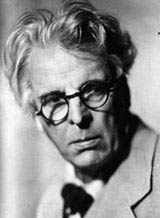
William Butler Yeats was born yesterday, in 1865. Yeats is a great poet and all that, but I grew up pretty much "over" him because he was kind of omnipresent in our household. We were made to memorize his epitaph in order to receive 25 cents for our allowance. ("Cast a cold eye / On life on death / Horseman pass by"). We knew his "Host of the Air" by heart, because it was on the Clancy Brothers at Carnegie Hall album. He was everywhere. It's not that we had a reverence for him - just the opposite. I knew what he looked like, in the same way I knew what George Washington looked like, because he was on our currency. Yeats? Oh, HIM again? Cast a cold eye ... yeah, I know, I know.
Yeats makes me think of my father. My first published piece in The Sewanee Review was about the Yeats-dad continuum.
From memory now!
THE HOST OF THE AIR
O'Driscoll drove with a song
The wild duck and the drake
From the tall and the tufted reeds
Of the drear Heart Lake.
And he saw how the reeds grew dark
At the coming of night-tide,
And dreamed of the long dim hair
Of Bridget his bride.
He heard while he sang and dreamed
A piper piping away,
And never was piping so sad,
And never was piping so gay.
And he saw young men and young girls
Who danced on a level place,
And Bridget his bride among them,
With a sad and a gay face.
The dancers crowded about him
And many a sweet thing said,
And a young man brought him red wine
And a young girl white bread.
But Bridget drew him by the sleeve
Away from the merry bands,
To old men playing at cards
With a twinkling of ancient hands.
The bread and the wine had a doom,
For these were the host of the air;
He sat and played in a dream
Of her long dim hair.
He played with the merry old men
And thought not of evil chance,
Until one bore Bridget his bride
Away from the merry dance.
He bore her away in his arms,
The handsomest young man there,
And his neck and his breast and his arms
Were drowned in her long dim hair.
O'Driscoll scattered the cards
And out of his dream awoke:
Old men and young men and young girls
Were gone like a drifting smoke;
But he heard high up in the air
A piper piping away,
And never was piping so sad,
And never was piping so gay.
To those of you who know that Clancy Brothers album - you'll know the special-ness of that recording.
When we visited his grave in Ireland, as kids, we all felt kind of amazed that ... it was REAL. That the epitaph we had been rattling off since we were toddlers actually existed out in the world, and had some meaning beyond the 25 cents in our pockets.
A couple years ago, I read his complete works in chronological order. It was a fascinating experience - I know many of his big poems almost by heart, the famous ones - but it's nothing compared to reading his work - from beginning to end. You watch an artist burst forth at a certain point - almost fully formed. You've read his younger work, you've seen its beauty (but also its sentimentality - its Celtic twilight "twee" lament ... it's actually quite awful in a way... and so nothing - NOTHING - can prepare you for the poet who would eventually write "Sailing to Byzantium" and "Among Schoolchildren" Where the hell did THAT come from?)
Yeats, as a poet, has always been one of my favorites (even with the "cloud-pale eyelids" balderdash of his early stuff), but what really inspires me is his work in Irish theatre, and the creation of the Abbey. An amazing story. His Nobel lecture was on the Irish Dramatic Movement. I wrote a big long post about his nurturing of John Synge, author of The Playboy of the Western World
Gabriel Fallon, an actor at the Abbey, describes the dress rehearsal of Sean O'Casey's Juno and the Paycock
in his book Sean Ocasey the Man I Knew
We could make nothing of the reading of Juno and the Paycock as it was called. It seemed to be a strange baffling mixture of comedy and tragedy; and none of us could say, with any certainty, whether or not it would stand up on the stage.The dress rehearsal would be held at 5 p.m. on March 2, Sunday. I arrived at the theatre at 4:30 p.m., and found the author there before me looking rather glum and wondering if a rehearsal would take place ... Gradually the players filed in and went to their dressing-rooms. Lennox Robinson arrived shortly before 5 o'clock and was followed by Yeats and Lady Gregory. The curtain rose about 5:36 p.m. so far as I could see and hear while waiting for my cue in the wings the rehearsal seemed to be proceeding smoothly. As soon as I had finished my part of Bentham at the end of the second act I went down into the stalls and sat two seats behind the author. Here for the first time I had an opportunity of seeing something of the play from an objective point of view. I was stunned by the tragic quality of the third act which the magnificent playing of Sara Allgood made almost unbearable. But it was the blistering irony of the final scene which convinced me that this man sitting two seats in front of me was a dramatist of genius, one destined to be spoken of far beyond the confines of the Abbey Theatre ...
We watched the act move on, the furniture removers come and go, the ominous entry of the IRA men, the dragging of Johnny to summary execution, the stilted scene between Jerry Devine and Mary Boyle, and then as with the ensnaring slow impetus of a ninth great wave Allgood's tragic genius rose to an unforgettable climax and drowned the stage in sorrow. How surely was the very butt and sea-mark of tragedy! But suddenly the curtain rises again: are Fitzgerald and McCormick fooling, letting off steam after the strain of rehearsal? Nothing of the kind; for we in the stalls are suddenly made to freeze in our seats as a note beyond tragedy, a blistering flannel-mouthed irony sears its maudlin way across the stage and slowly drops an exhausted curtain on a world disintegrating in 'chassis'.
I sat there stunned. So, indeed, as far as I could see, did Robinson, Yeats, and Lady Gregory. Then Yeats ventured an opinion. He said that the play, particularly in the final scene, reminded him of a Dostoevsky novel. Lady Gregory turned to him and said, "You know, Willie, you never read a novel by Dostoevsky." And she promised to amend this deficiency by sending him a copy of The Idiot. I turned to O'Casey and found I could only say to him, "Magnificent, Sean, magnificent."
"The Second Coming" is quoted (and mis-appropriated, more often than not) and quoted again ... by people who want to use it for their own ends. It's a dark ominous crystal ball. The best "use" of it, to my mind, is in the deleted scene in Nixon, with Sam Waterston playing Dick Helms, director of the CIA. Written in 1919 - when the world had already become familiar with horror - a horror of a kind never before seen on earth - the poem predicts the chaos of the 20th century. Try to disentangle it from all of the movies (and Sopranos episodes) that has used it ... and just read it, clear and simple, as a poem. On its own. It's one of the greatest poems of the 20th century.
"The Second Coming"
Turning and turning in the widening gyre
The falcon cannot hear the falconer;
Things fall apart; the centre cannot hold;
Mere anarchy is loosed upon the world,
The blood-dimmed tide is loosed, and everywhere
The ceremony of innocence is drowned;
The best lack all conviction, while the worst
Are full of passionate intensity.
Surely some revelation is at hand;
Surely the Second Coming is at hand.
The Second Coming! Hardly are those words out
When a vast image out of Spiritus Mundi
Troubles my sight: somewhere in sands of the desert
A shape with lion body and the head of a man,
A gaze blank and pitiless as the sun,
Is moving its slow thighs, while all about it
Reel shadows of the indignant desert birds.
The darkness drops again; but now I know
That twenty centuries of stony sleep
Were vexed to nightmare by a rocking cradle,
And what rough beast, its hour come round at last,
Slouches towards Bethlehem to be born?
Seamus Heaney wrote a marvelous essay on Yeats a while back (the link no longer works, but I have the hard copy) - in which he wrote:
Conquest, difficulty, labour: these terms indicate the nature of Yeats's creative disposition. From the start, he was enamoured of Blake's conviction that energy is eternal delight, yet the development of his own thought brought him more and more to the conclusion that conflict was the inescapable condition of being human. So, as his art matured and the articulation of his beliefs became more clarified and forceful, Yeats's poems typically conveyed a sensation of certitude achieved by great effort and of contradictions quelled. Poems in which the defiant self is pitted against hostile or disabling conditions - "An Irish Airman Foresees his Death", "September 1913", "Meditations in Time of Civil War"- are complemented by poems that read like discharges of pure, self-possessed energy, poems from which the accidental circumstances have been excluded so that all that remains is the melody and stamina of resurgent spirit - "The Cold Heaven", "Byzantium", "Long-legged Fly".

Of course, there is also the Maud Gonne factor that must be considered. Here's a post I wrote about her. What do you wanta bet that Maud Gonne had "cloud-pale eyelids"? Anne wrote a wonderful post about Maud Gonne MacBride. Fascinating woman. Poor Yeats. But at least she was his muse, and he got 100s of poems out of his unrequited love for her.
Never give all the heart
Never give all the heart, for love
Will hardly seem worth thinking of
To passionate women if it seem
Certain, and they never dream
That it fades out from kiss to kiss;
For everything that's lovely is
But a brief, dreamy. Kind delight.
O never give the heart outright,
For they, for all smooth lips can say,
Have given their hearts up to the play.
And who could play it well enough
If deaf and dumb and blind with love?
He that made this knows all the cost,
For he gave all his heart and lost.
Heaney writes, in that same essay:
And all the while, of course, there was Maud Gonne, "high and solitary and most stern" according to one of the poems about her, "foremost among those I would hear praised" according to another, and "the troubling of my life" according to a famous sentence in his Autobiographies. The passion she inspired - and as readers we experience it more as creative power than erotic need - made her a figure of primary poetic radiance, a Dublin Beatrice, an archetype as much as a daily presence. Nevertheless, Yeats's poetry, his politics and his involvement with the occult received an extra charge of intensity from her day to day reality in his life, and when she appeared in the title role of his subversive play Cathleen Ni Houlihan (1902), another kind of maturity was achieved.
Yeats is one of those poets who was not a solitary creature, writing in isolation. He wanted to start a "movement", and he did. He helped a young James Joyce in the beginning of HIS career. He advised Synge. He headed up the Abbey Theatre. He really looked at his own country - an insular priest-ridden culture at that time - and sensed a need, tried to create something different. It's hard to look with clear eyes on your own home, your own nation. Joyce did it, but that's only because he LEFT. Yeats, at first, went back into the Irish past in his work - and some of his early stuff is so quaint that it might as well be cross-stitched and hanging on the door of some Kountry Kraft Shoppe. I suppose it was his way of re-claiming the Irish past, its true inheritance. It was a phase, his beginning phase as a writer - how he found his "voice". And he was concerned about the rest of his countrymen, calling out to them:
"Irish poets, learn your trade, sing whatever is well made, scorn the sort now growing up all out of shape from toe to top."
Yeats was Anglo-Irish, but his feelings were that Irish-ness was a cultural thing, not a religious thing (forgive me for boiling it down so awkwardly) - and that the Irish could be united, regardless of religion - through writing, myths, poetry. He was a true nationalist.
I also love love LOVE his poem to fellow Irishman Jonathan Swift where he writes: "Imitate him if you dare."
Swift's Epitaph
Swift has sailed into his rest;
Savage indignation there
Cannot lacerate his breast.
Imitate him if you dare,
World-besotted traveller; he
Served human liberty.
WH Auden wrote, in his unbelievable poem to Yeats:
In the deserts of the heart
Let the healing fountain start,
In the prison of his days
Teach the free man how to praise.
And lastly, a poem that has great personal meaning for me:
The wild swans at Coole
The trees are in their autumn beauty,
The woodland paths are dry,
Under the October twilight the water
Mirrors a still sky;
Upon the brimming water among the stones
Are nine-and-fifty Swans.
The nineteenth autumn has come upon me
Since I first made my count;
I saw, before I had well finished,
All suddenly mount
And scatter wheeling in great broken rings
Upon their clamorous wings.
I have looked upon those brilliant creatures,
And now my heart is sore.
All's changed since I, hearing at twilight,
The first time on this shore,
The bell-beat of their wings above my head,
Trod with a lighter tread.
Unwearied still, lover by lover,
They paddle in the cold
Companionable streams or climb the air;
Their hearts have not grown old;
Passion or conquest, wander where they will,
Attend upon them still.
But now they drift on the still water,
Mysterious, beautiful;
Among what rushes will they build,
By what lake's edge or pool
Delight men's eyes when I awake some day
To find they have flown away?
SOME QUOTES
"My poetry is generally written out of despair. Like Balzac, I see increasing commonness everywhere, and like Balzac I know no one who shares the premises from which I work." -- Yeats
"On the third night Yeats addressed the audience before the curtain rose. If anyone had anything to say against the piece they would be welcomed at a debate which he would be glad to arrange in the theatre at some other time. He was interrupted several times. He asked the interrupters to at least listen to the play so that they would know what it was they were objecting to." -- Maire Nic Shiubhlaigh's description of Yeats trying to handle the riots that were happening in response to Synge's "Playboy of the Western World" - a play being put on at the Abbey Theatre
"In 1875 Yeats entered the Godolphin School in Hammersmith and visited Ireland during the longer school vacations, when he stayed with the Pollexfens in County Sligo. An early poetic impulse was to change the name of his toy yacht from Sunbeam to Moonbeam. It was a decisive act." -- Michael Schmidt, "Lives of the Poets"
"I thought we might bring the halves together if we had a national literature that made Ireland beautiful in the memory, and yet had been freed of provincialism by an exacting criticism, a European pose." -- Yeats
"This is not the huge competence of Auden, at play in the toy shop of poetic form, but mastery, the possession of a unique rhetoric for use on a real but limited range of themes. It is a mastery so complete that it can occlude the genuinely problematic, ride over the potholes of nonsense without even sensing them. Late in life he recognizes the evasiveness of his symbols, the tendency of his verse to turn away or inward, and in the concentrated intensity of the late poems he tries to remedy this. But he has an imperfect sense of generality; he is willing to plump out a truism as truth. As his mastery increases, his art becomes less truthful. But his main concern is not - until the later poems, and even there in an attenuated spirit - truth, but the house of myth and legend, where he can become a principal tenant, where it is his voice we hear casting the spell, and where real men are reduced - or, in his mind, enlarged - to masks, figures and types useful to myth, regardless of the human reality they had." -- Michael Schmidt, "Lives of the Poets
"All literature created out of a conscious political aim in the long run crates weakness by creating a habit of unthinking obedience. Literature created for its own sake, for some eternal spiritual need, can be used for politics. Dante is said to have unified Italy. The more unconscious the creation, the more powerful." -- Yeats
"Sex and death are the only things that can interest a serious mind." -- Yeats
"His mastery seems almost excessive." -- Richard Ellmann
"... a strained and unworkable allegory about a young man and a sphinx on a rock in the sea (how did they get there? what did they eat? and so on; people think such criticisms very prosaic, but common-sense is never out of place anywhere ...) but still containing fine lines and vivid imagery." - Gerard Manley Hopkins, after reading some of Yeats' first published verses
"Yeats's 'The Second Coming' has gained in prophetic power with each decade of the twentieth and now twenty-first century, from the rise of fascism and nuclear warfare to the proliferation of international terrorism. It expresses the melancholy realizatino that man, yearningly drawn to the divine, will never fully escape his bestial ancestry. The poem is modernistically unrhymed, though the first stanza plays with shadowy off-rhymes: 'gyre' / 'falconer' / 'everywhere'; 'hold' / 'world' / 'drowned'. It is structured instead by dramatic visuals and emblematic choreography. There are two main movements: a huge, expanding circle (the ascending falcon) and an arrowlike, linear track (the beast bound for Bethlehem). Then two smaller ones: a pendulum arc (the rocking cradle) and an exploding pinwheel (the reeling desert birds). Ideas have become design, starkly juxtaposed with the murky turbulence of elemental forces - storm, flood, drought. Hence the poem, with its horror movie finale, is as hybrid as the sphinx, who represents our buried impulses, vestiges of a past that keeps turning into the future." -- Camille Paglia, "Break, Blow, Burn: Camille Paglia Reads Forty-three of the World's Best Poems
"The heavy voluptuous splendour of much of his work has yet a ghostliness as of the palace made magically of leaves. Even his heroes and beautiful women are aware of this ... He never leaves us, any more than Crashaw, content with the glory alone. It calls our attention to a spirit behind and beyond, heaping high lovely, invisible things that it may show the greater beauty that can survive their crumbling into dust." -- Edward Thomas, 1909
"The worst thing about some men is that when they are not drunk they are sober." -- Yeats
"In London he was active in literature and politics. One particular event in 1889 proved crucial: he met and fell in love with the fiery Republican who haunted him for the rest of his days, Maud Gonne. His biography, from 1889 until Maud Gonne's marriage, is punctuated by the statement, 'Yeats proposed to Maud Gonne.'" -- Michael Schmidt, "Lives of the Poets
"Words are always getting conventionalized to some secondary meaning. It is one of the works of poetry to take the truants in custody and bring them back to their right senses." -- Yeats
" 'The best lack all conviction, while the worst / Are full of passionate intensity': these famous lines are Yeats's anguished formulation of what seems to be an eternal principle of politics (7-8). When 'the center cannot hold,' neither consensus nor compromise is possible. Public debate shifts to the extremes or is overtaken by violence, which blocks incremental movement toward reciprocity and conciliation. Moderate views are 'drowned' out (as by the bloody tide) in strident partisanship or fanaticism. The phrase 'passionate intensity' suggests that, for the late Romantic Yeats, eros diverted from the personal to the political turns into a distorted lust for power. The second stanza opens in doubt and confusion: 'Surely some revelation is at hand; / Surely the Second Coming is at hand. / The Second Coming!'' (9-11). We are hearing either one voice echoing its own shocked phrases or many voices in public tumult. The book of Revelation lists the dreadful omens heralding doomsday, when Jesus will return and unlock the secrets of history. But in Yeats's poem, Christ's promised glory is overshadowed by a monstrous apparition from antiquity. The poet is seized by an electrifying vision: 'a vast image out of Spiritus Mundi / Troubles my sight'. It's a collective memory, crystallizing from the repository of world myths (12-13). ("Spiritus Mundi" is Yeats's mystical term for "soul of the universe".) We witness the resurrection of the pagan era, whose barbarism mirrors that of the war-torn twentieth century. Yeats sees no evidence of moral evolution over two millennia of Christianity." -- Camille Paglia, "Break, Blow, Burn: Camille Paglia Reads Forty-three of the World's Best Poems
"I once got Yeats down to bed-rock on these subjects and we talked for hours. He had been talking rather wildly about the after life. Finally I asked him: 'What do you believe happens to us immediately after death?' He replied, 'After a person dies, he does not realize that he is dead.' I: 'In what state is he?' W.B.Y.: 'In some half-conscious state.' I said: 'Like the period between waking and sleeping?' W.B.Y.: 'Yes.' I: 'How long does this state last?' W.B.Y.: 'Perhaps some twenty years.' 'And after that,' I asked, 'what happens next?' He replied, 'Again a period which is Purgaotry. The length of that period depends upon the sins of the man when he was upon this earth.' And then again I asked: 'And after that?' I do not remember his actual words, but he spoke of the return of the soul to God. I said, 'Well, it seems to me that you are hurrying us back into the great arms of the Roman Catholic Church.' He was of course an Irish Protestant. I was bold to ask him, but his only retort was his splendid laugh." -- Lady Dorothy Wellesley
"It is an entirely new thing -- neither what they eye sees nor the ear hears, but what the rambling mind thinks and imagines from moment to moment. He has certainly surpassed in intensity any novelist of our time." -- Yeats on James Joyce's "Ulysses
"For Yeats, there was something both enviable and exemplary about the enlargement of vision and the consequent histrionic equanimity which Shakespeare's heroes and heroines attain at the moment of their death, 'carried beyond feeling into the aboriginal ice.' He wanted people in real life to emulate or at least to internalize the fortitude and defiance thus manifested in tragic art." -- Seamus Heaney, 1990
"Give up Paris, you will never create anything by reading Racine, and Arthur Symons will always be a better critic of French literature. Go to the Arran Islands. Live there as if you were one of the people themselves; express a life that has never found expression." -- Yeats's advice to John Synge
Cast a cold eye
On life on death
Horseman pass by
-- Yeats's epitaph
Imitate him if you dare.

June 1, 2009
Happy birthday Marilyn Monroe!
On June 1, 1926 Norma Jean Mortensen was born.
Objectified while alive, Marilyn Monroe has become the ultimate object in death. The image has become the reality ... the multitudinous icons and posters, her face and body standing in for the whole thing, standing in for the life force.
Her desire to be a good actress, to not just play bimbos or sex objects, is what still complicates our response to her, long after her death. Many people who are unaware of her gifts as an actress are frankly shocked by how natural she is, when they encounter her in films. It's like the Object has won the war, but Marilyn Monroe the person, the actress, continues to win battles. To see her in Some Like It Hot is to encounter true giggly effervescent movie MAGIC, and then to see her in Don't Bother to Knock(my review here) is to understand that this woman had talent as a dramatic actress as well. Not just talent, but a gift. I don't quite buy into the whole Marilyn Monroe as Ultimate Victim thing, although I do know that her demons were huge and loud, and caused her much grief in her life. She was a chronic insomniac. She was a loner. If you trust the reports of some of her confidantes and the private notes of her psychiatrist, she was frigid sexually. But nobody wanted to hear about any of that stuff from Marilyn ... that was not what we loved her for. She was famous and adored, but ultimately alone. She could not be saved. Arthur Miller tried. Many tried. She brought out a protective impulse in people. And, in my opinion, that is part of her movie magic. She was not a sassy sex symbol who "owned" her sexuality, and flaunted it (at least not overtly). There was always the wide-eyed innocence there, in spite of the body made for lovin' - and that somehow engendered a protective response in audiences ... male AND female - so she was one of those very rare movie creatures: a sex symbol whom men loved and desired, but also whom women respected and looked up to ... and I think it had something to do with that fragmented innocence peering out of her radiant face. She seemed unaware of the responses she brought up in men, and she never seemed out for sex - the Marilyn Monroe persona was all about finding love. Her gifts as an actress and comedienne are obvious - but her appeal is still rather complicated, which, I suppose, is why people still obsess over her, and talk about her, and pick her apart.
So while I can ache for Marilyn Monroe and what it had to be like, at times, to be her, with an abyss of sadness inside her that nobody - nobody - wanted to see ... what I am ultimately left with, in her case, is admiration for the act of WILL it took for her to put that persona together on a daily basis, and BE that fantasy. It had to have given her great joy. There's that great quote (included below) where someone asked her what it was like for her doing a photo shoot - and she said, "It's like being screwed by a thousand guys and you can't get pregnant."
Marilyn Monroe was 100% aware of what she was doing when she was in front of the camera. That, I believe, is the greatest misperception about her - and also the problem when you become an Object - especially posthumously. Everything hardens, solidifies, and certain aspects of the narrative win out over others. The narrative that "won" was that she was a victim of circumstance and whim, totally used and abused and objectified, and she barely had any consciousness about what she was actually doing. That was the "story". So Marilyn the poor victimized starlet (or Marilyn the drugged-out diva) won the battle in the narrative wars for a couple of decades. That was the filter through which most people (people who are not cinephiles anyway) saw Monroe.
Thankfully, there's a bit more nuance out there now, in regards to how we talk about Monroe - and regular old popcorn-buying audiences, anyway, always knew the truth: Marilyn Monroe was magic, they loved her. They maybe felt protective of her, because of the wide-eyed innocence of her parts ... but there is obviously something about her that made her "stand out". When the nude calendar photos came out, and Marilyn Monroe was forced to apologize by the studio, her apology wasn't really an apology. Just a flat out, "I was behind in my rent, I needed the money." The studio was furious about this - but then they were bombarded by supportive fan mail, thousands and thousands of letters - from men, women, everyone, saying how much they loved her for her honesty.
Not every young starlet has that kind of massive spontaneous cross-gendered support. It is extraordinary and rare, to this day.
Marilyn Monroe did not have an accidental kind of career, where her beauty and maybe a couple of breaks made her. She was a starlet, like any other. Except that this starlet had ambition, and not just that: she had nowhere else to go, no other goals, no other dreams. There was no family, no one to either put the pressure on, to judge her harshly, or, conversely, to cheer her on. There was never any place for Marilyn to go home to. The ultimate orphan. No plan B. Having to survive by her wits. Befriending powerful men who could help her, protect her. She thanked God for her beauty, even if it didn't make any difference to her, in terms of battling with her demons and all that. But her beauty was eye-catching, even in her early brunette days, and she submitted to the humiliations of the starlet-life, always keeping her eye on the ball, so that when the time came, and an actual part came her way, she'd be ready.
I love her performance in All About Eve. She was cast to be the impossibly gorgeous young actress, and all she needed to do was stand next to Bette Davis, and you got the message. I mean, you might as well throw in the towel if you're a 40-something actress and THAT chick in the white dress is coming down the pike. But Marilyn has a couple of lines in the film, comedic lines, showing her gift at comedy - her absolutely perfect pitch (Watch how she delivers the line: "Well, I can't yell 'Oh butler!', can I? Maybe somebody's name is Butler." To which Addison DeWitt replies; "You have a point. An idiotic one, but a point." But it's HER delivery of that line that is funny. Here's the clip.) and again, I am struck by the act of WILL it had to have taken, to just keep going, through the sneers and catcalls, to make something of herself.
She also was smart, and worked on her acting - with a series of coaches through her life ... wanting to go deeper into her craft, and improve herself. Watch her slam-dunk performance in Don't Bother to Knock to encounter a Marilyn Monroe you might never have seen before. She's fantastic.
One of my favorite off-screen stories involving Monroe is told by Billy Wilder, who, famously, had a very tempestuous relationship with her, because of her behavior on the set. Not coming out of her dressing room, showing up hours late, and bumbling her lines so badly that entire days of shooting were spent on Monroe trying to get the line, "Where's the bourbon?" right. But, as Billy Wilder joked: "As I've said before, I've got an old aunt in Vienna who would say every line perfectly. But who would see such a picture." Anyway, here's a bit from the book-length interview between Cameron Crowe and Billy Wilder
CC: One of the reasons you've said that Marilyn enjoyed the Hotel del Coronado sequences in Some Like It Hot is that she had an audience there on the beach watching her. Is that true? Were there, again, a lot of people lined up, watching the filming?BW: She had an audience. She always had thousands in New York, but at the beach there, hundreds. Yeah, she's a show-off.
CC: So they would be cheering and screaming and yelling?
BW: Screaming and yelling. But then when I wanted it quiet I had her say "Shhhh." They listened to her.
That's a movie star.
Kim Morgan has a great piece up about Monroe and I loved her comments on Monroe as a singer:
And though people love to discuss Marilyn Monroe the underrated actress (which is true -- she was a great comedienne), rarely do they argue about MM the underrated singer. As proven in Some Like it Hot, Gentlemen Prefer Blondes, River of No Return, Bus Stop (oh lord...her sexy, warbled, scared, ripped fishnet version of "That Old Black Magic"...so brilliant) and the less classic Let's Make Love (where her rendition of "My Heart Belongs to Daddy" is one of the best versions of that song ever recorded), the woman had distinct pipes.
My favorite musical number of hers is one that isn't often mentioned in the list of great Monroe songs, but I adore it. It's "File My Claim" from River of No Return - delicious clip below (along with a million quotes about Monroe and from Monroe).
Perfection!
Now, in honor of our lovely Norma Jean, let's get to the quotes:

(That's a photo by Sam Shaw - his photos of her are my favorites. Natural light, an innocence to them ... candid-feeling ... just beautiful.)
Marilyn Monroe:
People had a habit of looking at me as if I were some kind of mirror instead of a person. They didn't see me, they saw their own lewd thoughts, then they white-masked themselves by calling me the lewd one.
That's Monroe and photographer Eve Arnold
Billy Wilder:
She had a kind of elegant vulgarity about her. That, I think, was very important. And she automatically knew where the joke was. She did not discuss it. She came up for the first rehearsal, and she was absolutely perfect, when she remembered the line. She could do a 3-page dialogue scene perfectly, and then get stuck on a line like, "It's me, Sugar"... But if she showed up, she delivered, and if it took 80 takes, I lived with 80 takes, because the 81st was very good ...She had a feeling for and a fear of the camera. Fright. She was afraid of the camera, and that's why, I think, she muffed some lines. God knows how often. She also loved the camera. Whatever she did, wherever she stood, there was always that thing that comes through. She was not even aware of it.
Eve Arnold:
If an editor wanted her, he had to agree to her terms. She knew how she wanted to be seen, and if her cooperation was sought, she reserved the right of veto.She knew she was superlative at creating still pictures and she loved doing it.
She had learned the trick of moving infinitesimally to stay in range, so that the photographer need not refocus but could easily follow movements that were endlessly changing.
At first I thought it was surface technique, but it went beyond technique. It didn't always work, and sometimes she would tire and it was as though her radar had failed; but when it did work, it was magic. With her it was never a formula; it was her will, her improvisation.
Peter Bogdonavich:
The fact is that Marilyn was in bad trouble from the day she was born as Norma Jean Mortenson on June 1, 1926, in the city of angels and movies, a poor bastard angel child who rose to be queen of a town and a way of life that nevertheless held her in contempt. That she died a martyr to pictures at the same time as the original studio star system -- through which she had risen -- finally collapsed and went also to its death seems too obviously symbolic not to note. Indeed, the coincidence of the two passing together is why I chose to end this long book about movie stars with Marilyn Monroe.What I saw so briefly in my glimpse of Marilyn at the very peak of her stardom (and the start of my career) -- that fervent, still remarkably naive look of all-consuming passion for learning about her craft and art -- haunts me still. She is the most touching, strangely innocent -- despite all the emphasis on sex -- sacrifice to the twentieth-century art of cinematic mythology, with real people as gods and goddesses. While Lillian Gish had been film's first hearth goddess, Marilyn was the last love goddess of the screen, the final Venus or Aphrodite. The minute she was gone, we started to miss her and that sense of loss has grown, never to be replaced. In death, of course, she triumphed at last, her spirit being imperishable, and keenly to be felt in the images she left behind to mark her brief visit among us.

Elia Kazan:
Relieve your mind now of the images you have of this person. When I met her, she was a simple, eager young woman who rode a bike to the classes she was taking, a decent-hearted kid whom Hollywood brought down, legs parted. She had a thin skin and a soul that hungered for acceptance by people she might look up to ...The girl had little education and no knowledge except the knowledge of her own experience; of that she had a great deal, and for an actor, that is the important kind of knowledge. For her, I found, everything was either completely meaningless or completely personal. She had no interest in abstract, formal, or impersonal concepts but was passionately devoted to her own life's experiences. What she needed above all was to have her sense of worth confirmed. Born out of wedlock, abandoned by her parents, kicked around, scorned by the men she'd been with until Johnny, she wanted more than anything else approval from men she could respect. Comparing her with many of the wives I got to know in that community, I thought her the honest one, them the "chumps". But there was a fatal contradiction in Marilyn. She deeply wanted reassurance of her worth, yet she respected the men who scorned her, because their estimate of her was her own.
Marilyn Monroe:
Being a most serious actress is not something God has removed from my destiny as He chooses to destroy my chances of being a mother. It’s therefore my perogative to make the dream of creative fulfillment come true for me. That is what I believe God is saying to me and is the answer to my prayers.

Marilyn Monroe:
Well-behaved women rarely make history.
John Strasberg (son of Lee Strasberg, Marilyn's acting teacher):
I think I was talking about cars to Mother and Father. You know how I loved cars. I'd just come home and it was going to be my eighteenth birthday. I'd wanted to come for that.Mother and Father hadn't wanted me to come. "Why don't you wait till the end of the year?" Well, i'd already been kicked out of college. They didn't know yet.
When I'd gone off at the airport, I'd turned to Mother and said, "For two cents, I won't go." Nobody gave me the two cents, but I'd meant it. What I'd wanted to do was work. I'd wanted to work from the time I was fifteen, and they were always against any effort on my part to be strong or independent. I remember how much I resented it. "You don't have to work, we'll take care of everything," undermining me.
So I was talking about cars, no one was listening, and Marilyn was there and out of the blue said, "Why don't you take my car, Johnny?"
I thought I hadn't heard her right, and I said, "What?" She had remembered the summer before, in California, I'd had that Chevy I'd rented. God, I loved that car, a '57 Bel Air silver Chevy, and she had the Thunderbird.
She continued, "I've got the Ford Mustang the corporation gave me, and Arthur and I have a car. That one's just sitting in the garage, we don't use it."
I was stunned. I couldn't believe she meant it.
Mother and Father were horrified; they didn't like it at all. I don't know if it felt like too much to give me or if they were worried about my driving in my state of mind, but they objected strenuously. "He's too young. Maybe later, Marilyn. You don't have to. It's impossible, he can't afford it, it could be dangerous."
Marilyn just said, "Well, don't worry about any of that, it's in the corporation's name, so I'll take care of the insurance."
I'll never forget that ... There were so few, so very few people who were generous like that. Especially to me, who couldn't do anything for her.
I think that car saved my life.
Billy Wilder:
I never knew what Marilyn was going to do, how she was going to play a scene. I had to talk her out of it, or I had to underline it and say, "That's very good" or "Do it this way." But I never knew anybody who ... except for a dress that blows up and she's standing there ... I don't know why she became so popular. I never knew. She was really kind of ... She was a star. Every time you saw her, she was something. Even when she was angry, it was just a remarkable person. A remarkable person, and in spades when she was on the screen. She was much better on the screen than not on the screen.
Marilyn Monroe:
Some people have been unkind. If I say I want to grow as an actress, they look at my figure. If I say I want to develop, to learn my craft, they laugh. Somehow they don't expect me to be serious about my work.
Billy Wilder:
It's very difficult to talk seriously about Monroe, because she was so glitzy, you know. She escaped the seriousness somehow; she changed the subject. Except that she was very tough to work with. But what you had, by hook or crook, once you saw it on the screen, it was just amazing. Amazing, the radiation that came out. And she was, believe it or not, an excellent dialogue actress. She knew where the laugh was. She knew.
Marilyn Monroe:
"For breakfast, I have two raw beaten eggs in a glass of hot milk. I never eat dessert. My nail polish is transparent. I never wear stockings or underclothes because I think it is important to breathe freely. I wash my hair everyday and I am always brushing it. Every morning I walk across my apartment rolling an empty soda bottle between my ankles, in order to preserve my balance."
Eve Arnold:
I never knew anyone who even came close to Marilyn in natural ability to use both photographer and still camera. She was special in this, and for me there has been no one like her before or after. She has remained the measuring rod by which I have -- unconsciously -- judged other subjects.

Marilyn Monroe:
It's not true that I had nothing on. I had the radio on.

Ernest Cunningham (photographer):
I worked with Marilyn Monroe. A rather dull person. But when I said "Now!" she lit up. Suddenly, something unbelievable came across. The minute she heard the click of the camera, she was down again. It was over. I said, "What is it between you and the camera that doesn't show at any other time?" She said, "It's like being screwed by a thousand guys and you can't get pregnant."
Peter Bogdonavich:
More than forty years have passed since Marilyn's mysterious death, but her legend and persona have survived. This is all the more remarkable because she actually made very few films, and even fewer that were any good. But there was a reality to her artifice -- she believed in the characters she played, even if they were inherently unbelievable. "Everything she did," [Arthur] Miller said to me, "she played realistically. I don't think she knew any other way to play anything -- only to tell you the truth. She was always psychologically committed to that person as a person, no matter what the hell it was, rather than a stock figure. Because the parts she got could easily have been stock figures, which had no other dimension. But she wouldn't have known how to do that. In other words, she did not have the usual technique for doing something as a stock figure ... She was even that way when [director] John Huston used her the first time [in a memorable walk-on bit] in The Asphalt Jungle [1950]."This went for every picture she did in her surprisingly, painfully short career as a star, barely a decade, little more than a dozen pictures. Though she managed to work with quite a number of major directors, it was not necessarily always in their best efforts; but still they were Fritz Lang, Howard Hawks (twice), Otto Preminger, Billy Wilder (twice), George Cukor (twice, if you count her last unfinished one), John Huston (twice), Laurence Olivier, Joshua Logan, and Joseph L. Mankiewicz (bit part in 1950's classic All About Eve). In my conversation with Miller, he said, "I thought she had the potential for being a great performer if she were given the right stuff to do. And if you look at the stuff she did do, it's amazing that she created any impression at all because most of it was very primitive. And the fact that people remember these parts from these films is amazing ... She was comitted to these parts as though they were real people, not cardboard cutouts. Even though the director and author and the rest might have thought they were cutouts and would deal with them that way. The way the two men [Tony Curtis, Jack Lemmon] in Some Like It Hot felt with their parts, or George Raft with his part. She was real. And therefore she had the potential of being a great comedienne." (Norman Mailer, in his book on Monroe -- he never met her -- wrote that starting with 1953's Gentlemen Prefer Blondes, she was a great comedienne.)

Marilyn Monroe:
I'd prefer not to analyze it [acting] ... it's subjective; rather, I want to remain subjective while I'm doing it. Rather than do much talking I'd rather act. When it's on the screen, that's when you'll know who Roslyn [her character in The Misfits] is. I don't want to water down my own feeling ... Goethe says a career is developed in public but talent is developed in private, or silence. It's true for the actor. To really say what's in my heart, I'd rather show than to say. Even though I want people to understand, I'd much rather they understand on the screen. If I don't do that, I'm on the wrong track, or in the wrong profession.... Nobody would have heard of me if it hadn't been for John Huston. When we started Asphalt Jungle, my first picture, I was very nervous, but John said, 'Look at Calhern [the late Louis Calhern, a veteran actor], see how he's shaking. If you're not nervous, you might as well give up.' John has meant a great deal in my life. It's sort of a coincidence to be with him ten years later.
John Strasberg:
The first time I met her I remember she came out of the living room and Pop said, "This is my son," and my first impression of her was that she was different from most of the people who came to the house. I'd watch all these people trading their most human qualities, betraying themselves for success at all costs, to become rich and famous, and afterward, when it was too late, they'd realize they had lost the best part of themselves along the way, but she, she was like me. When I looked into her eyes, it was like looking into my own, they were like a child's eyes. I was still a child. You know how children just look at you. My feeling was she had less ego or was less narcissistic than most of the actors who never really bothered with me. She was just another person to me, another one from that world I felt cut off, excluded, from. She was nicer, real simple, no makeup, and she really looked at me as if she saw me. It wasn't that I wanted people to look at me, but I knew the difference when she did. I knew everyone said she was the sexiest, most sensual woman in the world. Not to me. I thought there was something wrong with me for not feeling that from her. I'd felt it from other women who came to the house. I was pretty sexually frustrated then. She was so open, so loose, and her sensuality as such was so totally innocent, nothing dirty in it at all, and the first time it was just like talking to an ordinary person, only realer than most who came into the house in those days. She was quiet, too, I remember, like an animal is quiet, and I was like that too, survival tactics. She seemed smart, but not in an educated way, instinctively smart, nobody's fool.
Couldn't resist:
Marilyn Monroe:
"I am a failure as a woman. My men expect so much of me because of the image they have made of me and that I have made of myself, as a sex symbol. Men expect so much and I can't live up to it. They expect bells to ring and whistles to whistle, but my anatomy's the same as any other woman's. I can't live up to it."
Marilyn Monroe:
My illusions didn't have anything to do with being a fine actress. I knew how third rate I was. I could actually feel my lack of talent, as if it were cheap clothes I was wearing inside. But, my God, how I wanted to learn, to change, to improve!
Arthur Miller:
She was a whirling light to me then, all paradox and enticing mystery, street-tough one moment, then lifted by a lyrical and poetic sensitivity that few retain past early adolescence. Sometimes she seemed to see all men as boys, children with immeidate needs that it was her place in nature to fulfill; meanwhile her adult self stood aside observingt he game. Men were their need, imperious and somehow sacred. She might tell about being held down at a party by two of the guests in a rape attempt from which she said she had escaped, but the truth of the account was far less important than its strange remoteness from her personally. And ultimately something nearly godlike would emerge from this depersonalization. She was at this point incapable of condemning or even of judging people who had damaged her, and to be with her was to be accepted, like moving out into a kind of sanctifying light from a life where suspicions was common sense. She had no common sense, but what she did have was something holier, a long-reaching vision of which she herself was only fitfully aware: humans were all need, all wound. What she wanted most was not to be judged but to win recognition from a sentimentally cruel profession, and from men blinded to her humanity by her perfect beauty. She was part queen, part waif, sometimes on her knees before her own body and sometimes despairing because of it -- "Oh, there's lots of beautiful girls," she would say to some expression of awed amazement, as though her beauty betrayed her quest for a more enduring acceptance.
Peter Bogdonavich:
The year before her much-speculated-over death at thirty-six (rumors of presidential involvement, etc.), playwright Clifford Odets told me that she used to come over to his house and talk, but that the only times she seemed to him really comfortable were when she was with his two young children and their large poodle. She relaxed with them, felt no threat. With everyone else, Odets said, she seemed nervous, intimidated, frightened. When I repeated to Miller this remark about her with children and animals, he said, "Well, they didn't sneer at her."
Burt Glinn (photographer):
She had no bone structure -- the face was a Polish flat plate. Not photogenic in the accepted sense, the features were not memorable or special; what she had was the ability to project.
Billy Wilder:
Marilyn was not interested in costumes. She was not a clotheshose. You could put anything on her you wanted. If it showed something, then she accepted it. As long as it showed a little something.
Henri Cartier Bresson (photographer):
She's American and it's very clear that she is - she's very good that way - one has to be very local to be universal.
Here's the mega-post I wrote about the making of The Misfits
Marilyn Monroe:
Hollywood is a place where they'll pay you a thousand dollars for a kiss and fifty cents for your soul.
Marilyn Monroe:
Being a sex symbol is a heavy load to carry, especially when one is tired, hurt and bewildered.
Marilyn Monroe:
Acting isn't something you do. Instead of doing it, it occurs. If you're going to start with logic, you might as well give up. You can have conscious preparation, but you have unconscious results.
Arthur Miller:
To have survived, she would have had to be either more cynical or even further from reality than she was. Instead, she was a poet on a street corner trying to recite to a crowd pulling at her clothes.

Marilyn Monroe:
I'm not interested in money. I just want to be wonderful.
Marilyn Monroe (this is what she pleaded at the end of the last interview she gave):
What I really want to say: That what the world really needs is a real feeling of kinship. Everybody: stars, laborers, Negroes, Jews, Arabs. We are all brothers.Please don't make me a joke. End the interview with what I believe.

May 23, 2009
Happy birthday to Margaret Wise Brown

Born in 1910, Margaret Wise Brown always wanted to be a writer - but her journey towards the phenomenal, almost unprecedented success she eventually achieved - was a bit sideways. (There was a very interesting biography of her that came out a couple of years ago. What a life!) She went into education, she was always interested in children's books, and was disheartened by what she saw out there in the published world for kids. She had other ideas. Maybe there doesn't need to be an overt Sunday School lesson in children's books. Maybe what a small child who is learning to read really wants is a quiet book of sweet observations that is somehow connected to what the child looks around and sees in his or her own life. After getting her degree in education, she worked as a teacher, and eventually became connected to Harper & Brothers, as an editor of children's books. From there, she started to write.
"Good night mush"??? I mean, come on. It's one of my favorite lines ever. "Good night mush."
Margaret Wise Brown died very young, at the age of 42.
I have written before about Good Night Moon, perhaps not an entire post - but it comes up from time to time in my posts about writing (examples here, here and here). Good Night Moon is that rarest of books: it is perfect.
When I am struggling with my own propensity to over-write, or over-explain, using too many damn words, I'll turn to Margaret Atwood at her best, for inspiration, guidance. Or Jeanette Winterson (at her best). Or John McGahern (who was always at his best). But I also turn to Margaret Wise Brown.
Goodnight light
And the red balloon
Goodnight bears
Goodnight chairs
Goodnight kittens
And goodnight mittens
Goodnight clocks
And goodnight socks
Goodnight little house
And goodnight mouse
That is basically just a LIST of objects. But a whole world comes into view - not just of the objects itself, but of the love infused in such objects (the book becomes like a child's prayer - "And God bless my mummy and daddy, and God bless Jasper the dog, and God bless my flowers and my fishbowl ..." Etc. A compulsive list, but so full of love your heart might burst.)
And I am not overstating the situation when I say that the final three lines give me goosebumps every time I read them.
Goodnight stars
Goodnight air
Goodnight noises everywhere
Happy birthday, Margaret Wise Brown.
Good Night Moon is one of the most successful children's books of all time.


April 23, 2009
Happy birthday to the Bard!
Today is (supposedly - at least it's the agreed-upon date) the birthday of William Shakespeare. April 23, 1564.

One of the things I think about when I think about Shakespeare, or one of the things that inevitably comes into my mind, is my late great teacher Doug Moston, who died in 2003 (check out the comments there, too - I don't know any of those people, but they all had worked with Doug at one time or another and found their way to my post. Beautiful). Moston (an awesome awesome teacher) was responsible for getting Shakespeare's first folio
Modern versions of Shakespeare, modern editors ironed out his punctuation, regularizing it, etc. But ... in a lot of cases, the modern editors are looking at these plays as academic texts, works of literature - as opposed to scripts meant for actors to play. If you have the plays in facsimile (ie: how they looked in the first folio) - you can see an even deeper level of Shakespeare's intent as a playwright. Modern editors sometimes have added exclamation points, which I find a bit insulting. An exclamation point is an editorial comment - it says: "Here's how to say this line". It's directorial, mkay? You are saying, with that punctuation: "The emotion behind the line should be THIS." Shakespeare used very little "emotional" punctuation marks in his work. Almost none. He used periods and commas, and that's pretty much it. I don't want some EDITOR to tell me how to play Lady Macbeth.
Let's do a little compare and contrast, shall we?
A couple years ago I wrote about working on a monologue during the time Michael was staying with me, and we talked about it, and it is now known between us as "twixt clock and cock" monologue from Cymbeline. I had the folio by me on the bed - and I wanted to compare it to the Riverside Shakespeare version - and check it out. Line by line. Fascinating. (And yes - "f" are "s"s in the folio. You get used to it after a while.) Here is how the two stack up, side by side. I'll comment after.
Riverside Shakespeare version:
False to his bed! What is it to be false?
To lie in watch there and to think on him?
To weep 'twixt clock and clock? if sleep charge nature,
To break it with a fearful dream of him
And cry myself awake? that's false to's bed, is it?
Folio version:
Falfe to his Bed? What is it to be falfe?
To lye in watch there, and to thinke on him?
To weepe 'twixt clock and clock? If fleep charge Nature,
To breake it with a fearfull dreame of him
And cry my felfe awake? That's falfe to's bed? Is it?
Let's look at the differences. The first "false to his bed" in the monologue is NOT an exclamation in the folio -although it appears in the Riverside as an exclamation. In the folio it is a QUESTION. Enormous difference, in terms of the playing of it! Also - in terms of the MEANING. What is Imogen DOING here? What is she actually saying?
My interpretation is: when it's a question, she - after reading his letter - is still trying to process what her husband just said to her. She is still in a state of shock, where she must just repeat what she just heard. "False to his bed?" She's stunned, disoriented. She can't believe this has happened. Whereas, with an exclamation mark, like in Riverside - she immediately jumps to the anger and the hurt. She is pissed, and defending herself. "False to his bed!" (Subtext: the NERVE of that guy!)
But no - the folio has it as a question. HUGE difference.
Also, the last line:
In the Riverside, it's all one sentence - with commas added.
"that's false to his bed, is it?"
It's all one thing, one thought. In the folio - it's more choppy. "That's false to his bed? Is it?" Her thought process is still erratic (Olivier was right: the thought is IN THE LINE.) ... so she's asking one question: "That's false to his bed?" Then she realizes she is not done, and questions again: "Is it?"
To me - the folio is MUCH more plain, in terms of emotion. You can feel Imogen's processing of the betrayal - in the punctuation. In the Riverside, it's ironed out a bit - modernized. And so the thought itself has been changed. Tsk tsk tsk.
That's false to his bed? Is it?
I prefer that one.
Let's move on.
In the same way that Shakespeare does not overdo it in terms of exclamation points and emotional punctuation, there are no stage-directions in his plays (as written) except for: Enter and Exeunt. (Of course there is a notable exception from Winters Tale, which my sister Siobhan has called "the funniest stage direction ever": Exeunt pursued by bear.) But for the most part, Shakespeare put all of the stage directions INTO the language. Fascinating. If someone needs a torch to see through the darkness, Shakespeare will have the character say something along the lines of, "I can't see. It's too dark. Hand me that torch." The action ("hand me"), the props ("torch"), the motivation ("I can't see"), everything, is all in the language. Modern playwrights would add a stage direction to fill in the blanks: Horatio picks up a torch and squints through the darkness. See the difference? Although it's funny, I knew a playwright once who took the cue from Shakespeare, merely because she had been burned so many times with productions of her plays not being true to her intent. She said, "I have learned that if you want a character to be drinking a cup of coffee during the scene, if you think it is crucial to your plot that your character be drinking coffee - as opposed to tea, or as opposed to not drinking anything at all - you have to have the character say, 'I am going to have a cup of coffee' or something thereabouts. It has to be in the language, not in the stage directions- because then they can't cut it."
Shakespeare's plays, back in the day, were not extensively rehearsed. There wasn't much planning out beforehand. There was a troupe of well-trained actors who could learn things quickly, and knew, basically, how to project their voices, how to fight with swords, and how to play make believe. And because paper was expensive and scarce, they wouldn't be given the whole script - they would only be given their part. Imagine!! So you have to fit it in to the whole, you have to know how to do that. That's where the word "role" comes from: each part was written out on a "roll" of paper, and so you would be handed your "roll" to learn. Moston, as an experiment in classes, would do the same thing ... he would have parts written out on "rolls" and you would have to get up with other actors ... and try to make the scene happen, the way they did back in the day. I mean, people make jokes about Shakespeare's "O! I am slain!"s at the end of sword fights, but if you think about it: that is a stage direction. That is telling the actor (who might not have the whole play at his disposal) Okay. Die now. Those actors at the Globe were pros, man, they knew how to do crap like that ... You see "O I am slain" and you know: Yup. Time to die. Shakespeare doesn't write as a stage direction: Elaborate sword fight. Macbeth eventually dies. Everything you need to know (as an audience member, and as an actor playing it) is in the language of the play. Marvelous.
I am so grateful that I studied under Doug Moston, that I worked on Shakespeare, using the folio as opposed to modern versions of the script.
In honor of the Bard, here is a huge post, made up mostly of excerpts from other people.
But first - let's look at what the facsimile looks like, what you will get if you look at the folio:

Awesome!!
I'll start with a wonderful excerpt from the book Will in the World: How Shakespeare Became Shakespeare
Here he discusses Midsummer Night's Dream. One of the cool things about Midsummer is that, of all of his plays, it is the one where scholars have been unable to find a souce for it. Shakespeare did not invent plots, he used stories that were already in existence. But scholars believe that Midsummer may very well be the only one of his plays directly from his imagination.
By 1595, Shakespeare clearly grasped that his career was built on a triumph of the professional London entertainment industry over traditional amateur performances. His great comedy [Midsummer] was a personal celebration of escape as well as of mastery. Escape from what? From tone-deaf plays, like Thomas Preston's A Lamentable Tragedy, Mixed Full of Pleasant Mirth, Containing the Life of Cambises, King of Persia, whose lame title Shakespeare parodied. From coarse language and jog trotting meter and rant pretending to be passion. From amateur actors too featherbrained to remember their lines, too awkward to perform gracefully, too shy to perform energetically, or, worst of all, too puffed up with vanity to perform anything but their own grotesque egotism. The troupe of artisans who perform "Pyramus and Thisbe" -- the weaver Nick Bottom, the bellows-mender Francis Flute, the tinker Tom Snout, the joiner Snug, the tailor Robin Starveling, and their director, the carpenter Peter Quince -- are collectively an anthology of theatrical catastrophes.The laughter in act 5 of A Midsummer Night's Dream -- and it is one of the most enduringly funny scenes Shakespeare ever wrote -- is built on a sense of superiority in intelligence, training, cultivation, and skill. The audience is invited to join the charmed circle of the upper-class mockers onstage. This mockery proclaimed the young playwright's definitive passage from naivete and homespun amateurism to sophisticated taste and professional skill. But the laughter that the scene solicits is curiously tender and even loving. What saves the scene of ridicule from becoming too painful, what keeps it delicious in fact, is the self-possession of the artisans. In the face of open derision, they are all unflappable. Shakespeare achieved a double effect. On the one hand, he mocked the amateurs, who fail to grasp the most basic theatrical conventions, by which they are to stay in their roles and pretend they cannot see or hear their audience. On the other hand, he conferred an odd, unexpected dignity upon Bottom and his fellows, a dignity that contrasts favorably with the sardonic rudeness of the aristocratic spectators.
Even as he called attention to the distance between himself and the rustic performers, then, Shakespeare doubled back and signaled a current of sympathy and solidarity. [Note from Sheila: It occurs to me that this is what Christopher Guest accomplished in Waiting for Guffman. Anyone who has been an actor has suffered through shows like that one. Most of us have done loads of community theatre. You can scoff at it, and scorn it ... and there's a lot to scorn. But Christopher Guest approaches it with affection. Which is why I think that movie is so wonderful. Yes, we laugh at those people, but we love them too. Okay, back to Will.] As when borrowing from the old morality plays and folk culture, he understood at once that he was doing something quite different and that he owed a debt. The professions he assigned the Athenian artisans were not chosen at random -- Shakespeare's London theatre company depended on joiners and weavers, carpenters and tailors -- and the tragedy they perform, of star-crossed lovers, fatal errors, and suicides, is one in which the playwirght himself was deeply interested. In the period he was writing the "Pyramus and Thisbe" parody, Shakespeare was also writing the strikingly similar Romeo and Juliet; they may well have been on his writing table at the same time. A more defensive artist would have scrubbed harder in an attempt to remove these marks of affinity, but Shakespeare's laughter was not a form of renunciation or concealment. "This is the silliest stuff that ever I heard," Hippolyta comments, to which Theseus replies, "The best in this kind are but shadows, and the worst are no worse if imagination amend them." "It must be your imagination, then, and not theirs," is her rejoinder (5.1.207-10) -- the spectators' imagination and not the players' -- but that is precisely the point: the difference between the professional actor and the amateur actor is not, finally, the crucial consideration. They both rely upon the imagination of the spectators. And, as if to clinch the argument, a moment later, at the preposterous suicide speech of Pyramus --
Approach, ye furies, fell.
O fates, come, come,
Cut thread and thrum,
Quail, crush, conclude and quell
(5.1.273-76)-- Hippolyta finds herself unaccountably moved: "Beshrew my heart, but I pity the man" (5.1.279).
When in A Midsummer Night's Dream the thirty-year-old Shakespeare, drawing deeply upon his own experiences, thought about his profession, he split the theatre between a magical, virtually nonhuman element, which he associated with the power of the imagination to lift itself away from the constraints of reality, and an all-too-human element, which he associated with the artisans' trades that actually made the material structures -- buildings, platforms, costumes, musical instruments, and the like -- structures that gave the imagination a local habitation and a name. He understood, and he wanted the audience to understand, that the theatre had to have both, both the visionary flight and the solid, ordinary earthiness.
That earthiness was a constituent part of his creative imagination. He never forgot the provincial, everday world from which he came or the ordinary face behind the mask of Arion.
I think that's kind of a beautiful analysis of that play.
Additionally, I'm going to post a couple of quotes from a book I positively adore: Michael Schmidt's Lives of the Poets
What's really great about this book (a survey of English-language poets, from Richard Rolle of Hampole to Les Murray - quite a wide span of time) - but what's great about it is that Michael Schmidt is not an academic. He has nothing to do with academia. He is a publisher, and a reviewer. He is a poetry fan. He doesn't write from the dusty halls of a university, and he is not trying to impress. He chooses poets he loves, and tells us why he loves them and why he thinks so-and-so is important. It's a wonderful book, really accessible.
How he deals with Shakespeare is especially interesting. Because this book spans so much time, Shakespeare is just another name on a long long long list ... and yet ... of course ... he overshadows pretty much everything. His shadow even goes backwards, so that the poets that came just before him don't stand a chance either. It's very interesting.
In Michael Schmidt's view, the poet whose legacy suffers the most is Ben Jonson. Here is what he has to say about that:
Jonson suffers one irremediable disability: Shakespeare. Alexander Pope underlines the point in his Preface to the Works of Shakespeare (1725): "It is ever the nature of parties to be in extremes; and nothing is so probable, as that because Ben Jonson had much the more learning, it was said on the other hand that Shakespeare had none at all; and because Shakespeare had much the most wit and fancy, it was retorted on the other, that Jonson wanted both. Because Shakespeare borrowed nothing, it was said that Ben Jonson borrowed everything."In the plays the proximity of Shakespeare does Jonson the most harm, though he writes plays so different from his friend's that they seem distinct in kind and period. Part of that difference is Jonson's poetic balance, deliberate artistry: he knows what he wants to say and has the means of saying it, no more or less. He speaks for his age, while Shakespeare speaks for himself. Jonson's art is normative, Shakespeare's radical and exploratory. In Jonson there's structure and gauged variegation, in Shakespeare movement and warmth. Coleridge disliked the "rankness" of Jonson's realism and found no "goodness of heart". He condemned the "absurd rant and ventriloquism" in the tragedy Sejanus,staged by Shakespeare's company at the Globe. At times Jonson's words, unlike Shakespeare's, tend to separate out and stand single, rather than coalesce, as though he had attended to every single word. His mind is busy near the surface. He is thirsty at the lip, not at the throat....
Dryden's criticism is telling at one point: Jonson "weaved" the language "too closely and laboriously" and he "did a little too much Romanise our tongue, leaving the words he translated almost as much Latin as he found them." Dryden ends with the inevitable verdict: "I admire him, but I love Shakespeare."
The following excerpts are from Schmidt's chapter on Shakespeare.
When drama began to be printed, blank verse was an ugly medium. Printers did their best to set it out prettily but got little enough thanks for their labors. Not wholly unconnected with this, some of my predecessors harbored bad feelings about William Shakespeare. About the work and the way it broke upon the world. Not about the man, born in the same year as Marlowe yet somehow seeming his junior an dhis apprentice. The great painter William Turner once said of Thomas Girtin, who died at twenty-seven, "Had Tommy Girtin lived, I should have starved." But Girtin died, Marlowe died; and Turner lived, Shakespeare lived. Laurels are awarded accordingly.
Poems vs. the plays - here's what Schmidt has to say:
The greatest poet of the age -- the greatest poet of all time, for all his corruptions -- inspires in publishers and in other writers a kind of vertigo. For Donald Davie Shakespeare represents "a vast area of the English language and the English imagination which is as it were 'charged', radio-active: a territory where we dare not travel at all often or at all extensively, for fear of being mortally infected, in the sense of being overborne, so that we cease to speak with our own voices and produce only puny echoes of the great voice which long ago took over that whole terrain for its own." This is true of the plays. But had Shakespeare produced only the epyllia, the Sonnets and the occasional poems, we'd have a much more proportioned view of him, smaller in scale than Jonson, Donne, Spencer and Marlowe. The poems are excellent, but it is the language and vision of the plays that dazzles. The slightly absurd scenario of Venus and Adonis, the excesses of Lucree and the unevent brilliance of the Sonnets would not by themselves have changed the world. Venus and Adonis was, it's true, Shakespeare's most successful poem. By the time he died, ten editions had been published, and six followed in the two decades after his death. There was money in that large, bossy, blowsy goddess almost eating alive the pretty lad. Nowadays it is read because it is by Shakespeare. And Lucree, with its cruel eloquence, its harsh tracing of one of the most brutal tales of rape in the classical repertory, while better balanced and constructed, touches unreflectingly on matters that require a less restrained psychology than the poet can provide...This is a story about poetry, not drama or literal prostitution; the plays I'll leave to someone else. I'm concerned with "the rest", a handful of works that the poet took most seriously; the epyllia Richard Field published, the 154 Sonnets and "The Phoenix and the Turtle". I could add songs from the plays, but once you dip into a drama, where do you stop? A monologue is like an aria, a description can be like a whole pastoral or satire. And which songs are Shakespeare's, which did he pull out of Anon.'s bran tub? Two Gentlemen of Verona, Love's Lavours Lost, A Midsummer Night's Dream, The Merchant of Venic, Much Ado About Nothing, As You Like It, Twelfth Night, Hamlet, Measure for Measure, Cymbeline, A Winter's Tale and The Tempest all include detachable songs, but the plays snared them and that's where they belong.
Shakespeare is so much at the heart -- is the heart -- of this story that even by skirting around him we take his measure. Apart from his genius, Shakespeare had some real advantages. The world for him was new, as it had been for Chaucer. There were the navigators' discoveries, there was the rising power of the monarch, new industry, new learning.
Here Schmidt talks about the mystery hidden within the Sonnets:
The Sonnets have attracted a critical literature second in vastness only to that on Hamlet, and so various that at times it seems the critics are discussing works entirely unrelated. They contain a mystery, and the critic-as-sleuth is much in evidence. Unlike sonnets by his contemporaries, none of these poems has a traced "source" in Italian or elsewhere; most seem to emerge from an actual occasion, an occasion not concealed, yet sufficiently clouded to make it impossible to say for sure what or whom it refers to. Setting these veiled occasions side by side can yield a diversity of plots: a Dark Lady, a Young Man, now noble, now common, now chaste, now desired, possessed, and lost. All we can say for sure is that desire waxes and wanes, time passes. Here certainly, the critic says, are hidden meanings; and where meanings are hidden, a key is hidden too. Only, Shakespeare is a subtle twister. Each sleuth-critic finds a key, and each finds a different and partial treasure. A.L. Rowse found his key, affirming that Shakespeare's mistress was the poet Emilia Lanyer (1569 - 1645), illegitimate daughter of an Italian royal musician and also an intimate of the astrologer Simon Forman, who gives a brief picture of a brave, cunning operator. Her 1611 volume of poem includes ten dediocations and cleverly celebrates the Dowager Countess of Cumberland, the poet's particular quarry, in company with Christ and biblical heroines. The words she attributes to Eve are the first clear glimmer of English feminism in verse. Eve may -- almost innocently -- have handed Adam the apple, but Adam's sons crucified, in the bright light of day and reason, Jesus Christ. "This sin of yours hath no excuse, or end."There is a further mystery: Who is "the only begetter of these ensuing sonnets Mr. W.H." to whom the poet (or the publisher?) wishes "all happiness and that eternity promised by our ever-living poet"? The T.T. who signs the dedication is Thomas Thorpe, publisher-printer in 1609 of the poems: W.H. may have been his friend, who procured the manuscipt, or Shakespeare's lover, or a common acquaintaince - William Herbert, Earl of Pembroke? Henry Wriothesley, Earl of Southampton (dedicatee of the two epyllia)? William Hervey, Southampton's stepfather, getting the poet to encourage his stepson to marry? Much passionate energy is expended on a riddle without a definitive answer. Thomas Thorpe was a mischievous printer. I suspect he knew what he was doing: no title page in history has been more pored over.
You can tell Schmidt is a publisher, right?
Here's more on the Sonnets:
There is not a linear plot to the sequence of the sonnets. Ther are "runs", but they break off; other "runs" begin. Is it a series of sequences, or a miscellany of them? Some editors reorder the poems without success. Sonnets 1 - 126 are addressed to a young man or men; the remainder to a Dark (-haired) Lady. There may be a triangle (or two): the beloveds perhaps have a relationship as well. The poems are charged with passionate ambiguities.Those who read the poems as a sonnet sequence were for a long while baffled. The Sonnets were neglected, or virtually so, until 1780, when they were dusted down and reedited. They did not immediately appeal, but gradually, during the 19th century, they caught fire -- fitfully, like wet kindling. Wordsworth, Keaths, Hazlitt, and Landor failed to appreciate them. Those who love them properly are fewer than those who enjoy them. Those who love them properly are fewer than those who enjoy arguing about them. W.H. Auden argues (credibly) that "he wrote them ... as one writes a diary, for himself alone, with no thought of a public." T.S. Eliot suggests that like Hamlet they are "full of some stuff that the writer could not drag to light, contemplate, or manipulate into art. And when we search for this feeling, we find it, as in the sonnets, very difficult to localise." Now the public clambers over them, prurient, with several dozen authoritative guides.
And now (you can sense reluctantly) Schmidt talks about the plays.
Drama could be profitable: this discovery coincided with "the coming into the field of the first pupils of the new grammar schools of Edward VI", men who did not resent or distrust commerce and entrepreneurship. A new class of "mental adventurers", the classically educated sons of merchants, made the running. Marlowe was the son of a cobbler, Shakespeare of a prosperous glove maker of Stratford-on-Avon, where the poet was born in 1564. Both were provincials, one educated at the grammar school at Stratford, the other at King's School, Canterbury. They were harbingers of the social change that would culminate in the Commonwealth.One of Shakespeare's advantages was an apparent disadvantage. He was not university-trained. "When Shakespeare attempts to be learned like Marlowe, he is not very clever." That is part of the problem with his epyllia. But Ford Madox Ford reminds us that he had "another world to which he could retire; because of that he was a greater poet than either Jonson or Marlowe, whose minds were limited by their university-training to find illustrations, telles quelles, from illustrations already used in the Greek or Latin classics. It was the difference between founding a drawing on a lay figure and drawing or painting from a keen and delighting memory."
Sidney advises: "Look in thy heart and write." In the Sonnets, Shakespeare takes Sidney's counsel without the platonizing the great courtier intended. The heart he looks into is singularly complex and troubled, and the poems he writes from this impure "I" are as full of life as the plays.
I'll let Puck's words that end Midsummer close this post. They seem appropriate:
If we shadows have offended,
Think but this, and all is mended,
That you have but slumber'd here
While these visions did appear.
And this weak and idle theme,
No more yielding but a dream,
Gentles, do not reprehend:
if you pardon, we will mend:
And, as I am an honest Puck,
If we have unearned luck
Now to 'scape the serpent's tongue,
We will make amends ere long;
Else the Puck a liar call;
So, good night unto you all.
Give me your hands, if we be friends,
And Robin shall restore amends.
Came across a very fun article which lets you know only a couple of the phrases (and words) invented (or co-opted) by Shakespeare :
Eaten out of house and home
Pomp and circumstance
Foregone conclusion
Full circle
The makings of
Method in the madness
Neither rhyme nor reason
One fell swoop
Seen better days
It smells to heaven
A sorry sight
A spotless reputation
Strange bedfellows
The world's (my) oyster
And don't forget:
Be not afraid of greatness: some are born great, some achieve greatness, and some have greatness thrust upon them.
Thanks, Bill, for your greatness. Maybe you were born to it. Maybe you achieved it. Maybe it was thrust upon you. Or maybe Christopher Marlowe wrote all the plays, and you just get all the credit. I doubt it, but who knows. Thanks anyway. And happy birthday.
Recommended reading:
April 18, 2009
Today in history: April 18-19, 1775: "I set off upon a very good Horse"
On the night of April 18, into April 19, in 1775, Paul Revere made his famous ride.
The spring of 1775 was a tense time. Prominent Bostonians were under constant threat of arrest from the British, and many of them - to avoid this - moved their families to outlying communities. However, two of the main patriotic leaders (Benjamin Church and Joseph Warren) stayed in Boston. Paul Revere did as well, and kept a close eye on British movements through that spring. Revere was trusted as a messenger, he knew everybody.
In mid-April, Revere started to notice some ominous signs: mainly that the British ships were taken out of the water, to be worked on, repaired. He could sense that something was coming. He felt the British were preparing for some kind of attack.
Revere went to Concord on April 16 (most of the weaponry was stored there) and warned the leaders of that community that the British were preparing something, they were up to something, and if they were going to strike, they would most definitely try to seize the weapons stash in Concord. So the people of Concord went to work, hiding their store of weapons in barns, cellars, swamps, etc. (Like I mentioned: Paul Revere was trusted. He knew everybody. If you're interested, read the excerpt I posted of Malcolm Gladwell's fascinating analysis of Paul Revere - and Gladwell's comparison with the far less successful messenger on that very same night - William Dawes.)
So. April 16. Revere returned to Boston from Concord, and met with other revolutionary leaders, and that is when they came up with the "one if by land, two if by sea" warning system. Revere knew they needed a way to have some advance warning about which route the British were going to take when they finally did attack.
By land? Or by sea?
So, Revere set up the system: Signal lanterns would be placed in the belfry of Old North Church (the steeple can be seen across the Charles River). If two lanterns were hung, then the British would be crossing the Charles by boat. If one lantern was hung, then the British would choose to attack using a land route.
"One if by land, two if by sea."
The plan was put in place just in time. On April 18, in the early evening, a stable boy came to Paul Revere, telling him that he had overheard some British soldiers discussing the upcoming attack, and that it was planned for early the next morning. The stable boy knew who to bring this information to, and that was Paul Revere. (Again, check out Gladwell's analysis of Paul Revere's personality. Really interesting.)
Revere, on receiving this urgent piece of information, knew he had to get the warning out (and that he especially had to warn John Hancock and Samuel Adams who, at that time, were hiding out in Lexington).
So off he went on his now legendary ride (here's a cool map of the route he took). Revere took the water route out of Boston, rowed across the Charles, and galloped through the communities north of Boston sounding the alarm. (Medford, Charlestown, Lexington, Concord.) Because of Paul Revere, the British had completely lost the element of surprise. When they came to attack, they found the rebellious colonists waiting for them everywhere, ambushing them left and right, from behind stone walls, hiding behind trees ...
An interesting tidbit (this is why I love this time in American history - yeah, the events themselves are really cool ... but it's details like the following one that really have me hooked, like a crack addict):
In his hurry to depart, Revere forgot to bring along pieces of cloth to wrap the oars of his boat. The purpose of the cloth would be to muffle the sound of the oars cutting through the water. The Somerset (the British man-of-war) was at anchor, right there in the harbor. Paul Revere had to row right by them, and so any sound at all would have alerted the crew, and if Revere was busted, the whole jig would be up. Revere was in a bit of a pickle ... standing by his boat, trying to figure out how he could improvise ... could he take off his stockings? Tie them around the end of the oars?
One of the boatmen involved in helping Revere make this crossing came to the rescue. He ran to his girlfriend's house and asked her for her petticoat. One can only imagine her startled response to the nighttime demand at her door from her beau: "Please, dear. It's 10 pm, and I need you to take off your petticoat, give it to me, and don't ask me ANY questions about it!!" But apparently, this girl, whoever she was, complied - took off her petticoat, handed it over, and Revere used it to wrap up the ends of his oars.
I love that woman, whoever she is. You're part of this story, dear, even though your name has not been passed down through the ages.
So. In honor of this great moment in American history -here is Henry Wadsworth Longfellow's celebrated poem "Paul Revere's Ride". And below that, I am posting an old essay I wrote about babysitting Cashel - which is relevant to this date in history. A couple years ago, I read the Cashel piece on a radio program, which was a pretty cool experience - and reading over the piece today makes me nostalgic for when Cashel was so little!!
But back to the poem: I know large swaths of it by heart ... I grew up hearing it. I'm an East Coast girl, most of my family is from Boston. So all of these places in the poem are places I had been to many times as a child, and not just a tourist ... but just because we lived near them. That piece of history felt very real to me. The poem is thrilling to me - because of the story it tells, of course, but also because of its rollicking perfect rhythm, you can feel the suspense, you can feel the urgency, the whole thing ends up sounding like the clatter of horses hooves galloping through the night. It's meant to be read out loud. Try it for yourself!! The last stanza is beyond compare. "For borne on the night-wind of the Past ..." I mean, come ON!! I love, too, how Longfellow includes the bit about the "muffled oar". These things pass on into folk tales at some point, a local mythology, and that's part of the reason why I love it.
April 18, 1775. A great day in American history. "The fate of a nation was riding that night." One of my personal favorite stories of the American revolution.
Paul Revere's Ride
- by Henry Wadsworth LongfellowListen my children and you shall hear
Of the midnight ride of Paul Revere,
On the eighteenth of April, in Seventy-five;
Hardly a man is now alive
Who remembers that famous day and year.
He said to his friend, "If the British march
By land or sea from the town to-night,
Hang a lantern aloft in the belfry arch
Of the North Church tower as a signal light,--
One if by land, and two if by sea;
And I on the opposite shore will be,
Ready to ride and spread the alarm
Through every Middlesex village and farm,
For the country folk to be up and to arm."
Then he said "Good-night!" and with muffled oar
Silently rowed to the Charlestown shore,
Just as the moon rose over the bay,
Where swinging wide at her moorings lay
The Somerset, British man-of-war;
A phantom ship, with each mast and spar
Across the moon like a prison bar,
And a huge black hulk, that was magnified
By its own reflection in the tide.
Meanwhile, his friend through alley and street
Wanders and watches, with eager ears,
Till in the silence around him he hears
The muster of men at the barrack door,
The sound of arms, and the tramp of feet,
And the measured tread of the grenadiers,
Marching down to their boats on the shore.
Then he climbed the tower of the Old North Church,
By the wooden stairs, with stealthy tread,
To the belfry chamber overhead,
And startled the pigeons from their perch
On the sombre rafters, that round him made
Masses and moving shapes of shade,--
By the trembling ladder, steep and tall,
To the highest window in the wall,
Where he paused to listen and look down
A moment on the roofs of the town
And the moonlight flowing over all.
Beneath, in the churchyard, lay the dead,
In their night encampment on the hill,
Wrapped in silence so deep and still
That he could hear, like a sentinel's tread,
The watchful night-wind, as it went
Creeping along from tent to tent,
And seeming to whisper, "All is well!"
A moment only he feels the spell
Of the place and the hour, and the secret dread
Of the lonely belfry and the dead;
For suddenly all his thoughts are bent
On a shadowy something far away,
Where the river widens to meet the bay,--
A line of black that bends and floats
On the rising tide like a bridge of boats.
Meanwhile, impatient to mount and ride,
Booted and spurred, with a heavy stride
On the opposite shore walked Paul Revere.
Now he patted his horse's side,
Now he gazed at the landscape far and near,
Then, impetuous, stamped the earth,
And turned and tightened his saddle girth;
But mostly he watched with eager search
The belfry tower of the Old North Church,
As it rose above the graves on the hill,
Lonely and spectral and sombre and still.
And lo! as he looks, on the belfry's height
A glimmer, and then a gleam of light!
He springs to the saddle, the bridle he turns,
But lingers and gazes, till full on his sight
A second lamp in the belfry burns.
A hurry of hoofs in a village street,
A shape in the moonlight, a bulk in the dark,
And beneath, from the pebbles, in passing, a spark
Struck out by a steed flying fearless and fleet;
That was all! And yet, through the gloom and the light,
The fate of a nation was riding that night;
And the spark struck out by that steed, in his flight,
Kindled the land into flame with its heat.
He has left the village and mounted the steep,
And beneath him, tranquil and broad and deep,
Is the Mystic, meeting the ocean tides;
And under the alders that skirt its edge,
Now soft on the sand, now loud on the ledge,
Is heard the tramp of his steed as he rides.
It was twelve by the village clock
When he crossed the bridge into Medford town.
He heard the crowing of the cock,
And the barking of the farmer's dog,
And felt the damp of the river fog,
That rises after the sun goes down.
It was one by the village clock,
When he galloped into Lexington.
He saw the gilded weathercock
Swim in the moonlight as he passed,
And the meeting-house windows, black and bare,
Gaze at him with a spectral glare,
As if they already stood aghast
At the bloody work they would look upon.
It was two by the village clock,
When he came to the bridge in Concord town.
He heard the bleating of the flock,
And the twitter of birds among the trees,
And felt the breath of the morning breeze
Blowing over the meadow brown.
And one was safe and asleep in his bed
Who at the bridge would be first to fall,
Who that day would be lying dead,
Pierced by a British musket ball.
You know the rest. In the books you have read
How the British Regulars fired and fled,---
How the farmers gave them ball for ball,
From behind each fence and farmyard wall,
Chasing the redcoats down the lane,
Then crossing the fields to emerge again
Under the trees at the turn of the road,
And only pausing to fire and load.
So through the night rode Paul Revere;
And so through the night went his cry of alarm
To every Middlesex village and farm,---
A cry of defiance, and not of fear,
A voice in the darkness, a knock at the door,
And a word that shall echo for evermore!
For, borne on the night-wind of the Past,
Through all our history, to the last,
In the hour of darkness and peril and need,
The people will waken and listen to hear
The hurrying hoof-beats of that steed,
And the midnight message of Paul Revere.
Paul Revere himself wrote of that time (it's such a cliffhanger, with people threatening to "blow his brains out" every other second):
In the Fall of 1774 and Winter of 1775 I was one of upwards of thirty, cheifly mechanics, who formed our selves in to a Committee for the purpose of watching the Movements of the British Soldiers, and gaining every intelegence of the movements of the Tories.We held our meetings at the Green-Dragon Tavern. We were so carefull that our meetings should be kept Secret; that every time we met, every person swore upon the Bible, that they would not discover any of our transactions, But to Messrs. HANCOCK, ADAMS, Doctors WARREN, CHURCH, and one or two more.
About November, when things began to grow Serious, a Gentleman who had Conections with the Tory party, but was a Whig at heart, acquainted me, that our meetings were discovered, and mentioned the identical words that were spoken among us the Night before. . . . We removed to another place, which we thought was more secure: but here we found that all our transactions were communicated to Governor Gage. (This came to me through the then Secretary Flucker; He told it to the Gentleman mentioned above). It was then a common opinion, that there was a Traytor in the provincial Congress, and that Gage was posessed of all their Secrets. (Church was a member of that Congress for Boston.) In the Winter, towards the Spring, we frequently took Turns, two and two, to Watch the Soldiers, By patroling the Streets all night. The Saturday Night preceding the 19th of April, about 12 oClock at Night, the Boats belonging to the Transports were all launched, and carried under the Sterns of the Men of War. (They had been previously hauld up and repaired). We likewise found that the Grenadiers and light Infantry were all taken off duty.
From these movements, we expected something serious was [to] be transacted. On Tuesday evening, the 18th, it was observed, that a number of Soldiers were marching towards the bottom of the Common. About 10 o'Clock, Dr. Warren Sent in great haste for me, and beged that I would imediately Set off for Lexington, where Messrs. Hancock and Adams were, and acquaint them of the Movement, and that it was thought they were the objets. When I got to Dr. Warren's house, I found he had sent an express by land to Lexington—a Mr. Wm. Daws. The Sunday before, by desire of Dr. Warren, I had been to Lexington, to Mess. Hancock and Adams, who were at the Rev. Mr. Clark's. I returned at Night thro Charlestown; there I agreed with a Col. Conant, and some other Gentlemen, that if the British went out by Water, we would shew two Lanthorns in the North Church Steeple; and if by Land, one, as a Signal; for we were aprehensive it would be dificult to Cross the Charles River, or git over Boston neck. I left Dr. Warrens, called upon a friend, and desired him to make the Signals. I then went Home, took my Boots and Surtout, and went to the North part of the Town, Where I had kept a Boat; two friends rowed me across Charles River, a little to the eastward where the Somerset Man of War lay. It was then young flood, the Ship was winding, and the moon was Rising. They landed me on Charlestown side. When I got into Town, I met Col. Conant, and several others; they said they had seen our signals. I told them what was Acting, and went to git me a Horse; I got a Horse of Deacon Larkin. While the Horse was preparing, Richard Devens, Esq. who was one of the Committee of Safty, came to me, and told me, that he came down the Road from Lexington, after Sundown, that evening; that He met ten British Officers, all well mounted, and armed, going up the Road.
I set off upon a very good Horse; it was then about 11 o'Clock, and very pleasant. After I had passed Charlestown Neck, and got nearly opposite where Mark was hung in chains, I saw two men on Horse back, under a Tree. When I got near them, I discovered they were British officer. One tryed to git a head of Me, and the other to take me. I turned my Horse very quick, and Galloped towards Charlestown neck, and then pushed for the Medford Road. The one who chased me, endeavoring to Cut me off, got into a Clay pond, near where the new Tavern is now built. I got clear of him, and went thro Medford, over the Bridge, and up to Menotomy. In Medford, I awaked the Captain of the Minute men; and after that, I alarmed almost every House, till I got to Lexington. I found Messrs. Hancock and Adams at the Rev. Mr. Clark's; I told them my errand, and inquired for Mr. Daws; they said he had not been there; I related the story of the two officers, and supposed that He must have been stopped, as he ought to have been there before me. After I had been there about half an Hour, Mr. Daws came; we refreshid our selves, and set off for Concord, to secure the Stores, &c. there. We were overtaken by a young Docter Prescot, whom we found to be a high Son of Liberty. I told them of the ten officers that Mr. Devens mett, and that it was probable we might be stoped before we got to Concord; for I supposed that after Night, they divided them selves, and that two of them had fixed themselves in such passages as were most likely to stop any intelegence going to Concord. I likewise mentioned, that we had better allarm all the Inhabitents till we got to Concord; the young Doctor much approved of it, and said, he would stop with either of us, for the people between that and Concord knew him, and would give the more credit to what we said. We had got nearly half way. Mr Daws and the Doctor stoped to allarm the people of a House: I was about one hundred Rod a head, when I saw two men, in nearly the same situation as those officer were, near Charlestown. I called for the Doctor and Daws to come up;—in an Instant I was surrounded by four;—they had placed themselves in a Straight Road, that inclined each way; they had taken down a pair of Barrs on the North side of the Road, and two of them were under a tree in the pasture. The Docter being foremost, he came up; and we tryed to git past them; but they being armed with pistols and swords, they forced us in to the pasture;—the Docter jumped his Horse over a low Stone wall, and got to Concord. I observed a Wood at a Small distance, and made for that. When I got there, out Started Six officers, on Horse back, and orderd me to dismount;—one of them, who appeared to have the command, examined me, where I came from, and what my Name Was? I told him. He asked me if I was an express? I answered in the afirmative. He demanded what time I left Boston? I told him; and aded, that their troops had catched aground in passing the River, and that There would be five hundred Americans there in a short time, for I had alarmed the Country all the way up. He imediately rode towards those who stoppd us, when all five of them came down upon a full gallop; one of them, whom I afterwards found to be Major Mitchel, of the 5th Regiment, Clapped his pistol to my head, called me by name, and told me he was going to ask me some questions, and if I did not give him true answers, he would blow my brains out. He then asked me similar questions to those above. He then orderd me to mount my Horse, after searching me for arms. He then orderd them to advance, and to lead me in front. When we got to the Road, they turned down towards Lexington. When we had got about one Mile, the Major Rode up to the officer that was leading me, and told him to give me to the Sergeant. As soon as he took me, the Major orderd him, if I attempted to run, or any body insulted them, to blow my brains out. We rode till we got near Lexington Meeting-house, when the Militia fired a Voley of Guns, which appeared to alarm them very much. The Major inquired of me how far it was to Cambridge, and if there were any other Road? After some consultation, the Major Rode up to the Sargent, and asked if his Horse was tired? He answered him, he was--(He was a Sargent of Grenadiers, and had a small Horse)—then, said He, take that man's Horse. I dismounted, and the Sargent mounted my Horse, when they all rode towards Lexington Meeting-House. I went across the Burying-ground, and some pastures, and came to the Revd. Mr. Clark's House, where I found Messrs. Hancok and Adams. I told them of my treatment, and they concluded to go from that House to wards Woburn. I went with them, and a Mr. Lowell, who was a Clerk to Mr. Hancock. When we got to the House where they intended to stop, Mr. Lowell and my self returned to Mr. Clark's, to find what was going on. When we got there, an elderly man came in; he said he had just come from the Tavern, that a Man had come from Boston, who said there were no British troops coming. Mr. Lowell and my self went towards the Tavern, when we met a Man on a full gallop, who told us the Troops were coming up the Rocks. We afterwards met another, who said they were close by. Mr. Lowell asked me to go to the Tavern with him, to git a Trunk of papers belonging to Mr. Hancock. We went up Chamber; and while we were giting the Trunk, we saw the British very near, upon a full March. We hurried to wards Mr. Clark's House. In our way, we passed through the Militia. There were about 50. When we had got about 100 Yards from the meeting-House the British Troops appeard on both Sides of the Meeting-House. In their Front was an Officer on Horse back. They made a Short Halt; when I saw, and heard, a Gun fired, which appeared to be a Pistol. Then I could distinguish two Guns, and then a Continual roar of Musquetry; When we made off with the Trunk.
As I have mentioned Dr. Church, perhaps it might not be disagreeable to mention some Matters of my own knowledge, respecting Him. He appeared to be a high son of Liberty. He frequented all the places where they met, Was incouraged by all the leaders of the Sons of Liberty, and it appeared he was respected by them, though I knew that Dr. Warren had not the greatest affection for him. He was esteemed a very capable writer, especially in verese; and as the Whig party needed every Strenght, they feared, as well as courted Him. Though it was known, that some of the Liberty Songs, which We composed, were parodized by him, in favor of the British, yet none dare charge him with it. I was a constant and critical observer of him, and I must say, that I never thought Him a man of Principle; and I doubted much in my own mind, wether He was a real Whig. I knew that He kept company with a Capt. Price, a half-pay British officer, and that He frequently dined with him, and Robinson, one of the Commissioners. I know that one of his intimate aquaintances asked him why he was so often with Robinson and Price? His answer was, that He kept Company with them on purpose to find out their plans. The day after the Battle of Lexington, I met him in Cambridge, when He shew me some blood on his stocking, which he said spirted on him from a Man who was killed near him, as he was urging the Militia on. I well remember, that I argued with my self, if a Man will risque his life in a Cause, he must be a Friend to that cause; and I never suspected him after, till He was charged with being a Traytor.
The full letter can be read here.
ONE IF BY LAND: An afternoon with Cashel
We colored for a while. As we waited for the pizza to arrive. Cashel commanded me to draw a house. So I did. Cashel was basically the architect and the interior designer. Telling me what he wanted to see.
"Put a playroom in the attic."
"But Auntie Sheila -- where are the stairs??"
I drew the bathroom, and the mere sight of the toilet caused Cashel to dissolve into mirth. Yes. Toilets are hilarious.
I drew a spiral staircase which blew Cashel away. "That's so COOL." Then I drew the living room. I said, "I think there needs to be a picture on the wall. Or a portrait. Whose picture should be on the wall, you think?"
Cashel said bluntly, "Einstein."
Okay, then. Einstein. So I drew this little cartoon of Einstein, with the crazy hair coming up, and Cashel said seriously, with all of his knowledge, "That really looks like Einstein."
We ate our pizza together, talking about stuff. Star Wars, Ben Franklin. Cashel informed me, "Ben Franklin discovered lightning."
Cashel is a wealth of information. Randomly, he told my parents that Vincent Van Gogh never sold a painting while he was alive, but that after he died, he became famous.
I read him a story. It was from the book of "Disney stories" which I had given him for his birthday. He loves it. He pulled it out of the bookshelf, and I said, "Oh! I gave that to you!" Cashel said, a little bit annoyed, "I know that."
He had me read the story of the little mouse who hung out with Ben Franklin, and basically (in the world of Disney) was the inspiration for all of Ben Franklin's famous moments. Cashel would shoot questions at me. "Why is Ben Franklin's hair white?" "Well ... he's old now. But also, in those days, men wore powdered wigs." Cashel's little serious face, listening, sponging this all up. Probably the next day he informed his friends that men in the olden days wore powdered wigs. He's that kind of listener, that kind of learner.
Then he put on his Obi Wan Kenobi costume which Grandma Peggy made him for Christmas. A long hooded brown cloak ... and he hooked his light saber into his waist, and galloped off down the hall. A mini Jedi knight.
I had him pick out three stories to read before bedtime. He sat beside me, curled up into me, looking at the pictures as I read to him. The last one we read was Longfellow's poem "Paul Revere's Ride". This poem was a favorite of ours, when we were kids. My dad would read it to us, and even now, when I read the words, I hear them in my father's voice. A magical poem. The way my dad read it to us (along with Longfellow's help) made us SEE it. The clock tower, the moon, the darkness ... the sense of anticipation, of secrecy, of urgency. It was thrilling. So I love that this is being passed on to Cashel! I've never read the poem outloud before, so I had one of those strange moments of the space-time continuum bending, me stepping into my father's shoes, Cashel 5 years old beside me, feeling the ghost of my own 5 year old self listening.
I also remember how Brendan and I used to chime in gleefully: "ONE IF BY LAND, TWO IF BY SEA!" And Cashel did the same thing. I paused before that moment in the poem, glanced down at him, and he screamed out, "ONE IF BY LAND, TWO IF BY SEA!"
There was also a subtlety of understanding in Cashel. For example, I read this part:
And lo! as he looks, on the belfry's height
A glimmer, and then a gleam of light!
He springs to the saddle, the bridle he turns,
But lingers and gazes, till full on his sight
A second lamp in the belfry burns.
And Cashel exclaimed, in a sort of "Uh-oh" tone, "They're comin' by sea!!" Now the words don't actually SAY that, but he remembered the "one if by land two if by sea" signal, and puts it all together. That's my boy!
I remembered the first lines from memory:
Listen my children and you shall hear
Of the midnight ride of Paul Revere,
On the eighteenth of April, in Seventy-five;
Hardly a man is now alive
Who remembers that famous day and year.
Again, those are just words on the page. But to me, they are filled with the echoes of my father's voice.
Cashel and I, as we went through the poem, had to stop many times for discussions.
There was one illustration of all the minute-men, hiding behind the stone walls, with a troop of Redcoats marching along, walking straight into the ambush. Cashel pointed at it, and stated firmly, "That's the civil war."
"Nope. Nope. That is actually a picture from the American Revolutionary War."
Cashel pondered this. Taking it in. Then: "The minute-men were in the civil war." But less certain. Glancing up at me for explanation.
"Nope. The minute-men were soldiers in the American Revolution. Do you know why they called them that?"
"Why?"
"Cause they were farmers, and regular people ... but they could be ready to go into battle in a minute."
Again, a long silence. Cashel filed this away for safekeeping. He forgets nothing.
"So ... Auntie Sheila ... what is the difference between the Revolutionary War and the Civil War?"
Woah. Okay. This will be a test. How to describe all of that in 5-year-old language. I mean, frankly, Cashel is not like a five-year-old at all. But still. Everything must be boiled down into its simplest components.
"Well. America used to be a part of England, and the American Revolutionary War was when America decided that it wanted to be free ... and Americans basically told the Brits to go home." Uh-oh. Brits? This is an inflammatory term. I corrected myself. "America told Great Britain that it wanted to be its own country. And the Civil War ... " Hmmm. How to begin ... what to say ... I know it was about more than slavery, but I decided to only focus on that one aspect. Economic theory and regional cultural differences would be too abstract. "In those days, Cashel, black people were slaves. And it was very very wrong. Can you understand that?"
He nodded. His little serious face.
"And the people in the South wanted to keep their slaves, and the people in the North said to the people in the South that they had to give up their slaves. And they ended up going to war. And eventually all the slaves were free."
Cashel accepted this explanation silently. Then he pointed back to the Paul Revere poem. "Read." he commanded.
April 14, 2009
“There fell upon the ear the most terrible noise that human beings ever listened to—the cries of hundreds of people struggling in the icy cold water, crying for help with a cry we knew could not be answered.”
- Ruth, "Titanic" survivor
On the night of April 14, 1912, the RMS Titanic of the White Star Line hit an iceberg in the North Atlantic and sank, killing 1,517 people (the mind still boggles), due to there not being enough lifeboats for all the passengers (and numerous other perfect-storm conditions).
I have a couple of friends (phone call for Hunter, paging Hunter) who are absolutely obsessed with Titanic, and people who are obsessed with the entire Titanic story are among my favorite obsessives on the planet. I love obsessives, even if they are obsessed with things I don't give a hoot about. I love people who are INTO things. I personally don't crochet, but if you are obsessed with it and have crochet books and crochet magazines and patterns scattered about you at all times, I'm in. I can't remember when I found out Hunter's encyclopedic knowledge of all things Titanic, but once I did, I realized very very quickly that I was in WAY over my head and I should just stop, admit when I am in the presence of a master, and let Hunter fly. I know a tiny bit about the story, trivial bits, but my attempts to contribute to the conversation were pathetic. Considering what I was dealing with. I would say, thinking I was really being smart, "So that dude who somehow survived and was basically pilloried for doing so ---" Hunter cut me off. "Bruce Ismay. He was Managing Director, and his father actually created the White Star Line." There was a brief pause and then we both BURST into laughter.
Mmmkay. I'll shut up now. And from that point on, I got Hunter talking about Titanic as much as I could.
People who are really into that story are a little bit cuckoo, and I love them for it.
For me, it is not so much the sinking of the ship that is the horrifying thing to contemplate (although that is definitely awful) - it is the aftermath (described so vividly in the title of this post by "Ruth"), with 1,500 people thrashing about in that freezing water, miles and miles from anywhere - with lifeboats full (or half-full) of people bobbing nearby, listening to the sound of the death throes. To me, that is the part my soul cringes away from, not even allowing myself to imagine it.
Thomas Hardy (love his novels, but might love his poetry even more) wrote a poem about Titanic called "The Convergence of the Twain". That title gives me a chill of dread just looking at it. "Convergence". And then "twain". One object, two objects ... converging.
An amazing and terrifying poem.
I have nothing else to add, I am no Hunter, but I did want to take a moment to acknowledge what happened on this day in history.

The Titanic

The iceberg
The Convergence of the Twain
by Thomas Hardy
I
In a solitude of the sea
Deep from human vanity,
And the Pride of Life that planned her, stilly couches she.
II
Steel chambers, late the pyres
Of her salamandrine fires,
Cold currents thrid, and turn to rhythmic tidal lyres.
III
Over the mirrors meant
To glass the opulent
The sea-worm crawls-grotesque, slimed, dumb, indifferent.
IV
Jewels in joy designed
To ravish the sensuous mind
Lie lightless, all their sparkles bleared and black and blind.
V
Dim moon-eyed fishes near
Gaze at the gilded gear
And query: "What does this vaingloriousness down here?"...
VI
Well: while was fashioning
This creature of cleaving wing,
The Immanent Will that stirs and urges everything
VII
Prepared a sinister mate
For her - so gaily great -
A Shape of Ice, for the time far and dissociate.
VIII
And as the smart ship grew
In stature, grace, and hue,
In shadowy silent distance grew the Iceberg too.
IX
Alien they seemed to be:
No mortal eye could see
The intimate welding of their later history,
X
Or sign that they were bent
by paths coincident
On being anon twin halves of one august event,
XI
Till the Spinner of the Years
Said "Now!" And each one hears,
And consummation comes, and jars two hemispheres.

April 13, 2009
Happy birthday, Seamus Heaney
I went to hear him read at NYU about 10 years ago. We sat in the auditorium at NYU, and the laughter never stopped - it was completely due to his own commentary, his own way. He recited his own poems with no notes, no papers, all memorized, the beautiful lilt of his voice ... and after he finished reciting one of his poems, he would immediately start to talk about it, in the most prosaic and amusing way. His personality was what impressed itself upon me. I could fall in love with such a man.
And so, it is his birthday today. For more information on this amazing artist, check out his biography here (that's on the Nobel Prize site). He won the Nobel Prize in 1995.
His Nobel lecture (also included in his book The Redress of Poetry is astonishing. It's quite long, but so worth it. I read it years ago, and immediately had to print it out to put into my 'commonplace book'. It's beautiful, heartfelt, political, and evocative.
I was brought up with Seamus Heaney's poems. My dad loved his work, and for Christmas would usually give me one of Heaney's books - either of his poetry, or of his criticism (which is also phenomenal).
I remember Jean and I returning from Ireland from visiting Siobhan (this was in the late 1990s) and telling my dad about our stop at Clonmacnoise. We had gone there as a family way back when, and we had wanted to see it again. We had pulled off the highway on our way back to Dublin from Galway to walk around Clonmacnoise, and it was great because it was November, so nobody was there, and we shared memories of our first time there, when we all were kids.
The moment Jean and I said the word "Clonmacnoise" to my dad, my dad stood up, walked over to the bookshelf, pulled down a book and read out loud Seamus Heaney's goosebump-inducing poem about the legend of Clonmacnoise (This is my favorite of Heaney's poems and whenever I read it silently, I hear it in my dad's gravelly voice):
The annals say: when the monks of Clonmacnoise
Were all at prayers inside the oratory
A ship appeared above them in the air.
The anchor dragged along behind so deep
It hooked itself into the altar rails
And then, as the big hull rocked to a standstill,
A crewman shinned and grappled down the rope
And struggled to release it. But in vain.
'This man can't bear our life here and will drown,'
The abbot said, 'unless we help him.' So
They did, the freed ship sailed, and the man climbed back
Out of the marvellous as he had known it.
Ahhh. God, it never fails to get me. "Out of the marvellous as he had known it." A strangely sad poem. At least I find it sad. I have had my own experiences of "climbing back out of the marvellous" and it's always a bit sad.
(I wrote about the Clonmacnoise legend a bit here. But the poem pretty much tells the whole story. I'll just repeat what I said before: for me, the entirety of Seamus Heaney's power and magic as a poet is in the last line of that poem. It's simply breathtaking.)
And lastly, I am going to post his poem "Digging". It is one of his earlier efforts, but he refers to it often as the moment he really became a poet. It is a poem I have gone to often in the last couple of years, as I have struggled with the drudgery of my manuscript, or the work I need to do to get the damn thing done.
The subject of the poem is a cliche: Son will choose a different path from father - perhaps this choice will not be understood - but son knows he must go his own way. You can feel how young he is in the poem.
But oh, what a lovely and moving poem it is. Yes, Mr. Heaney, you do dig with your pen. You do. And for that I am very grateful.
Digging
Between my finger and my thumb
The squat pen rests; snug as a gun.
Under my window, a clean rasping sound
When the spade sinks into gravelly ground.
My father, digging. I look down
Till his straining rump among the flowerbeds
Bends low, comes up twenty years away
Stooping in rhythm through potato drills
Where he was digging.
The coarse boot nestled on the lug, the shaft
Against the inside knee was levered firmly.
He rooted out tall tops, buried the bright edge deep
To scatter new potatoes that we picked
Loving their cool hardness in our hands.
By God, the old man could handle a spade.
Just like his old man.
My grandfather cut more turf in a day
Than any other man on Toner's bog.
Once I carried him milk in a bottle
Corked sloppily with paper. He straightened up
To drink it, then fell to right away
Nicking and slicing neatly, heaving sods
Over his shoulder, going down and down
For the good turf. Digging.
The cold smell of potato mould, the squelch and slap
Of soggy peat, the curt cuts of an edge
Through living roots awaken in my head.
But I've no spade to follow men like them.
Between my finger and my thumb
The squat pen rests.
I'll dig with it.
April 11, 2009
Happy birthday to Christopher Smart

Christopher Smart - a poet born on this day in 1722 - spent over 10 years of his life in mental institutions. He suffered from a form of religious hysteria. He would drop to his knees in public and pray to God. Seems a rather harmless form of madness to me. He was a highly educated man - and his poems have a Blakean ecstasy to them - and are very difficult to pin down or even talk about. While "inside" - he wrote the poem below to his cat Jeoffry. It is one of my favorite poems of all time. I never get tired of it. Can't you just see Jeoffry? Isn't his cat-ness just perfectly captured? I think it's a perfect poem to reflect on during Holy Week. Isn't the glory of God so present in the innocent creatures of the earth, who are - unlike human beings - always being themselves? I love it, too, because I can SEE that cat ... from the 1700s. It could be any cat today.
Hmm. I have one in mind.

For she can creep

For every family had one cat at least in the bag.

For she is tenacious of her point.

For every house is incomplete without her and a blessing is lacking in the spirit.

For she purrs in thankfulness, when God tells her she's a good Cat

For she is the tribe of the Tiger

For she can set up with gravity which is patience upon approbation.

For she counteracts the powers of darkness by her electrical skin and glaring eyes.
For I Will Consider My Cat Jeoffry
For I will consider my Cat Jeoffry.
For he is the servant of the Living God duly and daily serving him.
For at the first glance of the glory of God in the East he worships in his way.
For this is done by wreathing his body seven times round with elegant quickness.
For then he leaps up to catch the musk, which is the blessing of God upon his prayer.
For he rolls upon prank to work it in.
For having done duty and received blessing he begins to consider himself.
For this he performs in ten degrees.
For first he looks upon his forepaws to see if they are clean.
For secondly he kicks up behind to clear away there.
For thirdly he works it upon stretch with the forepaws extended.
For fourthly he sharpens his paws by wood.
For fifthly he washes himself.
For sixthly he rolls upon wash.
For seventhly he fleas himself, that he may not be interrupted upon the beat.
For eighthly he rubs himself against a post.
For ninthly he looks up for his instructions.
For tenthly he goes in quest of food.
For having consider'd God and himself he will consider his neighbour.
For if he meets another cat he will kiss her in kindness.
For when he takes his prey he plays with it to give it a chance.
For one mouse in seven escapes by his dallying.
For when his day's work is done his business more properly begins.
For he keeps the Lord's watch in the night against the adversary.
For he counteracts the powers of darkness by his electrical skin and glaring eyes.
For he counteracts the Devil, who is death, by brisking about the life.
For in his morning orisons he loves the sun and the sun loves him.
For he is of the tribe of Tiger.
For the Cherub Cat is a term of the Angel Tiger.
For he has the subtlety and hissing of a serpent, which in goodness he suppresses.
For he will not do destruction, if he is well-fed, neither will he spit without provocation.
For he purrs in thankfulness, when God tells him he's a good Cat.
For he is an instrument for the children to learn benevolence upon.
For every house is incomplete without him and a blessing is lacking in the spirit.
For the Lord commanded Moses concerning the cats at the departure of the Children of Israel from Egypt.
For every family had one cat at least in the bag.
For the English Cats are the best in Europe.
For he is the cleanest in the use of his forepaws of any quadruped.
For the dexterity of his defence is an instance of the love of God to him exceedingly.
For he is the quickest to his mark of any creature.
For he is tenacious of his point.
For he is a mixture of gravity and waggery.
For he knows that God is his Saviour.
For there is nothing sweeter than his peace when at rest.
For there is nothing brisker than his life when in motion.
For he is of the Lord's poor and so indeed is he called by benevolence perpetually--Poor Jeoffry! poor Jeoffry! the rat has bit thy throat.
For I bless the name of the Lord Jesus that Jeoffry is better.
For the divine spirit comes about his body to sustain it in complete cat.
For his tongue is exceeding pure so that it has in purity what it wants in music.
For he is docile and can learn certain things.
For he can set up with gravity which is patience upon approbation.
For he can fetch and carry, which is patience in employment.
For he can jump over a stick which is patience upon proof positive.
For he can spraggle upon waggle at the word of command.
For he can jump from an eminence into his master's bosom.
For he can catch the cork and toss it again.
For he is hated by the hypocrite and miser.
For the former is afraid of detection.
For the latter refuses the charge.
For he camels his back to bear the first notion of business.
For he is good to think on, if a man would express himself neatly.
For he made a great figure in Egypt for his signal services.
For he killed the Ichneumon-rat very pernicious by land.
For his ears are so acute that they sting again.
For from this proceeds the passing quickness of his attention.
For by stroking of him I have found out electricity.
For I perceived God's light about him both wax and fire.
For the Electrical fire is the spiritual substance, which God sends from heaven to sustain the bodies both of man and beast.
For God has blessed him in the variety of his movements.
For, tho he cannot fly, he is an excellent clamberer.
For his motions upon the face of the earth are more than any other quadruped.
For he can tread to all the measures upon the music.
For he can swim for life.
For he can creep.
It is a good and blessed thing to be hated by "the hypocrite and the miser". If those two types hate you, you know you're doing something right on this planet.
Allen Ginsberg counted Smart as one of his main influences - which shows you how far Smart's verse was able to travel. The guy wasn't just ahead of his time. He was timeless.
Quotes about Christopher Smart:
"Christopher Smart wrote A Song to David in a lunatic asylum, and when his collected poems were published in 1791, it was omitted as 'not acceptable to the reader'. This poem is formally addressed to David - Smart knew that he was no madder than King David had been, and a tradition survives that he scrabbled the verses with a key on the wall of his cell." -- Robert Graves
"I do not think he ought to be shut up. His infirmities were not noxious to society. He insisted on people praying with him; and I'd as lief pray with Kit Smart as anyone else. Another charge was that he did not love clean linen, and I have no passion for it." -- Dr. Johnson
"It is not impossible that when Smart is judged over the whole range of his various productions - conventional in form as well as unconventional, light and even ribald as well as devotional, urbane or tender as well as sublime - he will be thought of as the greatest English poet between Pope and Wordsworth." -- Donald Davie
"Pope's 'Messiah' is not musical, but Smart's 'Song to David', with its pounding thematic words and the fortissimo explosion of its coda, is a musical tour de force." -- Northrop Frye
"Smart goes where Gray could not: enthusiasm and vaticism overflow from a full if troubled spirit. He is not an imitator even in his translations, which hold the original in a form and language that make no concessions. He feels and conveys the force of the poetry he admires. His intuition is attuned to a broad tradition, not caught in the rut of convention. Marcus Walsh calls Smart's mature style 'mannered, religiose, and self-conscious' - and each becomes a positive critical term, for together they produce a 'homogenous' style that 'unifies' - the crucial word - 'a number of divergent influences.' It is the paradoxical combination of influences, biblical and classical, and the disruptions his imagination registers, that make him outstanding and eccentric. Learning and accidents of biography deliver him from the bondage of Augustan convention into the sometimes anarchic, vertiginous freedom of Jubilate Agno and the originality of the Song to David. He has few heirs". -- Michael Schmidt
April 10, 2009
Happy birthday to "The Great Gatsby" - which came out today, in 1925

First edition of "The Great Gatsby"
1940 letter from F. Scott Fitzgerald to editor Maxwell Perkins (who had edited The Great Gatsby
Would the 25-cent press keep Gatsby in the public eye - or is the book unpopular? Has it had its chance? Would a popular reissue in that series with a preface not by me but by one of its admirers - I can maybe pick one - make it a favorite with classrooms, profs, lovers of English prose - anybody? But to die, so completely and unjustly after having given so much!
That letter brings tears to my eyes.
Fitzgerald died a couple of months after writing that letter. He would not see The Great Gatsby enter the canon, although we all know that it did. He would not see it become "a favorite with classrooms, profs, lovers of English prose" - and not just them, but "anybody" who reads the damn thing. As far as he was concerned, he died "unjustly after having given so much". His masterpiece had been forgotten.
The editing process of The Great Gatsby is legendary, a story in and of itself, with Maxwell Perkins ushering Fitzgerald through the process. One of the things I love about the letters back and forth between these two men is how much it shows the craftsman-side of Fitzgerald. How much of a real writer he was. I suppose this isn't much of a revelation, but when you get the backstage side of things - when you see how much he thought about it, and worked at it - things that seem so effortless in that slim perfect volume - it's extraordinary. Especially now when I am in an editing process myself. It's interesting: there's something magical about The Great Gatsby. It flows. It seduces. It has, perhaps, the most perfect opening in literature.
In my younger and more vulnerable years my father gave me some advice that I’ve been turning over in my mind ever since.“Whenever you feel like criticizing any one,” he told me, “just remember that all the people in this world haven’t had the advantages that you’ve had.”
He didn’t say any more, but we’ve always been unusually communicative in a reserved way, and I understood that he meant a great deal more than that. In consequence, I’m inclined to reserve all judgments, a habit that has opened up many curious natures to me and also made me the victim of not a few veteran bores. The abnormal mind is quick to detect and attach itself to this quality when it appears in a normal person, and so it came about that in college I was unjustly accused of being a politician, because I was privy to the secret griefs of wild, unknown men. Most of the confidences were unsought—frequently I have feigned sleep, preoccupation, or a hostile levity when I realized by some unmistakable sign that an intimate revelation was quivering on the horizon; for the intimate revelations of young men, or at least the terms in which they express them, are usually plagiaristic and marred by obvious suppressions. Reserving judgments is a matter of infinite hope. I am still a little afraid of missing something if I forget that, as my father snobbishly suggested, and I snobbishly repeat, a sense of the fundamental decencies is parcelled out unequally at birth.
And, after boasting this way of my tolerance, I come to the admission that it has a limit. Conduct may be founded on the hard rock or the wet marshes, but after a certain point I don’t care what it’s founded on. When I came back from the East last autumn I felt that I wanted the world to be in uniform and at a sort of moral attention forever; I wanted no more riotous excursions with privileged glimpses into the human heart. Only Gatsby, the man who gives his name to this book, was exempt from my reaction—Gatsby, who represented everything for which I have an unaffected scorn. If personality is an unbroken series of successful gestures, then there was something gorgeous about him, some heightened sensitivity to the promises of life, as if he were related to one of those intricate machines that register earthquakes ten thousand miles away. This responsiveness had nothing to do with that flabby impressionability which is dignified under the name of the “creative temperament.”—it was an extraordinary gift for hope, a romantic readiness such as I have never found in any other person and which it is not likely I shall ever find again. No—Gatsby turned out all right at the end; it is what preyed on Gatsby, what foul dust floated in the wake of his dreams that temporarily closed out my interest in the abortive sorrows and short-winded elations of men.
Nothing needs to be added or subtracted. Nothing jars. We are in the presence of a master. We can relax.
To see the work that went into getting the thing right, the anxiety, the dread, the constant editing and parsing - how hard Fitzgerald was on himself, and yet how he didn't let that stop him ... He was an artist. And by that I mean, he had both sides of the coin (as all great artists must): He had transcendent creativity, high-flung, imaginative, but he also had a cool calculating eye and could look at his work objectively. Many artists have either one quality or the other ... but the artists who have both? Now nothing in life is a done deal, and I know many great artists who have both sensibilities in spades - and nobody has ever heard their name. There is no guarantee that you will find your audience. F. Scott Fitzgerald, after all, did not live to see The Great Gatsby become what it is today. He had published his first novel at the age of 23, and had become a phenom, a symbol of the zeitgeist, the jazz age ... and he wrote a wonderful essay about the dangers of early success, and what that can do to an artist. Anything that came afterwards (even his masterpiece) would be judged as Lesser Than. "Well, sure, Gatsby is good, but it's not ..."
But time passes, and things change.
The zeitgeist shifted, the Jazz Age passed, and Gatsby rose in stature. Sadly, Fitzgerald wasn't around to see that. He can join the ranks of many great writers, Melville for one, who did not live long enough to see their greatness acknowledged by the world at large.
Regardless: he was a highly intuitive and sensitive artist, in touch with the universal, a keen of sadness through the human experience, and he was also a cold-blooded editor of his own prose. Ruthless.
Example, here is part of a letter he wrote to Maxwell Perkins, during the editing process of Gatsby:
After six weeks of uninterrupted work the proof is finished and the last of it goes to you this afternoon. On the whole it's been very successful labor.(1) I've brought Gatsby to life.
(2) I've accounted for his money.
(3) I've fixed up the two weak chapters (VI and VII).
(4) I've improved his first party.
(5) I've broken up his long narrative in Chapter VII.
Goosebumps. I am not saying that I am in the process of writing the next Great Gatsby, but I am saying that over the last couple of months, being forced to take a cold hard look at what I have created, there is an exhilaration of getting into that zone. The work zone. Where what you have created is precious, sure, and some things must not be mucked with ... but some things need to be clarified, adjusted, or gotten rid of altogether. This is hard work. Heartbreaking work at times.
Romulus Linney, playwright, gives advice to his writing students: "You must always be ready to kill your darlings."
A terrible thought, but one that every writer would do well to keep in mind.
If you find yourself holding onto something really really hard, there is a good chance that it is a "darling", and you need to let it go. There is no reason that the "darling" can't work elsewhere, in another piece ... but if it doesn't work with what you are doing right now, then you must be ready to kill it.
And you must be willing to hear, from a trusted editor, that that certain thing needs to go. (I am careful who I show my work to. That may sound odd to say, since I write every day here on the blog - but that is a different process.) Additionally, when I have written personal essays here and have gotten vicious responses - sure, they hurt sometimes - who wants to be called a "stupid cunt"? But I never EVER would edit my writing because of a comment like that from a random driveby stranger who seems to have a viscerally negative response to not just my writing, but who I am. I would never take those comments to heart. Never. I take my advice from people who understand my intent, and who understand my writing. I talk about the "ideal reader". I have a couple in mind. These are not people who love everything I do, these are people who can say, "Okay, I totally see what you're going for here - but I think you could say it in a paragraph, rather than two pages." Or "No, no, don't break up the narrative at this point - you have too much momentum right now, maybe move that explanation part earlier - so that when you get to the climax there's no interruption." These are helpful comments. Not, "Maybe you need to get laid" Or "Wow, enough with the TMI". Or "God, no wonder why you're single. Stupid bitch." Ahhh, blogging.
But to quote a friend, "If someone feels the need to take the energy to call you a 'stupid cunt', then you are obviously doing something very right."
Enough about me. Let's return to what is really important.
The Great Gatsby was published in 1925. Fitzgerald worked his ass off on this book - and was tormented throughout the process. He wrote, and re-wrote, and re-wrote - holding off his editor, Maxwell Perkins, as long as possible. It was a precious book to him, a deeply personal book, and he feared he had not succeeded.
Perkins' long letter back to Fitzgerald, after he finally received the manuscript, gives me chills. I won't print it in its entirety - it's too long - but it's an amazing insight into the book, and also ... into Fitzgerald the Writer. The guy had an innate gift, yes, but he also was a major craftsman.
Here are some excerpts from Perkins' initial letter:
I think you have every kind of right to be proud of this book. It is an extraordinary book, suggestive of all sorts of thoughts and moods. You adopted exactly the right method of telling it, that of employing a narrator who is more of a spectator than an actor: this puts the reader upon a point of observation on a higher level than that on which the characters stand and at a distance that gives perspective. In no other way could your irony have been so immensely effective, nor the reader have been enabled so strongly to feel at times the strangeness of human circumstance in a vast heedless universe. In the eyes of Dr. Eckleburg various readers will see different significances; but their presence gives a superb touch to the whole thing: great unblinking eyes, expressionless, looking down upon the human scene. It's magnificent!I could go on praising the book and speculating on its various elements, and meanings, but points of criticism are more important now. I think you are right in feeling a certain slight sagging in chapters six and seven, and I don't know how to suggest a remedy. I hardly doubt that you will find one and I am only writing to say that I think it does need something to hold up here to the pace set, and ensuing.
He then goes on to list a couple of pages of specific criticisms. It's an amazing literary analysis.
One of the criticisms is this:
The other point is also about Gatsby: his career must remain mysterious, of course. But in the end you make it pretty clear that his wealth came through his connection with Wolfstein. You also suggest this much earlier. Now almost all readers numerically are going to be puzzled by his having all this wealth and are going to feel entitled to an explanation. To give a distinct and definite one would be, of course, utterly absurd. It did occur to me though, that you might here and there interpolate some phrases, and possibly incidents, little touches of various kinds, that would suggest that he was in some active way mysteriously engaged. You do have him called on the telephone, but couldn't he be seen once or twice consulting at his parties with people of some sort of mysterious significance, from the political, the gambling, the sporting world, or whatever it may be. I know I am floundering, but that fact may help you to see what I mean ... I wish you were here so I could talk about it to you for then I know I could at least make you understand what I mean. What Gatsby did ought never to be definitely imparted, even if it could be. Whether he was an innocent tool in the hands of somebody else, or to what degree he was this, ought not to be explained. But if some sort of business activity of his were simply adumbrated, it would lend further probability to that part of the story.
After a couple more paragraphs in this vein, Perkins writes:
The general brilliant quality of the book makes me ashamed to make even these criticisms. The amount of meaning you get into a sentence, the dimensions and intensity of the impression you make a paragraph carry, are most extraordinary. The manuscript is full of phrases which make a scene blaze with life. If one enjoyed a rapid railroad journey I would compare the number and vividness of pictures your living words suggest, to the living scenes disclosed in that way. It seems in reading a much shorter book than it is, but it carries the mind through a series of experiences that one would think would require a book of three times its length.The presentation of Tom, his place, Daisy and Jordan, and the unfolding of their characters is unequalled so far as I know. The description of the valley of ashes adjacent to the lovely country, the conversation and the action in Myrtle's apartment, the marvelous catalogue of those who come to Gatsby's house -- these are such things as make a man famous. And all these things, the whole pathetic episode, you have given a place in time and space, for with the help of T.J. Eckleburg and by an occasional glance at the sky, or the sea, or the city, you have imparted a sort of sense of eternity. You once told me you were not a natural writer -- my God! You have plainly mastered the craft, of course; but you needed far more than craftsmanship for this.
Now that's the kind of letter you want from your editor.
The Great Gatsby was not the phenom that This Side of Paradise was. Reviews were mixed. Only posterity would put Gatsby in the canon.
Happy birthday to a great American novel. No, Scott. In 1940, your book hadn't "had its chance". Your time would come. I'm just sorry you weren't around to see it.
Not only does Gatsby have one of the most perfect openings in all of literature, it also has one of the most perfect endings.
And as I sat there brooding on the old, unknown world, I thought of Gatsby’s wonder when he first picked out the green light at the end of Daisy’s dock. He had come a long way to this blue lawn, and his dream must have seemed so close that he could hardly fail to grasp it. He did not know that it was already behind him, somewhere back in that vast obscurity beyond the city, where the dark fields of the republic rolled on under the night.Gatsby believed in the green light, the orgastic future that year by year recedes before us. It eluded us then, but that’s no matter—to-morrow we will run faster, stretch out our arms farther. . . . And one fine morning——
So we beat on, boats against the current, borne back ceaselessly into the past.
After so many readings, it still has the power to take my breath away.
March 25, 2009
Happy birthday, Flannery O'Connor

"Everywhere I go, I'm asked if I think the universities stifle writers. My opinion is that they don't stifle enough of them."-- Flannery O'Connor
Flannery O'Connor was born today, in Savannah, Georgia in 1925.
I think she's one of our greatest American authors. Not just a great Southern writer, although she is that, one of the all-time best in that tradition - but one of the greatest American writers. No other country in the world could have produced a Flannery O'Connor. With all her darkness, madness, and terror, she is so OF this nation, her voice is quintessential American, in the same way that Fitzgerald's is, although the style is totally different. Mostly known for her short stories, although she did write a couple novels.
I also, personally, feel that her TITLES are beyond fantastic. She's not afraid to GO THERE in her titles. I don't know how else to describe it. Her titles are not "safe". They have a Biblical feel to them. The Violent Bear It Away


I didn't know that her first published efforts were actually cartoons, in her high school newspaper. She tried to get her cartoons published in The New Yorker - and that went nowhere, none of them were accepted - so she started to focus on writing. She applied to the Iowa Writer's Workshop - and got in. Once there, though, she was kind of on the outside of things - she hadn't read "the big authors" who were in vogue at the time. Her writing idols were Nathaniel Hawthorne and Edgar Allan Poe - seen as 'old-fashioned', and perhaps too Gothic or melodramatic. Classic, sure, but way out of style in this new modern era of Ezra Pound, and James Joyce, and Fitzgerald. So she wasn't really born "in the right time", if you think about it - but she turned that to her advantage. She didn't try to change her influences, or write like other people - and while she was at the workshop, her short stories pretty much blew everyone away. I love that her idols were Hawthorne and Poe - those dark dark writers, those masters of small-town pain and paranoia and religious persecution ... You can so feel it in her writing, although her style is very much her own. Her style is so distinctive that you could recognize a paragraph of her prose without knowing who wrote it. She's like Hemingway in that respect. So - she was a shy girl, the only one in the workshop with a Southern accent, whose writing was so good that she got a contract to write her first novel (Wise Blood
Here's the post I wrote about Wise Blood.
Right around this time, she got very very ill with lupus (that's why she has the crutches in the photo above). Her father had died from lupus. She was always tired, always dragging through her days - but she had good discipline, and kept up a writing schedule, despite her exhaustion.
She was a Catholic, and she wrote:
"I feel that if I were not a Catholic, I would have no reason to write, no reason to see, no reason ever to feel horrified or even to enjoy anything.
Here she describes a literary evening - an anecdote I find really moving, coming as I do from a family chock-full of nuns, where such things are discussed at the dinner table, basically:
"Well, toward morning the conversation turned on the Eucharist, which I, being the Catholic, was obviously supposed to defend. [Mary McCarthy] said when she was a child and received the Host, she thought of it as the Holy Ghost, He being the 'most portable' person of the Trinity; now she thought of it as a symbol and implied that it was a pretty good one. I then said, in a very shaky voice, 'Well, if it's a symbol, to hell with it.' That was all the defense I was capable of but I realize now that this is all I will ever be able to say about it, outside of a story, except that it is the center of existence for me; all the rest of life is expendable."
A raw nerve, Flannery O'Connor had guts, man. True guts. She was one of those writers who were not easily understood at the time. If you read her stuff, and you try to think like a publisher in that era, you can see their point (short-sighted though their views are). Who was this crazy Gothic Southerner, who walked with a crutch, who didn't seem to line up with the style of the day?
There is a famous story about Flannery O'Connor, and as a writer - starting to deal with publishers and editors myself - the story takes my breath away. It stands alone in the annals of publishing anecdotes, and remains a touchstone for writers who perhaps are not understood by the powers-that-be, who can sense that what they are is NOT what the publisher is looking for. Now there is such a thing as constructive criticism, and you must be able to deal with people mucking about with your work. The constructive criticism I got from my agent about my manuscript was absolutely invaluable. She saved me from myself, a couple of times, and she also helped me strip away that which was extraneous, or lessening the impact I wanted. HOWEVER: if someone gives you criticism and it seems like they are actually trying to alter the INTENT of what you have done ... it is important to recognize that, and to say, gently but firmly, "Thanks for your comments, but what you are saying is not at all what I am TRYING to do ... so it is irrelevant."
In 1949, Flannery O'Connor was in correspondence with Rinehart Publishers, who were interested in publishing Wise Blood, her first novel. Flannery O'Connor did not have a name yet. She had nothing. She was completely anonymous. Now yes, Wise Blood was a tough sell, but so was Ulysses. It would take someone with courage to say, "Yes. I will publish this as it stands. It may sell only two copies, but to alter its form, to iron it out, would be WRONG." An editor at Rinehart had written to her, asking her to re-write the whole thing.
This was part of Flannery O'Connors response to that request:
Thank you for your letter of the 16th. I plan to come down next week and I have asked Elizabeth McKee to make an appointment with you for me on Thursday. I think, however, that before I talk to you my position on the novel and on your criticism in the letter should be made plain.I can only hope that in the finished novel the direction will be clearer, but I can tell you that I would not like at all to work with you as do other writers on your list. I feel that whatever virtues the novel may have are very much connected with the limitations you mention. I am not writing a conventional novel, and I think that the quality of the novel I write will derive precisely from the peculiarity or aloneness, if you will, of the experience I write from. I do not think there is any lack of objectivity in the writing, however, if this is what your criticism implies; and also I do not feel that rewriting has obscured the direction. I feel it has given whatever direction is now present.
In short, I am amenable to criticism but only within the sphere of what I am trying to do; I will not be persuaded to do otherwise. The finished book, though I hope less angular, will be just as odd if not odder than the nine chapters you have now. The question is: is Rinehart interested in publishing this kind of novel?
Wow. Just wow.
It is hard to imagine I would have the cajones to write such a letter, but I remind myself of that letter in my darkest moments, when it seems I am not being understood, or that someone's response to my work is, basically, "Wouldn't it be great, though, if you wrote the next Twilight-level smash?" Yeah, it would be great, but that's not what I have written. You have completely not heard what I have done, you don't get it, you are in this to make a buck, and I must withdraw my manuscript completely from you, because you are actually dangerous to what I have already created. A couple years ago, I had a series of conversations with an agent at William Morris who was interested in representing me. I sent him a huge packet of my writing - essays, short stories, and a novella. He was lukewarm in response. He thought the writing was good, but it soon became clear, over our conversations, that he actually was not interested in representing ME, as I am now, but a "new hot novelist" that would make him a million bucks. I have nothing against making a million bucks, but it became clear that it was not a good fit - that what I had already created - and it was a LOT - I have a huge backlog of material - was not what he was looking for. So moving on now. To find an agent who wants to represent ME, and what I have already done. Not an easy choice, but I am convinced it was the right one.
But my God, look at O'Connor's confidence there, the belief she had in what she had done. And she was writing that letter, not from a position of being FLANNERY O'CONNOR (TM) ... but an unknown author, struggling to protect her creation.
Unbelievable. She is my idol, for that letter alone.
As a coda to that story, not surprisingly - Rinehart DIDN'T publish Wise Blood, but Harcourt Brace did. The book was not a success, but time has vindicated everyone involved. Wise Blood is now seen as one of the great American novels. It took a publisher with some ... well ... FAITH ... to publish it as it was, to not try to neaten her up, tone her down ... I am sure there were small corrections to be made, but they left her INTENT alone.
Wise Blood is shocking to read even NOW. Her writing reminds me of Diane Arbus' photographs. Her books are filled with grotesque characters - blinded crazy preachers, child brides, women with wooden legs, outcasts from society - But her tone is never sensational or sentimental. She's a cool cool character.
If you haven't read her stuff, I really can't recommend her highly enough. I came to her late - and it was really at the pressure of Maria, and my sister Jean, that made me finally give her a go. After reading the first two or three paragraphs of Wise Blood, I was hooked. I knew: Okay. I must now plow thru this entire book RIGHT NOW. She's that good.
Here's the beginning of that novel:
Hazel Motes sat at a forward angle on the green plush train seat, looking one minute at the window as if he might want to jump out of it, and the next down the aisle at the other end of the car. The train was racing through tree tops that fell away at intervals and showed the sun standing, very red, on the edge of the farthest woods. Nearer, the plowed fields curved and faded and the few hogs nosing in the furrows looked like large spotted stones. Mrs. Wally Bee Hitchcock, who was facing Motes in this section, said that she thought the early evening like this was the prettiest time of day and she asked him if he didn't think so, too. She was a fat woman with pink collars and cuffs and pear-shaped legs that slanted off the train seat and didn't reach the floor.He looked at her a second and, without answering, leaned forward and stared down the length of the car again. She turned to see what was back there but all she saw was a child peering around one of the sections and, farther up at the end of the car, the porter opening the closet where the sheets were kept.
"I guess you're going home," she said, turning back to him again. He didn't look, to her, much over twenty, but he had a stiff black broad-brimmed hat on his lap, a hat that an elderly country preacher would wear. His suit was a glaring blue and the price tag was still stapled on the sleeve of it.
There's something really ... WRONG ... here. You can tell ... something is OFF with Hazel Motes ... but Flannery doesn't let us inside his head. It's all in what she doesn't say, and what she chooses to share with us. It's a fantastic opening scene.
Check her out if you haven't read any of her stuff - her short story collections are all well worth reading. She's an American classic.
Flannery O'Connor died at the age of 39.
March 15, 2009
Beware, yo

It's the Ides of March, yo. Watch your back and all that.
Here's the moment in Shakespeare's play where Caesar gets the warning from the soothsayer. And ignores it. Because wouldn't we all ignore a warning from a nutjob in the street? Especially when we are surrounded by "flourishes".
Seriously, boys. Stop with the constant "flourishes". GIVE ME A MOMENT TO THINK.
SCENE II. A public place
Flourish.
Enter CAESAR; ANTONY, CALPURNIA, PORTIA, DECIUS BRUTUS, CICERO, BRUTUS, CASSIUS, and CASCA; a great crowd following, among them a SOOTHSAYER
CAESAR
Calpurnia!
CASCA
Peace, ho! Caesar speaks.
CAESAR
Calpurnia!
CALPURNIA
Here, my lord.
CAESAR
Stand you directly in Antonius' way,
When he doth run his course. Antonius!
ANTONY
Caesar, my lord?
CAESAR
Forget not, in your speed, Antonius,
To touch Calpurnia; for our elders say,
The barren, touched in this holy chase,
Shake off their sterile curse.
ANTONY
I shall remember:
When Caesar says 'do this,' it is perform'd.
CAESAR
Set on; and leave no ceremony out.
Flourish
SOOTHSAYER
Caesar!
CAESAR
Ha! who calls?
CASCA
Bid every noise be still: peace yet again!
CAESAR
Who is it in the press that calls on me?
I hear a tongue, shriller than all the music,
Cry 'Caesar!' Speak; Caesar is turn'd to hear.
SOOTHSAYER
Beware the ides of March.
CAESAR
What man is that?
BRUTUS
A soothsayer bids you beware the ides of March.
CAESAR
Set him before me; let me see his face.
CASSIUS
Fellow, come from the throng; look upon Caesar.
CAESAR
What say'st thou to me now? speak once again.
SOOTHSAYER
Beware the ides of March.
CAESAR
He is a dreamer; let us leave him: pass.
A psychic told me in 1998 that I would meet my future husband the next year, and he would be blonde. Bitch lied. So I don't blame Caesar for writing The Soothsayer off as a dreamer.
The conspiracy scene, I think, is my favorite in the play. Act II Scene 1. It's chilling. The casualness of it, the resolve.
The conspirators go to visit Brutus at his house, and they stand in the orchard, and decide to do the deed on the morrow.
Here's a fun exercise - read it out loud and notice how often Shakespeare uses the letter "s" in the scene, or an "s" sound. There's an "s" sound in almost every sentence. So when you hear the language - just the sound of it, never mind what it is that they're actually saying - sounds like a hissing chorus of whispers. It has a conspiratorial feel to it - again, not just in what they are saying - but in the sound of the language itself. The theme of the scene is in the language itself. Ssssssssss .... gives an impression of a crowd of men whispering "psst" or - hissing - the hissing 'psst" whisper of conspiracy. Brilliant.
Re-enter LUCIUS.
LUCIUS.
Sir, 'tis your brother Cassius at the
door,
Who doth desire to see you.
BRUTUS.
Is he alone?
LUCIUS.
No, sir, there are more with him.
BRUTUS. Do you know them?
LUCIUS.
No, sir; their hats are pluck'd about
their ears,
And half their faces buried in their cloaks,
That by no means I may discover them
By any mark of favour.
BRUTUS. Let 'em enter.
[Exit LUCIUS.
They are the faction. O conspiracy!
Sham'st thou to show thy dangerous brow by
night,
When evils are most free? O! then by day
Where wilt thou find a cavern dark enough
To mask thy monstrous visage? Seek none, con-
spiracy;
Hide it in smiles and affability:
For if thou path, thy native semblance on,
Not Erebus itself were dim enough
To hide thee from prevention.
Enter the Conspirators, CASSIUS, CASCA,
DECIUS,CINNA, METELLUS CIMBER,
and TREBONIUS.
CASSIUS.
I think we are too bold upon your rest:
Good morrow, Brutus; do we trouble you?
BRUTUS.
I have been up this hour, awake all
night.
Know I these men that come along with you?
CASSIUS.
Yes, every man of them; and no man
here
But honours you; and every one doth wish
You had but that opinion of yourself
Which every noble Roman bears of you.
This is Trebonius.
BRUTUS.
He is welcome hither.
CASSIUS.
This, Decius Brutus.
BRUTUS. He is welcome too.
CASSIUS.
This, Casca; this, Cinna;
And this, Metellus Cimber.
BRUTUS.
They are all welcome.
What watchful cares do interpose themselves
Betwixt your eyes and night?
CASSIUS.
Shall I entreat a word?
[BRUTUS and CASSIUS whisper.
DECIUS.
Here lies the east: doth not the day
break here?
CASCA.
No.
CINNA.
O! pardon, sir, it doth; and yon grey
lines
That fret the clouds are messengers of day.
CASCA.
You shall confess that you are both
deceiv'd.
Here, as I point my sword, the sun arises;
Which is a great way growing on the south,
Weighing the youthful season of the year.
Some two months hence up higher toward the
north
He first presents his fire; and the high east
Stands, as the Capitol, directly here.
BRUTUS.
Give me your hands all over, one by
one.
CASSIUS.
And let us swear our resolution.
And so, in honor of the Ides of March, here's the "moment before" - the poor ignored SOOTHSAYER comes back into the picture:
Act II, scene iv. The sense of foreboding grows. Portia can feel the wrongness in the air.
PORTIA
Come hither, fellow: which way hast thou been?
SOOTHSAYER
At mine own house, good lady.
PORTIA
What is't o'clock?
SOOTHSAYER
About the ninth hour, lady.
PORTIA
Is Caesar yet gone to the Capitol?
SOOTHSAYER
Madam, not yet: I go to take my stand,
To see him pass on to the Capitol.
PORTIA
Thou hast some suit to Caesar, hast thou not?
SOOTHSAYER
That I have, lady: if it will please Caesar
To be so good to Caesar as to hear me,
I shall beseech him to befriend himself.
PORTIA
Why, know'st thou any harm's intended towards him?
SOOTHSAYER
None that I know will be, much that I fear may chance.
Good morrow to you. Here the street is narrow:
The throng that follows Caesar at the heels,
Of senators, of praetors, common suitors,
Will crowd a feeble man almost to death:
I'll get me to a place more void, and there
Speak to great Caesar as he comes along.
Exit
PORTIA
I must go in. Ay me, how weak a thing
The heart of woman is! O Brutus,
The heavens speed thee in thine enterprise!
Sure, the boy heard me: Brutus hath a suit
That Caesar will not grant. O, I grow faint.
Run, Lucius, and commend me to my lord;
Say I am merry: come to me again,
And bring me word what he doth say to thee.

March 11, 2009
Happy birthday to Ezra Jack Keats
One of my favorite children's book author - who is always, somehow, looped in my head to Sesame Street, the world being depicted in his classic tales (Peter's Chair
Barry, my father's best friend, was friends with Ezra Jack Keats, so we grew up feeling a strange personal connection to the man who wrote the books we all loved.
Letter to Amy was my favorite. It tells the story of a little boy who is planning his birthday party, and everyone he has invited is a boy as well ... but ... but ... what about his friend Amy? She's a girl. But they are friends. How will that go over if a girl comes to his party? He writes a letter to her. It is a thundery rainy day. The illustrations are phenomenal. I love rainy days anyway, and I loved them as a little girl too - but the whole journey of that book, of grade school angst, and friendship - just really touched me.
Ezra Jack Keats is probably best known for The Snowy Day (and again - those illustrations!). The city shuts down in a snowstorm like that. I remember a couple years ago - maybe 5 or 6 years ago - when we had a massive snowstorm, I was struggling through Times Square, through literally mountainous drifts, trying to get to Port Authority so I could get home - and the roads were completely shut down, no cars anywhere, and people were cross-country-skiing down Broadway. Snowball fights broke out in the middle of 7th Avenue. Things get muffled by the snow, strangely quiet, and the stoplights keep going - red, green, yellow, red, green, yellow ... even no cars can approach. The illustrations in The Snowy Day completely invoke that world: the strange quiet that descends over a bustling metropolis when there are mounds of snow.
Happy birthday to an American classic.
Some choice illustrations below:
February 22, 2009
Today in history: February 22, 1732
George Washington, first President of the United States, was born.
(All quotes from George Washington's letters below I got from my copy of the Library of America's compilation of his writings
Thomas Jefferson on George Washington:
The moderation and virtue of a single character probably prevented this Revolution from being closed, as most others have been, by a subversion of that liberty it was intended to establish.
In May, 1754, Washington wrote a letter home to his brother, after his first experience of battle in the French and Indian War:
I heard Bullets whistle and believe me there was something charming in the Sound.
In November, 1754, George Washington wrote:
My inclinations are strongly bent to arms.
GEORGE WASHINGTON, in a letter written to a friend in 1774
Does it not appear as clear as the sun in its meridian brightness that there is a regular, systematic plan to fix the right and practice of taxation upon us? Ought we not, then, to put our virtue and fortitude to the severest tests?
One of the things I love about Washington is that his progression to Revolutionary was gradual, and began with practical matters, like being taxed, and having his autonomy as a farmer taken away from him (the British regulated where he could buy parts, taxing him to death, etc.) His was not a high-flung "all men are created equal" mindset, like Thomas Jefferson's ... He began with the unfairness and humiliation of his status as someone who is being occupied and bossed around. It took all kinds to make that revolution. If we had just had Thomas Jefferson, we would have been in trouble. But we needed Thomas Jefferson to put the ideals into words, for the ages. But it was the mixture of personalities and mindsets that made it a success. Very important. John Adams countered Jefferson. Hamilton countered Washington and Jefferson. Ben Franklin gave it a glitter and notoriety. Madison was the brainiac lawyer. John Jay, Samuel Adams ... all with their area of expertise, their interests and passions. Thank God we had a good mix.
In 1755, Washington wrote a complaining letter to his friend Robert Dinwiddie:
We cannot conceive that because we are Americans, we shou'd therefore be deprived of the Benefits Common to British Subjects.
In 1758, Washington wrote a couple of letters to Sally Fairfax, a woman he was in love with - his first love - someone he never really recovered from (letters to her at the end of his life suggest that):
'Tis true, I profess myself a Votary to Love - I acknowledge that a Lady is in the Case - and further I confess that this Lady is known to you. - Yes Madam, as well as she is to one, who is too sensible of her Charms to deny the Power, whose Influence he feels and must ever Submit to. I feel the force of her amiable beauties in the recollection of a thousand tender passages that I coud wish to obliterate, till I am bid to revive them. - but experience alas! Sadly reminds me how Impossible this is. - and evinces an opinion which I have long entertained, that there is a Destiny, which has the Sovereign Controul of our Actions - not to be resisted by the Strongest efforts of Human Nature.The World has no business to know the object of my Love, declard in this manner to you - you when I want to conceal it - One thing, above all things in this World I wish to know, and only one person of your Acquaintance can solve me that, or guess my meaning. - but adieu to this, till happier times, if I shall ever see them ...
Excerpt from Joseph Ellis's His Excellency: George Washington
All of which is to suggest that Washington did not need to read books by radical Whig writers or receive an education in political theory from George Mason in order to regard the British military occupation of Massachusetts in 1774 as the latest installment in a long-standing pattern. His own ideological origins did not derive primarily from books but from his own experience with what he had come to regard as the imperiousness of the British Empire. Mason probably helped him to develop a more expansive vocabulary to express his thoughts and feelings, but the thoughts, and even more so the feelings, had been brewing inside him for more than twenty years. At the psychological nub of it all lay an utter loathing for any form of dependency, a sense of his own significance, and a deep distrust of any authority beyond his direct control.
Martha Washington wrote a letter to a relative on the eve of her husband's departure to the Convention in 1774:
I foresee consequences; dark days and darker nights; domestic happiness suspended; social enjoyments abandoned; property of every kind put in jeopardy by war, perhaps; neighbors and friends at variance, and eternal separations on earth possible. But what are all these evils when compared with the fate of which the Port Bill may be only a threat? My mind is made up; my heart is in the cause. George is right; he is always right. God has promised to protect the righteous, and I will trust him.
PATRICK HENRY, on his return home from the first Continental Congress in 1774 was asked whom he thought was the foremost man in the group:
"Colonel Washington is unquestionably the greatest man on that floor."
Abigail Adams first met Washington in 1774, and wrote to her husband:
You had prepared me to entertain a favorable opinion of him, but I thought the half was not told me. Dignity with ease and complacency, the gentleman and the soldier look agreeably blended in him. Modesty marks every line and feature of his face.
When George Washington was elected (unanimously) by the First Continental Congress to be Commander in Chief (this was in June, 1775) - here was the brief acceptance he made:
"Lest some unlucky event should happen unfavorable to my reputation, I beg it may be remembered by every gentleman in the room, that I this day declare, with the utmost sincerity, I do not think myself equal to the command."
In a 1775 letter to his brother-in-law, Burwell Bassett:
I am now Imbarked on a tempestuous Ocean from whence, perhaps, no friendly harbour is to be found ... It is an honour I wished to avoid ... I can answer but for three things, a firm belief of the justice of our Cause - close attention to the prosecution of it - and the strictest Integrity - If these cannot supply the places of Ability & Experience, the cause will suffer & more than probably my character along with it, as reputation derives its principal support from success.
GEORGE WASHINGTON, writing to Martha on June 18, 1775, following his nomination as commander in chief
My Dearest: I now sit down to write to you on a subject which fills me with inexpressible concern, and this concern is greatly aggravated and increased when I reflect upon the uneasiness I know it will give you. It has been determined in Congress that the whole army raised for the defence of the American cause shall be put under my care, and that it is necessary for me to proceed immediately to Boston to take upon me the command of it.You may believe me, my dear Patsy, when I assure you, in the most solemn manner, that, so far from seeking this appointment, I have used every endeavour in my power to avoid it, not only from my unwillingness to part with you and the family, but from a consciousness of its being a trust too great for my capacity, and that I should enjoy more real happiness in one month with you at home than I have the most distant prospect of finding abroad, if my stay were to be seven times seven years.
But as it has been a kind of destiny that has thrown me upon this service, I shall hope that my undertaking is designed to answer some good purpose.
George Washington describes here what a general expects in his aides:
The variegated and important duties of the aids of a commander in chief or the commander of a separate army require experienced officers, men of judgment and men of business, ready pens to execute them properly and with dispatch. A great deal more is required of them than attending him at a parade or delivering verbal orders here and there, or copying a written one. They ought, if I may be allowed to use the expression, to possess the Soul of the General, and from a single idea given to them, to convey his meaning in the clearest and fullest manner.
GEORGE WASHINGTON, letter to Joseph Reed, early December, 1775, after a disappointing recruiting drive
I have oftentimes thought how much happier I should have been if, instead of accepting the command under such circumstances, I had taken my musket on my shoulder and entered the ranks; or, if I could have justified the measure to posterity and my own conscience, had retired to the back country and lived in a wigwam. If I shall be able to rise superior to these and many other difficulties which might be enumerated, I shall most religiously believe that the finger of Providence is in it to blind the eyes of our enemies, for surely if we get well through this month it must be for want of their knowing the disadvantages which we labor under.
On August 1, 1777, Washington invited the newly arrived Marquis de Lafayette to witness a review of the troops. The American troops marched by, ragged, disheveled, shabby. Here is what the two men were reported to say to one another:
Washington: We are rather embarrassed to show ourselves to an officer who has just left the army of France.
Lafayette: I am here, sir, to learn and not to teach.
GEORGE WASHINGTON, on the self-sacrifice of his soldiers during the hard winter of 1777:
To see men without clothes to cover their nakedness, without blankets to lay on, without shoes, by which their marches might be traced by the blood from their feet, and almost as often without provisions as with; marching through frost and snow, and at Christmas taking up their winter quarters within a day's march of the enemy, without a house or hut to cover them till they could be built, and submitting to it without a murmur, is a mark of patience and obedience which in my opinion can scarce be paralleled.
In 1779, George Washington wrote:
Men are very apt to run into extremes; hatred to England may carry some into excessive Confidence in France ...; I am heartily disposed to entertain the most favourable sentiments of our new ally and to cherish them in others to a reasonable degree; but it is a maxim founded on the universal experience of mankind, that no nation is to be trusted farther than it is bound by its interest; and no prudent statesman or politician will venture to depart from it.
GEORGE WASHINGTON, letter of May 31, 1780, describing one of the things he was learning through the war - his frustration with Congress was constant, sometimes titanic rage (when he gets mad, boy, look out), other times just a nagging persistent annoyance.
Certain I am unless Congress speak in a more decisive tone, unless they are invested with powers by the several States competent to the great purposes of the war, or assume them as a matter of right, and they and the States respectively act with more energy than they hitherto have done, that our cause is lost. One State will comply with a requisition of Congress, another neglects to do it; a third executes it by halves; and all differ either in the manner, the matter, or so much in point of time, that we are always working up hill; and, while such a system as the present one or rather want of one prevails, we shall ever be unable to apply our strength or resources to any advantage.
Excerpt from Joseph Ellis's His Excellency: George Washington
One incident near the end of the war provides a clue to the transformation in his character wrought by the intense experience of serving so long as the singular embodiment of commitment to the cause. In 1781, Lund Washington reported that a British warship had anchored in the Potomac near Mount Vernon, presumably with orders to ravage Washington's estate. When the British captain offered assurances that he harbored no hostile intentions, Lund sent out a boatload of provisions to express his gratitude for the captain's admirable restraint. When Washington learned of this incident he berated Lund: "It would have been a less painful circumstance to me, to have heard, that in consequence of your non-compliance with their request, they had burnt my House, and laid the Plantation to ruins."
And here is a story - (perhaps it's a rumor - but I love it nonetheless) of Benjamin Franklin's response to the news of the surrender at Yorktown on October 19, 1781. He was, of course, in Paris at the time, setting the world on fire with his homespun wisdom, bacchanalian propensities, chess-playing abilities - and the vision he presented to the world of what liberty, American-style, looked like. An international celebrity.
Word came to France of the decisive American victory, and the complete surrender to George Washington in Yorktown. Franklin attended a diplomatic dinner shortly thereafter - and, of course, everyone was discussing the British defeat.
The French foreign minister stood, and toasted Louis XVI: "To his Majesty, Louis the Sixteenth, who, like the moon, fills the earth with a soft, benevolent glow."
The British ambassador rose and said, "To George the Third, who, like the sun at noonday, spreads his light and illumines the world."
Franklin rose and countered, "I cannot give you the sun or the moon, but I give you George Washington, General of the armies of the United States, who, like Joshua of old, commanded both the sun and the moon to stand still, and both obeyed."
Excerpt from Joseph Ellis's His Excellency: George Washington
After Yorktown, moreover, new life was breathed into these old fears, since Washington's insistence on maintaining the Continental army at full strength during a time when the majority of the citizenry believed, correctly it turned out, that the war was over only intensified fears that he intended to become the American Cromwell ... Such loose talk triggered the fear that the infant American republic was about to be murdered in its infancy by the same kind of military dictatorship that had destroyed the Roman and English republics in their formative phases. And since these were the only two significant efforts to establish republican governments in recorded history, the pattern did not bode well.Washington was fully aware of this pattern, and therefore recognized the need to make explicit statements of his intention to defy it. In May 1782 a young officer at the Newburgh encampment, Lewis Nicola, put in writing what many officers were whispering behind the scenes: that the Continental Congress's erratic conduct of the war had exposed the weakness of all republics and the certain disaster that would befall postwar America unless Washington declared himself king ... Washington responded with a stern lecture to "banish these thoughts from your Mind," and denounced the scheme as "big with the greatest mischiefs that can befall my Country." When word of Washington's response leaked out to the world, no less an expert on the subject than George III was heard to say that, if Washington resisted the monarchical mantle and retired, as he always said he would, he would be "the greatest man in the world".
While George III's judgment as a student of history has never met the highest standards, his opinion on this matter merits our attention, for it underlines the truly exceptional character of Washington's refusal to regard himself as the indispensable steward of the American Revolution. Oliver Cromwell had not surrendered power after the English Revolution. Napoleon, Lenin, Mao, and Castro did not step aside to leave their respective revolutionary settlements to others in subsequent centuries. We need to linger over this moment to ask what was different about Washington, or what was different about the political conditions created by the American Revolution, that allowed him to resist temptations that other revolutionary leaders before and since found irresistible.
GEORGE WASHINGTON, letter of (unwelcome) advice sent to governors of the 13 states, 1783, as the army began to disband.
Americans are now sole lords and proprietors of a vast tract of continent comprehending all the various soils and climates of the world and abounding with all the necessaries and conveniences of life - Heaven has crowned all other blessings, by giving a fairer opportunity for political happiness, than any other nation has been favored with - This is the time of their political probation; this is the moment when the eyes of the whole world are turned upon them; this is the moment to establish or ruin their national character forever; this is the favorable moment to give such a tone to our federal government as will enable it to answer the ends of its institution; or this may be the ill-fated moment for relaxing the powers of the Union, annihilating the cement of the Confederation and exposing us to become the sport of European politics, which may play one state against another, to prevent their growing importance and to serve their own interested purposes. For, according to the system of policy the states shall adopt at this moment, they will stand or fall; and by their confirmation or lapse it is yet to be decided whether the Revolution must ultimately be considered a blessing or a curse - a blessing or a curse, not to the present age alone, for with our fate will the destiny of unborn millions be involved.[He states that there are 4 requirements for the new America]
First. An indissoluble union of the states under one federal head. Secondly. A sacred regard to public justice (that is, the payment of debts). Thirdly. The adoption of a proper peace establishment (that is, an army and a navy). Fourthly. The prevalence of that pacific and friendly disposition among the people of the Union, which will influence them to forget their local prejudices and policies; to make those mutual concessions, which are requisite to the general prosperity; and, in some instances, to sacrifice their individual advantages to the interest of the community. These are the pillars on which the glorious future of our independency and national character must be supported.
Then there was the Newburgh Conspiracy, in March 1783, when a group of congressmen aligned with officers in the army threatened a military coup for various reasons. The new federal government was barely formed, there was no constitution yet - and the states were vying for powerful positions. It's important to remember just how tenuous all of this was at the time. It wasn't a smooth clear path full of Revolutionary-Era virtue and certainty, although there are bozos who claim that it was like that. They need to read their history books. Washington heard of the plot, and decided to address it headon. Now. One of the things I love about this story is that Washington - while he obviously said time and time again that he was uncomfortable with being a "symbol" (and I believe him) - he also realized that it was pointless to fight against it, and when he needed to USE that symbolic stature to get something done that he wanted, he had no problem with playing that card. This is a highly theatrical moment, described vividly by every person who was there, who left an account, and they all say the same thing. There wasn't a dry eye in the house. Perhaps it's my theatrical background, but I cannot believe that Washington was unaware of the effect he wanted to have, and that he did not USE that gesture described so vividly in a conscious manner. There is a way, you know, to be FALSE and TRUE at the same time. Any actor can tell you that. You are playing make-believe, you are pretending to be someone else - so that's the FALSE part - but your reactions and gestures all come from a very TRUE place, and many an actor will tell you that they feel MORE true when they are acting than when they are just out and about as a regular civilian. So that's my interpretation of Washington's big gesture here. It was certainly planned, and so that is FALSE ... but it was also organic and came from a true place. It was chosen for the EFFECT it would have. Washington was a celebrity. He knew that. He hated it. But he used it when convenient. Anyway, I'm going on and on but this is just one of my favorite moments of his life - I love its theatricality - and I also just wish I had been there. But so many people described the moment that I do feel like I can live it vicariously. Like Patrick Henry's "give me liberty or give me death" speech, where people record his gestures, his pantomime, the tenor of his voice. I have imagined myself there.
So Washington gets wind of this dangerous conspiracy, to basically take over, and undermine Washington's authority - not to mention the authority of the baby federal government.
Excerpt from Joseph Ellis's His Excellency: George Washington
For obvious reasons, the secret conversations within the officers' corps never found their way into the historical record, making all efforts to recover the shifting factions in the plot educated guesses at best. We can be sure that the crisis came to a head on March 11, when the dissident officers scheduled a meeting to coordinate their strategy. Washington countermanded the order for a meeting, saying only he could issue such an order, then scheduled a session for all officers on March 16.He spent the preceding day drafting, in his own hand, the most impressive speech he ever wrote. Beyond the verbal felicities and classic cadences, the speech established a direct link between his own honor and reputation and the abiding goals of the American Revolution. His central message was that any attempted coup by the army was simultaneously a repudiation of the principles for which they had all been fighting and an assault on his own integrity. Whereas Cromwell and later Napoleon made themselves synonymous with the revolution in order to justify the assumption of dictatorial power, Washington made himself synonymous with the American Revolution in order to declare that it was incompatible with dictatorial power.
On March 16, 1783, George Washington made the following speech to his group of officers:
Gentlemen: By an anonymous summons, an attempt has been made to convene you together; how inconsistent with the rules of propriety, how unmilitary, and how subversive of all order and discipline, let the good sense of the army decide...Thus much, gentlemen, I have thought it incumbent on me to observe to you, to show upon what principles I opposed the irregular and hasty meeting which was proposed to have been held on Tuesday last - and not because I wanted a disposition to give you every opportunity consistent with your own honor, and the dignity of the army, to make known your grievances. If my conduct heretofore has not evinced to you that I have been a faithful friend to the army, my declaration of it at this time would be equally unavailing and improper. But as I was among the first who embarked in the cause of our common country. As I have never left your side one moment, but when called from you on public duty. As I have been the constant companion and witness of your distresses, and not among the last to feel and acknowledge your merits. As I have ever considered my own military reputation as inseparably connected with that of the army. As my heart has ever expanded with joy, when I have heard its praises, and my indignation has arisen, when the mouth of detraction has been opened against it, it can scarcely be supposed, at this late stage of the war, that I am indifferent to its interests.
But how are they to be promoted? The way is plain, says the anonymous addresser. If war continues, remove into the unsettled country, there establish yourselves, and leave an ungrateful country to defend itself. But who are they to defend? Our wives, our children, our farms, and other property which we leave behind us. Or, in this state of hostile separation, are we to take the two first (the latter cannot be removed) to perish in a wilderness, with hunger, cold, and nakedness? If peace takes place, never sheathe your swords, says he, until you have obtained full and ample justice; this dreadful alternative, of either deserting our country in the extremest hour of her distress or turning our arms against it (which is the apparent object, unless Congress can be compelled into instant compliance), has something so shocking in it that humanity revolts at the idea. My God! What can this writer have in view, by recommending such measures? Can he be a friend to the army? Can he be a friend to this country? Rather, is he not an insidious foe? Some emissary, perhaps, from New York, plotting the ruin of both, by sowing the seeds of discord and separation between the civil and military powers of the continent? And what a compliment does he pay to our understandings when he recommends measures in either alternative, impracticable in their nature?
I cannot, in justice to my own belief, and what I have great reason to conceive is the intention of Congress, conclude this address, without giving it as my decided opinion, that that honorable body entertain exalted sentiments of the services of the army; and, from a full conviction of its merits and sufferings, will do it complete justice. That their endeavors to discover and establish funds for this purpose have been unwearied, and will not cease till they have succeeded, I have not a doubt. But, like all other large bodies, where there is a variety of different interests to reconcile, their deliberations are slow. Why, then, should we distrust them? And, in consequence of that distrust, adopt measures which may cast a shade over that glory which has been so justly acquired; and tarnish the reputation of an army which is celebrated through all Europe, for its fortitude and patriotism? And for what is this done? To bring the object we seek nearer? No! most certainly, in my opinion, it will cast it at a greater distance.
For myself (and I take no merit in giving the assurance, being induced to it from principles of gratitude, veracity, and justice), a grateful sense of the confidence you have ever placed in me, a recollection of the cheerful assistance and prompt obedience I have experienced from you, under every vicissitude of fortune, and the sincere affection I feel for an army I have so long had the honor to command will oblige me to declare, in this public and solemn manner, that, in the attainment of complete justice for all your toils and dangers, and in the gratification of every wish, so far as may be done consistently with the great duty I owe my country and those powers we are bound to respect, you may freely command my services to the utmost of my abilities.
While I give you these assurances, and pledge myself in the most unequivocal manner to exert whatever ability I am possessed of in your favor, let me entreat you, gentlemen, on your part, not to take any measures which, viewed in the calm light of reason, will lessen the dignity and sully the glory you have hitherto maintained; let me request you to rely on the plighted faith of your country, and place a full confidence in the purity of the intentions of Congress; that, previous to your dissolution as an army, they will cause all your accounts to be fairly liquidated, as directed in their resolutions, which were published to you two days ago, and that they will adopt the most effectual measures in their power to render ample justice to you, for your faithful and meritorious services. And let me conjure you, in the name of our common country, as you value your own sacred honor, as you respect the rights of humanity, and as you regard the military and national character of America, to express your utmost horror and detestation of the man who wishes, under any specious pretenses, to overturn the liberties of our country, and who wickedly attempts to open the floodgates of civil discord and deluge our rising empire in blood.
By thus determining and thus acting, you will pursue the plain and direct road to the attainment of your wishes. You will defeat the insidious designs of our enemies, who are compelled to resort from open force to secret artifice. You will give one more distinguished proof of unexampled patriotism and patient virtue, rising superior to the pressure of the most complicated sufferings. And you will, by the dignity of your conduct, afford occasion for posterity to say, when speaking of the glorious example you have exhibited to mankind, "Had this day been wanting, the world had never seen the last stage of perfection to which human nature is capable of attaining."
I hope you made it through that whole thing. It is rather extraordinary. BUT the most extraordinary thing is the "improvised" moment that came directly BEFORE he made that speech. It was the GESTURE that ended the coup, not his words. Or perhaps a mixture of both. But never ever underestimate the power of gesture.
Here is Joseph Ellis again on the moment in question:
Washington has just entered the New Building at Newburgh, a large auditorium recently built by the troops and also called The Temple. About 500 officers are present in the audience. Horatio Gates is chairing the meeting, a rich irony since Gates is most probably complicitous in the plot to stage a military coup that Washington has come to quash. Everything has been scripted and orchestrated beforehand. Washington's aides fan out into the audience to prompt applause for the general's most crucial lines. Washington walks slowly to the podium and reaches inside his jacket to pull out his prepared remarks. Then he pauses - the gesture is almost certainly planned - and pulls from his waistcoat a pair of spectacles recently sent to him by David Rittenhouse, the Philadelphia scientist. No one has ever seen Washington wear spectacles before on public occasions. He looks out to his assembled officers while adjusting the new glasses and says: "Gentlemen, you will permit me to put on my spectacles, for I have not only grown gray, but almost blind in the service of my country." Several officers began to sob. The speech itself is anti-climactic. All thoughts of a military coup die at that moment.
On November 25, 1783: George Washington "took back" New York.
The peace treaty had been signed a year before, France had pledged support and recognition of the new United States, but the redcoats remained in New York, waiting for their written orders from London. George Washington vowed that he would not go home, he would not break up his army, until every last redcoat had left.
Nov. 25 was that momentous day - the day the American troops marched back into town, after the departure of the British.
The exhausted army marched the long way downtown, through what was now a war-ravaged New York City. People lined the streets, throwing laurels in front of Washington's horse, screaming, crying ... a huge display of emotion and reverence that made the typically humble Washington feel uncomfortable.
A woman in the crowd that day wrote the following in her diary:
We had been accustomed for a long time to military display in all the finish and finery of [British] garrison life. The troops just leaving us were as if equipped for a show and with their scarlet uniforms and burnished arms made a brilliant display. The troops that marched in, on the contrary, were ill-clad and weather-beaten and made a forlorn appearance. But then, they were our troops and as I looked at them and thought upon all they had done and suffered for us, my heart and my eyes were full.
GEORGE WASHINGTON'S MOTHER to Lafayette, 1784:
"I am not surprised at what George has done, for he was always a good boy."
George Washington wrote the following on the eve of his inauguration in 1789:
It is said that every man has his portion of ambition. I may have mine, I suppose, as well as the rest, but if I know my own heart, my ambition would not lead me into public life; my only ambition is to do my duty in this world as well as I am capable of performing it, and to merit the good opinion of all good men.
David McCullough describes, in his book on John Adams
On the day of his inauguration, Thursday, April 30 1789, Washington rode to Federal Hall in a canary-yellow carriage pulled by six white horses and followed by a long column of New York militia in full dress. The air was sharp, the sun shone brightly, and with all work stopped in the city, the crowds along his route were the largest ever seen. It was as if all New York had turned out and more besides. "Many persons in the crowd," reported the Gazette of the United States "were heard to say they should now die contented - nothing being wanted to complete their happiness - but the sight of the savior of his country."In the Senate Chamber were gathered the members of both houses of Congress, the Vice President, and sundry officials and diplomatic agents, all of whom rose when Washington made his entrance, looking solemn and stately. His hair powdered, he wore a dress sword, white silk stockings, shoes with silver buckles, and a suit of the same brown Hartford broadcloth that Adams, too, was wearing for the occasion. They might have been dressed as twins, except that Washington's metal buttons had eagles on them.
It was Adams who formally welcomed the General and escorted him to the dais. For an awkward moment Adams appeared to be in some difficulty, as though he had forgotten what he was supposed to say. then, addressing Washington, he declared that the Senate and House of Representatives were ready to attend him for the oath of office as required by the Constitution. Washington said he was ready. Adams bowed and led the way to the outer balcony, in full view of the throng in the streets. People were cheering and waving from below, and from windows and rooftops as far as the eye could see. Washington bowed once, then a second time.
Fourteen years earlier, it had been Adams who called on the Continental Congress to make the tall Virginian commander-in-chief of the army. Now he stood at Washington's side as Washington, his right hand on the Bible, repeated the oath of office as read by Chancellor Robert R. Livingston of New York, who had also been a member of the Continental Congress.
In a low voice Washington solemnly swore to execute the office of the President of the United States and, to the best of his ability, to "preserve, protect, and defend the Constitution of the United States." Then, as not specified in the Constitution, he added, "So help me God", and kissed the Bible, thereby establishing his own first presidential tradition.
"It is done," Livingston said, and, turning to the crowd, cried out, "Long live George Washington, President of the United States."
George Washington said:
Men may speculate as they will, they may talk of patriotism; they may draw a few examples from current story - but whoever builds upon it as a sufficient basis for conducting a long and bloody war will find themselves deceived in the end - For a long time it may of itself push men to action, to bear much, to encounter difficulties, but it will not endure unassisted by Interest.
On August 17, 1790, George Washington visited Newport Rhode Island - and visited the Jewish congregation of the Touro Synagogue (which still stands - gorgeous building. We went on a field trip there in grade school). The congregation presented an address to George Washington, welcoming him to Newport, and to their synagogue. A couple of days later George Washington wrote an eloquent response. Both the address as well as Washington's response were printed in all of the "national" newspapers at the time.
August 21st, 1790
To the Hebrew Congregation in Newport Rhode Island.Gentleman.
While I receive, with much satisfaction, your Address replete with expressions of affection and esteem; I rejoice in the opportunity of assuring you, that I shall always retain a grateful remembrance of the cordial welcome I experienced in my visit to Newport, from all classes of Citizens.
The reflection on the days of difficulty and danger which are past is rendered the more sweet, from a consciousness that they are succeeded by days of uncommon prosperity and security. If we have wisdom to make the best use of the advantages with which we are now favored, we cannot fail, under the just administration of a good Government, to become a great and happy people.
The Citizens of the United States of America have a right to applaud themselves for having given to mankind examples of an enlarged and liberal policy: a policy worthy of imitation.
All possess alike liberty of conscience and immunities of citizenship. It is now no more that toleration is spoken of, as if it was by the indulgence of one class of people, that another enjoyed the exercise of their inherent natural rights. For happily the Government of the United States, which gives to bigotry no sanction, to persecution no assistance, requires only that they who live under its protection should demean themselves as good citizens, in giving it on all occasions their effectual support.
It would be inconsistent with the frankness of my character not to avow that I am pleased with your favorable opinion of my Administration, and fervent wishes for my felicity. May the children of the Stock of Abraham, who dwell in this land, continue to merit and enjoy the good will of the other Inhabitants; while every one shall sit in safety under his own vine and figtree, and there shall be none to make him afraid. May the father of all mercies scatter light and not darkness in our paths, and make us all in our several vocations useful here, and in his own due time and way everlastingly happy.
G. Washington
He expresses there my own issues with the concept of "tolerance", with his "It is now no more that toleration is spoken of, as if it was by the indulgence of one class of people, that another enjoyed the exercise of their inherent natural rights." Mitchell and I have bitched about that very thing before, only in not so beautiful language. Don't condescend to TOLERATE me. Don't "indulge" me, from your height of belonging, because that means that it is only by YOUR grace that I am tolerated. Fuck you. I don't care if you TOLERATE me or not, it makes no difference to me. I am protected by the laws of the land, and as long as I abide by those laws, then it doesn't matter in the slightest what you think of me. Good for you, George, for putting that into words. The Jewish people, as long as they were good citizens, had nothing to fear. It was not up to one group of people to decide to 'tolerate' them or not. They were citizens of the land, and therefore protected.
This is why John Adams said he wanted the new nation to be a nation "of laws, not men." Because men are fickle and subject to emotion and temptation. They may "tolerate" you one day and hate you the next. As long as we are a nation "of laws, not men" ... then that will not matter. Yes, there will be growth pains, as we saw in the suffragette movement, the civil rights movement, and as we continue to see in the gay / lesbian / transgender movement. Nothing is perfect. Thank God. Perfection means stasis, a perfect way to describe a totalitarian top-down state. We are not that. We are ruled by "laws, not men", so the Jewish synagogue in Newport was protected by the law, regardless of the anti-Semitism they may have faced around them.
Now I will wait for someone to pipe up "but Washington had slaves!"
Yes. He had slaves. You know why? Because he was a man of HIS time, not our own. It was a grave sin on the society at the time, and many - including Washington - were tormented by the contradiction. It was so interwoven with their own prosperity that many could not see a way out of it. But to discount everything he said because he happened to live THEN not NOW, and was therefore subject to the prejudices of his time, is ridiculous. It's also a shame. Because if you take that view - then you cut yourself off from the wisdom of the ages.
From Joseph Ellis' book Founding Brothers: The Revolutionary Generation
First, it is crucial to recognize that Washington's extraordinary reputation rested less on his prudent exercise of power than on his dramatic flair at surrendering it. He was, in fact, a veritable virtuoso of exits. Almost everyone regarded his retirement of 1796 as a repeat performance of his resignation as commander of the Continental Army in 1783. Back then, faced with a restive and unpaid remnant of the victorious army quartered in Newburgh, New York, he had suddenly appeared at a meeting of officers who were contemplating insurrection; the murky plot involved marching on the Congress and then seizing a tract of land for themselves in the West, all presumably with Washington as their leader.He summarily rejected their offer to become the American Caesar and denounced the entire scheme as treason to the cause for which they had fought. Then, in a melodramatic gesture that immediately became famous, he pulled a pair of glasses out of his pocket: "Gentlemen, you will permit me to put on my spectacles," he declared rhetorically, "for I have not only grown gray but almost blind in service to my country." Upon learning that Washington intended to reject the mantle of emperor, no less an authority than George III allegedly observed, "If he does that, he will be the greatest man in the world." True to his word, on December 22, 1783, Washington surrendered his commission to the Congress, then meeting in Annapolis: "Having now finished the work assigned me," he announced, "I now retire from the great theatre of action." In so doing, he became the supreme example of the leader who could be trusted with power because he was so ready to give it up.
Excerpt from Joseph Ellis's His Excellency: George Washington
The last days were spent hosting dinners and dances in his honor. The ceremonials culminated with the [John] Adams inauguration, where, somewhat to Adams's irritation, more attention was paid to the outgoing than incoming president. Adams reported to Abigail that he thought he heard Washington murmuring under his breath at the end of the ceremony: "Ay! I am fairly out and you are fairly in! See which of us will be the happiest." But the story is probably apocryphal. Washington's diary entry for the day was typically flat and unrevealing: "Much such a day as yesterday in all respects. Mercury at 41." The public man was already receding into the proverbial mists. The private man could not wait to get those new dentrues and place himself beneath those vines and fig trees.
Washington said, at one point, to the doctor, during his final illness in 1799:
"Doctor, I die hard, but I am not afraid to go."
George Washington's last words:
"I feel myself going. I thank you for your attentions; but I pray you to take no more trouble about me. Let me go off quietly. I cannot last long."
Henry Lee said, in eulogy:
First in war, first in peace, and first in the hearts of his countrymen.
Mark Twain wrote in 1871:
I have a higher and greater standard of principle [than George Washington]. Washington could not lie. I can lie but I won't.
Gouverneur Morris said, upon the death of George Washington:
It is a question, previous to the first meeting, what course shall be pursued. Men of decided temper, who, devoted to the public, overlooked prudential considerations, thought a form of government should be framed entirely new. But cautious men, with whom popularity was an object, deemed it fit to consult and comply with the wishes of the people. AMERICANS! -- let the opinion then delivered by the greatest and best of men, be ever present to your remembrance. He was collected within himself. His countenance had more than usual solemnity -- His eye was fixed, and seemed to look into futurity. 'It is (said he)too probable that no plan we propose will be adopted. Perhaps another dreadful conflict is to be sustained. If to please the people, we offer what we ourselves disapprove, how can we afterwards defend our work? Let us raise a standard to which the wise and the honest can repair. The event is in the hand of God.'--this was the patriot voice of WASHINGTON; and this the constant tenor of his conduct.
My father said, in regards to Washington being our first President:
"We were so lucky."
And below, a video in praise of "George Washington's awesome-ness": Did you know he weighed "a fucking ton"? Well, he did.
On that note, happy birthday, Mr. Washington!
February 13, 2009
February 13, three letters, one year apart:
On Board the Frigate Boston
5 O Clock in the Afternoon
Feb. 13, 1778
Dearest of Friends
I am favored with an unexpected Opportunity, by Mr. Woodward the later Man who once lived at Mr. Belchers, and who promises in a very kind manner to take great Care of the Letter, to inform you of our Safe Passage from the Moon head, on Board the ship. --The sea ran very high and the Spray of the seas would have wet Us, but Captn. Tucker kindly brought great Coats on Purpose with which he covered Up me and John so that We came very dry. -- Tomorrow Morning We sail. -- God bless you, and my Nabby, my Charley, my Tommy and all my Friends.
Yours, ever, ever, ever yours,
John Adams
Febry. 13. 1779
My Dearest Friend
This is the Anniversary of a very melancholy Day to me, it rose upon me this morning with the recollection of Scenes too tender to Name. -- Your own Sensibility will supply your Memory and dictate to your pen a kind remembrance of those dear connections to whom you waved an adieu, whilst the full Heart and weeping Eye followed your foot steps till intervening objects obstructed the Sight.
This Anniversary shall ever be more particularly Devoted to my Friend till the happy Day arrives that shall give him back to me again. Heaven grant that it may not be far distant, and that the blessings which he has so unweariedly and constantly sought after may crown his Labours and bless his country.
It is with double pleasure that I hold my pen this day to acquaint my Friend that I have had a rich feast indeed, by the Miflin privateer, which arrived here the 8th of this month and brought his Letters of 9 of Sepbr., 23 of october, 2d of November, 2d of December all together making more than I have received since your absence at one time. The Hankerchiefs in which the[y] were tied felt to me like the return of an absent Friend - tis Natural to feel an affection for every thing which belongs to those we love, and most so when the object is far - far distant from us.
You chide me for my complaints, when in reality I had so little occasion for them. I must intreat you to attribute it to the real cause - an over anxious Solicitude to hear of your welfare, and an illgrounded fear least multiplicity of publick cares, and avocations might render you less attentive to your pen than I could wish. But bury my dear Sir, in oblivion every expression of complaint - erase them from the Letters which contain them, as I have from my mind every Idea so contrary to that regard and affection you have ever manifested towards me. -- Have you a coppy of your Letter December the d. Some disagreeable circumstances had agitated your mind News from Rhoad Island - or what? Why was I not by to sooth my Friend to placidness - but I unhappily had contributed to it. With this consideration I read those passages, which would have been omited had the Letter been coppied.
And does my Friend think that there are no hopes of peace? Must we still endure the Desolations of war with all the direfull consequences attending it. -- I fear we must and that America is less and less worthy of the blessings of peace.
Luxery that bainfull poison has unstrung and enfeabled her sons. The soft penetrating plague has insinuated itself into the freeborn mind, blasting that noble ardor, that impatient Scorn of base subjection which formerly distinguished your Native Land, and the Benevolent wish of general good is swallowed up by a Narrow selfish Spirit, by a spirit of oppression and extortion.
Nourished and supported by the flood of paper which has nearly overwhelmed us, and which depreciates in proportion to the exertions to save it, and tho so necessary to us is of less value than any commodity whatever, yet the demand for it is beyond conception, and those to whom great sums of it have fallen, or been acquired, vest it in Luxurys, dissipate it in Extravagance, realize it at any rate. But I hope the time is not far distant when we shall in some measure be extricatd from our present difficulties and a more virtuous spirit succeed the unfealing dissipation which at present prevails. And America shine with virtuous citizens as much as she now deplores her degenerate sons.
Enclosed you will find a Letter wrote at your request, and if rewarded by your approbation it will abundantly gratify your
Portia
Passy Feb. 13 1779
My dearest Friend
Yours of 15 Decr. was sent me Yesterday by the Marquiss whose Praises are celebrated in all the Letters from America. You must be content to receive a short letter, because I have not Time now to write a long one. -- I have lost many of your Letters, which are invaluable to me, and you have lost a vast Number of mine. Barns, Niles, and many other Vessels are lost.
I have received Intelligence much more agreeable than that of a removal to Holland, I mean that of being reduced to a private Citizen which gives me more Pleasure, than you can imagine. I shall therefore soon present before you, your own good Man. Happy - happy indeed shall I be, once more to see our Fireside.
I have written before to Mrs. Warren and shall write again now.
Dr. J. is transcribing your scotch song, which is a charming one. Oh my leaping Heart.
I must not write a Word to you about Politicks, because you are a Woman.
What an offence have I committed? -- a Woman!
I shall soon make it up. I think Women better than Men in General, and I know that you can keep a Secret as well as any Man whatever. But the World dont know this. Therefore if I were to write any Secrets to you and the letter should be caught, and hitched into a Newspaper, the World would say, I was not to be trusted with a Secret.
I never had so much Trouble in my Life, as here, yet I grow fat. The Climate and soil agree with me - so do the Cookery and even the Manners of the People, of those of them at least that I converse with. Churlish Republican, as some of you, on your side the Water call me. The English have got at me in their News Papers. They make fine work of me - fanatic - Bigot - perfect Cypher - not one Word of the Language - aukward Figure - uncouth dress - no Address - No Character - cunning hard headed Attorney. But the falsest of it all is, that I am disgusted with the Parisians - Whereas I declare I admire the Parisians prodigiously. They are the happiest People in the World, I believe, and have the best Disposition to make others so.
If I had your Ladyship and our little folks here, and no Politicks to plague me and an hundred Thousand Livres a Year Rent, I should be the happiest Being on Earth - nay I believe I could make it do with twenty Thousand.
One word of Politicks - The English reproach the French with Gasconade, but I dont believe their whole History could produce so much of it as the English have practised this War.
The Commissioners Proclamation, with its sanction from the Ministry and Ratification by both Houses, I suppose is hereafter to be interpreted like Burgoines - Speaking Daggers, but using none. They cannot send any considerable Reinforcement, nor get an Ally in Europe - this I think you may depend upon. Their Artifice in throwing out such extravagant Threats, was so gross, that I presume it has not imposed on any. Yet a Nation that regarded its Character never could have threatened in that manner.
Adieu.
February 9, 2009
Happy birthday to Brendan Behan
Thank you, Therese, for the sweet reminder - and also your wonderful post about Behan.
Shakespeare said pretty well everything and what he left out, James Joyce, with a judge from meself, put in. -- Brendan Behan
Brendan Behan, Irish playwright, Irish terrorist, was born on this day, in Dublin, in 1923. He led a life of poverty, violence, controversy, and seemingly aimless wandering. He spent time in jail as a teenager, for being part of a plot to blow up a bridge (he had the bombs in his bag). Then he was involved in the attempted murder of two detectives, and was sentenced to 14 years in prison. While in prison, he (like so many other convicts) spent that enforced solitude writing. He wrote memoirs, confessions, poetry. He was still only 23 years old. His IRA activities ceased after that time, although he remained connected and friendly with most of its members (naturally - his whole family was involved). While in prison, he learned the Irish language. He drank like a fish. He had trouble getting published in Ireland (so he was in a grand continuum of other Irish writers who faced similar censorship issues). Behan was raised in a staunchly Republican family. His father was involved in the Easter uprising. Behan was Catholic (of course) - but not by name only. He was a true believer.
In the 1950s, he left Ireland (again, in a grand continuum of Irish writers who feel they must leave in order to be an artist) and moved to Paris. He wanted to be free, to write, to publish, to live life the way he wanted to live it.
I have a total irreverence for anything connected with society except that which makes the roads safer, the beer stronger, the food cheaper, and the old men and old women warmer in the winter and happier in the summer.
When we were in Ireland as a family, my dad took us to the writer's museum in Dublin. It's like going to the Vatican of artists. Nobody is more dominant in the written word than Irish writers. Who knows why that is - but it doesn't even matter why. The museum is great. Even as a kid I appreciated it, especially because I grew up being surrounded by these old Irish authors, on my dad's bookshelves. I hadn't READ any of the books, but people like Flann O'Brien and Brendan Behan and Francis Stewart and WB Yeats were a part of the warp and weft of our family. We had a big picture of Brendan Behan in our living room - actually, we still do: it was a drawing of Behan's big bloated meaty face - and it was all done in one line, with the pen never lifting from the page. You can see it on the wall over the television in this photo here. I still remember our visit to the museum and seeing Behan's battered typewriter under glass (you can see images of it on the museum's link). I didn't even know who he was, as a writer - I just knew his books were all over our house, and I just knew that he was on our living room wall. So he was omnipresent. And even as a young teenager, I was into "objects", the same way I am now. Like seeing Alexander Hamilton's DESK at the New York Historical Society and literally having to walk away from the display because I didn't trust myself to not reach out and touch the damn thing. Behan's typewriter is one of the few things I remember from that trip to the museum. I think perhaps it is because I had a battered typewriter of my own - given to me on my 10th birthday - and it lasted me pretty much until I went to college. Old-fashioned, where had to buy ink ribbons on spools, and where certain letters came out quirky, no matter what you did. I loved my typewriter, and I wish I still had it. Even just as a curio. Behan's typewriter looked kind of like mine, which was strange to me ... I was a teenager living in the early 1980s ... Behan seemed like a man from ancient Rome to me, yet his typewriter was like mine!
"I am a drinker with writing problems."
His cynicism about the Irish and Ireland borders on the psychotic at times (but if you know the Irish, you know that cynicism about themselves appears to be built in to the national character - part of why they are so charming and so much fun. They ARE serious, but they don't take themSELVES seriously.)
"If it was raining soup, the Irish would go out with forks."
But he also said:
"It's not that the Irish are cynical. It's rather that they have a wonderful lack of respect for everything and everybody."
In my opinion it is his cynicsm that makes his work so exciting to read. It palpitates on the page. His feelings and judgments tremble before you. He lives in his words. He is unforgiving. Yet also so so funny. A typically Irish combination. If you just have the unforgiving attitude, you'll be a rather humorless writer, a propagandist. But Behan was a riot.
"Never throw stones at your mother,
You'll be sorry for it when she's dead,
Never throw stones at your mother,
Throw bricks at your father instead."
-- Brendan Behan, "The Hostage", 1958
It doesn't surprise me at all that he and Jackie Gleason were best friends. Of course they were. They both had the same dead-eyed response to absurdity, the same intolerance for stupidity and silliness, the same potential for explosive rage and explosive tragedy, and also the same huge humor.
They had become friends because of a notorious drunken appearance by Behan on a television talk show, where Gleason was also a guest. Behan was wasted, it was shocking to many - but Gleason saw a kindred spirit.
So happy birthday, to a wonderful Irish writer, a man I grew up with, a character in my childhood lexicon. He was not outside our family at all, he was inner circle, like Flann OBrien (one of his friends) and Yeats and Joyce and Synge. Behan was on our wall. He was one of us. As an adult, I finally read all of his plays and realized what the fuss was all about. He's fantastic.
1954's The Quare Fellow, about his time in prison, ran for a short time in Dublin, and was a modest hit. The prison language is meaty, funny, and shows Behan's gift for satire. There's a Pinter-esque quality in some of it (strange as that may sound if you are familiar with Pinter) - in that a lot of times the events that happen OFFstage take on far more importance than what is happening ON. So that adds to the audience's feeling of imbalance, or wanting to peek around corners to get the whole story. "The Quare Fellow" is never seen in the play, although he is referenced constantly. Now enters Joan Littlefield and her Theatre Workshop into the picture. We really can thank her for the fact that Brendan Behan is so famous today. I am not sure that fame was a done deal for someone like Behan - in the same way that it was for someone like Joyce, who seems destined to be a singular star. Behan was more on the fringe, more of a scrabbler. But Littlefield, a theatre director and producer, took The Quare Fellow over to England where it was a smashing success. Eventually the play moved to Broadway, bringing Behan worldwide fame.
My dad wrote me a note about The Hostage (another one of Behan's plays):
Dearest: I saw the play done once in the 70s: it seemed like John Cleese [or some other Python] had adapted Frank O'Connor's Guests of the Nation for the stage. I believe that it owes most of its success to the director [Joan Littlefield?]. love, dad
My father's comment reflects the general consensus that seems to be out there: that it was Joan Littlefield who took Behan's work, wrestled it into a theatrical form, produced it so that its strengths could shine through, hiding its weaknesses - and that any collaboration that Behan had afterwards suffers in comparison. Behan owed much to Littlefield. Perhaps that is why they had such a testy relationship, notoriously difficult.
The Hostage
Interestingly enough, my copy of the book, given to me by my father, was an early edition, 1959, and in the biographical sketch on the back it says: "Brendan Behan, the son of a house painter, left school at thirteen, and three years later served his first prison term for political reasons. As an IRA terrorist he has spent eight years of his life in various jails ..." The use of the word 'terrorist' really stood out for me. So often now, regardless of whether the person is actually a terrorist or not, the word is surrounded by little quotation marks. Or it's just not used at all. They're "insurgents", they're "rebels", they're "militants", "freedom fighters", etc. That little bio of Behan is quite a time-traveler, from an earlier decade when people weren't so hesitant to call a spade a spade.
Yeah, he was a terrorist. He blew shit up. He went to jail.
He also was a writer.
I appreciate the clarity and openness of that biographical sketch, and miss that kind of forthrightness (without the huge chip on its shoulder, too) today.
The Hostage was an enormous theatrical success in London, Paris, and New York. I love the play. It's laugh-out-loud funny at times, but also angry, pointedly political, sad ... with certain Keystone Cops slapstick elements. In my opinion, it should be played like a bat out of hell. You should only "pause" when Behan tells you to pause. Other than that, let it fly, keep the speed up, ba-dum-ching! Otherwise, the thing could be in danger of taking itself seriously. The points made are awesome and difficult and prickly - still relevant today ... but points such as those must not be underlined for the audience. God, I wish every director - for stage, TV, and film - would fucking LEARN NOT TO UNDERLINE (with music, dialogue, closeups, repetitive language in the script to make sure we all "get it") what is already obvious.
Behan's work exists in a fiery world of high stakes, humor, and denial. If you pause, if you slow it down, its power unravels.
The Hostage takes place in a brothel in Dublin which is owned by a former IRA commander. The cast of characters is a motley array of whores and night-owls and other fringe-dwellers. It's a fast-moving theatrical work, very Irish - full of wise cracks, and jokes. It seems that NOTHING is taken seriously. But that's so very Irish. When the play opens, we eventually learn that the following day an 18 year old IRA member is to be hanged. He was accused of killing an Ulster policeman. This is on everybody's minds. Lots of talk and chatter about the IRA, and 1916, and martyrdom, and Ireland ... A young Cockney soldier, Leslie Williams, is held hostage in the brothel, in the hopes that somehow this might stave off the execution ... When the IRA member is hanged the following day, the British police eventually attack the brothel, and Leslie ends up getting killed by gunfire.
The Hostage was Behan's last major success.
Literary critic Kenneth Tynan said:
"While other writers horde words like misers, Behan sends them out on a spree, ribald, flushed, and spoiling for a fight."
Amen.
Here is an excerpt from The Hostage - a play that is well worth looking into if you are not familiar with it. Don't forget, despite the IRA themes and the title: this is a comedy.
Notice in the excerpt below that a "pause" is written into the script. And, hysterically, the Officer shouts "SILENCE!" after the pause. If you're in a production that is floppy, in terms of cue pickups, with pauses left and right, people stopping to think, or ponder - then that moment would be lost, the timing would not be right, you need to be able to "hear" the joke that Behan has written into the thing. It needs to be rat-a-tat dialogue all along, no pauses between lines, so then that sudden "Pause" will really have an effect ... and the fact that the Officer shouts "Silence" after the ONE pause in the script so far - is hysterical, and says worlds about that character. (This, too, is very Pinter-esque. In terms of "Pinter's pauses" - follow them like you would a musical score. Do not add more. Do not subtract any. Just DO WHAT HE SAYS ... and almost by default, the script will take on an ominous almost unbearably tense feeling. Example here of what a Pinter script looks like. Those "silences" are deliberate, written into the thing by Pinter. This is not always the case with such "directorial" additions to a script - sometimes they are added from production notes, and are not BY the playwright. But in Pinter's case, he wrote those "silences" in. They are much a part of the dialogue as the things actually spoken. It's not up to the actor to muck with that stuff, to decide when to pause - at least not with Pinter. With Pinter, you do what he says. Believe me, it will help.)
So happy birthday to Brendan Behan.
You make me think, basically, of my whole damn life. You were given to me, by my father, like he gave me so much else. It was through osmosis, rather than anything more deliberate.
Wherever I look, you are there.
EXCERPT FROM The Hostage
OFFICER: Now your rent books, please, or a list of the tenants.
PAT. I can give you that easy. There's Bobo, Ropeen, Colette, the Mouse, Pigseye, Mulleady, Princess Grace, Rio Rita, Meg, the new girl, and myself.
OFFICER. [PAT fetches his notebook] I'll tell you the truth, if it was my doings there'd be no such thing as us coming here. I'd have nothing to do with the place, and the bad reputation it has all over the city.
PAT. Isn't it good enough for your prisoner?
OFFICER. It's not good enough for the Irish Republican Army.
PAT. Isn't it now?
OFFICER. Patrick Pearse said "To serve a cause which is splendid and holy, men must themselves be splendid and holy."
PAT. Are you splendid, or just holy? Haven't I seen you somewhere before? It couldn't be you that was after coming here one Saturday night ...
OFFICER. It could not.
PAT. It could have been your brother, for he was the spitting image of you.
OFFICER. If any of us were caught here now or at any time, it's shamed before the world we'd be. Still, I see their reasons for choosing it too.
PAT. The place is so hot, it's cold.
OFFICERE. The police wouldn't believe we'd touch it.
PAT. If we're all caught here, it's not the opinion of the world or the police will be upsetting us, but the opinion of the Military Court. But then I suppose it's all the same to you; you'll be a hero, will you not?
OFFICER. I hope that I could never betray my trust.
PAT. Ah yes, of course, you've not yet been in Mountjoy or the Curragh glasshouse.
OFFICER. I have not.
PAT. That's easily seen in you.
OFFICER. I assure you, my friend, I'm not afraid of Redcaps.
PAT. Take it from me, they're not the worst [to audience] though they're bastards anywhere and everywhere. No, your real trouble when you go to prison as a patriot, do you know what it will be?
OFFICER. The loss of liberty.
PAT. No, the other Irish patriots, in along with you. Which branch of the IRA are you in?
OFFICER. There is only one branch of the Irish Republican Army.
PAT. I was in the IRA in 1916, and in 1925 H.Q. sent me from Dublin to the County Kerry because the agricultural labourers were after taking over five thousand acres of an estate from Lord Trales. They had it all divided very nice and fair among themselves, and were ploughing and planting in great style. G.H.Q. gave orders that they were to get off the land, that the social question would be settled when we got the thirty-county Republic. The Kerrymen said they weren't greedy like. They didn't want the whole thirty-two counties to begin with, and their five thousand acres would do them for a start.
OFFICER. Those men were wrong on the social question.
PAT. Faith and I don't think it was questions they were interested in, at all, but answers. Anyway I agreed with them, and stopped there for six months training the local unit to take on the IRA, the Free State Army, aye, or the British Navy if it had come to it.
OFFICER. That was mutiny.
PAT. I know. When I came back to Dublin, I was court-martialled in my absence and sentenced to death in my absence, so I said they could shoot me in my absence.
Pause.
OFFICER. Silence!
PAT. Sir!
OFFICER. i was sent here to do certain business. I would like to conclude that business.
PAT. Let us proceed, shall we, sir? When may we expect the prisoner?
OFFICER. Today.
PAT. What time?
OFFICER. Between nine and twelve.
PAT. Where is he now?
OFFICER. We haven't got him yet.
PAT. You haven't got a prisoner? Are you going down to Woolworths to buy one then?
OFFICER. I have no business telling you any more than has already been communicated to you.
PAT. Sure, I know that.
OFFICER. The arrangements are made for his reception. I will be here.
PAT. Well, the usual terms, rent in advance, please.
OFFICER. Is it looking for money you are?
PAT. What else? We're not a charity. Rent in advance.
OFFICER. I might have known what to expect. I know your reputation.
PAT. How did you hear of our little convent?
OFFICER. I do social work for the St. Vincent de Paul Society.
PAT. I always thought they were all ex-policement. In the old days we wouldn't go near them.
OFFICER. In the old days there were Communists in the IRA.
PAT. There were, faith, and plenty of them. What of it?
OFFICER. The man that is most loyal to his faith is the one that will prove most loyal to the cause.
PAT. Have you your initials mixed up? Is it the FBI or the IRA that you are in?
OFFICER. If I didn't know that you were out in 1916 I'd think you were highly suspect.
PAT. Sir?
OFFICER. Well, at least you can't be an informer.
PAT. Ah, you're a shocking decent person. Could you give me a testimonial I could use in my election address if I wanted to get into the coroporation? The rent, please!
February 8, 2009
Happy birthday, Elizabeth Bishop

Elizabeth Bishop is one of my favorite poets - and she actually didn't write all that many poems throughout her life - not compared to other poets who lived as long as she did (here's the collected poems) - but the ones she DID write - resonate, reverberate - they're classics.
She was independently wealthy - she traveled the world - she was best friends with Robert Lowell - they had a kinship that can only be described as intimate - She lived all over the place, and finally settled down in Key West.
"It took me an hour or so to get back to my own metre."
Elizabeth Bishop wrote that to Robert Lowell, after reading one of his poems. An amazing symbiotic relationship - the two influencing one another, loving one another - while living separate lives. I am most interested in how the work affected each other. Lowell was much more famous in his own day than Elizabeth Bishop was - although now I am SO pleased to see that she is having a bit of a renaissance, she is one of my favorite poets.
Bishop and Lowell kept up a correspondence for the 30 years of their friendship, and while some have already been published (in a collection of Bishop's letters

They never married. Lowell had many lovers, and a wife, Bishop stayed with one woman for many many years (sadly, this woman committed suicide - yet another plot-point in the tragic story that was Bishop's life). But theirs was a soulmate kind of connection. Lowell did ask her to marry him, and her cooler head prevailed. It seems, though, that they were each other's "perfect reader". Every writer needs one. Not a critic, not a gushing fan ... but someone who is able to really hear not just the words, but the intent. Who can speak to the theme, the greater picture. Last summer I read one of my pieces out loud to Rachel and Mitchell - it was one I had been struggling with. As we settled in for my reading, Rachel said, "What do you want us to be listening for?" Now THAT is a good reader. It helped me to focus my own intentions and goals - and it helped me to think about the piece in a larger way, so that I could work on that LARGER element, not just the language or the progression of events.
Bishop and Lowell were two very different poets - it is hard to imagine their rapport. She was solitary, with a tiny literate following. She wrote about fish houses and the beach and small moments. He upended his psychology, pouring passion and unrequited feeling into his poems. They worked FOR one another, over decades.

It was a highly passionate relationship, and you ache reading some of their letters.
William Logan writes, in the NY Times piece:
Their admiration even made them light fingered — they borrowed ideas or images the way a neighbor might steal a cup of sugar. Lowell was especially tempted by this lure of the forbidden, using one of Bishop’s dreams in a heartbreaking poem about their might-have-been affair, or rewriting in verse one of her short stories. They were literary friends in all the usual ways, providing practical advice (the forever dithery and procrastinating Bishop proved surprisingly pragmatic), trading blurbs, logrolling as shamelessly as pork-bellied senators (Lowell was adept at dropping the quiet word on her behalf). There was a refined lack of jealousy between them — that particular vice never found purchase, though in letters to friends they could afford the occasional peevish remark about each other. The only time Bishop took exception to Lowell’s poems was when, in “The Dolphin” (1973), he incorporated angry letters from his ex-wife Elizabeth Hardwick — “Art just isn’t worth that much,” Bishop exclaimed. She flinched when poets revealed in their poems too much of themselves, once claiming that she wished she “could start writing poetry all over again on another planet.”These poets, in short, inspired each other. Lowell always seems to be stuffing her newest poem into his billfold, so he can take it out later like a hundred-dollar bill. Bishop saw immediately how strange and even shocking “Life Studies” (1959) was (its confessional style caused as violent an earthquake in American poetry as “The Waste Land”); but he noticed something more subtle, that she rarely repeated herself. Each time she wrote, it was as if she were reinventing what she did with words, while he tended to repeat his forms until he had driven them into the ground, or driven everyone crazy with them. Bishop was loyal enough to admire, or pretend to, even Lowell’s mediocre poems.
If Lowell and Bishop often seem to love no poems more than each other’s, as critics perhaps they were right. A hundred years from now, they may prove the 20th century’s Whitman and Dickinson, an odd couple whose poems look quizzically at each other, half in understanding, half in consternation, each poet the counter-psyche of the other. Their poems are as different as gravy from groundhogs, their letters so alike — so delightfully in concord — the reader at times can’t guess the author without glancing at the salutation.
Her influences were Marianne Moore and Gerard Manley Hopkins. For a long time she was known as a "poet's poet" - but I think her appeal is much broader than that (although her works may not be as well-known as those with more populist appeal). In my opinion, she's up there with Robert Frost. She's in the same continuum. Her work has that grandeur, and also that ... homeliness. She writes about "small" things - the look of waves, a moose in the darkness, fishing rods - in the same way that Frost writes about "small" things - an axe, a snowfall ... Yet nobody could ever say that these are trivial poets, or "surface" poets. They plumb the depths of the human condition itself, not by focusing on their experiences with electric shock therapy, or their family psychodramas but by excavating the meaning and grace and import in things, objects, nature. Bishop's poem 'One Art' stands out - it is different from her other poems. In it, she speaks in an "I" voice - rather than a detached narrator, or observer. You can feel the influence of her soulmate Robert Lowell - even though the expression, the poem itself, is all hers. People who know about poetry love Elizabeth Bishop - and rightly so - but her work is not inaccessible, you don't need Cliff Notes to "get" it ... And yet she is as deep as the ocean. I love her stuff so much.
It's a toss-up what is her best-known poem. There are two that seem to consistently make it into the anthologies "At the Fishhouses" and "One Art" (which I mentioned above). If you read these poems one after the other it is very difficult to not be in awe of her versatility with language. They are both truly great poems - and yet the voice used in each is so completely specific, and perfect to the subject matter.
I love "At the Fishhouses" (I suggest reading it out loud to get the full effect) - maybe I love it because it is familiar to me - as an East Coast girl who grew up 10 minutes from the vast heaving Atlantic. The fishing industry is a part of the landscape of my childhood - and there's just something about it that Bishop captures - and it's in the images, yes - but ... more than that ... it's in the language. Bishop is truly a master. She makes it look so easy that it is hard to remember just how good she is.

And then there's "One Art" - which has a blunt open-faced honesty - and I love the last line - with the italicized word ... She expresses something I know, on a cellular level, which is the "art of losing". Disaster. She's marvelous.
Here are both poems:
At the Fishhouses
Although it is a cold evening,
down by one of the fishhouses
an old man sits netting,
his net, in the gloaming almost invisible,
a dark purple-brown,
and his shuttle worn and polished.
The air smells so strong of codfish
it makes one's nose run and one's eyes water.
The five fishhouses have steeply peaked roofs
and narrow, cleated gangplanks slant up
to storerooms in the gables
for the wheelbarrows to be pushed up and down on.
All is silver: the heavy surface of the sea,
swelling slowly as if considering spilling over,
is opaque, but the silver of the benches,
the lobster pots, and masts, scattered
among the wild jagged rocks,
is of an apparent translucence
like the small old buildings with an emerald moss
growing on their shoreward walls.
The big fish tubs are completely lined
with layers of beautiful herring scales
and the wheelbarrows are similarly plastered
with creamy iridescent coats of mail,
with small iridescent flies crawling on them.
Up on the little slope behind the houses,
set in the sparse bright sprinkle of grass,
is an ancient wooden capstan,
cracked, with two long bleached handles
and some melancholy stains, like dried blood,
where the ironwork has rusted.
The old man accepts a Lucky Strike.
He was a friend of my grandfather.
We talk of the decline in the population
and of codfish and herring
while he waits for a herring boat to come in.
There are sequins on his vest and on his thumb.
He has scraped the scales, the principal beauty,
from unnumbered fish with that black old knife,
the blade of which is almost worn away.
Down at the water's edge, at the place
where they haul up the boats, up the long ramp
descending into the water, thin silver
tree trunks are laid horizontally
across the gray stones, down and down
at intervals of four or five feet.
Cold dark deep and absolutely clear,
element bearable to no mortal,
to fish and to seals . . . One seal particularly
I have seen here evening after evening.
He was curious about me. He was interested in music;
like me a believer in total immersion,
so I used to sing him Baptist hymns.
I also sang "A Mighty Fortress Is Our God."
He stood up in the water and regarded me
steadily, moving his head a little.
Then he would disappear, then suddenly emerge
almost in the same spot, with a sort of shrug
as if it were against his better judgment.
Cold dark deep and absolutely clear,
the clear gray icy water . . . Back, behind us,
the dignified tall firs begin.
Bluish, associating with their shadows,
a million Christmas trees stand
waiting for Christmas. The water seems suspended
above the rounded gray and blue-gray stones.
I have seen it over and over, the same sea, the same,
slightly, indifferently swinging above the stones,
icily free above the stones,
above the stones and then the world.
If you should dip your hand in,
your wrist would ache immediately,
your bones would begin to ache and your hand would burn
as if the water were a transmutation of fire
that feeds on stones and burns with a dark gray flame.
If you tasted it, it would first taste bitter,
then briny, then surely burn your tongue.
It is like what we imagine knowledge to be:
dark, salt, clear, moving, utterly free,
drawn from the cold hard mouth
of the world, derived from the rocky breasts
forever, flowing and drawn, and since
our knowledge is historical, flowing, and flown.
One Art
The art of losing isn't hard to master;
so many things seem filled with the intent
to be lost that their loss is no disaster.
Lose something every day. Accept the fluster
of lost door keys, the hour badly spent.
The art of losing isn't hard to master.
Then practice losing farther, losing faster:
places, and names, and where it was you meant
to travel. None of these will bring disaster.
I lost my mother's watch. And look! my last, or
next-to-last, of three loved houses went.
The art of losing isn't hard to master.
I lost two cities, lovely ones. And, vaster,
some realms I owned, two rivers, a continent.
I miss them, but it wasn't a disaster.
--Even losing you (the joking voice, a gesture
I love) I shan't have lied. It's evident
the art of losing's not too hard to master
though it may look like (Write it!) like disaster.
But in my opinion - it is "The Moose" that is her greatest poem. Somehow I had missed that one, I was not familiar with it - and for whatever reason, recently, my Dad brought it to my attention - saying, "Have you read "The Moose"? You have to read it."
So I sat down and read it. Its greatness speaks for itself. Breathtaking.
THE MOOSE
From narrow provinces
of fish and bread and tea,
home of the long tides
where the bay leaves the sea
twice a day and takes
the herrings long rides,
where if the river
enters or retreats
in a wall of brown foam
depends on if it meets
the bay coming in,
the bay not at home;
where, silted red,
sometimes the sun sets
facing a red sea,
and others, veins the flats'
lavender, rich mud
in burning rivulets;
on red, gravelly roads,
down rows of sugar maples,
past clapboard farmhouses
and neat, clapboard churches,
bleached, ridged as clamshells,
past twin silver birches,
through late afternoon
a bus journeys west,
the windshield flashing pink,
pink glancing off of metal,
brushing the dented flank
of blue, beat-up enamel;
down hollows, up rises,
and waits, patient, while
a lone traveller gives
kisses and embraces
to seven relatives
and a collie supervises.
Goodbye to the elms,
to the farm, to the dog.
The bus starts. The light
grows richer; the fog,
shifting, salty, thin,
comes closing in.
Its cold, round crystals
form and slide and settle
in the white hens' feathers,
in gray glazed cabbages,
on the cabbage roses
and lupins like apostles;
the sweet peas cling
to their wet white string
on the whitewashed fences;
bumblebees creep
inside the foxgloves,
and evening commences.
One stop at Bass River.
Then the Economies
Lower, Middle, Upper;
Five Islands, Five Houses,
where a woman shakes a tablecloth
out after supper.
A pale flickering. Gone.
The Tantramar marshes
and the smell of salt hay.
An iron bridge trembles
and a loose plank rattles
but doesn't give way.
On the left, a red light
swims through the dark:
a ship's port lantern.
Two rubber boots show,
illuminated, solemn.
A dog gives one bark.
A woman climbs in
with two market bags,
brisk, freckled, elderly.
"A grand night. Yes, sir,
all the way to Boston."
She regards us amicably.
Moonlight as we enter
the New Brunswick woods,
hairy, scratchy, splintery;
moonlight and mist
caught in them like lamb's wool
on bushes in a pasture.
The passengers lie back.
Snores. Some long sighs.
A dreamy divagation
begins in the night,
a gentle, auditory,
slow hallucination. . . .
In the creakings and noises,
an old conversation
--not concerning us,
but recognizable, somewhere,
back in the bus:
Grandparents' voices
uninterruptedly
talking, in Eternity:
names being mentioned,
things cleared up finally;
what he said, what she said,
who got pensioned;
deaths, deaths and sicknesses;
the year he remarried;
the year (something) happened.
She died in childbirth.
That was the son lost
when the schooner foundered.
He took to drink. Yes.
She went to the bad.
When Amos began to pray
even in the store and
finally the family had
to put him away.
"Yes . . ." that peculiar
affirmative. "Yes . . ."
A sharp, indrawn breath,
half groan, half acceptance,
that means "Life's like that.
We know it (also death)."
Talking the way they talked
in the old featherbed,
peacefully, on and on,
dim lamplight in the hall,
down in the kitchen, the dog
tucked in her shawl.
Now, it's all right now
even to fall asleep
just as on all those nights.
--Suddenly the bus driver
stops with a jolt,
turns off his lights.
A moose has come out of
the impenetrable wood
and stands there, looms, rather,
in the middle of the road.
It approaches; it sniffs at
the bus's hot hood.
Towering, antlerless,
high as a church,
homely as a house
(or, safe as houses).
A man's voice assures us
"Perfectly harmless. . . ."
Some of the passengers
exclaim in whispers,
childishly, softly,
"Sure are big creatures."
"It's awful plain."
"Look! It's a she!"
Taking her time,
she looks the bus over,
grand, otherworldly.
Why, why do we feel
(we all feel) this sweet
sensation of joy?
"Curious creatures,"
says our quiet driver,
rolling his r's.
"Look at that, would you."
Then he shifts gears.
For a moment longer,
by craning backward,
the moose can be seen
on the moonlit macadam;
then there's a dim
smell of moose, an acrid
smell of gasoline.
January 26, 2009
Today in history: January 26, 1907

Until I get my words back for real, blogging will continue to be photo-oriented, a Facebook version of my blog. I cannot write right now. I am not myself.
But today is an important anniversary and one that has family-connections for me -a story I heard as a child, one that seemed so real that I felt like I must have been there myself - and so I must commemorate it. This is something I post every year on this day, because it's such a great story, so here it is again.
On this day in history, John Millington Synge's The Playboy of the Western World
Playboy is now in the history books, not only for being a wonderful play, and part of the theatrical revolution going on in Ireland at the time (the creation of the Abbey Theatre, etc.) - but also because of the riots that broke out when it opened on this day in history (they are now known as "The Playboy Riots"). Things got so out of hand that a police squad had to stand along the edge of the stage during the performance, so that the actors wouldn't get hurt or mobbed. If I had a time machine, I would LOVE to go back and be there on the opening night of that play. It's on my top 5 theatrical events I would like to see.
Synge wrote:
Ireland, for a few years more, we have a popular imagination that is fiery and magnificent, and tender; so that those of us who wish to write start with a chance that is not given to writers in places where the springtime of the local life has been forgotten, and the harvest is a memory only, and the straw has been turned into bricks.
The formidable Lady Gregory, dear friend of Yeats, and his partner in creating the Abbey Theatre sent Yeats two telegrams during the premiere of Playboy of the Western World.
The first one, sent at the close of the first act, read:
Play a great success.
At the end of the third act, she sent a second telegram:
Play broke up in disorder at the word 'shift'.
"Shift" as in "underwear". There is some controversy as to what Synge meant by the word "shift". Did he mean "chemise"? Or was it the more controversial meaning - as in "underwear"?? The audience thought it was the latter, and they went ballistic.
Oh, for a time machine.
Some background.
Synge's time out on the Aran Islands, off the wild west coast of Ireland, gave him the nuggets of inspiration for many of his plays. Out there the "native language" was still spoken, out there he could encounter the real Ireland.
Synge had spent a lot of time in Europe, taking courses in French literature, immersing himself in different cultures, reading Baudelaire, writing poems, chasing girls. He remained interested in his own country, but there wasn't really a place for him there. (it's hard to imagine Ireland without Synge, but he had to TAKE that ground, he had to claim it - it didn't exist before he came along.) Yeats' nationalistic literary (and theatrical) movement (in broader terms - the Irish literary revival) drew Synge back to his home country - the Abbey Theatre was formed - things were HAPPENING in Ireland. In retrospect, it all seems inevitable. Of course Synge would not only come back to be part of that movement, but he would end up defining that movement.
Yeats gave Synge a piece of now legendary advice:
Give up Paris, you will never create anything by reading Racine, and Arthur Symons will always be a better critic of French literature. Go to the Arran Islands. Live there as if you were one of the people themselves; express a life that has never found expression.
In the middle of what was, essentially, an Irish cultural revival, Yeats (having been out to the Aran Islands) recognized that there was something untouched out there, a primitive life, Irish language still spoken, the culture not corrupted. Yet. It was a race against time. A sentimental attitude, yes, but my God, the art that came out of it. Not just people who subscribed to the Irish revival (Yeats, Synge, O'Casey) - but those who rebelled against it (a little-known author named James Joyce). Without the Irish cultural explosion of the early 20th century, Joyce would not have been possible. He had to define himself against something, contrarian that he was.
The leaders of the cultural movement in Ireland at that time all had the same idea: Inspiration lay in the West of Ireland. Go west. Go west to find the real Ireland. (Interesting, to think of the final paragraphs of Joyce's The Dead (excerpt here ... even with his European inclinations, his desire to get OUT of Ireland - he finished that story with a spiritual journey westwards).
So Synge took Yeats' advice and went west.
The story of his four trips out to the Islands make up his book The Aran Islands
Not surprising, then, that Playboy of the Western World would cause such an uproar.
Here is an excerpt from Máire Nic Shiubhlaigh's marvelous book The Splendid Years: Recollections of Máire Shiubhlaigh as told to Edwa
Máire was an actress, highly involved with the cultural revival of the time, and a member of the Abbey Theatre. Her memories of Synge (and also her memories of the "Playboy riots") are fascinating. Here she speaks of Synge:
John M. Synge who came to us with his play direct from the Aran Islands, where the material for most of his later works was gathered, was born near Dublin in 1871, graduated at Trinity College, and shortly afterwards left Ireland for the Continent, living alternately in Germany and France, where he made a rather precarious livelihood as a violinist and contributor to literary magazines. Yeats had discovered him in Paris in about 1897 and, recognizing the quality of his writings, had brought him back to Ireland, where he introduced him to Aran, prophesying that in the beautiful lyrical prose of the western peasant he would find an original vehicle for dramatic composition. He was right. Synge went to Aran for a month, and stayed there, on and off, for a matter of years. He drew his inspiration from the hearths of the tiny whitewashed cabins and the harsh rocks of the western seaboard, gathering tales and expressions from the old and the young of the most picturesque portion of Ireland. In a short life -- he died at the early age of 38 -- he wove them into sombre dramatic tapestries, embroidered with the rhythmic language of the Irish peasant. His prose, highly musical and enriched with flashes of the most beautiful poetry, he devised simply by transcribing direct from the Gaelic of the islands. It is most difficult for an actor to master; most effective if delivered correctly.
She's got that right. I did a scene from Playboy in a class in graduate school, and while my scene partner and I had a hell of a lot of fun working on it, it was damn difficult to get that language right. Not just the language, but the rhythm, the tone. It doesn't matter if you get the words all correct, and remember all your lines, if you say them in the wrong rhythm. Rhythm is everything. It was a great challenge.
Máire wrote of Synge himself:
He was a gentle fellow, shy, with that deep sense of humour that is sometimes found in the quietest people. His bulky figure and heavy black moustache gave him a rather austere appearance -- an impression quickly dispelled when he spoke. His voice was mellow, low; he seldom raised it. But for his quiet personality he might have passed unnoticed at any gathering. During rehearsals of his play, he would sit quietly in the background, endlessly rolling cigarettes. This was a typical gesture, born more of habit than of any desire for tobacco -- he gave away more cigarettes than he smoked. At the first opportunity, he would lever his huge frame out of a chair and come up on to the stage, a half-rolled cigarette in eaach hand. Then he would look enquiringly round and thrust the little paper cylinders forward towards whoever was going to smoke them. In later years he became the terror of fire-conscious Abbey stage-managers. He used to sit timidly in the wings during plays, rolling cigarettes and handing them to the players as they made their exits.
He didn't set out to revolutionize Irish theatre. He just wrote down what he knew, with humor, wit and anger. That was the only way this guy could write. It turned everything upside down.
Here is Máire's description of some of the objections to Shadow, just to give you an idea of what was going on, and to also set the stage for the "Playboy riots". Synge was, indeed, ahead of his time. The world is rarely kind to those born ahead of their time.
The piece was "un-Irish" wrote some reviewers, an "insult" in fact to the peasant women of Ireland whom Nora Burke was taken to typify. There was an immense verbal furore about it. A number of writers claiming that Synge was slyly attacking the institution known as the "made marriage", and attributing it solely to Ireland, raised all sorts of objections. Others wrote of the character of Nora Burke: "Nora Burke is a lie". Of the play they said: "It is no more Irish than the Decameron. It is a staging of the old-world libel on womankind -- the Widow of Ephesus."Now, I do not propose to analyse the extraordinary attitude adopted towards the play. Indeed, the attacks were launched so suddenly that few of us were even able to gather what they were all about. Perhaps it was that the Irish play-going public of that time was so used to the "genteel" comedy of the established theatre which I mentioned earlier -- the entertaining but not very realistic stuff that was time and again put before it -- that it couldn't swallow a credible satire. In those days if an actress played an unpleasant part, then it followed that she was an unpleasant person. Similarly, if a dramatist wrote a nasty play he was a nasty fellow. Then, of course, there was the fact that Ireland was on the threshold of a renaissance. Everybody, writer, politician, artist, was at pains to eulogise over the beauty of the Irish character. The advent of a comparatively unknown writer who painted an unpleasant if realistic picture of the peasantry at such a time was, to say the least, unwelcome. The Dubliners who raised the loudest objections could not accept In the Shadow of the Glen as a play. They refused to be entertained.
In 1907, the Abbey Theatre produced Playboy of the Western World. Máire, who was there, writes:
The "Playboy Riots", as they came to be known, indicate very clearly some of the difficulties that the Abbey was called upon to face during its first years -- and they show how the theatre, under Yeats, managed to surmount them. When this play is produced in Dublin now it is recognised and enjoyed as a work of art. In 1907 it drove a number of people into such a frenzy that they nearly wrecked the Abbey. I am in rather a good position to describe the riots because I was in the audience during some of them. Curiosity had taken me into the theatre, as it had taken many another person that week.It was about the end of 1906 that Synge finished the Playboy ... Yeats later mentioned that Synge took considerable trouble over the piece and scrapped a number of earlier versions before he fixed on the one which was eventually produced...Yeats never tired of recounting the care which Synge lavished on the piece. This, indeed, may have been indirectly responsible for the reception accorded the play by some sections of the public, whose main argument against it was that it was "a slander on the peasantry of Ireland". As in the case of The Shadow of the Glen, its realism gave offence. The only differnce between it and any other play that did not take was that the public, instead of showing its lack of interest in the accepted way -- by its non-attendance -- displayed its disapproval by rioting in the theatre throughout the play's run. The most unusual feature of the affair was that although the players appeared on the stage and acted their parts for a whole week, the uproar caused by the audience was so great that the play was never really heard on any night but the first, and those who took part in the demonstrations on subsequent occasions were dependent on opinions of the firstnight audience and a few rather hysterical newspaper reports. As the week progressed, the trouble instead of lessening, increased, and before the run of the play was half over, the management felt compelled to call for the assistance of the police to preserve order.
The explanations put forward by the rioters during the week were many and varied and it is worth remarking that no two people appeared to base their objections on exactly the same thing. Some objected to the piece because "it made a hero out of a murderer" (the play deals in part with the welcome accorded by a West of Ireland village to a weak-willed boy who believes he has just killed his father); others claimed that the language used was too strong; more contented themselves by saying that the play was "vicious, untrue, and uncalled for" -- a "hideous caricature" in fact; while a considerable number based their objections on the assumption that the piece was a deliberate attack by Synge on Ireland in retaliation for the manner in which The Shadow of the Glen and The Well of the Saints had been received.
(All of this makes me think of what Joyce said, when it became apparent that no Irish publisher would go near The Dubliners and he would have to look outside his own country for a publisher: "It is not my fault that the odour of ashpits and old weeds and offal hangs round my stories. I seriously believe that you will retard the course of civilization in Ireland by preventing the Irish people from having one good look at themselves in my nicely polished looking-glass." )
Máire describes what it was like in the theatre, on the opening night of Playboy of the Western World, January 26, 1907.
The first act went well. There was laughter at the right places and the correct degree of solemnity was maintained when it was demanded. But during the second act I began to feel a tenseness in the air around me -- I was sitting in the pit -- and there were murmurs from the stalls and parts of the gallery. Before the curtain fell it was obvious that there was going to be some sort of trouble. Faint calls and ejaculations like "Oh, no! Take it off!" came from various parts of the house and the atmosphere gradually grew taut. In the third act things really came to a head and those around began to stamp the floor and shout towards the stage, the noise gradually increasing until the voices of the players were drowned. People stood up in their seats and demanded the withdrawal of the play, and when it became clear that the cast was determined to see the thing out to the end, tempers began to fray. The auditorium became a mass of people pulling and pushing in all directions. By the time the curtain fell on the last act, the crowd was arguing and fighting with itself. People in front leaned over the back of seats and demanded quiet -- a lot of people seemed to be doing this -- and those at the back responded by shouting and hissing loudly. The crowd which eventually emerged into the street was in an ugly mood.
Despite vicious and hysterical reviews the play went on. One of the objections was that the word "shift" appeared in the play: Christy - the lead character in the play - says - in what is now acknowledged to be a fine piece of dramatic literature, and one of the classic monologues of the stage:
"It's Pegeen I'm seeking only, and what'd I care if you brought me a drift of chosen females, standing in their shifts itself, maybe, from this place to the eastern world?"
This was seen as a shock and an outrage.
The Press and the public called for the play to be closed, the hysteria mounted, but the Abbey refused to capitulate. Obviously, Synge had struck a nerve. But things were getting out of hand, it was a violent atmosphere in the audience ... and so Yeats tried to quell this fire. Máire describes:
On the third night Yeats addressed the audience before the curtain rose. If anyone had anything to say against the piece they would be welcomed at a debate which he would be glad to arrange in the theatre at some other time. He was interrupted several times. He asked the interrupters to at least listen to the play so that they would know what it was they were objecting to.
It is just like those idiots who protested Scorsese's Last Temptation without even seeing it.
Such people have always existed. Their complaints are always the same. As a matter of fact, without the idiots, there would have been no such thing as "The Playboy Riots" - which catapulted Irish theatre onto an international stage. So I suppose we should be grateful in a way! Nothing like someone screaming, "NO ONE SHOULD SEE THIS" to make something into a giant hit.
Back to the Playboy Riots:
As on the first night, the opening passages were listened to quietly, and even evoked a little laughter. Halfway through the second act, however, a murmur arose in the pit and a man a few rows away stood up and, without any apparent reason, hit the person beside him. A gasp ran around the whole house and the lights went up. All around him the crowd was breaking into disorder.Within minutes, the audience in the pit and stalls was completely disorganised, and the crowd in thte back and side galleries was almost as bad. Almost everyone was standing. The noise was deafening. Yeats appeared on the stage and pleaded with the sensible members of the audience to remain quiet. His voice was drowned by catcalls, cheers, much stamping of feet, and from somewhere at the back ,the notes of a toy trumpet which came from the centre of a group of young men who looked like university students. He continued to speak, but his words were apparently objected to by those in front, for a howl of protest went up from the stalls and parts of the side gallery, which increased in volume as those behind joined in or tried to cheer the protest down. On the stage the players stood in little knots, discussing the occurrences amongst themselves.
As the noise increased and several arguments broke out around the theatre, Yeats left his place on the stage. A few minutes later the doors into the auditorium opened and to the horror and surprise of most of those present, a body of police entered. At the same time the curtain came down and a semblance of order was restored -- partly due to the sight of the uniforms ...
After a brief speech by Yeats, and the ejection of the more truculent members of the audience, peace was partially restored, and everyone sat down again. At this stage it would have been impossible for anyone to get out. After everyone had been quietened and the greater part of the audience reseated, it would have been dangerous for anyone to stand up. Those who did so were immediately surrounded by hefty policement and shepherded, not too gently, in the direction of the vestibule.
Meanwhile, the orchestra, a recent addition to the theatre, began to play. The music seemed to help matters somewhat, and things almost returned to what they were before the play began. There was much discussion and gesticulation going on however. The affair was still far from settled.
After some time the orchestra retired, the lights were lowered and the curtain went up. Almost immediately the audience reverted to what it had been before the arrival of the police. Not a word of the play could be heard. The cast eventually gave up speaking altogether and went through the piece in pantomime. As the play progressed the noise increased. Men and women stamped the floor, banged the backs of their seats with their fists, shouted and sang alternately. On the stairs from the stalls a man stood, dramatically addressing no one in particular.
The players courageously went through the whole piece. During this time several arrests were made and the police were kept busy operating between the doors and the hall. Just before the play ended I saw an opportunity to escape and took it. Almost everyone in the row where I had been sitting had vanished. I was able to make a dash for the door at the rear of the pit while the police were busy in the front of the house. My last impression of the scene was the sight of a figure standing on a seat somewhere about the centre of the stalls and the sound of a few bars of God Save the King, which were quickly stifled as someone pulled the singer down.
The play continued to be performed, and continued to generate riots and protests, garnering the attention of the world.
Synge died an early death, in 1909, but he left an indelible mark - not only on Ireland, but on theatre as a whole.
I'll end this post now, with a quote from Synge's beautiful book The Aran Islands (and I will post a photo, too, of Synge staring out into the Atlantic, from one of the Islands).
In the following excerpt, he describes leaving the Arans after a couple months' stay ... and returning to the bustle of Galway:
I have come out of an hotel full of tourists and commercial travellers, to stroll along the edge of Galway Bay, and look out in the direction of the islands. The sort of yearning I feel towards those lonely rocks is indescribably acute. This town, that is usually so full of wild human interest, seems in my present mood a tawdry medley of all that is crudest in modern life. The nullity of the rich and the squalor of the poor give me the same pang of wondering disgust; yet the islands are fading already and I can hardly realize that the smell of the seaweed and the drone of the Atlantic are still moving round them.
Happy birthday to Playboy of the Western World. This was bittersweet for me. I post stuff like this for one person in particular. And I do so still.
January 1, 2009
Today in history: January 1, 1892

The Irish potato famine of 1847, with its millions of people pouring into America in a neverending stream, had been the first sign that the country would need some sort of system to register these people, make sure they weren't bringing in diseases, whatever. Immigrants had always come to America, but it was usually in more of a trickle - rather than a flood, like in "black '47".
And so today in history, January 1, 1892, Ellis Island officially opened for business as the primary immigration-registration center for entry into the United States.
The first immigrant of millions to pass through on this day in history was a 14-year-old Irish girl from County Cork named Annie Moore. Three large ships waited to land on that day, and eventually 700 immigrants entered the country on January 1 alone.
Annie Moore was given a 10 dollar gold piece, and welcomed to America.
From American Notes: Travels in America, 1750-1920, a memory from an immigrant, 1914:
"At seven o'clock our boat lifted anchor and we glided up the still waters of the harbour. The whole prow was a black mass of passengers staring at the ferry-boats, the distant factories, and sky-scrapers. Every point of vantage was seized, and some scores of emigrants were clinging to the rigging. At length we came into sight of the green-grey statue of Liberty, far away and diminutive at first, but later on, a celestial figure in a blaze of sunlight. An American waved a starry flag in greeting, and some emigrants were disposed to cheer, some shed silent tears. Many, however, did not know what the statue was. I heard one Russian telling another that it was the tombstone of Columbus.We carried our luggage out at eight, and in a pushing crowd prepared to disembark…. At a quarter to ten we steamed for Ellis Island. We were then marched to another ferry-boat, and expected to be transported somewhere else, but this second vessel was simply a floating waiting-room. We were crushed and almost suffocated upon it. A hot sun beat upon its wooden roof; the windows in the sides were fixed; we could not move an inch from the places where we were awkwardly standing, for the boxes and baskets were so thick about our feet; babies kept crying sadly, and irritated emigrants swore at the sound of them. All were thinking--"Shall I get through?"
The "tombstone of Columbus"! Ha!!
To those of you who ever visit New York - I highly recommend taking a trip over to Ellis Island. It's strangely emotional - you just can feel the ghosts of the millions of people who passed through. They are all still there. The museum does a great job of displaying information, there's a film to watch, tours to take - it is well worth it.
Here's an image of the Inspection Room - where each immigrant would be screened by doctors for any signs of illness, physical ailments, disease. This was also where their documents would be checked and double-checked. If they were healthy, and if their papers were correct - they would then be allowed to enter the United States.

And so today, let's take a second to remember Annie Moore, the 14 year old Irish girl, the first name on the long long rolls of immigrant records at Ellis Island. There's a statue of Annie Moore at Ellis Island - a bronze statue - which was unveiled by Ireland's president Mary Robinson in 1993.

Here's some more information about Annie Moore. My favorite excerpt from that piece comes at the end:
So what's really important about Annie Moore is not so much that she was born in Ireland, but that she came to America. Someone had to be the first immigrant to land at Ellis Island and as fate would have it she was the one. It might just as easily been someone named Rebecca Schimkowitz or Maria Parmasano. In somewhat the same spirit of commemorating an Unknown Soldier as a symbol of patriotic sacrifice, the story and statues of Annie Moore are intended to remind people of this and future generations of the courageous journey made by countless millions of nameless, faceless immigrants who set out to make a new life for themselves in a strange and distant place called America.
Some images below, including the Inspection Certificate from January 1, 1892, showing Annie Moore's name (the last image below the jump).
Happy birthday, Ellis Island.


December 9, 2008
Happy 400th birthday, John Milton
I am a baffled and awe-inspired fan. He has the kind of genius that is best not talked about too much. Just leave it be. Don't try to ask why, or HOW ... (I can't help it: HOW????????) Just accept that in this day and age of mortal man, giants still walk the earth on occasion. JUST ACCEPT IT. Every now and then, once every three or four centuries, a giant walks the earth. DEAL.
Milton was born on this day in 1608. He went to Oxford for a bit - but ended up leaving - and studied, basically, all of human nature and history and mankind on his own. The depth and breadth of his work, and his inquiry, is remarkable. I find myself in a state of blank wordlessness here.
I guess, on a personal note, my own terror of going blind (it's not a "fear" - that is way too mild a word - I wake up screaming from nightmares because of it on a regular basis) makes me feel a strange fearful kinship with John Milton who went blind, and had to dictate his great works to others. He dictated Paradise Lost
What?
Honestly. I go blank. I can't speak.
There are some people who seem to be vessels of a higher being. Whatever you want to call it. You could tie them up, and throw them in a basement for 75 years, and they would STILL scratch out their epic on the basement wall. This is something that cannot be easily explained. It just is.
I'll just end with a poem that ranks among my favorites of all time. My fear of losing my sight is so deep and so profound that it is hard to even admit to, because I feel like it will come true if I speak it out loud. Milton stands before me, as a beacon - of someone this happened to - and yet he persevered. But oh. To live in darkness. To have the world of Paradise Lost in your head ... and to have to wait ... to WAIT ... as someone else takes it down in dictation ... is terrifying.
And so .... echoing this terrifying image of having to WAIT while your head is crammed full of Paradise Lost I'll end with Milton's sonnet to his own blindness.
Sonnet XIX: On His Blindness
When I consider how my light is spent,
Ere half my days, in this dark world and wide,
And that one talent which is death to hide
Lodged with me useless, though my soul more bent
To serve therewith my Maker, and present
My true account, lest He returning chide,
"Doth God exact day-labour, light denied?"
I fondly ask; But patience, to prevent
That murmur, soon replies "God doth not need
Either man's work or his own gifts. Who best
Bear His mild yoke, they serve Him best. His state
Is kingly: thousands at His bidding speed
And post o'er land and ocean without rest;
They also serve who only stand and wait."
I don't care how many times I have read it. It still brings me to tears.
Ms. Baroque has a goosebump-worthy post up right now about Milton's language. Not to be missed.
Here are some quotes I've compiled about (and from) Milton:
"Milton, with the possible exception of Spenser, is the first eccentric English poet, the first to make a myth out of his personal experience, and to invent a language of his own remote from the spoken word." -- W.H. Auden
Milton, even Milton, rankt with living men!
Over the highest Alps of mind he marches,
And far below him spring the baseless arches
Of Iris, colouring dimly lake and fen.
-- Walter Savage Landor
"His harmonicall and ingeniose Soul did lodge in a beautifull and well-proportioned body. He was a spare man ... He had abroun hayre. His complexion exceeding faire - he was so faire they called him the Lady of Christ's College. Ovall face. His eie a darke gray." -- John Aubrey
"Yet for two and a half centuries - even for a 'speaker' like Wordsworth - Milton's virtue was this language, which engaged and developed subjects difficult to combine, moral verities and the created world. The language of speech is not the only, or first, language of poetry. To criticize work in terms strictly irrelevant to it is of little value: a critical act of "brute assertive will", or a prejudice so ingrained as to be indistinguishable, for uncritical readers, from truth itself. With the decline of literacy, Milton, like Spenser, becomes a more difficult mountain to scale, more remote from the 'common reader'. Yet Chaucer and Shakespeare, the only poets in the tradition who are Milton's superiors, both grow and recede in the same way and are not dismissed. They seem more accessible. In the end Leavis's hostility, like Empson's and Richards's in other areas, is to the Christian content of the poems, and in Milton it is obtrusive and central. We read Herbert's and Donne's divine poems even if we are unbelievers: there is their doubt to engage, and the framed drama of specific situations. But Milton will not allow disbelief to go unchallenged: his structures and narratives are not rooted in individual faith but in universal belief. The question of revealed truth raises its head as in no other poet in the language." -- Michael Schmidt, "Lives of the Poets"
Milton! thou should'st be living at this hour:
England hath need of thee: she is a fen
Of stagnant waters: altar, sword and pen,
Fireside, the heroic wealth of hall and bower,
Have forfeited their ancieng English dower
Of inward happiness. We are selfish men;
Oh! raise us up, return to us again;
And give us manners, virtue, freedom, power.
Thy soul was like a Star and dwelt apart;
Thou hadst a voice whose sound was like the sea;
Pure as the naked heavens, majestic, free,
So didst thou travel on life's common way,
In cheerful godliness; and yet thy heart
The lowliest duties on itself lay.
-- Wordsworth
"In Milton the world of Spenser was reconfigured and almost unrecognisable ... What had been reasonable and courteous, a belief in the fact that men of culture and intellect will be able to engage in rational discussion and agree to disagree, had been displaced by faction and sometimes violent intolerance. The moderate had stood down and the fanatic had taken his place, in the pulpit, in Parliament, and on the very peaks of Parnassus." -- TS Eliot
"I take it to be my portion in this life, joined with a strong propensity of nature, to leave something so written to aftertimes, as they should not willingly let it die." -- John Milton
"I have bought a pocket Milton, which I carry perpetually about with me, in order to study the sentiments - the dauntless magnanimity, the intrepid, unyielding independence, the desperate daring, the noble defiance of hardship, in that great personage, SATAN." -- Robert Burns
"He was much more admired abrode than at home." -- John Aubrey
"My mind is not capable of forming a more august conception than arises from the contemplation of this greatest man in his latter days: poor, sick, old, blind, slandered, persecuted: 'Darkness before and danger's voice behind,' in an age in which he was as little understood by the party for whom, as by that against whom, he had contended, and among men before whom he strode so far as to dwarf himself by the distance; yet still listening to the music of his own thoughts, or, if additionally cheered, yet cheered only by the prophetic faith of two or three solitary individuals, he did nevertheless
... argue not
Against Heaven's hand or will, nor bate a jot
Of heart or hope; but still bore up and steer'd
Right onward."
-- Samuel Taylor Coleridge
"True musical delight consists only in apt numbers, fit quantity of syllables, and the sense variously drawn out from one verse to another." -- John Milton
December 7, 2008
Today in history: December 7, 1941
And below the jump, a chilling telegram:
Here is a cool fact about my home state, little Rhode Island:
There is only one newspaper in the United States that comes out on Sunday afternoon, (as opposed to Sunday morning) and that is the local paper for Westerly, (a small town in Rhode Island), called The Westerly Sun.
Because The Westerly Sun comes out at the odd time of 3 pm on Sunday - it was the only newspaper in the entire country to report the bombing of Pearl Harbor, on Sunday, Dec. 7, 1941 - on the day it actually happened. If you look at that NY Times front page, the date, naturally, is December 8, since it didn't go to the presses until the afternoon of December 7.
The Westerly Sun is a teeny little local newspaper ... and it was the FIRST and ONLY one on that day of days.
I am picturing that tiny clapboard newspaper office in Westerly, off route 1 ... a place I have driven by many times ... a newspaper with a miniscule circulation. It is a Sunday morning and the staff of the newspaper, who normally report on school committee meetings and water board issues and the local police beat are all there, on the forefront, putting the front page together on that historic awful day.
November 29, 2008
Happy birthday, Louisa May Alcott

"November is the most disagreeable month in the whole year," said Meg, standing at the window one dull afternoon, looking out at the frostbitten garden."That's the reason I was born in it," observed Jo pensively, quite unconscious of the blot on her nose.
-- Little Women
, by Louisa May Alcott
Louisa May Alcott was born on this day, in 1832. (I just LOVE that picture of her above. The dress!!) This is perfect, because it was my birthday 2 days ago - and yesterday my whole family came over (aunts, uncles, cousins) and aunt Regina brought me a gift - two old old books (Eight Cousins

To me, Little Women is a perfect book (even with the whole Laurie debacle, and the advent of the German professor which never works for me, to this day) - it is a book I go back to again and again and again - always seeing something new in it, always finding new levels. The characters seem to grow up with me. When I first read it, when I was 10 years old, I was ALL ABOUT JO. And my love affair with Jo continues to this day. She is one of my favorite female characters ever written (it's a tie between Jo March and Harriet the Spy). Jo LIVES. No one can convince me that she is just a fictional character. Nope. You cannot do it.
But as I have grown up, and as I have continuously gone back to the book - the other sisters have come to the foreground - I see myself in all of them. Parts of me are like Amy, parts of me are like Meg, and I would like to think that parts of me are like Beth. But honestly: Jo is the one. Jo is the one I most relate to. She's the artist. The tomboy. The independent wild spirit. The one who is afraid to make the wrong choice. The one who sticks to her guns.
I still am not really reconciled to the fact that she and Laurie did not end up together - HOWEVER, I can see Jo's point. They were like brother and sister. But ... but ... but ... couldn't that have segued into a love thing? The intimacy they have together, the comfort?
When I was a kid, I HATED the professor. With his stupid German accent, and his goofy poetry as he wooed Jo. I resented the fact that he wasn't Laurie. I loved Laurie.
Now I know that Louisa May Alcott was forced by her publishers to marry Jo off. She wanted her to stay single. And if you really think about it, THAT would be much more logical - it makes much more sense that Jo, even with all her passion, and her ability to understand men (in a way that Meg, the one with all the love affairs, doesn't) - would choose to spend her life alone. She would marry her writing. In that day and age, those were the choices. It was the choice Louisa May Alcott herself made. She could not submit to the demands of wifehood and motherhood - it would infringe on her writing. She knew it, even when she was 15 years old, and wrote in her journal:
"I will do something by and by. Don't care what, teach, sew, act, write, anything to help the family; and I'll be rich and famous and happy before I die, see if I won't!"

Alcott grew up in Concord, one of 4 girls, and part of what we would now call an activist family. They were abolitinists. Social reformers. Her mother was a social worker. Her father was an educational philosopher (more on this extraordinary and, frankly, bizarre man here), and had a belief in communal living (Louisa May Alcott wrote some funny pieces about these experiments of her father's, and having to submit to them as a young girl.) Her father (Amos Bronson Alcott - also born on this day) was buddies with Emerson, and part of the Transcendentalist movement. At the time, her father's views on teaching were very controversial: He actually believed that students should enjoy learning. Heaven forbid! He thought that students should be actively involved in their own education, and not just sit back and be passive little drones. Her father thought it was very important to have a beautiful classroom - not just desks and a chalkboard. He poured his heart (and finances) into a school - which ran for a couple of years - but then went under, putting the family at financial risk. Louisa May Alcott eventually, many years later, would be pretty much the sole supporter of her parents. She made a ton of money DURING her lifetime, which is quite rare. Her parents just weren't the money-making types - obviously. As a young teenager Louisa May Alcott had a passionate girlish love of Emerson - a crush, if you will. His intellect, his library that she was allowed to use, whatever ... She adored him.
In 1862, Alcott (as always, determined to make a living - and to contribute financially to her family) traveled to Washington DC as a Civil War nurse. By this point, Alcott had already started getting stuff published - poems, short stories in the Gothic melodramatic vein ... She actually preferred Gothic melodramas to the kinds of books that later would make her name. (She despised Little Women and found the writing of it extremely tedious.) Her experience as a nurse in the Civil War prompted her to publish a book called Hospital Sketches
Little Women was published in 1868 and was an immediate rip-roaring success. The publisher, within only a couple of weeks of its publication, begged Alcott to get to work on a sequel. So Alcott did. Another smash success. Louisa May Alcott had become a star.
Every book she wrote after that was eagerly awaited for by a breathless loving public. Success had, indeed, come - her childish ambitions to be 'rich and famous' came to fruition tenfold ... but 'happy'? Was she happy?
She never married. She ended up taking care of her sister May's daughter - after May died from complications in childbirth. Being a surrogate mother to this young girl was one of the most fulfilling experiences of Alcott's life. She kept writing, kept publishing ... although she began to get more and more ill from mercury poisoning she had received years earlier during the Civil War (she had, like many other Civil War nurses, contracted typhoid fever - and at the time, the proscribed cure was something called "calomel" - a drug laden with mercury).
Near the end of her life, Alcott became active in the suffragette movement. Her father (an extraordinary man in his own right) had always been a feminist himself:

His passion was to see that his four daughters were educated, well-rounded, and part of the intellectual community he lived in. (Some heavy-hitters there - Emerson, Thoreau, etc.) Louisa's father kept detailed diaries during the raising of his 4 girls, chronicling everything about each one of them. His whole thing was early education - the importance of the first couple of years - and again, you don't ever get the sense that he thought this was only good for BOYS. On the contrary. Here's a snippet of a letter Louisa's father wrote to Elizabeth Cady Stanton in 1869, which gives you some idea of who this man was:
Woman is helping herself to secure her place in a better spirit and manner than any we [men] can suggest or devise, it becomes us to take, rather than proffer Consels, readily waiting to learn her wishes and aims, as she has so long, and so patiently deferred to us.
In 1879, Louisa May Alcott was the first woman to register to vote in Concord - for the school committee election. Pretty awesome, huh?
Her beloved father passed away on March 4, 1888. Louisa May Alcott died two days later.
An extraordinary woman.
She didn't care for the book that made her name ... and probably wished that her legacy was different ... but that's okay. It is not for the artist to decide what the audience will react to, what the reader will respond to. She created something with Little Women that transcends the ages, that pierces through the centuries. It is a classic book. And perhaps it's fitting, in a way, that she wrote it for hire, pretty much - it was not her idea, and yet - look at what she was able to create. Look at what she was able to bring out!!
Those 4 girls are immortal.
When I was 16 years old, one of the assignments we had in our Drama class was to do a one-person show - maybe 15, 20 minutes long - based on either a real person from history, or a fictional character - and we had to come into the class as that character, and do a monologue - based on our research - and then take questions from the class - in character. I still remember my core group of friends and their projects: Beth came in as Mae West. She was incredible. She had on a blowsy blonde wig, and wore a tight sparkley dress - and I still remember the shock when Beth started telling us all about birth control options - because Mae West was an early champion of birth control for women. It was awesome. Beth was fearless. Betsy did Paddington Bear (although she has no memory of this! But I SWEAR it is true!!) (and I still remember how one of the questions for Betsy was: "Why don't you eat some of your marmalade?" and Betsy - who despises marmalade - had to dip her hand into the jar, take out a big scoop of it, and eat it - pretending she liked it. Now that's dedication to the acting craft!). Michele did Marilyn Monroe. Unbelievable. Michele was an amazing actress, a natural. She got the sadness beneath the blonde glamour of Marilyn.
And I did Louisa May Alcott.
One of my first forays into the one-person show format ... I did hours and hours and hours of research for a mere 20 minute piece - because I had no idea what questions people would ask, and I had to be ready for anything!
It was great, because I had known nothing about her before that. I had just read Little Women and we had also visited her house in Concord on a family trip (a great thing to do if you are in the area). Orchard House:

Once I learned all this stuff about her, my admiration for her grew. I loved that our birthdays were almost the same. She was a Sagittarius too.

Little Women. Here's the excerpt I posted from it - an excerpt that still, after so many times reading it, brings a lump to my throat.
I don't know if I would call Little Women a great book - but I would say that it is something much better than "great": it is beloved. And that is a rare and precious thing.
Happy birthday, Louisa May!

November 28, 2008
Happy birthday, William Blake

He was a poet (virtually unknown in his own lifetime), and also an engraver (I've put some of his startling work in the extended entry - but if you want to see more of his work, check out this link). He did illustrations for children's books, religious books, volumes of poetry ... and now his stuff is considered priceless.
William Blake was born in 1757 in London, the third of five children. He went to school until he was 14 and then had to go to work. He got a job as an apprentice to an engraver, which is how he ended up making his paltry living. He lived in pretty much poverty for his entire life. He married at 25 the illiterate Catherine Boucher. Blake taught her how to read, and they ended up becoming collaborators in bringing out volumes of his poetry. He did engravings to illustrate his poems. Catherine was the one who bound the books, and got them ready for publication. The entire thing was a joint production. They did all the work themselves.
The two of them never had any children. They were extremely unconventional, and visitors tell of stopping by the Blake house to find the two of them sitting out in their back garden completely naked. Just hanging out, reading, working together, NUDE. They had a whole philosophy about nakedness, and sex, and innocence - that there was nothing dirty about any of that stuff. It actually all was quite holy, and it was human prudery that made celebration of the body a dirty thing.
William Blake had visions. He speaks about them openly and much of his work has a phantasmagorical religious feeling to it. When he was a young boy, he said he looked up into a tree and saw that it was full of winged angels.
His view of God, the Spirit, the Holy Trinity is so inspiring to me. It's vital, it's alive, and it seems to be all about love. There are not too many people I would call "genius" - but Blake I most certainly would.
However - again - William Blake, despite these astonishing works of poetry he put out during his lifetime - died unrecognized.
Now, though, he is considered to be one of the greatest poets in the English language.
He's one of my all-time favorites.
His poem about the little lisping chimney-sweep is in the "canon". If you took any kind of sweeping Poetry 101 course, you probably would have encountered it. I'll post it below. But it's really his long form poems, especially the SPECTACULAR "Marriage of Heaven and Hell", where the guy literally has no equal. None. Blake has no peers.
Here's the one about the chimney sweep, which is an indictment of the society in which he lives, a society that treats its most innocent members with brutality and uncaring indifference. He is a visionary poet, yes, but he did not turn his eyes away from earthly matters. Far from it.
"The Chimney Sweep" - from Songs of Innocence
When my mother died I was very young,
And my father sold me while yet my tongue
Could scarcely cry 'weep! 'weep! 'weep! 'weep!
So your chimneys I sweep, and in soot I sleep.
There's little Tom Dacre, who cried when his head,
That curled like a lamb's back, was shaved: so I said,
"Hush, Tom! never mind it, for when your head's bare,
You know that the soot cannot spoil your white hair."
And so he was quiet; and that very night,
As Tom was a-sleeping, he had such a sight, -
That thousands of sweepers, Dick, Joe, Ned, and Jack,
Were all of them locked up in coffins of black.
And by came an angel who had a bright key,
And he opened the coffins and set them all free;
Then down a green plain leaping, laughing, they run,
And wash in a river, and shine in the sun.
Then naked and white, all their bags left behind,
They rise upon clouds and sport in the wind;
And the angel told Tom, if he'd be a good boy,
He'd have God for his father, and never want joy.
And so Tom awoke; and we rose in the dark,
And got with our bags and our brushes to work.
Though the morning was cold, Tom was happy and warm;
So if all do their duty they need not fear harm.
And here ... for those of you who are interested ... is "Marriage of Heaven and Hell" in its entirety (accompanied by more of Blake's engravings).
Just go with it. Just succumb.
As you can see, the guy was so ahead of his time that he is timeless. He predicts the Beat generation (and Allen Ginsberg was partially responsible for bringing Blake back into vogue), he predicts modernism, he would fit in with the poetry slams of today (except that he is, well, you know - GOOD). He was a man who plumbed his unconscious for material. He brought what was within him OUT. His poetry is the literary version of Van Gogh's Starry Night. Van Gogh was not interpreting the sky. Van Gogh was actually painting what he saw. William Blake is the same way.
Thanks, Blake! Wish I could have visited you and your wife in your back garden, and sat around with you all, nude, drinking tea, and talking about angels.
Here are some quotes by and about William Blake. Enjoy!
"He had no public: he very early gave up publishing in any serious sense. one obvious consequence, or aspect, of this knowledge is the carelessness that is so apparent in the later prophetic books. Blake had ceased to be capable of taking enough trouble." -- F.R. Leavis
Improvement makes strait roads, but the crooked roads without Improvement, are roads of Genius. -- Blake
"I mean, don't you think it's a little bit excessive?"
"The road of excess leads to the palace of wisdom. William Blake."
Pause.
"William Blake?"
"William Blake!"
"William Blake???"
"William Blake!!!"
-- Bull Durham
"I do not condemn Pope or Dryden because they did not understand imagination, but because they did not understand verse." -- William Blake
"The prophetic robe with its woof of meekness and its warp of wrath was forced on [Blake] by loneliness and his modest station in life." -- Robert Graves
"In his youth, [Blake] had a gift of simple and fair speech; but he lost it. Although he could always catch the heavenly harmony of thoughts he could seldom mount them on a fitting chariot of rhythm and rhyme. His fine passages were the direct gift of the Muse, and are followed by lines of other origin." -- Edward Thomas
"It is an honesty against which the whole world conspires, because it is unpleasant." -- T.S. Eliot
"Think of a white cloud as being holy, you cannot love it, but think of a holy man within the cloud, love springs up in your thoughts, for to think of holiness distinct from man is impossible to the affections. Thought alone can make monsters, but the affections cannot." -- Blake
"He is very eighteenth century." -- T.S. Eliot
"The emotions are presented in an extremely simplified, abstract form. This form is one illustration of the eternal struggle of art against education, of the literary artist against the continuous deterioration of language." -- T.S. Eliot on "Songs of Innocence" and "Songs of Experience"
"In America in the late 1940s Allen Ginsberg, interested in Supreme Reality, alone and suffering a 'dark night of the soul sort of,' his lover Neal Cassady having sloped off, and having himself just masturbated, with a volume of Blake before him - 'I wasn't even reading, my eye was idling over the page of "Ah, Sun-flower," and it suddenly appeared - the poem I'd read a lot of times before.' He began to understand the poem, and 'suddenly, simultaneously with understanding it,' he 'heard a very deep earthen grave voice in the room, which I immediately assumed, I didn't think twice, was Blake's voice.' This 'apparitional voice' became his guiding spirit: 'It was like God had a human voice, with all the infinite tenderness and anciency and mortal gravity of a living Creator speaking to his son.' On Ginsberg this 'anciency fathered Howl, though the Blake simulacrum was aided by the hallucinogens popular at the time, the recipe for Part II of the poem including peyote, just as for Kaddish he was assisted by amphetamine injections. 'The amphetamine gives a peculiar metaphysical tinge to things, also. Space-outs.' Blake managed his visions without substance abuse. Ginsberg's appropriation of the poet of innocence and experience did much to promote Blake to the alternative culture of the 1950s and 1960s." -- Michael Schmidt, "Lives of the Poets"
"a completely and uncompromisingly individual idiom and technique ... individual, original, and isolated enough to be without influence." -- FR Leavis
"You cannot create a very large poem without introducing a more impersonal point of view, or splitting it up into various personalities. But the weakness of the long poems is certainly not that they are too visionary, too remote from the world. It is that Blake did not see enough, became too much occupied with ideas." -- TS Eliot
"Romantic writers glorified childhood as a state of innocence. Blake's 'The Chimey Sweeper', written in the same year as the French Revolution, combines the Romantic cult of the child with the new radical politics, whichcan both be traced to social thinker Jean-Jacques Rousseau. It is the boy sweep, rather than Blake, who speaks: he acts as the poet's dramatic persona or mask. There is no anger in his tale. On the contrary, the sweep's gentle acceptance of his miserable life makes his exploitation seem all the more atrocious. Blake shifts responsibility for protest onto us." -- Camille Paglia, "Break, Blow, Burn"
Some of William Blake's extraordinary engravings below:
Christ in the sepulcher guarded by angels - 1805
Whirlwind of Lovers (Illustration to Dante's Inferno)
The Ancient of Days - 1794

Isaac Newton - 1795

November 26, 2008
Today in history: November 26, 1942
Casablanca premiered at the Hollywood Theatre in New York City.
It was not expected to be a long-lasting mythical evocation of the quintessential American ideals we all aspire to, from generation to generation. It was just supposed to be another one of the pro-war propaganda movies the studios were churning out at that time. It went on to win the Academy Award the next year - but again, lots of films win Academy Awards and don't go on to achieve legendary status.
The legend around the film began growing in the late 50s, a couple of years after Bogart's death. The stories about the Casablanca showings at the Brattle Theatre in Cambridge Massachusetts are now famous ... and make me wish for a time machine.
Aljean Harmetz, author of Making of Casablanca, The: Bogart, Bergman, and World War II
Humphrey Bogart died in 1957. The cult of Casablanca was born three months later. If Cyrus Harvey, Jr., was not the father of the phenomenon, he was certainly the midwife. In 1953, Harvey and Bryant Haliday had turned the Brattle Theatre across from, Harvard University into an art cinema. Harvey, who had spent much of his Fulbright scholarship year in Paris watching movies at Henri Langlois's Cinemathique Francaise, programmed the Brattle with European classics and the early films of Fellini, Antonini, Truffaut, and Ingmar Bergman, for whom Harvey and Halliday became the American distributors."At some point, we thought that we ought to bring in some of the American films that hadn't been shown that much," says Harvey. "And my partner and I both thought that the Bogarts were vastly underrated. I think Casablanca was the first one we played. It was my favorite. I thought that Bogart was probably the best American actor who ever lived. And the picture caught on very rapidly. The first time we played it, there was a wonderful reaction. Then the second, third, fourth and fifth times it took off. The audience began to chant the lines. It was more than just going to the movies. It was sort of partaking in a ritual."
Casablanca played at the Brattle for the first time on April 21, 1957. It was so successful with Harvard students that it was held over for a second week. Then the Bogart festivals began, with six or eight of his mopvies playing each semester during final-examination weeks. The festivals would culminate with Casablanca. It was at Harvard that the relevance of Casablanca to a generation that had no relationship to World War II became apparent.
So. Happy birthday to a film that has done so much to shape how we think about ourselves. It has meant different things to different generations - and that's the definition of a good piece of art. If you watch a lot of the other WWII movies made at that time - they seem dated, overblown, propagandistic, and overly simplistic. Not this one. Not this one.
I have a feeling (just a hunch) that if Ilse had not gotten on that plane with Victor - if she had stayed with Rick ... the movie would not be remembered today. It might be still watched, on late-night movie channels, but it would not have taken on that mythical quality. It is the vision of self-sacrifice that taps into our deepest held beliefs and hopes. It is who we hope and aspire to be. It is a noble outlook ... and yet, at the center of the film, is the Rick character, who says he is not good at being noble. If you make a big deal out of your own nobility, then you are just a jackass who thinks way too highly of yourself. But if you quietly, and with no fanfare, do the right thing - abdicate your own wants for a greater cause, practice the art of letting go ... then you truly deserve to be called noble.
Hokey? Sure. Sentimental? Absolutely.
If you're a fan of this movie - enjoy the quotes below!

Billy Wilder says:
"This is the most wonderful claptrap that was ever put on the screen ... Claptrap that you can't get out of your mind. The set was crummy. By God, I've seen Mr. Greenstreet sit in that same wicker chair in fifty pictures before and after, and I knew the parrots that were there. But it worked. It worked absolutely divinely. No matter how sophisticated you are and it's on television and you've seen it 500 times, you turn it on."
Sociologist Todd Gitlin writes:
Casablanca dramatizes archetypes. The main one is the imperative to move from disengagement and cynicism to commitment. The question is why Casablanca does this more effectively than other films. Several other Bogart films of the same period -- Passage to Marseilles, To Have and Have Not, Key Largo -- enact exactly the same conversation. But the Rick character does not simply go from disengagement to engagement but from bitter and truculent denial of his past to a recovery and reignotion of the past. And that is very moving, particularly because it is also associated with Oedipal drama. But there is also a third myth narrative, a story about coming to terms with the past. Rick had this wonderful romance; he also had his passionate commitment. It seems gone forever. But you can get it back. That is a very powerful mythic story, because everybody has lost something, and the past it, by definition, something people have lost. This film enables people to feel that they have redeemed the past and recovered it, and yet without nostalgia. Rick doesn't want to be back in Paris. And the plot is brilliantly constructed so that these three myths are not three separate tales, but one story with three myths rushing down the same channel.
Aljean Harmetz, author of Making of Casablanca, The: Bogart, Bergman, and World War II
I was in elementary school during World War II; I did my part in the war by rolling tinfoil and rubber bands into balls and bringing them to the Warners Beverly Theatre on Saturday mornings. World War II had receded with all its certainties and moral imperatives, leaving muddy flats behind. The world is a cornucopia of grays. I believed the romantic interpretation of Casablanca then -- love lost for the good of the world -- and believe it now. But it is the very ambiguity of Casablanca that keeps it current. Part of what draws moviegoers to the movie again and again is their uncertainty about what the movie is saying at the end ...Casablanca's potent blend of romance and idealism -- a little corny and mixed with music and the good clean ache of sacrifice and chased down with a double slug of melodrama -- is available at the corner video store, but Casablanca couldn't be made today. There is too much talk and not enough action. There are too many characters too densely packed, and the plot spins in a hard-to-catch-your-balance circular way instead of walking a straight line. There is no Humphrey Bogart to allow the audience a permissible romance without feeling sappy. And the studio would insist that all the ambiguity be written out in the second draft.
From Making of Casablanca, The: Bogart, Bergman, and World War II
"Bogart had competence," says Billy Wilder. "You felt that, if that big theatre where you were watching Casablanca caught on fire, Bogart could save you. Gable had that same competence and, nowadays, Mr. Clint Eastwood." But Gable is too heroic for a disillusioned world. Three decades after his death, Bogart still seems modern. "He wore no rose-colored glasses," wrote Mary Astor. "There was something about it all that made him contemptuous and bitter. He related to people as though they had no clothes on -- and no skin, for that matter."

From Making of Casablanca, The: Bogart, Bergman, and World War II
Of the seventy-five actors and actresses who had bit parts and larger roles in Casablanca, almost all were immigrants of one kind or another. Of the fourteen who were given screen credit, only Humphrey Bogart, Dooley Wilson, and Joy Page were born in America. Some had come for private reasons. Ingrid Bergman, who would lodge comfortably in half a dozen countries and half a dozen languages, once said that she was a flyttfagel, one of Sweden's migratory birds. Some, including Sydney Greenstreet and Claude Rains, wanted richer careers. But at least two dozen were refugees from the stain that was spreading across Europe. There were a dozen Germans and Austrians, nearly as many French, the Hungarians SZ Sakall and Peter Lorre, and a handful of Italians."If you think of Casablanca and think of all those small roles being played by Hollywood actors faking the accents, the picture wouldn't have had anything like the color and tone it had," says Pauline Kael.
Dan Seymour remembers looking up during the singing of the Marseillaise and discovering that half of his fellow actors were crying. "I suddenly realized that they were all real refugees," says Seymour.
From Making of Casablanca, The: Bogart, Bergman, and World War II
Bogart and Rains admired each other, and that admiration comes through their scenes together. What seems to be a genuine friendship between Rick and Renault takes the sting out of the ending of Casablanca. "My father loved Humphrey Bogart," says Jessica Rains. "He told me so." The cockney who turned himself into a gentleman was unexpectedly compatible with the gentle-born son of a doctor and a famous illustrator who turned himself into a rowdy. "Professional" is the word the people they worked with pin, like a badge, to both men. "Bogart never missed a cue," says script supervisor Meta Carpenter. "He was completely professional." Rains, says assistant director Lee Katz, "was very professional altogether." To the Warner hairdressers, said Jean Burt, Bogart and Bette Davis were "the real pros. They were on time; they knew their lines; they knew their craft."

From Making of Casablanca, The: Bogart, Bergman, and World War II
[During shooting] Bogart was snappish and moody. Love scenes were uncharted waters for him. "I've always gotten out of my scrapes in front of the camera with a handy little black automatic," he told a journalist who visited the Casablanca set during production. "It's a lead pipe cinch. But this. Well, this leaves me a bit baffled." The interview is typically frothy and insubstantial as Bogart plays with the idea of becoming a sophisticated lover or a caveman lover. But, even as he jokes about it, his uneasiness is obvious. "I'm not up on this love stuff and don't know just what to do."According to a memoir by Bogart's friend Bathaniel Benchley, before Casablanca began shooting, a mutal friend, Mel Baker, advised Bogart to stand still and make Bergman come to him in the love scenees. Bogart appears to have taken the advice, but his reticence may have been as much innate as calculated. Nearly a dozen years after Casablanca, Bogart told a biographer that love scenes still embarrassed him. "I have a personal phobia maybe because I don't do it very well," he said.
"What the women liked about Bogey, I think," said Bette Davis, "was that when he did love scenes he held back -- like many men do -- and they understood that." Miscast as an Irish horse trainer in Dark Victory, Bogart had tried to make love to Davis, who played his rich employer. Said Davis, "Up until Betty Bacall I think Bogey was really embarrassed doing love scenes, and that came over as a certain reticence. With her he let go, and it was great. She matched his insolence."
However distant Bogart and Bergman may have been from each other in real life, and however uneasy Bogart may have been with Bergman in his arms, their love scenes have the poignancy and passion that Hollywood calls chemistry. "I honestly can't explain it," says Pauline Kael, "but Bogart had that particular chemistry with ladylike women. He had it with Katherine Hepburn in The African Queen and he so conspicuously had it with Lauren Bacall -- who pretended to be a tough girl but really wasn't -- in To Have and Have Not. But he didn't have it with floozy-type girls."
Critic Stanley Kauffmann explains the match between Bogart and Bergman as the resonance of a relationship between brash America and cultured Europe. "She was like a rose," he says. "You could almost smell the fragrance of her in the picture, and you could feel his whiskers when you looked at the screen. It was intangible."

From Making of Casablanca, The: Bogart, Bergman, and World War II
Of the stars, Bergman had the more difficult job. Bogart had only to play a man in love. Foreshadowing without giving away too much, Bergman had to let the audience know that love wasn't enough.ILSA. And I hate this war so much. Oh, it's a crazy world. Anything can happen. If you shouldn't get away, I mean, if something should happen to keep us apart. Wherever they put you and wherever I'll be, I want you to know that I -- Kiss me! Kiss me as though it were the last time.
And Bergman had to hold the audience even when she was saying dialogue that was so richly romantic that it was almost a parody, including, "Was that cannon fire? Or was it my heart pounding?"
Her voice and her face could make almost anything believable. In 1947, several top sound men agreed that Bergman had the sexiest voice of any actress. "The middle register of her voice is rich and vibrant, which gives it a wonderfully disturbing quality," said Francis Scheid. "It's sexy in a refined, high-minded way." "The face is quite amazing," says Pauline Kael. "I think she had a physical awkwardness on the stage and in her early films, but I think somehow that the beauty of her face obviated it. Even in Casablanca, her physical movements are not very expressive. But you didn't really care."

From Making of Casablanca, The: Bogart, Bergman, and World War II
Casablanca started on Stage 12A with the flashback to Rick and Ilsa's romance in Paris. It was an accident that Bogart was required to make love to Bergman almost before he was introduced to her. Originally, production was to start in Rick's Cafe on Stage 8, but the intricate clockwork that matched actors, scripts, stages, and sets had been thrown off because Irving Rapper was two weeks behind schedule on Now, Voyager. Claude Rains didn't finish his role as the wise psychiatrist in Now, Voyager until June 3. Paul Henreid was not free until June 25. So the [Michael] Curtiz movie began with the scene in the Montmartre cafe. The first day, a lovestruck Richard Blaine -- "His manner is wry but not the bitter wryness we have seen in Casablanca" say the stage directions -- pours champagne for himself, Ilsa, and Sam while the Germans march toward Paris and Sam plays, "As Time Goes By".According to Geraldine Fitzgerald, Bogart and Bergman had lunch together a week or ten days before Casablanca started production. "I had lunch with them," she says. "And the whole subject at lunch was how they could get out of the movie. They thought the dialogue was ridiculous and the situations were unbelievable. And Ingrid was terribly upset because she said she had to portray the most beautiful woman in Europe, and no one would ever believe that. It was curious how upset she was by it. 'I look like a milkmaid,' she said.

From Making of Casablanca, The: Bogart, Bergman, and World War II
"I remember," says film critic Pauline Kael, "my friends and I talked about when are the executives going to discover this guy [Humphrey Bogart]. It was early in his career, when he appeared in horror movies and all sorts of stuff that Warners threw at him. We liked him years before he got the leading roles. he was small, but he knew how to use every part of himself. By the late thirties, he was quite in charge of everything in his performance. He had a tension, like a coiled spring. You didn't want to take your eyes off him."In The Maltese Falcon, as Dashiell Hammett's detective Sam Spade, Bogart carried to the right side of the law the wary watchfulness, the cynicism, and the ambiguities that had infused his deadliest killers. "I think it was his very best performance," says Kael, who was twenty years old in 1941 when she saw the movie for the first time. "Because you got a sense of the ambivalances in th eman, and he used all the tensions marvelously physically. I don't think he could have been as good as he was in Casablanca if he hadn't done the Falcon first, because he really discovered his powers in the Falcon. he created more tension in his scenes than he ever had before. And I think afterwards he drew on the qualities he had discovered in himself in the Falcon. So I think it was [John] Huston who brfought those things out. And [Michael] Curtiz benefited from them."...
The arc of Bogart's career at Warner Brothers can be seen in how and when he chose to fight Warner -- and with what success. Bogart was suspended for refusing to play the part of the outlaw Cole Younger in Bad Men of Missouri ... His suspension ended in June 1941, when George Raft, whose career decisions at Warners were unerringly wrong, refused The Maltese Falcon because "it is not an important picture." And what would have happened if Raft had agreed to play Sam Spade? The odds are high that Bogart would have made a breakthrough in some other movie. The disillusionment, stoicism, and weary aloofness that he brought to the screen fit the heroes of a new kind of movie melodrama, film noir, too well to have gone unnoticed ...
Warner Brothers could overuse and misuse its actors. It could dump Van Johnson and Susan Peters in 1942 and let MGM build their careers. But the studio would not have remained in business if it had missed the obvious. The Maltese Falcon had been immensely profitable, and George Raft was becoming more difficult with every role he was offered. In January 1942, Bogart demanded $3,000 a week and the right to do ten guest radio appearances a year. He was given a new contract, starting at $2,750 a week. After six years at Warners, Bogart finally had a star's contract. Warner Brothers was stuck with him for seven years, and the studio began to look for a role that would turn him into a romantic lead.
On February 14, [Hal] Wallis sent a memo to Steve Trilling: "Will you please figure on Humphrey Bogart and Ann Sheridan for Casablanca, which is scheduled to start the latter part of April." Six weeks later, Jack Warner wrote Wallis that George Raft was lobbying him for the role. Wallis held firm and Casablanca had the first of its three stars.

From Making of Casablanca, The: Bogart, Bergman, and World War II
Much of the major work on the Casablanca screenplay was done between April 6, when Howard Koch was assigned to the movie, and June 1, when a revised final script was mimeographed ...Each subsequent script for Casablanca became leaner and sharper, more economical, the scenes rearranged for greater dramatic effect and the speeches polished and clipped. Within the confines of a studio that both Koch and Julie Epstein describe as 'a family", Koch rewrote the Epsteins to give the movie more weight and significance, and the Epsteins then rewrote Koch to erase his most ponderous symbols and to lighten his earnestness.
This kind of survival-of-the-fittest script is unlikely to happen today, when writers, director, and studio executives come insecurely and suspiciously together to make a single movie, the original writer is rarely brought back after his work is rewritten, and screen credit means that someone gets extra money from television and videocassette sales...
At the beginning of May, the Epsteins finished the second section of the script of Casablanca, while Howard Koch turned in his revision of the Epsteins' first act. Earlier, in nineteen pages of suggestions of "Suggestions for Revised Story", Koch had warned:
There is also a danger that Rick's sacrifice in the end will seem theatrical and phony unless, early in the story, we suggest the side of his nature that makes his final decision in character. It would be interesting to have Renault penetrate the mystery in his first scene with Rick when he guesses that the cynical American is underneath, a sentimentalist. Rick laughs at the idea, then Renault produces his record -- "ran guns to Ethiopia", "fought for the Loyalists in the Spanish War." Rick says he got well paid on both occasions. Renault replies that the winning side would have paid him better. Strange that he always happens to be on the side of the underdog. Rick dismisses the implication, but throughout the picture we see evidences of his humanity, which he does his best to cover up.Koch's script of May 11 also deepened Rick's character and underlined the political tensions in subtle ways. For example, Koch makes the man Rick bars from his gambling room -- who was an English cad in the play -- into a representative of the Deutschebank. When the owner of the Blue Parrot offers to buy Rick's Cafe, Koch has added dialogue in which the character played by Sidney Greenstreet also offers to buy Sam, and Rick says, "I don't buy or sell human beings." (In their rewrite of Koch's script, the Epsteins would build on Koch's line by having Greenstreet respond, "That's too bad. That's Casablanca's leading commodity.") If Koch layered the politics rather heavily -- in his version, Victor Laszlo forces Renault to toast liberte, egalite, fraternite -- the Epsteins would remove those speeches in the script of June 1. With delicate balance, Koch managed to hold down the gags while the Epsteins managed to cut out the preaching.

From Making of Casablanca, The: Bogart, Bergman, and World War II
In the Epsteins' first script, Lois is still Lois and Renault's womanizing still has an unpleasant edge. However, the groundwork has been laid for the relationship between Rick and Renault, which may lie as close to the emotional heart of the film as the relationship between Rick and Ilsa. The Epsteins have created a bantering between equals, an admiration at the edges of the frame.RENAULT. I have often speculated on why you do not return to America. Did you abscond with the church funds? Did you run off with the President's wife? I should like to think you killed a man. It is the romantic in me.
RICK. It was a combination of all three.
RENAULT. And what in Heaven's name brought you to Casablanca?
RICK. My health. I came to Casablanca for the waters.
RENAULT. Waters? What waters? We are in the desert.
RICK. I was misinformed.
Says Epstein today: "My brother and I tried very hard to come up with a reason why Rick couldn't return to America. But nothing seemed right. We finally decided not to give a reason at all."
From Making of Casablanca, The: Bogart, Bergman, and World War II
The sixty-six pages of script, labeled Part I TEMP., were mimeographed on April 2. The Epsteins had written the first third of the movie, the section preceding the flashback to Rick and Ilsa's Paris romance. Ilsa and her Resistance-hero husband had come to Casablanca, and at the end of the Epsteins' script, Rick was sprawled drunkenly in his empty cafe, waiting for her to return."That first part was very close to the play," Epstein says. "It was with the second half that we had trouble."
Those sixty-six pages mirror the final movie. The Epsteins even begin with a spinning globe, an animated map, and a description of the refugee trail that leads to Casablanca. Everybody Comes to Rick's took place inside Rick's Cafe, and Rick was the first character to be introduced. The Epsteins start by creating the feel of Casablanca: A man whose papers have expired is short by the police; a pickpocket warns his victims that vultures are everywhere; refugees look up longingly as an airplane brings the Gestapo captain (a few scripts later he was promoted to major) Strasser to Casablanca and lands beyond a neon sign that reads RICK'S. Inside the cafe, a dozen desperate refugees try to buy or sell their way to freedom. Rick is not introduced until page 15, when a hand writes "Okay -- Rick" on the back of a check and the camera pulls back to a medium shot of Humphrey Bogart. And the plot is driven by an invention of the Epsteins: the Letters of Transit were being carried by two German couriers who have been murdererd.
Of the four major characters in Everybody Comes to Rick's, only the noble Victor Laszlo remains essentially the same in the movie. Rick, who in the play is a self-pitying married lawyer who has cheated on his wife, takes on Bogart's persona of wary, hooded toughness. Says Jules Epstein: "Once we knew that Bogart was going to play the role, we felt he was so right for it that we didn't have to do anything special. Except we tried to make him as cynical as possible."
From Making of Casablanca, The: Bogart, Bergman, and World War II
However, there was no mistaking the fact that Casablanca, with its snappy dialogue, eccentric characters, witty cynicism, wary anti-hero and liberal political message was definitely a Warner movie. Casablanca is a less raw and angry melodrama than the studio might have made a few years earlier, but it has the same distrust of authority and suspicion of human nature. America's entry into the war was already softening movies by requiring them to throb with patriotism, but the milieu of Casablanca is still corrupt, and the little people still don't get a fair shake.

From Making of Casablanca, The: Bogart, Bergman, and World War II
Bogart's response to the success of Casablanca was more typically sardonic. He enjoyed telling his fourth wife, Lauren Bacall, how Charles Enfield, the studio's head of publicity, had had the amazing revelation that the actor had sex appeal. Says Bacall, "Bogie would say, 'Of course, I did nothing in Casablanca that I hadn't done in twenty movies before that, and suddenly they discover I'm sexy. Any time that Ingrid Bergman looks at a man, he has sex appeal.'"
From Making of Casablanca, The: Bogart, Bergman, and World War II
Warner Brothers was the most frugal of the studios, and little was wasted there in 1942. World War II gave the studio's president, Harry Warner, an excuse to pick up nails dropped by careless carpenters. But he had obsessively picked up nails before the war made iron scarce. Casablanca moved onto the French Street created for The Desert Song the day after that film moved off. A few signs and two live parrots turned the French Morocco of heroic freedom fighter El Khobar into the French Morocco of heroic freedom fighter Victor Laszlo. And half a dozen bit players with foreign accents got a full week's work by straddling the two films. More than half of the movies Warners made in 1942 dealt in one way or another with the war, a bonanza for actors who had fled from Berlin or Vienna. Casablanca was filled with those Jewish refugees, many of them playing Nazis.
Film critic Stanley Kauffmann wrote:
"Bogart absolutely encapsulates permissible romance. In this disillusioned, disenchanted world here was a romantic hero we could accept. I think that that disenchantment began with World War I and the emergence of what could be called the Hemingway -- the undeluded -- generation. And I think that that revulsion with the romances and the lies of the nineteenth century and the twentieth century has persisted. There have been plenty of representatives of the lovely bucolic strain of American life on the screen. Bogart was someone urban -- in a sense more jagged and abrasive than Cagney -- who you felt was suffering. Cagney was triumphant. Bogart was tough, but he had sensitivity. Certainly the epitome he stood for was in Casablanca. I was misinformed. That's the twentieth century."
Roger Ebert - who provides the commentary to the DVD (and I highly suggest you check it out, if you haven't already - it's marvelous commentary, true goosebump material from someone who has STUDIED and also LOVED this movie since it first came out) - wrote the following article about Casablanca for his "Great Movies" series:
If we identify strongly with the characters in some movies, then it is no mystery that ``Casablanca'' is one of the most popular films ever made. It is about a man and a woman who are in love, and who sacrifice love for a higher purpose. This is immensely appealing; the viewer is not only able to imagine winning the love of Humphrey Bogart or Ingrid Bergman, but unselfishly renouncing it, as a contribution to the great cause of defeating the Nazis.No one making ``Casablanca'' thought they were making a great movie. It was simply another Warner Bros. release. It was an ``A list'' picture, to be sure (Bogart, Bergman and Paul Henreid were stars, and no better cast of supporting actors could have been assembled on the Warners lot than Peter Lorre, Sidney Greenstreet, Claude Rains and Dooley Wilson). But it was made on a tight budget and released with small expectations. Everyone involved in the film had been, and would be, in dozens of other films made under similar circumstances, and the greatness of ``Casablanca'' was largely the result of happy chance.
The screenplay was adapted from a play of no great consequence; memoirs tell of scraps of dialogue jotted down and rushed over to the set. What must have helped is that the characters were firmly established in the minds of the writers, and they were characters so close to the screen personas of the actors that it was hard to write dialogue in the wrong tone.
Humphrey Bogart played strong heroic leads in his career, but he was usually better as the disappointed, wounded, resentful hero. Remember him in ``The Treasure of the Sierra Madre,'' convinced the others were plotting to steal his gold. In ``Casablanca,'' he plays Rick Blaine, the hard-drinking American running a nightclub in Casablanca when Morocco was a crossroads for spies, traitors, Nazis and the French Resistance.
The opening scenes dance with comedy; the dialogue combines the cynical with the weary; wisecracks with epigrams. We see that Rick moves easily in a corrupt world. ``What is your nationality?'' the German Strasser asks him, and he replies, ``I'm a drunkard.'' His personal code: ``I stick my neck out for nobody.''
Then ``of all the gin joints in all the towns in all the world, she walks into mine.'' It is Ilsa Lund (Bergman), the woman Rick loved years earlier in Paris. Under the shadow of the German occupation, he arranged their escape, and believes she abandoned him--left him waiting in the rain at a train station with their tickets to freedom. Now she is with Victor Laszlo (Henreid), a legendary hero of the French Resistance.
All this is handled with great economy in a handful of shots that still, after many viewings, have the power to move me emotionally as few scenes ever have. The bar's piano player, Sam (Wilson), a friend of theirs in Paris, is startled to see her. She asks him to play the song that she and Rick made their own, ``As Time Goes By.'' He is reluctant, but he does, and Rick comes striding angrily out of the back room (``I thought I told you never to play that song!''). Then he sees Ilsa, a dramatic musical chord marks their closeups, and the scene plays out in resentment, regret and the memory of a love that was real. (This scene is not as strong on a first viewing as on subsequent viewings, because the first time you see the movie you don't yet know the story of Rick and Ilsa in Paris; indeed, the more you see it the more the whole film gains resonance.)
The plot, a trifle to hang the emotions on, involves letters of passage that will allow two people to leave Casablanca for Portugal and freedom. Rick obtained the letters from the wheedling little black-marketeer Ugarte (Peter Lorre). The sudden reappearance of Ilsa reopens all of his old wounds, and breaks his carefully cultivated veneer of neutrality and indifference. When he hears her story, he realizes she has always loved him. But now she is with Laszlo. Rick wants to use the letters to escape with Ilsa, but then, in a sustained sequence that combines suspense, romance and comedy as they have rarely been brought together on the screen, he contrives a situation in which Ilsa and Laszlo escape together, while he and his friend the police chief (Claude Rains) get away with murder. (``Round up the usual suspects.'')
What is intriguing is that none of the major characters is bad. Some are cynical, some lie, some kill, but all are redeemed. If you think it was easy for Rick to renounce his love for Ilsa--to place a higher value on Laszlo's fight against Nazism--remember Forster's famous comment, ``If I were forced to choose between my country and my friend, I hope I would be brave enough to choose my friend.''
From a modern perspective, the film reveals interesting assumptions. Ilsa Lund's role is basically that of a lover and helpmate to a great man; the movie's real question is, which great man should she be sleeping with? There is actually no reason why Laszlo cannot get on the plane alone, leaving Ilsa in Casablanca with Rick, and indeed that is one of the endings that was briefly considered. But that would be all wrong; the ``happy'' ending would be tarnished by self-interest, while the ending we have allows Rick to be larger, to approach nobility (``it doesn't take much to see that the problems of three little people don't amount to a hill of beans in this crazy world''). And it allows us, vicariously experiencing all of these things in the theater, to warm in the glow of his heroism.
In her closeups during this scene, Bergman's face reflects confusing emotions. And well she might have been confused, since neither she nor anyone else on the film knew for sure until the final day who would get on the plane. Bergman played the whole movie without knowing how it would end, and this had the subtle effect of making all of her scenes more emotionally convincing; she could not tilt in the direction she knew the wind was blowing.
Stylistically, the film is not so much brilliant as absolutely sound, rock-solid in its use of Hollywood studio craftsmanship. The director, Michael Curtiz, and the writers (Julius J. Epstein, Philip G. Epstein and Howard Koch) all won Oscars. One of their key contributions was to show us that Rick, Ilsa and the others lived in a complex time and place. The richness of the supporting characters (Greenstreet as the corrupt club owner, Lorre as the sniveling cheat, Rains as the subtly homosexual police chief and minor characters like the young girl who will do anything to help her husband) set the moral stage for the decisions of the major characters. When this plot was remade in 1990 as ``Havana,'' Hollywood practices required all the big scenes to feature the big stars (Robert Redford and Lena Olin) and the film suffered as a result; out of context, they were more lovers than heroes.
Seeing the film over and over again, year after year, I find it never grows over-familiar. It plays like a favorite musical album; the more I know it, the more I like it. The black-and-white cinematography has not aged as color would. The dialogue is so spare and cynical it has not grown old-fashioned. Much of the emotional effect of ``Casablanca'' is achieved by indirection; as we leave the theater, we are absolutely convinced that the only thing keeping the world from going crazy is that the problems of three little people do after all amount to more than a hill of beans.

November 14, 2008
Today in History: November 14, 1732
On this day in history, the Library Company of Philadelphia (founded by Benjamin Franklin in 1731 - and still open today) hired its first librarian, and opened for "business".
Here is a painting of Benjamin Franklin opening the first subscription library - (painting by Charles Mill):

The Library Company was the brainchild of "The Junto", a group of local merchants and bigwigs in the community, who would gather periodically to talk about philosophy, politics, literature, whatever. Eventually, one of the things that came up in their conversations was the general need for more comprehensive libraries. Naturally having a library of your own at that time was the mark of a successful person, so there were private libraries, mainly in people's homes, and books, in general, were not always easy to come by. So at first, these Junto gentlemen wanted to expand their OWN libraries and thought if they pooled their resources (sharing book seller contacts in America and abroad) they could do that. But eventually, this idea expanded into the thought of creating a subscription library for the entire community.
Here are the "minutes" from the board of directors meeting where that decision was made:
[An] Extract from minutes of the directors of the Library Company of Philadelphia, dated August 31 st ., directed to the President, was read, as follows:Upon motion, ordered,
That the Librarian furnish the gentlemen, who are to meet in Congress, with the use of such Books as they may have occasion for, during their sitting, taking a receipt for them.
By order of the Directors,(Signed) William Attmore, Sec'y.
Ordered, That the thanks of the Congress be returned to the Directors of the Library Company of Philadelphia, for their obliging order.
Gives me goosebumps!
Here's a description of the plan from HW Brands' (not-very-good) biography of Ben Franklin: The First American: The Life and Times of Benjamin Franklin
Private libraries were common enough among men of wealth in the colonies. Franklin had taken advantage of a few himself. Nor were institutional libraries unheard of; these were usually joined to churches or other bodies heavenly bent. A secular subscription library, however, was something new. Subscribers would pool their resources to buy books all would share and from which all might benefit. Franklin floated the idea in the Junto; upon favorable reception he drew up a charter specifying an initiation fee of forty shillings and annual dues of ten shillings. The charter was signed in July 1731, to take effect upon the collection of fifty subscriptions.Franklin led the effort to obtain the subscriptions. At first, in doing so, he presented the library as his own idea, as indeed it was. But he encountered a certain resistance on the part of potential subscribers, a subtle yet unmistakable disinclination in some people to give credit by their participation to one so openly civic-minded. They asked themselves, if they did not ask him, what was in this for Ben Franklin that made him so eager to promote the public weeal. To allay their suspicions, Franklin resorted to a subterfuge. "I therefore put myself as much as I could of sight, and stated it as a scheme of a number of friends, who had requested me to go about and propose it to such as they thought lovers of reading."
Within four months the Library Company had its requisite two score and ten commitments. Compiling the initial book order involved identifying favorite titles and consulting James Logan, the most learned man in Pennsylvania. Logan knew Latin, Greek, Hebrew, French, and Italian and was said to be the only person in America sufficiently conversant with mathematics to be able to comprehend Newton's great Principia Mathematica. Before Franklin's emergence, Logan -- who was thirty years the elder and had been the personal protege of William Penn -- was the leading figure of Pennsylvania letters (and numbers). Naturally Franklin cultivated him as source of advice, patronage, and civic goodwill. Logan listed several items essential to the education of any self-respecting person; between these and the titles Franklin and the other library directors chose on their own, early purchases covered topics ranging from geometry to journalism, natural philopsophy to metaphysics, poetry to gardening.
Louis Timothée, a journeyman in Franklin's shop, was hired as librarian, and a room to house the collection was rented. Franklin and the other directors of the library instructed Timothée to open the room from two till three on Wednesday afternoons and from ten till four on Saturdays. Any "civil gentlemen" might peruse the books, but only subscribers could borrow them. (Exception was made for James Logan, in gratitude for his advice in creating the collection.) Borrowers might have one book at a time. Upon accepting a volume each borrower must sign a promissory note covering the cost of the book. This would be voided upon return of the book undamaged. The borrower might then take out another, building his edifice of knowledge, as it were, one brick at a time.
In 1774, they ended up making their entire library collection available to the first Continental Congress which was gathering in Philadelphia in Sept. 1774.
One of the things I am most impressed by, when it comes to our Founding Fathers, is that - unequivocally - each one of them would sense voids in the community (lack of newspapers, or libraries, or fire departments) and so would go about creating whatever needed to be created to fill that void, on their own. They did not look to others. They did not bitch about how there wasn't such-and-such yet. There are notable exceptions, obviously - they were, after all, men of THEIR day and age, not OURS - but in general: every single of one of them were can-do people. They did things themselves, without waiting. They were NOT like the people described in that excerpt above: the ones who were suspicious of Benjamin Franklin's enthusiasm and civic energy. Alexander Hamilton, working as a lawyer in New York, realized how his job was made so much more difficult because all of the laws in New York were not compiled and written down in one place. So, duh, he sat down and wrote that book. A huge undertaking, but SOMEONE had to do it. Nobody asked him to do it. He just sensed that void, feeling it at work in his own life, on a personal level, so decided to change the situation.
Ben Franklin realized that a public subscription library would be a wonderful thing for the community. And so he set about creating it.
So today in history: the Library Company hired Louis Timothée, as the first public librarian in the United States of America.
My father is a librarian. I cherish this date in history. I post it in honor of him.
November 9, 2008
Happy birthday, Anne Sexton
Poems and quotes from and about her below - in honor of this amazing talent, who pretty much burst fully-formed onto the poetry scene. Kind of incredible. When you read the Complete Poems
I love you the way the oboe plays.
I love you the way skinny dipping makes my body feels.
I love you the way a ripe artichoke tastes.
Yet I fear you,
as one in the desert fears the sun.
True.
True.
This is terrible stuff, the voice of a sentimental undergraduate in a beginning poetry class, not a celebrated prize-winning American poet. It almost embarrasses me to type that out here. So I see there to be a regression in the gift - because her first poems are spectacular, and she wasn't like Sylvia Plath - a precocious academic poetess, getting published in Seventeen magazine when she was still a teenager, and winning prizes, and all that. Sexton was getting married, having kids, and struggling with her sickness.
She was a housewife, mother, and madwoman - who had spent time in mental institutions, and a psychiatrist suggested that maybe she "should write" as a way to get through the darker moments. Maxine Kumin tells the story:
Nevertheless, seven months after her second child, Joyce Ladd Sexton, was born in 1955, Anne suffered a second crisis and was hospitalized. The children were sent to live with her husband's parents; and while they were separated from her, she attempted suicide on her birthday, November 9, 1956. This was the first of several episodes, or at least the first that was openly acknowledged. Frequently, these attempts occurred around Anne's birthday, a time of year she came increasingly to dread. Dr. Martin Orne, Brunner-Orne's son, was the young psychiatrist at Glenside Hospital who attended Anne during this siege and treated her for the next seven years. After administering a series of diagnostic tests, he presented his patient with her scores, objective evidence that, despite the disapproving naysayers from her past, she was highly intelligent. Her associative gifts suggested that she ought to return to the writing of poetry, something she had shown a deft talent for during secondary school. It was at Orne's insistence that Anne enrolled in the Holmes workshop."You, Dr. Martin" came directly out of that experience, as did so many of the poems in her first collection, To Bedlam and Part Way Back.
The first poem Anne wrote, "You, Dr. Martin", reads:
You, Doctor Martin, walk
from breakfast to madness. Late August,
I speed through the antiseptic tunnel
where the moving dead still talk
of pushing their bones against the thrust
of cure. And I am queen of this summer hotel
or the laughing bee on a stalkof death. We stand in broken
lines and wait while they unlock
the doors and count us at the frozen gates
of dinner. The shibboleth is spoken
and we move to gravy in our smock
of smiles. We chew in rows, our plates
scratch and whine like chalkin school. There are no knives
for cutting your throat. I make
moccasins all morning. At first my hands
kept empty, unraveled for the lives
they used to work. Now I learn to take
them back, each angry finger that demands
I mend what another will breaktomorrow. Of course, I love you;
you lean above the plastic sky,
god of our block, prince of all the foxes.
The breaking crowns are new
that Jack wore.
Your third eye
moves among us and lights the separate boxes
where we sleep or cry.What large children we are
here. All over I grow most tall
in the best ward. Your business is people,
you call at the madhouse, an oracular
eye in our nest. Out in the hall
the intercom pages you. You twist in the pull
of the foxy children who falllike floods of life in frost.
And we are magic talking to itself,
noisy and alone. I am queen of all my sins
forgotten. Am I still lost?
Once I was beautiful. Now I am myself,
counting this row and that row of moccasins
waiting on the silent shelf.
Her first poem.
Whether or not you "like this sort of stuff" (and that is the main complaint you hear about Sexton and the other "confessional" poets) is not the point. The point is that the VOICE we meet in "You, Dr. Martin" is confident, strong, and unselfconscious. We know we are meeting the POET, not a persona, or a smokescreen of words and devices. It's not clever. Straight out of the gate, there was nothing between Anne Sexton and her expression of herself. Sylvia Plath's early poems suffer from precocity, they can come off as coy - arch - She was still working to find herself. Wonderful stuff, with some startling lines - but it wouldn't be until 1962, years into her career, when Plath would burst out with her original voice - that you would never ever mistake for anyone else's. Sexton STARTED at that point. Her voice didn't need to be developed, or honed. It came out fully-formed. There was much jealousy between the two, although they were also good friends.
Her life was not easy, she was a wild woman, and she made life hell for her husband, her kids, and anyone who really loved her. A mixture of drink, drugs, and a lifetime battle with mental illness took its toll on her relationships, certainly, but it also took its toll on her writing gift, which you can see in those later poems, which don't just read as hallucinatory or unclear - but as amateur.
Regardless: A remarkable journey. With some WONDERFUL poems.
My father saw her read her poetry in Cambridge, Massachusetts when he was in college. Her poetry readings were more like underground rock shows, with handmade posters, and an electric buzz of excitement running through the mostly-young crowd. They weren't poetry readings, they were events. Anne Sexton was gorgeous, and she would dress the part. When my dad saw her, she wore a bright red dress, slinked her legs around each other (so many of the photos of her have her twining those legs about), and chain-smoked. My dad said she was great, he remembers it well.
My favorite of hers is this one:
LIVE
Live or die, but don't poison everything...
Well, death's been here
for a long time --
it has a hell of a lot
to do with hell
and suspicion of the eye
and the religious objects
and how I mourned them
when they were made obscene
by my dwarf-heart's doodle.
The chief ingredient
is mutilation.
And mud, day after day,
mud like a ritual,
and the baby on the platter,
cooked but still human,
cooked also with little maggots,
sewn onto it maybe by somebody's mother,
the damn bitch!
Even so,
I kept right on going on,
a sort of human statement,
lugging myself as if
I were a sawed-off body
in the trunk, the steamer trunk.
This became perjury of the soul.
It became an outright lie
and even though I dressed the body
it was still naked, still killed.
It was caught
in the first place at birth,
like a fish.
But I play it, dressed it up,
dressed it up like somebody's doll.
Is life something you play?
And all the time wanting to get rid of it?
And further, everyone yelling at you
to shut up. And no wonder!
People don't like to be told
that you're sick
and then be forced
to watch
you
come
down with the hammer.
Today life opened inside me like an egg
and there inside
after considerable digging
I found the answer.
What a bargain!
There was the sun,
her yolk moving feverishly,
tumbling her prize --
and you realize she does this daily!
I'd known she was a purifier
but I hadn't thought
she was solid,
hadn't known she was an answer.
God! It's a dream,
lovers sprouting in the yard
like celery stalks
and better,
a husband straight as a redwood,
two daughters, two sea urchings,
picking roses off my hackles.
If I'm on fire they dance around it
and cook marshmallows.
And if I'm ice
they simply skate on me
in little ballet costumes.
Here,
all along,
thinking I was a killer,
anointing myself daily
with my little poisons.
But no.
I'm an empress.
I wear an apron.
My typewriter writes.
It didn't break the way it warned.
Even crazy, I'm as nice
as a chocolate bar.
Even with the witches' gymnastics
they trust my incalculable city,
my corruptible bed.
O dearest three,
I make a soft reply.
The witch comes on
and you paint her pink.
I come with kisses in my hood
and the sun, the smart one,
rolling in my arms.
So I say Live
and turn my shadow three times round
to feed our puppies as they come,
the eight Dalmatians we didn't drown,
despite the warnings: The abort! The destroy!
Despite the pails of water that waited,
to drown them, to pull them down like stones,
they came, each one headfirst, blowing bubbles the color of cataract-blue
and fumbling for the tiny tits.
Just last week, eight Dalmatians,
3/4 of a lb., lined up like cord wood
each
like a
birch tree.
I promise to love more if they come,
because in spite of cruelty
and the stuffed railroad cars for the ovens,
I am not what I expected. Not an Eichmann.
The poison just didn't take.
So I won't hang around in my hospital shift,
repeating The Black Mass and all of it.
I say Live, Live because of the sun,
the dream, the excitable gift.
"All I wanted was a little piece of life, to be married, to have children.... I was trying my damnedest to lead a conventional life, for that was how I was brought up, and it was what my husband wanted of me. But one can't build little white picket fences to keep the nightmares out." -- Anne Sexton
"Untrammeled by a traditional education in Donne, Milton, Yeats, Eliot, and Pound, Anne was able to strike out alone, like Conrad's secret sharer, for a new destiny. She was grim about her lost years, her lack of a college degree; she read omnivorously and quite innocently whatever came to hand and enticed her, forming her own independent, quirky, and incisive judgments. Searching for solutions to the depressive episodes that beset her with dismaying periodicty, Anne read widely in the popular psychiatric texts of the time: interpretations of Freud, Theodore Reik, Philip Reiff, Helena Deutsch, Erik Erikson, Bruno Bettelheim. During a summer-school course with Philip Rahv, she encountered the works of Dostoevsky, Kafka, and Thomas Mann. These were succeeded by the novels of Saul Bellow, Philip Roth, and Kurt Vonnegut. But above all else, she was attracted to the fairy tales of Andersen and Grimm, which her beloved Nana had read to her when she was a child. They were for her, perhaps, what Bible stories and Greek myths had been for other writers. At the same time that she was being entertained and drawn into closer contact with a kind of collective unconscious, she was searching the fairy tales for psychological parallels." -- Maxine Kumin
"What Sexton suggested to Plath was the force of simple rhyme and simple rhythm, the magic of nursery rhyme darkened by time, of fairy tale where the happy ending somehow doesn't happen. Sexton showed Plath the way, and then Plath died first, stealing a march on her friend, which Sexton resented and envied. Four years Plath's senior, Anne Sexton survived her by twelve years, committing suicide in 1974. But Plath keeps hold of the laurels. There are wonderful things in the Complete Poems of Sexton, published in 1981, but many of them are things we associate, whatever their original source, with Plath, and Sexton's work seems but a footnote to hers." -_ Michael Schmidt, "Lives of the Poets"
"Criticism of 4 of my poems in Lowell's class: criticism of rhetoric. He sets me up with Ann Sexton, an honor, I suppose. Well, about time. She has very good things, and they get better, though there is a lot of loose stuff." -- Sylvia Plath, journal, March 20, 1959
"This then is a phenomenon ... to remind us, when we have forgotten in the weariness of literature, that poetry can happen." -- Louis Simpson on the publication of Anne Sexton's first book of poetry
"For a book or two, she grew more powerful. Then writing was too easy or too hard for her. She became meager and exaggerated. Many of her most embarrassing poems would have been fascinating if someone had put them in quotes, as the presentation of some character, not the author. -- Robert Lowell
"Have rejected the Electra poem from my book. Too forced and rhetorical. A leaf from Anne Sexton's book would do here. She has none of my clenches and an ease of phrase, and an honesty. I have my 40 unattackable poems." -- Sylvia Plath, journal, April 23, 1959
"I hold back nothing." -- Anne Sexton, 1969
"Retyped pages, a messy job, on the volume of poems I should be turning in to Houghton Mifflin this week. But AS [Anne Sexton] is there ahead of me, with her lover GS [George Starbuck] writing New Yorker odes to her and both of them together: felt our triple martini afternoons at the Ritz breaking up. That memorable afternoon at G's monastic and miserly room on Pinckney "You shouldn't have left us": where is responsibility to lie? I left, yet felt like a brown winged moth around a rather meagre candle flame, drawn. That is over." -- Sylvia Plath, journal, May 3, 1959
"Does Sexton imagine any way out of this impasse, any way to escape the debilitating terrors of a consciousness plagued by a conviction of its own evil? One possibility is to replace self-loathing with an open acceptance of evil—even admitting the likelihood that she is 'not a woman'. What is remarkable, however, is not this admission itself but the lively, almost gleeful tone in which it is uttered:
"I have gone out, a possessed witch,
haunting the black air, braver at night;
dreaming of evil, I have done my hitch
over the plain houses, light by light:
lonely thing, twelve-fingered, out of mind.
A woman like that is not a woman, quite.
I have been her kind.
" 'A woman like that is misunderstood,' Sexton adds wryly, but the poem is a serious attempt to understand such a woman--her sense of estrangement, her impulse toward death--by internalizing evil and giving it a voice: a chortling, self-satisfied, altogether amiable voice which suggests that 'evil' is perhaps the wrong word after all. Sexton's witch, waving her 'nude arms at villages going by,' becomes something of value to the community, performing the function Kurt Vonnegut has called the 'domestication of terror.' Unlike Plath's madwoman in 'Lady Lazarus'--a woman at the service of a private, unyielding anger, a red-haired demon whose revenge is to 'eat men like air'--Sexton's witch is essentially harmless. Although she remains vulnerable--'A woman like that is not afraid to die'--she rejects anger in favor of humor, flamboyance, self-mockery. She is a kind of perverse entertainer, and if she seems cast in the role of a martyr, embracing madness in order to domesticate it for the rest of the community--making it seem less threatening, perhaps even enjoyable--it is nevertheless a martyrdom which this aspect of Sexton accepts with a peculiar zest." -- Greg Johnson on Anne Sexton's perhaps most-famous poem, "Her Kind"
Her Kind
by Anne Sexton
I have gone out, a possessed witch,
haunting the black air, braver at night;
dreaming evil, I have done my hitch
over the plain houses, light by light:
lonely thing, twelve-fingered, out of mind.
A woman like that is not a woman, quite.
I have been her kind.
I have found the warm caves in the woods,
filled them with skillets, carvings, shelves,
closets, silks, innumerable goods;
fixed the suppers for the worms and the elves:
whining, rearranging the disaligned.
A woman like that is misunderstood.
I have been her kind.
I have ridden in your cart, driver,
waved my nude arms at villages going by,
learning the last bright routes, survivor
where your flames still bite my thigh
and my ribs crack where your wheels wind.
A woman like that is not ashamed to die.
I have been her kind.
"Once, when I wrote to her about my terror of publishing a second book of poems, she answered: 'Don't dwell on the book's reception. The point is to get on with it--you have a life's work ahead of you--no point in dallying around waiting for approval. We all want it, I know, but the point is to reach out honestly--that's the whole point. I keep feeling that there isn't one poem being written by any of us--or a book or anything like that. The whole life of us writers, the whole product I guess I mean, is the one long poem--a community effort if you will. It's all the same poem. It doesn't belong to any one writer--it's God's poem perhaps. Or God's people's poem. You have the gift-- and with it comes responsibility--you mustn't neglect or be mean to that gift--you must let it do its work. It has more rights than the ego that wants approval.'" -- Erica Jong
"It would be hard to find a writer who dwells more insistently on the pathetic and disgusting aspects of bodily experience." -- James Dickey - the man who wrote "Deliverance", a book that had, if I recall, quite a few "disgusting aspects". I suppose when women write about their bodies it's just grosser to some people. Oh, boo-hoo. I love Dickey's poems, but I do not like this comment of his.
"[Sexton's poems] raise the never-solved problem of what literature really is, where you draw the line between art and documentary." -- Hayden Carruth
"My own struggle with Anne Sexton, for twenty years now, has not been about her subject matter (she is the one who taught me that you can write a poem about anything), but about the blatant deterioration of her talent. Sexton's Complete Poems appeared in 1981, edited by her daughter/literary executor Linda Gray Sexton. This volume includes the eight books Anne Sexton sent to press during her lifetime, as well as one hundred and thirty pages of posthumously published poems. Though fascinating as Sexton documents, the latter are shockingly sloppy and full of over-the-top, bad-trip imagery. This, coupled with the fact that the last three books she did publish (The Book of Folly, The Death Notebooks, and That Awful Rowing Toward God) saw an obvious decline in quality, has made it difficult to come to grips with her complete body of work. It also didn't help that, after her death, her former mentor Robert Lowell wrote that her writing had become "meager and exaggerated." I jokingly refer to Sexton's late period as "Bad Anne." How else to reconcile such slipshod lines as "I flee. I flee. / I block my ears and eat salami" with her amazing early metaphors ("leaves . . . born in their own green blood / like the hands of mermaids") and admissions ("Once I was beautiful. Now I am myself")? It's too painful to think of her simply as a brilliant poet who got bad. And too easy, somehow, to blame it on pills, alcohol, insanity, fame. Better, I recently decided, to think of her as a genius with demons, writing to beat the clock. " -- David Trinidad
"Her delineation of femaleness [is] so fanatical that it makes one wonder, even after many years of being one, what a woman is." -- Mona Van Duyn
"All I need now is to hear that GS [George Starbuck] or MK [Maxine Kumin] has won the Yale and get a rejection of my children's book. AS [Anne Sexton] has her book accepted at HM and this afternoon will be drinking champagne. Also an essay accepted by PJHH [Peter J. Henniker-Heaton], the copy-cat. But who's to criticize a more successful copy-cat. Not to mention a poetry reading at McLean. And GS at supper last night, smug as a cream-fed cat, very pleased indeed, for AS is, in a sense, his answer to me." -- Sylvia Plath, journal, May 20th, 1959
"Her vision of Him as the winner in a crooked poker game at the end of that book [The Awful Rowing Toward God] is a sporting admission of her defeat rather than a decisive renewal of the Christian myth." -- Estella Lauter
"One feels tempted to drop [Sexton's poems] furtively in the nearest ashcan, rather than to be caught with them in the presence of so much naked suffering." -- James Dickey
"NOW: the story about George, J-- and Ann, and the children. An insufferable woman (myself of course) gets involved in the separated family. She thinks G will be fondest of her, tells mad wife (she's sick, I mean, really sick) it is of course Ann, feels very clever. Then finds out, when A's book is accepted, it is really A, gets furious. Calls up society, or gets sociologist friend to call up society for prevention of cruelty for children, never really finds out if they get through. Day in park. Children can't speak, finds herself throwing peanuts to pigeons etc. Ducks, squirrels, children blank-staring and oblivious. Smell bad, girl urinates on bench. I wouldn't be surprised to read tomorrow in the paper how that little girl was killed falling from that roof. Of course she never does read any such thing. Her good will perverted, conditional on pity that would generate from self if G was her lover, when cheated of that, it becomes nasty busybodiness. THE OLYMPIANS. Poor, married poets in Ritz bar. -- Sylvia Plath, jotting down sketches for a story about Anne Sexton, journal, June 15, 1959
Sylvia's Death - by Anne Sexton
for Sylvia Plath
O Sylvia, Sylvia,
with a dead box of stones and spoons,
with two children, two meteors
wandering loose in a tiny playroom,
with your mouth into the sheet,
into the roofbeam, into the dumb prayer,
(Sylvia, Sylvia
where did you go
after you wrote me
from Devonshire
about rasing potatoes
and keeping bees?)
what did you stand by,
just how did you lie down into?
Thief --
how did you crawl into,
crawl down alone
into the death I wanted so badly and for so long,
the death we said we both outgrew,
the one we wore on our skinny breasts,
the one we talked of so often each time
we downed three extra dry martinis in Boston,
the death that talked of analysts and cures,
the death that talked like brides with plots,
the death we drank to,
the motives and the quiet deed?
(In Boston
the dying
ride in cabs,
yes death again,
that ride home
with our boy.)
O Sylvia, I remember the sleepy drummer
who beat on our eyes with an old story,
how we wanted to let him come
like a sadist or a New York fairy
to do his job,
a necessity, a window in a wall or a crib,
and since that time he waited
under our heart, our cupboard,
and I see now that we store him up
year after year, old suicides
and I know at the news of your death
a terrible taste for it, like salt,
(And me,
me too.
And now, Sylvia,
you again
with death again,
that ride home
with our boy.)
And I say only
with my arms stretched out into that stone place,
what is your death
but an old belonging,
a mole that fell out
of one of your poems?
(O friend,
while the moon's bad,
and the king's gone,
and the queen's at her wit's end
the bar fly ought to sing!)
O tiny mother,
you too!
O funny duchess!
O blonde thing!
"I'm hunting for the truth. It might be a kind of poetic truth, and not just a factual one, because behind everything that happens to you, there is another truth, a secret life." -- Anne Sexton
November 7, 2008
Today in history: November 7, 1917
One of the most seismic events of the 20th century: The Russian Revolution.
Look at that gathering of rogues.
I love the grainy old photographs of all of them - they always look so twinkly and jolly, don't they? It's such a dichotomy because honestly a more humorless and nasty bunch has never existed. Stalin's face always seems to be twinkling, as though he is Santa Claus on his day off. And the "social realism" paintings of the guy are so idealized it makes me want to puke. Standing surrounded by children, glimmering and twinkling benevolently. But they ALL look like that to me. Like they are chortling from on high. I say "I love the grainy old photographs" not because it does my heart good to see Trotsky smiling - but because I find them VERY interesting. Especially, as I mentioned, the collective twinkle in the eye. It's propaganda. Very very effective propaganda. Myth-making.
On this day in 1917, the Bolsheviks seized the government buildings and put out a proclamation declaring the new government. There had been a spontaneous uprising in February of the same year, and much upheaval led up to the October Revolution. The Czar had abdicated (unbelievable) - a Provisional Government had been set up (with a mix of the old guard and the new ... well, THAT didn't last long) ... the Bolsheviks, in their power-grab, put out a notice saying that the Provisional Government was no longer.
There was almost no resistance, although a civil war followed.
The Russian Revolution is, along with Cary Grant and the early career of Ralph Macchio, one of my enduring fascinations.
Many reasons why.
First of all: I love politics and history - and whatever the outcome, you would be hard pressed to find a more important moment of political upheaval in the entire 20th century than the Russian Revolution. It changed the world.
Second of all: because it was SUCH a bad idea.
This is the secret in the secret book in 1984
Thirdly: I am fascinated in the Russian Revolution because of the world-wide repercussions of it - and also because I vividly remember the entire edifice cracking apart in the late 80s. I couldn't believe it. I am in that generation that still grew up being afraid of Russia. Come on, I saw Red Dawn and it was real enough at the time for me to tremble at the thought of such a thing actually happening. We were the last generation to grow up with that fear. We have OTHER fears now - but not that one. I grew up during the dying gasps of the Cold War. So - to learn about the BEGINNINGS of such a political movement - something that would be entrenched for the better part of a century - has always been important to me.
And lastly,: cults fascinate me. How do you not only control what people DO but how they THINK? It all comes down to language.
In the early heady days of the Bolshevik takeover - there was something in their twinkly assurance that they could re-make the world through LANGUAGE itself. Imposing a mindset, a correct way of thinking, on a country of millions.
Victor Klemperer, a German Jew who lived in Dresden Germany and witnessed the rise of Nazi power, eventually wrote a book (after WWII and the fall of the Nazis) called The Language of the Third Reich
John Reed's 10 days that Shook the World
Now this is all rather interesting, in retrospect, because it shows the totalitarian mindset actually at work (albeit in a small benign way). The need to control how another person speaks is one of the cornerstones of a totalitarian gameplan. And so if people use different words, words that do not have the stamp of approval from some Bigwig on a Podium - or if they use the "right" words but put them in the "wrong" order it is seen as deeply disturbing. "Wait ... wait ... what is she SAYING?" It was truly interesting. So I would lead off not with a condemnation, but with words of praise for the writing, and people would read NO FARTHER, and jump all over me. "No no no, you have to LEAD OFF with your condemnation of the ideas - you can't just start a post with the words 'John Reed was a good writer' - because THEN what will people think??" Ah, but those are the words of an ideologue, and I am not an ideologue. I'd write a post about the control of language in Communist society, and these dudes would race in, trying to control my language. But these guys considered themselves to be defenders of democracy. It was rich!!
(twinkle, twinkle, glimmer, glimmer, look at our serious comradely rural conversation about serious ideas, we are in accord, we are dear brothers of the spirit. Yeah, right.)
Back to the topic at hand - John Reed: I love first-person accounts of any historical event. I like to feel like I am THERE. What did you smell, see, touch? One of his contemporaries has said, about Reed's writing and journalism, "He couldn't be touched", and he really can't, not in terms of reportage, as well as giving you a sweeping sense that you are there.
Reed prints all of the Bolshevik pamphlets, fliers, announcements - word for word, in facsimile sometimes, so that you can see what it actually looked like - and all of it is in that LANGUAGE of Communism, that deadening blunted-edge language - with no poetry, no humanity in it. It is FROM a collective and TO a collective. I start to drone out into some gray foggy area as I read that stuff, losing my critical mind.
To control a population: you MUST control their language. You MUST show them the "correct" way to speak. There is only ONE meaning of the word "state". There can only be ONE meaning of the word "freedom". So the leaders of the Revolution set out immediately to co-opt the language. Watch any developing revolution anywhere in the world and watch how they start by controlling the language. Look at the group of peole today who want to control the words "marriage", "family", "values". Their desire is to co-opt MEANING, make no mistake about it. Their desire is EXclusive - to shut others out, they want to "own" a word. They are not to be trusted.
George Orwell knew this, of course, and that's where the whole Newspeak thing comes from, in 1984
I find it interesting, and ironic in a horrifying way, that Lenin would say: "While the State exists there can be no freedom; when there is freedom there will be no State."
Look at that language. The language of diametrically opposed clarity. This is not the language of humanity. It is an abstraction. I am not entirely convinced that any of these people truly believed in the Utopia, although it's not always easy to know someone's motivations or beliefs - as people are notoriously unreliable witnesses about themselves. Some of them did - and the gradations were much subtler back then, of socialism, communism, capitalism. Orwell is eloquent on all of this, as are many of the other "converts" - Arthur Koestler is another one. The belief in socialism is also a difficult thing to talk about with those who have entrenched prejudices, but again: I'm talking about history here on the ground-level - NOT the filtered-down present day version where the sides are clearly drawn. In the early days, there was much belief, there was also not a lot of information coming out of Russia, and there was a smokescreen thrown up - for decades - about what was actually happening. Many were duped. I think many were WILLINGLY duped. They went and witnessed the "show trials" of the 1930s and bought the piece of theatre as the truth. "Yes, it's awful, but these people all actually CONFESSED ... so of course they were guilty - otherwise why would they confess?" This is the pampered Western mind at work, and we should be grateful, actually, that we do have a level of incomprehension about that kind of pressure and insanity. But before that - in the teens and twenties - things were not at all as clear as they soon became.
So Lenin makes that statement about the state - but then of course what happened in Russia? The State became everything.
I refuse to just blame this on Stalin's evil - although I do think he was evil - and missing whatever piece it is that makes most of us human. I don't think he was the way he was because his Mummah didn't love him enough, or because he was short. I think there was something in him - a deadly mixture of patience and violence (rare rare rare - most dictators have the violent thing down, but what most of them lack is PATIENCE - Stalin knew how to wait ... sometimes for decades ... to get what he wanted). But I don't think Stalin took an essentially good idea and made it bad. I think it was a terrible idea to begin with.
Check out the picture below - of junkers lounging around in the Winter Palace in the fall of 1917:
From John Reed's 10 days that Shook the World
By this time, in the light that streamed out of all the Winter Palace windows, I could see that the first two or three hundred men were Red Guards, with only a few scattered soldiers. Over the barricade of firewood we clambered, and leaping down inside gave a triumphant shout as we stumbled on a heap of rifles thrown down by the yunkers who had stood there. On both sides of the main gateway the doors stood wide open, light streamed out, and from the huge pile came not the slightest sound.Carried along by the eager wave of men we were swept into the right hand entrance, opening into a great bare vaulted room, the cellar of the East wing, from which issued a maze of corridors and stair-cases. A number of huge packing cases stood about, and upon these the Red Guards and soldiers fell furiously, battering them open with the butts of their rifles, and pulling out carpets, curtains, linen, porcelain plates, glassware ... One man went strutting around with a bronze clock perched on his shoulder; another found a plume of ostrich feathers which he stuck in his hat. The looting was just beginning when somebody cried, "Comrades! Don't touch anything! Don't take anything! This is the property of the People!" Immediately twenty voices were crying, "Stop! Put everything back! Don't take anything! Property of the People!" Many hands dragged the spoilers down. Damask and tapestry were snatched from the arms of those who had them; two men took away the bronze clock. Roughly and hastily the things were crammed back in their cases, and self-appointed sentinels stood guard. It was all utterly spontaneous. Through corridors and up stair-cases the cry could be heard growing fainter and fainter in the distance, "Revolutionary discipline! Property of the People ...."
Here's all the crap I have written about Stalin over the years, if you're interested.
(portraits of the Romanovs ripped off the walls of the Palace and other official buildings)
Robert K. Massie's highwater-mark book Nicholas and Alexandra
In September, the Bolsheviks gained a majority within the Petrograd Soviet. From Finland, Lenin urged an immediate lunge for supreme power: "History will not forgive us if we do not take power now ... to delay is a crime." On October 23, Lenin, in disguise, slipped back into Petrograd to attend a meeting of the Bolshevik Central Committee, which voted 10 to 1 that "insurrection is inevitable and the time fully ripe."On November 6, the Bolsheviks struck. That day, the cruiser Aurora, flying the red flag, anchored in the Neva opposite the Winter Palace. Armed Bolshevik squads occupied the railway stations, bridges, banks, telephone exchanges, post office and other public buildings. There was no bloodshed. The next morning, November 7, Kerensky left the Winter Palace in an open Pierce-Arrow touring car accompanied by another car flying the American flag. Passing unmolested through the streets filled with Bolshevik soldiers, he drove south to try to raise help from the army. The remaining ministers of the Provisional Government remained in the Malachite Hall of the Winter Palace, protected by a women's battalion and a troop of cadets. Sitting around a green baize table, filling the ashtrays with cigarette butts, the ministers covered their scratch pads with abstract doodles and drafts of pathetic last-minute proclamations: "The Provisional Government appeals to all classes to support the Provisional Government --" At nine p.m., the Aurora fired a blank shell, and at ten, the women's battalion surrendered. At eleven, another thirty or forty shells whistled across the river from the batteries in the Fortress of Peter and Paul. Only two shells hit the palace, slightly damaging the plaster. Nevertheless, at 2:10 a.m. on November 8, the ministers gave up.
This skirmish was the Bolshevik November Revolution, later magnified in Communist mythology into an epic of struggle and heroism. In fact, life in the capital was largely undisturbed. Restaurants, stores and cinemas on the Nevsky Prospect remained open. Streetcards moved as usual through most of the city, and the ballet performed at the Maryinsky Theatre. On the afternoon of the 7th, Sir George Buchanan walked in the vicinity of the Winter Palace and found "the aspect of the quay was more or less normal." Nevertheless, this flick of Lenin's finger was all that was necessary to finish Kerensky. Unsuccessful in raising help, Kerensky never returned to Petrograd. In May, after months in hiding, he appeared secretly in Moscow, where Bruce Lockhart issued him a false visa identifying him as a Siberian soldier being repatriated home. Three days later, Kerensky left Murmansk to begin fifty years of restless exile. Trotsky later, in exile himself, scornfully wrote Kerensky's political epitaph: "Kerensky was not a revolutionist; he merely hung around the revolution ... He had no theoretical preparation, no political schooling, no ability to think, no political will. The place of these qualities was occupied by a nimble susceptibility, an inflammable temperament, and that kind of eloquence which operates neither upon mind or will but upon the nerves." Nevertheless, when Kerensky left, he carried with him the vanishing dream of a humane, liberal, democratic Russia.
From distant Tobolsk, Nicholas followed these events with keen interest. He blamed Kerensky for the collapse of the army in the July offensive and for not accepting Kornilov's help in routing the Bolsheviks. At first, he could not believe that Lenin and Trotsky were as formidable as they seemed; to him, they appeared as outright German agents sent to Russia to corrupt the army and overthrow the government. When these two men whom he regarded as unsavory blackguards and traitors became the rulers of Russia, he was gravely shocked. "I then for the first time heard the Tsar regret his abdication," said Gilliard. "It now gave him pain to see that his renunciation had been in vain and that by his departure in the interests of his country, he had in reality done her an ill turn. This idea was to haunt him more and more."
At first, the Bolshevik Revolution had little practical effect on faroff Tobolsk. Officials appointed by the Provisional Government - including Pankratov, Nikolsky and Kobylinsky - remained in office; the banks and lawcourts remained open doing business as before. Inside the governor's house, the Imperial family had settled into a routine which, although restricted, was almost cozy.
Haunting. I know it's me projecting, but it's almost like I can see their terrible fate in their eyes, even in the expressions of the little ones.
From Edvard Radzinsky's book The Last Tsar: The Life and Death of Nicholas II
In his diary, Trotsky, back from the forest, described his conversation with Sverdlov:" 'The tsar is where?'
" 'Shot, of course.' [Imagine Sverdlov's cool triumph when he told Lev to his face that they had torn his favorite bone right out of his mouth; there would be no trial.]
" 'And the family is where?'
" 'The family as well.'
" 'All of them?'
" 'Yes. What about it?' [Again Sverdlov's invisible grin between the lines: "Does the fiery revolutionary Trotsky pity them?"]
" 'Who decided this?' [Fury: he wants to know who dared not consult with him, and so on.]
" 'We all did. Ilich [Lenin] felt we could not leave them a living banner, especially given our trying conditions.' "
Yet when his anger had passed, Trotsky, who during the terrible days of the revolution had said, "We will leave, but we will slam the door so hard the world will shudder," could not have helped but admire this superrevolutionary decision."In essence this decision was inevitable. The execution of the tsar and his family was necessary not simply to scare, horrify, and deprive the enemy of hope, but also to shake up our own ranks, show them that there was no going back. Ahead lay total victory or utter ruin ... The masses of workers and soldiers would not have understood or accepted any other decision. Lenin had a good sense of this," Trotsky wrote.
So, according to Trotsky, it was all decided in Moscow. That was what Goloshchekin negotiated in Moscow!
This is only Trotsky's testimony, however. History recognizes documents - and I foun done. First a clue, from a letter of O.N. Kolotov in Leningrad:
"I can tell you an interesting detail about the topic of interest to you: my grandfather often told me that Zinoviev took part in the decision to execute the tsar and that the tsar was executed on the basis of a telegram sent to Ekaterinburg from the center. My grandfather can be trusted; by virtue of his work he knew a great deal. He said that he himself took part in the shootings. He called the execution a 'kick in the ass', asserting that this was in the literal sense: they turned the condemned to the wall, then brought a pistol up to the back of their head, and when they pulled the trigger they simultaneously gave them a kick in the ass to keep the blood from spattering their uniforms."
There was a telegram! I found it! Even though they were supposed to destroy it. The blood cries out!
Here it is lying before me. One stifling July afternoon I was sitting in the Archives of the October Revolution and looking at this telegram, sent seventy-two years before. I had run across it in an archive file with the boring label "Telegrams About the Organization and Activities of the Judicial Organs and the Cheka," begun on January 21, 1918, and ended on October 31, of the same 1918. Behind this label and these dates lie the Red Terror. Among the terrifying telegrams - semiliterate texts on dirty paper - my attention was struck by a two-headed eagle. The tsarist seal!
This was it. On a blank left over from the tsarist telegraph service and decorated with the two-headed eagle was this telegram: a report on the impending execution of the tsar's family. The irony of history.
At the very top of this telegram, on a piece of telegraph ribbon, is the address "To Moscow Lenin."
Below, a note in pencil: "Received July 16, 1918, 21:22." From Petrograd. And the number of the telegram: 14228.
So, on July 16, at 21:22, that is, before the Romanov's execution, this telegram arrived in Moscow.
The telegram was a long time in getting there, having been sent from Ekaterinburg to "Sverdlov, copy to Lenin". But it was sent through Zinoviev, the master of the second capital, Petrograd - Lenin's closest comrade-in-arms at the time. Zinoviev had sent the telegram on from Petrograd to Lenin.
The individuals who sent this telegram from Ekaterinburg were Goloshechekin and Safrov, another leader of the Ural Soviet.
Here is its text:
"To Moscow, the Kremlin, Sverdlov, copy to Lenin. From Ekaterinburg transmit the following directly: inform Moscow that the trial agreed upon with Filipp due to military circumstances cannot bear delay, we cannot wait. If your opinion is contrary inform immediately. Goloshchekin, Safarov. On this subject contact Ekaterinburg yourself.
And the signature: Zinoviev.
Nov. 7, 1917 NY Times front page article:
Bolsheviki Seize State Buildings, Defying KerenskyPremier Posts Troops in Capital and Declares Workmen's Council Illegal
NORTHERN ARMY OFFERS AID
And Preliminary Parliament, Forced by Rebels to Leave Palace, Supports Him
WOMEN SOLDIERS ON GUARD
Petrograd Conditions Generally Normal Save for Outrages by So-Called Apaches
Bolsheviki Seize State BuildingsNov. 7, Petrograd - An armed naval detachment, under orders of the Maximalist Revolutionary Committee, has occupied the offices of the official Petrograd Telegraph Agency. The Maximalists also occupied the Central Telegraph office, the State Bank and Marin Palace, where the Preliminary Parliament had suspended its proceedings in view of the situation.
Numerous precautions have been taken by Premier Kerensky to thwart the threatened outbreak. The Workmen's and Soldiers' Committee has been decreed an illegal organization. The soldiers guarding the Government buildings have been replaced by men from the officers' training schools. Small guards have been placed at the Embassies. The women's battalion is drawn up in the square in front of the Winter Palace.
The commander of the northern front has informed the Premier that his troops are against any demonstration and are ready to come to Petrograd to quell a rebellion if necessary.
No disorders are yet reported, with the exception of some outrages by Apaches. The general life of the city remains normal and street traffic has not been interrupted.
Leon Trotzky, President of the Central Executive Committee of the Petrograd Council of Workmen's Soldiers' Delegates, has informed members of the Town Duma that he has given strict orders against outlawry and has threatened with death any persons attempting to carry out pogroms.
Trotzky added that it was not the intention of the Workmen's and Soldiers' Delegates to seize power, but to represent to a Congress of Workmen's and Soldiers' Delegates, to be called shortly, that the body take over control of the capital, for which all necessary arrangements had been perfected.
In the early hours of the morning a delegation of Cossacks appeared at the Winter Palace and told Premier Kerensky that they were disposed to carry out the Government's orders concerning the guarding of the capital, but they insisted that if hostilities began it would be necessary for their forces to be supplemented by infantry units. They further demanded that the Premier define the Government's attitude toward the Bolsheviki, citing the release from custody of some of those who had been arrested for participation in the July disturbances. The Cossacks virtually made a demand that the Government proclaim the Bolsheviki outlaws.
The Premier replied:
"I find it difficult to declare the Bolsheviki outlaws. The attitude of the Government toward the present Bolsheviki activities is known."
The Premier explained that those who had been released were on bail, and that any of them found participating in new offenses against peace would be severely dealt with.
The Revolutionary Military Committee of the Workmen's and Soldiers' Delegates demanded the right to control all orders of the General Staff in the Petrograd district, which was refused. Thereupon the committee announced that it had appointed special commissioners to undertake the direction of the military, and invited the troops to observe only orders signed by the committee. Machine gun detachments moved to the Workmen's and Soldiers' headquarters.
In addressing the Preliminary Parliament yesterday Premier Kerensky charged the Military Committee of the Workmen's and Soldiers' Delegates with having distributed arms and ammunition to workmen.
"That is why I consider part of the population of Petrograd in a state of revolt," he said, "and have ordered an immediate inquiry and such arrests as are necessary. The Government will perish rather than cease to defend the honor, security, and independence of the State."
The Preliminary Parliament, in response to the Premier's appeal for a vote of confidence, voted to "work in contact with the Government." The resolution, which originated with the Left, was carried by a vote of 123 to 102, with 26 members abstaining from voting. A resolution offered by the Centre calling for the suppression of the Bolshevikis and a full vote of confidence failed to reach a vote. The Cabinet, however, considers the resolution adopted as expressive of the Parliament's support.
The reported resignation of Admiral Verdervski, Minister of Marine, was denied after the Cabinet meeting. It was stated that all the ministers had agreed to retain their portfolios.
The Bolshevik Chairman of the Petrograd Council of Workmen's and Soldiers' Delegates, realizing that there are more ways than one of acquiring real authority, not only attempted its capture by armed force but also by a far more ingenuous plan, which was disclosed today. He formed a so-called Military Revolutionary Committee of the Petrograd Soviet, and informed the Headquarters Staff of the Petrograd military district that only orders sanctioned by the Military Revolutionary Committee would be executed.
On Sunday night the committee appeared at the staff offices and demanded the right of entry, control and veto. Receiving a natural and emphatic refusal, the military revolutionaries wired everywhere to the general effect that the Petrograd district headquarters were opposed to the wishes of the revolutionary garrison, and were becoming a counter revolutionary centre. This bid for the loyalty of the garrison has so far yielded no definite results, but obviously is extremely dangerous, especially in view of the fact that in the Petrograd garrison discipline is extremely lax.
It is said the Provisional Government intends to prosecute the Military Revolutionary Committee. It should be noted that the All-Russian Executive Committee of the Soviets is backing the Provisional Government. There is a general feeling of reaction against the Bolshevik-ridden Soviets, a feeling completely loyal to the revolution but impatient of disorders.
October 30, 2008
Today in history: October 30, 1938

From Simon Callow's Orson Welles: Volume 1: The Road to Xanadu
Focusing on the device of an interrupted programme, he dared to attempt a verisimilitude that had rarely been essayed before. The apparent breakdowns in transmission, the desperate irruptions of dance music, the sadly tinkling piano were all held longer than would be thought possible. The actors too were galvanised into startlingly real and precisely observed performances. Frank Readick as Carl Phillips, the reporter on the spot who describes the invasion and then collapses dead at his mike, had listened over and over again to a recording on the explosion of the Hindenburg air balloon from a year or two before and exactly imitated the original commentator's graduation from comfortable report through growing disbelief to naked horror. Using skills honed on The March of Time, the show became, until about its halfway point, a brilliantly effective transposition of the original novel, sharp enough to make even the most sceptical listener wonder, however idly, how Americans might react to the unprecedented event of an invasion, not from Mars, of course, but from Europe - from Germany or perhaps even from England.

The vividness of the dramatisation stems from its imitation of the newscasts whose bulletins so frequently concerned events ominously gathering in Europe. Neither Koch nor Houseman nor Welles intended any serious parallel, of course; they were simply trying to liven up a dull book, using what was all around them, on the air and in the papers.What no one at all could have predicted was that anyone might have thought that an actual invasion from Mars was being reported. There was no attempt to conceal the fact that the listener was hearing a dramatisation of a novel, from the beginning of the programme, with its standard announcement ('CBS present Orson Welles and the Mercury Theatre on the Air in a radio play by Howard Koch suggested by the H.G. Wells novel The War of the Worlds') and the appropriately but conveniently chilling introduction from Welles, taken with only small modifications from the novella: 'We know now that in the early years of the twentieth century this world was being watched closely by intelligences greater than man's but as mortal as his own ... [who] regarded this earth with envious eyes and slowly and surely drew their plans against us. In the thirty-eighth year of the twentieth century came the great disillusionment.' Only towards the end of this introduction does Koch start the process of relocation. 'It was near the end of October. Business was better. The war was over. More men were back at work. Sales were picking up. On this particular evening, October 30, the Crossley service estimated that 32 million people were listening in on radios ...' So the programme is clearly framed as a broadcast within a broadcast. Then comes the neatly devised sequence of weather report, musical interlude (from the non-existent Hotel Park Plaza in downtown New York), news flash about peculiar explosions, more music, more announcements, rambling interview with Professor Pierson, head of the Observatory at Princeton (a gruff and bumbling and highly recognisable Welles), followed by the brilliant on-the-spot reporting sequences.
It was at this point (8.12 p.m. according to Houseman) that the crucial event occurred which precipitated the subsequent panic. The programme that had freed up the slot which gave the Mercury access to the air waves at all was the massively popular Edgar Bergen and Charlie McCarthy show, that most improbable of radio successes, featuring a ventriloquist and his anarchic dummy. Just under a quarter of an hour into the programme, the monocled dummy, his operator and the assembled zanies including Mortimer Snerd, Effie Klinker, Ersel Twing, Vera Vague and Professor Lionel Carp, were given a rest while a vocalist trilled. Immediately, and rather depressingly for the vocalist in question, a large proportion of the listeners would reach for their dials, and twiddle until they found something more congenial, usually returning to the dummy after a few minutes. On the night of 30 October 1938, 12 per cent of Bergen and McCarthy's audience, twiddling away, suddenly found themselves listening, appalled, to a news report of an invasion, by now well under way, by Martians ...

By now a small but significant portion of the audience (with heavy concentration in the New Jersey area) were in a state of high hysteria. The Mercury audience had effectively doubled from its usual 3.6 per cent of the total audience (Bergen and McCarthy had a regular listenership of 34.7 per cent) to six million. Before the programme was even halfway through, the CBS switchboard was jammed with demands for verification, as were switchboards all over the country (Koch reports an operator who very properly replied to a question as to whether the world was coming to an end, 'I'm sorry, we don't have that information here.') Other listeners assumed that the broadcast was the unvarnished truth needing no verification ... The nature of radio, whose unique appeal to the audience's imagination Welles and his collaborators had so brilliantly exploited in their earlier broadcasts, made the Martian broadcast horribly convincing ...Terrified listeners who had called CBS angrily threatened violence against Welles and the company on discovering that they were victims of what seemed to them to be a malicious hoax ... Reporters besieged the building; when they could get through by telephone, they asked Welles or Houseman how they felt about the many deaths the broadcast had caused. Bewildered, frightened and genuinely remorseful, with no means of checking what the reporters were telling them, they could only protest the innocence of their intentions. Columbia were very nervous and steeled themselves for the legal actions which duly followed. They put out hourly disclaimers, affirming the fictional nature of the broadcast. The planned official midnight Hallowe'en broadcast, in which ghosts were to figure prominently, was cancelled ...
Welles himself was palpably shaken by the furore he had unleashed.

In a newsreel interview with assembled pressmen, he apologises, unshaven and boyish, for the distress unwittingly caused. He has the attitude of a repentant schoolboy, big-eyed, serious-mouthed, frightened and exhilarated at the same time: circumspect, but nervously ready to burst out laughing. He says, his voice nervously high-pitched and slightly adenoidal, that the only anxiety they had before the broadcast was that it might have been boring, his only thought as he came off the air that he hadn't given a very good performance. It was planned simply as a Hallowe'en joke, he says, ('I'd every hope people would be excited, just as they are in a melodrama') and he certainly would never do anything like it again. He is charming, but shifty, not quite sure whether he'd got off without any more serious penalties. (Legal actions were filed against both CBS and the Mercury; all failed.) Later, Welles became more articulate about the incident. 'The most terrifying thing,' he
told the Saturday Evening Post 'is suddenly becoming aware that you are not alone. In this case the earth, thinking itself alone, suddenly became aware that another planet was prowling around.' He had another theory, too: 'the last two generations are softened up because they were deprived in their childhoods, through mistaken theories of education, of the tales of blood and horror which used to be part of the routine training of the young. Under the old system the child felt at home among ghosts and goblins, and did not grow up to be a push-over for sensational canards. But the ban on gruesome fairy tales, terrifying nursemaids and other standard sources of horror has left most of the population without any protection against fee-fi-fo-fum stuff.' This second theory seems very personal: the need to embrace demons; the necessity of healthy terror and - presumably - guilt.The War of the Worlds incident, though giving rise to an extraordinary event, and revealing some remarkable aspects of America in 1938, was one of the most purely fortuitous events of Welles's career. His personal responsiblity for it is negligible, beyond having directed it with great flair. Houseman precisely analyses the skill of the production, especially its slow build-up of tension; but most of the people who had been frightened by it had only joined the programme a third of the way through, so they were never subject to that manipulation. Nor was Welles responsible for the adaptation. He later attempted to claim authorship for the script, but there is a great deal of entirely conclusive evidence on the contrary ... There is, moreover, no evidence that the programme was planned as the devilishly clever Hallowe'en prank that it seemed to be. Describing the programme as a practical joke was an idea improvised on the spot as a sop to the panic released during the broadcast. Nor was there a conscious attempt to play on fears of a European invasion. The fact is that Welles had barely thought about the programme, being wholly occupied until the very last minute by his losing struggle with Danton's Death.
Welles was praised for having his finger on the pulse of his times, and for being the conman of the century, able to make anybody believe anything. The truth is that he was more surprised than anyone at what had happened, and extremely irritated by it ... For Welles in October 1938, the immediate result of the broadcast was notoreity. People who had never been to the theatre, who had never so much as read a review and who would never have dreamed of consciously tuning in to the Mercury Theatre of the Air, suddenly knew who he was. And not just in America: the news of the panic flashed round the world, where the incident was held up (particularly in Europe) as proof, if any were needed, of the ingrained idiocy of Americans. 'America today hardly knows whether to laugh or to be angry,' scoffed the London Times. 'Here is a nation which, alone of the big nations, has deemed it unnecessary to rehearse for protection against attack from the air by fellow-beings on this earth and suddenly believes itself - and for little enough reason - faced with a more fearful attack from another world.' It was left to the more popular end of the market to report on Welles himself: the Daily Express piece was headed HE'S A LAD. Recapitulating favourite yarns it hailed him as 'America's best villainous radio voice,' whose 'ha-ha's and hee-hee's are adored by millions.' The Star (STORMY WELLES) offered a more sober assessment: 'he has had a career almost as remarkable as his broadcast ... making history at the Mercury Theatre, New York.' The Evening News was also more interested in his theatrical reputation: 'by his energetic direction and ruthless manhandling of the classics, he has made his theatre, the Mercury, the liveliest in New York ... the broadcast has set the seal on his reputation as the enfant terrible of the New York stage.' It had entirely done that, though its most important effects were to come.
Excerpt from my diary, my senior year in high school:
Then we threw darts and sang the score of The Music Man. He said, "Hey! I have a tape of The Fantasticks!" And he went rummaging around for it but instead he found another tape - with a coo of delight. "Oh! I know! Want to hear War of the Worlds?" I'd heard of it, knew what it was about, knew it was Orson Welles, but had never heard it - so I said yes. Brett put the tape in (he loves it) - then he went around turning off all the lights in his room except for a tiny one on his bedside table.
Then he said, "Okay - get on the bed."
Then he climbed on the bed beside me and we listened to it. We pretended it was real. We pretended that we were a married couple in the 1920s and just normally listening to the radio - and then that comes on. It was SO MUCH MORE FREAKY that way. I convinced myself that I totally believed it. It was really fun.
Then when they announced that it was a recording, we both started screaming and laughing and rolling around, going, "I can't believe that!!!"

October 25, 2008
Oct. 25: "We few, we happy few ..."
If we are mark'd to die, we are enow
To do our country loss; and if to live,
The fewer men, the greater share of honour.
God's will! I pray thee, wish not one man more.
By Jove, I am not covetous for gold,
Nor care I who doth feed upon my cost;
It yearns me not if men my garments wear;
Such outward things dwell not in my desires:
But if it be a sin to covet honour,
I am the most offending soul alive.
No, faith, my coz, wish not a man from England:
God's peace! I would not lose so great an honour
As one man more, methinks, would share from me
For the best hope I have. O, do not wish one more!
Rather proclaim it, Westmoreland, through my host,
That he which hath no stomach to this fight,
Let him depart; his passport shall be made
And crowns for convoy put into his purse:
We would not die in that man's company
That fears his fellowship to die with us.
This day is called the Feast of Crispian:
He that outlives this day, and comes safe home,
Will stand a-tiptoe when the day is named,
And rouse him at the name of Crispian.
He that shall see this day and live t'old age,
Will yearly on the vigil feast his neighbours,
And say "To-morrow is Saint Crispian":
Then will he strip his sleeve and show his scars
And say "These wounds I had on Crispin's day."
Old men forget: yet all shall be forgot,
But he'll remember with advantages
What feats he did that day. Then shall our names,
Familiar in his mouth as household words
Harry the King, Bedford and Exeter,
Warwick and Talbot, Salisbury and Gloucester,
Be in their flowing cups freshly remembered.
This story shall the good man teach his son;
And Crispin Crispian shall ne'er go by,
From this day to the ending of the world,
But we in it shall be remembered;
We few, we happy few, we band of brothers;
For he today that sheds his blood with me
Shall be my brother; be he ne'er so vile,
This day shall gentle his condition:
And gentlemen in England now abed
Shall think themselves accursed they were not here,
And hold their manhoods cheap whiles any speaks
That fought with us upon Saint Crispin's day.
-- Henry V (Act IV, scene iii)
Two film versions of this magnificent speech below. (The music in the Kenneth Branagh version is brilliant, I think. The speech is so good you don't really need to add too much to it ... but in that case, the music works. Also - watch how he builds it. You keep thinking it can't get more intense ... and yet it does. And, in the Olivier version - i remember vividly my acting teacher in college talking about how Olivier did this speech, especially his last vocal moment, when he says 'day' and catapults his voice up and up and up the scale - it is odd, artificial, and yet also completely fearless and specific. Nobody could pull off a vocal stunt like that except Olivier. )
October 19, 2008
Today in history: October 19, 1781
The surrender at Yorktown, which ended the American Revolutionary War.
Day before:
General Lord Charles Cornwallis to General George Washington, October 18, 1781
I agree to open a treaty of capitulation upon the basis of the garrisons of York and Gloucester, including seamen, being prisoners of war, without annexing the condition of their being sent to Europe; but I expect to receive a compensation in the articles of capitulation for the surrender of Gloucester in its present state of defence.I shall, in particular, desire, that the Bonetta sloop of war may be left entirely at my disposal, from the hour that the capitulation is signed, to receive an aid-de-camp to carry my dispatches to Sir Henry Clinton. Such soldiers as I may think proper to send as passengers in her, to be manned with fifty men of her own crew, and to be permitted to sail without examination, when my dispatches are ready: engaging, on my part, that the ship shall be brought back and delivered to you, if she escapes the dangers of the sea, that the crew and soldiers shall be accounted for in future exchanges, that she shall carry off no officer without your consent, nor public property of any kind; and I shall likewise desire, that the traders and inhabitants may preserve their property, and that no person may be punished or molested for having joined the British troops.
If you choose to proceed to negociation on these grounds, I shall appoint two field officers of my army to meet two officers from you, at any time and place that you think proper, to digest the articles of capitulation.
(Check out the full correspondence in the days leading up to the 19th)
Cornwallis had realized that aid would not come in time - and after two days of bombardment - he sent a drummer out into view, who apparently beat the rhythm of: "STOP! LET'S TALK!!!" A British officer high in rank came forward, was blindfolded and taken to George Washington (who was on his last legs himself).
The surrender document had already been drawn up, with Washington dictating the terms. Oh - here are the Articles of Capitulation.
Over 7,000 soldiers surrendered at Yorktown. The war was over.
The story is that as the defeated army marched away, the song "The World Turned Upside Down" was played. I did a quick Google search and there are lots of defensive people out there who feel the need to shout out into the wilds of the Internet, "There is NO evidence that 'The World Turned Upside Down' was played at that moment ..." Ha. I love freaks who take sides in meaningless historical debates like this. I adore them. We are all geeks cut from the same cloth. But still. It's a good story, I think. There are a couple of versions of said song (which has, by itself, a long interesting history). Here is one of the versions:
If buttercups buzz'd after the bee,
If boats were on land, churches on sea,
If ponies rode men and if grass ate the cows,
And cats should be chased into holes by the mouse,
If the mamas sold their babies
To the gypsies for half a crown;
If summer were spring and the other way round,
Then all the world would be upside down.
Dr. James Thacher, who served in the Continental Army, is one of our eyewitnesses of the capitulation, and he published his version of events a couple of years later, the relevant passage being:
"At about twelve o'clock, the combined army was arranged and drawn up in two lines extending more than a mile in length. The Americans were drawn up in a line on the right side of the road, and the French occupied the left. At the head of the former, the great American commander [George Washington], mounted on his noble courser, took his station, attended by his aides. At the head of the latter was posted the excellent Count Rochambeau and his suite. The French troops, in complete uniform, displayed a martial and noble appearance; their bands of music, of which the timbrel formed a part, is a delightful novelty, and produced while marching to the ground a most enchanting effect.The Americans, though not all in uniform, nor their dress so neat, yet exhibited an erect, soldierly air, and every countenance beamed with satisfaction and joy. The concourse of spectators from the country was prodigious, in point of numbers was probably equal to the military, but universal silence and order prevailed.
It was about two o'clock when the captive army advanced through the line formed for their reception. Every eye was prepared to gaze on Lord Cornwallis, the object of peculiar interest and solicitude; but he disappointed our anxious expectations; pretending indisposition, he made General O'Hara his substitute as the leader of his army. This officer was followed by the conquered troops in a slow and solemn step, with shouldered arms, colors cased and drums beating a British march. Having arrived at the head of the line, General O'Hara, elegantly mounted, advanced to his excellency the commander-in-chief, taking off his hat, and apologized for the non-appearance of Earl Cornwallis. With his usual dignity and politeness, his excellency pointed to Major-General Lincoln for directions, by whom the British army was conducted into a spacious field, where it was intended they should ground their arms.
The royal troops, while marching through the line formed by the allied army, exhibited a decent and neat appearance, as respects arms and clothing, for their commander opened his store and directed every soldier to be furnished with a new suit complete, prior to the capitulation. But in their line of march we remarked a disorderly and unsoldierly conduct, their step was irregular, and their ranks frequently broken.
But it was in the field, when they came to the last act of the drama, that the spirit and pride of the British soldier was put to the severest test: here their mortification could not be concealed. Some of the platoon officers appeared to be exceedingly chagrined when giving the word "ground arms," and I am a witness that they performed this duty in a very unofficer-like manner; and that many of the soldiers manifested a sullen temper, throwing their arms on the pile with violence, as if determined to render them useless. This irregularity, however, was checked by the authority of General Lincoln. After having grounded their arms and divested themselves of their accoutrements, the captive troops were conducted back to Yorktown and guarded by our troops till they could be removed to the place of their destination."
One of my favorite sites, Boston 1775, describes the blame-game that ensued, following the capitulation, between the British generals.
I have put a strategic military map from 1781 below the fold. On it you can see the positions of the British Army commanded by Cornwallis - you can see the American and French forces commanded by Washington - and check out the French fleet comin' down the pike - under Count de Grasse!! The last-minute cavalry charge!
And here is a story - (perhaps it's apocryphal, or an out-and-out fabrication - but I love it nonetheless and I will continue to do my part to spread word of this story far and wide) of Benjamin Franklin's response to the news of the surrender. He was, of course, in Paris at the time, setting the world on fire with his homespun wisdom, bacchanalian propensities, chess-playing abilities, fur-lined hats, and his dazzling ways with the ladies. The vision he presented to the world of what liberty, American-style, looked like. An international celebrity.
Word came to France of the decisive American victory, and the complete surrender to George Washington in Yorktown. Franklin attended a diplomatic dinner shortly thereafter - and, of course, everyone was discussing the British defeat.
The French foreign minister stood, and toasted Louis XVI: "To his Majesty, Louis the Sixteenth, who, like the moon, fills the earth with a soft, benevolent glow."
The British ambassador rose and said, "To George the Third, who, like the sun at noonday, spreads his light and illumines the world."
Franklin rose and countered, "I cannot give you the sun or the moon, but I give you George Washington, General of the armies of the United States, who, like Joshua of old, commanded both the sun and the moon to stand still, and both obeyed."
Map found here in this awesome collection - I could get lost in there forever.
September 1, 2008
Today in history: September 1, 1939
Germany invaded Poland.
Hitler's speech on Sept. 1, 1939, from Berlin:
To the defense forces:The Polish nation refused my efforts for a peaceful regulation of neighborly relations; instead it has appealed to weapons.
Germans in Poland are persecuted with a bloody terror and are driven from their homes. The series of border violations, which are unbearable to a great power, prove that the Poles no longer are willing to respect the German frontier. In order to put an end to this frantic activity no other means is left to me now than to meet force with force.
German defense forces will carry on the battle for the honor of the living rights of the re- awakened German people with firm determination.
I expect every German soldier, in view of the great tradition of eternal German soldiery, to do his duty until the end.
Remember always in all situations you are the representatives of National Socialist Greater Germany!
Long live our people and our Reich!
Hitler reviews the troops in Warsaw, early October, 1939.
Excerpt from Viktor Klemperer's stunning diary I Will Bear Witness: A Diary of the Nazi Years, 1933-1941
September 3, Sunday afternoonThis torture of one's nerves ever more unbearable. On Friday morning blackout ordered until further notice. We sit in the tiny cellar, the terrible damp closeness, the constant sweating and shivering, the smell of mold, the food shortage, makes everything even more miserable. I try to save butter and meat for Eva and Muschel, to make do myself as far as possible with still unrationed bread and fish. This in itself would all be trivial, but it is all only by the way. What will happen? From hour to hour we tell ourselves, now is the moment when everything is decided, whether Hitler is all-powerful, whether his rule will last indefinitely, or whether it falls now, now.
On Friday morning, September 1, the young butcher's lad came and told us: There had been a radio announcement, we already held Danzig and the Corridor, the war with Poland was under way, England and France remained neutral. I said to Eva, then a morphine injection or something similar was the best thing for us, our life was over. But then we said to one another, that could not possibly be the way things were, the boy had often reported absurd things (he was a perfect example of the way in which people take in news reports). A little later we heard Hitler's agitated voice, then the usual roaring, but could not make anything out. We said to ourselves, if the report were even only half true they must already be putting out the flags. Then down in town the dispatch of the outbreak of war. I asked several people whether English neutrality had already been declared. Only an intelligent salesgirl in a cigar shop on Chemnitzer Platz said: No - that would really be a joke! At the baker's, at Vogel's, they all said, as good as declared, all over in a few days! A young man in front of the newspaper display: The English are cowards, they won't do anything. Ad thus with variations the general mood, vox populi (butter seller, newspaper man, bill collector of the gas company etc. etc.) In the afternoon read the Fuhrer's speech. It seemed to me pessimistic as far as the external and the interal position were considered. Also all the regulations pointed and still point to more than a mere punitive expedition against Poland. And now this is the third day like this, it feels as if it has been three years: the waiting, the despairing, hoping, weighing up, not knowing. The newspaper yesterday, Saturday, vague and in fact anticipating a general outbreak of war: England, the attacker - English mobilization, French mobilization, they will bleed to death! etc., etc. But still no declaration of war on their side. Is it coming or will they fail to resist and merely demonstrate weakness?
The military bulletin is also unclear. Talks of successes everywhere, reports no serious opposition anywhere and yet also shows that German troops have nowhere advanced far beyond the frontiers. How does it all fit together? All in all: Reports and measures taken are serious, popular opinion absolutely certain of victory, ten thousand times more arrogant than in '14. The consequence will either be an overwhelming, almost unchallenged victory, and England and France are castrated minor states, or a catastrophe ten thousand times worse than '18. And the two of us right in the middle, helpless and probably lost in either case ... And yet we force ourselves, and sometimes it even succeeds for a couple of hours, to go on with our everyday life: reading aloud, eating (as best we can), writing, garden. But as I lie down to sleep I think: Will they come for me tonight? Will I be shot, will I be put in a concentration camp?
Waiting in peaceful Dolzschen, cut off from the world, is particularly bad. One listens to every sound, watches every face, pays attention to everything. One learns nothing. One waits for the newspaper and can make nothing of it. At the moment I do tend to think that there will be war with the great powers.
At the butcher an old dear puts her hand on my shoulder and says in a voice full of tears: He has said that he will put on a soldier's coat again and be a soldier himself, and if he falls, then Goering ... A young lady brings me my ration card, looks at me with a friendly expression: Do you still remember me? I studied under you, I've married into the family here. -- An old gentleman, very friendly, brings the blackout order: Terrible, that it's war again - but yet one is so patriotic, when I saw a battery leaving yesterday, I wanted more than anything to go with them! No one is outraged by the Russian alliance, people think it is brilliant or an excellent joke - Vogel's optimism (yesterday: We've almost finished off the Poles, the others won't stir themselves!) is to our benefit in coffee, sausage, tea, soap etc. -- Is this the general mood in Germany? Is it founded on facts or on hubris?
The Jewish Community in Dresden inquires whether I want to join it, since it represents the National Association of Jews locally; the Confessing Christians inquire whether I shall remain with them. I replied to the Gruber people that I was and will remain Protestant, I would not reply to the Jewish Community at all.
Note how on September 1 the Fuhrer declared lasting friendship with Russia in two words. Is there really no one in Germany who does not feel a pang of conscience? Once more: Machiavelli was mistaken; there is a line beyond which the separation of morality and politics is unpolitical and has to be paid for. Sooner or later. But can we wait until later?
Excerpt from William Shirer's Berlin Diary: The Journal of a Foreign Correspondent, 1934-1941
BERLIN, AUGUST 31 three thirty a.m.Tonight the great armies, navies, and air forces are all mobilized. Each country is shut off from the other. We have not been able today to get through to Paris or London, or of course to Warsaw, though I did talk to Tess in Geneva. At that, no precipitate action is expected tonight. Berlin is quite normal in appearance this evening. There has been no evacuation of women and children, not even any sandbagging of the windows. We'll have to wait through still another night, it appears, before we know. And so to bed, almost at dawn.
BERLIN, September 1
At six a.m. Sigrid Schultz - bless her heart - phoned. She said: "it's happened." I was very sleepy - my body and mind numbed, paralysed. I mumbled: "Thanks, Sigrid," and tumbled out of bed. The war is on!
later
It's a "counter-attack"! At dawn this morning Hitler moved against Poland. It's a fragrant, inexcusable, unprovoked act of aggression. But Hitler and the High Command call it a "counter-attack". A grey morning with overhanging clouds. T he people in the street were apathetic when I drove to the Rundfunk for my first broadcast at eight fifteen a.m. Across from the Adlon the morning shift of workers was busy on the new I.G. Farben building just as if nothing had happened. None of the men brought the extras which the newsboys were shouting. Along the east-west axis the Luftwaffe were mounting five big anti-aircraft guns to protect Hitler when he addresses the Reichstag at ten a.m. Jordan and I had to remain at the radio to handle Hitler's speech for America. Throughout the speech, I thought as I listened, ran a curious strain, as though Hitler himself were dazed at the fix he had got himself into and felt a little desperate about it. Somehow he did not carry conviction and there was much less cheering in the Reichstag than on previous, less important occasions. Jordan must have reacted the same way. As we waited to translate the speech for America, he whispered: "Sounds like his swan song." It really did. He sounded discouraged when he told the Reichstag that Italy would not be coming into the war because "we are unwiling to call in outside help for this struggle. We will fulfil this task by ourselves." And yet Paragraph 3 of the Axis military alliance calls for immediate, automatic Italian support with "all its military resources on land, at sea, and in the air." What about that? He sounded desperate when, referring to Molotov's speech of yesterday at the Russian ratification of the Nazi-Soviet accord, he said: "I can only underline every word of Foreign Commisar Molotov's speech."Tomorrow Britain and France probably will come in and you have your second World War. The British and French tonight sent an ultimatum to Hitler to withdraw his troops from Poland or their ambassadors will ask for their passports. Presumably they will get their passports.
Later. Two thirty a.m. - Almost through our first blackout. The city is completely darkened. It takes a little getting used to. You grope around in the pitch-black streets and pretty soon your eyes get used to it. You can make out the whitewashed curbstones. We had our first air-raid alarm at seven p.m. I was at the radio just beginning my script for a broadcast at eight fifteen. The lights went out, and all the German employees grabbed their gas-masks and, not a little frightened, rushed for the shelter. No one offered me a mask, but the wardens insisted that I go to the cellar. In the darkness and confusion I escaped outside and went down to the studios, where I found a small room in which a candle was burning on a table. There I scribbled out my notes. No planes came over. But with the English and French in, it may be different tomorrow. I shall then be in the by no means pleasant predicament of hoping they bomb the hell out of this town without getting me. The ugly shrill of the sirens, the rushing to a cellar with your gas-mask (if you have one), the utter darkness of the night - how will human nerves stand for that long?
One curious thing about Berlin on this first night of the war: the cafes, restaurants, and beer-halls were packed. The people just a bit apprehensive after the air-raid, I felt. Finished broadcasting at one thirty a.m., stumbled a half-mile down the Kaiserdamm in the dark, and finally found a taxi. But another pedestrian appeared out of the dark and jumped in first. We finally shared it, he very drunk and the driver drunker, and both cursing the darkness and the war.
The isolation from the outside world that you feel on a night like this is increased by a new decree issued tonight prohibiting the listening to foreign broadcasts. Who's afraid of the truth? And no wonder. Curious that not a single Polish bomber got through tonight. But will it be the same with the British and French?
SEPTEMBER 1, 1939
by W.H. Auden
I sit in one of the dives
On Fifty-second Street
Uncertain and afraid
As the clever hopes expire
Of a low dishonest decade:
Waves of anger and fear
Circulate over the bright
And darkened lands of the earth,
Obsessing our private lives;
The unmentionable odour of death
Offends the September night.
Accurate scholarship can
Unearth the whole offence
From Luther until now
That has driven a culture mad,
Find what occurred at Linz,
What huge imago made
A psychopathic god:
I and the public know
What all schoolchildren learn,
Those to whom evil is done
Do evil in return.
Exiled Thucydides knew
All that a speech can say
About Democracy,
And what dictators do,
The elderly rubbish they talk
To an apathetic grave;
Analysed all in his book,
The enlightenment driven away,
The habit-forming pain,
Mismanagement and grief:
We must suffer them all again.
Into this neutral air
Where blind skyscrapers use
Their full height to proclaim
The strength of Collective Man,
Each language pours its vain
Competitive excuse:
But who can live for long
In an euphoric dream;
Out of the mirror they stare,
Imperialism's face
And the international wrong.
Faces along the bar
Cling to their average day:
The lights must never go out,
The music must always play,
All the conventions conspire
To make this fort assume
The furniture of home;
Lest we should see where we are,
Lost in a haunted wood,
Children afraid of the night
Who have never been happy or good.
The windiest militant trash
Important Persons shout
Is not so crude as our wish:
What mad Nijinsky wrote
About Diaghilev
Is true of the normal heart;
For the error bred in the bone
Of each woman and each man
Craves what it cannot have,
Not universal love
But to be loved alone.
From the conservative dark
Into the ethical life
The dense commuters come,
Repeating their morning vow;
'I will be true to the wife,
I'll concentrate more on my work,'
And helpless governors wake
To resume their compulsory game:
Who can release them now,
Who can reach the dead,
Who can speak for the dumb?
All I have is a voice
To undo the folded lie,
The romantic lie in the brain
Of the sensual man-in-the-street
And the lie of Authority
Whose buildings grope the sky:
There is no such thing as the State
And no one exists alone;
Hunger allows no choice
To the citizen or the police;
We must love one another or die.
Defenseless under the night
Our world in stupor lies;
Yet, dotted everywhere,
Ironic points of light
Flash out wherever the Just
Exchange their messages:
May I, composed like them
Of Eros and of dust,
Beleaguered by the same
Negation and despair,
Show an affirming flame.
August 7, 2008
Today in history: August 7, 1934
The US Court of Appeals judged Ulysses by James Joyce to be NOT obscene and declared that the book could be admitted into the United States. Here's what the first American edition of that book looked like:
Morris L. Ernst, counsel for Random House - who successfully defended the book against obscenity charges in 1933-34 - wrote in his foreward to the 1934 edition:
It would be difficult to underestimate the importance of Judge Woolsey's decision. For decades the censors have fought to emasculate literature. They have tried to set up the sensibilities of the prudery-ridden as a criterion for society, have sought to reduce the reading matter of adults to the level of adolescents and subnormal persons, and have nurtured evasions and sanctimonies.
Here is Judge Woolsey's decision in its entirety - it's a masterpiece of its kind. Not only is it an important legal decision, but it ends up being an acutely sensitive analysis of the book itself:
United States Discrict Court, Southern District of New York, Opinion A. 110-59
December 6, 1933
On cross motions for a decree in a libel of confiscation, supplemented by a stipulation -- hereinafter described -- brought by the United States against the book "Ulysses" by James Joyce, under Section 305 of the Tariff Act of 1930, Title 19 United States Code, Section 1305, on the ground that the book is obscene within the meaning of that Section, and, hence, is not importable into the United States, but is subject to seizure, forfeiture and confiscation and destruction.
United States Attorney -- by Samuel C. Coleman, Esq., and Nicholas Atlas, Esq., of counsel -- for the United States, in support of motion for a decree of forfeiture, and in opposition to motion for a decree dismissing the libel.
Messrs. Greenbaum, Wolff and Ernst, -- by Morris L. Ernst, Esq., and Alexander Lindey, Esq., of counsel -- attorneys for claimant Random House, Inc., in support of motion for a decree dismissing the libel, and in opposition to a motion for a decree of forfeiture.
WOOLSEY, J:
The motion for a decree dismissing the libel herein is granted, and, consequently, of course, the Government's motion for a decree of forfeiture and destruction is denied.
Accordingly a decree dismissing the libel without costs may be entered herein.
1. The practice followed in this case is in accordance with the suggestion made by me in the case of United States v. One Book Entitled "Contraception", 51 F. (2d) 525, and is as follows:
After issue was joined by the filing of the claimant's answer to the libel for forfeiture against "Ulysses", a stipulation was made between the United States Attorney's office and the attorneys for the claimant providing:
1. That the book "Ulysses" should be deemed to have been annexed to and to have become part of the libel just as if it had been incorporated in its entirety therein.
2. That the parties waived their right to a trial by jury.
3. That each party agreed to move for decree in its favor.
4. That on such cross motions the Court might decide all the questions of law and fact involved and render a general finding thereon.
5. That on the decision of such motions the decree of the Court might be entered as if it were a decree after trial.
It seems to me that a procedure of this kind is highly appropriate in libels for the confiscation of books such as this. It is an especially advantageous procedure in the instant case because on account of the length of "Ulysses" and the difficulty of reading it, a jury trial would have been an extremely unsatisfactory, if not an almost impossible, method of dealing with it.
2. I have read "Ulysses" once in its entirety and I have read those passages of which the Government particularly complains several times. In fact, for many weeks, my spare time has been devoted to the consideration of the decision which my duty would require me to make in this matter.
"Ulysses" is not an easy book to read or to understand. But there has been much written about it, and in order properly to approach the consideration of it it is advisable to read a number of other books which have now become its satellites. The study of "Ulysses" is, therefore, a heavy task.
3. The reputation of "Ulysses" in the literary world, however, warranted my taking such time as was necessary to enable me to satisfy myself as to the intent with which the book was written, for, of course, in any case where a book is claimed to be obscene it must first be determined, whether the intent with which it was written was what is called, according to the usual phrase, pornographic, -- that is, written for the purpose of exploiting obscenity.
If the conclusion is that the book is pornographic that is the end of the inquiry and forfeiture must follow.
But in "Ulysses", in spite of its unusual frankness, I do not detect anywhere the leer of the sensualist. I hold, therefore, that it is not pornographic.
4. In writing "Ulysses", Joyce sought to make a serious experiment in a new, if not wholly novel, literary genre. He takes persons of the lower middle class living in Dublin in 1904 and seeks not only to describe what they did on a certain day early in June of that year as they went about the City bent on their usual occupations, but also to tell what many of them thought about the while.
Joyce has attempted -- it seems to me, with astonishing success -- to show how the screen of consciousness with its ever-shifting kaleidoscopic impressions carries, as it were on a plastic palimpsest, not only what is in the focus of each man's observation of the actual things about him, but also in a penumbral zone residua of past impressions, some recent and some drawn up by association from the domain of the subconscious. He shows how each of these impressions affects the life and behavior of the character which he is describing.
What he seeks to get is not unlike the result of a double or, if that is possible, a multiple exposure on a cinema film which would give a clear foreground with a background visible but somewhat blurred and out of focus in varying degrees.
To convey by words an effect which obviously lends itself more appropriately to a graphic technique, accounts, it seems to me, for much of the obscurity which meets a reader of "Ulysses". And it also explains another aspect of the book, which I have further to consider, namely, Joyce's sincerity and his honest effort to show exactly how the minds of his characters operate.
If Joyce did not attempt to be honest in developing the technique which he has adopted in "Ulysses" the result would be psychologically misleading and thus unfaithful to his chosen technique. Such an attitude would be artistically inexcusable.
It is because Joyce has been loyal to his technique and has not funked its necessary implications, but has honestly attempted to tell fully what his characters think about, that he has been the subject of so many attacks and that his purpose has been so often misunderstood and misrepresented. For his attempt sincerely and honestly to realize his objective has required him incidentally to use certain words which are generally considered dirty words and has led at times to what many think is a too poignant preoccupation with sex in the thoughts of his characters.
The words which are criticized as dirty are old Saxon words known to almost all men and, I venture, to many women, and are such words as would be naturally and habitually used, I believe by the types of folk whose life, physical and mental, Joyce is seeking to describe. In respect of the recurrent emergence of the theme of sex in the minds of his characters, it must always be remembered that his locale was Celtic and his season Spring.
Whether or not one enjoys such a technique as Joyce uses is a matter of taste on which disagreement or argument is futile, but to subject that technique to the standards of some other technique seems to me to be little short of absurd.
Accordingly, I hold that "Ulysses" is a sincere and honest book and I think that the criticisms of it are entirely disposed of by its rationale.
5. Furthermore, "Ulysses" is an amazing tour de force when one considers the success which has been in the main achieved with such a difficult objective as Joyce set for himself. As I have stated, "Ulysses" is not an easy book to read. It is brilliant and dull, intelligible and obscure by turns. In many places it seems to me to be disgusting, but although it contains, as I have mentioned above, many words usually considered dirty, I have not found anything that I consider to be dirt for dirt's sake. Each word of the book contributes like a bit of mosaic to the detail of the picture which Joyce is seeking to construct for his readers.
If one does not wish to associate with such folk as Joyce describes, that is one's own choice. In order to avoid indirect contact with them one may not wish to read "Ulysses"; that is quite understandable. But when such a real artist in words, as Joyce undoubtedly is, seeks to draw a true picture of the lower middle class in a European city, ought it to be impossible for the American public legally to see that picture?
To answer this question it is not sufficient merely to find, as I have found above, that Joyce did not write "Ulysses" with what is commonly called pornographic intent, I must endeavor to apply a more objective standard to his book in order to determine its effect in the result, irrespective of the intent with which it was written.
6. The statute under which the libel is filed only denounces, in so far as we are here concerned, the importation into the United States from any foreign country of "any obscene book". Section 305 of the Tariff Act of 1930, Title 19 United States Code, Section 1305. It does not marshal against books the spectrum of condemnatory adjectives found, commonly, in laws dealing with matters of this kind. I am, therefore, only required to determine whether "Ulysses" is obscene within the legal definition of that word.
The meaning of the word "obscene" as legally defined by the Courts is: tending to stir the sex impulses or to lead to sexually impure and lustful thoughts. Dunlop v. United States, 165 U.S. 486, 501; United States v. One Book Entitled "Contraception", 51 F. (2d) 525, 528; and compare Dysart v. United States, 272 U.S. 655, 657; Swearingen v. United States 151 U.S. 446, 450; United States v. Dennett, 39 F. (2d) 564, 568 (C.C.A. 2); People v. Wendling, 258 N.Y. 451, 453.
Whether a particular book would tend to excite such impulses and thoughts must be tested by the Court's opinion as to its effect on a person with average sex instincts -- what the French would call l'homme moyen sensuel -- who plays, in this branch of legal inquiry, the same role of hypothetical reagent as does the "reasonable man" in the law of torts and "the man learned in the art" on questions of invention in patent law.
The risk involved in the use of such a reagent arises from the inherent tendency of the trier of facts, however fair he may intend to be, to make his reagent too much subservient to his own idiosyncrasies. Here, I have attempted to avoid this, if possible, and to make my reagent herein more objective than he might otherwise be, by adopting the following course:
After I had made my decision in regard to the aspect of "Ulysses", now under consideration, I checked my impressions with two friends of mine who in my opinion answered to the above stated requirement for my reagent.
These literary assessors -- as I might properly describe them -- were called on separately, and neither knew that I was consulting the other. They are men whose opinion on literature and on life I value most highly. They had both read "Ulysses", and, of course, were wholly unconnected with this cause.
Without letting either of my assessors know what my decision was, I gave to each of them the legal definition of obscene and asked each whether in his opinion "Ulysses" was obscene within that definition.
I was interested to find that they both agreed with my opinion: that reading "Ulysses" in its entirety, as a book must be read on such a test as this, did not tend to excite sexual impulses or lustful thoughts but that its net effect on them was only that of a somewhat tragic and very powerful commentary on the inner lives of men and women.
It is only with the normal person that the law is concerned. Such a test as I have described, therefore, is the only proper test of obscenity in the case of a book like "Ulysses" which is a sincere and serious attempt to devise a new literary method for the observation and description of mankind.
I am quite aware that owing to some of its scenes "Ulysses" is a rather strong draught to ask some sensitive, though normal, persons to take. But my considered opinion, after long reflection, is that whilst in many places the effect of "Ulysses" on the reader undoubtedly is somewhat emetic, nowhere does it tend to be an aphrodisiac.
"Ulysses" may, therefore, be admitted into the United States.
JOHN M. WOOLSEY
United States District Judge
My favorite line of the whole thing:
In respect of the recurrent emergence of the theme of sex in the minds of his characters, it must always be remembered that his locale was Celtic and his season Spring.
To quote Joyce - whose words have been at the top of my blog since I started this damn thing:
This race and this country and this life produced me, he said. I shall express myself as I am.
All my Ulysses book excerpts can be found as links on this page.
July 14, 2008
"Let conflagration rage; of whatsoever is combustible!"

The storming of the Bastille - July 14, 1789
Thomas Carlyle's majestic intimidating The French Revolution
To describe this Siege of the Bastille (thought to be one of the most important in history) perhaps transcends the talent of mortals. Could one but, after infinite reading, get to understand so much as the plan of the building! But there is open Esplanade, at the end of the Rue Saint- Antoine; there are such Forecourts, Cour Avance, Cour de l'Orme, arched Gateway (where Louis Tournay now fights); then new drawbridges, dormant- bridges, rampart-bastions, and the grim Eight Towers: a labyrinthic Mass, high-frowning there, of all ages from twenty years to four hundred and twenty;--beleaguered, in this its last hour, as we said, by mere Chaos come again! Ordnance of all calibres; throats of all capacities; men of all plans, every man his own engineer: seldom since the war of Pygmies and Cranes was there seen so anomalous a thing. Half-pay Elie is home for a suit of regimentals; no one would heed him in coloured clothes: half-pay Hulin is haranguing Gardes Francaises in the Place de Greve. Frantic Patriots pick up the grape-shots; bear them, still hot (or seemingly so), to the Hotel-de-Ville:--Paris, you perceive, is to be burnt! Flesselles is 'pale to the very lips' for the roar of the multitude grows deep. Paris wholly has got to the acme of its frenzy; whirled, all ways, by panic madness. At every street-barricade, there whirls simmering, a minor whirlpool,--strengthening the barricade, since God knows what is coming; and all minor whirlpools play distractedly into that grand Fire-Mahlstrom which is lashing round the Bastille.And so it lashes and it roars. Cholat the wine-merchant has become an impromptu cannoneer. See Georget, of the Marine Service, fresh from Brest, ply the King of Siam's cannon. Singular (if we were not used to the like): Georget lay, last night, taking his ease at his inn; the King of Siam's cannon also lay, knowing nothing of him, for a hundred years. Yet now, at the right instant, they have got together, and discourse eloquent music. For, hearing what was toward, Georget sprang from the Brest Diligence, and ran. Gardes Francaises also will be here, with real artillery: were not the walls so thick!--Upwards from the Esplanade, horizontally from all neighbouring roofs and windows, flashes one irregular deluge of musketry,-- without effect. The Invalides lie flat, firing comparatively at their ease from behind stone; hardly through portholes, shew the tip of a nose. We fall, shot; and make no impression!
Let conflagration rage; of whatsoever is combustible! Guard-rooms are burnt, Invalides mess-rooms. A distracted 'Peruke-maker with two fiery torches' is for burning 'the saltpetres of the Arsenal;'--had not a woman run screaming; had not a Patriot, with some tincture of Natural Philosophy, instantly struck the wind out of him (butt of musket on pit of stomach), overturned barrels, and stayed the devouring element. A young beautiful lady, seized escaping in these Outer Courts, and thought falsely to be de Launay's daughter, shall be burnt in de Launay's sight; she lies swooned on a paillasse: but again a Patriot, it is brave Aubin Bonnemere the old soldier, dashes in, and rescues her. Straw is burnt; three cartloads of it, hauled thither, go up in white smoke: almost to the choking of Patriotism itself; so that Elie had, with singed brows, to drag back one cart; and Reole the 'gigantic haberdasher' another. Smoke as of Tophet; confusion as of Babel; noise as of the Crack of Doom!
Blood flows, the aliment of new madness. The wounded are carried into houses of the Rue Cerisaie; the dying leave their last mandate not to yield till the accursed Stronghold fall. And yet, alas, how fall? The walls are so thick! Deputations, three in number, arrive from the Hotel-de-Ville; Abbe Fouchet (who was of one) can say, with what almost superhuman courage of benevolence.These wave their Town-flag in the arched Gateway; and stand, rolling their drum; but to no purpose. In such Crack of Doom, de Launay cannot hear them, dare not believe them: they return, with justified rage, the whew of lead still singing in their ears. What to do? The Firemen are here, squirting with their fire-pumps on the Invalides' cannon, to wet the touchholes; they unfortunately cannot squirt so high; but produce only clouds of spray. Individuals of classical knowledge propose catapults. Santerre, the sonorous Brewer of the Suburb Saint-Antoine, advises rather that the place be fired, by a 'mixture of phosphorous and oil-of-turpentine spouted up through forcing pumps:' O Spinola-Santerre, hast thou the mixture ready? Every man his own engineer! And still the fire-deluge abates not; even women are firing, and Turks; at least one woman (with her sweetheart), and one Turk. Gardes Francaises have come: real cannon, real cannoneers. Usher Maillard is busy; half-pay Elie, half- pay Hulin rage in the midst of thousands.
How the great Bastille Clock ticks (inaudible) in its Inner Court there, at its ease, hour after hour; as if nothing special, for it or the world, were passing! It tolled One when the firing began; and is now pointing towards Five, and still the firing slakes not.--Far down, in their vaults, the seven Prisoners hear muffled din as of earthquakes; their Turnkeys answer vaguely.
Wo to thee, de Launay, with thy poor hundred Invalides! Broglie is distant, and his ears heavy: Besenval hears, but can send no help. One poor troop of Hussars has crept, reconnoitring, cautiously along the Quais, as far as the Pont Neuf. "We are come to join you," said the Captain; for the crowd seems shoreless. A large-headed dwarfish individual, of smoke- bleared aspect, shambles forward, opening his blue lips, for there is sense in him; and croaks: "Alight then, and give up your arms!" the Hussar- Captain is too happy to be escorted to the Barriers, and dismissed on parole. Who the squat individual was? Men answer, it is M. Marat, author of the excellent pacific Avis au Peuple! Great truly, O thou remarkable Dogleech, is this thy day of emergence and new birth: and yet this same day come four years--!--But let the curtains of the future hang.
What shall de Launay do? One thing only de Launay could have done: what he said he would do. Fancy him sitting, from the first, with lighted taper, within arm's length of the Powder-Magazine; motionless, like old Roman Senator, or bronze Lamp-holder; coldly apprising Thuriot, and all men, by a slight motion of his eye, what his resolution was:--Harmless he sat there, while unharmed; but the King's Fortress, meanwhile, could, might, would, or should, in nowise, be surrendered, save to the King's Messenger: one old man's life worthless, so it be lost with honour; but think, ye brawling canaille, how will it be when a whole Bastille springs skyward!--In such statuesque, taper-holding attitude, one fancies de Launay might have left Thuriot, the red Clerks of the Bazoche, Cure of Saint- Stephen and all the tagrag-and-bobtail of the world, to work their will.
And yet, withal, he could not do it. Hast thou considered how each man's heart is so tremulously responsive to the hearts of all men; hast thou noted how omnipotent is the very sound of many men? How their shriek of indignation palsies the strong soul; their howl of contumely withers with unfelt pangs? The Ritter Gluck confessed that the ground-tone of the noblest passage, in one of his noblest Operas, was the voice of the Populace he had heard at Vienna, crying to their Kaiser: Bread! Bread! Great is the combined voice of men; the utterance of their instincts, which are truer than their thoughts: it is the greatest a man encounters, among the sounds and shadows, which make up this World of Time. He who can resist that, has his footing some where beyond Time. De Launay could not do it. Distracted, he hovers between the two; hopes in the middle of despair; surrenders not his Fortress; declares that he will blow it up, seizes torches to blow it up, and does not blow it. Unhappy old de Launay, it is the death-agony of thy Bastille and thee! Jail, Jailoring and Jailor, all three, such as they may have been, must finish.
For four hours now has the World-Bedlam roared: call it the World-Chimaera, blowing fire! The poor Invalides have sunk under their battlements, or rise only with reversed muskets: they have made a white flag of napkins; go beating the chamade, or seeming to beat, for one can hear nothing. The very Swiss at the Portcullis look weary of firing; disheartened in the fire-deluge: a porthole at the drawbridge is opened, as by one that would speak. See Huissier Maillard, the shifty man! On his plank, swinging over the abyss of that stone-Ditch; plank resting on parapet, balanced by weight of Patriots,--he hovers perilous: such a Dove towards such an Ark! Deftly, thou shifty Usher: one man already fell; and lies smashed, far down there, against the masonry! Usher Maillard falls not: deftly, unerring he walks, with outspread palm. The Swiss holds a paper through his porthole; the shifty Usher snatches it, and returns. Terms of surrender: Pardon, immunity to all! Are they accepted?--"Foi d'officier, On the word of an officer," answers half-pay Hulin,--or half- pay Elie, for men do not agree on it, "they are!" Sinks the drawbridge,-- Usher Maillard bolting it when down; rushes-in the living deluge: the Bastille is fallen! Victoire! La Bastille est prise!"
Oh, and it's also my dear brother's birthday. So happy birthday, Bren!!
June 28, 2008
Today in history: June 28, 1914

June 28, 1914: Archduke Franz Ferdinand and his wife Sophie - setting out in their motorcade in Sarajevo that fateful morning - as the assassins, unseen, move into position.
Here are two excerpts from the towering magnificent Black Lamb and Grey Falcon
This [June 28th] was a day of some personal significance to him [Franz Ferdinand]. On that date in 1900 he had gone to the Hofburg in the presence of the Emperor and the whole court, and all holders of office, and had, in choking tones, taken the oath to renounce the royal rights of his unborn children. But it was also a day of immense significance for the South Slav people. It is the feast-day of St. Vitus, who is one of those saints who are lucky to find a place in the Christian calendar, since they started life as pagan deities; he was originally a Vidd, a Finnish-Ugric deity. It is also the anniversary of the battle of Kossovo, where, five centuries before, the Serbs had lost their empire to the Turk. It had been a day of holy mourning for the Serbian people within the Serbian kingdom and the Austrian Empire, when they had confronted their disgrace and vowed to redeem it, until the year 1912, when Serbia's victory over the Turks at Kumanovo wiped it out. But, since 1913 had still been a time of war, the St. Vitus's Day of 1914 was the first anniversary which might have been celebrated by the Serbs in joy and pride. Franz Ferdinand must have been well aware that he was known as an enemy of Serbia. He must have known that if he went to Bosnia and conducted maneuvres on the Serbian frontier just before St. Vitus's Day and on the actual anniversary paid a state visit to Sarajevo, he would be understood to be mocking the South Slav world, to be telling them that though the Serbs might have freed themseves from the Turks there were still many Slavs under the Austrian's yoke.To pay that visit was an act so suicidal that one fumbles the pages of the history books to find if there is not some explanation of his going, if he was not subject to some compulsion. But if ever a man went anywhere of his own free will, Franz Ferdinand went to Sarajevo.
Another excerpt:
In January 1913 [Danilo Ilitch] had gone to Toulouse with a Moslem friend and had visited the wonderful Gachinovitch, the friend of Trotsky. He had received from the leader weapons and poison for the purpose of attempting the life of Genera Potiorek, the Military Governor of Bosnia, but on the way he and his friend had thought better of it and dropped them out of the carriage window. Ilitch had also enrolled two schoolboys called Chubrilovitch and Popovitch, and gave them revolvers. Neither had ever fired a shot in his life. The few days before the visit of the Archduke Ilitch spent in alternately exhorting this ill-assorted group to show their patriotism by association and imploring them to forget it and disperse. He was himself at one point so overcome by terror that he got into the train and travelled all the way to the town of Brod, a hundred miles away. But he came back, though to the very end he seems at times to have urged Princip, who was living with him, to abandon the attentat, and to have expressed grave distrust of Chabriovitch on the ground that his temperament was not suited to terrorism. It might have been supposed that Franz Ferdinand would never be more safe in his life than he would be on St. Vitus's Day at Sarajevo.This very nearly came to be true. On the great day Ilitch made up his mind that the assassination should take place after all, and he gave orders for the disposition of the conspirators in the street. They were so naive that it does not seem to have struck them as odd that he himself proposed to take no part in the attentat. They were told to take up their stations at various points on the embankment: first Mehmedbashitch, then Chabrinovitch, then Chubrilovitch, then Popovitch, and after that Princip, at the head of the bridge that now bears his name, with Grabezh facing him across the road. What happened might easily have been foretold. Mehmedbashitch never threw his bomb. Instead he watched the car go by and then ran to the railway station and jumped into a train that was leaving for Montenegro; there he sought the protection of one of the tribes which constituted that nation, with whom his familiy had friendly connexions, and the tribesmen kept him hidden in their mountain homes. Later he made his way to France, and that was not to be the end of his adventures. He was to be known to Balkan history as a figure hardly less enigmatic than the Man in the Iron Mask. The schoolboy Chubrilovitch had been told that if Mehmedbashitch threw his bomb he was to finish off the work with his revolver, but if Mehmedbashitch failed he was to throw his own bomb. He did nothing. Neither did the other schoolboy, Popovitch. It was impossible for him to use either his bomb or his revolver, for in his excitement he had taken his stand beside a policeman. Chabrinovitch threw his bomb, but high and wide. He then swallowed his dose of prussic acid and jumped off the parapet of the embankment. There, as the prussic acid had no effect on him, he suffered arrest by the police. Princip heard the noise of Chabrinovitch's bomb, and thought the word was done, so stood still. When the car went by and he saw that the royal party was still alive, he was dazed with astonishment and walked away to a cafe, where he sat down and had a cup of coffee and pulled himself together. Grabezh was also deceived by the explosion and let his opportunity go by. Franz Ferdinand would have gone from Sarajevo untouched had it not been for the actions of his staff, who by blunder after blunder contrived that his car should slow down and that he should be presented as a stationary target in front of Princip, the one conspirator of real and mature deliberation, who had finished his cup of coffee and was walking back through the streets, aghast at the failure of himself and his friends, which would expose the country to terrible punishment without having inflicted any loss on authority. At last the bullets had been coaxed out of the reluctant revolver to the bodies of the eager victims.
June 12, 2008
Today In History: June 12, 1942
JUNE 12, 1942I hope I will be able to confide everything to you, as I have never been able to confide in anyone, and I hope you will be a great source of comfort and support.
Anne Frank started her journal, on her 13th birthday. In early July, only a couple of weeks later, the Frank family went into hiding.

Anne and her sister Margot
May 25, 2008
Today In History: May 25, 1787 "how thirteen independent states could share a government of tripartite powers"
May 25, 1787: the Constitutional Convention (although that would only be its name later; at the time it was called the "Federal Convention") got underway. Most of the delegates had arrived, by that time, from their far-flung states, and May 25th was the first day that they convened in Independence Hall.
At the time, nobody (except James Madison, Alexander Hamilton, and George Washington) was thinking about creating a constitution, or even considering "consolidating". The thought of "consolidation" was horrifying to most, and the thought of an "energetic national government" was even worse. No. No energetic government. The colonies had had quite enough of all of that "energy". However, the original Articles of Confederation were seen by most as inadequate for the present circumstances, so the Convention was called to revise the Articles of Confederation - that was what most of them were there for, just to make revisions. But Washington, Madison, Hamilton - and a couple of other far-seeing gentlemen - saw the need for an even greater revolution, an even more daring task.
One thing to add into this pot, one important piece of context is Shays Rebellion. The Convention began in May, 1787, and Shays Rebellion had raged from the fall of 1786 into the early spring of 1787. So it was still fresh in the memories of all present. Shays Rebellion had left George Washington deeply shaken and angered. He knew that civilization was a fragile construct, easily destroyed. That was the spectre before Washington's eyes, in terms of Shays Rebellion, and any other future uprising. He was convinced that the Articles of Confederation would not be sufficient to cope. There needed to be a federal government.
In the context of the time, this was hugely controversial. But Washington was not alone. Hamilton and Madison were also in favor of strengthening the central government. The violence of Shays Rebellion was the spark which caused the first rift between Thomas Jefferson and Abigail Adams - good friends up until then. Abigail, in London at the time, was enraged at the Rebellion and she wanted it to be crushed, mercilessly. How dare these people threaten all they had fought for? How DARE they? She wrote a passionate letter to Jefferson about it, expressing her rage, and his response to her contained the now-famous line: "I like a little rebellion now and then. It is like a storm in the atmosphere." She quickly withdrew from his friendship, fearful that his view of government would lead the newly free colonies into complete and utter anarchy.
The memory of Shays Rebellion was fresh, and vivid to the men who gathered in the Pennsylvania State House, on May 25th, 1787. Most of them knew they were part of a grand experiment, but many of them didn't know just how much grander and bolder it was about to get. Die-hard patriots, men who had signed the Declaration of Independence, balked at the new idea of this "Constitution", and a consolidated government - with one man at the head of it. One man?? Hadn't they all seen what one man could do?
Regardless: today is the day that the Convention began.
I'll let the marvelous Catherine Drinker-Bowen set the scene (this is from her Miracle At Philadelphia: The Story of the Constitutional Convention May - September 1787
MAY 25TH, 1787
On the twenty-fifth of May, when a quorum was obtained, Washington was unanimously elected president of the Convention and escorted to the chair. From his desk on the raised dais he made a little speech of acceptance, depreciating his ability to give satisfaction in a scene so novel. "When seated," wrote a member, "he declared that as he never had been in such a situation he felt himself embarrassed, that he hoped his errors, as they would be unintended, would be excused. He lamented his want of qualifications."...In the front row near the desk, James Madison sat bowed over his tablet, writing steadily. His eyes were blue, his face ruddy; he did not have the scholar's pallor. His figure was well-knit and muscular and he carried his clothes with style. Though he usually wore black, he has also been described as handsomely dressed in blue and buff, with ruffles at breast and wrist. Already he was growing bald and brushed his hair down to hide it; he wore a queue and powder. He walked with the quick bouncing step that sometimes characterizes men of remarkable energy.
As a reporter Madison was indefatigable, his notes comprehensive, set down without comment or aside. One marvels that he was able at the same time to take so large a part in the debates. It is true that in old age Madison made some emendations in the record to accord with various disparate notes which later came to light; he has been severely criticized for it. Other members took notes at the Convention: Hamilton, Yates and Lansing of New York, McHenry of Maryland, Paterson of New Jersey, Rufus King of Massachusetts, William Pierce of Georgia, George Mason of Virginia. But most of these memoranda were brief, incomplete; had it not been for Madison we should possess very scanty records of the Convention. His labors, he said later, nearly killed him. "I chose a seat," he afterward wrote, "in front of the presiding member, with the other members on my right and left hand. In this favorable position for hearing all that passed, I noted in terms legible and in abbreviations and marks intelligble to myself what was read from the Chair or spoken by the members; and losing not a moment unnecessarily between the adjournment and reassembling of the Convention I was enabled to write out my daily notes during the session or within a few finishing days after its close in the extent and form preserved in my own hand on my files ... I was not absent a single day, nor more than a casual fraction of an hour in any day, so that I could not have lost a single speech, unless a very short one."
It was, actually, a tour de force, not to be published -- and scarcely seen -- until thirty years after the Convention. "Do you know," wrote Jefferson to John Adams from Monticello in 1815, "that there exists in manuscript the ablest work of this kind ever yet executed, of the debates of the constitutional convention of Philadelphia ...? The whole of everything said and done there was taken down by Mr. Madison, with a labor and exactness beyond comprehension." ...
"The State of Georgia, by the grace of God, free, Sovereign and Independent" ... On Friday morning, May twenty-fifth, as soon as Washington had finished his little speech of acceptance from the chair, Major Jackson rose to read aloud the credentials -- so carefully worked over at home -- of the nine states present. It was noticeable that the smallest states spoke out with the loudest voice. Georgia, referred to as "small and trifling" because of her sparse population, announced herself to the Convention with a proud resounding orchestration which left little doubt of her position ... "Sovereign and Independent."
Certain members of the Convention were already heartily sick of the word sovereign. The monster, sovereignty, Washington had called it. The General knew well from what sanction Georgia derived the word. "Each state," the Articles of Confederation had said, "retains its sovereignty, freedom and independence." Without such a clause the Confederacy never would have been achieved ...
Before the Declaration of Independence, no colony had pretensions to independent sovereignty, nor were the states mentioned by name in the body of that document. Yet from the moment peace had been signed, states flaunted their sovereignty as an excuse to do as they pleased. "Thirteen sovereignties," Washington had written, "pulling against each other, and all tugging at the foederal head, will soon bring ruin on the whole."
A General of the Army is not expected to possess so direct and merciless a political eye. Already on May 25, 1787, it looked as if the Federal Convention were to have its fill of sovereignty. The reading aloud of these state credentials was a matter for strict attention; here were signs portent of which way the states were leaning. Madison and Hamilton thought they already knew. Madison had canvassed exhaustively; both men were personally acquainted with many delegates, some of whom had themselves drafted these documents and no doubt would stand by what they had written. Delaware, for instance, whose credentials forbade her deputies to change Article V of the Confederation, giving to each state one vote in Congress and one vote only. Proportional representation was no part of Delaware's scheme. Should the old rule be altered to voting by population, the small states would be blanketed out. Delaware had come prepared to oppose it.
Small states against large, the planting interests of the South against the mercantile money of the North, the regulation of the Western Territory -- these were immediate problems. Not every delegate brought to Philadelphia a comprehension of how thirteen independent states could share a government of tripartite powers: legislative, judicial, executive. James Wilson of Philadelphia understood it and so did Wythe of Virginia. Wilson and Wythe were scholars like Madison. Not only had they acted a part in government bu tthey had thought, red, pondered on the subject; they knew the theory behind the practice. "I am both a citizen of Pennsylvania and of the United States," Wilson told the Convention.
Time would pass before members realized how far the plans of such men as Madison and Hamilton reached, and what the Constitution promised to be. It would be misleading to name thus early the Constitution's "enemies", or to set down this name or that as "against" the Constitution. Five delegates in the end would refuse to sign -- Elbridge Gerry of Massachusetts, Yates and Lansing of New York, George Mason and Edmund Randolph of Virginia -- all men of decided views and each with a different reason for his action. More vociferous than any of these would be Luther Martin of Maryland, who, though out of town on private business at the moment of signing, later declared that had he been present he would have given the document his "solemn negative," even had he "stood single and alone".
Martin did not arrive at the Convention until nearly a month after it met; for the moment, members were spared his boisterous and interminable harangues. On this first Saturday of a quorum the Convention faced a twofold problem: the theoretic question of what kind of government best suited America -- a democracy, a limited monarchy, a republic? -- and the practical problem of creating such a government with all its untried component parts. It was good to review, by way of the state credentials, the aims of the Convention as declared by twelve legislatures. Major Jackson's voice droned on:
"To take into consideration the state of the union ... as to trade and other important objects ... to render the Foederal Government entirely adeuqate to the actual situation ..." When Jackson ceased there was time only to name a committee to prepare standing rules and orders, and to appoint a doorkeeper and messenger. The meeting adjourned for the weekend.
And so endeth May 25th, 1787.
Four months later:
The Scene at the Signing of the Constitution, oil painting (reproduction) by Howard Chandler Christy, 1940

May 21, 2008
Today in history: May 21, 1927: "Est-il arrivé?"

Charles Lindbergh landed The Spirit of St. Louis in Paris after the first nonstop transatlantic flight. It took him 33 1/2 hours. The main image I am left with from the stories of that flight is how, when he felt himself getting dozey, he would fly down close enough to the ocean so that the salt spray would splash his face and wake him up. Astonishing.
Fellow Minnesotan F. Scott Fitzgerald wrote:
In the late spring of 1927, something bright and alien flashed across the sky. A young Minnesotan who seemed to have nothing to do with his generation did a heroic thing, and for a moment people set down their glasses in country clubs and speakeasies and thought of their old best dreams.
A. Scott Berg, in his stupendous MUST-READ biography Lindbergh
For more than a day the world held its breath ... and then the small plane was sighted over Ireland.Twenty-seven hours after he had left Roosevelt Field in New York - alone, in the Spirit of St. Louis - word quickly spread from continent to continent that Charles A. Lindbergh had survived the most perilous leg of his journey - the fifteen-hour crossing of the Atlantic. He had to endure but a few more hours before reaching his destination, Paris. Anxiety yielded to anticipation.
The American Ambassador to France, Myron T. Herrick, went to St. Cloud after lunch that Saturday to watch the Franco-American team-tennis matches. When he took his seat in the front row, five thousand fans cheered. During the course of the afternoon, people in the stands heard newsboys shouting the headlines of their editions speciales, announcing Lindbergh's expected arrival that night. In the middle of the match, Herrick received a telegram - confirmation that Lindbergh had passed over Valencia in Ireland. All eyes were on the Ambassador as he hastily left courtside, convincing most of the spectators that their prayers were being answered. Before the match had ended, the stands began to empty.
Herrick rushed back to his residence in Paris, ate a quick dinner at 5:30, then left for the airfield at Le Bourget, to the northeast of the city. "It was a good thing we did not delay another quarter of an hour," Herrick recalled, "for crowds were already collecting along the road and in a short time passage was almost possible."
The boulevards were jammed with cars ten abreast. Passengers poked their heads through the sliding roof panels of the Parisian taxis, greeting each other in jubilation. "Everyone had acquired a bottle of something and, inasmuch as the traffic moved very slowly," one reveler recalled of that night in 1927, "bottles were passed from cab to cab celebrating the earthshaking achievement." A mile from the airfield, the flow of traffic came to a standstill.
Once the radio announced that Lindbergh had flown over southern England, mobs formed in the heart of Paris. Thirty thousand people flocked toward the Place de l'Opéra, where illuminated advertising signs flashed news bulletins. Over the next few hours, the crowds spilled into the Boulevard Poissoniere - until it became unpassable - where they expected to find the most reliable accounts of Lindbergh's progress posted in front of the Paris Matin offices. "Not since the armistice of 1918," observed one reporter, "has Paris witnessed a downright demonstration of popular enthusiasm and excitement equal to that displayed by the throngs flocking to the boulevards for news of the American flier, whose personality has captured the hearts of the Parisian multitude."
Between updates, people waited in anxious silence. Two French fliers - Nungesser and Coli - had not been heard from in the two weeks since their attempt to fly nonstop from Paris to New York; and their disappearance weighed heavily on the Parisians' minds. Many muttered about the impossibility of accomplishing a nonstop transatlantic crossing, especially alone. Periodically, whispers rustled through the crowd, rumors that Lindbergh had been forced down. After a long silence, a Frenchwoman, dressed in mourning and sitting in a big limousine, wiped away tears of worry. Another woman, selling newspapers, approached her, fighting back her own tears. "You're right to feel so, madame," she said. "In such things there is no nationality - he's some mother's son."
Close to nine o'clock, letters four feet tall flashed onto one of the advertising boards. "The crowds grew still, the waiters frozen in place between cafe tables," one witness remembered. "All were watching. Traffic stopped. Then came the cheering message 'Lindbergh sighted over Cherbourg and the coast of Normandy.' " The crowd burst into bravos. Strangers patted each other on the back and shook hands. Moments later, Paris Matin posted a bulletin in front of its building, confirming the sighting; and bystanders chanted "Vive Lindbergh!" and Vive l'Américain!" The next hour brought more good news from Deauville, and then Louviers. New arrivals onto the scene all asked the same question: "Est-il arrivé?"
Fifteen thousand others gravitated toward the Étoile, filling the city block that surrounded a hotel because they assumed Lindbergh would be spending the night there. Many too impatient to stand around in town suddenly decided to witness the arrival. Students from the Sorbonne jammed into buses and subways. Thousands more grabbed whatever conveyance remained available, until more than ten thousand cars filled the roads between the city and Le Bourget. Before long, 150,000 people had gathered at the airfield.
A little before ten o'clock, the excited crowd at Le Bourget heard an approaching engine and fell silent. A plane burst through the clouds and landed; but it turned out to be the London Express. Minutes later, as a cool wind blew the stars into view, another roar ripped the air, this time, a plane from Strasbourg. Red and gold and green rockets flared overhead, while acetylene searchlights scanned the dark sky. The crowd became restless, standing in the chill. Then, "suddenly unmistakeably the sound of an aeroplane ... and then to our left a white flash against the black night ... and another flash (like a shark darting through water)," recalled Harry Crosby - the American expatriate publisher - who was among the enthusiastic onlookers. "Then nothing. No sound. Suspense. And again a sound, this time somewhere off towards the right. And is it some belated plane or is it Lindbergh? Then sharp swift in the gold glare of the searchlights a small white hawk of a plane swoops hawk-like down and across the field - C'est lui Lindbergh. LINDBERGH!"
On May 21, 1927, at 10:24 p.m., the Spirit of St. Louis landed - having flown 3,614 miles from New York, nonstop, in thirty-three hours, thirty minutes, and thirty seconds.

There is a lot to be said for being "first". There may have been better pilots. There may have been better mechanics, although that is debatable. But Lindbergh was the "first".
Charles Evans Hughes, Secretary of State under President Warren Harding, responded to Lindbergh's flight thus:
We measure heroes as we do ships, by their displacement. Colonel Lindbergh has displaced everything.
April 18, 2008
On the eighteenth of April, in Seventy-five; Hardly a man is now alive Who remembers that famous day and year.
On the night of April 18, into April 19, in 1775, Paul Revere made his famous ride.
The spring of 1775 was a tense time. Prominent Bostonians were under constant threat of arrest from the British, and many of them - to avoid this - moved their families to outlying communities. However, two of the main patriotic leaders (Benjamin Church and Joseph Warren) stayed in Boston. Paul Revere did as well, and kept a close eye on British movements through that spring. Revere was trusted as a messenger, he knew everybody.
In mid-April, Revere started to notice some ominous signs: mainly that the British ships were taken out of the water, to be worked on, repaired. He could sense that something was coming. He felt the British were preparing for some kind of attack.
Revere went to Concord on April 16 (most of the weaponry was stored there) and warned the leaders of that community that the British were preparing something, they were up to something, and if they were going to strike, they would most definitely try to seize the weapons stash in Concord. So the people of Concord went to work, hiding their store of weapons in barns, cellars, swamps, etc. (Like I mentioned: Paul Revere was trusted. He knew everybody. If you're interested, read the excerpt I posted of Malcolm Gladwell's fascinating analysis of Paul Revere - and Gladwell's comparison with the far less successful messenger on that very same night - William Dawes.)
So. April 16. Revere returned to Boston from Concord, and met with other revolutionary leaders, and that is when they came up with the "one if by land, two if by sea" warning system. Revere knew they needed a way to have some advance warning about which route the British were going to take when they finally did attack.
By land? Or by sea?
So, Revere set up the system: Signal lanterns would be placed in the belfry of Old North Church (the steeple can be seen across the Charles River). If two lanterns were hung, then the British would be crossing the Charles by boat. If one lantern was hung, then the British would choose to attack using a land route.
"One if by land, two if by sea."
The plan was put in place just in time. On April 18, in the early evening, a stable boy came to Paul Revere, telling him that he had overheard some British soldiers discussing the upcoming attack, and that it was planned for early the next morning. The stable boy knew who to bring this information to, and that was Paul Revere. (Again, check out Gladwell's analysis of Paul Revere's personality. Really interesting.)
Revere, on receiving this urgent piece of information, knew he had to get the warning out (and that he especially had to warn John Hancock and Samuel Adams who, at that time, were hiding out in Lexington).
So off he went on his now legendary ride (here's a cool map of the route he took). Revere took the water route out of Boston, rowed across the Charles, and galloped through the communities north of Boston sounding the alarm. (Medford, Charlestown, Lexington, Concord.) Because of Paul Revere, the British had completely lost the element of surprise. When they came to attack, they found the rebellious colonists waiting for them everywhere, ambushing them left and right, from behind stone walls, hiding behind trees ...
An interesting tidbit (this is why I love this time in American history - yeah, the events themselves are really cool ... but it's details like the following one that really have me hooked, like a crack addict):
In his hurry to depart, Revere forgot to bring along pieces of cloth to wrap the oars of his boat. The purpose of the cloth would be to muffle the sound of the oars cutting through the water. The Somerset (the British man-of-war) was at anchor, right there in the harbor. Paul Revere had to row right by them, and so any sound at all would have alerted the crew, and if Revere was busted, the whole jig would be up. Revere was in a bit of a pickle ... standing by his boat, trying to figure out how he could improvise ... could he take off his stockings? Tie them around the end of the oars?
One of the boatmen involved in helping Revere make this crossing came to the rescue. He ran to his girlfriend's house and asked her for her petticoat. One can only imagine her startled response to the nighttime demand at her door from her beau: "Please, dear. It's 10 pm, and I need you to take off your petticoat, give it to me, and don't ask me ANY questions about it!!" But apparently, this girl, whoever she was, complied - took off her petticoat, handed it over, and Revere used it to wrap up the ends of his oars.
I love that woman, whoever she is.
So. In honor of this great moment in American history -here is Henry Wadsworth Longfellow's celebrated poem "Paul Revere's Ride". And below that, I am posting an old essay I wrote about babysitting Cashel - which is relevant to this date in history. A couple years ago, I read the Cashel piece on a radio program, which was a pretty cool experience - and reading over the piece today makes me nostalgic for when Cashel was so little!!
But back to the poem: I know large swaths of it by heart ... I grew up hearing it. I'm an East Coast girl, most of my family is from Boston. So all of these places in the poem are places I had been to many times as a child, and not just a tourist ... but just because we lived near them. That piece of history felt very real to me. The poem is thrilling to me - because of the story it tells, of course, but also because of its rollicking perfect rhythm, you can feel the suspense, you can feel the urgency, the whole thing ends up sounding like the clatter of horses hooves galloping through the night. It's meant to be read out loud. Try it for yourself!! The last stanza is beyond compare. "For borne on the night-wind of the Past ..." I mean, come ON!!
April 18, 1775. A great day in American history. "The fate of a nation was riding that night." One of my personal favorite stories of the American revolution.
Paul Revere's Ride
- by Henry Wadsworth LongfellowListen my children and you shall hear
Of the midnight ride of Paul Revere,
On the eighteenth of April, in Seventy-five;
Hardly a man is now alive
Who remembers that famous day and year.
He said to his friend, "If the British march
By land or sea from the town to-night,
Hang a lantern aloft in the belfry arch
Of the North Church tower as a signal light,--
One if by land, and two if by sea;
And I on the opposite shore will be,
Ready to ride and spread the alarm
Through every Middlesex village and farm,
For the country folk to be up and to arm."
Then he said "Good-night!" and with muffled oar
Silently rowed to the Charlestown shore,
Just as the moon rose over the bay,
Where swinging wide at her moorings lay
The Somerset, British man-of-war;
A phantom ship, with each mast and spar
Across the moon like a prison bar,
And a huge black hulk, that was magnified
By its own reflection in the tide.
Meanwhile, his friend through alley and street
Wanders and watches, with eager ears,
Till in the silence around him he hears
The muster of men at the barrack door,
The sound of arms, and the tramp of feet,
And the measured tread of the grenadiers,
Marching down to their boats on the shore.
Then he climbed the tower of the Old North Church,
By the wooden stairs, with stealthy tread,
To the belfry chamber overhead,
And startled the pigeons from their perch
On the sombre rafters, that round him made
Masses and moving shapes of shade,--
By the trembling ladder, steep and tall,
To the highest window in the wall,
Where he paused to listen and look down
A moment on the roofs of the town
And the moonlight flowing over all.
Beneath, in the churchyard, lay the dead,
In their night encampment on the hill,
Wrapped in silence so deep and still
That he could hear, like a sentinel's tread,
The watchful night-wind, as it went
Creeping along from tent to tent,
And seeming to whisper, "All is well!"
A moment only he feels the spell
Of the place and the hour, and the secret dread
Of the lonely belfry and the dead;
For suddenly all his thoughts are bent
On a shadowy something far away,
Where the river widens to meet the bay,--
A line of black that bends and floats
On the rising tide like a bridge of boats.
Meanwhile, impatient to mount and ride,
Booted and spurred, with a heavy stride
On the opposite shore walked Paul Revere.
Now he patted his horse's side,
Now he gazed at the landscape far and near,
Then, impetuous, stamped the earth,
And turned and tightened his saddle girth;
But mostly he watched with eager search
The belfry tower of the Old North Church,
As it rose above the graves on the hill,
Lonely and spectral and sombre and still.
And lo! as he looks, on the belfry's height
A glimmer, and then a gleam of light!
He springs to the saddle, the bridle he turns,
But lingers and gazes, till full on his sight
A second lamp in the belfry burns.
A hurry of hoofs in a village street,
A shape in the moonlight, a bulk in the dark,
And beneath, from the pebbles, in passing, a spark
Struck out by a steed flying fearless and fleet;
That was all! And yet, through the gloom and the light,
The fate of a nation was riding that night;
And the spark struck out by that steed, in his flight,
Kindled the land into flame with its heat.
He has left the village and mounted the steep,
And beneath him, tranquil and broad and deep,
Is the Mystic, meeting the ocean tides;
And under the alders that skirt its edge,
Now soft on the sand, now loud on the ledge,
Is heard the tramp of his steed as he rides.
It was twelve by the village clock
When he crossed the bridge into Medford town.
He heard the crowing of the cock,
And the barking of the farmer's dog,
And felt the damp of the river fog,
That rises after the sun goes down.
It was one by the village clock,
When he galloped into Lexington.
He saw the gilded weathercock
Swim in the moonlight as he passed,
And the meeting-house windows, black and bare,
Gaze at him with a spectral glare,
As if they already stood aghast
At the bloody work they would look upon.
It was two by the village clock,
When he came to the bridge in Concord town.
He heard the bleating of the flock,
And the twitter of birds among the trees,
And felt the breath of the morning breeze
Blowing over the meadow brown.
And one was safe and asleep in his bed
Who at the bridge would be first to fall,
Who that day would be lying dead,
Pierced by a British musket ball.
You know the rest. In the books you have read
How the British Regulars fired and fled,---
How the farmers gave them ball for ball,
From behind each fence and farmyard wall,
Chasing the redcoats down the lane,
Then crossing the fields to emerge again
Under the trees at the turn of the road,
And only pausing to fire and load.
So through the night rode Paul Revere;
And so through the night went his cry of alarm
To every Middlesex village and farm,---
A cry of defiance, and not of fear,
A voice in the darkness, a knock at the door,
And a word that shall echo for evermore!
For, borne on the night-wind of the Past,
Through all our history, to the last,
In the hour of darkness and peril and need,
The people will waken and listen to hear
The hurrying hoof-beats of that steed,
And the midnight message of Paul Revere.
Paul Revere himself wrote of that time:
In the Fall of 1774 and Winter of 1775 I was one of upwards of thirty, cheifly mechanics, who formed our selves in to a Committee for the purpose of watching the Movements of the British Soldiers, and gaining every intelegence of the movements of the Tories.We held our meetings at the Green-Dragon Tavern. We were so carefull that our meetings should be kept Secret; that every time we met, every person swore upon the Bible, that they would not discover any of our transactions, But to Messrs. HANCOCK, ADAMS, Doctors WARREN, CHURCH, and one or two more.
About November, when things began to grow Serious, a Gentleman who had Conections with the Tory party, but was a Whig at heart, acquainted me, that our meetings were discovered, and mentioned the identical words that were spoken among us the Night before. . . . We removed to another place, which we thought was more secure: but here we found that all our transactions were communicated to Governor Gage. (This came to me through the then Secretary Flucker; He told it to the Gentleman mentioned above). It was then a common opinion, that there was a Traytor in the provincial Congress, and that Gage was posessed of all their Secrets. (Church was a member of that Congress for Boston.) In the Winter, towards the Spring, we frequently took Turns, two and two, to Watch the Soldiers, By patroling the Streets all night. The Saturday Night preceding the 19th of April, about 12 oClock at Night, the Boats belonging to the Transports were all launched, and carried under the Sterns of the Men of War. (They had been previously hauld up and repaired). We likewise found that the Grenadiers and light Infantry were all taken off duty.
From these movements, we expected something serious was [to] be transacted. On Tuesday evening, the 18th, it was observed, that a number of Soldiers were marching towards the bottom of the Common. About 10 o'Clock, Dr. Warren Sent in great haste for me, and beged that I would imediately Set off for Lexington, where Messrs. Hancock and Adams were, and acquaint them of the Movement, and that it was thought they were the objets. When I got to Dr. Warren's house, I found he had sent an express by land to Lexington—a Mr. Wm. Daws. The Sunday before, by desire of Dr. Warren, I had been to Lexington, to Mess. Hancock and Adams, who were at the Rev. Mr. Clark's. I returned at Night thro Charlestown; there I agreed with a Col. Conant, and some other Gentlemen, that if the British went out by Water, we would shew two Lanthorns in the North Church Steeple; and if by Land, one, as a Signal; for we were aprehensive it would be dificult to Cross the Charles River, or git over Boston neck. I left Dr. Warrens, called upon a friend, and desired him to make the Signals. I then went Home, took my Boots and Surtout, and went to the North part of the Town, Where I had kept a Boat; two friends rowed me across Charles River, a little to the eastward where the Somerset Man of War lay. It was then young flood, the Ship was winding, and the moon was Rising. They landed me on Charlestown side. When I got into Town, I met Col. Conant, and several others; they said they had seen our signals. I told them what was Acting, and went to git me a Horse; I got a Horse of Deacon Larkin. While the Horse was preparing, Richard Devens, Esq. who was one of the Committee of Safty, came to me, and told me, that he came down the Road from Lexington, after Sundown, that evening; that He met ten British Officers, all well mounted, and armed, going up the Road.
I set off upon a very good Horse; it was then about 11 o'Clock, and very pleasant. After I had passed Charlestown Neck, and got nearly opposite where Mark was hung in chains, I saw two men on Horse back, under a Tree. When I got near them, I discovered they were British officer. One tryed to git a head of Me, and the other to take me. I turned my Horse very quick, and Galloped towards Charlestown neck, and then pushed for the Medford Road. The one who chased me, endeavoring to Cut me off, got into a Clay pond, near where the new Tavern is now built. I got clear of him, and went thro Medford, over the Bridge, and up to Menotomy. In Medford, I awaked the Captain of the Minute men; and after that, I alarmed almost every House, till I got to Lexington. I found Messrs. Hancock and Adams at the Rev. Mr. Clark's; I told them my errand, and inquired for Mr. Daws; they said he had not been there; I related the story of the two officers, and supposed that He must have been stopped, as he ought to have been there before me. After I had been there about half an Hour, Mr. Daws came; we refreshid our selves, and set off for Concord, to secure the Stores, &c. there. We were overtaken by a young Docter Prescot, whom we found to be a high Son of Liberty. I told them of the ten officers that Mr. Devens mett, and that it was probable we might be stoped before we got to Concord; for I supposed that after Night, they divided them selves, and that two of them had fixed themselves in such passages as were most likely to stop any intelegence going to Concord. I likewise mentioned, that we had better allarm all the Inhabitents till we got to Concord; the young Doctor much approved of it, and said, he would stop with either of us, for the people between that and Concord knew him, and would give the more credit to what we said. We had got nearly half way. Mr Daws and the Doctor stoped to allarm the people of a House: I was about one hundred Rod a head, when I saw two men, in nearly the same situation as those officer were, near Charlestown. I called for the Doctor and Daws to come up;—in an Instant I was surrounded by four;—they had placed themselves in a Straight Road, that inclined each way; they had taken down a pair of Barrs on the North side of the Road, and two of them were under a tree in the pasture. The Docter being foremost, he came up; and we tryed to git past them; but they being armed with pistols and swords, they forced us in to the pasture;—the Docter jumped his Horse over a low Stone wall, and got to Concord. I observed a Wood at a Small distance, and made for that. When I got there, out Started Six officers, on Horse back, and orderd me to dismount;—one of them, who appeared to have the command, examined me, where I came from, and what my Name Was? I told him. He asked me if I was an express? I answered in the afirmative. He demanded what time I left Boston? I told him; and aded, that their troops had catched aground in passing the River, and that There would be five hundred Americans there in a short time, for I had alarmed the Country all the way up. He imediately rode towards those who stoppd us, when all five of them came down upon a full gallop; one of them, whom I afterwards found to be Major Mitchel, of the 5th Regiment, Clapped his pistol to my head, called me by name, and told me he was going to ask me some questions, and if I did not give him true answers, he would blow my brains out. He then asked me similar questions to those above. He then orderd me to mount my Horse, after searching me for arms. He then orderd them to advance, and to lead me in front. When we got to the Road, they turned down towards Lexington. When we had got about one Mile, the Major Rode up to the officer that was leading me, and told him to give me to the Sergeant. As soon as he took me, the Major orderd him, if I attempted to run, or any body insulted them, to blow my brains out. We rode till we got near Lexington Meeting-house, when the Militia fired a Voley of Guns, which appeared to alarm them very much. The Major inquired of me how far it was to Cambridge, and if there were any other Road? After some consultation, the Major Rode up to the Sargent, and asked if his Horse was tired? He answered him, he was--(He was a Sargent of Grenadiers, and had a small Horse)—then, said He, take that man's Horse. I dismounted, and the Sargent mounted my Horse, when they all rode towards Lexington Meeting-House. I went across the Burying-ground, and some pastures, and came to the Revd. Mr. Clark's House, where I found Messrs. Hancok and Adams. I told them of my treatment, and they concluded to go from that House to wards Woburn. I went with them, and a Mr. Lowell, who was a Clerk to Mr. Hancock. When we got to the House where they intended to stop, Mr. Lowell and my self returned to Mr. Clark's, to find what was going on. When we got there, an elderly man came in; he said he had just come from the Tavern, that a Man had come from Boston, who said there were no British troops coming. Mr. Lowell and my self went towards the Tavern, when we met a Man on a full gallop, who told us the Troops were coming up the Rocks. We afterwards met another, who said they were close by. Mr. Lowell asked me to go to the Tavern with him, to git a Trunk of papers belonging to Mr. Hancock. We went up Chamber; and while we were giting the Trunk, we saw the British very near, upon a full March. We hurried to wards Mr. Clark's House. In our way, we passed through the Militia. There were about 50. When we had got about 100 Yards from the meeting-House the British Troops appeard on both Sides of the Meeting-House. In their Front was an Officer on Horse back. They made a Short Halt; when I saw, and heard, a Gun fired, which appeared to be a Pistol. Then I could distinguish two Guns, and then a Continual roar of Musquetry; When we made off with the Trunk.
As I have mentioned Dr. Church, perhaps it might not be disagreeable to mention some Matters of my own knowledge, respecting Him. He appeared to be a high son of Liberty. He frequented all the places where they met, Was incouraged by all the leaders of the Sons of Liberty, and it appeared he was respected by them, though I knew that Dr. Warren had not the greatest affection for him. He was esteemed a very capable writer, especially in verese; and as the Whig party needed every Strenght, they feared, as well as courted Him. Though it was known, that some of the Liberty Songs, which We composed, were parodized by him, in favor of the British, yet none dare charge him with it. I was a constant and critical observer of him, and I must say, that I never thought Him a man of Principle; and I doubted much in my own mind, wether He was a real Whig. I knew that He kept company with a Capt. Price, a half-pay British officer, and that He frequently dined with him, and Robinson, one of the Commissioners. I know that one of his intimate aquaintances asked him why he was so often with Robinson and Price? His answer was, that He kept Company with them on purpose to find out their plans. The day after the Battle of Lexington, I met him in Cambridge, when He shew me some blood on his stocking, which he said spirted on him from a Man who was killed near him, as he was urging the Militia on. I well remember, that I argued with my self, if a Man will risque his life in a Cause, he must be a Friend to that cause; and I never suspected him after, till He was charged with being a Traytor.
The full letter can be read here.
ONE IF BY LAND
We colored for a while. As we waited for the pizza to arrive. Cashel commanded me to draw a house. So I did. Cashel was basically the architect and the interior designer. Telling me what he wanted to see.
"Put a playroom in the attic."
"But Auntie Sheila -- where are the stairs??"
I drew the bathroom, and the mere sight of the toilet caused Cashel to dissolve into mirth. Yes. Toilets are hilarious.
I drew a spiral staircase which blew Cashel away. "That's so COOL." Then I drew the living room. I said, "I think there needs to be a picture on the wall. Or a portrait. Whose picture should be on the wall, you think?"
Cashel said bluntly, "Einstein."
Okay, then. Einstein. So I drew this little cartoon of Einstein, with the crazy hair coming up, and Cashel said seriously, with all of his knowledge, "That really looks like Einstein."
We ate our pizza together, talking about stuff. Star Wars, Ben Franklin. Cashel informed me, "Ben Franklin discovered lightning."
Cashel is a wealth of information. Randomly, he told my parents that Vincent Van Gogh never sold a painting while he was alive, but that after he died, he became famous.
I read him a story. It was from the book of "Disney stories" which I had given him for his birthday. He loves it. He pulled it out of the bookshelf, and I said, "Oh! I gave that to you!" Cashel said, a little bit annoyed, "I know that."
He had me read the story of the little mouse who hung out with Ben Franklin, and basically (in the world of Disney) was the inspiration for all of Ben Franklin's famous moments. Cashel would shoot questions at me. "Why is Ben Franklin's hair white?" "Well ... he's old now. But also, in those days, men wore powdered wigs." Cashel's little serious face, listening, sponging this all up. Probably the next day he informed his friends that men in the olden days wore powdered wigs. He's that kind of listener, that kind of learner.
Then he put on his Obi Wan Kenobi costume which Grandma Peggy made him for Christmas. A long hooded brown cloak ... and he hooked his light saber into his waist, and galloped off down the hall. A mini Jedi knight.
I had him pick out three stories to read before bedtime. He sat beside me, curled up into me, looking at the pictures as I read to him. The last one we read was Longfellow's poem "Paul Revere's Ride". This poem was a favorite of ours, when we were kids. My dad would read it to us, and even now, when I read the words, I hear them in my father's voice. A magical poem. The way my dad read it to us (along with Longfellow's help) made us SEE it. The clock tower, the moon, the darkness ... the sense of anticipation, of secrecy, of urgency. It was thrilling. So I love that this is being passed on to Cashel! I've never read the poem outloud before, so I had one of those strange moments of the space-time continuum bending, me stepping into my father's shoes, Cashel 5 years old beside me, feeling the ghost of my own 5 year old self listening.
I also remember how Brendan and I used to chime in gleefully: "ONE IF BY LAND, TWO IF BY SEA!" And Cashel did the same thing. I paused before that moment in the poem, glanced down at him, and he screamed out, "ONE IF BY LAND, TWO IF BY SEA!"
There was also a subtlety of understanding in Cashel. For example, I read this part:
And lo! as he looks, on the belfry's height
A glimmer, and then a gleam of light!
He springs to the saddle, the bridle he turns,
But lingers and gazes, till full on his sight
A second lamp in the belfry burns.
And Cashel exclaimed, in a sort of "Uh-oh" tone, "They're comin' by sea!!" Now the words don't actually SAY that, but he remembered the "one if by land two if by sea" signal, and puts it all together. That's my boy!
I remembered the first lines from memory:
Listen my children and you shall hear
Of the midnight ride of Paul Revere,
On the eighteenth of April, in Seventy-five;
Hardly a man is now alive
Who remembers that famous day and year.
Again, those are just words on the page. But to me, they are filled with the echoes of my father's voice.
Cashel and I, as we went through the poem, had to stop many times for discussions.
There was one illustration of all the minute-men, hiding behind the stone walls, with a troop of Redcoats marching along, walking straight into the ambush. Cashel pointed at it, and stated firmly, "That's the civil war."
"Nope. Nope. That is actually a picture from the American Revolutionary War."
Cashel pondered this. Taking it in. Then: "The minute-men were in the civil war." But less certain. Glancing up at me for explanation.
"Nope. The minute-men were soldiers in the American Revolution. Do you know why they called them that?"
"Why?"
"Cause they were farmers, and regular people ... but they could be ready to go into battle in a minute."
Again, a long silence. Cashel filed this away for safekeeping. He forgets nothing.
"So ... Auntie Sheila ... what is the difference between the Revolutionary War and the Civil War?"
Woah. Okay. This will be a test. How to describe all of that in 5-year-old language. I mean, frankly, Cashel is not like a five-year-old at all. But still. Everything must be boiled down into its simplest components.
"Well. America used to be a part of England, and the American Revolutionary War was when America decided that it wanted to be free ... and Americans basically told the Brits to go home." Uh-oh. Brits? This is an inflammatory term. I corrected myself. "America told Great Britain that it wanted to be its own country. And the Civil War ... " Hmmm. How to begin ... what to say ... I know it was about more than slavery, but I decided to only focus on that one aspect. Economic theory and regional cultural differences would be too abstract. "In those days, Cashel, black people were slaves. And it was very very wrong. Can you understand that?"
He nodded. His little serious face.
"And the people in the South wanted to keep their slaves, and the people in the North said to the people in the South that they had to give up their slaves. And they ended up going to war. And eventually all the slaves were free."
Cashel accepted this explanation silently. Then he pointed back to the Paul Revere poem. "Read." he commanded.
March 28, 2008
Today in History: March 28, 1941
TO: LEONARD WOOLF
Rodmell,
Sussex
Tuesday (18? March 1941)
Dearest, I feel certain I am going mad again. I feel we can't go through another of those terrible times. And I shan't recover this time. I begin to hear voices, and I can't concentrate. So I am doing what seems the best thing to do. You have given me the greatest possible happiness. You have been in every way all that anyone could be. I don't think two people could have been happier till this terrible disease came. I can't fight any longer. I know that I am spoiling your life, that without me you could work. And you will I know. You see I can't even write this properly. I can't read. What I want to say is I owe all the happiness of my life to you. You have been entirely patient with me and incredibly good. I want to say that - everybody knows it. If anybody could have saved me it would have been you. Everything has gone from me but the certainty of your goodness. I can't go on spoiling your life any longer.
I don't think two people could have been happier than we have been.
V.
March 28, 1941. After writing that note to her husband, Virginia Woolf put rocks in her pockets and drowned herself in the River Ouse.
March 5, 2008
Today in history, March 5, 1770
The Boston Massacre. Probably should say "massacre" - with quotation marks - since "massacre" was a bit of a stretch - and used more for propaganda purposes. Same as Paul Revere's famous engraving - which is pretty much how we, modern-day folks, see the Boston Massacre. It's his image - kind of brilliant (below the fold) that sticks in our mind ... the smoke from the guns, advancing redcoats, and the poor victimized colonists ... who did NOTHING to provoke such a massacre. Naturally, the truth was a little bit more complex. The rebellious crowd had gathered after an altercation between one of them and a British soldier. The British soldiers brandished their weapons, but did not shoot. The crowd were throwing things at the British soldiers - mainly snowballs, and ice. Taunting them, etc. When the whole thing ended - 5 colonists lay dead.
The tale of this massacre spread throughout the land - naturally, it was in the colonists interests to keep the outrage alive, to pump it up, to fan the flames of resentment towards the British standing army in their midst.
One of the most important things about the Boston massacre is John Adams' part in the aftermath of it. He, a lawyer in the area, defended the British soldiers. Nobody could accuse him of harboring sympathies for the British crown - although, of course, that was what he was accused of. And whatever he may have thought about the soldiers, he did think they deserved a defense. And whatever this new entity would be ... whatever this new nation would be, if they ever freed themselves from the British yoke - Adams was committed to the idea that it would be a nation "of laws, not men".
Laws above men. It is the principle of the thing. (It reminds me of the great story of Alexander Hamilton lambasting the unruly crowds clamoring to attack the pro-British president of King's College. He was just a student at that time, and although he was on his way to being a full-time revolutionary - any mob like that terrified and angered him. He stood on the steps of the college and made a fiery speech about liberty that people talked about later - it was remembered. Pretty amazing.) The detachment of these gentlemen. Principled detachment.
Below the fold find Paul Revere's stirring engraving - propaganda, basically - very successful propaganda. Love it.

January 28, 2008
Today in History: January 28, 1939
William Butler Yeats died (thanks for the heads up, Ms. Baroque). And, of course, Yeats makes me think of my father. My first published piece in The Sewanee Review was about the Yeats-dad continuum.
From memory now! And when I hear this poem, in my head - I always hear the recitation from the Clancy Brothers Carnegie Hall album.
THE HOST OF THE AIR
O'Driscoll drove with a song
The wild duck and the drake
From the tall and the tufted reeds
Of the drear Heart Lake.
And he saw how the reeds grew dark
At the coming of night-tide,
And dreamed of the long dim hair
Of Bridget his bride.
He heard while he sang and dreamed
A piper piping away,
And never was piping so sad,
And never was piping so gay.
And he saw young men and young girls
Who danced on a level place,
And Bridget his bride among them,
With a sad and a gay face.
The dancers crowded about him
And many a sweet thing said,
And a young man brought him red wine
And a young girl white bread.
But Bridget drew him by the sleeve
Away from the merry bands,
To old men playing at cards
With a twinkling of ancient hands.
The bread and the wine had a doom,
For these were the host of the air;
He sat and played in a dream
Of her long dim hair.
He played with the merry old men
And thought not of evil chance,
Until one bore Bridget his bride
Away from the merry dance.
He bore her away in his arms,
The handsomest young man there,
And his neck and his breast and his arms
Were drowned in her long dim hair.
O'Driscoll scattered the cards
And out of his dream awoke:
Old men and young men and young girls
Were gone like a drifting smoke;
But he heard high up in the air
A piper piping away,
And never was piping so sad,
And never was piping so gay.
To those of you who know that Clancy Brothers album - you'll know the special-ness of that recording.
The O'Malley children were made to memorize Yeats' epitaph as part of our weekly allowance ritual. Say Yeats' epitaph, get a dime!! When we visited his grave in Ireland, as kids, we all felt kind of amazed that ... it was REAL. That the epitaph we had been rattling off since we were toddlers actually existed out in the world.
More in honor of this great poet - one of my favorites - below the jump. A couple years ago, I read his complete works - sitting backstage during the run of a play - when I wasn't onstage acting. I had about 40 minutes before my scene - came on, did my scene - and then there was another half-hour before curtain call. So I huddled backstage wearing my jeweled bifocals and my birkenstocks, and read Yeats. It was a fascinating experience - I know many of his big poems almost by heart, the famous ones - but it's nothing compared to reading his work - from beginning to end. You watch an artist burst forth at a certain point - almost fully formed. You've read his younger work, you've seen its beauty (but also its sentimentality - its Celtic twilight "twee" lament ... and nothing - NOTHING - can prepare you for the poet who would eventually write "Sailing to Byzantium" and "Among Schoolchildren").
Here's a biography of Yeats, Nobel prize winner in 1923.
Yeats, as a poet, has always been one of my favorites (even with the "cloud-pale eyelids" balderdash of his early stuff), but what truly inspires me is his work in Irish theatre, and the creation of the Abbey. An amazing story. His Nobel lecture was on the Irish Dramatic Movement. I wrote a big long post about his nurturing of John Synge, author of Playboy of the Western World. Synge, as a young man, was a floundering artist bohemian type - until Yeats got a hold of him, and told him to go stay on the Aran Islands for a while, to discover the real Irish people. The result? A revolution in Irish theatre.
Gabriel Fallon, an actor at the Abbey, describes the dress rehearsal of Sean O'Casey's Juno and the Paycock in his book Sean O'Casey, The Man I Knew - a wonderful theatrical anecdote:
We could make nothing of the reading of Juno and the Paycock as it was called. It seemed to be a strange baffling mixture of comedy and tragedy; and none of us could say, with any certainty, whether or not it would stand up on the stage.The dress rehearsal would be held at 5 p.m. on March 2, Sunday. I arrived at the theatre at 4:30 p.m., and found the author there before me looking rather glum and wondering if a rehearsal would take place ... Gradually the players filed in and went to their dressing-rooms. Lennox Robinson arrived shortly before 5 o'clock and was followed by Yeats and Lady Gregory. The curtain rose about 5:36 p.m. so far as I could see and hear while waiting for my cue in the wings the rehearsal seemed to be proceeding smoothly. As soon as I had finished my part of Bentham at the end of the second act I went down into the stalls and sat two seats behind the author. Here for the first time I had an opportunity of seeing something of the play from an objective point of view. I was stunned by the tragic quality of the third act which the magnificent playing of Sara Allgood made almost unbearable. But it was the blistering irony of the final scene which convinced me that this man sitting two seats in front of me was a dramatist of genius, one destined to be spoken of far beyond the confines of the Abbey Theatre ...
We watched the act move on, the furniture removers come and go, the ominous entry of the IRA men, the dragging of Johnny to summary execution, the stilted scene between Jerry Devine and Mary Boyle, and then as with the ensnaring slow impetus of a ninth great wave Allgood's tragic genius rose to an unforgettable climax and drowned the stage in sorrow. How surely was the very butt and sea-mark of tragedy! But suddenly the curtain rises again: are Fitzgerald and McCormick fooling, letting off steam after the strain of rehearsal? Nothing of the kind; for we in the stalls are suddenly made to freeze in our seats as a note beyond tragedy, a blistering flannel-mouthed irony sears its maudlin way across the stage and slowly drops an exhausted curtain on a world disintegrating in 'chassis'.
I sat there stunned. So, indeed, as far as I could see, did Robinson, Yeats, and Lady Gregory. Then Yeats ventured an opinion. He said that the play, particularly in the final scene, reminded him of a Dostoevsky novel. Lady Gregory turned to him and said, "You know, Willie, you never read a novel by Dostoevsky." And she promised to amend this deficiency by sending him a copy of The Idiot. I turned to O'Casey and found I could only say to him, "Magnificent, Sean, magnificent."
I had a conversation once with the doppelganger about "greatest poems of the 20th century" and we discussed Sailing to Byzantium, Among Schoolchildren, and The Second Coming. We said any list of "greatest poems of the 20th century" that DIDN'T include at least one of those poems was not a list to be taken seriously in the slightest. "The Second Coming" is quoted (and mis-appropriated, more often than not) and quoted again ... by people who want to use it for their own ends. It's a dark ominous crystal ball. The best "use" of it, to my mind, is in the deleted scene in Nixon, with Sam Waterston playing Dick Helms, director of the CIA. Written in 1919 - when the world had already become familiar with horror - a horror of a kind never before seen on earth - the poem predicts the chaos of the 20th century.
"The Second Coming"
Turning and turning in the widening gyre
The falcon cannot hear the falconer;
Things fall apart; the centre cannot hold;
Mere anarchy is loosed upon the world,
The blood-dimmed tide is loosed, and everywhere
The ceremony of innocence is drowned;
The best lack all conviction, while the worst
Are full of passionate intensity.
Surely some revelation is at hand;
Surely the Second Coming is at hand.
The Second Coming! Hardly are those words out
When a vast image out of Spiritus Mundi
Troubles my sight: somewhere in sands of the desert
A shape with lion body and the head of a man,
A gaze blank and pitiless as the sun,
Is moving its slow thighs, while all about it
Reel shadows of the indignant desert birds.
The darkness drops again; but now I know
That twenty centuries of stony sleep
Were vexed to nightmare by a rocking cradle,
And what rough beast, its hour come round at last,
Slouches towards Bethlehem to be born?
Jesusmaryandjoseph.
Seamus Heaney wrote a marvelous essay on Yeats a while back (the link no longer works, but I have the hard copy) - in which he wrote:
Conquest, difficulty, labour: these terms indicate the nature of Yeats's creative disposition. From the start, he was enamoured of Blake's conviction that energy is eternal delight, yet the development of his own thought brought him more and more to the conclusion that conflict was the inescapable condition of being human. So, as his art matured and the articulation of his beliefs became more clarified and forceful, Yeats's poems typically conveyed a sensation of certitude achieved by great effort and of contradictions quelled. Poems in which the defiant self is pitted against hostile or disabling conditions - "An Irish Airman Foresees his Death", "September 1913", "Meditations in Time of Civil War"- are complemented by poems that read like discharges of pure, self-possessed energy, poems from which the accidental circumstances have been excluded so that all that remains is the melody and stamina of resurgent spirit - "The Cold Heaven", "Byzantium", "Long-legged Fly".

Of course, there is also the Maud Gonne factor that must be considered. I read some funny quote somewhere (can't remember where) that said: "Any biography of Yeats would have to have in every chapter the following words: 'And he proposed marriage yet again to Maud Gonne'." What do you wanta bet that Maud Gonne had "cloud-pale eyelids"?
Heaney writes, in that same essay:
nd all the while, of course, there was Maud Gonne, "high and solitary and most stern" according to one of the poems about her, "foremost among those I would hear praised" according to another, and "the troubling of my life" according to a famous sentence in his Autobiographies. The passion she inspired - and as readers we experience it more as creative power than erotic need - made her a figure of primary poetic radiance, a Dublin Beatrice, an archetype as much as a daily presence. Nevertheless, Yeats's poetry, his politics and his involvement with the occult received an extra charge of intensity from her day to day reality in his life, and when she appeared in the title role of his subversive play Cathleen Ni Houlihan (1902), another kind of maturity was achieved.
Heartbreak. Enduring heartbreak and loss.
Some quotes from Mr. Yeats:
"I hate journalists. There is nothing in them but tittering jeering emptiness. They have all made what Dante calls the Great Refusal. The shallowest people on the ridge of the earth."
"Irish poets, learn your trade, sing whatever is well made, scorn the sort now growing up all out of shape from toe to top."
"The worst thing about some men is that when they are not drunk they are sober."
"Words are always getting conventionalized to some secondary meaning. It is one of the works of poetry to take the truants in custody and bring them back to their right senses."
"Do not wait to strike till the iron is hot; but make it hot by striking."
"And say my glory was I had such friends."
Yes. That last one really moves me - it's from one of his poems. I feel the same way about my life, and my friends.
Words to live by:
Never give all the heart
Never give all the heart, for love
Will hardly seem worth thinking of
To passionate women if it seem
Certain, and they never dream
That it fades out from kiss to kiss;
For everything that's lovely is
But a brief, dreamy. Kind delight.
O never give the heart outright,
For they, for all smooth lips can say,
Have given their hearts up to the play.
And who could play it well enough
If deaf and dumb and blind with love?
He that made this knows all the cost,
For he gave all his heart and lost.
I also love love LOVE his poem to Jonathan Swift where he writes: "Imitate him if you dare."
Swift's Epitaph
Swift has sailed into his rest;
Savage indignation there
Cannot lacerate his breast.
Imitate him if you dare,
World-besotted traveller; he
Served human liberty.
Speaking of epitaphs, you can't get any better or more eloquent than Auden's stunning poem in memory of Yeats:
In Memory of W.B. Yeats
by Auden
I
He disappeared in the dead of winter:
The brooks were frozen, the airports almost deserted,
And snow disfigured the public statues;
The mercury sank in the mouth of the dying day.
What instruments we have agree
The day of his death was a dark cold day.
Far from his illness
The wolves ran on through the evergreen forests,
The peasant river was untempted by the fashionable quays;
By mourning tongues
The death of the poet was kept from his poems.
But for him it was his last afternoon as himself,
An afternoon of nurses and rumours;
The provinces of his body revolted,
The squares of his mind were empty,
Silence invaded the suburbs,
The current of his feeling failed; he became his admirers.
Now he is scattered among a hundred cities
And wholly given over to unfamiliar affections,
To find his happiness in another kind of wood
And be punished under a foreign code of conscience.
The words of a dead man
Are modified in the guts of the living.
But in the importance and noise of to-morrow
When the brokers are roaring like beasts on the floor of the Bourse,
And the poor have the sufferings to which they are fairly accustomed,
And each in the cell of himself is almost convinced of his freedom,
A few thousand will think of this day
As one thinks of a day when one did something slightly unusual.
What instruments we have agree
The day of his death was a dark cold day.
II
You were silly like us; your gift survived it all:
The parish of rich women, physical decay,
Yourself. Mad Ireland hurt you into poetry.
Now Ireland has her madness and her weather still,
For poetry makes nothing happen: it survives
In the valley of its making where executives
Would never want to tamper, flows on south
From ranches of isolation and the busy griefs,
Raw towns that we believe and die in; it survives,
A way of happening, a mouth.
III
Earth, receive an honoured guest:
William Yeats is laid to rest.
Let the Irish vessel lie
Emptied of its poetry.
In the nightmare of the dark
All the dogs of Europe bark,
And the living nations wait,
Each sequestered in its hate;
Intellectual disgrace
Stares from every human face,
And the seas of pity lie
Locked and frozen in each eye.
Follow, poet, follow right
To the bottom of the night,
With your unconstraining voice
Still persuade us to rejoice;
With the farming of a verse
Make a vineyard of the curse,
Sing of human unsuccess
In a rapture of distress;
In the deserts of the heart
Let the healing fountain start,
In the prison of his days
Teach the free man how to praise.
And lastly, a poem that has great personal meaning for me - especially today- a sad upsetting day for me:
The wild swans at Coole
The trees are in their autumn beauty,
The woodland paths are dry,
Under the October twilight the water
Mirrors a still sky;
Upon the brimming water among the stones
Are nine-and-fifty Swans.
The nineteenth autumn has come upon me
Since I first made my count;
I saw, before I had well finished,
All suddenly mount
And scatter wheeling in great broken rings
Upon their clamorous wings.
I have looked upon those brilliant creatures,
And now my heart is sore.
All's changed since I, hearing at twilight,
The first time on this shore,
The bell-beat of their wings above my head,
Trod with a lighter tread.
Unwearied still, lover by lover,
They paddle in the cold
Companionable streams or climb the air;
Their hearts have not grown old;
Passion or conquest, wander where they will,
Attend upon them still.
But now they drift on the still water,
Mysterious, beautiful;
Among what rushes will they build,
By what lake's edge or pool
Delight men's eyes when I awake some day
To find they have flown away?
SOME QUOTES
"My poetry is generally written out of despair. Like Balzac, I see increasing commonness everywhere, and like Balzac I know no one who shares the premises from which I work." -- Yeats
"On the third night Yeats addressed the audience before the curtain rose. If anyone had anything to say against the piece they would be welcomed at a debate which he would be glad to arrange in the theatre at some other time. He was interrupted several times. He asked the interrupters to at least listen to the play so that they would know what it was they were objecting to." -- Maire Nic Shiubhlaigh's description of Yeats trying to handle the riots that were happening in response to Synge's "Playboy of the Western World" - a play being put on at the Abbey Theatre
"In 1875 Yeats entered the Godolphin School in Hammersmith and visited Ireland during the longer school vacations, when he stayed with the Pollexfens in County Sligo. An early poetic impulse was to change the name of his toy yacht from Sunbeam to Moonbeam. It was a decisive act." -- Michael Schmidt, "Lives of the Poets
"I thought we might bring the halves together if we had a national literature that made Ireland beautiful in the memory, and yet had been freed of provincialism by an exacting criticism, a European pose." -- Yeats
"This is not the huge competence of Auden, at play in the toy shop of poetic form, but mastery, the possession of a unique rhetoric for use on a real but limited range of themes. It is a mastery so complete that it can occlude the genuinely problematic, ride over the potholes of nonsense without even sensing them. Late in life he recognizes the evasiveness of his symbols, the tendency of his verse to turn away or inward, and in the concentrated intensity of the late poems he tries to remedy this. But he has an imperfect sense of generality; he is willing to plump out a truism as truth. As his mastery increases, his art becomes less truthful. But his main concern is not - until the later poems, and even there in an attenuated spirit - truth, but the house of myth and legend, where he can become a principal tenant, where it is his voice we hear casting the spell, and where real men are reduced - or, in his mind, enlarged - to masks, figures and types useful to myth, regardless of the human reality they had." -- Michael Schmidt, "Lives of the Poets"
"All literature created out of a conscious political aim in the long run crates weakness by creating a habit of unthinking obedience. Literature created for its own sake, for some eternal spiritual need, can be used for politics. Dante is said to have unified Italy. The more unconscious the creation, the more powerful." -- Yeats
"Sex and death are the only things that can interest a serious mind." -- Yeats
"His mastery seems almost excessive." -- Richard Ellmann
"... a strained and unworkable allegory about a young man and a sphinx on a rock in the sea (how did they get there? what did they eat? and so on; people think such criticisms very prosaic, but common-sense is never out of place anywhere ...) but still containing fine lines and vivid imagery." - Gerard Manley Hopkins, after reading some of Yeats' first published verses
"Irish poets, learn your trade, sing whatever is well made, scorn the sort now growing up all out of shape from toe to top." -- Yeats
"Yeats's 'The Second Coming' has gained in prophetic power with each decade of the twentieth and now twenty-first century, from the rise of fascism and nuclear warfare to the proliferation of international terrorism. It expresses the melancholy realizatino that man, yearningly drawn to the divine, will never fully escape his bestial ancestry. The poem is modernistically unrhymed, though the first stanza plays with shadowy off-rhymes: 'gyre' / 'falconer' / 'everywhere'; 'hold' / 'world' / 'drowned'. It is structured instead by dramatic visuals and emblematic choreography. There are two main movements: a huge, expanding circle (the ascending falcon) and an arrowlike, linear track (the beast bound for Bethlehem). Then two smaller ones: a pendulum arc (the rocking cradle) and an exploding pinwheel (the reeling desert birds). Ideas have become design, starkly juxtaposed with the murky turbulence of elemental forces - storm, flood, drought. Hence the poem, with its horror movie finale, is as hybrid as the sphinx, who represents our buried impulses, vestiges of a past that keeps turning into the future." -- Camille Paglia, "Break, Blow, Burn"
"The heavy voluptuous splendour of much of his work has yet a ghostliness as of the palace made magically of leaves. Even his heroes and beautiful women are aware of this ... He never leaves us, any more than Crashaw, content with the glory alone. It calls our attention to a spirit behind and beyond, heaping high lovely, invisible things that it may show the greater beauty that can survive their crumbling into dust." -- Edward Thomas, 1909
"The worst thing about some men is that when they are not drunk they are sober." -- Yeats
"In London he was active in literature and politics. One particular event in 1889 proved crucial: he met and fell in love with the fiery Republican who haunted him for the rest of his days, Maud Gonne. His biography, from 1889 until Maud Gonne's marriage, is punctuated by the statement, 'Yeats proposed to Maud Gonne.'" -- Michael Schmidt, "Lives of the Poets"
"Words are always getting conventionalized to some secondary meaning. It is one of the works of poetry to take the truants in custody and bring them back to their right senses." -- Yeats
" 'The best lack all conviction, while the worst / Are full of passionate intensity': these famous lines are Yeats's anguished formulation of what seems to be an eternal principle of politics (7-8). When 'the center cannot hold,' neither consensus nor compromise is possible. Public debate shifts to the extremes or is overtaken by violence, which blocks incremental movement toward reciprocity and conciliation. Moderate views are 'drowned' out (as by the bloody tide) in strident partisanship or fanaticism. The phrase 'passionate intensity' suggests that, for the late Romantic Yeats, eros diverted from the personal to the political turns into a distorted lust for power. The second stanza opens in doubt and confusion: 'Surely some revelation is at hand; / Surely the Second Coming is at hand. / The Second Coming!'' (9-11). We are hearing either one voice echoing its own shocked phrases or many voices in public tumult. The book of Revelation lists the dreadful omens heralding doomsday, when Jesus will return and unlock the secrets of history. But in Yeats's poem, Christ's promised glory is overshadowed by a monstrous apparition from antiquity. The poet is seized by an electrifying vision: 'a vast image out of Spiritus Mundi / Troubles my sight'. It's a collective memory, crystallizing from the repository of world myths (12-13). ("Spiritus Mundi" is Yeats's mystical term for "soul of the universe".) We witness the resurrection of the pagan era, whose barbarism mirrors that of the war-torn twentieth century. Yeats sees no evidence of moral evolution over two millennia of Christianity." -- Camille Paglia, "Break, Blow, Burn"
"I once got Yeats down to bed-rock on these subjects and we talked for hours. He had been talking rather wildly about the after life. Finally I asked him: 'What do you believe happens to us immediately after death?' He replied, 'After a person dies, he does not realize that he is dead.' I: 'In what state is he?' W.B.Y.: 'In some half-conscious state.' I said: 'Like the period between waking and sleeping?' W.B.Y.: 'Yes.' I: 'How long does this state last?' W.B.Y.: 'Perhaps some twenty years.' 'And after that,' I asked, 'what happens next?' He replied, 'Again a period which is Purgaotry. The length of that period depends upon the sins of the man when he was upon this earth.' And then again I asked: 'And after that?' I do not remember his actual words, but he spoke of the return of the soul to God. I said, 'Well, it seems to me that you are hurrying us back into the great arms of the Roman Catholic Church.' He was of course an Irish Protestant. I was bold to ask him, but his only retort was his splendid laugh." -- Lady Dorothy Wellesley
"It is an entirely new thing -- neither what they eye sees nor the ear hears, but what the rambling mind thinks and imagines from moment to moment. He has certainly surpassed in intensity any novelist of our time." -- Yeats on James Joyce's "Ulysses"
"For Yeats, there was something both enviable and exemplary about the enlargement of vision and the consequent histrionic equanimity which Shakespeare's heroes and heroines attain at the moment of their death, 'carried beyond feeling into the aboriginal ice.' He wanted people in real life to emulate or at least to internalize the fortitude and defiance thus manifested in tragic art." -- Seamus Heaney, 1990
"Give up Paris, you will never create anything by reading Racine, and Arthur Symons will always be a better critic of French literature. Go to the Arran Islands. Live there as if you were one of the people themselves; express a life that has never found expression." -- Yeats's advice to John Synge
"The first spectre of the new generation has appeared. His name is Joyce. I have suffered from him and I would like you to suffer." -- George Russell in a letter to Yeats, 1902
Cast a cold eye
On life on death
Horseman pass by
-- Yeats's epitaph
Imitate him if you dare.
January 17, 2008
Happy birthday to Ben Franklin

I have only a few years to live and I am resolved to devote them to the work that my fellow citizens deem proper for me; or speaking as old-clothes dealers do of a remnant of goods, 'You shall have me for what you please.' --Benjamin Franklin to Benjamin Rush, before leaving for France in 1776
Ben Franklin was born on this day in 1706. His accomplishments make me feel like a teeny homunculit or an unproductive one-celled organism. I read his lifestory and just think: But ... but ... how ... how ... how (How-ARD. Howard!) ... What a mind. What curiosity. What humor. Of all of the Founding Fathers, he seems the most human to me. Even though what he managed to do in his life is almost super-human. And any ONE of those things (the almanac, the kite, the Declaration of Independence, his sojourn in Paris) would have been enough to put him in the history books forever. But all of it? It's unbelievable. But still - even with all of that - somehow he seems the most ... accessible. Perhaps because he wrote a pamphlet about farts. Because of his almanac, and how funny it is. Perhaps because beneath all of it - you sense a man who LIVED. He was brilliant, of course - but ... he also seemed to be very much of this earth. He liked to drink, play cards, read, flirt ... His intelligence was of a wide scope. He inquired about everything. That is a mark of true intelligence: can you admit how much you DON'T know?
Every year I commemorate the day that the Library Company opened - which is one of my favorite stories of Franklin's life - the creation of that library, still a library today. Awe-inspiring.
Things he invented, investigated, developed - electricity, bifocals, the fire department in Philadelphia, the glass armonica, the list goes on and on. Wind-surfing across a pond, etc. Love the guy!!
I love this - I found this on the Library of Congress website. In response to the Stamp Act - which impacted Franklin's newspaper (and all newspapers) because it had to be printed on stamped paper - Franklin printed the following, on November 7, 1765. No date, no masthead, no page numbers.
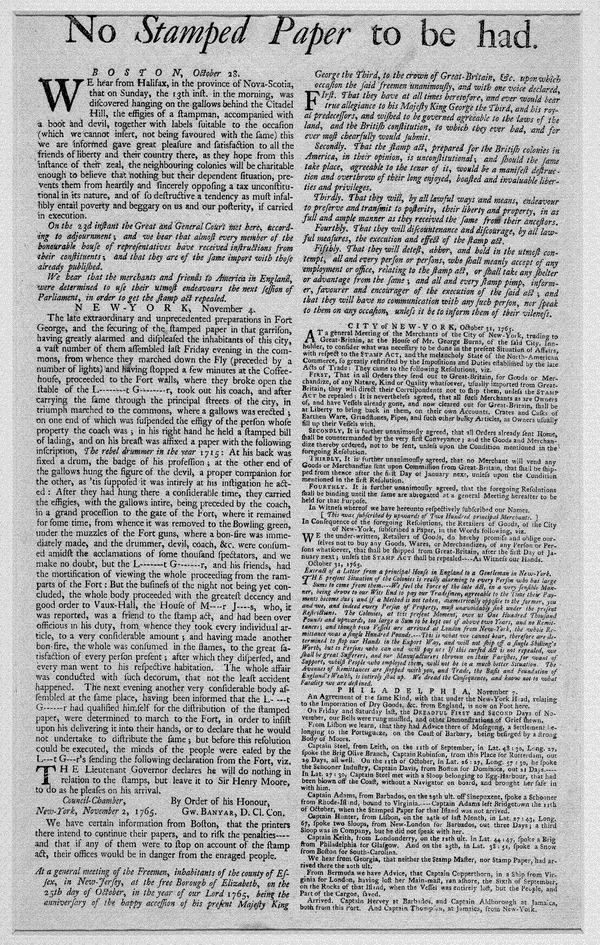
Ben Franklin said, "A man wrapped up in himself makes a very small bundle." Reminds me of Henry Miller's great quote: "Develop interest in life as you see it, in people, things, literature, music - the world is so rich, simply throbbing with rich treasures, beautiful souls and interesting people. Forget yourself."
That, to me, describes Benjamin Franklin.
Happy birthday, Ben!
Update: I knew Alex had written a fun tribute to him last year. Just tracked it down!
More Ben Franklin posts:
Paul Johnson's discussion of the writing of the Declaration
Ben Franklin: "I cannot give you the sun ..."
Science and the Founding Fathers
Benson Bobrick on the signing of the Declaration
Excerpt from Franklin's wonderful autobiography
Excerpt from HW Brands' The First American
January 1, 2008
Today In History: Jan. 1, 1892
Ellis Island opened for business. The first immigrant of millions to pass through was a 15 year old Irish girl from County Cork named Annie Moore. Three large ships waited to land on that day, and eventually 700 immigrants entered the country on that first day. Annie Moore was given a 10 dollar gold piece, and welcomed to America.

I found that animated image on The History Channel - Kinda gives me chills - imagining that this is the view my ancestors got, as they came over from Ireland.
To those of you who ever visit New York - I highly recommend taking a trip over to Ellis Island. It's strangely emotional - you just can feel the ghosts of the millions of people who passed through. They are all still there. Here's an image of the Inspection Room - where each immigrant would be screened by doctors for any signs of illness, physical ailments, disease. This was also where their documents would be checked and double-checked. If they were healthy, and if their papers were correct - they would then be allowed to enter the United States.
And so today, let's take a second to remember Annie Moore, the 15 year old Irish girl, the first name on the long long rolls of immigrant records at Ellis Island. There's a statue of Annie Moore at Ellis Island - a bronze statue - which was unveiled by Ireland's president Mary Robinson in 1993.
Here's some more information about Annie Moore. My favorite excerpt from that piece comes at the end:
So what;s really important about Annie Moore is not so much that she was born in Ireland, but that she came to America. Someone had to be the first immigrant to land at Ellis Island and as fate would have it she was the one. It might just as easily been someone named Rebecca Schimkowitz or Maria Parmasano. In somewhat the same spirit of commemorating an Unknown Soldier as a symbol of patriotic sacrifice, the story and statues of Annie Moore are intended to remind people of this and future generations of the courageous journey made by countless millions of nameless, faceless immigrants who set out to make a new life for themselves in a strange and distant place called America.
December 19, 2007
Happy birthday, Poor Richard

On this day in history, December 19, 1732, Benjamin Franklin's Poor Richard's Almanack was born - and the first issue published. Franklin included all the information that almanacs normally provide - sun rise, sun set, eclipses, weather predictions, yadda yadda. But it was also one of those small things (or - not so small - but let's just say that Richard's Almanack couldn't have done it on its own) that made the colonies feel more like a community. The colonies did things for themselves. They were under the crown, but that feeling of being separate from the crown started very early - and the almanac - with its listing of court dates, and town meetings, and church meetings, etc. - was part of that. It helped foster that. It helped spread information.
Benjamin Franklin wrote in his autobiography:
In 1732 I first published my almanac, under the name of Richard Saunders; it was continued by me about twenty-five years and commonly called "Poor Richard's Almanac". I endeavored to make it both entertaining and useful, and it accordingly came to be in such demand that I reaped considerable profit from it, vending annually near ten thousand. And observing that it was generally read, scarce any neighborhood in the province being without it, I considered it as a proper vehicle for conveying instruction among the common people, who bought scarcely any other books. I therefore filled all the little spaces that occurred between the remarkable days in the calendar with proverbial sentences, chiefly such as inculcated industry and frugality as the means of procuring wealth, and thereby securing virtue; it being more difficult for a man in want to act always honestly, as, to use here one of those proverbs, it is hard for an empty sack to stand upright.These proverbs, which contained the wisdom of many ages and nations, I assembled and formed into a connected discourse prefixed to the almanac of 1757 as the harangue of a wise old man to the people attending an auction. The bringing all these scattered counsels thus into a focus enabled them to make greater impression. The piece, being universally approved, was copied in all the newspapers of the American continent, reprinted in Britain on a large sheet of paper to be stuck up in houses; two translations were made of it in France, and great numbers bought by the clergy and gentry to distribute gratis among their poor parishioners and tenants. In Pennsylvania, as it discouraged useless expense in foreign superfluities, some thought it had its share of influence in producing that growing plenty of money which was observable for several years after its publication.
I remember my grandmother, Mummy Gina, had a huge illustrated Richard's Almanack at her house that we loved to page through as kids . I can still see some of the illustrations in my mind. I remember very well the illustration for the proverb about visitors being like fish (they start to stink after a couple of days).
I love this website. Ha!!! Especially in light of the whole key on the kite thing.
Some of the proverbs from the almanac (he freely admitted that he did not invent many of these - they were passed down, or he would put his own humorous spin on them):
Keep your eyes wide open before marriage, half shut afterwards.
After three days men grow weary, of a wench, a guest, and weather rainy.
Three may keep a secret, if two of them are dead.
Early to bed and early to rise, makes a man healthy, wealthy, and wise.
Plough deep while sluggards sleep and you shall have corn to sell and to keep.
Have you something to do tomorrow? Do it today
There are no gains without pains.
The noblest question in the world is: What good may I do in it?
H.W. Brands writes, in his biography of Benjamin Franklin (The First American):
Gazette readers intrigued enough to buy the bound version (priced at three shillings sixpence per dozen, obviously intended for resale) or the broadsheet edition (two shillings sixpence the dozen) were introduced to Richard Sauncers, Philomath - a standard honorific for almanac-makers - by Saunders himself. "Courteous Reader, I might in this place attempt to gain thy favour by declaring that I write almanacks with no other view than the public good; but in this I should not be sincere, and men are nowadays too wise to be deceived in pretenses how specious soever." Like the printer Franklin apologizing for the advertisement that gave offense to certain customers, Saunders confessed to monetary motives. "The plain truth of the matter is, I am excessive poor, and my wife, good woman, is, I tell her, excessive proud. She cannot bear, she says, to sit spinning in her shift of tow while I do nothing but gaze at the stars, and has threatened to burn all my books and rattling-traps (as she calls my instruments) if I do not make some profitable use of them for the good of my family. The printer has offered me some considerable share of the profits, and I have thus begun to comply with my Dame's desire."
Hahahahahahaha
More from The First American:
As was apparent to the least attentive reader, Franklin thoroughly enjoyed adopting the guise of Richard Saunders. Where Franklin the businessman had to be circumspect careful not to offend, Saunders the almanacker could be outrageous - indeed, the more outrageous the better. Franklin as Franklin often had to hide his gifts to avoid inspiring envy; Franklin as Saunders could flaunt his wit, erudition, and general brilliance. In time - as his position in the community grew more secure - Franklin would no longer require Richard Saunders; till then the alter ego helped keep him sane.Readers enjoyed Poor Richard as much as Franklin did. Copies were out the door by the single and the gross. In one year John Peter Zenger of New York (lately the defendant in a celebrated libel trial) took eighteen dozen in a batch, then another sixteen dozen. Louis Timothee (who now generally went by Lewis Timothy [more on him here) in South Carolina ordered twenty-five dozen; Thomas Fleet in Boston also took twenty-five dozen. James Franklin's widow, Ann, in Newport bought one thousand. These numbers hardly made Poor Richard the bestselling almanac in America; where Poor Richard sold an average of about ten thousand per year, Nathaniel Ames's Astronomical Diary sold five to six times as many. But Poor Richard had a unique persona, and it developed a loyal readership.
While readers may have come for the quarrels Franklin provoked, they stayed for the advice he dispensed - and the way he dispensed it. Every almanac offered pearls of wisdom on personal conduct and related matters of daily life; that the pearls had been retrieved from other oysters bothered no one except perhaps the owners of those other oysters, who in any event had no recourse in the absencew of applicable copyright law. The trick for writers like Franklin was to polish the pearls and set them distinctively; in this he had no peer. What came to be called "the sayings of Poor Richard" first surfaced as filler on the calendar pages of the almanac the limitations of space, together with Franklin's inherent economy, taught him to distill each message to its morsel. "Great talkers, little doers" broke no philosophical ground, but for pith it trumped nearly every alternative. "Hunger never saw bad bread"; "Light purse, heavy heart"; "Industry need not wish"; and "Gifts burst rocks" fell into the same category.
Sometimes succinctness yielded - slightly - to sauciness. "Neither a fortress nor a maidenhead will hold out long after they begin to parley." "Marry your son when you will but your daughter when you can." "Tell a miser he's rich, and a woman she's old, you'll get no money of one nor kindness of t'other." "Prythee isn't Miss Cloe's a comical case?/She lends out her tail, and she borrows her face." "The greatest monarch on the proudest throne is obliged to sit upon his own arse." "Force shits upon reason's back."
Poor Richard's Almanack is still in print today. Extraordinary.
December 16, 2007
Today In History: Dec. 16, 1773

On November 28, 1773, the Dartmouth sailed into port in Boston. It was full of tea. There had already been trouble in Philadelphia when the tea ship had tried to unload its cargo. A ship had been blown away from the port in New York by a storm. A confrontation was imminent.
Late November, early December, 1773, broadsides distributed throughout Boston:
Friends! Brethren! Countrymen! The worst of plagues, the detested TEA ... is now arrived in this harbor. The hour of destruction, or manly opposition to the machinations of tyranny, stares you in the face. Every friend to his country, to himself and posterity ... is now called upon ... to make a united and successful resistance to this last, worst, and most destructive measure of administration.
Samuel Adams spearheaded the campaign to fire up the populace, sending out broadsides - the Sons of Liberty posted armed guards around the wharf, to make sure that that tea was not unloaded.
Abigail Adams wrote to Mercy Warren on December 5:
The Tea that bainfull weed is arrived. Great and I hope effectual opposition has been made to the landing of it. The proceedings of our Citizens have been united spirited and firm. The flame is kindled and like lightning it catches from Soul to Soul. I tremble when I think what must be the direfull consequences. And in this Town must the Scene of action lay, my Heart beats at every Whistle I hear, and I dare not openly express half my fears.
On December 16, 1773 a town meeting was called at the Old South Meeting House - the meeting was run by Samuel Adams. The three tea ships sat in the harbor, full of cargo - not allowed to unload, not allowed to leave. A message was sent to Thomas Hutchinson, Lieutenant Governor of Massachusetts - who had continuously refused the ships to leave the harbor until they had unloaded, or until the duties were paid. The meeting raged on about "that bainfull weed" in the harbor. A messenger returned with word from Hutchinson: Clearance for the tea ships is refused. Catherine Drinker-Bowen writes in her wonderful book John Adams and the American Revolution what happened next:
Sam Adams read the message, then addressed the people briefly: "This meeting can do nothing more to save the country," he said. The words were a signal to the crowd outside. Instantly a warwhoop was heard, and the general shout, "To the docks!" Several hundred men, most of them disguised by prearrangement in Indian paint and feathers, headed north for Griffin's wharf, boarded the three ships and dumped three hundred and forty-two chests of tea into the Harbor.Not a life was lost, not a man hurt, no drop of blood was shed. In the moonlight a vast crowd assembled on the dock, watched almost in silence while the "Mohawks" did their work. The stillness was extraordinary; the crash of hatchets could plainly be heard across the line of water, and occasional perspiring grunts as men tipped the heavy boxes over the bulwarks. Admiral Montagu's two frigates lay in the outer Harbor, but the tide was on the ebb and they did not try to approach. None of the "Mohawks" kept so much as a fistful of tea to himself; one or two who tried it were quickly and summarily dissuaded. When morning came, tea marked the edge of high tide on beaches as far south as Nantasket ... One Mohawk, it was true, found his shoes full of tea when he got home; he put a little of it in a jar as a souvenir.
John Adams wrote in his diary on December 17, 1773:
Last Night 3 cargoes of Bohea Tea were emptied into the Sea. This Morning a Man of War sails. This is the most magnificent Movement of all. There is a Dignity, a Majesty, a Sublimity, in this last Effort of the Patriots, that I greatly admire. The People should never rise, without doing something to be remembered - something notable and striking. This Destruction of the Tea is so bold, so daring, so firm, intrepid, and inflexible, and it must have important Consequences, and so lasting, that I can't but consider it as an Epocha in History... Many persons wish that as many dead carcasses were floating in the harbor, as there are chests of tea. What measures will the ministry take? Will they punish us? How? By quartering troops upon us? by annulling our charter? by laying on more duties? by restraining our trade? By sacrifice of individuals? or how?
Alexander Hamilton (John Adams's future nemesis) had just begun school at King's College in New York (a British bastion of power). The Boston Tea Party galvanized him (according to reports from his friends). He was already becoming political - and although opposed to mob rule, in principle (he had a dread of riots and anarchy) - thought that the tea party was a splendid gesture. Robert Troup, Hamilton's good friend in college, later remembered, "The first political piece which [Hamilton] wrote was on the destruction of the tea at Boston in which he aimed to show that the destruction was both necessary and politic."
Almost a year to the day after the Tea Party itself, Hamilton published his first major political work - on December 15, 1774 - A Full Vindication of the Measures of Congress - a blistering and brilliant response to the grumblings about the "traitors" who had met in Philadelphia that fall. Hamilton is still a teenager here, not even 20 years old yet. He referenced the Tea Party in this 35 page attack:
But some people try to make you believe, we are disputing about the foolish trifle of three pence duty upon tea. They may as well tell you, that black is white. Surely you can judge for yourselves. Is a dispute, whether the Parliament of Great-Britain shall make what laws, and impose what taxes they please upon us, or not; I say, is this a dispute about three pence duty upon tea? The man that affirms it, deserves to be laughed at.It is true, we are denying to pay the duty upon tea; but it is not for the value of the thing itself. It is because we cannot submit to that, without acknowledging the principle upon which it is founded, and that principle is a right to tax us in all cases whatsoever. ...
But being ruined by taxes is not the worst you have to fear. What security would you have for your lives? How can any of you be sure you would have the free enjoyment of your religion long? would you put your religion in the power of any set of men living? Remember civil and religious liberty always go together, if the foundation of the one be sapped, the other will fall of course.
Call to mind one of our sister colonies, Boston. Reflect upon the situation of Canada, and then tell me whether you are inclined to place any confidence in the justice and humanity of the parliament. The port of Boston is blocked up, and an army planted in the town. An act has been passed to alter its charter, to prohibit its assemblies, to license the murder of its inhabitants, and to convey them from their own country to Great Britain, and to be tried for their lives. What was all this for? Just because a small number of people, provoked by an open and dangerous attack upon their liberties, destroyed a parcel of Tea belonging to the East India Company. It was not public but private property they destroyed. It was not the act of the whole province, but the act of a part of the citizens; instead of trying to discover the perpetrators, and commencing a legal prosecution against them; the parliament of Great Britain interfered in an unprecedented manner, and inflicted a punishment upon a whole province, "untried, unheard, unconvicted of any crime." This may be justice, but it looks so much like cruelty, that a man of a humane heart would be more apt to call it by the latter, than the former name.
Not bad for a college student. He signed it "A Friend to America". It made a huge sensation when it was published in the New York Evening Post. I'm proud of my dead boyfriend.
On December 31, 1773, Samuel Adams wrote to a friend, in regards to the "tea party" and how it affected the citizenry:
You cannot imagine the height of joy that sparkles in the eyes and animates the [faces] as well as the hearts of all [Bostonians].
Admiral John Montagu of the British Navy called out to the "Mohawks" as they did their damage: "Well, boys, you've had a fine, pleasant evening for your Indian caper. But mind, he who dances must pay the fiddler." One of the Mohawks shouted back, "Oh, never mind, Admiral. Just come out here, if you please, and we'll settle the bill in two minutes!"
Following the tea party, a broadside was widely released - containing a song/poem written about the tea party. It is speculated (in the biography I have of Sam Adams) that he had a hand in writing it. Sounds like his high-energy blazing style.
TEA, DESTROYED BY INDIANS
YE GLORIOUS SONS OF FREEDOM, brave and bold,
That has flood forth ---- fair LIBERTY to hold;
Though you were INDIANS, come from distant shores,
Like MEN you acted --- not like savage Moors.
CHORUS
Our LIBERTY, and LIFE is now invaded,
And FREEDOM's brightest CHARMS are darkly shaded:
But we will STAND --- and think it noble mirth,
To DART the man that dare oppress the Earth.
Bostonian's SONS keep up your Courage good,
Or Dye, like Martyrs, in fair Free-born Blood.
How grand the Scene! --- (No Tyrant shall oppose)
The TEA is sunk in spite of all our foes.
A NOBLE SIGHT -- to see th' accursed TEA
Mingled with MUD -- and ever for to be;
For KING and PRINCE shall know that we are FREE.
Bostonian's SONS keep up your Courage good,
Or Dye, like Martyrs, in fair Free-born Blood.
Must we be still --- and live on Blood-bought Ground,
And not oppose the Tyrants cursed found?
We Scorn the thought -- our views are well refin'd
We Scorn those slavish shackles of the Mind,
"We've Souls that were not made to be confin'd."
Bostonian's SONS keep up your Courage good,
Or Dye, like Martyrs, in fair Free-born Blood.
Could our Fore-fathers rise from their cold Graves,
And view their Land, with all their Children SLAVES;
What would they say! how would their Spirits rend,
And, Thunder-strucken, to their Graves descend.
Bostonian's SONS keep up your Courage good,
Or Dye, like Martyrs, in fair Free-born Blood.
Let us with hearts of steel now stand the task.
Throw off all darksome ways, nor wear a Mask.
Oh! may our noble Zeal support our frame,
And brand all Tyrants with eternal SHAME.
Bostonian's SONS keep up your Courage good,
And sink all Tyrants in their GUILTY BLOOD.
On December 31, 1773, the Boston Gazette printed a message for the New Year from Samuel Adams:
To all Nations under Heaven, know ye, that the PEOPLE of the AMERICAN WORLD are Millions strong - countless Legions compose their ARMY OF FREEMEN ... AMERICA now stands with the Scale of JUSTICE in one Hand, and the Sword of VENGEANCE in the other ... Let the Britons fear to do any more so wickedly as they have done, for the HERCULEAN ARM of this NEW WORLD is lifted up - and Woe be to them on whom it falls! -- At the Beat of the Drum, she can call five Hundred thousand of her SONS to ARMS ... Therefore, ye that are wise, make Peace with her, take Shelter under her Wings, that ye may shine by the Reflection of her Glory.May the NEW YEAR shine propitious on the NEW WORLD - and VIRTUE and LIBERTY reign here without a Foe, until rolling Years shall measure Time no more.
Boston 1775 has lots of great content about the Boston Tea Party.
References:
Benson Bobrick, Angel in the Whirlwind
John & Abigail Adams, The Book of Abigail and John
Dennis Fradin, Samuel Adams: The Father of American Independence
Catherine Drinker-Bowen, John Adams and the American Revolution
Ron Chernow, Alexander Hamilton
Alexander Hamilton, Library of America: Hamilton: Writings
December 14, 2007
Today in History: December 14, 1799
George Washington died on December 14, 1799.
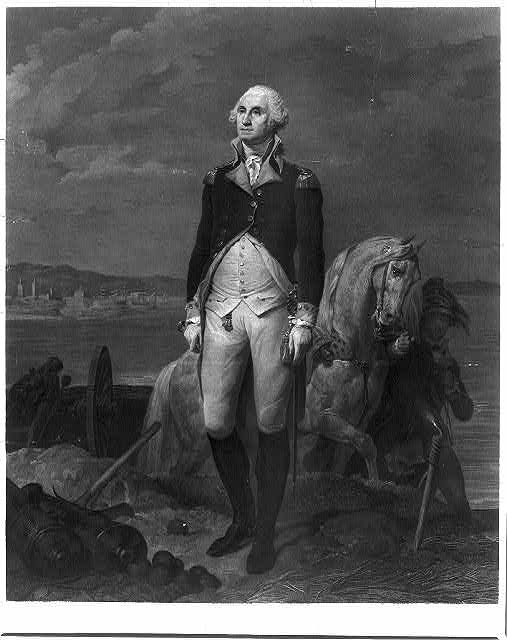
Here is a mish-mash of quotes, excerpts, etc.
Gouverneur Morris said, upon the death of this great man:
It is a question, previous to the first meeting, what course shall be pursued. Men of decided temper, who, devoted to the public, overlooked prudential considerations, thought a form of government should be framed entirely new. But cautious men, with whom popularity was an object, deemed it fit to consult and comply with the wishes of the people. AMERICANS! -- let the opinion then delivered by the greatest and best of men, be ever present to your remembrance. He was collected within himself. His countenance had more than usual solemnity -- His eye was fixed, and seemed to look into futurity. 'It is (said he)too probable that no plan we propose will be adopted. Perhaps another dreadful conflict is to be sustained. If to please the people, we offer what we ourselves disapprove, how can we afterwards defend our work? Let us raise a standard to which the wise and the honest can repair. The event is in the hand of God.'--this was the patriot voice of WASHINGTON; and this the constant tenor of his conduct.
George Washington is the standard-bearer - as much as he probably would not have wanted that role. But we cannot choose our own destiny. Destiny chose him. He was a deeply private man - perhaps the most private of all of our Founding Fathers. Adams and Jefferson always waxed rhapsodic about how much they wanted to "retire" and be simple farmers again - they had the pastoral fantasy that most men had at that time. And yet - once they were home, wandering through the turnip fields or whatever, they were always firing off letters to those in the thick of things, trying to keep up to date, manipulate events, and it was rare that the retirements "stuck". Adams and Jefferson, much more than Washington, were truly political animals. But Washington - when you read biographies of him, or you read his letters - you truly get the sense that he was very reluctantly a public man. Once he realized his duty - he did it - without much complaining - but he paid an enormous price, in terms of his personal life. He sacrificed his personal happiness for the good of the country. He knew he could not turn down the role that Destiny offered him. He may have yearned for Mount Vernon ... but it was not up to HIM to say: "You know what? This whole Leadership thing is not for me." I deeply admire him for that (and for many other things - but mainly for that). The union of this new nation was, for a while, tied up in the figure of George Washington. He was a symbolic figure DURING his lifetime. It was hard for him to accept that - he wasn't into all of that - There's that great story of Napoleon saying, in regards to Washington, "Has he crowned himself yet?" I am paraphrasing - but Napoleon was SHOCKED that Washington, with all he accomplished, did not just elect himself Leader of the new country. After all, that's what Napoleon would have done (and did!)
When George Washington was elected (unanimously) by the First Continental Congress to be Commander in Chief (this was in June, 1775) - here was the brief acceptance he made:
"Lest some unlucky event should happen unfavorable to my reputation, I beg it may be remembered by every gentleman in the room, that I this day declare, with the utmost sincerity, I do not think myself equal to the command."
On June 18, 1775, Washington sat down and wrote the following to his wife, Martha:
My Dearest: I now sit down to write to you on a subject which fills me with inexpressible concern, and this concern is greatly aggravated and increased when I reflect upon the uneasiness I know it will give you. It has been determined in Congress that the whole army raised for the defence of the American cause shall be put under my care, and that it is necessary for me to proceed immediately to Boston to take upon me the command of it.You may believe me, my dear Patsy, when I assure you, in the most solemn manner, that, so far from seeking this appointment, I have used every endeavour in my power to avoid it, not only from my unwillingness to part with you and the family, but from a consciousness of its being a trust too great for my capacity, and that I should enjoy more real happiness in one month with you at home than I have the most distant prospect of finding abroad, if my stay were to be seven times seven years.
But as it has been a kind of destiny that has thrown me upon this service, I shall hope that my undertaking is designed to answer some good purpose.
I sometimes get the sense with Adams and Jefferson that their yearning for their respective homes was a bit of a pose. Men at that time were not supposed to want power. But I never quite believe either of them when they say (over and over and over again): "I just want to be a private man - home with my garden and my wife ..." Yeah, boys, we got it. You want to go home. Then why don't you, hmmmmm?? Methinks you would perish if you weren't at the center of events, but who am I to talk.
But with Washington I never get the sense that that was a pose. He truly could not stand being away from his home. And yet his sense of duty overrode his personal concerns.
Abigail Adams first met Washington in 1774, and wrote to her husband:
You had prepared me to entertain a favorable opinion of him, but I thought the half was not told me. Dignity with ease and complacency, the gentleman and the soldier look agreeably blended in him. Modesty marks every line and feature of his face.
Here's something Washington said which I have pondered often - we are so fortunate to have had such a GROUP of men at our beginnings as a nation - If we had had only ONE of them we would have been in trouble. But all together as a group? Powerful.
Men may speculate as they will, they may talk of patriotism; they may draw a few examples from current story - but whoever builds upon it as a sufficient basis for conducting a long and bloody war will find themselves deceived in the end - For a long time it may of itself push men to action, to bear much, to encounter difficulties, but it will not endure unassisted by Interest.
A-frickin-men, George.
Now THAT is a practical mindset. His whole involvement in the Revolutionary cause began because of practical concerns. He was a farmer, a plantation owner - and the British sapped him dry with taxes, and levies, and limitations on where he could purchase things. He began a course, very early on, of trying to become self-sufficient, separating himself from the British economically - the stories of what he did, how he adjusted his farming practices, etc. - are fascinating. He wasn't all fired up with passion, or "Let's blow the bastards up!" He, as a personal private man, a landowner, felt hampered by the British, and they were directly affecting HIM and his INCOME. That was where it began for George Washington. Not some lofty Jeffersonian phrase about the "pursuit of happiness" (although God bless Jefferson for that.) Pursuit of happiness my EYE - how about those taxes??
On November 25, 1783: George Washington "took back" New York.
The peace treaty had been signed a year before, France had pledged support and recognition of the new United States, but the redcoats remained in New York, waiting for their written orders from London. George Washington vowed that he would not go home, he would not break up his army, until every last redcoat had left.
Nov. 25 was that momentous day - the day the American troops marched back into town, after the departure of the British.
The exhausted army marched the long way downtown, through what was now a war-ravaged New York City. People lined the streets, throwing laurels in front of Washington's horse, screaming, crying ... a huge display of emotion and reverence that made the typically humble Washington feel uncomfortable.
A woman in the crowd that day wrote the following in her diary:
We had been accustomed for a long time to military display in all the finish and finery of [British] garrison life. The troops just leaving us were as if equipped for a show and with their scarlet uniforms and burnished arms made a brilliant display. The troops that marched in, on the contrary, were ill-clad and weather-beaten and made a forlorn appearance. But then, they were our troops and as I looked at them and thought upon all they had done and suffered for us, my heart and my eyes were full.
George Washington wrote the following on the eve of his inauguration in 1789:
It is said that every man has his portion of ambition. I may have mine, I suppose, as well as the rest, but if I know my own heart, my ambition would not lead me into public life; my only ambition is to do my duty in this world as well as I am capable of performing it, and to merit the good opinion of all good men.
The following story may be just a rumor handed down over the years, but it is one of my favorites. Franklin was in France, and word came to France of the decisive (and shocking) American victory (1781). Franklin attended a diplomatic dinner shortly thereafter - and, of course, everyone was discussing the defeat of the British, and the victory of America.
The French foreign minister stood, and toasted Louis XVI, "To his Majesty, Louis the Sixteenth, who, like the moon, fills the earth with a soft, benevolent glow."
The British ambassador rose and said, "To George the Third, who, like the sun at noonday, spreads his light and illumines the world."
Franklin rose (reportedly) and countered, "I cannot give you the sun or the moon, but I give you George Washington, General of the armies of the United States, who, like Joshua of old, commanded both the sun and the moon to stand still, and both obeyed."
George Washington's last words were, apparently:
"I feel myself going. I thank you for your attentions; but I pray you to take no more trouble about me. Let me go off quietly. I cannot last long."
For me - the most telling part of that, the most revealing is: "I thank you for your attentions; but I pray you to take no more trouble about me."
How very ... Washington-ish of him.
December 7, 2007
Today in History:
And below - is something I found last year, and posted - I've posted it again.
And here is a cool fact about my home state, little Rhode Island:
There is only one newspaper in the United States that comes out on Sunday afternoon, (as opposed to Sunday morning) and that is the local paper for Westerly, (a small town in Rhode Island), called The Westerly Sun.
Because The Westerly Sun comes out at the odd time of 3 pm on Sunday - it was the only newspaper in the entire country to report the bombing of Pearl Harbor, on Sunday, Dec. 7, 1941 - on the day it actually happened.
It is a teeny little local newspaper ... and it was the FIRST and ONLY one on that day of days. Not like people didn't hear the news all over the world on the radio, etc., - but still. I am picturing that tiny clapboard newspaper office in Westerly, off route 1 ... with a couple folks working there ... putting the front page together on that historic awful day.
November 7, 2007
Today in History: Nov. 7, 1917
The Russian Revolution happened - one of (if not the) most seismic moments of the 20th century.
Or, as I would put it: A bunch of rogues with the idea that they could create a new kind of human being through state control took over Russia!
I love the grainy old photographs of all of them - they always look so twinkly and jolly, don't they? It's such a dichotomy. A more humorless bunch has never existed. Stalin's face always seems to be twinkling, as though he is Santa Claus on his day off. It's creepy. But they ALL look like that to me. Like they are chortling from on high. I say "I love the grainy old photographs" not cause it does my heart good to see Trotsky smiling - but because I find them VERY interesting. Especially, as I mentioned, the collective twinkle in the eye.
CREEPY.
Anyhoo. On this day, the workers seized the government buildings and put out a proclamation declaring the new government. There was almost no resistance.
Oversimplify? You accuse me of oversimplifying? I NEVER oversimplify ... (quote from What's Up Doc?)
The Russian Revolution is, along with Cary Grant and the early career of Ralph Macchio, one of my enduring fascinations.
Many reasons why.
First of all: I love politics and history - and whatever the outcome, you would be hard pressed to find a more important moment of political upheaval in the entire 20th century than the Russian Revolution. It changed the world.
Second of all: because it turns out that it was SUCH a bad idea. I read the original works of all those dudes - and what their PLAN actually is ... I mean, I read all their grand schemes and I literally roll my eyes. Utopianism. I've said it before and I'll say it again: any time some politician starts talking to you about Utopia, grab your loved ones and run for the hills. Make sure you are heavily armed. Utopianism is one step away from totalitarianism. In order to actually achieve any kind of Utopia, the individual must be ground to powder. There can be no individuals in a Utopia. But .... er ... no matter what you do, you cannot get rid of the individual. Totalitarian states don't care that their very IDEAS are illogical. They just want absolute power.
This is the secret in the secret book in 1984. This is what nobody told you, although their actions spoke loud and clear. The point was NEVER equality. The point was ALWAYS power - and controlling power into the hands of a very few. But the theories and ideals surrounding this secret were compelling to so many ... many still refuse to believe that there is no secret. That the smokescreen of equality was STILL the real point.
Thirdly: I am fascinated in the Russian Revolution because of the world-wide repercussions of it - and also because I vividly remember the entire edifice cracking apart in the late 80s. I couldn't believe it. I am in that generation that still grew up being afraid of Russia. We were the last generation to grow up with that fear. We have OTHER fears now - but not that one. I grew up during the dying gasps of the Cold War. So - to learn about the BEGINNINGS of such a political movement - something that would be entrenched for the better part of a century - has always been important to me.
And lastly, and this is where I get a little hoo-hah new age-y: For whatever reason: cults will ALWAYS fascinate me. Any kind of mind-control, or brainwashing ... any attempt to erase the individual's sense of agency ... It doesn't matter if it's Patty Hearst being kidnapped or what is being taught in the madrassahs of Pakistan - it's an attempt at mind control. And that stuff just GETS to me.
There's something in the Russian Revolution - the early heady days (I know that's such a cliche - but it's a perfect way to put it) of the Bolshevik takeover - something in their Utopian talk, their twinkly assurance that they could re-make the world, their convoluted reasoning - and - just the LANGUAGE itself -how the Communists used language - all of that points to a level of mind control - the beginnings of it - A very ominous thing. Imposing a mindset, a correct way of thinking, on a country of millions.
I've read John Reed's 10 Days that shook the world, and it's a brilliant piece of propaganda - one of the best. It is, of course, propaganda - and you can argue that it's a dangerous piece of work, whatever - that argument bores me, frankly. I want to read anything I can get my hands on - and that is a first-hand account of the October Revolution. He was the one who "sold" the Revolution to the outside world. Whatever you think of his beliefs (and again - I find myself rolling my eyes when I read it - the enthusiasm! The belief that the whole world would rise up in a red wave! Etc.) - the dude can write. Don't bitch to me about what I should or should not read. That's another form of totalitarianism. I used to have a way-more condescending readership - this was in the early days - and most of those guys have moved on to greener friendlier pastures - because they were sick of MY totalitarianism, meaning they didn't get to condescend to me and get away with it! I ruined their little soapbox ! Look, I am smart, educated, and when I choose to write about something, it's because I know a little bit about it. Unlike dictators and fundamentalists of any stripe (religious, social, political), I actually have the ability to see things in shades OTHER than black and white! And I am looking for an audience that is the same way. I realize I can't control everything, and that people all come to me for different reasons - and that's cool - but once you're here? I encourage a certain KIND of commentary, because it, to me, is the most satisfying and civilized. Some people can't hack it. They couldn't stop the condescension. They saw me as a silly little actress, oh, isn't she cute, to talk about politics ... but let me give her a reading list ... just to set her straight. Yeah, jackass, I read all those books. Thanks for telling me crap I already know, and assuming all kinds of things about me just because I look at things differently than you do. Talk about your basic totalitarian mindset. This ain't no free-for-all, yo. And if you condescend to me? Repeatedly? You're toast. That's the glory of the delete button!
I go on and on like this because the first time I wrote about John Reed and had the GALL to praise his writing, I was condescended to within an inch of my life by idiots who can't see the difference between art and ideology. You CAN'T praise his writing!! You just CAN'T! They thought I didn't KNOW about John Reed. They leapt all over me, and oh my God, the condescension! Unbelievable!! The problem is that those folks all had major reading comprehension issues as far as reading ME was concerned. They just didn't know how to read me. Most people do - I have people who show up here every day who don't have a problem with "how" to read me ... but boy, when someone doesn't get it? They don't get it HARD! How ... DARE she write about John Reed in a way that I wouldn't? And how DARE she act like she knows what she's talking about??? Doesn't she know that I own the truth? I'll set that little filly straight!
Back to the topic at hand - John Reed: I love first-person accounts of any historical event - biased or no. I like to feel like I am THERE.
But back to the mind-control thing: Reed puts a lot of the communiques from the leaders of the Revolution into the book. He prints their pamphlets, fliers, announcements - and all of it is in that LANGUAGE of Communism, that deadening blunted-edge language - with no poetry, no humanity in it. It is FROM a collective and it is TO a collective. You know what I'm talking about? Anyone who has read any of that stuff from Lenin or Trotsky will know what I am talking about. .
To control a population: you MUST control their language. You MUST control how they express themselves. You MUST show them the "correct" way to speak. There is only ONE meaning of the word "state". There can only be ONE meaning of the word "freedom". So the leaders of the Revolution set out immediately to co-opt the language. Watch any developing revolution anywhere in the world. And watch how they start by controlling the language. Look at the group of peole today who want to control the words "marriage", "family", "values". Their desire is to co-opt MEANING. Their desire is EXclusive - to shut others out, they want to "own" a word. They are not to be trusted.
George Orwell knew this, of course, and that's where the whole Newspeak thing comes from, in 1984.
I find it interesting, and horrifically ironic, that Lenin would say: "While the State exists there can be no freedom; when there is freedom there will be no State."
Okay, you hear that language? Look at that language. Also, look at the Utopianism. I am not convinced that any of these people truly believed in the Utopia - or some of them did - but I think most of it was just a big ol' power grab, doctored up in political Newspeak language. Anyhoo. Lenin makes that statement - but then of course what happened in Russia? The State became EVERYTHING, and no, there was no freedom. The State was the religion.
I refuse to just blame this on Stalin's evil - although I do think he was evil - and missing whatever piece it is that makes most of us human. But I don't think Stalin took an essentially good idea and made it bad and evil. I think it was a terrible idea to begin with.
Again: anyone in power who talks about Utopias is NOT TO BE TRUSTED. They can't WAIT to put you under the iron boot of the State. THAT'S Utopia.
Check out the picture below - of junkers lounging around in the Winter Palace in the fall of 1917:
From John Reed's 10 Days That Shook the World - one of his descriptions of the events of Nov. 7, 1917 - marvelous writer, marvelous first-hand reportage:
By this time, in the light that streamed out of all the Winter Palace windows, I could see that the first two or three hundred men were Red Guards, with only a few scattered soldiers. Over the barricade of firewood we clambered, and leaping down inside gave a triumphant shout as we stumbled on a heap of rifles thrown down by the yunkers who had stood there. On both sides of the main gateway the doors stood wide open, light streamed out, and from the huge pile came not the slightest sound.Carried along by the eager wave of men we were swept into the right hand entrance, opening into a great bare vaulted room, the cellar of the East wing, from which issued a maze of corridors and stair-cases. A number of huge packing cases stood about, and upon these the Red Guards and soldiers fell furiously, battering them open with the butts of their rifles, and pulling out carpets, curtains, linen, porcelain plates, glassware ... One man went strutting around with a bronze clock perched on his shoulder; another found a plume of ostrich feathers which he stuck in his hat. The looting was just beginning when somebody cried, "Comrades! Don't touch anything! Don't take anything! This is the property of the People!" Immediately twenty voices were crying, "Stop! Put everything back! Don't take anything! Property of the People!" Many hands dragged the spoilers down. Damask and tapestry were snatched from the arms of those who had them; two men took away the bronze clock. Roughly and hastily the things were crammed back in their cases, and self-appointed sentinels stood guard. It was all utterly spontaneous. Through corridors and up stair-cases the cry could be heard growing fainter and fainter in the distance, "Revolutionary discipline! Property of the People ...."
Here's all the crap I wrote about Stalin, if you're interested. There are a couple new biographies out of him now. My birthday's coming up. Amazon Wish List over to the right. Just sayin'. I never "bleg", and I'm not "blegging" now. I'm just SAYIN'. I figure the best way to honor the Russian Revolution is to freely display my own capitalist nature. BUY ME GIFTS. Thanks.
November 2, 2007
Today in History: November 2, 1889
North Dakota and South Dakota were admitted to the United States as the 39th and 40th States.
Happy ... er ... birthday, Dakotas!!!
I drove across the country with my boyfriend years ago. We went to many many states. We saw many beautiful things. We went through mountains and plains and prairies. But the states that touched us the most - the states that, frankly, blew us away ... were the Dakotas.
Weird, but I don't remember the two of us even SPEAKING to one another as we moved our way through the Dakotas. I know we did. But there was something about the landscapes there that struck us dumb. With wonder? Awe? Yes. But something else. Perhaps an awareness of our own smallness. We LOVED the Dakotas.
My memories there are rich, sensoral, and just snippets:
-- Heavy grey clouds pressing in from horizon to horizon ... watching the lightning occuring miles and miles away ...
-- The wet highway stretching out before us to the vanishing point
-- An isolated gas station surrounded by dun-brown fields as far as the eye could see - the neon sign of the gas station gleaming through the rain - desolation - but poetry
-- Rich fields of sunflowers on either side of the highway. The late afternoon light falling across the bobbing yellow heads of the flowers ... the rich dark-brown soil
-- The two small white-headed children we saw sitting on top of a fence - in the middle of nowhere - no grown-ups in sight - and in the paddock (also in the middle of nowhere) were about 10 grazing buffalo. The buffalo being watched over by these small gleaming tow-headed children. Odd. My boyfriend and I talked to them for a while. In blunt simple language.
Something about the landscape in the Dakotas made language seem unnecessary.
And here's an old post I wrote about one of my favorite memories of all time. It's from an experience we had in one of the Dakotas. It says it all. Hovering over this piece is an enormous silence. The silence of the surrounding land, the enormous sky ... It didn't press in on us, it wasn't suffocating ... but it wasn't exactly liberating either. The landscape and the sky FORCED us to be contemplative. FORCED us to BE with ourselves. The silence persisted. Filling it up with silly chit-chat would have been useless because the silence was too big.
My love for the Dakotas is piercing and sensoral - and I was only there for 5 days.
Dakota post below:
Standing on a high windy plain with my boyfriend as a thunderstorm gathered on the horizon and the light got low, and sickly-green, and so charged with potential you nearly wanted to scream. Waiting for the release. We had been hiking for hours, watching as the day changed, as the sky got more ominous. There had been a massive wind, whipping the tall grass on its side, nearly carrying me away with it. We got some incredible pictures of the approaching storm (we had no business being up on the high plains watching forks of lightning jag their way towards us, but whatever, it was gorgeous) ... but the pictures cannot convey the feeling in the air itself . The hairs on my arm rose up, to meet the electricity in the molecules.
There were no people out there but us. (For obvious reasons. We were idiots.) Just a huge sky, changing on a moment to moment basis, getting fuller and fuller, lower and lower, and GREEN - not black, not purple ... but GREEN ... the sound of the wind in the grass ... the feeling that we were about to get caught out in something pretty enormous and spectacular.
And then, I'll never forget it:
For a brief whooshing moment, everything went still. The wind stopped. As though a giant hand had turned off the wind machine. Hush. A sudden alarming hush fell over the land. My boyfriend and I both stopped, feeling the change. We paused ... holding our breath ...
We were having the time of our lives. We were watching the storm unfold as though it was the best movie we had ever seen. We kept looking at each other, wordlessly, like: hoooly shiiiiit ...
Silence covered the plains (this was the real calm before the storm, turns out - when everything came to a sudden sharp stop ... took a breath ... and then the heavens opened up) ... and in that silence, we heard a sound. Something that, to be honest, I've only heard in movies.
The thundering sound of horses hooves ... galloping horses ... the galloping sound of MANY horses ...
It has got to be one of the most exciting sounds I've ever heard in my life. Even though I've only heard that sound in movies, when it came to my ears, there was a rush of familiarity, and love, and knowing: Yes. That is that sound. I know that sound. Something in my DNA knows that sound intimately. It was thrilling.
We were on the edge of a large dip in the land, a bit off the trail, and the sound came from far below. We walked over to the edge, in the middle of the eerie stillness, all the grass suddenly straight, still, motionless, and looked out over the dip in the land. And there we saw them - we had only heard about them and heard that it was rare to get a glimpse of them - but there they were - a herd of wild horses, racing along the bottom of the plain in a massive herd. There were about 20 of them, galloping like mad things, freaking out because of the storm ... their manes and tails flying, their hooves churning up the dirt ... neighing and whinnying in alarm, bucking and kicking and running ...
I have never seen anything so beautiful, so moving, so unbelievable in my life.
They were fierce, savage, a bit scary, almost mythical. I've seen wild horses like that in my dreams. My fantasies.
We got no pictures, obviously. We couldn't have captured it. We didn't need to capture it.
I love horses anyway, but ... to see wild horses ... and not to see them grazing on a hill ... but to see them AS wild, to see them running ... Oh my God. Like Marlowe said: "the wondrous architecture of the world..."
Boyfriend said to me after we gaped at their frenzy far down the plain for a while, "We should get the hell back to the van. They know something we don't."
And we RAN off the plains, as quickly as we could, as the wind started picking up again, alarmingly, this time cold - a whoosh of cold ... and we made it back to the van before the gods unleashed the torrents upon us in a thunderous crash. Hell broke loose. Massive wind/rain/electrical storm on the high plains.
But I am glad we took the risk. To see those horses. Those spectacular wild horses.
You know how you see something and you don't know why but you know you are somehow forever changed?
That's what that moment was like.
Photo I took in North Dakota below - which pretty much captures the magic of the place for me:

November 1, 2007
Today in History: Nov. 1, 1897
The Library of Congress (in its own separate building for the first time) opened its doors. Construction on the joint had been going on for nigh on 20 years ... an immense project. Up until that point - the collection had been housed in the Capitol Building, in the main reading room. I'm sure most of us know the story of how the Library of Congress came to be. In the war of 1812, the British invaded Washington and burned shit up. (I remember that funny moment a couple years ago when Tony Blair visited the Capitol Building - and somebody said, "And there is the fireplace where you burned up all our books" - or something like that - making it sound like it had happened yesterday - and Tony Blair, without missing a beat, said, "My apologies.") There were 3,000 volumes in the library - all gone. So Jefferson - who was now Mr. Retired Philospher King on the mountaintop - sold his unbelievable book collection (the book collection that had him in perpetual debt up to his ears - there were almost 7,000 books in his own personal collection) to the United States government, to begin building up a national library again.
Of course, that original collection from Jefferson is now housed in the rare book room. Image of part of it here:

I am drooling.
Check this image out. Pretty amazing. That photograph is from 1888 - and it's the excavation of the site where the Library of Congress would eventually stand.
Marvelous.
As a librarian's daughter - such historical events have a very special resonance.
October 26, 2007
Today in History: October 26, 1776
On October 26, 1776, Benjamin Franklin set off on a diplomatic mission across the Atlantic - to get the French governments financial backing for the Revolution. As is well-known, he was a huge HIT with the French (that's him in the royal court above) ... and he wore little fur caps which became all the rage - and there was a certain breath of freedom and independence in his attitude which really appealed to the French. This was not an easy mission for Franklin. France was still a monarchy. I mean, it only had a couple years to go before heads began to roll (ahem), but it was, in 1776, still a monarchy - and so wasn't too wacky about supporting this "experiment" in democracy across the water. However, wouldn't it be fun to stick it to the Brits??? Benjamin Franklin's success in France is now widely recognized as one of the main reasons that we were able to win the war at all. Not only did he win support for his cause - but he also won over the hearts and minds of the French people. He loved it - he loved the wining, the dining, the free and easy ways of the rich French ladies - he was a social animal. He became the darling of the artistocratic set.
A wonderful example of how he operated is here, in this perhaps apocryphal story (I love how many anecdotes about Franklin are 'perhaps apocryphal'):
During his sojourn in France - Franklin, always the ladies man, was playing chess with the Duchess of Bourbon, and she didn't really know what she was doing, or how to play. She placed her king in check. Franklin, not following the rules either (but he KNEW he wasn't following the rules) captured her king. She knew enough of chess to know that this was not right and scolded him. She said, "In France we do not take kings."
Franklin replied, "We do in America."
Ba dum CHING.
But today was the day that his ship sailed.
Here's an excerpt from The First American - something which, I think, gives great perspective on the enormity of what Franklin was attempting - just on a personal level:
For a man of seventy, suffering from gout and assorted lesser afflictions, to leave his home in the middle of a war, to cross a wintry sea patrolled by enemy warships where commanders could be counted on to know him even if they knew nary another American face, was no small undertaking. John Adams declined nomination in Franklin's commission; Thomas Jefferson rebuffed election. Yet Franklin had made his decision that America must be free, and he was determined to pay whatever cost his country required. "I have only a few years to live," he told Benjamin Rush, "and I am resolved to devote them to the work that my fellow citizens deem proper for me; or speaking as old-clothes dealers do of a remnant of goods, 'You shall have me for what you please.'"
And about the voyage itself:
The passage from America to France was "short but rough," in Franklin's contemporary account. His ship, the Reprisal, had been hastily pressed into the service of the fledgling United States navy, and though it was fast enough to capture two British merchantmen en route, it was hardly suited to the comfort of passengers. It pitched violently for nearly the whole of the thirty-day run, allowing Franklin hardly a night's - or day's - decent rest. The food was poor; he had to rely on salt beef because the chickens served were too tough for his teeth. His boils and rashes returned. In short, he told his daughter and son-in-law later, the voyage "almost demolished me".
Almost. But not quite. Thank God!
October 19, 2007
Today in history: October 19, 1781
The surrender at Yorktown, which ended the American Revolutionary War ...
Day before:
General Lord Charles Cornwallis to General George Washington, October 18, 1781
I agree to open a treaty of capitulation upon the basis of the garrisons of York and Gloucester, including seamen, being prisoners of war, without annexing the condition of their being sent to Europe; but I expect to receive a compensation in the articles of capitulation for the surrender of Gloucester in its present state of defence.I shall, in particular, desire, that the Bonetta sloop of war may be left entirely at my disposal, from the hour that the capitulation is signed, to receive an aid-de-camp to carry my dispatches to Sir Henry Clinton. Such soldiers as I may think proper to send as passengers in her, to be manned with fifty men of her own crew, and to be permitted to sail without examination, when my dispatches are ready: engaging, on my part, that the ship shall be brought back and delivered to you, if she escapes the dangers of the sea, that the crew and soldiers shall be accounted for in future exchanges, that she shall carry off no officer without your consent, nor public property of any kind; and I shall likewise desire, that the traders and inhabitants may preserve their property, and that no person may be punished or molested for having joined the British troops.
If you choose to proceed to negociation on these grounds, I shall appoint two field officers of my army to meet two officers from you, at any time and place that you think proper, to digest the articles of capitulation.
(Check out the full correspondence in the days leading up to the 19th)
Cornwallis had realized that aid would not come in time - and after two days of bombardment - he sent a drummer out into view, who apparently beat the rhythm of: "STOP! LET'S TALK!!!" A British officer high in rank came forward - was blindfolded and taken to George Washington (who was pretty much on his last legs himself).
The surrender document had already been drawn up, with Washington dictating the terms. Oh - here are the Articles of Capitulation.
Over 7,000 soldiers surrendered at Yorktown. The war was over.
Oh - and the story is that as the defeated army marched away, the song "The World Turned Upside Down" was played. I did a quick Google search and there are lots of defensive people out there who feel the need to shout out into the wilds of the Internet, "There is NO evidence that 'The World Turned Upside Down' was played at that moment ..." Ha. I love freaks who take sides in meaningless historical debates like this. I adore them. We are all geeks cut from the same cloth. But still. It's a good story, I think. Here are the lyrics to that song, which was popular at the time. (Eyewitness account here: "The Americans, though not all in uniform, nor their dress so neat, yet exhibited an erect, soldierly air, and every countenance beamed with satisfaction and joy. The concourse of spectators from the country was prodigious, in point of numbers was probably equal to the military, but universal silence and order prevailed.")
Check out this military map from 1781. (I put it below the fold so that I could make it as big as I wanted.) On it you can see the positions of the British Army commanded by Cornwallis - you can see the American and French forces commanded by Washington - and tada - check out the French fleet comin' down the pike - under Count de Grasse!! The last-minute cavalry charge!
And here is a story - (perhaps it's a rumor - but I love it nonetheless) of Benjamin Franklin's response to the news of the surrender. He was, of course, in Paris at the time, setting the world on fire with his homespun wisdom, bacchanalian propensities, chess-playing abilities - and the vision he presented to the world of what liberty, American-style, looked like. An international celebrity.
Word came to France of the decisive American victory, and the complete surrender to George Washington in Yorktown. Franklin attended a diplomatic dinner shortly thereafter - and, of course, everyone was discussing the British defeat.
The French foreign minister stood, and toasted Louis XVI: "To his Majesty, Louis the Sixteenth, who, like the moon, fills the earth with a soft, benevolent glow."
The British ambassador rose and said, "To George the Third, who, like the sun at noonday, spreads his light and illumines the world."
Franklin rose and countered, "I cannot give you the sun or the moon, but I give you George Washington, General of the armies of the United States, who, like Joshua of old, commanded both the sun and the moon to stand still, and both obeyed."
Map found here in this awesome collection - I could get lost in there forever.
July 11, 2007
On July 10, 1804
Alexander Hamilton wrote the following letter to this wife:
My beloved ElizaMrs. Mitchel is the person in the world to whom as a friend I am under the greatest Obligations. I have not hitherto done my duty to her. But resolved to repair my omission as much as possible, I have encouraged her to come to this Country and intend, if it shall be in my power to render the Evening of her days comfortable. But if it shall please God to put this out of my power and to inable you hereafter to be of service to her, I entreat you to do it and to treat her with the tenderness of a Sister.
This is my second letter.
The Scruples of a Christian have determined me to expose my own life to any extent rather than subject my self to the guilt of taking the life of another. This must increase my hazards & redoubles my pangs for you. But you had rather I should die innocent than live guilty. Heaven can preserve me and I humbly hope will but in the contrary event I charge you to remember that you are a Christian. God's Will be done. The will of a merciful God must be good.
Once more Adieu My Darling darling Wife
AH
Tuesday Evening 10 oClock
Early the next morning, July 11, 1804, my soon-to-be-dead boyfriend rowed across the Hudson with his second and a doctor. He rowed to the cliffs in Weehawken, a well-used dueling ground, to meet Aaron Burr. The shots were fired - and it is apparent, from comments he made later, that Hamilton knew he would die from them. He said to the doctor later, "This is a mortal wound, Doctor."
Excerpt from Willard Sterne Randall's Alexander Hamilton:
Alexander Hamilton lasted thirty-one hours after Aaron Burr shot him. When they finally got him into a bed on the second floor of Bayard's house on Chambers Street, he was nearly comatose. The doctor undressed him and administered a large dose of a strong anodyne, a painkiller. During the first day, Hosack gave Hamilton more than an ounce of opoium and cider potion, called laudanum, washing it down with watered wine. But, Hosack noted, "his sufferings during the whole day were almost intolerable." The ball had lodged inside his second lumbar disk, which had shattered, paralyzing his legs. His stomach was slowly filling with blood from severed blood vessels in his liver. Hosack "had not the shadow of a hope of his recovery," but he called in surgeons from French men-of-war anchored in the harbor who "had much experience in gunshot wounds." They agreed that Hamilton's condition was hopeless.During the night of July 11, the sedated Hamilton "had some imperfect sleep". He knew he had little time left to live: he asked Bayard to summon the Reverend Benjamin Moore, Episcopal bishop of New York and president of Columbia College, where Hamilton had once been a scholarship boy. In recent months, Hamilton had prayed Episcopal Matins and Vespers with his family at home. He had not attended any church since the Revolution. When the bishop arrived, he refused Hamilton Holy Communion after he learened that Hamilton not only had never been baptized an Episcopalian, but had been wounded in a duel, something Moore considered a mortal sin. Instead, the bishop gave Hamilton a lecture on the meaning of communion and left him to take some "time for serious reflection". Hamilton, clearheaded and determined now, asked the Bayards to send for the Reverend John M. Mason, pastor of the Presbyterian church and son of th eman who had once sponsored him for a place at a Presbyterian academy when he had arrived in New York, an orphan from the West Indies. Hamilton as a boy had undergone a strong Presbyterian conversion experience - although, as a bastard, he had not been allowed to receive Presbyterian communion. But this Reverend Mason informed Hamilton that he could only receive communion in church, at the altar, during a regular Sunday ceremony. Hamilton pleaded for Bayard to go once more to Bishop Moore and try to persuade him.
It was noontime on the twelfth, more than twenty-four hours after the duel, before Elizabeth Hamilton arrived with their seven children. No one had told her the truth. Hamilton, she believed, was suffering only from stomach cramps: he'd had digestive disorders recently. Now she learned everything. She became frantic. Hamilton had been semiconscious, his eyes closed. He opened them, saw his children. His own grief at seeing his daughter Angelica, half mad since her brother's death in a duel over his father's politics, swept over him. He closed his eyes again, only saying to his wife, "Remember, Eliza, you are a Christian." It was as if he had banished her. She left with the children, sobbing hysterically.
When Bishop Moore called again, he lectured Hamilton once more on his own "delicate" situation. He wanted to help "a fellow mortal in distress," but he must "unequivocally condemn" dueling. Hamilton agreed with him "with sorrow and contrition", Moore reported. If Hamilton survived, would he vow never to duel again and use his influence to oppose the "barbaric custom"? It was a promise Hamilton found easy to make. Would he live "in love and charity with all men"? He answered yes, he bore "no ill will" to Aaron Burr. "I forgive all that happened." He received communion "with great devotion," Moore recorded, and "his heart afterwards appeared to be perfectly at rest."
But Hamilton was now writhing in agony. He could not hear the commotion downstairs when a note arrived from Aaron Burr, asking about his condition, and worrying about a rumor that Hamilton had never intended to fire at him. When Bishop More returned the morning of the twelfth, he stayed at Hamilton's bedside - across the bed from another grief-stricken visitor, Hamilton's sister-in-law, Angelica Schuyler Church. She did not speak, nor did Hamilton. Over the years, they had been lovers. For nearly thirty years, Angelica Church had loved Hamilton more than her own dour, money-grubbing husband. Church, an expert duelist, had fled England after believing he had killed a man, changed his identity, grown rich selling supplies during the Revolution, and then returned to take a seat in Parliament. He often had left Angelica alone in their Manhattan mansion near Hamilton's town house while Elizabeth Schuyler stayed in the country with the children. John Church's pistols had finally ended the affair. Hamilton and Angelica could say nothing now. There was nothing more to say.
On July 12, 1804, shortly after noon, with his mistress and his bishop at his bedside, Alexander Hamilton died "without a groan". He was forty-nine.
The old dueling grounds are near my house - and I took some pictures of the monument that is now there. It was erected on July 11, 2004 - the 200th anniversary of the Hamilton-Burr duel.
Here are the pictures.
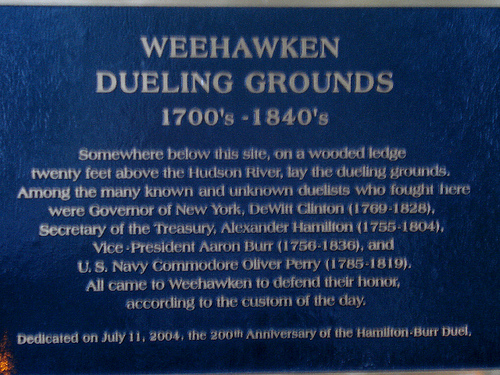
Some of my Hamilton posts below
Excerpt from Chernow's towering biography of the man
Letter to Lafayette 1789: "I dread the vehement character of your people"
1780: "A national debt ... will be to us a national blessing."
June 28, 2007
Today in History: June 28, 1914
Excerpt from the towering magnificent "Black Lamb and Grey Falcon" by Rebecca West:
This [June 28th] was a day of some personal significance to him [Franz Ferdinand]. On that date in 1900 he had gone to the Hofburg in the presence of the Emperor and the whole court, and all holders of office, and had, in choking tones, taken the oath to renounce the royal rights of his unborn children. But it was also a day of immense significance for the South Slav people. It is the feast-day of St. Vitus, who is one of those saints who are lucky to find a place in the Christian calendar, since they started life as pagan deities; he was originally a Vidd, a Finnish-Ugric deity. It is also the anniversary of the battle of Kossovo, where, five centuries before, the Serbs had lost their empire to the Turk. It had been a day of holy mourning for the Serbian people within the Serbian kingdom and the Austrian Empire, when they had confronted their disgrace and vowed to redeem it, until the year 1912, when Serbia's victory over the Turks at Kumanovo wiped it out. But, since 1913 had still been a time of war, the St. Vitus's Day of 1914 was the first anniversary which might have been celebrated by the Serbs in joy and pride. Franz Ferdinand must have been well aware that he was known as an enemy of Serbia. He must have known that if he went to Bosnia and conducted maneuvres on the Serbian frontier just before St. Vitus's Day and on the actual anniversary paid a state visit to Sarajevo, he would be understood to be mocking the South Slav world, to be telling them that though the Serbs might have freed themseves from the Turks there were still many Slavs under the Austrian's yoke.To pay that visit was an act so suicidal that one fumbles the pages of the history books to find if there is not some explanation of his going, if he was not subject to some compulsion. But if ever a man went anywhere of his own free will, Franz Ferdinand went to Sarajevo.
Another excerpt:
In January 1913 [Danilo Ilitch] had gone to Toulouse with a Moslem friend and had visited the wonderful Gachinovitch, the friend of Trotsky. He had received from the leader weapons and poison for the purpose of attempting the ife of Genera Potiorek, the Military Governor of Bosnia, but on the way he and his friend had thought better of it and dropped them out of the carriage window. Ilitch had also enrolled two schoolboys called Chubrilovitch and Popovitch, and gave them revolvers. Neither had ever fired a shot in his life. The few days before the visit of the Archduke Ilitch spent in alternately exhorting this ill-assorted group to show their patriotism by association and imploring them to forget it and disperse. He was himself at one point so overcome by terror that he got into the train and travelled all the way to the town of Brod, a hundred miles away. But he came back, though to the very end he seems at times to have urged Princip, who was living with him, to abandon the attentat, and to have expressed grave distrust of Chabriovitch on the ground that his temperament was not suited to terrorism. It might have been supposed that Franz Ferdinand would never be more safe in his life than he would be on St. Vitus's Day at Sarajevo.This very nearly came to be true. On the great day Ilitch made up his mind that the assassination should take place after all, and he gave orders for the disposition of the conspirators in the street. They were so naive that it does not seem to have struck them as odd that he himself proposed to take no part in the attentat. They were told to take up their stations at various points on the embankment: first Mehmedbashitch, then Chabrinovitch, then Chubrilovitch, then Popovitch, and after that Princip, at the head of the bridge that now bears his name, with Grabezh facing him across the road. What happened might easily have been foretold. Mehmedbashitch never threw his bomb. Instead he watched the car go by and then ran to the railway station and jumped into a train that was leaving for Montenegro; there he sought the protection of one of the tribes which constituted that nation, with whom his familiy had friendly connexions, and the tribesmen kept him hidden in their mountain homes. Later he made his way to France, and that was not to be the end of his adventures. He was to be known to Balkan history as a figure hardly less enigmatic than the Man in the Iron Mask. The schoolboy Chubrilovitch had been told that if Mehmedbashitch threw his bomb he was to finish off the work with his revolver, but if Mehmedbashitch failed he was to throw his own bomb. He did nothing. Neither did the other schoolboy, Popovitch. It was impossible for him to use either his bomb or his revolver, for in his excitement he had taken his stand beside a policeman. Chabrinovitch threw his bomb, but high and wide. He then swallowed his dose of prussic acid and jumped off the parapet of the embankment. There, as the prussic acid had no effect on him, he suffered arrest by the police. Princip heard the noise of Chabrinovitch's bomb, and thought the word was done, so stood still. When the car went by and he saw that the royal party was still alive, he was dazed with astonishment and walked away to a cafe, where he sat down and had a cup of coffee and pulled himself together. Grabezh was also deceived by the explosion and let his opportunity go by. Franz Ferdinand would have gone from Sarajevo untouched had it not been for the actions of his staff, who by blunder after blunder contrived that his car should slow down and that he should be presented as a stationary target in front of Princip, the one conspirator of real and mature deliberation, who had finished his cup of coffee and was walking back through the streets, aghast at the failure of himself and his friends, which would expose the country to terrible punishment without having inflicted any loss on authority. At last the bullets had been coaxed out of the reluctant revolver to the bodies of the eager victims.
June 28, 1914: Archduke Franz Ferdinand and his wife Sophie - setting out in their motorcade in Sarajevo, that fateful morning - as the assassins, unseen, move into position.
March 28, 2007
Today in History: March 28, 1941
TO: LEONARD WOOLF
Rodmell,
Sussex
Tuesday (18? March 1941)
Dearest, I feel certain I am going mad again. I feel we can't go through another of those terrible times. And I shan't recover this time. I begin to hear voices, and I can't concentrate. So I am doing what seems the best thing to do. You have given me the greatest possible happiness. You have been in every way all that anyone could be. I don't think two people could have been happier till this terrible disease came. I can't fight any longer. I know that I am spoiling your life, that without me you could work. And you will I know. You see I can't even write this properly. I can't read. What I want to say is I owe all the happiness of my life to you. You have been entirely patient with me and incredibly good. I want to say that - everybody knows it. If anybody could have saved me it would have been you. Everything has gone from me but the certainty of your goodness. I can't go on spoiling your life any longer.
I don't think two people could have been happier than we have been.
V.
March 28, 1941. After writing that note to her husband, Virginia Woolf put rocks in her pockets and drowned herself in the River Ouse.
March 25, 2007
Today in history: March 25, 1911
Shirt - by Robert Pinsky The back, the yoke, the yardage. Lapped seams, The nearly invisible stitches along the collar Turned in a sweatshop by Koreans or Malaysians
Gossiping over tea and noodles on their break
Or talking money or politics while one fitted
This armpiece with its overseam to the band
Of cuff I button at my wrist. The presser, the cutter,
The wringer, the mangle. The needle, the union,
The treadle, the bobbin. The code. The infamous blaze
At the Triangle Factory in nineteen-eleven.
One hundred and forty-six died in the flames
On the ninth floor, no hydrants, no fire escapes--
The witness in a building across the street
Who watched how a young man helped a girl to step
Up to the windowsill, then held her out
Away from the masonry wall and let her drop.
And then another. As if he were helping them up
To enter a streetcar, and not eternity.
A third before he dropped her put her arms
Around his neck and kissed him. Then he held
Her into space, and dropped her. Almost at once
He stepped up to the sill himself, his jacket flared
And fluttered up from his shirt as he came down,
Air filling up the legs of his gray trousers--
Like Hart Crane's Bedlamite, "shrill shirt ballooning."
Wonderful how the patern matches perfectly
Across the placket and over the twin bar-tacked
Corners of both pockets, like a strict rhyme
Or a major chord. Prints, plaids, checks,
Houndstooth, Tattersall, Madras. The clan tartans
Invented by mill-owners inspired by the hoax of Ossian,
To control their savage Scottish workers, tamed
By a fabricated heraldry: MacGregor,
Bailey, MacMartin. The kilt, devised for workers
to wear among the dusty clattering looms.
Weavers, carders, spinners. The loader,
The docker, the navvy. The planter, the picker, the sorter
Sweating at her machine in a litter of cotton
As slaves in calico headrags sweated in fields:
George Herbert, your descendant is a Black
Lady in South Carolina, her name is Irma
And she inspected my shirt. Its color and fit
And feel and its clean smell have satisfied
both her and me. We have culled its cost and quality
Down to the buttons of simulated bone,
The buttonholes, the sizing, the facing, the characters
Printed in black on neckband and tail. The shape,
The label, the labor, the color, the shade. The shirt.
More links about the Triangle Shirtwaist Fire at Pandagon.
March 5, 2007
Today in history: March 5, 1770
The Boston Massacre. Probably should say "massacre" - with quotation marks - since "massacre" was a bit of a stretch - and used more for propaganda purposes. Same as Paul Revere's famous engraving - which is pretty much how we, modern-day folks, see the Boston Massacre. It's his image - kind of brilliant (below the fold) that sticks in our mind ... the smoke from the guns, advancing redcoats, and the poor victimized colonists ... who did NOTHING to provoke such a massacre. Naturally, the truth was a little bit more complex. The rebellious crowd had gathered after an altercation between one of them and a British soldier. The British soldiers brandished their weapons, but did not shoot. The crowd were throwing things at the British soldiers - mainly snowballs, and ice. Taunting them, etc. When the whole thing ended - 5 colonists lay dead.
The tale of this massacre spread throughout the land - naturally, it was in the colonists interests to keep the outrage alive, to pump it up, to fan the flames of resentment towards the British standing army in their midst.
One of the most important things about the Boston massacre is John Adams' part in the aftermath of it. He, a lawyer in the area, defended the British soldiers. Nobody could accuse him of harboring sympathies for the British crown - although, of course, that was what he was accused of. And whatever he may have thought about the soldiers, he did think they deserved a defense. And whatever this new entity would be ... whatever this new nation would be, if they ever freed themselves from the British yoke - Adams was committed to the idea that it would be a nation "of laws, not men".
Laws above men. Everyone deserves a defense. It is the principle of the thing. (It reminds me of the great story of Alexander Hamilton lambasting the unruly crowds clamoring to attack the pro-British president of King's College. He was just a student at that time, and although he was on his way to being a full-time revolutionary - any mob like that terrified and angered him. He stood on the steps of the college and made a fiery speech about liberty that people talked about later - it was remembered. Pretty amazing.) The detachment of these gentlemen. Principled detachment.
A mob will not be allowed to decide the fate of this nation.
Anyway ... below the fold find Paul Revere's stirring engraving. Love it.
March 4, 2007
Today in history: March 4, 1789
The US Constitution went into effect - and it was also chosen as the Inauguration Day for incoming presidents, which it was until the 20th century. George Washington's first inaugural was actually on April 30, for various reasons - but his second inaugural was on March 4, 1793. His second inaugural address was the shortest address ever given:
Fellow Citizens:I am again called upon by the voice of my country to execute the functions of its Chief Magistrate. When the occasion proper for it shall arrive, I shall endeavor to express the high sense I entertain of this distinguished honor, and of the confidence which has been reposed in me by the people of united America.
Previous to the execution of any official act of the President the Constitution requires an oath of office. This oath I am now about to take, and in your presence: That if it shall be found during my administration of the Government I have in any instance violated willingly or knowingly the injunctions thereof, I may (besides incurring constitutional punishment) be subject to the upbraidings of all who are now witnesses of the present solemn ceremony.
On March 4, 1797 was the inauguration of John Adams. I love Adams' memory (of course, subjective and emotional) about what he imagined George Washington was thinking as he handed over the reins. Here's the transcription of Adam's inaugural address - which, in typical Adams fashion (love that man) is kind of chatty - - always highly intelligent - and to me, I can almost hear his voice saying it. It is at times self-serving and self-important (he basically lists his resume - which - can you blame him? Following George Washington was a thankless task - and Adams pretty much knew it going in. So he kind of lists what he has done in service for his country - whereas Washington would never have had to state his case like that.)
Employed in the service of my country abroad during the whole course of these transactions, I first saw the Constitution of the United States in a foreign country. Irritated by no literary altercation, animated by no public debate, heated by no party animosity, I read it with great satisfaction, as the result of good heads prompted by good hearts, as an experiment better adapted to the genius, character, situation, and relations of this nation and country than any which had ever been proposed or suggested.
His prose has a living quality for me in a way Washington's prose, with all its formality and brevity, never does. I always feel Adams, the real man, behind the words.
Thomas Jefferson was inaugurated on March 4, 1801 - after the first really nasty presidential campaign in our nation's history. (David McCullough describes that day in his biography of John Adams.) And to the folks who bemoan how politics nowadays are so nasty, and so personal - I suggest you learn your history. People said crap about each other back then that makes our modern blowhards look like grade school tantrum-throwers. Seriously. Jefferson meant business. Fascinating - it's one of my favorite parts of the story of our nation's birth - the story of that presidential election. I can't get enough of it. As ugly as it all was. But that's one of the reasons I love it. We are not a utopia. This American experiment was not meant, unlike other ideological constructs, to be perfect. Anyone who yearns for perfection, anyway, is either a candidate for cult membership or a dictator-in-training. It was always going to be messy, it was always going to involve compromise - but then, in the end - it was also going to involve peaceful handovers of power (ideally). Which if you look at historical precedent - almost never happened. Ever, in any civilization. In the entire story of the human race. So the fact of the election of 1801 ... and the fact that although the enemies were destroyed, pretty much ... they were not lined up against the wall and shot for being traitors, and the fight went on. The fight for power went on, and it's been going on ever since. So Utopian folks, the "wah wah, everyone was so much nicer in the past, they had better manners" - seriously need to read some books. Read the broadsides. We are mild now compared to the character assassination and vitriol that went on back then. Maybe their manners were more formal, but you think power politics have changed since then? If anything, we are nicer now. And also - to the folks who have pinwheeling-eyeballs fantasizing about some ideologically pure Utopia in the future - with no political disagreement, and permanent destruction of your opponents - you can count me already as one of your fiercest enemies. If your greatest idea of heaven on earth is 100% agreement then yo, count me out, fascists. You can strive for a perfect neat little world all by yourself, and guaranteed: you will fail. You might succeed for a little while - but rigidity like that never lasts. Again: read your history. And so - having said all that - to me, 1801 is the key to so much of who we are. The mess, the hatred, the defeat, the sucking up, the compromise, the fallout, the struggle for power - and, in the end, acceptance. 4 more years. Re-group, go in again. And Jefferson's inaugural address - with its measured phrases of unity and union ("We are all Republicans, we are all Federalists." Oh really? Tell that to my dead boyfriend.) is a masterpiece of diplomacy, and hidden agendas. He had just destroyed his political enemies - he said he abhorred "factionalism" and yet when it came down to it - he played it dirtier than anybody. He writes "every difference of opinion is not a difference of principle" ... and yet he referred to some of Adam's views (in a letter not meant to be read publicly) "political heresies" - a phrase which caused the years-long riff between these two old friends and colleagues. Political "heresies". Jefferson's writing is untouchable. Seriously. He's the best. It's so smooth, so elegant.
On March 4, 1829 Andrew Jackson was inaugurated - and, notoriously, invited the entire public to join the festivities at the White House. Apparently things got way out of hand - people were wasted - tramping through the house - furniture was ruined - things were stolen - and Jackson had to flee from the building through a window to escape the masses. haha
Here's his address and also a painting of the "public" on that day in 1829.

Oh - and then of course - there is the sad (and yet I can't help it, I laugh) story of William Henry Harrison's inaugural - on March 4, 1841. (William Henry Harrison and his oh-so-brief tenure as President will always remind me of Jackie's son - explanation here.) What happened that day is notorious. His speech was five billion years long - there was a freezing icy storm that day - he stood outside, said his speech -which took him 2 hours - maybe more - and then caught pneumonia and died a month later. Not to disrespect the dead and I know that Elements of Style wasn't even written then - but I think Harrison could definitely have benefited from Strunk and White's most important rule for writers: "Omit needless words."
Abraham Lincoln was inaugurated (for the first time) on March 4, 1861. His first inaugural is (in my humble opinion) a masterpiece. Within the first two sentences, you MUST read to the end - his prose is that simple and that heartfelt and compelling. And look at how he gets right to the point. I find it hard to imagine how the ending of this speech could be improved upon. It brings tears to my eyes:
My countrymen, one and all, think calmly and well upon this whole subject. Nothing valuable can be lost by taking time. If there be an object to hurry any of you in hot haste to a step which you would never take deliberately, that object will be frustrated by taking time; but no good object can be frustrated by it. Such of you as are now dissatisfied still have the old Constitution unimpaired, and, on the sensitive point, the laws of your own framing under it; while the new Administration will have no immediate power, if it would, to change either. If it were admitted that you who are dissatisfied hold the right side in the dispute, there still is no single good reason for precipitate action. Intelligence, patriotism, Christianity, and a firm reliance on Him who has never yet forsaken this favored land are still competent to adjust in the best way all our present difficulty.In your hands, my dissatisfied fellow-countrymen, and not in mine, is the momentous issue of civil war. The Government will not assail you. You can have no conflict without being yourselves the aggressors. You have no oath registered in heaven to destroy the Government, while I shall have the most solemn one to "preserve, protect, and defend it."
I am loath to close. We are not enemies, but friends. We must not be enemies. Though passion may have strained it must not break our bonds of affection. The mystic chords of memory, stretching from every battlefield and patriot grave to every living heart and hearthstone all over this broad land, will yet swell the chorus of the Union, when again touched, as surely they will be, by the better angels of our nature.
"I am loath to close." "The mystic chords of memory." Now that is rhetorical style. Goose bumps.
Here's a photo of his first inauguration:

March 4, 1865 was Lincoln's second inauguration as President.
The text of Lincoln's second inaugural:
Fellow-Countrymen:At this second appearing to take the oath of the Presidential office there is less occasion for an extended address than there was at the first. Then a statement somewhat in detail of a course to be pursued seemed fitting and proper. Now, at the expiration of four years, during which public declarations have been constantly called forth on every point and phase of the great contest which still absorbs the attention and engrosses the energies of the nation, little that is new could be presented. The progress of our arms, upon which all else chiefly depends, is as well known to the public as to myself, and it is, I trust, reasonably satisfactory and encouraging to all. With high hope for the future, no prediction in regard to it is ventured.
On the occasion corresponding to this four years ago all thoughts were anxiously directed to an impending civil war. All dreaded it, all sought to avert it. While the inaugural address was being delivered from this place, devoted altogether to saving the Union without war, urgent agents were in the city seeking to destroy it without war—seeking to dissolve the Union and divide effects by negotiation. Both parties deprecated war, but one of them would make war rather than let the nation survive, and the other would accept war rather than let it perish, and the war came.
One-eighth of the whole population were colored slaves, not distributed generally over the Union, but localized in the southern part of it. These slaves constituted a peculiar and powerful interest. All knew that this interest was somehow the cause of the war. To strengthen, perpetuate, and extend this interest was the object for which the insurgents would rend the Union even by war, while the Government claimed no right to do more than to restrict the territorial enlargement of it. Neither party expected for the war the magnitude or the duration which it has already attained. Neither anticipated that the cause of the conflict might cease with or even before the conflict itself should cease. Each looked for an easier triumph, and a result less fundamental and astounding. Both read the same Bible and pray to the same God, and each invokes His aid against the other. It may seem strange that any men should dare to ask a just God's assistance in wringing their bread from the sweat of other men's faces, but let us judge not, that we be not judged. The prayers of both could not be answered. That of neither has been answered fully. The Almighty has His own purposes. "Woe unto the world because of offenses; for it must needs be that offenses come, but woe to that man by whom the offense cometh." If we shall suppose that American slavery is one of those offenses which, in the providence of God, must needs come, but which, having continued through His appointed time, He now wills to remove, and that He gives to both North and South this terrible war as the woe due to those by whom the offense came, shall we discern therein any departure from those divine attributes which the believers in a living God always ascribe to Him? Fondly do we hope, fervently do we pray, that this mighty scourge of war may speedily pass away. Yet, if God wills that it continue until all the wealth piled by the bondsman's two hundred and fifty years of unrequited toil shall be sunk, and until every drop of blood drawn with the lash shall be paid by another drawn with the sword, as was said three thousand years ago, so still it must be said "the judgments of the Lord are true and righteous altogether."
With malice toward none, with charity for all, with firmness in the right as God gives us to see the right, let us strive on to finish the work we are in, to bind up the nation's wounds, to care for him who shall have borne the battle and for his widow and his orphan, to do all which may achieve and cherish a just and lasting peace among ourselves and with all nations.
Many people who were there that day describe a sense of impending doom over the event.

Lincoln was assassinated on April 14, 1865, 42 days later. Andrew Johnson would be sworn into office on April 15, 1865.
The last president to be inaugurated on March 4 was Franklin Delano Roosevelt on March 4, 1933. Here is his first inaugural address. Despite his polio legs and disability - he walked up the staircase to the podium, and stood - to give his address, and kept standing, for the swearing-in.

February 22, 2007
"Do YOU BELIEVE IN MIRACLES?? YES!!!!!!!"
27 years ago today, the US Olympic hockey team beat the "unbeatable" Russian hockey team at Lake Placid. The Miracle on Ice.
That famous photograph of the team FREAKING OUT features, in the foreground, defenseman Jack O'Callahan, straddling defenseman Mike Ramsey (in the HBO documentary Do You Believe In Miracles? - Ramsey says, with this look on his face which brings a lump to my throat just mentioning it: "I'll take that picture ....... to my grave with me.") ... with absolute MAYHEM behind them. I've looked at that photo so many times and yet - it still seems fresh to me. Their joy is still infectious, so many years later.
Like most of us who were alive at that time, and at all aware of anything, I have vivid memories of the 1980 Winter Olympics, and of these college kids who came along and slayed the Russian dragon. I was particularly into the whole thing because of the Boston presence on the team. My family's from Boston. There was a regional component to our triumph, as well as a national component.
However, it is only in retrospect that I realize just how HUGE the whole thing actually was. I didn't really get the context of it while it was happening - the Cold War context, and also the hockey context - just how huge a dynasty the Russians had, in terms of how they played the game, how they dominated international hockey, etc.
I must say to EVERYONE out there who has televisions (speaking as a chick who had no TV for 2 years, I totally understand - and as someone who no longer has a TV, I get it) ...Keep an eye open for the documentary I mentioned: "Do You Believe in Miracles" - or perhaps it's on Netflix. I own it, naturally, but I'm sure it is available otherwise. Even without the topic, which I love - it is one of my favorite documentaries ever made. I watch it so often that it's embarrassing. But it NEVER. gets old.
Narrated beautifully and simply by Liev Schrieber - with interviews with Jim Craig, Herb Brooks, Jack O'Callahan, Craig Whitney, Eric Strobel, Dave Silk (who was my personal favorite, I admit it) - and many others - the documentary just GETS the big-ness of the event. It GETS the magnitude. I get goose-bumps watching it.
I remember having a discussion here on this blog about the greatest moment in sports history. The general consensus was that the miracle on ice HAD to be # 1. There were no other contenders, really.
Al Michaels, the dude who made the famous "Do you believe in miracles?" call (which - when you listen to it - in the moment - AS the game is going on - you just can FEEL the emotion, the amazement - the guy is absolutely flipping his lid - it's awesome). But anyway, he is also interviewed quite a bit in the documentary - and he said at one point, in terms of how the game happened at 5 pm on a Friday night - and the network made the unprecedented decision to tape it and then re-play it that night at 8 pm - because by that point, everybody wanted to see this match-up - He said, "And so on Friday, you had this bizarre circumstance of people filing into the arena for what was, essentially, a matinee. Little did any of those people know that they were about to witness one of the greatest sporting events of their lives."
I've posted a bunch of stuff on the miracle on ice - mainly as a lead-up to the film coming out - which I was excited and anxious over ... The story means so much to me, and I was terrified they would mess it up (I don't feel they did - by the way - loved the movie - but it can't hold a candle to that documentary, and seeing the real thing. MAN.)
The greatest moments in sports history
December 7, 2006
Today in history:
Dec. 7, 1941:
Kinda gives you a chill to see. I found this image last year and posted it. Here it is again.
December 1, 2006
Today in History: Dec. 1, 1934
Josef Stalin and Sergei Kirov
Since I'm reading this book right now - I'll finish it tonight - it's only 150 pages long, not even ... I thought it would be appropriate to note that Today in History, 1934 - Sergei Kirov was murdered. (More here.)
The murder was the excuse ... the excuse to launch the terror that would grip the country for a decade after until any opposition was either killed, imprisoned, or completely pacified. (The word "pacification" always gives me a chill - in this context.) Robert Conquest, in his introduction to this book, writes:
This century has seen horrible crimes on a mass scale, culminating in the Jewish Holocaust. No comparison with these can be sustained. But as an individual murder, there is, for various reasons, none to match the Kirov murder.Single events - even accidental ones - have often turned the path of history. The assassination of the Archduke Franz Ferdinand, just over twenty years previously, brought on a perhaps otherwise avoidable Great War. At any rate, that is the only individual crime (or dual crime, since the Archduke's morganatic wife was also killed) with which the Kirov murder can remotely be compared. But even the assassination of the Archduke had no further intrinsic result beyond the crisis leading to war. There was no mystery about the responsibility. No long-lasting politicies were based on any theoretical view of it.
The Kirov murder, however, was made the central justification for the whole theory of Stalinism and the necessity for endless terror.
Of course - Conquest had first published most of his books before the Soviet Union had opened up, before perestroika, glasnost, and all the rest, and he had to pretty much guess at a lot of this stuff. The reports of the "trials", the credulous Western witnesses (Beatrice and Sidney Webb, for example - but there were many other useful idiots), the lack of any reliable documentation ... at least not available to us. Conquest's accomplishment is even that much more astonishing - since he was working almost blind.
As Conquest wrote many years later, in his Great Terror: A Reassessment:
This killing has every right to be called the crime of the century. Over the next four years, hundreds of Soviet citizens, including the most prominent political leaders of the Revolution, were shot for direct responsibility for the assassination, and literally millions of others went to their deaths for complicity in one or another part of the vast conspiracy which allegedly lay behind it. Kirov's death, in fact, was the keystone of the entire edifice of terror and suffering by which Stalin secured his grip on the Soviet peoples.
Chapter 1 of the book I am now reading is entitled "The Murder".
Here's an excerpt:
The Smolny, a handsome structure with a classical front of pillars and pediment, set in its own park facing eastward up the Neva, was where Kirov had his offices. Seventeen years earlier the former aristocratic girls' school had been the headquarters from which Lenin directed the seizure of power. Since the transfer of the capital to Moscow, it had been the center from which not only Leningrad city and province, but the whole Soviet Northwest, was controlled. Kirov's offices and those of other local leaders were on the third floor (i.e., the British second floor).Kirov had returned on 29 November from a plenary session of the Central Committee of the Communist Party in Moscow. The other Leningrad members of that Committee had accompanied him: in particular his number two, and most trusted colleague, the "shockheaded" Mikhail Chudov, Second Secretary of the Leningrad Provincial Committee of the Party; and his other "closest collaborators," as an official biography puts it, the "elegant" I.F. Kodatsky, head of the city's government as Chairman of its Executive Committee; P.A. Alekseyev, Chairman of the Leningrad Trade Unions; A.I. Ugarov, Secretary of the City Committee; P.I. Struppe, Chairman of the Provincial Executive Committee; and B.P. Pozern and P.I. Smorodin, Secretaries of the City Committee, Kirov, Chudov, Kodatsky, and Alekseyev were full members, and the others candidate members of the Central Committee.
They had already reported to the Leningrad Committees, and on the evening of 1 December the whole of the active membership - the aktiv - of the city's party were to assemble for a more public report at the Tavride Palace. Soon after 4 p.m. Kirov arrived at the Smolny to confer with Chudov and others on the text of the report. It was already dark and there was snow on the ground.
According to one official Soviet biography "his personal guard" had accompanied him in his car but did not follow him upstairs into the Smolny. This man, a veteran called Borisov, is described as devoted to Kirov. He had been detained by men of the People's Commissariat of Internal Affairs (NKVD), and is next heard of at Leningrad NKVD headquarters. He had two days to live.
Kirov went up to his office without him, perhaps not noticing that the usual guards on each floor were also absent.
All accounts agree that the assassin had entered the Smolny without difficulty, and gone up to the third floor. He had earlier worked there, and had a good knowledge of the building. He seems to have hidden in a lavatory, from which he watched the arrival of Kirov's car.
Kirov first conferred briefly with Chudov and others. There is some divergence even in official accounts, and more in others, about which room this meeting took place in, but this is of no great significance. In any case, it seems that he left Chudov's office, or more probably his own reception room, and walked along the corridor to his 'working office'. To reach it, he had to make a left turn, which allowed the assassin, emerging from his retreat, to shoot him in the back of the neck.
The next divergence in the accounts is of more significance. In most, only one shot is mentioned or assumed, but some speak of two shots, the second fired by the assassin in a suicide attempt, but missing him and hitting the ceiling. One report has a different explanation for this second shot.
In any case, the assassin fainted and fell beside his victim. Chudov and the others hurried out into the corridor. Kirov was carried bleeding and unconscious into his office and, when the doctors came, was given adrenalin, ether, camphor, and caffeine, but he soon died. The autopsy gives in great detail the path of the bullet and its effects. It was also established that a Nagan revolver was used, and that this was what was found near the assassin. Meanwhile, NKVD men arrested the unconscious killer, and Chudov telephoned the news to Moscow.
The murder was not done on impulse. The assassin had been preparing his act since the summer. But after various setbacks, his final written plan of the campaign is dated 1 November 1934, in the interrogation records.
It will be seen that there were already some suspicious circumstances. The mere fact of an assassin seeking to kill Kirov is easily enough understood (though his precise motives remained to be established). The question was, how did he get the opportunity? Why were the Smolny guards absent? Where was Kirov's own bodyguard?
Or, to put it another way, who gave him his chance, and why?
Photo of Kirov's funeral procession. Note the presence of Stalin behind the casket. Unbelievable.

In the first days when Leningrad was orphaned, Stalin rushed there. He went to the place where the crime against our country was committed. The enemy did not fire at Kirov personally. No! He fired at the proletarian revolution.�Pravda, 5 December 1934
November 26, 2006
Today in History: November 26, 1942
Casablanca premiered at the Hollywood Theatre in New York City. It was not expected to be a long-lasting mythical evocation of the quintessential American ideals we all aspire to, from generation to generation. It was just supposed to be another one of the pro-war propaganda movies the studios were churning out at that time. It went on to win the Academy Award the next year - but again, lots of films win Academy Awards and don't go on to achieve legendary status.
The legend around the film began growing in the late 50s, a couple of years after Bogart's death. The stories about the Casablanca showings at the Brattle Theatre in Cambridge Massachusetts are now famous ... and make me wish for a time machine.
Aljean Harmetz, author of The Making of Casablanca, explains:
Humphrey Bogart died in 1957. The cult of Casablanca was born three months later. If Cyrus Harvey, Jr., was not the father of the phenomenon, he was certainly the midwife. In 1953, Harvey and Bryant Haliday had turned the Brattle Theatre across from, Harvard University into an art cinema. Harvey, who had spent much of his Fulbright scholarship year in Paris watching movies at Henri Langlois's Cinemathique Francaise, programmed the Brattle with European classics and the early films of Fellini, Antonini, Truffaut, and Ingmar Bergman, for whom Harvey and Halliday became the American distributors."At some point, we thought that we ought to bring in some of the American films that hadn't been shown that much," says Harvey. "And my partner and I both thought that the Bogarts were vastly underrated. I think Casablanca was the first one we played. It was my favorite. I thought that Bogart was probably the best American actor who ever lived. And the picture caught on very rapidly. The first time we played it, there was a wonderful reaction. Then the second, third, fourth and fifth times it took off. The audience began to chant the lines. It was more than just going to the movies. It was sort of partaking in a ritual."
Casablanca played at the Brattle for the first time on April 21, 1957. It was so successful with Harvard students that it was held over for a second week. Then the Bogart festivals began, with six or eight of his mopvies playing each semester during final-examination weeks. The festivals would culminate with Casablanca. It was at Harvard that the relevance of Casablanca to a generation that had no relationship to World War II became apparent.
So. Happy birthday to a film that has done so much to shape how we think about ourselves. It has meant different things to different generations - and that's the definition of a good piece of art. If you watch a lot of the other WWII movies made at that time - they seem dated, overblown, propagandistic, and overly simplistic. Not this one. Not this one.
I have a feeling (just a hunch) that if Ilse had not gotten on that plane with Victor - if she had stayed with Rick ... the movie would not be remembered today. It might be still watched, on late-night movie channels, but it would not have taken on that mythical quality. It is the vision of self-sacrifice that taps into our deepest held beliefs and hopes. It is who we hope and aspire to be. It is a noble outlook ... and yet, at the center of the film, is the Rick character, who says he is not good at being noble. If you make a big deal out of your own nobility, then you are just a jackass who thinks way too highly of yourself. But if you quietly, and with no fanfare, do the right thing - abdicate your own wants for a greater cause, practice the art of letting go ... then you truly deserve to be called noble.
Below are a bazillion quotes from various sources about the making of this film. And also what it means to us now.
If you're a fan of this movie - enjoy!!
Assorted quotes:
Billy Wilder says, "This is the most wonderful claptrap that was ever put on the screen ... Claptrap that you can't get out of your mind. The set was crummy. By God, I've seen Mr. Greenstreet sit in that same wicker chair in fifty pictures before and after, and I knew the parrots that were there. But it worked. It worked absolutely divinely. No matter how sophisticated you are and it's on television and you've seen it 500 times, you turn it on."
Sociologist Todd Gitlin writes:
Casablanca dramatizes archetypes. The main one is the imperative to move from disengagement and cynicism to commitment. The question is why Casablanca does this more effectively than other films. Several other Bogart films of the same period -- Passage to Marseilles, To Have and Have Not, Key Largo -- enact exactly the same conversation. But the Rick character does not simply go from disengagement to engagement but from bitter and truculent denial of his past to a recovery and reignotion of the past. And that is very moving, particularly because it is also associated with Oedipal drama. But there is also a third myth narrative, a story about coming to terms with the past. Rick had this wonderful romance; he also had his passionate commitment. It seems gone forever. But you can get it back. That is a very powerful mythic story, because everybody has lost something, and the past it, by definition, something people have lost. This film enables people to feel that they have redeemed the past and recovered it, and yet without nostalgia. Rick doesn't want to be back in Paris. And the plot is brilliantly constructed so that these three myths are not three separate tales, but one story with three myths rushing down the same channel.
Aljean Harmetz, author of The Making of Casablanca writes:
I was in elementary school during World War II; I did my part in the war by rolling tinfoil and rubber bands into balls and bringing them to the Warners Beverly Theatre on Saturday mornings. World War II had receded with all its certainties and moral imperatives, leaving muddy flats behind. The world is a cornucopia of grays. I believed the romantic interpretation of Casablanca then -- love lost for the good of the world -- and believe it now. But it is the very ambiguity of Casablanca that keeps it current. Part of what draws moviegoers to the movie again and again is their uncertainty about what the movie is saying at the end ...Casablanca's potent blend of romance and idealism -- a little corny and mixed with music and the good clean ache of sacrifice and chased down with a double slug of melodrama -- is available at the corner video store, but Casablanca couldn't be made today. There is too much talk and not enough action. There are too many characters too densely packed, and the plot spins in a hard-to-catch-your-balance circular way instead of walking a straight line. There is no Humphrey Bogart to allow the audience a permissible romance without feeling sappy. And the studio would insist that all the ambiguity be written out in the second draft.
From The Making of Casablanca:
"Bogart had competence," says Billy Wilder. "You felt that, if that big theatre where you were watching Casablanca caught on fire, Bogart could save you. Gable had that same competence and, nowadays, Mr. Clint Eastwood." But Gable is too heroic for a disillusioned world. Three decades after his death, Bogart still seems modern. "He wore no rose-colored glasses," wrote Mary Astor. "There was something about it all that made him contemptuous and bitter. He related to people as though they had no clothes on -- and no skin, for that matter."
From The Making of Casablanca:
Of the seventy-five actors and actresses who had bit parts and larger roles in Casablanca, almost all were immigrants of one kind or another. Of the fourteen who were given screen credit, only Humphrey Bogart, Dooley Wilson, and Joy Page were born in America. Some had come for private reasons. Ingrid Bergman, who would lodge comfortably in half a dozen countries and half a dozen languages, once said that she was a flyttfagel, one of Sweden's migratory birds. Some, including Sydney Greenstreet and Claude Rains, wanted richer careers. But at least two dozen were refugees from the stain that was spreading across Europe. There were a dozen Germans and Austrians, nearly as many French, the Hungarians SZ Sakall and Peter Lorre, and a handful of Italians."If you think of Casablanca and think of all those small roles being played by Hollywood actors faking the accents, the picture wouldn't have had anything like the color and tone it had," says Pauline Kael.
Dan Seymour remembers looking up during the singing of the Marseillaise and discovering that half of his fellow actors were crying. "I suddenly realized that they were all real refugees," says Seymour.
From The Making of Casablanca:
Bogart and Rains admired each other, and that admiration comes through their scenes together. What seems to be a genuine friendship between Rick and Renault takes the sting out of the ending of Casablanca. "My father loved Humphrey Bogart," says Jessica Rains. "He told me so." The cockney who turned himself into a gentleman was unexpectedly compatible with the gentle-born son of a doctor and a famous illustrator who turned himself into a rowdy. "Professional" is the word the people they worked with pin, like a badge, to both men. "Bogart never missed a cue," says script supervisor Meta Carpenter. "He was completely professional." Rains, says assistant director Lee Katz, "was very professional altogether." To the Warner hairdressers, said Jean Burt, Bogart and Bette Davis were "the real pros. They were on time; they knew their lines; they knew their craft."
From The Making of Casablanca:
[During shooting] Bogart was snappish and moody. Love scenes were uncharted waters for him. "I've always gotten out of my scrapes in front of the camera with a handy little black automatic," he told a journalist who visited the Casablanca set during production. "It's a lead pipe cinch. But this. Well, this leaves me a bit baffled." The interview is typically frothy and insubstantial as Bogart plays with the idea of becoming a sophisticated lover or a caveman lover. But, even as he jokes about it, his uneasiness is obvious. "I'm not up on this love stuff and don't know just what to do."According to a memoir by Bogart's friend Bathaniel Benchley, before Casablanca began shooting, a mutal friend, Mel Baker, advised Bogart to stand still and make Bergman come to him in the love scenees. Bogart appears to have taken the advice, but his reticence may have been as much innate as calculated. Nearly a dozen years after Casablanca, Bogart told a biographer that love scenes still embarrassed him. "I have a personal phobia maybe because I don't do it very well," he said.
"What the women liked about Bogey, I think," said Bette Davis, "was that when he did love scenes he held back -- like many men do -- and they understood that." Miscast as an Irish horse trainer in Dark Victory, Bogart had tried to make love to Davis, who played his rich employer. Said Davis, "Up until Betty Bacall I think Bogey was really embarrassed doing love scenes, and that came over as a certain reticence. With her he let go, and it was great. She matched his insolence."
However distant Bogart and Bergman may have been from each other in real life, and however uneasy Bogart may have been with Bergman in his arms, their love scenes have the poignancy and passion that Hollywood calls chemistry. "I honestly can't explain it," says Pauline Kael, "but Bogart had that particular chemistry with ladylike women. He had it with Katherine Hepburn in The African Queen and he so conspicuously had it with Lauren Bacall -- who pretended to be a tough girl but really wasn't -- in To Have and Have Not. But he didn't have it with floozy-type girls."
Critic Stanley Kauffmann explains the match between Bogart and Bergman as the resonance of a relationship between brash America and cultured Europe. "She was like a rose," he says. "You could almost smell the fragrance of her in the picture, and you could feel his whiskers when you looked at the screen. It was intangible."
From The Making of Casablanca:
Of the stars, Bergman had the more difficult job. Bogart had only to play a man in love. Foreshadowing without giving away too much, Bergman had to let the audience know that love wasn't enough.ILSA. And I hate this war so much. Oh, it's a crazy world. Anything can happen. If you shouldn't get away, I mean, if something should happen to keep us apart. Wherever they put you and wherever I'll be, I want you to know that I -- Kiss me! Kiss me as though it were the last time.
And Bergman had to hold the audience even when she was saying dialogue that was so richly romantic that it was almost a parody, including, "Was that cannon fire? Or was it my heart pounding?"
Her voice and her face could make almost anything believable. In 1947, several top sound men agreed that Bergman had the sexiest voice of any actress. "The middle register of her voice is rich and vibrant, which gives it a wonderfully disturbing quality," said Francis Scheid. "It's sexy in a refined, high-minded way." "The face is quite amazing," says Pauline Kael. "I think she had a physical awkwardness on the stage and in her early films, but I think somehow that the beauty of her face obviated it. Even in Casablanca, her physical movements are not very expressive. But you didn't really care."
From The Making of Casablanca:
Casablanca started on Stage 12A with the flashback to Rick and Ilsa's romance in Paris. It was an accident that Bogart was required to make love to Bergman almost before he was introduced to her. Originally, production was to start in Rick's Cafe on Stage 8, but the intricate clockwork that matched actors, scripts, stages, and sets had been thrown off because Irving Rapper was two weeks behind schedule on Now, Voyager. Claude Rains didn't finish his role as the wise psychiatrist in Now, Voyager until June 3. Paul Henreid was not free until June 25. So the [Michael] Curtiz movie began with the scene in the Montmartre cafe. The first day, a lovestruck Richard Blaine -- "His manner is wry but not the bitter wryness we have seen in Casablanca" say the stage directions -- pours champagne for himself, Ilsa, and Sam while the Germans march toward Paris and Sam plays, "As Time Goes By".According to Geraldine Fitzgerald, Bogart and Bergman had lunch together a week or ten days before Casablanca started production. "I had lunch with them," she says. "And the whole subject at lunch was how they could get out of the movie. They thought the dialogue was ridiculous and the situations were unbelievable. And Ingrid was terribly upset because she said she had to portray the most beautiful woman in Europe, and no one would ever believe that. It was curious how upset she was by it. 'I look like a milkmaid,' she said.
From The Making of Casablanca:
"I remember," says film critic Pauline Kael, "my friends and I talked about when are the executives going to discover this guy [Humphrey Bogart]. It was early in his career, when he appeared in horror movies and all sorts of stuff that Warners threw at him. We liked him years before he got the leading roles. he was small, but he knew how to use every part of himself. By the late thirties, he was quite in charge of everything in his performance. He had a tension, like a coiled spring. You didn't want to take your eyes off him."In The Maltese Falcon, as Dashiell Hammett's detective Sam Spade, Bogart carried to the right side of the law the wary watchfulness, the cynicism, and the ambiguities that had infused his deadliest killers. "I think it was his very best performance," says Kael, who was twenty years old in 1941 when she saw the movie for the first time. "Because you got a sense of the ambivalances in th eman, and he used all the tensions marvelously physically. I don't think he could have been as good as he was in Casablanca if he hadn't done the Falcon first, because he really discovered his powers in the Falcon. he created more tension in his scenes than he ever had before. And I think afterwards he drew on the qualities he had discovered in himself in the Falcon. So I think it was [John] Huston who brfought those things out. And [Michael] Curtiz benefited from them."...
The arc of Bogart's career at Warner Brothers can be seen in how and when he chose to fight Warner -- and with what success. Bogart was suspended for refusing to play the part of the outlaw Cole Younger in Bad Men of Missouri ... His suspension ended in June 1941, when George Raft, whose career decisions at Warners were unerringly wrong, refused The Maltese Falcon because "it is not an important picture." And what would have happened if Raft had agreed to play Sam Spade? The odds are high that Bogart would have made a breakthrough in some other movie. The disillusionment, stoicism, and weary aloofness that he brought to the screen fit the heroes of a new kind of movie melodrama, film noir, too well to have gone unnoticed ...
Warner Brothers could overuse and misuse its actors. It could dump Van Johnson and Susan Peters in 1942 and let MGM build their careers. But the studio would not have remained in business if it had missed the obvious. The Maltese Falcon had been immensely profitable, and George Raft was becoming more difficult with every role he was offered. In January 1942, Bogart demanded $3,000 a week and the right to do ten guest radio appearances a year. He was given a new contract, starting at $2,750 a week. After six years at Warners, Bogart finally had a star's contract. Warner Brothers was stuck with him for seven years, and the studio began to look for a role that would turn him into a romantic lead.
On February 14, [Hal] Wallis sent a memo to Steve Trilling: "Will you please figure on Humphrey Bogart and Ann Sheridan for Casablanca, which is scheduled to start the latter part of April." Six weeks later, Jack Warner wrote Wallis that George Raft was lobbying him for the role. Wallis held firm and Casablanca had the first of its three stars.
From The Making of Casablanca:
Much of the major work on the Casablanca screenplay was done between April 6, when Howard Koch was assigned to the movie, and June 1, when a revised final script was mimeographed ...Each subsequent script for Casablanca became leaner and sharper, more economical, the scenes rearranged for greater dramatic effect and the speeches polished and clipped. Within the confines of a studio that both Koch and Julie Epstein describe as 'a family", Koch rewrote the Epsteins to give the movie more weight and significance, and the Epsteins then rewrote Koch to erase his most ponderous symbols and to lighten his earnestness.
This kind of survival-of-the-fittest script is unlikely to happen today, when writers, director, and studio executives come insecurely and suspiciously together to make a single movie, the original writer is rarely brought back after his work is rewritten, and screen credit means that someone gets extra money from television and videocassette sales...
At the beginning of May, the Epsteins finished the second section of the script of Casablanca, while Howard Koch turned in his revision of the Epsteins' first act. Earlier, in nineteen pages of suggestions of "Suggestions for Revised Story", Koch had warned:
There is also a danger that Rick's sacrifice in the end will seem theatrical and phony unless, early in the story, we suggest the side of his nature that makes his final decision in character. It would be interesting to have Renault penetrate the mystery in his first scene with Rick when he guesses that the cynical American is underneath, a sentimentalist. Rick laughs at the idea, then Renault produces his record -- "ran guns to Ethiopia", "fought for the Loyalists in the Spanish War." Rick says he got well paid on both occasions. Renault replies that the winning side would have paid him better. Strange that he always happens to be on the side of the underdog. Rick dismisses the implication, but throughout the picture we see evidences of his humanity, which he does his best to cover up.Koch's script of May 11 also deepened Rick's character and underlined the political tensions in subtle ways. For example, Koch makes the man Rick bars from his gambling room -- who was an English cad in the play -- into a representative of the Deutschebank. When the owner of the Blue Parrot offers to buy Rick's Cafe, Koch has added dialogue in which the character played by Sidney Greenstreet also offers to buy Sam, and Rick says, "I don't buy or sell human beings." (In their rewrite of Koch's script, the Epsteins would build on Koch's line by having Greenstreet respond, "That's too bad. That's Casablanca's leading commodity.") If Koch layered the politics rather heavily -- in his version, Victor Laszlo forces Renault to toast liberte, egalite, fraternite -- the Epsteins would remove those speeches in the script of June 1. With delicate balance, Koch managed to hold down the gags while the Epsteins managed to cut out the preaching.
From The Making of Casablanca:
In the Epsteins' first script, Lois is still Lois and Renault's womanizing still has an unpleasant edge. However, the groundwork has been laid for the relationship between Rick and Renault, which may lie as close to the emotional heart of the film as the relationship between Rick and Ilsa. The Epsteins have created a bantering between equals, an admiration at the edges of the frame.RENAULT. I have often speculated on why you do not return to America. Did you abscond with the church funds? Did you run off with the President's wife? I should like to think you killed a man. It is the romantic in me.
RICK. It was a combination of all three.
RENAULT. And what in Heaven's name brought you to Casablanca?
RICK. My health. I came to Casablanca for the waters.
RENAULT. Waters? What waters? We are in the desert.
RICK. I was misinformed.
Says Epstein today: "My brother and I tried very hard to come up with a reason why Rick couldn't return to America. But nothing seemed right. We finally decided not to give a reason at all."
From The Making of Casablanca:
The sixty-six pages of script, labeled Part I TEMP., were mimeographed on April 2. The Epsteins had written the first third of the movie, the section preceding the flashback to Rick and Ilsa's Paris romance. Ilsa and her Resistance-hero husband had come to Casablanca, and at the end of the Epsteins' script, Rick was sprawled drunkenly in his empty cafe, waiting for her to return."That first part was very close to the play," Epstein says. "It was with the second half that we had trouble."
Those sixty-six pages mirror the final movie. The Epsteins even begin with a spinning globe, an animated map, and a description of the refugee trail that leads to Casablanca. Everybody Comes to Rick's took place inside Rick's Cafe, and Rick was the first character to be introduced. The Epsteins start by creating the feel of Casablanca: A man whose papers have expired is short by the police; a pickpocket warns his victims that vultures are everywhere; refugees look up longingly as an airplane brings the Gestapo captain (a few scripts later he was promoted to major) Strasser to Casablanca and lands beyond a neon sign that reads RICK'S. Inside the cafe, a dozen desperate refugees try to buy or sell their way to freedom. Rick is not introduced until page 15, when a hand writes "Okay -- Rick" on the back of a check and the camera pulls back to a medium shot of Humphrey Bogart. And the plot is driven by an invention of the Epsteins: the Letters of Transit were being carried by two German couriers who have been murdererd.
Of the four major characters in Everybody Comes to Rick's, only the noble Victor Laszlo remains essentially the same in the movie. Rick, who in the play is a self-pitying married lawyer who has cheated on his wife, takes on Bogart's persona of wary, hooded toughness. Says Jules Epstein: "Once we knew that Bogart was going to play the role, we felt he was so right for it that we didn't have to do anything special. Except we tried to make him as cynical as possible."
From The Making of Casablanca:
However, there was no mistaking the fact that Casablanca, with its snappy dialogue, eccentric characters, witty cynicism, wary anti-hero and liberal political message was definitely a Warner movie. Casablanca is a less raw and angry melodrama than the studio might have made a few years earlier, but it has the same distrust of authority and suspicion of human nature. America's entry into the war was already softening movies by requiring them to throb with patriotism, but the milieu of Casablanca is still corrupt, and the little people still don't get a fair shake.
From The Making of Casablanca:
Bogart's response to the success of Casablanca was more typically sardonic. He enjoyed telling his fourth wife, Lauren Bacall, how Charles Enfield, the studio's head of publicity, had had the amazing revelation that the actor had sex appeal. Says Bacall, "Bogie would say, 'Of course, I did nothing in Casablanca that I hadn't done in twenty movies before that, and suddenly they discover I'm sexy. Any time that Ingrid Bergman looks at a man, he has sex appeal.'"
From The Making of Casablanca:
Warner Brothers was the most frugal of the studios, and little was wasted there in 1942. World War II gave the studio's president, Harry Warner, an excuse to pick up nails dropped by careless carpenters. But he had obsessively picked up nails before the war made iron scarce. Casablanca moved onto the French Street created for The Desert Song the day after that film moved off. A few signs and two live parrots turned the French Morocco of heroic freedom fighter El Khobar into the French Morocco of heroic freedom fighter Victor Laszlo. And half a dozen bit players with foreign accents got a full week's work by straddling the two films. More than half of the movies Warners made in 1942 dealt in one way or another with the war, a bonanza for actors who had fled from Berlin or Vienna. Casablanca was filled with those Jewish refugees, many of them playing Nazis.
Film critic Stanley Kauffmann wrote:
"Bogart absolutely encapsulates permissible romance. In this disillusioned, disenchanted world here was a romantic hero we could accept. I think that that disenchantment began with World War I and the emergence of what could be called the Hemingway -- the undeluded -- generation. And I think that that revulsion with the romances and the lies of the nineteenth century and the twentieth century has persisted. There have been plenty of representatives of the lovely bucolic strain of American life on the screen. Bogart was someone urban -- in a sense more jagged and abrasive than Cagney -- who you felt was suffering. Cagney was triumphant. Bogart was tough, but he had sensitivity. Certainly the epitome he stood for was in Casablanca. I was misinformed. That's the twentieth century."
Roger Ebert - who provides the commentary to the DVD (and I highly suggest you check it out, if you haven't already - it's marvelous commentary, true goosebump material from someone who has STUDIED and also LOVED this movie since it first came out) - wrote the following article about Casablanca for his "Great Movies" series:
If we identify strongly with the characters in some movies, then it is no mystery that ``Casablanca'' is one of the most popular films ever made. It is about a man and a woman who are in love, and who sacrifice love for a higher purpose. This is immensely appealing; the viewer is not only able to imagine winning the love of Humphrey Bogart or Ingrid Bergman, but unselfishly renouncing it, as a contribution to the great cause of defeating the Nazis.No one making ``Casablanca'' thought they were making a great movie. It was simply another Warner Bros. release. It was an ``A list'' picture, to be sure (Bogart, Bergman and Paul Henreid were stars, and no better cast of supporting actors could have been assembled on the Warners lot than Peter Lorre, Sidney Greenstreet, Claude Rains and Dooley Wilson). But it was made on a tight budget and released with small expectations. Everyone involved in the film had been, and would be, in dozens of other films made under similar circumstances, and the greatness of ``Casablanca'' was largely the result of happy chance.
The screenplay was adapted from a play of no great consequence; memoirs tell of scraps of dialogue jotted down and rushed over to the set. What must have helped is that the characters were firmly established in the minds of the writers, and they were characters so close to the screen personas of the actors that it was hard to write dialogue in the wrong tone.
Humphrey Bogart played strong heroic leads in his career, but he was usually better as the disappointed, wounded, resentful hero. Remember him in ``The Treasure of the Sierra Madre,'' convinced the others were plotting to steal his gold. In ``Casablanca,'' he plays Rick Blaine, the hard-drinking American running a nightclub in Casablanca when Morocco was a crossroads for spies, traitors, Nazis and the French Resistance.
The opening scenes dance with comedy; the dialogue combines the cynical with the weary; wisecracks with epigrams. We see that Rick moves easily in a corrupt world. ``What is your nationality?'' the German Strasser asks him, and he replies, ``I'm a drunkard.'' His personal code: ``I stick my neck out for nobody.''
Then ``of all the gin joints in all the towns in all the world, she walks into mine.'' It is Ilsa Lund (Bergman), the woman Rick loved years earlier in Paris. Under the shadow of the German occupation, he arranged their escape, and believes she abandoned him--left him waiting in the rain at a train station with their tickets to freedom. Now she is with Victor Laszlo (Henreid), a legendary hero of the French Resistance.
All this is handled with great economy in a handful of shots that still, after many viewings, have the power to move me emotionally as few scenes ever have. The bar's piano player, Sam (Wilson), a friend of theirs in Paris, is startled to see her. She asks him to play the song that she and Rick made their own, ``As Time Goes By.'' He is reluctant, but he does, and Rick comes striding angrily out of the back room (``I thought I told you never to play that song!''). Then he sees Ilsa, a dramatic musical chord marks their closeups, and the scene plays out in resentment, regret and the memory of a love that was real. (This scene is not as strong on a first viewing as on subsequent viewings, because the first time you see the movie you don't yet know the story of Rick and Ilsa in Paris; indeed, the more you see it the more the whole film gains resonance.)
The plot, a trifle to hang the emotions on, involves letters of passage that will allow two people to leave Casablanca for Portugal and freedom. Rick obtained the letters from the wheedling little black-marketeer Ugarte (Peter Lorre). The sudden reappearance of Ilsa reopens all of his old wounds, and breaks his carefully cultivated veneer of neutrality and indifference. When he hears her story, he realizes she has always loved him. But now she is with Laszlo. Rick wants to use the letters to escape with Ilsa, but then, in a sustained sequence that combines suspense, romance and comedy as they have rarely been brought together on the screen, he contrives a situation in which Ilsa and Laszlo escape together, while he and his friend the police chief (Claude Rains) get away with murder. (``Round up the usual suspects.'')
What is intriguing is that none of the major characters is bad. Some are cynical, some lie, some kill, but all are redeemed. If you think it was easy for Rick to renounce his love for Ilsa--to place a higher value on Laszlo's fight against Nazism--remember Forster's famous comment, ``If I were forced to choose between my country and my friend, I hope I would be brave enough to choose my friend.''
From a modern perspective, the film reveals interesting assumptions. Ilsa Lund's role is basically that of a lover and helpmate to a great man; the movie's real question is, which great man should she be sleeping with? There is actually no reason why Laszlo cannot get on the plane alone, leaving Ilsa in Casablanca with Rick, and indeed that is one of the endings that was briefly considered. But that would be all wrong; the ``happy'' ending would be tarnished by self-interest, while the ending we have allows Rick to be larger, to approach nobility (``it doesn't take much to see that the problems of three little people don't amount to a hill of beans in this crazy world''). And it allows us, vicariously experiencing all of these things in the theater, to warm in the glow of his heroism.
In her closeups during this scene, Bergman's face reflects confusing emotions. And well she might have been confused, since neither she nor anyone else on the film knew for sure until the final day who would get on the plane. Bergman played the whole movie without knowing how it would end, and this had the subtle effect of making all of her scenes more emotionally convincing; she could not tilt in the direction she knew the wind was blowing.
Stylistically, the film is not so much brilliant as absolutely sound, rock-solid in its use of Hollywood studio craftsmanship. The director, Michael Curtiz, and the writers (Julius J. Epstein, Philip G. Epstein and Howard Koch) all won Oscars. One of their key contributions was to show us that Rick, Ilsa and the others lived in a complex time and place. The richness of the supporting characters (Greenstreet as the corrupt club owner, Lorre as the sniveling cheat, Rains as the subtly homosexual police chief and minor characters like the young girl who will do anything to help her husband) set the moral stage for the decisions of the major characters. When this plot was remade in 1990 as ``Havana,'' Hollywood practices required all the big scenes to feature the big stars (Robert Redford and Lena Olin) and the film suffered as a result; out of context, they were more lovers than heroes.
Seeing the film over and over again, year after year, I find it never grows over-familiar. It plays like a favorite musical album; the more I know it, the more I like it. The black-and-white cinematography has not aged as color would. The dialogue is so spare and cynical it has not grown old-fashioned. Much of the emotional effect of ``Casablanca'' is achieved by indirection; as we leave the theater, we are absolutely convinced that the only thing keeping the world from going crazy is that the problems of three little people do after all amount to more than a hill of beans.
November 14, 2006
Today in History: November 14, 1731
As a librarian's daughter, the event that took place on this day, in 1732 has very special resonance. I posted this last year. Here it is again.
Wonderful stuff:
On this day in history, the Library Company of Philadelphia (founded by Benjamin Franklin in 1731 - and still open today) hired its first librarian - and finally opened for "business".
Painting of Benjamin Franklin opening the first subscription library - by Charles Mill:
In 1731, the Library Company had enrolled members (who had to pay a small fee) - but then had to wait for books to arrive (which had been ordered from England).
The Library Company originally grew out of the informal meetings of a group of local merchants (Ben Franklin was one- the group called themselves "The Junto") - they met to exchange information, have discussions about philosophy, politics ... and they also discussed their general need for more comprehensive libraries. These gentlemen wanted to expand their OWN libraries - but eventually, these discussions expanded into the idea of having a subscription library for the entire community.
In 1774 - they ended up making their entire collection available to the first Continental Congress - gathering in Philadelphia in Sept. 1774.
Here are the "minutes" from the board of directors meeting where that decision was made:
[An] Extract from minutes of the directors of the Library Company of Philadelphia, dated August 31 st .,—directed to the President, was read, as follows:Upon motion, ordered,
That the Librarian furnish the gentlemen, who are to meet in Congress, with the use of such Books as they may have occasion for, during their sitting, taking a receipt for them.
By order of the Directors,(Signed) William Attmore, Sec'y.
Ordered, That the thanks of the Congress be returned to the Directors of the Library Company of Philadelphia, for their obliging order.
Gives me goosebumps!
Here's a description of the plan from HW Brands' biography of Ben Franklin: The First American:
Private libraries were common enough among men of wealth in the colonies. Franklin had taken advantage of a few himself. Nor were institutional libraries unheard of; these were usually joined to churches or other bodies heavenly bent. A secular subscription library, however, was something new. Subscribers would pool their resources to buy books all would share and from which all might benefit. Franklin floated the idea in the Junto; upon favorable reception he drew up a charter specifying an initiation fee of forty shillings and annual dues of ten shillings. The charter was signed in July 1731, to take effect upon the collection of fifty subscriptions.Franklin led the effort to obtain the subscriptions. At first, in doing so, he presented the library as his own idea, as indeed it was. But he encountered a certain resistance on the part of potential subscribers, a subtle yet unmistakable disinclination in some people to give credit by their participation to one so openly civic-minded. They asked themselves, if they did not ask him, what was in this for Ben Franklin that made him so eager to promote the public weeal. To allay their suspicions, Franklin resorted to a subterfuge. "I therefore put myself as much as I could of sight, and stated it as a scheme of a number of friends, who had requested me to go about and propose it to such as they thought lovers of reading."
Within four months the Library Company had its requisite two score and ten commitments. Compiling the initial book order involved identifying favorite titles and consulting James Logan, the most learned man in Pennsylvania. Logan knew Latin, Greek, Hebrew, French, and Italian and was said to be the only person in America sufficiently conversant with mathematics to be able to comprehend Newton's great Principia Mathematica. Before Franklin's emergence, Logan -- who was thirty years the elder and had been the personal protege of William Penn -- was the leading figure of Pennsylvania letters (and numbers). Naturally Franklin cultivated him as source of advice, patronage, and civic goodwill. Logan listed several items essential to the education of any self-respecting person; between these and the titles Franklin and the other library directors chose on their own, early purchases covered topics ranging from geometry to journalism, natural philopsophy to metaphysics, poetry to gardening.
Louis Timothée, a journeyman in Franklin's shop, was hired as librarian, and a room to house the collection was rented. Franklin and the other directors of the library instructed Timothée to open the room from two till three on Wednesday afternoons and from ten till four on Saturdays. Any "civil gentlemen" might peruse the books, but only subscribers could borrow them. (Exception was made for James Logan, in gratitude for his advice in creating the collection.) Borrowers might have one book at a time. Upon accepting a volume each borrower must sign a promissory note covering the cost of the book. This would be voided upon return of the book undamaged. The borrower might then take out another, building his edifice of knowledge, as it were, one brick at a time.
One of the things I am most impressed by, when it comes to our Founding Fathers, is how - unequivocally - each one of them, whenever they sensed a void - would go about creating whatever needed to be created to fill that void. They did not wait for others to do it for them. They did not bitch about how there wasn't such-and-such yet. They were NOT like the people described in that excerpt above: the ones who were suspicious of Benjamin Franklin's enthusiasm and civic energy.
Alexander Hamilton, working as a lawyer in New York, realized how his job was made so much more difficult because all of the laws in New York were not compiled and written down in one place. So whaddya know, he sat down and wrote that book.
Ben Franklin realized that a public subscription library would be a wonderful thing for the community. And so he set about creating it.
Recently - I had the great good fortune to actually film something IN the Library Company of Philadelphia. It was sooo cool. To be in that environment, the books, the relics, the quiet, the gorgeousness ... the history all around ... and then me. Walking around in front of those shelves, talking at a camera, gesturing, picking up books, putting them down, blah blah. An awesome privilege. One of those: "Wow, let's just take a moment and relish how cool this is, mkay?" experiences.
So today in history: the Library Company hired Louis Timothée, as the first public librarian in the United States of America.
Pretty damn cool, eh?
November 3, 2006
Today in History: Nov. 3, 1916
Eugene O'Neill made his New York debut - with a one-act play presented in a night of three one-acts - at the new Playwrights Theatre - on 139 Macdougal Street, in Greenwich Village. It was the first season for this new theatre. The evening of one-acts were:
The Game, by Louise Bryant (ahem)
King Arthur's Socks, by Floyd Dell
Bound East for Cardiff, by Eugene O'Neill. (I posted an excerpt of this play here)
O'Neill was completely unknown at the time. So it's kind of a goosebump-y moment in history, his debut ... with a one-act. He went on to write some of the most influential American plays ever written - he won 4 Pulitzer Prizes - and he is the only American playwright to win the Nobel Prize. His work is untouchable, as far as I'm concerned. Nobody else even comes CLOSE.
In 1916, the Playwrights Theatre was formed by a group of young artists - they all were up in Provincetown on vacation - and they built the Playwrights Theatre on a wharf. They called themselves the Provincetown Players. They did everything, they were a true ensemble. Sets, lighting, props, costumes ...
When the idyllic summer ended (and you can see Warren Beatty's version of all of this in Reds) - the Provincetown Players relocated to Greenwich Village (where many of them lived already) - and opened up their theatre on Macdougall.
This was the beginning of Eugene O'Neill's career. He got enough of his short plays produced over the next 4 years - that his reputation began to grow - until finally Beyond the Horizon, his first full-length, opened on Broadway in 1920.
In the premiere of Bound East for Cardiff - O'Neill played the "second mate" which is basically a walk-on. He had one line:
"Isn't this your watch on deck., Driscoll?"
O'Neill's father, James, had been an actor, very popular, very successful, touring about doing Shakespeare (let's remember Long Day's Journey Into Night) - and on Sunday, Aug. 13, 1916 - A.J. Philpot, a journalist for the Boston Globe wrote a piece about the Provincetown Players - and mentioned Eugene O'Neill - the first moment of recognition of this great great writer:
Many people will remember James O'Neill who played "Monte Cristo." He had a son—Eugene O'Neill—who knocked about the world in tramp steamers…and saw life "in the raw," and thought much about it…He is one of the Players, and he has written some little plays which have made a very deep impression on those who have seen them produced here.
"some little plays". Amazing, right?? Knowing what was coming? Knowing the impact that O'Neill would eventually have?
Here's a photograph of O'Neill at Sea Island Bend (photographer: Carl van Vechten)

O'Neill, due to ill health, was unable to attend the Nobel Prize banquet in honor of him (in 1936) ... but he wrote his speech out, and had James E. Brown read it for him. Here it is in its entirety, but I liked this part especially:
This thought of original inspiration brings me to what is, for me, the greatest happiness this occasion affords, and that is the opportunity it gives me to acknowledge, with gratitude and pride, to you and to the people of Sweden, the debt my work owes to that greatest genius of all modern dramatists, your August Strindberg.It was reading his plays when I first started to write back in the winter of 1913-14 that, above all else, first gave me the vision of what modern drama could be, and first inspired me with the urge to write for the theatre myself. If there is anything of lasting worth in my work, it is due to that original impulse from him, which has continued as my inspiration down all the years since then - to the ambition I received then to follow in the footsteps of his genius as worthily as my talent might permit, and with the same integrity of purpose.
Of course, it will be no news to you in Sweden that my work owes much to the influence of Strindberg. That influence runs clearly through more than a few of my plays and is plain for everyone to see. Neither will it be news for anyone who has ever known me, for I have always stressed it myself. I have never been one of those who are so timidly uncertain of their own contribution that they feel they cannot afford to admit ever having been influenced, lest they be discovered as lacking all originality.
No, I am only too proud of my debt to Strindberg, only too happy to have this opportunity of proclaiming it to his people. For me, he remains, as Nietzsche remains in his sphere, the Master, still to this day more modern than any of us, still our leader. And it is my pride to imagine that perhaps his spirit, musing over this year's Nobel award for literature, may smile with a little satisfaction, and find the follower not too unworthy of his Master.
Beautiful. Beautiful.
November 1, 2006
Today in History: Nov. 1, 1897
The Library of Congress (in its own separate building for the first time) opened its doors. Construction on the joint had been going on for nigh on 20 years ... an immense project. Up until that point - the collection had been housed in the Capitol Building, in the main reading room. I'm sure most of us know the story of how the Library of Congress came to be. In the war of 1812, the British invaded Washington and burned shit up. (I remember that funny moment recently when Tony Blair visited the Capitol Building - and somebody said, "And there is the fireplace where you burned up all our books" - or something like that - and Tony Blair, without missing a beat, said, "My apologies.") There were 3,000 volumes in the library - all gone. So Jefferson - who was now Mr. Retired Philospher King on the mountaintop - sold [corrected from "donated"] his unbelievable book collection (the book collection that had him in perpetual debt up to his ears - there were almost 7,000 books in his own personal collection) to the United States government, to begin building up a national library again. sniff, sniff.
Of course, that original collection from Jefferson is now housed in the rare book room (which goldurnit I have to go see). Image of part of it here:
I am drooling.
Check this image out. Pretty amazing. That photograph is from 1888 - and it's the excavation of the site where the Library of Congress would eventually stand.
Marvelous.
As a librarian's daughter - such historical events have a very special resonance.
October 26, 2006
Today in history: October 26, 1776
Benjamin Franklin set off on a diplomatic mission across the Atlantic - to get the French governments financial backing for the Revolution. As is well-known, he was a huge HIT with the French (that's him in the royal court above) ... and he wore little fur caps which became all the rage - and there was a certain breath of freedom and independence in his attitude which really appealed to the French. This was not an easy mission for Franklin. France was still a monarchy. I mean, it only had a couple years to go before heads began to roll (ahem), but it was, in 1776, still a monarchy - and so wasn't too wacky about supporting this "experiment" in democracy across the water. However, wouldn't it be fun to stick it to the Brits??? Benjamin Franklin's success in France is now widely recognized as one of the main reasons that we were able to win the war at all. Not only did he win support for his cause - but he also won over the hearts and minds of the French people. He loved it - he loved the wining, the dining, the free and easy ways of the rich French ladies - he was a social animal. He became the darling of the artistocratic set.
But today was the day that his ship sailed.
Here's an excerpt from The First American - something which, I think, gives great perspective on the enormity of what Franklin was attempting - just on a personal level:
For a man of seventy, suffering from gout and assorted lesser afflictions, to leave his home in the middle of a war, to cross a wintry sea patrolled by enemy warships where commanders could be counted on to know him even if they knew nary another American face, was no small undertaking. John Adams declined nomination in Franklin's commission; Thomas Jefferson rebuffed election. Yet Franklin had made his decision that America must be free, and he was determined to pay whatever cost his country required. "I have only a few years to live," he told Benjamin Rush, "and I am resolved to devote them to the work that my fellow citizens deem proper for me; or speaking as old-clothes dealers do of a remnant of goods, 'You shall have me for what you please.'"
And about that voyage:
The passage from America to France was "short but rough," in Franklin's contemporary account. His ship, the Reprisal, had been hastily pressed into the service of the fledgling United States navy, and though it was fast enough to capture two British merchantmen en route, it was hardly suited to the comfort of passengers. It pitched violently for nearly the whole of the thirty-day run, allowing Franklin hardly a night's - or day's - decent rest. The food was poor; he had to rely on salt beef because the chickens served were too tough for his teeth. His boils and rashes returned. In short, he told his daughter and son-in-law later, the voyage "almost demolished me".
October 19, 2006
Today in history: October 19, 1781
The surrender at Yorktown, which ended the American Revolutionary War. Cornwallis realized that aid would not come in time - and after two days of bombardment - he sent a drummer out into view, who apparently beat the rhythm of: "STOP! LET'S TALK!!!" I love that the two sides would communicate this way - quite amazing. "Send out the drummer boy!" A British officer high in rank came forward - was blindfolded - and taken to George Washington (who was pretty much on his last legs himself).
The surrender document had already been drawn up, with Washington dictating the terms. Oh - here are the Articles of Capitulation.
Over 7,000 soldiers surrendered at Yorktown. The war was over.
Oh - and the story is that as the defeated army marched away, the song "The World Turned Upside Down" was played. I did a quick Google search and there are lots of defensive people out there who feel the need to shout out into the wilds of the Internet, "There is NO evidence that 'The World Turned Upside Down' was played at that moment ..." Ha. I love freaks who take sides in meaningless historical debates like this. I adore them. We are all geeks cut from the same cloth. But still. It's a good story, I think. Here are the lyrics to that song, which was popular at the time.
Check out this military map from 1781. (I put it below the fold so that I could make it as big as I wanted.) On it you can see the positions of the British Army commanded by Cornwallis - you can see the American and French forces commanded by Washington - and tada - check out the French fleet comin' down the pike - under Count de Grasse!! The last-minute cavalry charge!
And here is a story - (perhaps it's a rumor - but I love it nonetheless) of Benjamin Franklin's response to the news of the surrender. He was, of course, in Paris at the time.
Word came to France of the decisive American victory, and the complete surrender to George Washington in Yorktown. Franklin attended a diplomatic dinner shortly thereafter ? and, of course, everyone was discussing the defeat of the British, and the victory of America.
The French foreign minister stood, and toasted Louis XVI: "To his Majesty, Louis the Sixteenth, who, like the moon, fills the earth with a soft, benevolent glow."
The British ambassador rose and said, "To George the Third, who, like the sun at noonday, spreads his light and illumines the world."
Franklin rose and countered, "I cannot give you the sun or the moon, but I give you George Washington, General of the armies of the United States, who, like Joshua of old, commanded both the sun and the moon to stand still, and both obeyed."
Map found here in this awesome collection - I could get lost in there forever.
October 1, 2006
Today in history: October 1, 1961
Roger Maris hit home run # 61 (that's the 61st in the photo there), breaking the long-standing record held by Babe Ruth. It was a record that not a lot of people wanted to see broken. It was sacred. Maris wasn't a "real" Yankee, etc. Also - he was neck and neck with his teammate - Mickey Mantle - and Mantle, of course, was the ultimate Yankee. If anyone SHOULD break the record, it should be Mickey!! (Oh, and what the hell - this is a post about Maris, but whatever: just thought I'd link to Bob Costas' eulogy for Mickey Mantle. If you're a baseball fan, I know you have read it. It is ... well. It's beyond words.)
But Maris beat Mantle - and the controversy then ensued - that Babe's record should stand - because Ruth hit his 60 home runs in a shorter game schedule. The commissioner of baseball decreed (ha, what a ma-roon) that Maris had actually NOT broken Ruth's record because of this discrepancy - and then there was the whole asterisk debacle - that Maris' record should be listed with an asterisk after it, to show that he hadn't REALLY broken Ruth's record. It's all rather annoying, but still - baseball fans and experts are legitimately insane (I should know) - and this was all important stuff to them. Finally - in 1991 - Maris' record was decreed as "real" and it could stand without the asterisk. Of course Maris was dead by this point so a lot of good it did him!
Billy Crystal's movie 61* is one of my favorite sports movies. It really GETS it. I mean, I wasn't alive in 61 - so I don't know - but from my standpoint, as a person who grew up with baseball, who has the same achey nostalgia and passion about the same thing - Crystal completely expresses THAT in his film - along with the story itself of the battle between Roger Maris and Mickey Mantle to break Babe Ruth's record. Great movie.
Congrats, Maris ... ya done good.
September 13, 2006
Happy birthday to ...
... the Star Spangled Banner!

by Percy Moran
There's Francis Scott Key ... catching a glimpse ... seeing that "our flag was still there" ...
I love this, too - here is one of the original broadsides of the lyrics - which was called "The Defense of Fort McHenry" at the time.

I can't help but think of Eddie Izzard's very funny bit about the singing of the national anthem - and that if you can't remember the lyrics - just be firm, use "big mouths", and keep "confirming and denying" with your hand gestures. hahaha
UPDATE Thanks to Doug, in the comments section, I must link to this - a speech Isaac Asimov made about the national anthem. Seriously: do not miss it. I've been a weepy raw nerve for 2 days now so the fact that it made me cry is no surprise - but regardless: POWERFUL stuff. Read it!!!
And yes, like wikipedia mentions, it is one of the more difficult songs to sing - and most anthems are notoriously EASY to sing, because - duh - they are for the MASSES, not for opera singers. But Star Spangled Banner starts low and goes way up high - and it takes a really good singer to pull it off (uhm, Whitney Houston?? Before she became a rickety crack ho? Her live version, for me, is the best.)
So happy birthday, dear national anthem.

O say, can you see, by the dawn's early light, What so proudly we hailed at the twilight's last gleaming? Whose broad stripes and bright stars, through the perilous fight, O'er the ramparts we watched, were so gallantly streaming! And the rockets' red glare, the bombs bursting in air, Gave proof through the night that our flag was still there: O say, does that star-spangled banner yet wave O'er the land of the free and the home of the brave?
On the shore, dimly seen thro' the mist of the deep,
Where the foe's haughty host in dread silence reposes,
What is that which the breeze, o'er the towering steep.
As it fitfully blows, half conceals, half discloses?
Now it catches the gleam of the morning's first beam,
In full glory reflected, now shines on the stream
'Tis the star-spangled banner. Oh! long may it wave
O'er the land of the free and the home of the brave!
And where is that band who so vauntingly swore
That the havoc of war and the battle's confusion
A home and a country should leave us no more?
Their blood has washed out their foul footstep's pollution.
No refuge could save the hireling and slave
From the terror of flight, or the gloom of the grave,
And the star-spangled banner in triumph doth wave
O'er the land of the free and the home of the brave.
Oh! thus be it ever, when freemen shall stand
Between their loved homes and the war's desolation,
Blest with vict'ry and peace, may the Heav'n - rescued land
Praise the Pow'r that hath made and preserved us a nation.
Then conquer we must, for our cause is just,
And this be our motto--"In God is our trust."
And the star-spangled banner in triumph shall wave
O'er the land of the free and the home of the brave.
September 1, 2006
Today in history: Sept. 1, 1939
SEPTEMBER 1, 1939
W.H. Auden
I sit in one of the dives
On Fifty-second Street
Uncertain and afraid
As the clever hopes expire
Of a low dishonest decade:
Waves of anger and fear
Circulate over the bright
And darkened lands of the earth,
Obsessing our private lives;
The unmentionable odour of death
Offends the September night.
Accurate scholarship can
Unearth the whole offence
From Luther until now
That has driven a culture mad,
Find what occurred at Linz,
What huge imago made
A psychopathic god:
I and the public know
What all schoolchildren learn,
Those to whom evil is done
Do evil in return.
Exiled Thucydides knew
All that a speech can say
About Democracy,
And what dictators do,
The elderly rubbish they talk
To an apathetic grave;
Analysed all in his book,
The enlightenment driven away,
The habit-forming pain,
Mismanagement and grief:
We must suffer them all again.
Into this neutral air
Where blind skyscrapers use
Their full height to proclaim
The strength of Collective Man,
Each language pours its vain
Competitive excuse:
But who can live for long
In an euphoric dream;
Out of the mirror they stare,
Imperialism's face
And the international wrong.
Faces along the bar
Cling to their average day:
The lights must never go out,
The music must always play,
All the conventions conspire
To make this fort assume
The furniture of home;
Lest we should see where we are,
Lost in a haunted wood,
Children afraid of the night
Who have never been happy or good.
The windiest militant trash
Important Persons shout
Is not so crude as our wish:
What mad Nijinsky wrote
About Diaghilev
Is true of the normal heart;
For the error bred in the bone
Of each woman and each man
Craves what it cannot have,
Not universal love
But to be loved alone.
From the conservative dark
Into the ethical life
The dense commuters come,
Repeating their morning vow;
"I will be true to the wife,
I'll concentrate more on my work,"
And helpless governors wake
To resume their compulsory game:
Who can release them now,
Who can reach the deaf,
Who can speak for the dumb?
All I have is a voice
To undo the folded lie,
The romantic lie in the brain
Of the sensual man-in-the-street
And the lie of Authority
Whose buildings grope the sky:
There is no such thing as the State
And no one exists alone;
Hunger allows no choice
To the citizen or the police;
We must love one another or die.
Defenceless under the night
Our world in stupor lies;
Yet, dotted everywhere,
Ironic points of light
Flash out wherever the Just
Exchange their messages:
May I, composed like them
Of Eros and of dust,
Beleaguered by the same
Negation and despair,
Show an affirming flame.
August 17, 2006
Today in History: August 17, 1790

On August 17, 1790 George Washington came to visit the Touro Synagogue in Newport Rhode Island. Dedicated in 1763 - the building is a masterpiece - a gem - and also an architectural landmark. It's the only existing colonial-era synagogue - we went there on field trips when we were in grade school. Look at that building.
On August 17, 1790, George Washington visited Newport - and visited the Jewish congregation of the Touro Synagogue. (Now just think about the times - and how revolutionary this is, in and of itself.)
The congregation presented an address to George Washington, welcoming him to Newport, and to their synagogue. (Click below to see the piece of parchment with this address on it. Gulp. It makes me just want to cry.) A couple of days later George Washington wrote an eloquent response ("gives to bigotry no sanction" - AMEN, George. FUCK YEAH.) Both the address as well as Washington's response were printed in all of the "national" newspapers at the time. A clear message as to what this new nation would be.
Below, I have posted the "Congratulatory Address to George Washington on Behalf of the Hebrew Congregation of Newport, Rhode Island" - and then I have posted the response from Mr. Washington.
August 17, 1790Sir:
Permit the children of the stock of Abraham to approach you with the most cordial affection and esteem for your person and merits -- and to join with our fellow citizens in welcoming you to Newport.
With pleasure we reflect on those days -- those days of difficulty, and danger, when the God of Israel, who delivered David from the peril of the sword -- shielded Your head in the day of battle: and we rejoice to think, that the same Spirit, who rested in the Bosom of the greatly beloved Daniel enabling him to preside over the Provinces of the Babylonish Empire, rests and ever will rest, upon you, enabling you to discharge the arduous duties of Chief Magistrate in these States.
Deprived as we heretofore have been of the invaluable rights of free Citizens, we now with a deep sense of gratitude to the Almighty disposer of all events behold a Government, erected by the Majesty of the People -- a Government, which to bigotry gives no sanction, to persecution no assistance -- but generously affording to all Liberty of conscience, and immunities of Citizenship: deeming every one, of whatever Nation, tongue, or language equal parts of the great governmental Machine:
This so ample and extensive Federal Union whose basis is Philanthropy, Mutual confidence and Public Virtue, we cannot but acknowledge to be the work of the Great God, who ruleth in the Armies of Heaven, and among the Inhabitants of the Earth, doing whatever seemeth him good.
For all these Blessings of civil and religious liberty which we enjoy under an equal benign administration, we desire to send up our thanks to the Ancient of Days, the great preserver of Men beseeching him, that the Angel who conducted our forefathers through the wilderness into the promised Land, may graciously conduct you through all the difficulties and dangers of this mortal life: And, when, like Joshua full of days and full of honour, you are gathered to your Fathers, may you be admitted into the Heavenly Paradise to partake of the water of life, and the tree of immortality.
Done and Signed by order of the Hebrew Congregation in NewPort, Rhode
Island August 17th 1790.Moses Seixas, Warden
And here is George Washington's reply:
August 21st, 1790To the Hebrew Congregation in Newport Rhode Island.
Gentleman.
While I receive, with much satisfaction, your Address replete with expressions of affection and esteem; I rejoice in the opportunity of assuring you, that I shall always retain a grateful remembrance of the cordial welcome I experienced in my visit to Newport, from all classes of Citizens.
The reflection on the days of difficulty and danger which are past is rendered the more sweet, from a consciousness that they are succeeded by days of uncommon prosperity and security. If we have wisdom to make the best use of the advantages with which we are now favored, we cannot fail, under the just administration of a good Government, to become a great and happy people.
The Citizens of the United States of America have a right to applaud themselves for having given to mankind examples of an enlarged and liberal policy: a policy worthy of imitation.
All possess alike liberty of conscience and immunities of citizenship. It is now no more that toleration is spoken of, as if it was by the indulgence of one class of people, that another enjoyed the exercise of their inherent natural rights. For happily the Government of the United States, which gives to bigotry no sanction, to persecution no assistance, requires only that they who live under its protection should demean themselves as good citizens, in giving it on all occasions their effectual support.
It would be inconsistent with the frankness of my character not to avow that I am pleased with your favorable opinion of my Administration, and fervent wishes for my felicity. May the children of the Stock of Abraham, who dwell in this land, continue to merit and enjoy the good will of the other Inhabitants; while every one shall sit in safety under his own vine and figtree, and there shall be none to make him afraid. May the father of all mercies scatter light and not darkness in our paths, and make us all in our several vocations useful here, and in his own due time and way everlastingly happy.
G. Washington
George. George. We are not worthy.
In these days of darkness, danger and bigotry, I find it comforting to remember
how far that little candle throws his beams!
So shines a good deed in a naughty world.
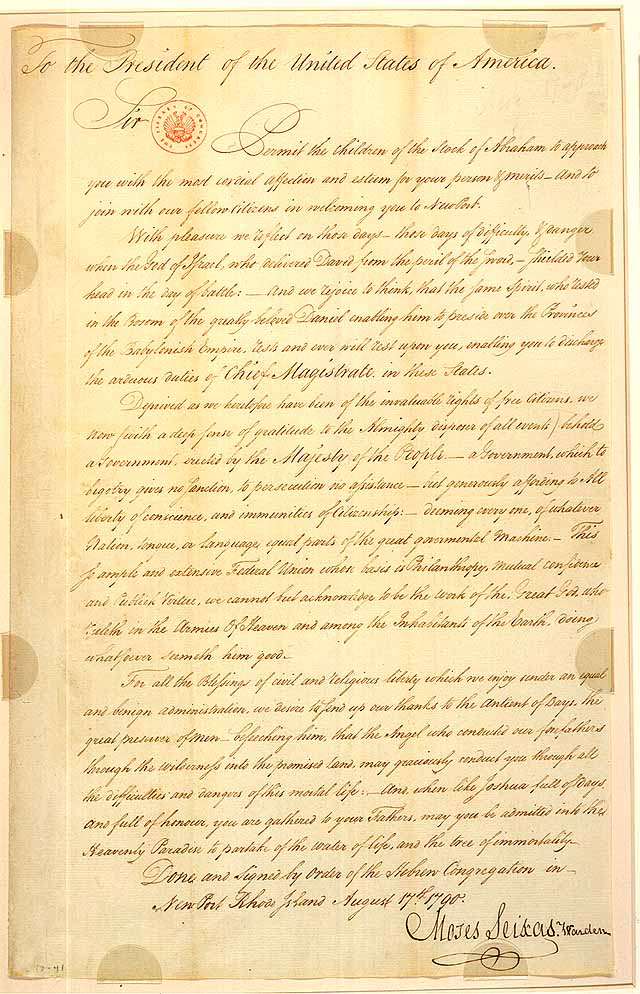
August 8, 2006
Yesterday in History: August 7, 1934
The US Court of Appeals judged Ulysses by James Joyce to be NOT obscene and declared that the book could be admitted into the United States. Here's what the first American edition of that book looked like:
Gives me shivers. I must admit. It LOOKS important.
Morris L. Ernst, counsel for Random House - who successfully defended the book against obscenity charges in 1933-34 - wrote in his foreward to the 1934 edition:
It would be difficult to underestimate the importance of Judge Woolsey's decision. For decades the censors have fought to emasculate literature. They have tried to set up the sensibilities of the prudery-ridden as a criterion for society, have sought to reduce the reading matter of adults to the level of adolescents and subnormal persons, and have nurtured evasions and sanctimonies.
See Judge Woolsey's decision in its entirety here.
Let freedom ring!
This race and this country and this life produced me, he said. I shall express myself as I am.
June 28, 2006
Today in history: June 28, 1914
Archduke Franz Ferdinand and Duchess Sophie took a tour through Sarajevo.
Here they are, on that morning.
Just gives you a chill, doesn't it. To look at them, and to know what is coming.
April 30, 2006
Today in history: April 30, 1789
On April 30, 1789, George Washington was sworn in as the first President of the United States.
George Washington wrote the following on the eve of his inauguration:
It is said that every man has his portion of ambition. I may have mine, I suppose, as well as the rest, but if I know my own heart, my ambition would not lead me into public life; my only ambition is to do my duty in this world as well as I am capable of performing it, and to merit the good opinion of all good men.
We are so lucky, so very lucky, to have had this man in our "canon". There's as always, so much to say. One of the thing that strikes me about him is that he never wanted to seem like he was jostling for power or position. George Washington had many wonderful qualities and abilities - but it was this distaste for public life that I believe made him truly great. He went out of his way to let everyone know how unworthy he felt, how he hoped their trust in him was warranted, that he was eager to finally go home and live the life of a private man... But on this day in history, April 30, there was to be no private man anymore. His people had chosen him, and while Mount Vernon continued to call to him, he knew he must accept.
David McCullough describes, in his book on John Adams, inauguration day:
On the day of his inauguration, Thursday, April 30 1789, Washington rode to Federal Hall in a canary-yellow carriage pulled by six white horses and followed by a long column of New York militia in full dress. The air was sharp, the sun shone brightly, and with all work stopped in the city, the crowds along his route were the largest ever seen. It was as if all New York had turned out and more besides. "Many persons in the crowd," reported the Gazette of the United States "were heard to say they should now die contented � nothing being wanted to complete their happiness � but the sight of the savior of his country."In the Senate Chamber were gathered the members of both houses of Congress, the Vice President, and sundry officials and diplomatic agents, all of whom rose when Washington made his entrance, looking solemn and stately. His hair powdered, he wore a dress sword, white silk stockings, shoes with silver buckles, and a suit of the same brown Hartford broadcloth that Adams, too, was wearing for the occasion. They might have been dressed as twins, except that Washington's metal buttons had eagles on them.
It was Adams who formally welcomed the General and escorted him to the dais. For an awkward moment Adams appeared to be in some difficulty, as though he had forgotten what he was supposed to say. then, addressing Washington, he declared that the Senate and House of Representatives were ready to attend him for the oath of office as required by the Constitution. Washington said he was ready. Adams bowed and led the way to the outer balcony, in full view of the throng in the streets. People were cheering and waving from below, and from windows and rooftops as far as the eye could see. Washington bowed once, then a second time.
Fourteen years earlier, it had been Adams who called on the Continental Congress to make the tall Virginian commander-in-chief of the army. Now he stood at Washington's side as Washington, his right hand on the Bible, repeated the oath of office as read by Chancellor Robert R. Livingston of New York, who had also been a member of the Continental Congress.
In a low voice Washington solemnly swore to execute the office of the President of the United States and, to the best of his ability, to "preserve, protect, and defend the Constitution of the United States." Then, as not specified in the Constitution, he added, "So help me God", and kissed the Bible, thereby establishing his own first presidential tradition.
"It is done," Livingston said, and, turning to the crowd, cried out, "Long live George Washington, President of the United States."
The following is George Washington's first inaugural address. What I sense in these words is what I sense in so many of the original documents of that time, written by the main players: they were embarking on a grand and hopeful experiment. They were entering uncharted waters. And they all seem determined (each in their different ways, with their different views) to make the most of the opportunity, to seize the day. No decision was unimportant, everything had meaning ... and what I also sense in this inaugural address is that Washington knew that he wasn't only talking to the people present, but he was also talking to us. The future generations. They all knew that they were being watched, carefully, by those who would come after.
The only thing required of a President on his inauguration day, in those early early days, was that he take the oath of Office. Washington, in composing an address, to the people who put their faith in him, set the precedent. Every president since then has followed his example.
George Washington's first inaugural address:
Fellow-Citizens of the Senate and of the House of Representatives:Among the vicissitudes incident to life no event could have filled me with greater anxieties than that of which the notification was transmitted by your order, and received on the 14th day of the present month. On the one hand, I was summoned by my Country, whose voice I can never hear but with veneration and love, from a retreat which I had chosen with the fondest predilection, and, in my flattering hopes, with an immutable decision, as the asylum of my declining years--a retreat which was rendered every day more necessary as well as more dear to me by the addition of habit to inclination, and of frequent interruptions in my health to the gradual waste committed on it by time. On the other hand, the magnitude and difficulty of the trust to which the voice of my country called me, being sufficient to awaken in the wisest and most experienced of her citizens a distrustful scrutiny into his qualifications, could not but overwhelm with despondence one who (inheriting inferior endowments from nature and unpracticed in the duties of civil administration) ought to be peculiarly conscious of his own deficiencies. In this conflict of emotions all I dare aver is that it has been my faithful study to collect my duty from a just appreciation of every circumstance by which it might be affected. All I dare hope is that if, in executing this task, I have been too much swayed by a grateful remembrance of former instances, or by an affectionate sensibility to this transcendent proof of the confidence of my fellow-citizens, and have thence too little consulted my incapacity as well as disinclination for the weighty and untried cares before me, my error will be palliated by the motives which mislead me, and its consequences be judged by my country with some share of the partiality in which they originated.
Such being the impressions under which I have, in obedience to the public summons, repaired to the present station, it would be peculiarly improper to omit in this first official act my fervent supplications to that Almighty Being who rules over the universe, who presides in the councils of nations, and whose providential aids can supply every human defect, that His benediction may consecrate to the liberties and happiness of the people of the United States a Government instituted by themselves for these essential purposes, and may enable every instrument employed in its administration to execute with success the functions allotted to his charge. In tendering this homage to the Great Author of every public and private good, I assure myself that it expresses your sentiments not less than my own, nor those of my fellow- citizens at large less than either. No people can be bound to acknowledge and adore the Invisible Hand which conducts the affairs of men more than those of the United States. Every step by which they have advanced to the character of an independent nation seems to have been distinguished by some token of providential agency; and in the important revolution just accomplished in the system of their united government the tranquil deliberations and voluntary consent of so many distinct communities from which the event has resulted can not be compared with the means by which most governments have been established without some return of pious gratitude, along with an humble anticipation of the future blessings which the past seem to presage. These reflections, arising out of the present crisis, have forced themselves too strongly on my mind to be suppressed. You will join with me, I trust, in thinking that there are none under the influence of which the proceedings of a new and free government can more auspiciously commence.
By the article establishing the executive department it is made the duty of the President "to recommend to your consideration such measures as he shall judge necessary and expedient." The circumstances under which I now meet you will acquit me from entering into that subject further than to refer to the great constitutional charter under which you are assembled, and which, in defining your powers, designates the objects to which your attention is to be given. It will be more consistent with those circumstances, and far more congenial with the feelings which actuate me, to substitute, in place of a recommendation of particular measures, the tribute that is due to the talents, the rectitude, and the patriotism which adorn the characters selected to devise and adopt them. In these honorable qualifications I behold the surest pledges that as on one side no local prejudices or attachments, no separate views nor party animosities, will misdirect the comprehensive and equal eye which ought to watch over this great assemblage of communities and interests, so, on another, that the foundation of our national policy will be laid in the pure and immutable principles of private morality, and the preeminence of free government be exemplified by all the attributes which can win the affections of its citizens and command the respect of the world. I dwell on this prospect with every satisfaction which an ardent love for my country can inspire, since there is no truth more thoroughly established than that there exists in the economy and course of nature an indissoluble union between virtue and happiness; between duty and advantage; between the genuine maxims of an honest and magnanimous policy and the solid rewards of public prosperity and felicity; since we ought to be no less persuaded that the propitious smiles of Heaven can never be expected on a nation that disregards the eternal rules of order and right which Heaven itself has ordained; and since the preservation of the sacred fire of liberty and the destiny of the republican model of government are justly considered, perhaps, as deeply, as finally, staked on the experiment entrusted to the hands of the American people.
Besides the ordinary objects submitted to your care, it will remain with your judgment to decide how far an exercise of the occasional power delegated by the fifth article of the Constitution is rendered expedient at the present juncture by the nature of objections which have been urged against the system, or by the degree of inquietude which has given birth to them. Instead of undertaking particular recommendations on this subject, in which I could be guided by no lights derived from official opportunities, I shall again give way to my entire confidence in your discernment and pursuit of the public good; for I assure myself that whilst you carefully avoid every alteration which might endanger the benefits of an united and effective government, or which ought to await the future lessons of experience, a reverence for the characteristic rights of freemen and a regard for the public harmony will sufficiently influence your deliberations on the question how far the former can be impregnably fortified or the latter be safely and advantageously promoted.
To the foregoing observations I have one to add, which will be most properly addressed to the House of Representatives. It concerns myself, and will therefore be as brief as possible. When I was first honored with a call into the service of my country, then on the eve of an arduous struggle for its liberties, the light in which I contemplated my duty required that I should renounce every pecuniary compensation. From this resolution I have in no instance departed; and being still under the impressions which produced it, I must decline as inapplicable to myself any share in the personal emoluments which may be indispensably included in a permanent provision for the executive department, and must accordingly pray that the pecuniary estimates for the station in which I am placed may during my continuance in it be limited to such actual expenditures as the public good may be thought to require.
Having thus imparted to you my sentiments as they have been awakened by the occasion which brings us together, I shall take my present leave; but not without resorting once more to the benign Parent of the Human Race in humble supplication that, since He has been pleased to favor the American people with opportunities for deliberating in perfect tranquillity, and dispositions for deciding with unparalleled unanimity on a form of government for the security of their union and the advancement of their happiness, so His divine blessing may be equally conspicuous in the enlarged views, the temperate consultations, and the wise measures on which the success of this Government must depend.
William Maclay, a senator from Pennsylvania, kept a daily journal - highly detailed, and rather cynical, about the Senate sessions of the first Congress. He describes the first inauguration in vivid detail:
30th April, Thursday.--This is a great, important day. Goddess of etiquette, assist me while I describe it. The Senate stood adjourned to half after eleven o'clock. About ten dressed in my best clothes; went for Mr. Morris' lodgings, but met his son, who told me that his father would not be in town until Saturday. Turned into the Hall. The crowd already great. The Senate met. The Vice-President rose in the most solemn manner. This son of Adam seemed impressed with deeper gravity, yet what shall I think of him? He often, in the midst of his most important airs--I believe when tie is at loss for expressions (and this he often is, wrapped up, I suppose, in the contemplation of his own importance)-- suffers an unmeaning kind of vacant laugh to escape him. This was the case to-day, and really to me bore the air of ridiculing the farce he was acting. "Gentlemen, I wish for the direction of the Senate. The President will, I suppose, addressthe Congress. How shall I behave? How shall we receive it? Shall it be standing or sitting?"Here followed a considerable deal of talk from him which I could make nothing of. Mr. Lee began with the House of Commons (as is usual with him), then the House of Lords, then the King, and then back again. The result of his information was, that the Lords sat and the Commons stood on the delivery of the King's speech. Mr. Izard got up and told how often he had been in the Houses of Parliament. He said a great deal of what he had seen there. [He] made, however, this sagacious discovery, that the Commons stood because they had no. seats to sit on, being arrived at the bar of the House of Lords. It was discovered after some time that the King sat, too, and had his robes and crown on.
Mr. Adams got up again and said he had been very often indeed at the Parliament on those occasions, but there always was such a crowd, and ladies along, that for his part he could not say how it was. Mr. Carrol got up to declare that he thought it of no consequence how it was in Great Britain; they were no rule to us, etc. But all at once the Secretary, who had been out, whispered to the Chair that the Clerk from the Representatives was at the door with a communication. Gentlemen of the Senate, how shall he be received? A silly kind of resolution of the committee on that business had been laid on the table some days ago. The amount of it was that each House should communicate to the other what and how they chose; it concluded, however, something in this way: That everything should be done with all the propriety that was proper. The question was, Shall this be adopted, that we may know how to receive the Clerk? It was objected [that] this will throw no light on the subject; it will leave you where you are. Mr. Lee brought the House of Commons before us again. He reprobated the rule; declared that the Clerk should not come within the bar of file House; that the proper mode was for the Sergeant-at-Arms, with the mace on his shoulder, to meet the Clerk at the door and receive his communication; we are not, however, provided for this ceremonious way of doing business, having neither mace nor sergeant nor Masters in Chancery, who carry down bills from the English Lords.
Mr. Izard got up and labored unintelligibly to show the great distinction between a communication and a delivery of a thing, but he was not minded. Mr. Elsworth showed plainly enough that if the Clerk was not permitted to deliver the communication, the Speaker might as well send it inclosed. Repeated accounts came [that] the Speaker and Representatives were at the door. Confusion ensued; the members left their seats. Mr. Read rose and called the attention of the Senate to the neglect that had been shown Mr. Thompson, late Secretary. Mr. Lee rose to answer him, but I could not hear one word he said. The Speaker was introduced, followed by the Representatives. Here we sat an hour and ten minutes before the President arrived--this delay was owing to Lee, Izard, and Dalton, who had stayed with us while the Speaker came in, instead of going to attend the President. The President advanced between the Senate and Representatives, bowing to each. He was placed in the chair by the Vice-President; the Senate with their president on the right, the Speaker and the Representatives on his left. The Vice-President rose and addressed a short sentence to him. The import of it was that he should now take the oath of office as President. He seemed to have forgot half what he was to say, for he made a dead pause and stood for some time, to appearance, in a vacant mood. He finished with a formal bow, and the President was conducted out of the middle window into the gallery, and the oath was administered by the Chancellor. Notice that the business done was communicated to the crowd by proclamation, etc., who gave three cheers, and repeated it on the President's bowing to them.
As the company returned into the Senate chamber, the President took the chair and the Senators and Representatives their seats. He rose, and all arose also and addressed them. This great man was agitated and embarrassed more than ever he was by the leveled cannon or pointed musket. He trembled, and several times could scarce make out to read, though it must be supposed he had often read it before. He put part of the fingers of his left hand into the side of what I think the tailors call the fall of the breeches, changing the paper into his left hand. After some time he then did the same with some of the fingers of his right hand. When he came to the words all the world, he made a flourish with his right hand, which left rather an ungainly impression. I sincerely, for my part, wished all set ceremony in the hands of the dancing-masters, and that this first of men had read off his address in the plainest manner, without ever taking his eyes from the paper, for I felt hurt that he was not first in everything. He was dressed in deep brown, with metal buttons, with an eagle on them, white stockings, a bag, and sword.
From the hall there was a grand procession to Saint Paul's Church, where prayers were said by the Bishop. The procession was well conducted and without accident, as far as I have heard. The militia were all under arms, lined the street near the church, made a good figure, and behaved well.
The Senate returned to their chamber after service, formed, and took up the address. Our Vice-President called it his most gracious speech. I can not approve of this. A committee was appointed on it--Johnson, Carrol, Patterson. Adjourned. In the evening there were grand fireworks. The Spanish Ambassador's house was adorned with transparent paintings; the French Minister's house was illuminated, and had some transparent pieces; the Hall was grandly illuminated, and after all this the people went to bed.
I have such a deep fondness for John Adams, with all his airs and self-importance and vanity. I just love the guy, what can I say. He's so feckin' human.
The description of Washington's awkwardness makes me want to cry:
He rose, and all arose also and addressed them. This great man was agitated and embarrassed more than ever he was by the leveled cannon or pointed musket. He trembled, and several times could scarce make out to read, though it must be supposed he had often read it before. He put part of the fingers of his left hand into the side of what I think the tailors call the fall of the breeches, changing the paper into his left hand. After some time he then did the same with some of the fingers of his right hand. When he came to the words all the world, he made a flourish with his right hand, which left rather an ungainly impression. I sincerely, for my part, wished all set ceremony in the hands of the dancing-masters, and that this first of men had read off his address in the plainest manner, without ever taking his eyes from the paper, for I felt hurt that he was not first in everything. He was dressed in deep brown, with metal buttons, with an eagle on them, white stockings, a bag, and sword.
God. Good God. But what really moves me is that after the address, they all walked in procession, led by George Washington, to St. Paul's Church, for a service.
St. Paul's Church. (Read that article ... it's a well-known story, of course, but it always bears repeating.) St. Paul's has always had meaning for us here in New York, because of its long history, but now ... it has more meaning than ever. I can't even think about St. Paul's without feeling tears come to my eyes. So to think ... that that special church, that church that became symbolic (not just to us here, but to people all over the country) of hope, or survival, of healing ... would be the place where George Washington prayed for guidance after being sworn in as the first President... I mean, honestly. I don't even know what else to say about it.
April 30, 1789 ... the day this new nation embarked on its unknown and exciting course, with George Washington at the helm.
Here is an image of the first page of this inaugural address, in Washington's own hand.
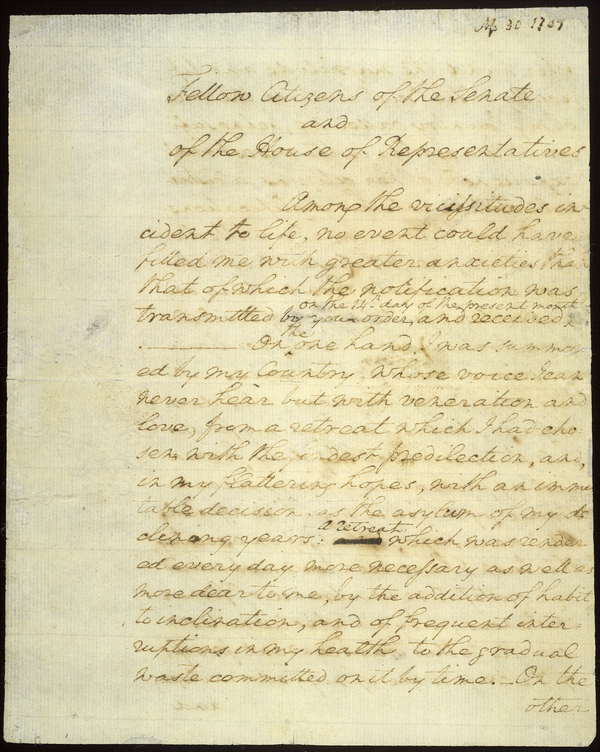
April 18, 2006
Today in history: April 18-19, 1775
On the night of April 18, into April 19, in 1775, Paul Revere made his famous ride.
The spring of 1775 was a tense time. Prominent Bostonians were under constant threat of arrest from the British, and many of them - to avoid this - moved their families to outlying communities. However, two of the main patriotic leaders (Benjamin Church and Joseph Warren) stayed in Boston. Paul Revere did as well, and kept a close eye on British movements through that spring. Revere was trusted as a messenger, he knew everybody, he was just one of those guys.
In mid-April, Revere started to notice some ominous signs: mainly that the British ships were taken out of the water, to be worked on, repaired. He could sense that something was coming. He felt the British were preparing for some kind of attack.
Revere went to Concord on April 16 (most of the weaponry was stored there) and warned the leaders of that community that the British were preparing something, they were up to something, and if they were going to strike, they would most definitely try to seize the weapons stash in Concord. So the people of Concord went to work, hiding their store of weapons in barns, cellars, swamps, etc. (Like I mentioned: Paul Revere was trusted. He knew everybody. If you're interested, read the excerpt I posted of Malcolm Gladwell's fascinating analysis of Paul Revere - and Gladwell's comparison with the far less successful messenger on that very same night - William Dawes.)
So. April 16. Revere returned to Boston from Concord, and met with other revolutionary leaders, and that is when they came up with the "one if by land, two if by sea" warning system. Revere knew they needed a way to have some advance warning about which route the British were going to take when they finally did attack.
By land? Or by sea?
So, Revere set up the system: Signal lanterns would be placed in the belfry of Old North Church (the steeple can be seen across the Charles River). If two lanterns were hung, then the British would be crossing the Charles by boat. If one lantern was hung, then the British would choose to attack using a land route.
"One if by land, two if by sea."
This plan was put in place just in time. On April 18, in the early evening, a stable boy came to Paul Revere, telling him that he had overheard some British soldiers discussing the upcoming attack, and that it was planned for early the next morning. The stable boy knew who to bring this information to, and that was Paul Revere. (Again, check out Gladwell's analysis of Paul Revere's personality. Really interesting.)
Revere, on receiving this urgent piece of information, knew he had to get the warning out (and that he especially had to warn John Hancock and Samuel Adams who, at that time, were hiding out in Lexington).
The signal was given: two lanterns.
So off he went onto his now legendary ride. Revere took the water route out of Boston, rowed across the Charles, and galloped through the communities north of Boston sounding the alarm. (Medford, Charlestown, Lexington, Concord.) Because of Paul Revere, the British had completely lost the element of surprise. When they came to attack, they found the rebellious colonists waiting for them everywhere, ambushing them left and right, from behind stone walls, hiding behind trees ...
An interesting tidbit (this is why I love this time in American history - yeah, the events themselves are really cool ... but it's details like the following one that really have me hooked, like a crack addict):
In his hurry to depart, Revere forgot to bring along pieces of cloth to wrap the oars of his boat. The purpose of this was to muffle the sound of them cutting through the water. The Somerset (the British man-of-war) was at anchor, right there in the harbor. Paul Revere had to row right by them, and so any sound at all would have alerted the crew, and if Revere was busted, the whole jig would be up. Revere was in a bit of a pickle ... standing by his boat, trying to figure out how he could improvise ... could he take off his stockings? Tie them around the end of the oars?
One of the boatmen involved in helping Revere make this crossing came to the rescue. He ran to his girlfriend's house and asked her for her petticoat. hahaha One can only imagine her startled response to the nighttime demand at her door: "Please, dear. It's 10 pm, and I need you to take off your petticoat, give it to me, and don't ask me ANY questions about it!!" But apparently, this girl, whoever she was, complied - took off her petticoat, gave it up, and Revere used that to wrap up the ends of his oars.
I love that woman, whoever she is.
So. In honor of the great Paul Revere, I have a couple other things to post. One is, my conversation with Cashel about the American Revolution. I read that piece on the radio in 2003. I love it. It's one of my favorite conversations I've ever had with him.
And lastly, please find Henry Wadsworth Longfellow's celebrated poem "Paul Revere's Ride". I know large swaths of it by heart ... To me, it's a thrilling poem. Because of the story it tells, but also because of its rollicking rhythm, you can feel the suspense, you can feel the urgency. It's meant to be read out loud. Try it for yourself - it's so much funner that way. You can feel the beat of the horse hooves in the poem. The last stanza is beyond compare. "For borne on the night-wind of the Past ..." I mean, come ON!!
April 18, 1775. A great day in American history. One of my personal favorite "stories" of the American revolution.
Paul Revere's Ride
- by Henry Wadsworth LongfellowListen my children and you shall hear
Of the midnight ride of Paul Revere,
On the eighteenth of April, in Seventy-five;
Hardly a man is now alive
Who remembers that famous day and year.
He said to his friend, "If the British march
By land or sea from the town to-night,
Hang a lantern aloft in the belfry arch
Of the North Church tower as a signal light,--
One if by land, and two if by sea;
And I on the opposite shore will be,
Ready to ride and spread the alarm
Through every Middlesex village and farm,
For the country folk to be up and to arm."
Then he said "Good-night!" and with muffled oar
Silently rowed to the Charlestown shore,
Just as the moon rose over the bay,
Where swinging wide at her moorings lay
The Somerset, British man-of-war;
A phantom ship, with each mast and spar
Across the moon like a prison bar,
And a huge black hulk, that was magnified
By its own reflection in the tide.
Meanwhile, his friend through alley and street
Wanders and watches, with eager ears,
Till in the silence around him he hears
The muster of men at the barrack door,
The sound of arms, and the tramp of feet,
And the measured tread of the grenadiers,
Marching down to their boats on the shore.
Then he climbed the tower of the Old North Church,
By the wooden stairs, with stealthy tread,
To the belfry chamber overhead,
And startled the pigeons from their perch
On the sombre rafters, that round him made
Masses and moving shapes of shade,--
By the trembling ladder, steep and tall,
To the highest window in the wall,
Where he paused to listen and look down
A moment on the roofs of the town
And the moonlight flowing over all.
Beneath, in the churchyard, lay the dead,
In their night encampment on the hill,
Wrapped in silence so deep and still
That he could hear, like a sentinel's tread,
The watchful night-wind, as it went
Creeping along from tent to tent,
And seeming to whisper, "All is well!"
A moment only he feels the spell
Of the place and the hour, and the secret dread
Of the lonely belfry and the dead;
For suddenly all his thoughts are bent
On a shadowy something far away,
Where the river widens to meet the bay,--
A line of black that bends and floats
On the rising tide like a bridge of boats.
Meanwhile, impatient to mount and ride,
Booted and spurred, with a heavy stride
On the opposite shore walked Paul Revere.
Now he patted his horse's side,
Now he gazed at the landscape far and near,
Then, impetuous, stamped the earth,
And turned and tightened his saddle girth;
But mostly he watched with eager search
The belfry tower of the Old North Church,
As it rose above the graves on the hill,
Lonely and spectral and sombre and still.
And lo! as he looks, on the belfry's height
A glimmer, and then a gleam of light!
He springs to the saddle, the bridle he turns,
But lingers and gazes, till full on his sight
A second lamp in the belfry burns.
A hurry of hoofs in a village street,
A shape in the moonlight, a bulk in the dark,
And beneath, from the pebbles, in passing, a spark
Struck out by a steed flying fearless and fleet;
That was all! And yet, through the gloom and the light,
The fate of a nation was riding that night;
And the spark struck out by that steed, in his flight,
Kindled the land into flame with its heat.
He has left the village and mounted the steep,
And beneath him, tranquil and broad and deep,
Is the Mystic, meeting the ocean tides;
And under the alders that skirt its edge,
Now soft on the sand, now loud on the ledge,
Is heard the tramp of his steed as he rides.
It was twelve by the village clock
When he crossed the bridge into Medford town.
He heard the crowing of the cock,
And the barking of the farmer's dog,
And felt the damp of the river fog,
That rises after the sun goes down.
It was one by the village clock,
When he galloped into Lexington.
He saw the gilded weathercock
Swim in the moonlight as he passed,
And the meeting-house windows, black and bare,
Gaze at him with a spectral glare,
As if they already stood aghast
At the bloody work they would look upon.
It was two by the village clock,
When he came to the bridge in Concord town.
He heard the bleating of the flock,
And the twitter of birds among the trees,
And felt the breath of the morning breeze
Blowing over the meadow brown.
And one was safe and asleep in his bed
Who at the bridge would be first to fall,
Who that day would be lying dead,
Pierced by a British musket ball.
You know the rest. In the books you have read
How the British Regulars fired and fled,---
How the farmers gave them ball for ball,
>From behind each fence and farmyard wall,
Chasing the redcoats down the lane,
Then crossing the fields to emerge again
Under the trees at the turn of the road,
And only pausing to fire and load.
So through the night rode Paul Revere;
And so through the night went his cry of alarm
To every Middlesex village and farm,---
A cry of defiance, and not of fear,
A voice in the darkness, a knock at the door,
And a word that shall echo for evermore!
For, borne on the night-wind of the Past,
Through all our history, to the last,
In the hour of darkness and peril and need,
The people will waken and listen to hear
The hurrying hoof-beats of that steed,
And the midnight message of Paul Revere.
April 14, 2006
Today in History: April 14, 1865
From Jay Winik's book April 1865: The Month That Saved America :
But in the chill, early morning of Good Friday, April 14, Lincoln wakes refreshed, around 7 a.m., and in a good mood. It is a rare occurrence, and he takes it as a good omen. Last night there were no nightmares, no haunting visages, no frantic worries about ending the war and negotiating the foundering shoals of Reconstruction. True, there has been a dream, but this time it is a heartening one, in fact, the one that has come to him before on the cusp of other major military battles. He had it on the verge of Antietam and Gettysburg, and also Vicksburg and Fort Fisher, all-important Union victories. In it, he is on a phantom ship, a "single, indescribable vessel" that moves with "great rapidity" through the water, racing toward a "vast" and "indefinite shore". To Lincoln, rising on this day, it signals good news. He feels that it augurs Joe Johnston's surrender in North Carolina, thereby removing the most powerful Confederate army remaining in the field, and making another large-scale rebel assault almost impossible. It speaks of peace to come. And it fills him with a visible blast of optimism.Before breakfast, he lights the fireplace in his office. By the time he has finished his morning meal -- dining cozily with Mary and then joined by his son Robert -- and makes his way to an 11 a.m. meeting with Grant and the cabinet, he is in "great spirits", appearing more "cheerful and happy" than many of his secretaries had ever seen him. It is infectious; Mary Lincoln will even note that these last few days have been "the happiest of her life". And Lincoln is determined that the mood will not abate.
Today, Good Friday, will certainly not be spent in morbid contemplation or prayer at the New York Avenue Presbyterian Church listening to Reverend Phineas D. Gurley, or simply more fussing and fretting over the war. Today, he wants something that will make him laugh. So this evening he plans to take Mary to see the eccentric English comedy Our American Cousin. It stars the famous English actress Miss Laura Keene, in her very last performance. He and Mary intend to go with General Grant and his wife, and the papers will officially announce their plans.
The comedy is playing at the Tenth Street theater, between E and F streets. At Ford's.

Abraham Lincoln was shot by John Wilkes Booth, while sitting in the presidential box at Ford's Theatre - at 10 pm on April 14, 1865. Lincoln died the next morning. A couple of days later, the War Department issued wanted posters for the arrest of Booth. There's an image of one of those posters below that I found online.
Here is a timeline of these events.

March 29, 2006
Today in history: March 29, 1848
Just after midnight, the thunderous sound of water surging over the great falls at Niagara came to a halt. The eery silence persisted throughout the day and into the next evening until the waters of Lake Erie broke through the blockage and resumed their course down the river and over the falls.
Absolutely aMAZING!!
March 10, 2006
Today in history: "To my delight he came and declared that he had heard and understood what I said."
On March 10, 1876 - the first speech was transmitted across a telephone wire.
All together now: "Mr. Watson, come here ..."
So if you make a phone call today (or - I should say - WHEN you make a phone call today) - take a second to think of Mr. Alexander Graham Bell.
I Googled the dude - and came across the relevant pages in his notebook for March 10, 1876. See them below - pretty damn cool.
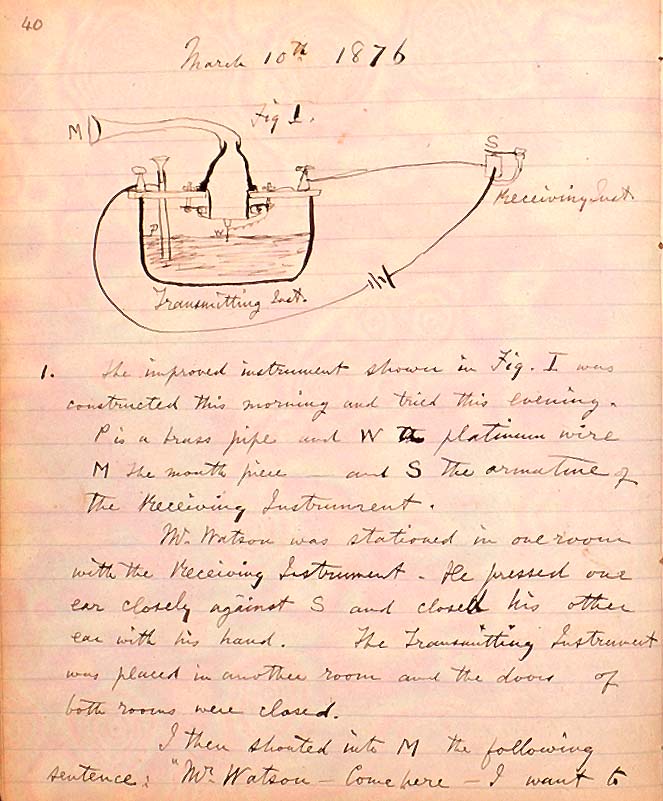
February 27, 2006
Feb. 25, 1956
On Feb. 25, 1956 Kruschev made his now famous "secret speech" to the 20th Congress of the Communist Party in the Soviet Union.
Robert Conquest - one of my own personal idols - writes about this major event of the 20th century. Long-denied by the Communist higher-ups: it was said there was no such speech, it didn't exist, Kruschev never made it ... all of this was nonsense. News of the "secret speech" leaked almost immediately.
Roy Medvedev also weighs in (although a ton of columnists and writers wrote about the "secret speech" on Feb. 25):
Medvedev leads off with:
In history, some events at first appear insignificant, or their significance is hidden, but they turn out to be earthshaking. Such a moment occurred 50 years ago, with Nikita Khrushchev’s so-called "Secret Speech" to the Twentieth Congress of the Communist Party of the Soviet Union.
Here's a copy of the speech itself.
February 22, 2006
Today in history
Thanks to the Llama Butchers for the reminder - such an appropriate moment (in terms of the Olympics, and also hockey in general) to do a re-post:
26 years ago today, the US Olympic hockey team beat the "unbeatable" Russian hockey team at Lake Placid.
Jack O'Callahan, straddling Mike Ramsey in the foreground there ... the absolute MAYHEM behind them ... It's a gorgeous thing, ain't it? I've looked at that so many times and yet - it still seems fresh to me. Their joy is still infectious.
Like most of us who were alive at that time, and at all aware of ANYTHING, I have vivid memories of the 1980 Winter Olympics, and of these college kids who came along and slayed the Russian dragon. I was particularly into the whole thing because of the Boston presence on the team. My family's from Boston. There was a regional component to our triumph, as well as a national component.
However, it is only in retrospect that I realize just how HUGE the whole thing actually was. I didn't really get the context of it while it was happening - the Cold War context, and also the hockey context - just how huge a dynasty the Russians had, in terms of how they played the game, how they dominated international hockey, etc.
I must say to EVERYONE out there who has televisions (speaking as a chick who had no TV for 2 years, I totally understand) ...Keep an eye open for HBO's documentary "Do You Believe in Miracles" - It is just ... one of my favorite documentaries ever made. I own it. I watch it so often that it's embarrassing. But it NEVER. gets old.
I can't explain why the documentary rocks my world to such a degree, but it does. It GETS the big-ness of the event. It GETS the magnitude. I've seen it 50 times.
I remember having a discussion here on this blog about the greatest moment in sports history. The general consensus was that the miracle on ice HAD to be # 1. There were no other contenders, really.
I've posted a bunch of stuff on the miracle on ice - mainly as a lead-up to the film coming out - which I was excited and anxious over ... The story means so much to me, and I was terrified they would fuck it up (I don't feel they did - by the way - loved the movie - but it can't hold a candle to that documentary, and seeing the real thing. MAN.) Anyway - here are some of my posts.
The greatest moments in sports history
Anyway, to those of you out there who have vivid memories of watching the "miracle on ice" ...please feel free to share them in the comments.
January 1, 2006
Today in history: Jan. 1 1892
Ellis Island opened for business. The first immigrant of millions to pass through was a 15 year old Irish girl from County Cork named Annie Moore. Three large ships waited to land on that day, and eventually 700 immigrants entered the country on that first day. Annie Moore was given a 10 dollar gold piece, and welcomed to America.
I found this animated image on The History Channel - a view of Ellis Island from the boats, as they approached. Kinda gives me chills - imagining that this is the view my ancestors got, as they came over from Ireland. This is what they saw.
To those of you who ever visit New York - I highly recommend taking a trip over to Ellis Island. It's strangely emotional - you just can feel the ghosts of the millions of people who passed through. They are all still there. Here's an image of the Inspection Room - where each immigrant would be screened by doctors for any signs of illness, physical ailments, disease. This was also where their documents would be checked and double-checked. If they were healthy, and if their papers were correct - they would then be allowed to enter the United States.
And so today, let's take a second to remember Annie Moore, the 15 year old Irish girl, the first name on the long long rolls of immigrant records at Ellis Island. There's a statue of Annie Moore at Ellis Island - a bronze statue - which was unveiled by Ireland's president Mary Robinson in 1993.
Here's some more information about Annie Moore. My favorite excerpt from that piece comes at the end:
So what’s really important about Annie Moore is not so much that she was born in Ireland, but that she came to America. Someone had to be the first immigrant to land at Ellis Island and as fate would have it she was the one. It might just as easily been someone named Rebecca Schimkowitz or Maria Parmasano. In somewhat the same spirit of commemorating an Unknown Soldier as a symbol of patriotic sacrifice, the story and statues of Annie Moore are intended to remind people of this and future generations of the courageous journey made by countless millions of nameless, faceless immigrants who set out to make a new life for themselves in a strange and distant place called America.
December 24, 2005
Today in history
Dec. 24, 1914 - the Christmas Truce.
Here's a picture of German and British soldiers fraternizing in "no man's land" on that day:

What really happened? What's myth, what's truth? Does anyone care? I kind of don't. From this article:
The meeting of enemies as friends in no-man's land was experienced by hundreds, if not thousands, of men on the Western Front during Christmas 1914. Today, 90 years after it occurred, the event is seen as a shining episode of sanity from among the bloody chapters of World War One – a spontaneous effort by the lower ranks to create a peace that could have blossomed were it not for the interference of generals and politicians.The reality of the Christmas Truce, however, is a slightly less romantic and a more down to earth story. It was an organic affair that in some spots hardly registered a mention and in others left a profound impact upon those who took part.
Many accounts were rushed, confused or contradictory. Others, written long after the event, are weighed down by hindsight. These difficulties aside, the true story is still striking precisely because of its rag-tagged nature: it is more 'human' and therefore all the more potent.
Men on both sides wrote in their journals about the truce - they wrote letters home - their first-hand accounts:
Kurt Zehmisch of the 134th Saxons recorded in his diary: 'The English brought a soccer ball from the trenches, and pretty soon a lively game ensued. How marvellously wonderful, yet how strange it was. The English officers felt the same way about it. Thus Christmas, the celebration of Love, managed to bring mortal enemies together as friends for a time.'The Truce lasted all day; in places it ended that night, but on other sections of the line it held over Boxing Day and in some areas, a few days more. In fact, there parts on the front where the absence of aggressive behaviour was conspicuous well into 1915.
Captain J C Dunn, the Medical Officer in the Royal Welch Fusiliers, whose unit had fraternised and received two barrels of beer from the Saxon troops opposite, recorded how hostilities re-started on his section of the front.
Dunn wrote: 'At 8.30 I fired three shots in the air and put up a flag with "Merry Christmas" on it, and I climbed on the parapet. He [the Germans] put up a sheet with "Thank you" on it, and the German Captain appeared on the parapet. We both bowed and saluted and got down into our respective trenches, and he fired two shots in the air, and the War was on again.'
December 17, 2005
Today in history: "The infinite highway of the air"
On December 17, 1903, the Wright brothers - Wilbur and Orville - had their first flight near Kitty Hawk, North Carolina. The photo that exists of that moment I found on Aviation History:

Charles Kettering said: "The Wright brothers flew right through the smoke screen of impossibility."
Orville said once: "If we all worked on the assumption that what is accepted as true is really true, there would be little hope of advance."
Only one photographer was there on Dec. 17, 1903 - apparently no journalists attended this event that would end up changing the world as we knew it.
Here's an article by Orville Wright: How we made the first flight Great stuff but here is the excerpt about the flight itself (the whole article is well worth reading, though - because, of course, a lot led up to the first flight - trial and error, experimentation):
The First AttemptWhen the machine had been fastened with a wire to the track, so that it could not start until released by the operator, and the motor had been run to make sure that it was in condition, we tossed a coin to decide who should have the first trial. Wilbur won. I took a position at one of the wings intending to help balance the machine as it ran down the rack. But when the restraining wire was slipped, the machine started off so quickly I could stay with it only a few feet. After a 35- to 40-foot run, it lifted from the rail. But it was allowed to turn up too much. It climbed a few feet, stalled, and then settled to the ground near the foot of the hill, 105 feet below. My stop watch showed that I had been in the air just 3 l/2 seconds. In landing the left wing touched first. The machine swung around, dug the skids into the sand and broke one of them. Several other parts were also broken, but the damage to the machine was not serious. While the test had shown nothing as to whether the power of the motor was sufficient to keep the machine up, since the landing was made many feet below the starting point, the experiment had demonstrated that the method adopted for launching the machine was a safe and practical one. On the whole, we were much pleased.
Two days were consumed in making repairs, and the machine was not ready again till late in the afternoon of the 16th. While we had it out on the track in front of the building, making the final adjustments, a stranger came along. After looking at the mach ine a few seconds he inquired what it was When we told him it was a flying machine he asked whether we intended to fly it. We said we did, as soon as we had a suitable wind. He looked at it several minutes longer and then, wishing to be courteous, remarked that it looked as if it would fly, if it had a "suitable wind." We were much amused, for, no doubt, he had in mind the recent 75-mile gale when he repeated our words, "a suitable wind!"
During the night of December 16, 1903, a strong cold wind blew from the north When we arose on the morning of the 17th, the puddles of water, which had been standing about the camp since the recent rains, were covered with ice. The wind had a velocity of 10 to 12 meters per second (22 to 27 miles an hour). We thought it would die down before long, and so remained indoors the early part of the morning. But when ten o'clock arrived, and the wind was as brisk as ever, we decided that we had better get the machine out and attempt a flight. We hung out the signal for the men of the Life Saving Station. We thought that by facing the flyer into a strong wind, there ought to be no trouble in launching it from the level ground about camp. We realized the difficulties of flying in so high a wind, but estimated that the added dangers in flight would be partly compensated for by the slower speed in landing.
We laid the track on a smooth stretch of ground about one hundred feet north of the new building. The biting cold wind made work difficult, and we had to warm up frequently in our living room, where we had a good fire in an improvised stove made of a large carbide can. By the time all was ready, J.T. Daniels, W.S. Dough and A.D. Etheridge, members of the Kill Devil Life Saving Station; W.C. Brinkley of Manteo, and Johnny Moore, a boy from Nags Head, had arrived.
We had a "Richard" hand anemometer with which we measured the velocity of the wind. Measurements made just before starting the first flight showed velocities of 11 to 12 meters per second, or 24 to 27 miles per hour. Measurements made just before the last flight gave between 9 and 10 meters per second. One made just after showed a little over 8 meters. The records of the Government Weather Bureau at Kitty Hawk gave the velocity of the wind between the hours of 10:30 and 12 o'clock, the time during which the four flights were made, as averaging 27 miles at the time of the first flight and 24 miles at the time of the last.
With all the knowledge and skill acquired in thousands of flights in the last ten years, I would hardly think today of making my first flight on a strange machine in a twenty-seven mile wind, even if I knew that the machine had already been flown and was safe. After these years of experience I look with amazement upon our audacity in attempting flights with a new and untried machine under such circumstances. Yet faith in our calculations and the design of the first machine, based upon our tables of air pressures, secured by months of careful laboratory work, and confidence in our system of control developed by three years of actual experiences in balancing gliders in the air had convinced us that the machine was capable of lifting and maintaining itself in the air, and that, with a little practice, it could be safely flown.
Wilbur, having used his turn in the unsuccessful attempt on the 14th, the right to the first trial now belonged to me. After running the motor a few minutes to heat it up, I released the wire that held the machine to the track, and the machine started forward in the wind. Wilbur ran at the side of the machine, holding the wing to balance it on the track. Unlike the start on the 14th, made in a calm, the machine, facing a 27-mile wind, started very slowly. Wilbur was able to stay with it till it lifted from the track after a forty-foot run. One of the Life Saving men snapped the camera for us, taking a picture just as the machine had reached the end of the track and had risen to a height of about two feet. The slow forward speed of the machine over the ground is clearly shown in the picture by Wilbur's attitude. He stayed along beside the machine without any effort.
The course of the flight up and down was exceedingly erratic, partly due to the irregularity of the air, and partly to lack of experience in handling this machine. The control of the front rudder was difficult on account of its being balanced too near the center. This gave it a tendency to turn itself when started; so that it turned too far on one side and then too far on the other. As a result the machine would rise suddenly to about ten feet, and then as suddenly dart for the ground. A sudden dart when a little over a hundred feet from the end of the track, or a little over 120 feet from the point at which it rose into the air, ended the flight. As the velocity of the wind was over 35 feet per second and the speed of the machine over the ground against this wind ten feet per second, the speed of the machine relative to the air was over 45 feet per second, and the length of the flight was equivalent to a flight of 540 feet made in calm air. This flight lasted only 12 seconds, but it was nevertheless the first in the history of the world in which a machine carrying a man had raised itself by its own power into the air in full f light, had sailed forward without reduction of speed and had finally landed at a point as high as that from which it started.
The story still has the power to shock, even though I've flown on planes since I was a youngun. The audacity, indeed! Amazing. Man is an amazing creature.
I'll close with a gorgeous quote from Wilbur Wright - gives me goosebumps:
"The desire to fly is an idea handed down to us by our ancestors who... looked enviously on the birds soaring freely through space... on the infinite highway of the air."
December 7, 2005
Today in History
Dec. 7, 1943. The 2 year anniversary of Pearl Harbor. The Washington Post ran an editorial which said:
"[Pearl Harbor Day] brings back memory of our pitiful unpreparedness and our laxity in the face of disaster and our boastfulness about our national strength ... Such memories serve a useful purpose in toughening our minds to accept the realities of war."
And here - is a cool fact about my home state, Rhode Island:
There is only one newspaper in the United States that comes out on Sunday afternoon, (as opposed to Sunday morning) and that is the local paper for Westerly, in Rhode Island, The Westerly Sun.
Because The Westerly Sun comes out at 3 pm it was the only newspaper in the entire country to report the bombing of Pearl Harbor, on Sunday, Dec. 7, 1941 - on the day it actually happened.
It is a teeny little local newspaper ... and it was the FIRST and ONLY one on that day of days.
Click below. Chilling:

November 14, 2005
Today in history: Nov. 14, 1732
As a librarian's daughter, the event that took place on this day, in 1732 has very special resonance:
On this day in history, the Library Company of Philadelphia (founded by Benjamin Franklin in 1731 - and still open today) hired its first librarian - and finally opened for "business".
In 1731, the Library Company had enrolled members (who had to pay a small fee) - but then had to wait for books to arrive (which had been ordered from England).
The Library Company originally grew out of the informal meetings of a group of local merchants (Ben Franklin was one- the group called themselves "The Junto") - they met to exchange information, have discussions about philosophy, politics ... and they also discussed their general need for more comprehensive libraries. These gentlemen wanted to expand their OWN libraries - but eventually, these discussions expanded into the idea of having a subscription library for the entire community.
In 1774 - they ended up making their entire collection available to the first Continental Congress - gathering in Philadelphia in Sept. 1774.
Here are the "minutes" from the board of directors meeting where that decision was made:
[An] Extract from minutes of the directors of the Library Company of Philadelphia, dated August 31 st .,—directed to the President, was read, as follows:Upon motion, ordered,
That the Librarian furnish the gentlemen, who are to meet in Congress, with the use of such Books as they may have occasion for, during their sitting, taking a receipt for them.
By order of the Directors,(Signed) William Attmore, Sec'y.
Ordered, That the thanks of the Congress be returned to the Directors of the Library Company of Philadelphia, for their obliging order.
Gives me goosebumps!
Here's a description of the plan from HW Brands' biography of Ben Franklin: The First American:
Private libraries were common enough among men of wealth in the colonies. Franklin had taken advantage of a few himself. Nor were institutional libraries unheard of; these were usually joined to churches or other bodies heavenly bent. A secular subscription library, however, was something new. Subscribers would pool their resources to buy books all would share and from which all might benefit. Franklin floated the idea in the Junto; upon favorable reception he drew up a charter specifying an initiation fee of forty shillings and annual dues of ten shillings. The charter was signed in July 1731, to take effect upon the collection of fifty subscriptions.Franklin led the effort to obtain the subscriptions. At first, in doing so, he presented the library as his own idea, as indeed it was. But he encountered a certain resistance on the part of potential subscribers, a subtle yet unmistakable disinclination in some people to give credit by their participation to one so openly civic-minded. They asked themselves, if they did not ask him, what was in this for Ben Franklin that made him so eager to promote the public weeal. To allay their suspicions, Franklin resorted to a subterfuge. "I therefore put myself as much as I could of sight, and stated it as a scheme of a number of friends, who had requested me to go about and propose it to such as they thought lovers of reading."
Within four months the Library Company had its requisite two score and ten commitments. Compiling the initial book order involved identifying favorite titles and consulting James Logan, the most learned man in Pennsylvania. Logan knew Latin, Greek, Hebrew, French, and Italian and was said to be the only person in America sufficiently conversant with mathematics to be able to comprehend Newton's great Principia Mathematica. Before Franklin's emergence, Logan -- who was thirty years the elder and had been the personal protege of William Penn -- was the leading figure of Pennsylvania letters (and numbers). Naturally Franklin cultivated him as source of advice, patronage, and civic goodwill. Logan listed several items essential to the education of any self-respecting person; between these and the titles Franklin and the other library directors chose on their own, early purchases covered topics ranging from geometry to journalism, natural philopsophy to metaphysics, poetry to gardening.
Louis Timothée, a journeyman in Franklin's shop, was hired as librarian, and a room to house the collection was rented. Franklin and the other directors of the library instructed Timothée to open the room from two till three on Wednesday afternoons and from ten till four on Saturdays. Any "civil gentlemen" might peruse the books, but only subscribers couold borrow them. (Exception was made for James Logan, in gratitude for his advice in creating the collection.) Borrowers might have one book at a time. Upon accepting a volume each borrower must sign a promissory note covering the cost of the book. This would be voided upon return of the book undamaged. The borrower might then take out another, building his edifice of knowledge, as it were, one brick at a time.
One of the things I am most impressed by, when it comes to our Founding Fathers, is how - unequivocally - each one of them, whenever they sensed a void - would go about creating whatever needed to be created to fill that void. They did not wait for others to do it for them. They did not bitch about how there wasn't such-and-such yet. They were NOT like the people described in that excerpt above: the ones who were suspicious of Benjamin Franklin's enthusiasm and civic energy.
Alexander Hamilton, working as a lawyer in New York, realized how his job was made so much more difficult because all of the laws in New York were not compiled and written down in one place. So whaddya know, he sat down and wrote that book.
Ben Franklin realized that a public subscription library would be a wonderful thing for the community. And so he set about creating it.
And today in history: they hired Louis Timothée, as the first public librarian in the United States of America.
Pretty damn cool, eh?
November 9, 2005
Today in history: Nov. 9, 1938
Today is the anniversary of Kristallnacht - or Night of the Broken Glass. It's generally regarded as the beginning of the Holocaust - although that is, of course, an oversimplification. But on this day - the gloves came off. It was a nationwide attack on Jewish synagogues, businesses, homes. The destruction was massive. The message was clear. The attacks were meant to LOOK spontaneous, but they were directed from Goebbels and Hitler. The police were told not to interfere. Only Jews were arrested.

Devastating.
Only an ostrich would think that this thing would "blow over". There are those who say 'war never solves anything'. My response is: "Never? Really? Never?" War "solved" the problem of the Nazis. It was the only language they understood and it was the only thing that would have stopped them.
1938 was a devastating year. You read the march of events and you get this overwhelming feeling of doom. This isn't just retrospect talking, although of course - I wasn't there. But people at the time knew what was coming. Many were in denial, but many many were not. Kristallnacht was a signal of the clear intentions of Hitler. Czechoslovakia, Munich, Kristallnacht....

Even the name "Kristallnacht" gives me the chills. In German it's "night of the broken glass" - but to my English ears, it sounds vaguely Christmas-y, and like a crystal night of snow ... something beautiful, and ceremonial ... I remember learning about "Kristallnacht" in high school history ... and I couldn't get the idea that it meant "crystal night" out of my mind. It was like something out of a nightmare. I imagined people singing Christmas carols as the synagogues burned.

From William Shirer's Rise and Fall of the Third Reich:
On the night of November 9 - 10, shortly after the party bosses, led by Hitler and Goering, had concluded the annual celebration of the Beer Hall Putsch in Munich, the worst pogrom tha thad yet taken place in the Third Reich occurred. According to Dr. Goebbels and the German press, which he controlled, it was a "spontaneous" demonstration of the German people in reaction to the news of the murder in Paris. But after the war, documents came to light which show how "spontaneous" it was. They are among the most illuminating -- and gruesome -- secret papers of the prewar Nazi era.On the evening of November 9, according to a secret report made by the chief party judge, Major Walther Buch, Dr. Goebbels issued instructions that "spontaneous demonstrations" were to be "organized and executed" during the night. But the real organizer was Reinhard Heydrich, the sinister thirty-four-year-old Number Two man, after Himmler, in the SS, who ran the Security Service (SD) and the Gestapo. His teletyped orders during the evening are among the captured German documents.
At 1:20 am on November 10 he flashed an urgent teletype message to all headquarters and stations of the state police and the SD instructing them to get together with party and SS leaders "to discuss the organization of the demonstrations."
a. Only such measures should be taken which do not involve danger to German property. (For instance synagogues are to be burned down only when there is no danger of fire to the surroundings.)b. Business and private apartments of Jews may be destroyed but not looted ...
d. .... 2. The demonstrations which are going to take place should not be hindered by the police ...
5. As many Jews, especially rich ones, are to be arrested as can be accommodated in the existing prisons ... Upon their arrest, the appropriate concentration camps should be contacted immediately, in order to confine them in these camps as soon as possible.
It was a night of horror throughout Germany. Synagoges, Jewish homes and shops went up in flames and several Jews, men, women and children, were shot or otherwise slain while trying to escape burning to death ...
A number of German insurance firms faced bankruptcy if they were to make good the policies on gutted buildings (most of which, though they harbored Jewish shops, were owned by Gentiles) and damaged goods. The destruction in broken window glass alone came to five million marks ($1,250,000) as herr Hilgard, who had been called in to speak for the insurance companies, reminded Goering; and most of the glass replacements would have to be imported from abroad in foreign exchange, of which Germany was very short.
"This cannot continue!" exclaimed Goering, who, among other things, was the czar of the German economy. "We won't be able to last, with all this. Impossible!" And turning to Heydrich, he shouted, "I wish you had killed two hundred Jews instead of destroying so many valuables!"
Man's inhumanity to man. Still has the power to stun my entire brain to silence. No matter how much I learn, no matter how much I read, no matter how much I PACK my bookcases with books about genocide and dictators and autocracies and gulags, I will still never get it. I will still never get to the heart of what would make a Goering (or anybody) say something like that.
And here's a quote from the journal of Viktor Klemperer - a German Jew - whose diary I Will Bear Witness is one of the most extraordinary first-hand accounts of the entire period. DO NOT miss this book (actually there are two volumes) if you haven't read it yet.
December 3, 1938Today is the Day of German Solidarity. Curfew for Jews from 12 noon until eight. When at exactly half past eleven I went to the mailbox and to the grocer, where I had to wait, I really felt as if I could not breathe. I cannot bear it anymore. Yesterday evening an order from the Minister of the Interior: local authorities are henceforth at liberty to restrict the movement of Jewish drivers both as to time and place. Yesterday afternoon at the library, Striege or Streigel, who is in charge of the lending section, an old Stahlhelm man of middling position and years ...: I should come into the back room with him. Just as he had announced the reading room ban a year ago, so he now showed me the complete ban on using the library. The absolute end. But it was different from a year ago. The man was distressed beyond words, I had to calm him. He stroked my hand the whole time, he could not hold back the tears, he stammered: I am boiling over inside ... If only something would happen tomorrow ... -- Why tomorrow? -- It's the Day of Solidarity ... They're collecting ... one could get at them ... But not just kill them -- torture, torture, torture ... They should first of all be made to feel what they've done ... Could I not give my manuscripts to one of the consulates for safekeeping ... Could I not get out ... And could I write a line for him. -- Even before that (I knew nothing about the ban yet) Fraulein Roth, vdery pale, had gripped my hand in the catalog room: Could I not get away, it was the end here, for us too -- St. Mark's was set alight even before the synagogue and the Zion Church was threatened, if it does not change its name ... She spoke to me as to a dying man, she took leave of me as if forever ...
But these few, sympathizing and in despair, are isolated, and they too are afraid. The developments of the last few days have at least rid us of inner uncertainty; there is no longer any choice: we must leave.
Today in history. One of the ugliest days in the history of the human race.

November 7, 2005
Today in History: Nov. 7, 1917
A bunch of rogues with the idea that they could create a new kind of human being through state control took over Russia!
I love the grainy old photographs of all of them - they always look so twinkly and jolly, don't they? It's such a dichotomy. A more humorless bunch has never existed. Stalin's face always seems to be twinkling, as though he is Santa Claus on his day off. It's creepy. But they ALL look like that to me. Like they are chortling from on high. I say "I love the grainy old photographs" not cause it does my heart good to see Trotsky smiling - but because I find them VERY interesting. Especially, as I mentioned, the collective twinkle in the eye.
CREEPY.
Anyhoo. On this day, the workers seized the government buildings and put out a proclamation declaring the new government. There was almost no resistance.
Oversimplify? You accuse me of oversimplifying? I NEVER oversimplify ... (quote from What's Up Doc?)
Here are a couple of sites with information about the Russian Revolution - here and here. I cannot vouch for these sites, politically - I did browse through them in a cursory way to make sure I didn't see any pictures of Che, haha, to make sure I wasn't sending you all to some "whoo-hoo, yay for Communism" site - but it's hard to tell at times. Click through the links if you're interested in learning more.
The Russian Revolution is, along with Cary Grant and the early career of Ralph Macchio, one of my enduring fascinations.
Many reasons why.
First of all: I love politics and history - and whatever the outcome, you would be hard pressed to find a more important moment of political upheaval in the entire 20th century than the Russian Revolution. It changed the world.
Second of all: because it turns out that it was SUCH a bad idea. Communism is SUCH a bad idea. I read the original works of all those dudes - and what their PLAN actually is ... I mean, I read all their grand schemes and I literally roll my eyes. Utopianism. I've said it before and I'll say it again: any time some politician starts talking to you about Utopia, grab your loved ones and run for the hills. Make sure you are heavily armed. Utopianism is one step away from totalitarianism. In order to actually achieve any kind of Utopia, the individual must be ground to powder. There can be no individuals in a Utopia. But .... er ... no matter what you do, you cannot get rid of the individual. Totalitarian states don't care that their very IDEAS are illogical. They just want absolute power.
Thirdly: I am fascinated in the Russian Revolution because of the world-wide repercussions of it - and also because I vividly remember the entire edifice cracking apart in the late 80s. I couldn't believe it. I am in that generation that still grew up being afraid of Russia. We were the last generation to grow up with that fear. We have OTHER fears now - but not that one. I grew up during the dying gasps of the Cold War. So - to learn about the BEGINNINGS of such a political movement - something that would be entrenched for the better part of a century - has always been important to me.
And lastly, and this is where I get a little hoo-hah new age-y: For whatever reason: cults will ALWAYS fascinate me. Any kind of mind-control, or brainwashing ... any attempt to erase the individual's sense of agency ... It doesn't matter if it's Patty Hearst being kidnapped or what is being taught in the madrassahs of Pakistan - it's an attempt at mind control. And that stuff just GETS to me.
There's something in the Russian Revolution - the early heady days (I know that's such a cliche - but it's a perfect way to put it) of the Bolshevik takeover - something in their Utopian talk, their twinkly assurance that they could re-make the world, their convoluted reasoning - and - just the LANGUAGE itself -how the Communists used language - all of that points to a level of mind control - the beginnings of it - A very ominous thing. Imposing a mindset, a correct way of thinking, on a country of millions.
I've read John Reed's 10 Days That Shook the World
But back to the mind-control thing: Reed puts a lot of the communiques from the leaders of the Revolution into the book. He prints their pamphlets, fliers, announcements - and all of it is in that LANGUAGE of Communism, that deadening blunted-edge language - with no poetry, no humanity in it. It is FROM a collective and it is TO a collective. You know what I'm talking about? Anyone who has read any of that stuff from Lenin or Trotsky will know what I am talking about. .I'm jumping around with this topic. Can't help it. I get all pumped up when the Russian Revolution come up, and I don't know where to begin.
To control a population: you MUST control their language. You MUST control how they express themselves. You MUST show them the "correct" way to speak. There is only ONE meaning of the word "state". There can only be ONE meaning of the word "freedom". So the leaders of the Revolution set out immediately to co-opt the language. Watch any developing revolution anywhere in the world. And watch how they start by controlling the language.
George Orwell knew this, of course, and that's where the whole Newspeak thing comes from, in 1984
I find it interesting, and horrifically ironic, that Lenin would say: "While the State exists there can be no freedom; when there is freedom there will be no State."
Okay, you hear that language? Look at that language. Also, look at the Utopianism. I am not convinced that any of these people truly believed in the Utopia - or some of them did - but I think most of it was just a big ol' power grab, doctored up in political Newspeak language. Anyhoo. Lenin makes that statement - but then of course what happened in Russia? The State became EVERYTHING, and no, there was no freedom. The State was the religion.
I refuse to just blame this on Stalin's evil - although I do think he was evil - and missing whatever piece it is that makes most of us human. But I don't think Stalin took an essentially good idea and made it bad and evil. I think it was a terrible idea to begin with.
Again: anyone in power who talks about Utopias is NOT TO BE TRUSTED. They can't WAIT to put you under the iron boot of the State. THAT'S Utopia.
Okay. See what I mean? I can't shut up.
Check out the picture below - of junkers lounging around in the Winter Palace in the fall of 1917:
From John Reed's 10 Days That Shook the World - one of his descriptions of the events of Nov. 7, 1917
By this time, in the light that streamed out of all the Winter Palace windows, I could see that the first two or three hundred men were Red Guards, with only a few scattered soldiers. Over the barricade of firewood we clambered, and leaping down inside gave a triumphant shout as we stumbled on a heap of rifles thrown down by the yunkers who had stood there. On both sides of the main gateway the doors stood wide open, light streamed out, and from the huge pile came not the slightest sound.Carried along by the eager wave of men we were swept into the right hand entrance, opening into a great bare vaulted room, the cellar of the East wing, from which issued a maze of corridors and stair-cases. A number of huge packing cases stood about, and upon these the Red Guards and soldiers fell furiously, battering them open with the butts of their rifles, and pulling out carpets, curtains, linen, porcelain plates, glassware ... One man went strutting around with a bronze clock perched on his shoulder; another found a plume of ostrich feathers which he stuck in his hat. The looting was just beginning when somebody cried, "Comrades! Don't touch anything! Don't take anything! This is the property of the People!" Immediately twenty voices were crying, "Stop! Put everything back! Don't take anything! Property of the People!" Many hands dragged the spoilers down. Damask and tapestry were snatched from the arms of those who had them; two men took away the bronze clock. Roughly and hastily the things were crammed back in their cases, and self-appointed sentinels stood guard. It was all utterly spontaneous. Through corridors and up stair-cases the cry could be heard growing fainter and fainter in the distance, "Revolutionary discipline! Property of the People ...."
November 4, 2005
Election Day
Nov. 4 1845 was the first uniform election day in this country. Congressional legislation had been passed the year before - which made the elections of electors in each state simultaneous.
I love the photo below. It's not from 1845, obviously, but it is a big moment in terms of the election history in this country ...
Three suffragettes casting votes in 1917: Love the hats. LOVE the hats.

November 2, 2005
Today in History: November 2, 1889
North Dakota and South Dakota were admitted to the United States as the 39th and 40th States.
Happy ... er ... birthday, Dakotas!!!
I drove across the country with my boyfriend years ago. We went to many many states. We saw many beautiful things. We went through mountains and plains and prairies. But the states that touched us the most - the states that, frankly, blew us away ... were the Dakotas.
Weird, but I don't remember the two of us even SPEAKING to one another as we moved our way through the Dakotas. I know we did. But there was something about the landscapes there that struck us dumb. With wonder? Awe? Yes. But something else. Perhaps an awareness of our own smallness. We LOVED the Dakotas.
My memories there are rich, sensoral, and just snippets:
-- Heavy grey clouds pressing in from horizon to horizon ... watching the lightning occuring miles and miles away ...
-- The wet highway stretching out before us to the vanishing point
-- An isolated gas station surrounded by dun-brown fields as far as the eye could see - the neon sign of the gas station gleaming through the rain - desolation - but poetry
-- Rich fields of sunflowers on either side of the highway. The late afternoon light falling across the bobbing yellow heads of the flowers ... the rich dark-brown soil
-- The two small white-headed children we saw sitting on top of a fence - in the middle of nowhere - no grown-ups in sight - and in the paddock (also in the middle of nowhere) were about 10 grazing buffalo. The buffalo being watched over by these small gleaming tow-headed children. Odd. My boyfriend and I talked to them for a while. In blunt simple language.
Something about the landscape in the Dakotas made language seem unnecessary.
And here's an old post I wrote about one of my favorite memories of all time. It's from an experience we had in one of the Dakotas. It says it all. Hovering over this piece is an enormous silence. The silence of the surrounding land, the enormous sky ... It didn't press in on us, it wasn't suffocating ... but it wasn't exactly liberating either. The landscape and the sky FORCED us to be contemplative. FORCED us to BE with ourselves. The silence persisted. Filling it up with silly chit-chat would have been useless because the silence was too big.
My love for the Dakotas is piercing and sensoral - and I was only there for 5 days.
Dakota post below:
Standing on a high windy plain with my first boyfriend as a thunderstorm gathered on the horizon and the light got low, and sickly-green, and so charged with potential you nearly wanted to scream. Waiting for the release. We had been hiking for hours, watching as the day changed, as the sky got more ominous. There had been a massive wind, whipping the tall grass on its side, nearly carrying me away with it. We got some incredible pictures of the approaching storm (we had no business being up on the high plains watching forks of lightning jag their way towards us, but whatever, it was gorgeous) ... but the pictures cannot convey the feeling in the air itself . The hairs on my arm rose up, to meet the electricity in the molecules.
There were no people out there but us. (For obvious reasons. We were idiots.) Just a huge sky, changing on a moment to moment basis, getting fuller and fuller, lower and lower, and GREEN - not black, not purple ... but GREEN ... the sound of the wind in the grass ... the feeling that we were about to get caught out in something pretty enormous and spectacular.
And then, I'll never forget it:
For a brief whooshing moment, everything went still. The wind stopped. As though a giant hand had turned off the wind machine. Hush. A sudden alarming hush fell over the land. My boyfriend and I both stopped, feeling the change. We paused ... holding our breath ...
We were having the time of our lives. We were watching the storm unfold as though it was the best movie we had ever seen. We kept looking at each other, wordlessly, like: hoooly shiiiiit ...
Silence covered the plains (this was the real calm before the storm, turns out - when everything came to a sudden sharp stop ... took a breath ... and then the heavens opened up) ... and in that silence, we heard a sound. Something that, to be honest, I've only heard in movies.
The thundering sound of horses hooves ... galloping horses ... the galloping sound of MANY horses ...
It has got to be one of the most exciting sounds I've ever heard in my life. Even though I've only heard that sound in movies, when it came to my ears, there was a rush of familiarity, and love, and knowing: Yes. That is that sound. I know that sound. Something in my DNA knows that sound intimately. It was thrilling.
We were on the edge of a large dip in the land, a bit off the trail, and the sound came from far below. We walked over to the edge, in the middle of the eerie stillness, all the grass suddenly straight, still, motionless, and looked out over the dip in the land. And there we saw them - we had only heard about them and heard that it was rare to get a glimpse of them - but there they were - a herd of wild horses, racing along the bottom of the plain in a massive herd. There were about 20 of them, galloping like mad things, freaking out because of the storm ... their manes and tails flying, their hooves churning up the dirt ... neighing and whinnying in alarm, bucking and kicking and running ...
I have never seen anything so beautiful, so moving, so unbelievable in my life.
They were fierce, savage, a bit scary, almost mythical. I've seen wild horses like that in my dreams. My fantasies.
We got no pictures, obviously. We couldn't have captured it. We didn't need to capture it.
I love horses anyway, but ... to see wild horses ... and not to see them grazing on a hill ... but to see them AS wild, to see them running ... Oh my God. Like Marlowe said: "the wondrous architecture of the world..."
Boyfriend said to me after we gaped at their frenzy far down the plain for a while, "We should get the hell back to the van. They know something we don't."
And we RAN off the plains, as quickly as we could, as the wind started picking up again, alarmingly, this time cold - a whoosh of cold ... and we made it back to the van before the gods unleashed the torrents upon us in a thunderous crash. Hell broke loose. Massive wind/rain/electrical storm on the high plains.
But I am glad we took the risk. To see those horses. Those spectacular wild horses.
October 29, 2005
Today in history: October 29, 1929
Otherwise known as Black Tuesday.
HUGE post below the fold.
October 29, 1929, a compilation.
"Sooner or later a crash is coming, and it may be terrific."-- Roger Babson, September 5, 1929, speaking before his Annual National Business Conference

Ouch.
All speculative bubbles go through four stages, each with its own internal logic. The first stage, which is sometimes referred to as the "displacement", starts when something changes people's expectations about the future -- a shift in government policy, a discovery, a fabulous new invention. A few well-informed souls try to cash in on the displacement by investing in the new vehicle of speculation, but most investors stay on the sidelines. The early investors make extremely high returns, and this attracts the attention of others. Next comes the boom stage, when prices are rising sharply and skepticism gives way to greed. The sight of easy money being made lures people into the market, which keeps prices rising, which, in turn, attracts more investors. Eventually, those upstanding citizens who haven't joined in the festivities feel left out. Not just left out. They feel like fools. If their daughter's boyfriend, who does nothing all day but sit around and play with his computer, can make fifty thousand dollars on his America Online stock, why can't they? Boom passes into euphoria. Established rules of investing, and often more common sense, are dispensed with. Prices lose all connection with reality. Investors know this situation can't last forever, and they vie to cash in before the bubble bursts. As Charles Kindleberger, an MIT economic historian, wrote in his book Manias, Panics, and Crashes: A History of Financial Crisis, "Speculation tends to detach itself from really valuable objects and turns to delusive ones. A larger and larger group of people seeks to become rich without a real understanding of the processes involved. Not surprisingly, swindlers and catchpenny schemes flourish." Finally, inevitably, comes the bust. Sometimes there is a clear reason for the break; sometimes, the market implodes of its own accord. Either way, prices plummet, speculators and companies go bankrupt, and the economy heads into recession. A few months later, everybody looks back in amazement, asking: "How did that happen?"-- John Cassidy, "Dot.con"

Until the beginning of 1928, even a man of conservative mind could believe that the prices of common stock were catching up with the increase in corporation earnings, the prospect for further increases, the peace and tranquility of the times, and the certainty that the Administration then firmly in power in Washington would take no more than necessary of any earnings in taxes. Early in 1928, the nature of the boom changed. The mass escape into make-believe, so much a part of the true speculative orgy, started in earnest.-- John Kenneth Galbraith, "The Great Crash"

"There is no cause for alarm. The high tide of prosperity will continue."-- Andrew W. Mellon, late September, 1929

Some of those in positions of authority wanted the boom to continue. They were making money out of it, and they may have had an intimation of the personal disaster which awaited them when the boom came to an end. But there were also some who saw, however dimly, that a wild speculation was in progress and that something should be done. For these people, however, every proposal to act raised the same intractable problem. The consequences of successful action seemed almost as terrible as the consequences of inaction, and they could be more horrible for those who took the action.A bubble can easily be punctured. But to incise it with a needle so that it subsides gradually is a task of no small delicacy. Among those who sensed what was happening in early 1929, there was some hope but no confidence that the boom could be made to subside. The real choice was between an immediate and deliberately engineered collapse and a more serious disaster later on. Someone would certainly be blamed for the ultimate collapse when it came.
-- John Kenneth Galbraith, "The Great Crash
The rich man's chauffeur drove with his ears laid back to catch the news of an impending move in Bethlehem Steel; he held fifty shares himself on a twenty-point margin. The window-cleaner at the broker's office paused to watch the ticker, for he was thinking of converting his laboriously accumulated savings into a few shares of Simmons. Edwin Lefevre (an articulate reporter on the market at this time who could claim considerable personal experience) told of a broker's valet who made nearly a quarter of a million in the market, of a trained nurse who cleaned up thirty thousand following the tips given her by grateful patients; and of a Wyoming cattleman, thirty miles from the nearest railroad, who bought or sold a thousand shares a day.-- Frederick Lewis Allen, "Only Yesterday", a history of the 1920s, published in 1932
Thursday, October 24, is the first of the days which history -- such as it is on the subject -- identifies with the panic of 1929. Measured by disorder, fright, and confusion, it deserves to be so regarded. That day 12,894,650 shares changed hands, many of them at prices which shattered the dreams and the hopes of those who had owned them. Of all the mysteries of the stock exchange there is none so impenetrable as why there should be a buyer for everyone who seeks to sell. October 24, 1929, showed that what is mysterious is not inevitable. Often there were no buyers, and only after wide vertical declines could anyone be induced to bid.The panic did not last all day. It was a phenomenon of the morning hours. The market opening itself was unspectacular, and for a while prices were firm. Volume, however, was very large, and soon prices began to sag. Once again the ticker dropped behind. Prices fell further and faster, and the ticker lagged more and more. By eleven o'clock the market had degenerated into a wild, mad scramble to sell. In the crowded boardrooms across the country the ticker told of a frightful collapse. But the selected quotations coming in over the bond ticker also showed that current values went far below the ancient history of the tape. The uncertainty led more and more people to try to sell. Others, no longer able to respond to margin calls, were sold out. By eleven-thirty the market had surrendered to blind, relentless fear. This, indeed, was panic.
Outside the Exchange in Broad Street a weird roar could be heard. A crowd gathered. Police Commissioner Grover Whalen became aware that something was happening and dispatched a special police detail to Wall Street to insure the peace. More people came and waited, though apparently no one knew for what. A workman appeared atop one of the high buildings to accomplish some repairs, and the multitude assumed he was a would-be suicide and waited impatiently for him to jump. Crowds also formed around the branch offices of brokerage firms throughout the city and, indeed, throughout the country. Word of what was happening, or what was thought to be happening, was passed out by those who were within sight of the board or the Trans-Lux. An observer thought that people's expressions showed "not so much suffering as a sort of horrified incredulity." Rumor after rumor swept Wall Street and these outlyinhg wakes. Stocks were now selling for nothing. The Chicago and Buffalo Exchanges had closed.
-- John Kenneth Galbraith, "The Great Crash"
We were crowded in the cabin
Watching figures on the Board;
It was midnight on the ocean
And a tempest loudly roared."We are lost!" the Captain shouted,
As he staggered down the stairs."I've got a tip," he faltered,
"Straight by wireless from the aunt
Of a fellow who's related
To a cousin of Durant."At these awful words we shuddered,
And the stoutest bull grew sick
While the brokers cried, "More margin!"
And the ticker ceased to tick.But the captain's little daughter
Said, "I do not understand --
Isn't Morgan on the ocean
Just the same as on the land?"-- anonymous poem, published in "The Literary Digest", August 31, 1929
On Sunday [October 27] there were sermons suggesting that a certain measure of divine retribution had been visited on the Republic and that it had not been entirely unmerited. People had lost sight of spiritual values in their single-minded pursuit of riches. Now they had had their lesson.Almost everyone believed that the heavenly knuckle-rapping was over and that speculation could be now resumed in earnest. The papers were full of the prospects for next week's market.
Stocks, it was agreed, were again cheap and accordingly there would be a heavy rush to buy. Numerous stories from brokerage houses, some of them possibly inspired, told of a fabulous volume of buying orders which was piling up in anticipation of the opening of the market. In a concerted advertising campaign in Monday's papers, stock market firms urged the wisdom of picking up these bargains promptly. "We believe," said one house, "that the investor who purchases securities at this time with the discrimination that is always a condition of prudent investing, may do so with utmost confidence." On Monday the real disaster began.
-- John Kenneth Galbraith, "The Great Crash"
On September 3, 1929, by common consent, the great bull market of the nineteen twenties came to an end. Economics, as always, vouchsafes us few dramatic turning points. Its events are invariably fuzzy or even indeterminate. On some days that followed -- a few only -- some averages were actually higher. However, never again did the market manifest its old confidence. The later peaks were not peaks but brief interruptions of a downward trend.-- John Kenneth Galbraith, "The Great Crash"
The singular feature of the great crash of 1929 was that the worst continued to worsen. What looked one day like the end proved on the next day to have been only the beginning. Nothing could have been more ingeniously designed to maximize the suffering, and also to insure that as few as possible escaped the common misfortune. The fortunate speculator who had funds to answer the first margin call presently got another and equally urgent one, and if he met that there would still be another. In the end all the money he had was extracted from him and lost ...The Coolidge bull market was a remarkable phenomenon. The ruthlessness of its liquidation was, in its own way, equally remarkable.
-- John Kenneth Galbraith, "The Great Crash"
Transcript from Senate Hearings, April - June, 1932:Senator Couzens: Did Goldman, Sachs and Company organize the Goldman Sachs Trading Corporation?
Mr. Sachs: Yes, sir.
Senator Couzens: And it sold its stock to the public?
Mr. Sachs: A portion of it. The firm invested originally in 10 per cent of the entire issue for the sum of $10,000,000.
Senator Couzens: And the other 90 percent was sold to the public?
Mr. Sachs: Yes, sir.
Senator Couzens: At what price?
Mr. Sachs: 104. That is the old stock ... the stock was split two for one.
Senator Couzens: And what is the price of the stock now?
Mr. Sachs: Approximately 13/4.
Until 1928, stock exchange prices had merely kept pace with actual industrial performance. From the beginning of 1928 the element of unreality, of fantasy indeed, began to grow. As Bagehot put it, "People are most credulous when they are most happy." People bought and sold in blissful ignorance. In 1927 the number of shares changing hands, at 567,990,875, broke all records. The figure then rose to 920,550,032.Two new and sinister elements emerged: a vast increase in margin-trading and a rash of hastily cobbled-together investment trusts. Traditionally, stocks were valued at about ten times earnings. During the boom, as prices of stocks rose, divident yields fell. With high margin-trading, earnings on shares (or dividend yields), running at only 1 or 2 percent, were far less than the interest of 8-12 percent on loans used to buy them. This meant that any profits were on capital gains alone. Over the past 125 years of American history, divident yields have averaged 4.5 percent. The figures show that, whenever the divident yield sinks to as low as 2 percent, a crack in the market and a subsequent slump is on the way. That had been true of the last two bear markets before 1929 came, and investors or market analysts who studied historical performance, the only sure guide to prudence, should have spotted this. There were indeed some glaring warnings. Radio Corporation of America, which had never paid a divident at all, and whose earnings on shares were thus zero, nonetheless rose from 85 to 420 points in 1928. That was pure speculation, calculated on the assumption that capital gains would continue to be made indefinitely, a manifest absurdity. By 1929 some stocks were selling at fifty times earnings. As one expert put it, "The Market was discounting not merely the future but the hereafter."
-- Paul Johnson, "A History of the American People"
Among the speculators' favorites during the 1920s were issues like Wright Aeronautics, Boeing, and, especially, Radio Company of America (or Radio, as it was then known), which was the most glamorous and fastest-growing corporation of the 1920s. Commercial radio was a revolutionary medium that shrunk the country like nothing before it, and Radio was the major player in the industry; it both manufactured radio sets and provided the programming they transmitted. In 1921 it's stock hit a low of 11/2. Thereafter, it climbed steadily until 1927, when it headed for the stratosphere. In April 1929, Radio hit a high, after adjusting for stock splits, of 570. During the stunning ascent, old-timers shook their heads in disbelief. Despite its rapid growth, Radio had never paid a cent in dividents, and many of its shareholders were professional gamblers. In October 1929, the stock lost 75 percent of its value. It recovered a bit during 1930, but then collapsed again, and remained collapsed for the rest of the decade. Despite the strong growth of commercial radio, RCA's stock didn't recover its April 1929 level until 1964 -- thirty-five years later.-- John Cassidy, "Dot.Con"
On Monday, October 21, for the first time, the ticker-tape could not keep pace with the news of falls and never caught up. In the confusion the panic intensified (the first margin calls had gone out on the Saturday before) and speculators began to realize they might lose their savings and even their homes. On Thursday, October 24 shares dropped vertically with no one buying, speculators were sold out as they failed to respond to margin calls, crowds gathered on Broad Street outside the New York Stock Exchange, and by the end of the day eleven men well known in Wall Street had committed suicide. Next week came Black Tuesday, the 29th, and the first selling of sound stocks in order to provide desperately needed liquidity.Business downturns serve essential purposes. They have to be sharp. But they need not be long because they are self-adjusting. All they require on the part of governments, the business community, and the public is patience. The 1920 recession had adjusted itself, helped by Harding's government cuts, in less than a year. There was no reason why the 1929 fall should have taken longer, for the American economy was fundamentally sound, as Coolidge had said. On November 13, at the end of the immediate four-week panic, the index was at 224, down from its peak at 452. There was nothing wrong in that. It had been only 245 in December 1928 after a year of steep rises. The panic merely knocked out the speculative element, leaving sound stock at about their right value in relation to earnings. If the recession had been allowed to adjust itself, as it would have done by the end of 1930 on any earlier analogy, confidence would have returned and the world slump need not have occurred. Instead the market went on down, slowly but inexorably, ceasing to reflect economic realities -- its true function -- and instead became an engine of doom, carrying into the pit the entire nation and, with it, the world.
-- Paul Johnson, "A History of the American People"
So long sad times
Go long bad times
We are rid of you at last
Howdy gay times
Cloudy gray times
You are now a thing of the pastHappy days are here again
The skies above are clear again
So let's sing a song of cheer again
Happy days are here againAltogether shout it now
There's no one
Who can doubt it now
So let's tell the world about it now
Happy days are here againYour cares and troubles are gone
There'll be no more from now on
From now on ...Happy days are here again
The skies above are clear again
So, Let's sing a song of cheer againHappy times
Happy nights
Happy days
Are here again!-- recorded in late 1929 - it became the #1 hit of 1930. In the new context of 1930 the song lyrics DRIP with sarcasm.
Posted by sheila Permalink | Comments (9)




October 28, 2005
Today in history: October 28, 1886
The Statue of Liberty was unveiled to the public.
A description of that day from Writers Almanac:
The day of the dedication was cold and rainy, but huge crowds came out for the celebration anyway. The hotels were full throughout New York City, and many of the tourists who arrived for the occasion were French. The sculptor Frédéric-Auguste Bartholdi was alone in the statue's crown, waiting for the signal to drop the veil. A boy down below was supposed to wave a white handkerchief at the end of the big speech. The boy accidentally waved his handkerchief before the speech was over and Bartholdi let the curtain drop, revealing the huge copper lady. A salvo of gunshots rang out from all the ships in the harbor. The speaker, who had been boring everybody, just sat down.
Happy birthday, O Lady of the Harbor!
[picture taken from the observation deck of the World Trade Center]
October 19, 2005
Today in History: October 19, 1781
The surrender at Yorktown, which ended the American Revolutionary War. Cornwallis realized that aid would not come in time - and after two days of bombardment - he sent a drummer out into view, who apparently beat the rhythm of: "STOP! LET'S TALK!!!" I love that the two sides would communicate this way - quite amazing. A British officer high in rank came forward - was blindfolded - and taken to George Washington (who was pretty much on his last legs himself).
The surrender document was drawn up, with Washington dictating the terms.
Over 7,000 soldiers surrendered at Yorktown. The war was over. There was still a lot of cleaning up to do, and negotiating, and brou-hahas, etc. - but the war was over.
And here is a story (perhaps a rumor - but I love it nonetheless) of Benjamin Franklin's response to the news of the surrender. He was, of course, in Paris at the time.
Here is, apparently, what happened.
Franklin was in France, and word came to France of the decisive American victory, and the complete surrender to George Washington in Yorktown. Franklin attended a diplomatic dinner shortly thereafter – and, of course, everyone was discussing the defeat of the British, and the victory of America.
The French foreign minister stood, and toasted Louis XVI: "To his Majesty, Louis the Sixteenth, who, like the moon, fills the earth with a soft, benevolent glow."
The British ambassador rose and said, "To George the Third, who, like the sun at noonday, spreads his light and illumines the world."
Franklin rose and countered, "I cannot give you the sun or the moon, but I give you George Washington, General of the armies of the United States, who, like Joshua of old, commanded both the sun and the moon to stand still, and both obeyed."
September 14, 2005
"Moscow! Moscow!, our soldiers shouted and started to applaud"
On this day in history, Napoleon and his army entered the city of Moscow: Sept. 14, 1812. Only to find that the Russian people had set their own city on fire.

From Ryszard Kapuscinski's Imperium
The sight of Moscow enraptured Chateaubriand. The author of Memoirs from Beyond the Tomb accompanied Bonaparte on the expedition to Moscow. On September 6, 1812, the French army reached the great city:Napoleon appeared on horseback near the advance guard. One more rise had to be crossed; it bordered Moscow the way Montmartre borders Paris and was called the Hill of Homage, for Russians prayed here at the sight of the holy city like pilgrims at the sight of Jerusalem. Moscow of the golden domes, as Slavic poets say, blazed in the sun: two hundred and ninety-five churches, one thousand five hundred palaces, houses out of decoratively sculpted wood, yellow, green, pink, all that was lacking was cypresses and the Bosphorus. The Kremlin, covered in burnished or painted sheets of iron, was a part of this ensemble. Among the exquisite villas made of brick and marble flowed the River Moscow, surrounded by parks of pines -- the palms of this sky. Venice in the days of its glory on the waters of the Adriatic was not more splendid ... Moscow! Moscow!, our soldiers shouted and started to applaud." ... for Russians prayed here at the sight of the holy city like pilgrims at the sight of Jerusalem".
Yes, because Moscow was for them a holy city, the capital of the world -- a Third Rome. This last notion was put forth in the sixteenth century by the Pskov sage and visionary, the monk Philotheus. "Two Romes have already fallen (Peter's and Byzantium)," he writes in a letter to the contemporary Muscovite prince Vasily III. "The Third Rome (Moscow) stands. There will not be a fourth," he categorically assures the prince. Moscow: it is the end of history, the end of mankind's earthly wanderings, the open gateway to the heavens.
Russians were capable of believing in such things profoundly, with conviction, fanatically.
The Moscow Napoleon saw on that sunny September afternoon of 1812 no longer exists. The Russians burned it down the next day so as to force the French to turn around. Later, Moscow burned several more times. "Our cities," Turgenev writes somewhere, "burn every five years." It is understandable: Russia's building material was timber. Timber was cheap; there were forests everywhere. One could raise a building out of timber quickly, and, moreover, a wooden wall retains heat well. But then if a fire breaks out, everything burns, the whole city. Thousands upon thousands of Russian townspeople went to their death in flames.
Of course, Napoleon's disastrous retreat from Moscow is well known.
I am reminded of Eddie Izzard's re-enactment of it during his genius show Dress to Kill:
Eddie charges across the stage (in his platform shoes), chanting: "We're gonna invade, we're gonna invade, we're gonna invade, we're gonna invade ..." He abruptly retreats, charging back across the stage, saying, "Oh, it's a bit cold, it's a bit cold, it's a bit cold ..."
One of my favorite novels is The Passion, by Jeanette Winterson. One of the main characters is a young man who is recruited into Napoleon's army, and eventually becomes Napoleon's personal chef. The young man goes through a transformation over the course of the book. Napoleon inspires him, lights him up, fills him with an evangelical fervor ... but eventually, the disillusionment comes. It's a wonderful book - I love it.
Anyway, here's an excerpt from the chapter in the book entitled "The Zero Winter":
"We march on Moscow", he said when the Czar betrayed him. It was not his intention, he wanted a speedy campaign. A blow to Russia for daring to set herself against him again. He thought he could always win battles the way he had always won battles. Like a circus dog he thought every audience would marvel at his tricks, but the audience was getting used to him. The Russians didn't even bother to fight the Grande Armee in any serious way, they kept on marching, burning villages behind them, leaving nothing to eat, nowhere to sleep. They marched into winter and we followed them. Into the Russian winter in our summer overcoats. Into the snow in our glued-together boots. When our horses died of the cold we slit their bellies and slept with our feet inside the guts. One man's horse froze around him; in the morning when he tried to take his feet out they were stuck, entombed in the brittle entrails. We couldn't free him, we had to leave him. He wouldn't stop screaming.Bonaparte travelled by sledge, sending desperate orders down the lines, trying to make us outmaneuver the Russians in just one place. We couldn't outmaneuver them. We could hardly walk.
The consequences of burning the villages were not only our consequences; they were those of the people who lived there. Peasants whose lives ran with the sun and the moon. Like my mother and father, they accepted each season and looked forward to the harvest. They worked hard in the hours of daylight and comforted themselves with stories from the Bible and stories of the forest. Their forests were full of spirits, some good some not, but every family had a happy story to tell; how their child was saved or their only cow brought back to life by the agency of a spirit.
They called the Czar 'the Little Father', and they worshipped him as they worshipped God. In their simplicity I saw a mirror of my own longing and understood for the first time my own need for a little father that had led me this far. They are a hearth people, content to bolt the door at night and eat thick soup and black bread. They sing songs to ward the night away and, like us, they take their animals into the kitchen in winter. In winter the cold is too much to endure and the ground is harder than a soldier's blade. They can only light the lamps and live on the food in the cellar and dream of the spring.
When the army burned their villages, the people helped to set fire to their own homes, to their years of work and common sense. They did it for the little father. They turned themselves out into the zero winter and went to their deaths in ones and twos or in families. They walked to the woods and sat by the frozen rivers, not for long, the blood soon chills, but long enough for some of them to be still singing songs as we passed by. Their voices were caught in the fierce air and carried through the stubble of their houses to us.
We had killed them all without firing a shot. I prayed for the snow to fall and bury them for ever. When the snow falls you can almost believe the world is clean again.
Is every snowflake different? No one knows...
Our sustaining hope as the temperatures dropped and we gave up speech was to reach Moscow. A great city where there would be food and fire and friends. Bonaparte was confident of peace once we had dealt a decisive blow. He was already writing surrender notices, filling the space with humiliation and leaving just enough room at the bottom for the Czar to sign. He seemed to think we were winning when all we were doing was running behind. But he had furs to keep his blood optimistic.
Moscow is a city of domes, built to be beautiful, a city of squares and worship. I did see it, briefly. The gold domes lit yellow and orange and the people gone.
They set fire to it. Even when Bonaparte arrived, days ahead of the rest of the army, it was blazing and it went on blazing. It was a difficult city to burn.
We camped away from the flames, and I served him that night on a scrawny chicken surrounded by parsley the cook cherishes in a dead man's helmet. I think it was that night that I knew I couldn't stay any longer. I think it was that night that I started to hate him.
I didn't know what hate felt like, not the hate that comes after love. It's huge and desperate and it longs to be proved wrong. And every day it's proved right it grows a little more monstrous. If the love was passion, the hate will be obsession. A need to see the once-loved weak and cowed and beneath pity. Disgust is close and dignity is far away. The hate is not only for the ones loved, it's for yourself, too; how could you ever have loved this?
September 12, 2005
On Sept. 12, 1974 ...
Emperor Haile Selassie, ruler of Ethiopia for 58 years, was deposed by the military, after a couple of years of revolution.
The text of the announcement, read over the radio to the people of Ethiopia on the morning of September 12, 1974, went as follows:
Even though the people treated the throne in good faith as a symbol of unity, Haile Selassie I took advantage of its authority, dignity, and honor for his own personal ends. As a result, the country found itself in a state of poverty and disintegration. Moreover, an eighty-two-year-old monarch, because of his age, is incapable of meeting his responsibilities. Therefore His Imperial Majesty Haile Selassie I is being deposed as of September 12, 1974, and power assumed by the Provisional Military Committee. Ethiopia above all!
Ryzsard Kapuscinski's hypnotic book The Emperor
There are three parts in the book: The Throne - describing the absolute nature of Haile Selassie's rule. The opulence, the decadence, the desire for modernity - yet mixed with the autocratic touch. You can't really have those two things together. It's Coming, It's Coming is the second part of the book. This is where the seeds of rebellion blossom, and things start to fall apart. And finally: The Collapse. The documentation of the revolution and the Emperor being run out of town.
I thought it would be interesting to post some excerpts from Kapuscinski's book - which is one of my favorites of its kind. The excerpts I've chosen are all from the section titled "The Collapse".

Emperor Haile Selassie I, 1930
From The Emperor, by Ryzsard Kapuscinski.
A.G.
You must know, Mr. Richard, that by early August the inside of the Palace had lost its stateliness and its awe-inspiring solemnity. There was such confusion everywhere that the remaining ceremony officials could not introduce any order. The Palace had become the last refuge for the dignitaries and notables, who came here from the whole Empire, hoping to be safer at His Majesty's side, hoping that the Emperor would save them and obtain their freedom through his entreaties to the arrogant officers. Without respect for their honors and titles, dignitaries and favorites of all ranks, levels, and distinctions now slept side by side on the carpets, sofas, and armchairs, covering themselves wtih curtains and drapes -- over which they got into constant quarrels, since some didn't want the curtains taken down from the windows, for fear the rebellious air force would bomb the Palace if it were not kept blacked out. The others maintained that they couldn't fall asleep without covers (you have to admit that the nights then were exceptionally cold), and they selfishly pulled down the curtains and covered themselves. All these squabbles and gibes were meaningless, however, because the officers soon reconciled everyone by taking them to jail, where the contentious dignitaries couldn't count on any covers.
In those days, patrols from the Fourth Division would come to the Palace every morning. The rebellious officers would get out of their cars and order a meeting of dignitaries in the throne room. "Meeting of dignitaries! Meeting of dignitaries!" the cries of the ceremony officials resounded through the corridors. These officials were already sucking up to the officers. At the sound of this call some of the dignitaries hid in corners, but the rest, wrapped in curtains and drapes, showed up. Then the officers read their list and those whose names had been called were taken to jail.
One must remark, Mr. Richard, that His Majesty was now always dressed in his uniform, sometimes in the ceremonial uniform, sometimes in the field uniform, the battle dress in which he used to watch maneuvers. He would appear in the salons where the terrified dignitaries lay on the carpets and lounged on the sofas, asking each other what fate would descend on them when their waiting came to an end. He would comfort them, wish them success, attach the greatest importance, treat them with personal care. However, if he met a patrol of officers in the corridor, he encouraged them as well, wished them success, thanked the army for its loyalty to him; he assured them that army affairs were the object of his personal care. At this point the Jailers would angrily and venomously whisper that the officers should be hanged because they had destroyed the Empire. The kindly monarch would hear them out attentively, encourage, wish them luck, and thank them for their loyalty, underlying the fact that he valued them highly. And the indefatigable mobility of His Venerable Majesty, by which he contributed to the general welfare, never sparing his advice or directives, was called a success by Mr. Gebre-Egzy, who saw in it proof of the monarchy's resilience. Unfortunately, by calling everything a success, the minister so infuriated the officers that they dragged him from the hall and gagged him once and for all, throwing him in jail.
Y.Y.
We were by now only a handful, waiting for the final and most terrible verdict, when -- praise be to God! -- a ray of hope appeared in the form of the lawyers who at last, after long deliberations, had prepared a revised constitution and come to His Majesty with their proposal. The proposal consisted in changing our autocratic Empire into a constitutional monarchy, creating a strong government and leaving to His Venerable Highness only as much power as the British kings have. The distinguished gentlemen started reading the proposal immediately, dividing into small groups and hiding in secret corners, because whenever the officers noticed a larger gathering they jailed them right away. Unfortunately, my friend, the Jailers opposed this proposal, insisting that absolute monarchy should be preserved, the full power of notables and dignitaries in the provinces maintained, and the delusions about constitutional monarchy, coming as they did from the moribund British Empire, thrown to the dogs. Here, however, the Talkers started jumping down the Jailers' throats, saying that it was the last moment to improve the Empire through constitutional change, season it, make it palatable. And so, quarreling, they went to His Merciful Highness, who was just then receiving the delegation of lawyers and looking into the details of their proposal with personal attention, attaching the greatest importance to their ideas. Now, having listened to the sulking of the Jailers and the flattery of the Talkers, he praised all, encouraged, and wished everyone success. But someone must have run off to the officers and informed, because hardly had the lawyers emerged from His Enlightened Majesty's office when they ran into the military, who immediately snatched the proposal from them, ordered them to go home, and forbade them to return to the Palace.
Y.Y.
Life inside the Palace seemed strange, as if existing only of itself and for itself. When I went to town as an official of the Palace post office, I would see normal life -- cars driving through the streets, children playing, people selling and buying, old men sitting, talking away -- and every day I would pass from one existence to another, no longer knowing which one was real, and feeling that it was sufficient for me to go into the city, to mingle with the crowds, for the whole Palace to vanish from memory. It would disappear, as if it didn't exist, to the point of making me anxious that when I came back I wouldn't find it there.
E.
He spent his last days alone in the palace, with only his old valet de chambre for company. Apparently the group in favor of closing the Palace and dethroning the Emperor had gained the upper hand in the Dergue. None of the names of the officers was known, none was announced -- they acted in total secrecy until the end. Now they say that this group was headed by a young major named Mengistu Haile-Mariam. There were other officers, too, but they are all dead. I remember when this Mariam would come to the Palace as a captain. His mother was a servant at the court. I cannot tell who made it possible for him to graduate from the officers' school. Slender, slight, always tense, but in control of himself -- anyway, that was the impression he gave. He knew the structure of the court, he knew who was who, he knew whom to arrest and when in order to prevent the Palace from functioning, to make it lose its power and strength, change it into a useless simulacrum that today stands abandoned and deteriorating.
E.
The crucial decisions in the Dergue must have been taken sometimes around the first of August. The military committee -- that is, the Dergue -- was composed of a hundred and twenty delegates elected at meetings in divisions and garrisons. They had a list of five hundred dignitaries and courtiers whom they gradually arrested, creating a sinking emptiness around the Emperor until finally he was left alone in the Palace. The last group, members of the Emperor's inner circle, was jailed in the middle of August. That's when they took the chief of the Imperial bodyguards, Colonel Tassew Wajo, our monarch's aide-de-camp, General Assefa Demissie; the commander of the Imperial Guard, General Tadesse Lemma; the personal secretary to H.S. Solomon Gebre-Mariam; the premier, Endelkachew; the Minister of the Highest Privileges, Admassu Retta; and perhaps twenty others. At the same time they dissolved the Crown Council and other institutions directly subordinate to the Emperor.
Then the officers made detailed searches of the Palace. The most compromising documents were found in the Office of Highest Privileges, and found with all the more ease because Admassu Retta himself started to spill the beans. Once only the monarch distributed priviileges, but as the Empire began to fall apart the grabbing and snatching grew so strong among the notables that H. S. was unable to keep things under control, and he handed over some of the distribution of privileges to Admassu Retta. But Admassu Retta was not such a mnemonic genius as the Emperor, who never needed to write anything down, so he kept detailed accounts of his disbursements of land, enterprises, foreign currencies, and the other gratuities given to the dignitaries. All this fell into the hands of the military, who used these gravely compromising documents in a major propaganda campaign about the corruption in the Palace. They awakened anger and hatred in the people. Demonstrations flared up, the street demanded hangings in an atmosphere of horror and apocalypse. It turned out well that the military drove us all from the Palace -- maybe that was what saved my head.
Ryzsard Kapuscinski's words at the end:
In the second half of August the officers arrest the last of H. S.'s circle. They still don't touch the Emperor, because they need time to prepare public opinoin: the capital must understand why the monarch is being removed. The officers know about thet magical element in popular thinking, and about the dangers it contains. The magical aspect is the the highest one is endowed, often unconsciously, with divine characteristics. The supreme one is wise and noble, unblemished and kindly. Only the dignitaries are bad; they cause all the misery. Moreover, if the one on the top knew what his people were up to, he would immediately repair the damage and life would be better. Unfortunately, these crafty villains pull the wool over their master's eyes, and that is why life is so hard, so low and miserable. This is magical thinking beause, in reality, in an autocratic system it is precisely the one on top who is the primary cause of what happens. He knows what is going on, and if he doesn't know, it's because he doesn't want to know. It was no accident that the majority of the people around the Emperor were mean and servile. Meanness and servility were the conditions of ennoblement, the criteria by which the monarch chose his favorites, rewarded them, bestowed privileges on them. Not one step was taken, not one word said, without his knowledge and consent. Everyone spoke with his voice, even if they said diverse things, because he himself said diverse things. The condition for remaining in the Emperor's circle was practicing the cult of the Emperor, and whoever grew weak and lost eagerness in the practice of this cult lost his place, dropped out, disappeared. Haile Selassie lived among shadows of himself, for what was the Imperial suite if not a multiplication of the Emperor's shadow? Who were gentlemen like Aklilu, Gebre-Egzy, Admassu Retta, aside from being H.S.'s ministers? Nobodies. But it was precisely such people the Emperor wanted around him. Only they could satisfy his vanity, his self-love, his passion for the stage and the mirror, for gestures and the pedestal.
And now the officers meet the Emperor alone, they confront him face to face, the final duel begins. The moment has come for everyone to remove the mask and show his face. This action generates anxiety and tension because the two sides form a new geometry. The Emperor has nothingt o gain, but he can still defend himself by his defenselessness, his inactivity, by the unique virtue of occupying the Palace, by virtue of his being long-established -- and also because he performed an extraordinary service: he was silent, was he not, when the rebels claimed that they were carrying out the revolution in his name. He never protested, he never called it a lie, and yet it was precisely the charade of loyalty, acted out for months by the military, that made their task so eminently easy. But the officers decide to go further, to follow through to the very end: they want to unmask the deity. In a society so crushed by misery, by privation and worry, nothing will speak more eloquently to the imagination, nothing causes greater unrest, anger, and hatred than the picture of corruption and privilege among the elite. Even an incompetent and sterile government, if it lived a spartan life, could exist for years basking in the esteem of the people. The attitude of the people to the Palace is normally kindhearted and understanding. But all tolerance has its limits, which in its swaggering arrogance the Palace often and easiliy violates. And the mood of the street changes violently from submission to defiance, from patience to rebelliousness.
Now comes the moment when the officers decide to lay bare the King of Kings, to turn his pockets inside out, to reveal to the people the secret hiding places in the Emperor's closet.
September 2, 2005
Today in history
The London Fire. 1666. (I wrote about it here.)
"Oh the miserable and calamitous spectacle! The sky was like the top of a burning oven, and the light seen 40 miles round about for many nights. God grant mine eyes may never behold the like, who now saw 10,000 houses all in one flame; the noise and cracking and thunder of people, the fall of towers, houses, and churches, was like a hideous storm. London was, but is no more!"-- written by a man named John Evelyn in his diary
July 20, 2005
Today in history - July 20, 1969
Man walked on the moon for the first time.
I've been reading the original articles right now (here's what was on the front page of The New York Times on July 21, 1969 - !!! Read the article. You can so get the sense of awe and momentous import.)
Here's an incredible photo of their approach to the landing spot, taken from the lunar module:

And here is the telecast of Neil Armstrong's descent:
From The New York Times article:
His first step on the moon came at 10:56:20 P.M., as a television camera outside the craft transmitted his every move to an awed and excited audience of hundreds of millions of people on earth.

On this day. This momentous day!! What a moment!

I was 2 years old. Sadly, I have no memory of this. Anyone who remembers this moment in their lives - please share in the comments. I'd love to hear.
July 19, 2005
Happy birthday to ...
The Fellowship of the Ring

The publisher apparently only printed 3,500 copies (o ye, of little faith!). It went into a second printing in just 6 weeks. And today - more than 30 million copies have been sold.
If you're interested, read the review of the book, written by WH Auden, in The New York Times, when it first came out.
Auden writes:
All Quests are concerned with some numinous Object, the Waters of Life, the Grail, buried treasure etc.; normally this is a good Object which it is the Hero's task to find or to rescue from the Enemy, but the Ring of Mr. Tolkien's story was made by the Enemy and is so dangerous that even the good cannot use it without being corrupted.
Auden's so wonderful. He concludes with:
Mr. Tolkien is fortunate in possessing an amazing gift for naming and a wonderfully exact eye for description; by the time one has finished his book one knows the histories of Hobbits, Elves, Dwarves and the landscape they inhabit as well as one knows one's own childhood.Lastly, if one is to take a tale of this kind seriously, one must feel that, however superficially unlike the world we live in its characters and events may be, it nevertheless holds up the mirror to the only nature we know, our own; in this, too, Mr. Tolkien has succeeded superbly, and what happened in the year of the Shire 1418 in the Third Age of Middle Earth is not only fascinating in A. D. 1954 but also a warning and an inspiration. No fiction I have read in the last five years has given me more joy than "The Fellowship of the Ring."
In honor of this event, I will re-post what is, perhaps, my favorite letter that Tolkien ever wrote.
Here's the back-story.
The German publishing firm of Rutten & Loening contacted Allen & Unwin in 1938 (the publishers of The Hobbit) and wanted to negotiate with them for a German translation of the book. But first and foremost, they wanted to know if Tolkien was of "arisch" origin. (Aryan) Tolkien wrote a brief note to Stanley Unwin, saying that he wanted to refuse to give them an answer. He didn't want to add to "the wholly pernicious and unscientific race-doctrine" by comfirming or denying. However - he also didn't want to ruin his chances of The Hobbit being read in Germany. So he submitted to Mr. Unwin two drafts of letters to the German publishers, and left it up to Unwin to decide. I'm not sure if the one I post here is the one that ended up being sent - but it was the found in Unwin's papers.
It has to be the best, most articulate bitch-slap ever.
25 July 1938
To Rutten & Loening Verlag
Dear Sirs,
Thank you for your letter ... I regret that I am not clear as to what you intend by arisch. I am not of Aryan extraction: that is Indo-iranian; as far as I am aware noone of my ancestors spoke Hindustani, Persian, Gypsy, or any related dialects. But if I am to understand that you are enquiring whether I am of Jewish origin, I can only reply that I regret that I appear to have no ancestors of that gifted people. My great-great-grandfather came to England in the eighteenth century from Germany: the main part of my descent is therefore purely English, and I am an English subject - which should be sufficient. I have been accustomed, nonetheless, to regard my German name with pride, and continued to do so throughout the period of the late regrettable war, in which I served in the English army. I cannot, however, forbear to comment that if impertinent and irrelevant inquiries of this sort are to become the rule in matters of literature, then the time is not far distant when a German name will no longer be a source of pride.
Your enquiry is doubtless made in order to comply with the laws of your own country, but that this should be held to apply to the subjects of another state would be improper, even if it had (as it has not) any bearing whatsoever on the merits of my work or its sustainability for publication, of which you appear to have satisfied yourselves without reference to my Abstammung.
I trust you will find this reply satisfactory, and remain yours faithfully
J.R.R. Tolkien
July 4, 2005
July 4, 1826
The 50th anniversary of July 4, 1776.


John Adams and Thomas Jefferson, two of the main architects of the American Revolution, long estranged due to political differences, (and Jefferson referring, in public, to "political heresies" - meaning that he felt there was some orthodoxy and Adams was a heretic) had finally reconciled (engineered by Benjamin Rush, who thought it a shame that these two great patriots, once dear friends, would go their graves without making up). Then followed a 12-year correspondence between the two aging statesmen ... a correspondence that has to be read to be believed.
And then ... on the same day ... which happened to be July 4 ... which happened to be the 50th anniversary of the Declaration of Independence ... they both died. Within hours of each other.
I don't even know what more to say about that.
John Adams' last words were "Jefferson ... still lives." (Dammit, that just kills me.) Amazingly, though, is that Jefferson actually had died a couple of hours earlier.
Thomas Jefferson's last words (and this always just chokes me up - I'm choked up right now): "Is it the fourth?"
Yes, Mr. Jefferson. It is the fourth. And thank you. Thank you both.
June 12, 2005
Today is the birthday of ...
Anne Frank. Look at her. Look at that precious child.
Her diary ends with this:
Believe me, I'd like to listen, but it doesn't work, because if I'm quiet and serious, everyone thinks I'm putting on a new act and I have to save myself with a joke, and then I'm not even talking about my own family, who assume I must be sick, stuff me with aspirins and sedatives, feel my neck and forehead to see if I have a temperature, ask about my bowel movements and berate me for being in a bad mood, until I just can't keep it up anymore, because when everybody starts hovering over me, I get cross, then sad, and finally end up turning my heart inside out, the bad part on the outside and the good part on the inside, and keep trying to find a way to become what I'd like to be and what I could be if ... if only there were no other people in the world.
June 6, 2005
Today in History:
And here is one of the photos from that day. I find this one particularly chilling.
God bless them all.
June 4, 2005
16 years ago today
Read the entire article that appeared in the New York Times on June 4, 1989:
June 4, 1989, NY Times:
BY NICHOLAS D. KRISTOF
Beijing, Sunday, June 4 -- Tens of thousands of Chinese troops retook the center of the capital early this morning from pro-democracy protesters, killing scores of students and workers and wounding hundreds more as they fired submachine guns at crowds of people who tried to resist.
Troops marched along the main roads surrounding central Tiananmen Square, sometimes firing in the air and sometimes firing directly at crowds of men and women who refused to move out of the way.
Early this morning, the troops finally cleared the square after first sweeping the area around it. Several thousand students who had remained on the square throughout the shooting left peacefully, still waving the banners of their universities. Several armed personnel carriers ran over their tents and destroyed the encampment.
Reports on the number of dead were sketchy. Three Beijing hospitals reported receiving at least 68 corpses of civilians and said many others had not been picked up from the scene. Four other hospitals said they had received bodies of civilians but declined to disclose how many. Students said, however, that at least 500 people may have been killed in the crackdown.
Most of the dead had been shot, but some had been run over by armored personnel carriers that forced their way through barricades erected by local residents.
The official news programs this morning reported that the People's Liberation Army had crushed a "counterrevolutionary rebellion" in the capital. They said that more than 1,000 police and troops had been injured and some killed, and that civilians had been killed, but did not give details.
Changan Avenue, or the Avenue of Eternal Peace, Beijing's main east-west thoroughfare, echoed with screams this morning as young people carried the bodies of their friends away from the frtonf lines. The dead or seriously wounded were heaped on the backs of bicycles or tricycle rickshaws and supported by friends who rushed through the crowds, sometimes sobbing as they ran.
The avenue was lit by the glow of several trucks and two armed personnel carriers that students and workers set afire, and bullets swooshed overhead or glanced off buildings. The air crackled almost constantly with gunfire and tear gas grenades.
"General strike!" people roared, in bitterness and outrage, as they ran from Tiananmen Square, which pro-democracy demonstrators had occupied for three weeks. "General strike!"
While hundreds of thousands of people had turned out to the streets Saturday and early today to show support for the democracy movement, it was not clear if the call for a general strike would be successful. The Government had been fearful that a crackdown on the movement would lead to strikes, but its willingness to shoot students suggested that it was also capable of putting considerable pressure on workers to stay on the job.
The morning radio news program reported that it would be "very difficult" to hold a meeting of the National People's Congress standing committee as scheduled. The committee, which had been scheduled to meet June 20, has the power to revoke martial law and oversee the Government, and many members of the panel are known to be deeply upset by the crackdown.
The announcement by the Beijing news program suggested that Prime Minister Li Peng, who is backed by hard-liners in the Communist Party, was still on top in his power struggle for control of the Chinese leadership. The violent suppression of the student movement that those who favor conciliation, like party leaders Zhao Ziyang, at least temporarily have little influence on policy.
It was too early to tell if the crackdown would be followed by arrests of student leaders, intellectuals who have been critical of the Party, or members of Mr. Zhao's faction. Blacklists have been widely rumored, and many people have been worried about the possibility of arrest.
Students and workers tried to resist the crackdown, and destroyed at least sixteen trucks and two armored personnel carriers. Scores of students and workers ran alongside the personnel carriers, hurling concrete blocks and wooden staves into the treads until they ground to a halt. They then threw firebombs at one until it caught fire, and set the other alight after first covering it with blankets soaked in gasoline.
The drivers escaped, but were beaten by students. A young American man, who could not be immediately identified, was also beaten by the crowd after he tried to intervene and protect one of the drivers.
Clutching iron pipes and stones, groups of students periodically advanced toward the soldiers. Some threw bricks and firebombs at the lines of soldiers, apparently wounding many of them.
Many of those killed were throwing bricks at the soldiers, but others were simply watching passively or standing at barricades when soldiers fired directly at them.
Two groups of young people commandeered city buses to attack the troops. About 10 people were in each bus, and they held firebombs or sticks in their hands as they drove toward lines of armored personnel carriers and troops. Teenage boys, with scarves wrapped around their mouths to protect themselves from tear gas, were behind the steering wheels and gunned the engines as they weaved around the debris to approach the troops.
The first bus was soon stopped by machine-gun fire, and only one person -- a young man who jumped out of a back window and ran away -- was seen getting out. Gunfire also stopped the second bus, and it quickly caught fire, perhaps ignited by the firebomb of someone inside. No one appeared to escape.
It was also impossible to determine how many civilians had been killed or injured. Beijing Fuxing Hospital, 3.3 miles to the west of Tiananmen Square, reported more than 38 deaths and more than 100 wounded, and said that many more bodies had yet to be taken to its morgue. A doctor at the Beijing Union Medical College Hospital, two miles northeast of the square, reported 17 deaths. Beijing Tongren Hospital, one mile southeast of the square, reported 13 deaths and more than 100 criticially wounded.
"As doctors, we often see deaths," said a doctor at the Tongren Hospital. "But we've never seen such a tragedy like this. Every room in the hospital is covered with blood. We are terribly short of blood, but citizens are lining up outside to give blood.
Four other hospital also reported receiving bodies, but refused to say how many.
In addition, this reporter saw five people killed by gunfire and many more wounded on the east side of the square. Witnesses described at least six more people who had been run over by armored personnel carriers, and about 25 more who had been shot to death in the area. It was not known how many bodies remained on the square or how many people had been killed in other parts of the capital.
It was unclear whether the violence would mark the extinction of the seven-week-old democracy movement, or would prompt a new phase in the uprising, like a general strike. The violence in the capital ended a period of remarkable restraint by both sides, and seemed certain to arouse new bitterness and antagonism among both ordinary people and Communist Party officials for the Government of Prime Minister Li Peng.
"Our Government is already done with," said a young worker who held a rock in his hand, as he gazed at the army forces across Tiananmen Square. "Nothing can show more clearly that it does not represent the people."
Another young man, an art student, was nearly incoherent with grief and anger as he watched the body of a student being carted away, his head blown away by bullets.
"Maybe we'll fail today," he said. "Maybe we'll fail tomorrow. But someday we'll succeed. It's a historical inevitability."
On Saturday the police had used tear gas and beat dozens of demonstrators near the Communist Party headquarters in Zhongnanhai, while soldiers and workers hurled bricks at each other behind the Great Hall of the People. Dozens of people were wounded, but exact numbers could not be confirmed.
It appeared to be the first use of tear gas ever in the Chinese capital, and the violence seemed to radicalize the crowds that filled Tiananmen Square and Changan Avenue in the center of the city. The clashes also appeared to contribute to the public bitterness against the Government of Prime Minister Li.
The violence on both sides seemed to mark a milestone in the democracy movement, and the streets in the center of the city were a kaleidescope of scenes rarely if ever seen in the Chinese capital: furious crowds smashed and overturned army vehicles in front of Zhongnanhai, and then stoned the Great Hall of the People; grim-faced young soldiers clutching submachine guns tried to push their way through thick crowds of demonstrators near the Beijing train station; and the police charged a crowd near Zhongnanhai and used truncheons to beat men and women disabled by tear gas.
"In 1949, we welcomed the army into Beijing," said an old man on the Jianguomenwai bridge, referring to the crowds who hailed the arrival of Communist troops at the end of the Communist revolution. Then he waved toward a line of 50 army trucks that were blocked in a sea of more than 10,000 angry men and women, and added, "Now we're fighting to keep them out."
Most Chinese seem convinced that the tanks and troops had been ordered into the city to crush the pro-democracy demonstrations once and for all. The immediate result of the first clashes was to revitalize the pro-democracy movement, which had been losing momentum over the last 10 days, and to erase the sense that life in the capital was returning to normal. But the use of tanks and guns came later, and it was not clear if they would succeed in ending the movement or would lead to such measures as a general strike.
The tension was exacerbated by an extraordinary announcement on television Saturday night, ordering citizens to "stay at home to protect your lives". In particular, the announcement ordered people to stay off the streets and away from Tiananmen Square.
"The situation in Beijing at present is very serious," the Government warned in another urgent notice read on television. "A handful of ruffians are wantonly making rumors to instigate the masses to openly insult, denounce, beat and kidnap soldiers in the People's Liberation Army, to seize arms, surround and block Zhongnanhai, attack the Great Hall of the People, and attempt to gather together various forces. More serious riots can occur at any time."
There were some reports that the Communist Party's ruling Politburo had met Friday and given the Beijing municipality the authority to clear the square and end the protests. The People's Daily and the television news on Saturday took a hard line against the unrest, and the evening news warned that "armed police and troops have the right to use all means to dispose of troublemakers who act willfully to defy the law."
The clashes and enormous outpouring of support for the students were an unexpected turnaround for the democracy movement. Just a few days ago, the number of students occupying Tiananmen Square had dropped to a few thousand, and students seemed to be having difficulty mobilizing large numbers of citizens to take to the streets. The Government's strategy, of waiting for the students to become bored and go home, seemed to be leading to the possibility of a resolution to the difficulty.
Then a police van crashed into four bicyclists late Friday night, generating new outrage against the Government. One cyclist was killed instantly, and two died in the hospital Saturday, while the fourth seemed less seriously hurt.
Rumors were less meticulous about detail, and word spread early Saturday morning through the capital that four people had been killed by the police. Tens of thousands of people took to the streets to protest, and immediately found themselves confronting more than 2,000 unarmed troops who were marching toward Tiananmen Square.
The troops retreated, but that confrontation seemed to set the tone for the massive demonstrations later Saturday and early today.

May 25, 2005
Today in History: "how thirteen independent states could share a government of tripartite powers"
May 25, 1787 ... the Constitutional Convention (although that would only be its name later ... at the time it was called the "Federal Convention") got underway. Most of the delegates had arrived, by that time, from their far-flung states, and May 25th was the first day that they convened in Independence Hall.
At the time, nobody (except perhaps James Madison, Alexander Hamilton, and George Washington) was thinking about creating a constitution, or even considering "consolidating". The thought of "consolidation" was horrifying to most, and the thought of an "energetic national government" was even worse. No. No energetic government. The colonies had had quite enough of being bossed around and wanted to be left alone. However, the original Articles of Confederation were seen by most as inadequate for the present circumstances, so the Convention was called to revise the Articles of Confederation. But Washington, Madison, Hamilton - and a couple of other far-seeing gentlemen - saw the need for an even greater revolution, an even more daring task.
One thing to add into this pot, one important piece of context is Shays Rebellion. The Convention began in May, 1787, and Shays Rebellion had raged from the fall of 1786 into the early spring of 1787. So it was still fresh in the memories of all present. Shays Rebellion had left Washington deeply angered, and shaken. He knew that civilization was a fragile construct, easily destroyed. That was the spectre before Washington's eyes, in terms of Shays Rebellion, and any other future uprising. He was convinced that the Articles of Confederation would not be sufficient to cope. There needed to be a federal government.
Man, it's so hard to get just how controversial and outrageous those words were seen in the context of the time. But Washington was not alone. Hamilton, Madison ... also were in favor of strengthening the central government. The violence of Shays Rebellion was the spark which caused the first rift between Thomas Jefferson and Abigail Adams - good friends up until then. Abigail, in London at the time, was enraged at the Rebellion and she wanted it to be crushed, mercilessly. How dare these people threaten all they had fought for? How DARE they? She wrote a passionate letter to Jefferson about it, expressing her rage, and his response to her contained the now-famous line: "I like a little rebellion now and then. It is like a storm in the atmosphere." She quickly withdrew from his friendship, fearful that his view of government would lead the newly free colonies into complete and utter anarchy.
Anyway - the memory of Shays Rebellion was fresh, and vivid to the men who gathered in the Pennsylvania State House, on May 25th, 1787. Most of them knew they were part of a grand experiment, but many of them didn't know just how much grander and bolder it was about to get. Die-hard patriots, men who had signed the Declaration of Independence, balked at the new idea of this "Constitution", and a consolidated government - with one man at the head of it. One man?? Hadn't they all seen what one man could do?
Regardless: today is the day that the Convention began.
I'll let the marvelous Catherine Drinker-Bowen set the scene (this is from Miracle At Philadelphia
MAY 25TH, 1787
On the twenty-fifth of May, when a quorum was obtained, Washington was unanimously elected president of the Convention and escorted to the chair. From his desk on the raised dais he made a little speech of acceptance, depreciating his ability to give satisfaction in a scene so novel. "When seated," wrote a member, "he declared that as he never had been in such a situation he felt himself embarrassed, that he hoped his errors, as they would be unintended, would be excused. He lamented his want of qualifications."...In the front row near the desk, James Madison sat bowed over his tablet, writing steadily. His eyes were blue, his face ruddy; he did not have the scholar's pallor. His figure was well-knit and muscular and he carried his clothes with style. Though he usually wore black, he has also been described as handsomely dressed in blue and buff, with ruffles at breast and wrist. Already he was growing bald and brushed his hair down to hide it; he wore a queue and powder. He walked with the quick bouncing step that sometimes characterizes men of remarkable energy.
As a reporter Madison was indefatigable, his notes comprehensive, set down without comment or aside. One marvels that he was able at the same time to take so large a part in the debates. It is true that in old age Madison made some emendations in the record to accord with various disparate notes which later came to light; he has been severely criticized for it. Other members took notes at the Convention: Hamilton, Yates and Lansing of New York, McHenry of Maryland, Paterson of New Jersey, Rufus King of Massachusetts, William Pierce of Georgia, George Mason of Virginia. But most of these memoranda were brief, incomplete; had it not been for Madison we should possess very scanty records of the Convention. His labors, he said later, nearly killed him. "I chose a seat," he afterward wrote, "in front of the presiding member, with the other members on my right and left hand. In this favorable position for hearing all that passed, I noted in terms legible and in abbreviations and marks intelligble to myself what was read from the Chair or spoken by the members; and losing not a moment unnecessarily between the adjournment and reassembling of the Convention I was enabled to write out my daily notes during the session or within a few finishing days after its close in the extent and form preserved in my own hand on my files ... I was not absent a single day, nor more than a casual fraction of an hour in any day, so that I could not have lost a single speech, unless a very short one."
It was, actually, a tour de force, not to be published -- and scarcely seen -- until thirty years after the Convention. "Do you know," wrote Jefferson to John Adams from Monticello in 1815, "that there exists in manuscript the ablest work of this kind ever yet executed, of the debates of the constitutional convention of Philadelphia ...? The whole of everything said and done there was taken down by Mr. Madison, with a labor and exactness beyond comprehension." ...
"The State of Georgia, by the grace of God, free, Sovereign and Independent" ... On Friday morning, May twenty-fifth, as soon as Washington had finished his little speech of acceptance from the chair, Major Jackson rose to read aloud the credentials -- so carefully worked over at home -- of the nine states present. It was noticeable that the smallest states spoke out with the loudest voice. Georgia, referred to as "small and trifling" because of her sparse population, announced herself to the Convention with a proud resounding orchestration which left little doubt of her position ... "Sovereign and Independent."
Certain members of the Convention were already heartily sick of the word sovereign. The monster, sovereignty, Washington had called it. The General knew well from what sanction Georgia derived the word. "Each state," the Articles of Confederation had said, "retains its sovereignty, freedom and independence." Without such a clause the Confederacy never would have been achieved ...
Before the Declaration of Independence, no colony had pretensions to independent sovereignty, nor were the states mentioned by name in the body of that document. Yet from the moment peace had been signed, states flaunted their sovereignty as an excuse to do as they pleased. "Thirteen sovereignties," Washington had written, "pulling against each other, and all tugging at the foederal head, will soon bring ruin on the whole."
A General of the Army is not expected to possess so direct and merciless a political eye. Already on May 25, 1787, it looked as if the Federal Convention were to have its fill of sovereignty. The reading aloud of these state credentials was a matter for strict attention; here were signs portent of which way the states were leaning. Madison and Hamilton thought they already knew. Madison had canvassed exhaustively; both men were personally acquainted with many delegates, some of whom had themselves drafted these documents and no doubt would stand by what they had written. Delaware, for instance, whose credentials forbade her deputies to change Article V of the Confederation, giving to each state one vote in Congress and one vote only. Proportional representation was no part of Delaware's scheme. Should the old rule be altered to voting by population, the small states would be blanketed out. Delaware had come prepared to oppose it.
Small states against large, the planting interests of the South against the mercantile money of the North, the regulation of the Western Territory -- these were immediate problems. Not every delegate brought to Philadelphia a comprehension of how thirteen independent states could share a government of tripartite powers: legislative, judicial, executive. James Wilson of Philadelphia understood it and so did Wythe of Virginia. Wilson and Wythe were scholars like Madison. Not only had they acted a part in government bu tthey had thought, red, pondered on the subject; they knew the theory behind the practice. "I am both a citizen of Pennsylvania and of the United States," Wilson told the Convention.
Time would pass before members realized how far the plans of such men as Madison and Hamilton reached, and what the Constitution promised to be. It would be misleading to name thus early the Constitution's "enemies", or to set down this name or that as "against" the Constitution. Five delegates in the end would refuse to sign -- Elbridge Gerry of Massachusetts, Yates and Lansing of New York, George Mason and Edmund Randolph of Virginia -- all men of decided views and each with a different reason for his action. More vociferous than any of these would be Luther Martin of Maryland, who, though out of town on private business at the moment of signing, later declared that had he been present he would have given the document his "solemn negative," even had he "stood single and alone".
Martin did not arrive at the Convention until nearly a month after it met; for the moment, members were spared his boisterous and interminable harangues. On this first Saturday of a quorum the Convention faced a twofold problem: the theoretic question of what kind of government best suited America -- a democracy, a limited monarchy, a republic? -- and the practical problem of creating such a government with all its untried component parts. It was good to review, by way of the state credentials, the aims of the Convention as declared by twelve legislatures. Major Jackson's voice droned on:
"To take into consideration the state of the union ... as to trade and other important objects ... to render the Foederal Government entirely adeuqate to the actual situation ..." When Jackson ceased there was time only to name a committee to prepare standing rules and orders, and to appoint a doorkeeper and messenger. The meeting adjourned for the weekend.
And so endeth May 25th, 1787.
Four months later:
The Scene at the Signing of the Constitution, oil painting (reproduction) by Howard Chandler Christy, 1940
February 22, 2005
"DO YOU BELIEVE IN MIRACLES???? YES!!!"
25 years ago today, the US Olympic hockey team beat the "unbeatable" Russian hockey team at Lake Placid. heh heh LOOK at this photo. Jack O'Callahan, straddling his team-mate (I forget which one - No wait. I remember. It was Mike Ramsey) ... the absolute MAYHEM behind them ... It's a gorgeous thing, ain't it?
Here's the Sports Illustrated article about the "miracle on ice" (thanks to Ken for linking to it.)
Like most of us who were alive at that time, and at all aware of ANYTHING, I have vivid memories of the 1980 Winter Olympics, and of these college kids who came along and slayed the Russian dragon. I was particularly into the whole thing because of the whole Boston factor on the team. My family's from Boston. There was a regional component to our triumph, as well as a national component.
However, it is only in retrospect that I realize just how HUGE the whole thing actually was. I didn't really get the context of it while it was happening - the Cold War context, and also the hockey context - just how huge a dynasty the Russians had, in terms of how they played the game, how they dominated international hockey, etc.
I must say to EVERYONE out there who has televisions (speaking as a chick who has no TV) ... if HBO is playing their documentary "Do You Believe in Miracles" in commemoration of this anniversary - PLEASE see it.
I can't explain why the documentary rocks my world to such a degree, but it does. It GETS the big-ness of the event. It GETS the magnitude. I've seen it 50 times (since I taped it, when I DID have a television).
I remember having a discussion here on this blog about the greatest moment in sports history. The general consensus was that the miracle on ice HAD to be # 1. There were no other contenders, really.
I've posted a bunch of stuff on the miracle on ice, if you're interested.
The greatest moments in sports history
Anyway, to those of you out there who have vivid memories of that Olympics ... and what it meant ... please please share them in the comments.
June 4, 2004
Can it really be 15 years?

I remember where I was, what I was doing, everything, when I heard what had happened on June 4, 15 years ago. What a time. What a crazy time. The crack-up of the Soviet Union, Gorbachev's visit to Beijing, the "Lady Liberty" statue in the middle of the packed square, I remember a shot of one Chinese student holding up a huge sign in English: "GIVE ME LIBERTY OR GIVE ME DEATH" - which moved me immensely. The words of Patrick Henry, resonating still, in another country, another culture ... and then the crackdown.
It was devastating.