October 31, 2006
The day
I wrote this last year and I'm posting it again.
It's a self-absorbed post, my favorite kind. It is about what I remember. I mean - all I remember NOW is that it was Cashel's birthday. But this is not what the post was about, originally. It's about what I remembered from the day before, and the day of ... 2 of the most vivid and freaky days I've ever had in my life.
I wanted to write it from a ground-level perspective - which is hard - because I keep wanting to put in retrospective comments, stuff I've learned, how it all turned out, how I realize NOW that such and such ... but no. That was not the point of the post.
THE DAY
The clock was ticking. It had been ticking for months. The anticipation was tremendous, unbearable. As the day approached, it was as though the upcoming event washed away all other thoughts and concerns in my mind, and in the collective mind of my whole family. We could not talk of anything else.
The baby was coming! The baby was coming! The baby was coming! We didn't know if it was a boy or a girl ... but we knew that it was coming, and we loved it to death. It was the first grandchild to be born - on Brendan's side, and on Maria's side. We were al lout of our minds.
This is a post about what I remember about that day. And it involves the day before (it always does, doesn't it?) But it's really about that day. THE day. Certainly one of the most important days of my life, because it was the day that Cashel was born. Cashel, whose birthday is today.
I was in grad school. It was a vigorous and energetic time. I was living in Hoboken with my dear friend Jen. It was the late 1990s and my sister-in-law, the one who was carrying the most IMPORTANT BABY WHO WOULD EVER BE BORN, had gotten me a freelance gig my first year in New York, to make extra cash while I was slogging away in grad school. This was the dot com era, and there was major money to be made for doing ... basically ridiculous meaningless things. What were we doing? Or selling? Nobody knew. It was the something "new", the new thing! She got me a freelance gig, doing Rainman programming for AOL, and it paid 30 bucks an hour. I made friends doing that insane gig that I still have today.
Our dot com was affiliated with New Line Cinema so our offices were a floor below New Line corporate. You would walk up the spiral staircase into New Line proper, and there you were surrounded by cubicles, fluorescent lights, white boards, pie charts, Power Point, and perky girls in form-fitting suits and alligator pumps. You know. Civilization. But down that spiral staircase? You were full-on in wacko dot com world. There were mannequins dressed in school girl slut clothes. There were no overhead lights. There was more than one lava lamp. Dart boards were on the wall, beanbag chairs were on the floor. We were barely presentable. If "corporate" was coming down to visit, we'd really have to clean up the place, and make it look just a little bit like a real office. You know, like take the cigarette out of the mannequin's hand.
I used to work beside a guy named Pat, who was a surfer, a writer, a music-lover, and kind of brilliant in a very chaotic way. He also was kind. He was an online personality. He was born to be an online personality. He had nutso hair that was a different color each week, and he was doing literally MEANINGLESS things online on a daily basis, hosting chats, writing articles about stuff that he found interesting, and he made shitloads of money. He was a crazy Irishman. He's now married to a no-nonsense tough Irish chick who grew up with 8 older brothers. Her brothers were always beating guys up because they were being protective towards her. She finally had to be like, "Guys, STOP BEATING UP MY BOYFRIENDS." She is PERFECT for Pat, because she knows how to handle men. She ought to, with 8 brothers! But she doesn't play headgames, she's able to be one of the boys, she's a huge sports fan ... Perfect girl for him.
When I knew him, though, during the dot com mania, he was single and he's the kind of guy I click with, guys like that always get along with me really well.
We were friends. We sat side by side, at our respective computers, and he would reach out with his left hand and play with my ear lobe as we worked. He never asked permission. We never discussed it. It's strangely bizarre when I look back on it ... but that whole time was bizarre.
Upstairs was corporate America. Downstairs was Pat, with jet black hair standing up straight, or blonde streaked surfer dude locks, or totally bald having shaved it all off in a drunken frenzy. Downstairs was Pat touching my ear lobe as he typed with his other hand. I never said, "Uhm ... what's up with my ear lobe?" I can't remember the first day he did it, but I didn't slap him away, and so the ear lobe thing went on the entire time we both worked there, as darts flew towards the bullseye behind our heads, as people sat around us working at their computers with huge headphones on listening to music, as people lay in the beanbag chairs eating Krispy Kremes and having "integration meetings" ... and we all were working on ... what, exactly?
None of the companies I originally worked for are in existence today.
I told you this would be a post about what I remember.
When I think about "that day" - all of this stuff surrounds it. Dim lights, crazy offices, free-spirited funky dot com people, and Pat playing with my earlobe as he ran online chats. I worked 20 hours a week, I think ... taking the subway to 59th Street from my school in the Village. And I had a full course load.
I would spend my weekends out in Park Slope with my brother and Maria ... and her belly was growing ... and we would feel the baby kicking ... and the baby was so REAL to us ... I had a relationship with the baby from the moment they told us she was pregnant, of course. I didn't know who it was in there, but I couldn't WAIT to find out. But meanwhile ... during the pregnancy ... I had a huge huge love for the creature in there. I loved it so much.
The C-section was scheduled, finally, for October 31. Calendars were marked throughout the O'Malley and Sullivan family. That was THE day.
Maybe 4 or 5 days before Halloween, I was at my freelance job, getting my earlobe stroked by Pat the surfer, doing my work. I called my voice mail service to get my messages.
And - like a bolt from the blue - I heard an all-too-familiar voice. A voice that made my heart burst out of my chest. A man I once loved (you know, this one). I still loved him, I guess - But it was over, so, you know, life goes on. You slog on. You do the best you can. You MOVE. I had moved. It wrenched us apart geographically. He had my number, but never called it. It was over. It was over in the biggest way possible. But there was his voice ... there was his voice ... telling me that he would be in New York for one day only to do a show ... and want to get together? I could barely understand the message because I went out of my mind at the sound of his voice. I lurched forward in my seat, clutching the phone. The earlobe-stroking stopped as Pat looked over at me, curious as to my response. I was saying into the phone as I listened, "Oh my God. Oh my God." Surfer Pat mouthing at me, "What? Who is it?" All I heard was that HE would be in town for one day. And he was calling me to let me know that and to let me know the hotel he would be staying in. I was instantly a wreck. I had to listen to the message again because I had barely understood a word. I wrote down the address of the hotel. He also gave me his itinerary, he had to be here at this time, and there at that time, he would be checking in at that time ... and his voice was so jaunty and cheerful (Like always, I knew exactly what he was going through. He knew I would flip out when I heard his voice, so he wanted to sound unthreatening, unemotional, and ... happy. Like this would be no big deal. No big deal, right? We're friends, right? Happy happy joy joy!)
His jaunty cheerful voice: "So ... I know you're ... like, a really busy ACTRESS and everything ...but ... if you're around ... well ... that's where I'll be ..."
I made Pat the surfer-dude listen to the message so I could hear what he thought. I hadn't told Pat about him or anything - but I just gave him a quick bullet-point list of the situation and then said, "LISTEN TO THE MESSAGE." As though he were my best girlfriend or something. Why I loved Pat was that he - a rough-round-the-edges straight Irish boy - listened to the message seriously, no expression on his face, hung up the phone, said in a flat tone, "The dude's in love with you," and turned back to his computer screen, reaching out for my earlobe.
So.
October 30. He would be in town on October 30.
It was so bewildering to me, so intense ... and not altogether welcome. My main focus of that autumn had been the upcoming birth. It was beautiful, hopeful, so exciting. And ... to have ... him come to New York ... which he never did ... and to have it be on the day before this momentous event ... I guess you could say some of the ol' circuitry got a little botched up in my nervous system. I was wound tight as a top, man. I mean, I'm always wound tight as a top - but this was even more nuts than usual. My heart constricted into a tiny fluttering laser-beam of movement. Okay. Okay. You're gonna see him. Get ready. Ya ready?
I had class the morning of October 30. Classics. My outfit had been painstakingly chosen, with much help from my roommate. I wore a tight houndstooth skirt, and high brown heels - very retro - a fitted brown sweater. The outfit was very 1940s leading lady. Womanly.
I had a great class, I remember. And then I walked out into the blinding autumn morning, the flaming leaves in the trees, and headed uptown to go meet him at his hotel. I was completely consumed with keeping myself together, and not flying off into a million bits into the universe. Breathe ... breathe ... one foot ... in front of the other ... stay calm. Stay calm.
I walked into the hotel lobby. It was a fancy hotel, but intimate, small, lovely - with deathly slippery marble floors ... and I remember this part perfectly. It's going to be hard to describe - because it depends on the visual, it was such a cinematic moment. But this is just how it happened:
Slippery marble floors. I could barely breathe, I was so freakin' TENSE about seeing this man again. I was having cardiac arrest ... we had no meeting place or time ... I didn't know where he would be, he didn't know if I would show up, I hadn't responded to his phone call because he hadn't given me a phone number (and I didn't have his number) ... so it was either going to happen or it wasn't ... He had told me where he would be, and when ... and if I was free ... I could show up at that time. Right on schedule, I walked into the lobby, palpitating, he could have been ANYWHERE ... but I had to keep my exterior calm and cool, in case he saw me before I saw him ... so I tried to look around, casually, for his face. And I remember these workmen walked by, carrying an enormous decoration of some kind, perhaps on their way to a private party room, for a wedding reception or something. The decoration was so big that it was almost like a stage set, it took 3 guys to carry it ... and it was all silvery and covered in pearls, and there were long streaming silver ribbons, and sparkley gems covering it ... All silver and white. It took up the whole lobby, and I stopped, watching it pass by, it seemed so odd ... it wasn't a Halloween decoration, and I was so hyped up that pretty much everything in the world was coming at me in vivid 3-D technicolor ... and then - once the decoration had passed by ... there he was. It was as though the silver-glitter thingamabob was a curtain or something - going up - signifying the start of the theatrical event that would obviously be our day together.
He saw me. I saw him. The whole thing was wordlessly dramatic, and rather awkward. We were always bad at greetings and goodbyes, we never hugged, or gave casual kisses, or anything. We had a hard time just saying, "Hey, what's up" or "How have you been?" to each other. We just couldn't do it. We were like hot stoves to each other. You can't really cuddle up to a hot stove ... it's too dangerous. But seeing each other after all that time ... seeing each other in the strange unfamiliar lobby ... with a silver floating stage set going by like some Busby Berkeley fantasy dream-sequence ... He and I had a full greeting. Even with no hug. Even with no words. We needed neither.
Within 10 minutes it was as though we had never been apart. We were just in sync. Always. However, everything was different now. We knew that. We didn't speak of it, we didn't have to. It was there at all times.
He had hours free until he had to do his show. He said, "I kinda wanna see your school. I want to see where you spend all your time. Show me the coffee shops where you go. So I can picture it."
And so that's what we did.
I took him downtown and I "showed him my school". I took him into my classrooms, I introduced him to my acting teacher. I took him to my coffee shop. He walked into the joint (which was completely generic - you would find such a coffee shop in any town anywhere) ... and he walked into it, stared around him, taking it in, and then nodded, to himself. Like: "Okay. Got it." Like he had memorized it for safe keeping.
I knew I would cry about such moments later.
We walked and walked and walked. We talked. He made me laugh so hard I cried. He went off on the "lack of enthusiasm" in "kids today". He went off on it for a good 20 minutes. I egged him on, I completely agree with him, and suddenly he heard himself and said, "Oh man. I sound like such an old fogey. These kids today!" The sun was shining, it was Indian summer, everyone was out, the NYU students, the locals ... it was a day when you suddenly were happy to be alive. It was also as though New York City put on its best outfit ... just for my guest.
I remember we went to Washington Square Park. We watched the street performers. We sat on a stone bench, and soaked up the atmosphere. Time stood still with him. It stretched out. It couldn't have only been 5 hours that I was with him. That CANNOT be right.
We had no deep conversations. We never really did. We didn't have to. We talked about books and music and told funny stories.
A drug dealer wearing a Rasta hat came up to us. His eyes were marbly-glazed and red, but he had a really friendly reggae-drenched smile. "Smokes, smokes?" he offered.
The two of us smiled at him regretfully. "No thanks," we said together.
He shrugged, sadly, and then took another look at us. He took us in. Then he stated, "You two are in love."
We froze. Neither of us knew what to say or do. We didn't respond. We sat there, consumed with awkwardness. Seriously. It wasn't delicious awkwardness, or flirty awkwardness ... It was this unspeakable thing that had been spoken by A DRUG DEALER. A freakin' stoned drug dealer saw the love. We had been fine until that moment.
We both kind of awkwardly said, "Oh ... well ... you know ...." He had plunged us into this psychodrama which we couldn't even reference ourselves, not if we wanted to get through this day without a huge scene.
Rasta guy said, seriously, not looking at me, but looking at my companion, "She's the only woman for you, my friend."
We both laughed (oh, they were the fakest laughs in the world) and my friend kind of awkwardly put his arm around me. It was an act. Maybe if we validated Rasta's observation, and said, "Yes, that's true" then drug dealer would go away and stop TORMENTING US WITH MIGHT-HAVE-BEENS. His arm around me was like a stiff robot arm.
It worked. Rasta guy walked away, and then called back at us, "Today is a day for lovers, you know!"
And he was gone. Leaving us silent, and totally awkward with each other.
Suddenly, after hours of nonstop talk ... silence. We didn't know where to look (certainly not at each other), we drank our sodas, looking around us, pretending to be people-watching, trying to pretend that that didn't just happen, nibbling on pretzels ... We might as well have started whistling, staring up at the sky "nonchalantly". It was that cliche.
We went on like this for a good 5 minutes until ...
"Wanna go see The Bottom Line?" I asked. I was desperate. I had to do somehing to save us.
He leapt up, all excited and not awkward anymore. "Yes!!"
We walked around the city for a couple more hours. I showed him stuff. We staggered around laughing. He asked questions. I answered. I asked questions. He answered.
I didn't realize until that gold and blue October day how much I really missed him.
We said goodbye on a corner near his hotel. We were suddenly very formal with each other. We had a stiff hug (like I said, we're not huggers. We can't touch casually, AT ALL. Still can't. Even now when we see each other, we can't just have a friendly normal hug. Nope. No way. Not because of animosity but ... well, you'll just have to figure it out yourselves, people.) - "Good to see you!" "Oh, it was so great to see you in your element!" "Have a great show!" blah blah blah.
Casual! Happy! We're old friends visiting! Yay!! Fun fun!
And he was off. And I was off.
As I walked back to school, it was as though I had an anchor, suddenly pulling me down into the cold blue deep. Literally, the second I turned away from him I could feel myself fall. And it was a far fall, man. It just kept going down. And down. And down.
I came back to Hoboken that night ... the day before THE DAY ... and cried myself to sleep. Pressing down on my heavy heart, with my own hands, trying to soothe the hurt there, which was searing. I was proud of myself, though, that I had kept it together during our time that day. There were no meltdowns. I hadn't "gone there". We kept it together. We had a nice time. We enjoyed each other's company. We kept it light. We made jokes. We laughed, we didn't ruin it. I was proud of both of us for that.
I woke up the next morning.
It was THE DAY. The day we had all been looking forward to for so long.
But God. How differently I suddenly felt. My whole hopeful autumn had been knocked out of me, leaving a puffy-eyed pale-faced girl with an anchor round her foot.
I made my way to the crazy New Line office, with its mannequins wearing kilts and biker boots, and its low lights, the glimmering screens of the monitors ... I sat at my computer, wearing my sunglasses inside because my eyes were so messed up from crying and I was embarrassed. I had a couple of hours there before I headed down to the hospital where I would be there for the birth.
The birth! Is the day really here? Is it really happening? What the hell? Did yesterday even happen?
Weird what you remember. I remember going to work that morning and I remember looking forward to Pat playing with my earlobe. The earlobe thing had become a normal part of my everyday life, and I took it for granted. But suddenly, on Halloween, on THE DAY, I needed it. I needed a nice tender friendly touch that day. And I needed not to ask for it. I needed a touch that demanded nothing of me in return. A touch that was gentle, but with gentleness that did not hurt me. And there he was. Now that I'm actually thinking about "the earlobe thing", I think that why it was so cool is that it wasn't sexual. It wasn't a come-on. It started as an affectionate joke thing, or like he was my little brother trying to bug me as I tried to work, and he just kept doing it, until it morphed into ... almost a trance-like thing, where we weren't even aware we were doing it.
So I sat there, on THE DAY, with my heart down in the cold blue deep, thudding painfully against my chest, doing my Rainman programming for 30 bucks an hour, drinking up the touch of Pat's hand on my earlobe, with tears rolling down my face. A constant flow of tears. Pat never mentioned the tears. He was too much of a gentleman for that.
Then.
It was time.
The moment we all had been waiting for. For nine months.
I left the office. It was 5 o'clock at night. I was kind of hysterical, truth be told. I hadn't fully segued yet. I was still trying to get back up to the surface. Believe it or not, I had completely forgotten it was Halloween. The really important event of that day was the birth. So I emerged onto the street, and I remember watching a witch walk by me, with a tall pointed hat, and then I remember watching a guy come towards me, fully dressed as an Oompa Loompa, with a bright orange face. I was so out of it, so absorbed with my own pain, that I didn't know what was going on for a second. Why is there a witch on the sidewalk ... oh my God, why is there an Oompa Loompa? I remember, too, that it was sunset, and the sky was a bright PINK. A crayola pink. With no other colors blended in, no soft wash of lavenders or lilacs ... no. Just a flat Pepto Bismol pink sky. With witches and Oompa Loompas coming at me.
Of course I remembered in the next second second that it was Halloween, but for those few moments when I had forgotten the world seemed like a completely insane place. With no rules I recognized. I had never seen a sky that garishly pink before. The streets were full of ghosts and ghouls and people with masks. Reality had shifted.
Oh, but no. It was just Halloween. I started walking down one of the Avenues - I had time to walk - I didn't feel fit to get onto the subway. I was too hysterical. And the sky was a glaring pink, and goblins and ghouls filled the streets. Everything was so WEIRD. NOTHING was normal. People in masks, ghosts, wizards, warlocks, vampires, Medusas ... strolling up 6th Avenue under the pink sky.
Truth be told, I kind of felt like I was losing my mind for about 20 minutes.
But it was good that I walked, because by the time I reached Beth Israel Hospital, the segue was finished. It's a long walk. I left the hysteria behind on the walk, I remember the breathing, the letting go ... and I came out of tragic mode and went into celebration mode. The goblins and ghouls had helped, turns out. Nothing was normal. And so it was COMPLETLEY fine that I was crying as I walked down the street. I cried as I walked. I didn't have to hold the tears back, which always makes things worse. I could just cry. And the goblins passed me by, not noticing. What did they care? They were goblins.
It wasn't ALL out by the time I reached the hospital, but let's just say the first wave was out. I had no idea how much feeling I would eventually have when that child arrived. I mean, I was excited, and I had SOME idea, but until it happened ... I just couldn't know what was coming.
I made my way to the maternity ward, and ... slowly ... as I took the elevator up ... I shed the day before like an old snake skin ... I let it go ... and I accepted the day I was actually in. It was the day. The day of our dreams.
The substance of things hoped for.
My heart was no longer an anchor sitting at the bottom of the ocean. It pounded against my rib cage ... the adrenaline rushing back in ...
It was time ... it was time ...
My parents were there in the waiting room. Maria's parents and brother were there in the waiting room. I joined them. There were other families waiting there, too. We got very involved in their stories. We shared our stories. We waited. We paced. We talked about nothing. We made chit-chat. We were completely in the moment. ALL we were doing was WAITING.
We loved our baby so much. We couldn't wait to meet ... him? Her?
The other family, whose daughter had had a labor of 24 hours or something and then had to have an emergency C-section, was anxious and exhausted ... and I think it rubbed off on us. I held onto my dad's hand as we waited. The anticipation was unbelievable.
And then ...
The moment came.
Brendan, in his doctor's scrubs, came out of the delivery room wheeling a little tub ... We all LEAPT to our feet. The moment was indescribable. I can't do it justice.
In the tub ... was a small cocoon. A white cocoon of a human being. With HUGE eyeballs staring out of it. HUGE STARING EYEBALLS.
Brendan whispered at us, excitedly, "It's a boy!"
Oh, we had never heard such miraculous words. Never! The burst of emotion that followed ... was operatic. I saw Maria's mother turn to Maria's father and throw her arms around him in a total abandonment of joy. My parents hugged each other, hugged my brother, hugged Maria's parents, I was hugging Brendan, with tears streaming down my face ... different tears now ... glad tears ... The joy I felt was ferocious, a stabbing knife of life-affirming joy. The anxious family, waiting for word of their daughter, got caught up in our celebration, and hugged each other, hugged us. And we all just kept peeking at the small white cocoon ... this PERSON ... this person we had all been waiting for, and loving so hard for 9 months ...
this wee white-swaddled being with HUGE STARING EYEBALLS ...
who was now ... undeniably ...
HERE.
montage of Screaming faces
... For Halloween.
You'll recognize a lot of them.
Alex has gone all out. That must have taken FOREVER. She's the horror flick queen, much to Chrisanne's dismay (ha) ... but go check out the images she's found.
Okay. This is genius.
Kate Winslet (one of my faves) and Hugh Jackman (I love him for Kate & Leopold and I don't care who knows) are in a new movie together called Flushed Away - and apparently - they arrived at the premiere in New York by sliding down this huge blown-up slide. The pictures are absolute genius - and I have been laughing out loud just looking at them. Here's my favorite one, below the jump. Look at how hard she is laughing. And him! They are HOWLING. It makes me laugh just to look at it!!

More in this series of photos here - they're all hysterical, as far as I'm concerned. (Open up the 4th one in the top row - and just get a load of both of their faces. HAHAHA) It made my morning to look at those pictures. The movie sounds kinda dumb - but I love those two - and I love their energy here.
The Books: "Emily Climbs" (L.M. Montgomery)
 Emily Climbs - by L.M. Montgomery Excerpt 2!!
The chapter "In the Watches of the Night" is one of my favorite chapters in any Lucy Maud book ever. It's deep, wide, terrifying, romantic - it's like all of Jane Eyre compressed into one chapter. Lucy Maud starts the chapter by telling us where we are going to go:
Some of us can recall the exact time in which we reached certain milestones on life's road - the wonderful hour when we passed from childhood to girlhood - the enchanged, beautiful - or perhaps the shattering and horrible - hour when girlhood was suddenly womanhood - the chilling hour when we faced the fact that youth was definitely behind us - the peaceful, sorrowful hour of the realisation of age. Emily Starr never forgot the night when she passed the first milestone, and left childhood behind her forever.
And so she then takes us thru what happened - step by step by step. It is completely specific - there is nothing generalized about this. We all may have these moments - but each of us will have a completely different story to tell. This is Emily's story. And Lucy Maud just made all of this stuff up in her head. It's amazing. The chapter begins on a hot July night. It's a weeknight - and Emily and Aunt Elizabeth and Aunt Laura are sitting in church at a prayer meeting. Emily is bored out of her mind. So to entertain herself, she starts looking around at the congregation, and basically people-watching. We hear her thoughts. She sees into people's souls - she can SEE the wife that despises her husband - she can SEE people's struggles, and silent worries. Her thoughts about the congregation go on for many pages. They are very entertaining. Oftentimes mean. She is merciless toward others (when they deserve it). Lucy Maud lets it go on for so long to really give the sense of Emily LOSING herself in this activity. And she does. Oh and I forgot - after prayer meeting, Emily was going to go and have a sleepover at Ilse's house. This is very important later. So - the prayer meeting ends. Everyone is secretly relieved - because nobody really likes the minister. They all start to jostle out of the church. Emily is still half-in her people-watching reverie - and forgets to bring her hymn book with her. She is outside the church - there's a big crowd - Elizabeth and Laura have gone off without her (knowing that she will be going home with Ilse) - but Emily can't find Ilse for a second in the throng - and before she forgets - she runs back inside to get her hymn book. Slipped inside the hymn book is a little piece of paper on which she had put down a couple of notes about her people-watching - notes that she would not anybody else to see. This is why the hymn book is so essential. Emily goes to the pew - the church is now empty - and the caretaker is putting out the lamps. Emily grabs her hymn book ... but her scrap of paper is not in it. Panic. Emily gets down on her hands and knees to look for it on the floor (which means - if anyone had looked into the church it would have looked empty) ... and in that fateful moment - the caretaker goes to the front door of the church, walks out, and locks the door behind him. Locking Emily into the dark church. It takes a while for Emily to realize her predicament ... and by that time, the thunder that had been growling all night - breaks out into a full storm. Emily is irrationally terrified of thunderstorms. So now begins her long night of utter terror. She stands at the door screaming (even though everyone has left): she screams for Elizabeth, Ilse, Laura ... and then, desperately, for Teddy.
Nobody hears of course. Ilse would assume that she decided not to sleep over and went home. Elizabeth and Laura would assume she was with Ilse. She would not be missed. For a while, she basically falls apart. She sits on the steps up to the church gallery, shivering, wincing, terrified. Finally, she pulls herself together. Finds her backbone. And also - the writer in her comes to life. Wouldn't this be interesting to write about someday?? She decides to go back into the main church, sit in a pew, and just wait it out. But as she goes to put her hand on the stair railing - she doesn't touch wood - she touches something hairy. This is the worst moment of the chapter. The horror that goes thru Emily ... then in a flash of lightning she sees a dog walk by. A dog. A dog somehow got locked in the church too. It takes a while for Emily to recover her equilibrium after touching him in the dark. She doesn't know whose dog it is - but he seems friendly - so she makes her way, in the dark, into the church and sits in a pew. Only a couple seconds go by before Emily just gets the sense that she is not alone. She knows that somebody else is in that church with her (besides the dog). And in a flash of lightning - he is revealed. (Terrifying moment). He is known as "Mad Mr. Morrison". He was once a normal man - but he lost his wife - and never recovered. He is now insane - and homeless - and is constantly "looking for his wife". As a matter of fact, he will go up to random women, and start stroking their hair, caressing them, thinking that she is his dead wife. He is known to be harmless - he would never HURT anybody - but still, he's kind of a creepy person and you do not want to be locked in a church with the dude. So Emily sees him in the flash of lightning - he is standing right in front of her - hands outstretched to touch her. Emily screams and runs. But there is nowhere for her to go. Then follows an agonizing hour? Couple of hours? With Emily hiding in between pews - as Mad Mr. Morrison searches for her. She has to keep moving - because he will catch up with her. This goes on forever. The way Lucy Maud describes Emily's terror is palpable. Emily has no critical mind left - or rationality. She is just a cringing little bundle of terror, trying to survive into the next second, without Mad Mr. Morrison getting her - in that dark empty church.
And then ... from the outside of the church ... she hears a voice calling, "Emily? Emily?"
It is Teddy. Teddy. Who heard her cry out for him. Only ... he was a couple of miles away. That's what's weird about it. He heard her cry his name ... and knew that he had to go to the church ... and so he left his house without his mother knowing, and came to 'save' Emily. It is all quite peculiar.
So Emily hears the voice - and screams - HELP HELP TEDDY TEDDY - she is out of her mind. Out. Of. Her. Mind. It's wrenching to read - because by now we love Emily. It's horrible to think of her so terrified and helpless.
Emily runs to the door, screaming out to Teddy about Mad Mr. Morrison being in there with her. Teddy shouts back that the key to let her out is hanging on the inside wall - if she can't find it he will break a window. In a flash of lightning - Emily sees the key, grabs it, opens the door - and falls out into Teddy's arms - just as poor Mad Mr. Morrison lunges at her from within the church. Teddy holds Emily - and scolds Mad Mr. Morrison about frightening Emily. Mad Mr. Morrison suddenly looks broken, desolate - and says, "I only wanted to find my beautiful Annie." And something in Teddy's heart has compassion for this poor man - it's heartbreaking - so Teddy says, "You'll find her someday." Emily, meanwhile, is still screaming, and sobbing, and shivering, and thrashing about in Teddy's arms. The terror she went thru has dissolved her self-control.
Teddy leads her over to the graveyard. By this point - the main thunder and lightning storm has passed ... and the moon has tentatively come out ... leaving the world a moonlit wonderland. They sit on one of the big slabs in the moonlight, and Emily cries in Teddy's arms. Teddy holds her. They talk about the weirdness of Teddy "hearing" her. Emily keeps saying, "But you couldn't have heard me ... you were too far away ..." And Teddy sticks to his guns. "I don't care. I HEARD you." There doesn't seem to be much else to say. Emily is slowly starting to calm down ... and suddenly ... she becomes completely aware of Teddy's arms around her ... of Teddy beside her ... the whole night trembles with romntic possibility. Teddy holds her ... looks down at her ... and says, "You are the sweetest girl, Emily" and leans in to kiss her. Emily has never been kissed - although someone at school TRIED to kiss her and she slapped him upside the head. Teddy had heard about that - but he somehow has a feeling that he won't get slapped.
But in that moment ... before their lips meet (DAMMIT) - suddenly Mrs. Kent - Teddy's insanely jealous mother - appears in the graveyard. She had heard her son leave the house - and she followed. Mrs. Kent hovers about her son - and considers anything that is a threat to their relationship - a threat. For example - he had a kitten he loved. Mrs. Kent drowned it. So, uhm. This is not a well woman. So to see Teddy making out with Emily in a graveyard ... this is a tragedy. A betrayal. Teddy is 15 years old at this point, 16 ... he should be allowed to have his own little romances if he wants - but not in Mrs. Kent's world. And from this night on - Mrs. Kent despises Emily. Emily is the threat. Emily is the one she needs to destroy.
Anyhoo - that's where I'll start the excerpt. With what happens at the very end of the chapter - when Mrs. Kent shows up.
Emily ends up having a shining moment here. Truth-teller. But of course - this truth-telling is the main reason why Mrs. Kent looks upon her as the most dangerous threat of all.
Excerpt from Emily Climbs - by L.M. Montgomery
"So you are trying to steal my son from me," she said. "He is all I have and you are trying to steal him."
"Oh, Mother, for goodness' sake, be sensible!" muttered Teddy.
"He - he tells me to be sensible," Mrs. Kent echoed tragically to the moon. "Sensible!"
"Yes, sensible," said Teddy angrily. "There's nothing to make such a fuss about. Emily was locked in the church by accident and Mad Mr. Morrison was there, too, and nearly frightened her to death. I came to let her out and we were sitting here for a few minutes until she got over her fright and was able to walk home. That's all."
"How did you know she was here?" demanded Mrs. Kent.
How indeed! This was a hard question to answer. The truth sounded like a silly, stupid invention. Nevertheless, Teddy told it.
"She called me," he said bluntly.
"And you heard her - a mile away. Do you expect me to believe that?" said Mrs. Kent, laughing wildly.
Emily had by this time recovered her poise. At no time in her life was Emily Byrd Starr disconcerted for long. She drew herself up proudly and in the dim light, in spite of her Starr features, she looked much as Elizabeth Murray must have looked over thirty years before.
"Whether you believe it or not it is true, Mrs. Kent," she said haughtily. "I am not stealing your son - I do not want him - he can go."
"I'm going to take you home first, Emily," said Teddy. He folded his arms and threw back his head and tried to look as stately as Emily. He felt that he was a dismal failure at it, but it imposed on Mrs. Kent. She began to cry.
"Go - go," she said. "Go to her - desert me."
Emily was thoroughly angry now. If this irrational woman persisted in making a scene, very well: a scene she should have.
"I won't let him take me home," she said, freezingly. "Teddy, go to your mother."
"Oh, you command him, do you? He must do as you tell him, must he?" cried Mrs. Kent, who now seemed to lose all control of herself. Her tiny form was shaken with violent sobs. She wrung her hands.
"He shall choose for himself," she cried. "He shall go with you - or come with me. Choose, Teddy, fo ryourself. You shall not do her bidding. Choose!"
She was fiercely dramatic again, as she lifted her hand and pointed it at poor Teddy.
Teddy was feeling as miserable and impotently angry as any male creature does when two women are quarreling about him in his presence. He wished himself a thousand miles away. What a mess to be in - and to be made ridiculous like this before Emily! Why on earth couldn't his mother behave like other boys' mothers? Why must she be so intense and exacting? He knew Blair Water gossip said she was "a little touched". He did not believe that. But - but - well, in short here was a mess. You came back to that every time. What on earth was he to do? If he took Emily home he knew his mother would cry and pray for days. On the other hand to desert Emily after her dreadful experience in the church, and leave her to traverse that lonely road alone was unthinkable. But Emily now dominated the situation. She was very angry, with the icy anger of old Hugh Murray that did not dissipate itself in idle bluster, but went straight to the point.
"You are a foolish, selfish woman," she said, "and you will make your son hate you."
"Selfish! You call me selfish," sobbed Mrs. Kent. "I live only for Teddy - he is all I have to live for."
"You are selfish." Emily was standing straight: her eyes had gone black: her voice was cutting: "the Murray look" was on her face, and in the pale moonlight it was a rather fearsome thing. She wondered, as she spoke, how she knew certain things. But she did know them. "You think you love him - it is only yourself you love. You are determined to spoil his life. You won't let him go to Shrewsbury because it will hurt you to let him go away from you. You have let your jealousy of everything he cares for eat your heart out, and master you. You won't bear a little pain for his sake. You are not a mother at all. Teddy has a great talent - everyone says so. You ought to be proud of him - you ought to give him his chance. But you won't - and some day he will hate you for it - yes, he will."
"Oh, no, no," moaned Mrs. Kent. She held up her hands as if to ward off a blow and shrank back against Teddy. "Oh, you are cruel - cruel. You don't know what I've suffered - you don't know what ache is always at my heart. He is all I have - all. I have nothing else - not even a memory. You don't understand. I can't - I can't give him up."
"If you let your jealousy ruin his life you will lose him," said Emily inexorably. She had always been afraid of Mrs. Kent. Now she was suddenly no longer afraid of her - she knew she would never be afraid of her again. "You hate everything he cares for - you hate his friends and his dog and his drawing. You know you do. But you can't keep him that way, Mrs. Kent. And you will find it out when it is too late. Good-night, Teddy. Thank you again for coming to my rescue. Good-night, Mrs. Kent."
Emily's good-night was very final. She turned and stalked across the green without another glance, holding her head high. Down the wet road she marched - at first very angry - then, as anger ebbed, very tired - oh, horribly tired. She discovered that she was fairly shaking with weariness. The emotions of the night had exhausted her, and now - what to do? She did not like the idea of going home to New Moon. Emily felt that she could never face outraged Aunt Elizabeth if the various scandalous doings of this night should be discovered. She turned in at the gate of Dr. Burnley's house. His doors were never locked. Emily slipped into the front hall as the dawn began to whiten in the sky and curled up on the lounge behind the staircase. There was no use in waking Ilse. She would tell her the whole story in the morning and bind her to secrecy - all, at least, except one thing Teddy had said, and the episode of Mrs. Kent. One was too beautiful, and the other too disagreeable to be talked about. Of course, Mrs. Kent wasn't like other women and there was no use in feeling too badly about it. Nevertheless, she had wrecked and spoiled a frail, beautiful something - she had blotched with absurdity a moment that should have been eternally lovely. And she had, of course, made poor Teddy feel like an ass. That, in the last analysis, was what Emily really could not forgive.
Kung Food Guy!
No - there is not a new movie out - but there WILL be.
And here's the trailer! Just to whet your whistle.
It's especially great - because I am posting this on the filmmaker's 9th birthday. So it's all just even MORE cool!!!
I have many comments about the trailer - my favorite parts, etc., (I love the last close-up which kind of comes out of nowhere) but I will save them for later.
Refresher:
Kung Food Guy - part 1
Kung Food Guy - part 2
October 30, 2006
Happy birthday to our second President ...
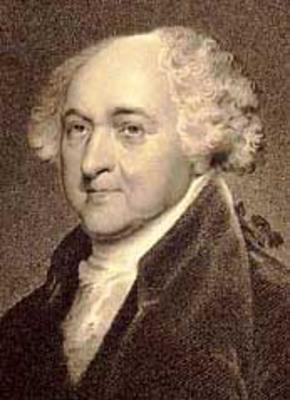
.. the often underappreciated (although never by the O'Malley family) John Adams.
Poor man. No matter WHO came after George Washington would suffer by comparison. John Adams spent the rest of his life trying to reclaim some legacy for himself - but the Alien & Sedition Act kind of cast a shadow over everything (that lasts to this day - I have heard people bring it up NOW as a way to discount all the amazing things he did. HA.)
I love John Adams BECAUSE of his flaws. I love him for his brilliance, and his dedication - I love him for his relationship wtih Abigail - and I love the two of them for being so FREE in their correspondence with one another so that we, centuries later, can read their letters and get to know them both. I love him for defending the British soldiers in the aftermath of the Boston massacre in 1770. It gives me a chill - his ability to detach, his ability to see the larger picture. In later years, Adam said that that controversial act of his was one of the things he was most proud of. That, to me, says so much about who this man was. John Adams said that this new nation should be a government "of laws, not of men". Of course, he was a lawyer, so he WOULD say that ... but by defending the redcoats - and by WINNING - he took a stand on the side of law and order against the mob. Even though he agreed with the sentiments of the mob. Extraordinary. It was the same thing as Alexander Hamilton (Adams' sworn enemy later on) lambasting the mobbing people on the college lawns in New York, clamoring for the head of the President - known to be pro-British. Hamilton was a revolutionary by this point - and totally not pro-British - but mob violence was not the way to go, and he stood on the steps of the college and shouted at the mob to disperse. Amazing.
I love him for his fragile ego. I love him for his capacity to get his feelings hurt. Until the end of his life - he maintained that capacity. How many people get burnt by certain events along the way ... and close themselves off to future hurts? He never did. He remained juicy, alive ... read his letters back and forth to Jefferson at the very end. He is boisterous, fearless ... and then, at times, reflective, contemplative.
I love his nervousness about his own legacy and how he kind of had a sense that he would not get the props he felt he deserved (uhm ... quoting Eminem in a John Adams post, Sheila?)
I love him for his reliance on Abigail.
I love those damn LETTERS.
I love that the Constitution of Massachusetts - written by him (completed in 1779) is the oldest functioning written constitution in the world. Go, John.
Anyway. My affection for him knows no bounds. I suppose part of it has to do with the fact that he was a Bostonian - and that I have family who live in Quincy - so every time we would go to Thanksgiving dinner at their house, we would pass by the Adams homestead. He's not a historical figure. He's almost like a family member - that everyone passes on stories about. It seems like he is actually remembered. I remember Bingley telling me once a story about going to college in Virginia - and having people talk about "Mr. Jefferson" - as though he was in the next room and could walk in at any moment. Yes. Growing up with a Boston family makes you feel like the Adams family is still alive, present, pulsing in the air around you, absorbed into the cobblestones where they walked ...
They are not dead. Not really. They are in the air we breathe, they are all around us still.
Happy birthday, John Adams. Thank you, thank you.
Here's a quote-fest from Adams ... The dude was so quotable. If you haven't read his letters (to his wife, and also the collection of letters between Adams and Jefferson) - I can't recommend them highly enough.
JOHN ADAMS QUOTE FEST ... Okay, I just threw these in hastily - these are my favorites - sorry about how the formatting is different - with some blockquotes, some not - whatever - I don't have time to iron that all out. It's the quotes that matter.
Enjoy!!!
-- "In my many years I have come to a conclusion that one useless man is a shame, two is a law firm, and three or more is a congress." (hahahahaha)
-- "If the way to do good to my country were to render myself popular, I could easily do it. But extravagant popularity is not the road to public advantage." -- John Adams, after becoming President by only three votes
-- "I never shall shine, 'til some animating occasion calls forth all my powers." -- John Adams, 1760
-- "The story of B. Bicknal's wife is a very clever one. She said, when she was married she was very anxious, she feared, she trembled, she could not go to bed. But she recollected she had put her hand to the plow and could not look back, so she mustered up her spirits, committed her soul to God and her body to B. Bicknal and into bed she leaped -- and in the morning she was amazed, she could not think for her life what it was that had so scared her." -- Journal entry of John Adams
-- Adams' description of the first meeting of the Continental Congress, in 1774 - in a letter to Abigail:
"This assembly is like no other that ever existed. Every man in it is a great man -- an orator, a critic, a statesman, and therefore every man upon every question must show his oratory, his criticism, his political abilities. The consequence of this is that business is drawn and spun out to immeasurable length. I believe if it was moved and seconded that we should come to a resolution that three and two make five, we should be entertained with logic and rhetoric, law, history, politics, and mathematics concerning the subject for two whole days, and then we should pass the resolution unanimously in the affirmative."
hahahahaha
-- "If we finally fail in this great and glorious contest, it will be by bewildering ourselves in groping for the middle way." -- John Adams
-- "It has been the will of Heaven that we should be thrown into existence at a period when the greatest philosophers and lawgivers of antiquity would have wished to live ... a period when a coincidence of circumstances without example has afforded to thirteen colonies at once an opportunity of beginning government anew from the foundation and building as they choose. How few of the human race have ever had an opportunity of choosing a system of government for themselves and their children? How few have ever had anything more of choice in government than in climate?" -- John Adams
-- "Is there no way for two friendly souls to converse together, although the bodies are 400 miles off. Yes, by letter. But I want a better communication. I want to hear you think, or to see your thoughts. The conclusion of your letter makes my heart throb more than a cannonade would. You bid me burn your letters. But I must forget you first." -- John Adams to Abigail - amazing. Romantic. Moving. "But I must forget you first."
-- "Thanks to God that he gave me stubbornness when I know I am right." -- John Adams
-- "In general, our generals were outgeneralled." -- John Adams' comment after the disastrous battle on Long Island
-- "He means well for his country, is always an honest man, often a wise man, but sometimes and in some things, absolutely out of his senses." -- Ben Franklin, 1783, about John Adams (in a letter to Robert Livingston)
-- "I must study politics and war that my sons may have liberty to study mathematics and philosophy. My sons ought to study mathematics and philosophy, geography, natural history, naval architecture, navigation, commerce, and agriculture in order to give their children a right to study paintings, poetry, music, artchitecture, statuary, tapestry, and porcelain." -- John Adams
-- "You are afraid of the one, I, the few. We agree perfectly that the many should have full, fair, and perfect representation [in the House]. You are apprehensive of monarchy; I, of aristocracy. I would therefore have given more power to the President and less to the Senate." -- John Adams to Thomas Jefferson
-- "Gentlemen, I feel a great difficulty how to act. I am Vice President. In this I am nothing, but I may be everything." -- John Adams
-- John Adams to Jonathan Sewall, July 1774:
"Swim or sink, live or die, survive or perish, [I am] with my country. You may depend upon it."
-- Thomas Jefferson, remembering John Adams' speeches at the Continental Congress:
"John Adams was our Colossus on the floor. He was not graceful nor elegant, nor remarkably fluent but he came out occasionally with a power of thought and expression, that moved us from our seats."-- John Adams, in a letter to Jefferson, 1812:
"Whether you or I were right posterity must judge. I never have approved and never can approve the repeal of taxes, the repeal of the judiciary system, or the neglect of the navy. Checks and balances, Jefferson, however you and your party may have ridiculed them, are our only security."
-- John Adams, in a July 3, 1776 letter to Abigail, after the signing of the Declaration of Independence on July 2:
The Delay of this Declaration to this Time, has many great Advantages attending it. ? The Hopes of Reconciliation, which were fondly entertained by Multitudes of honest and well meaning tho weak and mistaken People, have been gradually and at last totally extinguished. ? Time has been given for the whole People, maturely to consider the great Question of Independence and to ripen their Judgments, dissipate their Fears, and allure their Hopes, by discussing it in News Papers and Pamphletts, by debating it, in Assemblies, Conventions, Committees of Safety and Inspection, in town and County Meetings, as well as in private Conversations, so that the whole People in every Colony of the 13, have now adopted it, as their own Act. ? This will cement the Union, and avoid those Heats, and perhaps Convulsions which might have been occasioned, by such a Declaration Six Months ago.But the Day is past. The Second Day of July 1776, will be the most memorable Epocha, in the History of America. ? I am apt to believe that it will be celebrated, by succeeding Generations, as the great anniversary Festival. It ought to be commemorated, as the Day of Deliverance by solemn Acts of Devotion to God Almighty. It ought to be solemnized with Pomp and Parade, with Shews, Games, Sports, Guns, Bells, Bonfire and Illuminations from one End of this Continent to the other from this Time forward forever more.
You will think me transported with Enthusiasm, but I am not. I am well aware of the Toil, and Blood, and Treasure that it will cost Us to maintain this Declaration, and support and defend these States. Yet, through all the Gloom, I can see the Rays of ravishing Light and Glory. I can see that the End is more than worth all the Means, and that Posterity will triumph in that Day's Transaction, even though We should not rue it, which I trust in God We shall not.
-- John Adams, in a 1793 letter, responding to the revolution in France:
"Mankind will in time discover that unbridled majorities are as tyrannical and cruel as unlimited despots."
-- "I think instead of opposing systematically any administration, running down their characters and opposing all their measures, right or wrong, we ought to support every administration as far as we can in justice." -- John Adams
-- John to Abigail: Hartford May 2d 1775 - on his way down to Philadelphia. Adams is hoping that the disaster growing in Boston will bind the colonies together. That's eventually what happened, but at the time, he wasn't sure if it were a done deal.
"It is Arrogance and Presumption in human Sagacity to pretend to penetrate far into the Designs of Heaven. The most perfect Reverence and Resignation becomes us. But, I can't help depending upon this, that the present dreadfull Calamity of that beloved Town is intended to bind the Colonies together in more indissoluble Bands, and to animate their Exertions, at this great Crisis in the Affairs of Mankind. It has this Effect, in a most remarkable Degree, as far as I have yet seen or heard. It will plead, with all America, with more irresistible Perswasion, than Angells trumpet tongued.In a Cause which interests the whole Globe, at a Time, when my Friends and Country are in such keen Distress, I am scarecely ever interrupted, in the least Degree, by Apprehensions for my Personal Safety. I am often concerned for you and our dear Babes...
In case of real Danger, of which you cannot fail to have previous Intimations, fly to the Woods with our Children."
-- JOHN ADAMS, journal entry, 1770:
"Ambition is one of the more ungovernable passions of the human heart. The love of power is insatiable and uncontrollable.There is danger from all men. The only maxim of a free government ought to be to trust no man living with power to endanger the public liberty."
And lastly - one of my favorite Adams anecdotes. I love it because it came straight from his journal - so it's a first-person account - and it feels like I actually can hear Adams speaking, I can feel his humor, his emotions ... in a way that I never get with Jefferson or Washington - also great men, but just not personable writers. They had much more formality in their language. Adams had almost none, at least not in his journals and letters:
John Adams is sent as a delegate to France, to join Ben Franklin and Silas Deane (the stories of Silas Deane in France are hysterical - trying to be "undercover" - and yet barely speaking a word of French, etc.) Ben Franklin is living the high life (John Adams describes in his journal Franklin's leisurely schedule with haughty scorn). John Adams was more stern, more simple, more "republican", as he called it. He was talking as an anti-monarch.
Adams was overwhelmed by the politeness of the French, and by how eager they were to please the Americans. John Adams keeps all of his impressions of France, and the French people, in his journal, and in letters home to Abigail.
On his second or third night in France, he is at a dinner - and has the following exchange with a French woman, who asks him a particularly "brazen question". John Adams blushed his way through the conversation, not being used to women with open and free airs, but his ANSWER to her question - how he ANSWERS the French woman's question ... It kills me.
It's a perfect description of sexual chemistry.
John Adams' Journal, 1778 April 1 Wednesday
One of the most elegant Ladies at Table, young and handsome, tho married to a Gentleman in the Company, was pleased to Address her discourse to me. Mr. Bondfield must interpret the Speech which he did in these Words "Mr. Adams, by your Name I conclude you are descended from the first Man and Woman, and probably in your family may be preserved the tradition which may resolve a difficulty which I could never explain. I never could understand how the first Couple found out the Art of lying together?"
Whether her phrase was L'Art de se coucher ensemble, or any other more energetic, I know not, but Mr. Bondfield rendered it by that I have mentioned.
To me, whose Acquaintance with Women had been confined to America, where the manners of the Ladies were universally characterised at that time by Modesty, Delicacy and Dignity, this question was surprizing and shocking: but although I believe at first I blushed, I was determined not to be disconcerted. I thought it would be as well for once to set a brazen face against a brazen face and answer a fool according to her folly, and accordingly composing my countenance into an Ironical Gravity I answered her.
"Madame My Family resembles the First Couple both in the name and in their frailties so much that I have no doubt We are descended from that in Paradise. But the Subject was perfectly understood by Us, whether by tradition I could not tell: I rather thought it was by Instinct, for there was a Physical Quality in Us resembling the Power of Electricity or of the Magnet, by which when a Pair approached within a striking distance they flew together like the Needle to the Pole or like two Objects in Electrical Experiments."
When this Answer was explained to her, she replied, "Well I know not how it was, but this I know it is a very happy Shock."
I should have added "in a lawfull Way" after "a striking distance," but if I had her Ladyship and all the Company would only have thought it Pedantry and Bigottry.
Happy birthday, Mr. Adams, dear Mr. Adams. You are obnoxious and unpopular, it can't be denied ...
Or, another quote from 1776, a favorite musical (whoda guessed):
"SIT DOWN, JOHN
SIT DOWN, JOHN
FOR GOD'S SAKE JOHN, SIT DOWN!"
And for fun - here's the song lyrics to "But Mr. Adams" - where it is hashed out who will write the Declaration. Naturally, it is quite a self-serving story Adams told (he's the one who suggested Jefferson) - but still: SO funny. I love this song. I'm listening to it right now.
Franklin:
Mr. Adams, I say you should write it
To your legal mind and brilliance we defer
Adams:
Is that so? Well, if I'm the one to do it
They'll run their quill pens through it
I'm obnoxious and disliked, you know that, sir
Franklin:
Yes, I know
Adams:
So I say you should write it Franklin, yes you
Franklin:
Hell, no!
Adams:
Yes, you, Dr. Franklin, you
but, you, but, you, but
Franklin:
Mr. Adams, but, Mr. Adams
The things I write are only light extemporania
I won't put politics on paper; it's a mania
So I refuse to use the pen in Pennsylvania
Others:
Pennsylvania, Pennsylvania, refuse to use the pen
Adams:
Mr. Sherman, I say you should write it
You are never controversial as it were
Sherman:
That is true
Adams:
Whereas if I'm the one to do it
They'll run their quill pens through it
I'm obnoxious and disliked, you know that, sir
Sherman:
Yes, I do
Adams:
So I say you should write it, Sherman, yes you
Sherman:
Good heavens, no!
Adams:
Yes you, Roger Sherman, you
but, you, but, you, but
Sherman:
Mr. Adams, but, Mr. Adams
I cannot write with any style or proper etiquette
I don't know a participle from a predicate
I am just a simple cobbler from Connecticut
Others:
Connecticut, Connecticut, a simple cobbler he
Adams:
Mr. Livingston, maybe you should write it
You have many friends and you're a diplomat
Franklin:
Oh, that word!
Adams:
Whereas if I'm the one to do it
They'll run their quill pens through it
Others:
He's obnoxious and disliked; did you know that?
Livingston:
I hadn't heard
Adams:
So I say you should write it, Robert, yes you
Livingston:
Not me, Johnny!
Adams:
Yes you, Robert Livingston, you
but you but you but
Livingston:
Mr. Adams, dear Mr. Adams
I've been presented with a new son by the noble stork
So I am going home to celebrate and pop the cork
With all the Livingstons together back in old New York
Others:
New York, New York, Livingston's going to pop a cork
Jefferson:
Mr. Adams, leave me alone!
Adams:
Mr. Jefferson, dear Mr. Jefferson
I'm only 41; I still have my virility
And I can romp through Cupid's Grove with great agility
But life is more than sexual combustibility
Others:
Combustibility, combustibility, combustibili...
Jefferson:
Mr. Adams, damn you Mr. Adams
You're obnoxious and disliked; that cannot be denied
Once again you stand between me and my lovely bride
Oh, Mr. Adams, you are driving me to homicide!
Others:
Homicide, homicide, we may see murder yet!
BRILLIANT!
October 28, 2006
Snapshots
Woke up to a monsoon battering my window. The trees were bent horizontal. Now it's bright sun and everything's all greeny glowy happy. Please make up your mind, nature.
Had a massage on Monday night. I was so freakin' stressed out that it basically HURT when he touched my neck and shoulders. I mean, it's ridiculous. So it was rather, uhm, intense - "Ouch! OW! OOOF ... OUCH ..." but I walked out of there feeling almost like I was TALLER. Everything felt all straightened out and aligned. He called me the next day to see how I was doing. I love a massage therapist who, you know, calls you at home to see how your neck is. It's hysterical, but I love it.
The weather has been freezing - with massive winds battering down the avenues of New York. American flags looking almost like they are going to be ripped off their poles - it's rather alarming. Then there's been the whitenss of the sky - with stray golden GLEAMS coming out of it - so you can see where the sun is. A wintry sun, hiding.
Went out to Brooklyn to see my friend in Urinetown. She played Pennywise and she was absolutely brilliant. That song "Privilege to Pee" has got to be so damn hard - and she has an incredible soprano already - but to see her just kick some BUTT with that song - and be funny and angry - was so much fun. So much fun. The show was quite good. Brooklyn-ites, you have 2 more weeks to check it out.
Tonight going to see my good friend Bill in a revival of a show he did last year - and I had heard a ton about his performance - but I had missed it because I was in a show as well. Bill is such an amazing actor - one of the best I personally have ever worked with. We did a two-person show a couple years ago that I think was one of the most satisfying acting experiences I've ever had. He's a good friend. He's insane.
Cashel's birthday coming up. I'm so bummed I won't be out there for it. But I'm thinking of going back out to LA in December - so I can see him again then. More word problems to solve?
Domestic stuff today involving Woolite, and Endust and - ohmygod - breaking out the flannel sheets. The day I break out the flannels is one of the happiest days of the year for me. I love the cold. I love fall and winter. I love cozy flannel and fleece and all that.
The diet is going well. I've been surprisingly dedicated to it - even with traveling to LA and all. I haven't slipped too much. Haven't gotten on a scale yet, but I will say this - my clothes are loose.
Had a great conversation with another writer friend last night. She's been getting her poems published here and there - and has started to do readings in Manhattan. She also teaches a writing class online, and in general is a great person to talk to about all this stuff. I feel pumped. Pumped about this Sewanee thing - but not just about that - pumped about what will come NEXT.
Oh - member my Internet experiment? It worked.
October 27, 2006
Fiction ....
Which fictional character frightens you the most?
Cathy from East of Eden. She haunts me. I've written about her multiple times - usually in other contexts (here - in a post about Leslie van Houten. And here. That one started with a discussion about Scott Peck's People of the Lie) My fascination with Cathy is akin to my fascination with Stalin. It's hard to look away from people like those two.
Which fictional parents do you most wish you had?
Maybe Mr. and Mrs. Murry in Wrinkle in Time. Or - to go further down in that family: Meg and Calvin in the rest of the books. They seemed like pretty cool parents.
Which fictional character has the most balls?
I guess Captain Ahab is coming to mind.
To which fictional character?s house would you most like to be invited for dinner?
The Professor's house in The Lion, the Witch and the Wardrobe
If you could invite 3 fictional couples to your home for dinner, who would they be?
Leopold and Molly Bloom - now THAT would be interesting
Samuel Klayman and Josef Kavalier from The Adventures of Kavalier and Clay - I know they're not a couple - but they go together in my mind ... maybe they would bring along Rosa ... The three of them, actually, qualify as a "couple" - 3 of my favorite characters of all time
Nelson Denoon and ... nameless woman (uhm - more on them here)
Which fictional character could probably entice you into his/her bed?
Yossarian. Probably?
Which fictional character would most likely have broken your heart?
Nelson Denoon
Mr. Darcy too. Of course.
In which fictional character?s home would you most like to live?
Lake Mistawis - Barney Snaith's house on the island in The Blue Castle
Close second: Kerewin's tower on the beach in The Bone People
I got this fun meme here!
Diary Friday
I know. It's been a while.
It comes in waves - my desire to do the diary thing. I can't do it if I'm not in the mood - it's too exposing. I need to be in the mood for that kind of thing.
Okay, so here's one from my sophomore year in high school. It's mortifying (and fun) for me to share this.)
JANUARY 7
J. came home with me today. I cannot explain the fun. [And then I proceed to "explain the fun"]
17 says that a hearty laugh is equal to a 3-mile run. [And we all know that we must do whatever Seventeen magazine tells us!!] If that is so, then why am I not anorexic?
We watched GH [those initials should need no explanation] and almost cried when Noah hurt Tiffany. [hahahaha Noah!!!!]
We went up to my room and oddly enough we talked seriously for a long time. About prejudice and the Ku Klux Klan. [Like I said in the first paragraph - "I cannot explain the fun". The FUN of discussing the KKK!] I am terrified of those men. I have horrible nightmares and I hate them so much. How -- HOW can someone not like someone because - OF THE COLOR OF THEIR SKIN!!! Or their religion? It is totally unfathomable to me. And it makes me so mad. I could never put the feelings into words. It really really scares me. [Still does, hon. Let's add "sexual orientation" onto that list - and we'll be completely up to date with my current-day feelings.]
We were called downstairs at 5:30 and I had 3 pieces of pizza!!! [Hence, the lack of anorexia] I am so ashamed.
We left right after for Tootsie.
Guess who was there? Mere, Beth, Michelle and Jayne! [Okay, now that is completely BIZARRE. That is exactly the grouping that got together last Saturday for Mere's black-belt graduation. Ah, continuity. How I love thee.] We all sat together. I think it was better the second time, because I knew what to expect - and none of the lines flew by me. When Bill Murray said, "You slut" - I swear, Mere and I were leaning over, holding our stomachs, and just LAUGHING. It was great.
When we got home, J. and I went into the den and - I revealed some deep secrets - and I could NOT believe that she did the same thing. I really must sound desperate but, at times, I do pretend that I have a boyfriend. When I'm alone, I act out imaginary scenes with him, and fights, and I turn on Barry Manilow music when we make up. [That is literally the funniest most embarrassing thing I have ever heard in my life.] I lie in bed and pretend that we've just made love. I swear, I am in need of a dildo. [I cannot BELIEVE I knew that word. ??????? I am shocked at myself.] We were laughing so hard though because we both do the SAME things and we never knew about it! I kept going, "I feel as if a great weight has been taken off my shoulders!" We compared stories and laughed endlessly because J. said, "Well, my purple pillow is my boyfriend," and I said, "Well, my backrest is really good cause it sort of has arms." We laughed about that for about 15 minutes. I tell you, I'm laughing now!!! J. kept saying it. "It sort of has arms!" I can't believe that I actually told someone my deep dark secret and found that she did it too. We were lying on the floor in the den, ROARING. But of course we both laugh silently. If anyone had listened at the door, they wouldn't have thought we were in there.
At 1:00, we were still up - so we watched a Barbra Streisand movie that was on: "Owl and the Pussycat."
And now, the sun is "spitting morning" into my face. BYE!
Happy birthday - to Sylvia Plath
Today is Sylvia Plath's birthday, and here's an old post I wrote about her, with some new stuff added. It feels a bit strange to say "Happy birthday" to ... uhm ... someone who was so ultimately unhappy, and someone who took her own life ... But I saw that it was her birthday today and I had to say something.

That's a sketch she did of her own hands. She found drawing very relaxing. She would lose herself in it, and spent most of her honeymoon in Spain (a place she found almost unbearably upsetting - Ted Hughes, her husband, wrote a poem many years later called "You Hated Spain") - anyway, she spent most of her honeymoon huddled over a sketch pad. She drew the streets, the fruit baskets, the fishing boats. Was there pleasure in it for her? I don't know. I think it was a way to unhinge her brain for a moment, lose herself in the moment - where all she could do, all she was able to do, was just copy what she saw. She didn't have to find the right word, or struggle with the poetry muse ... she just had to sit down and copy what she saw. Ted Hughes wrote a poem, too, about her drawing.
I haven't yet written a real piece on Sylvia Plath - because I know when I finaly get to it, it'll be a doozy. It'll take me hours of research, and compiling quotes, and snippets, and poems, and yadda yadda. I need to have the time to invest. That's just the deal with certain topics - and Sylvia Plath is one of them. (However - now I have an incentive. RTG basically commissioned a piece from me.)
In honor of the birthday of this eventually astonishing poet (she didn't start out that way, although she was certainly precocious - but NONE of her early work could prepare you for what her work became in the last 2 years of her life - it's like another PERSON came out of her ....) - I have dug up some wonderful old photographs of her. She was a chameleon. She was an all-American girl. She was a bleached blonde beach-blanket-bingo girl. She was an intense prodigy. She was a depressive who had survived a suicide attempt her junior year in college. She was the woman who married the big brash English outdoorsman, and suddenly found herself fishing, and hunting, and tromping through the woods in galoshes. Who was she? I have no idea. But you can take a look at all the photographs and see how startling are the transformations. This is not just about the passage of time, and someone looking different as they grew older ... this really seems to be about a shedding of selves (like she writes in Lady Lazarus, in one of my favorite lines: "my selves dissolving, old whores petticoats") -
I look at the picture of the bodacious blonde at the beach:

This was from her summer of recovery from her suicide attempt in college. She spent months in an institution - and then went back to Smith to finish out her education. When summer came - she bleached her hair. Her mother - the controlling prudish Aurelia Plath - and yes, there's enough information out there on this woman for me to feel completely comfortable labeling her as that - was shocked. She pretended to be supportive - but deep down, she wanted a conventional daughter. Well, sorry, Aurelia, ain't never gonna happen. Sylvia tormented herself trying to be conventional (many of her problems arose from what she felt was expected from her - as a daughter, as a wife, as a woman, in general) - and bleaching her hair was part of a necessary rebellion. Also, she started having sex. Left and right. Willy nilly. No more good 1950s girl. That "be a good girl" thing had nearly killed her. Her doctor at the time encouraged this rebellion, and taught her about birth control, so she could at least have sex safely. This was a revelation to Sylvia. She was a very sexual person, passionate, kind of wild actually - even with all that "ooh, I'm a poetic prodigy" thing - and you know, the thing is - any type of artist will always be on the fringe of polite society. If an artist tries desperately to fit in to some mainstream - if an artist really worries about what an uptight person thinks of how he or she lives ... then that artist just won't survive. The strict rules on women at that time were fetters around Sylvia's wrists. NOT CARING what people thought of her - was one of the biggest breakthroughs in her life. NOT CARING if people whispered, "She's a slut." And they did. Especially when she got to England on her Fulbright. Tapping into her REBEL, into her "I just don't care" persona ... was really important - but ultimately, it didn't matter at all. Because once she got married and once she had kids - these old conventional "roles" started constricting her again (she writes about it extensively in her poems) ... It seemed that there was an incompatability: between the poetess and the woman. Could she be a wife and ALSO a poet? What were the expectations of her? It did not help matters (although she might have thought it would) that she married not just another poet - but one of the most important up-and-coming poets in England - a man who eventually (years later) would be Poet Laureate. Like - Ted Hughes was a big deal. And he was on his way to becoming a big deal when Sylvia met him. How can two poets tryiing to make their names - live together? Was Sylvia expected to be a good 1950s wife? Ted Hughes insists (and he has also written extensively about it) that he did not expect that at all. When he first met Sylvia at a party - they both were drunk - and they basically found themselves in an empty room - making out ferociously. Sylvia bit his cheek so hard she drew blood. They were married 4 months later. THIS was their beginning. There was no nice good-girl 1950s courtship. They didn't go out for sodas and a drive-in. No. They were bohemians, for God's sake. They were poets. People like that don't live by society's rules, nor should they. (Especially if the rules are stupid.) But Ted, in some of his later poems, has described how baffled and hurt he was - after their marriage - when Sylvia suddenly got writer's block. She had writer's block for an agonizing year, year and a half - directly after their wedding. Hmmmm, coincidence? I think not. It seems apparent that Sylvia was so terrified of doing BETTER than her husband that ... everything shut down. She then tried to be the perfect housewife - and ... Ted, again, was hurt and confused by this. Where is that wild poetess? Where is my crazy American girl who shouts out lines of Chaucer to the cows? Why is she in the kitchen, tears running down her face, trying to bake pies? I mean ... what has happened??
Then I look at the picture of her with her two kids (taken a month or so before she committed suicide) -

Actually, I believe her mother took that photograph during her fateful visit to her daughter. Sylvia was living in England - and her husband Ted Hughes had just left her for another woman. Comparing that photograph to the blonde bikini one - it;s hard to believe it's the same person. Perhaps there's something similar in the smile - there's something phony in both smiles, to my eye. Anyway, I find it fascinating - perusing the photos of Sylvia Plath.
Not nearly as fascinating as her poems themselves which have never lost their power - no matter how times I have read them.
I have gone through a bunch of Plath phases - and I am sure I will go through more. I continue to re-visit her work, every couple of years ... and re-read all those 1960-1963 poems again - sometimes in order - sometimes muddling it up - and every single time, even though I always have different responses, and sometimes one poem suddenly seems THE BEST when a couple years before it was another poem that was obviously HER BEST - but anyway, every single time I read those poems from her last 3 years, they take my breath away. They're no picnic - they are bleak bleak bleak - especially if you read them chronologically. If you read them chronologically - you can feel herself get manic - in October of 62 - and she starts cranking out 2, 3, sometimes 4 poems a day. These were not pot-boilers, folks. These poems are now taught in colleges. These are the poems that would make her name. She wasn't just scribbling out insane manic fantasies - these are highly intricate, passionate, unbeLIEVable poems. Obviously manic - when you see how many she was putting out a day ... and then there is a brief falling away for a month - December ... she was still writing, but obviously it was the calm before the storm. Then January and February 1963 came along - and I believe it was the coldest winter London had ever had - and her pipes froze - and she had no help, and two young babies - and things started getting worse and worse in her mind. And her art kicked in yet again - with ferocity and power. She would write these poems at 4 in the morning - her only time to herself. So you can feel the wheels start cranking again - in January, February - she wrote some of her best poems then. They are more frightening, however, than the October poems. She is staring at death, she is beginning to embrace the idea of death ... Death is always a factor in Plath's poems, but it takes on a new form in those last couple of poems. It is no longer just a fantasy, death is no longer a dream-lover in the night ... she is now making plans. The rage of October (which gave us such poems as Daddy, and Poppies in October, and the entire fanTASTIC bee-keeping sequence) is now gone. And you can feel a chilling resolve creep into her work. She is getting ready to go.
I have interspersed the photos of Plath I found with some of my favorite of her poems.
I still need to do a big old Plath fest one day - I have too much to say about her, and need to get my thoughts together better.
In honor of her birthday, here's one that she actually wrote about her upcoming birthday - in 1962. She wrote this poem, now one of her most well-known, on Sept. 30 1962 ... right before the blast of creativity and rage that would fuel her through that painful next month. Sylvia always had a fatalistic thing with birthdays:
A Birthday Present
What is this, behind this veil, is it ugly, is it beautiful?
It is shimmering, has it breasts, has it edges?
I am sure it is unique, I am sure it is what I want.
When I am quiet at my cooking I feel it looking, I feel it thinking
'Is this the one I am too appear for,
Is this the elect one, the one with black eye-pits and a scar?
Measuring the flour, cutting off the surplus,
Adhering to rules, to rules, to rules.
Is this the one for the annunciation?
My god, what a laugh!'
But it shimmers, it does not stop, and I think it wants me.
I would not mind if it were bones, or a pearl button.
I do not want much of a present, anyway, this year.
After all I am alive only by accident.
I would have killed myself gladly that time any possible way.
Now there are these veils, shimmering like curtains,
The diaphanous satins of a January window
White as babies' bedding and glittering with dead breath. O ivory!
It must be a tusk there, a ghost column.
Can you not see I do not mind what it is.
Can you not give it to me?
Do not be ashamed--I do not mind if it is small.
Do not be mean, I am ready for enormity.
Let us sit down to it, one on either side, admiring the gleam,
The glaze, the mirrory variety of it.
Let us eat our last supper at it, like a hospital plate.
I know why you will not give it to me,
You are terrified
The world will go up in a shriek, and your head with it,
Bossed, brazen, an antique shield,
A marvel to your great-grandchildren.
Do not be afraid, it is not so.
I will only take it and go aside quietly.
You will not even hear me opening it, no paper crackle,
No falling ribbons, no scream at the end.
I do not think you credit me with this discretion.
If you only knew how the veils were killing my days.
To you they are only transparencies, clear air.
But my god, the clouds are like cotton.
Armies of them. They are carbon monoxide.
Sweetly, sweetly I breathe in,
Filling my veins with invisibles, with the million
Probable motes that tick the years off my life.
You are silver-suited for the occasion. O adding machine-----
Is it impossible for you to let something go and have it go whole?
Must you stamp each piece purple,
Must you kill what you can?
There is one thing I want today, and only you can give it to me.
It stands at my window, big as the sky.
It breathes from my sheets, the cold dead center
Where split lives congeal and stiffen to history.
Let it not come by the mail, finger by finger.
Let it not come by word of mouth, I should be sixty
By the time the whole of it was delivered, and to numb to use it.
Only let down the veil, the veil, the veil.
If it were death
I would admire the deep gravity of it, its timeless eyes.
I would know you were serious.
There would be a nobility then, there would be a birthday.
And the knife not carve, but enter
Pure and clean as the cry of a baby,
And the universe slide from my side.

That's a picture of Sylvia from 1953 - right before her first suicide attempt. She was living with her mother - and her mother made her take shorthand classes and typing classes (again: there is something evil about that. That very same attitude is why Barbra Streisand has always had such long nails. People laugh at those nails, or make fun of Babs for them ... but I see them, and I love them. Because to her - those nails meant freedom. Her mother was pretty much totally negative about Barbra's actual goals - she wanted to have a normal daughter - so she signed her up for typing classes. In rebellion, Babs grew her nails to extraordinary length so that even if she wanted to learn how to type - she couldn't. The nails got in the way. So when I see those nails now - on a 60 something year old woman - I smile. It's a reminder.) There is a story here - of the mother who truly DOESN'T love her daughter. She doesn't. Otherwise - she would love her for who she actually IS, not who she wants her to be. Aurelia Plath never got that. Sylvia, at the end of her life, was starting to come to terms with that. She writes, quite blatantly, in her journal, "I can never live near my mother again." And her mother comes to visit in Oct. 1962 - right after Ted has moved out - to be with Assia Wevill - the woman he was having an affair with - and Sylvia was absolutely tormented by having her mother see her in such a weak moment. To her, it was unforgivable. She wrote her poem "Medusa" about that experience - which is, you know, shocking in its hatred, and anger. But again: poets who live by society's rules and play well with others are usually not poets to be reckoned with. Sylvia coming to terms with her rage was part of her finding her voice.
"The Moon and the Yew Tree" was written in 1961 - and is considered a breakthrough - by those who have studied Plath's work. In it - she finds some of that cold clear eerie imagery - that she will write about until the very end. She looks out her window and sees a moon, a church, and a black yew tree. It is a beautiful image - and yet ... in the poem ... it becomes a harbinger. Of death, doom.
And personally - I think the first line of this poem is one of her best lines ever.
The moon and the yew tree
This is the light of the mind, cold and planetary
The trees of the mind are black. The light is blue.
The grasses unload their griefs on my feet as if I were God
Prickling my ankles and murmuring of their humility
Fumy, spiritous mists inhabit this place.
Separated from my house by a row of headstones.
I simply cannot see where there is to get to.
The moon is no door. It is a face in its own right,
White as a knuckle and terribly upset.
It drags the sea after it like a dark crime; it is quiet
With the O-gape of complete despair. I live here.
Twice on Sunday, the bells startle the sky ----
Eight great tongues affirming the Resurrection
At the end, they soberly bong out their names.
The yew tree points up, it has a Gothic shape.
The eyes lift after it and find the moon.
The moon is my mother. She is not sweet like Mary.
Her blue garments unloose small bats and owls.
How I would like to believe in tenderness ----
The face of the effigy, gentled by candles,
Bending, on me in particular, its mild eyes.
I have fallen a long way. Clouds are flowering
Blue and mystical over the face of the stars
Inside the church, the saints will all be blue,
Floating on their delicate feet over the cold pews,
Their hands and faces stiff with holiness.
The moon sees nothing of this. She is bald and wild.
And the message of the yew tree is blackness -- blackness and silence
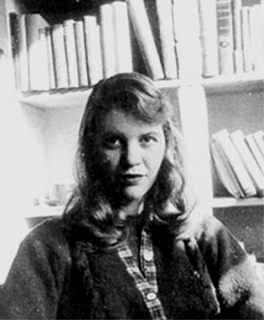
Little Fugue
The yew's black fingers wag:
Cold clouds go over.
So the deaf and dumb
Signal the blind, and are ignored.
I like black statements.
The featurelessness of that cloud, now!
White as an eye all over!
The eye of the blind pianist
At my table on the ship.
He felt for his food.
His fingers had the noses of weasels.
I couldn't stop looking.
He could hear Beethoven:
Black yew, white cloud,
The horrific complications.
Finger-traps--a tumult of keys.
Empty and silly as plates,
So the blind smile.
I envy big noises,
The yew hedge of the Grosse Fuge.
Deafness is something else.
Such a dark funnel, my father!
I see your voice
Black and leafy, as in my childhood.
A yew hedge of orders,
Gothic and barbarous, pure German.
Dead men cry from it.
I am guilty of nothing.
The yew my Christ, then.
Is it not as tortured?
And you, during the Great War
In the California delicatessen
Lopping off the sausages!
They colour my sleep,
Red, mottled, like cut necks.
There was a silence!
Great silence of another order.
I was seven, I knew nothing.
The world occurred.
You had one leg, and a Prussian mind.
Now similar clouds
Are spreading their vacuous sheets.
Do you say nothing?
I am lame in the memory.
I remember a blue eye,
A briefcase of tangerines.
This was a man, then!
Death opened, like a black tree, blackly.
I survive the while,
Arranging my morning.
These are my fingers, this my baby.
The clouds are a marriage of dress, of that pallor.
The Bee Meeting (this is one of the poems in her famous "bee sequence" - which she cranked out at 1 or 2 a day, during October of 1962.)
Who are these people at the bridge to meet me? They are the villagers ---
The rector, the midwife, the sexton, the agent for bees.
In my sleeveless summery dress I have no protection,
And they are all gloved and covered, why did nobody tell me?
They are smiling and taking out veils tacked to ancient hats.
I am nude as a chicken neck, does nobody love me?
Yes, here is the secretary of bees with her white shop smock,
Buttoning the cuffs at my wrists and the slit from my neck to my knees.
Now I am milkweed silk, the bees will not notice.
They will not smell my fear, my fear, my fear.
Which is the rector now, is it that man in black?
Which is the midwife, is that her blue coat?
Everybody is nodding a square black head, they are knights in visors,
Breastplates of cheesecloth knotted under the armpits.
Their smiles and their voces are changing. I am led through a beanfield.
Strips of tinfoil winking like people,
Feather dusters fanning their hands in a sea of bean flowers,
Creamy bean flowers with black eyes and leaves like bored hearts.
Is it blood clots the tendrils are dragging up that string?
No, no, it is scarlet flowers that will one day be edible.
Now they are giving me a fashionable white straw Italian hat
And a black veil that molds to my face, they are making me one of them.
They are leading me to the shorn grove, the circle of hives.
Is it the hawthorn that smells so sick?
The barren body of hawthon, etherizing its children.
Is it some operation that is taking place?
It is the surgeon my neighbors are waiting for,
This apparition in a green helmet,
Shining gloves and white suit.
Is it the butcher, the grocer, the postman, someone I know?
I cannot run, I am rooted, and the gorse hurts me
With its yellow purses, its spiky armory.
I could not run without having to run forever.
The white hive is snug as a virgin,
Sealing off her brood cells, her honey, and quietly humming.
Smoke rolls and scarves in the grove.
The mind of the hive thinks this is the end of everything.
Here they come, the outriders, on their hysterical elastics.
If I stand very still, they will think I am cow-parsley,
A gullible head untouched by their animosity,
Not even nodding, a personage in a hedgerow.
The villagers open the chambers, they are hunting the queen.
Is she hiding, is she eating honey? She is very clever.
She is old, old, old, she must live another year, and she knows it.
While in their fingerjoint cells the new virgins
Dream of a duel they will win inevitably,
A curtain of wax dividing them from the bride flight,
The upflight of the murderess into a heaven that loves her.
The villagers are moving the virgins, there will be no killing.
The old queen does not show herself, is she so ungrateful?
I am exhausted, I am exhausted ---
Pillar of white in a blackout of knives.
I am the magician's girl who does not flinch.
The villagers are untying their disguises, they are shaking hands.
Whose is that long white box in the grove, what have they accomplished, why am I cold.
Fever 103 (another Oct. 1962 poem)
Pure? What does it mean?
The tongues of hell
Are dull, dull as the triple
Tongues of dull, fat Cerebus
Who wheezes at the gate. Incapable
Of licking clean
The aguey tendon, the sin, the sin.
The tinder cries.
The indelible smell
Of a snuffed candle!
Love, love, the low smokes roll
From me like Isadora's scarves, I'm in a fright
One scarf will catch and anchor in the wheel.
Such yellow sullen smokes
Make their own element. They will not rise,
But trundle round the globe
Choking the aged and the meek,
The weak
Hothouse baby in its crib,
The ghastly orchid
Hanging its hanging garden in the air,
Devilish leopard!
Radiation turned it white
And killed it in an hour.
Greasing the bodies of adulterers
Like Hiroshima ash and eating in.
The sin. The sin.
Darling, all night
I have been flickering, off, on, off, on.
The sheets grow heavy as a lecher's kiss.
Three days. Three nights.
Lemon water, chicken
Water, water make me retch.
I am too pure for you or anyone.
Your body
Hurts me as the world hurts God. I am a lantern ---
My head a moon
Of Japanese paper, my gold beaten skin
Infinitely delicate and infinitely expensive.
Does not my heat astound you. And my light.
All by myself I am a huge camellia
Glowing and coming and going, flush on flush.
I think I am going up,
I think I may rise ---
The beads of hot metal fly, and I, love, I
Am a pure acetylene
Virgin
Attended by roses,
By kisses, by cherubim,
By whatever these pink things mean.
Not you, nor him.
Not him, nor him
(My selves dissolving, old whore petticoats) ---
To Paradise.

The Couriers (written in Nov. 1962)
The word of a snail on the plate of a leaf?
It is not mine. Do not accept it.
Acetic acid in a sealed tin?
Do not accept it. It is not genuine.
A ring of gold with the sun in it?
Lies. Lies and a grief.
Frost on a leaf, the immaculate
Cauldron, talking and crackling
All to itself on the top of each
Of nine black Alps.
A disturbance in mirrors,
The sea shattering its grey one -
Love, love, my season.

I think the following poem is the saddest she ever wrote. Now who can ever say what is in the mind of another - and it is always a dangerous thing to read too much into these poems (at least in a biographical way). They are, after all, art. But I believe that one of the reasons she killed herself is to spare her children a mother whose face was "a ceiling without a star". Not that that excuses her actions. But she wrote this poem in January of 1963, 2 weeks before she put her head in the oven. I find this poem nearly unreadable in its sadness. Yet - wonderful writing as well.
Child
Your clear eye is the one absolutely beautiful thing.
I want to fill it with color and ducks,
The zoo of the new
Whose names you meditate ---
April snowdrop, Indian pipe,
Little
Stalk without wrinkle,
Pool in which images
Should be grand and classical
Not this troublous
Wringing of hands, this dark
Ceiling without a star.
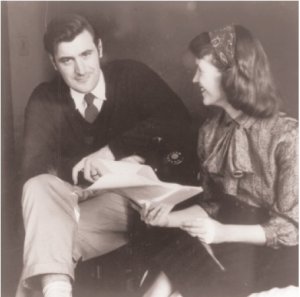
Sylvia Plath and Ted Hughes - newlyweds. Happier days. What a gorgeous couple they were.
And this is the last poem that Sylvia Plath completed. It's chilling, yes, but standing alone - as a poem - I think there's a lot to talk about here, a lot of stuff - not just biographical.
And I'm sorry - but the line "her blacks crackle and drag" is ... I mean, I can't describe it. It's just fantastic genius-level imagery, that's all. Goosebumps. The last two lines give me goosebumps. So scary. "Her blacks crackle and drag." (And yes ... let me just throw a shout-out to Paul Westerberg - who has also recognized the genius imagery in that line.) It's scary. "Crackle"? "Drag?" All kinds of very frightening images come to mind in those two simple words ... and the internal rhyme of "blacks" and "crackle" make it seem even more eerie. I'm not a literary critic but I will NEVER be done reading this last poem. She completed it on February 4, 1963. She killed herself on February 11.
Edge
The woman is perfected.
Her dead
Body wears the smile of accomplishment,
The illusion of a Greek necessity
Flows in the scrolls of her toga,
Her bare
Feet seem to be saying:
We have come so far, it is over.
Each dead child coiled, a white serpent,
One at each little
Pitcher of milk, now empty.
She has folded
Them back into her body as petals
Of a rose close when the garden
Stiffens and odors bleed
From the sweet, deep throats of the night flower.
The moon has nothing to be sad about,
Staring from her hood of bone.
She is used to this sort of thing.
Her blacks crackle and drag.
The Books: "Emily Climbs" (L.M. Montgomery)
Emily Climbs - by L.M. Montgomery
This is the second book in the Emily series. There were times when this one was my favorite one out of the three - it's so rich, and funny - with so many of my favorite episodes that Lucy Maud has ever written (Emily going to interview the author - with the crazy dog running wild, Perry kissing Emily, the incident when Emily gets locked in the church, Emily walking the 7 miles home from Shrewsbury ...)
Again, I think that Lucy Maud was just at the top of her game, consistently, with the Emily series. She KNEW this character, this character is completely an individual, a living human being - and there isn't one false note in the whole thing.
I love, too, how a lot of this book - maybe half of it - is made up of Emily's actual diary entries. We get to hear Emily's voice in a really private way. We hear her thoughts, hear how she writes. It's a wonderful device and I think Lucy Maud really carries it off.
I'll do a bunch of excerpts from this one, too. Because it pleases me.
The first chapter shows Emily, in her room, a snowstorm outside - writing in her diary. Then we hear the entire diary entry - which is parts inspirational, part hysterical, part thoughtful. Emily is 13 years old.
Oh, and listen to the first sentence of the book. There's a melancholy in it. Lucy Maud the narrator inserts herself. She knows the future:
Emily Byrd Starr was alone in her room, in the old New Moon farmhouse at Blair Water, one stormy night in a February of the olden years before the world turned upside down.
"before the world turned upside down". World War I. There's a chill in those words, you know? The chill that lies over the stillness and peace of the early 20th century, in looking back on it.
The excerpt below is the last couple paragraphs of the last chapter. I love it - because Lucy Maud comes right out and tells us what she, the author, is doing.
Excerpt from Emily Climbs - by L.M. Montgomery
Emily looked at her candle - it,. too, was almost burned out. She knew she could not have another that night - Aunt Elizabeth's rules were as those of Mede and Persian: she put away her diary in the little right-hand cupboard above the mantel, covered her dying fire, undressed and blew out her candle. The room slowly filled with the faint, ghostly snow-light of a night when a full moon is behind the driving storm-clouds. And just as Emily was ready to slip into her high black bedstead a sudden inspiration came - a splendid new idea for a story. For a minute she shivered reluctantly: the room was getting cold. But the idea would not be denied. Emily slipped her hand between the feather tick of her bed and the chaff mattress and produced a half-burned candle, secreted there for just such an emergency.
It was not, of course, a proper thing to do. But then I have never pretended, nor ever will pretend, that Emily was a proper child. Books are not written about proper children. They would be so dull nobody would read them.
She lighted her candle, put on her stockings and a heavy coat, got out another half-filled Jimmy-book, and began to write by the single, uncertain candle which made a pale oasis of light in the shadows of the room. In that oasis Emily wrote, her black head bent over her book, as the hours of night crept away and the other occupants of New Moon slumbered soundly; she grew chill and cramped, but she was quite unconscious of it. Her eyes burned - her cheeks glowed - words came like troops of obedient genii to the call of her pen. When at last her candle went out with a sputter and a hiss in its little pool of melted tallow, she cane back to reality with a sigh and a shiver. It was two, by the clock, and she was very tired and very cold; but she had finished her story and it was the best thing she had ever written. She crept into her cold nest with a sense of completion and victory, born of the working out of her creative impulse, and fell asleep to the lullaby of the waning storm.
October 26, 2006
Thursday 13
13 classic books I would like read in 2007.
1. War and Peace, by Leo Tolstoy
2. Adam Bede, by George Eliot
3. David Copperfield, by Charles Dickens
4. The Idiot, by Dostoevsky
5. Mill on the Floss, by George Eliot
6. Persuasion, by Jane Austen
7. The Red and the Black, by Stendahl
8. Les Miserables, by Victor Hugo
9. Bleak House, by Charles Dickens
10. Frankenstein, by Mary Shelley
11. Complete plays of William Shakespeare
12. Hard Times, by Charles Dickens
13. The complete short stories of Anton Chekhov
(Some of these would be re-reads - but I'm counting them anyway. Obviously I have read all of Shakespeare's plays, in some cases multiple times - but I have been wanting to revisit them again - preferably in the order they were written - as close as can be guessed. Also it's been years since I read Frankenstein - and I love that book, want to read it again.)
(I got this idea here!)
Why we are friends ...
... or partly why ...
This morning we had the following email exchange:
Me in email to Allison:
I HAVE to see this documentary about Jim Jones and the People's Temple - it's at the Quad ... and, I don't know, seems like it's something you and I need to see together. ha!!!wanna go this weekend? Saturday is out for me - but maybe Sunday?? Wanna go see 900 people kill themselves with poisoned Kool-aid on screen??
Allison in email to Me:
OH MY GOD. MUST MUST. Can not literally think of a better way to spend a Sunday.
Today in history: October 26, 1776
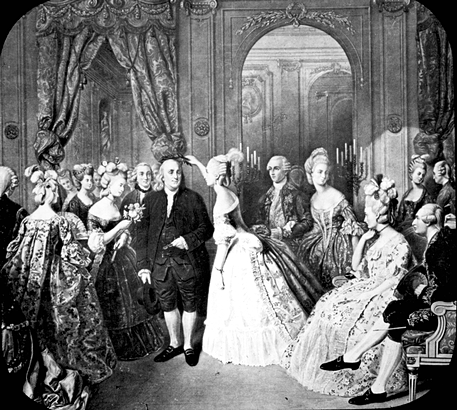
Benjamin Franklin set off on a diplomatic mission across the Atlantic - to get the French governments financial backing for the Revolution. As is well-known, he was a huge HIT with the French (that's him in the royal court above) ... and he wore little fur caps which became all the rage - and there was a certain breath of freedom and independence in his attitude which really appealed to the French. This was not an easy mission for Franklin. France was still a monarchy. I mean, it only had a couple years to go before heads began to roll (ahem), but it was, in 1776, still a monarchy - and so wasn't too wacky about supporting this "experiment" in democracy across the water. However, wouldn't it be fun to stick it to the Brits??? Benjamin Franklin's success in France is now widely recognized as one of the main reasons that we were able to win the war at all. Not only did he win support for his cause - but he also won over the hearts and minds of the French people. He loved it - he loved the wining, the dining, the free and easy ways of the rich French ladies - he was a social animal. He became the darling of the artistocratic set.
But today was the day that his ship sailed.
Here's an excerpt from The First American - something which, I think, gives great perspective on the enormity of what Franklin was attempting - just on a personal level:
For a man of seventy, suffering from gout and assorted lesser afflictions, to leave his home in the middle of a war, to cross a wintry sea patrolled by enemy warships where commanders could be counted on to know him even if they knew nary another American face, was no small undertaking. John Adams declined nomination in Franklin's commission; Thomas Jefferson rebuffed election. Yet Franklin had made his decision that America must be free, and he was determined to pay whatever cost his country required. "I have only a few years to live," he told Benjamin Rush, "and I am resolved to devote them to the work that my fellow citizens deem proper for me; or speaking as old-clothes dealers do of a remnant of goods, 'You shall have me for what you please.'"
And about that voyage:
The passage from America to France was "short but rough," in Franklin's contemporary account. His ship, the Reprisal, had been hastily pressed into the service of the fledgling United States navy, and though it was fast enough to capture two British merchantmen en route, it was hardly suited to the comfort of passengers. It pitched violently for nearly the whole of the thirty-day run, allowing Franklin hardly a night's - or day's - decent rest. The food was poor; he had to rely on salt beef because the chickens served were too tough for his teeth. His boils and rashes returned. In short, he told his daughter and son-in-law later, the voyage "almost demolished me".
The Books: "Emily of New Moon" (L.M. Montgomery)
 Emily of New Moon - by L.M. Montgomery Excerpt 6!!
Oh, there's just too much I want to excerpt. The whole section at Great-aunt Nancy's - just the description of her HOUSE - I love it ... her first conversation wtih Dean Priest - when Dean Priest, with his hunchback and his gleaming green eyes, decides to himself (actually, he says it out loud to Emily): "I think I'll wait for you." Emily has no idea what he's talking about, of course ... but we do. And you know what? He does wait for her. It's kind of creepy, yes, but there's something in Dean Priest that excites and challenges Emily - something she cannot get anywhere else. He respects her - he doesn't talk down to her. Then there's the beautiful section when she comes home and Elizabeth finally allows her to have her own room - she can have what was once her mother's room. The section where Emily is allowed to go into that room for the first time, and look at the pictures that her mother (whom she never knew) had put on the wall ... It helps Emily feel like she actually knows her mother. She loves her mother. Oh yes - and in the middle of all of this - Emily overhears Great-aunt Nancy and Caroline gossiping one day - and the story of Ilse Burnley's mother running away with another man comes out. To say that Emily takes this hard is an understatement. She obsesses so much about it, it makes her so unhappy and worried and anxious ... that she mopes about, she loses weight, she has no energy. She cant tell Ilse that she knows the story ... and this worries her too. Her main conviction, though, is that "Ilse's mother COULDN'T have done it." She does not believe for a second that Ilse's mother actually ran away. She COULDN'T have done it. Turns out that this is not just childish optimism and hope ... We are moving towards Emily's first experience with what Lucy Maud calls 'second sight'. The kind of knowledge that has nothing to do with the brain, or the intellect. Knowledge that comes from ... where. Who knows. Lucy Maud does not speculate - and Emily sure doesn't either. She is almost embarrassed by this "gift" when it comes out. It doesn't feel like a gift to her. But anyway - her spirit is so torn up by this horrible story of gossip ... that she can't get it out of her mind.
But I want to excerpt the part where Mr. Carpenter comes into her life. Because Mr. Carpenter is up there on my list of Most Favorite Lucy Maud Characters Created. I love him so much. It actually kinda hurts. I know it's silly, and he's a fictional character - but I truly love him.
I won't say anymore - I'll just post the excerpt. He's the new teacher at Emily's school. And he is completely different from the bitch in tights Miss Brownwell - who basically despised children, and was a bitter witch about her own life, so she punished her students about THAT. Bitch. Mr. Carpenter comes into the class ... and is a horse of a different color.
I love him because - well, you can see how Lucy Maud hints at the fact that there are deep wells of sadness and agony in this man. And yet ... he makes education come alive for these kids.
Excerpt from Emily of New Moon - by L.M. Montgomery
Mr. Carpenter never talked of his past or offered any explanation of the fact that at his age he had no better profession than teaching a district school for a pittance of salary, but the truth leaked out after a while; for prince Edward Island is a small province and everybody in it knows something about everybody else. So eventually Blair Water people, and even the school children, understood that Mr. Carpenter had been a brilliant student in his youth and had had his eye on the ministry. But at college he had got in with a "fast set" -- Blair Water people nodded heads slowly and whispered the dreadful phrase portentously - and the fast set had ruined him. He "took to drink" and went to the dogs generally. And the upshot of it all was that Francis Carpenter, who had led his class in his first and second years at McGill, and for whom his teachers had predicted a great career, was a country school-teacher at forty-five with no prospect of ever being anything else. Perhaps he was resigned to it - perhaps not. Nobody every knew, not even the brown mouse of a wife. Nobody in Blair Water cared - he was a good teacher, and that was all that mattered. Even if he did go on occasional "sprees" he always took Saturday for them and was sober enough by Monday. Sober, and especiall dignified, wearing a rusty black frock coat which he never put on any other day of the week. He did not invite pity and he did not pose as a tragedy. But sometimes, when Emily looked at his face, bent over the arithmetic problems of Blair Water School, she felt horribly sorry for him without in the least understanding why.
He had an explosive temper which generally burst into flame at least once a day, and then he would storm about wildly for a few minutes, tugging at his beard, imploring heaven to grant him patience, abusing everybody in general and the luckless object of his wrath in particular. But these tempers never lasted long. In a few minutes Mr. Carpenter would be smiling as graciously as a sun bursting through a storm-cloud on the very pupil he had been rating. Nobody seemed to cherish any grudge because of his scoldings. He never said any of the biting things Miss Brownell was wont to say, which rankled and festered for weeks; his hail of words fell alike on just and unjust and rolled off harmlessly.
He could take a joke on himself in perfect good nature. "Do you hear me? Do you hear me, sirrah?" he bellowed to Perry Miller one day. "Of course I can ehar you," retorted Perry coolly, "they could hear you in Charlottetown." Mr. Carpenter stared for a moment, then broke into a great, jolly laugh.
His methods of teaching were so different from Miss Brownell's that the Blair Water pupils at first felt as if he had stood them on their heads. Miss Brownell had been a martinet for order. Mr. Carpenter never tried to keep order apparently. But somehow he kept the children so busy that they had no time to do mischief. He taught history tempestuously for a month, making his pupils play the different characters and enact the incidents. He never bothered any one to learn dates - but the dates stuck in the memory just the same. If, as Mary Queen of Scots, you were beheaded by the school axe, kneeling blindfolded at the doorstep, with Perry Miller, wearing a mask made out of a piece of Aunt Laura's old black silk, for executioner, wondering what would happen if he brought the axe down too hard, you did not forget the year it all happened; and if you fought the battle of Waterloo all over the school playground, and heard Teddy Kent shouting, "Up, Guards, and at 'em!" as he led the last furious charge you remembered 1815 without half trying to.
Next month history would be thrust aside altogether and geography would take its place, when school and playground were mapped out into countries and you dressed up as the animals inhabiting them or traded in various commodities over their rivers and cities. When Rhode Stuart had cheated you in a bargain in hides, you remembered that she had bought the cargo from the Argentine Republic, and when Perry Miller would not drink any water for a whole hot summer day because he was crossing the Arabian Desert with a caravan of camels and could not find an oasis, and then drank so much that he took terrible cramps and Aunt Laura had to be up all night with him - you did not forget where the said desert was. The trustees were quite scandalized over some of the goings on and felt sure that the children were having too good a time to be really learning anything.
If you wanted to learn Latin and French you had to do it by talking your exercises, not writing them, and on Friday afternoons all lessons were put aside and Mr. Carpenter made the children recite poems, make speeches and declaim passages from Shakespeare and the Bible. This was the day Ilse loved. Mr. Carpenter pounced on her gift like a starving dog on a bone and drilled her without mercy. They had endless fights and Ilse stamped her foot and called him names while the other pupils wondered why she was not punished. Ilse went to school regularly - something she had never done before. Mr. Carpenter had told her that if she were absent for a day without good excuse she could take no part in the Friday "exercises" and this would have killed her.
One day Mr. Carpenter had picked up Teddy's slate and found a sketch of himself on it, in one of his favourite if not exactly beautiful attitudes. Teddy had labelled it "The Black Death" -- half of the pupils of the school having died that day of the Great Plague, and having been carried out on stretchers to the Potter's Field by the terrified survivors.
Teddy expected a roar of denunciation, for the day before Garrett Marshall had been ground into figurative pulp on being discovered with the picture of a harmless cow on his slate - at least, Garrett said he meant it for a cow. But now this amazing Mr. Carpenter only drew his beetling brows together, looked earnestly at Teddy's slate, put it down on the desk, looked at Teddy, and said,
"I don't know anything about drawing - I can't help you, but, by gad, I think hereafter you'd better give up those extra arithmetic problems in the afternoon and draw pictures."
Whereupon Garrett Marshall went home and told his father that "old Carpenter" wasn't fair and "made favourites" over Teddy Kent.
Mr. Carpenter went up to the Tansy Patch that evening and saw the sketches in Teddy's old barn-loft studio. Then he went into the house and talked to Mrs. Kent. What he said and what she said nobody every knew. But Mr. Carpenter went away looking grim, as if he had met an unexpected match. He took great pains with Teddy's general school work after that and procured from somewhere certain elementary text books on drawing which he gave him, telling him not to take them home - a caution Teddy did not require. He knew quite well that if he did they would disappear as mysteriously as his cats had done. He had taken Emily's advice and told his mother he would not love her if anything happened to Leo, and Leo flourished and waxed fat and doggy. But Teddy was too gentle at heart and too fond of his mother to make such a threat more than once. He knew she had cried all that night after Mr. Carpenter had been there, and prayed on her knees in her little bedroom most of the next day, and looked at him with bitter, haunting eyes for a week. He wished she were more like other fellows' mothers but they loved each other very much and had dear hours together in the little gray house on the tansy hill. It was only when other people were about that Mrs. Kent was queer and jealous.
"She's always lovely when we're alone," Teddy had told Emily.
As for the other boys, Perry Miller was the only one Mr. Carpenter bothered much with in the way of speeches - and he was as merciless with him as with Ilse. Perry worked hard to please him and practiced his speeches in barn and field - and even by nights in the kitchen loft - until Aunt Elizabeth put a stop to that. Emily could not understand why Mr. Carpenter would smile amiably and say "Very good" when Neddy Grey rattled off a speech glibly, without any expression whatever, and then rage at Perry and denounce him as a dunce and a nincompoop, by gad, because he had failed to give just the proper emphasis on a certain word, or had timed his gesture a fraction of a second too soon.
Neither could she understand why he made red pencil corrections all over her compositions and rated her for split infinitives and too lavish adjectives and strode up and down the aisle and hurled objurgations at her because she didn;t know "a good place to stop when she saw it, by gad," and then told Rhoda Stuart and Nan Lee that their compositions were very pretty and gave them back without so much as a mark on them. Yet, in spite of it all, she liked him more and more as time went on and autumn passed and winter came with its beautiful bare-limbed trees, and soft pearl-gray skies that were slashed with rifts of gold in the afternoons, and cleared to a jewelled pageantry of stars over the wide white hills and valleys around New Moon.
October 25, 2006
Bugs and shells and stuff
More magical little images from a lovely website (I linked to her before - it's always interesting and beautiful over there). I like the image of the shell with the curling lip - showing a deep red and orange striped interior.
Grey Gardens
I just booked my ticket for this. Nov. 9 is the night. It's one of those theatrical EVENTS which ... well, rarely happens anymore. Now the movie is a whole NOTHER story ... I've never written a post on it because - it's kind of hard to talk about - although I have seen it many times, and been totally wrapped up in it as well. Believe me, if you haven't seen the film - you have not seen anything like it. Ever. It's ... well, it's obvious why it has undeniable cult status. The first time you see it, you realize: well. THIS is why people are obsessed with this film, and pass around battered video tapes of it to their friends who they think will "get it". That's how I saw it first. Ted and Michael had me over to show it to me. It's that kind of film. You just have to experience it.
Here is Ebert's review of the movie. 4 stars. (It's a review so gorgeously written, by the way, that it makes me think, selfishly: get better FASTER, Roger. Come on!!)
Here's an interesting article about the development of the musical, etc. - The article/review was written when the show was still in its off-Broadway incarnation (it's moving to Broadway Nov. 2).
I don't know what to expect from the show - but I am freakin' exCITED. For the whole thing. For Christine Ebersole's performance which is getting the kind of reviews that make you just go ... Uhm. Okay. Kinda HAVE to see that. Once in a lifetime kind of performance. (For example, the review above ends with: "And Christine Ebersole's double triumph is sheer staggering magic: She plays both Act I's Big Edie, a Billie Burke matron with sour milk and Tabasco added, and Act II's frumpy, dotty, desperate Little Edie, a Beckettian tramp weirdly compelled to sing show tunes. When her transcendent energy's switched on, Grey Gardens seems a perfect musical.")
Sheer staggering magic.
I've seen a lot of plays. Haven't seen a lot of sheer staggering magic. I am SO there. I only regret that Mitchell won't be able to fly in and go with me. After I saw the movie for the first time, he was the one I called. I had to talk about it. I had to talk about it with someone who knew. Who had seen it.
I can't wait. Go, Christine. This is your moment. A moment that is (in my opinion) LONG overdue.

Fun!!
AFI's 100 American Movie Poster Classics.
How fun it is to scroll thru there. Nice to see Alien on the list. I think that's one of the best and most chilling movie posters ever. But there are many I have never seen. Many, of course, are famous images - you'll recognize them. The Lawrence of Arabia one, for example. I think that everyone will recognize that one. E.T. as well. Famous image. But check out the poster for Chaplin's City Lights - never seen that one before - beautiful!
Here, however, is one of my favorites. It's not on the list - but I love love love it.
I also, frankly, would have put this one on my list as well.
(I think it's obvious I am partial to those images because they are kinda old school. They call to mind images like this one. Or this one.)
The Books: "Emily of New Moon" (L.M. Montgomery)
Emily of New Moon - by L.M. Montgomery Excerpt 5!!
Okay, so this entire chapter is hilarious and beautiful - I'll only excerpt a part of it - but it is Lucy Maud at her very best. It's comical - it has two very distinct voices - Emily's and Father Cassidy's - we are in Emily's shoes, of course - and yet, because we are a bit older than Emily, we can totally see Father Cassidy's point of view. We can see how he sees her - and we can see how unutterably delightful he finds her. Imagine: this little black-haired girl shows up on the doorstep of the rectory one day - unannounced - terrified because you are a Catholic and she doesn't know any Catholics and she has been taught that "papists" are bizarre and almost like they're members of a cult - and yet she is at the end of her rope, and she has come to ask a personal favor of you. To use your influence (because we all know that Catholics do whatever their priests tell them to do) with a member of your congregation - and ask him NOT to cut down the spruce grove over by New Moon. Father Cassidy is like ... wha????? But watch how she does it - and watch how Father Cassidy just falls in love with her. The guy has an Irish brogue - he's still a bit of the old country - and Emily comes to see him, terrified, she has not told Elizabeth or Laura where she has gone. She has taken it upon herself to walk the distance to the Catholic church in the next town, to talk to Father Cassidy. She's, like, 9 years old or something like that. Lucy Maud's sense of humor totally shines in chapters like this one - where the events border on the absurd. Father Cassidy talks with her a while - and eventually convinces her to stay for tea. He's fascinated by this small impish child who has shown up to demand that he intercede with a parishioner. hahahaha It's so brazen!! Father Cassidy sees her innocence - sees her guilelessness ... but he also sees something else. In the same way that Dean Priest, later, will see something else. He sees the future. Father Cassidy senses that this girl ... this girl is something special. He basically just wants to keep her talking.
I'll just excerpt a bit of it. It's my favorite bit - the ending epiphany moment always brings a little lump to my throat. Lucy Maud is marvelous.
Excerpt from Emily of New Moon - by L.M. Montgomery
"Now you sit right down here, Elf, and be human for ten minutes and we'll have a friendly snack."
Emily was hungry - a nice comfortable feeling she hadn't experienced for a fortnight. Mrs. Cassidy's plum cake was all her reverend son claimed, and the cream cow seemed to be no myth.
"What do you think av me now?" asked Father Cassidy suddenly, finding Emily's eyes fixed on him speculatively.
Emily blushed. She had been wondering if she dared ask another favour of Father Cassidy.
"I think you are awfully good," she said.
"I am awfully good," agreed Father Cassidy. "I'm so good that I'll do what you want me to do - for I feel there's something else you want me to do."
"I'm in a scrape and I've been in it all summer. You see" -- Emily was very sober -- "I am a poetess."
"Holy Mike! That is serious. I don't know if I can do much for you. How long have you been that way?"
"Are you making fun of me?" asked Emily gravely.
Father Cassidy swallowed something besides plum cake.
"The saints forbid! It's only that I'm rather overcome. To be after entertaining a lady av New Moon -- and an elf - and a poetess all in one is a bit too much for a humble praste like meself. Have another slice av cake and tell me all about it."
"It's like this -- I'm writing an epic."
Father Cassidy suddenly leaned over and gave Emily's wrist a little pinch.
"I just wanted to see if you were real," he explained. "Yes -- yes, you're writing an epic -- go on. I think I've got my second wind now."
"I began it last spring. I called it The White Lady first but now I've changed it to The Child of the Sea. Don't you think that's a better title?"
"Much better."
"I've got three cantos done, and I can't get any further because there's something I don't know and can't find out. I've been so worried about it."
"What is it?"
"My epic," said Emily, diligently devouring plum cake, "is about a very beautiful high-born girl who was stolen away from her real parents when she was a baby and brought up in a woodcutter's hut."
"One av of the seven original plots in the world," murmured Father Cassidy.
"What?"
"Nothing. Just a bad habit av thinking aloud. Go on."
"She had a lover of high degree but his family did not want him to marry her because she was only a woodcutter's daughter --"
"Another of the seven plots -- excuse me."
"-- so they sent him away to the Holy land on a crusade and word came back that he was killed and then Editha -- her name was Editha -- went into a convent --"
Emily paused for a bite of plum cake and Father Cassidy took up the strain.
"And now her lover comes back very much alive, though covered with Paynim scars, and the secret av her birth is discovered through the dying confession av the old nurse and the birthmark on her arm."
"How did you know?" gasped Emily in amazement.
"Oh, I guessed it -- I'm a good guesser. But where's your bother in all this?"
"I don't know how to get her out of the convent," confessed Emily. "I thought perhaps you would know how it would be done."
Again Father Cassidy fitted his fingers.
"Let us see, now. It's no light matter you;'ve undertaken, young lady. How stands the case? Editha has taken the veil, not because she has a religious vocation because because she imagines her heart is broken. The Catholic Church does not release its nuns from their vows because they happen to think they've made a little mistake av that sort. No, no, -- we must have a better reason. Is this Editha the sole child av her real parents?"
"Yes."
"Oh, then the way is clear. If she had had any brothers or sisters you would have had to kill them off, which is a messy thing to do. Well, then, she is the sole daughter and heiress av a noble family who have for years been at deadly feud with another noble family -- the family av the lover. Do you know what a feud is?"
"Of course," said Emily, disdainfully. "And I've got all that in the poem already."
"So much the better. This feud has rent the kingdom in twain and can only be healed by an alliance between Capulet and Montague."
"Those aren't their names."
"No matter. This, then, is a national affair, with far-reaching issues, therefore an appeal to the Supreme Pontiff is quite in order. What you want," Father Cassidy nodded solemnly, "is a dispensation from Rome."
"Dispensation is a hard word to work into a poem," said Emily.
"Undoubtedly. But young ladies who will write epic poems and who will lay the scenes thereof amid times and manners av hundreds av years ago, and will choose heroines av a religion quite unknown to them, must expect to run up against a few snags."
"Oh, I think I'll be able to work it in," said Emily cheerfully. "And I'm so much obliged to you. You don't know what a relief it is to my mind. I'll finish the poem right up now in a few weeks. I haven't done a thing at it all summer. But then of course I've been busy. Ilse Burnley and I have been making a new language."
"Making a -- new -- excuse me. Did you say language?"
"Yes."
"What's the matter with English? Isn't it good enough for you, you incomprehensible little being?"
"Oh, yes. That isn't why we're making a new one. You see in the spring, Cousin Jimmy got a lot of French boys to help plant the potatoes. I had to help too and Ilse came to keep me company. And it was so annoying to hear those boys talking French when we couldn't understand a word of it. They did it just to make us mad. Such jabbering! So Ilse and I just made up our miunds we'd invent a new language that they couldn't understand. We're getting on fine and when the potato picking time comes we'll be able to talk to each other and those boys won't be able to understand a word we're saying. Oh, it will be great fun!"
"I haven't a doubt. But two girls who will go to all the trouble av inventing a new language just to get square with some poor little French boys -- you're beyond me," said Father Cassidy, helplessly. "Goodness knows what you'll be doing when you grow up. You'll be Red Revolutionists. I tremble for Canada."
"Oh, it isn't a trouble -- it's fun. And all the girls in school are just wild because they hear us talking in it and can't make it out. We can talk secrets right before them."
"Human nature being what it is, I can see where the fun comes in all right. Let's hear a sample av your language."
"Nat millan O ste dolman bote ta Shrewsbury fernas ta poo litanos," said Emily glibly. "That means 'Next summer I am going to Shrewsbury woods to pick strawberries.' I yelled that across the playground to Ilse the other day at recess and oh, how everybody stared."
"Staring, is it? I should say so. My own poor old eyes are all but dropping out av me head. Let's hear a bit more av it."
"Mo tral li dead seb ad li mo trene. Mo bertral seb mo bertrene das sten dead e ting setra. That means 'My father is dead and so is my mother. My grandfather and grandmother have been dead a long time.' We haven't invented a word for 'dead' yet. I think I will soon be able to write my poems in our language and then Aunt Elizabeth will not be able to read them if she finds them."
"Have you written any other poetry besides your epic?"
"Oh, yes -- but just short pieces -- dozens of them."
"H'm. Would you be so kind as to let me hear one av them?"
Emily was greatly flattered. And she did not mind letting Father Cassidy hear her precious stuff.
"I'll recite my last poem," she said, clearing her throat importantly. "It's called Evening Dreams."
Father Cassidy listened attentively. After the first verse a change came over his big brown face, and he began patting his fingertips together., When Emily finished she hung down her lashes and waited trembling. What if Father Cassidy said it was no good? No, he wouldn't be so impolite - but if he bantered her as he had done about her epic -- she would know what that meant.
Father Cassidy did not speak all at once. The prolonged suspense was terrible to Emily. She was afraid he could not praise and did not want to hurt her feelings by dispraise. All at once her "Evening Dreams" seemed trash and she wondered how she could ever have been silly enough to repeat it to Father Cassidy.
Of course, it was trash. Father Cassidy knew that well enough. All the same, for a child like this - and rhyme and rhythm were flawless - and there was one line -- just one line -- "the light of faintly golden stars" -- for the sake of that line Father Cassidy suddenly said,
"Keep on, -- keep on writing poetry."
"You mean?" -- Emily was breathless.
"I mean you'll be able to do something by and by. Something -- I don't know how much -- but keep on -- keep on."
Emily was so happy she wanted to cry. It was the first word of commendation she had ever received except from her father -- and a father might have too high an opinion of one. This was different. To the end of her struggle for recognition Emily never forgot Father Cassidy's "Keep on" and the tone in which he said it.
"Aunt Elizabeth scolds me for writing poetry," she said wistfully. "She says people will think I'm as simple as Cousin Jimmy."
"The path of genius never did run smooth. But have another piece av cake -- do, just to show there's something human about you."
"Ve, merry ti. O del re dolman cosey aman ri sen ritter. That means, 'No, thank you. I must be going home before it gets dark.'"
"I'll drive you home."
"Oh, no, no. It's very kind of you" -- the English language was quite good enough for Emily now, "But I'd rather walk. It's -- it's -- such good exercise."
"Meaning," said Father Cassidy with a twinkle in his eye, "that we must keep it from the old lady. Goodbye, and may you always see a happy face in your looking-glass!"
Emily was too happy to be tired on the way home. There seemed to be a bubble of joy in her heart - a shimmering, prismatic bubble. When she came to the top of the big hill and looked across to New Moon, her eyes were satisfied and loving. How beautiful it was, lying embowered in the twilight of the old trees; the tips of the loftiest spruces came out in purple silhouette against the northwestern sky of rose and amber; down behind it the Blair Water dreamed in silver; the Wind Woman had folded her misty bat-wings in a valley of sunset and stillness lay over the world like a blessing. Emily felt sure everything would be all right. Father Cassidy would manage it in some way.
And he had told her to "keep on".
October 24, 2006
"My work is the only trustworthy hope I have"
An amazing cache of letters (and one photograph) from Marilyn Monroe - being sold. These letters (many of them) have never before been seen by the public. Her scrawling note to Marlon Brando is very moving to me. They were good friends. I always believed that Marilyn was on the verge of getting her act together at the very end ... she was making plans, she was cutting ties with those who were dragging her down, etc. Her letter to Lee Strasberg (click at the top of that article to see the documents.) is extraordinary. I have mixed feelings about it - because of how she let Lee Strasberg feel that he owned her talent, her art. No, Marilyn - YOU own it. However ... listen to her tone in that letter, its certainty, and its energy. What an incredible thing that might have been - a production company owned by Brando, Monroe, and Strasberg? It might have been a debacle - but it sure would have been interesting!!
Also - check out the documents where she makes notes on a publicity script presented to her, for a small documentary about her visiting the troops in Korea. Look at her scrawled-in corrections to the text they gave her. And pardon me for saying this: but every single one of her corrections make the script better. Her instincts are right on the money. She's correcting the facts as well ... but I love to see how she pared down the language to be much clearer, more direct.
Speaking of Marilyn - I love this. (By the way - happy birthday to that wonderful blog - now one of my favorite blogs on this here web.)
The first comment over there says something like "looks like she's finished the book and is now looking at the inside of the back cover". (Also - VERY funny anecdote in the third comment down over there about Loni Anderson reading Ulysses - hahahahaha)
But here's my guess on that photo of Monroe reading Ulysses. I bet Lee Strasberg or Arthur Miller had told her to look at Molly Bloom's "monologue" which makes up the last 40 pages of that book. Maybe to work on as an acting exercise (I've seen people do it, I've done it myself - it's a great challenge for an actor). And I could see that Strasberg and Miller, who obviously would have read the book, would have thought: Hmmm, Marilyn as Molly? Hmmmm .....
Monroe would have made a helluva Molly Bloom, with her sleepy-eyed sensual and yet ultimately loyal heart. That's my guess. She's posing, of course, but I bet she's also been told to look at Molly Bloom.
so he could feel my breasts all perfume yes and his heart was going like mad and yes I said yes I will Yes.
I don't know. I can kind of hear Marilyn saying those words already.
Anyway, it's fun to speculate.
© 2006
Came home late last night to find my 2 complementary copies of this quarter's Sewanee Review sitting in my dingy tile-bound lobby. There they were, shrink-wrapped, perfect. I took them inside. And had quite a moment with myself. Just looking them over. Reveling in it, wondering at it, just looking at it, over and over, wondering at the fact that they pulled me out from the pack and excerpted me on the back with a couple others ... Just basically re-reading what I wrote. And reveling in my moment. I won't revel for long, believe me, too much work to be done, but I'm reveling now. It's hard-won. It really is.
My favorite part comes at the bottom of all the pages my essay is on:
© 2006 Sheila O'Malley
In honor of Norman Rush

So it's Norman Rush's birthday. I decided to unearth an old piece I wrote about him, in the spirit of celebration. It's called "Waiting for Norman Rush". Re-reading it, I realize that - I sound very sad. Like ... very sad. Not sure what was going on there, or why I was so sad ... but I certainly would not write the essay in the same way now. HOWEVER, that's part of the lasting hold that Rush and his first novel have on me. When I'm sad and haunted and yearning ... the book is relevant. When I'm pissed off and bitter - the book is relevant. When I am looking to escape into my intellectual pursuits - the book is relevant. Weird. Not too many books do that. Not too many books travel with you through your life.
People who love the book Mating love it fiercely. I'm one of them. I am protective of it. Not only do I love it - but I feel, weirdly, that that book explains me to myself. At least it did when I first read it - and every time I've gone back to re-read it, I get something new. It continues to speak to me. Now that is a rare thing. The book is deeply personal for me, and I am unable to discuss it objectively, or to defend it. It would be like explaining WHY I love my family. Uhm - why do I need to explain it? I've told friends to read it and none of them (except for Mitchell) "got" it. Or - they didn't get what I got. And that's fine, this book OBVIOUSLY is not for everybody. I don't recommend it anymore. I came to it on my own - and to be honest, I can't remember why I picked it up. I had just read Hopeful Monsters and Possession in quick succession - 2 sweeping stories of love that cross the centuries. And I was in the mood for another book of that nature. How I tripped over Mating I do not know - but the description on the back of the book peaked my interest. I was interested, at the time, in love affairs that were not just based on romance or sexual attraction - but on intellectual compatability ... or intellectual combustability, either way. It's a rare book that tackles this. Or a rare book that tackles it well. To some people, that whole intellectual level of love is truly not important - or it's not that it's not important - it's that it doesn't even exist for many people as a priority, and that's fine - but for me, that whole intellectual level is almost everything (which is why I fell so hard for the doppelganger, so hard and so fast. It's why I rarely fall for people at all). And Mating is all about that. It speaks to one of the deepest needs I hold in the bottom of my heart. This is why I keep coming to it - at various points in my life - usually when I am wrestling with something, stuff I need to face, or stuff I need to let go of.
I have gone out in search of the positive reviews of this book - so that I could hang out with my own kind: those who not only loved this book, but who felt it was, in some way, really important. No other book like it, really. The vocabulary is daunting but for me that was part of the FUN (I get into that in my essay below). I kept a running list of words to look up - and also - as a lover of the Latin language (as a Latin lover??) - the book was SO fun. The text is peppered with Latin phrases, some of which I knew, some of which I had no idea ... but tracking down the references was a blast.
It may sound like an arduous read - but for me, that is not a bad thing. It never has been. I enjoy "hard" reads. It's all part of the life I have set up for myself - of intellectual challenge and rigor. I enjoy reading books that require something of the reader. I enjoy books that are experiences. (Since I was a kid this has been true. Which was why I read All the President's Men at age 12, why I read Oliver Twist at age 10 ... That sort of need to challenge myself has always been there.) I like books that take up a whole SEASON in my life. For instance: I remember "the summer when I read Ulysses for the first time". I remember the freezing fall and winter "when I read Moby Dick". I remember the spring AND summer when I read Black Lamb and Grey Falcon. And I remember where I was, and what I was doing in my life, when I first read Mating. It was in my first apartment in Chicago (the one with the creaky elevator, where I had no furniture but a mattress - for MONTHS). That was where I read Mating. Since then I've read it probably - 10 times? But I'll get to that.
I came across this wonderful review of it on Amazon, which is kind of creepy - in that I feel like I could have written every word of it:
I took forever deciding whether I should read Mating, whether I wanted to commit my time to such a long and apparently difficult book, whether it would be worth it in the end. I thought about buying it a number of times, but couldn't get up the courage -- what if it just gathered dust on a shelf? I borrowed a copy from the library, finally, and promised myself that if I hated it (as a number of my friends had) I would abandon it quickly.Now Mating is one of the few books I would want to have with me on a desert island. I can easily, happily say it was one of the great reading experiences of my life so far. But it's also a book that seems tailor-made to my sensibilities, as if somebody asked me, "What would you like a big novel to contain?" and then set out to write it.
There's a compelling narrative voice. There's tremendous erudition, so I felt like I learned something about the world on every page. There's a careful attention to language, and yet the language is free and full to bursting. There's all sorts of talk about politics, the history of leftist political movements (particularly anarcho-syndicalism, my own favorite), and utopia. There's a love story, but it's written about without mushy romantic spewings. There's an exotic locale. I'm a happy reader!
But you won't like this book if you're looking for a standard storyline and if you don't have patience for intellectual dialogues scattered throughout the action and if you want clean and unambiguous answers to everything. You also won't like it if you demand that first person narrators be always appealing. I found the narrator often annoying, but in the end was quite glad to have known her.
To have known her -- yes, by the end you speak of the narrator and her obsession and love, Nelson Denoon, as people you have known. (Or perhaps I shouldn't use the second-person here, since I know people who do not agree with me, who found the characters simply exasperating. So let me rephrase: I felt like I had known them.)
If you're fairly well-read, you can test whether you're going to find this book stunning or frustrating by playing a cross-referencing mindgame of this sort: Imagine that James Joyce finished Ulysses and was annoyed that his writing hadn't tackled all of the problems of human civilizations. Just then, a time warp appeared, and Paulo Freire and Emma Goldman stepped out and lectured Joyce for 40 days and 40 nights. He was thrilled. He began to write and discovered that a small part of his talent had been taken over by Charlotte Perkins Gilman, and another part by Don DeLillo. Ben Okri had found his way in there somewhere, too. Writing was hard with all those different voices pulling at him, but he got through, and the book he produced was Mating.
If the names above are unfamiliar to you, then ask yourself how you felt while reading it. If you made it through to this paragraph, and you're not mad at me for inserting the above (in fact, you found it piqued your curiosity), then you'll do just fine with Mating, and you may be deeply grateful, as I am, that Norman Rush had the courage and genius to write it.
Ha!! Yes!
Anyway, without further ado - and I'll probably write more on this - I'll never be done discussing Mating - here's the piece I wrote 3 years ago: Waiting for Norman Rush.
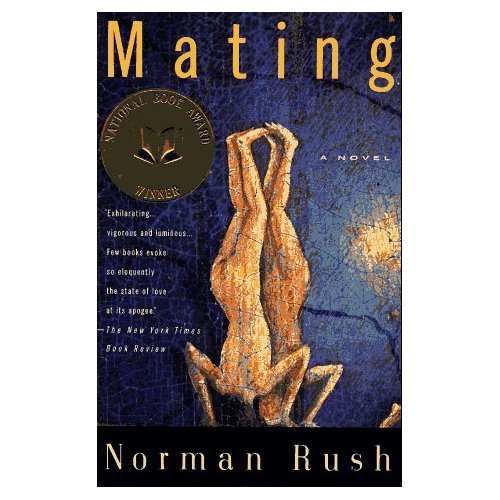
(Oh - and if you plan to read this book? There are major spoilers below. And it's the kind of book where literally - until the second to last line - you do not know which way it will go. So I suggest you hold yourself back from reading this - if you are interested in experiencing Mating)
Waiting for Norman Rush
Me being me, I have to back up a couple of days to tell the story fully. Actually, this is already inaccurate. I have to back up many years.
The journey begins in 1992 when I first read the novel Mating, by Norman Rush. I thought it was just another novel - but now I can see that the book has become a part of my mental landscape, a part of how I interpret events.
Today, that book is dog-eared from use. The cover is taped on. The pages are filled with underlinings. And in the back, on the couple of blank pages, I have crammed up that blank space with as many dictionary definitions of words found in this book as I could. The vocabulary in the book is, as my friend Allison called it, "daunting". I agree, and I have a pretty good vocabulary.
ressentiment: rancor expressed covertly against benefactors
proleptic: the anticipating/answering of objective/argument before it's put forward
omphalog: the naval/a center
copula: a verb that identifies the predicate of sentence with subject -- usually a form of 'to be'. "The girls are beautiful"
syncretist: attempt/tendency to combine or reconcile differing beliefs (philosophy or religion)
bolus: a small round mass. Greek: lump/clod
Expanding my vocabulary was part of the fascination of the book.
But the hold Mating had, and still has on me, goes way deeper than that.
The characters in the book (mainly the two leads: Nelson Denoon and the unnamed female narrator) live on in my mind, the way characters like Holden Caulfield do. Or Captain Ahab. Or Anna Karenina. Their life, their potential life, does not stop with the words "The End". You cannot tell me that Holden does not live. It seems an insult to Salinger's creation.
There must be an alternate plane out in the ether, with fictional characters wandering about. Not every fictional character, because not every author manages to create a living, breathing, human personality. Actually, "human" is too limiting as well. Because, to my mind, Charlotte the spider (from EB White's Charlotte's Web) lives on as well. She exists on that alternate plane. As does Wilbur the pig. It's sort of like the plot of The Velveteen Rabbit. Once the rabbit is loved, and loved deeply, it becomes real.
Nelson Denoon is real. Because I love him.
Mating is, on the surface, the story of a love affair. Other themes are: what to do about Africa, the problems with "development projects" and do-gooders in Africa, socialism in Africa, differences between men and women, competition between females for males (hence, the title), satirical observations about the ridiculous-ness of most of academania - and then, more specifically, an in-depth description of the world of Botswana: the diplomatic community in Gaborone, the issues with "villagization", the issues with development, how the development community lives high on the hog in Africa - etc. It's a BIG book, with BIG themes.
The main theme is something the author/narrator calls "intellectual love". Rush describes a very specific kind of love, and because he did so, and took such care with it, the concept became real to me. He articulated one of my deepest longings in a way I had never before encountered. It was like his words illuminated my own needs.
My utopia is equal love, equal love between people of equal value, although value is an approximation for the word I want. Why is it so difficult? Assortative mating shows there has to be some drive in nature to bring equals together in the toils of love, so why even in the most enlightened and beautifully launched unions are we afraid we hear the master-slave relationship moving its slow thighs somewhere in the vicinity? It has to be cultural. In fact the closest thing to a religion I have is that this has to be cultural. I could do practically anything while he was asleep and not bother him. I wrote in my journal, washed dishes in slow motion if we hadn't gotten around to them. I was emotional a lot, privately. I wanted to incorporate everything, understand everything, because time is cruel and nothing stays the same.
"I wanted to incorporate everything, understand everything, because time is cruel and nothing stays the same."
God. Yes.
More:
He was appropriate for me and the reverse. I felt it and hated it because it was true despite his being around fifteen years older than me. What did that mean about me? I also hated it because I hate assortative mating, the idea of it. One of my most imperishable objections to the world is the existence of assortative mating, how everyone at some level ends up physically with just who they deserve, at least to the eye of some ideal observer, unless money or power deforms the process. This is equivalent to being irritated at photosynthesis or at inhabiting a body that has to defecate periodically, I am well aware. Mostly it comes down to the matching of faces. When I first encountered the literature, I even referred to it privately as faceism. I will never adapt to it, probably. Why can't every mating in the world be on the basis of souls instead of inevitably and fundamentally on the match between physical envelopes? Of course we all know the answer, which is that otherwise we would be throwing evolution into disarray. Still it distresses me. We know what we are.
A couple of people I recommended this book to were extremely annoyed by the writing-voice, as evidenced in the passage above. But I love the voice of the narrator. It is cerebral, obsessively psychological, yearning, illogical -- It comes from right out of me. I relate. On some level, that is how I talk. Here's more. The book is encyclopedic on love.
If I overdwell on this it can't be helped: love is important and the reasons you get it or fail are important. The number of women in my generation who in retrospect anyone will apply the term "great love" to, in any connection, is going to be minute. I needed to know if I had a chance here. Love is strenuous. Pursuing someone is strenuous. What I say is if you find yourself condemned to wanting love, you have to play while you can play. Of course it would be so much easier to play from the male side. They never go after love qua love, ever. They go after women. And for men love is the distillate or description of whatever happened with each woman that as not actually painful in feeling-tone. there is some contradiction here which I can't expel. What was moving me was the feeling of being worth someone's absolute love, great love, even. And to me this means male love whether I like it or not. C'est ca. Here I am, there I was. I don't know if getting love out of a man is more of a feat of strength now than it used to be or not, except that I do: it is. It's hideous. It's an ordeal beyond speech. When I'm depressed I feel like what was meant by one of his favorite quotations: A bitter feast was steaming hot and a mouth must be found to eat it. Men are like armored things, mountainous assemblages of armor and leather, masonry even, which you are told will self-dismantle if you touch the right spot, and out will flow passionate attention. And we know that this sometimes does happen for one of our sisters, or has happened. This comes full circle back to my attitude about kissing, which he never adjusted to. You want kisses, obviously. But you want kisses from a source, a person, who is in a state. This is why the plague of little moth kisses from men just planting their seniority on you is so intolerable. Of course even as I was machinating I was well aware I was in the outskirts of the suburb of the thing you want or suspect is there. But at this moment in my life I was at the point where even the briefest experience of unmistakable love would be something I could clutch to myself as proof that my theory of myself was not incorrect. Theories can be reactionary and still applicable.
And now, here is Rush's (or his nameless female narrator's) treatise on intellectual love. It is the concept articulated here, the concept of 'intellectual love' which, for me, when I first read it, was like a lightbulb going on, or a door opening. I saw something within myself in a clear open light.
Intellectual love is not the same animal as landing a mentor, although women I've raised the construct with want to reduce it to that. I distrust and shun the whole mentor concept, which is just as well since I seem not to attract them. Nelson was not my mentor, ever. I gave as well as I got, with him. But there was intellectual love on my part, commencing circa that night.Intellectual love is a particular hazard for educated women, I think. Certain conditions have to obtain. You meet someone -- I would specify of the opposite sex, but this is obviously me being hyperparochial -- who strikes you as having persuasive and wellfounded answers to questions on the order of Where is the world going? These are distinctly not meaning-of-life questions. One thing Denoon did convince me of is that all answers so far to the question What is the meaning of life? dissolve into ascertaining what some hypostatized superior entity wants you to be doing, id est ascertaining how, and to whom or what, you should be in an obedience relationship. The proof of this is that no one would ever say, if he or she had been convinced that life was totally random and accidental in origin and evolution, that he or she had found the meaning of life. So, fundamentally, intellectual love is for a secular mind, because if you discover someone, however smart, is -- he has neglected to mention -- a Thomist or in Baha'i, you think of him as a slave to something uninteresting.
What beguiles you toward intellectual love is the feeling of observing a mental searchlight lazily turning here and there and lighting up certain parts of the landscape you thought might be dubious or fraudulent but lacked the time or energy to investigate or the inner authority to dismiss tout court. The searchlight confirms you.
In an interview, Norman Rush says:
I regard Mating as a true novel, but one that is essentially comic and based around a story of adventure and a passionate love relationship. That's the vehicle I used to explore very important moral questions, like What is good life? What is a justified life? Why is there so much lying in society? Who are the liars, and how much lying is socially necessary? The idea was to use a story of adventure and an exotic setting and a character who was relentlessly questioning, as a framework for these other issues.But the central point I wanted to be clear about in the writing was the importance of intellectual content in a love relationship. That was something I wanted very much to keep compelling. She becomes interested in "Denoon" because he is a moral activist engaged in the epochal enterprise of trying to do good in some practical sense. Because she herself is more jaundiced; there's something about this that creates a great attraction, and awakens a side of her that the world hasn't been so likely to acknowledge. As part of the first wave of post-Betty Friedan feminism, she operates with all the strength and vitality that brought. But she's a romantic, too; and a part of what she's doing is attempting to interrogate romance. She both partakes of it and doubts it. One of the ways to look at her pursuit of "Denoon" is as an effort to prove or disprove the equation that a consummate relationship with a man is possible.
To me, the book has it all. It has the love story, it has the intellectual questions I find interesting, it takes on big issues - and it also, in parts, is laugh-out-loud funny. Like - I find the narrator's voice inherently funny. Even when she is at her most manic.
Mating was the context in which I went through my major love affair, with a man who shall remain nameless, ahem. My friend Mitchell, who also read and loved the book Mating , referred to this man in my life as "your Nelson Denoon". "You know who he is, don't you, Sheila? He's your Nelson Denoon." The similarities were arresting, even down to the dogmatic anti-clerical attitude. But more than that - it was how she (the narrator) set her sights on Nelson Denoon almost from the start ... and how I had done the same thing. It wasn't just that I wanted it to happen. It is that it had to happen. And when everything fell apart with "my Nelson Denoon", leaving a nightmare in its wake that lasted, pretty much, for years, that book became even more of an anchor. I looked for words of truth in it, I looked for hope, I tried to tell myself "it all happens for a reason" (bah), I read it and re-read it, making myself stronger - making myself believe, yet again, that not only was that kind of love possible (of course it was - I felt it) - but ... it could happen again.
In the past couple of weeks, I took Mating out to read again.
It is a first novel, and what a first novel. Mating was a huge hit, financially and critically, it won the National Book Award in 1991. Rush clearly put everything he knows about everything into that book. In that interview I linked to above, Rush says (and I love this - it makes me feel brave):
Mating is the culmination of my writing life to date. The reaction to it has exceeded my greatest hopes and expectations. I was able to take the risks I needed to take, and am still overwhelmed with the fact I got away with it.
Ha!
The book is about love, obviously, but it's also about Africa, and politics, and socialism, and the position of women in Africa, and religion (what happens when 2 logical intellectual and - above all else - RATIONAL people fall in love? And also - what happens when one of them has an unexpected religious - or spiritual - epiphany? What will the fallout be? How does a logical scholarly type understand - or even ALLOW - mystery, the unknowable, the unanswerable? These are questions that have deep resonance for me. They seem to come from me - like the Amazon reviewer said:
But it's also a book that seems tailor-made to my sensibilities, as if somebody asked me, "What would you like a big novel to contain?" and then set out to write it.
And the ending.
The last section, a kind of epilogue, is called "About the Foregoing". It is very mysterious. It ends on a very ambiguous note.
She has left Africa, and has left Denoon, her great love. Things have fallen apart. Denoon has gone mad. She is now trying to get her life together when suddenly she gets a mysterious message, telling her to come back to Africa. It is not Denoon who calls her. It is a woman. She does not know who this woman could be. Or why she has been summoned. She obsesses about it, wondering what to do. Should she return? What would be waiting for her in Africa? If Denoon did not summon her, then perhaps she would not be welcome anymore? Or did Denoon tell someone else to summon her? Has he gotten better? Is he better? Should she go back? Should she go back?
After 5 or 6 pages of her obsessive worrying backs and forths ... the book ends with these two simple lines:
Je viens. Why not?
I have been haunted by this. HAUNTED. For YEARS. [Remember: I wrote this piece in 2003!! He had not published ANYTHING ELSE at that date!] Then what? Then what? It has been so long since Mating came out. I have tried to reconcile myself to the fact that I need to, a la Rilke, "live the questions".
The fact that the book ends mysteriously, that it could go either way, that you do not know the ending - you do not know if she and Denoon reconcile - or what happens when she goes back - the fact that this is left unresolved confirms for me one of the essential tenets of life: You just never know what will happen. Things can always go either way. Also: Things never really end. Not really. They transform, they morph. Love never dies. Ever. I'm not an "I love you I love you - oh you don't love me back anymore? Then I hate you I hate you" kind of girl. Sometimes I wish I were. It might be easier if love turned readily to hate, but for me, it does not. So alongside my relatively quiet life now are the vibrant love affairs of my past. They make me who I am today. They do not go away, or submerge into the past for good. They are still very much with me, late and soon.
And last week, for some reason, for no reason at all, I became obsessed again by the up-in-the-air ending of Mating. What does it signify? What is the message? What should I get from it?? It seems essential that I answer this for myself.
Also on a plainly literal level: What happened when she returned to Africa? Are they together now out on that alternate plane for fictional characters? I always liked to imagine that they were. It made me happy to imagine so. It made me happy to fantasize that on that alternate plane, all turned out well. Eventually.
It's a sort of "Somewhere over the rainbow" sentiment. Things may be lonely here on this plane, but somewhere -- even if it's just for characters in a book -- things might work out. And this alone gives me reason to hope. Things just might work out -- because the ending of Mating doesn't make it clear whether they do or no.
On a personal note: I used to have these old crazy fantasies about "my Nelson Denoon", fantasies which felt more like getting a glimpse of a never-before-seen alternate path. I comforted myself, after it was all over, by imagining that on that other plane, down that other path, things might have worked out. Maybe down that other path, he and I were sitting on that front stoop I saw in my fantasy - with music floating out the screened window - coffee cups beside us, a crisp fall air ... reading and not talking. But together. Together forever. I had mistaken a glimpse of an alternate reality for a glimpse of what was going to happen.
I became convinced that this was not the first time around for me and "my Nelson Denoon". I would obsess about it, even though I'm not a believer in reincarnation. It didn't matter. Something else was going on here ... it defied explanation ... and I worried it to death. "Were we married in another life? Or ... with each successive lifetime, are we coming closer to one another? It just so happens that I am stuck in the lifetime where it doesn't work out..." I was blithering like this once to my patient friend Kate. She listened. And then she said, "I bet that your Celtic tribe probably slaughtered his Celtic tribe."
All of this came up to the foreground again, in the last week, (it all began dovetailing), Mating was on my mind, and I thought, impulsively: "I should just write to Norman Rush and ask him what he's up to ... if he's working on anything ..." He hasn't published anything else since Mating, so -- I wondered --- is he chugging away at a sequel? Is he dead? I needed to know desperately.
I composed the letter in my mind. "Mr. Rush -- are you just going to leave me hanging with the end of Mating? Do you know how important it is, how essential it is in terms of my understanding of how the world works, that I know what happened with the two of them? Will I ever know the outcome?"
I have written to authors befor (and some - like Madeleine L'Engle - have even responded!), so it wasn't too far-fetched.
Then, a couple of days ago, I stopped off at a computer place to check my email. While there, I visited my SiteMeter for this blog, and I saw that someone had gotten to me by typing "Norman Rush" into Google. Google led this person to my blog - where I had written a piece on Rush. And this piqued my interest. Somebody else is looking for Norman Rush right now? Why? Is something going on? Has he published again?
So I Googled the man.
The first thing that came up was a Village Voice article dated May, 2003. I opened it, and lo and freakin' behold, it was a review of his new book. The man has a new book out. Mortals.
I hope I have conveyed how important this is to me. But I am having a hard time finding the words.
It would be like hearing that JD Salinger had suddenly come out of hiding and published a new novel. While Salinger is still alive, there is still hope that he may write again. He just might. And the book might be crap, but that wouldn't matter. At least not at first. It would be a miracle. To hear from that writer again.
So Rush has a new huge novel out. And again, it takes place in Botswana.
Mortals (and I just skimmed the article feverishly ... I didn't want to read any spoilers, no give-aways, nothing that would ruin the experience) is NOT about Nelson Denoon and our beloved unnamed narrator. It is another couple altogether, although Rush again tackles male/female relationships, only this time in the context of marriage. Mating was about courting, and choosing a mate. Mortals appears to be about making it work.
And here's the thing: (WARNING: SPOILER ALERT)
I raced through the book review excitedly and could not believe my eyes: Nelson and "she" show up in this new book - albeit peripherally. They have a guest spot, if you will. My heart pounded. These are my friends. And I have not heard from my friends in over 10 years. And, oh so casually, Village Voice reviewer states: "We learn that they have married."
I didn't read the rest of the review, I signed out immediately, paid my bill, and hustled my ass down to Barnes & Noble to find the book, which had been published THAT WEEK.
(Okay, let's just take a moment to reflect on how weird that is. Out of nowhere, Norman Rush comes to my mind, and I randomly contemplate writing to him, pestering him to write a sequel, and dammitall if he doesn't have a new book published on almost that same exact day.)
And there it was. A huge book. Hardcover. With a map of Botswana inside. I got a chill of excitement. I felt voracious. Almost sick to my stomach, actually. I wanted to download the entire book into my brain immediately. I glanced through and saw that there was a chapter called "The Denoons", and I had to restrain myself. Prolong the anticipation, more pleasure that way.
And as I was walking down the street, with my booty in my bag, I suddenly got weirdly emotional.
It was as though I had heard that real friends of mine had finally gotten married after much strife.
It's a bit embarrassing to admit, but I was almost in tears, truth be told.
There have been times in the past couple of years when life has been the cliched howling wilderness. "My Nelson Denoon" remains a kind of monument, a sort of goal. I have tried to knock him off that pedestal, but I have finally accepted the fact that he deserves to be up there. He earned his spot. My heart is open to others, but he's there, regardless. Whether I am with him or not.
When things did not come to fruition between us, my baffled thought was: If that didn't work out, that which seemed so damn right, then what the hell will work out? For quite a long time, my answer to that question was: Nothing. Nothing.
But then ... here ... years later ... walking down the street, knowing that she and Nelson got married -- after all that --
I suddenly felt an upsurge of hope. Not for me and "my Nelson Denoon", because that is no longer possible. But what I mean is: hope in general.
A word on hope:
Hope for me, now, now always goes hand in hand with a bittersweet and rather vague pain. Hope never comes by itself anymore, the way it used to when I was a little kid, or a teenager. I suppose that's indicative of age and experience. It seems so to me anyway. That's life. I am not saying this exactly as I wanted to. Basically: Hope no longer comes alone.
The sadness and hope I felt, walking down the street, wasn't about Nelson and the narrator of Mating being married... at least, not only about them. The sadness and hope was also from how I see life now. In terms of mating. I feel like I had my run and it was a good run. I had a lot of fun, a lot of laughs. But all that has stopped now.
So I got overwhelmed by this weird sense of sad hope --- the heart bounding to painful life again - a feeling that STILL, after all THAT, "things" might "work out". For me, in my life. It's awful when one becomes afraid to feel hope anymore, protecting oneself against the inevitable disappointment.
I am not a young girl of 22, with a couple of disappointments in my past. I'm older now, and I've been through a lot. Not all bad. Of course not all bad. Like I said: a lot of laughs. Much fun. But now, I just find it easier not to hope ... at least in that arena ... and focus on other things. My work. My ambition, my plans.
But ... but ....
They got married.
They got married.
What does that mean? For me?
Perhaps a breakthrough is approaching. A breakthrough in how I interpret all of this. And the appearance of Norman Rush's Mortals is the harbinger of something good. Or, something different. Something exciting, unforeseen, challenging. That's what I was feeling as I walked down the street, too. I'm scared of it ... and yet. Perhaps it is time. I don't know. Even as I write that, the logical side of my brain, the side that has all the experience, that knows the let-downs, etc., says: "Yes, but you have felt this before. You have felt this so strongly before. And you were never right."
But maybe ... maybe ... Maybe this is it.
There is SOMETHING weird about how all of this has come about, the chain of events:
My relationship with the book Mating
Mating being wrapped up with "my Nelson Denoon"
How I held onto this weird strange hope that things worked out well, at least for them
How I have always, since I read the book for the first time, felt like I was waiting for the sequel: "Je viens. Why not?" BUT THEN WHAT?????
Sitting down over the last couple of weeks, for no apparent reason, to study the book again
Feeling this urge to write to Norman Rush
And then - the next day - someone arrives at my blog, through Googling Norman Rush ...during the very week I was obsessing about Rush, and where he was, and whether or not he was writing something else
Then finding out that Rush has written a new book ... published last week ... in which we discover the Denoons have married
And so:
Things are not what they seem.
Back to the old painful belief: You never ever know what will happen. You can never tell what the future will hold. Your predictions will all be wrong.
I have tentatively and slowly begun Mortals, forcing myself not to browse ahead, forcing myself not to look for references to the Denoons. I want to savor every word.
I have waited for this day for so long.
The Books: "Emily of New Moon" (L.M. Montgomery)
Emily of New Moon - by L.M. Montgomery Excerpt 4!!
I always loved this particular chapter, for some reason. I wished I could crawl in between the lines of the page and join Emily, Ilse, and Teddy around Cousin Jimmy's fire. So Teddy has come into the story. Emily and Ilse befriend Teddy - a boy in their class - and he has a mother who is, uhm, somewhat ODD, to say the least. She hovers over Teddy. Her entire life is her son. Again, this characterization is evidence that Lucy Maud knew exactly where she was going in this series ... because the climax with Teddy's mother does not occur until Book 3 - but the seeds of it are in place. Marvelous. This is why it's so wonderful to read these books over and over again. You see, with each reading, how good Lucy Maud really IS. "Oh, look ... foreshadowing there ..." But it's subtle. She never beats you over the head with it - it's just that she had carefully plotted out the journeys of these people - so she knew where she was going, and she knew how to set them up. So the payoff in that last book is HUGE. Teddy's mother is one of Lucy Maud's most tragic and irritating creations. She's a martyr - and yet ... her martyrdom causes her soul to shrivel, for her to lose her sense of humanity ... She does something so evil (eventually) - and yeah, I would call it evil - that Emily's life is nearly ruined forever. She has that kind of power ... and she uses it. From the very beginning, when Ilse and Emily befriend Teddy - and she peeks out the windows at them playing in the yard ... she knows. She knows that these two girls will grow into 2 women who conceivably could take her son away from her. Her own tragedy that befell her has caused her to go mad. Her connection to her son is unnatural. And Teddy feels it - even then - as a young boy. He knows his mother is not like other mothers. He loves her ... but there are times when her hovering presence makes him feel suffocated.
Oh, and then - also - there is the foreshadowing of Teddy's "call" to her.
And Ilse is, I believe, one of Lucy Maud's most WILD creations. Ilse lives by her own rules. Always and forever. She can be quite scandalous. But that is just who she is. When Emily meets her, Ilse is neglected horribly by her father - and her mother disappeared. It is believed (only this story is kept from Emily) that Ilse's mother ran off with another man. And her father has become so bitter - and Ilse reminds him of happier days - so he literally could barely care less what Ilse does. Ilse dresses in rags. She doesn't go to school. Or, she does when she FEELS like it. And she makes statements like, "No. I don't believe in God" - completely scandalizing everyone.
But then comes the autumn (this is the excerpt I'm posting today) - and Cousin Jimmy has to boil the pigs potatoes. There's a whole chapter about this ritual ... I just think Lucy Maud creates such a vivid LIVING picture here. I just want to be there.
There's reality in it - and yet - it's magical too. The way life sometimes is when you're a kid.
Excerpt from Emily of New Moon - by L.M. Montgomery
Emily was sure no built-in boiler could have the charm of the big pot. She helped Cousin Jimmy fill it full of potatoes after she came from school; then, when supper was over, Cousin Jimmy lighted the fire under it and puttered about it all the evening. Sometimes he poked the fire -- Emily loved that part of the performance -- sending glorious streams of rosy sparks upward into the darkness; sometimes he stirred the potatoes with a long pole, looking, with his queer, forked grey beard and belted "jumper", just like some old gnome or troll of northland story mixing the contents of a magical caldron; and sometimes he sat beside Emily on the grey granite boulder near the pot and recited his poetry for her. Emily liked this bet of all, for Cousin Jimmy's poetry was surprisingly good - at least in spots - and Cousin Jimmy had "fit audience though few" in this slender little maiden with her pale eager face and rapt eyes.
They were an odd couple and they were perfectly happy together. Blair Water people thought Cousin Jimmy a failure and a mental weakling. But he swelt in an ideal world of which none of them knew anything. He had recited his poems a hundred times thus, as he boiled the pigs' potatoes; the ghosts of a score of autumns haunted the clump of spruces for him. He was an odd, ridiculous figure enough, bent and wrinkled and unkempt, gesticulating awkwardly as he recited. But it was his hour; he was no longer "simple Jimmy Murray" but a prince in his own realm. For a little while he was strong and young and splendid and beautiful, accredited master of song to a listening, enraptured world. None of his prosperous, sensible Blair Water neighbours ever lived through such an hour. He would not have exchanged places with one of them. Emily, listening to him, felt vaguely that if it had not been for that unlucky push into the New Moon well, this queer little man beside her might have stood in the presence of kings.
But Elizabeth had pushed him into the New Moon well and as a consequence he boiled pigs' potatoes and recited to Emily -- Emily, who wrote poetry too, and loved these evenings so much that she could not sleep after she went to bed until she had composed a minute description of them. The flash came almost every evening over something or other. The Wind Woman swooped or purred in the tossing boughs above them -- Emily had never been so near to seeing her; the sharp air was full of the pleasant tang of the burning spruce cones Cousin Jimmy shovelled under the pot; Emily's furry kitten, Mike II, frisked and scampered about like a small, charming demon of the night; the fire glowed with beautiful redness and allure through the gloom; there were nice whispery sounds everywhere; the "great big dark" lay spread around them full of mysteries that daylight never revealed; and over all a purple sky powdered with stars.
Ilse and Teddy came, too, on some evenings. Emily always knew when Teddy was coming, for when he reached the old orchard he whistled his "call" -- the one he used just for her -- a funny, dear little call, like three clear bird notes, the first just medium pitch, the second higher, the third dropping away into lowness and sweetness long-drawn-out -- like the echoes in the Bugle Song that went clearer and further in their dying. That call always had an odd effect on Emily; it seemed to her that it fairly drew the heart out of her body -- and she had to follow it. She thought Teddy could have whistled her clear across the world with those three magic notes. Whenever she heard it she ran quickly through the orchard and told Teddy whether Cousin Jimmy wanted him or not, because it was only on certain nights that Cousin Jimmy wanted anybody but her. He would never recite his poetry to Ilse or Teddy; but he told them fairy stories, and tales about the old dead-and-gone Murrays in the pond graveyard that were as queer, sometimes, as the fairy stories; and Ilse would recite too, doing better there than she ever did anywhere else; and sometimes Teddy lay sprawled out on the ground beside the big pot and drew pictures by the light of the fire -- pictures of Cousin Jimmy stirring the potatoes -- pictures of Ilse and Emily dancing hand in hand around it like two small witches, pictures of Mike's cunning, little, whiskered face peering around the old boulder, pictures of weird, vague faces crowding in the darkness outside their enchanted circle. They had very wonderful evenings there, those four children.
"Oh, don't you like the world at night, Ilse?" Emily once said rapturously.
Ilse glanced happily around her -- poor little neglected Ilse, who found in Emily's companionship what she had hungered for all her short life and who was, even now, being led by love into something of her rightful heritage.
"Yes," she said. "And I always believe there is a God when I'm here like this."
October 23, 2006
Yap yap yap yap Part 2
5 movie monologues to remember.
The time has come to compile my own ... I'll work on it later.
I so agree with his choice of Robert Shaw's monologue in Jaws:
The trio's search for the killer shark alternates between suspense and laughs, but for one scene it stops. Quint (Robert Shaw) and Hooper (Richard Dreyfuss) are sharing tales of how they got various wounds when Hooper asks about one of Quint's. The captain reveals it's a tattoo he had removed that once bore the name of the U.S.S. Indianapolis, the WWII ship he served on that was delivering the Hiroshima bomb but ended up sinking in shark-infested waters. Shaw is mesmerizing -- how he didn't get an Oscar nomination for this scene alone is beyond me.
Yup - film acting just doesn't get any better than what Shaw does in that scene. The writing is great, of course ... but ... it's HOW he delivers it that makes it so memorable.
Go read the rest of the choices!
Classical music cliches
I love this post: Eight sentences about classical music I'd be happy never to read again
Makes me realize how often I hear those phrases. I guess I had not been aware of it until I read that post!
The first one kind of hit home. There are times when (especially recently, for some reason), on this blog, people show up and make passive-aggressive defensive comments because of my taste in literature. People snark, "Oh, so is Michael Crichton a VALID writer for me to like in your eyes?" They assume I judge. That is a complete projection out of your own insecurities. Read Michael Crichton if that's what you enjoy. I won't read him because I don't enjoy him. Why do you care what I think? This blog is not about me making you feel better about what you like to read. This blog is about me writing about what interests me. Don't assume that because YOU don't understand why I like the books I like - that I am
1. pretentious
2. judgmental towards those who do not share my taste
Stop projecting.
To quote Matthew's post:
For the record, I enjoyed listening to atonal music well before I was a pretentious intellectual. Seriously, stop telling me that I don’t like what I do like, OK?
I think anyone who really enjoys classical music - and who also follows contemporary classical music - will love this post. You'll recognize those 8 sentences, I am sure.
(found via Felsen Musick)
Heads up, Los Angelenos!
Talented beautiful sister Siobhan is playing a show in Los Angeles this coming Wednesday - promoting her soon-to-be-released new CD. She's terrific - I wish I could be out there to see her in action on the West Coast.
But if any of you want to go check her out, here are the deets:
Wednesday, October 25th, 8:00 PM
Genghis Cohen
740 N. Fairfax Ave
Los Angeles
(Google map here)
Saturday night:
Beth, Michelle and I went to the high school in the next town to see the big "Black Belt Spectacular". Our dear friend Meredith was receiving her first degree black belt, and this night was her graduation night.
It was SUCH an amazing night. Mere has been, to put it mildly, thru the wringer over the past year. And yet ... with each setback (involving bodily injury - I mean, major stuff) - she kept going. Her dedication to this grueling process was really inspiring, especially when so much else was going wrong. Her tough-ness, her persistence, her struggles ... It was all just leading up to this night. This night of celebration.
It was SUCH a "spectacular". There were demonstrations, music, weapons flying around, 30 people moving in unison, lights turned off - spotlights moving around - it was awesome. A ton of work went into the night.
And yeah. Whatever. I cried. Beth and I told Mere later, "Yeah, we were sitting up there in tears watching you!" Mere looked mortified. "You cried? Wow. That is so embarrassing." We were complete embarrassments. Totally. And yet we couldn't seem to help ourselves. We were so proud of our friend.
Each person receiving their first degree black belt that night had to choreograph their own demo - set to music of their choice. It was their moment. Out came Mere. Beth, Michelle and I all just sat there, holding hands. Like the embarrassing geeks that we are. But it was so exciting!! Mere took her spot - all by herself on the gym floor - with the damn splint on her arm from when she broke it ... and then her music started. Blondie. Naturally. Was the song "Atomic"?? I think it was. Please confirm, Beth, Michelle, Mere, or Jayne. Thanks. When I met Mere, she was listening to Blondie. And here she is, using it for her demo. It was so cool.
We clapped and cheered for her (well, for everyone - but we stepped it up a notch for Mere) when her name was called and she stepped forward to receive her blue robe - with her name on the back - and then had her black belt wrapped around her waist It was a big moment for her. Really big.
She wasn't able to come out with us afterwards - she had to just go home and crash - but Beth, Michelle and I went to the Mews ... and sitting a couple tables away was Renshi! We know his name, but in that moment we whispered, in awe, as he walked in, "There's Renshi ..." as though he were a mythological creature come to life. Like a centaur had strolled into the Mews or something.
I am so so glad I made it to Rhode Island for the spectacular. It was something else.
Mere: congratulations. I'm so proud of you - and I honestly don't know if I could do what you have done over the last year. It kind of blows the mind.
GREAT JOB!
The Books: "Emily of New Moon" (L.M. Montgomery)
Emily of New Moon - by L.M. Montgomery Excerpt 3!!
I love this little excerpt just because it gives you a sense of the depths within Emily - depths that even she does not know are there. In a way, Emily is almost afraid of her own "depths" - the few times that her moments of precognition occur - or the time she has the prophetic dream - or the time in the last book where she "calls" to Teddy ... These are extraordinary events. Emily is tapped into some well-source of power. Something she is not at all in charge of. And this "side" of her almost scares her. She thinks it's best not to talk about that stuff. It makes her feel uncomfortable, different from other people. She brushes off Ilse or Teddy wanting to talk about it ... There are some things better left unsaid.
In this excerpt - Emily has been blown off by the first friend she made - the despicable Rhoda with the "sugar-brown hair". Rhoda was sweet and alluring, and "courted" Emily - Emily had never had a friend before, so she falls HARD for Rhoda. Then - in a devastating blow - Rhoda has a birthday party and invites every girl in the class EXCEPT Emily.
Nice to know that little girls could behave just as atrociously to one another back then as they do today.
But it's what happens directly after the blow-off that I am excerpting. It's as though thru the confrontation with her Aunt Elizabeth - she completley gets rid of all of her anger and hurt. It washes out of her. I can't think specifically of a moment in my life where that has happened - but I know it happens all the time. You are all worked UP about something, something is ALWAYS on your mind, you are working it over, worrying about it, angsting ... and then a random moment, unconnected, sets you free. The emotions move course. And 5 minutes later you're wondering: "Why on earth was I so upset?"
Excerpt from Emily of New Moon - by L.M. Montgomery
Emily was of a nature which, even as a child, did not readily recover from or forget such a blow. She moped about New Moon, lost her appetite, and grew thin. She hated to go to Sunday School because she thought the other girls exulted in her humiliation and her estrangement from Rhoda. Some slight feeling of the kind there was, perhaps, but Emily morbidly exaggerated it. If two girls whispered or giggled together she thought she was being discussed and laughed at. If one of them walked home with her she thought it was out of condescending pity because she was friendless. For a month Emily was the most unhappy little being in Blair Water.
"I think I must have been put under a curse at birth," she reflected disconsolately.
Aunt Elizabeth had a more prosaic idea to account for Emily's languor and lack of appetite. She had come to the conclusion that Emily's heavy masses of hair "took from her strength" and that she would be much stronger and better if it were cut off. With Aunt Elizabeth to decide was to act. One morning she coolly informed Emily that her hair was to be "shingled".
Emily could not believe her ears.
"You don't mean that you are going to cut off my hair, Aunt Elizabeth," she exclaimed.
"Yes, I mean exactly that," said Aunt Elizabeth firmly. "You have entirely too much hair especially for hot weather. I feel sure that is why you have been so miserable lately. Now, I don't want any crying."
But Emily could not keep the tears back.
"Don't cut it all off," she pleaded. "Just cut a good big bang. Lots of the girls have their hair banged clean from the crown of their heads. That would take half my hair off and the rest won't take too much strength."
"There will be no bangs here," said Aunt Elizabeth. "I've told you so often enough. I'm going to shingle your hair close all over your head for the hot weather. You'll be thankful to me some day for it."
Emily felt anything but thankful just then.
"It's my one beauty," she sobbed. "It and my lashes. I suppose you want to cut off my lashes too."
Aunt Elizabeth did distrust those long, upcurled fringes of Emily's, which were an inheritance from the girlish stepmother, and too un-Murray-like to be approved; but she had no designs against them. The hair must go, however, and she curtly bade Emily wait there, without any fuss, until she got the scissors.
Emily waited -- quite hopelessly. She must lose her lovely hair -- the hair her father had been so proud of. It might grow again in time -- if Aunt Elizabeth let it -- but that would take years, and meanwhile what a fright she would be! Aunt Laura and Cousin Jimmy were out; she had no one to back her up; this horrible thing must happen.
Aunt Elizabeth returned with the scissors; they clicked suggestively as she opened them; that click, as if by magic, seemed to loosen something -- some strange formidable power in Emily's soul. She turned deliberately around and faced her aunt. She felt her brows drawing together in an unaccustomed way -- she felt an uprush as from unknown depths of some irresistible surge of energy.
"Aunt Elizabeth," she said, looking straight at the lady with the scissors, "my hair is not going to be cut off. Let me hear no more of this."
An amazing thing happened to Aunt Elizabeth. She turned pale -- she laid the scissors down -- she looked aghast for one moment at the transformed or possessed child before her -- and then for the first time in her life Elizabeth Murray turned tail and fled -- literally fled -- to the kitchen.
"What is the matter, Elizabeth?" cried Laura, coming in from the cook-house.
"I saw -- Father -- looking from her face," gasped Elizabeth, trembling. "And she said, 'Let me hear no more of this,' -- just as he always said it -- his very words."
Emily overheard her and ran to the sideboard mirror. She had had, while she was speaking, an uncanny feeling of wearing somebody else's face instead of her own. It was vanishing now -- but Emily caught a glimpse of it as it left -- the Murray look, she supposed. No wonder it had frightened Aunt Elizabeth -- it frightened herself -- she was glad that it had gone. She shivered -- she fled to her garret retreat and cried; but somehow, she knew that her hair would not be cut.
Nor was it; Aunt Elizabeth never referred to the matter again. But several days passed before she meddled much with Emily.
It was a rather curious fact that from that day Emily ceased to grieve over her lost friend. The matter had suddenly become of small importance. It was as if it had happened so long ago that nothing, save the mere emotionless memory of it, remained. Emily speedily regained appetite and animation, resumed her letters to her father and found that life tasted good again, marred only by a mysterious prescience that Aunt Elizabeth had it in for her in regard to her defeat in the matter of her hair and would get even sooner or later.
October 22, 2006
Santa Monica Pier
I took this picture with my phone last Friday. It captures a bit of the scope of the vista - the sky - clouds and blue -

Dino: "a likable coward"
From Dino, by Nick Tosches - more from Howard Hawks on Rio Bravo:
Dean himself described Rio Bravo for a reporter that June: "I play a sodden, drunken bum. My hands shake so I can't hold a cigarette. I have no self-respect. It was a woman and I can't get over her. Then along comes Duke Wayne with a big problem and I start pulling myself together. The whole thing is kind of a horse-opera love affair between Wayne and myself."Jeannie remembered her husband during the making of those first, important films of his newborn career. "His biggest stretch was not The Young Lions," she would say. "His biggest stretch was Rio Bravo." Of his role in The Young Lions Dean himself had told people: "Hell, I just played myself: a likable coward." His role as Bama in Some Came Running was "a snap". But in Rio Bravo, he had to portray from scratch.
Dean had Marlon Brando read the script for him. "He didn't tell me how to act the part. He just told me what to think about. I play a drunk with DTs. I'm fighting the bottle, the bad guys, and John Wayne, the sheriff who makes me his deputy." As Dean recognized, it was "a very good role, more dramatic than anything I've ever done."
The moment in Rio Bravo that proved the hardest for him was a scene that called for him to break down in tears. He had trouble doing that. Even pretending to cry was something that unnerved him; even as make-believe, it was contra naturam. Hawks seemed to sense this in Dean, and he put off the scene until the final day of shooting, and he helped him through it, for which Dean was grateful.
"I was willing to do almost anything," Hawks said, "because he was so nice to work with and so good at what he did." The way Hawks saw it, "He could do anything you wanted him to."
Dino: 'Okay, you don't have to tell me any more.'
From Dino, by Nick Tosches (this is on the filming of Rio Bravo - I just LOVE Hawks' words here ... I just get it:
"I hired him," Hawks remembered, "because an agent wanted me to meet him. And I said, 'Well, get him around here at nine o'clock tomorrow morning.' The agent said, 'He can't be here at nine.' So he came in about ten-thirty, and I said, 'Why the hell couldn't you be here at nine o'clock?' He said, 'I was working in Las Vegas, and I had to hire an airplane and fly down here.' And that made me think, 'Well, my Lord, this guy really wants to work.' So I said, 'You'd better go over and get some wardrobe.' He said, 'Am I hired?' And I said, 'Yeah. Anybody who'll do that ought to get a chance to do it.' He came back from wardrobe looking like a musical-comedy cowboy. I said, 'Dean, look, you know a little about drinking. You've seen a lot of drunks. I want a drunk. I want a guy in an old dirty sweatshirt and an old hat.' And he said, 'Okay, you don't have to tell me any more.' He went over, and he came back with the outfit that he wore in the picture. He must have been successful because Jack Warner said to me, 'We hired Dean Martin. When's he going to be in this picture?' I said, 'He's the funny-looking guy in the old hat.' 'Holy smoke, is that Dean Martin?'"Dean did a great job. It was fun working with him. All you had to do was tell him something. The scene where he had a hangover, which he did in most of the scenes, there was one where he was suffering, and I said, 'Look, that's too damn polite. I knew a guy with a hangover who'd pound his leg trying to hurt himself and get some feeling in it.' 'Okay, I know that kind of guy,' he said. 'I can do it.' And he went on and did the scene with no rehearsal or anything."
Dino: "a rare, rare champ"
From Dino, by Nick Tosches:
Dean himself was not so sure of that as he prepared to leave for France a month later to begin location work for The Young Lions. Sammy Cahn had dinner with him at La Scala in Beverly Hills the night before he left. Cahn had never known Dean to reveal himself as he did that night."I'm so scared," Dean told him. "I'm so scared."
He opened his shirt and showed Sammy his chest, which was broken out in a rash from nerves.
"Dean, please listen to me," Cahn said. "I beg you to listen to me. Do you know what Marlon Brando and Montgomery Clift would give to be able to what you do? Walk out on a stage and charm an audience out of their skin? Dean, you're a champ. You're a rare, rare champ. These fellas have to do what a director tells them to do. You are in charge."
Dino: "menefreghismo"
From Dino, by Nick Tosches:
The padrone of Steubenville, the man who oversaw it all, the one to whom the Irish and the Jews and the rest paid tribute, was JamesVincent Tripodi, whom no one ever described as a gentleman. Botn in Italy in December 1899, Vincenzo Tripodi had established himself early and violently as the demon lover of the Democratic bosses, as the evilest dark breeze in that lush and fruitful garden. He lived at 638 Broadway with his wife. They called her Mae or Mabel, but her name was Amelia. She too had come from the other side, and was a girl of eighteen with Tripodi married her in 1926. There were semi-legitimate businesses: the J.V. Tripodi Restaurant on North Sixth Street, the beer distributorship that had grown out of a Prohibition monopoly. But Tripodi's sub-rosa interests were everywhere his will decided them to be. He knew others of his kind, men in Cleveland, Detroit, New York. They would come to his daughter's wedding and embrace him. But he neither sought nor cultivated their company, desiring no such shadow other than his own in the garden he held as his sacrosanct domain. He would end it many years later as he had begun it, with his hands and his will, blowing out his brains with a thirty-eight, alone in his garage, on a wintry afternoon in December, 1987, eleven days before his eighty-eighth birthday.Tripodi was the first of many such characters whom Dino would encounter in his life: men -- America called them the Mafia -- who sought to wet their beaks (fari vagnari u pizzu, as the Sicilians said) in the lifeblood of every man's good fortune. He shared many traits with these men, traits born of the old ways: the taciturn harboring close to the heart of any thought or feeling that ran too deeply; that emotinoal distance, that wall of lontananza between the self and the world; a natural, unarticulated belief in the supreme inviolability of the old ways themselves; a devout sense of Catholicism, based upon the power of its rituals and predicated on God's special forgiveness for the sins of those whose faith was founded in the ancient, sacred grain of the old ways' moralita. He shared these traits with them, but he did not share his money with them; and the more he came to know them -- and he came to know them as few would -- the more he hated them for the predators they were, and the more intent he became on beating them at their own racket. It was not a matter of bravado. He did not share that trait with them. It was a matter, rather, of menefreghismo. Deep down, that, as much as anything, was what he was, a menefreghista -- one who simply did not give a fuck.
Dino: "there was no secret"
From Dino, by Nick Tosches (More excerpts to come from this kind of extraordinary book which reads a bit more like an exorcism of Tosche's demons ... or, no - more than that - a RIFF on Dino's ESSENCE which is, necessarily, subjective.)
Fascinating, though. I've read so many entertainment biographies I can't even count them all. Some are quite good. But none are like this one. This one stands alone.
His schoolmates had never really known him. Even his loving familiy could not tell for sure what lay within this kid who moseyed around among them with a hat on, singing. There was a pin-tumbler sidebar lock on his guts that no one could pick. That was just the way he was, and it was just the way he always would be.Unlettered and rough-cut, Dino possessed both wiles and wisdom beyond his years - anyone trying to fuck with his mind or his body or his soul found this out forthwith. But the wisdom served by those wiles was an annihilating wisdom. It was the wisdom of the old ways, a wisdom through which the seductions of reason and love and truth and all such frail and flimsy lepidoptera would in their seasons emerge and thrive, wither and die. The sum of Dino's instincts had to do with the old ways, those ways that were like a wall, ways that kept the world lontano, as the mafiosi would say: distant, safely and wisely at bay. That was how he liked it: lontano, like the flickering images on the theater screen that gave him pleasure as he sat alone, apart from them and unknown to them, in the dark.
Those close to him could sense it: He was there, but he was not really there; a part of them, but apart from them as well. The glint in his eye was disarming, so captivating and so chilling at once, like lantern-light gleaming on nighttime sea: the tiny soft twinkling so gaily inviting, belying for an instant, then illuminating, a vast unseen cold blackness beneath and beyond. The secret in its depth seemed to be the most horrible secret of all: that there was no secret, no mystery other than that which resides, not as a puzzle to be solved or a revelation to be discovered, but as blank immanence, in emptiness itself.
There was a picnic in Beatty Park. Roozy had gotten hold of an eight-millimeter movie camera, and they were all going to be in pictures. No one who saw that movie ever forgot it. The camera captured the silent laughter of the Crocettis and the Barrs. It followed Dino's friends back and forth as they ran and fumbled, threw and jumped in a makeshift football game. There was merriment everywhere, but there was no Dino. Then the camera scanned to the right, to a tree off in the distance, and there he was by himself under the tree, away from it all, caught unawares and expressionless, abstractedly toying with a twig, sort of mind-whittling it. That was Dino, all right; the Dino inside the Dino who sang and swore and loafed and laughed.
He was born alone. He would die alone. These truths, he, like every punk, took to heart. But in him they framed another truth, another solitary, stubborn stone in the eye of nothing. There was something, a knowing, in him that others did not apprehend. He was born alone, and he would die alone, yes. But in between -- somehow -- the world in all its glory would hunker down before him like a sweet-lipped High Street whore.
Heads up, Los Angelenos!
Talented beautiful sister Siobhan is playing a show in Los Angeles this coming Wednesday - promoting her soon-to-be-released new CD. She's terrific - I wish I could be out there to see her in action on the West Coast.
But if any of you want to go check her out, here are the deets:
Wednesday, October 25th, 8:00 PM
Genghis Cohen
740 N. Fairfax Ave
Los Angeles
(Google map here)
October 20, 2006
beddy bye books
My post titles are so lame. I don't care.
Okay, so I keep wanting to get into this - just cause it's fun and I check in with the site every Thursday!! So here goes:
- Do you read in bed? For how long? Do you fall asleep reading? Will a good book keep you up all night?
I wish I could read in bed. I can only read in bed if I am sitting up. But I am unable, apparently, to put my head down on a pillow - even if it's 11 am - without falling into deep REM. It's actually kind of frustrating. I can't lie in bed and watch TV, and I have to sit upright to read. Bed is only for sleeping apparently.
And I hate hate HATE falling asleep reading. I am so against it. Reading is something I do when I am alert, wide-awake - and I hate having to re-read stuff because of sleep interrupting my consciousness and my ability to, you know, understand what I was reading.
Oh, and I have most definitely stayed up all night before with a good book. Darkness at Noon comes to mind. I could not leave that book unfinished. Other books I stayed up all night reading (just one more chapter, one more chapter): The Adventures of Kavalier and Clay - that was one I was just unable to put down. Stephen King's It - I was afraid to stop reading at certain points because those freakin' monsters in the sewers would come into my dreams. Keep going, keep going. Also Moby Dick. I stayed up all night reading that one. I was living in Hoboken - in this horrible apartment - the one I lived in right before Sept. 11 ... and I decided to re-read Moby Dick - which I had been FORCED to read in grade school - and frankly, re-reading that book was one of the most exciting literary experiences of my life. I don't even know how to talk about it, and I've rarely posted on it - it's too hard to talk about. Kate understands - she re-read it at around the same time - and we had many INSANE conversations on the phone, where we both were saying, "How about 'The Whiteness of the Whale'????" "HOLY SHIT, THE WHITENESS OF THE WHALE." We would read passages out loud to each other. We would sit in silence, contemplating Pip's fate, and what happened to him. What happened to him ... Dudes. Seriously. I've never had a reading experience like that, before or since.
- Where do you keep your nighttime reading? Do you have a special table next to the bed? Are there many books there? Do you keep books there that you aren't reading (finished or unread)?
Well, I'm not really a nighttime reader, really. (See comment above. I cannot crawl into bed with a book. I'll be out like a light even if I have just woken up. It's a huge bummer.) I'm more of a morning reader, or an early afternoon reader. No, scratch that: I read anywhere, anytime. Woody Allen said once something about always needing a book on him, because - what if the line at the bank is long - meaning he has to wait 2 minutes - or what if the elevator doesn't come in 3.7 seconds? He has a book. I am like that too. Right now I am reading the Dino book, in elevators, on busses, on subways, as I walk down the street, in line at the deli ... etc.
Back to the question. I do have a table next to my bed - but since I don't read in bed I don't keep my current books there. No. Those books are usually just sitting in my bookbag, from their day walking around with me - or they are strewn about the floor. I do, though, have books next to the bed. Just little books I like to have nearby. Book of Common Prayer. Bible. And a wonderful book of inspirational quotes that I really love - you get one a day. It's my morning ritual.
yap yap yap yap
A really fun compilation of great movie monologues. The writing is my favorite part of it - even though I haven't seen a lot of those movies, and would probably choose different monologues to make up my own list. But I just love some of the phrasing - especially when I am familiar with the monologue.
For example, Chunk's big monologue in The Goonies is on the list. I just ... come on. It's perfect. Like - what? But listen to how she writes about it, I actually got a LUMP in my throat and I'm reading about CHUNK from THE GOONIES.
Past the endearing real-kidness about him, he's not actually a great actor. But he is SO a real kid, so the neighbor that we all had or the boy in the playground yelling that he would get his older brother to beat you up, that you believe ever second of every word in this scene. The beauty of the speech is that a child actor couldn't have done it. Haley Joel Osmont talking about making a bucket of fake puke just doesn't ring true, you don't believe he'd do that. But you believe Chunk because he IS the boy on the playground. And that's why we all still love him so much. Because even after 20 years, Chunk is still the most true guy we know.
That's what I'm talkin' about. There's magic in language used like that.
Oh, and here's an excerpt for my sisters - who both loved Chris Farley and Tommy Boy so much ("Fat man in a little co-oat...") that it is legendary to me. Chris Farley's speech in Tommy Boy made it on the list (when he sets the desk on fire??) - anyway, listen to how Justin writes about it - to me, it is a perfect description of that whole Chris Farley thing:
[Chris Farley] reminded me of a modern-day Lenny for a generation far too disallusioned by an 8th grade literature cirriculum to even understand my reference, rife with the proclivity for inadvertantly mangling everything he'd come to love and hold dear. Take this scene for instance, in which he determines that the best way to court a potental customer would be by lighting the guy's desk on fire. Even though the idea is monumentally stupid, he's so committed in believing it to be the best course of action that instead of looking like some sort of fucked up arsonist we all laugh and say "awwww," as if he were a baby getting more spaghetti on him than in him!
Also, the fact that someone chose Cristina Ricci's hilarious speech excoriating the entire "Thanksgiving story" being told at her summer camp (in Addam's Family Values) and she basically tells the TRUTHFUL story to a listening crowd of horrified clean-cut parents - and the camp then ends up in FLAMES ... I just love that that speech is on the list.
I'll come up with a list of my own - it's really fun to think of my favorites - Field of Dreams (James Earl Jones) would most certainly be on mine ... and probably the Pride of the Yankees speech too - but I'll think up some more.
Here's the whole thing. Read!!
The killers
Smith and Hickock. I actually don't think I've ever seen a photo of the 2 of them together. You can really see how small Perry is next to all of the rest of them. Chilling.
The Books: "Emily of New Moon" (L.M. Montgomery)
Emily of New Moon - by L.M. Montgomery
Excerpt 2!!
I just love this part - when Emily first goes to New Moon, after her father's death. Everything is new and strange, and her grief is still fresh ... so all of her impressions come rushing at her. Emily is very disoriented. And Aunt Elizabeth, to say the least, is NOT sympathetic to the whims and ups and downs of Emily's personality. She should be seen and not heard. She will not be allowed to 'wallow' in grief (uhm, her father died 2 days ago??) Etc. The rules come fast and furious at Emily. New Moon is beautiful and mysterious and interesting - but it is not at ALL comforting at first. Especially not the first night ... when Elizabeth sternly and coldly refuses to let Emily have her own room. She is too young. She must sleep with Elizabeth. Emily - who is only a child - still has a strong sense of herself, a strong sense of boundaries - she needs solitude, alone time ... This is NOT respected at New Moon. Elizabeth will NEVER get this about Emily. It is one of their most ongoing struggles.
I love the writing in the "New Moon" chapter and also in the next chapter "The Book of Yesterday". - Emily's arrival at her new home. It's so vivid - the shadowy kitchen, the hanging hams, the tall spruces, the dark house crowded with Victorian furniture - Emily grew up in a shabby little house in the woods, with maybe 3 or 4 rooms ... She is agog at her new surroundings, overwhelmed, exhausted, almost hallucinatory.
She wakes up the next morning and spends a couple of days hanging out with Cousin Jimmy (a marvelous character, my God, isn't he great?) - and he tells her the stories of the Murry family - a long established kind of intimidating family - a family Emily is part of but she knows nothing about.
When her dead mother, the beloved Juliet Murry, married a poor writer (Emily's father) - her family disowned her. They turned their backs. They can be very cold. Emily knows NONE of her own history.
Oh, and one thing. This chapter kind of sets up the whole rest of the series. Things are pointed out in this chapter that will only be resolved in the THIRD book of the series. Foreshadowing all over the place. Lucy Maud knew what the hell she was doing.
Oh, and the "Here I stay" story in the excerpt below is true. It was part of Lucy Maud's family history.
Excerpt from Emily of New Moon - by L.M. Montgomery
Emily resigned herself with a sigh of disappointment to staying home; but it was very pleasant after all. Cousin Jimmy took her for a walk to the pond, showed her the graveyard and opened the book of yesterday to her.
"Why are all the Murrays buried here?" asked Emily. "Is it really because they are too good to be buried with common people?"
"No -- no, pussy. We don't carry our pride as far as that. When old Hugh Murray settled at New Moon there was nothing much but woods for miles and no graveyards nearer than Charlottetown. That's why the old Murrays were buried here -- and later on we kept it up because we wanted to lie with our own, here on the green, green banks of the old Blair Water."
"That sounds like a line out of a poem, Cousin Jimmy," said Emily.
"So it is -- out of one of my poems."
"I kind of like the idea of a 'sclusive burying ground like this," said Emily decidedly, looking around her approvingly at the velvet grass sloping down to the fairy-blue pond, the neat walks, the well-kept graves.
Cousin Jimmy chuckled.
"And yet they say you ain't a Murray," he said. "Murray and Byrd and Starr -- and a dash of Shipley to boot, or Cousin Jimmy Murray is much mistaken."
"Shipley?"
"Yes -- Hugh Murray's wife - your great-great-grandmother -- was a Shipley -- an Englishwoman. Ever hear of how the Murrays came to New Moon?"
"No."
"They were bound for Quebec -- hadn't any notion of coming to P.E.I. They had a long rough voyage and water got scarce, so the captain of the New Moon put in here to get some. Mary Murray had nearly died of seasickness coming out -- never seemed to get her sea-legs -- so the captain, being sorry for her, told her she could go ashore with the men and feel solid ground under her for an hour or so. Very gladly she went and when she got to shore she said, 'Here I stay.' And stay she did; nothing could budge her; old Hugh -- he was young Hugh then, of course -- coaxed and stormed and raged and argued -- and even cried, I've been told -- but Mary wouldn't be moved. In the end he gave in and had his belongings landed and stayed, too. So that is how the Murrays came to P.E. Island."
"I'm glad it happened like that," said Emily.
"So was old Hugh in the long run. And yet it rankled, Emily -- it rankled. He never forgave his wife with a whole heart. Her grave is over there in the corner -- that one with the flat red stone. Go you and look at what he had put on it."
Emily ran curiously over. The big flat stone was inscribed with one of the long, discursive epitaphs of an older day. But beneath the epitaph was no scriptural verse or pious psalm. Clear and distinct, in spite of age and lichen, ran the line, "Here I stay."
"That's how he got even with her," said Cousin Jimmy. "He was a good husband to her -- and she was a good wife and bore him a fine family -- an dhe never was the same after her death. But that rankled in him until it had to come out."
Emily gave a little shiver. Somehow, the idea of that grim old ancestor with his undying grudge against his nearest and dearest was rather terrifying.
October 19, 2006
Today in history: October 19, 1781

The surrender at Yorktown, which ended the American Revolutionary War. Cornwallis realized that aid would not come in time - and after two days of bombardment - he sent a drummer out into view, who apparently beat the rhythm of: "STOP! LET'S TALK!!!" I love that the two sides would communicate this way - quite amazing. "Send out the drummer boy!" A British officer high in rank came forward - was blindfolded - and taken to George Washington (who was pretty much on his last legs himself).
The surrender document had already been drawn up, with Washington dictating the terms. Oh - here are the Articles of Capitulation.
Over 7,000 soldiers surrendered at Yorktown. The war was over.
Oh - and the story is that as the defeated army marched away, the song "The World Turned Upside Down" was played. I did a quick Google search and there are lots of defensive people out there who feel the need to shout out into the wilds of the Internet, "There is NO evidence that 'The World Turned Upside Down' was played at that moment ..." Ha. I love freaks who take sides in meaningless historical debates like this. I adore them. We are all geeks cut from the same cloth. But still. It's a good story, I think. Here are the lyrics to that song, which was popular at the time.
Check out this military map from 1781. (I put it below the fold so that I could make it as big as I wanted.) On it you can see the positions of the British Army commanded by Cornwallis - you can see the American and French forces commanded by Washington - and tada - check out the French fleet comin' down the pike - under Count de Grasse!! The last-minute cavalry charge!
And here is a story - (perhaps it's a rumor - but I love it nonetheless) of Benjamin Franklin's response to the news of the surrender. He was, of course, in Paris at the time.
Word came to France of the decisive American victory, and the complete surrender to George Washington in Yorktown. Franklin attended a diplomatic dinner shortly thereafter ? and, of course, everyone was discussing the defeat of the British, and the victory of America.
The French foreign minister stood, and toasted Louis XVI: "To his Majesty, Louis the Sixteenth, who, like the moon, fills the earth with a soft, benevolent glow."
The British ambassador rose and said, "To George the Third, who, like the sun at noonday, spreads his light and illumines the world."
Franklin rose and countered, "I cannot give you the sun or the moon, but I give you George Washington, General of the armies of the United States, who, like Joshua of old, commanded both the sun and the moon to stand still, and both obeyed."
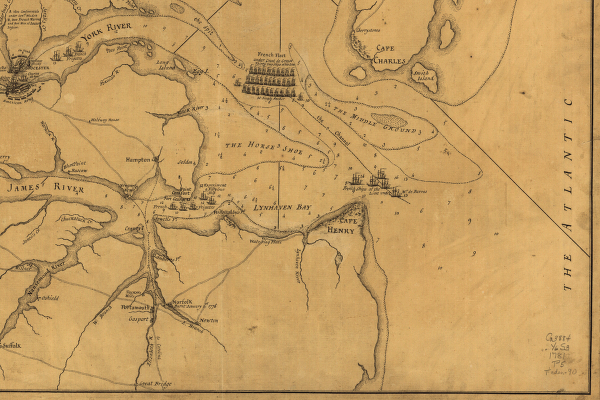
Map found here in this awesome collection - I could get lost in there forever.
Assia Wevill
Plath fans will recognize that name. That and Shura Wevill.
Apparently there's a biography out now of Assia Wevill - that's kind of an interesting article and review there - but it does take the "Ted Hughes is a villain" attitude which I find rather tiresome. There may be some truth to that (here's another recent article on Hughes) - he may have been a total bastard when it came to romance - but still: should we turn this man on a flaming pyre for all eternity? How sorry can one person be for having a damn affair? So I'm not really into the "Ted Hughes is evil" thing. Human lives are complicated. Affairs and suicides and emotions are not easy - especially not for intense people like these three. I've flip-flopped my allegiances through my years of being a Plath fan. There is never just one side to a situation like this one - a situation which is, frankly, a total MESS.
I don't know if I'll read the biography - but it was an interesting thing to hear those names, to have all of these associations come up in my head - just from reading Plath's poems, and all the biographies. She's a glimmering witch-woman in Plath's fantasy ... a sleek cold Germanic mistress, who slinked into her husband's life and whisked him away. This is Plath's side of things. But Assia, in and of herself, is not interesting. Or - at least not like Hughes and Plath are interesting. Hughes and Plath are more interesting because of their art and their fame. Assia is peripheral to the two of them - and it seems like she knew that herself, and that was part of her suicide. She would never "get in there" with Plath and Hughes. What did Assia do besides break up a marriage and then kill herself and her child? Not to disrespect her, seriously - but her interest here is how she intersected with 2 famous people. That's the fact. She knew it.
But still. I first read Plath's stuff in high school - and since then - I have read every biography, every critical study - I came to Hughes late, because I had a bit of that "he's a villain, I won't buy his books" feeling - which is moronic. The guy is a master.
What I'm trying to say is that I don't know any of these people - but just from all the books and articles and poems I have read - I got a jolt of something almost like fear seeing those names this morning.
Assia and Shura Wevill.
Fear? Why fear? I guess it's because I imagine Ted Hughes' response. Hughes' first moment in hearing the news that Assia had killed herself and their daughter. I mean ... the mind boggles. The mind BOGGLES at trying to comprehend this.

It gives me a shiver, a shiver of freezing cold horror, to imagine what Ted Hughes must have endured.
The Books: "Emily of New Moon" (L.M. Montgomery)
Emily of New Moon - by L.M. Montgomery
I'm almost NERVOUS to start this. I love the Emily books so much. I need to calm down. I have a greater affinity for the Emily books than the Anne books (Madeleine L'Engle wrote a WONDERFUL essay about the Emily books - and how much they enchanted her and inspired her as a child) ... I love Anne Shirley, do not get me wrong ... but there are times when I feel a WEE bit like Leslie Moore, looking at Anne with resentful eyes, wondering, "Do you EVER have a bad day? Do you EVER give up hope? Do you EVER lie awake at night, tormented??" She doesn't seem to. After all, Lucy Maud makes a big point of telling us that she and Gilbert never fight in their marriage. Never fight. Mm-hmm. A bit of wishful thinking there, LM. I mean - Anne never comes off as saccharine, NEVER ... she's a living breathing funny warm human being ... but Emily? There's just something about Emily that I can totally click into. And this was so since I first read the books - which, I think, was late in high school or early college.
I think also there's the whole artist thing. Emily is a person who has a CALLING. She knows it from when she is a small child. She is a writer. This is her CALLING. The Emily books are much more autobiographical than the Anne books - and there are certain sections that are taken almost word for word from Lucy Maud's journals and personal essays, and the excerpt I'm posting today is one of them. Lucy Maud had written herself about "the flash" and what that meant to her, and what it WAS ... so she gives that gift to Emily. (Oh, and Lucy Maud said, later, that she also could "see the wallpaper in the air" when she was a kid, and liked to amuse herself doing so. There are lots of little similarities here between Emily and the author).
Emily is a darker book than Anne. The mood is darker. Emily herself is a darker personality than Anne, much more rigid and unbending. She refuses to be bullied, even though she is a child, and man - is she surrounded by grown-up bullies. There are no character transformations like there are in the Anne books. For example: in the Anne books - Mrs. Lynde, while a comic character, is pretty blunt and rude to Anne at first meeting her. She's kind of a busybody, and doesn't treat children like they are human beings. But in the end, we come to see that Mrs. Lynde is one of the warmest most wonderful people on the planet - she would literally give you the damn shirt off her back (if she thought you deserved it, that is) - and she LOVES Marilla, and she LOVES Anne. In her own Mrs. Lynde way, of course ... but we come to see that that first impression of her was just the tip of the iceberg. That kind of stuff doesn't really happen in the Emily books. Aunt Elizabeth doesn't transform, on closer knowing of her, into a warmer more loving person. We don't see that her coldness is actually masking a deep pool of lava-like love (like we do with Marilla). Aunt Elizabeth is, for her own reasons, a cold and uptight woman, who cannot bear disagreement, and MUST be the boss. Emily MUST succumb to her will. This is the source of most of their battles. Emily wins some of the battles, but Elizabeth wins most of them. Emily finally is able to live her own life a bit - but that is ONLY because she reaches the age of adulthood. I am not saying that Elizabeth is not complex - oh God, she is - and I LOVE her - I love that character, and how she is written. She is terrifying, and confusing ... and her clashes with Emily are terrifically written. Lucy Maud goes right into the psychology of it - she describes what is really going on. What Elizabeth is really feeling, even though she could never admit it to herself. Elizabeth thinks that Emily should not have a spirit of her own. Her will should be Elizabeth's will. Because she is a child.
God, there are just so many things I love about this series. I can't even get into it without writing a 20 page essay!!
And so I'm going to break with my own tradition (why not - it's my blog!!) and do a couple of excerpts from each Emily book. One is JUST NOT ENOUGH.
The first excerpt is from the very first chapter in Emily of New Moon. Emily fanatics will immediately know the chapter and what happens in it: Emily goes out for a walk by herself, and with her imaginary companion - The Wind Woman. Emily runs around, glorying in nature (what a pallid way to describe this chapter!!), having a marvelous time - although somehow, in the prose, Lucy Maud lets us know the darkness of this world, of Emily's world. The shabbiness of the house, the alone-ness of the child ... there's something dark in the MOOD, basically. Emily returns to her house after her walk (she's 8 years old, I think??) and the housekeeper greets her bluntly at the door, "You know, don't you, that your father is dying?"
Emily's mother is dead. Her father - an abstracted gentle man - takes care of her. They live far off out of town, and Emily has never gone to school. She has grown up only in the company of her father, the cats (who take on intense 3-dimensional personalities in this book - just as they did for Lucy Maud in real life), the trees (some of which Emily names), and the Wind Woman. Emily lives a life of the mind and a life of the imagination. Her father accepts this in her, he does not judge her, he does not try to clip her wings, or trim her into a more acceptable shape. But the book opens with Emily getting the news broken to her - that her father is dying. He doesn't have long to live.
The excerpt I am going to post (or, the first one) is from Emily's walk (and it is also the very end of the first chapter - the last line of the excerpt below is the last line of the first chapter.).
It's the whole "flash" thing. Lucy Maud wrote a lot about what she called "the flash" in her journals. And she also wrote about it in her long autobiographical essay The Alpine Path (which I will get to, later - I have placed THAT book in my "memoir" bookshelf. Forgive my autism). Anyway, she wrote about it almost exactly as she writes about it here.
I think this book just LIVES. I really do. There is something urgent and personal in the prose - something not careful - Lucy Maud uses dashes a lot (uhm, like I do) - because as her thoughts tumble out, this way, that way, they don't organize themselves into neat little sentences. It's a bit more breathless. The dashes are part of that.
Here's Emily. Out on her walk.
I love these books so dearly I don't even know what to say anymore.
Excerpt from Emily of New Moon - by L.M. Montgomery
And the barrens were such a splendid place in which to play hide and seek with the Wind Woman. She was so very real there; if you could just spring quickly enough around a little cluster of spruces -- only you never could -- you would see her as well as feel her and hear her. There she was -- that was the sweep of her grey cloak -- no, she was laughing up in the very top of the taller trees -- and the chase was on again -- till, all at once, it seemed as if the Wind Woman were gone -- and the evening was bathed in a wonderful silence -- and there was a sudden rift in the curdled clouds westward, and a lovely, pale, pinky-green lake of sky with a new moon in it.
Emily stood and looked at it with clasped hands and her little black head upturned. She must go home and write down a description of it in the yellow account book, where the last thing written had been, "Mike's Biograffy." It would hurt her with its beauty until she wrote it down. Then she would read it to Father. She must not forget how the tips of the trees on the hill came out like fine black lace across the edge of the pinky-green sky.
And then, for one glorious, supreme moment, came "the flash".
Emily called it that, although she felt that the name didn't exactly describe it. It couldn't be described -- not even to Father, who always seemed a little puzzled by it. Emily never spoke of it to anyone else.
It had always seemed to Emly, ever since she could rmember, that she was very, very near to a world of wonderful beauty. Between it and herself hung only a thin curtain; she could never draw the curtain aside -- but sometimes, just for a moment, a wind fluttered it and then it was as if she caught a glimpse of the enchanting realm beyond -- only a glimpse -- and heard a note of unearthly music.
This moment came rarely -- went swiftly, leaving her breathless with the inexpressible delight of it. She could never recall it -- never summon it -- never pretend it; but the wonder of it stayed with her for days. It never came twice with the same thing. To-night the dark boughs against that far-off sky had given it. It had come with a high, wild note of wind in the night, with a shadow wave over a ripe field, with a greybird lighting on her window-sill in a storm, with the singing of "Holy, holy, holy" in church, with a glimpse of the kitchen fire when she had come home on a dark autumn night, with the spirit-like blue of ice palms on a twilit pane, with a felicitous new word when she writing down a 'description' of something. And always when the flash came to her Emily felt that life was a wonderful, mysterious thing of persistent beauty.
She scuttled back to the house in the hollow, through the gathering twilight, all agog to get home and write down her "description" before the memory picture of what she had seen grew a little blurred. She knew just how she would begin it -- the sentence seemed to shape itself in her mind: "The hill called to me and something in me called back to it."
She found Ellen Greene waiting for her on the sunken front-doorstep. Emily was so full of happiness that she loved everything at that moment, even fat things of no importance. She flung her arms around Ellen's knees and hugged them. Ellen looked down gloomily into the rapt little face, where excitement had kindled a faint wild-rose flush, and said, with a ponderous sigh,
"Do you know that your pa has only a week or two more to live?"
Liza with a Z!
Alex just put up part 2 of our Liza journey.
We all just totally fell in love with the dude Alex calls 'The Hairy Man'. Yup. Her description of him totally NAILS it. The beauty and the unexpectedness of humanity.
And Alex - I get ANGRY about my obsessions too. :)
Phenomenal concert. Phenomenal.
October 18, 2006
Sadly ...
Alex and I did not have the money to buy the photo of the two of us on the roller coaster in Vegas (you know how they take pictures of you AS you hurtle by, upside down and screaming?) We had had to put our money in a locker (story at 10 - there are so many stories to tell) - and so we had no cash on us ...
but seriously ... Alex and I saw the photo, got one glimpse of it - and we were DONE. The two of us were staggering around, CRYING with laughter, HOWLING, guffawing, weeping, gasping, clutching at each other, wheezing ...
It's one of the funniest things I have ever seen in my life. I ... I ... I ... I am speechless. No I'm not.
Sadly, there is no record of this photo except in our minds.
Oh, and Shannon sat alone in the car behind us - and in her photo she is pretty much curled up in a fetal position -she has been reduced to a flash of lime green - and streaming hair. No face.
In our photo - I am leaning forward, eyes closed, and my BREASTS! My breasts are (joke for Mitchell) SPILLIN' OOTA my top. I look absolutely obscene. I am a florid Jayne Mansfield racing by overhead in the Vegas sky. And yet - my face is a wincing mania of terror. I am gripping onto the front of the car.
And beside me ... is Alex. She is sitting straight up. She is screaming AT THE TOP OF HER LUNGS. And yet (and this, for me, is almost the funniest part): her eyes are open. She looks like a caricature of a screaming person. Her eyes bugging out, her mouth cavernous. I can't get the image of her face out of my mind. I am laughing out loud right now typing this.
But the best part ... the best part of all ...
is that Alex is wearing her "Liza shirt" (go read the link in the post below to see what I'm talking about) - it's a white sweatshirt, with a massive colorful drawing of Liza on the front of it. The expression on Liza's face is like this. Liza's face takes up all of Alex's torso. Liza's spiky eyelashes are as long as my fingers.
But anyway - in the roller coaster photo - as Alex sits there, screaming, like a caricature of a screaming person (I am shaking with laughter) ... you can see the top half of Liza's head peeking up over the roller coaster car. You can see the crazy huge Liza eyes coming up over the bar Alex is gripping onto as we fly through the air.
Alex and I stood there at the photo counter, money-less, staring and staring at that photo, downloading it into our brains, knowing we were looking at some kind of strange pinnacle of comedy ...
My stomach still hurts from how hard we laughed.
And I completely blew my voice out screaming for Liza and screaming on the roller coaster. I now sound like Demi Moore with the flu.
Liza Liza Liza Liza
Here's part 1 of Alex's side of the tale.
I just need to say that Alex TOTALLY was Rainman - that is an accurate assessment - and became more and more Rainman-esque as the show approached.
"Alex, should we go into that store?"
"Liza. Liza. Liza. Liza."
"Maybe we should park the car first and then check in?"
"LIZA. LIZA. LIZA."
"Alex, what is the meaning of life?"
"Liza."
Even Alex's eyes went a little bit dead. Every bit of her consciousness flowed into the upcoming experience.
"I'm thinking of trying the rigatoni. What are you gonna have, Alex?"
"liza liza liza liza..."
October 17, 2006
Still percolating
but I will say this:
I hadn't realized how much I had NEEDED (yes, NEEDED) to hear Liza sing "New York New York" LIVE - until it happened. I wasn't walking around thinking "something is missing ... what is it? what is it?" I wasn't conscious of it - but when I heard those first chords - and I knew what was coming ... it was like my entire soul and spirit lifted up out of myself in response. It was like:
YES. YES. Here it is. The moment I have been waiting for.
It was almost like an out of body experience. It satisfied some deep deep yearning within me, something that has to do with my childhood, my memories of her movies and where I was at in my life when I saw them, the knowledge of her mother, and THAT whole history ... to see Liza, age 67, with her hip replacement, looking absolutely unbeLIEVable - singing that damn song ... live ... and she was in GREAT form, she shimmered, she was transcendent ... her voice was there, the gestures, the showmanship, the generosity ...
I will never. Ever. EVER. forget it.
It was beyond my wildest dreams. I'll write more. But that's it for now.
happiness
From Mary Gaitskill's story "The Blanket":
When he held her that way, she felt so happy that it disturbed her. After he left, it would take her hours to fall asleep, and then when she woke up she would feel another onrush of agitated happiness, which was a lot like panic. She wished she could grab the happiness and mash it into a ball and hoard it and gloat over it, but she couldn't. It just ran around all over the place, disrupting everything.
Lists!!
Jessa Crispin has an interesting interview with Peter Boxall, editor of 1001 Books You Must Read Before You Die. I loved what Boxall said at the end:
“Having benefited from an extraordinary number of emails and letters as well as reviews asking why I haven't put this or that title on, I think that a second edition of the book would look different in many ways. One irate Australian man wrote a furious, but incredibly insightful letter, giving me a list of perhaps sixty great writers who I had ignored. I found that letter extremely enlightening. I have it still. So the answer is yes, the very idea of a canon of 1001 titles that is closed and complete seems a ludicrous idea. But the aim of the book, as far as I am concerned, is not to produce a finished, exclusive list, but to stimulate debate about what we read and why.”
I love lists. They make me think. I always get good suggestions for further reading as well.
Here are some fun lists I've linked to - or posted myself - with cool discussions in the comments.
100 greatest novels of all time
My list of favorite history/biography/historical fiction
My list of contemporary must-read fiction
My favorite fictional characters
I thought I had posted Thomas Jefferson's essential reading list - he put it in a letter to a nephew, I think - "books an intelligent man MUST have read" - but I can't find it on my blog. Hmmm. I know I have a copy of it somewhere - it's wonderful, I'll post it sometime.
And now: JUST FOR FUN:
Here is the actual list from the book 1001 Books You Must Read. It took me forever but I picked out the ones I read. I had to be honest and leave off books I STARTED but did not complete ... and I know I read a picture book of Aesop's Fables when I was a kid, I think we might have even had a copy - but I don't know if that's the "original". I included it anyway.
Things I noticed:
-- I just don't read that much contemporary fiction anymore, I guess. The list itself is broken up by century (or, by decade, in the more recent years) - and I read a ton of the books in the 80s - many of the hit books, much more fiction back then, but currently not so much. (Oh - and I MUST put Geek Love on the list. I just MUST.)
-- I also noticed that once I started going back in time, further and further, there were more and more books I had read. Still:
There are a TON I have not.
Obviously. I have 874 more I need to read before I die!
I've read 127 of these books - I listed the ones I read below. I'm totally jet-lagged - so I might have missed some.
The 127 I read off that main list
Atonement – Ian McEwan
House of Leaves – Mark Z. Danielewski
The Hours – Michael Cunningham
Underworld – Don DeLillo
The Shipping News – E. Annie Proulx
Trainspotting – Irvine Welsh
The Stone Diaries – Carol Shields
The Robber Bride – Margaret Atwood
Possessing the Secret of Joy – Alice Walker
Written on the Body – Jeanette Winterson
The English Patient – Michael Ondaatje
Amongst Women – John McGahern
The Things They Carried – Tim O’Brien
Possession – A.S. Byatt
Sexing the Cherry – Jeanette Winterson
Remains of the Day – Kazuo Ishiguro
A Prayer for Owen Meany – John Irving
London Fields – Martin Amis
Cat’s Eye – Margaret Atwood
Oscar and Lucinda – Peter Carey
The Black Dahlia – James Ellroy
The Passion – Jeanette Winterson
The Bonfire of the Vanities – Tom Wolfe
Beloved – Toni Morrison
The Drowned and the Saved – Primo Levi
Oranges Are Not the Only Fruit – Jeanette Winterson
The Cider House Rules – John Irving
Less Than Zero – Bret Easton Ellis
Contact – Carl Sagan
The Handmaid’s Tale – Margaret Atwood
White Noise – Don DeLillo
Dictionary of the Khazars – Milorad Pavi?
The Lover – Marguerite Duras
The Unbearable Lightness of Being – Milan Kundera
Waterland – Graham Swift
The Color Purple – Alice Walker
Confederacy of Dunces – John Kennedy Toole
The Hitchhiker’s Guide to the Galaxy – Douglas Adams
The Cement Garden – Ian McEwan
The World According to Garp – John Irving
The Virgin in the Garden – A.S. Byatt
Delta of Venus – Anaïs Nin
The Shining – Stephen King
Interview With the Vampire – Anne Rice
Ragtime – E.L. Doctorow
Gravity’s Rainbow – Thomas Pynchon
Surfacing – Margaret Atwood
Fear and Loathing in Las Vegas – Hunter S. Thompson
Slaughterhouse-five – Kurt Vonnegut, Jr.
The French Lieutenant’s Woman – John Fowles
The Godfather – Mario Puzo
Cancer Ward – Aleksandr Isayevich Solzhenitsyn
The Master and Margarita – Mikhail Bulgakov
In Cold Blood – Truman Capote
One Flew Over the Cuckoo’s Nest – Ken Kesey
Franny and Zooey – J.D. Salinger
The Prime of Miss Jean Brodie – Muriel Spark
Catch-22 – Joseph Heller
The Violent Bear it Away – Flannery O’Connor
The Country Girls – Edna O’Brien
To Kill a Mockingbird – Harper Lee
Breakfast at Tiffany’s – Truman Capote
The Once and Future King – T.H. White
The Lord of the Rings – J.R.R. Tolkien
Lolita – Vladimir Nabokov
The Story of O – Pauline Réage
Lord of the Flies – William Golding
The Old Man and the Sea – Ernest Hemingway
Wise Blood – Flannery O’Connor
The Catcher in the Rye – J.D. Salinger
The Rebel – Albert Camus
Nineteen Eighty-Four – George Orwell
Doctor Faustus – Thomas Mann
The Plague – Albert Camus
Animal Farm – George Orwell
The Little Prince – Antoine de Saint-Exupéry
For Whom the Bell Tolls – Ernest Hemingway
The Grapes of Wrath – John Steinbeck
Finnegans Wake – James Joyce
At Swim-Two-Birds – Flann O’Brien
The Hobbit – J.R.R. Tolkien
Brave New World – Aldous Huxley
A Farewell to Arms – Ernest Hemingway
Lady Chatterley’s Lover – D.H. Lawrence
The Sun Also Rises – Ernest Hemingway
The Great Gatsby – F. Scott Fitzgerald
The Magic Mountain – Thomas Mann
A Passage to India – E.M. Forster
Ulysses – James Joyce
The Age of Innocence – Edith Wharton
A Portrait of the Artist as a Young Man – James Joyce
Death in Venice – Thomas Mann
Ethan Frome – Edith Wharton
Howards End – E.M. Forster
A Room With a View – E.M. Forster
The Jungle – Upton Sinclair
The Awakening – Kate Chopin
Dracula – Bram Stoker
The Yellow Wallpaper – Charlotte Perkins Gilman
Tess of the D’Urbervilles – Thomas Hardy
The Picture of Dorian Gray – Oscar Wilde
The Adventures of Huckleberry Finn – Mark Twain
The Brothers Karamazov – Fyodor Dostoevsky
Anna Karenina – Leo Tolstoy
Middlemarch – George Eliot
Through the Looking Glass, and What Alice Found There – Lewis
Little Women – Louisa May Alcott
Crime and Punishment – Fyodor Dostoevsky
Alice’s Adventures in Wonderland – Lewis Carroll
Notes from the Underground – Fyodor Dostoevsky
Great Expectations – Charles Dickens
A Tale of Two Cities – Charles Dickens
Madame Bovary – Gustave Flaubert
Moby-Dick – Herman Melville
The Scarlet Letter – Nathaniel Hawthorne
Wuthering Heights – Emily Brontë
Jane Eyre – Charlotte Brontë
The Pit and the Pendulum – Edgar Allan Poe
A Christmas Carol – Charles Dickens
Oliver Twist – Charles Dickens
Frankenstein – Mary Wollstonecraft Shelley
Pride and Prejudice – Jane Austen
Sense and Sensibility – Jane Austen
A Modest Proposal – Jonathan Swift
Gulliver’s Travels – Jonathan Swift
The Pilgrim’s Progress – John Bunyan
Aesop’s Fables – Aesopus
Caterwauling Audra
This is kind of an amazing review/analysis of the raw nerve and yet also the technical virtuosity of Audra McDonald's voice. She's a phenom, no doubt about it. I'm sorry I missed this show - I so would have gone had I been here. I love the idea of an evening of American songbooks, too. Marvelous.
Rainbows
I saw 3 of them in LA. One of them was horizon to horizon - a big glimmering RoyGBiv arch gleaming against the inky grey clouds behind it. The best rainbow I've ever seen. I also saw one while I was standing with my aching feet in the cold Pacific Ocean. I had been standing there for, oh, 40 minutes. I felt vaguely autistic about the ocean, and about my feet being in the ocean. I couldn't leave. There was something healing going on, I could feel it. That was why I could not move, even when the waves were high enough to soak my rolled-up pants. Healing. On a deep spiritual level. Cold, salty, rushing foam all around me. And then there was the rainbow. I consider it a good omen.
Nobel Prize for lit.
Really interesting thread here. I especially like the argument about John Ashbery. Heh heh. I'm not a fan either of Ashbery, but it was really fun to read the back and forth about it.
October 16, 2006
New email
Damn the spammers ... I've changed my email address for the blog. No more redhead2 at sheilaomalley dot com.
New email address:
gibsongirl at sheilaomalley dot com
Updates to come ... LA, Las Vegas, Liza ... it's all still percolating. Our trip to Vegas was just too awesome and fun to write it down immediately - I want to live in it a bit more ... so I'll write more later.
Back to watching The View and breakfast with Alex and Chrisanne.
October 13, 2006
Finally found it
It's raining right now. I was out on the balcony with palm trees whispering overhead, drinking coffee, and rain started falling, a cool chill rain. There was blue sky over towards the ocean, but grey directly overhead. The weather here is strange to me - strange and beautiful.
Now onto the important thing: Here is, for me, one of the funniest 2 minutes in any film. I can't get enough. This is Lucy's singing recital in The Awful Truth. Cary Grant believes that she is having an affair with her music teacher - so he busts in on what he thinks will be his wife in a clinch with another man ... only to find her in the middle of a genteel opera recital.
I love her last moment - when she laughs ON KEY - hard to describe - and I love when he wrestles with the chair and table, and how his hair gets all messy and wild.
Things experienced so far in LA, part 3
-- Maria and Cashel came home last night and we had dinner. We drank some of the wine I had bought (Maria said, "I never spend more than 3 dollars on wine, so this is great!") - I ate my diet lasagna - and Maria and Cashel had roast beef sandwiches, which Cashel was VERY into. Cashel had had his dreaded hip-hop class that afternoon. I asked him how it was, and he was kind of glum, "Okay" - and yet a good sport about it. It obviously WASN'T okay, but he's doing it anyway. Good boy. I said, "Too bad there isn't a disco dancing class, huh?" Cashel enthused, "Now THAT would be fun!" Michael would be proud.
-- I had said to Maria, "I think I'm gonna go see Papillon tonight -" and Maria said, excited, "I want to come, and I was thinking of bringing Cash." Cash, in his typical little boy way, was shyly reticent about expressing his excitement. Maria told him the story about how when she was 5 or 6 years old - her parents had taken her to see Papillon at a drive-in - she had been in her pajamas, and so had her brother - and they lay in the backseat, in sleeping bags, and watched Papillon. And she was horrified by it, she said to Cash, "It's kind of a grown-up movie, but it's about a guy who's in prison and all he wants to do is get out - and I think you can handle it. I still remember scenes from it from when I was 5 and I saw it." When Cashel heard the plot, he admitted that he thought going to see Papillon would be kind of a cool thing to do.
-- Little did we know that Papillon was part of this larger festival (which actually sounds really awesome) - which originated in France - and this was the first American festival, of the same name. So there were a lot of French people there, representatives from the film festival - and they made speeches, there were little spotlights on them - they talked about the history of the film festival, and how excited they were to bring it to America. Cashel sat between me and Maria, with his little glasses on, chomping on popcorn, and clapping politely (and kind of confusedly) when everybody else clapped. It was so cute. As though Cashel were thinking: "Oh. Here's somebody else making a random speech with a French accent. And ... people are clapping ... so whatever ... I'll clap ... when does the movie start?" hahahaha I love that boy!!
-- It was great, though - I love these small arthouses, which are committed to showing older movies, having festivals, running a week-long festival of Kurosawa movies or whatever. I love it. It's my kind of crowd. The audiences who show up for events like this are my kind of people.
-- Before Papillon - we were shown a documentary about Devil's Island which was called, oddly enough, Devil's Island. The director of the documentary was there (and, uhm, just have to say: he was a fine specimen of a man. A big blurpy cute French dude.) But - sadly - I was not impressed with the documentary. Maria and I talked about it this morning and had a great time tearing it to shreds. hahahahaha We obviously didn't say to each other DURING the documentary, "Uhm ... this is kind of bad ..." but this morning, we admitted our feelings to each other, and then it was OPEN SEASON. Cashel was so cute, watching us tear the thing to shreds - his contribution to the conversation was, "It WAS kind of confusing." Exactly, Cash, it was totally confusing. It is a documentary and it missed the rudimentary elements which must be included: uhm, we're talkin' who, what, where, why, when, mkay? Like - it was that basic. We didn't know which island we were on at any given point, they showed us maps where we were supposed to see the islands, but we saw no islands, the story was apparently how hard it is to get permission to even go to Devil's Island now, so the film crew had to kill time on other islands - but none of that was clear. The movie is called Devil's Island so ... uhm ... where the heck is Devil's Island in this film? I'd like to know. There was a QA with the director after the film - and he was far more interesting in the QA than his film was ... He informed us of stuff, background information about the colonies, and France's continued ambivalence about it all - which would have been great information for us to have IN THE MOVIE. He described coming across 5 graves on Devil's Island (they couldn't bury most of the people there because it was rock - not dirt - so the dead prisoners would be thrown to the sharks - horrible) - and he made inquiries about who these 5 men were - and one letter came back saying it was classified informaiton, but then another letter came (typical bureaucracy - the right hand doesn't know what the left hand is doing) with small biographies of each of the men buried there. French director dude described how moving it was - to see these names - to see them spring to life - just from the bare bones of the obituaries - men who were forgotten by time, by history - but here they are, their names and lives, once again. They existed. Maria and I talked about that story in our morning bitch-fest - and none of that stuff made it into the movie. But it was fascinating - and THAT, to me, was the real point of the whole thing. The forgotten history of this old penal colony - not "ooh, look at me and my film crew riding around on speed boats, going scuba diving in opaque water, and aren't I so cool ..." Maria did an imitation of him, with his French accent (and Maria speaks French fluently, so her accent was hysterically dead-on): "And we found fiiiiive graaaaaves ..." making her voice go into this keening sound of mourning, which was so ridiculous, and so funny - I hadn't realized how funny it was until she pointed it out - and Cashel and I were still laughing about it 20 minutes later. Cashel was lying on the floor, behind the couch - listening to us rip the documentary to shreds - and occasionally I'd hear him start to giggle, and say, to himself, "We found fiiiiiiiive graaaaaaaaves ..." hahahaha But our main point was: the story of the 5 graves is interesting! Tell us THAT in your movie!
-- And after the documentary - was the QA with the director. So now, of course, it's getting late - it must have been about 9 pm then - so Cashel and Maria ended up going home, within the first 5 or 10 minutes of Papillon - which is a really long movie. I didn't get home until midnight, maybe later. But the questions were interesting in the QA session - about Dreyfus - and the whole split in France on that question which exists to this day (I really liked this French dude, even though I wasn't impressed with his movie ... I liked how he spoke, and I liked his knowledge and passion - too bad it wasn't up on the screen!) ... More questions, about female penal colonies, and who owns the islands now, and what it's like for the 2 French Legionnaires who live on one of the islands to this day, and yadda yadda. I don't know - even though the movie wasn't great and all - it was great to be there. It was a random weeknight in Santa Monica, in an old movie theatre which has almost a vaudeville vibe, and we're talking about the Dreyfus affair, and I just love stuff like that. It feeds the soul and the intellect. Even though it was boring (and there were a couple of times when Cashel closed his eyes - it was a picture of the guillotine - yikes) - I think Cash-man got a lot out of it. And someday he'll watch Papillon and I personally think he will LOVE it.
-- But who WOULDN'T love that movie? For God's sake. It is so fantastic. Maria and Cashel snuck out - and I stayed.
-- Oh, and Maria said, too - "And after seeing that documentary - then Papillon starts - and from the first moment - it is perfection." So true. Those opening sequences - of the prisoners walking through the streets - the strange clanking sound of metal from the little pots in their bags, the metal pots banging against each other, their clomping feet on the cobblestones, the sea of people - the streets lined with watching people - you can see makeup on the women, furs, little hats with veils - the prestige of the colony - but strolling through them, like a grey river, are the prisoners. They are all dressed alike - little grey wool caps, and billowing grey prison garb. Their feet clomp, they are a faceless mass. This opening sequence goes on for quite a long time, if you recall. And it's quite a long time before the camera hones in on first Dustin Hoffman and then on Steve McQueen. Which I thought was great, and perfect for the film. They are indisputably the stars - and my God, what vehicles for both of these actors - JEEZ!! - but the director was smart enough to not start out with these two guys. It starts out with the anonymous mass of men, shuffling off to go to the dreaded prison island. They are identical. Their individuality stripped away. Some are ancient and shuffling, others look like they are teenagers - but taken as a whole, they look like one mass. Gradually, though, the camera is far off - but gradually - we see a face we recognize. He is wearing big googly-eyed glasses, and has an alert kind of animal look on his face. It is Dustin Hoffman. He looks frail, bird-like, and his eyes are completely distorted by those glasses, magnified, giving him a truly odd look. A moment later, we see Steve McQueen - polar opposite of Hoffman, in terms of physicality. Big, manly, strapping - and with a craggy face - tough, yes - but with a weird vulnerability and openness to it.
-- Is there anyone as compelling onscreen as McQueen? I can think of a couple others - but not many. Mark Rydell, director of On Golden Pond said something about McQueen that I completely agree with: McQueen is not really an ACTOR. What he is is a MOVIE STAR. In the best possible sense. In the way that cannot be bought, sold, taught, or cultivated. He was born to be a movie star. I can't imagine him in a play, I can't imagine him putting on an English accent, or wearing tights and a sword ... He's not versatile. His face is what it is ... it is only one thing: the face of Steve McQueen. But let me tell you something: if that man thinks something, however brief, the camera picks up on it. If a thought flashes across his mind, it reads LARGE to us in the audience. We are literally inside of him. Dustin Hoffman is an actor - and therefore his performances can be more opaque. They are works of art - that we, the audience, can stand back and admire (or despise, whatever). Sometimes we get to go in there with him - but that's not the kind of actor Hoffman is. He creates characters - from the inside out, or outside in - however he does it. He is interested in transformation. McQueen is not. McQueen is interested in life, the moment to moment of life. He never rehearsed. He never liked to be on the set before filming. He liked uncertainty. He liked not knowing how the door would open, he liked not knowing where the fridge was, he liked to be unfamiliar with where the props were placed, where the windows were ... nothing could be planned ... He liked to be totally on edge. The fearlessness of that is all over his face. We cannot help but identify with him - even though he is a big strapping movie star - He is us. I have seen many of his movies, of course - and am always really impressed with that McQueen THING - and again, I think it is very rare. He was MADE for the camera. He was a kind of taciturn tough guy in real life (with worlds of torment and anger underneath of course) - but on screen? He pulses with life and openness. He LETS US IN. So many actors do not do that. It cannot be taught. It cannot be learned. You just have to HAVE it. He does.
-- He gives one of the greatest of all time performances in this film, and I can say that without fear of exaggeration. I liked some of Hoffman's work (and I'm a fan of his, in general) - but I think he overacts his character a bit. He is SHOWING us his work. He is SHOWING us his actor process: see how different I am here? My walk, my talk, my voice ... All of that stuff is great stuff, and it is necessary for that part. He needs to inhabit him, he needs to be the contrast to Papillon - these two men together - the movie is almost a love story between them. It is about Papillon's desire to escape, of course - but it is mainly about their friendship, and their devotion to one another. I am SO MOVED in the end when you see that Hoffman is there - on the nicer island, tending to his garden. It makes me feel happy - to know that they will be together again. After Papillon's unbelievable torment in solitary confinement - which, frankly, I can't even think about casually without tears coming to my eyes. The complete degradation of a human being. And Steve McQueen outdoes himself. Seriously. He puts other actors to shame. Other film actors, I mean. Watch him during that solitary sequence. WATCH HIM become degraded. And Steve McQueen is fucking gorgeous, he seems indestructible - we all know this - so to watch him just ... fade away, and go mad ... and it's not a self-congratulatory "look at me having a great actor moment" performance. It feels SELFless. I was in tears. Looking at his gleaming silver teeth, his red-ringed haunted eyes, the way his voice got gruff and weird from underuse, how his walk changed ... It's even more devastating because we remember McQueen's strength. We remember his unabashed masculinity. We want him to be strong. We need him to survive. He's one of those action heroes whom we really care about, and root for. Harrison Ford, in his best action roles, has had that. Ford is so strong and masculine - to watch him experience physical agony, or to be trapped - is even MORE upsetting, because it seems to threaten our entire foundation, our understanding of the world: If HE can go mad ... then how would I fare in such a situation?
-- But again, McQueen isn't playing any of that. He is just playing it from one moment to the next. Special, man. He was a special actor ... I can think of only a handful of guys who could have done that part the way he did.
-- There's the moment in the small boat with the 3 prisoners (I love the little gay kid, too - he's marvelous - completely unselfconscious performance - I tried to get his name from IMDB but it's taking forever to load) - when gangrene has set in to Dustin Hoffman's wound - and they know they must do something drastic, or he will die. Watch McQueen - his silent strong ACTIONS - he is never "thinking or feeling" - he is ACTING. Reminds me of my mentor's great statement about that: "The job is not called THINKer or FEELer. The job is called ACTor." McQueen is gearing up for what will happen - knowing that Hoffman is going to be in a lot of pain - everything gets very focused, and very fast - he gives him a piece of metal, "Bite on that" - and then he grabs hold of Hoffman's arms - he's reaching around from behind, holding him in place ... but it's terrifying, and awful - and every single person in that moment - every single one of the three actors in that scene - are DOing, they are IN that moment ... It's awful, Hoffman being held in McQueen's arms, and McQueen holding onto him, gripping him, wrestling him to be still ... his face, his pained focused face ... he's scared, too, but he has other concerns in that moment ... and what I really got there, was how much he loves Dega. Even though McQueen is not playing that at ALL, he is playing the holding down of Dega so that the first cut can be made. It's absolutely fantastic.
-- Also, there's the beautiful (and powerful) moment when the leper - whose face has completely wasted away - hands him a cigar. That he has been smoking. It's a test, he's silently saying to McQueen: I know I am disgusting to look at, and I am a leper ... but I am about to help you ... will you smoke on this cigar that has also been between my lips? You owe me that. And watch McQueen's reaction. Watch how he takes that cigar, and watch him puff. Watch the look in his eyes, too. Watch what happens deep in those baby blues. It took my breath away.
-- Bravo. Bravo. I could have done without the whole semi-Tahitian paradise section - which went on way too long, in my opinion - and the whole "ooh, let me now put a butterfly tattoo on the Indian chief's chest" - and uhm, what does it all mean? Why?? There were a couple of sections I would have cut, lots of extraneous stuff ... but I'm really just talking about the acting here, the emotional and physical journey of this one man - all embodied in Steve McQueen. It's a tremendous piece of work, it really is.
-- I'm still kind of processing all of it.
-- Sleep. Sleep. Sleep.
-- The countdown to Liza begins. T-minus ....
October 12, 2006
Things experienced so far in LA, part 2
-- Last night, Maria got in from her flight at around 8:30, 9 ... we both were jet-lagging something fierce. I started to get that floaty emotionally exhausted feeling - ready for beddy-bye. But not before I was treated to Cashel doing an impromptu dance for me on my bed - he was wearing his underpants on OVER his pajamas - and he was dancing like a maniac. His face was hysterical - he was jutting out his lower lip - in the seriousness of his dancing. Maria and I were howling. Also - there was the mere fact of the underwear on OVER the pjs. Maria taught him how to do a disco dance point - to cross the arm down in front of the body and then bring it back up in the air on the other side. Cashel mastered it. And he went to town with it. He may hate hip-hop dancing, but disco dancing appears to be in his blood.
-- I then crashed. On the softest sheets ever known to man. I must get some. For those of you who know what I'm talking about (Allison) - they are like the sheets on HER bed in the house in the Hamptons in Something's Gotta Give. Member when she's trying to sleep in the middle of the bed, writhing around, and he finally comes back in and gets into bed with her? The sheets in that scene look so billowy, so comfy, that you want to crawl into that bed with them. THAT was what my sheets were like.
-- I fell asleep as though there were a diving bell connected to my foot, dragging me to the bottom of the ocean in 3 minutes flat.
-- I had a terrible dream, terrible, which then segued into a really nice dream - but oh so bittersweet - so bittersweet and tangy that your mouth almost puckers up, like you took a bite out of a fresh lime - the dream was about Window-Boy. I rarely dream, and I almost never dream about him. Yesterday I had thought to myself, "I should look him up ... he lives out here ..." so I know that that's where the dream came from - but I didn't contact him. It's just ... you know. Let it go and all that. But the dream was so fond and so sweet and so ... poignant ... that I woke up, before dawn, aching with it. The sky was dark and grey, and the cool air brushed through the window. Everything was quiet and still. It took me half an hour or so to brush the dream off, to join the waking world. By that point, Maria had gotten up and gone down to get the mail. Cashel still slept. So I lay in bed, and Maria sat on the floor, going through her mail, and we had a good talk. One of those good talks based on familiarity with the other. It's a family thing, I guess.
-- Cashel eventually joined us, sleepy-headed, with a crooked grin. No longer wearing his underpants as outerwear, thank goodness. Breakfast was had. Hair was brushed. Cashel whipped off a quick cartoon for me. When I'm home with my scanner I will put it on line. I was so glad to realize that the whole "You must pay the rent" "I can't pay the rent" skit lives on in younger generations. They have taken it on, and continue to have fun with it. Cashel has modernized the skit a bit ... it involves a woman with a huge Fro, saying, "You talkin' to me, lil man?" But its essence is still the "You must pay the rent" story. Cashel said to me, seriously (in that way that he has where he's kind of ... throwing something out there ... to see if the grownup will say "Yes that's right" or "No, that's wrong ..." Kind of like when he said to me, eons ago, when he was only 3 years old, "The Minute Men were in the Civil War." Giving me that glance like, "Uhm ... not too sure about that ... I know I just SAID it as though it was a statement ... but I actually have some questions about it ... so could you enlighten me? Without crushing my soul?") - So anyway, Cashel said to me, in regards to that "You can't pay the rent" thing - "It seems like that skit comes from the Great Depression." Giving me the shy little look. I said (knowing that it pre-dated that by a long shot - but still - it was an awesome guess), "It does seem like that, doesn't it? I think it's earlier though. They used it as a skit in the silent movies, and those were before the Great Depression." Cashel nodded, assimilating this. I had helped him out, without crushing his soul. "Yeah. From the silent movies," he repeated.
-- Heartcrack.
-- Then off to school he goes. I am kind of anxious to hear how his homework turned out. I hope all is well.
-- I hung out for a bit in the apartment, puttering around, reading The Historian, whatever ... and then I started off on my main adventure of the day: driving to GOD KNOWS WHERE to meet Bill. We spoke on the phone and he gave me directions, which, naturally, involved 8 freeways. But again, his directions should win an Academy Award, so clear they were. Oh, and this was funny, he said, "So then you'll pass by the spot where the Rodney King beatings happened ..." Gotta love those local landmarks. I said, "So how long will I be on the 405?" He said, "ForEVER." Good to know. Then as he was telling me some other part of the directions, he gave me an emotional inner-monologue direction as well. "So at this point - you will be thinking, 'Where the hell is Bill leading me, and what kind of Deliverance adventure is he taking me on?'" hahahaha But I took all of this down, and we made a time to meet. Adventure! Scary! Fun!!
-- It took me a while to get on the road because my car keys had descended into some kind of quantum worm-hole, nowhere to be found. I freaked out, let's be honest. I turned the apartment upside down. I was looking in places where they couldn't be. But ... dammit ... they were nowhere. Nowhere. Nowhere. Emotional problems started bubbling up ... let's just say that. I started feeling cursed and kind of out of control. Where are they? Did I lock them in the car? What happened? Now it's been half an hour ... and I'm going to meet Bill ... and he's so busy and taking time out of his day to have lunch ... and ... I can't reschedule ... and ... I felt totally trapped. There was a "why me" aspect to all of this, which I realize has to do a bit with the pharmacalogical issues I mentioned earlier, among other things. I looked nice - I had showered - I had cleaned off the homeless woman traveling-all-day grime of the day before ... but now ... I COULD NOT. FIND. MY KEYS. LITERALLY. NOWHERE TO BE FOUND. To give you an idea of my desperation - I started pawing through Maria's junk drawere. As though Maria might have seen them and put them into her drawer. But ... but ... she would never do that ... they were obviously my car keys ... I was a maniac. I finally decided to just walk to the car and peek through the windows, to see if I had maybe locked them in the car the day before. I walked down the street, muttering to myself, in a rage. I got to my car, peered through windows, peered through them again ... no keys ... I was just about ready to call Bill and say, "Sorry. No can do. I CAN'T FIND MY G-D KEYS." I was fantasizing about what the next couple of hours would be like - calling the rental place, somehow getting new keys, whatever ... total drag that you do not want to spend time on on your very short vacation. But suddenly - right before I took out the phone - as a matter of fact, it was as I was digging for my phone in my bag that I remembered: I had put the keys in the OUTSIDE pocket of my bag - I never put anything in that pocket - but I thought, cleverly, Ooh, that'll be my SPECIAL PLACE for my keys. So I DON'T LOSE THEM. Yeah, so clever that I went into a panicky nervous breakdown when I couldn't find them. Nice work, Sheil-babe.
-- Wow, that was a long boring story.
-- Then I was off. Into the beautiful shining day. There was a blue fuzzy haze at one end of the street, which I knew was the ocean (I'm gonna go down there tomorrow) - and I drove off toward the mountains. The spectacular mountains sitting in a quiet ring around this gleaming white city. It's really quite amazing.
-- I shrieked along the 405.
-- I found the best radio station ever. I heard: Crimson and Clover. Free Fallin'. Glory Days. Sweet Dreams (are made of this). Safety Dance. You know. Your basic awesome radio station.
-- I changed lanes, I was awesome! I went from one freeway, to another, to another. I waved hello to the spot of the Rodney King beatings. I careened through a blasted-open desert landscape - the mountains getting closer and closer. Truly breathtaking, I must say. When I came home they were even MORE breathtaking - because the light was getting low - so everything stood out in stark relief, the shadows, the valleys, everything clear and lovely - but even at midday they were gorgeous. I could only glance at them quickly - because I was hurtling along random freeways at the speed of light - but they were so so beautiful to me.
-- Bill had said to me, "You'll know the town when you get to it. It's like Mayberry."
-- I love it when directions are true. When they are so visual and so true like that - I came around the corner - and suddenly - there was Mayberry. I smiled out loud to myself in the car. Here it is. 2 seconds ago I had been in desert mountain land ... and now? The quaintest sweetest little town you ever have seen. With tree-lined streets, and used bookstores (yes, I saw one), and little brick pedestrian walks, and cute cafes with people sitting outside, and the trees - the shade of the trees dappling the little streets. Mayberry. Here it is. Beautiful directions. Academy-Award worthy.
-- We met up at a cafe - he was waiting for me outside - so good to see him. The cafe itself was really cute - with an old-fashioned ice cream counter - brick walls - and homey cooking. I had 10 glasses of lemonade (it was about 10, wasn't it, Bill?) On about my 6th refill, I said, joking, "Uhm, there's no caffeine in this, is there?" "No, but there's a lot of sugar." "Awesome."
-- We talked about my trip, we talked about his work, my work, we talked about Carole Lombard, and Cary Grant, and Gary Cooper, we talked about my trip cross-country (uhm, 15 years ago??) , he asked questions, he told me about this road trip he took to Alaska - it just made me LAUGH - It's fun to talk to him. It's also fun to talk to him when we are not being harassed by a narcoleptic blonde.
-- It was great to see him. It was also great to see him in Mayberry. I loved that one of the streets was called Ocean View. We're in the mountains. Maybe before the days of haze, you could see the ocean from that point ... It certainly was high enough.
-- Then back on the road for Sheila. Jittering on a sugar high from the 25 lemonades I had scarfed down in a 45 minute period.
-- Reversed my directions (I know, it's all about driving, but gimme a break - I've had horrible experiences here with the driving, and I'm still not "over" the fact that I have had an uneventful drive). Blasted my cool radio station, and careened back over the mountains. Some of the vistas were heart-stopping. The light was getting low and long - mellow and golden - the shadows deepening - and some of those slopes ... it was like you could see 350 shades of brown in one slope. Dark, soft, smudgy, light and dusty ... Just so spectacular.
-- And now I'm home. A chill twilight - with the palm trees outside my window. My skin feels moisturized and very Sheila-like, no more of the dry insanity of yesterday. I have my diet food in the fridge (yes, I shipped it with me - can't take any chances - I've lost 10 pounds already, can't afford to stop now!!) - I'm gonna go out and buy a bottle of wine - a small gift for Maria - also, it'll be nice to walk, after being in the car for so long.
-- Oh, and the local movie theatre is playing Papillon tonight. I am totally there.
-- Bill just sent me an email with a clip of Cary Grant reading a Christmas story. He also included a photo of Cary in a Santa suit which (forgive me that I know this) is from the last scene of My Favorite Wife. Life is good.
Things experienced so far in LA, part 1
-- Well, first of all, it is always AWESOME to leave New York and then to find that someone flew his plane into a building while I was away. That just gives me a great great feeling of safety and stability. I remember a couple of years ago I was gone during the blackout - and I watched the chaos on television - and even though it looked awful, and even though we watched the CROWDS of people walking home over the Brooklyn Bridge (we were looking for Melody) - I wished I was there. It's MY city. I don't want to be away when anything happens to it. Now that we know it was Cory Lidle - and - who the heck knows what happened - it's all very bizarre. But I signed on at some point yesterday - and saw the pictures from the news - of a building in flames - Words can't describe what I felt. Naturally, I immediately went to CW's blog - because he's the go-to guy in terms of planes - and was really happy to read his post about it. Just because. His attitude is so clear, and so informational. I appreciate his perspective, as always. But I wish I had been there. If anything happens to that damn city again, I need to be there when it goes down.
-- My flight out of JFK left at 7 a.m. So I slept over Allison's - and took a car service from there. It was insane - because the car came to get me at 5 a.m. so we woke up at 4:30. Now ... I would have been perfectly happy to sneak around her apartment at 4:30, getting my act together on my own - but that is not the kind of friend Allison is. Allison got up with me, and while I got my stuff together (forgetting my damn alarm clock, in the process) - she made me a huge cup of cappuccino - with steamed milk - AND she added a dollop of chocolate syrup in the shape of a heart on top of all of it. It was the sweetest thing EVER. And the cappuccino definitely jumpstarted me to where I needed to be. Emotionally and metaphysically. Especially because of my stupid pharmacalogical issues right now. That cappuccino was a godsent!!
-- Driving through my dark deserted city streets ... and then over the bridge into Brooklyn ... the lights of Wall Street shining, of course ... the river dark and invisible below ... Nobody out. The fire escapes gleaming dark and silent against all of the buildings, the metal gates shut on all of the storefronts ... I am almost never out in New York at that hour of the night (and if I am then I have pretty much been UP all night) - and I love to see it in that mood. It's a private mood, slightly creepy, that's the hour when horrible shit goes down, when the crazies run the show. But still, I love to see the city in all its moods.
-- Oh, and funny moment: As I got ready to leave, Allison put on New York 1. Her confused dog ("why is everyone up? Who is this girl staying with us? Why are we awake now??") lay at Allison's feet on her bed, his head in his paws, his eyes open and blinking, in complete bafflement. At one point there was a commercial for the Mel Gibson interview on Good Morning America - and the music accompanying the commercial was so momentous, portentous and tremendous that it was laughable. As though we all are waiting with baited breath to hear what the raging anti-Semite has to say. ("I have no idea where those words came from." "Dude, they came from your anti-Semitic bigot mind. It's very simple.") But anyway, the commercial was ludicrous and Allison flipped out. I was packing up my bag, and she started shouting at the television: "Uhm ... how 'bout NORTH KOREA? HOW 'BOUT WE TREAT THAT AS IMPORTANT? WHO GIVES A SHIT ABOUT MEL GIBSON??" I did not respond, because it was 4:45 am ... although I completely agree with her. But my point is that there was a pause after her outburst. Allison must have glanced down at her poor dog ... and seen him look up at her, with worried eyes. Allison then narrated his inner thought process, "Not only is she awake at some weird hour ... but she's really angry right now ..." I am still laughing about that. The poor dog. Why is she yelling at the television and it's still dark out????? WHAT HAS HAPPENED TO MY STABLE LIFE AND MY ROUTINE? WHAT IS GOING ON ???
-- Jet Blue is an awesome airline.
-- Jet Blue is an awesome airline.
-- I read The Historian during my flight - when I wasn't sleeping, that is. But it was a feverish jittery kind of sleep, due to the cappucino, the Dunkin Donuts, and all the rest. But it was good - I can't put The Historian down. I wouldn't call it great writing - it's not really my type of book (it's ALL PLOT ... almost no character development - even though it's a first-person narration) ... and I love books about characters, I love books that develop people into three-dimensional living breathing creatures ... However: the plot of this book is QUITE interesting and certainly keeps me interested. I love the whole Eastern European setting (cold war, the end days of socialism) ... and I love, too, the whole literary detective plot. It's like Possession (only without the three-dimensional character development). I'm enjoying it, though. It's a rollicking read, and I can't wait to get back to it. As a matter of fact, the book is calling to me across the room right now. "PICK ME UP, PICK ME UP."
-- We land in Long Beach. Which is one of the cutest airports I have ever seen in my life. Not as cute as the Shannon Airport in Ireland - but then again, what is?? Long Beach Airport is almost like a little Fred Flintstone set - surrounded by palm trees. And maybe because I grew up near the ocean - but I can feel the nearness of the ocean there. It's in the air. You can feel the heaving mass of the Pacific right beyond that horizon ... it's right there. Also, I love how you get off the plane and go down a flight of steps, into the open air. There's no retractable gate. You disembark onto the airfield. I love that. The airport itself is tiny, manageable - and feels so much like a beach community. I can't describe it any other way. You just know the beach is near.
-- I picked up my car. Now I had a lot of fear about this. I have not had good experiences driving in LA. To say the least. Ahem. Ahem. It's not that I'm paranoid, or a scaredy-cat. It is that my experiences have SUCKED and I have learned my lessons. However: I pick up my cute little car. And I get my directions - and off I go. Heading for the 405.
-- And: NOTHING BAD HAPPENED.
-- I shrieked up the 405 (God, what an ugly stretch of road, man oh man), there was no traffic, I was able to change lanes, I was alert for my exit, I was able to be flexible, and move when I needed to, nobody rode my ass, and I basically was a driving ROCK STAR.
-- I got off on the 10 and then followed my brother's spectacular directions. His directions should win an Academy Award. I'm quite serious. I've driven a bunch in LA now and I always get lost at some point. Because the freeway signs suck to a degree that cannot quite be described. There is no warning. You drive along, knowing you are NEAR where you need to go, and suddenly 8 lines careen off to the left, with signs saying; GO NOW - TURN TURN TURN TURN TURN ... and suddenly you are in the position of having to careen across 4 lanes of traffic, everyone going 80 mph and up, to make your exit. HOWEVER: this time, nothing like that happened. I calmly made my exit. I calmly did what I needed to do. I almost got onto the 10 going the wrong way (again, because the signage sucked so bad) - but was able to correct myself without killing anybody or myself.
-- I parked my car. The day was beautiful. The palm trees feathery and still against the blue sky. Also, the air is chill, which I love. A nice cool breeze. Just the most beautiful weather you could imagine. At this point, it's about 4 pm for me ... but it was mid-day here. I was thinking of going to the beach - before I had to get Cashel at school - but then just figured I would wander around for a couple of hours, grab a bite to eat, whatever. Sadly, I was a grub-ball of the highest order. My hair in a messy ponytail, with bobby pins clamping down the wild strands, my skin was pale and completely unmoisturized (I moisturize my skin probably 3 times a day - it's like flossing for me) - but sadly, the security dude had confiscated my lotion. Because I'm a moron and had packed it anyway. Oh, and another funny thing - as the security dude at JFK was going thru my stuff - he started asking me questions about my laptop. At first I thought I was in trouble, that that was why he was asking me about it ... like ... for some reaosn you're not allowed to travel with a Macbook without first getting permission from the NSA or something. But then I realized that no, he was thinking of buying one himself, and he wondered what I thought about it. Hahahaha, so I sat there, putting my shoes back on, as he confiscated my lotion, my saline solution for my eyes, my Ben Gay (which, I admit with some shame, I am addicted to), and also my hair conditioner. But all the while we're talking about Mac, and whether or not I like my computer. Funny moment.
-- But anyway, back to the most important thing. My dry skin. I'm retarded. Okay, so I left my stuff in the car - and set off for the main drag, basically to walk around, window-shop, buy some moisturizer, and get some food. The day was spectacular. I looked down one of the long avenues, and just reveled in the sight of the symmetrically placed phalanx of palm trees. They're so whimsical, I just love them.
-- Once I was on the main drag - in my Adidas T-shirt, my sweat pants, and my hi-top sneakers, I realized how underdressed I was. I felt like a homeless person. As a matter of fact, I kept running into this obviously insane Hispanic guy, up and down the street, and he kept hailing me as though I were his old friend. He obviously thought that I was homeless too. "Hey, lady!" (Then he would belch as he passed me. Seriously. Ew.)
-- I walked by Cashel's school, and recess was going on - I felt like a crazy stalker Auntie - but I did look for him on the playground. Didn't see him. Bought some food. Ate it. Bought some moisturizer. Slathered it over my face AS I WALKED DOWN THE STREET. Oh well, what do I care. I actually WAS homeless, in that moment. No need to be ashamed of it.
-- At 2:30, I went to Cashel's school to pick him up. I was so excited!! I was excited to see him in his glasses, but also excited to see him in his environment, to see him in an everyday way - not just as a visitor. Brendan had called the school to tell them I would be coming. The ladies in the office were absolutely lovely. I loved them all, and I loved the feeling there. There were schedules, and posters up ... people coming and going ... the principal having meetings in her office - little tiny kids with enormous backpacks coming in and asking if they could use the phone. It was just a really nice elementary school vibe. I remember the "ladies in the office" from when I went to school - they are SO much a part of why schools run, how they GO. They were so sweet - asking me about my trip, and if I had been to LA before, etc. Sweet. They told me that Cashel knew I was coming and that he would come to the office when his class got out.
-- And before I knew it - there was his grinning bespectacled face peering in at me. He had on a camouflage hoodie, so he looked like a gangster. Except with adorable silver-framed glasses. He had that smile he has sometimes ... when he's really happy ... but maybe he's afraid to show it? Especially in public? Maybe he has to hold himself back? It was so cute. So so good to see him. The ladies in the office waved us off, "Have fun! Nice to meet you!!" and then Cashel and I set off for home. As though this was perfectly normal.
-- We walked along and he told me about his day at school. "When you're in kindergarten and you're learning to read," he informed me, with the wisdom of the ages in his voice, "it's like it's all NEW and you're learning somehting NEW every day. But now it's just the same old thing every day." Same ol' same ol'. Cashel's over it. He's 8 years old and he's over it. He looks back with longing on the ancient days of his kindergarten years ... when everything seemed NEW and not so tired and old as it is now.
-- Cashel told me jokes as we walked along. He would warn me beforehand. "This one is kind of inappropriate." hahahaha He KEPT saying that word. So obviously it has been drilled into his head: "Some jokes are not appropriate to be told at school" or whatever. But of course I'm the auntie. I'm not here to be all, "Be appropriate". So I said, "Jokes are supposed to be inappropriate. Tell it." There were jokes involving boogers. There were jokes involving people who ate flies but THOUGHT they were raisins. Etc. I loved hearing his little frenzied excited voice telling me the joke. "So once there was a guy ..." There's something timeless about grade school humor. I love it. I love, too, how he kind of knows about joke DELIVERY. He knows about the "ba-dum-ching" energy that needs to be created. So I'm listening to him ramble on and on towards the punchline, but I can hear echoes of "Who's On First" in his tone. Assimilation of all that has come before.
-- I asked, "So are you taking any afterschool programs now?" He said, with his little glasses on (oh, and they become sunglasses as if by magic when you're outside - so they were now sunglasses, and he had on this hoodie - and he totally looked like a little ghetto kid - it was hysterical) - "I take a hip-hop class." To hear him say that - with his whole Eminem look in that moment - - was hysterical. It was also hysterical, in general, to imagine Cashel hip-hop dancing. He said he didn't like that class very much though. He also took a cartooning class after school and he was MUCH more into that one. He draws comics all the time. It's his thing. "I also take yoga, and I really like that," he informed me calmly. Uhm, Cashel doing yoga. I almost had a heart attack.
-- We arrived home, finally - and then there was a whole debacle involving a key - that was supposed to be in Cashel's backpack but was ... not there. Cashel immediately got really upset - he was panicked - and it made my heart crack to see. I also wanted to get into the apartment, of course I did, but I had to remain calm, and NOT do what I wanted to do, which was moan, "Oh God ... NOW WHAT??" But Cashel was sooooo upset. Poor little ghetto boy. I called Bren - turns out there had been a mix-up - blah blah - and Bren had the key. He and Melody were going to drive down to get it to us. It would probably be 45 minutes. So Cashel and I set out to go get some food, maybe hang out a bit, as we waited. Cashel bounced back from his panic ... but it was heart-rending for me to see how quickly he went there. It totally was not his fault - it was a mix-up in the GROWN-UP world, not his ... but he still felt really bad about it. Good little boy.
-- I found a diner on Wilshire, and we sat down. When we first walked in, we both started laughing because standing right at the door, by the cashier, was a jittery skeleton, with rattling teeth, and he was dressed in a long black robe. Cashel loved that. And I chose a booth which had spider-webs draped over it, with a couple of pipe-cleaner "s"s hanging over us. I would NEVER have chosen that seat if I were alone, but I thought it might cheer Cashel up to see his Auntie Sheila become a freakazoid maniac. He loves that I'm scared of "s"s. As a matter of fact, he drew me a card with a huge hairy "s" on it and sent it to me in the mail. Now that's love. So we sat in the booth, and I could see Cashel, with this huge delighted grin on his face, watching for signs of insanity to come out of me. He made his fingers into little creepy-crawly "s"s and had them come at me across the table. I batted them away with the menu and Cashel burst into laughter. Naturally this was what we had to keep repeating, over and over. It never got old.
-- We ordered root beer and some food.
-- I asked him if we should start his homework now - and he said no, because he didn't have a pencil. I said, "I have a pen!" He shook his head solemnly. "You have to do it in pencil." Of course you do. It's a learning experience ... especially with math. You do it in pencil, so you can erase. Nothing is irrevocable in pencil ... you can correct your work.
-- Brendan and Melody showed up - and it was so great to see them both!! They're both so busy right now, with rehearsing and stuff - that I might not have seen them otherwise. They both looked beautiful, smiling and happy and together. Nobody else was in the diner but us 4 - and it felt like the most natural thing in the world. Here we all are. In a diner. Together. My family. These people are all my family. At one point I caught Melody looking longingly at my fries. It was just a quick glance, I saw her eyes just flit over the plate of fries that I was not eating, and then she moved on with whatever she was saying. I said, "Uhm, want a fry, Melody?" We just roared. Melody was like, "You saw that look??? hahahahahaha". I love my family.
-- At some point in here, I talked with Michael, and we laughed hysterically about the upcoming Liza trip ("Was this planned, or ..." hahahahaha) and talked about his acting class, and the accordion, and how ridiculous that was, and it was good to talk to him. After the Michaelpalooza of the last couple weeks (Allison's word) - it was good to hear his voice. Oh, and Reds is playing out here too - so he got to see it. He had never seen it before so we had a great talk about that. They don't make 'em like that anymore.
-- Bren drove Cashel and me (is that right, Dad??) back to the apartment - and now we had the key - and now we were inside. Yay!!!
-- So. First things first. We had to sit down and do Cashel's homework. What is Cashel working on now? Word problems. And he was already nervous and upset about it. It's a new concept, brand new ... and he didn't feel like he could do it. He didn't know HOW to do it. And, uhm, you're comin' to the wrong girl for help, bro ... but the amazing thing about it was (and I am sure parents experience this all the time with their kids - these weird time-travel moments, seeing yourself in your kid, etc. - very wild): It was not an option for me to be like, "Dude, I'm so bad at math. You're on your own." Or I suppose I could have ... but I couldn't have lived with myself otherwise. Cashel was upset and didn't even know how to start. I stared at the word problems - and my life flashed before my eyes. I saw my horrible 4th grade teacher, who shamed me about my lack of understanding in math (she would send me out into the hall to work on stuff BY MYSELF - I remember the sweat pouring down my face as I sat in the hall, alone, staring at fractions, and feeling - literally - like I was the most isolated person on the planet) - but also - the whole word problem thing had always been a total block for me. I would always get sidetracked by the STORY in the word problem, and forget about the math. "So 2 trains are heading towards each other on the same track ...." Little Sheila interrupts, "Well, one of them has to get off that track and fast!" Like - I just didn't get it. It was all about the STORY for me. And I would look at a word problem and literally feel my whole brain go to mush. i couldn't figure it out ... worst feeling in the world. so anyway, here is Cashel struggling with the same thing. And he had kind of a meltdown about it. And I took him in my lap and told him that this was all new stuff, and he would not be perfect at it right away, and that we would work on it, and figure it out together. (In my head I'm thinking: WE WILL???) But I had this strange kind of space-time continuum moment ... knowing that my father had comforted me in the same way, when I was little and upset about word problems ... and that there I was, doing the same thing with Cash-man. And this is what is great about it: Cashel figured it out. He started remembering some of the clues his teacher had given him about how to go about these ... and then before you know it, there Cashel is adding up random numbers across the page - and by trial and error, coming to the right one. I was SO PROUD of him. He got himself together. He had a meltdown, totally understandable - and then he got himself together. Another thing I was really impressed by was: I said, at one point, when the meltdown threatened to turn the entire apartment into a swirling pit of lava, "How 'bout we try the rest of your homework and then come back to this?" He had all these other math problems at the bottom of the page, too - but they were all multiplication and addition (adding up dollars and cents, and stuff like that) - stuff that Cashel finds easy. He knows how to do that stuff. But the word problems are new ... and they hovered over his entire consciousness like a thick black cloud. He had even mentioned it on the way home, how upset he was about this homework, and how he didn't know how to do it. But anyway, when I said, "Want to do the rest of your homework and come back to this?" Cashel said firmly, "No. Because I need to do this first so I don't have to think about it anymore." Good job.
-- When he completed the 4 word problems, we hi-fived and cheered.
-- Then Cash took a well-deserved break, and sat watching some cartoons on his computer. Shaking with laughter.
-- I cooked him dinner. I loved glancing over and seeing his little smiling face, looking at the cartoons.
-- Then there was more homework. He sat at the table, with his pencil gripped in his hand, working things out on his own. I checked email. We were silent, working on our own things. It was great to be there.
-- And one of the best sounds in the world was later - when Cash was lying in bed reading - and I was out in the living room, reading The Historian - and Cash was reading Captain Underpants and literally GUFFAWING in his room. There would be silence - and then I'd hear this random guffaw - hahahaha Great sound. He's a good boy.
-- I absolutely love Wireless. I brought my computer, I plug it in the wall, and I am able to get online. It is truly a miracle. There was some news item about McDreamy and Burke getting into a fist fight on the set of Grey's Anatomy and I forwarded it to Bill immediately. Knowing he would understand.
-- Oh, and before Cashel went to bed, we went to the Lego website and had a BLAST clicking around, watching these hysterical Lego videos. The one about Han Solo's friends trying to rescue his carbonite-frozen body made us howl. Cashel knows his way around - leaning over my shoulder to click on the right buttons ... I love that. He is Mr. Lego. Oh, and we also found the video of the Lego version of the World Cup which we had seen during Cashel's sleepover at my house - it was so funny - we tracked it down and got to watch it again. It's genius - we watched it a couple of times.
-- Oh, and as we were working on the word problems, and things were getting pretty, shall we say, intense - I decided to lighten the mood a bit. The first problem was about how Gina drove 450 miles in 2 days - but she drove 50 miles more on one day - and so how many miles did she drive on THIS day as opposed to THAT day? I said, quietly, "The answer to this problem is: 'Gina is a horrible driver.'" Cashel could not get over it. He had leftover tears on his face - but he just BURST into laughter, and pretended to write it down on his homework sheet, repeating, out loud, "Gina is a horrible driver...."
-- More to come, but that's enough for now. I loved waking up this morning and seeing the slant of dawn light across the white stucco building across the way. Just a piercingly beautiful sight.
October 10, 2006
So this coming Saturday ...
I will be in Vegas, and I will be taking a "monorail to Liza".
That's all I know.
1. Monorail
2. Liza
Monorail. Liza.
Monorail.
Liza.
Monorail.
Liza.
I kind of can't get past it. I'm already excited for it to be OVER so I can write about it.

Happy place
Here's a still from the movie Talk of the Town - with Jean Arthur in one of her goofiest roles (I love her in this), a wonderfully earnest and grown-up Ronald Colman - and Cary Grant - playing an idealistic soapbox-stick-up-for-the-little-guy radical - escaped from jail. It's not really Grant's type of part - but he is sooooo funny in this film, hiding out in Jean Arthur's attic, making trouble for her. He is nothing but trouble.
Anyway. I need it today. Here he is.

Indiana Jones denied tenure
Two snippets I liked - but the whole thing is hysterical:
Far more times that I would care to mention, the name "Indiana Jones" (the adopted title Dr. Jones insists on being called) has appeared in governmental reports linking him to the Nazi Party, black-market antiquities dealers, underground cults, human sacrifice, Indian child slave labor, and the Chinese mafia.
And this part made me laugh out loud:
Though the committee may have overstepped the boundaries of its evaluation, I find it pertinent to note that Dr. Jones has been romantically linked to countless women of questionable character, an attribute very unbecoming of a Marshall College professor. One of these women was identified as a notorious nightclub singer whose heart he attempted to extract with his hands, and whom he then tried, and failed, to lower into a lake of magma.
Uhm, yeah. Trying (and failing) to lower someone into a lake of magma while on a business trip is pretty much tenure-denial behavior.
The Books: Further Chronicles of Avonlea: 'Tannis of the Flats' (L.M. Montgomery)
Next book on my young adult fiction bookshelves:
 Further Chronicles of Avonlea - "Tannis of the Flats" - by L.M. Montgomery
This story is really interesting, I think, because of the racial aspect. Lucy Maud doesn't really deal with racial issues - at least not overtly - and this is the only story I can think of where she does. It doesn't take place on Price Edward Island, either - although one of the main characters is visiting FROM PEI - it takes place out on the wild west of the Canadian prairies - at a small settlement where a telegraph office has been set up. It's not as domesticated as Avonlea (or - it's not domesticated at all, let's say that) - and surrounding the town, in huddled teepees, are Indians - Indians who do odd jobs, or who just hang on the outskirts of what used to be their land, doing not much at all. Lucy Maud does not have a very high opinion of these people, you can tell that - and yet ... then there's Tannis ... a young Indian woman ... and while she has limitations (limitations ONLY due to her race - which Lucy Maud appears to believe is in the blood: Indians are lazy, sullen, and can't really go very far in life. Not just because the opportunities are not there, but because it is not in their BLOOD to be otherwise) ... but anyway, while Tannis has personal limitations (she is humorless, she has no sense of irony - which turns out to be a huge defect in this case, she doesn't do things for "fun", she is LITERAL) - she also, at the end of the story, does something so selfless, and so sacrificial that it takes your breath away. She gives up her chance at happiness - in order to get the man she loves what he needs (which, in this case, is another woman). Tannis is the heroine of the day. Tannis rises to a height unknown in the more polite and genteel white world. She is the one. So ... even though there are parts of the story where you realize the racist attitudes of pretty much everyone at that time towards the Indians ... Tannis is not a generalized stereotype. She is a real person, a real girl. It's a VERY interesting story - and one of my favorites that Lucy Maud has written. I can't really LOVE Tannis, because the way Lucy Maud writes her - she is not very lovable. But she is a heroine nonetheless.
Tannis ends up having a "flirtation" (although Tannis couldn't be a good flirt if you paid her) with a young man named Jerome Carey (a white man) who has come to work at the telegraph office. It is a temporary position for him - so he decides: what the hey, I'll hang out with Tannis to pass the time while I'm here, no big deal. Well, to Tannis everything is a big deal. Carey is playing with fire by flirting with this Indian girl. She takes nothing lightly. Uhm ... maybe I see myself in Tannis. I'm a horrible flirt as well. Or - it's hard for me to "just" flirt. When I flirt, I mean business. I prefer it that way. But Tannis isn't a light-hearted person, a coquette, a domesticated white girl ... she is a girl of the prairies ... and Jerome Carey ends up paying dearly for messing with her heart.
Anyway, here's the excerpt where Tannis is first described. You'll see the racist attitude towards mixed blood (oh, and Tannis is a half-breed - which many saw, including Cher, as being even WORSE than being an Indian. If you were a half-breed, that's all you ever heard. If you were a half-breed, how you loved to hate the word. And etc.) Interesting, though: even with Lucy Maud's attitude towards race and blood: you can tell that, on another level, she is criticizing the snobbery of the white world, the assumptioins of the white world. You must ADJUST your assumptions with different people ... you cannot assume that every woman is the same (this is for Jerome Carey) ... you have to learn how to read the signs ... do not treat everybody as though they are cutouts of each other. That way disaster lies. Tannis is NOT like other women. Jerome Carey doesn't read the signs.
I can think of one man in my life (*cough* doppelganger *cough*) who flirted outrageously with me one night - it wasn't even really flirting - he DECLARED himself to me - and yet ... he was not free ... not free to be with me ... yet he declared himself anyway, causing me to basically (no, not basically - literally) run off into the night away from him, away from the situation - and the repercussions of that night, for me, were disastrous. This began the long dark period of 2002 for me. Doppelganger flirted with the wrong girl. He knows it NOW - but in that moment he thought his overwhelming declaration would be welcome. He also couldn't help himself (his words.) Maybe he thought I was shallow, and uncommitted, and fabulously okay with myself ... like I appeared, and also like most girls in New York are, or appear to be. He didn't read the signs. Which were THERE. But man, did he mess with the wrong girl. It was horrible for him, it certainly was, to know how much he hurt me - it's years later and we're still SO AWKWARD when we run into each other - that declaration from 2002 still sits between us, screaming at us ... but it was more horrible for me. So I guess I relate to Tannis. Even though all the half-breed, racial blood characteristics, and yadda yadda talk is from another time altogether, and I certainly have more of a sense of humor than Tannis does. But still, I feel for her. I know what she goes through here.
Excerpt from Further Chronicles of Avonlea - "Tannis of the Flats" - by L.M. Montgomery
Tannis was the daughter of old Auguste Dumont, who kept the one small store at the Flats, lived in the one frame house that the place boasted, and was reputed to worth an amount of money which, in half-breed eyes, was a colossal fortune. Old Auguste was black and ugly and notoriously bad-tempered. But Tannis was a beauty.
Tannis' great-grandmother had been a Cree squaw who married a French trapper. The son of this union because, in due time, the father of Auguste Dumont. Auguste married a woman whose mother was a French half-breed and whose father was a pure-bred Highland Scotchman. The result of this atrocious mixture was its justification - Tannis of the Flats - who looked as if all the blood of all the Howards might be running in her veins.
But, after all, the dominant current in those same veins was from the race of plain and prairie. The practiced eye detected it in the slender stateliness of carriage, in the graceful, yet voluptuous, curves of the lithe body, in the smallness and delicacy of hand and foot, in the purple sheen on straight-falling masses of blue-black hair, and, more than all else, in the long, dark eye, full and soft, yet alight with a slumbering fire. France, too, was responsible for somewhat in Tannis. It gave her a light step in place of the stealthy half-breed shuffle, it arched her red upper liip into a more tremulous bow, it lent a note of laughter to her voice and a sprightlier wit to her tongue. As for her red-headed Scotch grandfather, he had bequeathed her a somewhat whiter skin and ruddier bloom than is usually found in the breeds.
Old Auguste was mightily proud of Tannis. He sent her to school for four years in Prince Albert, bound that his girl should have the best. A High School course and considerable mingling in the social life of the town - for old Auguste was a man to be conciliated by astute politicians, since he controlled some two or three hundred half-breed votes - sent Tannis home to the Flats with a very thin, but very deceptive, veneer of culture and civilization overlying the primitive passions and ideas of her nature.
Carey saw only the beauty and the veneer. he made the mistake of thinking that Tannis was what she seemed to be - a fairly well-educated, up-to-date young woman with whom a friendly flirtation was just what it was with white womankind - the pleasant amusement of an hour or season. It was a mistake - a very big mistake. Tannis understood something of piano playing, something less of grammar and Latin, and something less still of social prevarications. But she understood absolutely nothing of flirtation. You can never get an Indian to see the sense of Platonics.
Carey found the Flats quite tolerable after the homecoming of Tannis. He soon fell into the habit of dropping into the Dumont house to spend the evening, talking with Tannis in the parlor - which apartment was amazingly well-done for a place like the Flats - Tannis had not studied Prince Albert parlors four years for nothing - or playing violin and piano duets with her. When music and conversation palled, they went for long gallops over the prairies together. Tannis rode to perfection, and managed her bad-tempered brute of a pony with a skill and grace that made Carey applaud her. She was glorious on horseback.
Sometimes he grew tired of the prairies, and then he and Tannis paddled themselves over the river in Nitchie Joe's dugout, and landed on the old trail that struck straight into the wooded belt of the Saskatchewan valley, leading north to trading posts on the frontier of civilization. There they rambled under huge pines, hoary with the age of centuries, and Carey talked to Tannis about England and quoted poetry to her. Tannis liked poetry; she had studied it at school, and understood it fairly well. But once she told Carey that she thought it a long, round-about way of saying what you could say just as well in about a dozen plain words. Carey laughed. He liked to evoke those little speeches of hers. They sounded very clever, dropping from such arched, ripely-tinted lips.
If you had told Carey that he was playing with fire, he would have laughed at you. In the first place, he was not in the slightest degree in love with Tannis - he merely admired and liked her. In the second place, it never occurred to him that Tannis might be in love with him. Why, he had never attempted any love-making with her! And, above all, he was obsessed with that aforesaid fatal idea that Tannis was like the women he had associated with all his life, in reality as well as in appearance. He did not know enough of the racial characteristics to understand.
But, if Carey thought that his relationship with Tannis was that of friendship merely, he was the only one at the Flats who did think so. All the half-breeds and quarter-breeds and any-fractional breeds there believed that he meant to marry Tannis. There would have been nothing surprising to them in that. They did not know that Carey's second cousin was a baronet, and they would not have understood that it need make any difference, if they had. They thought that rich old Auguste's heiress, who had been to school for four years in Prince Albert, was a catch for anybody.
October 9, 2006
For a couple days now ...
this old post of mine (it's not even a post, it's just a quote I like) has been getting the majority of my traffic. I was baffled - couldn't figure it out. Nobody big had linked to it - not that I could tell - everyone was getting to it merely by googling "Freud and Irish". WTF? Had a new book come out about Freud and the Irish? Had it been mentioned in the NY Times? Why?
Well, I just came back from seeing The Departed and now I know why.
Too funny. Everyone sees that movie, races home, Googles "Freud and Irish" to see if he really said what the movie SAYS he said ... and there is my post.
Glad to be of service.
More thoughts on The Departed later. I thought it was fantastic. My head is still spinning. You don't get one second to breathe or think. Which is as it should be.
Oh! And guess who's in it????
It's coming
I made the quote page.
Oh and also - my name will be on the cover, apparently (you can see it in that link above). Many people are just listed as "and others". But there it is. I haven't received my copy yet. I'm all wacked out. I'm going to LA this week, so I'll miss my copy when it arrives. It'll be in my mailbox when I return.
I guess I'm in tears. Kinda proud, and happy, I guess.
The Irish Letters issue of The Sewanee Review. Coming any moment now to a bookstore near you.
Faces I love, part 2


(Both of them)


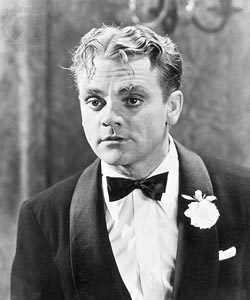

(Both of them)


(Both of them)


Hey look! Curly did it too! I love seeing who others choose. So fun.
The Books: Further Chronicles of Avonlea: 'Only a Common Fellow' (L.M. Montgomery)
Next book on my young adult fiction bookshelves:
Further Chronicles of Avonlea - "Only a Common Fellow" - by L.M. Montgomery
One of Lucy Maud's beautiful little stories about the sacrifices people make sometimes, when you least expect it. I am strangely moved by this story - even though it's written in kind of a sentimental tone - and even if I, personally, think that the main love story is based WAY too much on looks to have much of a chance. However, maybe that is part of Lucy Maud's point (the title kind of hints at that). Mark Foster is not good-looking, or tall, or an appropriate romantic hero. He is "only a common fellow". And yet - he is a hero. By the end of this story he is revealed as a complete hero who has sacrificed his own happiness for Philippa's. You don't even really LIKE Mark Foster - because he is seen through the eyes of the sentimental old aunt who is the narrator, who thinks that her darling niece Philippa shouldn't be marrying him. Her darling niece Philippa had been in love with a man named Owen Blair - a man who was handsome, strong, good-looking, you know - "your basic nightmare". And he apparently had been killed on the fields of France "by the Huns". He never returned. Philippa's heart has broken. And her evil stepmother (a great character) has basically set Philippa up with Mark Foster, a wealthy man, so that she can get her off her hands. It will be a loveless marriage - and Philippa's father is too weak to do anything to stop it. But Isabella (the stepmother) is pleased as punch. Mark Foster is wealthy, there's a mortgage on the farm that Mark said he would take care of for her IF he could marry Philippa, she doesn't want Philippa around, a reminder of her husband's first marriage, and so that's THAT. Philippa has basically been SOLD to Mark Foster. One the morning of the wedding, Philippa lies in her bed crying. Her aunt comes to her. They both weep together. They weep for the memory of Owen Blair. Philippa asks her aunt to talk to her about Owen, almost like a bedtime story. It's a horrible situation - she's going to be married to Mark Foster in 2 hours, and here she is, lying in bed, dreaming about another man. Anyway, at the end of the story - with the house full of wedding guests, the ceremony about to take place, a knock comes on the door. The auntie opens the door - and there stands Owen Blair. Who apparently was NOT killed by Huns ... he had been injured - and he had written Philiippa many letters - telling her he loved her, he was injured, he would be home as soon as he could. Only Philippa never got those letters. Because the evil Isabella had confiscated them. Philippa stands there, in her wedding dress, torn between her duty - she had said she would marry Mark - and her love for Owen. Isabella is busted in her evil-ness. Philippa, who is a good girl, finally chooses - and she goes and stands by Mark. She said she would marry him and she will not go back on her word. Owen is stunned. But then comes Mark Foster's shining moment. He is "only a common fellow", and nobody likes him, but he actually does love Philippa - and he knows he cannot bear to be married to a woman who is in love with someone else. He thought she might come around, once her grief for Owen had subsided ... but now that he is alive ... everything has changed. Mark suddenly steps out and says, "I cannot be married to anyone who loves someone else. I thought you would learn to love me but that was when we beleived Owen was dead. Please. Go to Owen. Be with him." Isabella looks horrified - Mark glances at her and says, "Oh. One last thing." He takes the mortgage papers out of his pocket, and rips them up, right there and then. And walks off, leaving Philippa weeping in Owen's arms. The story ends with this moving paragraph:
I was glad for my dearie's sake and Owen's; but Mark Foster had paid the price of their joy, and I knew it had beggared him of happiness for life.
Here's an excerpt from the beginning part of the story. I like how Isabella is described when you first meet her. You just get who she is, instantly.
Excerpt from Further Chronicles of Avonlea - "Only a Common Fellow" - by L.M. Montgomery
When she had talked it all out she lay down on her pillow again. I got up and went downstairs to light the fire. I felt terrible old and tired. My feet seemed to drag, and the tears kept coming to my eyes, though I tried to keep them away, for well I knew it was a bad open to be weeping on a wedding day.
Before long Isabella Clark came down; bright and pleased-looking enough, she was. I'd never liked Isabella, from the day Philippa's father brought her here; and I liked her even less than ever this morning. She was one of your sly, deep women, always smiling smooth, and scheming underneath it. I'll say it for her, though, she had been good to Phillippa, but it was her doings that my dearie was to marry Mark Foster that day.
"Up betimes, Rachel," she said, smiling andn speaking me fair, as she always did, and hating me in her heart, as I well knew. "That is right, for we'll have plenty to do to-day. A wedding makes a lot of work."
"Not this sort of wedding," I said, sour-like. "I don't call it a wedding when two people get married and sneak off as if they were ashamed of it - as well they might be in this case."
"It was Philippa's own wish that all should be very quiet," said Isabella, as smooth as cream. "You know I'd have given her a big wedding, if she'd wanted it."
"Oh, it's better quiet," I said. "The fewer to see Philippa marry a man like Mark Foster the better."
"Mark Foster is a good man, Rachel."
"No good man would be content to buy a girl as he's bought Philippa," I said, determined to give it in to her. "He's a common fellow, not fit for my dearie to wipe her feet on. It's well that her mother didn't live to see this day; but this day would never have come, if she'd lived."
"I dare say Philippa's mother would have remembered that Mark Foster is very well off, quite as readily as worse people," said Isabella, a little spitefully.
I liked her better when she was spiteful than when she was smooth. I didn't feel so scared of her then.
October 8, 2006
By request
Member the dress I had to be sliced out of with a razor blade during a quick costume change?
Here it is. With the pajamas for the second scene.
1st costume. Maggie and Quentin in the park. (He was a wonderful actor, by the way. Perfectly cast, too - he just was that guy.)
This is the dress Kyle sliced off of me.

Here's another view of the dress, a fuller view. I've just been sitting down so that's why it's wrinkled and bunched up.

And this is what I had to change into in 12 seconds. (Or, I should say: be changed into, since I had so much help, including, in one panicky moment, Kyle's razor blade.)

Saturday snapshots
-- The morning was chilly and grey, with a wind whipping through my open window, waking me up before my alarm. My favorite kind of weather. I start to come alive in the fall. I start to feel most like myself in the fall, my best self. Allison and I talked about that a lot yesterday, because the weather was just so insistently beautiful we couldn't not talk about it.
-- I took a run in the damp windy morning. Prince blasting in my ears.
-- Of course my whole consciousness from the moment I woke up was: "Reds, Reds, Reds, Reds, Reds, Reds ... The most exciting part (for me) is that Allison was coming with me and she had never seen it before. You know the THRILL when someone you love is introduced to something you love - and you just KNOW that they will love that thing too? (And you know how hard it is sometimes to write with good grammar? Yeah, that too). I should write a post sometime about my friendship with Allison and how so much of it is one of us saying to the other: "Okay, you have to see this movie, and I kind of need to BE THERE when you see it." It's one of our favorite things to do with each other. She has introduced me to some wonderful movies (but there are also such funny moments - on both sides - when we're watching the movie and kind of checking in with the other, like, 'Do ya love it? See??? Don't you love it??????' hahahaha It's such a THING we have and it's so funny to me. We now make promises to each other, "Okay, so when we see this movie, I promise I won't be all in your face, making sure you love it." But then of course - we can't keep that promise. We're way too enthusiastic about the things that we love, and also just way too excited to show them to each other.) So this one was a biggie. I knew I was going to have to totally control myself to not be all in her face during the movie, being like: "Isn't this AMAZING??????" So exciting.
-- I headed into the city. It was so chilly that I wore a scarf. Glory!!
-- But by the time I made it down to Greenwich Village - the clouds had moved on - leaving the day sun-warm, glowing, and autumnal. It's our most beautiful day in this fall season so far. All of New York seemed to be out and about, enjoying the weather. People playing chess in the park, people walking their dogs, rolling their babies around ... There was a line down the block at Magnolia Cafe, and the sugary smell of the cupcakes wafted out onto the street. I'm not a cupcake girl, I would never STAND IN LINE for a cupcake (if there were a Wheat Thin Cafe, I might stand in line for THAT) ... but I love that there are people in the world who love cupcakes so much, and who know a good cupcake when they taste one, and so are willing to stand in line for half an hour in order to get one. Beauty!!
-- Before I went to Allison's, I stopped off at the bookstore across from her apartment. I couldn't help myself. It's one of my favorite bookstores in the city - it's tiny, cramped, with books piled every which way - but they have everything. Everything. Somehow they manage to cram an awesome selection (with great sale prices) into this teeny space. And I bought a bunch of books. It's been a couple of months since I indulged in my book-buying problem so I figured I was entitled. I bought:
The Historian by Elizabeth Raskolnikov (or whatever her last name is. I figure it's time to see what all the fuss is about. It looks fantastic. Cold War Europe? Eastern Block? Vampires? Vlad the Impaler? I'm already in.)
Prep by Curtin Stittenfield (I think. Jessa from Book Slut has been raving about it - and I'm not really into new fiction, not really - so I thought: Okay, I'll give this a try. It looks fantastic)
Because they wanted to by Mary Gaitskill (Jon has paid me the ultimate compliment by comparing my writing to hers - she's one of my writing idols - and I still haven't read her latest novel - but I couldn't find her latest in the teeny bookstore - but they did have this collection of short stories I hadn't read before. So I got that. Time to get inspired, ratchet up the writing a bit)
Spoon River Anthology by Edgar Lee Masters. One of my favorites - and somewhere along the line - with all my moving and crap - I lost my copy. This one was on sale so I bought it. In undergraduate acting class, our teacher made us use these haunting terrible poems as monologues. It was hard, man. Hard shite. I remember the last two lines of my "monologue":
"I thirsted so for love!
I hungered so for life!"
I look forward to re-reading this book.
Interviews with Howard Hawks. Never even heard of this book but there it was. Can't WAIT. I love books like this. Can't have enough of them. There was also a book called Interviews with John Ford but I thought: Okay, this is enough for one day. I'll come back for that one.
So naturally, now, I would be carrying around 30 pounds of books as Allison and I went about our day. Typical.
-- Met up with Allison at her apartment. Her beautiful calm apartment with the soft green walls, the brick wall, the white eyelet cover on her bed - and her sleepy cozy dog (who was devastated because he could tell that Allison was ready to go out WITHOUT HIM ... HOW DARE SHE???) and her passive-aggressive cat, sitting on top of the fridge, staring at us with blank aggrieved eyes. Oh, and this is too funny - as we were getting ready to go, the television was on - and it was Animal Planet and there was a show on about hippos. Allison is all about her DVR so she said, "Oh, I'm gonna want to see this later ... now watch what I do ..." She clicked a button - to record the whole show from the beginning - so she could see the hippos later, on her own time. But at the same time that this was going on - I had opened the door to her apartment, we were getting ready to depart - and in that moment, her cat saw his chance and he took it. He dashed out. And raced up the stairs. Like: where ya goin' Charley? You're not gonna get OUT by going UP. So I went after him. Lugging my damn LIBRARY on my back. Up and up and up ... Charley, the little brat, would wait on each landing for me, looking right at me, like: Ya gonna catch me? Ya gonna catch me? And just as I would catch up with him, he would take off up the next flight. Brat! Finally, he was at the damn top of the building - nowhere to go - the door to the roof was right there - so as I approached, he lay himself down on the floor, tryiing to make himself as flat and unobtrusive as possible. Hysterical. Like: I can still see you Charley. You are not now two-dimensional, even though you seem to have a fantasy that you are!! I scooped him up in my arms and started back down. Charley submitted for about 2 flights, he lay in my arms, completely despondent, his paws sticking out into the blank air ... and eventually, he just could not deal with the indignity and the unfairness of his situation. He made a horrible deep-throat growling sound, almost like a moan - you could just hear the anger in that sound. He started squirming, flinging his body about. He hated me SO MUCH. "I know, Charley, I know ... it's just so awful ..." I arrived back at Allison's and deposited him on the floor. He immediately crawled under the table, to ponder the horrible nature of his own situation. And then Allison and I took off - opening the door again - and scurrying out - yes, SCURRYING - so that Charley couldn't escape again. "Close the door, close the door, close the door ..." It was a getaway. But the funniest thing, and why I'm writing about me chasing Charley - is that in the time I was gone - Allison somehow managed to become an expert on hippos. We were walking down her street - and she said, "I'm so excited to see that show on hippos. Did you know that they nurse their babies under water? Sometimes it's hard to find the right position so that the baby can find the teat under water - but that's how they do it. I'm not sure how the baby breathes ... but that's how hippos nurse." I was listening to this, not even questioning the fact that Allison somehow knew a lot about hippos. I was like, "Really? I had no idea ...." Finally I asked, "How do you know all this?" Allison said, "While you were chasing Charley - that's what they said on the show." Which somehow just struck me as SO FUNNY. I was out of the apartment for a total of 25 seconds, and in that time Allison had assimilated all of these random facts about hippos, which, 5 minutes later, she was spouting out of her mouth as though she had known these facts all her life. We were howling!!
-- Oh, and as we were going down her stairs to the street, we met up with a guy who was holding a big clunky old-fashioned movie camera. Like - a kind that needs FILM. Allison is a camera afficianado so she said, "God, what an amazing camera ... what kind is it?" The guy (who, I'm sorry, was just a hot dude - of the BLURPIEST KIND. I love me my blurpy man!!) stopped and said, "It's the kind of camera that eats hundred-dollar bills." We burst out laughing - and then we stood on the stoop of Allison's building - with the cupcake line stretching off into the distance - and talked with him for a while about his camera, and is he doing a documentary, and what kind of film does he uses ... The nicest thing about it was how open he was to just standing there and talking with us. People in New York are always in such a hurry. It was nice to just stand and talk with him, and not feel like he was itching to get away from us. Also, I kind of wanted to kiss him. And that's just the fact. Blurpy men holding old-fashioned movie cameras are okay by me.
-- So Allison and I headed off for the east side - talking about hippopotamuses the whole way.
-- We also just raved about the weather, we just kept talking about it. How we feel this surge of energy in the fall, how it's our favorite time of year ... At some point, a huge bug flew right into my mouth. That was a terrible experience. I mean, it really was. I'm still not really over it.
-- We picked up our tickets at the theatre. We had half an hour til the movie started - and we raced off to find something to eat, and quick. Since we would be descending into this 4 hour extravaganza.
-- We sat at a cute little restaurant - with dark wood walls, and black and white tile ... Our waitress hated us with an intensity that burned like a laser, because we were rushing her. We guzzled down a glass of wine a piece, Allison ordered a pizza - inhaled a slice - and then it was 3:10 and I was jittery ants in my pants girl - "Please! Let's go! Now! I don't want to miss a second!" Allison asked our ANGRY WAITRESS for a box to take the pizza in (ohmygod, she hated us so much, words can't even describe it) - so Allison put all of the slices into a pizza box. The box was obviously a pizza box. It said on it in bright red letters: PIZZA. Like, there was no camouflaging it. Allison was like, "Now ... do you think they won't let me take this into the theatre?" I was howling. "Uhm, yeah, they're not gonna let you take pizza in ..." Allison, joking, "But ... they won't know it's a pizza!" Holding the box up, so you could totally see the huge red letters: P I Z Z A. "How will they know it's a pizza?" As we hurried to the theatre, kind of hysterical, truth be told - Allison wrapped her jacket around the pizza box, and held it under her arm, and said to me, "Does this look really obvious?" I glanced at her, and BURST into laughter. Because it so clearly looked like a pizza box wrapped in a jacket. hahahahahahaha But hey, we breezed right by the ticket dude with no problem. Allison murmuring to me as we walked by them, "See? See?"
-- Village East cinema is gorgeous - I love love love seeing movies there. It's almost like ... the freakin' Alhambra or something. Moorish architecture - tiles, and weird mosaics - and the main theatre is MASSIVE - with a balcony. We sat in the balcony.
-- Oh, I forgot to tell this part. As we gulped down our wine in a frenzy, Allison said, "Okay, so I know nothing about this movie and I don't really know about the Russian revolution either - so tell me about it." So in the 20 minutes we had, I gave her a bullet-point version of the Russian revolution. I wish I had a transcript of what I said. It was ridiculous. "Okay, so the Bolsheviks came to power ... but there was infighting with the provisional government ... and then there was fight between the IWW and the AF of L ... and socialists round the world were looking for validation from the Soviets ... and in 1917 was the revoluton ... and the Bolsheviks tramped through the Winter Palace ... oh, and of course the czar and his family was gunned to death in a basement in Ekaterinburg ... and John Reed wrote this amazing book called 10 Days The Shook the World ..." I think I did a pretty good job, actually, in the limited time we had, with our fuming waitress slamming down our wine glasses in front of us. The Russian Revolution boiled down to a 20 minute summary. All those books I read are actually good for somethin'! Allison knew a lot of this shit already, of course - she is on a tear through biographies of people who lived through this period in history. She's now reading the Lindbergh biography by Scott Berg - and before that she read a massive biography of William Randolph Hearst ... That whole time in history - early 20th century into the 40s - is her passion. I told her she has to read 10 Days the Shook the World - just to see what all the fuss was about, and why journalists still revere John Reed as one of the best practicers of their craft. He is a marvelous writer. Kind of can't be touched. People imitate him to this day. Whatever you think of his views ... it's irrelevant. I'm talking about his skill as a writer. It cannot be denied. Great book. It just lives and breathes ... it's so first-hand.
-- Then we raced to the theatre with our camouflaged pizza box.
-- Found seats in the balcony. The place was packed. And you know how you can sense anticipation in the air? Like ... when you know you're not alone in your passion? I felt it at the NY Historical society a couple weeks ago - before the Alexander Hamilton night. The place was packed - and you just could feel that this was a crowd who was also totally passionate about the topic at hand. I love that feeling. Allison had raced downstairs to get some popcorn - and the movie started at that point. She actually missed this whole drama with this woman who was talking - and LOUDLY - through the first minute and a half of the movie. Literally: BLABBING HER HEAD OFF. At first people were like, "Sh". I was also a "Sh"er. But she ignored the 'sh"ing and kept BLABBING. Finally, people were shouting (from below, and from in the balcony): "DAMMIT. SHUT UP." Finally, she shut the fuck up. Moron. Clueless freakin' moron. But I loved it, in a way, because I felt like: Okay. I can work with this audience. Me and the rest of this audience? We're like THIS. We are in SYNC. Everyone was so INTO the experience ... and this woman was ruining it for all of us. So we joined forces and shamed her into shutting her big stupid mouth. Yay!!
-- Then Allison came back and we both settled in to just LIVING this movie.
-- I had two levels of consciousness going on ... 1. Experiencing the movie, on the big screen. Okay, no 3 levels. There was the "wow, look at it on the big-screen" level. 2. Enjoying the movie as though it was the first time. I've seen it so many times that I know vast swathes of it by heart, I know every scene, and yet - even though there's this familiarity with the whole thing, it's still fresh and new and painful and GORGEOUS ... no matter how many times I've seen it. And lastly: 3. Being aware of Allison next to me, and trying to see it thru her eyes. Loving being there with her, LOVING IT, loving experiencing the film with her. Occasionally she would whisper to me. A couple of times we reached out and grabbed hands. There's the scene of the fight between Beatty and Keaton - in the Greenwich Village apartment - Mitchell referenced it specifically in one of my posts about Reds, and how amazing the scene is. Beatty and Keaton, were, of course, a couple at the time of filming - and the scene, an argument that escalates - in a way that feels completley chaotic and real - has this feeling of such reality in it - you can feel that it's John Reed/Louise Byrant/Warren Beatty/Diane Keaton - there's such REAL emotion between the two of them - you don't know what is the character, what is the actor - all you know is, it's a fight that takes your breath away. She is unbeLIEVABLE in it - you feel like she doesn't know what is going to come out of her mouth next - in the way that you do when you are in a real fight. But she's UPSET, and he's UPSET ... It's real. That's all. It's REAL. One of my favorite scenes in the film - actually, it's one of my favorite scenes in ANY film. When the scene finally ended - as they came down into the denouement - the fight subsiding, the hurt and anger dissolving - and the two of them kiss in the dark room, their heads a silhouette against the light window - they have become one - we don't see two profiles, we just see the two of their heads together, a black cut-out ... Gorgeous. Allison whispered, "That's one of the most amazing scenes I have ever seen." I reached out and grabbed her hand. It was just so exciting for me to be there as she experienced this.
-- I had forgotten how great Paul Sorvino was in this film. Isn't he terrific? I loved his performance. Truly - there's the fight that he and Beatty have across the big room of delegates at the Socialist Party meeting - and it's real - neither of them are letting the other one finish a sentence - I barely know what they're fighting about - ha - I mean, I do kind of - but what's great about the movie is that even when you don't know what's really going on (and that's part of the greatness of the film, I think - it doesn't try to spell everything out - it's ground-level, it's happening right in front of us - the way events happen in life. There's no retrospect in the film - it's filmed like John Reed's book. We, in the beginning of the 21st century, know how this all turned out. We know that these people were fighting a losing battle. But they, in the moment, don't know that - and they play it that way. It's breathtaking.
-- Also I had forgotten how wonderful Gene Hackman is in his 2 scenes. He chews up the scenery, spits it out, and he's only been on screen for 5 minutes - but he looms large.
-- Jack Nicholson does his best work in his career in this film. His subtlest work, his most grown-up work. There's the great scene when Louise Bryant comes to see Eugene O'Neill in his Greenwich Village apartment - long after their affair has ended. She has been to Russia and has now come back. All a-flame with intensity about what she saw. O'Neill is completely unimpressed. And Nicholson has this dead-on monologue, where he nails her to the wall, basically. He calls her out on her hypocrisy: "You and Jack certainly have middle-class aspirations for a couple of revolutionaries ..." And his great line - I can't remember it word for word - but something like, "You know, it makes me skin crawl when I see an intellectual's eyes start to gleam when they talk about Russia." He is indisputably NOT swept away. Louise Bryant requires others to be swept away ... it seems essential to her. It's all very PERSONAL for her and Eugene is having none of it. He is fantastic in this scene. I love the line, "It's really sad to see that you two have gotten so serious." She totally gets the wind knocked out of her by him (for the second time - the first time is in that phenomenal scene in Provincetown when he tells her what it would be like if she were with HIM and not Jack Reed). Nicholson is wonderful. Just wonderful.
-- Beatty is fantastic. One of the things I really noticed this time around seeing it - maybe because it was on the big-screen - so his work loomed much larger - was how he plays his gradual illness. He is strapping and gorgeous and healthy at the beginning of the film. And of course they film out of sequence - so his gradual sickening, the gradual worsening of his health - had to be handled by Beatty out of sequence. And it's not like: Oh, one moment he's healthy, the next he's sick. No. Jack Reed gets sicker and sicker, progressively, through the film. You can feel him getting worse. Watch Beatty move through the second half of the film. Watch how his body language has changed. And it's subtle, he's not limping around like a hunchback - you just can tell that he is managing a low level of pain at all times. His back hurts, his stomach aches, it hurts to piss ... he's not well. And it keeps getting worse, because he is now in Russia, where there's no fresh produce, and scurvy intensifies, his high blood pressure gets higher ... by the end of the film, there's always a soft gleam of sweat over his face ... and also, on the big screen I noticed that in the last part of the film - his lips are always chapped to the degree that they are cracking and bleeding. It's subtle, again - it's just part of the character - but Beatty was so good at showing this man descending into illness. It happens AS he is doing other things ... which is how sickness happens in real life, usually. He did a marvelous job. Marvelous.
-- Jerzy Kosinski as Zinoviev was great.
-- Oh, at one point - it's back in America - and John Reed gets caught up in the infighting of the political parties - he becomes an activist. Again, it's subtle - not spelled out - but you can see him change. He gets colder. The ends justify the means. The enthusiastic idealistic writer at the beginning of the film is gone forever. He's now a revolutionary. His humor is gone. And it's all in how Beatty plays it. The script helps him out ... but it's all in his acting. There was one scene that happened - oh yeah - there's a meeting at Louise and Jack's house - and Eddie shows up, and he missed a meeting with someone from an opposing political party. He missed the meeting because his wife was hemorrhaging and he had to watch his kids while she went to the hospital. That actor playing Eddie ... He's got one feckin' scene and my God. (Looked him up. Jack Kehoe.) He's wonderful. But anyway, Beatty is enraged that the meeting was missed - "Why didn't you call one of us to replace you?" Eddie has no answer for it, he can't even look at Jack. Beatty is relentless. He won't let up until Eddie has been completely humiliated. Or "pacified" in the word of totalitarian dictatoriships. Pacified. Mm-hmm. "Pacification" means SHUTTING EVERYONE UP. Keaton watches this whole thing, standing back, and her face says it all. She pulls Beatty into the kitchen and says something like, "Don't you think you were a little hard on Eddie?" Beatty cannot even hear this. He says immediately, "When we get what we want, Eddie will be thankful." Or something like that. Walks away from her. Allison whispered, "He's lost his humanity." Yes. That is exactly what that scene is about. And that's part of Beatty's larger point about this revolution, and about revolutions in general.
-- And then later in the film - when John Reed is ready to leave Russia (he had traveled there to get recognition for the Communist Labor Party of America) - and Zinoviev (cutting up slices of lemon in his huge drafty office in an empty room of the Winter Palace - you can feel how cold it is in that palace, you can just feel how nothing works) won't let him leave. Zinoviev tells him he is needed in Russia in the propaganda department. The revolution has called him. He cannot turn back now. "You can always go back to your wife. But you can never come back to this moment." Reed is panicked - Beatty is great in this scene. You can already tell that he is not well. He needs to go home and recuperate his health. Reed says, "But ... I need to go back to America. I have urgent obligations there." Zinoviev stands up. "What obligations?" And suddenly, the whole air in the room changes. Everything gets very still and very icy. Normally, in a human world, when you say "I have urgent obligations" ... the response you get is, "Of course. Go do what you need to do and then come back. Of course." But this is a revolutionary world. Personal life has been abolished. There is nothing but the Party. (Again, Beatty does this without bashing you over the head with it. It just IS. This is what a revolution is like. Reed didn't really get that. He was an intellectual, an observer, a writer ... but once he got on the inside ... he found that there was no way back out.) So when Zinoviev asks him, quietly (and it's in this intractable way ... you just know that whatever Reed says will not satisfy this man), "What obligations?" Reed is struck dumb for a second. He just stands there. And finally he says, simply, such a human moment, "I have a family. I need to see my wife." But it's a new world now. And Reed helped to bring that world about. And there will be no going back. You are now married to politics, to revolution. It's a fantastic scene.
-- What I saw in that moment - as opposed to the moment when he berated poor Eddie for taking care of his family instead of going to meet up with a political party member - was the realization, in John Reed, that his personal life would always be important to him. Zinoviev, the others, they inhabit an abstract world of power and struggle. No room for the human heart. It is all revolutionary thought and action. Reed had been living that way for a while back in America - the struggle took over his heart - nothing mattered but winning - PEOPLE became OBJECTS ... But there, when confronted himself with the reality of that attitude, he is struck dumb. How can this man not understand that he had to go see his wife? He had been away from her for months. And while he was committed to the Russian revolution and to socialism ... he was an American. This is the moment for John Reed. The moment of no return. You see in him that ... all along ... all along in this fight ... he was identifying with the Russian people, swept away in the excitement of what it would mean for the workers of the world, etc. etc. ... but in that moment, all he wants to do is go home to America. Eugene O'Neill was right. Louise and Jack had "middle-class aspirations" (home, family, togetherness, dinners together, making love, putting up a Christmas tree, walking their dog) for a couple of revolutionaries. And Zinoviev here, in that cold icy room with the patterned wallpaper and treacherously high ceilings, is telling him, in no uncertain terms, that those days are done for Jack Reed. No more. You will stay here. With us. We will not LET you leave. (This, naturally, is when Reed tries to escape into Finland - and of course is imprisoned for months on end). But also, what is great about the scene between Zinoviev and Reed is that you can feel Stalin in that room. You can feel the environment being created that would allow Stalin to take power. It's early in the revolution - it's early on - but the stage is already set for Stalin. That's why that scene is so terrifying. Zinoviev, of course, was executed by Stalin in 1936. This is where the revolution was going. The coldness of that scene, the lack of pity for John Reed, the knowing lack of compassion for someone's personal obligations ... all of that was just setting the stage for Stalin to take over. Terrifying. Great scene. Well done, Warren.
-- And that scene by the train ... where she is there ... waiting for John Reed to get off ... Her face. Her face as she walks down that train platform. She has a kerchief around her head. Allison mentioned to me later, "Another actress might have totally over-acted that scene ... walking up and down that platform ... You can just see how in another actress' hands it could have been so melodramatic and over the top ..." But no. Keaton doesn't go down that path. She is doing exactly what you would do. She is doing what I saw people do on September 11. Holding up signs of their loved ones and racing from hospital to hospital, looking for their lost soul. There was a focus in those people's eyes, a fire, and also - a dreadful dreadful KNOWING that they would never find their beloved. And yet ... and yet ... you can't give up! You can't give up! Keep going. Keep going. Your heart ached when you saw those people. And watching Keaton move down that crowded trian platform, looking at everyone's face, looking for her beloved, scanning the train windows, peering off down the platform ... There are moments when a terror comes into those eyes, like a horror, she is already feeling the loss, and it is horrible ... but then the terror leaves because ... in the moment, there is too much to do. She must keep going, keep looking. She will overturn every blanket, she will peer into every face, because the next one might be him, the next one might be him ... I was watching her and I could feel my throat clog up. Just from the look in her eyes.
-- It was a truly memorable experience. Watching that movie on a Saturday afternoon, in a packed movie theatre, with my dear friend Allison. I'll never forget it.
-- We emerged, emotionally exhausted, emotionally exhilarated, into the piercing blue fall dusk.
-- A perfect day. One for the books.
October 7, 2006
Being okay with being a cliche
I have the hots for Dane Cook. This is so cliched of me - and I'm okay with that - because usually I am so far OFF from the cliche that I feel like a freak from the outer limits of the galaxy Zorax. Not only do I have the hots for Dane Cook (like: I can barely DEAL WITH HIM) - but I think he is absolutely hysterical. I want to EAT HIM UP. I love his looks - maybe it's the whole Boston sports fan guy thing - which is, basically, my whole family - there's something very familiar and comforting about that type for me - I GET it, it's humor I recognize and can click right into - and also - that he's such a goofball - and also (hi, I'm 12. "and also ... and also ...") he makes me LAUGH, man. I think his success is WELL deserved and I'm rooting for him. People seem to be all polarized about Dane Cook which I think is so funny - or interesting or ... baffling as well. People seem MAD about him. Weird. I think it's because of WHO he is, although that may just me reading stuff into it. Would they snark so much if he were a one-legged Inuit? Would they seem so RESENTFUL of him if he were half-Thai half-Samoan and half-albino? (Uhm, 3 halfs, Sheila?) Like - in a lot of the press I have read about him, I hear the resentful whining of people who were treated badly in high school by guys who LOOKED LIKE Dane Cook. "Guys like this have everything so easy ... " Like - they're still mad at the gorgeous high school quarterback from 20 years ago. And, uhm, that's not Dane Cook's fault. (Ha. I'm getting all defensive about Dane Cook. HAHAHAHA) It's not like success has come easily to him. It's not like this has been GIVEN to him. He has made this happen HIMSELF. And NOW, of course, he's getting a ton of help - but his original success? Was homegrown. HE did that. His ambition knows no bounds. He is type A in that regard.
But anyway. Really what I want to say is is that I think Dane Cook is also just freakin' SMOKIN'. I was telling David about it (we were having this huge hilarious conversation about Dane Cook and how funny we think he is) and David interrupted and said, "Is he on your bench?"
"Oh God. Totally on my bench."
Cliche. I'm fine with that.
Dino and Sammy
So Frank is trying to start a bit - trying to get everyone together - which is not easy, since Dino and Sammy are bopping around in the background, just doing lunatic shit on their own - so Frank is at the mike, Johnny Carson is beside him - and Frank is saying, "Sammy, come here a second ...."
Then you hear the audience start to howl, something is going on off camera, and then suddenly - Dino and Sammy come into the frame, and Dino is carrying Sammy in his arms. Dino goes right up to the mike and declares loudly, "I'D LIKE TO THANK THE NAACP FOR THIS WONDERFUL TROPHY ..."

Please note Sammy's drink and cigarette. Also note Sammy's expression. hahahahaha
October 6, 2006
3:15 tomorrow
On the big screen.

Cannot wait. Seriously, I might not sleep tonight.
Michael said: "So when you gonna write about my accordion?"
I thought he might have had an issue with me revealing personal things about him on the web, but apparently I was wrong. He, too, yearns to be on display. He's an exhibitionist, just like me.
The accordion was such a thing that seemed too personal to write about. I wrote about it in my journals, at LENGTH, but still - it's hard to describe the whole thing, and how weird it was, and also how cool and refreshing and FUN.
The weirdest thing about it (and please, welcome to my life, the life that IS a literary conceit) is that at the time I knew Michael, at the time I was dating Michael, aNOTHER guy I knew, a guy I had been involved with and would be involved with again (ahem - window-boy) ALSO had an accordion. Please. Do not ask me why. It was just one of those strange coincidences in life, and I try not to ask too much questions about such coincidences. I asked Window-Boy about his accordion, when I first saw it. "Uhm ... why?" His response, a grumpy: "I kind of don't want to talk about it." Well, all righty then, I never mentioned it again. Although I did play his accordion whenever I got the chance. I had no idea how to play an accordion, by the way. I had never had any lessons, I had no idea what the hell I was doing - I knew how to read music, but of course Window-Boy had no sheet music on hand. I just learned by trial and error. His poor roommate. Suffering through the accordion sounds emanating from Window-Boy's room at 1 in the afternoon on his day off from Steppenwolf. But anyway, Window-Boy's accordion was second-hand - I think maybe he inherited it from an older brother? Seriously, I never got any answers about the damn thing. I just liked messing around with it, even though it was completely beat-up and didn't even make a sound on occasion.
So - then - Michael comes into my life - and we're in Ithaca - and everything is magical and in-the-moment, no pressure, nothing was too MUCH - but I didn't really know him at all. I knew nothing about him. Just that I liked him, and that we were very compatible, weirdly, in an everyday way. We liked hanging out, reading, eating, talking, walking around. But still - when we arrived in Ithaca, he was a complete unknown to me. Just another guy in the show. So the first time he "had me over" to the apartment where he was being put up - and I saw this gleaming accordion in his room - I thought to myself: "You have GOT to be kidding me." What are the freakin' odds.
I had learned my lesson with Window-Boy. I didn't ask, "Uhm ... why?" I assumed there was a very good reason. I took it very coolly, and just accepted its presence. But still. Totally weird.
Having played around on Window-Boy's - I knew a little bit more what I was doing when I messed around with Michael's. Also, Michael's was new. Maybe one person had owned it before him - it was fresh, and gleaming - and way bigger than the other one. It was almost too heavy for me to pick up. But it had this nice strong strap, and once it was on me - it was like it weighed nothing at all. If any of you have ever played an accordion, you will know of what I speak. You don't get any back strain - even though sometimes the thing weighs 100 pounds - just because of how it rests on you, and how the weight is distributed.
Michael was a bit - shy about his accordion? Is that the word? Now I'm afraid that Michael the pestering brat is going to swoop in and tell me how I'm WRONG about this - but my impression was that he was kind of proud of the damn thing. But didn't make a big deal out of it. Thank God, because that would have been totally obnoxious. It's kind of a cool thing to randomly own an accordion (and to take it with you when you go out of town in a show) - but it's NOT a cool thing to be all braggy about it. Because then you'd just be a geek of the highest order. But I did sense some shy, very shy, pride about it - and he also liked seeing me play it. He'd make me play the damn thing.
I remember on one of our days off we somehow found ourselves at one of the parks that surround Ithaca - there seemed to have been 1 or 2 waterfalls per park - Ithaca is a town of waterfalls, which makes sense because of that enormous cliff Cornell sits on top of ... so I have no idea how we got to this park, maybe we borrowed Laurie's car or Pat's car - because I know we were alone - and we were gonna spend the whole day at the park. We brought a blanket and our books (me: Howard's End, he Peter Manso's 90-pound Brando biography). We also brought the accordion. It was a weekday in autumn - so nobody was there. The waterfall shimmered and crashed before our eyes, we lay on our backs in the baking fall sun, with occasional crisp breezes coming, and just did NOTHING. The whole day. Reading. Not speaking for hours. Later, I couldn't resist - the park was so tranquil and we were the only ones there - I took the big accordion out of the car and played it. Michael lay on his back, face to the sun, sometimes laughing out loud when he looked at me. It was funny - or weird - but somehow, I just knew how to play that thing. Maybe because it was newer, not as clunky as the other one. If I pressed a key, no matter how gently, this beautiful note came out. It was so responsive. I remembered my love of playing the piano - a GOOD piano, not a battered rehearsal piano. The accordion was my partner, rather than my enemy. (See, I told you this was ridiculous, and difficult to write about). But I had a relationship with that damn accordion, and I was, in my own way, shyly proud of the sounds I could make with it. I could even harmonize. I started getting really good. I didn't have to just play chopsticks (which sounds utterly retarded on an accordion. Believe me. I know.). I could play songs. Also, pulling it out, and pushing it back in - that whole part of the accordion process - I was hesitant about that at first, because I'm such a piano girl. You don't freakin' pull and push on a piano. But once you get into it, once you accept what the accordion IS and how it ACTS and how it RESPONDS ... there truly is nothing so fun on the face of the earth. I went into a zone with that accordion. This is so not like me. I'm an intellectual, I say it with no hesitation. My pleasure activities usually involve reading, writing, or some kind of mental challenge. Organizing all of my index cards about Kazakhstan, or whatever. To find pleasure in something so simply physical, and to accept the moment for what it is (as in: I won't be good at this at first, let's just play around and see what happens, no expectations, don't try to be perfect, just MESS AROUND) ... is rare for me. I loved it.
I was in a big Prince phase at this point in my life - I had numerous running mixes made up (on cassette tapes, of course!) all with different Prince songs in different orders (I get tired of workout tapes in a matter of days - which is why iTunes has been such an unbelievable blessing. Now I can just press "shuffle" or order the songs alphabetically as opposed to the artist's name, etc. Wonderful!) But anyway, I was ALL. ABOUT. PRINCE.
So during our long drowsy afternoons, before we had to get to the theatre, when we were just hanging out at his low-rent ridiculous apartment which never seemed to have electricity - I would teach myself Prince songs on that accordion. Maybe there was something in the sensual grinding nature of some of Prince's songs that made them feel so RIGHT on the accordion. Pushing in on that thing, pulling it back out - you start to feel sexy. Believe it or not. You do. Yes, it is an ACCORDION - so maybe it is only in your mind's eye that you are a goddess of the erotic arts (uhm, it is definitely only in your mind's eye, Sheila) - but the mind's eye is where it all happens anyway.
I ended up getting very good at "Cream" (the Prince song) - which I taught myself on the accordion. Anyone know it? I still listen to that song on an average of once a day - and have done so since the very first time I ever heard it. Actually, I had been stumbling my way horrifically through Raspberry Beret on the accordion (I feel sorry for Michael's neighbors. Michael actually got mad at me during that one. I finished my horrible number, and Michael said, "Well. THAT was awful." Thanks, brat!! Thanks for letting me play with your accordion and then CRITICIZING me for my awfulness. No, but it was actually very amusing because it WAS awful and it just made me more determined. I would get a Prince song out of that thing if it killed me. Maybe Michael and I could take our act on the road!) So after the "Raspberry Beret" debacle, Michael said, "What about 'Cream'?"
"Oooh. Yes. Let's do 'Cream'."
So we sang the damn song together (I told you this was embarrassing, but this is who we were together - we were goofballs on a mission - to perform 'Cream' successfully on his accordion) - and I worked it out on my own. There were a couple of stumbles - a couple of horrible notes - but 'Cream' is not as hard a song as 'Raspberry Beret'. 'Cream' has, maybe, 10 notes in it. It's easy to get there - once you get the structure down. (Again, his neighbors must have hated us with the passion of a thousand suns.)
Window-Boy's accordion was too recalcitrant, too cranky, if you will. I had to fight to get into a groove with it. But with Michael's it was easy as pie. I could actually play it. I started feeling ready for Carnegie Hall after a couple of hours. It made me confident. I enjoyed it. I didn't have to sit there and try to make a sound come out - I didn't have to yank on the thing to open it up - I actually felt like a professional. (I realize I am a moron. I know that as I write this whole thing, but I can't help it. This is what happened.)
So in that leaf-shadowed room (leaf-shadowed because there was NO ELECTRICITY FOR THE FIFTH DAY STRAIGHT), with the river rushing by beneath, with the dampness seeping out of the walls, with the light falling at around 3 or 4 pm, I mastered 'Cream'. I got into what real musicians call "the zone". You might not think there is a "zone" to get into with an accordion. But I assure you there is.
Michael was laughing out loud. I had to stand up at one point, because I was just TOO GOOD AT MY CRAFT, I COULD NO LONGER SIT. And I was singing, too. Singing as loud as I could.
"This is it
Its time for you to go to the wire
You will hit
Cause you got the burnin desire
Its your time .... TIME
You got the horn so why dont you blow it
You are fine ... FINE
You're filthy cute and baby you know it ..."
The notes coming smooth and sure, the huge thing weightless in my hands, responsive, sure, and above all: friendly. Can an accordion be friendly?
I submit that it can.
Some accordions are hostile. Especially if they've been passed around, from person to person, people who don't take care of it. If you've ever played a really good piano - then you know how much it hurts to sit down at a piano that has been neglected. You can tell immediately.
Michael's accordion was new. And friendly. And it seemed to know what to do. Even though I was a novice. It worked WITH me. It was as though the accordion was saying to me: Yes. I am an accordion, and you are MORE than qualfied to play me. So RUN WITH IT, MISSY! It was like being a beginning actor doing a scene with John Gielgud or something. Gielgud would make you be brilliant just by standing there and saying the lines with him. That's what Michael's accordion was like.
I missed it when we came back to Chicago. He took his accordion with him, DAMN HIM. I missed him, of course - although I still saw him on occasion. But I never got to see the accordion again, at least not on the casual everyday basis of Ithaca.
Now here is the weirdest thing. I've had a couple of dreams about Michael's accordion since he left a couple weeks ago. There it is - in my subconscious - ready, larger than life, calling to me: "Come! Play me! You know you wanna!!" I didn't dream about MICHAEL. I dreamt about his ACCORDION.
Sorry, dude. Don't take it personal. But that was a damn fine instrument. One of the nicest I have known.
"Dean's hands were the size of ham hocks"

Again, an anecdote from Shirley Maclaine [these quotes are from one of her 123 autobiographies, most of which I have read. What can I say. I'm a whore for a good theatrical actor anecdote, and her books are FULL of 'em. They're full of spirit guides from the planet Vega and Native american wisdom, too - but that's okay. Shirley's Shirley. I'm in it for the anecdotes. Here's more:]
Dean and Jerry were my primary education in spontaneous, Katzenjammer antics to let off steam, avoid ulcers, and touch the muse of comic insanity bubbling in each of us.I observed the havoc Dean caused, however, by sometimes being funnier than his partner. Dean would come to work throwing away comedy lines that you could barely hear. When someone would say, "Huh?" he'd repeat it. A laugh would come, which he would top, then another laugh, then he'd top that until he was on a roll. Soon the entire set was engulfed in the more sophisticated, quirky, literal humor of Dean's words, which revealed the peculiar slant he had on any given situation. His humor was not as physical as Jerry's, although it could be - especially with his hands. Dean's hands were the size of ham hocks, with fingers that curled inward. He had broken several fingers boxing and they were strong from working in the steel mills. His hands encompassed so much space that it was easy for him to palm cards when he was a blackjack dealer. He could deal from the middle, the bottom, or wherever, and never be detected. He entertained me between setups with sleight-of-hand card tricks. In between the tricks he'd lob in his funny lines as though he was testing new material. People would crowd closer so as not to miss any of his subtleties.
Dino's fathering technique
Again, Shirley Maclaine [these quotes are from one of her 25 autobiographies. The one called My Lucky Stars]:
My initial impression of [Dean Martin] was of a man who basically wanted to be left alone. He was nice to everyone; he just didn't want "nice" to go on too long. Often there would be parties at his home on Mountain Drive, where he and Jeanne lived with their seven children. Three of the kids were Jeanne's and four were Betty's - Dean's first wife. Dean didn't particularly want to be involved in the upbringing of his children. He told me he felt inadequate, and his own emotional blocks prevented communication anyway. Whenever Jeanne asked him to have a stern talk with one of the children, Dean would take the child into his den and say, "I have nothing to say, but please tell your mother I bawled you out, okay?" The child would comply and sometime later would get a new car.Dean insisted on being home every night for dinner with his children. It was a ritual that gave him the Old Country feeling that he was the head of the household and connected to his children's future.
And then this:
Even when Jeanne had dinner parties attended by the most interesting people in town, Dean would usually just go to his room and watch television. More than once he retired to his den and called the cops, saying there was a party at his house and it was getting too noisy.
hahahaha I mean, it's totally annoying, and if I were Jeanne I would be like: Dude, you're my husband, I love you, but WHAT IS YOUR PROBLEM?? However, it is still rather funny.
The "menefreghista"
Shirley Maclaine on Dean Martin [the second movie she did was with them - Artists and Models - Martin and Lewis were in the process of breaking up at that point, so there was much tension on the set, etc. Shirley befriended both of these guys in different ways - but she and Dean remained dear and close friends until the day he died.]
Getting to know Dean was another story [than getting to know Jerry]. The words that come to mind are those that describe a person cut off from feeling - purposefully cut off. Perhaps that was why he seemed so devil-may-care and so coolly casual. The Italians, I later learned, had a more apt word for it, menefreghista, which means "one who does not give a fuck." Dean Martin was basically a menefreghista.He was so witty because of the way he saw the world. If he did a routine about the President announcing a nuclear attack, the focus of his humor would be the tie the President wore or how he, Dean, couldn't open his refrigerator door as he was listening to such a momentous speech. I remember once he called me about something, and the entire conversation was about the telephone wire he couldn't locate under his sofa. I was in tears of laughter.
Happy place
I know that he, in reality, hated ballerinas. That just goes to show you how little a person's actual views on things has to do with the art that he makes.
I can't get enough of him. There's this beautiful mixture of practicality and fantasy in these paintings. Ballet dancers work HARD, man, and most of what they do to maintain their art is tedious (ya ever take a ballet class? Imagine doing that twice a damn day for 18 years, mkay?) - but then what they end up creating (if it's good) is something that looks so easy, effortless, and transportive ...
It's like a dream, these paintings. I have a Degas sketch on the wall in my bathroom - it's a drawing, an outline really, of a naked woman dancing, her back arched. But it's all one line - he never takes his pencil up off the page.
Beautiful.

Creepy crawly
I got this from A High and Hidden Place.
1. What is your favorite work of horror fiction?
I have to say It although I've mentioned before that - putting a "genre" on that amazing book is kind of unfairly limiting. It's a great novel PERIOD. But it sure as hell works as horror too. SHIVERS. I had to read sections of that book while covering my eyes. It's not a movie. It's a book, mkay? But the mind-pictures he paints were so vivid that I had to cover my eyes.
2. What is your favorite work of science fiction/fantasy?
I'm not a big fan of that genre - but the exception to that is all of L'Engle's stuff. Especially Wrinkle in Time. Which is just one of my favorite books ever. But the others in her "Time" series are just as good. I am particularly in love with Many Waters. Marvelous book.
3. Who is your favorite monster?
Uhm. No contest.
4. What horror movie gives you the most chills?
Does Rosemary's Baby count as horror? I find that movie barely watchable, due to the scariness of it. The atmosphere of dread and terror is suffocating.
And I would call Night of the Hunter one of the most frightening movies I've ever seen, although it kind of transcends genre. But you haven't felt fear until you've watched that creepy night-time duet between Lillian Gish and Robert Mitchum. I am all over goosebumps right now just thinking about it. (I wrote about that scene here)
5. Freddy versus Jason?
I never liked Freddy. He was too sexual - in a really really ikky way, too "clever" with the wordplay, too - his dumb puns, his rhyming couplets, whatever, I didn't like Freddy. Jason was the terrifying one, for me.
6. What is your favorite Halloween treat?
Uhm. No contest.
7. Ghosts or goblins?
I prefer ghosts, thanks.
8. What is your scariest encounter with the paranormal?
Scary? I don't think I've had one.
I've had crazy ESP moments. I've had dreams come true many many times. Psychedelic weird dreams that suddenly came true. There's a blogger on my blog-roll (whom I have met, so I know what he looks like) - but anyway, I dreamt about him one night. The next day I wrote to him and said, "Hey, I dreamt last night that you were flying the Spruce Goose down the Hudson and crowds of people gathered on the cliffs to watch." He emailed me back and said, "Uhm, don't quite know how to say this but I had a dream last night that I was flying the Spruce Goose while crowds of people watched." This is not a rare occurrence for me - it happens quite a bit.
I YEARNED for an encounter with the paranormal here, but was disappointed.
A couple other things come to mind: I was in high school and I think lightning hit our house - we were all asleep, huge thunderstorm happening - and suddenly you could smell the fizzing horrific smell of burning electricity - I have never felt fear so immediate - so ... primal - and then my dad's voice barking up the stairs: "Girls. Come downstairs right now." And I swear to God - I swear on all that is holy - I leapt out of bed and literally - LITERALLY - my feet did not touch the floor as I fled my room. I will go to my grave believing that the fear made me literally fly out of my room, so that I could move as quickly as possible. I flew. Don't argue.
9. Do you believe in ghosts?
I think I do, yeah. I've felt presences before.
10. Favorite Halloween costume?
Take your pick. Sadly, there is no record of my Squeaky Fromme costume - when I spent Halloween in San Francisco. It was a good one. My boyfriend was Atlas. Halloween is like a HOLIDAY in San Francisco. But then I left my sign with Charlie Manson's face on it in the chimney ... Scary to think of some unknowing stranger finding it.
Pantera fans
You kind of don't want to miss this. I laughed out loud multiple times watching that thing.
Happy birthday "Jane Eyre"
So today, in 1847, Jane Eyre was published. Certainly it's one of my favorite novels - and ... what I love about it ... is how WEIRD it is. How ... CREEPY. There's kind of no equivalent. People who lump Charlotte Bronte in with Jane Austen frankly cannot have read her very closely. Or cannot have read either author very closely. What - cause they're both women they're lumped together? Lazy literary analysis there. Makes me mad, actually. Male authors don't have to put up with that crap. Just because Faulker and, oh, Cervantes were men - their books are seen as similar? Fitzgerald and Faulkner? Hawthorne and Joyce? Bah. Lazy. Would Jane Austen (and I love her too) - but anyway - would Jane Austen ever have her lead character, uhm, cross-dress??? As a gypsy???? To TRICK his little employee to divulge her thoughts? Would there be an insane woman locked in an attic? Would there be a moment when one character psychically calls to the other - across a great distance - and the other character hears it? (Interesting - I read a couple of reviews of the most recent Pride and Prejudice film with Keira Knightley - and a couple of the reviewers mentioned that the filmmaker was trying to 'Bronte up' Jane Austen. The gloomy moors, the feeling of wild nature on the outskirts, tramping along in the cold damp air, etc. NONE of this is part of the Jane Austen mood - ever. Hers is strictly an INDOOR type of literature - so there's a widespread conflation of the two authors which is not appropriate.) Jane Eyre is gloomy, gothic, sexy, passionate, violent, and - in the end - unbelievably romantic. But the romance in this book is barely civilized. Not quite as uncivilized as in Wuthering Heights - but pretty much outside the scope of respectable society. Which is one of the reasons why I love it so. I am barely civilized myself.
Anyhoo, in honor of the publication date of that book - I thought I'd post something that I've posted before - but I just adore it, so here it is again.
This is a letter Charlotte wrote to a good friend. The friend had written to her, asking her for a recommended reading list. Here is Charlotte's reply. For some reason, this letter completely delights me. I have it copied out and up on my bulletin board at home. I just love it:
"You ask me to recommend you some books for your perusal. I will do so in as few words as I can. If you like poetry, let it be first-rate; Milton, Shakespeare, Thomson, Goldsmith, Pope (if you will, though I don't admire him), Scott, Byron, Campbell, Wordsworth, and Southey. Now don't be startled at the names of Shakespeare and Byron. Both these were great men, and their works are like themselves. You will know how to choose the good, and to avoid the evil; the finest passages are always the purest, the bad are invariably revolting; you will never wish to read them over twice. Omit the comedies of Shakespeare and the Don Juan, perhaps the Cain, of Byron, though the latter is a magnificent poem, and read the rest fearlessly; that must indeed be a depraved mind which can gather evil from Henry VIII, from Richard III, from Macbeth, and Hamlet, and Julius Caesar. Scott's sweet, wild, romantic poetry can do you no harm. Nor can Wordsworth's, nor Campbell's, nor Southey's -- the greatest part at least of his; some is certainly objectionable. For history, read Hume, Rollin, and the Universal History, if you can; I never did. For fiction, read Scott alone; all novels after his are worthless. For biography, read Johnson's Lives of the Poets, Boswell's Life of Johnson, Southey's Life of Nelson, Lockhart's Life of Burns, Moore's Life of Sheridan, Moore's Life of Byron, Wolfe's Remains. For natural history, read Bewick and Audobon, and Goldsmith, and White's History of Selborne. For divinity, your brother will advise you there. I can only say, adhere to standard authors, and avoid novelty."
Absolutely marvelous.
Happy birthday, Jane!
The Books: Further Chronicles of Avonlea: 'The Conscience Case of David Bell' (L.M. Montgomery)
Next book on my young adult fiction bookshelves:
Further Chronicles of Avonlea - "The Conscience Case of David Bell" - by L.M. Montgomery
Melissa: we're ALMOST AT EMILY! ALMOST!!! 2 more stories in this collection and then ... EMILY! hahahaha
Okay, so let me see if I can remember the who what where why when of this story. It appears that a new preacher has come to town - actually, I guess you might call him an itinerant preacher - an evangelist (Lucy Maud's people are, in general, Presbyterians - there are a lot of jokes about Methodists - the battle between the Prescyterians and the Methodists - so it seems that these are the two main religions of the people of Prince Edward Island. There are, of course, some Catholics - but those people are just filthy drunken no-good Irish - so nobody takes them seriously) But in this particular story, an itinerant preacher has "set up shop" in town - and an evangelical fever has swept through the community. Everyone wants to get up and testify. Testifying is good for the soul. In my opinion, it's kind of a group-think atmosphere - or a variation on the whole Large Group Awareness Training, which has now been identified as a cult atmosphere - but who am I to judge. (Uhm, yes. I judge. But you know.) Lucy Maud doesn't judge (or no, that's not true - she does. She judges pious judgmental people - as you can see from her humorous characterization of Miriam Bell below. It's not a HARSH judgment, but she definitely acknowledges how tiresome such people are). She is interested in how this whole testifying fever would impact somebody who had something on his conscience. Something he did NOT want to share with the community. Or even his family. His family, all worked up about the weekly revival meetings, wonders why their father won't testify. They feel hurt, they feel rejected, they want him to be a part of their enthusiasm, and also - I think they think that he might not be "saved" if he doesn't go along with the group-think. And their father - for the most part a lovely kind gentle man - has suddenly, over the last weeks, since itinerant preacher came to town, become grumpy, withdrawn, separate ... Lucy Maud paints a portrait of a very close and loving family (something she doesn't often do - if you think about her stories, most of them are people who are isolated - either by being orphaned, or whatever - and their families, while interesting and book-worthy, aren't exactly LOVING. She doesn't write stories, for the most part, about people who have a ton of siblings, for example. There are no novels she has written - except for the execrable Pat of Silver Bush series, which shows her inadequacies in this area as in others - where there's a big raucous family with brothers and sisters. Her heroines are alone in the world.) But I digress. The Bell family, in this story, is lovingly drawn - I think Lucy Maud does a very good job of giving a sense of this family, who they are, the different personalities of each, and how they love each other. It's not sentimental - Lucy Maud isn't good when she gets sentimental - but it feels real. I like all of these people.
I'll excerpt the opening scene of the story when everyone is getting ready to go to the revival meeting. You'll see what I mean about the atmosphere she creates. It's lovely. Also, Lucy Maud always sets up most of her exposition in the mouths of her characters - she lets THEM give the back story, and I like that a lot, good technique, it makes the whole thing seem much more real.
Excerpt from Further Chronicles of Avonlea - "The Conscience Case of David Bell" - by L.M. Montgomery
Eben Bell came in with an armful of wood and banged it cheerfully down in the box behind the glowing Waterloo stove, which was pouring warmth and ruddy color into the dismal little kitchen, making of it a homey, pleasant place.
"There, sis, that's the last chore on my list. Bob's milking. Nothing more for me to do but put on my white collar for the meeting. Avonlea is more than lively since the evangelist came, ain't it, though?"
Mollie Bell nodded. She was curling her hair before the tiny mirror that hung on the whitewashed wall and distorted her round, pink-and-white face into a grotesque caricature.
"Wonder who'll stand up tonight," said Even reflectively, sitting down on the edge of the wood box. "There ain't many sinners left in Avonlea - only a few hardened chaps like myself."
"You shouldn't talk like that," said Mollie rebukingly. "What if father heard you?"
"Father wouldn't hear me if I shouted it in his ear," returned Eben. "He goes around, these days, like a man in a dream, and a mighty bad dream at that. Father has always been a good man. What's the matter with him?"
"I don't know," said Mollie, dropping her voice. "Mother is dreadfully worried over him. And everybody is talking, Eb. It just makes me squirm. Flora Jane Fletcher asked me last night why father never testified, and him one of the elders. She said the minister was perplexed about it. I felt my face getting red."
"Why didn't you tell her it was no business of hers?" said Eben angrily. "Old Flora Jane had better mind her own business."
"But all the folks are talking about it, Eb. And mother is fretting her heart out over it. Father has never acted like himself since these meetings began. He just goes there night after night, and sits like a mummy, with his head down. And almost everybody else in Avonlea hs testified."
"Oh, no, there's lots haven't," said Eben. "Matthew Cuthbert never has, nor Uncle Elisha, nor any of the Whites."
"But everybody knows they don't believe in getting up and testifying, so nobody wonders when they don't. Besides," Mollie laughed -- "Matthew could never get a word out in public, if he did believe in it. He'd be too shy. But," she added with a sigh, "it isn't that way with father. He believes in testimony, so people wonder why he doesn't get up. Why, even old Josiah Sloane gets up every night."
"With his whiskers sticking out every which way, and his hair ditto," interjected the graceless Eben.
"When the minister calls for testimonials and all the folks look at our pew, I feel ready to sink through the floor for shame," said Mollie. "If father would get up just once!"
Miriam Bell now entered the kitchen. She was ready for the meeting, to which Major Spencer was to take her. She was a tall, pale girl, with a serious face, and dark thoughtful eyes, totally unlike Mollie. She had "come under conviction" during the meetings, and had stood up for prayer and testimony several times. The evangelist thought her very spiritual. She heard Mollie's concluding sentence and spoke reprovingly.
"You shouldnt criticize your father, Mollie. It isn't for you to judge him."
Eben had hastily slipped out. He was afraid Miriam would begin talking religion to him if he stayed. He had with difficulty escaped from an exhortation by Robert in the cow-stable. There was no peace in Avonlea for the unregenerate, he reflected. Robert and Miriam had both "come out" and Mollie was hovering on the brink.
"Dad and I are the black sheep of the family," he said with a laugh, for which he at once felt guilty. Eben had been brought up with a strict reverence for all religious matters. On the surface he might sometimes laugh at them, but the deeps troubled him whenever he did so.
Indoors, Miriam touched her younger sister's shoulder and looked at her affectionately.
"Won't you decide to-night, Mollie?" she asked, in a voice tremulous with emotion.
Mollie crimsoned and turned her face away uncomfortably. She did not know what answer to make, and was glad that a jingle of bells outside saved her the necessity of replying.
"There's your beau, Miriam," she said, as she darted into the sitting room.
Soon after, Eben brought the family pung and his chubby red mare to the door for Mollie. He had not as yet attained to the dignity of a cutter of his own. That was for his elder brother, Robert, who presently came out in his new fur coat and drove dashingly away with bells and glitter.
"Thinks he's the people," remarked Eben, with a fraternal grin.
The rich winter twilight was purpling over the white world as they drove down the lane under the over-arching wild cherry trees that glittered with gemmy hoar-frost. The snow creaked and crisped under the runners. A shrill wind was keening in the leafless dogwoods. Over the trees the sky was a dome of silver, with a lucent star or two on the slope of the west. Earth-stars gleamed warmly out here and there, where homesteads were tucked snugly away in their orchards or groves of birch.
"The church will be jammed tonight," said Eben. "It's so fine that folks will come from near and far. Guess it'll be exciting."
"If only father would testify!" sighed Mollie, from the bottom of the pung, where she was snuggled amid furs and straw. "Miriam can say what she likes, but I do feel as if we were all disgraced. It sends a creep all over me to hear Mr. Bentley say, 'Now, isn't there one more to say a word for Jesus?' and look right over at father."
Eben flicked his mare with his whip, and she broke into a trot. The silence was filled with a faint, fairy-like melody from afar down the road, where a pungful of young folks from White Sands were singing hymns on their way to meeting.
"Look herer, Mollie," said Eben awkwardly at last, "are you going to stand up for prayers tonight?"
"I --- I can't as long as father acts this way," answered Mollie, in a choked voice. "I - I want to, Eb, and Mirry and Bob want me to, but I can't. I do hope that the evangelist won't come and talk to me special tonight. I always feel as if I were being pulled two different ways, when he does."
October 5, 2006
Waiting for Godot ...
I like this question a lot:
What books or stories can you think of that importantly feature absent characters? The answers in the thread are cool, too.
The first one that comes to mind, for me, is Ulysses - where Molly hovers over the whole action and we don't see her until the very end. But in a weird way, the whole thing is about her.
I would also say "Seymour Glass" - in practically every one of Salinger's books. Seymour is there ... but very rarely in the flesh. But isn't he just so ever-present anyway?? Seymour is the key to the whole thing.
The Passion by Jeanette Winterson is pretty much all about Napoleon - but we see him once or twice only. But the whole book has him as a focal point. He's always on everybody's mind at all times.
Surfacing by Margaret Atwood. Woman looking for her father. A feminist fable. Her father is ... dead? But he is the key to all her other relationships. I seem to recall that the book climaxes in some kind of group camping trip where the narrator flips out - abandons her party - goes off into the woods - takes all her clothes off, and rolls about in the dirt, eating carrots she yanked out of the mud. I'm quite serious. I love Margaret Atwood but this is how I remember that book. My friend Jackie read it, and Jackie said about it (in this flat deadpan - heh heh): "Sweetheart. Your fatheh's dead. Put your clothes on."
Also - even though the first half of Cat's Eye by Margaret Atwood prominently features Cordelia - the second half does not. But at every page, at every moment, you, as a reader, are wondering about her, waiting for her ... she has taken up space in your brain, taken root. Where is Cordelia?? Of course that's the point of the whole book.
I feel like I'm missing something really obvious.
I'll keep thinking about this topic. I'm missing something ....
Just thought of another one:
Billy, from Charming Billy, by Alice McDermott. I loved that book - anyone read it? So NICE. Really nice novel, I highly recommend it.
Happy birthday, Vaclav Havel

He's one of my personal heroes, for many reasons. He's a hero to me as an artist, as well as a politician, and I don't have too many political heroes. At least not ones who are alive. But him? Yes. And as an artist, it's an amazing story - and I would hope that I could behave as he did under similar circumstances. You just never know until you are tested. But his is an example, an example of who we should WANT to be. His thing was that he lived in an un-free society - but that he would behave as if he were free. The magic "as if".
He wrote an essay about it, an amazing essay about that whole "as if" philosophy of life. And therefore: the years of arrests, suppression, censorship - the years where he was far more famous outside of his own country - because we in the world got to see and read his plays while his own countrymen were not allowed to. But Vaclav Havel, a hero, continued to behave as if he were free. He did not internalize the censorship and oppression from without. It did not become him. He remained outside of it.
If you think that's an easy thing to accomplish, then you don't know your history.
Vaclav Havel wrote once:
Hope is definitely not the same thing as optimism. It is not the conviction that something will turn out well, but the certainty that something makes sense, regardless of how it turns out.
(Here's his personal website .)
I remember reading a great and detailed piece on him in The New Yorker - and it's still available online. Here it is. Print it out to savor it when you have a moment. Havel fans won't want to miss it.
Ivan Klima writes of Havel(this is from an essay in his wonderful book about the revolution in Czechoslovakia - the book is called The Spirit of Prague):
Totalitarianism correctly understood the threat this cultural resistance posed, but the nature of that power ruled out any accommodation or compromise. It continued to battle against literature. It raided private flats and detained people who had gathered there to listen to lectures or the reading of a play or something as innocent as lyric poetry. It confiscated manuscripts from poets, prose writers and philosophers, both local and translated works, just as it did documents from Charter 77. From time to time it held trials in which judgement was passed on those who copied texts or organized other kinds of cultural activitiy. Because these people were clearly innocent, even according to the laws in force, the outcome of these trials were the opposite of what the authorities intended. They were meant to intimidate, but they succeeded only in unmasking power, in revealing it for the unprincipled, prejudiced and philistine force it was. This merely stiffened people's resistance. Early samizdat publications came out in tiny editions of tens of copies; by the eighties, books were being reproduced in many workshops, the technology of reproduction was modernized, and the number of titles mushroomed. (The literary samizdat enterprise Padlock Editions published three hundred titles.) In the seventies, there were practically no samizdat cultural journals; by the eighties, there were more than a hundred unofficial magazines. (At the same time, there were only five official magazines dealing with culture.)Sasmizdat literature was only one of the ways in which the repressed culture expressed itself. There were seminars in philosophy, and lecture series were held on different areas of the humanities. Young people frequently tried to distance themselves entirely from the pseudo-culture offered to them by the authorities. They founded small theatres, and from the seventies on, the most authentic expression of their relationship to the ruling system was the protest song. Singers who were closest to them in age and attitude became their idols. The authorities reacted predictably, and one generation of protest singers was essentially driven into exile, but as usual, the results were the opposite of what was intended.
By the late eighties, the international situation was undoubtedly influential. Those who represented power and those who represented culture were clearly squared off against each other. Several events also sharpened the conflict between the authorities and those who were trying to extricate themselves from their toils. The authorities frequently used police brutality to break up memorial assemblies to commemorate the country's national holiday or the memory of Jan Palach, a student who had set fire to himself, and died, in protest against the Soviet invasion. Those who came to pay their respects to a person who symbolized the possibility of individual protest taken to its furthest extreme became the object of a violent attack by special units who used truncheons, water-cannons, and tear-gas. People, mostly the young, decided not to give way to violence. For five consecutive days the peaceful assemblies were repeated, and on four occasions the police used violence to break them up. Several people were arrested, Vaclav Havel among them. During these events, which aroused the emotions of the whole country, the cruel truth about power was publicly revealed for the first time. At this critical juncture, the government could not find a single person with sufficient authority to address the nation. No one was willing to give public support to the regime, but many could be found to protest against police brutality, against imprisoning the innocent. Among the protestors were actors, filmmakers, and writers who, until then, the regime had believed to be "on its side".
In this critical situation, the authorities -- and it is hard to say whether this was out of stupidity or desperation or arrogance, or the awareness that they were indeed indelibly tarnished -- refused all invitations by the cultural opposition to take part in a dialogue. The deep chasm between totalitarian power and all the "shaken", to use Patocka's term, became unbridgeable. It was clear that any further error, any further act of arrogance, might be fatal.
What happened in November 1989 is well known. As an eyewitness and a participant, I wish to emphasize that this revolution, which really was the outcome of a clash between culture and pwoer, was the most non-violent revolution imaginable. In the mass meetings attended by up to three-quarters of a million people, no one was hurt, not a window was broken, not a car damaged. Many of the tens of thousands of pamphlets that flooded Prague and other cities and towns urged people to peaceful, tolerant action; not one called for violence. For those who still believe in the power of culture, the power of words, of good and of love, and their dominance over violence, who believe that neither the poet nor Archimedes, in their struggle against the man in uniform, are beaten before they begin, the Prague revolution must have been an inspiration.
Vaclav Havel wrote:
People who live in the post-totalitarian system know only too well that the question of whether one or several political parties are in power, and how these parties define and label themselves, is of far less importance than the question of whether or not it is possible to live like a human being.
In honor of his birthday today - and really, there's so much more to say about this truly extraordinary man - I will post the text of a speech he made on January 1, 1990, immediately following all of the extraordinary changes which had occurred in his country.
The first time I read the speech (I have it in a book of mine: "greatest speeches of the 20th century"), I was sitting on a crowded subway. By the end, tears were rolling down my face. If anyone noticed I was crying, I am sure they would never have guessed the reason - and would have thought I was insane if they had asked.
"Ma'am, are you all right? Why are you crying? Did your boyfriend break up with you?"
"Oh ... uh ... no." (sob) "I'm crying because of Vaclav Havel's speech to the Czech people in 1990."
".....Oh..."
Havel's speech, broadcast on the radio, set the tone for all that was to follow. It is referred to as "the contaminated moral environment" speech. After decades of double-speak, decades of being lied to by their own government, decades of muffling their true sentiments, Vaclav Havel stood up and told the truth. He had been preparing for this moment since the 1960s.
And that's another thing. We, as human beings, can recognize truth when we hear it.
Czeslaw Milosz, another famous dissident, brilliant poet, said in his speech accepting the Nobel Prize: "In a room where people unanimously maintain a conspiracy of silence, one word of truth sounds like a pistol shot." This is the atmosphere into which Vaclav Havel spoke, on that momentous day in 1990.
We know when we're being lied to, deceived. Truth is unmistakable, and Havel knew that. And Havel did not let the Czech people off the hook - another reason why the "velvet revolution" was so amazing. It was not about pointing fingers, screaming, "YOU DID THIS TO US". Havel encouraged the Czech people to take responsibility for their destinies, to take responsibility for having endured the tyranny for so long, for having internalized it. The "contaminated moral environment" is not only about the Communist regime. He addressed that comment to every Czech person who had tolerated living under tyranny. No passing the buck, no blame. Take responsibility.
Imagine. How many leaders ever speak to their people in such a way? This speech is one of the myriad reasons that Vaclav Havel is one of my heroes.
Quotes from his extraordinary speech - I edited it a bit - but I am sure you can find the entire text online, or in books.
Vaclav Havel's Speech, Jan. 1, 1990
Our country is not flourishing. The enormous creative and spiritual potential of our nation is not being used sensibly ... We have polluted our soil, our rivers and forests, bequeathed to us by our ancestors, and we have today the most contaminated environment in Europe. Adult people in our country die earlier than in most other European countries.
But all this is still not the main problem. The worst thing is that we live in a contaminated moral environment. We fell morally ill because we became used to saying something different from what we thought. We learned not to believe in anything, to ignore each other, to care only about ourselves. Concepts such as love, friendship, compassion, humility, or forgiveness lost their depth and dimensions, and for many of us they represented only psychological peculiarities, or they resembled gone-astray greetings from ancient times, a little ridiculous ...
The previous regime -- armed with its arrogant and intolerant ideology -- reduced man to a force of production and nature to a tool of production ... It reduced gifted and autonomous people, skillfully working in their own country, to nuts and bolts of some monstrously huge, noisy, and stinking machine, whose real meaning is not clear to anyone ...
When I talk about contaminated moral atmosphere ... I am talking about all of us. We had all become used to the totalitarian system and accepted it as an unchangeable fact and thus helped to perpetuate it. In other words, we are all -- though naturally to differing extremes -- responsible for the operation of the totalitarian machinery; none of us is just its victim: we are all also its co-creators ...
We have to accept this legacy as a sin we committed against ourselves. If we accept it as such, we will understand that it is up to us all, and up to us only, to do something about it. We cannot blame the previous rulers for everything, not only because it would be untrue but also because it could blunt the duty that each of us faces today, namely, the obligation to act independently, freely, reasonably and quickly ... Freedom and democracy include participation and therefore responsibility from us all.
If we realize this, then all the horrors that the new Czechoslovak democracy inherited will cease to appear so terrible. If we realize this, hope will return to our hearts ...
In the effort to rectify matters ... we have something to lean on. The recent period -- and in particular, the last six weeks of our peaceful revolution -- has shown the enormous human, moral, and spiritual potential and civil culture that slumbered in our society under the enforced mask of apathy. Whenever someone categorically claimed that we were this or that, I always objected that society is a very mysterious creature and that it is not wise to trust only the face it presents to you. I am happy that I was not mistaken. Everywhere in the world people wonder where those meek, humiliated, skeptical, and seemingly cynical citizens of Czechoslovakia found the marvelous strength to shake from their shoulders in several weeks and in a decent and peaceful way the totalitarian yoke...
There are free elections and an election campaign ahead of us. Let us not allow this struggle to dirty the so far clean face of our gentle revoltuion ... It is not really important now which party, club, or group will prevail in the elections. The important thing is that the winners will be the best of us, in the moral, civil, political and professional sense, regardless of their political affiliations ...
In conclusion, I would like to say that I want to be a president who will speak less and work more. To be a president who will ... always be present among his fellow citizens and listen to them well.
You may ask what kind of republic I dream of. Let me reply: I dream of a republic independent, free, and democratic, of a republic economically prosperous and yet socially just, in short, of a humane republic which serves the individual and which therefore holds the hope that the individual will serve it in turn. Of a republic of well-rounded people, because without such it is impossible to solve any of our problems, human, economic, ecological, social, or political.
People, your government has returned to you!
Queen: Night at the Opera
Oh, what a wonderful post about "Night at the Opera". Beautiful!!
Johnny Carson ...
I watched my Rat Pack DVD last night again - a concert they gave in St. Louis - Dean, Frank and Sammy - with a kind of awkward Johnny Carson standing in for Joey Bishop. Carson, at times, seemed kind of lost up there with those 3 improvisational lunatics. He was trying to say something to the audience at one point, standing in front - and suddenly - you can hear the audience start to howl - something else is going on - and then into the frame walks Dean Martin, and he is holding Sammy Davis Jr. in his arms, as though Sammy is a young baby. Sammy is holding a drink and a cigarette in one hand. But anyway, Johnny is talking and suddenly - here comes THESE two and Dean walks right up to the mike and says, "I'd like to thank the NAACP for this wonderful trophy ..." It comes from out of nowhere, and it is hilarious. Sammy's face, too - this kind of pissed passive face ... It's hysterical.
But Johnny - while a bit like a fish out of water - - he was charming, also humble, and a sweet host, really connecting with the audience.
Look at his youth.
October 4, 2006
Happy place #2
I'm havin' a rough day. I need another happy place.
I found this picture online and my eyes filled with tears. Liam? You out there? I know you'll feel the same way when you see this image.
The genius, the ferocity, the unafraid joy in his performing ... the fearlessness with which he shared his gift ... he just GAVE THAT CRAP AWAY ... he held onto nothing ... Whatever he HAD was meant to be OURS TOO. Nothing was his, and his alone. The generosity.
Nobody else like him.
Shaking head in wonderment at him.
Can't even speak any more.

Freddie freakin' Mercury.
Anticipation growing
Vincent Canby's original review of Reds in 1981.
An amazing quote from the review:
Most astonishing is the way the movie, which abounds with Great Moments of History, including the Bolshevik takeover of the Winter Palace in Petrograd, avoids the patently absurd, even as Reed and Louise, drunk on the excitement of the successful revolution they've just witnessed, make love in a cold Petrograd flat to the strains of ''The Internationale.'' The secret, I think, is that the film sees Reed and Louise as history's golden children, crass and self-obsessed but genuinely committed to causes they don't yet fully understand.
Wonderful observation here:
These, however, are minor faults in a large, remarkably rich, romantic film that dramatizes - in a way that no other commercial movie in my memory has ever done - the excitement of being young, idealistic and foolish in a time when everything still seemed possible.
(I actually loved the montage of Louise Bryant's difficult journey to Russia overland and ice ... but I agree with him about the reunion scene - it doesn't quite work.)
And the whole Provincetown Players thing ... and Louise Bryant trying to be an "actress" - and Jack Nicholson (playing Eugene O'Neill) having a private response to how atrocious she is an actress - so funny - his eyes go dead, he sits and watches the atrocity before him, with dead dead eyes ... You can just see how much it HURTS him, like physically HURTS him, to hear her say HIS WORDS in such a dead and affected voice. Jack. He's just great in this film.
I can't wait. It opens in New York this weekend for one week only - and I'm gonna be out of town for most of next week - so Allison and I are determined to get into one of the matinees on Saturday.

The Plain Girl
Maggie didn't know why she went to work in the factory, really. It was right down the street from her parents' house, they were hiring, and also, there seemed to be something stuck somewhere, a glittery ball-bearing rolling around in her gut.
And Daniel. Daniel was another ball-bearing.
Daniel, her boyfriend of a year and a half, in his first year at Harvard Business School, was seven years older than she, and he tried to get her to articulate why she went to work in a factory, as opposed to trying to do something with her degree, seek out the spotlight elsewhere. His eyes were withdrawn, baffled. He tried to be kind but Maggie had a snappy temper, which intimidated him. How could she explain to him that she did not obsess over “Why”; she did not assign the factory-job any meaning. It was just what she ended up doing. For now. Daniel was impatient for things to be settled. He never said so, but impatience exhaled off of him. There were moments when, looking at Daniel's confused and worried face, Maggie felt for him. She really did. It couldn't be easy.
Maggie slept on the pull-out couch in the den in her parents’ basement. Her childhood bedroom was being re-done into a guest room, no longer hers. She wandered through the house at all hours of the night, standing on the back porch, falling up into the night-sounds, trying to connect with the smells of nature, the sky crowded with stars, the pitch-black sway of trees in the wind. Nothing felt logical.
The basement. Random exercise bicycles, old Fisher Price toys, the flopping-over-sound of clean clothes in the drier. There was a den in the basement, with a dusty black and white television, built-in bookshelves overflowing with her father’s Latin textbooks from 1964 and fifty copies of Huck Finn for her mom's classes, piles of scratchy old records, and a muffling deep-blue rug. The pull-out couch was scratchy hard wool, the air down there was moldy-damp, packasandra crowded at the windows, the furnace burst into roaring life in the middle of the night right beside her head.
To make it to the factory line by 6 am, her alarm was set to 5. Maggie’s best friend Constance got a job at the factory, too. Constance and Maggie were local Rhode Island girls, who had worked hard to rid themselves of the accent, who had chosen the big state school over more elite far-away institutions because the theatre department was a fine one, and also, it was kind of difficult to leave Rhode Island if you were born and bred. Constance didn't live with her parents. Constance rented a windy little cabin down on the beach, where she drank wine, watched television, smoked cigarettes, read Margaret Atwood out-loud to her cat, and occasionally woke up with a crazy long-haired boy from Matunuck in her bed.
Constance had a car, and would come to pick Maggie up every morning, at 5:30. Maggie, hunched up on her parents couch in the night, waited, waited, still half-asleep. Numb. Headlights through the foggy black, tires crunching on the gravel. The passenger door was stuck closed, so Maggie had to hoist herself through the window. Constance's eyes were pissed and sad. A cigarette dangled from her shiny red lips. Maggie wondered if her friend might have been born with a full-face of pancake makeup. Constance was never without it, even before dawn.
The air was chill. They both were depressed.
"Oh, Jesus Christ," snarled Constance. "Here we go."
They stopped off at the coffee shop in bleak shuttered-up Peace Dale on their way to the factory. Nobody was awake in the "biggest little state in the Union", except for Maggie, Constance, and the sluggish high school kids making the vats of coffee in the dawn. The shop's fluorescent lights streamed across the rotary, cutting a beam through the darkness, making it look like a just-landed UFO. Owned by a fundamentalist Christian, the regulation Styrofoam cups were stamped with Bible verses. The red-lettered quotations jangled their nerves at such an obnoxiously early hour.
Jesus said 'My food is to do the will of Him who sent Me and to accomplish His work. – John 4:34
But you are a chosen race, a royal priesthood, a holy nation, a people for God's own possession, so that you may proclaim the excellencies of Him who has called you out of darkness into His marvelous light. 1 Peter 2:9
They turned blind eyes to the redemption offered, coffee going down like a narcotic.
Constance made wise-cracks about the two of them being like the two girls in Officer and a Gentleman.
"Hey, Lynette," Constance would wearily sigh a greeting, as Maggie struggled grimly through the car window in the salt-aired dark.
Working in the factory put that movie into grim perspective, revealing it as escapist claptrap. No guy in officer whites would stroll through the machinery to sweep them away. And if one did, perchance, the other women on the line, obsessed with filling quotas, certainly would not drop what they were doing and start to clap and weep like appreciative seals, calling out, "Way to go, Maggie! Way to go!" Daniel couldn't lift Maggie up in his arms anyway. Public displays kind of embarrassed her and she was too heavy. Also, the other women on the line were, in general, bitter bitches.
Constance worked in a dark echoey corner of the factory floor, worked in a team with Ericka, a pale girl with a mullet and eternal Megadeth T-shirts. Constance and Ericka became friends. In a grim survivalist kind of way. Ericka regaled Constance with tales of her chaotic Point Judith life. A kid she lost custody of, a wacko alcoholic lobster-fisherman boyfriend, drunken scenes on the Galilee wharfs. To Ericka, "partying" was a valid answer to the question, "So what were you up to all weekend?"
Maggie found no such comrade. She was stuck over on the crowded highly-competitive "line", screwing the same wires into the same surge-protectors, and then passing it all on to the impatient woman to her right, a woman with fingers faster than a cyclone. Maggie's brain blanked out for hours on end. It was very disorienting.
The women on the "line", as far as Maggie could tell, were all married sex-mad lunatics.
"I had sex on a freakin' SUBmarine once!" proclaimed Annie, looking around aggressively, making sure that everyone was duly impressed.
"Hell, that's nothin'!" crowed Patti with an "i". Patti with an "i", in Maggie's view, was a malevolent force, a tentacled frightening woman who brooked no opposition. On Maggie's first day, Patti turned, slowly looked her up and down, and then went back to her work, without another word. Maggie tried to just stay out of her way, which was difficult, because Patti was eight months pregnant. Patti, fingers a blur over her board, called out to the rest of the cackling line, "Dave and I had sex in the bathroom at the Capitol Building up in Providence!"
Roars of laughter.
Maggie tried to fill her mind with pale milky light, she tried to call herself out of darkness like her coffee cup commanded, but the thought of Patti, lumberingly huge, having sex with her fat breathy husband at the Capitol Building was distinctly awful.
Maggie was a virgin. She didn't believe in sex before marriage, and after listening to the line women's ghoulish banter, day in, day out, she stopped believing in sex during marriage as well.
October 3, 2006
Dear Steve, whoever you are:
THANK YOU for my gift today!! I got your note too - so funny - but there was no email to thank you privately so here goes:
Steve sent me:
1. The Ultimate Rat Pack Collection - CD and DVD I am listening to it now and I am in heaven!! Dino is singing "I left my heart in San Francisco" as we speak - his voice is like buttah - but I love how he has to ease into being serious. He doesn't want to be caught being, you know, sincere - so he starts off the first verse by singing, "I left my heart in Fran Sancisco ..." and you can hear the audience laugh ... and I just fall in love with him a little bit more. THANK YOU!
2. The Cary Grant signature Collection ... with Mr. Blandings Builds His Dream House / Destination Tokyo / The Bachelor and the Bobby-Soxer / My Favorite Wife / Night and Day ... (that last one is, you know, the biopic of Cole Porter where it is laid out that Cole had troubles in his marriage because he was a workaholic. Uh huh. But still - why I love that movie is that Cary Grant gets to play the piano and sing - things he loved to do in his real life - so it's wonderful, it's all HIM.) I, of course, love all of those movies - and own NONE of them.
Total treat to receive the package from you today - so Steve, whoever you are, thank you so much!!
Ellen von Unwerth
Why I love Ellen von Unwerth. Part 6.
Naomi Watts. I love that there's always a whiff of "backstage" in her photos. They're almost vaudevillian - as though they're pictures of Mae West back in her prime.
You can only have so many glamour shots. Or sexy shots. Naomi Watts is beautiful already - of course she is - but these photos set her up to not just seem beautiful but ... interesting. Whether or not she actually is interesting is completely irrelevant.
Ellen von Unwerth
Why I love Ellen von Unwerth. Part 5.
John Leguizamo. The entire series in this shoot is hilarious - I have it in one of her books. But here's just a taste.
As you can see - these are all highly staged. But for some reason - instead of seeming artificial, they seem to illuminate someone's inner self, on an almost archetypal level.
Ellen von Unwerth
Why I love Ellen von Unwerth. Part 4.
Catherine Deneuve. This, I would say, is a classic von Unwerth.
Ellen von Unwerth
Why I love Ellen von Unwerth. Part 3.
Drew Barrymore again. This one's kind of famous - it was a huge layout in Interview mag.
Now I do not know Drew Barrymore - except for my random encounter with her at 8 a.m. on the cobblestone streets of Soho - when we both ended up laughing hysterically at the same random thing ... but to me (and I love Drew): that photo captures her essence. To a tee.
Ellen von Unwerth
Why I love Ellen von Unwerth. Part 2
Drew Barrymore again. I just really like this one - just as a photo - it feels to just capture a moment, and yet there is her obvious teased glamorous wig, the blurry guy in the background ... It's also heightened - Ellen von Unwerth is DEFINITELY into the glamour. She's not into seeing celebrities "as they really are". She's a photographer of fantasies..

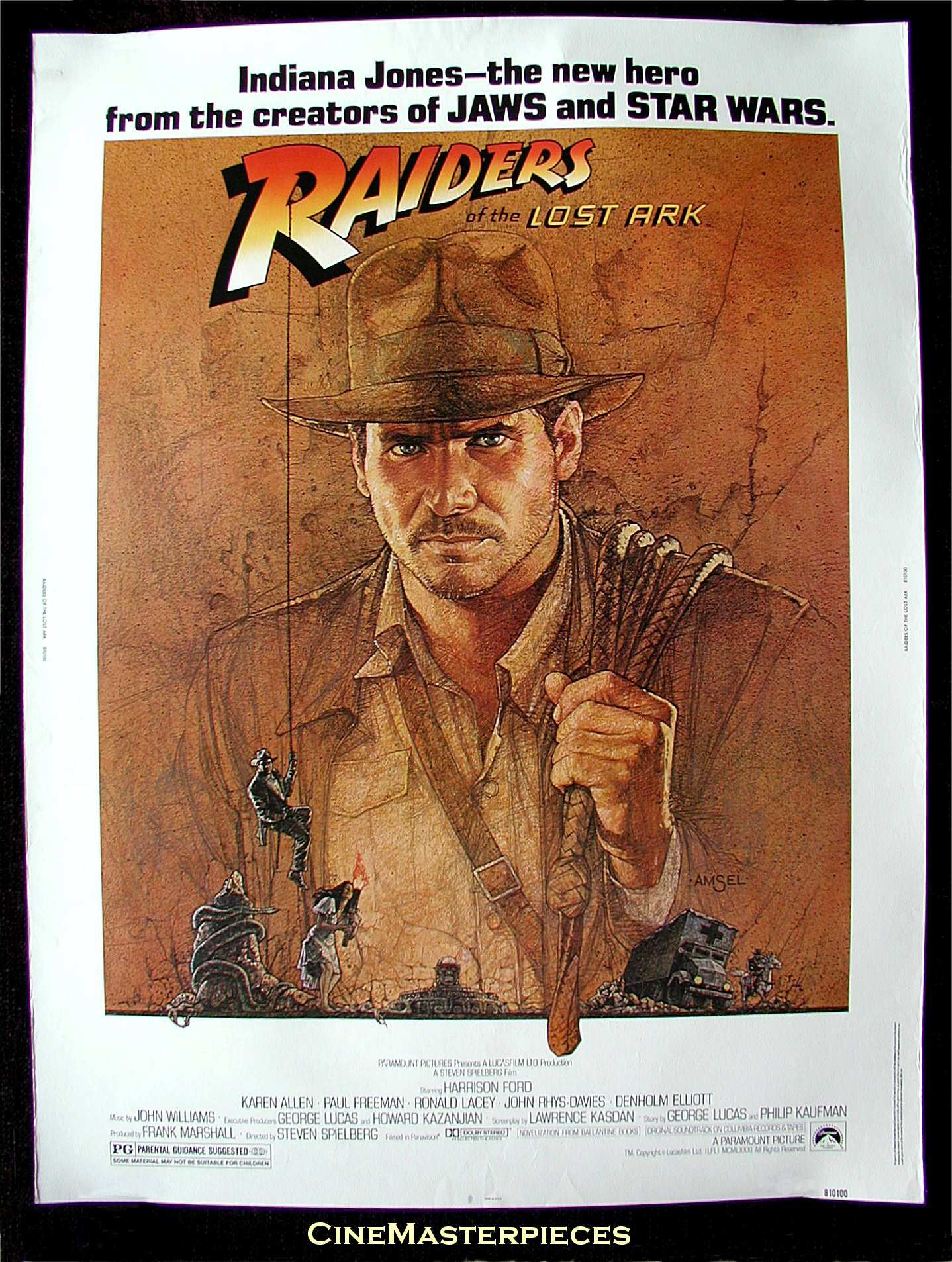
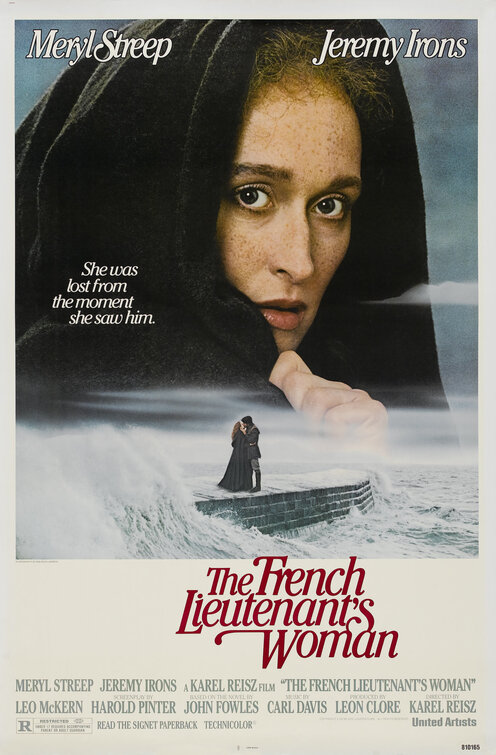



Old book covers
This is just ... heavenly. An archive of images sent directly ... from heaven. Old Penguin and Pelican cover art. Found the link on Book Slut and I'm with Jessa. I could stare at this for an hour and a half.
Like seriously, check this out.
Classic. It just calls to me somehow.
Marvelous stuff bringing up a sense of a whole other time - perhaps with a whiff of the chintzy 70s - a bit of the psychedelic 60s ... serious - almost like movie posters - a bit abstract ... go check out the whole archive here - awesome.
Lillian Bassman

Lillian Bassman - fashion photographer (that's one of her photos above, apparently):
To quote my entire family (and this should be said all as one word in a completely apathetic voice):
"Nevahhoidofuh."
Not until now - read this interesting profile of her in The New Yorker - and I'm kind of taken with those images. I'm not a big fashion photographer person - but I can certainly recognize that there is something special (and also influential) about these photos.
Like this lusciousness I love:
Gorgeous!
That top photo reminds me of one of my favorite current-day photographers - Ellen von Unwerth. I don't know why her stuff is so fascinating to me, and so interesting - she does blurry images, kind of grainy - and when she photographs a celebrity, she usually makes them roll around in a crumpled bed, she musses them up so they look rumpled and sexy. One of my secret fantasies (well, duh, not secret anymore - amelie - ha!! I added this comment before seeing yours!!) is to be photographed by Ellen von Unwerth. I just like how she SEES people, and I have a couple of her books. I would bet that Unwerth was totally influenced by Bassman - a lot of her stuff has the same "Oh, I'm just running out the door in my fabulous gown, and that's why I'm blurry" look.
Anyway - it appears that the Staley Wise Gallery is doing a Bassman exhibition (check out more of the images here).
Also, I know I've just discovered this photographer - so these are all first impressions - but in the New Yorker profile, she says “I lost my mind to the elongated figures of El Greco." (Who doesn't, frankly.) But just knowing that about her - I can see his influence in those photographs, the girls with the swan necks, the oddly contorted positions, and yet the strange sense of grace.
Oh look. I just Googled Ellen Von Unwerth - only to find that the Staley Wise Gallery did a showing of HER work as well. Take a look here. LIke - look at that image of Drew Barrymore sitting in the big arm chair with her arms up in the air. I just find it captivating, and eye-catching. I love love her stuff.
But back to Bassman (who is still alive). Fascinating life, spanning 2 centuries.
Marilyn and Jack
Wow - I would have thought that with all my Marilyn books lying around, I would have seen this photo but I never have. Marilyn's smile really strikes me there. It's not the "Oh, there is a camera, let me turn on my Marilyn smile" smile - it seems like a real smile. It's radiant.
Pan Am
CW is back - with another awesome post about Pan Am. If he doesn't know it about Pan Am, then it isn't worth knowing. I LOVE his Pan Am posts (if you scroll down his blog you'll see a whole archive of them - really, there's marvelous historical essays about this great company and its prescient innovations.)
The Books: Further Chronicles of Avonlea: 'In Her Selfless Mood' (L.M. Montgomery)
Next book on my young adult fiction bookshelves:
Further Chronicles of Avonlea - "In Her Selfless Mood" - by L.M. Montgomery
A story of the complete sacrifice of a life in order to carry out her mother's dying wish (her mother who didn't even really love her that much) ... where nobody in the story is likable. Not one person. Not even our martyr - Eunice. Eunice is all hump-backed, and fierce, and loves her mother with every inch of her being. Her mother - Naomi - is kind of a loathsome woman. She lies in bed, dying, and she makes no bones about it: her love is for her son, Christopher. So she, in her last dying gasp, makes Eunice promise that she will always take care of Christopher, that she will never let anyone hurt him, and even when they both go to live at an aunt and uncles- she will make sure that no one lays a hand on him. This will be an uphill job - because, sadly enough, Christopher is kind of an asshole - and is not worthy at all of such attention. Or, maybe he is - maybe we all are - but you wish he at least would LOVE Eunice, or be grateful. He is not. He is openly creeped out by her and her hump and her intense interest in him. He wants her to back off, learn boundaries, whatever. Years pass. Well, eventually - you know - Christopher gets married - leaving Eunice as a boarder at this REALLY unsympathetic aunts and uncles. She has no life. No fulfillment. No purpose. She lives on other people's charity. Her brother doesn't need her anymore. I don't know, the whole thing is kind of depressing. You want to reach into the story and tell Eunice, the hump-back, that she doesn't HAVE to live at that aunt and uncles - and share a room with their daughter (who despises Eunice). You could run away! But oh no, she cannot do that. Because she needs to be near Christopher - even though he is now a grown man - so that she can watch over him, all the rest of the days of his life.
The whole thing is depressing. Eventually there's a smallpox epidemic - and Christopher (who no longer needs Eunice, lives with his wife, and thinks Eunice is kind of, uhm, freaky - anyway) comes down with the disease. And this is Eunice's big moment. Her ultimate fulfillment of that death-bed promise. She goes to nurse him since his wife has been banished from the house.
Blah. Eventually Christopher does die from smallpox - but not before saying to Eunice, "You're the best nurse ever." This, for her, is outward confirmation that she has "done good", as they say, that her mother would be pleased - so instead of facing the rest of her life, empty, bleak, unfulfilled - she lies down and dies. But she's smiling when she dies. Because she kept her mother's promise.
Wow, she really took that deathbed promise thing seriously there.
Here is the moment when Naomi dies. The whole thing is depressing. Everyone in the story is twisted, intense, violent, grim ... You kinda want to peek your head in the window and say, "Lighten up, Francis!"
Excerpt from Further Chronicles of Avonlea - "In Her Selfless Mood" - by L.M. Montgomery
Outside, in the thickly gathering dusk, Caroline Holland and Sarah Spencer were at the dairy, straining the milk into creamers, for which Christopher was sullenly pumping water. The house was far from the road, up to which a long red lane led; across the field was the old Holland homestead where Caroline lived; her unmarried sister-in-law, Electa Holland, kept house for her while she waited on Naomi.
It was her night to go home and sleep, but Naomi's words haunted her, although she believed they were born or pure "cantankerousness".
"You'd better go in and look at her, Sarah," she said, as she rinsed out the pails. "If you think I'd better stay here tonight, I will. If the woman was like anybody else, a body would know what to do; but, if she thought she could scare us by saying she was going to die, she'd say it."
When Sarah went in, the sick room was very quiet. In her opinion, Naomi was no worse than usual, and she told Caroline so; but the latter felt vaguely uneasy and concluded to stay.
Naomi was as cool and defiant as customary. She made them bring Chrstopher in to say goodnight and had him lifted up on the bed to kiss her. Then she held him back and looked at him admiringly - at the bright curls and rosy cheeks and round, firm limbs. The boy was uncomfortable under her gaze and squirmed hastily down. Her eyes followed him greedily as he went out. When the door closed behind him she groaned. Sarah Spencer was startled. She had never heard Naomi Holland groan since she had come to wait on her.
"Are you feeling any worse, Naomi? Is the pain coming back?"
"No. Go and tell Car'line to give Christopher some of that grape jelly on his bread before he goes to bed. She'll find it in the cupboard under the stairs."
Presently the house grew very still. Caroline had dropped asleep on the sitting-room lounge, across the hall. Sarah Spencer nodded over her knitting by the table in the sick room. She had told Eunice to go to bed, but the child refused. She still sat huddled up on the foot of the bed, watching her mother's face intently. Naomi appeared to sleep. The candle by her bedside burned slowly. To Eunice, the elfin flame, which flickered gaily, seemed like an impish eye upon her. The wavering light cast grotesque shadows of Sarah Spencer's head on the wall. The thin curtains at the window wavered to and fro, as if shaken by ghostly hands.
At midnight Naomi Holland opened her eyes. The child she had never loved was the only one to go with her to the brink of the Unseen.
"Eunice -- remember!"
It was the faintest whisper. The soul, passing over the threshold of another life, strained back to its only earthly tie. A quiver passed over the long, pallid face.
A horrible scream rang through the silent house. Sarah Spencer sprung out of her doze in consternation, and gazed blankly at the shrieking child. Caroline came hurrying in with distended eyes. On the bed, Naomi Holland lay dead.
October 2, 2006
Debut novels
Great discussion going on here about the "best debut novels". Does it count if the author came out with a collection of short stories first??
I say YES, it counts. Otherwise Jimmy couldn't be on the list.
My additions to the list:
-- Catch 22, by Joseph Heller
-- The Mysteries of Pittsburgh, by Michael Chabon
-- Portrait of the Artist as a Young Man, by James Joyce
-- Mating, by Norman Rush
-- To Kill a Mockingbird, by Harper Lee (uhm ... debut and only)
-- Catcher in the Rye, by JD Salinger
-- Carrie, by Stephen King (that was his first, right?? Am I totally wrong?)
-- The Bone People, by Keri Hulme (again: debut and only novel - which sucks - it is a fantastic book - she is MARVELOUS ... anyone else read it??)
Oh shit, how could I forget:
-- Anne of Green Gables, by LM Montgomery
What are some great debut novels that you can think of?? (And don't be embarrassed about your personal taste, cause that's no fun.)
The Overture
Wonderful piece in the NY Times about the death of the overture. I have noticed that musicals don't really have your typical overtures anymore - but the essay totally reminded me of listening to musicals as a kid - and overtures I remember. (Here - watch how I excerpt the article properly):
That era is long gone, but there was always more to the overture than the pleasure of the music itself. Practically, it provided a buffer for latecomers; dramatically, it helped to effect a mood transition from the outer world of commerce and cabs to the imaginary world about to be created onstage. It might hint at crisp sophistication (those four bright exclamation points at the start of ?My Fair Lady?) or exotic doings (the pentatonic Orientalia of ?The King and I?) or the possibility of louche women (the wild trumpet orgy of ?Gypsy?). It could establish instantaneously the tone of the material, whether emotional (?South Pacific?), comical (?Bye Bye Birdie?) or satirical (?Candide?). In the case of the overture to ?Candide,? that brilliant jack-in-the-box of musical surprises, it might do so better than the show itself.
It took me just a second to locate, in my memory, the sound of "those four bright exclamation points at the start of My Fairy Lady" - but there they were! The overture - emblazoned in my mind. Amazing.
I will NEVER forget listening to Annie for the first time (got the record for my 11th birthday) - and putting it on the turntable in the dining room - and hearing, for the very first time - that lone trumpet, playing the opening strains to "Tomorrow" - the start of the overture in Annie. I didn't know anything about Annie, knew none of the songs yet ... but I was hooked from the first second I heard that melancholy lonely sound. Yet hopeful. Strangely hopeful. And seriously: when I listen to that soundtrack now, I STILL get a flash of ... soul-shivers, excitement, transcendence ... when I hear that trumpet. Wow. God bless the overture.
Bad.
UPDATE: I got a lovely email from the blogger in question (and he played along with our joke in the comments section - and said: "It's me. The boob man." hahaha) He apologized for excerpting too much of my content. Really nice of him, really nice email. Thanks, dude! I appreciate it! Like I said below, I was sure he meant no harm by it./END UPDATE
It is very bad manners to take an entire post I have written (or 90% of it) - put it on your site - and provide a measly link back to the post. No. Bad form. Another bad form: taking an excerpt of something I've written - and then the only link you provide back is to the CATEGORY ARCHIVE from whence my post came. Which means it would be very difficult for any reader to come to MY site and find the original post.
Seriously. If you want to link to my stuff and think a paragraph or two is good enough to excerpt - go for it. But not the whole post - just to keep people on YOUR site as opposed to mine. Bad. Bad. Bad.
Maybe I just don't understand this site. It's not quite a blog - but - what is it? What is this "stumble upon" I am seeing in the URLs? And when you click on the link that supposedly goes to my site - you go to yet another link - where I am excerpted. I'm quite dense, regarding different kinds of blogs, etc. So I'm not even sure what I'm looking at. Regardless, I do not like how I am being excerpted there and I don't quite know how to contact this person. He obviously likes my Dino posts, and others - but I very much dislike how he lifts my entire posts off my site, puts them on his, and then only provides a link back to me.
I do appreciate that that he likes the Dino posts.
But seriously: learn how to excerpt properly. I learned how to do excerpts in, uhm, 10th grade English class - so there's no excuse. None whatsoever.
Hopefully - he'll see this post in his own referral logs - and change his excerpting ways. I'm sure he means no harm. But I'm just tellin' ya right now: excerpting someone else's writing like that is bad form.
(And if I am misunderstanding the purpose of this Stumble Upon thing - then that is due to my own ignorance. I just don't like seeing an entire post of mine sitting on someone else's site, regardless.)
champignons etc.
Not sure why but I'm just in love with this series of weird little images.
I'm sure it's a leftover from childhood, and from books like The Borrowers where everything is miniature, and you use an empty spool of thread as a table, etc - and you can see all of these objects in a totally different way because you are so small. My favorite part of Captain Kangaroo, for example, was the little family who lived in the bookshelves. Green Jeans Shmeen Jeans, I lived for those mini little people living their lives, hidden behind the big books. I had a great desire to be teeny-tiny when I was a little kid, like a miniature person who could huddle under any champignon with no problem.
John Wayne and John Ford
Wow - a great piece by Stanley Crouch about these two often unfairly maligned (now) artists.
(It made me laugh out loud that Shirley Temple was described as "monstrous and adolescent". hahahahaha - can't stop laughing)
Read the whole thing, but here are a few excerpts pulled out:
On Ford:
No director has ever dealt more insightfully with the offhanded, snide, and potentially suicidal aspects of bigotry than Ford. This sets him above almost all other directors because he could understand and make art of the tragedies that attended bigotry, one of the most pernicious forms of superstition. Beyond that, Ford recognizes how community acts as a protection against the inevitable meaninglessness of human life, which is no more than anarchic energy unless put in a story of some sort.
Wow - so many people who sneer at John Ford now miss that. They really do.
And then he makes a very specific observation about John Wayne in The Searchers(see below). An aside: I love it when people don't just blow off acting as a by-product of other more IMPORTANT art - like set direction, or scripts, or whatever. I love it when reviewers - and Ebert does this sometimes, although not enough in my opinion - actually make detailed observations about what an actor is doing. Many people have contempt for actors, or they do not understand the actor's work. That comes across in reviews where the film is disucssed in detail, and then at the very end we get a paragraph like this:
So and so is convincing as Mary Shmary, Blahdee blah overcompensates in his role as the preacher, and Hoo-hah is merely adequate in his important part.
Hey, thanks for your insights. But WHY? I love it when they get into WHY. Films are a collaborative art - and the whole thing must be judged - yes - but I love it when a reviewer actually knows how to analyze WHY a moment is good, or WHY a moment does not work. Gives me goosebumps.
But anyway, here's Stanley Crouch on a moment John Wayne has in The Searchers:
When Wayne, as Ethan, comes upon the black smoke and the orange flame of the burning house left by the Comanches, his face is one of absolute terror, panic, and rage. At the top of a hill, Wayne flings out his right arm to free his rifle from the long, colorful buckskin sleeve in which it has been sheathed. The force of that flung arm is one of the most explosive gestures in all of cinema, and also among the most impotent: No one down there is alive, and Ethan knows it. He is, at that moment, like the man in Bruegel's The Triumph of Death who so impressed Hemingway because his choice was to draw a sword when faced with the irreversible horror of encroaching doom.
John Wayne said once that one of the things he learned early on - from doing a play in high school - is that "If you're going to make a gesture - make it."
Isn't that beautiful? Whatever it is. Leaping up on a horse, kissing the girl, punching your son, or flinging your arm out to free your rifle.
It's a gesture. Don't pretend to make the gesture. Don't sketch in the outlines of the gesture. Don't intellectualize the gesture.
Make it.
Good advice for life too, huh?
My Dino book
So I'm reading "the Dino book" now - and eventually I'll have to post a ton of great quotes from it - I am loving it - but I just had to pull one out that made me laugh out loud. Its a quote from Abby Greshler - agent for Martin and Lewis as they were starting to hit it big (although the management of these two was unbelievably complicated - hard to keep straight - because they were a duo, but they had separate representation, and people were clamoring to get a piece of them at all times). Anyway, Abby Greshler, like many of those hovering around Martin and Lewis at the time, had "underworld" connections. The nightclubs were all mob-owned - yet with elaborate schemes to hide that fact, blah blah. Anyway, there's a section in the book about Greshler and how he was trying to bat off a lot of these underworld guys - who were trying to force him to book Martin and Lewis in THEIR nightclub as opposed to the OTHER GUY'S nightclub.
Here's the excerpt:
On top of everything, Bill Miller, with the shadow of the Bergen County mob behind him, claimed to hold an unwritten option on future engagements. Greshler began receiving ominous visits and calls. Some of the callers he recognized. The ones he could not identify were even more disquieting."I have no comment on that," Greshler would say many years later when asked about those visits and calls. "I know every underworld character in the world, but I never had any problems with them. They kidnapped my kid once, but outside of that, it was quiet."
Uhm ... outside of that???
Teaching Shakespeare
An indispensable post from the indispensable Mental Multivitamin. Lots of GREAT ideas there - some which I will take on myself, just for fun.
And I just want to thank her for the following paragraph, for my own reasons, which I will list in a second - In response to a reader question about how to respond to those who say that learning Shakespeare is not important in today's society:
I also suggested that L. take a peek at this entry. There is, I am certain, something about the pursuit of excellence that some people simply. don't. get. But life is short, and the struggle to win over the ignorant is, in my experience, futile. I'd rather discuss Hamlet than attempt to persuade someone of Shakespeare's value .
Amen.
I hate to pull out just one paragraph in that whole cornucopia of paragraphs - all with great links, great ideas - but that one really spoke to me. I have had this struggle before when I write about stuff that I love here. On Bloomsday, someone inevitably shows up and says, "Why do you like Joyce? I find him incomprehensible." And while this is a view held by many, obviously - to me, it is not interesting to discuss the WHYS of my own taste. Especially from someone who has a kneejerk response of dislike to something they have not yet experienced. I won't engage with those people because it's unbelievably boring to me. So I would rather discuss James Joyce than attempt to persuade someone of Joyce's value. She put my vague feelings into a perfect and simple sentence.
But seriously - if you're interested in teaching Shakespeare to your kids (and Mrs. M-Mv homeschools her kids - so this is where a lot of this is coming from) - or if you're a teacher and wondering how to make this stuff real and relevant to your students - or if you're a raging autodidact, if you see your life as a continuing education project for yourSELF - please check out this post! She's got a bibliography and everything. But I love her view that the plays are meant to be seen, and heard - not just read.
The Books: Further Chronicles of Avonlea: 'The Education of Betty' (L.M. Montgomery)
Next book on my young adult fiction bookshelves:
Further Chronicles of Avonlea - "The Education of Betty" - by L.M. Montgomery
This is one of those stories where I think, "Nice try, Maud, but not only am I NOT going there with you - I kinda resent you making me go there in the first place." Ha. I'm being dramatic - but seriously, 'The Education of Betty' is - I don't know. The whole thing seems ikky to me. And that is the best and most articulate assessment I can make. I dislike the assumption that Betty needs to stop being a tomboy, needs to be pruned and shaped. Ew. I liked her better before. I dislike the assumption of our narrator that he is totally in charge of Betty's entire life. Like - how she walks, dresses, whatever. I don't care what anyone says - I like Betty better when we first meet her - chasing dogs across the lawn, than in the last scene - where she is submissive, ladylike, and quivering with romantic possibility. Spare me. Also - I guess I just don't like the narrator himself. He comes across as smug, sexist, and unimaginative - not to mention jealous and ridiculous, he doesn't have the balls in the end to just say, "YOU MUST MARRY ME" - or, eventually he does - but not before driving her into the arms of someone else. Ew. Like, dude: your days as a tutor are long gone. Stop acting like you still get to control every move Betty makes, you smug control-freak. Ew. Ikky. Ikky. I read the story keep waiting for Betty to say, "You know what, Stephen? I've had it with you. I can grow up on my own. I can 'education' myself on my own. You're WAY too ikky, and WAY too invested in me, oh, learning how to walk slower, and keep my head erect, and comb my hair. Get a life, Stephen. Seriously."
I never feel this way about Lucy Maud's stuff, so whatever, in my opinion - this story is a huge misfire. You at LEAST need me to get on the narrator's side. But in this case, I am voting against him. Because I think Betty is fine and lovely just the way she is. She's not a terror. She's not a juvenile delinquent. No. She just, uhm, LIKES TO READ, and likes to RUN AROUND OUTSIDE, and dismisses with a scoff the idea that women need to be ladylike. Oh my gosh, what is WRONG with Betty????? We have to call in a tutor to help her get rid of THOSE crazy ideas.
Yeah. That kind of nonsense is what kept women down, and I resent that Betty's "education" really meant: Making her be like everyone else. So I find the story to be a huge bummer. It's supposed to be charming, and kind of cute - you can tell, in how she writes it - it's supposed to be a witty little domestic comedy. But it's not.
I am going to provide an excerpt from the beginning when we get to see Betty as herself. Infinitely more interesting than the calmed-down shy coquette at the end. Ew.
Now Lucy Maud is the QUEEN of unconventional female heroines. Is Emily Byrd Starr a normal little girl? Who plays with dolls and tea sets? Uhm NO. Is Anne Shirley in any way conventional? Maybe the only conventional thing about her is that she wants desperately to belong and fit in. But, uhm, other than that? She is totally original and herself. And it's not that these unconventional females don't have to learn tough lessons along the way - about how to get along in the world - how to know how to pretend to fit in (like with the whole Aunt Ruth debacle in Emily Climbs) - even if every fiber of your independent unconventional soul SCREAMS against conformity. Sometimes it is better to conform to get along - than to assert your different-ness.
Yes. SOMETIMES. But ALL the time? Like with Betty?
No. Won't go there wiht you, Lucy. And since in every other story you write there's some unconventional and gorgeous and lovable female running around - I'm just gonna assume this one is a misfire, and move on. No hard feelings, Maudie.
Excerpt from Further Chronicles of Avonlea - "The Education of Betty" - by L.M. Montgomery
I rode over to Glenby the next morning after my paternal interview with Sara, intending to have a frank talk with Betty and lay the foundation of a good understanding on both sides. Betty was a sharp child, with a disconcerting knack of seeing straight through grindstones; she would certainly perceive and probably resent any underhand management. I thought it best to tell her plainly that I was going to look after her.
When, however, I had encountered Betty, tearing madly down the beech avenue with a couple of dogs, her loosened hair streaming behind her like a banner of independence, and had lifted her, hatless and breathless, up before me on my mare, I found that Sara had saved me the trouble of an explanation.
"Mother says you are going to take charge of my education, Stephen," said Betty, as soon as she could speak. "I'm glad, because I think that, for an old person, you have a good deal of sense. I suppose my education hs to be seen to, some time or other, and I'd rather you'd do it than anybody else I know."
"Thank you, Betty," I said gravely. "I hope I shall deserve your good opinion of my sense. I shall expect you to do as I tell you, and be guided by my advice in everything."
"Yes, I will," said Betty, "because I'm sure you won't tell me to do anything I'd really hate to do. You won't shut me up in a room and make me sew, will you? Because I won't do it."
I assured her I would not.
"Nor send me to a boarding school," pursued Betty. "Mother's always threatening to send me to one. I suppose she would have done it before this, only she knew I'd run away. You won't send me to a boarding school, will you, Stephen? Because I won't go."
"No," I said obligingly. "I won't. I should never dream of cooping a wild little thing, like you, up in a boarding school. You'd fret your heart out like a caged skylark."
"I know you and I are going to get along together splendidly, Stephen," said Betty, rubbing her brown cheek chummily against my shoulder. "You are so good at understanding. Very few people are. Even dad darling didn't understand. He let me do just as I wanted to, just because I wanted to, not because he really understood that I couldn't be tame and play with dolls. I hate dolls! Real live babies are jolly; but dogs and horses are ever so much nicer than dolls."
"But you must have lessons, Betty. I shall select your teachers and superintend your studies, and I shall expect you to do me credit along that line, as well as along all others."
"I'll try, honest and true, Stephen," declared Betty. And she kept her word.
October 1, 2006
A picture ...
... is worth a thousand words.
I mean, for God's SAKE.
What it's like when your parents read your blog, part 2
-- I write a nostalgic reminiscence about Michael (uhm yeah, there have been a lot of those lately) and I post it on the ol' blog.
-- Email comes in from my dad. "Dearest: in the first paragraph it should be 'Michael and me' not 'Michael and I'. love, dad"
Today in history: October 1, 1961
Roger Maris hit home run # 61 (that's the 61st in the photo there), breaking the long-standing record held by Babe Ruth. It was a record that not a lot of people wanted to see broken. It was sacred. Maris wasn't a "real" Yankee, etc. Also - he was neck and neck with his teammate - Mickey Mantle - and Mantle, of course, was the ultimate Yankee. If anyone SHOULD break the record, it should be Mickey!! (Oh, and what the hell - this is a post about Maris, but whatever: just thought I'd link to Bob Costas' eulogy for Mickey Mantle. If you're a baseball fan, I know you have read it. It is ... well. It's beyond words.)
But Maris beat Mantle - and the controversy then ensued - that Babe's record should stand - because Ruth hit his 60 home runs in a shorter game schedule. The commissioner of baseball decreed (ha, what a ma-roon) that Maris had actually NOT broken Ruth's record because of this discrepancy - and then there was the whole asterisk debacle - that Maris' record should be listed with an asterisk after it, to show that he hadn't REALLY broken Ruth's record. It's all rather annoying, but still - baseball fans and experts are legitimately insane (I should know) - and this was all important stuff to them. Finally - in 1991 - Maris' record was decreed as "real" and it could stand without the asterisk. Of course Maris was dead by this point so a lot of good it did him!
Billy Crystal's movie 61* is one of my favorite sports movies. It really GETS it. I mean, I wasn't alive in 61 - so I don't know - but from my standpoint, as a person who grew up with baseball, who has the same achey nostalgia and passion about the same thing - Crystal completely expresses THAT in his film - along with the story itself of the battle between Roger Maris and Mickey Mantle to break Babe Ruth's record. Great movie.
Congrats, Maris ... ya done good.
The Books: Further Chronicles of Avonlea: 'The Son of His Mother'
Next book on my young adult fiction bookshelves:
Further Chronicles of Avonlea - "The Son of His Mother" - by L.M. Montgomery
I find this to be one of Lucy Maud's most emotionally creepy stories. And again - while we can look in and see: "Wow, these people have some SERIOUS psychological issues" - they are not analyzed to death, the truths about them are just stated - and it takes an actual physical event to wipe away all of the problems. Which so rarely happens in real life. Like - a freaky obsessive person usually stays a freaky obsessive person (uhm, I should know). Anyway, I find Thyra Carewe to be one of Lucy Maud's strangest creations - and man, you just know this woman would totally benefit from major Prozac doses on a regular basis as well as deep deep psychoanalysis - but she lives in PEI at the beginning of the 20th century, so obviously these are not options for her. But: if Thyra were drugged up and made to be normal - then she wouldn't be so memorable, and there would be no need to write a story about her. So there's THAT.
Actually, there's a lot in the story that I find psychologically interesting - and also ... creeeepy. Thyra Carewe is an intense woman (uhm, that is putting it mildly) - who was widowed a year after her first (and only) child was born. So she and her son have been everything to each other through the years. Her son Chester. Her son Chester is EVERYTHING to her. The opening of the story makes it clear that there is - I don't want to say an unnatural bond between them - but - on some level, the intensity with which Thyra loves her son (especially now that he has become a young man - and is trying to loosen the apron strings) is - unnatural. She will not let go. Chester and she will grow old together. The thought of any other woman having him drives her into a frenzy. But Chester - who has always been a good boy, kind and patient wiht his mother, is now "seeing" someone (in early 20th century fashion - he goes over to her house at twilight, and sits with her for an hour) - Her name is Damaris Garland (I love that name) - and Thyra Carewe would be RIPSHIT if she knew Chester was seeing ANYONE seriously, so the entire town basically hides the truth from her. She thinks Chester is bringing the cows home, or whatever, when really he is "sitting" with Damaris. Thyra, blithely ignorant (ignorant in more ways than one), confident that Chester will never marry ("he doesnt' come from a marrying race" - Thyra was "old" when she had Chester - in her 40s - and her husband was even older than she was - Marrying is not in their DNA) - And Thyra is basically so rigid about Chester that she's like a tree bough about to snap off. You worry for her. The opening scenes tell us all we need to do. Chester is late coming home, and the SECOND the time has come when Chester SHOULD have walked through the door, Thyra begins to slowly freak out. She paces. She stands at the window, staring out, like a statue. We see her through the eyes of her neighbors - who pity her. "Poor Thyra ... if only she knew where Chester was right now ... she'd flip out." You want to slap Thyra. Chester is 18 years old - let the guy date somebody, Thyra. You are going to ruin your precious relationship wiht your son. He is already LYING to you about who he is, he is terrified to tell you he loves Damaris - you are being totally unreasonable, Thyra. But still: Lucy Maud writes her so well that you can't stop reading. Thyra Carewe is a VERY convincing character portrait. You are glad she's not your friend, you are glad she's not your mother - but still. She's interesting. (Reminds me of Tommy Lee Jones' response to the question, "Do you have to like the character you are portraying?" Jones bluntly said, "Nope. But you do have to want to watch that character.") You want to watch Thyra Carewe.
As she waits for Chester - this guy shows up at her door - he's basically the PEI version of a homeless dude. He is the guy in town who can't get his act together, he is also crippled and slouched over with rheumatism, and so - people in the town give him errands to do, to keep him occupied and employed. He is also quite a creation - and I have to say: Lucy Maud deals a lot in archetypes - so the same "type" show up in story after story, with little tweaks here and there. But August stands alone. I cannot think of another character even remotely like August in any one of her stories. August is the male version of a vicious gossip. Lucy Maud has written about female vicious gossips before - the kind of self-righteous moralistic bitches who glory in the suffering of another ("Well, I told her that it wouldn't be right for her to blah blah blah ... serves her right ...." Etc. THAT type shows up in Lucy Maud's stuff quite a bit) - but August is a bored person, malicious - he knows he is despised and pitied - he knows people are disgusted by his twisted rheumatic appearance - and this has corrupted his soul. He is the essence of Corrupt. He loves to be the bearer of bad news. He loves to tell someone bad news and then watch them blanch and gasp. This is because August is so beyond the pale, in terms of his own humanity - so much bad has already happened to him - that he could never blanch and gasp again. He feels outside the human family. He doesn't just resent this. That is too feeble a word. He hates all of humanity. And he is literally gleeful when he gets to watch a fellow human suffer. Horrible character.
Anyway, he shows up while Thyra is waiting for Chester - and ends up "breaking the news" to her that Chester is sitting at Damaris Garland's. Actually, there is nothing accidental about August's behavior. He comes to Thyra's house on the pretense of an errand - but his main goal is to tell her the bad news, and to have the joy of watching the proud stern imperioud Thyra be shaken. What fun that will be!!
This story is, what, 20 pages long? Obviously it's deep and powerful - look at how much I have written about it.
I highly recommend reading it - I think it's some of Lucy Maud's best work. It's dark, man. Really dark. And the catharsis at the end is well-deserved. It doesn't feel like a plot device - it takes your breath away the first time you read it.
Hard to choose an excerpt from this extraordinary little story - so I guess I'll just choose the opening to excerpt. Notice the bit about how Thyra treats Chester's dog. That's when I realize: Oh. Thyra is kind of nuts, and I'm a little bit creeped out right now.
Excerpt from Further Chronicles of Avonlea - "The Son of His Mother" - by L.M. Montgomery
Thyra Carewe was waiting for Chester to come home. She sat by the west window of the kitchen, looking out into the gathering of the shadows with the expectant immovability that characterized her. She never twitched or fidgeted. Into whatever she did she put the whole force of her nature. If it was sitting still, she sat still.
"A stone image would be twitchedly beside Thyra," said Mrs. Cynthia White, her neighbor across the lane. "It gets on my nerves, the way she sits at the window sometimes, with no more motion than a statue and her great eyes burning down the lane. When I read the commandment, 'Thou shalt have no other gods before me,' I declare I always think of Thyra. She worships that son of hers far ahead of her Creator. She'll be punished for it yet."
Mrs. White was watching Thyra now, knitting furiously as she watched, in order to lose no time. Thyra's hands were folded idly in her lap. She had not moved a muscle since she sat down. Mrs. White complained that it gave her the weeps.
"It doesn't seem natural to see a woman sit so still," she said. "Sometimes the thought comes to me, 'what if she's had a stroke, like her old Uncle Horatio, and is sitting there stone dead!'"
The evening was cold and autumnal. There was a fiery red spot out at sea, where the sun had set, and, above it, over a chill, clear, saffron sky, were reels of purple-black clouds. The river, below the Carewe homestead, was livid. Beyond it, the sea was dark and brooding. It was an evening to make most people shiver and forebode and early winter, but Thyra loved it, as she loved all stern, harshly beautiful things. She would not light a lamp because it would blot out the savage grandeur of sea and sky. It was better to wait in darkness until Chester came home.
He was late tonight. She thought he had been detained over time at the harbor, but she was not anxious. He would come straight home to her as soon as his business was completed - of that she felt sure. Her thoughts went out along the bleak harbor road to meet him. She could see him plainly, coming with his free stride through the sandy hollows and over the windy hills, in the harsh, cold light of that forbidding sunset, strong and handsome in his comely youth, with her own deeply cleft chin and his father's dark gray, straightforward eyes. No other woman in Avonlea had a son like hers - her only one. In his brief absence she yearned after him with a maternal passion that had in it something of physical pain, so intense was it. She thought of Cynthia White, knitting across the road, with contemptuous pity. That woman had no son - nothing but pale-faced girls. Thyra had never wanted a daughter, but she pitied and despised all sonless women.
Chester's dog whined suddenly and piercingly on the doorstep outside. He was tired of the cold stone and wanted his warm corner behind the stove. Thyra smiled grimly when she heard him. She had no intention of letting him in. She said she had always disliked dogs, but the truth, although she would not glance at it, was that she hated the animal because Chester loved him. She could not share his love even with a dumb brute. She loved no living creature in the world but her son, and fiercely demanded a like concentrated affection from him. Hence it pleased her to hear his dog whine.
It was now quite dark; the stars had begun to shine out over the shorn harvest fields, and Chester had not come. Across the lane, Cynthia White had pulled down her blind, in despair of out-watchig Thyra, and had lighted a lamp. Lively shadows of little girl-shapes passed and re-passed on the pale oblong of light. They made Thyra conscious of her exceeding loneliness.