July 31, 2007
Two-part Happy place
1. "A Little More Love" by Olivia Newton John. I don't know why I suddenly need (yes: NEED) to hear this song every other minute, but I do. I am transported by it. I've been listening to this song since I was a frickin' grade schooler, but whatever, this week - I have realized: Seriously. I love this song so much. Press "Play" again. And again. And again.
"Wheerree ....
where did my innocence go ..."
I think it's those CHORDS that come after the second line of the verses - after "innocence go ..." or in the first verse "draggin' her feet ..." Then: a chord. Two chords! If you know the song, you'll know the chords of which I speak. I find them to be perfect, and every time I hear them, I feel satisfied. Like: ahhh, that was a moment well-played.
Random. Why suddenly that song?
I try not to question where such things lead me.
"Night is draggin' her feet
I wait alone in the heat ..." CHORD .... CHORD ...
And now for Happy Place part 2:
2. Photo of Dean Stockwell taken by Dennis Hopper

RIP Michelangelo Antonioni
I'm with Keith: What the hell???
Michelangelo Antonioni:
"My habit of shooting rather long scenes was born spontaneously on the first day of filming Ceonaca di un Amore. Having the camera fixed to its stand immediately caused me real discomfort. I felt paralysed, as if I were being prevented from following closely the one thing in the film that interested me: I mean, the characters. The next day, I called for a dolly, and I began to follow the characters till I felt the need to move on to another exercise. For me, this was the best way to be real, to be true ... I have never succeeded in composing a scene without having the camera with me, nor have I ever been able to make my characters talk in accordance with a pre-established script ... I needed to see the characters, to see even their simplest gestures."
Excerpt from David Thomson's film encyclopedia:
Antonioni's world of sentimental and metaphysical dismay ought to include just such a figure as himself: a man of vast intellectual sensibility and artistic aspiration; a film director capable of stripping people down to fragile skins that can hardly brush against one another without pain; but a visionary of emotional alienation, so morbidly convinced of the apartness of people that he sometimes ends by photographing figures in a landscape. In short, within a brief time span he veered from psychological exactness to abstraction. For if his suspicions of human dissolution are sound, then films are only an absurd response to the fretful human instinct for self-expression. Even if one cannot always share Antonioni's torment, it has been an engrossing, if humorless, prospect to see him gradually immolate himself with doubts. He is his own character, turned away from us, speechless at what has been lost. As Monica Vitti sighs near the end of La Notte: "Each time I have tried to communicate with someone, love has disappeared."
And this, too:
The enigmas in Antonioni's work are as subject to time as monuments are to erosion, and the achievements of some films can offset or explain the apparent, or early, limits of others. For example, The Passenger helped us see the longing for escape and space in L'Avventura, and illumined the persistence of life at the end of L'Eclisse. I suspect that Antonioni's best films will continue to grow and shift, like dunes in the centuries of desert. In that process, if there are eyes left to look, he will becomes a standard for beauty.
Rest in peace. Here's the NY Times obit
More: Reverse Shot's essay on Antonioni

That's my favorite shot from Blow-up - a movie where every shot is great
July 30, 2007
Dear God, what have I done
Tonight I signed up for a 10 week intensive kick-boxing course at this totally hardcore gym whose commercials have always terrified me. Trainers screaming into the camera: "ARE YOU READY TO WORK?" etc. But I am so so ready for this, ready for SOMEthing anyway - I had my orientation tonight, and I loved the vibe of the gym. It's bare bones, with boxing bags hanging everywhere, cement ceilings, nothing aesthetic or soft - and I don't know ... it appealed to me. It appealed way more than the elliptical, I'll tell you that. I also saw a man punching a bag who could conceivably be my future husband. A blurpy boxer? Wearing a red bandana round his head? Bring it on. I meet with my trainer on Wednesday night to set up my program, based on my age, weight, body fat, whatever ... and then it will begin.
Scared! Psyched!
Compulsion - part deux

It delighted me to see that Mental Multivitamin has recently seen Compulsion - her comments are here, very insightful. And yes, I agree - Orson Welles' reading of the last line of the film ("In those years to come, you might find yourself asking if it wasn't the hand of God dropped these glasses... And if he didn't, who did?"), and Dean Stockwell's subsequent reaction to those words - are perfection. It's a true moment, not an over-played melodramatic moment. Orson Welles rarely raises his voice in the whole film, everything is contained, coiled like a spring, his eyes moving, seeing, taking everything in ... and his psychological slam-dunk in the final lines is goose-bump worthy. It could not end on a better note. What could have been a salacious or silly film - or preachy or lurid - is none of the above.
"I consider Compulsion a very good work. It's one of those films in which, by some strange alchemy, everything is exactly what the director would have liked it to be. Many times, for some different reasons, sauce won't curdle: some character appears untrue, the story doesn't work, or something else is out of tune. In Compulsion everything matched fantastically."— Richard Fleisher, director of Compulsion
SEE it if you haven't already. (My post about Compusion here)

RIP Ingmar Bergman
Crap.
A compilation of links but I'm sure the tributes will be far and wide. Keith has some screenshots here. I can't believe it. I mean, he was 89, but still. Remarkable. A remarkable artist. Here's the one post I've written about a Bergman film - bah. Dont know what else to say at the moment. I'll ponder it. Ponder what he has given us and what we have lost. 4-page obit in the Times
July 29, 2007
One of my favorite things about Rhode Island is:
10 minutes away from my parents house in one direction you can see:

And 10 minutes away in the OTHER direction you can see:

A ton more new photos here!
July 27, 2007
Snapshots
-- spent afternoon at Apple store. Wonderful, lovely, I love it there. Got some crap I need, and returned some crap I don't. (Uhm, Nano? hahahaha)
-- watched a werewolf movie starring Dean Stockwell last night. It's brill. Cheesy-brill.

Filmed in the early 70s with that gritty docu-drama feel, with everyone in Peter Pan collars and bad haircuts and droopy toga-esque dresses. A political satire mainly - but watching Dean Stockwell morph, against his will, into a howling wolf during a high-powered meeting with serious-minded people who do not know he is a werewolf - was one of the highlights of my week. I had to order my own copy immediately, and will do a shot by shot analysis for this blog when I receive it.
-- the main joke of the week is (and it must be shouted): "YOU ARE A SEDUCE!". I can't even really explain the genesis of the joke but seriously - we have not worn it out yet. It has proven to have SO much mileage. And it can be used in so many different situations. You can use it to give someone a begrudging bit of praise. "YOU ARE A SEDUCE, damn you ..." Or you can use it purely as an epithet. "YOU ARE A SEDUCE!" You can use it as a "snap out of it" command to a friend you know can do better. "YOU ARE A SEDUCE!" I was at the grocery store last night, shopping, and thought of "YOU ARE A SEDUCE!" and started cracking up. I adore it.
-- The "YOU ARE A SEDUCE" joke reminds me of another obscure and long-lasting joke: "Es no 'ee. Oo say Drak". And that reminds me of another longer lasting joke: "Tell 'em Mrs. Barney sent ya ..." These are posts I will write next week:
1. "'Es no 'ee. Oo say Drak"
2. Mrs. Barney. (I can't believe I never wrote about Mrs. Barney!)
3. The joy of Werewolf of Washington
Oh, the joy. The joy of the joke that keeps on giving!
YOU ARE A SEDUCE!
Happy birthday, David!
In honor of his birthday today. Just glimpses, fragments.
A glimpse:
-- David, bandana round head, no shirt on, shorts, hot bod with big sculpted arms ... standing in his living room and repeatedly punching a helium balloon - which was tethered on a string - attached to something immovable - and David kept punching it like a punching bag, saying over and over - as though the helium balloon was giving him some lip: "Whose fuckin' birthday is it? Huh? HUH? WHOSE FUCKIN' BIRTHDAY IS IT?"
-- "And you know the courtesans will burn."
-- "I looove the feelin' of that ROCK in my NOSE in the MORNIN' - BING!!!"
-- The plate dance. It has to be seen to be believed.
-- "I'm all talk no action!"
-- David standing in the parking lot at Ed Debevacs in Chicago and mooning the passing cars
-- Carving pumpkins at David and Maria's apartment. It was me, Mitchell, Jackie, David, Maria, and Bobby. Jackie had some problems while carving. She had some good ideas ... but then - disaster - she cut out too much and the eye-hole caved into into the lid-top. This was no good. Jackie got upset. David pretended to scorn her horrible pumpkin carving capabilities and started shouting at her, making it into one word: "LIDEYE - LIDEYE - LIDEYE!" I kind of can't put into words WHY this was so funny ... but we still say, on occasion, "lideye" whenever we are talking about any kind of disaster. "Lideye, lideye."
-- Mitchell and David, pretending to be announcers at the Tony Awards: "Ladies and gentlemen ................................... CHITA." Which then morphed into: "A womannnnnnnn ... a performer ... a singer ... a dancer ............ a pudendum extraordinaire ........... CHITA." Seriously. It makes total sense. The funny thing was that Maria, Jackie and I had left the apartment to ... go shopping? Do errands? We left Mitchell and David there, and they were relatively normal - we came back half an hour later... and THAT was what they were doing when we walked back in.
-- Pictionary on Saturdays at David and Maria's. Those were the wildest games EVER. Mitchell, Jackie and I looked at David and Maria's apartment on Greenview as a total haven. They had big thick water glasses, and nice china. There was always something yummy that Maria had cooked. Everything was cozy and beautiful. There was also the famous couch. You walked into that apartment - and maybe James Taylor was playing - or Marc Cohn - or Des'ree - and Maria had made a pot of coffee, and the light outside was wintry and chill - and you just felt safe, and happy to be there. The two of them have always created such spaces. It's a joint effort. You walk into their house - and you just sink into the couch thinking, "Ahhhhhhhhh".
-- M. (one of the many M. posts here) called me at David and Maria's to ask me out. This was way at the beginning, I think I had gone out with him one or two times, and I was out of my mind about him. My friends will remember it well. I have no idea why this night, of all nights, stays so vivid in my mind - it's not even a big deal - but David and I still laugh about it. After the crazy cosmic-tumbler night - and then meeting him again months later when he finally got my phone number. And I was much younger then - meaning: hopeful, positive, etc. - I would never be this hopeful now, that's what time does - so I was blabbing about M. to eeeeeeeeeeeveryone. M. tracked me down at David and Maria's. I was playing Pictionary - hooooooooping he would call. Hoping so hard that it actually was unpleasant. That was how much I was into him. David LOVES stuff like this and lives it vicariously. M. called - and we spoke, and made plans to meet at Southport Lanes. Meanwhile, David and Brian were both screaming in the background, all testosterone - and M. said, tentatively, "Who are they?" I hung up the phone and scurried about the apartment like a crazy person, putting on makeup, involving everyone there in my love life. David and Brian drove me to Southport Lanes so I could meet M. David and Brian actually escorted me into the bowling lanes, my two big brothers I never had. M. wasn't there yet (thankfully - although i still think it would have been hilarious to see how he would have handled it). For some reason, David and I still talk about that night. And Brian - (who was already dating the girl he would end up marrying a couple years later - they now have 3 kids) - who didn't know me all that well had the impression that my life was ALWAYS as crazy as it was that summer. Anyway - David's total support and non-judgment of me during the entire M. relationship - which went on for YEARS - has always meant the world to me. And I still laugh when I think of the three of us parading our way through those old-time bowling lanes, me in my derby, the two of them - big guys, football players - escorting me to my crazy date ... beautiful.
-- David and I met when I was 16. He was 19.
-- During a show once in college - he came up through a trap door into the middle of a scene that he wasn't a part of. During a performance. He did it on a dare. Just stood there grinning at the other cast members who were stunned into baffled and terrified silence, like ... "Uhm ... what the hell are you doing here?" He got into trouble but he didn't care.
-- In Chicago, David and I (and Mitchell, too) were in one of the worst shows ever put onto the stage.
-- Once at a party in college - at around 5 am - David and I wrote down a vow that we would always be friends, and there was even a pricking-of-the-finger thing that happened - I still have that vow. With an ancient blood-stain on the piece of looseleaf.
-- Every day with David is a journey. I see him once every couple of weeks - and he is always living, learning, growing, struggling. He is one of my dearest and most cherished friends. He knows how to listen.
-- David, Maria and I were all together on October 27, 2004. It's a memory that will remain vivid for me forever.
-- Another vivid memory: David, Maria, Me, Mitchell and Jackie all going to see James Taylor the last summer we were all together in Chicago. David and Maria were moving to New York in September. I have pictures of that night - Taylor played outside, it was a glowing summer twilight ... and we took all these pictures in the parking lot - that totally capture the beautiful vibe not only of our collective friendship - but of that particular moment in time - because it was July, and everything was about to change ... some good change, some horrible ... and it was coming ... and coming quick. In that parking lot, the sunset glow on our laughing faces, we tiptoed on the precipice. A magical night - made no less magical because so much sadness followed.
-- I stood up in the Barnes & Noble on Diversey, in Chicago. I had been sitting in the same position for a couple of hours, so when I stood up, I had no feeling in my foot. My ankle twisted beneath me and I collapsed onto the floor, coffee flying up out of my cup. Employees rushed over. This is before we all had cell phones. I didn't know what to do - One look at my ankle - and how huge it got - it was like a blowfish - terrified me. I couldn't walk. I also was unemployed and had no health insurance. The Barnes & Noble employees helped me over to the payphone - and I couldn't think of what to do. So I called David. "David??? Uhm .... my ankle is .... I really hurt myself ...." You could HEAR the focus in his voice immediately. He's like a fireman that way. "Where are you. I'm coming to get you." He arrived 10 minutes later, with Mitchell. By that point my ankle was so huge I was afraid to take my shoe off. He got me into his car, I wasn't hysterical or anything like that - just kind of pissed at myself. Mitchell and I lived on the third-floor of an apartment building. Once in the lobby, supported by both my friends, I stared up the stairs silently. Thinking, "Okay. Not sure how I'm gonna get up to my floor." Before I even put one foot on the first stair, David scooped me up in his arms, as though I weighed nothing, and carried me all the way up to the apartment. Even to this day I get a little choked up remembering his take-charge manner.
-- "In you In you In you In you In you" ...
-- David and I spent a year working on the play Summer and Smoke with our mentor. It was one of the most intense and awesome acting experiences I have ever had. And nobody, except the people in that class, saw our work. I talk about it a bit here. He's an amazing actor and working on that play, in particular, with him - was truly one of the greatest gifts of my life. It was a time of major soul-growth for me, and in many ways, Alma Winemiller led the way. Tough stuff. But the play kept me anchored. I kept a detailed journal of the whole process - which I've thought of posting here. Acting with David is one of those things where it never feels like acting. It's real. You listen, you talk - he's unpredictable, I'm unpredictable - it's not LITERAL ... It's marvelous and exciting. I STILL would love to do that play with him. Even if only 20 people saw it.
-- The relationship that he and Mitchell have is truly hysterical. They are like Long Lost Brothers, seriously. Sometimes they get so out of control that you almost want to say, "Boys. Time for bed."
-- Oh God, and then there was that morning after the craziest college party ever (all my college friends will know EXACTLY the one I am talking about) - and it was a "formal" party, so we all were dressed to the nines. David wore a tux. I wore a black lace flapper dress. We all ended up sleeping over the house, but of course nobody had pajamas or anything, so we all slept in our formal clothes: people lying in pull-out couches here and there, dressed in tuxedos and gowns. Tthen we woke up the next morning - and a core group of us - Mitchell, Jackie, David - still dressed like that - went out to breakfast at a local diner - and then drove to the Showcase to see Seventh Sign. David looked like a gigolo. His bowtie was bright red, he had loosened his white shirt, opened the collar - but he kept the bowtie on like a Chippendale - he had on mirrored sunglasses - I could not even look at him without bursting into laughter - and we all walked into the Showcase Cinema for a matinee movie dressed in last night's formal wear ...
-- He talked to me until my train came.
-- "Clip it or cloak it, Chloe."
-- He ran into M. at an audition for something. It was a couple of years into my relationship with M. - so David knew WAY too much about him because I was a blabber-mouth and found M. to be the most fascinating person ever born of woman on this planet. So. M. walked into the waiting room, signed in - and David observed his behavior for a while - like a spy - it was like he was watching a rare bird in his natural habitat. So finally David went over and said, "Hi ... I'm David ..." M., awkward at all times, kind of winced at David - like: "Oh God. What did I do and why don't I remember it?" David said, "Yeah ... we've met once or twice before - we have a friend in common .... Sheila." At the sound of my name - M. visibly relaxed - his whole tense demeanor changed, it was like this sudden softness and fondness came over his face - David saw the whole thing (and of course I made him do an imitation of the facial expressions a gazillion times. "Do it again.") - and - awkwardly - M. said, "Sheila? Yeah .... yeah ... Sheila .... She's ...." (Long agonizing pause, as he tried to think of what to say. His heart was full but his mind was a blank.) Then out came: "She's a good girl." Okay - so if you don't know me or him, this might not sound very amusing - but ... to those of you who DO know M., and you know me - and you know us together, you will know how ridiculous this moment is. What are you SAYING, man? "Yeah ... yeah ... she's ... she's a good girl." Like who says that??? A grandfather maybe, but not a crazy boyfriend! He was a tough gruff kind of guy, completely insane, brilliant, funny, a jock - and ... well. He truly had feelings for me - but instead of saying it in a normal way, like, "Oh, you know Sheila? Yeah, she's great!" or whatever ... he fumbled for words, said my name a couple of times (pointlessly)... and then summed it all up with, "She's a good girl." And the second it came out - David said he saw the mortification flicker through M.'s eyes - I'm laughing out loud - like he KNEW: "Oh shit. Did I just refer to her as a 'good girl'? Did I just say, 'Sheila ... she's a good girl' to one of her best friends? Who is a guy? Can a hole open up in the ground right now for me??" But funny thing: the stories about M. were always kind of wild, involving pool halls, and towed cars, and crawling thru windows, etc. - and my friends had to kind of just let go and say, "Okay - well, Sheila knows what she's doing ... " But after that moment with M. - the shy awkward wince, the "she's a good girl", etc. (because the thing about it is, and I know I wasn't even there - but M. MEANT it!! He meant it! He said exACTLY what he meant - it just came out in a goofiness beyond belief. But he spoke the truth.) - anyway, in that moment, David, with his intuition, completely got it. Totally saw what I saw. The wince in the eyes behind the wild behavior. It was important to me that David "get it". It always is, I guess.
-- The sun hurt my eyes that day. We sat outside at Cafe Avanti. I was so heartsick that I had become physically sick. It was right after this. I couldn't eat, sleep. I called in sick to work. It was one of the worst and loneliest days of my life. David came and got me and we spent the day drinking coffee, talking. I remember hunching over the table, protectively, nibbling on toast, or whatever, no taste buds, nothing. Heartsick. And at one point, he said these words: "Just because something is meant to be, Sheila, doesn't mean that it will be." Hard hard to hear. It's STILL hard to hear. But in raw moments like that ... his big strong presence was (is) healing.
-- "I ain't proud of it mind you...but I ain't above it neither!"
-- He's one of my "ideal readers". By that I mean - I feel totally comfortable showing him first drafts of things. Not only do I feel comfortable - but his input has always been invaluable. It's not about praise - it's that sometimes he has this way of seeing what I'm TRYING to say before I even can see it ... He's a deep reader. His insights have helped me figure out what I'm trying to express.
-- He helps me to be soft. I can be a pretty hard and rigid person. Talking with him helps me to keep open, stay receptive ... I fight him sometimes, I insist on my rigidity, I insist ... but it is never a bad thing to question, to listen, to be open to others. David helps me with that.
He has a way of expressing things - about me, and my life - that helps me remember who I am. Like this. He gives me back parts of myself that I thought I had lost along the way.
So David:
Whose fuckin' birthday is it?
Yours, my dear friend.
Below: a related diary entry from college.
DECEMBER 29
Susan had a party. At first I didn't want to go. Haven't been feeling very rowdy or social lately. But I went. All the way up to Pawtucket. I think it was so nice of her to ask me. I like her a lot. She has the cutest place. Fell totally in love. It was Mitchell, Jackie, David W., David S., Tony, a guy named Russell, Susan and me.
Cheeses galore, veggies, crackers, bread, Brie, wine.
Great music. Looked at Edwin Drood slides.
Then -on a whim - we all bundled up and went bowling. And had THE BEST TIME. We went to this Bowlarama in scary Pawtucket. Someone was murdered in Pawtucket this very morning. It's a tough place.
Let me paint the picture for you. I cannot believe that we were not mugged.
It was League night. There were also a lot of tough teenagers, being sullen and hostile. There's nothing more hostile than a teenager from Pawtucket. Then, the 8 of us arrive. Theatre geeks. Loud. Flamboyant. And INTO bowling, no matter how much we sucked.
Susan - in a bright red dress with little black dogs over it, and shiny black spandex tights. She got gutter ball after gutter ball after gutter ball. It was extremely funny.
We are not normal people. We don't just bowl. We don't just do anything. We throw our hearts into it. After every spin, there would be a production number of some kind. Screams. Hugs. Sobs. (Jackie cried once.) Susan kept standing up there, stock still, for at least a minute, after her 10th straight gutter ball. She was struck dumb. Immovable. Susan finally got a spare, and the resulting celebration - she had a FIT. David W. raced up there to whirl her around.
Jackie - wearing silky grey pants, and a sweater. Glamorous as always. Offhandedly tossing the ball into the lane. Her pattern? Her first try? gutter. Second try? she would knock down about 8. And her last try? Gutter. She had no set up, no carry thru. She just stood up there and whipped the ball down wildly. And she would get really sullen after gutter balls. Didn't want to talk about it, or discuss it. She also cried for real when she got a spare.
Me - I had my hair pulled back. I had on huge hoop earrings, a silky white shirt, tight jeans. My setup would be: I would shake my ass in everyone's face and then I would very very seductively toss the ball down the lane. Such a jackass. And after all that, I would basically seductively toss the ball straight into the gutter. It took me 2 strings to warm up. I, too, got frustrated after gutters and would stomp back to my seat. Quite bratty. I also flirted madly with the guy in charge. He loved me and came over to keep score for me and Jackie. I strolled around like I owned the place.
Mitchell - totally in black, with a Joan Crawford-like jacket with shoulder pads bigger than mine. He is so handsome. It kills me. Especially with his hair short. His face is fantastic. It makes me laugh. He is also a FUNNY bowler. I now want to go bowling with him every day. Cigarette hanging out of his mouth, seriously tallying up the scores, barking funny comments out of the side of his mouth. He is a serious bowler too. He would do many wild Carlton Fisk-like gesticulations to try to change the direction of the ball. Then, he'd invariably realize how ridiculous he looked, glance around to see if anyone had noticed. And of course we ALL had noticed, because we were all looking at him. We laughed explosively. "I was trying to make it turn," Mitchell would say ... like he really had to explain.
David S - Pretty normal. (Looking, anyway.)
Russell - also pretty normal as a bowler. These two seemed tame to me.
And then ... there was:
Tony. Tony. Tony. Okay. Tony had on a white tuxedo shirt, black tuxedo pants with a black satin stripe down the side, matching purple and blue paisley cummerbund and bowtie, and then - a shimmering purple velvety velour smoking jacket with black satin lapels. And bowling shoes. I didn't even realize how hilarious he looked until halfway thru our time there. They had a bar and Tony went up and ordered us all beers, and he came back with a loaded-down tray, and in the blazer, and tuxedo pants, he looked like a bizarre Bowlarama waiter.
God, I love my friends. "We might be laughing a bit too loud ... but that never hurt no one..."
Tony was a wild bowler. Sometimes right on the money, and sometimes he would whip it, with total conviction, right into the gutter. He took none of it seriously. He would laugh after every gutter ball. Hysterically. Something about gutter balls (other people's gutter balls) are extremely funny. So there we all were, holding our beers, and pointing at Tony, laughing uproariously.
Then - David W. What a creature. What a piece of work. He is the most riotous person I know. First of all, he looked like a guido from hell: gold chains, flashy open shirt, pleated pants ... I just cannot laugh hard enough to satisfy how funny he is. He would walk up there ultra-confident and arrogant, with that funny deadpan TOTALLY serious look on his face, picking up a ball jauntily as though he were Mr. Pro, doing this magnificent sweeping setup, sliding to his knees as he let the ball go, and then the ball would careen right into the gutter. It happened to him so many times. And his face! It was all Mr. Macho! Yeah, I meant to do that ... big deal ... When he would get a strike or a spare, he would do a mad Solid Gold dancer dance routine, or he would whirl around to face us, leaping and bounding, like it was the World Series. He busted up Susan mercilessly about her gutter balls, making fun of her, and then he would go up there and immediately get one himself. Every time the two of us would end up up there together, he would try to distract me. "Hey baby ... what are you doin' later? How you doin', baby? Come here often??"
We were two very noisy lanes, and the League kept giving us dirty looks. We had become their enemies.
The punks next to us were 15-year-old tough guys ... and they just did not know what to do with David W. They could not take their eyes off of him. They could not believe what they were seeing. They were dumbfounded.
David was dressed like a Cranston guido, with the pinkie rings, and the open shirt - he looked like one of them - but he was behaving like a MANIAC. At one point, he was DISCO dancing at the end of his lane as though he were an extra in Saturday Night Fever.
So these kids were gaping at him, literally slack-jawed, and they kept muttering to each other, "Faggot. That guy is such a faggot. Look at that guy. What a fag." It was all "fag fag fag fag". That word makes me see red.
The funniest thing, though, is that David is the most heterosexual guy in our group - and they called HIM a "fag"! Meanwhile, there was Tony strolling around in purple velour and paisley, and Mitchell strolling around in shoulder pads and penny loafers. But no. DAVID is the one who gets picked on. Genius!
After they left, I told Mitchell and David what had gone on, how they had kept calling David a "fag". Mitchell automatically assumed (poor thing) that the dudes had been harassing him. For some reason, he has been harassed constantly this year. It makes me see red. But I said, reassuringly, "No! They were calling David a fag!"
And the three of us exploded. David just LOVED it. "Me?? I love it!"
It was just so ironic. Tony sashays by in velour, speaking in a faux British accent, and the kids don't say a word.
Tonight there was a roaring wind, and shaggy clouds in the night sky, with bright crystal-clear starry sky, in all the rifts between the clouds ... a moon that seems to half-fade into darkness. I loved the sky tonight. All of us went outside to pile into cars to go bowling, and we had to stop, and stare up at the sky. It demanded our attention. Susan was so cute, and Parisian, in her black coat, red scarf, and black beret, gasping up at the sky in admiration and awe. It was shiveringly cold. Because of the amazingly strong wind, and all of those clouds ... it's a very uncanny sight to see white clouds at night. It was a spectacle. And the clouds seemed low to me ... torn apart, and hurrying by ... and behind them, actually overwhelming them, was the vast brilliant wintry cosmos.
We all were struck quite dumb by it, there on the freezing scary Pawtucket sidewalk.
Years Later: backstage at the worst show ever. We cared more about our Uno game than our performances.

Happy birthday, dear dear David.
July 26, 2007
Saint Joan
A production (and performance) I'd love to see.
As played by Anne-Marie Duff, the latest pinup girl of cerebral London theatergoers, Joan is a raw, guileless lass, without a clue about anything the men around her are doing. That’s usually the way of Joan, of course. But the superb, and ultimately very moving, Ms. Duff doesn’t pull the time-honored trick of flipping the internal switch that says “radiance” and making her voice go all trembly and poetic.This Joan is an energetic, ordinary, irritating lass in all ways but one: her belief. We’ve had plenty of examples of late of how religious conviction can turn ordinary souls into fanatics. And history is filled with unexceptional people who were made exceptional by the fierceness of their confidence, the sense that they always knew they were doing the right thing for the right reason. Ms. Duff makes it clear just how irresistible such confidence can be.
Ah, the ol' Saint Joan "trembly and poetic" trap. Sounds like a really interesting production - love the photos, too.
Details!

"I want you to hold it between your knees."
I mentioned my love for the LOOK of Five Easy Pieces here - in my rambly elegy to László Kovács.
But the wonderful Jim Emerson pinpoints the details of what is so good, so damn RIGHT - in the last shot of that film.
Love it. Love it. Thanks.
"habits of work ..."
Excerpt from Graham Greene's The End of the Affair, which I am now reading:
So long as one is happy one can endure any discipline: it was unhappiness that broke down the habits of work. When I began to realize how often we quarrelled, how often I picked on her with nervous irritation, I became aware that our love was doomed: love had turned into a love-affair with a beginning and an end. I could name the very moment when it had begun, and one day I knew I should be able to name the final hour. When she left the house I couldn't settle to work: I would reconstruct what we had said to each other: I would fan myself into anger or remorse. And all the time I knew I was forcing the pace. I was pushing, pushing the only thing I loved out of my life. As long as I could make-believe that love lasted, I was happy - I think I was even good to live with, and so love did last. But if love had to die, I wanted it to die quickly. It was as though our love were a small creature caught in a trap and bleeding to death: I had to shut my eyes and wring its neck.And all that time I couldn't work. So much of a novelist's writing, as I have said, takes place in the unconscious: in those depths the last word is written before the first word appears on paper. We remember the details of our story, we do not invent them. War didn't trouble those deep sea-caves, but now there was something of infinitely greater importance to me than war, than my novel - the end of love. That was being worked out now, like a story: the pointed word that set her crying, that seemed to have come so spontaneously to the lips, had been sharpened in those underwater caverns. My novel lagged, but my love hurried like inspiration to the end.
Peter Lorre
A wonderfully observant 5 for the day.
One particularly good quote, but go read the whole thing:
Lorre’s work here cannot be judged by any normal standards: his performance of thwarted passion is so far-out, so bizarre in its details, yet it somehow remains gentle and human.
I've got Fritz Lang's M on my Netflix queue somewhere - but it's buried beyond all the Dean Stockwell stuff for the time being. I saw M on a rainy night in Providence RI with my boyfriend at the Cable Car Cinema - I had never seen it - and the movie just freaked me out, blew me away, whatever superlative you want to assign to it ... I had never seen anything like it, and Peter Lorre is haunting. He makes well-chick from The Ring look like a nice (if maladjusted) girl.
Oh, and I loved this bit from the post:
On the Berlin stage, he turned a one-line bit part into a triumph: playing a servant, he was supposed to come on and simply say, “Frau Schultz is here to see you.” Instead, Lorre entered insolently, slowly lit a cigarette, and turned Frau Schultz’s arrival into an extended improv interrogation with the lady of the house (a portent of his later scene stealing).
Anyway, go read the whole thing.
July 25, 2007
July 24, 2007
John Banville's list
Any time I come across anything about John Banville, I must post it - because my dad loves him so.
I found this interesting: John Banville lists his "5 most important books".
I felt the same way about Middlemarch for years ... finally read it, and had the following response.
RIP László Kovács
Renowned and influential (yet Oscar-less) cinematographer László Kovács has died - he was 74 years old.

"Oh .... I've got a helmet!"

"As the years go by, romance fades and something else takes its place. Do you know what is??"
"Senility."
"Trust."
"That's what I meant."
A few of his credits:
What's Up Doc
King of Marvin Gardens
5 Easy Pieces
Shampoo
Paper Moon
Easy Rider
Paradise Alley (Stallone's directorial debut - MARVELOUS movie - and marvelous LOOKING movie, which is Kovac's doing)
Say Anything
Ghostbusters
I mean - just to name a FEW.

His early gritty days were when he first made his mark - and so his influence is enormous - but think of the look of Paper Moon compared to the look of Shampoo and you will see the unbelievable versatility and artistry of this man. Wow.


He went on to work on some of the most successful films of the 80s - where his work became slick and commercial (these are not epithets) - and please. Say Anything. I mean, come on. But it is his work in the late 60s, early 70s, for which he will be remembered. At least by those who "know". It was important stuff going on then - a revolution in art, an explosion of creativity and courage. The stories being told, and how they were being told ... are startling, to this day. And whether or not you "like" those movies is irrelevant. It would be like discounting the influence of Joyce because you personally don't like him. That's an ignorant position. Kovacs was attached to many of the auteurs of the day - and you can kind of tell which movies are his. Even with his versatility. Shampoo LOOKS like a Kovacs picture, for example. Five Easy Pieces might be my favorite, but then - there's the Bogdonavich classics - and how THOSE movies looked. But without Shampoo, without Five Easy Pieces (keep going ...) - American cinema flat out would not be the same today. We would all be poorer for it.
He was IT for a while. The 1970s - in the aftermath of the collapse of the studio system - brought about a lot of good, and also a lot of crap - a lot of exploded ego, and a lot of mess - but that's to be expected, with a lessening of control. His work - his passion and ambition and just how damn GOOD he was - helped to create the look of the 1970s American movie (Hungarian-born though he was!). Helped put American cinema on the international map again, because we had been falling far behind the rest of the world, in terms of what we were putting out, and the conventions we were willing to accept and not question. Made us look shallow and uncurious. That all changed - and the way those movies look - still have a deep impact.
Oh, and of course there is a Dean Stockwell connection. They were both at their hippie/biker/lover-o-flowers height at the same time, along with Dennis Hopper and all the others. Kovacs was cinematographer on Psych-Out in 1968 (which is shrieking towards me, as we speak, from a Netflix facility on the eastern seaboard).

And I want to make out with the dude just for working on What's Up, Doc alone. i mean, honest to GOD.

I have some great quotes about him from a couple different books. I'll share them later.
Rest in piece Mr. Kovács. And thank you.


The Books: "In Cold Blood" (Truman Capote)
Next book on my adult fiction bookshelves:
 The great In Cold Blood - by Truman Capote. On my top 10 list of favorite books.
A couple posts about Capote on my site:
In Cold Blood - the first 3 paragraphs (actually, that's a link to another site. Not to be missed)
Haunting excerpt from In Cold Blood below.
Excerpt from In Cold Blood - by Truman Capote.
Dewey fitted a key into the front door of the Clutter house. Inside, the house was warm, for the heat had not been turned off, and the shiny-floored rooms, smelling of a lemon-scented polish, seemed only temporarily untenanted; it was as though today were Sunday and the family might at any moment return from church. The heirs, Mrs. English and Mrs. Jarchow, had removed a vanload of clothing and furniture, yet the atmosphere of a house still humanly inhabited had not thereby been diminished. In the parlor, a sheet of music, "Comin' Thro' the Rye", stood open on the piano rack. In the hall, a sweat-stained gray Stetson hat - Herb's - hung on a hat peg. Upstairs in Kenyon's room, on a shelf above his bed, the lenses of the dead boy's spectacles gleamed with reflected light.
The detective moved from room to room. He had toured the house many times; indeed, he went out there almost every day, and, in one sense, could be said to find these visits pleasurable, for the place, unlike his own home, or the sheriff's office, with its hullaballoo, was peaceful. The telephones, their wires still severed, were silent. The great quiet of the prairies surrounded him. He could sit in Herb's parlor rocking chair, and rock and think. A few of his conclusions were unshakable: he believed that the death of Herb Clutter had been the criminals' main objective, the motive being a psychopathic hatred, or possibly a combination of hatred and thievery, and he believed that the commission of the murders had been a leisurely labor, with perhaps two or more hours elapsing between the entrance of the killers and their exit. (The coroner, Dr. Robert Fenton, reported an appreciable difference in the body temperatures of the victims, and, on this basis, theorized that the order of execution had been: Mrs. Clutter, Nancy, Kenyon, and Mr. Clutter.) Attendant upon these beliefs was his conviction that the family had known very well the persons who destroyed them.
During this visit Dewey paused at an upstairs window, his attention caught by something seen in the near distance - a scarecrow amid the wheat stubble. The scarecrow wore a man's hunting cap and a dress of weather-faded flowered calico. (Surely an old dress of Bonnie Clutter's?) Wind frolicked the skirt and made the scarecrow sway - make it seem a creature forlornly dancing in the cold December field. And Dewey was somehow reminded of Marie's dream. One recent morning she had served him a bungled breakfast of sugared eggs and salted coffee, then blamed it all on "a silly dream" - but a dream the power of daylight had not dispersed. "It was so real, Alvin," she said. "As real as this kitchen. That's where I was. Here in the kitchen. I was cooking supper, and suddenly Bonnie walked through the door. She was wearing a blue angora sweater, and she looked so sweet and pretty. And I said, 'Oh, Bonnie ... Bonnie, dear ... I haven't seen you since that terrible thing happened.' But she didn't answer, only looked at me in that shy way of hers, and I didn't know how to go on. Under the circumstances. So I said, 'Honey, come see what I'm making Alvin for his supper. A pot of gumbo. With shrimp and fresh crabs. It's just about ready. Come on, honey, have a taste.' But she wouldn't. She stayed by the door looking at me. And then - I don't know how to tell you exactly, but she shut her eyes, she began to shake her head, very slowly, and wring her hands, very slowly, and to whimper, or whisper. I couldn't understand what she was saying. But it broke my heart, I never felt so sorry for anyone, and I hugged her. I said, 'Please, Bonnie! Oh don't, darling, don't! If ever anyone was prepared to go to God, it was you, Bonnie.' But I couldn't comfort her. She shook her head, and wrung her hands, and then I heard what she was saying. She was saying, 'To be murdered. To be murdered. No. No. There's nothing worse. Nothing worse than that. Nothing.'"
July 23, 2007
Encouragement ....
I never can say, "nah, don't need THAT anymore."
So when some random (to me, anyway!!) person - reacts to something I wrote (last link in his list o' links) - it fills me with happiness and gratitude. Seriously.
Thank you, sir. I needed to hear it today, it's been a rough one.
A break in the Stockwell obsession ...
(which shows no signs of abating for the time being) ... just to say: Sigh.
Another Dean, another dollar.
Emily - this is for you:
Coming this fall to Manhattan: (photos taken with cell phone on rainy rainy afternoon)


File My Claim
I know the song Marilyn Monroe is probably most known for singing is "Diamonds are a girl's best friend".
But the way she sings "File My Claim" in River of no Return is my personal favorite.

Marilyn in River of No Return
"File My Claim" clip below.
Titanic
Alex - I think your friend Cole, the Titanic expert, will really be into this photo.
Heck, I'M into the photo. Amazing.
July 21, 2007
Dean Stockwell
The gesture.
Exhibit A

Now if you'll excuse me, I need to get the hell off the Internet because I am so afraid of coming across Harry Potter spoilers of any kind.
Buying the book today.
NO SPOILERS. NO SPOILERS.
Hands over ears, eyes closed - lalalalalalalalalalalalalalala
July 20, 2007
The long awaited ...
photo of my haircut.

Ooops. This is what thunderstorms and humidity will do.
Conversation with my mother:
2 quotes:
"I'm so glad you didn't get blown up this week."
"Excuse me a second. A bunny is eating my petunias."
I love her.
At long last: The Professor's New Movie Quiz
I have been waiting patiently for the seasonal movie quiz from Dennis' stellar site - and at long last - it has arrived!! I put my answers in the comments section on Dennis' site - and seriously, reading thru everyone's comments makes me feel so happy - it's just the kind of place I love, and the TONE of the comments section is also admirable, fun, opinionated, but welcoming. So make sure to visit the link above!! But I'm re-posting my answers here, because then I can link to stuff, and also put in pictures ...
Thanks for yet another awesome quiz, Mr. Shoop!
1) Favorite quote from a filmmaker
"Make it true, make it seem true. And don't have something, even in a farce like Some Like it Hot that isn't true." -- Billy Wilder
2) A good movie from a bad director
I dislike Anthony Minghella's movies. The English Patient stank up the field, and I thought the entire world had gone crazy for praising that piece of junk. Same with his other movies. I find him obvious, condescending, and shallow. I don't know - he's obviously skilled, so I can't in all good conscience call him "bad" - let's just say I dislike his sensibility, and I thnk he's crap at telling stories.

HOWEVER. Truly Madly Deeply is one of my favorite movies ever. My post about it here.
3) Favorite Laurence Olivier performance
You know, I saw his King Lear - the one he did in the 80s on PBS, I think - it's remarkable. At least I remember it being remarkable. He sometimes can be a bit actor-y for my taste (and makes me WISH I had seen him live!!) - but his King Lear was truly tragic.
4) Describe a famous location from a movie that you have visited (Bodega Bay, California, where the action in The Birds took place, for example). Was it anything like the way it was in the film? Why or why not?

The steps of the Philadelphia Art Museum. If you look at those steps, and DON'T feel like re-enacting that famous scene, there is something seriously wrong with you. My boyfriend and I used to run up them all the time - and then leap up and down in triumph - I don't know if we ever walked normally up those steps.
5) Carlo Ponti or Dino De Laurentiis (Producer)?
Carlo Ponti, cause of Doctor Zhivago. I felt like I SHOULD say Dino De Laurentiis, because of Dune, and because ... well ... you know

... but I gotta go with Ponti.
6) Best movie about baseball
I'm partial to 61* - but I love most baseball movies.
7) Favorite Barbara Stanwyck performance
Ball of Fire
I mean, honestly.
8) Fast Times at Ridgemont High or Dazed and Confused?

9) What was the last movie you saw, and why? (We’ve used this one before, but your answer is presumably always going to be different, so…)

Self-explanatory.
Or at least it should be
10) Whether or not you have actually procreated or not, is there a movie you can think of that seriously affected the way you think about having kids of your own?
Nope, not really. There were a couple of afterschool specials that put the fear of God into me about having sex and getting pregnant while still in high school ... but that's not quite the same thing.
11) Favorite Katharine Hepburn performance

She has never been so moving to me than she was in that movie. I get all choked up every time I watch it.
12) A bad movie from a good director
Amistad is pretty bad, I thought.
13) Salo: The 120 Days of Sodom-- yes or no?
Actually, this film was off my radar - but after reading the comments on IMDB, I feel I need to see it. So I guess yes.
14) Ben Hecht or Billy Wilder (Screenwriter)?
Ben Hecht.
15) Name the film festival you’d most want to attend, or your favorite festival that you actually have attended
I'd like to attend Cannes at least once in my life. Just for the spectacle. Also the Toronto Film Festival has always appealed to me.
I had a blast at the Montreal Film Festival a couple years ago.
16) Head or 200 Motels?
haha
200 Motels
17) Favorite cameo appearance
(Try visiting here and here for some good ideas! This question was inspired by Daniel Johnson at Film Babble)

There are so many more I can think of - I love cameos - but that's the first one that came to mind.
18) Favorite Rosalind Russell performance

19) What movie, either currently available on DVD or not, has never received the splashy collector’s edition treatment you think it deserves? What would such an edition include?
Well, up to 5 or 6 months ago, I would have shouted REDS, DAMMIT - but that has now been rectified.
The fact that The Magnificent Ambersons isn't even on DVD at all is completely outrageous
20) Name a performance that everyone needs to be reminded of, for whatever reason

(Jack Nicholson is the one I am talking about. Watch him shine!)

Never forget her brilliance as a comedienne

Just because, dammit.

... in one scene in Running on Empty - now THAT is acting. The best acting I think I've ever seen.

He was known as a great tragic actor. That's the beauty of how hiLARIOUS he is in Twentieth Century.

My thoughts on her incredible performance in Sudden Fear here. It's just good to remember how GOOD she was, when she was on top of her game.
And because I must:

it would be easy for Stockwell to be overshadowed by the other three (Hepburn, Richardson and Robards) but seriously, he's the cornerstone to the whole thing.
21) Louis B. Mayer or Harry Cohn (Studio Head)?
Well. MGM. I'm gonna go with Mayer, even though he was such an ass to Judy Garland.
22) Favorite John Wayne performance

But then there's also The Searchers - where he reaches (in my opinion) truly tragic heights. It's an iconic performance.
23) Naked Lunch or Barton Fink?
Barton Fink!!
24) Your Ray Harryhausen movie of choice
I have no Ray Harryhausen movie of choice.
25) Is there a movie you can think of that you feel like the world would be better off without, one that should have never been made?
Basic Instinct 2. (I also wish Forrest Gump had never happened.)
24) Favorite Dub Taylor performance
I know I've seen him a ton of times - but I'll go with Bonnie and Clyde
25) If you had the choice of seeing three final movies, to go with your three last meals, before shuffling off this mortal coil, what would they be?
Quickly, with no thought beforehand:


26) And what movie theater would you choose to see them in?
The Music Box, on Southport in Chicago.
Here's the original post - the comments are so exciting and fun to read! Thanks, Dennis - you're the best!!
Beauty
... and also horror. One of my favorite series on the entire internet.
I read those poems and I find myself laughing and also crying - it's like staring directly at the sun. Genius! So brave to post that stuff.
This is just not right
If you Google "Edie Sedgwick" - at the top of the page are three images - you know how Google does that sometimes, then you can click on "Image Results" to get more. But one of those images is a photo of Mitchell and me - on Halloween - dressed up as Edie Sedgwick and Andy Warhol. That damn photo has been climbing up in Google results for months - especially when Burnt Sienna made her movie about Edie - but now it's on the first page of Google, that stupid photo. The majority of my traffic right now is coming from people clicking on that photo (which - makes me laugh ... hahahaha ... It's NOT Edie!) ... and then obviously clicking away, because it leads to this post which ... You know, if you're looking for Edie Sedgwick, you don't want to see some random little girl in a bunny suit. I find the whole thing totally amusing.

Mitchell: we have conquered Google. We ARE Edie and Andy now. God help us all.
Over the rainbow
Alex has a lovely post about the song.
It makes me think of that great thing Kathy Bates said, about having talent: "If you have a gift, you have to give it away. Just give it away. Every day, all day ... just give it away."
July 19, 2007
I certainly don't want to make TOO big a deal out of this
but Dean Stockwell went to Alexander Hamilton High School.
Carry on.
Oh. And while I'm here.

Stockwell as Eugene O'Neill's alter ego in Long Day's Journey Into Night
Watched Boy With Green Hair last night - after I recovered from running away from the damn explosion on 41st Street.
It was a horrible copy of the movie- it looked like it had been taken off a television or something ... blurry, smudgy, and the sound was so-so - but it sure was the movie I remembered from my youth.

I had forgotten, though, about the random unexplained fantasy-flashback musical-number near the beginning. So bizarre!!! Like: what? Who is that king? Why are they singing? What is the point? What's up with the red wig? Why the Thru the Looking Glass set? WHAT. THE HELL. is going on??? Why are there no more musical numbers of that kind in the entire movie? Hilarious. Totally meaningless. It looked like the screenwriter said, "You know, I have this random silly song I wrote that has nothing to do with anything. Is there any way we can squeeze it into this serious anti-war movie? Thanks." hee hee I'll write more about the movie later - lots of good stuff. And it was really fun to see what I remembered. I remembered the first scene almost shot by shot. The two cops talking to someone, you can't see who it is ... they're trying to figure out the person's name ... the person is not speaking ... then one of the cops steps back, and it's Stockwell, aged 12, sitting there - completely bald. I so remember that from when I was a kid. It scared me. Why is he so bald?? etc. Totally remember that.

Steam pipe
Horrible. God. In one moment, it's like 6 years have not passed. You never forget. It's muscle memory. I was 2 blocks away, walking west on 41st - towards my bus home - when I felt the ground rumble - this horrible sensation - truly sickening, a lurch - and suddenly there was an explosion. I didn't see it - but I felt it in my eardrums - and I looked east and saw towers of black smoke pouring up from the street. And then I was running, as fast as I could- west - away from the smoke. Everyone was running. I've seen the pictures now - of the flipped cars and shit - and am just grateful I was 2 blocks away, and not 1 block. It was horrible. by the time I got home, rattled and shaken up - I hung out at the deli across the street watching the news with a crowd of neighbors, a couple of whom had stories like mine- and at that point nobody had died. It said only 12 people injured - and having seen that blast - I was amazed that nobody died. It looked so apocalyptic. Now I read that one person has died. Bah. It's awful.
July 18, 2007
"He used to be a big shot."
Great still from a great scene.
I think it's one of the best death scenes ever filmed, at least in the top 5 - and if you've seen it - you'll know why. It's a long drawn-out run - all one take - almost balletic - Cagney running and tripping and swooning up and down the steps - it's incredible. Not just the shot itself - but his athleticism, his control of how his body moves, his ability to fling himself into the reality of the moment. It never fails to stun me.
Peter Bogdonavich interviewed James Cagney, hung out with him a couple of times and had this to say about Cagney and death scenes:
One of the guests asked how he had developed his habit of physically drawn-out death scenes, probably the best coming at the conclusion of The Roaring Twenties, where he runs (in one long continuous shot) along an entire city block, and halfway up, then halfway down, the stairs in front of a church before finally sprawling dead onto them. In answer, Cagney described a Frank Buck documentary he'd once seen, in which the hunter was forced to kill a giant gorilla. The animal died in a slow, "amazed way," Cagney said, which gave him the inspiration, and which he played out for us in a few riveting moments of mime.
The animal died in a slow amazed way.
Wow.
Hair and also Dean Stockwell
I think I got the best haircut I've ever had last night. I can't stop staring at myself. She is a genius. A genius.
I came home, made a late dinner, lit some incense, and watched Kim, a movie I have not seen since I was 8 years old. I have to say - it has "dated" very well. It's wonderful! Errol Flynn is ridiculous, campy, and kinda perfect, he makes it all look so easy - leaping on his horse, stroking his beard, thinking and scheming - and Dean Stockwell, age 14, carries the entire movie on his small shoulders. He's in almost every scene, but he shows no wear and tear. He knows what he is doing at all times. He is a complete and total natural. He has to be a street urchin, a fighter, a cunning and conniving operator, a precocious social animal (winking and leering at the pretty Indian lady he is sent to give a message to), a lost little boy - he has to fight, and cry, and do all kinds of physical stuff too - climbing, jumping, hanging upside down - it's all him. He's funny, sweet, a little bit intimidating (like the Artful Dodger would be intimidating if you met him and tried to talk to him as though he were a normal little boy) - he's sad, he's illiterate, he's brave, he can be unscrupulous, and he has deep love in his heart for the Holy Man. He also has flowery language at times, not normal kid speech. It's a lot for a kid to do. He's fantastic. And it's uncanny - you never catch him "acting". He does not ham. I can't think of a hammy moment in his whole career. His talent guides him to what is true, natural, and ultimately right. He was kind of a phenom as a child actor, in that regard.
But more than that, the movie is so much fun! I loved it when I was a kid, and it still is fun to watch.


Oh, and I remember reading once in some interview - it was in the last couple of years - Stockwell was asked, "Who taught you about sex?" (Ah, nothing like a nice personal question to start out the morning.) And Stockwell replied "I did a movie with Errol Flynn when I was 14. I got quite an education."
Their rapport in the film feels genuine. They feel like equals. Co-conspirators.
If you haven't seen Kim, I highly recommend it. It'd be fun for kids, too. I remember loving it when I was a tato-tot.
All Stockwell stuff here
Happy birthday, Clifford Odets!

Clifford Odets (playwright in the 30s and 40s - inspiration to Arthur Miller, Tennessee Williams, a generation of playwrights - and he inspires still although some of his plays have dated badly) kept a journal throughout his tumultuous life.
One year of that journal has been published - 1940 - and the title of the book is "The Time is Ripe". It's a classic. Practically required reading for those of us in the theatre, but chock-full of stuff that would be interesting and illuminating to anyone. Marvelous first-person document.
A couple biographical notes:
Clifford Odets was catapulted into fame in the early 30s with his play Waiting for Lefty. He became a resident playwright with the influential Group Theatre - and they put on many of his plays - which are now considered classics: Awake and Sing, Paradise Lost, Golden Boy - just to name a few. His work is very much of a time and place - although the writing is good enough for ALL times. But his plays all have "the Great Depression" as an extra character. Without understanding that context, his plays may seem ... trite, or small, or naive. His theme is how the individual man can maintain his dignity, his human worth, in the middle of a capitalist society. He has written lines like, "Is life written on dollar bills?" WORTH has nothing to do with money ... but when you have no money, it sure as shit is difficult to remember that. His plays in the 30s insist upon human dignity, but also (like in Golden Boy) insist on the fact that there is compromise, and tragedy. This is where he can seem, to modern eyes, a bit naive - but it is essential to place him in his context.
But what remains (for me anyway) is not so much the thematic elements, the snapshot of urban life in the 30s - but the language. Odets' language!! It's raw, it's poetic, and it's not realistic. It's street poetry.
We got the blues, Babe -- the 1935 blues. I'm talkin' this way 'cause I love you. If I didn't, I wouldn't care ...
Or
You won't forget me to your dyin' day -- I was the first guy. Part of your insides. You won't forget. I wrote my name on you -- indelible ink!
Or this, from the same scene = I love this line:
So I made a mistake. For Chris' sake, don't act like the Queen of Romania!
Or
Yes, yes, the whole thing funnels up in me like a fever. My head'll bust a vein!
Or
A sleeping clam at the bottom of the ocean, but I'll wake you up. I'm through with the little wars: no more hacking, making a pound in a good day. Like old man Pike says, every man for himself nowadays, and when you're in a jungle you look out for the wild life. I put on my Chinese good luck ring and I'm out to get mine. You're the first stop!
And then this famous exchange from Golden Boy, immortalized in millions of acting classes across the country:
JOE. What did he ever do for you?LORNA. [with sudden verve] Would you like to know? He loved me in a world of enemies, of stags and bulls! ... And I loved him for that. He picked me up in Friskin's hotel on 39th Street. I was nine weeks behind in rent. I hadn't hit the gutter yet, but I was near. He washed my face and combed my hair. He stiffened the space between my shoulder blades. Misery reached out to misery --
JOE. And now you're dead.
LORNA. [lashing out] I don't know what the hell you're talking about!
JOE. Yes, you do ...
Harold Clurman wrote about Odets:
Odets wrote some of the finest love scenes to be found in American drama. An all-enveloping warmth, love in its broadest sense, is a constant in all Odets' writing, the very root of his talent. IT is there in tumultuous harangues, in his denunciations and his murmurs. It is by turns hot and tender. Sometimes it sounds in whimpers. It is present as much in the scenes between grandfather and granson in Awake as in those of Joe and Lorna in Golden Boy. It is touchingly wry in Rocket. This explains why these scenes are chosen by so many actors for auditions and classwork.
The Group Theatre lasted almost a decade - from 1931 to 1940.
The Time is Ripe describes the year of the Group's demise. Night Music, Odets' latest play (which I ADORE - it is very difficult to find, and never produced anymore - my dad found it for me in the library and Xeroxed me a copy - Great play.) - was a huge flop. This was devastating for Odets - the critics were very cruel. They had built Odets up - and man, they loved tearing him down.
The play was a huge flop, and the theatre ensemble folded.
All members scattered to the 4 winds - John Garfield, Franchot Tone, Frances Farmer, Morris Carnovsky, Stella Adler, Lee Strasberg, Elia Kazan - and yet they were forever linked, they forever had a relationship with one another - because of their experiences in the 1930s.
In honor of his birthday, I've posted a bunch of excerpts from his journal below. (Oh - and welcome House Next Door readers! Thanks for the link, Keith - and LOVE the Awake and Sing poster you found!) Some are funny, some are thought-provoking, some are lyrical - he is at the height of his powers here. He is about to go into his long decline - which is sad, because he has such fire and energy here. In 1944, he made his directorial debut with None but the Lonely Heart - starring Cary Grant. This was the second part Grant was nominated for an Oscar for - mainly because of the big crying scene at the end. (The fact that Grant would not be nominated - then or now - for his performance in His Girl Friday - is just indicative of how silly those awards can be!!) He and Grant were friends until the very end - and Odets had a particularly sad end. The guy had a long way to fall, and boy, did he fall. Grant would lend him money, or go and sit with him and talk and laugh and try to help his friend. None but the Lonely Heart is obviously Odets-ian - the themes, the compromises (it's always about choosing money or love, choosing money or humanity) - but what's really interesting about it is how great it LOOKS. The MOOD of the movie is really the reason to see it. It has an almost Fritz Lang-ish feel to it, eerie, melancholy, big empty urban streets, the alienation of urban life made manifest in the dark cobblestones - it's a great looking movie.
But now, in honor of his birthday, some excerpts from his journal from 1940. Obviously Clifford was all about Beethoven. Beethoven, and thoughts on FORM. Great stuff.
January 21, 1940
I am growing uneasy -- a new play is coming on. For me, this creative uneasiness excuses everything. Otherwise my inability to follow up assumed personal responsibilities would be another strong item to make my life unhappier than it is. Everything-for-the work is practically the only way I can feel and think -- notice that I put the word feel before think. Right now, these days and weeks, I am very clear in my relationships with the theatre, friends and intimates, almost the world. And that clarity of relationship is the prime necessity for doing good work.Loneliness -- the business of living alone -- seems to have one of two results for a man. Either it makes him excessively romantic; or it makes him sour and bitter. Sometimes, however, there is a curious blending of both, a tart personality emerging, a sort of eccentric. In fact, all three results add up to an eccentric.
January 23, 1940
The period of courtship, in any matter, gets to be a shorter and shorter affair with me. This is because I am getting shorter and shorter on self-delusion. Let us get to the heart of the matter, I feel, and let us get there quickly and put things on a working basis. I am anxious for results and impatient, unfortunately, with the steps which lead up to the results. This is growth from one point of view; from another it is sheer backsliding.
January 21, 1940
John Barbirolli conducting the Schubert Seventh this afternoon, on the radio. An English musician or conductor! -- the very words are contradictory! Although there are some good words to say for [Sir Thomas] Beecham, who seems to have lifted himself into the top ranks of conductors by sheer will. He plays everything with great muscularity, forcing the music. Particularly true is this of his Mozart. He has discovered the "demon" in Mozart and will have the demon out even if he breaks the orchestra apart! But he really has his points, Beecham.But Barbirolli? We went over on the same ship when we went to London with Golden Boy...He scowled and strode darkly through the passageways of the ship, romantic and glamorous, or trying to be. It's easy to hear, in his conducting, that he is quite a mild fellow, so mild that I keep looking to see what is holding up the music from behind. The symphony board here, in the case of Toscanini -- since they claimed that people came to see and hear only T. -- erred on the side of distinction. Then they got Barbirolli, whose personality would not overshadow the aggregate personality of the orchestra ... and they erred on the side of extinction!
March 24, 1940
Form, form. I go crazy when I hear some of these goofs say I have no form! Debussy had no form? Certainly not -- he had none of Beethoven's form! And some of Beethoven's last piano sonatas had no form. Yes, none of Mozart's form. These idiots do not realize that there is no such thing as abstract form! Form is, like style, an intensely personal thing. The trust is that my plays have much more form and shape and pattern than thousands of well-made American plays which are simply a scaffolding holding up nothing. I am a talented individual, seeing and handling material in an individual and creative way. And these so-called critics do not understand that when they ask for a ready-made form from me they are simultaneously asking for the death of my talent.Well, everything is your own fault -- you read what those stupid men write!
April 8, 1940
In the music of Berlioz you will find something petulant, like a man with a toothache. I write this because I am thinking of the "Roman Carnival" overture which I played this afternoon. There is something historical about this piece, some strange and new outburst -- the "peeve" has come into art, the sense of personal rejection, the man unwanted and unheeded. What a strange sad man Berlioz must have been. Aaron Copland says the music of Berlioz is strange too, in the sense that one never knows where it is going or what the artist's intention is (if I am reporting correctly) but I don't understand what Aaron means: the music is followable enough to me. One might almost say that the nerves and hysteria of the modern man have come into the art with Berlioz, too.
April 25, 1940
Every [movie] studio has its own style in writing. A Warner Brothers picture always has an interesting linear quality about it, but is always dead in parts. The picture I saw last night, Dr. Ehrlich's Magic Bullet, In some ways it is such an ordinary picture that one is apt to overlook the remarkable assembly and compression of the machinery, for it is a piece of machinery, dead all over, inhuman, but machinelike in its precision and use of parts. Characters never have any doubts which pull them two ways -- they are one thing, one color, good or bad, moving only in one direction, on one dimension. In a word, they are not dialectic -- they are without those contradictions which are in themselves the source of the deepest human drama.But I most not forget the superb old German actor, [Albert] Basserman, who played Koch, the great German scientist, in this picture. He had only several small scenes in the picture, but he immediately made every American or English actor in the cast look like a boy. How he did this I am unable to say, perhaps with great repose, a WHOLE grasp of the character, really talking to the other characters instead of acting talking. He was well aware of the meaning of every situation in which he found himself and it was to that meaning he gave himself, never to something abstract, never to, for instance, nobility in general. In a word, he acted, he was active, he understood, he dealt with!
April 17, 1940
In the early evening went to Lee Strasberg's house for dinner. Paula's mother was there [Ed: Paula was Lee Strasberg's wife - an INFAMOUS individual - Marilyn Monroe's controlling acting coach - the bane of John Huston's life - there's a whole story in there], preparing the dinner, and I understood a great deal about Paula from seeing her mother's weak face. For the first time in ten years the tensions are down between Lee and myself -- so we were both able to relax.He spoke of what he called "the blight of Ibsen", saying that Ibsen had taught most writers after him how to think undramatically. He illustrated this by an example. A man has been used to living in luxury finds he is broke and unable to face life -- he goes home and puts a bullet in his head. That, Lee said, any fair theatre person can lay out into a play. But it is not essentially a dramatic view of life. Chekhov is dramatic, he said, for this is how he treats related material: a man earns a million rubles and goes home and lies down on them and puts a bullet in his head.
I LOVE that!!
April 12, 1940
Perhaps the main activity of the romantic, often idealist, is that of giving, that of offering himself up, of throwing himself at the world. The trouble beings when the world coldly refuses him. Nothing daunted, again the leap, again the throwing of the self. Again repulsed, again and again! Finally, you have a tired, embittered, and frustrated man, or one of resignation, or one who has learned to modulate his behavior and values to those of the world.In Beethoven we have the glorious exception to all the rules.
He never stopped the fierce activity of throwing himself at the world, of demanding attention for his values above all others, of insisting on the validity of what he was above all current social values.
This persistence created, finally, one of the greatest bodies of art the world has ever seen, but it cost the man dearly -- it cost him his life, his home, his friends, all ordinary comforts and amenities. It crippled him almost beyond recognition. But even on his deathbed he suddenly started up and threw himself at the world with a clenched fist.
April 9, 1940
Mozart, in his best work, has the profound sadness of a man trying to break out of a form not his own personally: which is to say a man trying to break out of prison. Child and man of his age, he was above it by being underground in it. On the other hand, the personal tragedy of Beethoven, the man, is that HE DID BREAK THROUGH THE FORM! (In Mozart's case it is like the Negro who walks around, personal life in him, contained in a social form which he did not make and from which he can never escape!)In certain periods where the forms of art are breaking down (because of social breakdowns and changes) it is a bondage, a sign of servility, to work within those forms when one's content is in advance of the times. It was between these two worlds that Mozart was beginning to be caught by the time he had reached the age of independent manhood. Against him was ranged the entire world of common usage of the artist, represented by his employers and his very own father, a perfect servant and minor diplomat. The overlords did not want to know or hear what he was feeling and sensing; they wanted only the shell of his genius, never the substance. Here, in the simple and natural protection of his genius, is where Mozart began a subtle change in his life.
He pretended a servility (as Haydn did not have to pretend) by retaining the old decaying forms. And this is how he went underground -- he moved around in these forms freely, saying exactly what he wanted to say, loading them with a rare precise vehemence (which Beethoven was later to bring up into daylight!), often expressing all sorts of censorable materials behind opera masks.
He is a man of great elegance in his art, not all of it natural to his nature. His technical equipment is excellent and enviable. His playing contains a contained feeling of which he is somewhat afraid; and he possesses, when you think of it, little quality of the spirit. His name is Heifetz, and you know all of this when you hear him fiddle Mozart.
March 29, 1940
The man of genius walks, talks, sleeps, eats, loves, and works with a load of dynamite in him. If he carries this load carefully -- balance -- its power for good work and use is enormous -- it can landscape a whole mountainside. Abuse -- out of balance -- is suicide and a bitter grave.It is in this sense that the artist, if he makes a proper amalgam, is beyond good and evil, for everything in him is for creation and life.
For example, let us say that Dostoevsky had impulses of rape in his heart.... See how a great artist held this part of himself within his recognition and acceptance of what he was. Its creative uses were enormous. It gave him work, tone, feeling, anguish, a wealth of feeling. Finally, it was just such "weaknesses" which gave Dostoevsky's novels their religious ecstatic fervor.
In other words ... inner contradictions are not solved by throwing out half of the personality, but by keeping both sides tearing and pulling, often torturing the self, until an AMALGAM ON A HIGH LEVEL OF LIFE AND EXPERIENCE IS ACHIEVED! For the artist there is not "bad". He must throw out nothing, exclude nothing, but always hold in balance. When he has made this balance he has made and found his form.
March 25, 1940
Life was mysterious and impressive to Beethoven, and like a true artist, he was gratified when it showed his face to him. The caprice of fortune he understood very well, the uncertainties of life were always with him. This is clearly in all of his music. What is the romantic temperament? It is amazed, impressed, delighted and enraged by the caprice of life. It is impulsive, swaggering, remonstrating, scolding, pleading, straining, sulking, appealing, denouncing the unfairness of life. It is the romantic who cries out that he is out of harmony with life -- by which he means that life is not in harmony with his vision of the way he saw it as a youth with moral and idealistic hunger to m ix his hands in it and live it fully and deeply. The classic art is to accept life, the romantic to reject it as it is and attempt to make it over as he wants it to be. The classic accepts the forms and conventions of life around it, the romantic breaks them down, rejects, and rebels against them -- they do not fit him -- they were made for the dead and let the dead clutch them in the graves! Yes, with the romantic it is all self-discovery and self-exploration. The injustice and coldness of life is constantly throwing him back on himself, and it is from this center of the expanding demanding growing ego that the romantic functions. The romantic's nature inwardly is one of chaos; this is because there are no accepted or standard values for him -- he will not and does not accept a code made by others. Everything must be tested and measured by his own experience -- anything else is rejected.It is typical that Beethoven scorned the teachings of Haydn and only when much older was able to return to those lesson books and say that he should have paid attention in his youth to the lessons. But to have paid attention would have implied not a Beethoven but a Haydn! The roar of pain which comes from the romantic is real pain, albeit often a pain self-made.
Beethoven roars, Chopin complains, Brahms is resigned and sad. But in each case their pain comes from this real meeting: their ideal vision of life met the reality of life, and they are left with this utterance, "What, is that all it is? Is this all? Nothing else? Down with it!"
True, there is something vastly self-destructive in the essential nature of the romantic, but when he is a good artist he builds a form to gird him in, to prevent the scattering of his life -- his art teches him a way of life and he lives it! Simply that he insisted till the moment he died that his ideal vision of life, of the conduct of men and their interrelationships, was the correct and most valid way to live -- his world was better, and he was willing to fight and die for this belief: he did!
The romantic of the Stendahl type is rare. He understands what has happened to him and his aspirations -- HE DOES NOT ASPIRE IN HIS WORK -- and this detached sense of what has happened later forms the basis of his work, writing, in this case. But this is possible only when the man waits for a good ripe age before setting to work. Stendahl, if we chose, we could call a "romantic iconoclast", the romantic turned ironist, psychologist who looks underneath to reveal with contempt the pitifully paltry forms of life and convention around him.
March 24, 1940
You cannot live in old forms, or work in them, when your life has brought you ahead to a new point. Try better to keep a child in last year's coat. It is simply an intolerable contradiction which must be resolved consciously in order to bring the life and/or work up for a higher level of creativity. Otherwise the spirit dies a death and sterility is the only outcome.Beethoven is the only man or artist I can think of at the moment who never once faltered in this difficult task: he was a fanatic! He hacked and chopped, twisted and tortured, but he did not EXCLUDE a drop of his experience from his work; in each phase of his life he found the right form for an increasingly higher and deeper experience. That is Beethoven's final lesson, if an artist may teach a lesson. Life is a series of rebirths, year after year more difficult, never to be refused, but always to be worked with, coped with, understood, used and used by, never going back, but always moving ahead and higher. Which is what Beethoven did. Easy words to write, these!
Why is Brahms an inferior artist, all other things equal? Because his last period is given over to "resignation" and acceptance. he did not have that same passion of the HEART which was Beethoven's. That is why any last Brahm's work is child's play compared to any last Beethoven work.
Beethoven's work, it must be said, represents the deepest expression of man's faith in life which has ever been written by a man. No artist before or since has expressed so deeply the will to live and accept every fact of life, to be both figuratively and literally crucified for his belief that the way to conquer life is to live without ever once relenting or letting up in that living.
It was Beethoven who understood the passion of Christ, not Bach, for he lived it and experienced it while Bach heard about it in a sort of secondhand way. What some writer once said is true: Bach sacrificed the Church, Beethoven sacrificed himself. His last quartets, a record of his sacrifice (or crucifixion), are more moving to the modern man than any page in the Bible.
March 17, 1940
The bad reviews of Night Music threw me back on myself, but that was good, that is very good, that is as it should always be! But the self independent, resolute! Let there be light, an inner light, a personal light, a light which touches unconscious negative plates of the plays to come with exactly the correct intensity. Keep away from those sensitive negative plates all light from the outside, but all! Later there will always be time to respond to the outside beams.
In this entry he describes the out-of-town tryout of his new play "Night Music" - It would be the last play the Group Theatre did as a company. The failure of "Night Music" was the death knell for the ensemble - despite the fact that it is a LOVELY play. But Odets - radical revolutionary playwright of the early 1930s - wasn't supposed to write lovely comedic romances. The audience wouldn't forgive him for it. It was seen as a BETRAYAL, not just a play they didn't like.
February 22, 1940
The performance of the play was tip-top -- the cast had never been better. The play suffered from what had always been wrong with it because of a certain lack in the direction -- a lack of clear outlining of situations, a lack of building up scenes, a certain missing in places of dramatic intensity. But none of these things was enough to do vital harm to a beautiful show, smooth, powerful and yet tender, fresh, moving, and touching, with real quality in all the parts. But I could see during the first act that the audience was taking it more seriously than it deserved; and I knew that the old thing was here again -- the critics had come expecting a King Lear, not a small delicate play. It all made me very tired, but at the end I thought to myself that it didn't matter, for the show was more or less what I intended; it was lovely and fresh, no matter what the critics said. And I knew, too, that if another and unknown writer's name had been on the script, there would have been critical raves that day.People surged backstage after the curtain -- they all seemed to have had a good time. There were the usual foolish remarks from many of them -- "Enjoyable, but I don't know why," etc., etc. Also a good deal of insincere gushing from a lot of people who would like nothing better than to stick a knife in your ribs, God knows why!
I invited some people down to the house for a drink. Along came the Eislers, Kozlenkos, Bette, Julie [John] Garfield, Boris Aronson, Harry Carey and his wife, Morris [Carnovsky] and Phoebe [Brand] later, Harold [Clurman], Aaron Copland and Victor [Kraft], Bobby Lewis and his Mecican woman, etc., etc. We drank champagne, Scotch when the wine ran out, talked, smoked, filthied up the house, listened to some music. Then they went and I dropped into bed, dog-tired, unhappy, drunk, knowing what the reviews would be like in the morning. In and out I slept, in and out of a fever -- all of modern twentieth-century life in one day and a night.
February 22, 1940
Stella Adler was there with a party, smoke-eyed and neurotic -- usually when you are dying she is more dramatic about the event than you are!
February 1, 1940
In the Moussorgsky songs, if you do not have the emotion you do not have the song, not even the shadow of the song. Chekhov could hope to find and did find actors to play his plays; where can the talent of Moussorgsky find singers to sing his songs? For the point of each of M's songs is not in the notes, not in the words, but between them, a sort of suggested emotional line without which the song simply does not exist. Here is where the conventional songsinger is shown up for what he is, a tracer on glass, a sharper or duller instrument at his use, but not more. The trouble with the damn singers, unless they are fat and fifty, is that they do not give themselves a chance. They don't listen to the songs, they are not open to the music and what it emotionally suggests. Leaving aside the emotional significance, they can't even play with humor, with charm, deftness, alertness. Their backsides should be kicked off till they ache!
January 27, 1940
Perhaps this constant uncovering of the self is one of the prime impulses in the creative mechanism, it and the constant effort to relate the self to persons, things -- a woman -- outside of the self. All of the characters in my plays have the common activity of "a search for reality". Well, it's my activity before it's theirs. And before it was mine it was the activity of almost any serious artist who ever lived, from the breakdown of feudalism till today. When you say an artist died still looking for his form, as, for instance, Beethovern and Cezanne did, you mean he died still looking for his reality.A man named Turner wrote a book on Beethoven and was very smart -- he called the book "Beethoven -- the search for reality." Woe to the artist who is able someday to look at his life and say, "Yes, this is it. Here I rest."
January 23, 1940
But one must make sure to write from a firm core even though, in my opinion, an attempt to reach as broad an audience as possible should always be taken into consideration. I thought once that it would be enough to play in a small cellar, but I soon saw that those who would come to the cellar were not the ones in need of what I could say.
January 17, 1940
Much of love for me is in giving. Unfortunately, I am not one of the receivers in life. I receive badly, restlessly, shamefully.
That last one kills me. I am the same.
Happy birthday, Clifford. And thank you thank you for your plays.
July 17, 2007
"If I thought this would be taking place, I would have stopped the hitting streak at 40."
Joe DiMaggio's diaries are up for sale - bidding starting at 1.5 million.

The Daily Dean Stockwell fix
There was actually a funny Dean Stockwell moment last night.
David came over to help me move a bookcase out onto the sidewalk, and move another bookcase into position. I needed Ye Olde Brawn. I came home, emptied both bookshelves - and man, it's scary when all of the books are OUT of the shelves. They were (and still are) in piles on the floor. I left a pathway for bookcases to be moved about. So anyway, he comes into the chaos. Eartha Kitt's "Beale St. Blues" is blaring. What a surprise. He picks up the first bookcase and moves it out onto the sidewalk, no help from me except holding doors open. Then we go into my main room to move the other bookcase into its new position. And at one point, he burst out laughing at something - I glanced to see what he was looking at - and there was my laptop, and the screensaving slideshow had come on - and there was an image of Dean Stockwell floating across the screen. A huge Dean Stockwell head. Floating disembodied. My obsession made manifest. I am laughing right now. He basically just pointed and laughed - like: hahahahaha Busted so hard!!
I'm surrounded by piles of books - it's gonna take a bit of work to put it all back together, but at least I have created a space for the brilliant chair I am eventually going to buy.
So. A bit of Stockwell now.
Here he is as the Secretary of Defense, jealously guarding his turf, in Air Force One.


And tonight after my haircut?
I got Kim waiting for me, as well as The Boy with Green Hair. Both I have seen - but I had to have been ... 7 the last time I saw them? 8?? I remember more about the green hair one - it really touched me ... but we'll see. Got a long day of work ahead of me, lots to get done - takes so much concentration and focus for me to get going! So by 8 or 9 pm, I'll be ready for a little Errol Flynn and Dean Stockwell (age 15). I'll sit here, with my new glamorous hairdo, surrounded by piles of books I do not yet have the energy to organize, and watch Errol Flynn and Dean Stockwell yuk it up in Kipling's classic. Can't wait. I should buy some margarita mix, have my own happy hour.
"Mr. Morton waaaaaaaaaaasssss ..."
Ted and Michael and I watched Schoolhouse Rock on Sunday ... what joy. I had forgotten about dear DEAR Mr. Morton. Mr. Morton is the subject of the sentence, don't ya know.
Brilliant.
The Books: "The Grass Harp" 'My Side of the Matter' (Truman Capote)
Next book on my adult fiction bookshelves:
 Still in the short-story collection The Grass Harp and a Tree of Night - by Truman Capote. Next story is "My Side of the Matter".
I love the voice of this story. It's Capote at his rollicking gossipy best. Writing like this is really FUN to read. You can HEAR the voice of the narrator. Also, if you think about the tone of much of Capote's other stuff - the elegiac, nostalgic, bittersweet, romantic tone - and compare it to the voice below - funny, acerbic, ignorant, chatty - you can see part of the reason why he was so dazzling to begin with. Truman Capote wasn't just ONE thing, one writer with one kind of voice. He seemed to contain many different worlds - even as a young man. And the confidence! The story below, the voice below, has confidence.
The excerpt below is the opening of the story.
Excerpt from The Grass Harp and a Tree of Night - by Truman Capote - "My Side of the Matter".
I know what is being said about me and you can take my side or theirs, that's your own business. It's my word against Eunice's and Olivia-Ann's, and it should be plain enough to anyone wiht two good eyes which one of us has their wits about them. I just want the citizens of the U.S.A. to know the facts, that's all.
The facts: On Sunday, August 12, this year of our Lord, Eunice tried to kill me with her papa's Civil War sword and Olivia-Ann cut up all over the place with a fourteen-inch hog knife. This is not even to mention lots of other things.
It began six months ago when I married Marge. That was the first thing I did wrong. We were married in Mobile after an acquaintance of only four days. We were both sixteen and she was visiting my cousin George. Now that I've had plenty of time to think it over, I can't for the life of me figure how I fell for the likes of her. She has no looks, no body, and no brains whatsoever. But Marge is a natural blonde and maybe that's the answer. Well, we were married going on three months when Marge ups and gets pregnant; the second thing I did wrong. Then she starts hollering that she's got to go home to Mama - only she hasn't got no mama, just these two aunts Eunice and Olivia-Ann. So she makes me quit my perfectly swell position clerking at the Cash 'n' Carry and move here to Admiral's Mill which is nothing but a darn gap in the road any way you care to consider it.
The day Marge and I got off the train at the L&N depot it was raining cats and dogs and do you think anyone came to meet us? I'd shelled out forty-one cents for a telegram, too! Here my wife's pregnant and we have to tramp seven miles in a downpour. It was bad on Marge as I couldn't carry hardly any of our stuff on account of I have terrible trouble with my back.
July 16, 2007
Barbara Stanwyck's 100th birthday
Barbara Stanwyck is the greatest of American actresses.
She is complex, layered, powerful, funny, trampy, heartfelt, and ultimately mysterious. You never get to the bottom of her. She never gives it all away. She holds something back. She holds THE thing back, whatever it is. And it is that one held-back thing, never defined, never spoken, never pinned down, that makes a truly great enduring actress.
Watch (and listen) to how she says the following line in Ball of Fire:
"I love him because he's the kind of guy who gets drunk on a glass of buttermilk, and I love the way he blushes right up over his ears. I love him because he doesn't know how to kiss, the jerk!"
You have to see it to get how good it really is. There's a sadness in her eyes, a sadness that does not come from self-pity - but from self-awareness. He "gets drunk on a glass of buttermilk". His very innocence shames her. Yet she loves him. She loves his innocence. And yet there's that epithet at the end, "the jerk"! She's got an edge. She's feeling as mushy as she's ever gonna feel, and that pisses her off. He doesn't know how to kiss, the jerk! And yet there's something soft about her expression there, she's realizing - to herself - that she loves the Professor. She is declaring herself. And it's not generalized, or movie love ... it's based on him "getting drunk on a glass of buttermilk". I know Stanwyck has done more dramatic scenes, more tear-drenched scenes, but to me - that small monologue near the end of Ball of Fire is my favorite.
It's got so much in it, and yet I still can't say exactly what. It looks like life. Life lived at a high pitch.
She never gives it all up. Holds her cards to her chest, that dame. Marvelous.

As far as I'm concerned, she has no equal. To this day.
Happy 100th birthday.
More Barbara Stanwyck centennial posts:
Centennial Tribute: Barbara Stanwyck
GreenCine Daily: Barbara Stanwyck at 100
5 for the day: Barbara Stanwyck
Barbara Stanwyck: The professional's professional
The Shamus: And starring Miss Stanwyck (I love how he writes "she was a marvel at moxie". Totally!)
Oh, and of course - this not-to-be-missed extravaganza by Anthony Lane in The New Yorker (they've embedded a clip from Ball of Fire, too!! Not the "buttermilk" one, but still!)
July 14, 2007
Snapshots
-- A HUGE shoutout to Mark, for upgrading Movable Type for me. I owe you big-time. My trackback function works again - as well as my "activity log". Thank you!!
-- The heat wave broke. Thank God. I feel like a human being again.
-- Re-read Bridge to Terabithia in a day this week. Cried all over again. What a wonderful book. The part where the father - who has been kind of cold and grumpy throughout - picks his boy up in his arms like a small baby ... Okay, I'm crying now just typing this.
-- Updated: New pictures
-- I'm in 2 musical phases right now: Eartha Kitt and Metallica. (Metallica is usually a constant - so that's not really a "phase" - but regardless, my lack of desire to listen to anybody other than Eartha freakin Kitt (what??) and Metallica has become so strong that I have made a playlist of only alternating Eartha and Metallica songs. It has to be the weirdest playlist in history.)
-- I'm gonna be working all day today and playing all night.
-- This gesture of Dean Stockwell's below. Sort of cupping his chin with his hand, one finger up over his face, smushing in the skin, a deep in thought gesture ... It shows up in pretty much any picture he's made. Gesture consistency throughout decades of life. Makes me wonder if I have any gesture that has not changed, that I have been doing since I was 7. He does it still (only now he usually has a cigar in the right hand).
Age 11, Gentlemans Agreement

Age 50-something, Quantum Leap

Also, just have to say - in regards to the picture below, the smile, etc. - maybe the hairline is different, maybe he has wrinkles now - but he pretty much looks exactly the same, as far as I'm concerned. Some people change drastically from their childhood face - you can barely tell it is them. Maybe cause he wasn't a precocious actor-y mannered little kid - you know those little actor kids who seem like mini grownups and somehow unreal? Or like obnoxious little show-offs? He didn't have that ever. He always seemed real, like a real little boy.

But still - his face itself hasn't changed. He is recognizably Dean Stockwell in that shot. Like - same face as here - it's just 40 years earlier. I love that.
(I realize I'm kinda OCD about Stockwell right now. I am not embarrassed.)
July 13, 2007
Quantum Leap: costume humor
The costume designer for Al Calavicci's character must have had a field day.
Like: it's never explained why he dresses like that. He just shows up, throughout the space-time continuum, wearing day-glo glasses, or gold shoes, or fur coats, or big puffy satin-y jackets, and it's never a question, never even acknowledged. It's hysterical.
By the way, the more frivolous my blog appears, the sillier the content, the more intense and fun and interesting my REAL life is. Just so ya know. This is how I let off steam ... scrolling thru Quantum Leap episodes to find particularly amusing outfits worn by my new BFF, Dean Stockwell.


hahahahahahahahahaha
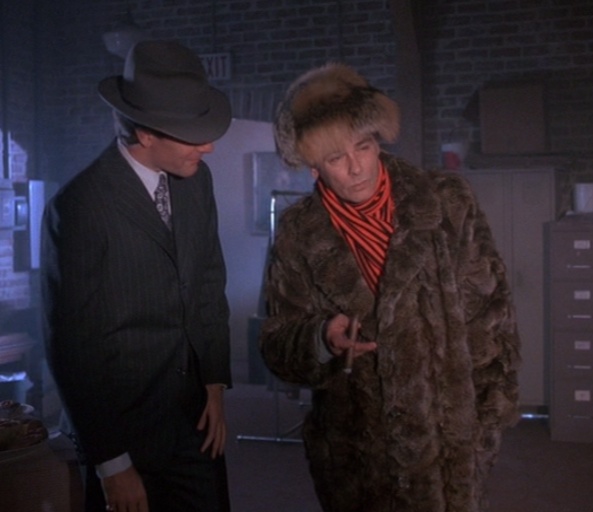

It's the shoes that continually get me. You always gotta check out the shoes, they're never your regular pair of loafers, ever.
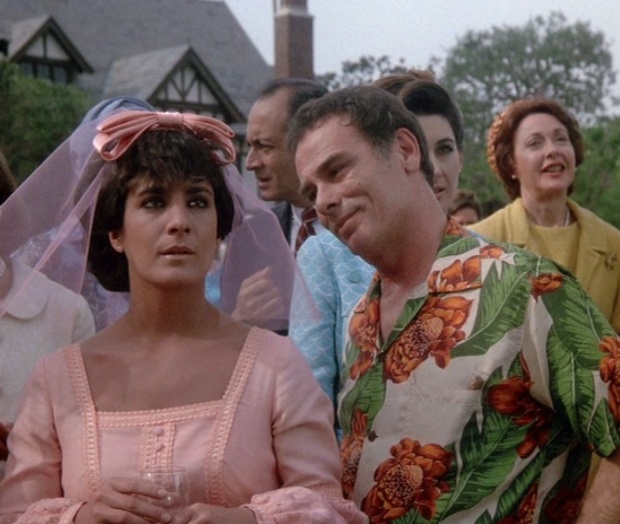

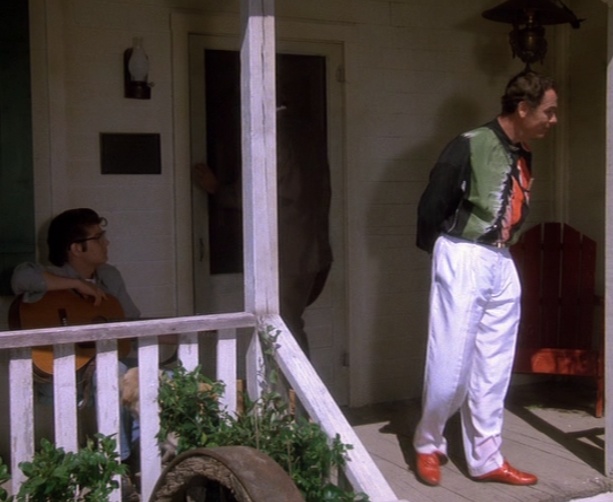
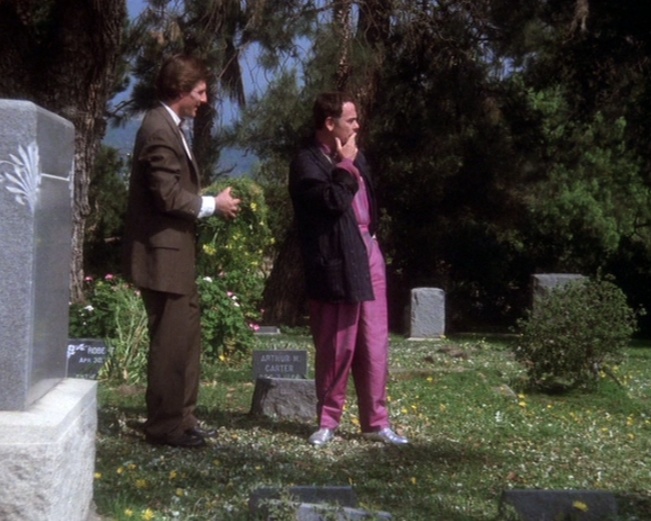
Again, it's the shoes that make the outfit.

What?? hahahaha
The Books: "The Grass Harp" - "The Headless Hawk" (Truman Capote)
Next book on my adult fiction bookshelves:
Still in the short-story collection The Grass Harp and a Tree of Night - by Truman Capote. Next story is "The Headless Hawk". I love this story, it seems to capture a certain era in New York (and actually, that New York does still exist - you just have to look a little harder) - and a certain area and season in New York ... it's very potent stuff, classic Capote.It's kind of a love story - between Vincent, who works in an art gallery - he's in his 30s - and a young girl, 18, who comes in one day to sell a painting she owns. She's a bit of a waif, she has nowhere to go, she's beautiful and mysterious. Capote, in this story, captures the feeling of almost unbearable loneliness in New York City on beautiful spring nights ... surrounded by humanity, the lonely person can feel as though he or she does not exist. Vincent is haunted by the girl who sold the painting to him ... but fears he will never see her again. I don't know - something about the prose here brings the ache of loneliness to life, so vividly.
It's the New York of Joseph Cornell and Edward Hopper - penny arcades, automats, organ grinders ...
Here's an excerpt.
Excerpt from The Grass Harp and a Tree of Night - by Truman Capote - "The Headless Hawk".
Then, too, he'd quite expected she would reappear, but February passed, and March. One evening, crossing the square which fronts the Plaza, he had a queer thing happen. The archaic hansom drivers who line that location were lighting their carriage lamps, for it was dusk, and lamplight traced through moving leaves. A hansom pulled from the curb and rolled past in the twilight. There was a single occupant, and this passenger, whose face he could not see, was a girl with chopped fawn-colored hair. So he settled on a bench, and whiled away time talking with a soldier, and a fairy colored boy who quoted poetry, and a man out airing a dachshund: night characters with whom he waited - but the carriage, with the one for whom he waited, never came back. Again he saw her (or supposed he did) descending subway stairs, and this time lost her in the tiled tunnels of painted arrows and Spearmint machines. It was as if her face were imposed upon his mind; he could no more dispossess it than could, for example, a dead man rid his legendary eyes of the last image seen. Around the middle of April he went up to Connecticut to spend a weekend with his married sister; keyed-up, caustic, he wasn't, as she complained, at all like himself. "What is it, Vinny, darling - if you need money ..." "Oh, shut up!" he said. "Must be love," teased his brother-in-law. "Come on, Vinny, 'fess up; what's she like?" And all this so annoyed him he caught the next train home. From a booth in Grand Central he called to apologize, but a sick nervousness hummed inside him, and he hung up while the operator was still trying to make a connection. He wanted a drink. At the Commodore Bar he spent an hour or so drowning four daiquiris - it was Saturday, it was nine, there was nothing to do unless he did it alone, he was feeling sad for himself. Now in the park behind the Public Library sweethearts moved whisperingly under trees, and drinking-fountain water bubbled softly, like their voices, but for all the white April evening meant to him, Vincent, drunk a little and wandering, might as well have been old, like the old bench-sitters rasping phlegm.
In the country, spring is a time of small happenings happening quietly, hyacinth shoots thrusting in a garden, willows burning with a sudden frosty fire of green, lengthening afternoons of long flowing dusk, and midnight rain opening lilac; but in the city there is the fanfare of organ-grinders, and odors, undiluted by winter wind, clog the air; windows long closed go up, and conversation, drifting beyond a room, collides with the jangle of a peddler's bell. It is the crazy season of toy balloons and roller skates, of courtyard baritones and men of freakish enterprise, like the one who jumped up now like a jack-in-the-box. He was old, he had a telescope and a sign: 25c See the Moon! See the Stars! 25c! No stars could penetrate a city's glare, but Vincent saw the moon, a round, shadowed whiteness, and then a blaze of electric bulbs: Four Roses, Bing Cro -- he was moving through caramel-scented staleness, swimming through oceans of cheese-pale faces, neon, and darkness. Above the blasting of a jukebox, bulletfire boomed, a cardboard duck fell plop, and somebody screeched: "Yay Iggy!" It was a Broadway funhouse, a penny arcade, and jammed from wall to wall with Saturday splurgers. He watched a penny movie (What the Bootblack Saw), and had his fortune told by a wax witch leering behind glass: "Yours is an affectionate nature" ... but he read no further, for up near the jukebox there was an attractive commotion. A crowd of kids, clapping in time to jazz music, had formed a circle around two dancers. These dancers were both colored, both girls. They swayed together slow and easy, like lovers, rocked and stamped and rolled serious savage eyes, their muscles rythmically attuned to the ripple of a clarinet, the rising harangue of a drum. Vincent's gaze traveled round the audience, and when he saw her a bright shiver went through him, for something of the dance's violence was reflected in her face. Standing there beside a tall ugly boy, it was as if she were the sleeper and the Negroes a dream. Trumpet-drum-piano, bawling on behind a black girl's froggy voice, wailed toward a rocking finale. The clapping ended, the dancers parted. She was alone now, though Vincent's instinct was to leave before she noticed, he advanced, and, as one would gently waken a sleeper, lightly touched her shoulder. "Hello," he said, his voice too loud. Turning, she stared at him, and her eyes were clear-blank. First terror, then puzzlement replaced the dead lost look. She took a step backward, and just as the jukebox commenced hollering again, he seized her wrist: "You remember me," he promoted, "the gallery? Your painting?" She blinked, let the lids sink sleepily over those eyes, and he could feel the slow relaxing of tension in her arm. She was thinner than he recalled, prettier, too, and her hair, grown out somewhat, hung in casual disorder. A little silver Christmas ribbon dangled sadly from a stray lock. He started to say, "Can I buy you a drink?" but she leaned against him, her head resting on his chest like a child's, and he said: "Will you come home with me?" She lifted her face; the answer, when it came, was a breath, a whisper: "Please," she said.
July 12, 2007
The Books: "The Grass Harp" - "Miriam" (Truman Capote)
Next book on my adult fiction bookshelves:
Still in the short-story collection The Grass Harp and a Tree of Night - by Truman Capote. Next story is "Miriam".
Miriam scares me! She is a small precocious child who shows up at somebody's door one snowy night and she is scary! An ominous creature, you know like those movies where little kids wear school uniforms and their eyes are serious and you are terrified of them. That's the impression this story gives me. Miriam. Shivers. The ending is pretty much a BOO! ending which scared the crap out of me when I first read it ... but I'll excerpt from earlier on in the story, when Miriam shows up for the second time.
I love Truman's writing. I don't know ... something about it always tastes good to me. A satisfying sensoral experience. Like the second sentence of the excerpt below. Lovely.
Excerpt from The Grass Harp and a Tree of Night - by Truman Capote - "Miriam".
It snowed all week. Wheels and footsteps moved soundlessly on the street, as if the business of living continued secretly behind a pale but impenetrable curtain. In the falling quiet there was no sky or earth, only snow lifting in the wind, frosting the window glass, chilling the rooms, deadening and hushing the city. At all hours it was necessary to keep a lamp lighted, and Mrs. Miller lost track of the days. Friday was no different from Saturday and on Sunday she went to the grocery; closed, of course.
That evening she scrambled eggs and fixed a bowl of tomato soup. Then, after putting on a flannel robe and cold-creaming her face, she propped herself up in bed with a hot-water bottle under her feet. She was reading the Times when the doorbell rang. At first she thought it must be a mistake and whoever it was would go away. But it rang and rang and settled to a persistent buzz. She looked at the clock: a little after eleven; it did not seem possible, she was always asleep by ten.
Climbing out of bed, she trotted barefoot across the living room. "I'm coming, please be patient." The latch was caught; she turned it this way and that way and the bell never paused an instant. "Stop it," she cried. The bolt gave way and she opened the door an inch. "What in heaven's name?"
"Hello," said Miriam.
"Oh ... why, hello," said Mrs. Miller, stepping hesitantly into the hall. "You're that little girl."
"I thought you'd never answer, but I kept my finger on the button; I knew you were home. Aren't you glad to see me?"
Mrs. Miller did not know what to say. Miriam, she saw, wore the same plum-velvet coat and now she had also a beret to match; her white hair was braided in two shining plaits and looped at the ends with enormous white ribbons.
"Since I've waited so long, you could at least let me in," she said.
"It's awfully late ..."
Miriam regarded her blankly. "What difference does that make? Let me in. It's cold out here and I have on a silk dress." Then, with a gentle gesture, she urged Mrs. Miller aside and passed into the apartment.
She dropped her coat and beret on a chair. She was indeed wearing a silk dress. White silk. White silk in February. The skirt was beautifully pleated and the sleeves long; it made a faint rustle as she strolled about the room. "I like your place," she said. "I like the rug, blue's my favorite color." She touched a paper rose in a vase on the coffee table. "Imitation," she commented wanly. "How sad. Aren't imitations sad?" She seated herself on the sofa, daintily spreading her skirt.
"What do you want?" asked Mrs. Miller.
"Sit down," said Miriam. "It makes me nervous to see people stand."
Mrs. Miller sank to a hassock. "What do you want?" she repeated.
"You know, I don't think you're glad I came."
For a second time Mrs. Miller was without an answer; her hand motioned vaguely. Miriam giggled and pressed back on a mound of chintz pillows. Mrs. Miller observed that the girl was less pale than she remembered; her cheeks were flushed.
"How did you know where I lived?"
Miriam frowned. "That's no question at all. What's your name? What's mine?"
"But I'm not listed in the phone book."
"Oh, let's talk about something else."
Mrs. Miller said, "Your mother must be insane to let a child like you wander around at all hours of the night - and in such ridiculous clothes. She must be out of her mind."
Miriam got up and moved to a corner where a covered bird cage hung from a ceiling chain. She peeked beneath the cover. "It's a canary," she said. "Would you mind if I woke him? I'd like to hear him sing."
"Leave Tommy alone," said Mrs. Miller, anxiously. "Don't you dare wake him."
"Certainly," said Miriam. "But I don't see why I can't hear him sing." And then, "Have you anything to eat? I'm starving! Even milk and a jam sandwich would be fine."
"Look," said Mrs. Miller, rising from the hassock. "look -- if I make some nice sandwiches will you be a good child and run along home? It's past midnight, I'm sure."
"It's snowing," reproached Miriam. "And cold and dark."
"Well, you shouldn't have come here to begin with," said Mrs. Miller, struggling to control her voice. "I can't help the weather. If you want anything to eat you'll have to promise to leave."
Miriam brushed a braid against her cheek. Her eyes were thoughtful, as if weighing the proposition. She turned toward the bird cage. "Very well," she said, "I promise."
Paris, Texas
Four for DBW.
One for me.


All Dean Stockwell stuff here
July 11, 2007
The Daily Dean Stockwell fix
I am deeply sad that The Secret Garden, from 1949, is not out on DVD - It MUST be soon, mustn't it? It's not like this was an obscure movie - and it still gets play today. I saw it as a child - at my cousins' house - probably around Thanksgiving (it gets play around holidays, mainly). I loved it - I had loved the book, of course, and loved the movie too. It didn't muck with my fantasy of the book - and I also loved that it was in black and white (mostly) - because in my head I saw the book in black and white, too. I also was a tiny burgeoning actress, and I was about Margaret O'Brien's age, and felt that I could SURELY have played that part just as good as she! I loved her!! I loved her high boots and her hat with the ribbon. Anyway, Dean Stockwell, age 11, plays Colin. I didn't know who he was, naturally - and I certainly wasn't aware of him as an actor, he was just "Colin". I also don't think - once I became aware of him in the 80s with films such as Paris Texas and Blue Velvet and Married to the Mob - that I put it together that he was the same person as that little curly-headed boy in the wheelchair. I do remember, however, the impression he made on me as a kid. I just wanted to crawl into the television and be IN that story. Especially the scene where they become friends, and scream at each other like banshees - as the entire staff of the house look on. They trash the room - she knocks crap over, he pulls the curtains of his bed down - they are FURIOUS at each other. In a RAGE. I haven't seen the movie in years, but I sure remember that scene, and how much I wanted to be in it, to ... it wasn't about "acting" it, it was about living it.
Anyway, the damn movie isn't rent-able as of now - but I found a montage of clips on Youtube - that includes the screaming/rampaging scene.
I am so happy right now! Weird - it's been 25 years or some such insane number - since I've seen the movie - and the scene is just as good as I remember.
Watch him go nuts. Watch him turn over the bedside table. This isn't child actor shit. It's not precocious acting crap that you see so often with little kids, who are more like trained dogs than actual talents - he's actually having a tantrum here. He HATES her. As a kid he was known as "One Take Stockwell" - he HATED any of it to feel like work - he loved the first take, he could do it on the first take, anything that dragged out further was the hugest bore, it sucked the life out of him. And the studios worked him to the bone - he resented it, felt completely controlled by it - and dropped out of regular civilization when he was 16, graduated from high school - changed his name, worked odd jobs in New Orleans and other cities - just to get away from being famous, and HAVING to do anything. He came back, obviously, in his twenties - but he came back because he loved it, not because he had to do it. As a kid - he obviously had a gift at this weird thing called acting - and as long as he could use it in one take, he felt okay about it. But to do it again? To have to admit that he was just pretending? No. That wasn't cool with One Take Stockwell.
Anyway - the clip is below. Enjoy!
It makes me DROOL to see the whole thing again though. Come on, folks, lets release a nice version of this on DVD with some extras, and interviews (both OBrien and Stockwell are alive) ... Let's get on this, huh?
Look at his luminous face listening to her bedtime story.
And the simple quiet way he says, "I shall live forever .... I shall live forever."
And listen to those two little kids scream at each other.
Heaven! Isn't there a petition I can sign to get this damn thing released??
All Dean Stockwell stuff here
On July 10, 1804
Alexander Hamilton wrote the following letter to this wife:
My beloved ElizaMrs. Mitchel is the person in the world to whom as a friend I am under the greatest Obligations. I have not hitherto done my duty to her. But resolved to repair my omission as much as possible, I have encouraged her to come to this Country and intend, if it shall be in my power to render the Evening of her days comfortable. But if it shall please God to put this out of my power and to inable you hereafter to be of service to her, I entreat you to do it and to treat her with the tenderness of a Sister.
This is my second letter.
The Scruples of a Christian have determined me to expose my own life to any extent rather than subject my self to the guilt of taking the life of another. This must increase my hazards & redoubles my pangs for you. But you had rather I should die innocent than live guilty. Heaven can preserve me and I humbly hope will but in the contrary event I charge you to remember that you are a Christian. God's Will be done. The will of a merciful God must be good.
Once more Adieu My Darling darling Wife
AH
Tuesday Evening 10 oClock
Early the next morning, July 11, 1804, my soon-to-be-dead boyfriend rowed across the Hudson with his second and a doctor. He rowed to the cliffs in Weehawken, a well-used dueling ground, to meet Aaron Burr. The shots were fired - and it is apparent, from comments he made later, that Hamilton knew he would die from them. He said to the doctor later, "This is a mortal wound, Doctor."
Excerpt from Willard Sterne Randall's Alexander Hamilton:
Alexander Hamilton lasted thirty-one hours after Aaron Burr shot him. When they finally got him into a bed on the second floor of Bayard's house on Chambers Street, he was nearly comatose. The doctor undressed him and administered a large dose of a strong anodyne, a painkiller. During the first day, Hosack gave Hamilton more than an ounce of opoium and cider potion, called laudanum, washing it down with watered wine. But, Hosack noted, "his sufferings during the whole day were almost intolerable." The ball had lodged inside his second lumbar disk, which had shattered, paralyzing his legs. His stomach was slowly filling with blood from severed blood vessels in his liver. Hosack "had not the shadow of a hope of his recovery," but he called in surgeons from French men-of-war anchored in the harbor who "had much experience in gunshot wounds." They agreed that Hamilton's condition was hopeless.During the night of July 11, the sedated Hamilton "had some imperfect sleep". He knew he had little time left to live: he asked Bayard to summon the Reverend Benjamin Moore, Episcopal bishop of New York and president of Columbia College, where Hamilton had once been a scholarship boy. In recent months, Hamilton had prayed Episcopal Matins and Vespers with his family at home. He had not attended any church since the Revolution. When the bishop arrived, he refused Hamilton Holy Communion after he learened that Hamilton not only had never been baptized an Episcopalian, but had been wounded in a duel, something Moore considered a mortal sin. Instead, the bishop gave Hamilton a lecture on the meaning of communion and left him to take some "time for serious reflection". Hamilton, clearheaded and determined now, asked the Bayards to send for the Reverend John M. Mason, pastor of the Presbyterian church and son of th eman who had once sponsored him for a place at a Presbyterian academy when he had arrived in New York, an orphan from the West Indies. Hamilton as a boy had undergone a strong Presbyterian conversion experience - although, as a bastard, he had not been allowed to receive Presbyterian communion. But this Reverend Mason informed Hamilton that he could only receive communion in church, at the altar, during a regular Sunday ceremony. Hamilton pleaded for Bayard to go once more to Bishop Moore and try to persuade him.
It was noontime on the twelfth, more than twenty-four hours after the duel, before Elizabeth Hamilton arrived with their seven children. No one had told her the truth. Hamilton, she believed, was suffering only from stomach cramps: he'd had digestive disorders recently. Now she learned everything. She became frantic. Hamilton had been semiconscious, his eyes closed. He opened them, saw his children. His own grief at seeing his daughter Angelica, half mad since her brother's death in a duel over his father's politics, swept over him. He closed his eyes again, only saying to his wife, "Remember, Eliza, you are a Christian." It was as if he had banished her. She left with the children, sobbing hysterically.
When Bishop Moore called again, he lectured Hamilton once more on his own "delicate" situation. He wanted to help "a fellow mortal in distress," but he must "unequivocally condemn" dueling. Hamilton agreed with him "with sorrow and contrition", Moore reported. If Hamilton survived, would he vow never to duel again and use his influence to oppose the "barbaric custom"? It was a promise Hamilton found easy to make. Would he live "in love and charity with all men"? He answered yes, he bore "no ill will" to Aaron Burr. "I forgive all that happened." He received communion "with great devotion," Moore recorded, and "his heart afterwards appeared to be perfectly at rest."
But Hamilton was now writhing in agony. He could not hear the commotion downstairs when a note arrived from Aaron Burr, asking about his condition, and worrying about a rumor that Hamilton had never intended to fire at him. When Bishop More returned the morning of the twelfth, he stayed at Hamilton's bedside - across the bed from another grief-stricken visitor, Hamilton's sister-in-law, Angelica Schuyler Church. She did not speak, nor did Hamilton. Over the years, they had been lovers. For nearly thirty years, Angelica Church had loved Hamilton more than her own dour, money-grubbing husband. Church, an expert duelist, had fled England after believing he had killed a man, changed his identity, grown rich selling supplies during the Revolution, and then returned to take a seat in Parliament. He often had left Angelica alone in their Manhattan mansion near Hamilton's town house while Elizabeth Schuyler stayed in the country with the children. John Church's pistols had finally ended the affair. Hamilton and Angelica could say nothing now. There was nothing more to say.
On July 12, 1804, shortly after noon, with his mistress and his bishop at his bedside, Alexander Hamilton died "without a groan". He was forty-nine.
The old dueling grounds are near my house - and I took some pictures of the monument that is now there. It was erected on July 11, 2004 - the 200th anniversary of the Hamilton-Burr duel.
Here are the pictures.

Some of my Hamilton posts below
Excerpt from Chernow's towering biography of the man
Letter to Lafayette 1789: "I dread the vehement character of your people"
1780: "A national debt ... will be to us a national blessing."
The Books: "The Grass Harp" - "A Jug of Silver" (Truman Capote)
Next book on my adult fiction bookshelves:
Still in the short-story collection The Grass Harp and a Tree of Night - by Truman Capote. Next story is "A Jug of Silver".
This story reminds me of Wise Blood, by Flannery O'Connor. Except without the real sense of evil and foreboding. "Jug of Silver" takes place in a small town. A young boy has an after-school job at the drugstore which is owned by a supposed Egyptian (there are doubts as to his origins). Mr. Hamurabai keeps a jug full of silver coins in the drugstore - and at a certain point, he is going to hold a contest - where those in the town can guess how much money is in the jug. Whoever guesses correctly will win the entire jug, money and all. The people in the town really get into it, there's a competition heating up - everyone wants that jug. And in the middle of this, two strangers come to town. And they change everything. I'll excerpt the part where the strangers arrive.
I kinda wanted to excerpt the final paragraphs - because they're perfect, in my opinion, but that would give the ending away to anyone who hasn't read it!
Excerpt from The Grass Harp and a Tree of Night - by Truman Capote - "A Jug of Silver".
At about this time Appleseed and sister made their first appearance.
He was a stranger in town. At least no one could recall ever having seen him before. He said he lived on a farm a mile past Indian Branches; told us his mother weighed ony seventy-four pounds and that he had an older brother who would play the fiddle at anybody's wedding for fifty cents. He claimed that Appleseed was the only name he had and that he was twelve years old. But his sister, Middy, said he was eight. His hair was straight and dark yellow. He had a tight, weather-tanned little face with anxious green eyes that had a very wise and knowing look. He was small and puny and high-strung; and he wore always the same outfit: a red sweater, blue denim britches and a pair of man-sized boots that went clop-clop with every step.
It was raining that first time he came into Valhalla; his hair was plastered round his head like a cap and his boots were caked with red mud from the country roads. Middy trailed behind as he swaggered like a cowboy up to the fountain where I was wiping some glasses.
"I hear you folks got a bottle fulla money you fixin' to give 'way," he said, looking me square in the eye. "Seein' as you-all are givin' it away, we'd be obliged iffen you'd give it to us. Name's Appleseed, and this here's my sister, Middy."
Middy was a sad, sad-looking kid. She was a good bit taller and older-looking than her brother: a regular bean pole. She had tow-colored hair that was chopped short, and a pale pitiful little face. She wore a faded cotton dress that came way up above her bony knees. There was something wrong with her teeth, and she tried to conceal this by keeping her lips primly pursed like an old lady.
"Sorry," I said, "but you'll have to talk with Mr. Marshall."
So sure enough he did. I could hear my uncle explaining what he would have to do to win the jug. Appleseed listened attentively, nodding now and then. Presently he came back and stood in front of the jug and, touching it lightly with his hand, said, "Ain't it a pretty thing, Middy?"
Middy said, "Is they gonna give it to us?"
"Naw. What you gotta do, you gotta guess how much money's inside there. And you gotta buy two bits' worth so's even to get a chance."
"Huh, we ain't got no two bits. Where you 'spec we gonna get us two bits?"
Appleseed frowned, and rubbed his chin. "That'll be the easy part, just leave it to me. The only worrisome thing is: I can't just take a chance and guess ... I gotta know."
Well, a few days later they showed up again. Appleseed perched on a stool at the fountain and boldly asked for two glasses of wter, one for him and one for Middy. It was on this occasion that he gave out the information about his family: "...and there's Papa Daddy, that's my mama's papa, who's a Cajun, an' on accounta that he don't speak English good. My brother, the one who plays the fiddle, he's been in jail three times ... It's on accounta him we had to pick up and leave Louisiana. He cut a fella bad in a razor fight over a woman ten years older'n him. She had yellow hair."
Middy, lingering in the background, said nervously, "You oughtn't to be tellin' our personal private fam'ly business thataway, Appleseed."
"Hush now, Middy," he said, and she hushed. "She's a good little gal," he added, turning to pat her head, "but you can't let her get away with much. You go look at the picture books, honey, and stop frettin' with your teeth. Appleseed here's got some figurin' to do."
This figuring meant staring hard at the jug, as if his eyes were trying to eat it up. With his chin cupped in his hand, he studied it for a long period, not batting his eyelids once. "A lady in Louisiana told me I could see things other folks couldn't see 'cause I was born with a caul on my head."
"It's a cinch you aren't going to see how much there is," I told him. "Why don't you just let a number pop into your head, and maybe that'll be the right one."
"Uh, uh," he said, "too darn risky. Me, I can't take no sucha chance. Now, the way I got it figured, there ain't but one sure-fire thing and that's to count every nickel and dime."
"Count!"
"Count what?" asled Hamurabi, who had just moseyed inside and settling himself at the fountain.
"This kid says he's going to count how much is in the jug," I explained.
Hamurabi looked at Appleseed with interest. "How do you plan to do that, son?"
"Oh, by countin'," said Appleseed matter-of-factly.
Hamurabi laughed. "You better have X-ray eyes, son, that's all I can say."
"Oh, no. All you gotta do is be born with a caul on your head. A lady in Louisiana told me so. She was a witch; she loved me and when my ma wouldn't give me to her she put a hex on her and now my ma don't weigh but seventy-four pounds."
"Ve-ry in-ter-esting," was Hamurabi's comment as he gave Appleseed a queer glance.
Middy sauntered up, clutching a copy of Screen Secrets. She pointed out a certain photo to Appleseed and said, "Ain't she the nicest-lookin' lady? Now you see, Appleseed, you see how pretty her teeth are? Not a one outa joint."
"Well, don't you fret none," he said.
After they left Hamurabi ordered a bottle of orange Nehi and drank it slowly, while smoking a cigarette. "Do you think maybe that kid's o.k. upstairs?" he asked presently in a puzzled voice.
July 10, 2007
RIP Charles Lane
Charles Lane - one of last century's greatest and most prolific character actors - has just died at the age of 102.

Take a look at the guy's resume. Take a look at some of those titles. It's astonishing, the longevity. And also: the goodness of him, the straightforward no-bullshit spot-on goodness. He is ALWAYS good, no matter what the part, what the demands ... This guy was a jack of all trades. I believe there was nothing he could not do. Do you know how few people have careers of such longevity in acting? It's hard to keep fresh. It's hard to not have an ego. It's hard to keep the joy alive. He did. At the ripe young age of 100, he announced at an Awards ceremony, "I'm still available for work!" God bless him.
I noticed this URL in my referral log, and it is a marvelous tribute to Charles Lane's appearance on St. Elsewhere - thank you so much for your eloquence! She writes:
That performance has stayed with me for 20 years, and goes into my "unforgettable" file. Great fictional TV doesn't change the world, but it gave me a glimpse of what's good about humanity. I need that sometimes.
God, God, yes.
Edward Copeland has a tribute too.
Here is Dennis' post on the occasion of the man's 101st birthday.
I wrote a long post over a year ago about Charles Lane in the TV movie Sybil. It goes all over the place, at times - but I re-post it below, as a meager tribute to a man who has enriched my life immeasurably, just from all of his parts he's played, the example he's set, and the kind of actor he is. It is the kind of actor I most admire.
102 years old. Holy smokes.
Rest in peace, dear dear Charles Lane. I treasure your performances in my heart.
IN PRAISE OF CHARLES LANE
I watched Sybil last night. I've seen it a gazillion times. So what the hell. I sat down to watch that wrenching thing AGAIN. I've got a lot to say about it - about the acting, in particular - but I just wanted to write a small post of praise for Charles Lane, who plays the small-town doctor from Sybil's home town. He has one scene, and I've gotta say: he knocks that shit OUT OF THE PARK.
THIS is the kind of acting I love. I mean, I love my stars, too, you know I love my big ol' movie stars ... but the acting that really turns me on are these random people, these character actors, who show up - do their job SO WELL - and never get the glory. Mitchell and Alex and I talk a lot about people who we think win "10 minute Oscars". By that we mean - the people who do not star in the films, but without whom the entire film would not work. People who just kick some serious ASS in their parts. My favorite "10 minute Oscar" is Brooke Smith's acting in Silence of the Lambs. She's the girl in the bottom of the well. Jodie Foster and Anthony Hopkins star - and they both give unforgettable performances. (Interesting that Hopkins is only on screen in that film for 15 minutes himself. Isn't that wild??? It seems like he is in it for MUCH longer - but he is not. Phenomenal. So I guess he DID win an Oscar for a performance not much longer than 10 minutes!) But back to these more unknown actors who show up and do their jobs like nobody's business: without the scenes of Brooke Smith in the well - the film would not have the same impact. And she just GOES THERE. What I love about her performance is that, obviously, she is a victim of circumstance. I mean, good Lord. She's AT THE BOTTOM OF A WELL. That sucks. But she is not a docile creature - she doesn't JUST weep and wail - We also see her strategizing. We see her kidnap the dog. Smart!!! I love when she's coaxing the dog down - she's using the normal voice you use when you're talking to a dog - but she's so pissed, so DETERMINED that she will survive this ordeal - that she also says stuff like, "Come on, you little fucker ... get in the fucking basket ..." I love that. It's so real. And yet so unexpected. A lesser actor would just play the victim. She would play to the hilt the "oh my God, I am so TRAPPED" - Brooke Smith plays that as well, but she also expresses the rage one would feel when one is so trapped. It's a fantastic choice. She seems like a real girl. I also love when Jodie Foster bursts into the room - and then says down into the well, "Okay ... I'll be right back." And we hear Brooke Smith start shouting, "Don't leave me - you fucking bitch!!!" hahahahaha I just love that. She's not just falling over herself in gratitude ... she has HAD it ... she wants OUT. Do not leave me down here!! Anyway - for me, that's a perfect example of a 10-minute Oscar. She knocks it out of the park. The movie wouldn't be the same without her performance. Even though the two big stars show up and do THEIR jobs really really well too. I've met Brooke Smith a couple of times - at stage readings, and stuff like that, and I have no idea how to say, "Uhm ... you won a 10 minute Oscar in my mind!!!"
So back to Charles Lane. Here he is - this is about the age he was when he played this part in Sybil.

Joanne Woodward plays the psychiatrist Dr. Wilbur. I have so much more to say about Joanne Woodward ... I need to do a big Woodward post - she's one of my favorite actresses - but I will keep my focus. I will try, anyway. So anyway, Dr. Wilbur ends up taking a trip to Sybil's old hometown to see if she can kind of piece together Sybil's childhood for her - since Sybil can't remember any of it. She goes and looks up the old doctor who used to treat Sybil for the "normal childhood aches and pains" - to see if he could maybe illuminate anything for her. Charles Lane plays that doctor, Dr. Quinoness. He doesn't have any huge emotional outbursts, he doesn't have any showy explosion of rage ... His part is simple. He is a country doctor. He works out of his house. He has been a doctor for seventy years. He has wonderful manners, he is welcoming and kind. The kind of man you would love to have as your doctor. You just GET that from the second he appears on screen. He ushers Dr. Wilbur into his office, and he's carrying a tea tray with a teapot, and a couple of mugs on it, a little creamer. Just the way he offers her the tea tells you everything you need to know about his character. He's old-fashioned, he's kind, and he is welcoming to this outsider - she may be an outsider, and she may be a woman wearing a white pant suit with a big Peter Pan collar (I love Woodward's clothes in this movie - they're SO mid-1970s!!) - but she is also a doctor, and he treats her with respect. As a colleague. I don't know - it's really subtle - but without that colleague-to-colleague honesty and respect, the scene wouldn't work.
Joanne Woodward's acting in this entire film is literally masterful. But I'll write about her later. Argh. Getting sidetracked!! Even though Dr. Wilbur is angry at what has happened to Sybil, even though she is in a rage at what happened to this little girl, she doesn't bring that anger to this scene. She is on a fact-finding mission ... and this man was not one of the evil-doers. She's appropriate with him. He is a fellow doctor. She starts asking questions about Sybil's health when she was a child. He is kindly, and tells about when Sybil had her tonsils out, and how frightened she was. Dr. Wilbur says, "Did you ever treat her for anything else?" This is when he says, "Oh, the normal childhood aches and pains." Woodward then asks if he still has the file - "I would consider it a great professional courtesy if I could have a look at it." There's no animosity here. Charles Lane gets up from his desk, "Let me see if I still have her file ..." He goes to a file cabinet and shuffles through the folders. He is forthcoming, direct ... he's not CONSCIOUSLY hiding anything. But at the end of the scene, we realize that ... he knew. He knew what was happening to Sybil. I just got goosebumps all over again remembering the last moment of the scene ... But I'm getting ahead of myself.
He finds the file. He sits back down and starts reading out loud: "Fractured elbow. Hand burned from the stove. Fractured larynx. Broken ankle." Etc. The list goes on. As he reads, you can feel his energy change. It's like - seeing it all in one place, hearing the litany of horrible injuries ... makes him realize the reality - makes him SEE, yet again, after so many years, what was so obvious at the time.
Charles Lane trails his voice away ... there's a long silence between the two of them. Nobody speaks.
Woodward says, "Normal childhood aches and pains, huh?" But she doesn't say it with hostility, or as an attack on him. She's just pointing out what she sees. I love how she says that line. Then she says, curiously, "Did you ever speculate?"
This is where Lane's beautiful acting really comes to the fore. And I have to say this: he does the rest of the scene, except for the final moment, looking out of the window. We do not see his face. He stands with his back to her, talking ... An actor needs his face. The actor's face is one of the most important ways he can tell his story. BUT - oh how powerful it is to have an actor turn his back to us ... How much it can tell you about the emotions he is experiencing, it can be extremely powerful - if used effectively. This is what Charles Lane does here.
He gets up. Goes to the window. His BACK is eloquent. Do you get that? His very BACK is eloquent. You just FEEL for this man, this WITNESS. This kindly gentle man ... who had had evidence of horrible child abuse in his town ... and had done nothing.
After a while, he starts speaking. He leads off with: "I've never told anyone this before ..."
It's a moment that makes me catch my breath every time I see it. Again, he doesn't do it in an overdramatic way, he's not being an ACTOR in this moment. He's being a PERSON. A man, an old man, who has kept a secret for thirty years. He knew. He knew.
But he doesn't show his hand too early, as an actor - and this is why the moment is so powerful. He doesn't greet Dr. Wilbur with a guilty conscience. He doesn't SHOW us the things that the character himself doesn't even know yet. He's not being protective of himself. But once he reads all of her injuries out loud ... he knows that his moment of reckoning has come. He remembers. And it's a painful moment for him. This is why he stands and looks out the window. He is filled with grief at his inaction back then. Again, though: none of this is overplayed. You don't think: "Oooh, look at this actor having a great moment." You think: "This man is tormented. This poor man."
Now this next will be a paraphrase - I wish I had the script in front of me, but this is the general idea:
He says, staring out the window ... all we get of him is his back - his slightly stooped over back, "I treated her for a bladder infection when she was five years old ... very unusual for a child of her age ... I would imagine if you did a gynecological exam on her now, you would see what I did. Scarring of the inner walls, hardened destroyed tissue. Now - we know that the Lord sometimes creates mistakes in nature - but the Almighty had nothing to do with what I saw inside that little girl."
It is an absolutely devastating moment.
Woodward just sits there, listening. She doesn't speak. She doesn't need to.
Then - Charles Lane - the beautiful character actor Charles Lane - turns around and looks at Woodward.
He says, "I imagine in your line of work, you hear a lot of confessions."
Again: it is a devastating moment. Beautifully and simply played. He doesn't say "will you hear my confession?" It is implied. He wants forgiveness. It is out in the open now. Not just what happened to Sybil - but his complicity in it. He does not START the scene with this self-knowledge. Dr. Quinoness has not been walking around with a load of guilt for 30 years. He has suppressed what he saw way back then. But now he remembers. And it is a terrible terrible moment for him. This kindly old man, wearing glasses, and a black suit. A terrible moment for him.
Dr. Wilbur says to him, kindly, "Dr. Quinoness, it was a long long time ago."
Cut back to Charles Lane, looking at her. His face is simple, open, and pained. He says, and he is truly asking, "How do I find absolution?"
Cut back to Woodward, looking up at him. She has no answer for him.
The scene ends there.
There are many other amazing scenes in the film with some of the best acting I honestly have ever seen ... but that small scene between Charles Lane and Joanne Woodward is my favorite in the entire film.
It's because of what he brings to it.
In less than 5 minutes, he creates a completely three-dimensional character. It's a very important scene - because of the information it imparts. Charles Lane's part is simple: he is there to provide some exposition. That's it. That's the point of the scene. Dr. Wilbur gets confirmation of Sybil's abuse. Now she knows. It's confirmed. But - and this is partly because of the writing - which is quite good - in this scene in particular: Charles Lane takes it to another level in those last two moments - looking out the window, not being able to face her as he confesses that he knew ... and then turning back to look at her - asking for absolution.
It's just a perfectly played scene, on every level it needs to be. Not EVERY actor who has a small part in a big film shows up and makes such an impression. Not EVERY actor knocks a 5 minute scene out of the park. It's very difficult. It's almost easier to STAR in something - because you can develop your character over time, you have many scenes to do it in, you can show THIS side of the person you're playing in THIS scene, you can show THAT side of the person you're playing in ANOTHER scene - You have TIME. I mean, you have more pressure on you, of course ... but at least you have a lot of screen time to do your job. Not so with our 10-minute Oscar crowd. They have ONE scene, sometimes ... and they MUST nail it - in less than 10 minutes. It's tough, man.
So I just want to take a moment to sing the praise of Charles Lane's unsung work in Sybil. It's perfection.
Here is his long resume. He was already an old man when he filmed Sybil - and he is still alive. He just celebrated his 100th birthday. He was actually honored at last year's Emmys - he was one of the founders of the television academy - and he is now its oldest surviving member. I loved this bit of trivia:
Was honored on March 16, 2005 at the TVLand Awards for his long career and his 100th birthday. When he received his award, he said in his still-booming voice, "In case anyone's interested, I'm still available!"
God bless him!!
But his career ... I mean, LOOK at this career.
THAT is the career of a character actor. Stars' resumes are always much shorter. Character actors, successful ones, do 10 movies to a star's one. They show up, do their job for 3 days, and move on to the next one. Charles Lane worked constantly in television - appearing multiple times on I Love Lucy and many other classics.
He has been working since the early 30s. He was in Twentieth Century, he was in It's a Wonderful Life - he was in Arsenic and Old Lace - he was in Mr. Smith Goes to Washington - Also, as I scrolled down his resume, I noticed how many times he was "uncredited". He was a workman. Showed up, said his 5 lines, moved on to his next job. Bless those people.
Charles Lane said, "Having had so many small parts, there was a character I played that showed up all the time and people did get to know him, like an old friend."
Old friend indeed. He brings his history with him to every part. You may think of him as "that guy". Oh, wait - that's that guy!!
His work in Sybil is what I, personally, love about acting. It's the kind of thing where I look at it and think: "That. That is what I admire. That is what I want to do." There's no vanity in it. There's an understanding of script analysis - there's an understanding of how your part fits in to the whole - there's also a fearlessness in just doing what the part demands.
Watch how he turns back to her from looking out the window. Watch how he says, "How do I find absolution?"
It don't get any better than that.
Montage o' satin shoes
... from one of my new favorite blogs: Old Hollywood Glamour
The daily Dean Stockwell fix
Thoughts on The Manchurian Candidate ... and Gentleman's Agreement.

From The Manchurian Candidate.
Stockwell is barely in this one, has maybe 3 lines - but then a big ol' closeup in that final scene (seen above), where his world crashes around him. That's a star closeup. The camera has moved in on him slowly - it's all in one unbroken take - but he saves the "money" intensity til the camera is closest. He's modulating whats happening in him, holding back the good stuff - until he knows it can be seen. I love crap like that, obviously - it's the unsung great moments of people just doing their job.
Stockwell doesn't like a lot of things. He doesn't like to rehearse, he doesn't like to do research, he doesn't like to talk about the scene beforehand - he doesn't like a lot of talk. What he DOES like is to know what camera lens will be used, how the shot is set up, how the camera will move - and other technical issues - because he needs to know how he will fit in to all of THAT. He said that this has been the case since he was a little kid, and an old pro by the age of 9.
On Gentleman's Agreement - when he was 8 years old - Elia Kazan, the director, came up to him before a big crying scene. Stockwell, as a kid, dreaded crying scenes. He would get a new script, and flip through it looking for any tears he would have to shed - and if there were tears, he would worry about it and dread it for the entire shoot. So he had to cry in Gentleman's Agreement. Kazan pulls him aside and starts giving him pointers, saying, "Maybe you should think about, you know, a puppy you loved who died ... anything that makes you sad ..." Stockwell, a CHILD, nodded at Kazan, whatever - easier just to agree with those who are so much LARGER than you. "Yeah, uh huh, I'll think of a puppy, sure, dead puppy ..." Then right before the scene, he rubbed his eyes as hard as he could for about a minute, until they were good and irritated and full of tears - and played the scene with the remnants of the tears in his eyes, that had NOTHING to do with emotion and everything to do with IRRITATED EYEBALLS.
And he's the best thing in that movie. He sure as shit acts Gregory Peck off the screen. And I like Gregory Peck, but he is a big fat self-righteous wooden YAWN in Gentleman's Agreement.
It doesn't matter whether or not Stockwell's tears were "real". If it seems like they are, to us, we will be moved.
"Yeah, Kazan, dead puppy, whatevs ... I know you're Mr. Actors Studio Marlon Brando METHOD man, but I got my own method, pal, even though I'm EIGHT and I'll just rub my eyeballs out of their sockets to get some good tears, mkay? ACTION!"
Stockwell has said he didn't know why "they" wanted him in Manchurian Candidate - but I would imagine Demme (also director of Married to the Mob) wanted to surround the main characters with a solid supporting cast of great character actors - to give the film weight, and reality - and you can see them everywhere (also, you can see a lot of Demme regulars, if you look closely) - like, Bill Irwin (wonderful actor) plays the Boy Scout troupe leader - he has 2 sentences of dialogue - that's IT - he's a glorified extra but he just NAILS it. Stockwell plays one of the big-wigs at Manchurian Global - whose entire life and career depends on Shaw being elected. He has propped up the campaigns of Eleanor Prentiss Shaw - she can pretty much thank the company personally for keeping her elected.
Stockwell also has said that acting with Meryl Streep - being in a scene with her - was a revelation of just what a damn genius she really is.

All Stockwell stuff HERE
The Books: "The Grass Harp" - "Shut a Final Door" (Truman Capote)
Next book on my adult fiction bookshelves:
Still in the short-story collection The Grass Harp and a Tree of Night - by Truman Capote. Next story is "Shut a Final Door". The strangest thing to me about this story is that it was written in the 1940s - and yet appears to describe to a T the disaster awaiting Capote later in his life, when all of his friends abandoned him - due to the betrayal they felt after the publication of one chapter of his much-buzzed-about new book - which turned out to be a bitchy expose of the shallowness of all of his friends. Capote never recovered emotionally from the shattering experience of being dropped by everybody - it was like one minute he was throwing the black and white ball, the toast of the city - and the next? His phone stopped ringing completely. This story is about a man being cut off like that, and knowing, without anyone having to tell him, how much he is despised. Capote wrote this story as a young man, but it's oddly prophetic. You would totally think he had drawn on the Cote d'Azur debacle - but no, this came from his potent imagination. Perhaps he always knew how fragile his standing would ALWAYS be, with anyone. Who knows.
A guy named Walter hides out in a hot hotel room, running away from the catastrophe in New York - he has been a shit-disturber (the details elude me) - something to do with his boss, and the girl he is screwing - He's a gossip, and also relatively cynical. Sort of a monster if you want to know the truth. Slowly, a series of events lead to Walter being fired - and to him being "shunned" by his fabulous group of friends. It happens quite suddenly. One day, he is no longer welcome in his own life.
And its not just upsetting. It's scary. Because he is hated, and he knows it.
Here's an excerpt:
Excerpt from The Grass Harp and a Tree of Night - by Truman Capote - "Shut a Final Door".
His apartment, a one-room walk-up near Gramercy Park, needed an airing, a cleaning, but Walter, after pouring a drink, said to hell with it and stretched out on the couch. What was the use? No matter what you did or how hard you tried, it all came finally to zero; everyday everywhere everyone was being cheated, and who was there to blame? It was strange, though; lying here sipping whiskey in the dusk-graying room he felt calmer than he had for God knows how long. It was like the time he'd failed algebra and felt so relieved, so free: failure was definite, a certainty, and there is always peace in certainties. Now he would leave New York, take a vacation trip; he had a few hundred dollars, enough to last until fall.
And, wondering where he should go, he all at once saw, as if a film had commenced running in his head, silk caps, cherry-colored and lemon, and little, wise-faced men wearing exquisite polka-dot shirts. Closing his eyes, he was suddenlyl five years old, and it was delicious remembering the cheers, the hot dogs, his father's big pair of binoculars. Saratoga! Shadows masked his face in the sinking light. He turned on a lamp, fixed another drunk, put a rumba record on the phonograph, and began to dance, the soles of his shoes whispering on the carpet: he'd often thought that with a little training he could've been a professional.
Just as the music ended, the telephone rang. He simply stood there, afraid somehow to answer, and the lamplight, the furniture, everything in the room went quite dead. When at last he thought it had stopped, it commenced again; louder, it seemed, and more insistent. He tripped over a footstool, piked up the receiver, dropped and recovered it, said: "Yes?"
Long0distance, a call from some town in Pennsylvania, the name of which he didn't catch. Following a series of spasmic rattlings, a voice, dry and sexless and altogether unlike any he'd ever heard before, came through: "Hello, Walter."
"Who is this?"
No answer from the other end, only a sound of strong orderly breathing; the connection was so good it seemed as though whoever it was was standing beside him with lips pressed against his ear. "I don't like jokes. Who is this?"
"Oh, you know me, Walter. You've known me a long time." A click, and nothing.
July 9, 2007
Letters
The following exchange of letters pleased me so much.
How much do I want to join those two for cocktails and see what they talk about!!?
The Books: "The Grass Harp" - "Children on Their Birthdays" (Truman Capote)
Next book on my adult fiction bookshelves:
Still in the short-story collection The Grass Harp and a Tree of Night - by Truman Capote. Next story is "Children on Their Birthdays". I remember having to read this in 7th or 8th grade. It's the story of a group of kids in a little Southern town, written in the first person. A new girl comes to town - a kind of fabulous bragging little creature, who calls herself Miss Bobbit. She is 10 years old, and she is going to be a Hollywood star. Just ask her, she'll tell you.
I love the voice of this story. Truman's great. Here's the opening (great opening)
Excerpt from The Grass Harp and a Tree of Night - by Truman Capote: "Children on Their Birthdays".
Yesterday afternoon the six-o'clock bus ran over Miss Bobbit. I'm not sure what there is to be said about it; after all, she was only ten years old, still I know no one of us in this town will forget her. For one thing, nothing she ever did was ordinary, not from the first time that we saw her, and that was a year ago. Miss Bobbit and her mother, they arrived on that same six-o'clock bus, the one that comes through from Mobile. It happened to be my cousin Billy Bob's birthday, and so most of the children in town were here at our house. We were sprawled on the front porch having tutti-frutti and devil cake when the bus stormed around Deadman's Curve. It was the summer that never rained; rusted dryness coated everything; sometimes when a car passed on the road, raised dust would hang in the still air an hour or more. Aunt El said if they didn't pave the highway soon she was going to move down to the seacoast; but she'd said that for such a long time. Anyway, we were sitting on the porch, tutti-fruitti melting on our plates, when suddenly, just as we were wishing that something would happen, something did; for out of the red road dust appeared Miss Bobbit. A wiry little girl in a starched, lemon-colored party dress, she sassed along with a grownup mince, one hand on her hhip, the other supporting a spinsterish umbrella. Her mother, lugging two cardboard valises and a wind-up victrola, trailed in the background. She was a gaunt shaggy woman with silent eyes and a hungry smile.
All the children on the porch had grown so still that when a cone of wasps started humming the girls did not set up their usual holler. Their attention was too fixed upon the approach of Miss Bobbit and her mother, who had by now reached the gate. "Begging your pardon," called Miss Bobbit in a voice that was at once silky and childlike, like a pretty piece of ribbon, and immaculately exact, like a movie-star or a school-marm, "but might we speak with the grownup persons of the house?" This, of course, meant Aunt El; and, at least to some degree, myself. But Billy Bob and all the other boys, no one of whom was over fourteen, followed down to the gate after us. From their faces you would have thought they'd never seen a girl before. Certainly not like Miss Bobbit. As Aunt El said, whoever heard tell of a child wearing make-up? Tangee gave her lips an orange glow, her hair, rather like a costume wig, was a mass of rosy curls, and her eyes had a knowing penciled tilt; even so, she had a skinny dignity, she was a lady, and, what is more, she looked you in the eye with manlike directness. "I'm Miss Lily Jane Bobbit, Miss Bobbit from Memphis, Tennessee," she said solemnly. The boys looked down at their toes, and, on the porch, Cora McCall, who Billy Bob was ourting at the time, led the girls into a fanfare of giggles. "Country children," said Miss Bobbit with an understanding smile, and gave her parasol a saucy whirl. "My mother," and this homely woman allowed an abrupt nod to acknowledge herself, "my mother and I have taken rooms here. Would you be so kind as to point out the house? It belongs to a Mrs. Sawyer." Why, sure, said Aunt El, that's Mrs. Sawyer's, right there across the street. The only boarding house around here, it is an old tall dark place with about two dozen lightning rods scattered on the roof: Mrs. Sawyer is scared to death in a thunderstorm.
Coloring like an apple, Billy Bob said, please, maam, it being such a hot day and all, wouldn't they rest a spell and have some tutti-frutti? and Aunt El said yes, by all means, but Miss Bobbit shook her head. "Very fattening, tutti-frutti; but merci you kindly," and they started across the road, the mother half-dragging her parcels in the dust. Then, and with an earnest expression, Miss Bobbit turned back; the sunflower yellow of her eyes darkened, and she rolled them slightly sideways, as if trying to remember a poem. "My mother has a disorder of the tongue, so it is necessary that I speak for her," she announced rapidly and heaved a sigh. "My mother is a very fine seamstress; she has made dresses for the society of many cities and towns, including Memphis and Tallahassee. No doubt you have noticed and admired the dress I am wearing. Every stitch of it was handsewn by my mother. My mother can copy any pattern, and just recently she won a twenty-five-dollar prize from the Ladies' Home Journal. My mother can also crochet, knit and embroider. If you want any kind of sewing done, please come to my mother. Please advise your friends and family. Thank you." And then, with a rustle an a swish, she was gone.
July 8, 2007
Happy place
I have been working so hard this week, and things are getting (getting?) kind of intense. There are hormonal forces at work as well.
I've been up since 5:30 this morning, working.
So I figure I've earned leisure time. For me, this means watching the Quantum Leap pilot. Now: I was a huge fan of the show originally - but I had forgotten much of it. The script is pretty terrific, for a pilot - and naturally, I think Dean Stockwell is the best thing in it. Although Scott Bakula is no small talent either. But it's all about Stockwell for me - and that was the case back when it was on originally, too. I just find him so entertaining - that's what I love about him. He's entertaining.
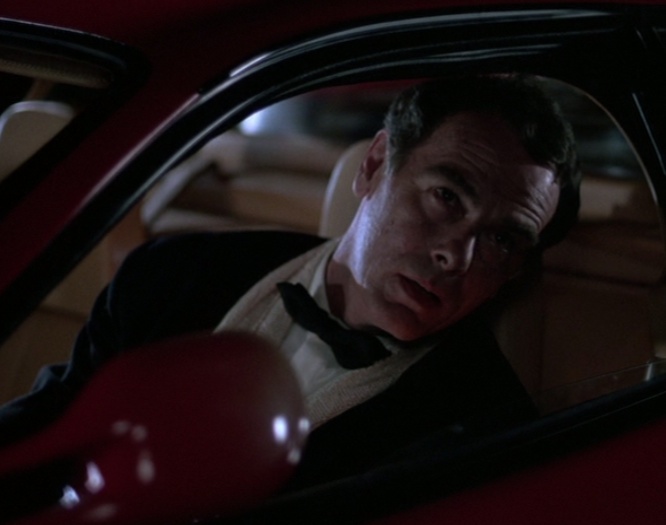
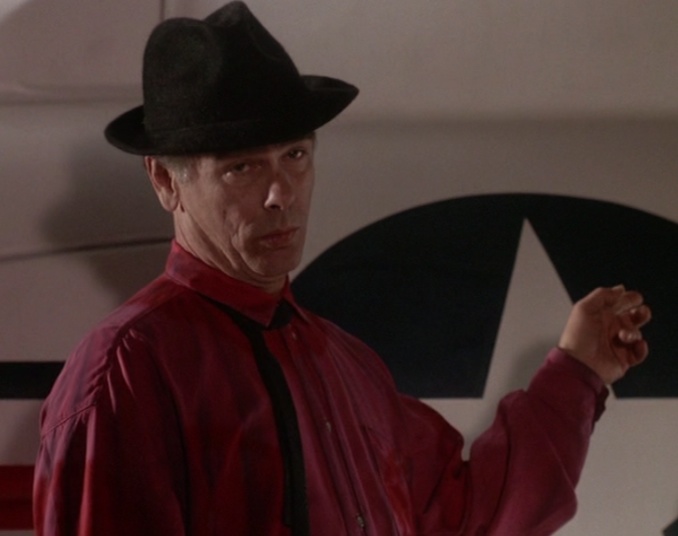
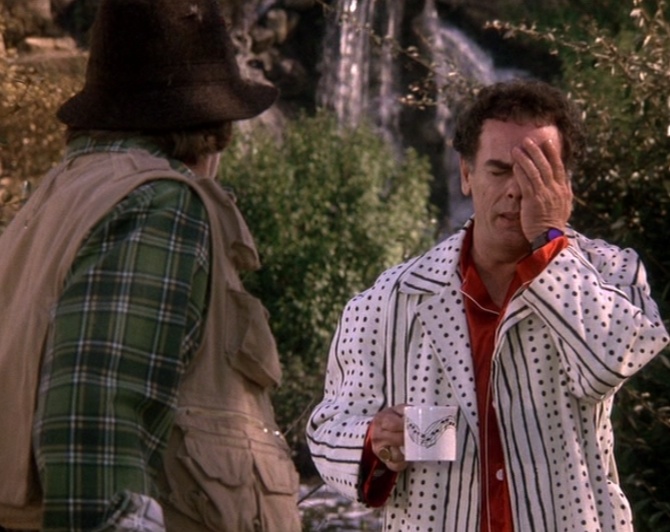
More thoughts on Dean Stockwell here.
The Books: "The Grass Harp" - "Master Misery" (Truman Capote)
Next book on my adult fiction bookshelves:
Still in the short-story collection The Grass Harp and a Tree of Night - by Truman Capote. Next story in the collection is a haunting beautifully written piece called "Master Misery". There are elements of Breakfast at Tiffany's here - young girl in New York, navigating around. Many of his short stories take place in the South, Truman's main source of inspiration - his childhood home. But New York has its own energy source for Truman, its own poetry - and here he taps into it. I LOVE the writing here - great characters too. Sylvia, the ingenue, is in New York - living with her sister and her sister's husband. She ends up meeting a man who "buys dreams". Literally - you tell him a dream you had, and he will pay you.
There's a melancholic creepiness at work here ... what happens when you sell your dreams, etc. But the symbolism isn't too overt - Capote sticks with his story. Mr. Revercomb buys your dreams. Sylvia sells one. Then she sells two. And then things start to change for her.
I particularly like the opening of this story, so I'll excerpt that.
Excerpt from The Grass Harp and a Tree of Night - by Truman Capote - "Master Misery"
Her high heels, clacking across the marble foyer, made her think of ice cubs rattling in a glass, and the flowers, those autumn crysanthemums in the urn at the entrance, if touched they would shatter, splinter, she was sure, into frozen dust; yet the house was warm, even somewhat overheated, but cold, and Sylvia shivered, but cold, like the snowy swollen wastes of the secretary's face: Miss Mozart, who dressed all in white, as though she were a nurse. Perhaps she really was; that, of course, could be the answer. Mr. Revercomb, you are mad, and this is your nurse; she thought about it for a moment: well, no. And now the butler brought her scarf. His beauty touched her: slender, so gentle, a Negro with freckled skin and reddish, unreflecting eyes. As he opened the door, Miss Mozart appeared, her starched uniform rustling drylly in the hall. "We hope you will return," she said, and handed Sylvia a sealed envelope. "Mrs. Revercomb was most particularly pleased."
Outside, dusk was falling like blue flakes, and Sylvia walked crosstown along the November streets until she reached the lonely upper reaches of Fifth Avenue. It occurred to her then that she might walk home through the park: an act of defiance almost, for Henry and Estelle, always insistent upon their city wisdom, had said over and over again, you have no idea how dangerous it is, walking in the park after dark; look what happened to Myrtle Calisher. This isn't Easton, honey. That was the other thing they said. And said. God, she was sick of it. Still, and aside from a few of the other typists at SnugFare, an underwear company for which she worked, who else in New York did she know? Oh, it would be all right if only she did not have to live with them, if she could afford somewhere a small room of her own: but there in that chintz-cramped apartment she sometimes felt she would choke them both. And why did she come to New York? For whatever reason, and it was indeed becoming vague, a principal cause of leaving Easton had been to rid herself of Henry and Estelle; or rather, their counterparts, though in point of fact Estelle was actually from Easton, a town north of Cincinnati. She and Syvia had grown up together. The real trouble with Henry and Estelle was that they were so excruciatingly married. Nambypamby, bootsy-totsy, and everything had a name: the telephone was Tinkling Tillie, the sofa, Our Nellie, the bed, Big Bear; yes, and what about those His-Her towels, those He-She pillows? Enough to drive you loony. "Loony!" she said aloud, the quiet park erasing her voice. It was lovely now, and she was right to have walked here, with wind moving through the leaves, and globe lamps, freshly aglow, kindling the chalk drawings of children, pink birds, blue arrows, green hearts. But suddenly, like a pair of obscene words, there appeared on the path two boys: pimple-faced, grinning, they loomed in the dusk like menacing flames, and Sylvia, passing them felt a burning all through her, quite as though she'd brushed fire. They turned and followed her past a deserted playground, one of them bump-bumping a stick along an iron fence, the other whistling: these sounds accumulated around her like that gathering roar of an oncoming engine, and when one of the boys, with a laugh, called, "Hey, whatsa hurry?" her mouth twisted for breath. Don't, she thought, thinking to throw down her purse and run. At that moment, a man walking a dog came up a sidepath, and she followed at his heels to the exit. Wouldn't they feel gratified, Henry and Estelle, wouldn't they we-told-you-so if she were to tell them? and, what is more, Estelle would write it home and the next thing you knew it would be all over Easton that she'd been raped in Central Park. She spent the rest of the way home despising New York: anonymity, in virtuous terror; and the squeaking drainpipe, all-night light, ceaseless footfall, subway corridor, numbered door (3C).
July 7, 2007
Captain Stubing
I mentioned here that Gavin Macleod was in Compulsion - but I had a hard time figuring out (at first) which one he was. Now I know - he's an assistant district attorney (I'm assuming) - and he has a couple of lines with EG Marshall, saying, "I don't think they had anything to do with it ..." etc. Then when Judd (Dean Stockwell) is confronted with Artie's confession - Judd tries to break out of the hotel room to go see Artie. And good old Gavin Macleod (already bald) is one of the dudes holding him back.
I don't know why this amuses me so much, but it does.
I love it! Captain Stubing wrestling with a wild Dean Stockwell. Perhaps Stockwell misbehaved on the Ledo Deck. Or Isaac had to cut him off and he got unruly.

New photo set
My day in Central Park yesterday. I went in the morning to get in line for Romeo and Juliet, only to find that there had to be at least 1000 people in line already - some obviously had camped out from the night before (ah, memories). It took me 25 minutes to reach the end of the line. !!! DAMMit!!! But there was no way I would get tickets for that night, so I moved on. Spent the whole day in the park. Thankfully I had my sunblock with me - otherwise it would have been a disaster. Beauty, though - so much beauty!! Here are some pictures.
July 6, 2007
School is out for summer
Central Park HEART-CRACK.


You can't really see it but the mother is about 13 months pregnant.
The sky in Central Park today
You're not gonna believe this. I have not doctored this at all. This is what I saw over the Great Lawn.







Compulsion
Compulsion, 1959 - directed by Richard Fleischer, starring Orson Welles, Dean Stockwell, and Bradford Dillman. The names are changed - but it's the story of the Leopold/Loeb murders. First half of the film: the crime. Second half: the trial, where Orson Welles comes in - as the atheist infamous brilliant Clarence Darrow defense attorney.
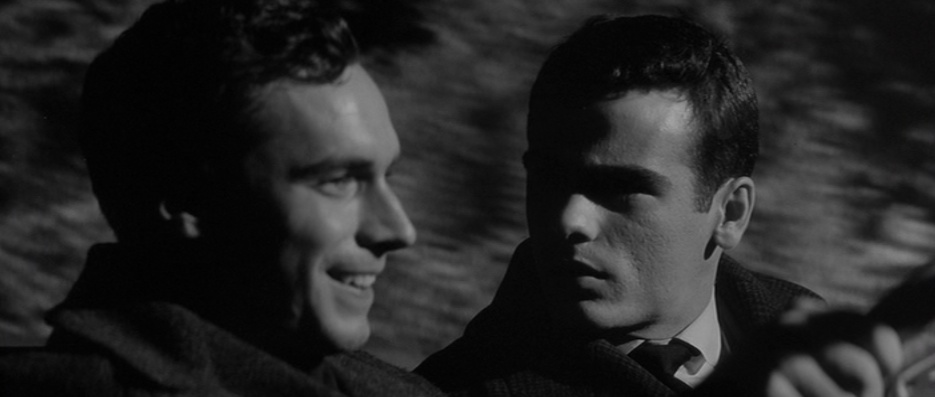
I thought it was wonderful. Not perfect - but riveting to watch, with a great campy spot-on performance by Orson Welles (who looks like death warmed over).
Dean Stockwell plays Judd, the weaker more shattered member of the crime duo - the follower, the one with all the Nietzschean theories, and yet - he's lost when it comes to acting alone. He hates this part of himself. He sees it as weak. Of course it is his most human side, and that is what he despises. There is an overt homosexual energy running through the whole thing - amazing how overt it actually is, considering the year it was made.
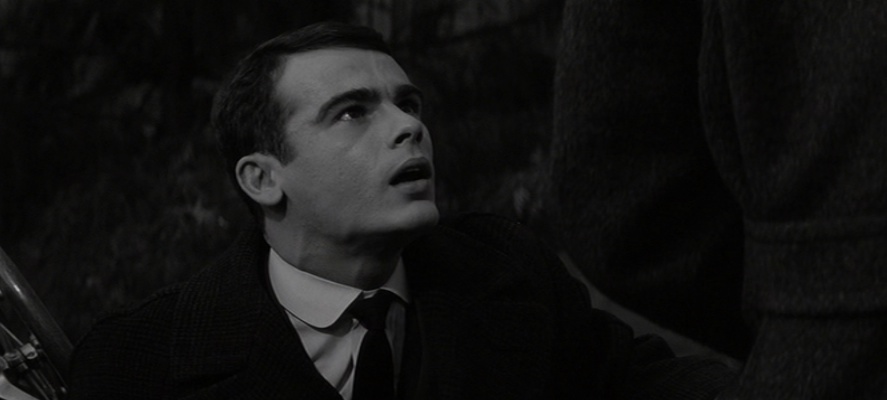
Bradford Dillman, who plays his partner in crime, the leader - the suave operator - was the weak link in the film, and did too much maniacal "oooh I'm craaaaazeee" laughter to show his mental instability. But there are moments between the two of them - Stockwell and Dillman - that shows quite clearly the almost sado-masochistic bond between them. Stockwell is in thrall, he wants to please, he begs Artie (Dillman), "We'll do it together, right?" Any whiff of independence or singularity throws him into a panic. And yet the panic is something he can barely admit to himself - first of all, because it shows his weakness. Second of all, because (and this is the subliminal thing going on) - it reveals to him, way too plainly, his feelings for Artie. This is not spoken, but it is played. Judd's brother tries to talk to him about his relationship with Artie - not saying, "Dude, are you gay?" but skirting around it, definitely implying it. "Don't you ever want to go to a baseball game, Judd? Don't you ever want to chase girls? I could tell you some stories from when I was your age--" Judd cuts him off, icy, "I am sure you had some fascinating experiences."
He feels superior to most everybody, and only Artie is his intellectual equal. Artie plays Judd like a violin, withholding love and approval until Judd is twisted up with neuroses, and then Artie fondly chucks him on the chin, letting him back into the circle of light. (This is very similar to the erotic atmosphere between the two characters in Heavenly Creatures. Alone, neither of the girls could ever have committed such a heinous crime. But together? They are deadly. They push each other further into cruelty, narcissism, self-absorption).
Artie says to Judd in the first scene, "You told me that you wanted me to command you to do things." Judd replies, eager, serious, "I do." This comes up again and again, when Judd hesitates, or seems unable to go through with something - Artie's face will get cold, and he will say, "Do you need me to order you?" The power politics are potent.

When Orson Welles comes in to interview the two boys for the first time, he observes, "The hardest thing about this trial is that neither of you appear to have any friends - besides each other. Finding positive character witnesses is going to be difficult." Artie says, expansive, bragging, "I have a little black book with the names of 40 or 50 girls I've gone out with in the last 2 years. You can call any of them." Orson looks at Judd, who is pacing and smoking. "How about you, Judd?" Judd says, "No. I don't have any little black book." Orson then says, in a casual manner, "No girls?" He's not accusing (at least not openly), he's not openly insinuating anything about Judd's sexuality - but he certainly is doing so subtextuallly. Judd stops pacing and stares at Orson, with this horrible horrible vulnerability on his face. It's like he's been punched in the gut. He's been found out.
There is something here that cannot be spoken. It can't be spoken because it was filmed in 1959. That's true. But it can be implied (in the same way that in the film version of Streetcar, the homosexuality was toned down, nearly erased - the stage version is completely explicit about what "went wrong" with Blanche's husband. It wouldn't get by the censors, though - so Williams had to struggle to somehow get the point across, and yet not SAY it. The studio wanted Blanche's husband to be discovered "with a Negress" - implying that that would be a perfect stand-in for him being found with another man. How awful to have your husband be "with a Negress"! So you can see the issues storytellers had in those days. The studio also wanted it to have a happy ending. Louis B. Mayer saw Blanche as an evil woman trying to break up "that nice couple". Ha. However: even without the explicit reference, you "get it". It's there. Even if it's not exactly in the language, Vivien Leigh is playing it.) Same is going on here in Compulsion. Implications are all over the place, but nobody really says it out loud. Stockwell, however, is playing it. That storyline is completely clear, even though it's not in the language. It's all in the look on his face when Orson Welles says to him, casually, "No girls?"


More to come, just wanted to get my first impressions down.
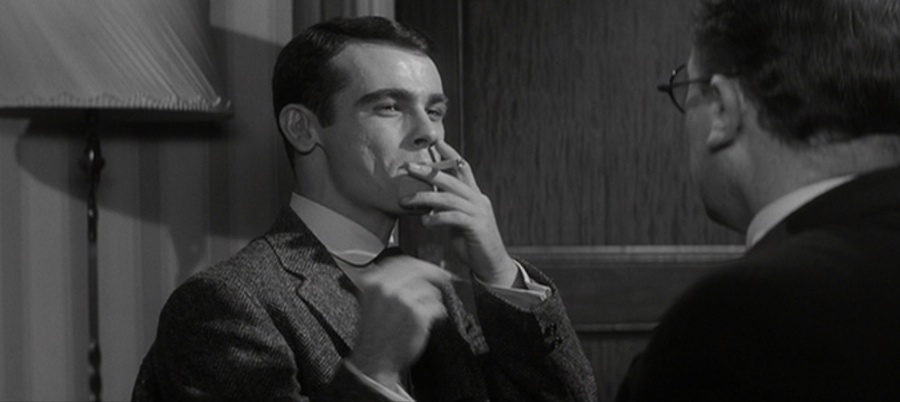

Artie orders Judd to rape Ruth, a girlfriend of an acquaintance of theirs. (The word "rape" is used openly - which makes me wonder how rare it was at that time. Not rape itself, but using the word in a film. I'll do some research. Ruth's boyfriend says to her later, when she tells him what happened and she actually tries to brush it off - because she felt so sorry for Judd, the boyfriend says, furious, "He tried to rape you, Ruth!" It's the word that struck me - even in movies where rape occurs, Streetcar, for example - the word itself was never spoken. But here it is.) Anyway, when Artie tells Judd to do it, and Judd balks, doesn't want to ("I hadn't thought of that," he says) - Artie says something to Judd like, "We promised ourselves that we would search out every human experience possible." To me, that was a subliminal, "You gotta get laid, Judd" message. I would imagine Judd was a virgin. At least in terms of sleeping with a woman. It's a wrenching scene, terrible - he can't go through with it. He cries. The shame is intense.

I liked the shot above. It's showy, yes, tricky - but it's brief. Not lingered over. I thought it was cool.
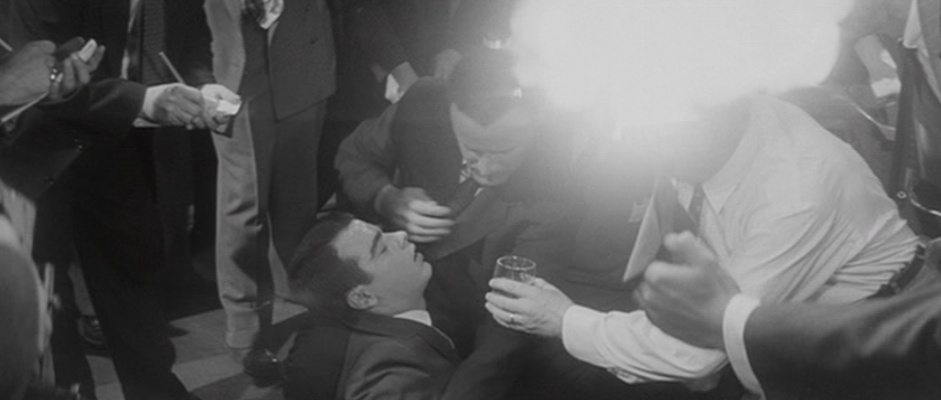
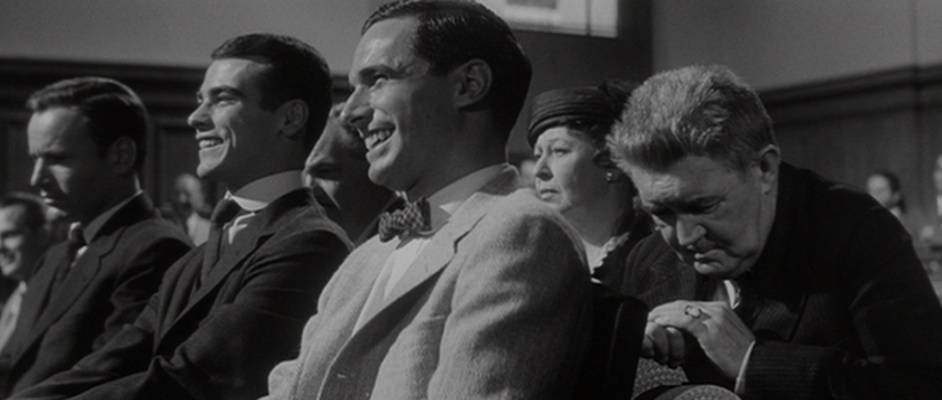
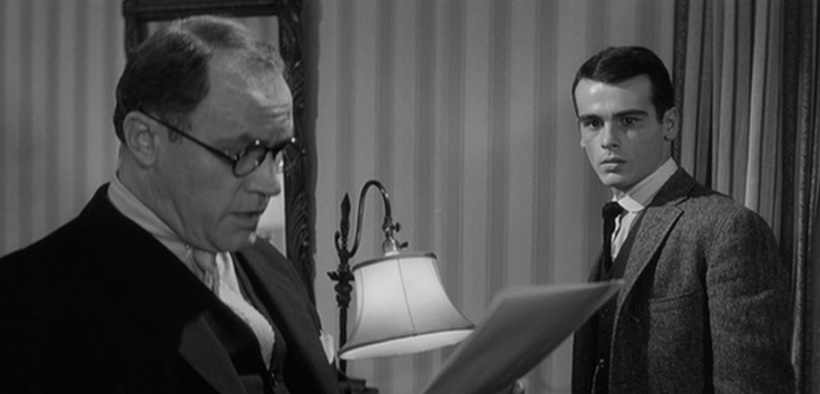
(EG Marshall was great.)
Oh - and freakin' Gavin MacLeod was apparently in this movie - but I can't figure out which part he played. I'll have to look closer, just to see Mr. Love Boat in action. [Update: I looked closer. FOUND HIM. He plays one of the cops. Voila.]

hahahaha I can feel the aura of a captain's uniform around him already.
And here is Judd, sitting on his bed, waiting to be ordered by Artie to rape Ruth. Artie came up with the idea, and tries to persuade Judd how good it will be for him, how girls "never talk about it afterwards", how he needs to experience this. Judd is all messed up. He's in love with Artie. Never spoken, of course, but it is obvious that that is what is going on. But you can't even admit that to yourself, not in THIS world anyway ... The threat is so huge, the wrong-ness so palpable, it truly is a love that dares not speak its name. So it becomes twisted, perverse. Artie keeps teasing Judd about Ruth, "Are you falling for her?" Judd throws Artie a look that says it all. No way is he "falling" for Ruth - how could she ever compete with the tangled web of THIS relationship? But the dynamic has been set, he has to do what Artie says, but he won't do it without the order. He needs to hear the magic words, "I order you to ..." There's a masochism in him, it's incredibly creepy to watch. There's a sexual quality to the whole exchange, a master and slave kind of thing. Artie says, cold and slow, "Do you need me to .... order you to?" And Stockwell, as always, doesn't ever over-act or ham or telegraph his inner life to us. He is still, watchful, worried, painfully open. Looking up at Artie, waiting for the order.
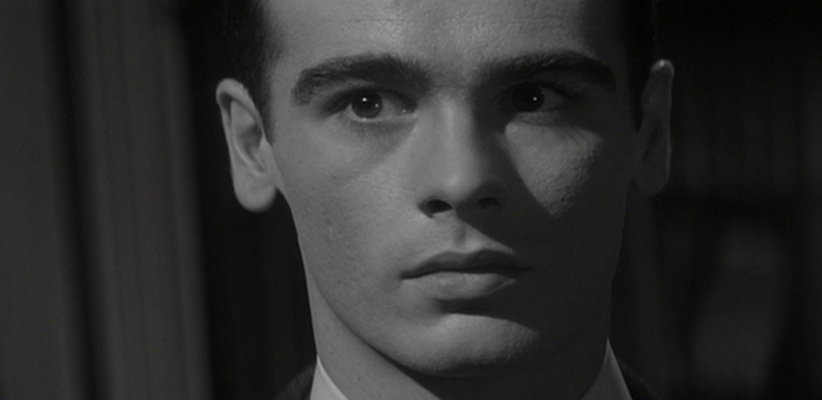
July 5, 2007
Had to be done.
I put it off for as long as I could. At last. His own category.
More to come. I've got a lot of work to do tonight, but once that's all done - I have Compulsion waiting for me. Orson Welles stars in this version of the Leopold-Loeb case. Stockwell plays one of the psychos. There is a killing spree, senseless. There are homoerotic over/undertones. I need to see it. 1959 movie, directed by Richard Fleischer. Orson Welles plays the Clarence Darrow type character. It sounds rather ponderous, and nobody seems to agree about it - everything I read is contradictory - but I'm very eager to see it.
It's gonna be all Stockwell all the time around here for a while.
Romeo and Juliet
It's closing this weekend.
I'm psyched for Lauren Ambrose. She had a solid debut in Awake and Sing, getting some of the best reviews in the cast (example) - and now she's playing Juliet in Shakespeare in the Park..
There's something about her that has always moved me. She's so full - of so much and yet (and this is key to her good-ness as an actress) so uncomfortable with being full. She fought against her own expression, her own emotions, in 6 Feet Under - like so many people do in real life - we don't LIKE to cry, or be sad, or give up anger and be forgiving- we fight against these things. Sometimes with actors, tears or anger seem to come really cheap, because it's a "skill". But when Lauren Ambrose cried on 6 Feet Under, you could always feel her clenching her fists, willing the tears to stop, stop, stop, dammit, stop ... She found tears embarrassing. Again, like so many people do. She grew on me . I wasn't wacky about her at first, it took her a while to get into that character - AND once the series was renewed, she almost visibly relaxed, once she knew her job was safe, for at least another 6 or 7 months. You see that a lot - and she, as the most inexperienced actress in that cast, showed the "oh my god, will this job last?" anxiety more than the others. But once she relaxed? Once she knew she was safe? Great great stuff.
The review is interesting - but here I'm all choked up, reading this:
But it�s Ms. Ambrose who gives the production its devastatingly torn heart.Best known as the petulant Claire in �Six Feet Under,� Ms. Ambrose, who recently appeared on Broadway in �Awake and Sing!,� makes Juliet into a compelling bundle of mixed instincts. Even at 14, she�s the smartest person in Verona, capable of analyzing exactly what�s happening to her. Had she lived, she might have been a Viola or Rosalind, a Shakespeare heroine to tutor brash men in the finer arts of loving.
But because she is 14 (and you don�t doubt it), Juliet leads not with her head but her hormones. Every line she utters is infused with equal amounts of intelligence and impetuosity. She has enough erotic life force for both herself and Romeo, but Mr. Isaac gallantly contributes his share. And without a hint of the now usually obligatory nudity, this couple can make a drawn-out kiss light up the night, as Michael Friedman�s mood-enhancing (but never mood-pushing) music swells in the background.
Red-haired and luminously pale, this Juliet is a such a brightly glowing candle that the water motif at last makes perfect sense in that final, fatal scene in the Capulet family tomb. It takes a whole lot of water to quench such a flame. But, ah my friends, before then, it gave a lovely light.
Yay for her!!!
Anyway, look at this photo of her as Juliet. See? There's something about her. I feel all emotional just looking at her face there. She BLAZES with emotion.

And look at this set. I've heard much about it - but just look at this image.

That's Lauren Ambrose as Juliet and Oscar Isaac as Romeo - he was Proteus in the Two Gents musical I saw in the park a couple summers ago. That was his debut - and now he's back, as Romeo.
The Books: "The Grass Harp" - "The Grass Harp" (Truman Capote)
Next book on my adult fiction bookshelves:
It's now time (sadly) to say goodbye to A.S. Byatt. It's been so fun for me! Next author on Ye Olde Adult Fiction Shelf is Truman Capote, another all-time favorite of mine. And Mitchell - get ready for the heart-crack!! Today I am excerpting from his novella The Grass Harp - which is one of his most beautiful elegiac pieces of writing. It almost hurts - this is Capote at his very best. How he writes without tipping over into overt sentimentality I will never know - but his attitude here is primarily nostalgic, there's a keening sense of loss over everything - but his focus seems to be on the sweetness, the painful sweetness of that time. He's so good at it. This is a WONDERFUL story. It feels semi-autobiographical, and knowing a bit about his upbringing - and about his beloved cousin (the one he elegized so beautifully in A Christmas Memory.)
The book is a paperback, falling apart - it's called The Grass Harp and a Tree of Night.
The Grass Harp tells the story of a group of people - in a small Southern town - all unconnected to one another - who, for one reason or another, all end up hiding out from society in a huge tree. They will not come down, even when the Sheriff demands that they do. They are misfits - spinsters - there's a Judge (wonderful character) - and all of them have either a secret, or a struggle - they either can't deal with society, or they can - and they hate it. It's been a long time since I've read this story so many of the details are lost, but I do remember the feeling of it vividly.
The story is narrated by a little boy, who lives with his two spinster aunts - his main friend being his aunt Dolly, a sort of Laura in Glass Menagerie type, except much older.
I don't know - with a story like this, it has to be all about the writing. Capote, when he's on, is the best there is. It's a certain TYPE of writing, which is why In Cold Blood was such a shocker, in so many ways. Nothing Capote had yet done prepared anyone for what he accomplished in that book.
Here's an excerpt. To me, this writing just tastes good!! Dolly, Catherine and the narrator haven't gone up into the tree yet - this is just the setup of their relationship.
Excerpt from The Grass Harp and a Tree of Night, by Truman Capote - "The Grass Harp"
On winter afternoons, as soon as I came in from school, Catherine hustled open a jar of preserves, while Dolly put a foot-high pot of coffee on the stove and pushed a pan of biscuits into the oven; and the oven, opening, would let out a hot vanilla fragrance, for Dolly, who lived off sweet foots, was always baking a pound cake, raisin bread, some kind of cookie or fudge: never would touch a vegetable, and the only meat she liked was the chicken brain, a pea-sized thing gone before you've tasted it. What with a woodstove and an open fireplace, the kitchen was warm as a cow's tongue. The nearest winter came was to frost the windows with its zero blue breath. If some wizard would like to make ame a present, let him give me a bottle filled with the voices of that kitchen, the ha ha ha and fire whispering, a bottle brimming with its buttery sugary bakery smells - though Catherine smelled like a sow in the spring. It looked more like a cozy parlor than a kitchen; there was a hook rug on the floor, rocking chairs; ranged along the walls were pictures of kittens, an enthusiasm of Dolly's; there was a geranium plant that bloomed, then bloomed again all year round, and Catherine's goldfish, in a bowl on the oilcloth-covered table, fanned their tails through the portals of the coral castle. Sometimes we worked jigsaw puzzles, dividing the pieces among us, and Catherine would hide pieces if she thought you were going to finish your part of the puzzle before she finished hers. Or they would help me with my homework; that was a mess. About all natural things Dolly was sophisticated; she had the subterranean intelligence of a bee that knows where to find the sweetest flower: she could tell you of a storm a day in advance, predict the fruit of the fig tree, lead you to mushrooms and wild honey, a hidden nest of guinea hen eggs. She looked around her, and felt what she saw. But about homework Dolly was as ignorant as Catherine. "America must have been called America before Columbus came. It stands to reason. Otherwise, how would he have known it was America?" And Catherine said, "That's correct. America is an old Indian word." Of the two, Catherine was the worst: she insisted on her infallibility, and if you did not write down exactly what she said, she got jumpy and spilled the coffee or something. But I never listened to her again after what she said about Lincoln: that he was part Negro and part Indian and only a speck white. Even I knew this was not true. But I was under special obligation to Catherine: if it had not been for her who knows whether I would have grown to ordinary human size? At fourteen I was not much bigger than Biddy Skinner, and people told how he'd had offers from a circus. Catherine said don't worry yourself honey, all you need is a little stretching. She pulled at my arms, legs, tugged at my head as though it were an apple latched to an unyielding bough. But it's the truth that within two years she'd stretched me from four feet nine to five feet seven, and I can prove it by the breadknife knotches on the pantry door, for even now when so much has gone, when there is only wind in the stove and winter in the kitchen, those growing-up scars are still there, a testimony.
Despite the generally beneficial effect Dolly's medicine appeared to have on those who sent for it, letters onoce in a while came saying Dear Miss Talbo we won't be needing any more dropsy cure on account of poor Cousin Belle (or whoever) passed away last week bless her soul. Then the kitchen was a mournful place; with folded hands and nodding heads my two friends bleakly recalled the circumstances of the case, and Well, Catherine would say, we did the best we could Dollyheart, but the good Lord had other notions. Verena, too, could make the kitchen sad, as she was always introducing a new rule or enforcing an old one: do, don't, stop, start: it was as though we were clocks she kept an eye on to see that our time jibed with her own, and woe if we were ten minutes fast, an hour slow: Verena went off like a cuckoo. That One! said Catherine, and Dolly would go hush now! hush now! as though to quiet not Catherine but a mutinous inner whispering. Verena in her heart wanted, I think, to come into the kitchen and be a part of it; but she was too like a lone man in a house full of women and children, and the only way she could make contact with us was through assertive outbursts: Dolly, get rid of that kitten, you want to aggravate my asthma? who left the water running in the bathroom? which one of you broke my umbrella? Her ugly moods sifted through the house like a sour yellow mist, That One. Hush now, hush.
Once a week, Saturdays mostly, we went to River Woods. For thoese trips, which lasted the whole day, Catherine fried a chicken and deviled a dozen eggs, and Dolly took along a chocolate layer cake and a supply of divinity fudge. Thus armed, and carrying three empty grain sacks, we walked out the church road past the cemetery and through the field of Indian grass. Just entering the woods there was a double-trunked China tree, really two trees, but their branches were so embraced that you could step from one into the other; in fact, they were bridged by a tree-house: spacious, sturdy, a model of a tree-house, it was like a raft floating in the sea of leaves. The boys who built it, provided they are still alive, must by now be very old men; certainly the tree-house was fifteen or twenty years old when Dolly first found it and that was a quarter of a century before she showed it to me. To reach it was easy as climbing stairs; there were footholds of gnarled bark and tough vines to grip; even Catherine, who was heavy around the hips and complained of rheumatism, had no trouble. But Catherine felt no love for the tree-house; she did not know, as Dolly knew and made me know, that it was a ship, that to sit up there was to sail along the cloudy coastline of every dream. Mark my word, said Catherine, them boards are too old, them nails are slippery as worms, gonny crack in two, gonna fall and bust our heads don't I know it.
Storing our provisions in the tree-house, we separated into the woods, each carrying a grain sack to be filled with herbs, leaves, strange roots. No one, not even Catherine, knew altogether what went into the medicine, for it was a secret Dolly kept to herself, and we were never allowed to look at the gatherings in her own sack: she held tight to it, as though inside she had captive a blue-haired child, a bewitched prince. That was her story: "Once, back yonder when we were children (Verena still with her babyteeth and Catherine no higher than a fence post) there were gipsies thick as birds in a blackberry patch - not like now, when maybe you see a few straggling through each year. They came with spring: sudden, like the dogwood pink, there they were - up and down the road and in the woods around. But our men hated the sight of them, and daddy, that was your great-uncle Uriah, said he would shoot any he caught on our place. And so I never told when I saw the gipsies taking water from the creek or stealing old winter pecans off the ground. Then one evening, it was April and falling rain, I went out to the cowshed where Fairybell had a new little calf; and there in the cowshed where three gipsy women, two of them old and one of them young, and the young one was lying naked and twisting on the cornshucks. When they saw that I was not afraid, that I was not going to run and tell, one of the old women asked would I bring a light. So I went to the house for a candle, and when I came back the woman who had sent me was holding a red hollering baby upside down by its feet, and the other woman was milking Fairybell. I helped them wash the baby in the warm milk and wrap it in a scarf. Then one of the old women took my hand and said: Now I am going to give you a gift by teaching you a rhyme. It was a rhyme about evergreen bark, dragon-fly fern - and all the other things we come here in the woods to find: Boil till dark and pure if you want a dropsy cure. In the morning they were gone; I looked for them in the fields and on the road; there was nothing left of them but the rhyme in my head."
Calling to each other, hooting like owls loose in the daytime, we worked all morning in opposite parts of the wood. Towards afternoon, our sacks fat witih skinned bark, tender, torn roots, we climbed back into the green web of the China tree and spread the food. There was good creek water in a mason jar, or if the weather was cold a thermos of hot coffee, and we wadded leaves to wipe our chicken-stained, fudge-sticky fingers. Afterwards, telling fortunes with flowers, speaking of sleepy things, it was as though we floated through the afternoon on the raft in the tree; we belonged there, as the sun-silvered leaves belonged, the dwelling whipporwills.
July 4, 2007
Why I love Dean Stockwell: Reason #3
Because in Married to the Mob, he is called away from his wife's birthday party (his wife is played by the manically insane and gaudily dressed Mercedes Ruehl) to have a meeting in the hallway with his goons. During the pow-wow, Tony chomps on a cigar, barks orders and questions, he rules the roost, he's king of the walk, he's "the Boss".
But he's wearing this.


The entire serious scene takes place and no one ever mentions the hat, he's macho enough to wear a hat like that and have nobody say a PEEP, but the scene gets funnier every second you watch it.
Why I love Dean Stockwell: Reason #2

His work is so meticulous that you do not notice it. However: nothing is random, there is definitely a PLAN at work - he crafts these characters - what is the similarity between Ben in Blue Velvet and Tony in Married to the Mob? Nothing, except it's the same guy playing him. He is that versatile. His personality is not so known to us that we cannot imagine him in different roles. He has the freedom to slip in and out of completely unpredictable parts. But you don't see the wheels turning. He's a great great character actor, really old-school. Which is so bizarre, because of how stunning he was as a young man, like Warren Beatty stunning. People with that kind of beauty rarely go the character-actor route. Either because they don't have the acting chops - they've just got the beauty, or they never get the opportunity to stretch their acting muscles, or they TRY to stretch their muscles and nobody wants to see it. Stockwell is rare, on many levels. He has grown into one of our most beloved character actors, yet he had movie star good looks as a young man. Good on him. He focused on the WORK. This kind of acting does not call attention to itself (although that's not completely true, since he was nominated for an Oscar for his part in Married to the Mob) - but what I mean by that is: The more you watch it, the more you see. It's not all there on the first viewing. If you watch these movies multiple times, as I have been doing - you start to notice just how much detail he has put into these parts. Like the Ace bandage around his hand in Blue Velvet. We don't know why it's there, it's never explained, he doesn't reference it, the script doesn't mention it ... but it adds a layer to the guy, gives him a past - even if it's only from yesterday - what was he up to yesterday? He seems so mild and creepily serene ... but we know he's dangerous. We only know it, though, because Frank Booth is scared of him, and in awe of him ... and Frank Booth is a psychopath. So if Frank is scared of Ben ... wow. What is BEN capable of? No hints are given. But the Ace bandage is there, evidence, perhaps, of his potential for violence that you don't get in the script. The Ace bandage is a signal, unexplained, and evocative of a whole life lived.
Dean Stockwell's parts are full of things like that, it's fun to look out for them. He, as a personality, holds his cards to his chest, even in flamboyant parts. I'm talking about him as a person. I don't know him, obviously, but you can tell a lot about a person from the parts they choose, how they play them, and how they handle success. He is not interested in being congratulated or admired. (Well, I'm sure he is - we all are - to quote the doppelganger - I was talking to him about my trouble making a living as an actress, and he said stentoriously, annoyed with the entire process, and annoyed that I wasn't at the Helen Hayes level of success yet, "Look, you're an actress. You need to be on a goddamn stage with an audience. You can't act by yourself in a cabin!") But Stockwell's acting is the opposite of self-congratulatory. It's not twitchy, or mannered - and yet at the same time, obviously, he can be HUGELY campy. Like Johnny Depp campy. (Depp is another rare case: a leading man who has chosen the career of a character actor. That almost never happens, and says a lot about who he is.)
Time for an example of Stockwell's meticulousness, and to show what I mean by the specificity of his work - yet also his lack of interest in having you notice it. If you get it, you get it. If you don't, no love is lost - because the rest of the work and his role in telling the story is solid. But God is in the details, it is so true.
In Married to the Mob, Tony Russo (Stockwell) and his cross-eyed sidekick are in the car, Sidekick driving, and they are headed to Burger World, because Russo says (and you have to see how he says it, it's the most bizarre line reading ever): "Well, I could use a little snack." Cross-eyed sidekick calls the guys in the car behind them and tells them they're gonna make a pitstop at Burger World. As Sidekick is on the phone, our focus (of course) is on him - because he's talking. It's not Tony Russo's moment - it's Cross-Eyed sidekick's turn. Stockwell sits next to him, and he's not pulling focus, or stealing the scene - but he is most definitely still IN the scene, since the shot includes both of them. And he glances down at his hand, as Sidekick speaks, and frowns a bit. He does not like what he sees, obviously. He peers a bit closer, with a troubled look on his face. It's so subtle you might never catch it, it's not meant to pull attention away from Sidekick's scene - it's just a little Tony Russo private moment - but once I picked up on what he was doing, it was all I could see.
Next scene: a sniper hides out in the bushes and kills the two guys in the car following Tony and Sidekick. The car careens off into the reeds. Tony and Sidekick do not notice, because by now they are happily singing the theme song to Burger World in unison. "The fries are crispy, the shakes are creamy ..." etc. It's completely stupid.
Next scene: Tony and Sidekick pull into the drive-in at Burger World. Sidekick gets ready to shout his order into the takeout window. And what is Tony Russo doing, in the passenger seat? Filing his nails.
Again, this is not a "bit" - it's a subtle character moment, which adds multiple levels to this guy (his vanity, his scrupulousness) - but also adds continuity, which is SO hard to do in movies, especially because you film out of sequence. The great actors ALWAYS know where they are, and can adjust, even if you film the second half of the final climax scene on the first day of shooting - and then fill in the first half of it 3 weeks later. It's not easy, and there are people whose job it is to keep an eye on continuity (your hair was parted on this side before, the cup on the table was half full, your tie was almost undone - whatever - If a film has bad continuity, we all know it - there are websites devoted to continuity errors, so it's a very important job!) But there are SOME things which the continuity person will not be in charge of, it's up to the actor to be able to match take to take. Was I inhaling on this take? Or exhaling? Cigarette in this hand or that hand? Did I have my legs spread when I was sitting, or crossed? You have GOT to be on top of that stuff, and it's quite a challenge.
I have no idea if the first part of the scene (Sidekick on phone, Tony noticing a hangnail) was filmed in sequence with the second part - or if they were done on completely different nights. Whichever way it was, the fact remains.
It ADDS to the character to have him NOTICE his hangnail, and then the next time we see him - he's filing away happily. It would be completely easy for Stockwell to just be filing his nails as they pull into the drive-in lane - but how much better it is to set up that action beforehand.
This is why it feels real.
And that's hard shit, people. It sounds simple, but stupid crap like that is what separates the men from the boys in this sillly business.
THAT'S an actor. That's a guy whose technique is so solid that it is invisible, and we are just the lucky beneficiaries of it. We don't notice an actor acting, we notice a dude with a hangnail, we notice a dude who is not the kind of person who will WAIT to handle said hangnail. He doesn't NEED to wait, because he carries a nail file ON him, for just such an emergency, and that small detail is key - it's key to understanding the guy.
And also: NONE of it is in the script. It has nothing to do with plot, or surface, or moving the story along. It all just goes to character building.
And that's all Stockwell's doing. Nobody tells you to pay attention to details like that. That's the actor's job. Some actors are capable, some are geniuses, some are incompetent, some have their focus in all the wrong places.
Stockwell's focus is ALWAYS in the right place.
Evidence below:
Scene 1. Tony Russo notices the unsightly hangnail.

Two scenes later. The car pulls into view, and Tony is seen filing.

Why I love Dean Stockwell: Reason #1
Because in Married to the Mob he is as sexy as he has ever been ...


and yet - when Tony "the Tiger" Russo has a nightmare that his wife has shot off a certain intimate part of his anatomy, he wakes up with the following expression on his face:

This is a camp performance of my favorite kind. He is a villain, a killer - yet in keeping with the tone of the movie, you love him and can't stop watching him. It is right he doesn't die at the end. We have come to invest in him too much, and enjoy his every gesture (ah, those gestures again.) Everyone's campy in this movie - I mean, Mercedes Ruehl racing down the airport hallway, her hair like Bride of Frankenstein. And Alec Baldwin makes such a huge impression as the slick gorgeous greaseball - and he dies in the first 15 minutes of the movie! But it's Stockwell who walks away with the film, owning it - along with Michelle Pfeiffer who has never been so good.

The 4th of July, 1826
It was the 50th anniversary of July 4, 1776. Both John Adams and Thomas Jefferson had been invited to attend huge celebrations in honor of the anniversary, but due to illness - both had sent their regrets and also best wishes, saying they would not be able to come. Thomas Jefferson's letter to the mayor of Washington, declining the invitation, ended as follows:
May it be to the world, what I believe it will be (to some parts sooner, to others later, but finally to all) the signal of arousing men to burst the chains under which monkish ignorance and superstition and persuaded them to bind themselves, and to assume the blessings and security of self-government ... All eyes are opened or opening to the rights of man. The general spread of the light of science has already laid open to every view the palpable truth, that the mass of mankind has not been born with saddles on their backs, nor a favored few, booted and spurred, ready to ride them legitimately by the grace of God. These are the grounds of hope for others; for ourselves, let the annual return of this day forever refresh our recollections of these rights, and an undiminished devotion to them.
Adams was too ill to put pen to paper. The light was going out. For both of them.


These two men, two of the main architects of the American Revolution, long estranged due to political differences, (and Jefferson referring, in public, to "political heresies" among some of his colleagues - a clear dig at Adams - and a clear sign of Jefferson's belief in some political orthodoxy, which was the breaking point for Adams) had finally reconciled. The reconciliation had been engineered by Benjamin Rush, who thought it a shame that these two great patriots, once dear friends, would go to their graves without making up. Benjamin Rush had a dream that Adams and Jefferson became friends again (I wonder if he really had that dream? Or if it was just a fabrication in order to move things along). Rush wrote to Adams, "And now, my dear friend, permit me again to suggest to you to receive the olive branch which has thus been offered to you by the hand of a man who still loves you. Fellow laborers in erecting the great fabric of American independence! ... embrace - embrace each other!" Adams and Jefferson began to correspond ... and it lasted over a period of 12-years ... a correspondence that has to be read to be believed. Rush's dream was prophetic. What an amazing gift to posterity those letters are.
And then ... on the same day in 1826 ... which happened to be July 4 ... which happened to be the 50th anniversary of the Declaration of Independence ... John Adams and Thomas Jefferson both died. Within hours of each other.
David McCullough writes in his biography of John Adams:
That John Adams and Thomas Jefferson had died on the same day, and that it was, of all days, the Fourth of July, could not be seen as a mere coincidence: it was a "visible and palpable" manifestation of "Divine favor," wrote John Quincy Adams in his diary that night, expression what was felt and would be said again and again everywhere the news spread.
John Adams' last words were either "Jefferson ... still lives." or "Jefferson ... survives."
I will never get tired of thinking about that, wondering, contemplating, shaking my head. I think I know what it means, and WHY Adams said it, and then I realize - No, I have no idea - and I prefer it that way. I prefer the mystery of it, the question, the subtlety - I prefer to just think about it, and wonder about it .
Amazingly, though, Jefferson actually had died a couple of hours earlier. Which makes this an even more amazing story. Like ... twins who live on opposite sides of the planet, and one twin knows when the other twin scrapes his knee. There are things that cannot be sufficiently explained. There are more things in heaven and earth, Horatio, than are dreamt of in your philosophy.
Among Thomas Jefferson's last words were: "It is the Fourth of July." A sudden and clear declaration, in the middle of his fadeout. He actually said those words on the 3rd ... and he was assured, by those attending him, that it would be the Fourth soon.
Did he wait? When he found out it was still just the Third, did he wait? To die on the Fourth? I wouldn't put it past him, he always loved symmetry.
Yes, Mr. Jefferson. It is the fourth. And thank you. Thank you both.
Happy 4th of July, everybody!
July 3, 2007
Progress continues
... on multiple levels.

Please remember my history and revel in my ongoing battle. I'm still not used to having pretty nails. My hands are not pretty, but my nails are.
I got MUCH work done today. Sheesh, it is taking years off my life - but it's happening, it's moving right along.
So now I feel I have earned my leisure time, which consists primarily of Married to the Mob. Naturally. More gestures to discover!
Domestic concerns
Now that I know I will be in my teensy abode for another year (maybe less, but still - for the foreseeable future) - I have decided to make some changes. I need more ROOM.
I have gone with the bold move of turning all my books horizontally (well, not all - but most of them) which has freed up an entire bookshelf. I am throwing out a bookshelf which is falling apart - I need my rent-a-husband to come over and help me move it out. And (unbelievably) I am NOT going to replace the bookshelf with another one. No. Until I can move into a more spacious apartment where my books can spread out - I will deal with the horizontal weirdness of my book collection - and revel in the extra space.
And I think I am going to buy this.
I have dreamt of owning such a chair.
It is a chair that haunts my dreams.
I want to keep it in the velvet (there are all these different swatches you can choose from) - and I do like the sort of gold-ish velvet - but I'm also very partial to the "espresso" velvet color - the dark brown, which would go with my curtains as well as my Oriental rug. What do you think? Too dark? Since my curtains are dark and the rug is dark - should I go with the lighter color?
Friends who have seen my apartment: what do you think?? About the color and the style?? I am thinking of placing it in the corner - where a bookshelf now is - the corner where the radiator is. I will place it on the diagonal, so that it will face into the room (looking at the kitchen door). What do you think??
Also, any other thoughts are welcome, from those of you who decorate homes, and have opinions regarding color and texture.
My only fear is that the chair, when being delivered, will not fit through my narrow hallway leading into my apartment. I have to do some measurements. It makes me scared to think I could forfeit my chance at having my dream chair because my hall is made for midgets.
Fingers crossed please.
Harry Potter
I'm slowly starting to freak out as the publication date fast approaches.
I feel like a little kid on Christmas Eve. Like - my anticipation is almost unpleasant.
The best muppets - part 2
FINALLY! Worth the wait. Again, the commentary is brilliant - made me cry with laughter and also made me cry some of those other tears.
Some snippets I love:
This pair of stalwart scientists serves as a wonderful example of the difference between Sesame Street (an educational show for children) and The Muppet Show (a variety show for adults). On Sesame Street, Telly wonders which of these things is not like the other. On The Muppet Show, Bunsen blows up Beaker�s face. On Sesame Street, children are taught the permanence of death in an honest and heartfelt way. On The Muppet Show, Bunsen dissolves Beaker�s head with sulfuric acid.Dr. Bunsen Honeydew is a terrible person.
And
There are Muppets you can like because there is a lot of emotion behind their character or they have a lot to say, or you can like them because they can't figure out how to hang a picture up or they just constrantly gorge themselves on food. Each one is different and there is a different reason to enjoy them. I try to like things for good reasons and try to be able to explain several reasons why I feel that way, but there are times that I enjoy something because it reminds me of being little and it puts a smile on my face. That's what the Twiddlebugs are to me.
And
He has no ulterior motives; he never loses his temper or complains. He simply wants to be a comedian and to help his friends the best he can, even though at times he isn�t successful at either endeavor. He is exceptionally pure of heart even for a Muppet, which makes it so hard to watch when he�s sad.
And
He is not smart, or strong. He can't sing or dance. He has no defining characteristics. He waits tables for a living. Grover is the absolute median of us all, letting kids know that if they don't grow up to be a Romanian Count or a shop owner or an amnesiac cowboy they might grow up to be normal... and that that's okay.
And
I think Cookie, more than any other Muppet, is the purest representation of what Jim Henson was going for when he started out. He wanted to make something ridiculous to make people smile in a world that frowns on the ridiculous. The learning and the friendship came later. Before letters and numbers and musical acts with Elton John, he was sitting with a pad of paper and, for whatever reason, thought "very hungry" was all the character development he needed. And you know what? Almost 40 years later little kids are wearing bibs with Cookie Monster on them.
See, that makes me cry.
Go read the whole thing. Well done! Thank you so much!
Browning's PJs
I love this letter! The tone of it - it's obviously written in a casual off the cuff way, probably scrawled off quickly - in order to catch up with his correspondence - but I love every word! (and his version of "God's in his heaven, all's right with the world" is hysterical)
One excerpt:
But as a whole the book takes away from Browning's dignity. A man--even the greatest cannot stand being photographed in his pajahmas. Thank God, we are spared Shakespeare's letters to Anne Hathaway! Doubtless he wrote her some sappy notes. He did everything that ever man did.
Ha!
The Books: "Little Black Book of Stories" - 'The Pink Ribbon' (A.S. Byatt)
Next book on my adult fiction bookshelves:
 The next book on the shelf is the last short story collection by AS Byatt, and this one is called Little Black Book of Stories. This is an excerpt from "The Pink Ribbon", the last story in the collection. Sad, sad story. I almost didn't want to read it, due to the subject matter. James Ennis is an old man. He has been married to Madeleine (Mado) for 50 years or something like that - their courtship began in the middle of the blitz in WWII - and she is now completely lost to Alzheimer's. James takes care of her himself, with the help of a Mrs. Bright who stops by to give his wife a bath, or whatever. James is going through the motions. He can't LOOK at what has happened - at all - it's too horrible. You get the sense he loved his wife. They were good friends. And now he sits there, brushing her long hair, and trying to keep her from hurting herself.
One night - a knock comes on the door. Mado is asleep - James opens the door. A beautiful young woman in a red silk dress stands there, and invites herself in. She calls herself "Dido" - James has no idea who she is - but she seems to know a hell of a lot about his life. Particularly about his wife. She'll suddenly say something deep and penetrating about his wife's character ("She was always like that, wasn't she ...") - Dido says that she is an orphan and she has cast her own family off. She comes a couple of different times - and every time she goes, she leaves something behind - something James can see the next morning (the sash to her dress, whatever) and know that she had actually been there, he hadn't dreamed her. But who is she?
So begins a long series of late nights - of talk - of reliving the marriage - with a woman who has to be in her early 20s ... how does she know, intimately, Mado's side of things? She'll say something like, "She was always a great liar ..." And James will reply, "How do you know?"
Anyway, it's a lovely sad elegiac story - a beautiful way to end the collection.
The following excerpt is why Byatt - even with her intellectualism, her interest in the cerebral - is considered also to be a great erotic writer. She's one of my favorites in that regard. Actually, it makes me think that it's BECAUSE of her cerebral bent, her intellectualism - that she is such a poignant erotic writer.
Excerpt from Little Black Book of Stories - "The Pink Ribbon"
Afterwards, many things made him doubt that she had really been there at all. Starting with the name she had given herself, Dido, out of his reading. Though equally, she could have picked up his book whilst he was seeing to Mado, and chosen the name of the passionate queen more or less at random. She had known that Po was Eridanus, which he had forgotten, he thought, registering fear at a known fact lost, as he always did. She had some classical knowledge, unexpectedly. And why not, why should a beautiful woman in red silk not know some classical things, names of rivers, and so on? She had known that Mado hated pink, which she could not have known, which Mrs. Bright did not know, which he kept to himself. He must have invented, or at least misremembered, that part of the conversation. Maybe she existed as little - or as much - as Sasha, the imaginary blood-sister. He felt a weird sense of loss, with her departure, as though she had brought life into the room - pursued by death and the dark - and had taken it away again. What he felt for her was not sexual desire. He saw the old man he was from the outside, with what he thought was clarity. His creased face and his arthritic fingers and his cobbled teeth and his no doubt graveyard breath had nothing to do with anything so alive and lovely. What he felt was more primitive, pleasure in quickness. She was the quick, and he was the dead. She would never come again.
In bed that night he was visited - as he increasingly was - by a memory so vivid that for a time it seemed as though it was real and here and now. This happened more and more often as he slipped and lost his footing on the slopes between sleep and waking. It was as though only a membrane separated him from the life of the past, as only a caul had separated him from the open air at the moment of birth. Mostly he was a boy again, wandering amongst the intense horse-smell and daisy-bright fields of his childhood, paddling in trout-streams, hearing his parents discuss him in lowered voices, or riding donkeys on wide wet sands. But tonight he relived his first night with Madeleine.
They were students and virgins; he had half-feared and half-hoped that she might not be, for he wanted to be the first and he wanted it not to be a fiasco, or a worse kind of failure. He hadn't asked her about it until they were undressing together in the hotel room he had taken. She turned to laugh at him through the black hair she was unpinning, catching exactly both his anxieties.
"No, there's no one else, and yes, you will have to work it all out from scratch, but since human beings always have worked it out, we'll probably manage. We've done pretty well up to now," she said, glancing under her lashes, recalling increasingly complicated and tantalising fumbles in cars, in college rooms, in the river near the roots of willows.
She had always demonstrated a sturdy, even shocking, absence of the normal feminine reticences, or modesty, or even anxiety. She loved her own body, and he worshipped it.
They went at it, she said later, tooth and claw, feather and velvet, blood and honey. This night he relieved intimacies he had very slowly forgotten through years of war, and other snatched moments of blissful violence, and then the effacement of habit. He remembered feeling, and then thinking, no one else has ever known what this is really like, no one else can ever have got this right, or the human race would be different. And when he said so to her, she laughed her sharp laugh, and said he was presumptuous - I told you, James, everyone does it or almost - and then she broke down and kissed him all over his body, and her eyes were hot with tears as they moved like questing insects across his belly, and her muffled voice said, don't believe me, I believe you, no one else ever ...
And tonight he didn't know - he kept rising towards waking like a trout in a river and submerging again - whether he was a soul in bliss, or somehow caught in the toils of torment. His hands were nervy and agile and they were lumpen and groping. The woman rode him, curved in delight, and lay simultaneously like putty across him.
And his eyes which had watered but never wept, were full of tears.
July 2, 2007
Milestone
Just reached 3,000,000 page views about 10 minutes ago. How on earth has that happened?? Thanks for reading, everybody.
Working on a couple of huge Dean Stockwell pieces now (you know, in all my imaginary free time) - I need to get my thoughts together. The obsession is not yet full blown. I'm just building my case now.

And Alex, you'll like this: as far as I'm concerned, it's all about gesture with him. He's exquisite that way. So specific, so ... invisible in his technique. Three cases in point.


But I'll talk more about all of this later. Not quite ready yet.
Sailing
Great shot. I can't stop looking at it. There's a whole story behind it. And am fascinated by the cross-dressing aspect of such shots, which you see a lot.
5 books!!
Got a cool mee-mee from 50 Books:
Five most recent books you've bought for yourself:
Grover Cleveland (The American Presidents Series) - by Henry Graff
Then She Found Me - by Elinor Lipman - I used to have this book - no idea what happened to it. I love it, so I just bought it again
The Inmost Heart: 800 Years of Women's Letters - edited by Olga Kenyon (thanks to Letters of the Day for this one)
Triangle: A Novel - by Katherine Weber
Travels with Herodotus - by Ryszard Kapuscinski (at last.)
Five books you've most recently given other people:
Baseball Writing Anthology - Library of America - sent to Dad, and also to David and Maria
We Need to talk about Kevin - by Lionel Shriver - sent to Beth
Spielberg, Truffaut & Me: An Actor's Diary - by Bob Balaban- sent to Emily
I can't think of anything else.
Five most recent books you've loaned other people, and their status:
I very rarely lend people books. I very rarely borrow books either - I like to own, and be able to dip in and out of it at my own time. But more than that: I'm not a lender. Buy your own.
Last five kids' books you bought:
Ooh, I just went on a binge this morning! I am always in the process of acquiring books I loved as a kid! Here is what I bought a mere 2 hours ago (before I even read these mee-mee!):
Ella of All-of-a-Kind Family by Sidney Taylor. Words cannot express how much I love that whole series - but I love Ella, in particular. A WWI story. And I have a vivid recollection of the illustrations in the book ... I'll have to see if they are what I remember.
The Trumpet of the Swan by EB White. I LOVE Louis, I LOVE the father swan - I love the boy ... and I remember the last paragraph almost word for word.
Midnight is a Place - by Joan Aiken - This book was read to us in the 5th grade - by my worst teacher ever (ROT IN HELL, BITCH.) But I sure remember this book. It takes place in the early dirty days of the industrial revolution in London - at least I think it does - and I know it involves a mystery, and a big gloomy house, and orphans, and a terrifying old man and little kids who have to work in factories for long hours - and sometimes die, because they get squished by the dyeing machine or whatever (the details are lost in my mind). But I know we, as a class, really looked forward to reading hour every day - we wanted to know what would happen!
James and the Giant Peach - by Roald Dahl Hooray!
Seventeenth Summer - by Maureen Daly Okay, there is a long story behind this book and myself. I must have checked it out of the library in high school - I don't know. It was written by a girl who was actually 17 years old - she had won a story contest or something. It takes place in the 1950s - and it was written in the 50s too, I think - so it's not nostalgic 1950s, it's not kitsch 1950s - it's actual 1950s. And it's a teenage romance in a small town - and I remember it being WONDERFUL. I'll have to re-read it someday and see if it holds up.
Last five books you looked at on Amazon/Chapters/Powell's/etc.:
God Is Not Great - by Christopher Hitchens
The Post-Birthday World by Lionel Shriver
The Yiddish Policemen's Union: A Novel by Michael Chabon
Uncommon Arrangements: Seven Portraits of Married Life in London Literary Circles 1910-1939 - by Katie Roiphe
Ava Gardner: "Love Is Nothing" by Lee Server
Top five books on your "to read" pile:
Bleak House by Charles Dickens
The End of the Affair by Graham Greene
Orson Welles: Hello Americans! by Simon Callow
By the Lake by John McGahern - they re-named the book when it was re-issued in the states. But the actual title? The Irish title? They May Face the Setting Sun. God DAMnit that's a far superior title. By the Lake? What the heck is that? A Sandra Bullock movie? At any rate, John McGahern is one of the all-time greats, his Amongst Women is a great novel - so By the Lake is definitely on the list.
The Yiddish Policemen's Union: A Novel by Michael Chabon. I'd read a grocery list if it was written by Chabon.
Bottom five books on your "to read" pile
These are books I've had around forever, and don't see myself throwing them out - but I feel no urgency to read them immediately.
America's Constitution: A Biography by Akhil Reed Amar - I have it, it looks great - I'll read it eventually!
Elia Kazan: A Biography by Richard Schickel (Schickel, of course, is the dude who wrote an entire book about the development of Cary Grant's acting style, going from film to film to film meticulously - not focusing on biography, but on talent, and development. I LOVE that book - and wrote about Schickel here). So I will definitely be reading his biography of Kazan - and very much look forward to it - just not any time soon.
Only Revolution by Mark Danielewski - I wrote just a tiny bit about his freak-out book House of Leaves here - I'll cover it more when I get to it in the Dailiy Book Excerpt thing, but I don't even know what to say - hooly shit, and I've heard this new one is a bit of a let-down, but whatever, I will certainly read it. Eventually.
Grover Cleveland - by Henry Graff. I'm basically collecting the entire series (they haven't published all the books yet) - but I can't imagine I'll get to Grover Cleveland any time soon. However: when I am ready for him, he will be there!! Thank goodness.
Saturday - by Ian McEwan. Eventually I will read it, I've had it since it came out - just not in the mood for McEwan these days. Since he tore my heart out with Atonement, uhm - 4 years ago?? I've stayed far away from him! But I will eventually read it.
The Books: "Little Black Book of Stories" - 'Raw Material' (A.S. Byatt)
Next book on my adult fiction bookshelves:
The next book on the shelf is the last short story collection by AS Byatt, and this one is called Little Black Book of Stories. This is an excerpt from "Raw Material". A creative writing teacher in a small town - a failed writer but a good teacher - discovers something in one of his students essays - something that makes him want to write again. It's an unexpected student too - an 80 year old spinster (his words), who never speaks in class, who writes these long pieces about how they used to do the wash, how they used to black the stoves - and, because this is AS Byatt we're talking about - we get to read the student's essays. A story within a story. The title takes on a couple layers of meaning - because, as we read the student's essays - we are reading, unedited, the "raw material". The teacher, Jack, is a great little character study - in a couple of broad brush strokes AS Byatt creates an entire world, a life, a history. She's so good at that. And another thing - she never has contempt for her characters. Even if they are ridiculous or self-aggrandizing or whatever. Think of Leonora, the blowsy lesbian feminist literary critic in Possession - who is, to some degree, a stereotype of the clumsy well-meaning boorish TMI American. She's supposed to be a caricature - but Byatt doesnt' write about her with contempt. Jack could be someone we just laugh or sneer at ... but thank God, we don't. He is a failure. But he sees something in this woman's writing, something raw - somethiing good - and the story is about that ephemeral fleeting feeling of wanting to make art, needing to make art. Oh, and her observations about what the other students in the class write - even though we don't get to read those - are hysterical, and maddening. You know, writing as therapy, or writing as hiding - wanting to be congratulated, or admired, whatever. The 80 year old student doesn't write for any of those reasons. She writes to show. Here is the opening of the story. See how she create Jack??
And believe it or not - the story has a terrifying horrible ending ( hard to believe, I know). But I had to go back and reread the whole story, looking for clues, things I might have missed.
Excerpt from Little Black Book of Stories. - "Raw Material".
He always told them the same thing, to begin with "Try to avoid falseness and strain. Write what you really know about. Make it new. Don't invent melodrama for the sake of it. Don't try to run, let alone fly, before you can walk with ease." Every year, he glared amiably at them. Every year they wrote melodrama. They clearly needed to write melodrama. He had given up tellilng them that Creative Writing was not a form of psychotherapy. In ways both sublime and ridiculous it clearly was, precisely, that.
The class had been going for fifteen years. It had moved from a schoolroom to a disused Victorian church, made over as an Arts and Leisure Centre. The village was called Sufferacre, which was thought to be a corruption of sulfuris aquae. It was a failed Derbyshire spa. It was his home town. In the 1960s he had written a successfully angry, iconoclastic and shocking novel called Bad Boy. He had left for London and fame, and returned quietly, ten years later. He lived in a caravan in somebody's paddock. He traveled widely, on a motor bike, teaching Creative Writing in pubs, schoolrooms and arts centres. His name was Jack Smollett. He was a big, shuffling, smiling, red-faced man, with longish blond hair, who wore cable-kknit sweaters in oily colours, and bright scarlet neckerchiefs. Women liked him, as they liked enthusiastic Labrador dogs. They felt, almost all - and his classes were predominantly female - more desire to cook apple pies and Cornish pasties for him, than to make violent love to him. They believed he didn't eat sensibly. (They were right.) Now and then, someone in one of his classes would point out, as he exhorted them to stick to what they knew, that they themselves were what he "really knew". Will you write about us, Jack? No, he always said, that would be a betrayal of confidence. You should always respect other people's privacy. Creative writing teachers had something in common with doctors, even if - yet again - creative writing wasn't therapy.
In fact, he had tried unsuccessfully to sell two different stories based on the confessions (or inventions) of his class. They offered themselves to him like raw oysters on pristine plates. They told him horrorand bathos, day-dreams, vituperation and vengeance. They couldn't write, their inventions were crude, and he couldn't find a way to perform the necessary operations to spin the muddy straw into silk, or turn the raw bleeding chunks into a savoury dish. So he kept faith with them, not entirelly voluntarily. He did care about writing. He cared about writing more than anything, sex, food, beer, fresh air, even warmth. He wrote and rewrote perpetually, in his caravan. He was rewriting his fifth novel. Bad Boy, his first, had been written in a rush just out of the sixth form, and snapped up by the first publisher he'd sent it to. It was what he had expected. (Well, it was oone of two scenarios that played in his young brain, immediate recognition, painful, dedicated struggle. When success appeared it appeared blindingly clear that it had always been the only possible outcome.) So he didn't go to university, or learn a trade. He was, as he knew he was, a Writer. His second novel, Smile and Smile, had sole 600 copies, and was remaindered. His third and his fourth - frequently rewritten - lay in brown paper, stamped and restamped, in a tin chest in the caravan. He didn't have an agent.
Classes ran from September to March. In the summer he worked in literary festivals, or holiday camps on sunny islands. He was pleased to see the classes again in September. He still thought of himself as wild and unattached, but he was a creature of habit. He liked things to happen at precise, recurring times, in precise, recurring ways. More than half of most of his classes were old faithfuls who came back year after year. Each class had a nucleus of about ten. At the beginning of the year this was often doubled by enthusiastic newcomers. By Christmas many of these would have dropped away, seduced by other courses, or intimidated by the regulars, or overcome by domestic drama or personal lassitude. St. Antony's Leisure Centre was gloomy because of its high roof, and draughty because of its ancient doors and windows. The class themselves had brought oil heaters, and a circle of standard lamps with imitation stained-glass covers. The old churchy chairs were pushed into a circle under these pleasant lights.
July 1, 2007
New York montage
New photos here - I've selected just a few for le montage below.
My favorite kind of roof. This spectacular building reminds me of the Titanic as well as the iceberg. Gorgeous.

Old-school sign.

Night on the 29th floor. All skyline and reflections.

No comment.

Dance studio. I took this photo at around 8:15 in the morning, and it seemed quietly desolate to me, but also - quintessential New York. Everywhere you look ... signs of humanity and interests and activities and life - even when people are still sleeping.

Taken on the same morning walk. I love to see the signs before the neon goes on.

The side of Carnegie Hall. That building gives me goosebumps.

Ivory

The door at Tiffany's when the store is closed.

Truck!

The back of Roseland Ballroom

Gutter

The Books: "Little Black Book of Stories" - 'A Stone Woman' (A.S. Byatt)
Next book on my adult fiction bookshelves:
The next book on the shelf is the last short story collection by AS Byatt, and this one is called Little Black Book of Stories. This is an excerpt from "A Stone Woman". Fantastic story! Love every word of it!! This, to me, is Byatt at her best. Here you can see the Grimm's Fairy Tales influence, the Arabian Nights influence - but her stuff is so undeniably British - she makes it all her own. It's just awesome stuff.
It begins with a death. Ines, a woman in her late 40s early 50s, has just lost her mother. They had lived together - her mother had been very ill for some time and Ines had moved in to help her. This was not a "duty" to Ines - she and her mother had a deep and fulfilling relationship, they were two intellectuals (Ines works for a dictionary, she's a linguist) - and spent their days in discussions and companionship. Ines resents that nobody believes that she could have such a relationship with her mother. So anyway, her mother passed away. And Ines's grief is searing. Byatt writes this stuff so well. There are many layers to grief - and one of the layers here is that as long as her mother was alive, Ines was the "younger one". But once her mother died - it is as though Ines became old in a matter of a moment. And immediately following her mother's death, Ines becomes ill herself - I can't remember what it is - but she has to undergo surgery - something is taken out of her. And she has a big sewed-up wound in her stomach. She comes back to her now empty house, for her recovery. Everything is surreal to her. Nothing is normal. She is disoriented, going through the motions. And one day, she is lying in the bath - and washing her wound - and she notices that the soap "clinks" against her skin. She thinks nothing of it. But slowly ... over the next couple of weeks ... she begins to notice strange things happening to her body. It occurs slowly, gradually - a creeping transformation. She is turning into stone.
I won't tell you what eventually happens - but as it gets more pronounced, as she is no longer able to speak, and her movements have to become large and striding, no more delicacy or subtlety - she knows she has to make a choice. She needs to find a place where she will rest. A statue. Outside.
It's a brilliant story - I love it. And the ending is perfect. Just what it needs to be. Inevitable.
Excerpt from Little Black Book of Stories - "A Stone Woman"
One day she found a cluster of greenish-white crystals sprouting in her armpit. These she tried to prise away, and failed. They were attached deep within; they could be felt to be stirring stony roots under the skin surface, pulling the muscles. Jagged flakes of silica and modes of basalt pushed her breasts upward and flourished under the fall of flesh, making her clothes crackle and rustle. Slowly, slowly, day by quick day, her torso was wrapped in a stony encrustation, like a corselet. She could feel that under the stones her compressed inwards were still fluid and soft, responsive to pain and pressure.
She was surprised at the fatalism with which she resigned herself to taking horrified glances at her transformtion. It was as though, much of the time, hr thoughts and feelings had slowed to stone-speed, nerveless and stolid. There were, increasingly, days when a new curiosity jostled the horror. One day, one of the blue veins on her inner thigh erupted into a line of rubious spinels, and she thought of jewels before she thought of pustules. They glittered as she moved. She saw that her stony casing was not static - points of rock salt and milky quartz thrust through glassy sheets of basalt, bubbles of sinter formed like tears between layers of hornblende. She learned the names of some of the stones when curiosity got the better of passive fear. The flat, a dictionary-maker's flat, was furnished with encyclopedias of all sorts. She sat in the evening lamplight and read the lovely words: pyrolusite, ignimbrite, omphacite, uvarovite, glaucophane, schist, shale, gneiss, tuff.
Her inner thighs now clinked together when she moved. The first apparition of the stony crust outside her clothing was strange and beautiful. She observed its beginnings in th emirror one morning, brushed her hair - a necklace of beiled swellings above her collar-bone which broke slowlly through the skin like eyes from closed lids, and became opal - fire opal, black opal, geyserite and hydrophane, full of watery light. She found herself preening at herself in her mirror. She wondered, fatalistically and drowsily, whether when she was all stone, she would cease to breathe, see and move. For the moment she had grown no more than a carapace. Her joints obeyed her, light went from retina to brain, her budded tongue tasted food that she still ate.
She dismissed, with no real hesitation, the idea of consulting the surgeon, or any other doctor. Her slowing mind had become trenchant, and she saw clearly that she would be an object of horror and fascination, to be shut away and experimented on. It was, of course, theoretically, possible that she was greatly deluded, that the winking gemstones and heaped flakes of her new crust were feverish sparks of her anesthetised brain and grieving spirit. But she didn't think so - she refuted herself as Dr. Johnson refuted Bishop Berkeley, by tapping on stone and hearing the scrape and chink of stone responding. No, what was happening was, it appeared, a unique transformation. She assumed it would end with the petrifaction of her vital functions. A moment would come when she wouldn't be able to see, or move, or feed herelf (which might not matter). Her mother had not had to face death - she had told herself it was not yet, not for just now, not round the next corner. She herself was about to observe its approach in a new fantasti form. She thought of recording the transformation, the metamorphic folds, the ooze, the conchoidal fractures. Then when "they" found her, "they" would have a record of how she had become what she was. She would observe, unflinching.
But she continually put off the writing, partly because she preferred standing to sitting at a desk, and partlly because she could not fix the process in her mind clearly enough to make words of it. She stood in the light of the window morning and evening, and read the stony words in the geological handbooks. She stood by the mirror in the bathroom and tried to identify the components of her crust. They changed, she was almost sure, minute by minute. She had found a description of the pumice stone - "a pale grey frothy volcanic glass, part of a pyroclastic flow made of very hot particles; flattened pumice fragments are known as fiamme." She imagined her lungs full of vesicles like the frothy stone, becoming stone. She found traces of hot flows down her own flanks, over her own thighs. She went into her mother's edroom, where there was a cheval glass, the only full-length mirror in the house.
At the end of a day's staring she would see a new shimmer of labradorite, six inches long and diamond-shaped, arrived imperceptibly almost between her buttocks where her gaze had not rested.
She saw dikes of dolerites, in graduated sills, now invading her inner arms. But it took weeks of patient watching before, by dint of glancing in rapid saccades, she surprised a bubble of rosy barite crystals, breaking through a vein of fluorspar, and opening into the form known as a desert rose, bunched with the ore flowers of blue john. Her metamorphosis obeyed no known laws of physics or chemistry: ultramafic black rocks and ghostly Iceland spar formed in succession, and clung together.